







生物技术通报 ›› 2026, Vol. 42 ›› Issue (5): 272-279.doi: 10.13560/j.cnki.biotech.bull.1985.2025-0994
• 研究报告 • 上一篇
闵子扬1( ), 李佳佳2, 吴琪3,4, 胡新军1, 韩小霞1, 韩蓉5, 李勇奇1()
收稿日期:2025-09-17
出版日期:2026-05-26
发布日期:2026-06-10
通讯作者:
李勇奇,男,副研究员,研究方向 :瓜类蔬菜遗传育种;E-mail: 56368132@qq.com作者简介:闵子扬,男,博士,副研究员,研究方向 :瓜类蔬菜遗传育种与分子生物学;E-mail: minziyang1220@163.com
基金资助:
MIN Zi-yang1(), LI Jia-jia2, WU Qi3,4, HU Xin-jun1, HAN Xiao-xia1, HAN Rong5, LI Yong-qi1()
Received:2025-09-17
Published:2026-05-26
Online:2026-06-10
摘要:
目的 构建丝瓜EMS突变体库,筛选优异种质资源,为丝瓜遗传改良、新品种选育和基因功能研究提供丰富的基础材料。 方法 以丝瓜高代自交系S199种子为材料,利用甲基磺酸乙酯(EMS)诱变技术,设置不同EMS浓度(1.4%、1.8%、2.2%)和处理时间(6、10、14 h)组合,以诱变后种子的发芽率和成苗率为评价指标,探究最佳诱变条件并进一步构建丝瓜突变体库。开展诱变后代性状观测,重点对M2代群体单株的叶、果实、株型和生殖器官等主要农艺性状进行观测、保存和统计。 结果 丝瓜种子最佳诱变条件为1.8% EMS处理10 h,此时发芽率和成苗率分别为51.67%和46.33%,接近半致死剂量,幼苗叶片普遍皱缩。构建了由526个M2家系组成的突变体库,筛选到78个突变单株,其中29株叶片变异、18株株型变异、26株瓜型变异和5株生殖器官变异,共涉及17种表型,总体突变率为4.60%。筛选出一份瓜皮油亮突变体,其果实表面光滑油亮,采后耐储运性显著提升,遗传分析表明该性状为单基因隐性遗传,是一份具有较大研究价值的材料。 结论 成功构建了一个由526个M2家系组成的丝瓜突变体库,总体表型突变率达4.60%。
闵子扬, 李佳佳, 吴琪, 胡新军, 韩小霞, 韩蓉, 李勇奇. 丝瓜EMS突变体库的构建与表型变异分析[J]. 生物技术通报, 2026, 42(5): 272-279.
MIN Zi-yang, LI Jia-jia, WU Qi, HU Xin-jun, HAN Xiao-xia, HAN Rong, LI Yong-qi. Construction and Screening of EMS Induced Mutant Library of Luffa[J]. Biotechnology Bulletin, 2026, 42(5): 272-279.
处理时间 Treatment time (h) | EMS浓度 EMS concentration (%) | 发芽率 Germination rate (%) | 成苗率 Survival rate (%) |
|---|---|---|---|
| 6 | 0 | 83.67 a | 77.33 a |
| 1.4 | 72.67 c | 64.67 c | |
| 1.8 | 54.67 e | 42.33 f | |
| 2.2 | 43.67 g | 30.00 g | |
| 10 | 0 | 82.67 a | 75.33 a |
| 1.4 | 61.00 d | 52.00 d | |
| 1.8 | 51.67 f | 46.33 e | |
| 2.2 | 44.00 g | 27.33 h | |
| 14 | 0 | 77.00 b | 70.00 b |
| 1.4 | 51.67 f | 42.33 f | |
| 1.8 | 34.33 k | 27.33 h | |
| 2.2 | 16.67 l | 12.00 i |
表1 不同浓度EMS和处理时间对丝瓜种子发芽率和成苗率的影响
Table 1 Effects of different EMS concentration and treatment time on the germination rates and survival rates of luffa seeds
处理时间 Treatment time (h) | EMS浓度 EMS concentration (%) | 发芽率 Germination rate (%) | 成苗率 Survival rate (%) |
|---|---|---|---|
| 6 | 0 | 83.67 a | 77.33 a |
| 1.4 | 72.67 c | 64.67 c | |
| 1.8 | 54.67 e | 42.33 f | |
| 2.2 | 43.67 g | 30.00 g | |
| 10 | 0 | 82.67 a | 75.33 a |
| 1.4 | 61.00 d | 52.00 d | |
| 1.8 | 51.67 f | 46.33 e | |
| 2.2 | 44.00 g | 27.33 h | |
| 14 | 0 | 77.00 b | 70.00 b |
| 1.4 | 51.67 f | 42.33 f | |
| 1.8 | 34.33 k | 27.33 h | |
| 2.2 | 16.67 l | 12.00 i |
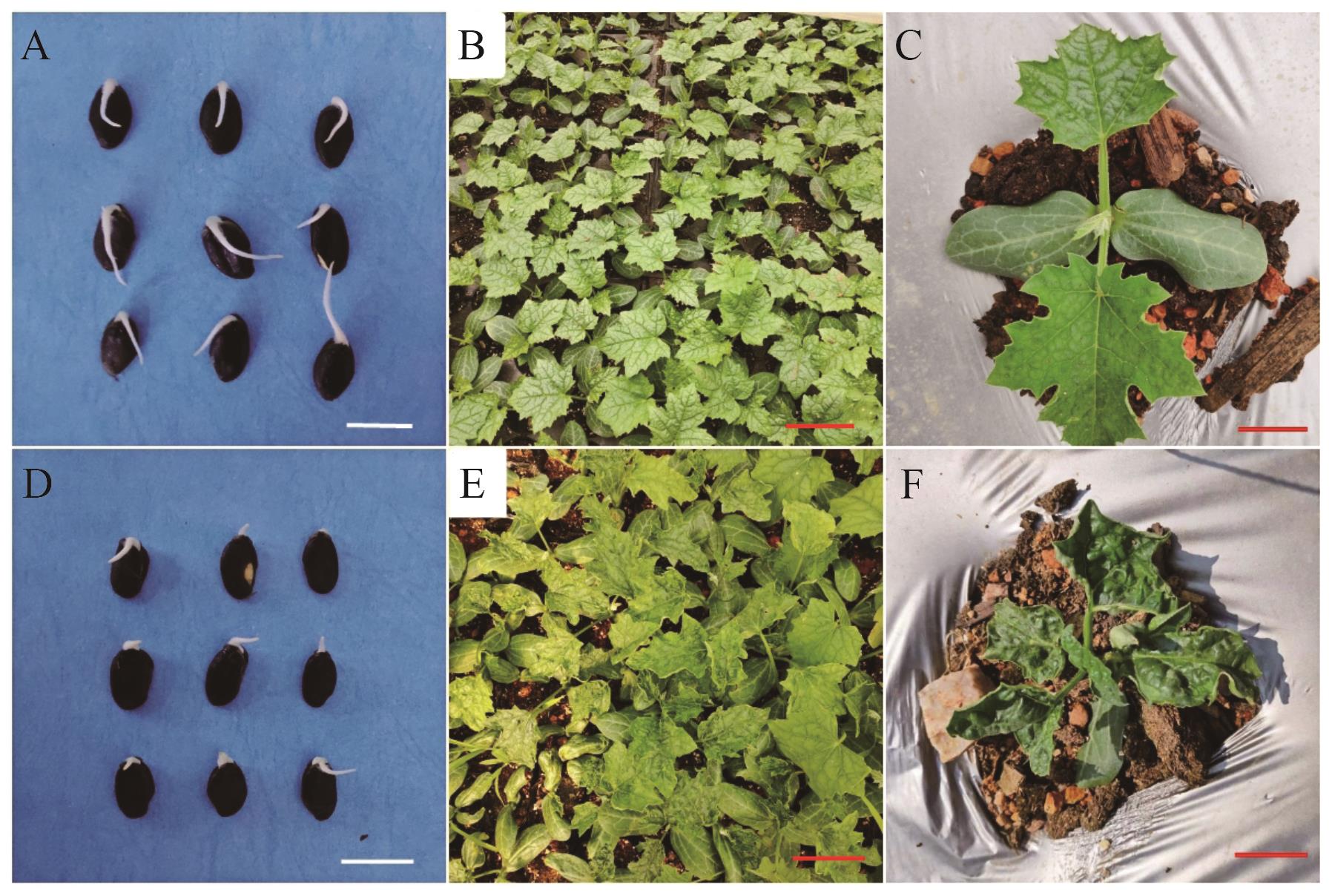
图1 EMS处理对丝瓜种子发芽及苗期表型的影响A‒C:分别为磷酸缓冲液处理10 h后的发芽、成苗和幼苗生长状况;D‒F:分别为1.8% EMS处理10 h后的发芽、成苗和幼苗生长状况;白色标尺=1 cm,红色标尺=5 cm
Fig. 1 Effects of EMS treatment on germinating and seedling phenotype of luffa seedsA-C: Germination potential, seedling rate and seedling growth status after PBS (phosphate buffer solution) treatment for 10 h. D-F: Germination potential, seedling rate and seedling growth after 1.8% EMS treatment for 10 h. White bar=1 cm, red bar=5 cm
突变器官 Mutant organ | 突变表型 Mutant phenotype | 突变株数 Number of mutated plants | 突变频率 Mutation frequency (%) |
|---|---|---|---|
叶片 Leaf | 黄色嵌合 Yellow mosaic | 11 | 0.65 |
| 浅绿色 Light green | 5 | 0.30 | |
| 深绿色 Dark green | 5 | 0.30 | |
| 皱缩 Crimple | 5 | 0.30 | |
| 圆叶 Round | 3 | 0.18 | |
株型 Plant type | 矮化 Dwarf | 3 | 0.18 |
| 细弱 Weak | 4 | 0.24 | |
| 花打顶 Blunt with blossom | 2 | 0.12 | |
| 卷曲 Twisted | 6 | 0.36 | |
| 徒长 Spindling | 3 | 0.18 | |
瓜型 Fruit shape | 瓜长变短 Shorter | 7 | 0.42 |
| 瓜色变亮 Color brighter | 1 | 0.06 | |
| 瓜粉增多 Powder increase | 5 | 0.30 | |
| 瓜色嵌合 Color mosaic | 7 | 0.42 | |
| 瓜长变长 Longer | 6 | 0.36 | |
生殖器官 Reproductiveorgans | 雌花簇生 Clustered female | 3 | 0.18 |
| 雄花败育 Yellowing male | 2 | 0.12 |
表2 EMS诱变丝瓜M2代突变类型统计
Table 2 Statistics on mutation types of M2 generation luffa induced by EMS
突变器官 Mutant organ | 突变表型 Mutant phenotype | 突变株数 Number of mutated plants | 突变频率 Mutation frequency (%) |
|---|---|---|---|
叶片 Leaf | 黄色嵌合 Yellow mosaic | 11 | 0.65 |
| 浅绿色 Light green | 5 | 0.30 | |
| 深绿色 Dark green | 5 | 0.30 | |
| 皱缩 Crimple | 5 | 0.30 | |
| 圆叶 Round | 3 | 0.18 | |
株型 Plant type | 矮化 Dwarf | 3 | 0.18 |
| 细弱 Weak | 4 | 0.24 | |
| 花打顶 Blunt with blossom | 2 | 0.12 | |
| 卷曲 Twisted | 6 | 0.36 | |
| 徒长 Spindling | 3 | 0.18 | |
瓜型 Fruit shape | 瓜长变短 Shorter | 7 | 0.42 |
| 瓜色变亮 Color brighter | 1 | 0.06 | |
| 瓜粉增多 Powder increase | 5 | 0.30 | |
| 瓜色嵌合 Color mosaic | 7 | 0.42 | |
| 瓜长变长 Longer | 6 | 0.36 | |
生殖器官 Reproductiveorgans | 雌花簇生 Clustered female | 3 | 0.18 |
| 雄花败育 Yellowing male | 2 | 0.12 |
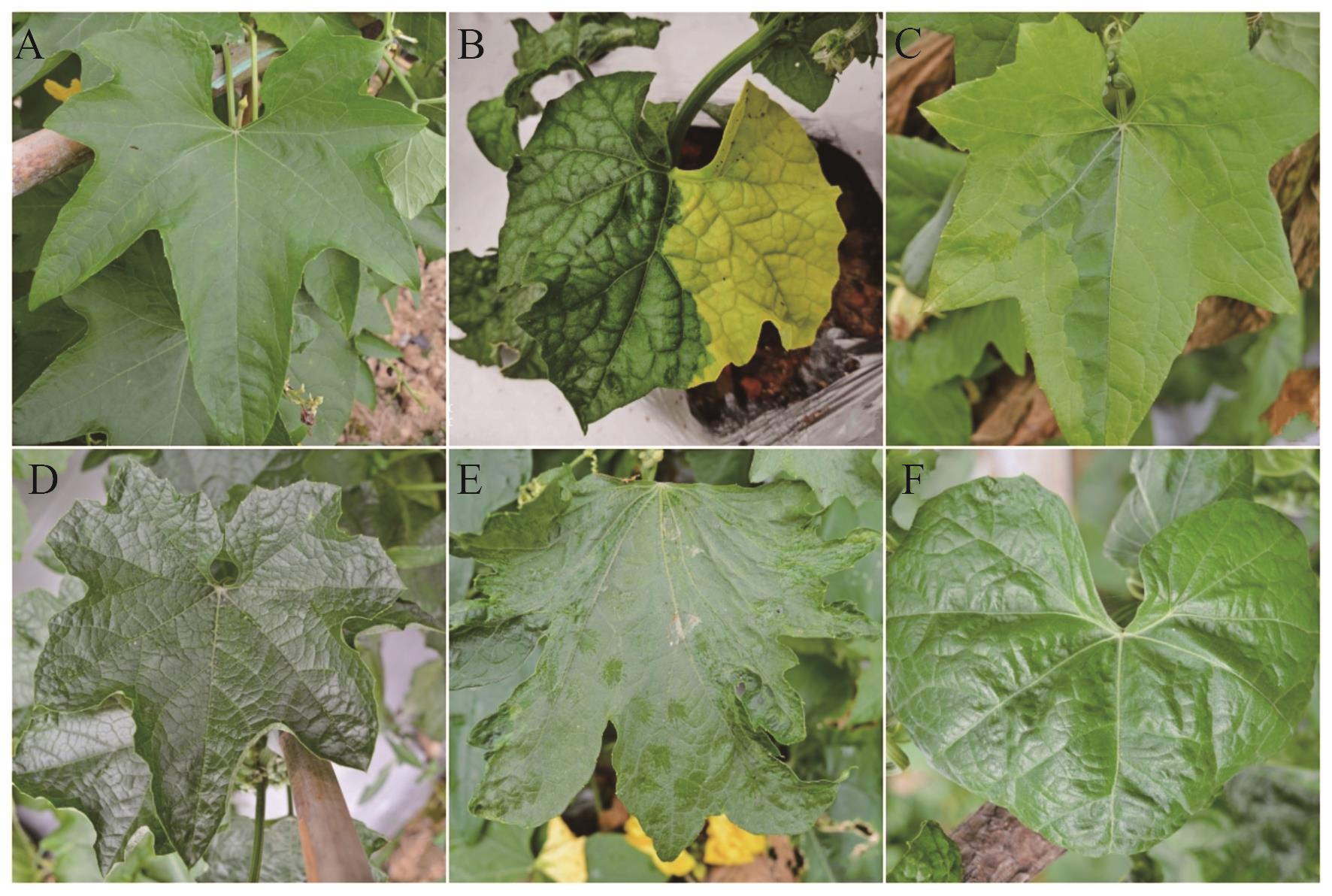
图2 M2群体真叶变异情况A:野生型;B:黄色嵌合叶片;C:浅绿色叶片;D:深绿色叶片;E:叶片皱缩;F:圆形叶片;标尺=1 cm
Fig. 2 Mutant phenotypes of leaves in M2 populationA: Wild type. B: Yellow mosaic leaves. C: Light green leaves. D: Dark green leaves. E: Crimple leaves. F: Round leaves. Bar=1 cm
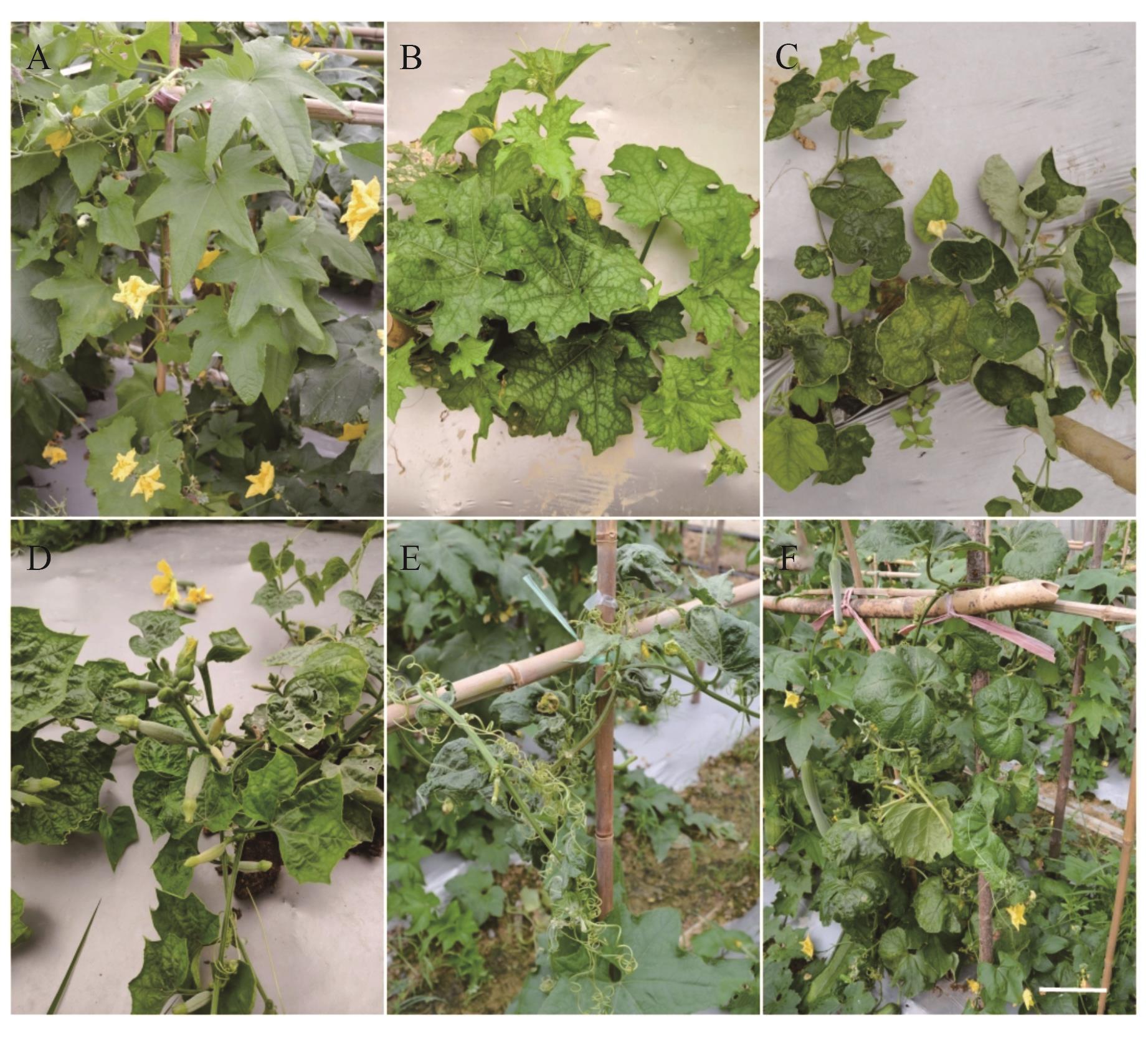
图3 M2群体株型变异情况A:野生型;B:矮化;C:细弱;D:花打顶;E:卷曲;F:徒长;标尺=10 cm
Fig. 3 Mutant phenotypes of plant type in M2 populationA: Wild type. B: Dwarf. C: Weak. D: Blunt with blossom. E: Twisted. F: Spindling. Bar =10 cm
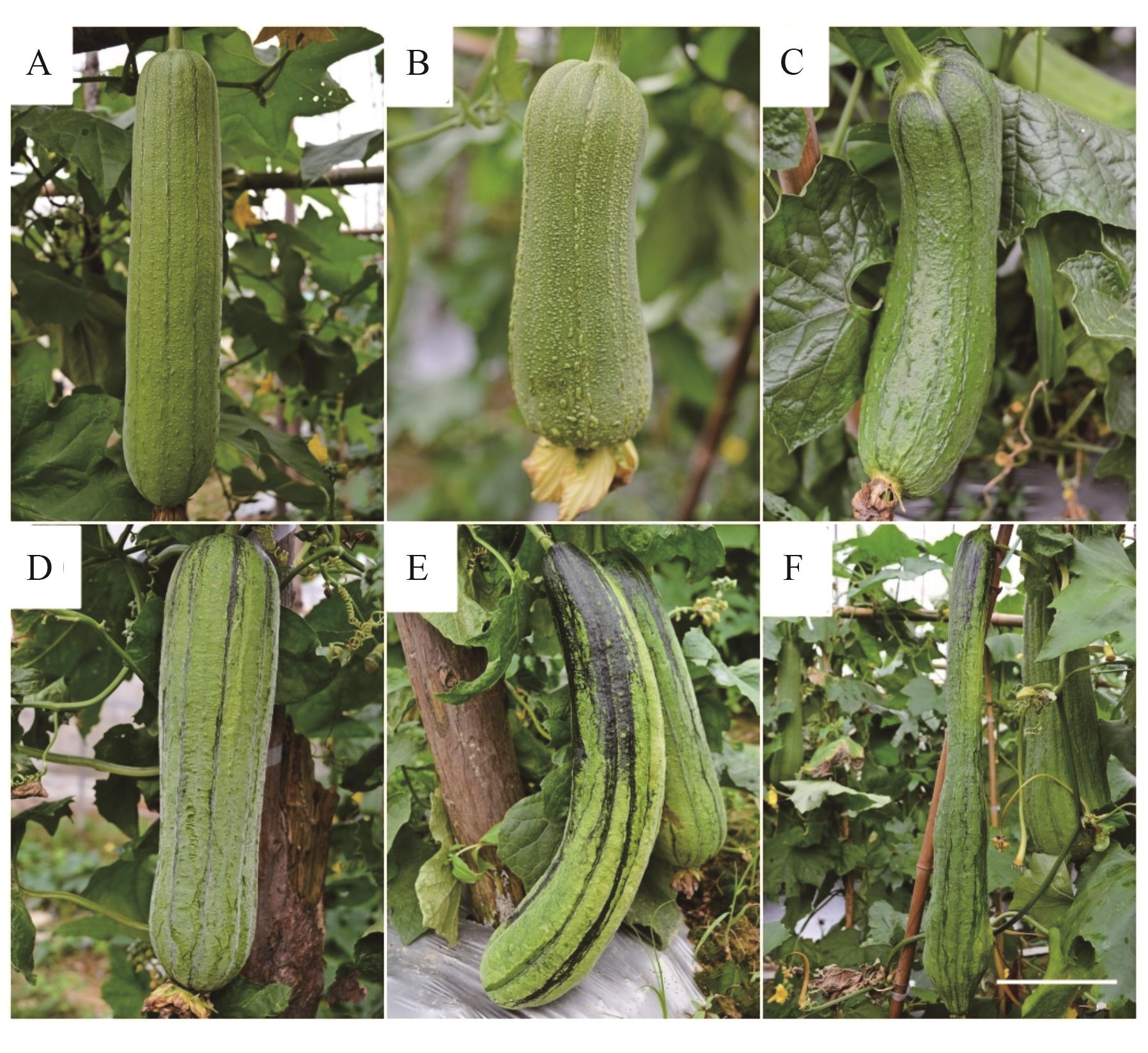
图4 M2群体果型变异情况A:野生型;B:瓜长变短;C:瓜色变亮;D:瓜粉增多;E:瓜色嵌合;F:瓜长变长;标尺=10 cm
Fig. 4 Mutant phenotypes of fruit shape in M2 populationA: Wild type. B: Fruit length shorter. C: Fruit color brighter. D: Fruit powder increase. E: Fruit color mosaic. F: Fruit length longer. Bar =10 cm
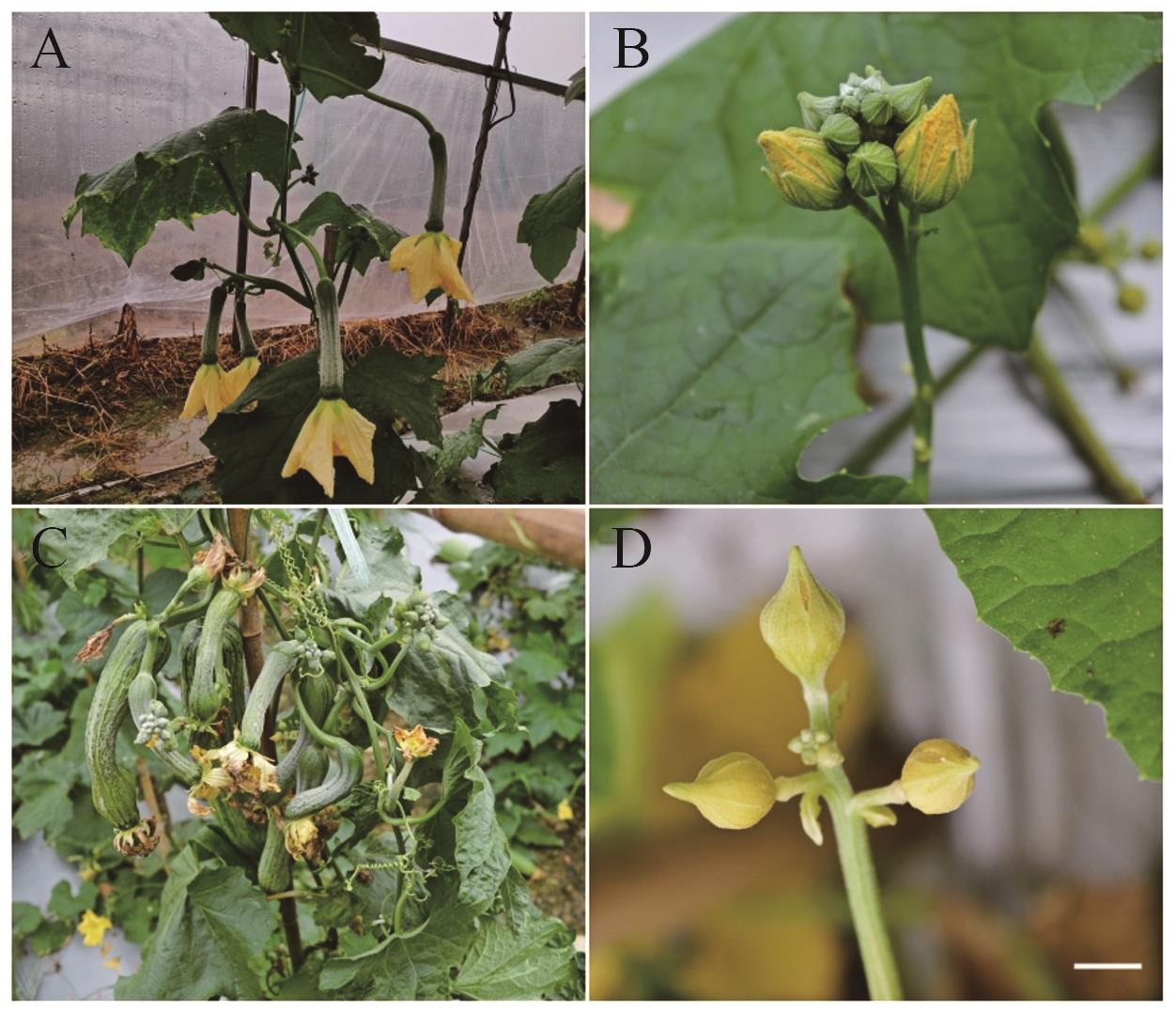
图5 M2群体生殖器官变异情况A:野生型雌花;B:野生型雄花;C:簇生雌花;D:黄化雄花;标尺=1 cm
Fig. 5 Mutant phenotypes of reproductive organs in M2 populationA: Wild type female flowers. B: Wild type male flowers. C: Clustered female flowers. D: Yellowing male flowers. Bar =1 cm
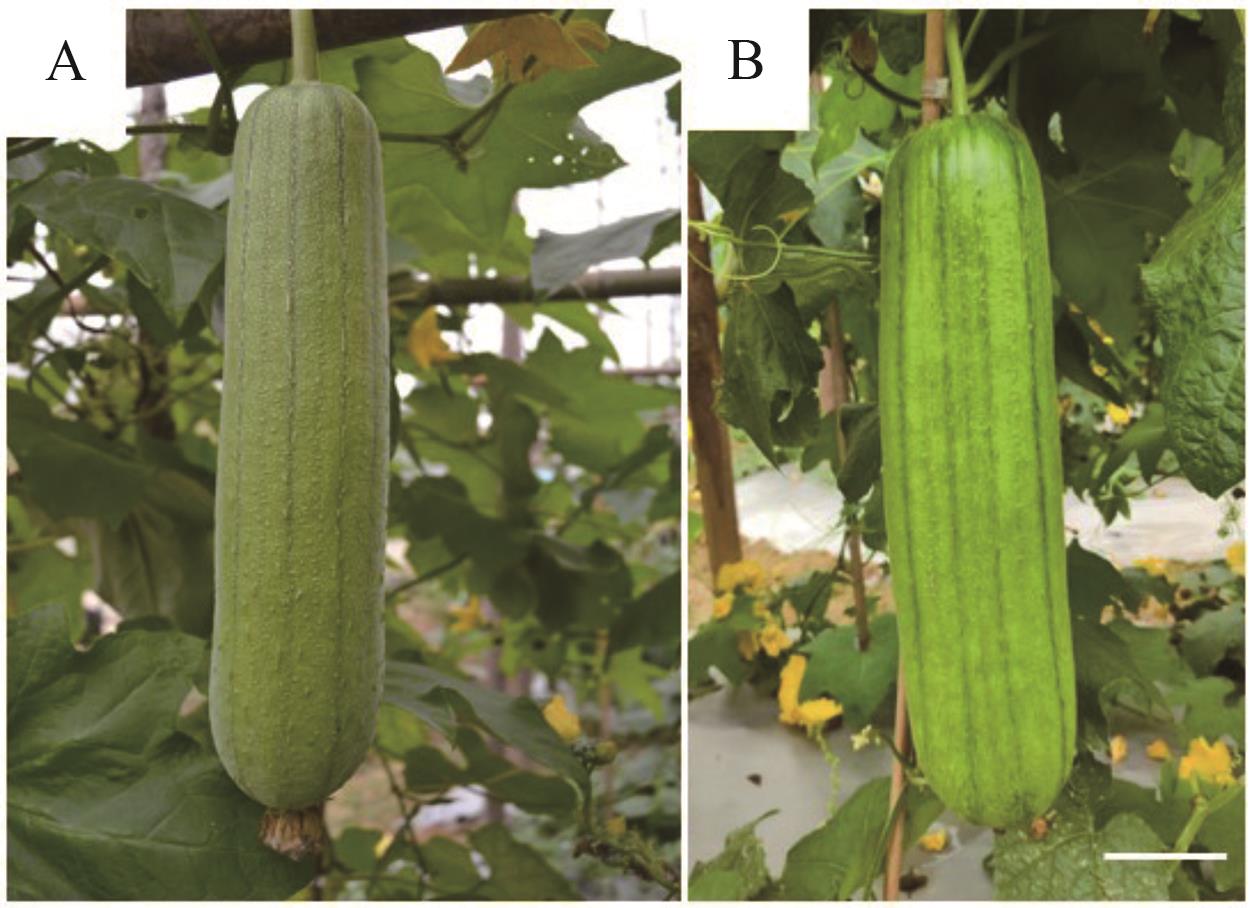
图6 油亮瓜皮突变体A:野生型果实;B:油亮瓜皮果实;标尺=5 cm
Fig. 6 Mutant with glossy fruit peelA: Wild type fruit. B: Fruit with glossy fruit peel. Bar =5 cm
| [1] | 韩小霞, 董文静, 闵子扬, 等. 湖南丝瓜枯萎病病原菌的分离鉴定及种质抗性评价 [J]. 中国农学通报, 2025, 41(15): 117-123. |
| Han XX, Dong WJ, Min ZY, et al. Isolation and identification of pathogen of luffa wilt in Hunan province and evaluation of resistant germplasm [J]. Chin Agric Sci Bull, 2025, 41(15): 117-123. | |
| [2] | Li WJ, Guo HJ, Wang YB, et al. Identification of novel alleles induced by EMS-mutagenesis in key genes of kernel hardness and starch biosynthesis in wheat by TILLING [J]. Genes Genom, 2017, 39(4): 387-395. |
| [3] | 王艺程, 张世杰, 丁寒雪, 等. 甲基磺酸乙酯(EMS)在植物诱变育种中的应用 [J]. 分子植物育种, 2023, 21(19): 6455-6462. |
| Wang YC, Zhang SJ, Ding HX, et al. Application of ethyl methanesulfonate (EMS) in plant mutation breeding [J]. Mol Plant Breed, 2023, 21(19): 6455-6462. | |
| [4] | 王晶, 娄群峰, 魏庆镇, 等. 长春密刺黄瓜突变体库的构建和部分性状分析 [J]. 核农学报, 2015, 29(8): 1479-1486. |
| Wang J, Lou QF, Wei QZ, et al. Construction of Changchun mici mutant library and analysis of some mutants [J]. J Nucl Agric Sci, 2015, 29(8): 1479-1486. | |
| [5] | 尹丽娟, 王春霞, 李陈浩, 等. 西瓜EMS诱导的突变体筛选及表型分析 [J]. 园艺学报, 2023, 50(11): 2401-2416. |
| Yin LJ, Wang CX, Li CH, et al. Screening and phenotypic analysis of EMS induced mutants in watermelon [J]. Acta Hortic Sin, 2023, 50(11): 2401-2416. | |
| [6] | 宋燕妮. 甜瓜突变体库的构建及黄化突变体鉴定和表型分析 [D]. 哈尔滨: 东北农业大学, 2015. |
| Song YN. Construction of mutant library and identification and phenotypic analysis of a xantha mutant in melon (Cucumis melo L.) [D]. Harbin: Northeast Agricultural University, 2015. | |
| [7] | 闵子扬, 韩小霞, 李勇奇, 等. 中国南瓜突变体库构建及表型变异的初步分析 [J]. 核农学报, 2021, 35(4): 761-768. |
| Min ZY, Han XX, Li YQ, et al. Construction and preliminary screening of EMS induced mutant library of pumpkin (Cucurbita moschata D.) [J]. J Nucl Agric Sci, 2021, 35(4): 761-768. | |
| [8] | 弭宝彬, 谢玲玲, 王鑫, 等. 冬瓜EMS诱变条件优化及突变体筛选 [J]. 中国农学通报, 2018(21): 35-41. |
| Mi BB, Xie LL, Wang X, et al. Optimization of EMS mutation conditions and mutant screening of wax gourd [J]. Chin Agric Sci Bull, 2018(21): 35-41. | |
| [9] | 丁延庆, 曹宁, 周棱波, 等. 酒用糯高粱EMS突变体库构建及突变体筛选 [J]. 南方农业学报, 2020, 51(12): 2884-2891. |
| Ding YQ, Cao N, Zhou LB, et al. Construction of EMS-induced mutant library and mutant screening in liquor-making waxy sorghum [J]. J South Agric, 2020, 51(12): 2884-2891. | |
| [10] | 崔霞, 梁燕, 李翠, 等. 化学诱变及其在蔬菜育种中的应用 [J]. 西北农林科技大学学报: 自然科学版, 2013, 41(3): 205-212. |
| Cui X, Liang Y, Li C, et al. Chemical mutagenesis and its application in vegetable breeding [J]. J Northwest A F Univ Nat Sci Ed, 2013, 41(3): 205-212. | |
| [11] | 孙明洋, 王萍. 籽用美洲南瓜EMS诱变突变体库的构建及表型分析 [J]. 西北植物学报, 2024, 44(8): 1283-1294. |
| Sun MY, Wang P. Construction and phenotypic analysis of EMS mutant library of the seed-used pumpkin [J]. Acta Bot Boreali Occidentalia Sin, 2024, 44(8): 1283-1294. | |
| [12] | 侯艳, 朱子成, 朱娜娜, 等. EMS 诱变西瓜突变体库的构建及表型分析 [J]. 西北植物学报, 2016, 36(12): 2411-2420. |
| Hou Y, Zhu ZC, Zhu NN, et al. Construction and phenotypic analysis of watermelon mutant library induced by EMS [J]. Acta Bot Boreali Occidentalia Sin, 2016, 36(12): 2411-2420. | |
| [13] | 程蛟文, 钟建, 程雨柔, 等. 苦瓜种子EMS诱变条件分析 [J]. 中国蔬菜, 2019(1): 26-31. |
| Cheng JW, Zhong J, Cheng YR, et al. Analysis of EMS mutagenesis condition for bitter gourd (Momordica charantia L.) seed [J]. China Veg, 2019(1): 26-31. | |
| [14] | 郑程, 汪颖, 王尖, 等. 瓠瓜EMS诱变突变体筛选与表型分析 [J]. 浙江农业学报, 2025, 37(9): 1914-1923. |
| Zheng C, Wang Y, Wang J, et al. Screening and phenotypic analysis of EMS-induced mutants in Lagenaria siceraria [J]. Acta Agric Zhejiangensis, 2025, 37(9): 1914-1923. | |
| [15] | 谢玲玲, 周火强, 弭宝彬, 等. EMS诱变技术研究概况及应用进展 [J]. 湖南农业科学, 2020(6): 92-95. |
| Xie LL, Zhou HQ, Mi BB, et al. Research survey and application progress of EMS mutation technology [J]. Hunan Agric Sci, 2020(6): 92-95. | |
| [16] | 范昕琦, 王海燕, 陈静, 等. EMS诱变对高粱成苗及M1主要农艺性状的影响 [J]. 生物技术通报, 2023, 39(7): 173-184. |
| Fan XQ, Wang HY, Chen J, et al. Effects of EMS mutagenesis on the seeding survival and major agronomic traits of sorghum in M1 generation [J]. Biotechnol Bull, 2023, 39(7): 173-184. | |
| [17] | 赵展, 王晓婷, 李林, 等. 甲基磺酸乙酯诱变西瓜种子的条件优化 [J]. 中国瓜菜, 2022, 35(1): 81-85. |
| Zhao Z, Wang XT, Li L, et al. Optimization of conditions for mutagenesis of watermelon seeds with ethyl methanesulfonate [J]. China Cucurbits Veg, 2022, 35(1): 81-85. | |
| [18] | 张婷, 温宏伟, 袁凯, 等. 晋麦47 EMS突变体库的构建及高代突变材料品质性状的初步分析 [J]. 核农学报, 2021, 35(8): 1731-1739. |
| Zhang T, Wen HW, Yuan K, et al. Construction of ethyl methane sulfonate mutant library of Jinmai 47 and preliminary analysis of quality characteristics of high generation mutants [J]. J Nucl Agric Sci, 2021, 35(8): 1731-1739. | |
| [19] | 段吟, 谢振宇, 周玉杰, 等. 利用EMS诱变改良山栏稻地方品种株高 [J]. 热带作物学报, 2025, 46(5): 1124-1134. |
| Duan Y, Xie ZY, Zhou YJ, et al. Improving plant height of local shanlan rice varieties through EMS mutagenesis [J]. Chin J Trop Crops, 2025, 46(5): 1124-1134. | |
| [20] | Nie SJ, Wang B, Ding HP, et al. Genome assembly of the Chinese maize elite inbred line RP125 and its EMS mutant collection provide new resources for maize genetics research and crop improvement [J]. Plant J, 2021, 108(1): 40-54. |
| [21] | 豆飞飞, 任毓昭, 王石磊, 等. 宁春4号小麦EMS突变体库的构建及表型变异分析 [J]. 生物技术通报, 2025, 41(8): 92-101. |
| Dou FF, Ren YZ, Wang SL, et al. Construction and phenotypic variation analysis of ningchun No. 4 wheat EMS mutant library [J]. Biotechnol Bull, 2025, 41(8): 92-101. | |
| [22] | 薛伟. EMS诱变黄瓜突变体库构建及表型分析 [D]. 长春: 吉林农业大学, 2023. |
| Xue W. EMS mutagenic cucumber mutant construction and phenotypic analysis [D]. Changchun: Jilin Agricultural University, 2023. | |
| [23] | 肖玉珍. 甜瓜种质EMS诱变条件筛选及突变体库构建 [D]. 杨凌: 西北农林科技大学, 2025. |
| Xiao YZ. Screening of EMS mutation conditions for melon germplasm and construction of a mutant library [D]. Yangling: Northwest A & F University, 2025. | |
| [24] | 崔笑. 苦瓜诱变条件筛选及突变体库构建 [D]. 海口: 海南大学, 2023. |
| Cui X. Screening of mutation conditions and construction of mutant library of bitter melon [D]. Haikou: Hainan University, 2023. | |
| [25] | 薛芳, 褚洪雷, 胡志伟, 等. EMS对新春11小麦抗性淀粉和农艺性状的诱变效果 [J]. 麦类作物学报, 2010, 30(3): 431-434. |
| Xue F, Chu HL, Hu ZW, et al. Mutation effect on resistant starch content and agronomic traits of Xinchun 11 treated by EMS [J]. J Triticeae Crops, 2010, 30(3): 431-434. | |
| [26] | 黄永娟, 张凤启, 杨甜甜, 等. EMS诱变甘蓝型油菜获得高油酸突变体 [J]. 分子植物育种, 2011, 9(5): 611-616. |
| Huang YJ, Zhang FQ, Yang TT, et al. High oleate mutants of Brassica napus produced by EMS inducement [J]. Mol Plant Breed, 2011, 9(5): 611-616. | |
| [27] | 张金波, 夏善勇, 王永斌, 等. 诱变育种技术在大豆育种与基因挖掘中的应用现状及展望 [J]. 大豆科学, 2022, 41(2): 222-227. |
| Zhang JB, Xia SY, Wang YB, et al. Application status and prospect of mutation breeding technology in soybean breeding and gene mining [J]. Soybean Sci, 2022, 41(2): 222-227. | |
| [28] | 刘隽, 刘笑妍, 葛亦筠, 等. 水稻类病斑突变体rsl1的基因定位及其非生物胁迫响应分析 [J]. 生物工程学报, 2025, 41(7): 2871-2884. |
| Liu J, Liu XY, Ge YY, et al. Map-based cloning and abiotic stress response analysis of rust spotted leaf 1 in rice [J]. Chin J Biotechnol, 2025, 41(7): 2871-2884. | |
| [29] | 董海潇. 玉米EMS突变体创制及颜色缺失和籽粒缺陷突变体基因定位与功能分析 [D]. 长春: 吉林大学, 2021. |
| Dong HX. EMS mutagenesis in maize with gene mapping and characterization for colorless mutant and kernel mutants [D]. Changchun: Jilin University, 2021. | |
| [30] | 王晓凤. 番茄EMS诱变突变体18M-716参与果色及灰霉菌抗性的功能基因定位 [D]. 上海: 华东师范大学, 2023. |
| Wang XF. Gene mapping of fruit color and Botrytis cinerea resistance in the tomato EMS mutant 18M-716 [D]. Shanghai: East China Normal University, 2023. | |
| [31] | 刘梦洋. 大白菜EMS突变体叶色深绿及抗软腐病基因功能分析 [D]. 保定: 河北农业大学, 2018. |
| Liu MY. Functional analysis of dark-green leaf gene and resistance genes against soft rot at EMS mutants in Chinese cabbage [D]. Baoding: Hebei Agricultural University, 2018. | |
| [32] | 高玥. 大白菜突变体库的构建与平塌型不结球突变基因的克隆 [D]. 沈阳: 沈阳农业大学, 2020. |
| Gao Y. Construction of mutant library in Chinese cabbage and cloning of collapsed non-heading mutant genes [D]. Shenyang: Shenyang Agricultural University, 2020. | |
| [33] | 谢玲玲. 冬瓜EMS突变体库构建及短果和浅绿色果皮突变体基因定位研究 [D]. 长沙: 湖南农业大学, 2022. |
| Xie LL. EMS mutant library construction and fine-mapping of short-fruit and Reseda pericarp mutants in wax gourd [D]. Changsha: Hunan Agricultural University, 2022. | |
| [34] | Min ZY, Hu XJ, Han XX, et al. Genetic mapping and identification of the gibberellin 3-oxidase gene GA3ox leading to a GA-deficient dwarf phenotype in pumpkin (Cucurbita moschata D.) [J]. Agronomy, 2022, 12(8): 1779. |
| [35] | Min ZY, Li YQ, Sun B, et al. Genetic analysis and characterisation of Cmowf, a gene controlling the white petal colour phenotype in pumpkin (Cucurbita moschata D) [J]. Plant Breed, 2024, 143(2): 222-231. |
| [1] | 邳文治, 王群, 刘鑫媛, 王朱珺. 罗布斯塔咖啡果表与土壤微生物群落构建机制及跨生态位网络关联研究[J]. 生物技术通报, 2026, 42(5): 147-157. |
| [2] | 豆飞飞, 任毓昭, 王石磊, 刘春颖, 王晓东, 王昭懿, 刘彩霞, 刘凤楼, 王掌军, 李清峰. 宁春4号小麦EMS突变体库的构建及表型变异分析[J]. 生物技术通报, 2025, 41(8): 92-101. |
| [3] | 梅显军, 宋慧洋, 李京昊, 梅超, 宋倩娜, 冯瑞云, 陈喜明. 马铃薯StDof5的克隆及表达分析[J]. 生物技术通报, 2024, 40(3): 181-192. |
| [4] | 周子莹, 宋晓东, 刘洋儿, 吴一凡, 朱龙佼, 古东月, 何国庆, 李相阳, 许文涛. 变构转录因子生物传感器构建策略及在食品安全中的应用进展[J]. 生物技术通报, 2024, 40(12): 20-33. |
| [5] | 陈小玲, 廖东庆, 黄尚飞, 陈英, 芦志龙, 陈东. 利用CRISPR/Cas9系统改造酿酒酵母的研究进展[J]. 生物技术通报, 2023, 39(8): 148-158. |
| [6] | 范昕琦, 王海燕, 陈静, 张晓娟, 郭琦, 梁笃, 周福平, 聂萌恩, 张一中, 柳青山. EMS诱变对高粱成苗及M1主要农艺性状的影响[J]. 生物技术通报, 2023, 39(7): 173-184. |
| [7] | 程静雯, 曹磊, 张艳敏, 叶倩, 陈敏, 谭文松, 赵亮. CHO细胞多基因工程改造策略的建立及应用[J]. 生物技术通报, 2023, 39(2): 283-291. |
| [8] | 刘萌萌, 韩立军, 刘宝玲, 薛金爱, 李润植. 陆地棉GhSDP1及其启动子的克隆与表达分析[J]. 生物技术通报, 2022, 38(2): 34-43. |
| [9] | 胡子曜, 代培红, 刘超, 玛迪娜·木拉提, 王倩, 吾尕力汗·阿不都维力, 赵燚, 孙玲, 徐诗佳, 李月. 陆地棉小GTP结合蛋白基因GhROP3的克隆、表达及VIGS载体的构建[J]. 生物技术通报, 2021, 37(9): 106-113. |
| [10] | 崔祥华, 陶南, 程波普, 赵永昌, 陈卫民, 李靖. 柱状田头菇遗传转化体系启动子的筛选[J]. 生物技术通报, 2021, 37(5): 259-266. |
| [11] | 朱淑芳, EHENEDEN Iyobosa, 宁海军, 尚洁昊, 李武阳, 孟宪刚. 高效原油污染降解菌的筛选、鉴定及菌群的构建[J]. 生物技术通报, 2021, 37(4): 107-115. |
| [12] | 郭丽丽, 李昱莹, 郭大龙, 侯小改. 重要花卉植物高密度遗传连锁图谱构建研究进展[J]. 生物技术通报, 2021, 37(1): 246-254. |
| [13] | 杨文文, 倪嘉瑶, 胡蕊洁, 王华忠. 一个RNAi载体上反向重复片段的测序策略[J]. 生物技术通报, 2020, 36(5): 205-210. |
| [14] | 刘鹏, 岑妍慧, 林江, 梁忠秀, 兰太进, 韩丝银, 陈振兴. 海洋创伤弧菌反式翻译系统关键因子SmpB基因的克隆及原核表达[J]. 生物技术通报, 2020, 36(4): 100-106. |
| [15] | 梅芬, 李瑞玮, 张娟娟, 左荣霞, 邹云莲, 沈涛, 撒亚莲. 构建基于CRISPR/Cas9技术敲除ALOX5的质粒[J]. 生物技术通报, 2020, 36(3): 110-114. |
| 阅读次数 | ||||||
|
全文 |
|
|||||
|
摘要 |
|
|||||
