







• 综述与专论 • 下一篇
雷崇彬1, 粟元2, 徐蒙1, 朱龙佼2, 商颖3, 田洪涛1( ), 许文涛2()
收稿日期:2026-03-03
出版日期:2026-08-24
通讯作者:
田洪涛tht631022@163.com基金资助:
LEI Chong-bin1, SU Yuan2, XU Meng1, ZHU Long-jiao2, SHANG Ying3, TIAN Hong-tao1(), XU Wen-tao2()
Received:2026-03-03
Published:2026-08-24
摘要:
植物源外泌体样纳米囊泡(plant-derived exosome-like nanovesicles, PENs)是从水果、蔬菜及药用植物中分离获得的一类天然纳米级囊泡,直径约为30‒300 nm,具备典型的脂质双层膜结构。作为来源广泛、生物相容性良好且免疫原性较低的天然递送载体,PENs在抗衰老研究领域受到越来越多的关注。本文系统综述了PENs的生物学基础、抗衰老调控机制及工程化修饰策略的研究进展。PENs自身携带脂质、蛋白质、核酸及次生代谢产物等物质,其抗衰老活性主要归因于对氧化应激、炎症反应、细胞外基质代谢、细胞衰老与自噬以及黑色素生成等多条生物学通路的调节。面对天然PENs在靶向能力、载荷效率及体内循环时间等方面存在的不足,研究人员开发了被动与主动装载、聚乙二醇化修饰、配体偶联及膜成分调控等多种工程化策略,显著提升其递送效能与治疗精准度。此外,本文指出PENs的临床转化仍面临多重挑战,包括现有临床试验样本量偏小且缺乏严谨的设计规范,部分植物来源可能伴有潜在毒性风险,量效关系研究尚不充分,监管框架与标准化体系仍属空白,制备工艺和长期保存技术也有待进一步完善等。未来建立标准化、自动化的生产系统与统一的质量控制体系,开展设计严谨的剂量探索性临床试验,将是推动PENs在抗衰老领域深入应用和临床落地的关键路径。本文为植物源外泌体样纳米囊泡在抗衰老及相关疾病治疗中的深入研究提供了系统性的理论参考。
雷崇彬, 粟元, 徐蒙, 朱龙佼, 商颖, 田洪涛, 许文涛. 植物源外泌体样纳米囊泡抗衰老调控及工程化研究进展[J]. 生物技术通报, doi: 10.13560/j.cnki.biotech.bull.1985.2026-0253.
LEI Chong-bin, SU Yuan, XU Meng, ZHU Long-jiao, SHANG Ying, TIAN Hong-tao, XU Wen-tao. Recent Advances in the Regulation and Engineering of Plant-derived Exosome-like Nanovesicles for Anti-aging[J]. Biotechnology Bulletin, doi: 10.13560/j.cnki.biotech.bull.1985.2026-0253.
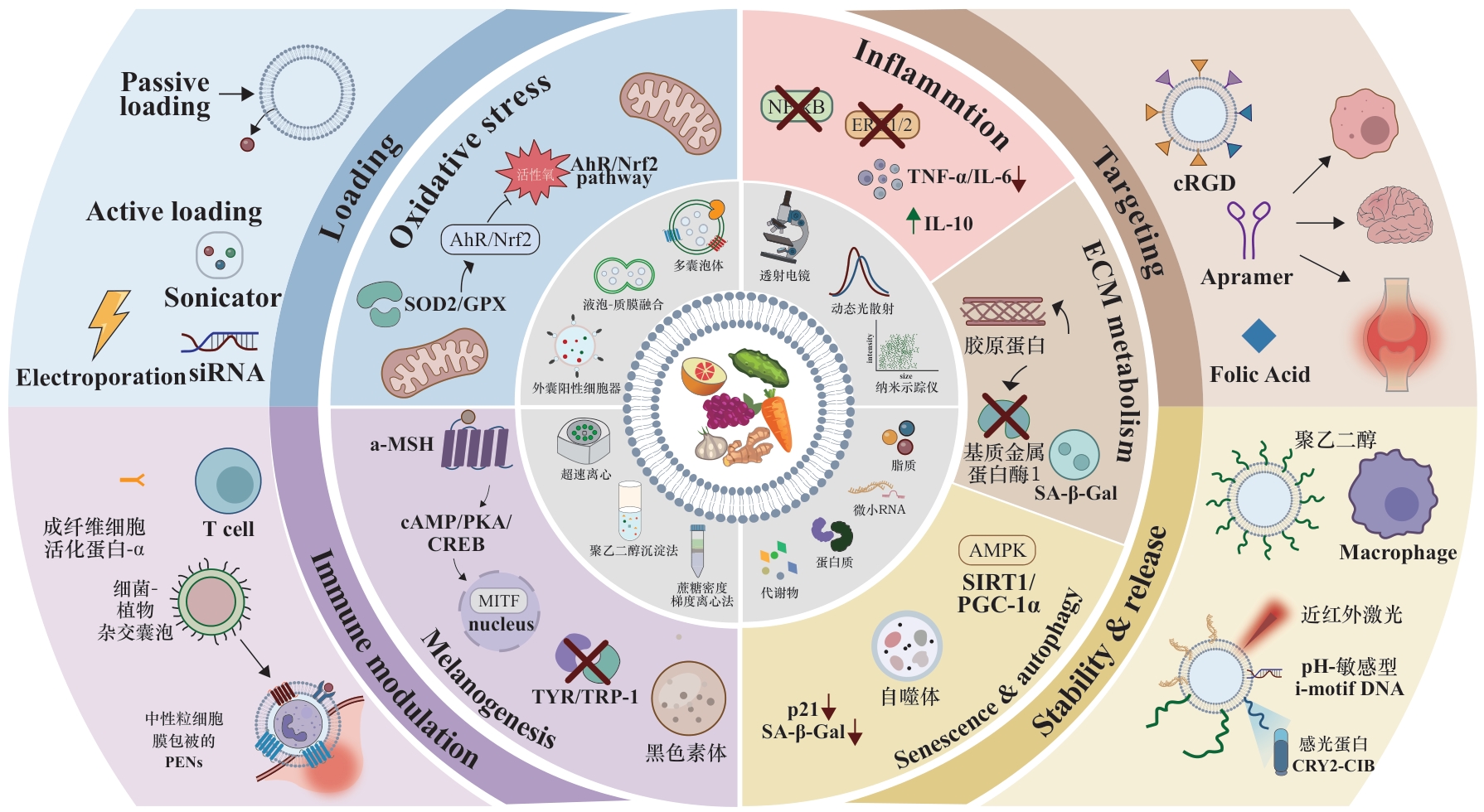
图1 植物源外泌体样纳米囊泡(PENs)的生物学特征、抗衰老相关分子机制及多元化工程构建策略中央PENs图标代表核心纳米载体,可封装多种生物活性分子(黄酮类、miRNA、蛋白质、脂质)。内环圆展示了PENs的5大抗衰老机制,包括氧化应激调控、炎症反应抑制、细胞外基质代谢调节、衰老与自噬调控及黑色素生成调控。外环圆为PENs的四大工程化修饰策略,涵盖药物装载、靶向递送增强、稳定性与控释优化及免疫调节修饰。BPN:细菌‒植物杂交囊泡;PDE:磷酸二酯酶;CXCR2:CXC趋化因子受体2;LFA-1:淋巴细胞功能相关抗原1;siRNA:小干扰RNA;cAMP:环磷酸腺苷;PKA:蛋白激酶A;CREB:cAMP反应元件结合蛋白;MITF:小眼畸形相关转录因子;NF-κB:核因子κB;ERK1/2:细胞外信号调节激酶1/2;TNF-α:肿瘤坏死因子α;IL-6:白细胞介素6;IL-10:白细胞介素10;SA-β-Gal:衰老相关β-半乳糖苷酶;AMPK:AMP活化蛋白激酶;SIRT1:沉默信息调节因子1;PGC-1α:过氧化物酶体增殖物激活受体γ辅激活因子1α;CRY2:隐花色素2;cRGD:环状精氨酸-甘氨酸-天冬氨酸肽
Fig. 1 Biological characteristics, anti-aging-related molecular mechanisms, and diversified engineering strategies of plant-derived exosome-like nanovesicles (PENs)The central PENs icon represents the core nanocarriers, which can encapsulate various bioactive molecules (flavonoids, miRNAs, proteins, lipids). The inner circular diagram illustrates the five major anti-aging mechanisms of PENs, including oxidative stress regulation, inflammation response inhibition, extracellular matrix metabolism regulation, aging and autophagy regulation, and melanin production regulation. The outer circular diagram presents the four engineering modification strategies of PENs, covering drug loading, enhanced targeted delivery, stability and controlled release optimization, and immune regulation modification. BPN: Bacterial-plant hybrid nanovesicles. PDE: Phosphodiesterase. CXCR2: CXC chemokine receptor 2. LFA-1: Lymphocyte function-associated antigen 1. siRNA: Small interfering RNA. cAMP: Cyclic adenosine monophosphate. PKA: Protein kinase A. CREB: cAMP response element-binding protein. MITF: Microphthalmia-associated transcription factor. NF-κB: Nuclear factor kappa-light-chain-enhancer of activated B cells. ERK1/2: Extracellular signal-regulated kinase 1/2. TNF-α: Tumor necrosis factor-α. IL-6: Interleukin-6. IL-10: Interleukin-10. SA-β-Gal: Senescence-associated β-galactosidase. AMPK: AMP-activated protein kinase. SIRT1: Silent information regulator 1. PGC-1α: Peroxisome proliferator-activated receptor γ coactivator 1α. CRY2: Cryptochrome 2. cRGD: Cyclic arginine-glycine-aspartic acid peptide
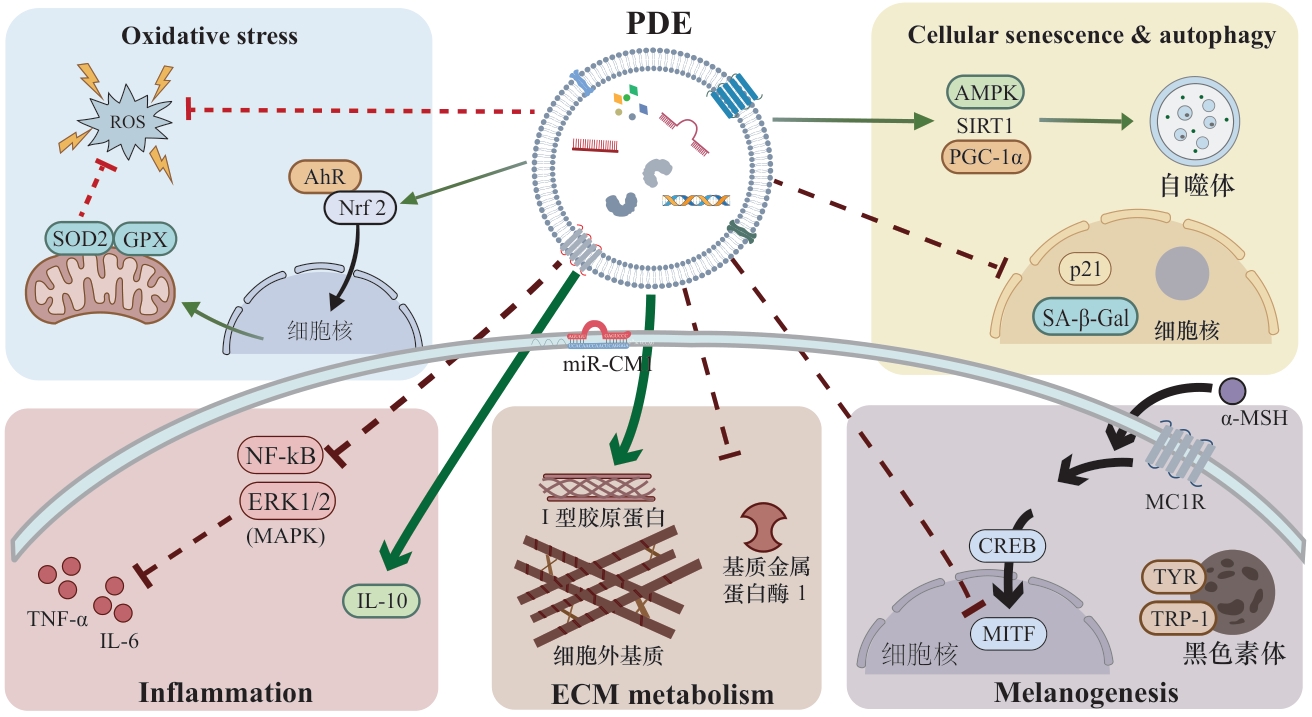
图2 植物源外泌体样纳米囊泡介导抗氧化、抗炎、基质保护及抗黑色素生成的多靶点抗衰老分子调控机制图示总结了PENs通过5大途径调控衰老相关通路的分子机制:①氧化应激中,PENs激活AhR/Nrf2信号轴,促进Nrf2核转位并上调SOD2/GPX表达以清除ROS;②炎症中,PENs抑制NF-κB和ERK1/2通路,下调TNF-α/IL-6并上调IL-10;③ECM代谢中,PENs促进COL-1合成并抑制MMP-1以维持ECM稳态;④细胞衰老与自噬中,PENs(含miR-CM)激活AMPK/SIRT1/PGC-1α轴,促进自噬体形成并下调p21/SA-β-Gal;⑤黑色素生成中,PENS阻断α-MSH/MC1R/cAMP/PKA/CREB信号级联,抑制MITF核转位及TYR/TRP-1活性,减少黑素体中的黑色素合成。AhR:芳香烃受体;Nrf2:核因子E2相关因子2;SOD2:超氧化物歧化酶2;GPX:谷胱甘肽过氧化物酶;NF-κB:核因子κB;ERK1/2:细胞外信号调节激酶1/2;MAPK:丝裂原活化蛋白激酶;TNF-α:肿瘤坏死因子α;IL-6:白细胞介素6;IL-10:白细胞介素10;miR-CM1:微小RNA-CM1;AMPK:AMP活化蛋白激酶;SIRT1:沉默信息调节因子1;PGC-1α:过氧化物酶体增殖物激活受体γ辅激活因子1α;p21:周期蛋白依赖性激酶抑制剂p21;SA-β-Gal:衰老相关β-半乳糖苷酶;α-MSH:α-促黑素细胞激素;MC1R:黑皮质素1受体;CREB:cAMP反应元件结合蛋白;MITF:小眼畸形相关转录因子;TYR:酪氨酸酶;TRP-1:酪氨酸酶相关蛋白1;BPN:细菌-植物杂交囊泡;PDE:磷酸二酯酶
Fig. 2 Multi-target anti-aging molecular regulatory mechanisms of plant-derived exosome-like nanovesicles, involving anti-oxidation, anti-inflammation, ECM protection, and anti-melanogenesisThe figure summarizes the molecular mechanisms by which PENs regulates aging-related pathways through five major pathways: ① In oxidative stress, PENs activates the AhR/Nrf2 signaling axis, promoting Nrf2 nuclear translocation and upregulating SOD2/GPX expression to eliminate ROS. ② In inflammation, PENs suppresses the NF-κB and ERK1/2 pathways, downregulating TNF-α/IL-6 and upregulating IL-10. ③ In ECM metabolism, PENs promotes COL-1 synthesis and inhibits MMP-1 to maintain ECM homeostasis. ④ In cellular senescence and autophagy, PENs (containing miR-CM) activates the AMPK/SIRT1/PGC-1α axis, promoting autophagosome formation and downregulating p21/SA-β-Gal. ⑤ In melanogenesis, PENs blocks the α-MSH/MC1R/cAMP/PKA/CREB signaling cascade, inhibiting MITF nuclear translocation and TYR/TRP-1 activity, thereby reducing melanin synthesis in melanosomes. AhR: Aryl hydrocarbon receptor. Nrf2: Nuclear factor erythroid 2-related factor 2. SOD2: Superoxide dismutase 2. GPX: Glutathione peroxidase. NF-κB: Nuclear factor kappa-light-chain-enhancer of activated B cells. ERK1/2: Extracellular signal-regulated kinase 1/2. MAPK: Mitogen-activated protein kinase. TNF-α: Tumor necrosis factor-α. IL-6: Interleukin-6. IL-10: Interleukin-10. miR-CM1: MicroRNA-CM1. AMPK: AMP-activated protein kinase. SIRT1: Silent information regulator 1. PGC-1α: Peroxisome proliferator-activated receptor γ coactivator 1α. p21: Cyclin-dependent kinase inhibitor p21. SA-β-Gal: Senescence-associated β-galactosidase. α-MSH: α-Melanocyte-stimulating hormone. MC1R: Melanocortin 1 receptor. CREB: cAMP response element-binding protein. MITF: Microphthalmia-associated transcription factor. TYR: Tyrosinase. TRP-1: Tyrosinase-related protein 1. BPN: Bacteria-plant hybrid nanovesicles. PDE: Phosphodiesterase
植物来源 Plant origin | 代表性活性成分/搭载成分 Representative active ingredient / Loaded components | 主要抗衰老机制 Main anti-aging mechanism | 特殊优势 Special advantages | 文献 References |
|---|---|---|---|---|
| 柑橘Citrus reticulata Blanco. | 类黄酮 | 激活AhR/Nrf2通路清除ROS;调节ERK1/2和NF-κB降低IFN-γ、TNF-α | 直接清除自由基,抗炎 | [ |
| 葡萄 Vitis vinifera L. | 白藜芦醇 | 直接清除ROS,抑制脂质过氧化 | 富含白藜芦醇,抗氧化强 | [ |
| 艾蒿Artemisia argyi H. Lév. & Vaniot | MIR2916 | 通过TLR4通路缓解氧化应激 | miRNA介导的抗氧化调控 | [ |
| 生姜 Zingiber officinale Roscoe | miRNA | 下调IL-6、IL-8,抗炎;调节肠道菌群 | 口服稳定,肠道抗炎 | [ |
| 茶 Camellia sinensis (L.) O. Ktze. | 多酚类 | 降低TNF-α、IL-6、IL-12,上调IL-10 | 双向调节炎症因子 | [ |
| 食用甜菜 Beta vulgaris L. | 甜菜红素、酚类 | 促进COL-1表达,抑制MMP-1,降低SA-β-Gal | 抗光老化,促胶原合成 | [ |
| 桑黄Phellinus igniarius | miR-CM1 | 抑制Mical2,促进COL1A2,抑制MMP-1,降低ROS/MDA/SA-β-Gal | 跨界miRNA调控ECM | [ |
| 薰衣草Lavandula angustifolia Mill. | 多种活性成分 | 减轻炎症、增强ECM完整性、促进DNA修复、减轻氧化应激 | 多机制协同抗光老化 | [ |
| 中国韭葱Allium porrum L. | — | 激活AMPK/SIRT1/PGC-1α轴促进自噬;抑制Akt/FoxO3a/Atrogin-1/MuRF1 | 改善肌管萎缩,促线粒体生物发生 | [ |
| 人参Panax ginseng C. A. Mey. | — | 抑制AP-1通路,下调MMP-2/3、COX-2、IL-6、p21。抑制凋亡通路 | 抗凋亡,抗炎,抗衰老基因调控 | [ |
| 山药豆 Dioscorea opposita | — | 抑制黑色素合成,促进细胞迁移和胶原生成 | 美白+修复双重功效 | [ |
| 葡萄柚 Citrus paradisi | — | 抑制黑色素生成(B16-F10细胞、斑马鱼) | 美白 | [ |
| 苍术 Atractylodis rhizama | — | 下调Mitf,降低酪氨酸酶活性 | 阻断黑色素合成通路 | [ |
表1 不同植物来源PENs的抗衰老功能比较
Table 1 Comparison of the anti-ageing functions of PENs from different plant sources
植物来源 Plant origin | 代表性活性成分/搭载成分 Representative active ingredient / Loaded components | 主要抗衰老机制 Main anti-aging mechanism | 特殊优势 Special advantages | 文献 References |
|---|---|---|---|---|
| 柑橘Citrus reticulata Blanco. | 类黄酮 | 激活AhR/Nrf2通路清除ROS;调节ERK1/2和NF-κB降低IFN-γ、TNF-α | 直接清除自由基,抗炎 | [ |
| 葡萄 Vitis vinifera L. | 白藜芦醇 | 直接清除ROS,抑制脂质过氧化 | 富含白藜芦醇,抗氧化强 | [ |
| 艾蒿Artemisia argyi H. Lév. & Vaniot | MIR2916 | 通过TLR4通路缓解氧化应激 | miRNA介导的抗氧化调控 | [ |
| 生姜 Zingiber officinale Roscoe | miRNA | 下调IL-6、IL-8,抗炎;调节肠道菌群 | 口服稳定,肠道抗炎 | [ |
| 茶 Camellia sinensis (L.) O. Ktze. | 多酚类 | 降低TNF-α、IL-6、IL-12,上调IL-10 | 双向调节炎症因子 | [ |
| 食用甜菜 Beta vulgaris L. | 甜菜红素、酚类 | 促进COL-1表达,抑制MMP-1,降低SA-β-Gal | 抗光老化,促胶原合成 | [ |
| 桑黄Phellinus igniarius | miR-CM1 | 抑制Mical2,促进COL1A2,抑制MMP-1,降低ROS/MDA/SA-β-Gal | 跨界miRNA调控ECM | [ |
| 薰衣草Lavandula angustifolia Mill. | 多种活性成分 | 减轻炎症、增强ECM完整性、促进DNA修复、减轻氧化应激 | 多机制协同抗光老化 | [ |
| 中国韭葱Allium porrum L. | — | 激活AMPK/SIRT1/PGC-1α轴促进自噬;抑制Akt/FoxO3a/Atrogin-1/MuRF1 | 改善肌管萎缩,促线粒体生物发生 | [ |
| 人参Panax ginseng C. A. Mey. | — | 抑制AP-1通路,下调MMP-2/3、COX-2、IL-6、p21。抑制凋亡通路 | 抗凋亡,抗炎,抗衰老基因调控 | [ |
| 山药豆 Dioscorea opposita | — | 抑制黑色素合成,促进细胞迁移和胶原生成 | 美白+修复双重功效 | [ |
| 葡萄柚 Citrus paradisi | — | 抑制黑色素生成(B16-F10细胞、斑马鱼) | 美白 | [ |
| 苍术 Atractylodis rhizama | — | 下调Mitf,降低酪氨酸酶活性 | 阻断黑色素合成通路 | [ |
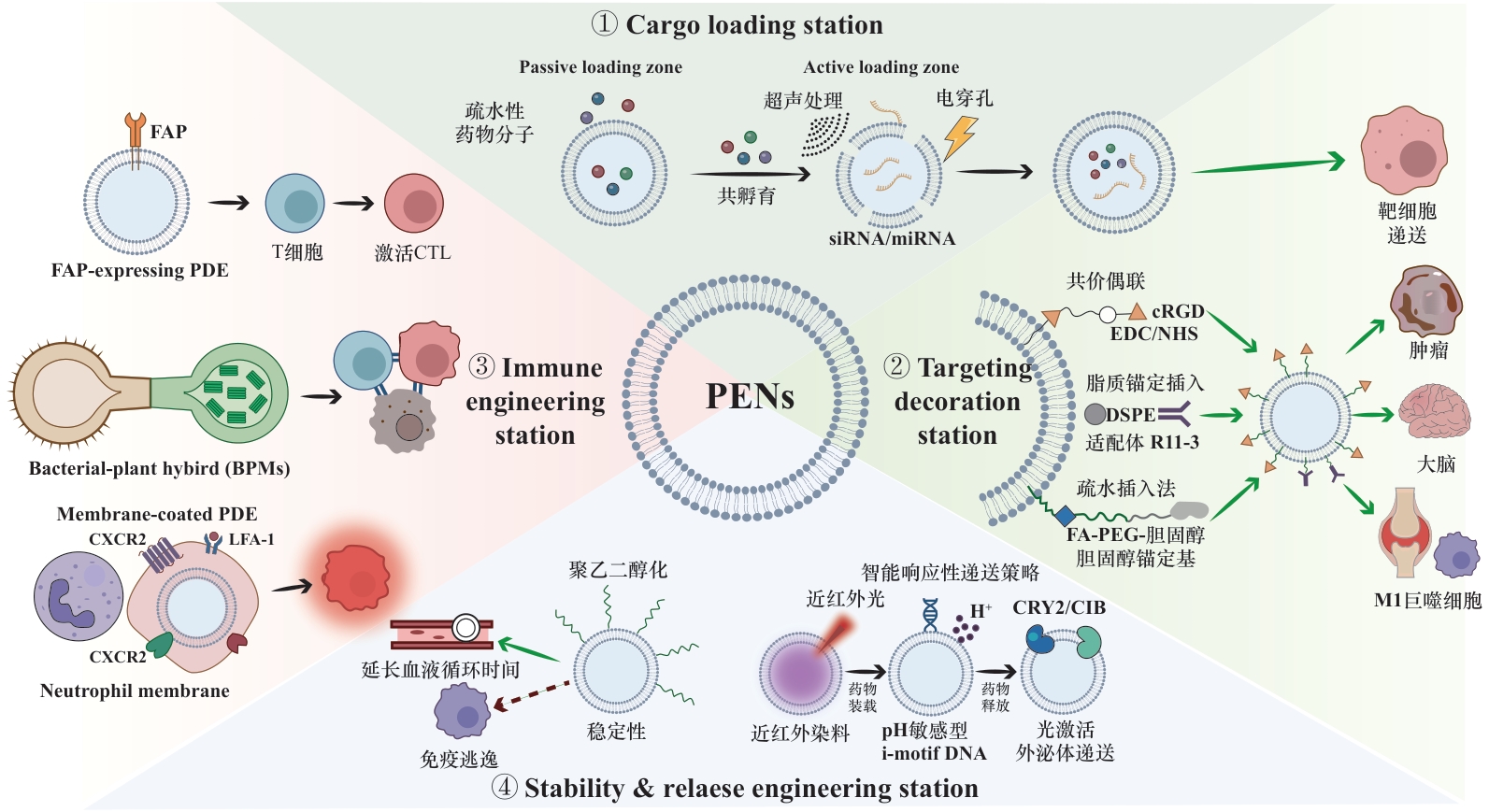
图3 植物源外泌体样纳米囊泡(PENs)在药物负载、靶向递送、免疫调节及稳定性优化方面的工程化修饰策略图示总结了提升PENs的治疗性能的4大工程化策略:①药物装载:包括被动共孵育装载疏水性药物和主动超声/电穿孔装载siRNA/miRNA;②靶向修饰:通过EDC/NHS共价偶联cRGD、DSPE脂质锚定插入适配体R11-3、FA-PEG-Chol疏水插入叶酸等方式实现向肿瘤和脑组织的精准递送;③免疫工程修饰:包括FAP表达型PENs激活T细胞分化为CTLs,以及中性粒细胞膜包被的PENS表面展示CXCR2/LFA-1受体靶向炎症组织;④稳定性与控释增强:通过PEG化实现免疫逃逸和长循环,并结合近红外激光、pH敏感i-motif DNA和蓝光调控的CRY2/CIB系统实现智能触发释放。PENs:植物来源外泌体样纳米囊泡;ROS:活性氧;SOD2:超氧化物歧化酶2;GPX:谷胱甘肽过氧化物酶;AhR:芳香烃受体;Nrf2:核因子E2相关因子2;NF-κB:核因子κB;ERK1/2:细胞外信号调节激酶1/2;MAPK:丝裂原活化蛋白激酶;TNF-α:肿瘤坏死因子α;IL-6:白细胞介素6;IL-10:白细胞介素10;miR-CM1:微小RNA-CM1;COL-1:I型胶原蛋白;ECM:细胞外基质;MMP-1:基质金属蛋白酶1;AMPK:AMP活化蛋白激酶;SIRT1:沉默信息调节因子1;PGC-1α:过氧化物酶体增殖物激活受体γ辅激活因子1α;p21:周期蛋白依赖性激酶抑制剂p21;SA-β-Gal:衰老相关β-半乳糖苷酶;α-MSH:α-促黑素细胞激素;MC1R:黑皮质素1受体;CREB:cAMP反应元件结合蛋白;MITF:小眼畸形相关转录因子;TYR:酪氨酸酶;TRP-1:酪氨酸酶相关蛋白1
Fig. 3 Engineering modification strategies of plant-derived exosome-like nanovesicles (PENs) in drug loading, targeted delivery, immunomodulation and stability optimizationThis diagram summarizes four major engineering approaches to enhance PENs therapeutic performance: ① Cargo loading includes passive co-incubation for hydrophobic drugs and active sonication/electroporation for siRNA/miRNA encapsulation; ② Targeting modification achieves precise delivery to tumors and brain tissue via EDC/NHS covalent coupling of cRGD, DSPE lipid anchor insertion of aptamer R11-3, and FA-PEG-Chol hydrophobic insertion of folic acid; ③ Immune engineering involves FAP-expressing PENs activating T cells into CTLs and neutrophil membrane-coated PENs displaying CXCR2/LFA-1 receptors for inflamed tissue homing; ④ Stability and controlled release utilizes PEGylation for immune evasion and prolonged circulation, combined with NIR laser, pH-sensitive i-motif DNA, and blue light-controlled CRY2/CIB systems for smart triggered release. PENs: Plant-derived exosome-like nanovesicles. ROS: Reactive oxygen species. SOD2: Superoxide dismutase 2. GPX: Glutathione peroxidase. AhR: Aryl hydrocarbon receptor. Nrf2: Nuclear factor erythroid 2-related factor 2. NF-κB: Nuclear factor kappa-light-chain-enhancer of activated B cells. ERK1/2: Extracellular signal-regulated kinase 1/2. MAPK: Mitogen-activated protein kinase. TNF-α: Tumor necrosis factor-α. IL-6: Interleukin-6. IL-10: Interleukin-10. miR-CM1: MicroRNA-CM1. COL-1: Collagen type 1. ECM: Extracellular matrix. MMP-1: Matrix metalloproteinase 1. AMPK: AMP-activated protein kinase. SIRT1: Silent information regulator 1. PGC-1α: Peroxisome proliferator-activated receptor γ coactivator 1α. p21: Cyclin-dependent kinase inhibitor p21. SA-β-Gal: Senescence-associated β-galactosidase. α-MSH: α-Melanocyte-stimulating hormone. MC1R: Melanocortin 1 receptor. CREB: cAMP response element-binding protein. MITF: Microphthalmia-associated transcription factor. TYR: Tyrosinase. TRP-1: Tyrosinase-related protein 1
策略 Strategy | 主要方法 Main methods | 优势 Advantages | 局限性 Limitations | 参考文献 References |
|---|---|---|---|---|
提高药物负载能力 Improve drug loading capacity | 被动装载 | 操作简便;不破坏囊泡膜完整性 | 装载效率低 | [ |
| 主动装载 | 装载效率高,适合核酸及亲水性大分子 | 可能影响囊泡稳定性;操作较复杂 | ||
改进靶向能力 Improve targeting ability | 共价偶联(EDC/NHS) | 连接稳定;靶向特异性高 | 可能影响表面天然蛋白功能 | [ |
| 脂质嵌入(DSPE+点击化学) | 对膜结构干扰小;适配体亲和力高 | 适配体稳定性需优化 | ||
| 疏水插入(FA-PEG-Chol) | 操作简单;无需化学活化 | 插入稳定性受膜流动性影响 | ||
稳定性与缓释性能增强 Enhance stability and sustained-release performance | PEG化修饰 | 延长循环半衰期;降低免疫原性 | 过度PEG化可能降低靶向能力 | [ |
| 智能响应性递送 | 可控释放 | 需外部光源或特定微环境条件 | ||
免疫调节功能增强 Enhance immune regulation function | 抗体偶联(双特异性抗体) | 激活特异性免疫应答;实现免疫靶向 | 偶联效率需优化;潜在免疫原性 | [ |
| 杂交/融合策略(膜融合) | 整合不同来源囊泡优势;增强归巢及免疫激活 | 融合效率及杂合囊泡稳定性控制复杂 |
表2 不同工程化策略的优缺点
Table 2 Advantages and disadvantages of different engineering strategies
策略 Strategy | 主要方法 Main methods | 优势 Advantages | 局限性 Limitations | 参考文献 References |
|---|---|---|---|---|
提高药物负载能力 Improve drug loading capacity | 被动装载 | 操作简便;不破坏囊泡膜完整性 | 装载效率低 | [ |
| 主动装载 | 装载效率高,适合核酸及亲水性大分子 | 可能影响囊泡稳定性;操作较复杂 | ||
改进靶向能力 Improve targeting ability | 共价偶联(EDC/NHS) | 连接稳定;靶向特异性高 | 可能影响表面天然蛋白功能 | [ |
| 脂质嵌入(DSPE+点击化学) | 对膜结构干扰小;适配体亲和力高 | 适配体稳定性需优化 | ||
| 疏水插入(FA-PEG-Chol) | 操作简单;无需化学活化 | 插入稳定性受膜流动性影响 | ||
稳定性与缓释性能增强 Enhance stability and sustained-release performance | PEG化修饰 | 延长循环半衰期;降低免疫原性 | 过度PEG化可能降低靶向能力 | [ |
| 智能响应性递送 | 可控释放 | 需外部光源或特定微环境条件 | ||
免疫调节功能增强 Enhance immune regulation function | 抗体偶联(双特异性抗体) | 激活特异性免疫应答;实现免疫靶向 | 偶联效率需优化;潜在免疫原性 | [ |
| 杂交/融合策略(膜融合) | 整合不同来源囊泡优势;增强归巢及免疫激活 | 融合效率及杂合囊泡稳定性控制复杂 |
| [1] | Li YM, Tian XT, Luo JY, et al. Molecular mechanisms of aging and anti-aging strategies [J]. Cell Commun Signal, 2024, 22(1): 285. |
| [2] | Meng YM, Sun J, Yu T, et al. Plant-derived nanovesicles offer a promising avenue for anti-aging interventions [J]. Physiol Plant, 2024, 176(2): e14283. |
| [3] | Wei W, Ren XB, Yi F, et al. Innovative plant exosome delivery system for enhancing antiaging potency on skin [J]. ACS Appl Bio Mater, 2025, 8(3): 2117-2127. |
| [4] | Kathait P, Patel PK, Sahu AN. Harnessing exosomes and plant-derived exosomes as nanocarriers for the efficient delivery of plant bioactives [J]. Nanomedicine, 2024, 19(30): 2679-2697. |
| [5] | Subha D, Harshnii K, Madhikiruba KG, et al. Plant derived exosome- like Nanovesicles: an updated overview [J]. Plant Nano Biol, 2023, 3: 100022. |
| [6] | Zhao B, Lin HJ, Jiang XC, et al. Exosome-like nanoparticles derived from fruits, vegetables, and herbs: innovative strategies of therapeutic and drug delivery [J]. Theranostics, 2024, 14(12): 4598-4621. |
| [7] | Wei XF, Li XY, Zhang YJ, et al. Advances in the therapeutic applications of plant-derived exosomes in the treatment of inflammatory diseases [J]. Biomedicines, 2023, 11(6): 1554. |
| [8] | Yang TH, He MJ, Huang JX, et al. From garden to clinic: plant-derived exosome-like nanovesicles for precision oxidative stress therapy [J]. Int J Nanomed, 2025, 20: 15569-15598. |
| [9] | Bai CM, Liu JR, Zhang XM, et al. Research status and challenges of plant-derived exosome-like nanoparticles [J]. Biomed Pharmacother, 2024, 174: 116543. |
| [10] | Sha AJ, Luo YY, Xiao WQ, et al. Plant-derived exosome-like nanoparticles: a comprehensive overview of their composition, biogenesis, isolation, and biological applications [J]. Int J Mol Sci, 2024, 25(22): 12092. |
| [11] | Gao JY, Li YB, Zhang SQ, et al. Structural and functional characterization of EXPO-derived extracellular vesicles in plants [J]. Adv Sci, 2026, 13(14): e06163. |
| [12] | Bhattacharjee S. DLS and Zeta potential-What they are and what they are not? [J]. J Control Release, 2016, 235: 337-351. |
| [13] | Liu MM, Wang HL, Yang YZ, et al. Therapeutic potential of plant-derived exosome-like nanoparticles for CNS diseases: advancements in preparation and characterization [J]. Ann Med, 2025, 57(1): 2537345. |
| [14] | Liu YZ, Ren CQ, Zhan RL, et al. Exploring the potential of plant-derived exosome-like nanovesicle as functional food components for human health: a review [J]. Foods, 2024, 13(5): 712. |
| [15] | Rome S. Biological properties of plant-derived extracellular vesicles [J]. Food Funct, 2019, 10(2): 529-538. |
| [16] | Wang X, Devaiah S, Zhang W, et al. Signaling functions of phosphatidic acid [J]. Prog Lipid Res, 2006, 45(3): 250-278. |
| [17] | Ou XZ, Wang HR, Tie HL, et al. Novel plant-derived exosome-like nanovesicles from Catharanthus roseus: preparation, characterization, and immunostimulatory effect via TNF-α/NF-κB/PU.1 axis [J]. J Nanobiotechnology, 2023, 21(1): 160. |
| [18] | Liu NJ, Wang N, Bao JJ, et al. Lipidomic analysis reveals the importance of GIPCs in Arabidopsis leaf extracellular vesicles [J]. Mol Plant, 2020, 13(10): 1523-1532. |
| [19] | Mu N, Li J, Zeng L, et al. Plant-derived exosome-like nanovesicles: current progress and prospects [J]. Int J Nanomed, 2023, 18: 4987-5009. |
| [20] | Zhou SS, Cao Y, Shan FS, et al. Analyses of chemical components and their functions in single species plant-derived exosome like vesicle [J]. Trac Trends Anal Chem, 2023, 167: 117274. |
| [21] | Rutter BD, Innes RW. Extracellular vesicles isolated from the leaf apoplast carry stress-response proteins [J]. Plant Physiol, 2017, 173(1): 728-741. |
| [22] | Xu TL, Zhu YT, Lin ZQ, et al. Evidence of cross-Kingdom gene regulation by plant microRNAs and possible reasons for inconsistencies [J]. J Agric Food Chem, 2024, 72(9): 4564-4573. |
| [23] | Tembo KM, Wang XH, Bolideei M, et al. Exploring the bioactivity of microRNAs originated from plant-derived exosome-like nanoparticles (PELNs): current perspectives [J]. J Nanobiotechnol, 2025, 23(1): 563. |
| [24] | Zhang L, Hou DX, Chen X, et al. Exogenous plant MIR168a specifically targets mammalian LDLRAP1: evidence of cross-Kingdom regulation by microRNA [J]. Cell Res, 2012, 22(1): 107-126. |
| [25] | Teng Y, Xu FY, Zhang XC, et al. Plant-derived exosomal microRNAs inhibit lung inflammation induced by exosomes SARS-CoV-2 Nsp12 [J]. Mol Ther, 2021, 29(8): 2424-2440. |
| [26] | Teng Y, Ren Y, Sayed M, et al. Plant-derived exosomal microRNAs shape the gut microbiota [J]. Cell Host Microbe, 2018, 24(5): 637-652.e8. |
| [27] | Witwer KW. Alternative miRNAs: Human sequences misidentified as plant miRNAs in plant studies and in human plasma [J]. F1000Res, 2018, 7: 244. |
| [28] | Zaynab M, Fatima M, Abbas S, et al. Role of secondary metabolites in plant defense against pathogens [J]. Microb Pathogen, 2018, 124: 198-202. |
| [29] | Teng YT, He JQ, Zhong QP, et al. Grape exosome-like nanoparticles: a potential therapeutic strategy for vascular calcification [J]. Front Pharmacol, 2022, 13: 1025768. |
| [30] | Bruno SP, Paolini A, D’Oria V, et al. Extracellular vesicles derived from Citrus sinensis modulate inflammatory genes and tight junctions in a human model of intestinal epithelium [J]. Front Nutr, 2021, 8: 778998. |
| [31] | Kim J, Zhu Y, Chen SH, et al. Anti-glioma effect of ginseng-derived exosomes-like nanoparticles by active blood-brain-barrier penetration and tumor microenvironment modulation [J]. J Nanobiotechnology, 2023, 21(1): 253. |
| [32] | Woith E, Guerriero G, Hausman JF, et al. Plant extracellular vesicles and nanovesicles: focus on secondary metabolites, proteins and lipids with perspectives on their potential and sources [J]. Int J Mol Sci, 2021, 22(7): 3719. |
| [33] | Rossholt ME, Wendel K, Bratlie M, et al. Vitamin a status in preterm infants is associated with inflammation and dexamethasone exposure [J]. Nutrients, 2023, 15(2): 441. |
| [34] | Raimondo S, Urzì O, Meraviglia S, et al. Anti-inflammatory properties of lemon-derived extracellular vesicles are achieved through the inhibition of ERK/NF-κB signalling pathways [J]. J Cell Mol Med, 2022, 26(15): 4195-4209. |
| [35] | Di Raimo R, Mizzoni D, Spada M, et al. Oral treatment with plant-derived exosomes restores redox balance in H2O2-treated mice [J]. Antioxidants, 2023, 12(6): 1169. |
| [36] | Yang M, Liu XY, Luo QQ, et al. An efficient method to isolate lemon derived extracellular vesicles for gastric cancer therapy [J]. J Nanobiotechnology, 2020, 18(1): 100. |
| [37] | Raimondo S, Naselli F, Fontana S, et al. Citrus limon-derived nanovesicles inhibit cancer cell proliferation and suppress CML xenograft growth by inducing TRAIL-mediated cell death [J]. Oncotarget, 2015, 6(23): 19514-19527. |
| [38] | Wang ZZ, Yuan JM, Xu Y, et al. Olea europaea leaf exosome-like nanovesicles encapsulated in a hyaluronic acid/tannic acid hydrogel dressing with dual “defense-repair” effects for treating skin photoaging [J]. Mater Today Bio, 2024, 26: 101103. |
| [39] | Kusnandar MR, Wibowo I, Barlian A. Characterizing nanoparticle isolated by yam bean (Pachyrhizus erosus) as a potential agent for nanocosmetics: an in vitro and in vivo approaches [J]. Pharm Nanotechnol, 2025, 13(2): 341-357. |
| [40] | Savcı Y, Kırbaş OK, Bozkurt BT, et al. Grapefruit-derived extracellular vesicles as a promising cell-free therapeutic tool for wound healing [J]. Food Funct, 2021, 12(11): 5144-5156. |
| [41] | Li SJ, Ye ZM, Zhao LT, et al. Evaluation of antioxidant activity and drug delivery potential of cell-derived extracellular vesicles from Citrus reticulata Blanco cv. ‘Dahongpao’ [J]. Antioxidants, 2023, 12(9): 1706. |
| [42] | Shkryl Y, Tsydeneshieva Z, Menchinskaya E, et al. Exosome-like nanoparticles, high in trans-δ-viniferin derivatives, produced from grape cell cultures: preparation, characterization, and anticancer properties [J]. Biomedicines, 2024, 12(9): 2142. |
| [43] | Rashidi N, Liu CZ, Guillot PV, et al. Isolation, characterization, and in vitro cell studies of plant-based exosome-like nanovesicles for treatment of early osteoarthritis [J]. Int J Mol Sci, 2025, 26(5): 2211. |
| [44] | Zheng WJ, Su Y, Tang Y, et al. Artemisiae Argyi exosome-like nanovesicles alleviate ALF by reducing oxidative stress and inhibiting inflammation through the TLR4/NLRP3/Nrf2 axis [J]. Chin Med, 2026, 21(1): 69. |
| [45] | Urzì O, Cafora M, Ganji NR, et al. Lemon-derived nanovesicles achieve antioxidant and anti-inflammatory effects activating the AhR/Nrf2 signaling pathway [J]. iScience, 2023, 26(7): 107041. |
| [46] | Yin LF, Yan L, Yu Q, et al. Characterization of the microRNA profile of ginger exosome-like nanoparticles and their anti-inflammatory effects in intestinal Caco-2 cells [J]. J Agric Food Chem, 2022, 70(15): 4725-4734. |
| [47] | Zu MH, Xie DC, Canup BSB, et al. ‘Green’ nanotherapeutics from tea leaves for orally targeted prevention and alleviation of colon diseases [J]. Biomaterials, 2021, 279: 121178. |
| [48] | Boaru DL, De Leon-Oliva D, De Castro-Martinez P, et al. Extracellular matrix dysregulation in aging, calcification, and cancer diseases: insights into cellular senescence, inflammation, and novel therapeutic strategies [J]. Int J Biol Sci, 2025, 21(15): 6808-6881. |
| [49] | Zhou J, Guo MG, Peng YJ, et al. Beta vulgaris-derived exosome-like nanovesicles mitigate photoaging by attenuating oxidative stress and promoting collagen biosynthesis [J]. Colloids Surf B Biointerfaces, 2026, 261: 115412. |
| [50] | Han JX, Wu T, Jin J, et al. Exosome-like nanovesicles derived from Phellinus linteus inhibit Mical2 expression through cross-Kingdom regulation and inhibit ultraviolet-induced skin aging [J]. J Nanobiotechnology, 2022, 20(1): 455. |
| [51] | Li SX, Liu F, Zhang S, et al. Lavender exosome-like nanoparticles attenuate UVB-induced photoaging via miR166-mediated inflammation and collagen regulation [J]. Sci Rep, 2025, 15(1): 21286. |
| [52] | Herranz N, Gil J. Mechanisms and functions of cellular senescence [J]. J Clin Invest, 2018, 128(4): 1238-1246. |
| [53] | Bahar ME, Hwang JS, Lai TH, et al. The autophagy-senescence axis as a threshold model of aging and therapeutic targeting [J]. Redox Biol, 2026, 91: 104079. |
| [54] | Shan WJ, Liu YL, Tang RY, et al. Targeting mitochondrial autophagy for anti-aging [J]. Cell Death Discov, 2026, 12: 78. |
| [55] | Qi WH, Yang LB, Pan YL, et al. Chinese leek-derived extracellular vesicles ameliorate sarcopenia by regulating mitochondrial biogenesis and autophagy via AMPK and maintaining myosin homeostasis [J]. J Nanobiotechnology, 2025, 23(1): 721. |
| [56] | Choi W, Cho JH, Park SH, et al. Ginseng root-derived exosome-like nanoparticles protect skin from UV irradiation and oxidative stress by suppressing activator protein-1 signaling and limiting the generation of reactive oxygen species [J]. J Ginseng Res, 2024, 48(2): 211-219. |
| [57] | Rachmin I, Ostrowski SM, Weng QY, et al. Topical treatment strategies to manipulate human skin pigmentation [J]. Adv Drug Deliv Rev, 2020, 153: 65-71. |
| [58] | Dall’Olmo L, Papa N, Surdo NC, et al. Alpha-melanocyte stimulating hormone (α-MSH): biology, clinical relevance and implication in melanoma [J]. J Transl Med, 2023, 21(1): 562. |
| [59] | Wang FF, Ma WJ, Fan DJ, et al. The biochemistry of melanogenesis: an insight into the function and mechanism of melanogenesis-related proteins [J]. Front Mol Biosci, 2024, 11: 1440187. |
| [60] | Mann T, Gerwat W, Batzer J, et al. Inhibition of human tyrosinase requires molecular motifs distinctively different from mushroom tyrosinase [J]. J Investig Dermatol, 2018, 138(7): 1601-1608. |
| [61] | Stanly C, Alfieri M, Ambrosone A, et al. Grapefruit-derived micro and nanovesicles show distinct metabolome profiles and anticancer activities in the A375 human melanoma cell line [J]. Cells, 2020, 9(12): 2722. |
| [62] | Ishida T, Morisawa S, Jobu K, et al. Atractylodes lancea rhizome derived exosome-like nanoparticles prevent alpha-melanocyte stimulating hormone-induced melanogenesis in B16-F10 melanoma cells [J]. Biochem Biophys Rep, 2023, 35: 101530. |
| [63] | Cao J, Huang D, Peppas NA. Advanced engineered nanoparticulate platforms to address key biological barriers for delivering chemotherapeutic agents to target sites [J]. Adv Drug Deliv Rev, 2020, 167: 170-188. |
| [64] | Wang QL, Zhuang XY, Mu JY, et al. Delivery of therapeutic agents by nanoparticles made of grapefruit-derived lipids [J]. Nat Commun, 2013, 4: 1867. |
| [65] | Tian JQ, Han ZP, Song DD, et al. Engineered exosome for drug delivery: recent development and clinical applications [J]. Int J Nanomed, 2023, 18: 7923-7940. |
| [66] | Zhang MZ, Xiao B, Wang H, et al. Edible ginger-derived nano-lipids loaded with doxorubicin as a novel drug-delivery approach for colon cancer therapy [J]. Mol Ther, 2016, 24(10): 1783-1796. |
| [67] | Chen CX, Sun MD, Wang JL, et al. Active cargo loading into extracellular vesicles: Highlights the heterogeneous encapsulation behaviour [J]. J Extracell Vesicles, 2021, 10(13): e12163. |
| [68] | Luan X, Sansanaphongpricha K, Myers I, et al. Engineering exosomes as refined biological nanoplatforms for drug delivery [J]. Acta Pharmacol Sin, 2017, 38(6): 754-763. |
| [69] | Fuhrmann G, Serio A, Mazo M, et al. Active loading into extracellular vesicles significantly improves the cellular uptake and photodynamic effect of porphyrins [J]. J Control Release, 2015, 205: 35-44. |
| [70] | Pomatto MAC, Bussolati B, D’Antico S, et al. Improved loading of plasma-derived extracellular vesicles to encapsulate antitumor miRNAs [J]. Mol Ther Meth Clin Dev, 2019, 13: 133-144. |
| [71] | Rehman TU, Li HL, Martuscelli M, et al. Plant-derived exosomes: nano-inducers of cross-Kingdom regulations [J]. Pharmaceuticals, 2025, 18(7): 1005. |
| [72] | Jiang D, Li ZL, Liu HY, et al. Plant exosome-like nanovesicles derived from sesame leaves as carriers for luteolin delivery: Molecular docking, stability and bioactivity [J]. Food Chem, 2024, 438: 137963. |
| [73] | Zhao LH, Dong XY, Guo B, et al. Quercetin-loaded exosomes delivery system prevents myopia progression by targeting endoplasmic reticulum stress and ferroptosis in scleral fibroblasts [J]. Mater Today Bio, 2025, 32: 101896. |
| [74] | Alkhaldi M, Sehra T, Sengupta S, et al. Extracellular vesicles and PlantCrystals for improved bioavailability of curcumin as a BCS class IV drug [J]. Molecules, 2024, 29(24): 5926. |
| [75] | Wang SM, Zhang YL, Zeng YT, et al. Plant-derived vesicle-like nanoparticles for immunomodulation: Mechanisms and applications [J]. Bioact Mater, 2026, 55: 171-204. |
| [76] | Xiao Q, Zhao W, Wu CT, et al. Lemon-derived extracellular vesicles nanodrugs enable to efficiently overcome cancer multidrug resistance by endocytosis-triggered energy dissipation and energy production reduction [J]. Adv Sci, 2022, 9(20): e2105274. |
| [77] | Moon K, Hur J, Kim KP, et al. Surface-functionalizable plant-derived extracellular vesicles for targeted drug delivery carrier using grapefruit [J]. Adv Materials Inter, 2023, 10(22): 2300220. |
| [78] | Han RN, Zhou DY, Ji N, et al. Folic acid-modified ginger-derived extracellular vesicles for targeted treatment of rheumatoid arthritis by remodeling immune microenvironment via the PI3K-AKT pathway [J]. J Nanobiotechnol, 2025, 23(1): 41. |
| [79] | Li YH, Wang YL, Zhao HR, et al. Engineering strategies of plant-derived exosome-like nanovesicles: current knowledge and future perspectives [J]. Int J Nanomed, 2024, 19: 12793-12815. |
| [80] | Li Y, Qian L, Liu F, et al. Light-controlled small extracellular vesicle-based spherical nucleic acid nanomotor for enhanced transdermal delivery against skin aging [J]. Nano Lett, 2025, 25(22): 9098-9109. |
| [81] | Pearson KS, Jachim SK, Doherty CD, et al. An unbiased cell-culture selection yields DNA aptamers as novel senescent cell-specific reagents [J]. Aging Cell, 2025, 24(11): e70245. |
| [82] | Huang RF, Jia B, Su DD, et al. Plant exosomes fused with engineered mesenchymal stem cell-derived nanovesicles for synergistic therapy of autoimmune skin disorders [J]. J Extracell Vesicles, 2023, 12(10): e12361. |
| [83] | Wang D, Duan SL, Fan YJ, et al. Gynostemma pentaphyllum-derived extracellular vesicles alleviate skin aging by destabilizing STING [J]. Bioact Mater, 2026, 62: 702-717. |
| [84] | Zhang L, He FJ, Gao LN, et al. Engineering exosome-like nanovesicles derived from Asparagus cochinchinensis can inhibit the proliferation of hepatocellular carcinoma cells with better safety profile [J]. Int J Nanomed, 2021, 16: 1575-1586. |
| [85] | Sasaki D, Kusamori K, Nishikawa M. Delivery of corn-derived nanoparticles with anticancer activity to tumor tissues by modification with polyethylene glycol for cancer therapy [J]. Pharm Res, 2023, 40(4): 917-926. |
| [86] | Li GM, Wang JH, Xu M, et al. Engineered exosome for NIR-triggered drug delivery and superior synergistic chemo-phototherapy in a glioma model [J]. Appl Mater Today, 2020, 20: 100723. |
| [87] | Kim JY, Song J, Jung H, et al. I-motif-coated exosomes as a pH-sensitive carrier for anticancer drugs [J]. Appl Biol Chem, 2018, 61(6): 599-606. |
| [88] | Hu SC, Ma JH, Su C, et al. Engineered exosome-like nanovesicles suppress tumor growth by reprogramming tumor microenvironment and promoting tumor ferroptosis [J]. Acta Biomater, 2021, 135: 567-581. |
| [89] | Fan M, Liu HF, Yan HY, et al. A CAR T-inspiring platform based on antibody-engineered exosomes from antigen-feeding dendritic cells for precise solid tumor therapy [J]. Biomaterials, 2022, 282: 121424. |
| [90] | Zhuang WR, Wang YF, Lei Y, et al. Phytochemical engineered bacterial outer membrane vesicles for photodynamic effects promoted immunotherapy [J]. Nano Lett, 2022, 22(11): 4491-4500. |
| [91] | Ma CH, Liu K, Wang F, et al. Neutrophil membrane-engineered Panax ginseng root-derived exosomes loaded miRNA 182-5p targets NOX4/Drp-1/NLRP3 signal pathway to alleviate acute lung injury in sepsis: experimental studies [J]. Int J Surg, 2024, 110(1): 72-86. |
| [92] | Lv L, Li ZK, Liu X, et al. Revolutionizing medicine: Harnessing plant-derived vesicles for therapy and drug transport [J]. Heliyon, 2024, 10(22): e40127. |
| [93] | Verhoef JJ, Anchordoquy TJ. Questioning the use of PEGylation for drug delivery [J]. Drug Deliv Transl Res, 2013, 3(6): 499-503. |
| [94] | Liu D, Gao JX, Wu XL, et al. Plant-derived exosome-like nanoparticles as promising biotherapeutic tools: recent advances and challenges [J]. Smart Mater Med, 2025, 6(2): 285-304. |
| [95] | Kim K, Yoo HJ, Jung JH, et al. Cytotoxic effects of plant sap-derived extracellular vesicles on various tumor cell types [J]. J Funct Biomater, 2020, 11(2): 22. |
| [96] | Chen QB, Zu MH, Gong HL, et al. Tea leaf-derived exosome-like nanotherapeutics retard breast tumor growth by pro-apoptosis and microbiota modulation [J]. J Nanobiotechnology, 2023, 21(1): 6. |
| [97] | Ferroni L, Zavan B. Plant-derived extracellular vesicles in cosmetics: building a framework for safety, efficacy, and quality [J]. Cosmetics, 2025, 12(6): 252. |
| [1] | 孙贤庆, 肖嫩群, 谭周进. 黄精茯苓联用预防脾虚便秘的肠道微生态机理研究[J]. 生物技术通报, 2026, 42(7): 328-340. |
| [2] | 王红阳, 邱艳红, 王德欣, 夏阳, 孟淑春, 徐秀兰, 张海军. NO调控植物种子休眠和萌发的研究进展[J]. 生物技术通报, 2026, 42(6): 164-174. |
| [3] | 李成泉, 史庆华, 杨晓玉. 园艺作物果实发育的miRNA调控网络:从分子机制到种质创新[J]. 生物技术通报, 2026, 42(3): 19-36. |
| [4] | 康恺, 杨微, 李迎春, 谢为天, 吴海燕, 尤育品, 陈志宝. 桦褐孔菌醇通过激活Nrf2/PGC-1α/线粒体自噬防治AFB1诱导的小鼠肝损伤[J]. 生物技术通报, 2026, 42(1): 338-351. |
| [5] | 王从欢, 伍国强, 魏明. 植物CBL调控逆境胁迫响应的作用机制[J]. 生物技术通报, 2025, 41(7): 1-16. |
| [6] | 张学琼, 潘素君, 李魏, 戴良英. 植物磷酸盐转运蛋白在胁迫响应中的研究进展[J]. 生物技术通报, 2025, 41(7): 28-36. |
| [7] | 刘源, 赵冉, 卢振芳, 李瑞丽. 植物类胡萝卜素生物代谢途径及其功能研究进展[J]. 生物技术通报, 2025, 41(5): 23-31. |
| [8] | 刘言, 朱龙佼, 张文强, 许文涛. 生物基纳米食品工程研究进展、挑战与前景[J]. 生物技术通报, 2025, 41(11): 100-109. |
| [9] | 杨微, 关海峰, 任欣慧, 彭金菊, 陈志宝. 虾青素对黄曲霉毒素B1诱导肝损伤的缓解作用及机制[J]. 生物技术通报, 2025, 41(10): 334-342. |
| [10] | 高欣茹, 许文涛. 萝卜硫素纳米颗粒及其生物学应用[J]. 生物技术通报, 2025, 41(1): 62-73. |
| [11] | 马博涛, 伍国强, 魏明. bZIP转录因子在植物逆境胁迫响应和生长发育中的作用[J]. 生物技术通报, 2024, 40(9): 148-160. |
| [12] | 刘文浩, 吴刘记, 徐芳. 小肽调控植物分生组织发育的机制及其在作物改良中的研究进展[J]. 生物技术通报, 2024, 40(7): 1-18. |
| [13] | 王迪, 张晓宇, 宋宇鑫, 郑东然, 田静, 李玉花, 王宇, 吴昊. 细胞全能性转录因子调控植物组培再生的分子机制研究进展[J]. 生物技术通报, 2024, 40(6): 23-33. |
| [14] | 花子晴, 周静远, 董合忠. 双子叶植物下胚轴和顶端弯钩发育及其对出苗的调控机制[J]. 生物技术通报, 2024, 40(4): 23-32. |
| [15] | 陈应娥, 梁巧兰. 植物脱落酸及其受体基因PYL9的作用研究进展[J]. 生物技术通报, 2024, 40(12): 1-11. |
| 阅读次数 | ||||||
|
全文 |
|
|||||
|
摘要 |
|
|||||
