







• 综述与专论 • 下一篇
朱婉茹, 孟令品, 高峥, 宋扬( ), 温树波()
收稿日期:2026-03-18
出版日期:2026-09-14
通讯作者:
宋扬yangsong@imun.edu.cn基金资助:
ZHU Wan-ru, MENG Ling-pin, GAO Zheng, SONG Yang(), WEN Shu-bo()
Received:2026-03-18
Published:2026-09-14
摘要:
甘草(Glycyrrhiza spp.)作为传统中药,其抗病毒作用源于多组分、多靶点的协同效应。主要活性成分三萜皂苷(如甘草甜素)、黄酮及多糖,通过直接干预病毒生命周期和调节宿主免疫双重机制发挥作用。直接抗病毒机制包括竞争性抑制病毒吸附(如阻断SARS-CoV-2与ACE2结合)、抑制关键酶活性(如流感病毒RdRp)等;免疫调节机制则体现为激活树突状细胞、促进干扰素分泌等天然免疫,同时通过调控NF-κB等通路抑制过度炎症反应。研究表明,甘草对SARS-CoV-2、流感病毒、肝炎病毒、伪狂犬病毒等多种病毒均显示抑制活性。目前,甘草甜素注射液已用于慢性乙型肝炎的临床治疗,在畜牧养殖中作为饲料添加剂或疫苗佐剂也展现出潜力。然而,其临床应用仍面临口服生物利用度低、化学成分复杂致质控困难、质量控制标准不统一、种属差异及长期安全性等挑战。未来研究需通过结构修饰、新型递药系统改善药学特性,并结合高质量临床与田间试验,建立化学-生物学结合的质量标准,以推动其成为应对新发传染病和保障动物健康的现代化制剂。
朱婉茹, 孟令品, 高峥, 宋扬, 温树波. 甘草抗病毒作用机制与转化应用研究进展[J]. 生物技术通报, doi: 10.13560/j.cnki.biotech.bull.1985.2026-0304.
ZHU Wan-ru, MENG Ling-pin, GAO Zheng, SONG Yang, WEN Shu-bo. Research Advances in the Antiviral Mechanism and Translational Applications of Glycyrrhiza[J]. Biotechnology Bulletin, doi: 10.13560/j.cnki.biotech.bull.1985.2026-0304.
| 类别 Category | 抗病毒活性组分 Antiviral components | 文献 Reference |
|---|---|---|
| 三萜皂苷类 | 甘草甜素 | [ |
| 甘草甜素衍生物 | ||
| 甘草酸 | ||
| 甘草次酸 | ||
| 甘草次酸的衍生物 | ||
| 甘草皂苷 | ||
| 黄酮类 | 甘草黄酮 | [ |
| 甘草苷 | ||
| 芹糖甘草苷 | ||
| 甘草素 | ||
| 异甘草素 | ||
| 甘草查尔酮A | ||
| 光甘草定 | ||
| 甘草糖苷E | ||
| 多糖类 | 甘草多糖 | [ |
| 酚类 | 甘草酚 | [ |
| 异甘草酚 | ||
| 甘草香豆素 | ||
| 其他 | 甘草醛Q | [ |
| 生物碱类 | 5,6,7,8-四氢-2,4-二甲基喹啉 | [ |
| 5,6,7,8-四氢-4-甲基喹啉 | ||
| 挥发油类 | 甘草挥发油(例:十九烷) | [ |
表1 甘草中具有抗病毒活性的成分
Table 1 Components in licorice with antiviral activity
| 类别 Category | 抗病毒活性组分 Antiviral components | 文献 Reference |
|---|---|---|
| 三萜皂苷类 | 甘草甜素 | [ |
| 甘草甜素衍生物 | ||
| 甘草酸 | ||
| 甘草次酸 | ||
| 甘草次酸的衍生物 | ||
| 甘草皂苷 | ||
| 黄酮类 | 甘草黄酮 | [ |
| 甘草苷 | ||
| 芹糖甘草苷 | ||
| 甘草素 | ||
| 异甘草素 | ||
| 甘草查尔酮A | ||
| 光甘草定 | ||
| 甘草糖苷E | ||
| 多糖类 | 甘草多糖 | [ |
| 酚类 | 甘草酚 | [ |
| 异甘草酚 | ||
| 甘草香豆素 | ||
| 其他 | 甘草醛Q | [ |
| 生物碱类 | 5,6,7,8-四氢-2,4-二甲基喹啉 | [ |
| 5,6,7,8-四氢-4-甲基喹啉 | ||
| 挥发油类 | 甘草挥发油(例:十九烷) | [ |
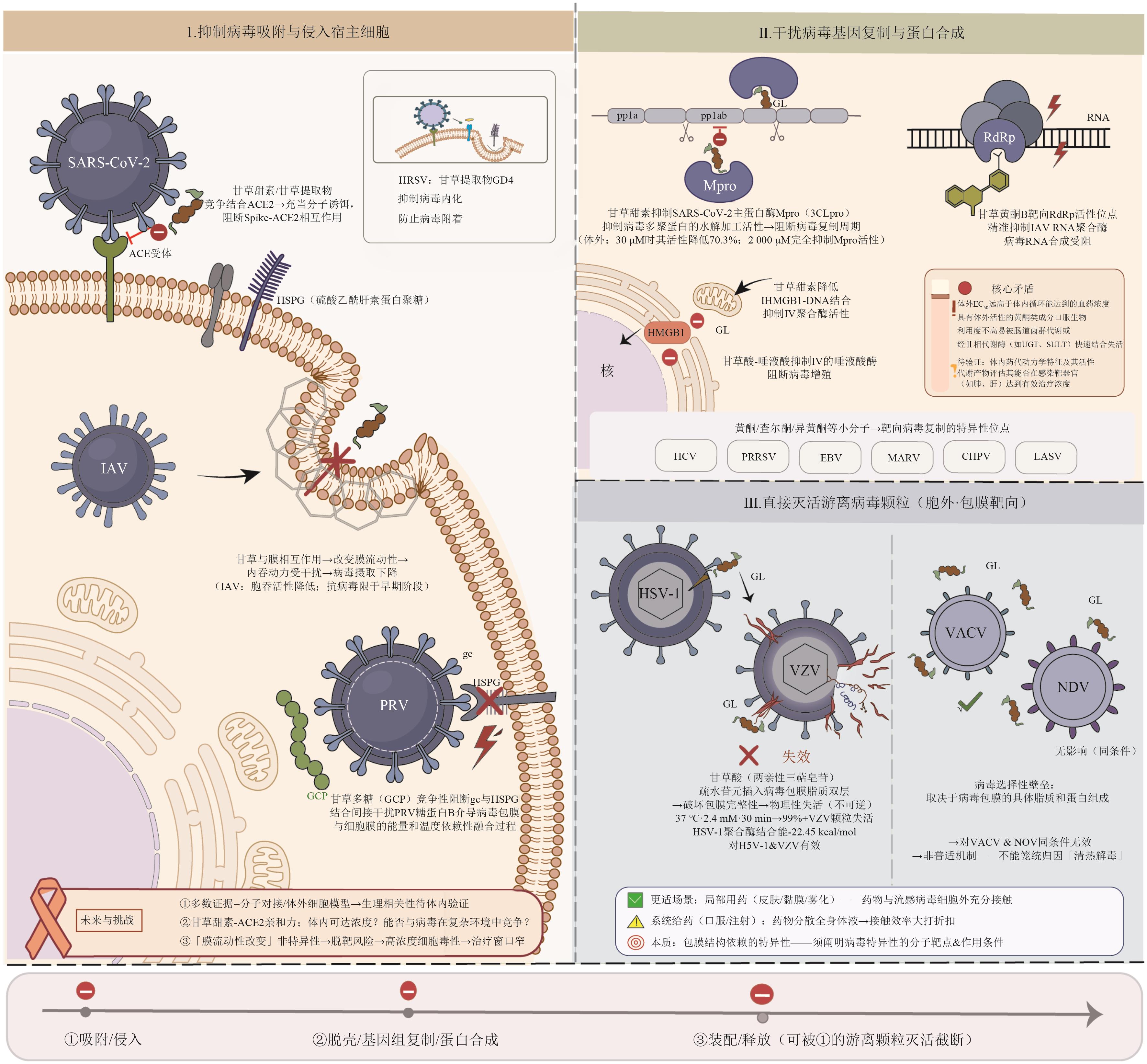
图1 甘草活性成分靶向病毒生命周期的三环节直接抗病毒作用机制
Fig. 1 Mechanism of the direct antiviral action of glycyrrhiza active ingredients targeting three key stages of the viral life cycle
| 病毒Virus | 甘草活性成分Active component | 主要作用机制Primary mechanism | 实验模型Experimental model | 效果Efficacy | 参考文献Reference |
|---|---|---|---|---|---|
| SARS-CoV-2 | 甘草根水提物、甘草酸 | 抑制病毒主蛋白酶(Mpro) | 体外(Vero E6细胞) | 水溶液甘草根提取物在2 mg/mL亚毒浓度下显示抗病毒效果;甘草酸在2 000 μmol/L(1.6 mg/mL)完全抑制Mpro活性,在30 μmol/L(0.024 mg/mL)时其活性降低70.3% | [ |
| PRRSV | Glycyrrhizin | 抑制病毒的内化过程 | 体外(MARC-145细胞) | 800 μmol/L甘草酸可抑制PRRSV与MARC-145细胞的结合,在0.001与0.000 1 PFU/细胞MOI下感染率分别降低15%和30%,并在穿透阶段抑制其内化,使病毒滴度降低约1 000倍 | [ |
| PRV | Glycyrrhiza polysaccharide (GCP) | 抑制PRV附着与内化 | 体外(PK-15, Vero细胞) | GCP通过靶向病毒感染早期阶段发挥抑制作用,效果呈剂量依赖性。其中,共处理效果最强(抑制gB蛋白80.6%,病毒滴度42.6%),预处理无效,后处理效果较弱(17.7%-25.9%),且600 μg/mL为最适浓度 | [ |
| HRSV | Radix glycyrrhizae and (18β-GA) | 可能抑制病毒在宿主细胞上的附着和侵入 | 体外(HEp-2, A549细胞) | 甘草根在病毒接种前给药更有效,能抑制病毒附着和穿透;300 μg/mL甘草根显著减少细胞内和悬浮液中的病毒量;甘草根刺激黏膜细胞分泌IFN-β抵抗病毒感染 | [ |
| RSV | Glycyrrhizin | 减少病毒复制 | 体外(人支气管上皮细胞) | Glycyrrhizin剂量依赖性地抑制了感染RSV的永生化和原发人类支气管上皮细胞中的HMGB1上调 | [ |
| NDV | 甘草水提取物 | 抑制病毒的复制 | 鸡胚 | 60 mg/100 mL的甘草提取物在胚胎卵中未产生任何毒性,并显示出抗病毒活性 | [ |
| HIV/HIV-1/NSI-HIV | Glycyrrhizin相关化合物 | 降低膜流动性、抑制蛋白激酶C(PKC)、免疫调节 | 体外(多种免疫细胞系) | 0.6 mmol/L完全抑制HIV诱导噬斑形成;0.3和0.6 mmol/L完全抑制MT-4细胞HIV病变效应和抗原表达;Glycyrrhizin在0.075-0.6 mmol/L剂量依赖降低MOLT-4细胞的蛋白激酶C(PKC)活性,1.2 mmol/L浓度部分抑制HIV-1颗粒与MT-4细胞的吸附和巨细胞形成;Glycyrrhizin通过诱导β趋化因子抑制外周血单个核细胞(PBMC)培养物中非合胞体诱导型HIV变异株(NSI-HIV)复制 | [ |
| IAV | Glycyrrhizin | 降低病毒摄取;干扰病毒基因复制与蛋白合成 | 体外(人肺细胞;噬菌体) | Glycyrrhizin通过作用于细胞膜降低病毒内吞活性;HMGB1结合DNA来抑制IAV聚合酶活性 | [ |
| HSV-1 | Glycyrrhizin | 直接作用于病毒颗粒;潜在结合阻断 | 体外(人类非整倍HEp2细胞) | 对HSV-1聚合酶表现出高结合能评分(-22.45 kcal/mol) | [ |
| VZV | Glycyrrhizin | 抑制病毒颗粒的穿透、脱壳或释放 | 体外(人胚胎成纤维细胞) | 2.4 mmol/L浓度在37 ℃下处理30 min,可灭活99%以上的病毒颗粒 | [ |
| EBV | 甘草酸衍生物 | 抑制病毒的吸附和穿透 | 体外(Raji细胞) | 在20-90 μmol/L浓度范围内,可剂量依赖性地降低病毒基因拷贝数,半数有效浓度(EC50)为25 μmol/L | [ |
表2 甘草活性成分对不同病毒家族的抗病毒效果总结
Table 2 Summary of the antiviral effects of licorice active ingredients against different viral families
| 病毒Virus | 甘草活性成分Active component | 主要作用机制Primary mechanism | 实验模型Experimental model | 效果Efficacy | 参考文献Reference |
|---|---|---|---|---|---|
| SARS-CoV-2 | 甘草根水提物、甘草酸 | 抑制病毒主蛋白酶(Mpro) | 体外(Vero E6细胞) | 水溶液甘草根提取物在2 mg/mL亚毒浓度下显示抗病毒效果;甘草酸在2 000 μmol/L(1.6 mg/mL)完全抑制Mpro活性,在30 μmol/L(0.024 mg/mL)时其活性降低70.3% | [ |
| PRRSV | Glycyrrhizin | 抑制病毒的内化过程 | 体外(MARC-145细胞) | 800 μmol/L甘草酸可抑制PRRSV与MARC-145细胞的结合,在0.001与0.000 1 PFU/细胞MOI下感染率分别降低15%和30%,并在穿透阶段抑制其内化,使病毒滴度降低约1 000倍 | [ |
| PRV | Glycyrrhiza polysaccharide (GCP) | 抑制PRV附着与内化 | 体外(PK-15, Vero细胞) | GCP通过靶向病毒感染早期阶段发挥抑制作用,效果呈剂量依赖性。其中,共处理效果最强(抑制gB蛋白80.6%,病毒滴度42.6%),预处理无效,后处理效果较弱(17.7%-25.9%),且600 μg/mL为最适浓度 | [ |
| HRSV | Radix glycyrrhizae and (18β-GA) | 可能抑制病毒在宿主细胞上的附着和侵入 | 体外(HEp-2, A549细胞) | 甘草根在病毒接种前给药更有效,能抑制病毒附着和穿透;300 μg/mL甘草根显著减少细胞内和悬浮液中的病毒量;甘草根刺激黏膜细胞分泌IFN-β抵抗病毒感染 | [ |
| RSV | Glycyrrhizin | 减少病毒复制 | 体外(人支气管上皮细胞) | Glycyrrhizin剂量依赖性地抑制了感染RSV的永生化和原发人类支气管上皮细胞中的HMGB1上调 | [ |
| NDV | 甘草水提取物 | 抑制病毒的复制 | 鸡胚 | 60 mg/100 mL的甘草提取物在胚胎卵中未产生任何毒性,并显示出抗病毒活性 | [ |
| HIV/HIV-1/NSI-HIV | Glycyrrhizin相关化合物 | 降低膜流动性、抑制蛋白激酶C(PKC)、免疫调节 | 体外(多种免疫细胞系) | 0.6 mmol/L完全抑制HIV诱导噬斑形成;0.3和0.6 mmol/L完全抑制MT-4细胞HIV病变效应和抗原表达;Glycyrrhizin在0.075-0.6 mmol/L剂量依赖降低MOLT-4细胞的蛋白激酶C(PKC)活性,1.2 mmol/L浓度部分抑制HIV-1颗粒与MT-4细胞的吸附和巨细胞形成;Glycyrrhizin通过诱导β趋化因子抑制外周血单个核细胞(PBMC)培养物中非合胞体诱导型HIV变异株(NSI-HIV)复制 | [ |
| IAV | Glycyrrhizin | 降低病毒摄取;干扰病毒基因复制与蛋白合成 | 体外(人肺细胞;噬菌体) | Glycyrrhizin通过作用于细胞膜降低病毒内吞活性;HMGB1结合DNA来抑制IAV聚合酶活性 | [ |
| HSV-1 | Glycyrrhizin | 直接作用于病毒颗粒;潜在结合阻断 | 体外(人类非整倍HEp2细胞) | 对HSV-1聚合酶表现出高结合能评分(-22.45 kcal/mol) | [ |
| VZV | Glycyrrhizin | 抑制病毒颗粒的穿透、脱壳或释放 | 体外(人胚胎成纤维细胞) | 2.4 mmol/L浓度在37 ℃下处理30 min,可灭活99%以上的病毒颗粒 | [ |
| EBV | 甘草酸衍生物 | 抑制病毒的吸附和穿透 | 体外(Raji细胞) | 在20-90 μmol/L浓度范围内,可剂量依赖性地降低病毒基因拷贝数,半数有效浓度(EC50)为25 μmol/L | [ |
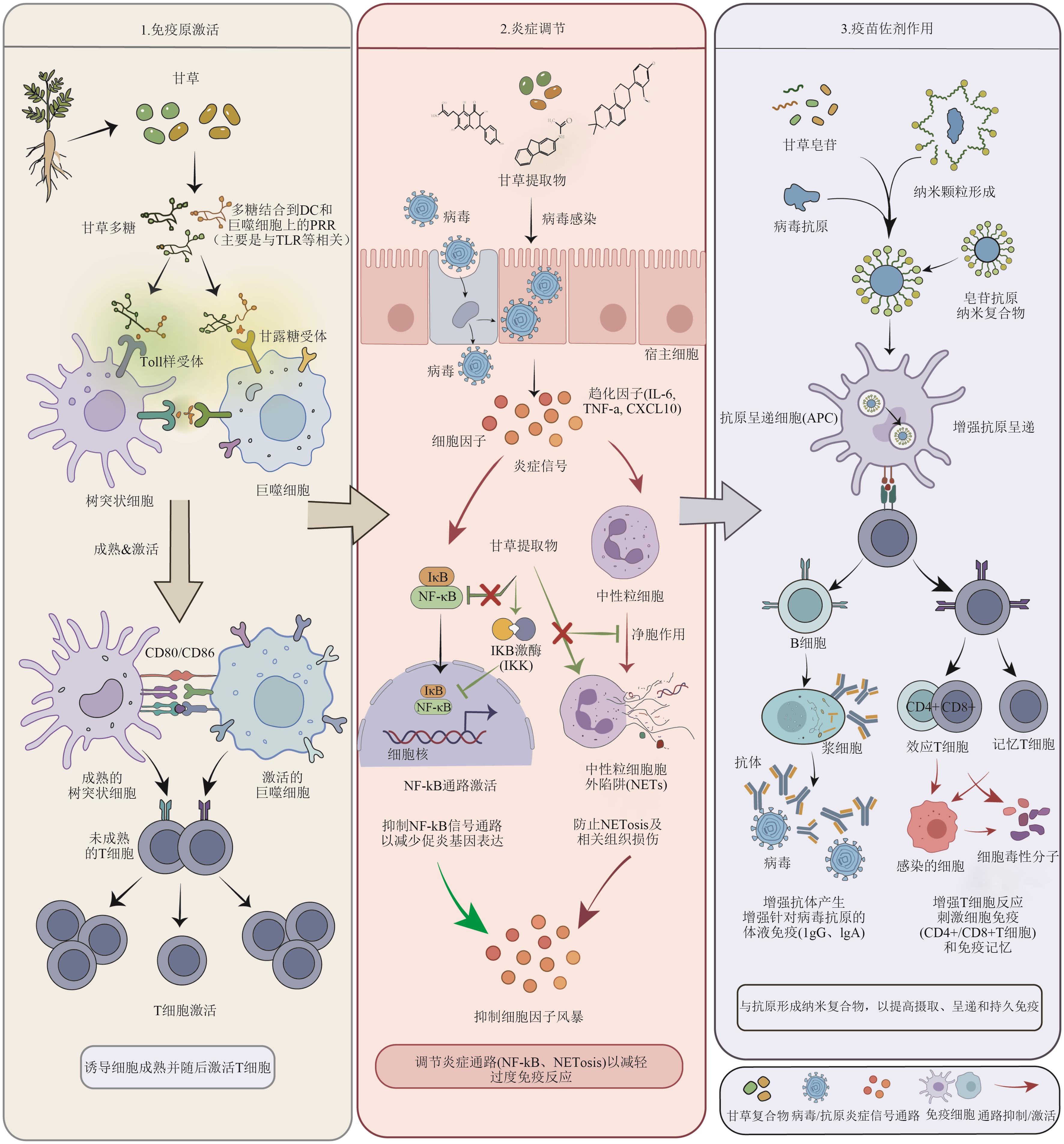
图2 甘草的抗病毒机制:对宿主免疫反应的调节
Fig. 2 The antiviral mechanism of glycyrrhiza: Regulation of the host's immune response
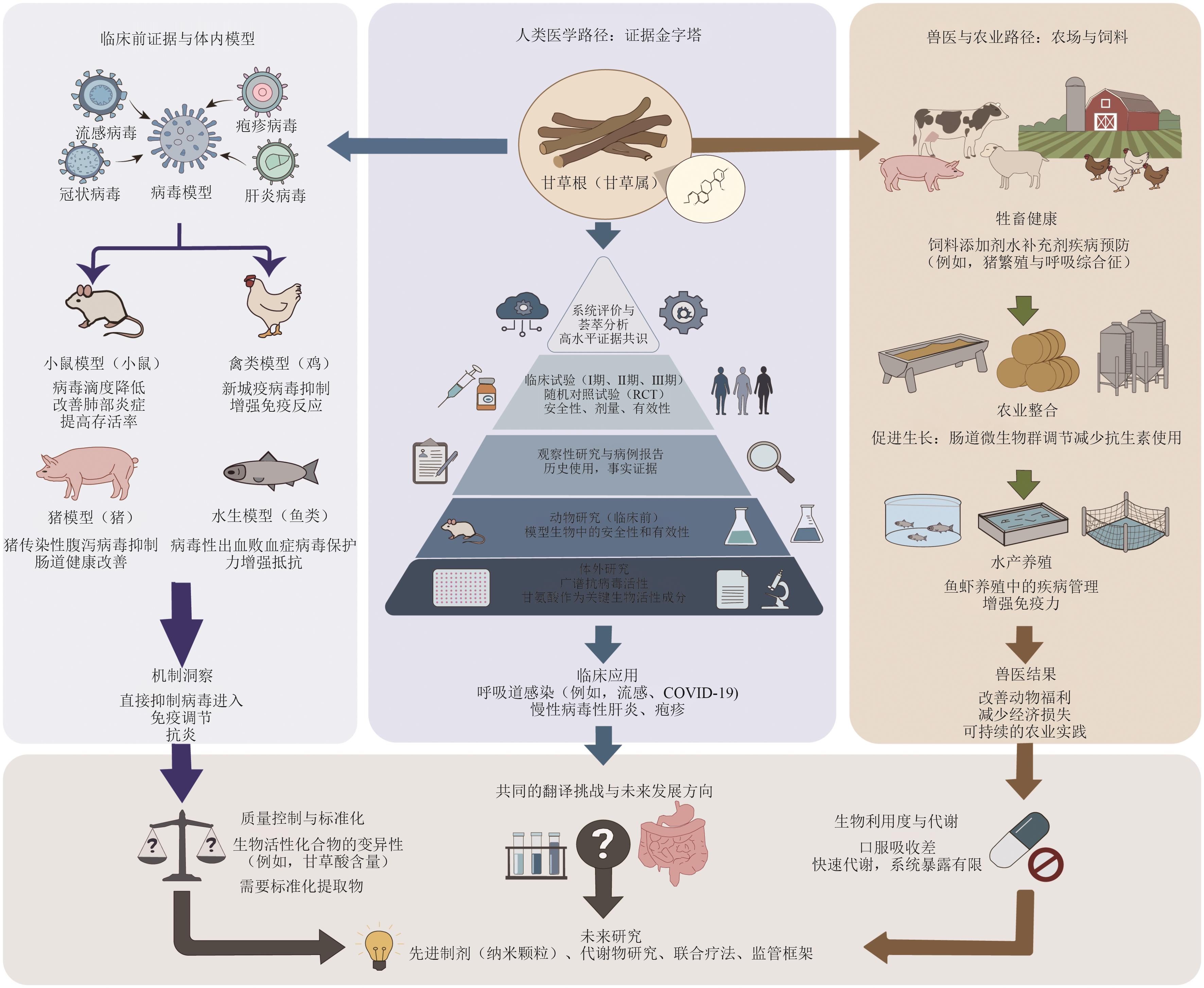
图3 甘草抗病毒效应的双重转化通路
Fig. 3 Glycyrrhiza-dual conversion pathway for antiviral effects
| 适应症/病毒Indication/Virus | 研究类型 Study type | 干预措施 Intervention | 主要发现/结局指标 Key findings/Outcome measures | 证据强度/局限性 Strength of evidence/Limitations | 参考文献 Reference |
|---|---|---|---|---|---|
| 日本慢性乙肝 | 动物实验:豚鼠 | 甘草素静脉注射 | 抑制HBsAg分泌;给药后1 h和4 h肝中甘草酸苷浓度分别为4.2和1.3 μg/g | 改善肝功能,偶可实现肝炎完全康复 | [ |
| 高致病性甲型流感H5N1 | 肺上皮细胞(A549) | 注射用甘草酸制剂(SNMC) | 具剂量依赖性双效作用:低浓度抗炎(抑制CXCL10, IL-6, CCL2, CCL5);高浓度直接抗病毒。抑制病毒诱导ROS,下游阻断NF-κB/JNK/p38通路激活 | 可能是治疗H5N1的潜在补充药物 | [ |
| 上呼吸道感染 | 病例对照 | 静脉滴注甘草酸(0.2%, 40 mL) | 平均住院时间更短,24-48 h内平均最高体温更低,治疗费用更低,无不良事件报告 | 对无急性细菌感染的URTI患者可能具有临床获益 | [ |
| 鼻病毒 | 上市药物 | hochu-ekki-to(日本) | 降低ICAM-1,阻断病毒RNA进入细胞质,抑制RV14感染 | 治疗普通感冒,降低COPD患者感冒发作频率 | [ |
| 肺炎 | 人肺成纤维细胞(HFL-1) | GL/GA/11-脱氧-GL/异构-GL/异构-30-OH-GL/同型-30-OH-GL | 异构-30-OH-GL和同型-30-OH-GL抑制IL-8效果显著增强(IC50约52-60 μg/mL),细胞毒性大幅降低(CC30>100 μg/mL) | 成为具开发潜力的候选化合物 | [ |
| 丙型肝炎 | 小鼠模型 | 甘草酸制剂SNMC | 剂量依赖性抑制肝脂肪变性;不影响肝脏铁含量,减轻肝线粒体超微结构改变;激活线粒体β-氧化,增加肉碱棕榈酰转移酶I表达,降低铁过载转基因小鼠肝脏中活性氧的生成 | 可能通过保护线粒体免受HCV蛋白和铁过载诱导的氧化应激预防肝脂肪变性 | [ |
| 人类免疫缺陷病毒 | 临床试验 | SNMC(100-200 mL或400-800 mL) | CD4计数及CD4/CD8比值部分改善;淋巴细胞母细胞化反应增加,尤以高剂量组显著;肝功能障碍完全改善 | 高剂量SNMC对HIV感染血友病患者有治疗效果,与AZT联用或更佳 | [ |
| 2019冠状病毒病 | 临床试验 | NRICM101 | 患者连续给药后在中位数9 d内连续3次检测为阴性,且无不良反应 | NRICM101通过抗病毒和抗炎特性干扰疾病进展,有望成为多靶点新冠肺炎防治药物 | [ |
表3 甘草抗病毒作用的临床前及临床研究证据
Table 3 Preclinical and clinical research evidence of licorice's antiviral effects
| 适应症/病毒Indication/Virus | 研究类型 Study type | 干预措施 Intervention | 主要发现/结局指标 Key findings/Outcome measures | 证据强度/局限性 Strength of evidence/Limitations | 参考文献 Reference |
|---|---|---|---|---|---|
| 日本慢性乙肝 | 动物实验:豚鼠 | 甘草素静脉注射 | 抑制HBsAg分泌;给药后1 h和4 h肝中甘草酸苷浓度分别为4.2和1.3 μg/g | 改善肝功能,偶可实现肝炎完全康复 | [ |
| 高致病性甲型流感H5N1 | 肺上皮细胞(A549) | 注射用甘草酸制剂(SNMC) | 具剂量依赖性双效作用:低浓度抗炎(抑制CXCL10, IL-6, CCL2, CCL5);高浓度直接抗病毒。抑制病毒诱导ROS,下游阻断NF-κB/JNK/p38通路激活 | 可能是治疗H5N1的潜在补充药物 | [ |
| 上呼吸道感染 | 病例对照 | 静脉滴注甘草酸(0.2%, 40 mL) | 平均住院时间更短,24-48 h内平均最高体温更低,治疗费用更低,无不良事件报告 | 对无急性细菌感染的URTI患者可能具有临床获益 | [ |
| 鼻病毒 | 上市药物 | hochu-ekki-to(日本) | 降低ICAM-1,阻断病毒RNA进入细胞质,抑制RV14感染 | 治疗普通感冒,降低COPD患者感冒发作频率 | [ |
| 肺炎 | 人肺成纤维细胞(HFL-1) | GL/GA/11-脱氧-GL/异构-GL/异构-30-OH-GL/同型-30-OH-GL | 异构-30-OH-GL和同型-30-OH-GL抑制IL-8效果显著增强(IC50约52-60 μg/mL),细胞毒性大幅降低(CC30>100 μg/mL) | 成为具开发潜力的候选化合物 | [ |
| 丙型肝炎 | 小鼠模型 | 甘草酸制剂SNMC | 剂量依赖性抑制肝脂肪变性;不影响肝脏铁含量,减轻肝线粒体超微结构改变;激活线粒体β-氧化,增加肉碱棕榈酰转移酶I表达,降低铁过载转基因小鼠肝脏中活性氧的生成 | 可能通过保护线粒体免受HCV蛋白和铁过载诱导的氧化应激预防肝脂肪变性 | [ |
| 人类免疫缺陷病毒 | 临床试验 | SNMC(100-200 mL或400-800 mL) | CD4计数及CD4/CD8比值部分改善;淋巴细胞母细胞化反应增加,尤以高剂量组显著;肝功能障碍完全改善 | 高剂量SNMC对HIV感染血友病患者有治疗效果,与AZT联用或更佳 | [ |
| 2019冠状病毒病 | 临床试验 | NRICM101 | 患者连续给药后在中位数9 d内连续3次检测为阴性,且无不良反应 | NRICM101通过抗病毒和抗炎特性干扰疾病进展,有望成为多靶点新冠肺炎防治药物 | [ |
| [1] | Zhu N, Zhang DY, Wang WL, et al. A novel coronavirus from patients with pneumonia in China, 2019 [J]. N Engl J Med, 2020, 382(8): 727-733. |
| [2] | Hoffmann M, Kleine-Weber H, Schroeder S, et al. SARS-CoV-2 cell entry depends on ACE2 and TMPRSS2 and is blocked by a clinically proven protease inhibitor [J]. Cell, 2020, 181(2): 271-280.e8. |
| [3] | Chen QY, Chen HZ, Wang WJ, et al. Glycyrrhetic acid, but not glycyrrhizic acid, strengthened entecavir activity by promoting its subcellular distribution in the liver via efflux inhibition [J]. Eur J Pharm Sci, 2017, 106: 313-327. |
| [4] | Ye XG. Effects of entecavir and lamivudine for hepatitis B decompensated cirrhosis: Meta-analysis [J]. World J Gastroenterol, 2013, 19(39): 6665. |
| [5] | Wahab S, Ahmad I, Irfan S, et al. Pharmacological efficacy and safety of Glycyrrhiza glabra in the treatmentof respiratory tract infections [J]. Mini Rev Med Chem, 2022, 22(11): 1476-1494. |
| [6] | Gomaa AA, Abdel-Wadood YA. The potential of glycyrrhizin and licorice extract in combating COVID-19 and associated conditions [J]. Phytomed Plus, 2021, 1(3): 100043. |
| [7] | Wolkerstorfer A, Kurz H, Bachhofner N, et al. Glycyrrhizin inhibits influenza A virus uptake into the cell [J]. Antivir Res, 2009, 83(2): 171-178. |
| [8] | Luo H, Tang QL, Shang YX, et al. Can Chinese medicine be used for prevention of corona virus disease 2019 (COVID-19)? a review of historical classics, research evidence and current prevention programs [J]. Chin J Integr Med, 2020, 26(4): 243-250. |
| [9] | Kuchta K, Cameron S, Lee M, et al. Which East Asian herbal medicines can decrease viral infections? [J]. Phytochem Rev, 2022, 21(1): 219-237. |
| [10] | 国家药典委员会. 中华人民共和国药典:一部[M]. 2020年版. 北京: 中国医药科技出版社, 2020. |
| Commission CP. Pharmacopoeia of the People’s Republic of China [M]. Beijing: China Medical Science Press, 2020. | |
| [11] | Asl MN, Hosseinzadeh H. Review of pharmacological effects of Glycyrrhiza sp. and its bioactive compounds [J]. Phytother Res, 2008, 22(6): 709-724. |
| [12] | Gasmi A, Kanwal S, Oliinyk P, et al. Ayurvedic and Chinese herbs against coronaviruses [J]. Curr Pharm Des, 2024, 30(21): 1681-1698. |
| [13] | 邓桃妹, 彭灿, 彭代银, 等. 甘草化学成分和药理作用研究进展及质量标志物的探讨 [J]. 中国中药杂志, 2021, 46(11): 2660-2676. |
| Deng TM, Peng C, Peng DY, et al. Research progress on chemical constituents and pharmacological effects of Glycyrrhizae radix et Rhizoma and discussion of Q-markers [J]. China J Chin Mater Med, 2021, 46(11): 2660-2676. | |
| [14] | Cui HR, Zhang JY, Cheng XH, et al. Immunometabolism at the service of traditional Chinese medicine [J]. Pharmacol Res, 2022, 176: 106081. |
| [15] | Adianti M, Aoki C, Komoto M, et al. Anti-hepatitis C virus compounds obtained from Glycyrrhiza uralensis and other Glycyrrhiza species [J]. Microbiol Immunol, 2014, 58(3): 180-187. |
| [16] | Shin EM, Zhou HY, Guo LY, et al. Anti-inflammatory effects of glycyrol isolated from Glycyrrhiza uralensis in LPS-stimulated RAW264.7 macrophages [J]. Int Immunopharmacol, 2008, 8(11): 1524-1532. |
| [17] | Wu LW, Ma TY, Zang CX, et al. Glycyrrhiza, a commonly used medicinal herb: Review of species classification, pharmacology, active ingredient biosynthesis, and synthetic biology [J]. J Adv Res, 2025, 75: 249-270. |
| [18] | Ming LJ, Yin ACY. Therapeutic effects of glycyrrhizic acid [J]. Nat Prod Commun, 2013, 8(3): 1934578X1300800335. |
| [19] | Luo P, Liu D, Li J. Pharmacological perspective: glycyrrhizin may be an efficacious therapeutic agent for COVID-19 [J]. Int J Antimicrob Agents, 2020, 55(6): 105995. |
| [20] | Fan P, Lv P, Zhang S, et al. Licoflavone B suppresses influenza a virus by targeting the viral RNA-dependent RNA polymerase (RdRp) [J]. Viruses, 2025, 17(9): 1157. |
| [21] | Aipire A, Li JY, Yuan PF, et al. Glycyrrhiza uralensis water extract enhances dendritic cell maturation and antitumor efficacy of HPV dendritic cell-based vaccine [J]. Sci Rep, 2017, 7: 43796. |
| [22] | Yang YB, Liu YJ, Lou R, et al. Glycyrrhiza polysaccharides inhibits PRRSV replication [J]. Virol J, 2023, 20: 140. |
| [23] | Rizvi ZA, Babele P, Sadhu S, et al. Prophylactic treatment of Glycyrrhiza glabra mitigates COVID-19 pathology through inhibition of pro-inflammatory cytokines in the Hamster model and NETosis [J]. Front Immunol, 2022, 13: 945583. |
| [24] | Ameri A, Farashahinejad M, Davoodian P, et al. Efficacy and safety of licorice (Glycyrrhiza glabra) in moderately ill patients with COVID-19: a randomized controlled trial [J]. Inflammopharmacology, 2023, 31(6): 3037-3045. |
| [25] | Wang JJ, Chen XQ, Wang W, et al. Glycyrrhizic acid as the antiviral component of Glycyrrhiza uralensis Fisch. against coxsackievirus A16 and enterovirus 71 of hand foot and mouth disease [J]. J Ethnopharmacol, 2013, 147(1): 114-121. |
| [26] | 周定定, 李辉虎, 汤兴涌, 等. 甘草酸和甘草苷生物合成与调控的研究进展 [J]. 生物技术通报, 2023, 39(5): 44-53. |
| Zhou DD, Li HH, Tang XY, et al. Research progress in the biosynthesis and regulation of glycyrrhizic acid and liquiritin [J]. Biotechnol Bull, 2023, 39(5): 44-53. | |
| [27] | Harada S. The broad anti-viral agent glycyrrhizin directly modulates the fluidity of plasma membrane and HIV-1 envelope [J]. Biochem J, 2005, 392(1): 191-199. |
| [28] | Srivastava V, Yadav A, Sarkar P. Molecular docking and ADMET study of bioactive compounds of Glycyrrhiza glabra against main protease of SARS-CoV2 [J]. Mater Today Proc, 2022, 49: 2999-3007. |
| [29] | Duan EZ, Wang D, Fang LR, et al. Suppression of porcine reproductive and respiratory syndrome virus proliferation by glycyrrhizin [J]. Antivir Res, 2015, 120: 122-125. |
| [30] | Tsuji M, Sriwilaijaroen N, Inoue H, et al. Synthesis and anti-influenza virus evaluation of triterpene-sialic acid conjugates [J]. Bioorg Med Chem, 2018, 26(1): 17-24. |
| [31] | Baba M, Shigeta S. Antiviral activity of glycyrrhizin against Varicella-zoster virus in vitro [J]. Antivir Res, 1987, 7(2): 99-107. |
| [32] | Arase Y, Ikeda K, Murashima N, et al. The long term efficacy of glycyrrhizin in chronic hepatitis C patients [J]. Cancer, 1997, 79(8): 1494-1500. |
| [33] | van de Sand L, Bormann M, Alt M, et al. Glycyrrhizin effectively inhibits SARS-CoV-2 replication by inhibiting the viral main protease [J]. Viruses, 2021, 13(4): 609. |
| [34] | Lin JC, Cherng JM, Hung MS, et al. Inhibitory effects of some derivatives of glycyrrhizic acid against Epstein-Barr virus infection: Structure-activity relationships [J]. Antivir Res, 2008, 79(1): 6-11. |
| [35] | Pompei R, Flore O, Marccialis MA, et al. Glycyrrhizic acid inhibits virus growth and inactivates virus particles [J]. Nature, 1979, 281(5733): 689-690. |
| [36] | Ito M, Nakashima H, Baba M, et al. Inhibitory effect of glycyrrhizin on the in vitro infectivity and cytopathic activity of the human immunodeficiency virus [HIV (HTLV-III/LAV)] [J]. Antivir Res, 1987, 7(3): 127-137. |
| [37] | Utsunomiya T, Kobayashi M, Pollard RB, et al. Glycyrrhizin, an active component of licorice roots, reduces morbidity and mortality of mice infected with lethal doses of influenza virus [J]. Antimicrob Agents Chemother, 1997, 41(3): 551-556. |
| [38] | Sato H, Goto W, Yamamura JI, et al. Therapeutic basis of glycyrrhizin on chronic hepatitis B [J]. Antivir Res, 1996, 30(2-3): 171-177. |
| [39] | Michaelis M, Geiler J, Naczk P, et al. Glycyrrhizin exerts antioxidative effects in H5N1 influenza a virus-infected cells and inhibits virus replication and pro-inflammatory gene expression [J]. PLoS One, 2011, 6(5): e19705. |
| [40] | Yanagawa Y, Ogura M, Fujimoto E, et al. Effects and cost of glycyrrhizin in the treatment of upper respiratory tract infections in members of the Japanese maritime self-defense force: Preliminary report of a prospective, randomized, double-blind, controlled, parallel-group, alternate-day treatment assignment clinical trial [J]. Curr Ther Res, 2004, 65(1): 26-33. |
| [41] | Alexyuk PG, Bogoyavlenskiy AP, Alexyuk MS, et al. Adjuvant activity of multimolecular complexes based on Glycyrrhiza glabra saponins, lipids, and influenza virus glycoproteins [J]. Arch Virol, 2019, 164(7): 1793-1803. |
| [42] | Li ZY, Dong MY, Chen ZN, et al. Combining virus-based affinity ultrafiltration method with serum pharmacochemistry to identify the antiviral pharmacodynamic substances in licorice [J]. J Ethnopharmacol, 2025, 338: 118978. |
| [43] | Pastorino G, Cornara L, Soares S, et al. Liquorice (Glycyrrhiza glabra): a phytochemical and pharmacological review [J]. Phytother Res, 2018, 32(12): 2323-2339. |
| [44] | Rizzato G, Scalabrin E, Radaelli M, et al. A new exploration of licorice metabolome [J]. Food Chem, 2017, 221: 959-968. |
| [45] | Wang HJ, Jia X, Zhang MQ, et al. Isoliquiritigenin inhibits virus replication and virus-mediated inflammation via NRF2 signaling [J]. Phytomedicine, 2023, 114: 154786. |
| [46] | Faisal Ahmed S, Munna MMR, Ahmed MH, et al. Licoisoflavone B and glabridin from Glycyrrhiza glabra as potent nucleoprotein antagonists of Lassa virus: insights from molecular docking, dynamics simulation, PCA, and DFT studies [J]. J Genet Eng Biotechnol, 2025, 23(3): 100544. |
| [47] | Kondo K, Mao SB, Nakamura R, et al. Constituent properties of licorices derived from Glycyrrhiza uralensis, G. glabra, or G. in flata identified by genetic information [J]. Biol Pharm Bull, 2007, 30(7): 1271-1277. |
| [48] | Chuang YT, Lin YL, Lin JY. Licochalcone A regulates viral IRES activity to inhibit enterovirus replication [J]. Antivir Res, 2024, 221: 105755. |
| [49] | Chen F, Chan KH, Jiang Y, et al. In vitro susceptibility of 10 clinical isolates of SARS coronavirus to selected antiviral compounds [J]. J Clin Virol, 2004, 31(1): 69-75. |
| [50] | Huan CC, Xu Y, Zhang W, et al. Glycyrrhiza polysaccharide inhibits pseudorabies virus infection by interfering with virus attachment and internalization [J]. Viruses, 2022, 14(8): 1772. |
| [51] | Zhou H, Dai C, Cui XJ, et al. Immunomodulatory and antioxidant effects of Glycyrrhiza uralensis polysaccharide in Lohmann Brown chickens [J]. Front Vet Sci, 2022, 9: 959449. |
| [52] | Lu DD, Yang YT, Du YH, et al. The potential of Glycyrrhiza from “medicine food homology” in the fight against digestive system tumors [J]. Molecules, 2023, 28(23): 7719. |
| [53] | Hasan A, Zhang M, Shang ZP, et al. Bioactive prenylated phenolic compounds from the aerial parts of Glycyrrhiza uralensis [J]. Phytochemistry, 2022, 201: 113284. |
| [54] | Han YN, Chung MS, Kim TH, et al. Two tetrahydroquinoline alkaloids from Glycyrrhiza uralensis [J]. Arch Pharm Res, 1990, 13(1): 101-102. |
| [55] | 马君义, 张继, 姚健. 胀果甘草叶挥发性化学成分的分析研究 [J]. 中国现代应用药学, 2007, 24(1): 1-4. |
| Ma JY, Zhang J, Yao J. Studies on chemical composition of volatile oil from the leaves of Glycyrrhiza inflata [J]. Chin J Mod Appl Pharm, 2007, 24(1): 1-4. | |
| [56] | El-Saber Batiha G, Magdy Beshbishy A, El-Mleeh A, et al. Traditional uses, bioactive chemical constituents, and pharmacological and toxicological activities of Glycyrrhiza glabra L. (Fabaceae) [J]. Biomolecules, 2020, 10(3): 352. |
| [57] | Sonarkar S, Bhadoria N, Gunwal M, et al. Antiadherence and antimicrobial property of herbal extracts (Glycyrrhiza glabra and Terminalia chebula) on Streptococcus mutans: an in vitro experimental study [J]. J Oral Maxillofac Pathol, 2019, 23(1): 73. |
| [58] | Dimitrov DS. The secret life of ACE2 as a receptor for the SARS virus [J]. Cell, 2003, 115(6): 652-653. |
| [59] | Zhang L, Liu YH. Potential interventions for novel coronavirus in China: a systematic review [J]. J Med Virol, 2020, 92(5): 479-490. |
| [60] | Feng Yeh C, Chih Wang K, Chai Chiang L, et al. Water extract of licorice had anti-viral activity against human respiratory syncytial virus in human respiratory tract cell lines [J]. J Ethnopharmacol, 2013, 148(2): 466-473. |
| [61] | Wang XQ, Li HY, Liu XY, et al. The anti-respiratory syncytial virus effect of active compound of Glycyrrhiza GD4 in vitro [J]. Zhong Yao Cai, 2006, 29(7): 692. |
| [62] | Elebeedy D, Ghanem A, Aly SH, et al. Synergistic antiviral activity of Lactobacillus acidophilus and Glycyrrhiza glabra against Herpes Simplex-1 Virus (HSV-1) and Vesicular Stomatitis Virus (VSV): experimental and in Silico insights [J]. BMC Microbiol, 2023, 23: 173. |
| [63] | Tan L, Yao J, Yang YD, et al. Current status and challenge of pseudorabies virus infection in China [J]. Virol Sin, 2021, 36(4): 588-607. |
| [64] | Moisy D, Avilov SV, Jacob Y, et al. HMGB1 protein binds to influenza virus nucleoprotein and promotes viral replication [J]. J Virol, 2012, 86(17): 9122-9133. |
| [65] | Ogiku M, Kono H, Hara M, et al. Glycyrrhizin prevents liver injury by inhibition of high-mobility group box 1 production by kupffer cells after ischemia-reperfusion in rats [J]. J Pharmacol Exp Ther, 2011, 339(1): 93-98. |
| [66] | Skariyachan S, Vijayan S, Sebastian D, et al. Structure-based identification of dual targeting lead inhibitor to Marburg virus glycoprotein and Chandipura virus nucleoprotein: Insights from molecular docking, dynamics and binding free energy analyses [J]. Biochem Biophys Res Commun, 2025, 776: 152239. |
| [67] | Hosoya M, Shigeta S, Nakamura K, et al. Inhibitory effect of selected antiviral compounds on measles (SSPE) virus replication in vitro [J]. Antivir Res, 1989, 12(2): 87-97. |
| [68] | Manti S, Harford TJ, Salpietro C, et al. Induction of high-mobility group Box-1 in vitro and in vivo by respiratory syncytial virus [J]. Pediatr Res, 2018, 83(5): 1049-1056. |
| [69] | Altaf I, Imran S, Omer M, et al. Comparative study to evaluate the anti-viral efficacy of Glycyrrhiza glabra extract and ribavirin against the Newcastle disease virus [J]. Phcog Res, 2014, 6(1): 6. |
| [70] | Watanbe H, Miyaji C, Makino M, et al. Therapeutic effects of glycyrrhizin in mice infected with LP-BM5 murine retrovirus and mechanisms involved in the prevention of disease progression [J]. Biotherapy, 1996, 9(4): 209-220. |
| [71] | Sasaki H, Takei M, Kobayashi M, et al. Effect of glycyrrhizin, an active component of licorice roots, on HIV replication in cultures of peripheral blood mononuclear cells from HIV-seropositive patients [J]. Pathobiology, 2003, 70(4): 229-236. |
| [72] | Abdel Haleem MI, Gaballa MMS, El-Far AH, et al. Mitigating impact of Glycyrrhiza glabra on virulent Newcastle disease virus challenge in chickens: clinical studies, histopathological alterations and molecular docking [J]. Vet Res Commun, 2024, 48(6): 3823-3845. |
| [73] | Ito M, Sato A, Hirabayashi K, et al. Mechanism of inhibitory effect of glycyrrhizin on replication of human immunodeficiency virus (HIV) [J]. Antivir Res, 1988, 10(6): 289-298. |
| [74] | Zhao RS, Li YR, Liu YY, et al. 4′-hydroxychalcone induces ferroptosis in glioblastoma through the xCT/GSH/GPX4 axis under the regulation of the AKT/mTORC1/4EBP1 pathway [J]. Phytother Res, 2025, 39(9): 4348-4365. |
| [75] | Wu TY, Khor TO, Saw CLL, et al. Anti-inflammatory/anti-oxidative stress activities and differential regulation of Nrf2-mediated genes by non-polar fractions of tea Chrysanthemum zawadskii and licorice Glycyrrhiza uralensis [J]. AAPS J, 2011, 13(1): 9239. |
| [76] | Liu MM, Zhao FS, Xu JK, et al. Qingjin Huatan decoction protects mice against influenza a virus pneumonia via the chemokine signaling pathways [J]. J Ethnopharmacol, 2023, 317: 116745. |
| [77] | Shin SM, Mendis WRH, Kang SY, et al. Efficacy of a combined natural extract of turmeric (Curcuma longa) and liquorice (Glycyrrhiza uralensis) against viral haemorrhagic septicaemia virus in olive flounders (Paralichthys olivaceus) [J]. J Fish Dis, 2026, 49: e70002. |
| [78] | Bai WF, Zhu QH, Wang J, et al. Licorice extract inhibits porcine epidemic diarrhea virus in vitro and in vivo [J]. J Gen Virol, 2024, 105(3). |
| [79] | Hidaka I, Hino K, Korenaga M, et al. Stronger Neo-Minophagen C™, a glycyrrhizin-containing preparation, protects liver against carbon tetrachloride-induced oxidative stress in transgenic mice expressing the hepatitis C virus polyprotein [J]. Liver Int, 2007, 27(6): 845-853. |
| [80] | Huynh DTN, Nguyen HT, Hsieh CM. Taiwan Chingguan Yihau may improve post-COVID-19 respiratory complications through PI3K/AKT, HIF-1, and TNF signaling pathways revealed by network pharmacology analysis [J]. Mol Divers, 2025, 29(3): 2305-2321. |
| [81] | Zendejas-Hernandez U, Alcántara-Martínez N, Vivar DT, et al. Nebulized glycyrrhizin/enoxolone drug modulates IL-17A in COVID-19 patients: a randomized clinical trial [J]. Front Immunol, 2024, 14: 1282280. |
| [82] | Lai TNH, Trinh TBN, Than TT, et al. Antiviral activity of plant-based additives against African swine fever virus (ASFV) in feed ingredients [J]. Vet Med Sci, 2024, 10(6): e70070. |
| [83] | Xue WJ, Zhang TY, Wen YQ, et al. 18β-glycyrrhetinic acid-amantadine hybrid: Synthesis and anti-EMCV activity via NF-κB modulation [J]. Bioorg Med Chem, 2025, 131: 118431. |
| [84] | Yamaya M, Sasaki T, Yasuda H, et al. Hochu-ekki-to inhibits rhinovirus infection in human tracheal epithelial cells [J]. British J Pharmacology, 2007, 150(6): 702-710. |
| [85] | Matsui S, Matsumoto H, Sonoda Y, et al. Glycyrrhizin and related compounds down-regulate production of inflammatory chemokines IL-8 and eotaxin 1 in a human lung fibroblast cell line [J]. Int Immunopharmacol, 2004, 4(13): 1633-1644. |
| [86] | Korenaga M, Hidaka I, Nishina S, et al. A glycyrrhizin-containing preparation reduces hepatic steatosis induced by hepatitis C virus protein and iron in mice: SNMC reduces HCV-linked hepatic steatosis [J]. Liver Int, 2011, 31(4): 552-560. |
| [87] | Mori KZ, Sakai H, Suzuki S, et al. Effects of glycyrrhizin (SNMC: Stronger Neo-Minophagen C) in hemophilia patients with HIV infection [J]. Tohoku J Exp Med, 1989, 158(1): 25-35. |
| [88] | Tsai KC, Huang YC, Liaw CC, et al. A traditional Chinese medicine formula NRICM101 to target COVID-19 through multiple pathways: a bedside-to-bench study [J]. Biomed Pharmacother, 2021, 133: 111037. |
| [1] | 高峥, 尹柳祎, 孟令品, 王晓慧, 孙佳欣, 宋扬, 温树波. 植物提取物抗牛病毒性腹泻病毒的研究进展[J]. 生物技术通报, 2026, 42(1): 31-41. |
| [2] | 王梦帆, 赵子玉, 王春光, 刘廷玉, 陈曦, 张铁. 基于药效团模型筛选CTX-M-14型超广谱β-内酰胺酶抑制剂[J]. 生物技术通报, 2024, 40(6): 319-329. |
| [3] | 周定定, 李辉虎, 汤兴涌, 余发新, 孔丹宇, 刘毅. 甘草酸和甘草苷生物合成与调控的研究进展[J]. 生物技术通报, 2023, 39(5): 44-53. |
| [4] | 梁星星, 王佳, 许文涛. 抗病毒核苷酸类似物磷酸化修饰研究进展[J]. 生物技术通报, 2022, 38(2): 218-226. |
| [5] | 成温玉, 张博昕, 赵鸿远, 陈艳, 谢娟平. 天然产物抗猪流行性腹泻病毒研究进展[J]. 生物技术通报, 2022, 38(12): 127-136. |
| [6] | 李丹, 杜梦潭, 修明霞, 刘兴健, 张志芳, 李轶女. 羊α干扰素在家蚕中的表达及抗小反刍兽疫病毒活性测定[J]. 生物技术通报, 2022, 38(1): 187-193. |
| [7] | 赵鸿远, 王朝, 成温玉, 马宁宁, 李曼, 魏小丽. 抗非洲猪瘟病毒制剂的研究进展[J]. 生物技术通报, 2021, 37(5): 174-181. |
| [8] | 高玲, 王斐, 谢双全, 陈喜凤, 沈海涛, 李鸿彬. 乌拉尔甘草CBL基因家族的鉴定与表达分析[J]. 生物技术通报, 2021, 37(4): 18-27. |
| [9] | 宋华丽, 孙效迎, 孔祥会, 李莉, 裴超. RNA干扰技术在水产动物抗病毒和抗寄生虫研究中的应用研究进展[J]. 生物技术通报, 2020, 36(2): 193-205. |
| [10] | 史宝忠, 胡建燃, 李平, 徐凯. 党参多糖对Ana-1巨噬细胞和小鼠的免疫调节作用[J]. 生物技术通报, 2019, 35(6): 114-118. |
| [11] | 曾飞, 张森, 钱大玮, 朱振华, 周嘉琳, 段金廒. 甘草药渣降解菌的筛选及其产酶工艺研究[J]. 生物技术通报, 2017, 33(12): 125-131. |
| [12] | 邹广平, 李雅丽, 冯梦薇, 杨修, 许智伟. 甘草悬浮细胞肉桂酸-4-羟基化酶(C4H)基因的克隆及表达分析[J]. 生物技术通报, 2017, 33(11): 96-100. |
| [13] | 刘晶晶, 程春玲, 席玉珍, 魏书. 烟草NtWRKY40在植物应答病毒侵染过程中的作用[J]. 生物技术通报, 2016, 32(10): 188-198. |
| [14] | 刘兴健, 李皓洋, 胡小元, 张志芳, 易咏竹, 李轶女. 猪γ干扰素在家蚕中的表达和抗病毒活性检测[J]. 生物技术通报, 2016, 32(1): 144-148. |
| [15] | 李皓洋, 胡小元, 易咏竹, 杨鑫, 张志芳, 李轶女. 犬α干扰素在家蚕杆状病毒表达系统中的表达及其抗病毒活性的测定[J]. 生物技术通报, 2015, 31(6): 216-220. |
| 阅读次数 | ||||||
|
全文 |
|
|||||
|
摘要 |
|
|||||
