






• 研究报告 •
马文玲1, 刘国甜2, 李承男1, 陈明1, 单守明1, 尹晓1( )
收稿日期:2026-07-01
出版日期:2026-10-16
通讯作者:
尹晓yinxiao90@nxu.edu.cn基金资助:
MA Wen-ling1, LIU Guo-tian2, LI Cheng-nan1, CHEN Ming1, SHAN Shou-ming1, YIN Xiao1()
Received:2026-07-01
Published:2026-10-16
摘要:
目的 利用SSR分子标记对‘赤霞珠’ב北冰红’F1代群体进行真实性鉴定,并开展灰霉病抗性遗传分析,为葡萄抗病育种提供理论依据和种质材料。 方法 以‘赤霞珠’为母本、‘北冰红’为父本,通过人工杂交获得106株F1代群体。采用CTAB法提取亲本及其后代叶片DNA,利用SSR标记鉴定真实杂交后代,并对其离体叶片接种灰霉菌进行抗性鉴定和病斑统计。 结果 筛选获得引物Z3M12(ab×cd型)用于群体鉴定。在106株后代中,真实杂种91株,真实率85.85%。母本‘赤霞珠’病情指数40.0(感病),父本‘北冰红’病情指数20.0(抗病)。后代病斑面积连续分布,变异系数83.40%‒117.40%;抗性分离为高抗5株、抗病66株、感病17株、高感3株,抗病及以上占比78.02%。染色显示,抗性个体H2O2积累与菌丝生长呈负相关,高抗个体表现超亲抗性。3次重复病斑面积呈极显著正相关(r=0.731‒0.903,P<0.01)。子代平均病斑面积低于亲中值,组合传递率为57.67%‒66.38%,筛选出5株稳定高抗材料。 结论 SSR分子标记可快速精准鉴定杂交后代,有效剔除假杂种。‘赤霞珠’ב北冰红’杂交组合F1代群体的灰霉病抗性呈连续分布,育种选择效率较高;5株高抗株系可为抗病新品种选育及基因定位提供核心种质。
马文玲, 刘国甜, 李承男, 陈明, 单守明, 尹晓. 基于SSR分子标记的葡萄F1代杂交群体鉴定及灰霉病抗性遗传评价[J]. 生物技术通报, doi: 10.13560/j.cnki.biotech.bull.1985.2026-0737.
MA Wen-ling, LIU Guo-tian, LI Cheng-nan, CHEN Ming, SHAN Shou-ming, YIN Xiao. Identification of F1 Hybrid Population in Grape Using SSR Molecular Markers and Genetic Evaluation of Resistance to Gray Mold[J]. Biotechnology Bulletin, doi: 10.13560/j.cnki.biotech.bull.1985.2026-0737.
| 群体Population | 标记Marker | 样本数Sample size | 观测等位基因数Na | 有效等位基因数Ne | Shannon信息指数I | 观测杂合度 Ho | 期望杂合度 He | 多态性信息含量 PIC |
|---|---|---|---|---|---|---|---|---|
赤霞珠 Cabernet Sauvignon | Z3M12 | 30 | 6 | 2.287 | 0.984 | 0.967 | 0.563 | 0.502 |
北冰红 Beibinghong | 30 | 6 | 2.368 | 1.033 | 1.000 | 0.578 | 0.514 | |
F1群体 F1 hybrid population | 91 | 11 | 4.375 | 1.666 | 0.989 | 0.771 | 0.710 |
表1 F1代杂交群体的遗传多样性分析
Table 1 Genetic diversity analysis of the F1 hybrid population
| 群体Population | 标记Marker | 样本数Sample size | 观测等位基因数Na | 有效等位基因数Ne | Shannon信息指数I | 观测杂合度 Ho | 期望杂合度 He | 多态性信息含量 PIC |
|---|---|---|---|---|---|---|---|---|
赤霞珠 Cabernet Sauvignon | Z3M12 | 30 | 6 | 2.287 | 0.984 | 0.967 | 0.563 | 0.502 |
北冰红 Beibinghong | 30 | 6 | 2.368 | 1.033 | 1.000 | 0.578 | 0.514 | |
F1群体 F1 hybrid population | 91 | 11 | 4.375 | 1.666 | 0.989 | 0.771 | 0.710 |
次数 Run | 母本病斑面积Maternal lesion area (cm2) | 父本病斑面积Paternal lesion area (cm2) | 亲中值Mid-parent value (cm2) | 子代病斑面积平均值 Mean lesion area of the progeny (cm2) | 变异系数Coefficient of variation(%) | 超低亲率 Ultra-low parent rate (%) | 超高亲率 Ultra-high parent rate (%) | 组合传递率 Combinationtransmission rate (%) | 遗传力 Heritability(%) | 偏度 Skewness | 峰度Kurtosis |
|---|---|---|---|---|---|---|---|---|---|---|---|
| 1 | 6.34 | 0.61 | 3.48 | 2.31 | 117.40 | 16.48 | 6.59 | 66.38 | 66.40 | 3.32 | 12.57 |
| 2 | 8.20 | 0.54 | 4.37 | 2.52 | 96.43 | 4.40 | 8.79 | 57.67 | 57.70 | 3.04 | 11.27 |
| 3 | 7.32 | 0.79 | 4.05 | 2.65 | 83.40 | 4.40 | 5.50 | 65.43 | 65.43 | 2.81 | 9.40 |
表2 ‘赤霞珠’ב北冰红’及F1代抗灰霉病遗传分析
Table 2 Genetic analysis of gray mold resistance in 'Cabernet Sauvignon' × 'Beibinghong' and F1 progeny
次数 Run | 母本病斑面积Maternal lesion area (cm2) | 父本病斑面积Paternal lesion area (cm2) | 亲中值Mid-parent value (cm2) | 子代病斑面积平均值 Mean lesion area of the progeny (cm2) | 变异系数Coefficient of variation(%) | 超低亲率 Ultra-low parent rate (%) | 超高亲率 Ultra-high parent rate (%) | 组合传递率 Combinationtransmission rate (%) | 遗传力 Heritability(%) | 偏度 Skewness | 峰度Kurtosis |
|---|---|---|---|---|---|---|---|---|---|---|---|
| 1 | 6.34 | 0.61 | 3.48 | 2.31 | 117.40 | 16.48 | 6.59 | 66.38 | 66.40 | 3.32 | 12.57 |
| 2 | 8.20 | 0.54 | 4.37 | 2.52 | 96.43 | 4.40 | 8.79 | 57.67 | 57.70 | 3.04 | 11.27 |
| 3 | 7.32 | 0.79 | 4.05 | 2.65 | 83.40 | 4.40 | 5.50 | 65.43 | 65.43 | 2.81 | 9.40 |
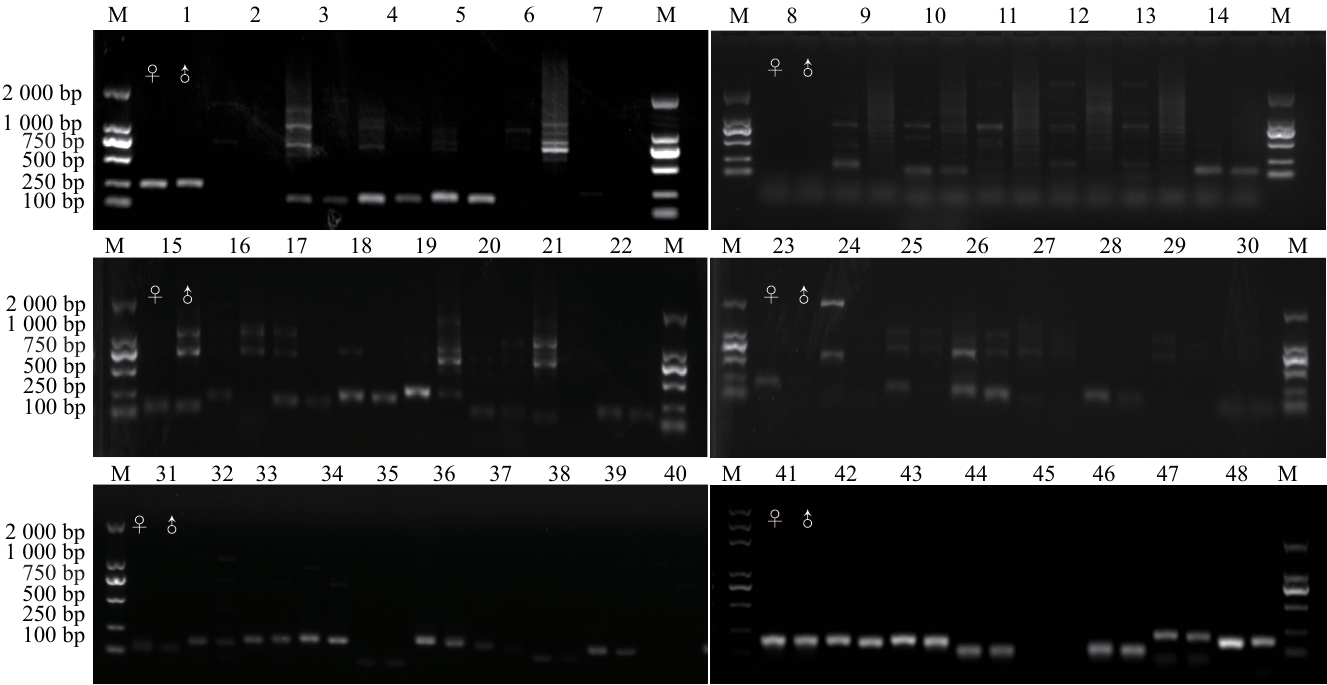
图1 SSR多态性引物的凝胶电泳筛选M:2 000 bp marker,1‒48:引物编号
Fig. 1 Screening of SSR polymorphic primers by gel electrophoresisM: 2 000 bp marker; 1-48: primer number
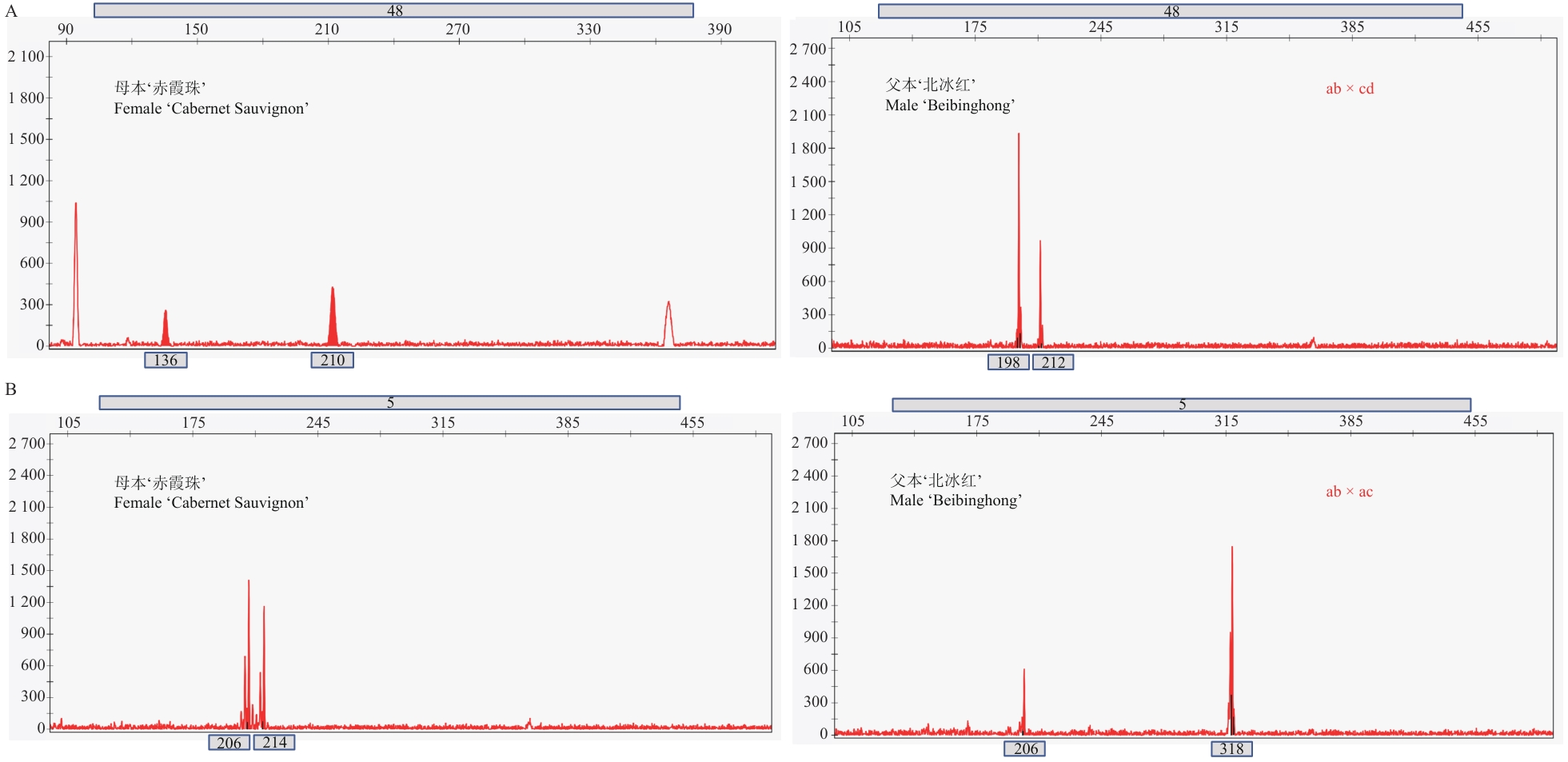
图2 部分SSR多态性引物的毛细管筛选A:引物Z3M12的扩增结果;B:引物VVMD7的扩增结果;X轴代表DNA片段大小,即等位基因;Y轴代表荧光强度(RFU)
Fig. 2 Capillary screening of some polymorphic SSR primersA: Amplification results of primer Z3M12. B: Amplification results of primer VVMD7; the X-axis represents DNA fragment size, i.e., alleles; the Y-axis represents fluorescence intensity (RFU)
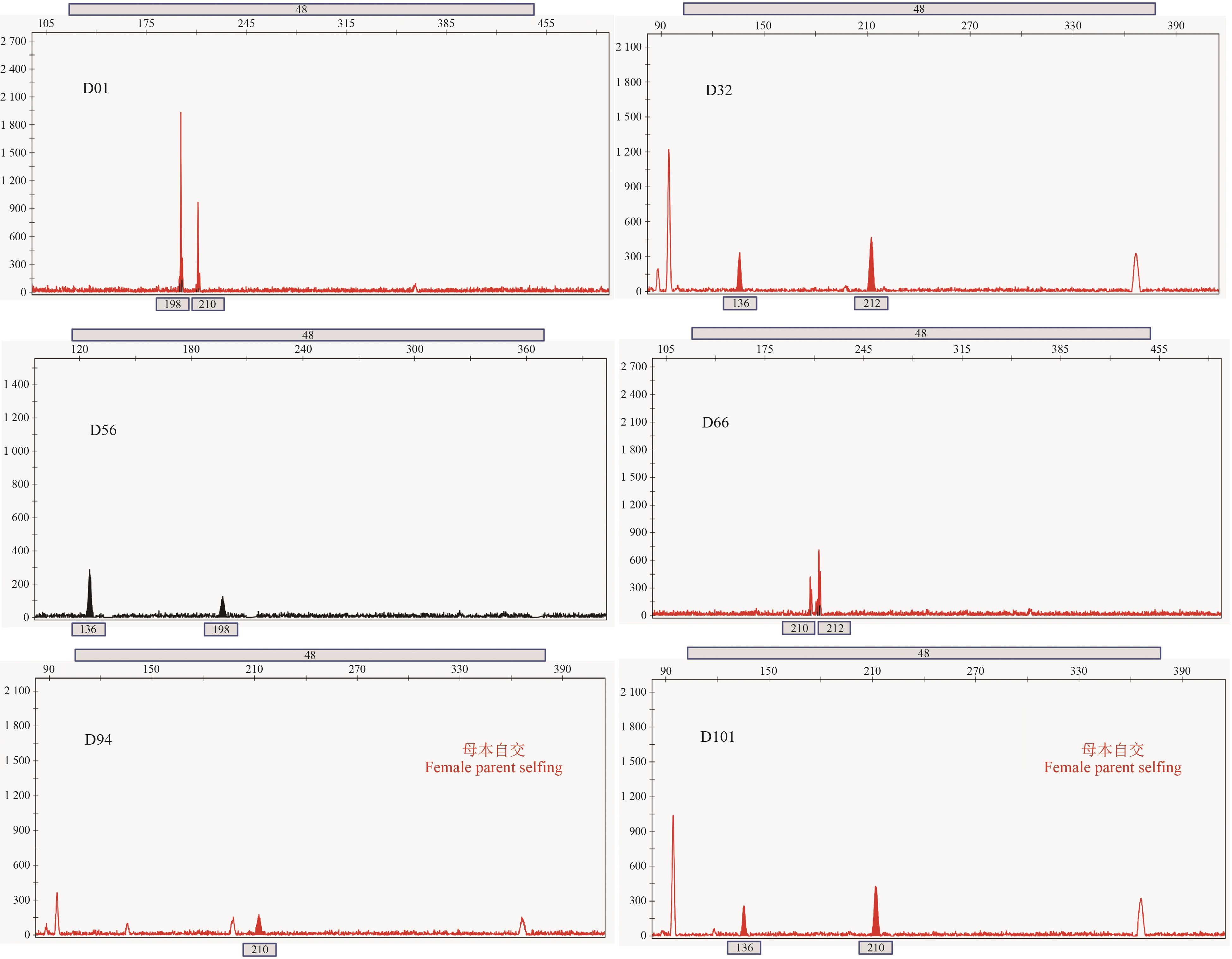
图3 引物Z3M12对部分杂种后代的鉴定结果
Fig. 3 Identification results of some hybrid progeny using primer Z3M12

图4 亲本和部分杂交后代的表型♂:父本‘北冰红’;♀:母本‘赤霞珠’;真杂交后代:2、14、53;假杂交后代:94、101;比例尺=1 cm
Fig. 4 Phenotypes of parents and some hybrid progeny♂: Male parent Beibinghong. ♀: Female parent Cabernet Sauvignon. True hybrid progeny: 2, 14, 53. False hybrid progeny: 94, 101. Scale bar = 1 cm
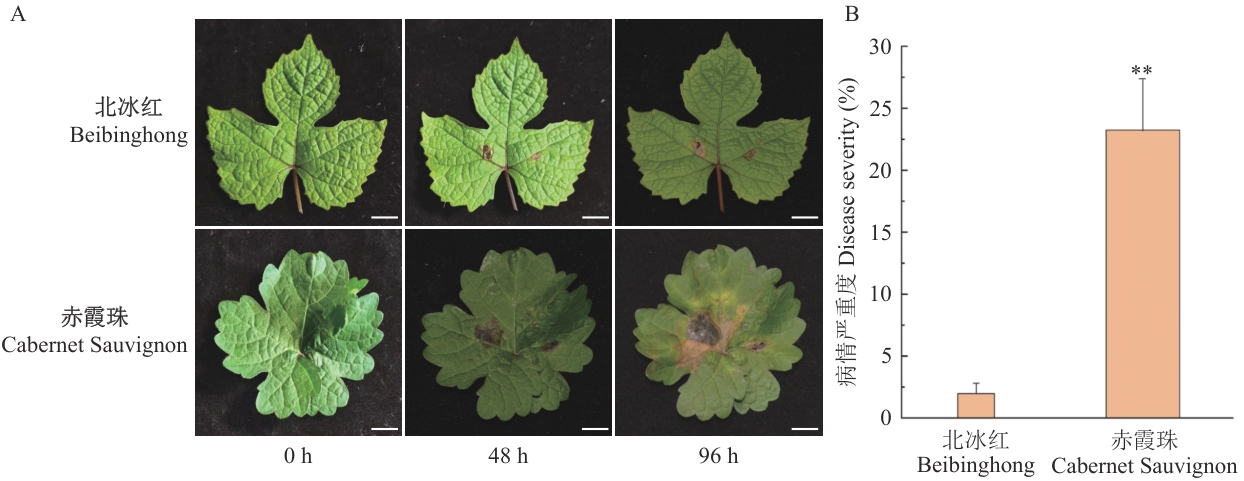
图5 亲本间灰霉病的抗性鉴定A:亲本间灰霉病的抗性表型,比例尺=1 cm;B:亲本的病情严重度;**:在P<0.01水平差异极显著。下同
Fig. 5 Identification of resistance to gray mold between the parentsA: Resistance phenotypes to gray mold between the parents, scale bar = 1 cm. B: Disease severity of the parents. ** indicates extremely significant difference at the P < 0.01 level. The same below
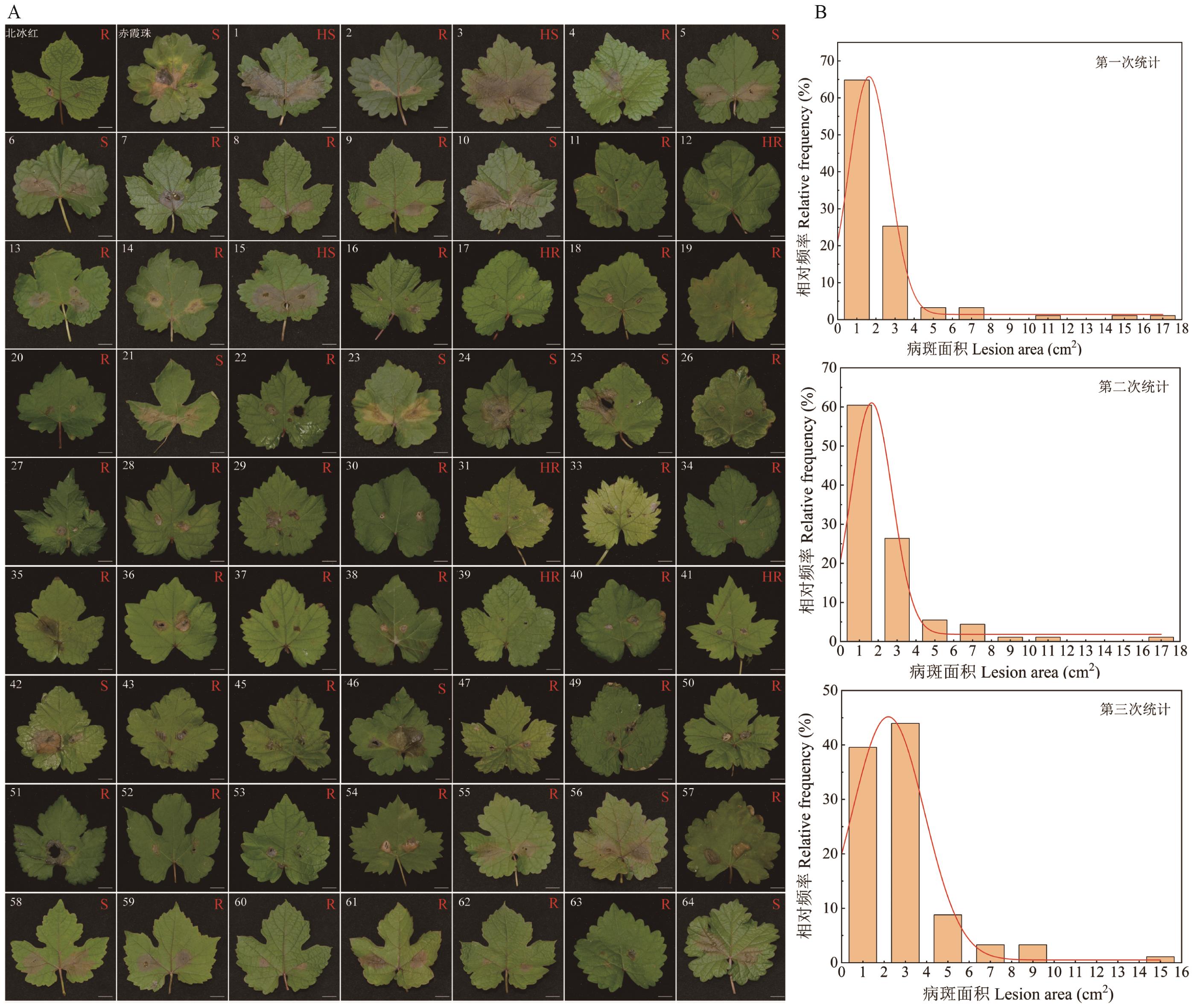
图6 ‘赤霞珠’ב北冰红’部分杂交后代对灰霉病的抗性鉴定结果(A)及后代群体抗性频率分布(B)比例尺=1 cm;HS:高感病;S:感病;R:抗病;HR:高抗病;1‒64:品种编号
Fig. 6 Identification results of resistance to gray mold in some hybrid progeny of 'Cabernet Sauvignon' × 'Beibinghong' (A) and frequency distribution of resistance in the progeny population (B)Scale bar = 1 cm. HS: Highly susceptible. S: Susceptible. R: Resistant. HR: Highly resistant. 1-64: Variety numbers
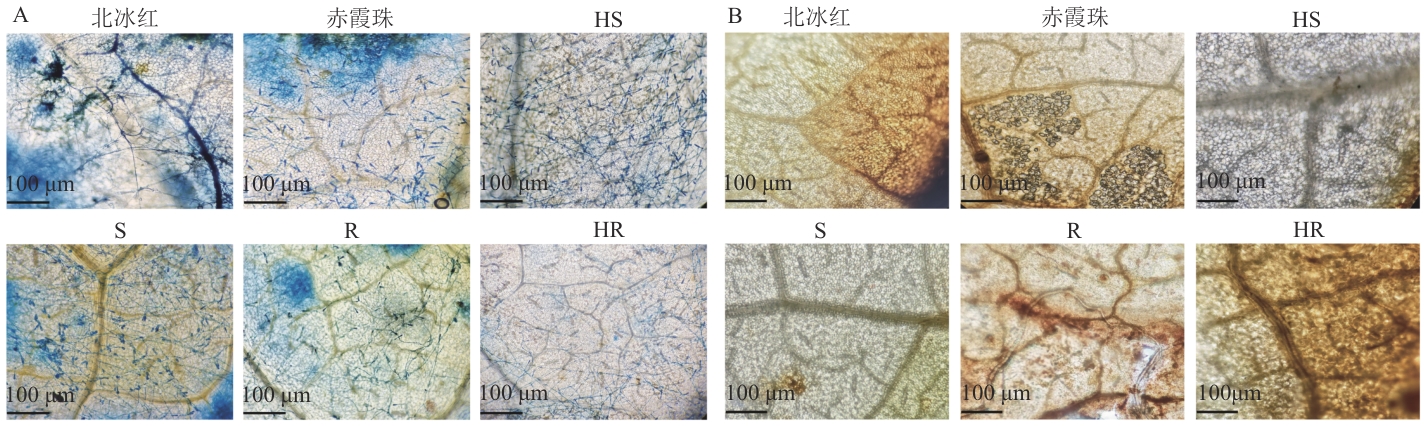
图7 亲本和F1代接种灰霉菌4 d后的微观表现A:台盼蓝染色;B:DAB染色
Fig. 7 Microscopic phenotypes of parents and F1 generation at 4 d after inoculation with Botrytis cinereaA: Trypan blue staining; B: DAB staining
| [1] | China's request for OIV membership accepted [EB/OL]. (2024-11-14) [2024-12-01]. |
| [2] | Ma HY, Li CN, Li S, et al. Deciphering grape berry peel resistance to Botrytis cinerea: a transcriptomic and metabolomic perspective [J]. J Agric Food Chem, 2025, 73(18): 11435-11451. |
| [3] | Li CN, Zhao YL, Ma DH, et al. Transcriptome analysis reveals the response mechanism of grape leaves to Botrytis cinerea [J]. Plant Mol Biol Report, 2025, 43(4): 1995-2008. |
| [4] | 黄大野, 周婷, 姚经武, 等. 死亡谷芽孢杆菌NBIF-001防治灰霉病研究[J]. 中国蔬菜, 2016(10): 63-66. |
| Huang DY, Zhou T, Yao JW, et al. Studies on controlling effect of Bacillus vallismortis NBIF-001 on gray mold [J]. China Veg, 2016(10): 63-66. | |
| [5] | Polat İ, Çelİk İ, Ergönül O, et al. Identification of QTLs and molecular markers associated with gray mold resistance in grape [J]. Turk J Bot, 2026, 50(3): 260-271. |
| [6] | 潘凤英, 刘露露, 郭泽西, 等. 华东葡萄遗传连锁图谱构建及灰霉病抗性QTL定位[J]. 南方农业学报, 2022, 53(9): 2383-2391. |
| Pan FY, Liu LL, Guo ZX, et al. Vitis pseudoreticulata genetic map construction and QTL mapping to its gray mold resistance [J]. J South Agric, 2022, 53(9): 2383-2391. | |
| [7] | 赵钰磊, 辛佳璐, 李承男, 等. 葡萄抗灰霉病相关转录因子VviERF045下游靶基因的筛选[J]. 中国农业科学, 2025, 58(13): 2578-2590. |
| Zhao YL, Xin JL, Li CN, et al. Screening of target genes downstream of VviERF045, a transcription factor associated with gray mold resistance in Vitis vinifera [J]. Sci Agric Sin, 2025, 58(13): 2578-2590. | |
| [8] | Borrelli VMG, Brambilla V, Rogowsky P, et al. The enhancement of plant disease resistance using CRISPR/Cas9 technology [J]. Front Plant Sci, 2018, 9: 1245. |
| [9] | Rahman MU, Liu X, Wang XP, et al. Grapevine gray mold disease: infection, defense and management [J]. Hortic Res, 2024, 11(9): uhae182. |
| [10] | 闫锦源, 郑斌, 王松标, 等. 基于荧光SSR标记的杧果控制授粉实生后代父本鉴定[J]. 果树学报, 2025, 42(6): 1190-1199. |
| Yan JY, Zheng B, Wang SB, et al. Paternal identification of mango controlled-pollination seedling proge-nies based on fluorescent SSR markers [J]. J Fruit Sci, 2025, 42(6): 1190-1199. | |
| [11] | 牛锐敏, 黄小晶, 许泽华, 等. 葡萄杂交F1代的真实性鉴定和抗寒性早期筛选[J]. 分子植物育种, 1-16[2026-06-21]. |
| Niu RM, Huang XJ, Xu ZH, et al. Identification of F1 hybrids and early dcreening of cold-resistant progenies of grape[J]. Molecular Plant Breeding, 1-16[2026-06-21]. | |
| [12] | 李永清, 江金兰, 叶炜, 等. SSR分子标记鉴定铁皮石斛与霍山石斛的正反交后代[J]. 福建农业学报, 2017, 32(8): 870-873. |
| Li YQ, Jiang JL, Ye W, et al. Differentiation between reciprocal-crossed hybrids of Dendrobium officinale and D. huoshanense using SSR markers [J]. Fujian J Agric Sci, 2017, 32(8): 870-873. | |
| [13] | 王富强, 李贝贝, 樊秀彩, 等. 葡萄品种SSR分子鉴定体系的建立及应用[J]. 果树学报, 2020, 37(9): 1281-1293. |
| Wang FQ, Li BB, Fan XC, et al. Establishment and application of SSR molecular identification system in grapevine [J]. J Fruit Sci, 2020, 37(9): 1281-1293. | |
| [14] | 武亚敬, 冀晓昊, 于祎飞, 等. 291个葡萄品种SSR分子指纹数据集[J]. 农业大数据学报, 2025, 7(1): 112-117. |
| Wu YJ, Ji XH, Yu YF, et al. SSR molecular fingerprint dataset for 291 grape varieties [J]. J Agric Big Data, 2025, 7(1): 112-117. | |
| [15] | Emanuelli F, Lorenzi S, Grzeskowiak L, et al. Genetic diversity and population structure assessed by SSR and SNP markers in a large germplasm collection of grape [J]. BMC Plant Biol, 2013, 13: 39. |
| [16] | Di Gaspero G, Cipriani G, Adam-Blondon AF, et al. Linkage maps of grapevine displaying the chromosomal locations of 420 microsatellite markers and 82 markers for R-gene candidates [J]. Theor Appl Genet, 2007, 114(7): 1249-1263. |
| [17] | 邱鹏鹏. 葡萄真假杂种及无核性状早期鉴定研究[D]. 杨凌: 西北农林科技大学, 2024. |
| Qiu PP. Research on early identification of true and false hybrids and seedless traits in grapes [D]. Yangling: Northwest A & F University, 2024. | |
| [18] | 苏聪聪, 金燕, 徐丰, 等. 利用SSR分子标记鉴定刺葡萄F1代杂种[J]. 江苏农业科学, 2018, 46(17): 35-38. |
| Su CC, Jin Y, Xu F, et al. Identification of F1 hybrids of Vitis davidii Foex using SSR molecular markers [J]. Jiangsu Agric Sci, 2018, 46(17): 35-38. | |
| [19] | 石广丽, 王振兴, 孙丹, 等. 基于SSR分子标记技术的葡萄种间杂交F1代鉴定[J]. 分子植物育种, 2021, 19(1): 187-192. |
| Shi GL, Wang ZX, Sun D, et al. Identification of F1 interspecific hybrids of grape based on SSR molecular markers technology [J]. Mol Plant Breed, 2021, 19(1): 187-192. | |
| [20] | 王衍莉, 杨义明, 范书田, 等. 基于SSR分子标记的73份山葡萄及杂交后代的遗传多样性分析[J]. 生物技术通报, 2021, 37(1): 189-197. |
| Wang YL, Yang YM, Fan ST, et al. Genetic diversity analysis of 73 Vitis amurensis and its hybrids offsprings based on SSR molecular markers [J]. Biotechnol Bull, 2021, 37(1): 189-197. | |
| [21] | 樊秀彩, 张颖, 姜建福, 等. SSR分子标记鉴定山葡萄和河岸葡萄种间杂种[J]. 西北植物学报, 2012, 32(11): 2195-2200. |
| Fan XC, Zhang Y, Jiang JF, et al. Identification of interspecific hybrids derived from Vitis riparia × Vitis amurensis by SSR marker [J]. Acta Bot Boreali Occidentalia Sin, 2012, 32(11): 2195-2200. | |
| [22] | 万然. 中国野生葡萄种质叶片抗灰霉病的机制研究[D]. 杨凌: 西北农林科技大学, 2016. |
| Wan R. Researches on the mechanism for chineses wild Vitis germplasm leaves against Botrytis cinerea [D]. Yangling: Northwest A & F University, 2016. | |
| [23] | Chakraborty J, Sen S, Ghosh P, et al. Inhibition of multiple defense responsive pathways by CaWRKY70 transcription factor promotes susceptibility in chickpea under Fusarium oxysporum stress condition [J]. BMC Plant Biology, 2020, 20: 319. |
| [24] | 刘针杉, 涂红霞, 周荆婷, 等. 中国樱桃正反交F1代果实主要性状的遗传分析[J]. 中国农业科学, 2023, 56(2): 345-356. |
| Liu ZS, Tu HX, Zhou JT, et al. Genetic analysis of fruits characters in reciprocal cross progenies of Chinese cherry [J]. Sci Agric Sin, 2023, 56(2): 345-356. | |
| [25] | 袁美, 王传堂, 韩锁义, 等. 花生杂种分子鉴定和ahFAD2基因分型技术研究进展[J]. 山东农业科学, 2017, 49(10): 143-150. |
| Yuan M, Wang CT, Han SY, et al. Advances on identification of true F1 hybrids and ahFAD2 genotyping technique in peanut [J]. Shandong Agric Sci, 2017, 49(10): 143-150. | |
| [26] | 颜廷进, 谭振新. 农作物种子纯度鉴定技术研究进展[J]. 种子科技, 2004, 22(3): 153-155. |
| Yan TJ, Tan ZX. Purity verification research prospect of crops seed [J]. Seed Sci Technol, 2004, 22(3): 153-155. | |
| [27] | 李文秀, 贺军军, 张华林, 等. SSR分子标记鉴定橡胶树F1真伪杂种[J]. 热带作物学报, 2021, 42(5): 1305-1309. |
| Li WX, He JJ, Zhang HL, et al. Identification of F1 hybrids of Hevea brasiliensis by SSR markers [J]. Chin J Trop Crops, 2021, 42(5): 1305-1309. | |
| [28] | 尹宝颖, 张媛, 孙福来. 苹果F1群体的SSR鉴定与遗传多样性分析[J]. 河北农业大学学报, 2019, 42(5): 46-51. |
| Yin BY, Zhang Y, Sun FL. Identification and genetic diversity of apple F1 hybrids based on SSR markers [J]. J Agric Univ Hebei, 2019, 42(5): 46-51. | |
| [29] | 邓衍明, 贾新平, 梁丽建. 观赏植物远缘杂交后代的鉴定方法[J]. 核农学报, 2016, 30(7): 1308-1315. |
| Deng YM, Jia XP, Liang LJ. Identification methods of hybridity in ornamental plants distant hybridization [J]. J Nucl Agric Sci, 2016, 30(7): 1308-1315. | |
| [30] | 王祎玮. 葡萄灰霉病抗性遗传及相关SSR标记筛选[D]. 杨凌: 西北农林科技大学, 2022. |
| Wang YW. Genetic analysis of grape resistance to Botrytis cinerea and screening of SSR markers [D]. Yangling: Northwest A & F University, 2022. | |
| [31] | Collard BCY, Jahufer MZZ, Brouwer JB, et al. An introduction to markers, quantitative trait loci (QTL) mapping and marker-assisted selection for crop improvement: The basic concepts [J]. Euphytica, 2005, 142(1): 169-196. |
| [32] | Su K, Zhao W, Lin H, et al. Candidate gene discovery of Botrytis cinerea resistance in grapevine based on QTL mapping and RNA-seq [J]. Front Plant Sci, 2023, 14: 1127206. |
| [33] | 张晨, 李岚, 徐子勤. 拟南芥新型脂转移蛋白AtDHyPRP1的亚细胞定位及其对灰霉菌的抗性[J]. 生物工程学报, 2012, 28(5): 602-612. |
| Zhang C, Li L, Xu ZQ. Subcellular localization and resistance to Botrytis cinerea of a new type lipid transfer protein AtDHyPRP1 from Arabidopsis thaliana [J]. Chin J Biotechnol, 2012, 28(5): 602-612. | |
| [34] | Gao SQ, Shao WK, Wu JW, et al. GhCPK28 negatively regulates the immune response by phosphorylating GhTIFY3b [J]. bioRxiv, 2024. |
| [35] | 胡洋. 中国野生葡萄白粉病抗性遗传规律及VpsCDPKs抗病分子机制研究[D]. 杨凌: 西北农林科技大学, 2021. |
| Hu Y. Genetic rules of powdery mildew resistance in wild Chinese grapevines and molecular mechanisms of VpsCDPKs in regulating disease resistance [D]. Yangling: Northwest A & F University, 2021. |
| [1] | 秦娟, 卢蔚雯, 李佳徽, 李晨, 李斌, 王治业. 红花2个G6PDH基因的克隆与表达特征分析[J]. 生物技术通报, 2026, 42(8): 217-228. |
| [2] | 王建波, 李诗雅, 邢鹤炫, 周瑞金, 李桂荣, 王玲. 海藻糖-6-磷酸合成酶基因VvTPS10在葡萄耐盐和生长发育中的功能分析[J]. 生物技术通报, 2026, 42(8): 188-196. |
| [3] | 杨东升, 牛誉驰, 卢倩倩, 樊敬镛, 刘雨雷, 刘权, 郭利平, 郝水源. 29份苏丹草种质材料的SSR指纹图谱构建及分析[J]. 生物技术通报, 2026, 42(6): 198-207. |
| [4] | 徐玉娇, 孙玉帅, 刘道奇, 张丽, 张志昌, 姚玉新. VvHSP18.2过表达调节葡萄盐碱抗性的功能分析[J]. 生物技术通报, 2026, 42(4): 161-169. |
| [5] | 王羽, 何昀珈, 殷海欣, 马悦, 郭海勇. 金黄色葡萄球菌耐药机制与新型治疗策略研究进展[J]. 生物技术通报, 2026, 42(4): 53-64. |
| [6] | 李亚妮, 韩鸿宇, 耿梦爽, 米若兰, 王韦琪, 于文静, 孟宪文, 李传友. ChiC基因调控番茄灰霉病抗性的机制研究[J]. 生物技术通报, 2026, 42(3): 255-262. |
| [7] | 张高翔, 吴玉碧, 郭亚静, 纪薇, 杨忠义. 葡萄WD40基因家族鉴定及表达量分析[J]. 生物技术通报, 2026, 42(3): 324-337. |
| [8] | 彭楚, 孙娟利, 郑蓓蓓, 张若西, 韩月彭, 赵云. 果实花色苷酶促降解机制研究进展[J]. 生物技术通报, 2026, 42(3): 133-144. |
| [9] | 付涵, 孙书豪, 张思晴, 艾妞, 于杨, 于连伟, 王琼琼, 韩晓玉, 施艳, 韩卫丽, 杨雪. 本氏烟BOI家族基因的全基因组鉴定与表达分析[J]. 生物技术通报, 2026, 42(2): 207-217. |
| [10] | 高亮, 崔鑫源, 刘名原, 韩蕾. 葡萄苹果酸脱氢酶MDH基因家族鉴定及VvMDH10基因功能分析[J]. 生物技术通报, 2026, 42(10): 142-152. |
| [11] | 薛孟孟, 耿艺轩, 韩煦乐, 杨始锦. 过表达葡萄VaHY5基因增强拟南芥低温胁迫耐受性[J]. 生物技术通报, 2026, 42(10): 153-159. |
| [12] | 李珊, 马登辉, 马红义, 姚文孔, 尹晓. 葡萄SKP1基因家族鉴定与表达分析[J]. 生物技术通报, 2025, 41(9): 147-158. |
| [13] | 张勇, 宋盛龙, 李永泰, 张新宇, 李艳军. 陆地棉GhSWEET9基因的克隆及抗黄萎病功能分析[J]. 生物技术通报, 2025, 41(6): 144-154. |
| [14] | 程慧娟, 王昕, 石小涛, 马东旭, 龚大春, 胡骏鹏, 谢智文. 转录因子CREA敲除对黑曲霉形态和分泌β-葡萄糖苷酶的影响[J]. 生物技术通报, 2025, 41(6): 344-354. |
| [15] | 昝舒雯, 谢欢欢, 张宇琴, 王文娟, 张鹏飞, 梁晋军, 温鹏飞. VvAGAMOUS通过VvCRABS CLAW调控葡萄心皮发育[J]. 生物技术通报, 2025, 41(5): 208-217. |
| 阅读次数 | ||||||
|
全文 |
|
|||||
|
摘要 |
|
|||||
