







生物技术通报 ›› 2025, Vol. 41 ›› Issue (4): 61-75.doi: 10.13560/j.cnki.biotech.bull.1985.2024-0847
贾承霖1,2( ), 郭晓鹏3, 陆栋1,2,4, 张苗苗1,2,4()
收稿日期:2024-08-30
出版日期:2025-04-26
发布日期:2025-04-25
通讯作者:
张苗苗,女,副研究员,硕士生导师,研究方向 :生物物理学与生物工程;E-mail: zhangmiaomiaod@impcas.ac.cn作者简介:贾承霖,男,硕士研究生,研究方向 :生物与医药;E-mail: jiachenglin@impcas.ac.cn
基金资助:
JIA Cheng-lin1,2(), GUO Xiao-peng3, LU Dong1,2,4, ZHANG Miao-miao1,2,4()
Received:2024-08-30
Published:2025-04-26
Online:2025-04-25
摘要:
利用酿酒酵母进行木质纤维素类生物质发酵,从而实现经济和社会可持续发展,具有良好的应用前景,但该类生物质水解液中的羧酸、呋喃醛和多酚对酿酒酵母产生了较强抑制作用,这些抑制剂对细胞膜、线粒体和核糖体等细胞器造成了严重的损伤,影响了酵母对水解液中可发酵糖的利用。本文系统综述了这三类抑制剂对酿酒酵母产生胁迫的信号通路与代谢途径,例如,弱酸会诱导细胞内酸化,呋喃醛和酚类化合物会使胞内氧化还原酶活性下降并抑制翻译进程。基于上述胁迫机理,本文深入探讨了诱变育种、实验室适应性进化、细胞自絮凝和共培养等正向遗传学方法。这些方法借助表型突变结合多组学分析可以挖掘关键基因,从而构建高效菌株。同时,阐述了反向遗传学方法,即利用已知功能基因进行基因组转化,以及基于CRISPR-Cas系统开展菌株定向培育。其中,酿酒酵母过表达目标基因、运用CRISPR-Cas9进行基因敲除以及利用CRISPRa/CRISPRi进行基因调控等方法,有效调节了关键基因的表达,进而提升了酿酒酵母的耐受性能。在此基础上,高通量基因文库与多途径基因调控相结合的综合策略可以大规模地用于关键基因筛选和多维度的基因调控。未来,可利用基因表达和代谢通量联合分析等策略实时监控与耐受性相关的关键酶的活性以及关键代谢通路的碳通量变化,从而更好地应对多重抑制剂对酿酒酵母产生的协同作用,为酿酒酵母高效利用木质纤维素发酵提供参考与建议。
贾承霖, 郭晓鹏, 陆栋, 张苗苗. 增强酿酒酵母对木质纤维素水解液抑制剂耐受性的研究进展[J]. 生物技术通报, 2025, 41(4): 61-75.
JIA Cheng-lin, GUO Xiao-peng, LU Dong, ZHANG Miao-miao. Advances in Improving the Tolerance of Saccharomyces cerevisiae to Lignocellulose Hydrolysate Inhibitors[J]. Biotechnology Bulletin, 2025, 41(4): 61-75.

图1 三类木质纤维素水解液抑制剂对酿酒酵母的胁迫途径
Fig. 1 Stress pathways of three types of lignocellulose hydrolysate inhibitors on S. cerevisiae
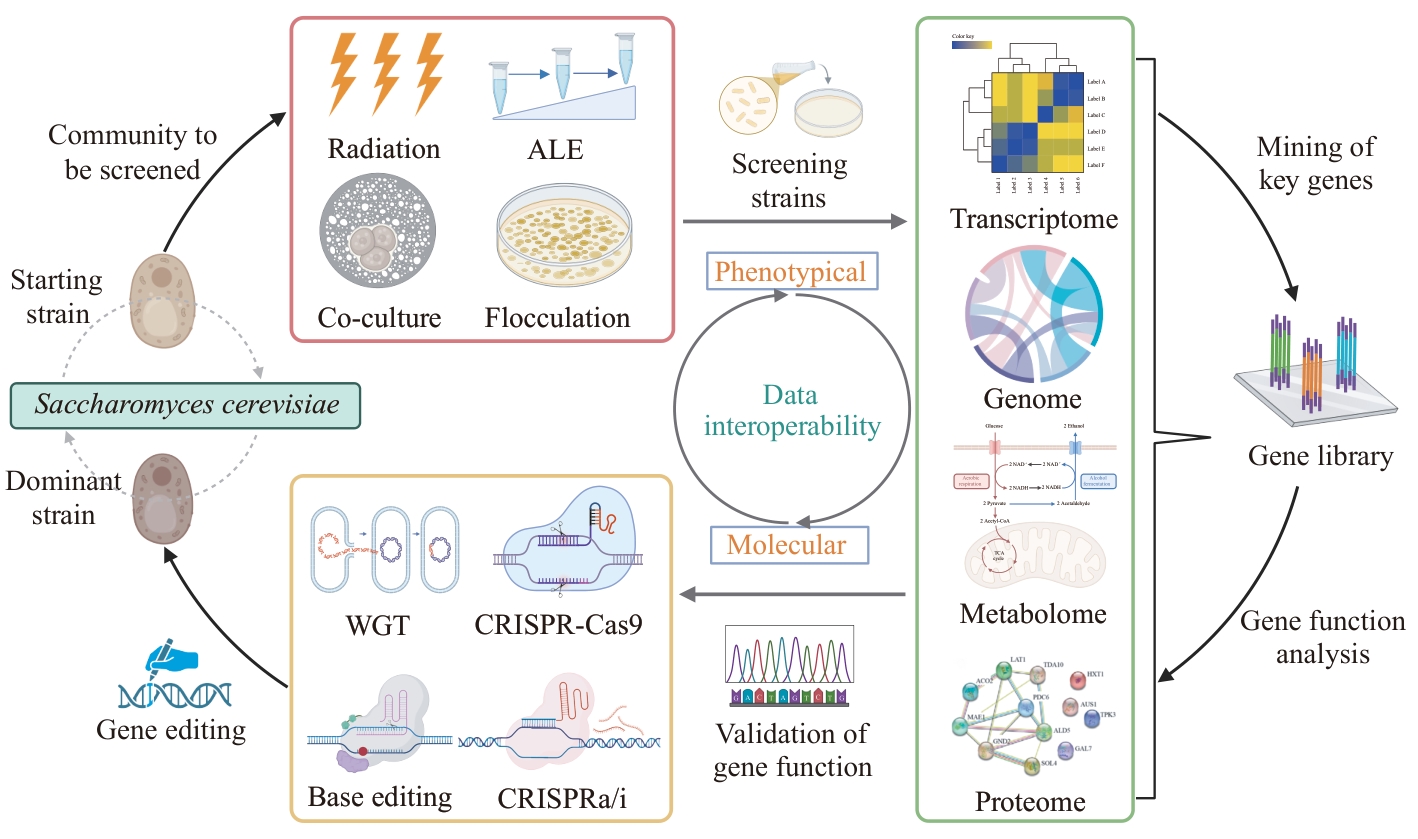
图2 提升酿酒酵母对木质纤维素水解液抑制剂耐受性的基因调控策略
Fig. 2 Gene regulation strategies to improve the tolerance of S. cerevisiae to lignocellulose hydrolysate inhibitors
| 关键基因 Key gene | 编码产物 Encoded product | 调控方法 Regulation method | 抑制剂 Inhibitor | 调控结果 Regulatory results | 参考文献 References |
|---|---|---|---|---|---|
| CAR1 | 精氨酸酶 | 过表达 | 乙酸 | + | [ |
| PDR18 | ATP结合盒转运蛋白 | 过表达 | 乙酸 | + | [ |
| ERG6 | 甾醇C-24甲基转移酶 | 敲除 | 有机酸 | - | [ |
| HAA1 | 转录因子Haa1p | 引入点突变 | 有机酸 | + | [ |
| PPR1 | 锌指转录因子 | 过表达 | 乙酸 | + | [ |
| ACS2 | 乙酰辅酶A合成酶 | 过表达 | 乙酸 | + | [ |
| FDH1 | 甲酸脱氢酶 | 过表达 | 甲酸 | + | [ |
| SET5 | 组蛋白H4甲基转移酶 | 过表达 | 甲酸 | + | [ |
| GRE2 | NADPH依赖性醛还原酶 | 过表达 | 糠醛 | + | [ |
| IDH1 | 异柠檬酸脱氢酶 | 过表达 | 糠醛 | + | [ |
| GSH1等 | 抗氧化功能的蛋白质 | 过表达 | 呋喃醛 | + | [ |
| RDS1 | 醛还原酶 | 过表达 | 呋喃醛 | + | [ |
| AAD3 | 芳醇脱氢酶 | 过表达 | 呋喃醛 | + | [ |
| SIW14 | 肌醇磷酸酶 | 敲除 | HMF | - | [ |
| GRE2 | NADPH依赖性醛还原酶 | 过表达 | 香草醛 | + | [ |
| YRR1 | 锌指转录因子 | 敲除 | 香草醛 | + | [ |
| TMA17 | 分子伴侣Tma17 | 过表达 | 酚类化合物 | + | [ |
| ADE1 | 参与IMP和AMP合成的氧化还原酶 | 过表达 | 抑制剂混合物 | + | [ |
| MCR1 | 线粒体还原酶 | 过表达 | 云杉水解液 | + | [ |
| ZWF1 | NADPH依赖性葡萄糖-6-磷酸脱氢酶 | 过表达 | 小麦秸秆水解液 | + | [ |
| THI2 | 硫胺素生物合成基因 转录激活因子 | 敲除 | 抑制剂混合物 | - | [ |
| VMS1 | 肽基-tRNA水解酶 | 敲除 | 抑制剂混合物 | - | [ |
| YOS9 | 内质网质控凝集素 | 敲除 | 抑制剂混合物 | - | [ |
| AST2 | 醛还原酶 | 全基因组转化 | HMF | + | [ |
| AADH | 乙酰化乙醛脱氢酶 | 异源转化 | 乙酸 | + | [ |
| CBH1等 | 纤维素酶 | 基因整合 | 乙酸 | + | [ |
| MET5 | 硫氨酸还原酶 | 敲除 | 乙酸和乳酸 | + | [ |
| SIZ1 | 泛素修饰蛋白连接酶 | 敲除 | 乙酸和乳酸 | + | [ |
| SPT15 | 通用转录因子 | 单碱基替换 | 乙醇 | + | [ |
| SSK2 | 促分裂原活化蛋白激酶 | CRISPRi | 糠醛 | + | [ |
| RPT5 | 19S碱基组装亚基 | CRISPRi | 乙酸 | + | [ |
| PRN9 | 26S蛋白酶体调节亚基 | CRISPRi | 乙酸 | + | [ |
| SIZ1 | 泛素修饰蛋白连接酶 | CRISPRi | 糠醛 | + | [ |
| NAT1 | N-末端乙酰转移酶亚基 | CRISPRa | 糠醛 | + | [ |
| PDR1 | 负调控耐药转录因子 | CRISPRi | 糠醛 | + | [ |
| YAP1 | 亮氨酸拉链转录因子 | 过表达 | 云杉水解液 | + | [ |
| HAA1 | 转录因子Haa1p | 过表达 | 云杉水解液 | + | [ |
| GRE3 | 醛糖还原酶 | 敲除 | 玉米秸秆水解液 | + | [ |
| PHO13 | 碱性磷酸酶 | 敲除 | 玉米秸秆水解液 | + | [ |
| TAL1 | 参与PPP途径 | 过表达 | 玉米秸秆水解液 | + | [ |
| SUT1 | 木糖转运蛋白 | 基因整合 | 蓝桉木质素磺酸液 | + | [ |
| XYL3 | D-木酮糖激酶 | 基因整合 | 蓝桉木质素磺酸液 | + | [ |
| PsTAL1 | 转醛醇酶 | 基因整合 | 蓝桉木质素磺酸液 | + | [ |
表1 提升酿酒酵母对木质纤维素水解液抑制剂耐受性的关键基因及调控方法
Table 1 Key genes and regulatory methods for improving the tolerance of S. cerevisiae to lignocellulose hydrolysate inhibitors
| 关键基因 Key gene | 编码产物 Encoded product | 调控方法 Regulation method | 抑制剂 Inhibitor | 调控结果 Regulatory results | 参考文献 References |
|---|---|---|---|---|---|
| CAR1 | 精氨酸酶 | 过表达 | 乙酸 | + | [ |
| PDR18 | ATP结合盒转运蛋白 | 过表达 | 乙酸 | + | [ |
| ERG6 | 甾醇C-24甲基转移酶 | 敲除 | 有机酸 | - | [ |
| HAA1 | 转录因子Haa1p | 引入点突变 | 有机酸 | + | [ |
| PPR1 | 锌指转录因子 | 过表达 | 乙酸 | + | [ |
| ACS2 | 乙酰辅酶A合成酶 | 过表达 | 乙酸 | + | [ |
| FDH1 | 甲酸脱氢酶 | 过表达 | 甲酸 | + | [ |
| SET5 | 组蛋白H4甲基转移酶 | 过表达 | 甲酸 | + | [ |
| GRE2 | NADPH依赖性醛还原酶 | 过表达 | 糠醛 | + | [ |
| IDH1 | 异柠檬酸脱氢酶 | 过表达 | 糠醛 | + | [ |
| GSH1等 | 抗氧化功能的蛋白质 | 过表达 | 呋喃醛 | + | [ |
| RDS1 | 醛还原酶 | 过表达 | 呋喃醛 | + | [ |
| AAD3 | 芳醇脱氢酶 | 过表达 | 呋喃醛 | + | [ |
| SIW14 | 肌醇磷酸酶 | 敲除 | HMF | - | [ |
| GRE2 | NADPH依赖性醛还原酶 | 过表达 | 香草醛 | + | [ |
| YRR1 | 锌指转录因子 | 敲除 | 香草醛 | + | [ |
| TMA17 | 分子伴侣Tma17 | 过表达 | 酚类化合物 | + | [ |
| ADE1 | 参与IMP和AMP合成的氧化还原酶 | 过表达 | 抑制剂混合物 | + | [ |
| MCR1 | 线粒体还原酶 | 过表达 | 云杉水解液 | + | [ |
| ZWF1 | NADPH依赖性葡萄糖-6-磷酸脱氢酶 | 过表达 | 小麦秸秆水解液 | + | [ |
| THI2 | 硫胺素生物合成基因 转录激活因子 | 敲除 | 抑制剂混合物 | - | [ |
| VMS1 | 肽基-tRNA水解酶 | 敲除 | 抑制剂混合物 | - | [ |
| YOS9 | 内质网质控凝集素 | 敲除 | 抑制剂混合物 | - | [ |
| AST2 | 醛还原酶 | 全基因组转化 | HMF | + | [ |
| AADH | 乙酰化乙醛脱氢酶 | 异源转化 | 乙酸 | + | [ |
| CBH1等 | 纤维素酶 | 基因整合 | 乙酸 | + | [ |
| MET5 | 硫氨酸还原酶 | 敲除 | 乙酸和乳酸 | + | [ |
| SIZ1 | 泛素修饰蛋白连接酶 | 敲除 | 乙酸和乳酸 | + | [ |
| SPT15 | 通用转录因子 | 单碱基替换 | 乙醇 | + | [ |
| SSK2 | 促分裂原活化蛋白激酶 | CRISPRi | 糠醛 | + | [ |
| RPT5 | 19S碱基组装亚基 | CRISPRi | 乙酸 | + | [ |
| PRN9 | 26S蛋白酶体调节亚基 | CRISPRi | 乙酸 | + | [ |
| SIZ1 | 泛素修饰蛋白连接酶 | CRISPRi | 糠醛 | + | [ |
| NAT1 | N-末端乙酰转移酶亚基 | CRISPRa | 糠醛 | + | [ |
| PDR1 | 负调控耐药转录因子 | CRISPRi | 糠醛 | + | [ |
| YAP1 | 亮氨酸拉链转录因子 | 过表达 | 云杉水解液 | + | [ |
| HAA1 | 转录因子Haa1p | 过表达 | 云杉水解液 | + | [ |
| GRE3 | 醛糖还原酶 | 敲除 | 玉米秸秆水解液 | + | [ |
| PHO13 | 碱性磷酸酶 | 敲除 | 玉米秸秆水解液 | + | [ |
| TAL1 | 参与PPP途径 | 过表达 | 玉米秸秆水解液 | + | [ |
| SUT1 | 木糖转运蛋白 | 基因整合 | 蓝桉木质素磺酸液 | + | [ |
| XYL3 | D-木酮糖激酶 | 基因整合 | 蓝桉木质素磺酸液 | + | [ |
| PsTAL1 | 转醛醇酶 | 基因整合 | 蓝桉木质素磺酸液 | + | [ |
| 1 | Valdivia M, Galan JL, Laffarga J, et al. Biofuels 2020: Biorefineries based on lignocellulosic materials [J]. Microb Biotechnol, 2016, 9(5): 585-594. |
| 2 | Jhariya U, Dafale NA, Srivastava S, et al. Understanding ethanol tolerance mechanism in Saccharomyces cerevisiae to enhance the bioethanol production: current and future prospects [J]. BioEnergy Res, 2021, 14(2): 670-688. |
| 3 | Cai CG, Xu ZX, Zhou HR, et al. Valorization of lignin components into gallate by integrated biological hydroxylation, O-demethylation, and aryl side-chain oxidation [J]. Sci Adv, 2021, 7(36): eabg4585. |
| 4 | Brandt BA, Jansen T, Görgens JF, et al. Overcoming lignocellulose-derived microbial inhibitors: advancing the Saccharomyces cerevisiae resistance toolbox [J]. Biofuels Bioprod Bioref, 2019, 13(6): 1520-1536. |
| 5 | Wimalasena TT, Greetham D, Marvin ME, et al. Phenotypic characterisation of Saccharomyces spp. yeast for tolerance to stresses encountered during fermentation of lignocellulosic residues to produce bioethanol [J]. Microb Cell Fact, 2014, 13(1): 47. |
| 6 | Favaro L, Basaglia M, Trento A, et al. Exploring grape marc as trove for new thermotolerant and inhibitor-tolerant Saccharomyces cerevisiae strains for second-generation bioethanol production [J]. Biotechnol Biofuels, 2013, 6(1): 168. |
| 7 | 林贝, 李健秀, 刘雪凌. 紫外诱变结合驯化提高酿酒酵母对抑制物耐受性 [J]. 生物技术, 2018, 28(1): 85-91. |
| Lin B, Li JX, Liu XL. Improvement of inhibitor tolerance of Saccharomyces cerevisiae through UV mutation and adaption [J]. Biotechnology, 2018, 28(1): 85-91. | |
| 8 | Xiong L, Wang YT, Zhou MH, et al. Overexpression of arginase gene CAR1 renders yeast Saccharomyces cerevisiae acetic acid tolerance [J]. Synth Syst Biotechnol, 2024, 9(4): 723-732. |
| 9 | Du C, Li YM, Zong H, et al. Production of bioethanol and xylitol from non-detoxified corn cob via a two-stage fermentation strategy [J]. Bioresour Technol, 2020, 310: 123427. |
| 10 | 雷志鹏, 孙晓仲, 王撼宇, 等. 酿酒酵母对木质纤维素水解液抑制物耐受性的研究进展 [J]. 中国酿造, 2021, 40(4): 1-5. |
| Lei ZP, Sun XZ, Wang HY, et al. Research progress on the tolerance of Saccharomyces cerevisiae to inhibitors of lignocellulose hydrolysate [J]. China Brew, 2021, 40(4): 1-5. | |
| 11 | Palmqvist E, Hahn-Hägerdal B. Fermentation of lignocellulosic hydrolysates. II: inhibitors and mechanisms of inhibition [J]. Bioresour Technol, 2000, 74(1): 25-33. |
| 12 | Maran F, Celadon D, Severin MG, et al. Electrochemical determination of the pKa of weak acids in N, N-dimethylformamide [J]. J Am Chem Soc, 1991, 113(24): 9320-9329. |
| 13 | Stojiljkovic M, Foulquié-Moreno MR, Thevelein JM. Polygenic analysis of very high acetic acid tolerance in the yeast Saccharomyces cerevisiae reveals a complex genetic background and several new causative alleles [J]. Biotechnol Biofuels, 2020, 13: 126. |
| 14 | Mota MN, Matos M, Bahri N, et al. Shared and more specific genetic determinants and pathways underlying yeast tolerance to acetic, butyric, and octanoic acids [J]. Microb Cell Fact, 2024, 23(1): 71. |
| 15 | Arora A, Raghuraman H, Chattopadhyay A. Influence of cholesterol and ergosterol on membrane dynamics: a fluorescence approach [J]. Biochem Biophys Res Commun, 2004, 318(4): 920-926. |
| 16 | Guo ZP, Khoomrung S, Nielsen J, et al. Changes in lipid metabolism convey acid tolerance in Saccharomyces cerevisiae [J]. Biotechnol Biofuels, 2018, 11: 297. |
| 17 | Godinho CP, Prata CS, Pinto SN, et al. Pdr18 is involved in yeast response to acetic acid stress counteracting the decrease of plasma membrane ergosterol content and order [J]. Sci Rep, 2018, 8(1): 7860. |
| 18 | Lv XQ, Jin K, Yi Y, et al. Analysis of acid-tolerance mechanism based on membrane microdomains in Saccharomyces cerevisiae [J]. Microb Cell Fact, 2023, 22(1): 180. |
| 19 | Swinnen S, Henriques SF, Shrestha R, et al. Improvement of yeast tolerance to acetic acid through Haa1 transcription factor engineering: towards the underlying mechanisms [J]. Microb Cell Fact, 2017, 16(1): 7. |
| 20 | Li B, Wang L, Wu YJ, et al. Improving acetic acid and furfural resistance of xylose-fermenting Saccharomyces cerevisiae strains by regulating novel transcription factors revealed via comparative transcriptomic analysis [J]. Appl Environ Microbiol, 2021, 87(10): e00158-21. |
| 21 | Zeng LJ, Si ZY, Zhao XM, et al. Metabolome analysis of the response and tolerance mechanisms of Saccharomyces cerevisiae to formic acid stress [J]. Int J Biochem Cell Biol, 2022, 148: 106236. |
| 22 | Zhang MM, Zhao XQ, Cheng C, et al. Improved growth and ethanol fermentation of Saccharomyces cerevisiae in the presence of acetic acid by overexpression of SET5 and PPR1 [J]. Biotechnol J, 2015, 10(12): 1903-1911. |
| 23 | Ding J, Holzwarth G, Penner MH, et al. Overexpression of acetyl-CoA synthetase in Saccharomyces cerevisiae increases acetic acid tolerance [J]. FEMS Microbiol Lett, 2015, 362(3): 1-7. |
| 24 | Du C, Li YM, Xiang RJ, et al. Formate dehydrogenase improves the resistance to formic acid and acetic acid simultaneously in Saccharomyces cerevisiae [J]. Int J Mol Sci, 2022, 23(6): 3406. |
| 25 | Zhang MM, Yuan B, Wang YT, et al. Differential protein expression in Set5p-mediated acetic acid stress response and novel targets for engineering yeast stress tolerance [J]. J Proteome Res, 2024, 23(8): 2986-2998. |
| 26 | Antal MJ, Leesomboon T, Mok WS, et al. Mechanism of formation of 2-furaldehyde from d-xylose [J]. Carbohydr Res, 1991, 217: 71-85. |
| 27 | Wang HY, Xiao DF, Zhou C, et al. YLL056C from Saccharomyces cerevisiae encodes a novel protein with aldehyde reductase activity [J]. Appl Microbiol Biotechnol, 2017, 101(11): 4507-4520. |
| 28 | Taherzadeh MJ, Gustafsson L, Niklasson C, et al. Conversion of furfural in aerobic and anaerobic batch fermentation of glucose by Saccharomyces cerevisiae [J]. J Biosci Bioeng, 1999, 87(2): 169-174. |
| 29 | Allen SA, Clark W, McCaffery JM, et al. Furfural induces reactive oxygen species accumulation and cellular damage in Saccharomyces cerevisiae [J]. Biotechnol Biofuels, 2010, 3: 2. |
| 30 | Parker R, Sheth U. P bodies and the control of mRNA translation and degradation [J]. Mol Cell, 2007, 25(5): 635-646. |
| 31 | Iwaki A, Kawai TK, Yamamoto Y, et al. Biomass conversion inhibitors furfural and 5-hydroxymethylfurfural induce formation of messenger RNP granules and attenuate translation activity in Saccharomyces cerevisiae [J]. Appl Environ Microbiol, 2013, 79(5): 1661-1667. |
| 32 | Moon J, Liu ZL. Engineered NADH-dependent GRE2 from Saccharomyces cerevisiae by directed enzyme evolution enhances HMF reduction using additional cofactor NADPH [J]. Enzyme Microb Technol, 2012, 50(2): 115-120. |
| 33 | Unrean P. Flux control-based design of furfural-resistance strains of Saccharomyces cerevisiae for lignocellulosic biorefinery [J]. Bioprocess Biosyst Eng, 2017, 40(4): 611-623. |
| 34 | Lam FH, Turanlı-Yıldız B, Liu D, et al. Engineered yeast tolerance enables efficient production from toxified lignocellulosic feedstocks [J]. Sci Adv, 2021, 7(26): eabf7613. |
| 35 | Kim D, Hahn JS. Roles of the Yap1 transcription factor and antioxidants in Saccharomyces cerevisiae's tolerance to furfural and 5-hydroxymethylfurfural, which function as thiol-reactive electrophiles generating oxidative stress [J]. Appl Environ Microbiol, 2013, 79(16): 5069-5077. |
| 36 | Liu CG, Li K, Li KY, et al. Intracellular redox perturbation in Saccharomyces cerevisiae improved furfural tolerance and enhanced cellulosic bioethanol production [J]. Front Bioeng Biotechnol, 2020, 8: 615. |
| 37 | Tafere Abrha G, Li Q, Kuang XL, et al. Phenotypic and comparative transcriptomics analysis of RDS1 overexpression reveal tolerance of Saccharomyces cerevisiae to furfural [J]. J Biosci Bioeng, 2023, 136(4): 270-277. |
| 38 | Li Q, Feng P, Tang H, et al. Genome-wide identification of resistance genes and cellular analysis of key gene knockout strain under 5-hydroxymethylfurfural stress in Saccharomyces cerevisiae [J]. BMC Microbiol, 2023, 23(1): 382. |
| 39 | Adeboye PT, Bettiga M, Olsson L. The chemical nature of phenolic compounds determines their toxicity and induces distinct physiological responses in Saccharomyces cerevisiae in lignocellulose hydrolysates [J]. AMB Express, 2014, 4: 46. |
| 40 | Hacısalihoğlu B, Holyavkin C, Topaloğlu A, et al. Genomic and transcriptomic analysis of a coniferyl aldehyde-resistant Saccharomyces cerevisiae strain obtained by evolutionary engineering [J]. FEMS Yeast Res, 2019, 19(3): foz021. |
| 41 | Nguyen TTM, Iwaki A, Izawa S. The ADH7 promoter of Saccharomyces cerevisiae is vanillin-inducible and enables mRNA translation under severe vanillin stress [J]. Front Microbiol, 2015, 6: 1390. |
| 42 | Ge XL, Chen JX, Gu J, et al. Metabolomic analysis of hydroxycinnamic acid inhibition on Saccharomyces cerevisiae [J]. Appl Microbiol Biotechnol, 2024, 108(1): 165. |
| 43 | Sáez-Sáez J, Munro LJ, Møller-Hansen I, et al. Identification of transporters involved in aromatic compounds tolerance through screening of transporter deletion libraries [J]. Microb Biotechnol, 2024, 17(4): e14460. |
| 44 | Cámara E, Lenitz I, Nygård Y. A CRISPR activation and interference toolkit for industrial Saccharomyces cerevisiae strain KE6-12 [J]. Sci Rep, 2020, 10(1): 14605. |
| 45 | Iwaki A, Ohnuki S, Suga Y, et al. Vanillin inhibits translation and induces messenger ribonucleoprotein (mRNP) granule formation in Saccharomyces cerevisiae: application and validation of high-content, image-based profiling [J]. PLoS One, 2013, 8(4): e61748. |
| 46 | Jayakody LN, Turner TL, Yun EJ, et al. Expression of Gre2p improves tolerance of engineered xylose-fermenting Saccharomyces cerevisiae to glycolaldehyde under xylose metabolism [J]. Appl Microbiol Biotechnol, 2018, 102(18): 8121-8133. |
| 47 | Cao WY, Zhao WQ, Yang BL, et al. Proteomic analysis revealed the roles of YRR1 deletion in enhancing the vanillin resistance of Saccharomyces cerevisiae [J]. Microb Cell Fact, 2021, 20(1): 142. |
| 48 | Wang XN, Liang ZZ, Hou J, et al. The absence of the transcription factor Yrr1p, identified from comparative genome profiling, increased vanillin tolerance due to enhancements of ABC transporters expressing, rRNA processing and ribosome biogenesis in Saccharomyces cerevisiae [J]. Front Microbiol, 2017, 8: 367. |
| 49 | Hanssum A, Zhong Z, Rousseau A, et al. An inducible chaperone adapts proteasome assembly to stress [J]. Mol Cell, 2014, 55(4): 566-577. |
| 50 | López PC, Peng CT, Arneborg N, et al. Analysis of the response of the cell membrane of Saccharomyces cerevisiae during the detoxification of common lignocellulosic inhibitors [J]. Sci Rep, 2021, 11(1): 6853. |
| 51 | Rolfes RJ. Regulation of purine nucleotide biosynthesis: in yeast and beyond [J]. Biochem Soc Trans, 2006, 34(Pt 5): 786-790. |
| 52 | Zhang MM, Xiong L, Tang YJ, et al. Enhanced acetic acid stress tolerance and ethanol production in Saccharomyces cerevisiae by modulating expression of the de novo purine biosynthesis genes [J]. Biotechnol Biofuels, 2019, 12: 116. |
| 53 | Wallace-Salinas V, Signori L, Li YY, et al. Re-assessment of YAP1 and MCR1 contributions to inhibitor tolerance in robust engineered Saccharomyces cerevisiae fermenting undetoxified lignocellulosic hydrolysate [J]. AMB Express, 2014, 4: 56. |
| 54 | Sjulander N, Kikas T. Origin, impact and control of lignocellulosic inhibitors in bioethanol production—a review [J]. Energies, 2020, 13(18): 4751. |
| 55 | Henriques SF, Mira NP, Sá-Correia I. Genome-wide search for candidate genes for yeast robustness improvement against formic acid reveals novel susceptibility (Trk1 and positive regulators) and resistance (Haa1-regulon) determinants [J]. Biotechnol Biofuels, 2017, 10: 96. |
| 56 | Pereira FB, Teixeira MC, Mira NP, et al. Genome-wide screening of Saccharomyces cerevisiae genes required to foster tolerance towards industrial wheat straw hydrolysates [J]. J Ind Microbiol Biotechnol, 2014, 41(12): 1753-1761. |
| 57 | van Dijk M, Rugbjerg P, Nygård Y, et al. RNA sequencing reveals metabolic and regulatory changes leading to more robust fermentation performance during short-term adaptation of Saccharomyces cerevisiae to lignocellulosic inhibitors [J]. Biotechnol Biofuels, 2021, 14(1): 201. |
| 58 | Sardi M, Rovinskiy N, Zhang YP, et al. Leveraging genetic-background effects in Saccharomyces cerevisiae to improve lignocellulosic hydrolysate tolerance [J]. Appl Environ Microbiol, 2016, 82(19): 5838-5849. |
| 59 | Sornlek W, Sonthirod C, Tangphatsornruang S, et al. Genes controlling hydrolysate toxin tolerance identified by QTL analysis of the natural Saccharomyces cerevisiae BCC39850 [J]. Appl Microbiol Biotechnol, 2024, 108(1): 21. |
| 60 | Cámara E, Olsson L, Zrimec J, et al. Data mining of Saccharomyces cerevisiae mutants engineered for increased tolerance towards inhibitors in lignocellulosic hydrolysates [J]. Biotechnol Adv, 2022, 57: 107947. |
| 61 | Wang L, Li B, Wang SP, et al. Improving multiple stress-tolerance of a flocculating industrial Saccharomyces cerevisiae strain by random mutagenesis and hybridization [J]. Process Biochem, 2021, 102: 275-285. |
| 62 | 陈栋, 吴娅菁, 缪晡, 等. 基于等离子体诱变提高木糖利用重组酿酒酵母的抑制物耐受性 [J]. 应用与环境生物学报, 2021, 27(6): 1464-1470. |
| Chen D, Wu YJ, Miao B, et al. Improvement of inhibitor tolerance of xylose-fermenting recombinant Saccharomyces cerevisiae via atmospheric and room temperature plasma mutagenesis [J]. Chin J Appl Environ Biol, 2021, 27(6): 1464-1470. | |
| 63 | Ren JL, Zhang MM, Guo XP, et al. Furfural tolerance of mutant Saccharomyces cerevisiae selected via ionizing radiation combined with adaptive laboratory evolution [J]. Biotechnol Biofuels Bioprod, 2024, 17(1): 117. |
| 64 | Jia CL, Chai R, Zhang MM, et al. Improvement of Saccharomyces cerevisiae strain tolerance to vanillin through heavy ion radiation combined with adaptive laboratory evolution [J]. J Biotechnol, 2024, 394: 112-124. |
| 65 | Zheng DQ, Jin XN, Zhang K, et al. Novel strategy to improve vanillin tolerance and ethanol fermentation performances of Saccharomycere cerevisiae strains [J]. Bioresour Technol, 2017, 231: 53-58. |
| 66 | Topaloğlu A, Esen Ö, Turanlı-Yıldız B, et al. From Saccharomyces cerevisiae to ethanol: unlocking the power of evolutionary engineering in metabolic engineering applications [J]. J Fungi, 2023, 9(10): 984. |
| 67 | Swaney DL, Beltrao P, Starita L, et al. Global analysis of phosphorylation and ubiquitylation cross-talk in protein degradation [J]. Nat Methods, 2013, 10(7): 676-682. |
| 68 | Salas-Navarrete PC, de Oca Miranda AIM, Martínez A, et al. Evolutionary and reverse engineering to increase Saccharomyces cerevisiae tolerance to acetic acid, acidic pH, and high temperature [J]. Appl Microbiol Biotechnol, 2022, 106(1): 383-399. |
| 69 | Pereira R, Mohamed ET, Radi MS, et al. Elucidating aromatic acid tolerance at low pH in Saccharomyces cerevisiae using adaptive laboratory evolution [J]. Proc Natl Acad Sci U S A, 2020, 117(45): 27954-27961. |
| 70 | Sánchez-Adriá IE, Sanmartín G, Prieto JA, et al. Adaptive laboratory evolution for acetic acid-tolerance matches sourdough challenges with yeast phenotypes [J]. Microbiol Res, 2023, 277: 127487. |
| 71 | Wang L, Wang X, He ZQ, et al. Engineering prokaryotic regulator IrrE to enhance stress tolerance in budding yeast [J]. Biotechnol Biofuels, 2020, 13(1): 193. |
| 72 | Demeke MM, Echemendia D, Belo E, et al. Enhancing xylose-fermentation capacity of engineered Saccharomyces cerevisiae by multistep evolutionary engineering in inhibitor-rich lignocellulose hydrolysate [J]. FEMS Yeast Res, 2024, 2410.1093: femsyr. |
| 73 | Westman JO, Mapelli V, Taherzadeh MJ, et al. Flocculation causes inhibitor tolerance in Saccharomyces cerevisiae for second-generation bioethanol production [J]. Appl Environ Microbiol, 2014, 80(22): 6908-6918. |
| 74 | Ye PL, Wang XQ, Yuan B, et al. Manipulating cell flocculation-associated protein kinases in Saccharomyces cerevisiae enables improved stress tolerance and efficient cellulosic ethanol production [J]. Bioresour Technol, 2022, 348: 126758. |
| 75 | Liu CS, Choi B, Efimova E, et al. Enhanced upgrading of lignocellulosic substrates by coculture of Saccharomyces cerevisiae and Acinetobacter baylyi ADP1 [J]. Biotechnol Biofuels Bioprod, 2024, 17(1): 61. |
| 76 | Kyriakou M, Christodoulou M, Ioannou A, et al. Improvement of stress multi-tolerance and bioethanol production by Saccharomyces cerevisiae immobilised on biochar: monitoring transcription from defence-related genes [J]. Biochem Eng J, 2023, 195: 108914. |
| 77 | Fani F, Leprohon P, Zhanel GG, et al. Genomic analyses of DNA transformation and penicillin resistance in Streptococcus pneumoniae clinical isolates [J]. Antimicrob Agents Chemother, 2014, 58(3): 1397-1403. |
| 78 | Ishida-Fujii K, Goto S, Sugiyama H, et al. Breeding of flocculent industrial alcohol yeast strains by self-cloning of the flocculation gene FLO1 and repeated-batch fermentation by transformants [J]. J Gen Appl Microbiol, 1998, 44(5): 347-353. |
| 79 | Zhang W, Geng AL. Improved ethanol production by a xylose-fermenting recombinant yeast strain constructed through a modified genome shuffling method [J]. Biotechnol Biofuels, 2012, 5(1): 46. |
| 80 | Vanmarcke G, Deparis Q, Vanthienen W, et al. A novel AST2 mutation generated upon whole-genome transformation of Saccharomyces cerevisiae confers high tolerance to 5-Hydroxymethylfurfural (HMF) and other inhibitors [J]. PLoS Genet, 2021, 17(10): e1009826. |
| 81 | Wei N, Quarterman J, Kim SR, et al. Enhanced biofuel production through coupled acetic acid and xylose consumption by engineered yeast [J]. Nat Commun, 2013, 4: 2580. |
| 82 | 王文韬, 冯颀, 刘晨光, 等. 氧化还原敏感型基因元件增强酵母木质纤维素水解液抑制物胁迫耐受性 [J]. 生物技术通报, 2023, 39(11): 360-372. |
| Wang WT, Feng Q, Liu CG, et al. Redox-sensitive genetic parts improve the tolerance of yeast to lignocellulosic hydrolysate inhibitors [J]. Biotechnol Bull, 2023, 39(11): 360-372. | |
| 83 | Brandt BA, García-Aparicio MDP, Görgens JF, et al. Rational engineering of Saccharomyces cerevisiae towards improved tolerance to multiple inhibitors in lignocellulose fermentations [J]. Biotechnol Biofuels, 2021, 14(1): 173. |
| 84 | Minnaar LS, Kruger F, Fortuin J, et al. Engineering Saccharomyces cerevisiae for application in integrated bioprocessing biorefineries [J]. Curr Opin Biotechnol, 2024, 85: 103030. |
| 85 | Mitsui R, Yamada R, Ogino H. Improved stress tolerance of Saccharomyces cerevisiae by CRISPR-cas-mediated genome evolution [J]. Appl Biochem Biotechnol, 2019, 189(3): 810-821. |
| 86 | Minnaar L, den Haan R. Engineering natural isolates of Saccharomyces cerevisiae for consolidated bioprocessing of cellulosic feedstocks [J]. Appl Microbiol Biotechnol, 2023, 107(22): 7013-7028. |
| 87 | Yang PZ, Chen JC, Wu WJ, et al. Saccharomyces cerevisiae MET5DeltaSIZ1Delta enhancing organic acid tolerance with XYL1 and XYL2 integration for ethanol yield improvement in the presence of xylose and low pH value [J]. LWT, 2023, 180: 114718. |
| 88 | Zhao DD, Li J, Li SW, et al. Glycosylase base editors enable C-to-A and C-to-G base changes [J]. Nat Biotechnol, 2021, 39(1): 35-40. |
| 89 | Liu YF, Lin YP, Guo YF, et al. Stress tolerance enhancement via SPT15 base editing in Saccharomyces cerevisiae [J]. Biotechnol Biofuels, 2021, 14(1): 155. |
| 90 | Bester AC, Lee JD, Chavez A, et al. An integrated genome-wide CRISPRa approach to functionalize lncRNAs in drug resistance [J]. Cell, 2018, 173(3): 649-664.e20. |
| 91 | Wang TM, Guan CG, Guo JH, et al. Pooled CRISPR interference screening enables genome-scale functional genomics study in bacteria with superior performance [J]. Nat Commun, 2018, 9(1): 2475. |
| 92 | Kim HS, Kim NR, Kim W, et al. Insertion of transposon in the vicinity of SSK2 confers enhanced tolerance to furfural in Saccharomyces cerevisiae [J]. Appl Microbiol Biotechnol, 2012, 95(2): 531-540. |
| 93 | Karpov DS, Spasskaya DS, Nadolinskaia NI, et al. Deregulation of the 19S proteasome complex increases yeast resistance to 4-NQO and oxidative stress via upregulation of Rpn4- and proteasome-dependent stress responsive genes [J]. FEMS Yeast Res, 2019, 19(2): foz002. |
| 94 | Mukherjee V, Lind U, St Onge RP, et al. A crispr interference screen of essential genes reveals that proteasome regulation dictates acetic acid tolerance in Saccharomyces cerevisiae [J]. mSystems, 2021, 6(4): e0041821. |
| 95 | Zalatan JG, Lee ME, Almeida R, et al. Engineering complex synthetic transcriptional programs with CRISPR RNA scaffolds [J]. Cell, 2015, 160(1/2): 339-350. |
| 96 | Lian JZ, Schultz C, Cao MF, et al. Multi-functional genome-wide CRISPR system for high throughput genotype-phenotype mapping [J]. Nat Commun, 2019, 10(1): 5794. |
| 97 | Wu GC, Xu ZX, Jönsson LJ. Profiling of Saccharomyces cerevisiae transcription factors for engineering the resistance of yeast to lignocellulose-derived inhibitors in biomass conversion [J]. Microb Cell Fact, 2017, 16(1): 199. |
| 98 | Cunha JT, Costa CE, Ferraz L, et al. HAA1 and PRS3 overexpression boosts yeast tolerance towards acetic acid improving xylose or glucose consumption: unravelling the underlying mechanisms [J]. Appl Microbiol Biotechnol, 2018, 102(10): 4589-4600. |
| 99 | Mukherjee V, Lenitz I, Lind U, et al. CRISPRi screen highlights chromatin regulation to be involved in formic acid tolerance in Saccharomyces cerevisiae [J]. Eng Microbiol, 2023, 3(2): 100076. |
| 100 | Wu YL, Su CS, Zhang GG, et al. High-titer bioethanol production from steam-exploded corn stover using an engineering Saccharomyces cerevisiae strain with high inhibitor tolerance [J]. Fermentation, 2023, 9(10): 906. |
| 101 | Stovicek V, Dato L, Almqvist H, et al. Rational and evolutionary engineering of Saccharomyces cerevisiae for production of dicarboxylic acids from lignocellulosic biomass and exploring genetic mechanisms of the yeast tolerance to the biomass hydrolysate [J]. Biotechnol Biofuels Bioprod, 2022, 15(1): 22. |
| 102 | Ishchuk OP, Domenzain I, Sánchez BJ, et al. Genome-scale modeling drives 70-fold improvement of intracellular heme production in Saccharomyces cerevisiae [J]. Proc Natl Acad Sci U S A, 2022, 119(30): e2108245119. |
| 103 | Iranmanesh E, Asadollahi MA, Biria D. Improving l-phenylacetylcarbinol production in Saccharomyces cerevisiae by in silico aided metabolic engineering [J]. J Biotechnol, 2020, 308: 27-34. |
| [1] | 马小翔, 马泽源, 刘亚月, 周龙建, 和羿帆, 张翼. 仿突变生物合成调控对土曲霉C23-3次生代谢产物的影响[J]. 生物技术通报, 2024, 40(8): 275-287. |
| [2] | 王瑶, 王荣焕, 冯铃洋, 张璐, 赵琦, 王家乐, 赵久然. 作物抗ACCase抑制剂类除草剂研究进展[J]. 生物技术通报, 2024, 40(8): 13-23. |
| [3] | 何玙冰, 付振浩, 李仁瀚, 刘秀霞, 刘春立, 杨艳坤, 李业, 白仲虎. 利用代谢工程在酿酒酵母中高效合成2-萘乙醇[J]. 生物技术通报, 2024, 40(7): 99-107. |
| [4] | 王鑫鑫, 管玉祝, 李晓苇, 洪伟, 吴道艳, 康颖倩, 刘永畅, 陈峥宏, 崔古贞. 幽门螺杆菌katA基因功能及其在耐受氧化损伤中的作用分析[J]. 生物技术通报, 2024, 40(5): 310-320. |
| [5] | 刘玉玲, 王梦瑶, 孙琦, 马利花, 朱新霞. 启动子RD29A对转雪莲SikCDPK1基因烟草抗逆性的影响[J]. 生物技术通报, 2023, 39(9): 168-175. |
| [6] | 徐发迪, 徐康, 孙东明, 李萌蕾, 赵建志, 鲍晓明. 基于杨木(Populus sp.)的二代燃料乙醇技术研究进展[J]. 生物技术通报, 2023, 39(9): 27-39. |
| [7] | 成婷, 苑帅, 张晓元, 林良才, 李欣, 张翠英. 酿酒酵母异丁醇合成途径调控的研究进展[J]. 生物技术通报, 2023, 39(7): 80-90. |
| [8] | 李昕悦, 周明海, 樊亚超, 廖莎, 张风丽, 刘晨光, 孙悦, 张霖, 赵心清. 基于转运蛋白工程提升微生物菌株耐受性和生物制造效率的研究进展[J]. 生物技术通报, 2023, 39(11): 123-136. |
| [9] | 胡锦超, 沈文琦, 徐超业, 樊雅祺, 卢浩宇, 蒋雯杰, 李世龙, 晋洪晨, 骆健美, 王敏. 微生物酸胁迫耐受性能强化的研究进展[J]. 生物技术通报, 2023, 39(11): 137-149. |
| [10] | 晏雄鹰, 王振, 王霞, 杨世辉. 微生物硫代谢与抗逆性[J]. 生物技术通报, 2023, 39(11): 150-167. |
| [11] | 祝瑛萱, 李克景, 何敏, 郑道琼. 酵母模型揭示胁迫因子驱动基因组变异的研究进展[J]. 生物技术通报, 2023, 39(11): 191-204. |
| [12] | 唐瑞琪, 赵心清, 朱笃, 汪涯. 大肠杆菌对木质纤维素水解液抑制物的胁迫耐受性[J]. 生物技术通报, 2023, 39(11): 205-216. |
| [13] | 孙言秋, 谢采芸, 汤岳琴. 耐高温酿酒酵母的构建与高温耐受机制解析[J]. 生物技术通报, 2023, 39(11): 226-237. |
| [14] | 王文韬, 冯颀, 刘晨光, 白凤武, 赵心清. 氧化还原敏感型基因元件增强酵母木质纤维素水解液抑制物胁迫耐受性[J]. 生物技术通报, 2023, 39(11): 360-372. |
| [15] | 刘艺云, 邓利敏, 岳慧颖, 岳超, 刘健华. 质粒接合转移及其抑制剂的研究进展[J]. 生物技术通报, 2022, 38(9): 35-46. |
| 阅读次数 | ||||||
|
全文 |
|
|||||
|
摘要 |
|
|||||
