







生物技术通报 ›› 2025, Vol. 41 ›› Issue (7): 281-291.doi: 10.13560/j.cnki.biotech.bull.1985.2024-1245
张津浩1,2( ), 邓辉1,2,3, 张清壮1,2, 陶禹1,2, 周池1,2(), 李鑫1,2()
收稿日期:2024-12-24
出版日期:2025-07-26
发布日期:2025-07-22
通讯作者:
:李鑫,男,博士,副研究员,研究方向 :微生物资源挖掘、功能微生物改造、微生物功能产品开发;E-mail: s2007203272@yeah.net作者简介:张津浩,男,硕士,研究方向 :微生物‒土壤‒植物互作;E-mail: 2827781912@qq.com
基金资助:
ZHANG Jin-hao1,2(), DENG Hui1,2,3, ZHANG Qing-zhuang1,2, TAO Yu1,2, ZHOU Chi1,2(), LI Xin1,2()
Received:2024-12-24
Published:2025-07-26
Online:2025-07-22
摘要:
目的 通过施用贝莱斯芽胞杆菌(Bacillus velezensis)XY40-1菌剂,探究其对百合球茎产量与品质的影响,解析其对土壤理化性质、微生物群落结构及重金属转运功能的影响,以期为百合高效种植与土壤健康管理提供科学依据。 方法 通过滴灌系统分阶段在百合生长过程中施用菌剂。测定百合单果鲜重、干重及球茎中蛋白质、多糖、总皂苷含量与镉积累量;结合高通量测序技术分析根际土壤微生物群落结构变化,并基于宏基因组学解析氮代谢与镉转运相关功能基因的表达模式。 结果 施用XY40-1菌剂后土壤pH值提高至5.41,速效钾含量增加31.15%。百合单果鲜重与干重分别增加18.89%和19.49%,亩产提升16.47%;百合球茎中蛋白质含量增加15.1%,多糖含量增加11.5%,总皂苷含量增加21.4%,而镉积累量降低11.45%。微生物群落分析表明,处理组厚壁菌门(Firmicutes)与拟杆菌门(Bacteroidota)相对丰度显著增加,变形菌门(Proteobacteria)与放线菌门(Actinobacteria)丰度下降;宏基因组数据显示,固氮基因(nifD、nifH)、硝酸盐还原基因(narG、napA)及镉抗性基因(czcA、czcD)表达显著上调。 结论 B. velezensis XY40-1通过改善土壤理化性质、优化微生物群落结构及激活关键代谢功能基因,显著提升百合产量与品质,同时降低球茎镉富集水平。
张津浩, 邓辉, 张清壮, 陶禹, 周池, 李鑫. 贝莱斯芽胞杆菌XY40-1对百合球茎生长、品质及镉含量的调控作用[J]. 生物技术通报, 2025, 41(7): 281-291.
ZHANG Jin-hao, DENG Hui, ZHANG Qing-zhuang, TAO Yu, ZHOU Chi, LI Xin. Modulation of the Growth, Quality, and Cadmium Content of Lily Bulbs by Bacillus velezensis XY40-1[J]. Biotechnology Bulletin, 2025, 41(7): 281-291.
处理 Treatment | 总氮 Total nitrogen (g/kg) | 总磷 Total phosphorus (g/kg) | 总钾 Total potassium (g/kg) | 有机质 Organic matter (g/kg) | 水解氮 Hydrolyzable nitrogen (mg/kg) | 有效磷 Available phosphorus (mg/kg) | 速效钾 Available potassium (mg/kg) | pH |
|---|---|---|---|---|---|---|---|---|
| CK | 1.64±0.04 | 0.962±0.034 | 23.181±0.009 | 27.35±0.75 | 163.92±3.85 | 236.81±1.26 | 143.56±1.03 | 5.12±0.01 |
| T | 1.59±0.023 | 1.039±0.037 | 22.89±0.10 * | 24.88±0.37 ** | 159.02±3.33 | 230.29±5.24 | 188.28±1.46 *** | 5.41±0.01 *** |
表1 土壤理化性质
Table 1 Soil physical and chemical properties
处理 Treatment | 总氮 Total nitrogen (g/kg) | 总磷 Total phosphorus (g/kg) | 总钾 Total potassium (g/kg) | 有机质 Organic matter (g/kg) | 水解氮 Hydrolyzable nitrogen (mg/kg) | 有效磷 Available phosphorus (mg/kg) | 速效钾 Available potassium (mg/kg) | pH |
|---|---|---|---|---|---|---|---|---|
| CK | 1.64±0.04 | 0.962±0.034 | 23.181±0.009 | 27.35±0.75 | 163.92±3.85 | 236.81±1.26 | 143.56±1.03 | 5.12±0.01 |
| T | 1.59±0.023 | 1.039±0.037 | 22.89±0.10 * | 24.88±0.37 ** | 159.02±3.33 | 230.29±5.24 | 188.28±1.46 *** | 5.41±0.01 *** |
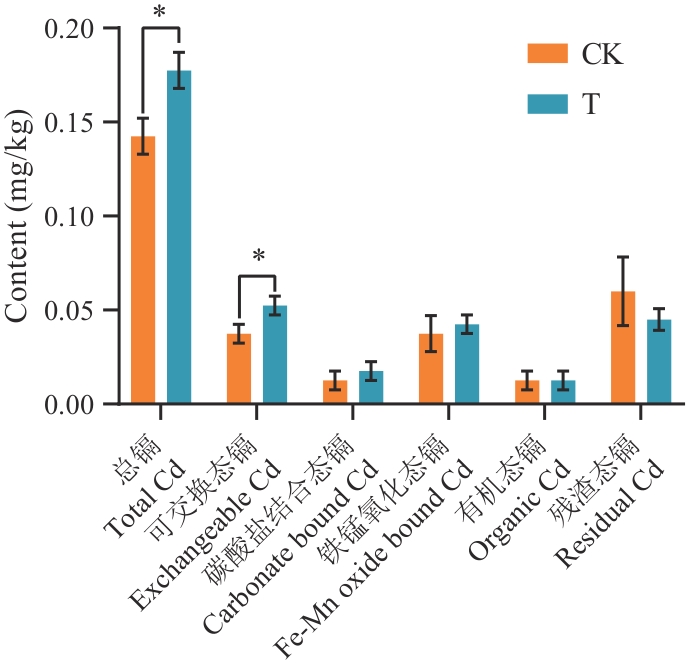
图1 土壤中总镉及五态镉含量
Fig. 1 Total cadmium and the contents of the five fractions of cadmium in the soil
微生物类型 Type of microorganism | 处理 Treatment | Shannon指数 Shannon index | Simpson指数 Simpson index | ACE指数 ACE index | Chao 1指数 Chao 1 index | 覆盖率 Coverage (%) |
|---|---|---|---|---|---|---|
| 真菌 Fungi | CK | 5.946±0.07a | 0.91±0.004a | 1 361.69±12.11a | 1 358.058±11.523a | 99.99 |
| T | 5.791±0.04b | 0.91±0.005a | 1 322.22±6.266a | 1 305.827±4.777a | 99.99 | |
| 细菌 Bacteria | CK | 8.39±0.02a | 0.98±0.000 3a | 1 257.31±2.87a | 1 254.28±2.837a | 99.99 |
| T | 8.55±0.04b | 0.99±0.000 7b | 868.12±3.56.33b | 865.722±4.61b | 99.99 |
表2 微生物α多样性指数
Table 2 α diversity index of microorganisms
微生物类型 Type of microorganism | 处理 Treatment | Shannon指数 Shannon index | Simpson指数 Simpson index | ACE指数 ACE index | Chao 1指数 Chao 1 index | 覆盖率 Coverage (%) |
|---|---|---|---|---|---|---|
| 真菌 Fungi | CK | 5.946±0.07a | 0.91±0.004a | 1 361.69±12.11a | 1 358.058±11.523a | 99.99 |
| T | 5.791±0.04b | 0.91±0.005a | 1 322.22±6.266a | 1 305.827±4.777a | 99.99 | |
| 细菌 Bacteria | CK | 8.39±0.02a | 0.98±0.000 3a | 1 257.31±2.87a | 1 254.28±2.837a | 99.99 |
| T | 8.55±0.04b | 0.99±0.000 7b | 868.12±3.56.33b | 865.722±4.61b | 99.99 |
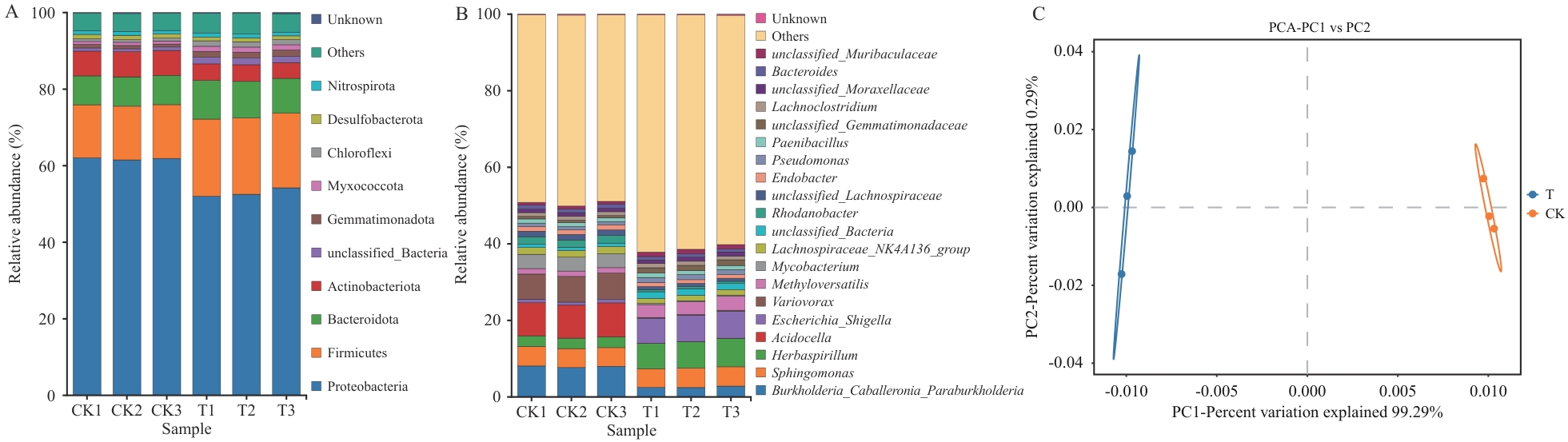
图2 细菌门水平以及属水平相对丰度A:不同处理下细菌群落门水平的分类组成;B:不同处理下细菌群落属水平的分类组成;C:细菌群落的主成分分析(PCA)
Fig. 2 Relative abundances at bacterial phylum and genus levelA: Taxonomic composition of bacterial communities under different treatments at the phylum level; B: taxonomic composition of bacterial communities under different treatments at the genus level; C: principal component analysis (PCA) of bacterial communities
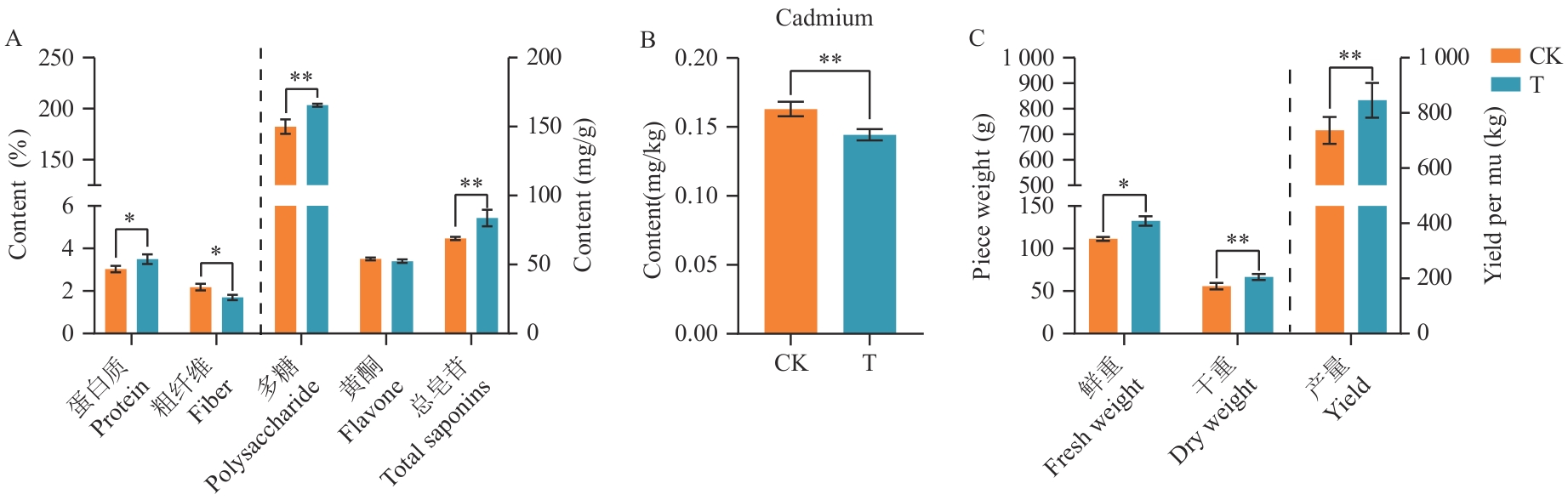
图3 百合块茎成分指标及产量A:百合块茎成分含量变化;B:百合块茎中镉含量;C:百合产量的变化
Fig. 3 Composition and yield indicators for lily tubersA: Lily bulb compositional changes. B: Cadmium content in lily. C: Changes in lily yield
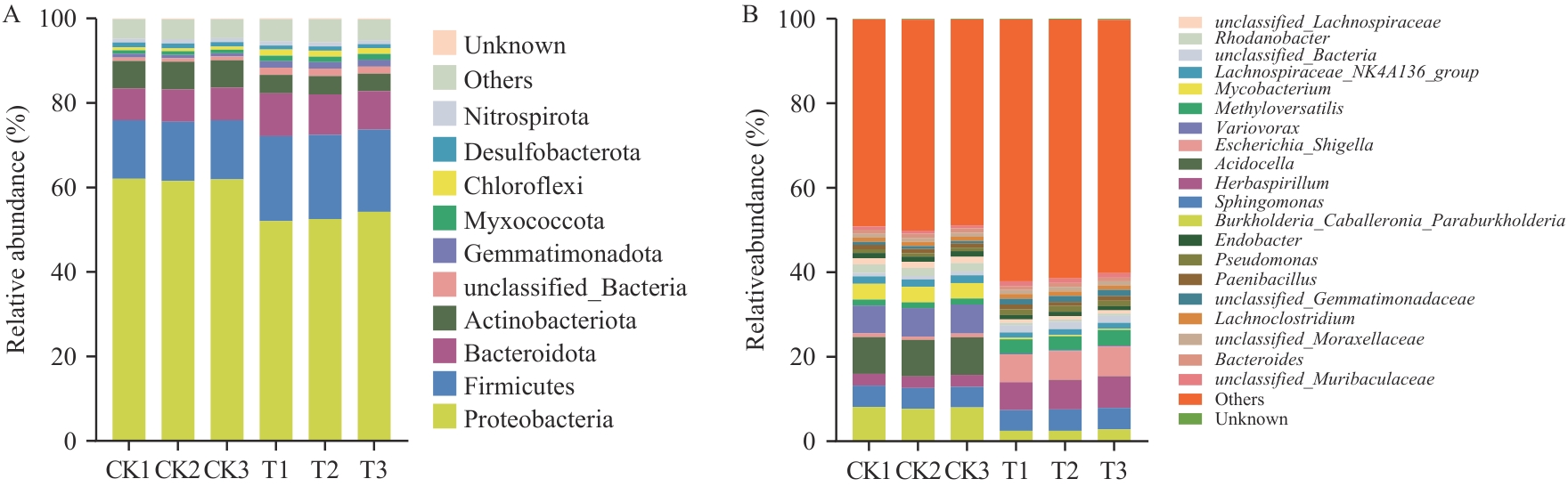
图4 百合根际土壤微生物丰度变化A:土壤微生物群落门水平组成;B:土壤微生物群落属水平组成
Fig. 4 Changes in soil microbial abundances around lily rhizosphereA: Taxonomic composition of bacterial communities in soils at the phylum level; B: taxonomic composition of bacterial communities in soils at the genus level
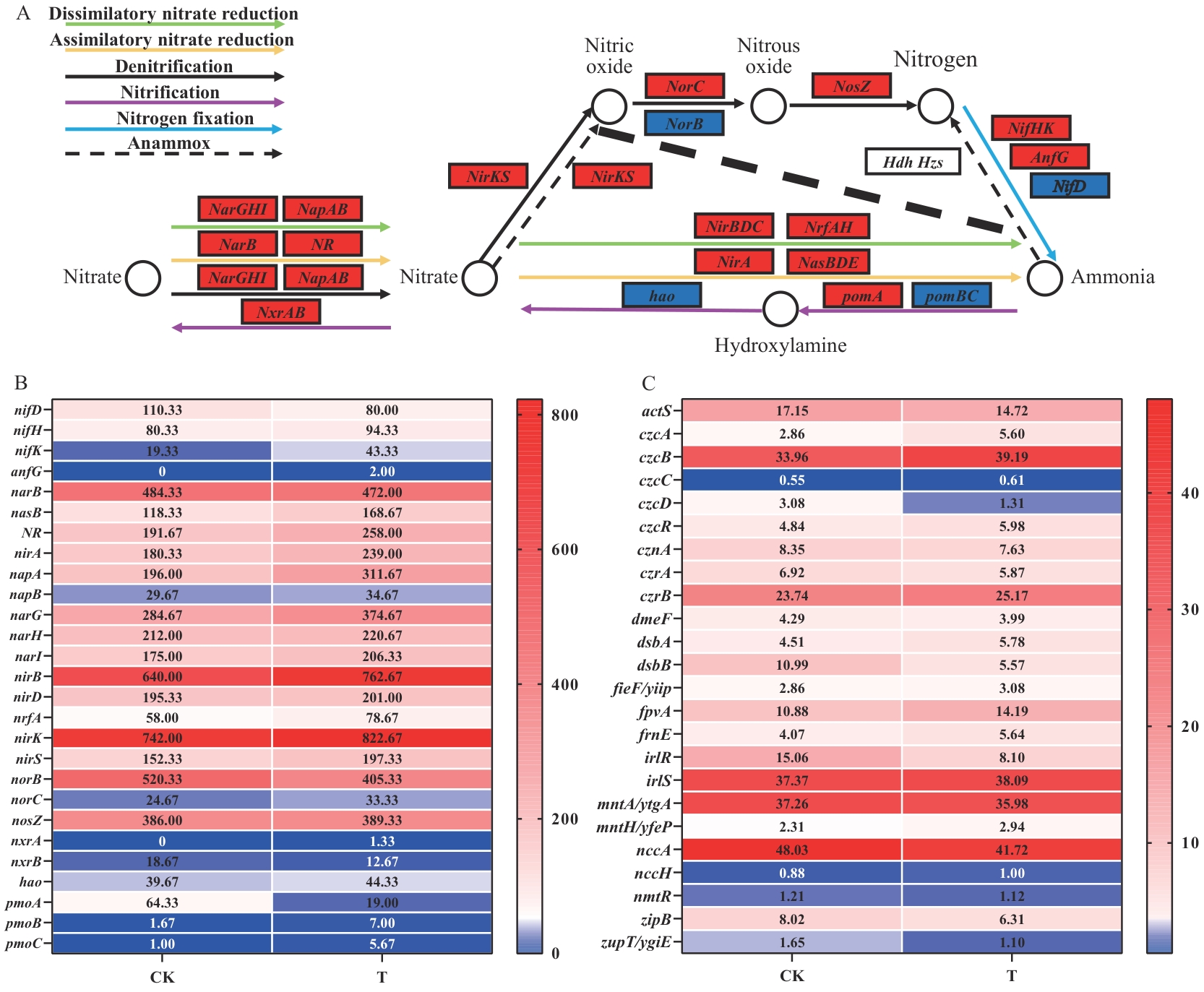
图5 百合根际土壤微生物丰度与基因功能的变化A:氮代谢途径;B:土壤细菌氮代谢相关基因表达水平的热图;C:土壤细菌中镉相关基因表达水平的热图
Fig. 5 Changes in soil microbial abundance and gene function around lily rhizosphereA: Nitrogen metabolism pathways. B: Heatmap of expressions of nitrogen metabolism-related genes in soil bacteria under different treatments. C: Heatmap of expressions of cadmium-related genes in soil bacteria under different treatments
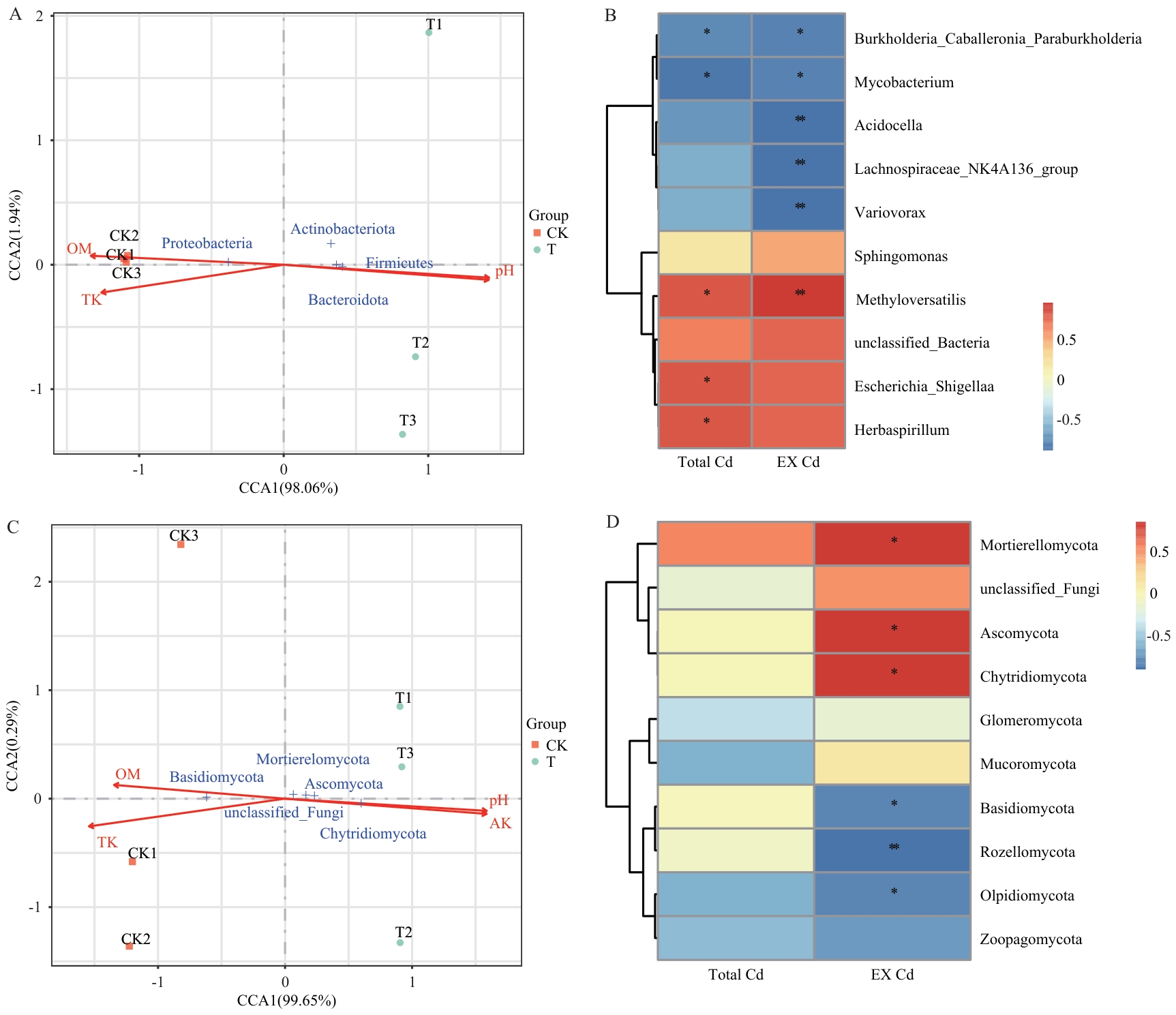
图6 百合球茎门水平上的冗余分析A、C:基于单个样品门水平相对丰度和土壤性质的细菌(A)和真菌(C)群落冗余分析(RDA);B、D:镉形态与丰富细菌(B)和真菌(D)门之间斯皮尔曼相关系数热图;Ex-Cd:可交换态镉。下同
Fig. 6 Redundancy analysis at the phylum levelA, C: Redundancy analysis (RDA) of bacterial (A) and fungal (C) communities based on relative abundances at phylum level and soil properties in individual samples. B, D: Heatmap of the Spearman correlation coefficient between Cd fractions and abundant bacterial (B) and fungal (D) phyla. Ex-Cd: Exchangeable cadmium. The same below

图7 根际土壤微生物门水平上的冗余分析A:基于单个样品门水平微生物群落相对丰度和土壤镉形态的冗余分析;B:镉形态与微生物门之间斯皮尔曼相关系数的热图
Fig. 7 Redundancy analysis at the phylum levelA: Redundancy analysis based on the relative abundances of microbial communities at the phylum level and soil cadmium fractions in individual samples. B: Heatmap of the Spearman correlation coefficient between cadmium fractions and microbial phyla
| [40] | 侯进慧, 樊继强, 王富威, 等. 牛蒡根际可培养细菌多样性和镉耐性初步分析 [J]. 生物技术通报, 2012, 28(8): 158-162. |
| Hou JH, Fan JQ, Wang FW, et al. Priliminary analysis of cultivable bacteria diversity and Cd2+ resistance in burdock rhizosphere [J]. Biotechnol Bull, 2012, 28(8): 158-162. | |
| [41] | Sun H, Shao C, Jin Q, et al. Effects of cadmium contamination on bacterial and fungal communities in Panax ginseng-growing soil [J]. BMC Microbiol, 2022, 22(1): 77. |
| [1] | Biswas MK, Nath UK, Howlader J, et al. Exploration and exploitation of novel SSR markers for candidate transcription factor genes in Lilium species [J]. Genes, 2018, 9(2): 97. |
| [2] | 许青阳, 戴亮亮, 肖凯琦, 等. 基于镉污染风险的湖南省龙山县百合种植区安全区划 [J]. 地质论评, 2023, 69(5): 1869-1878. |
| Xu QY, Dai LL, Xiao KQ, et al. Safety zoning of lily planting regions based on cadmium pollution risk in Longshan County, Hunan Province [J]. Geol Rev, 2023, 69(5): 1869-1878. | |
| [3] | 张敏, 马淼. 甘草根际土壤微生物群落对长期连作的响应 [J]. 生态学报, 2022, 42(22): 9017-9025. |
| Zhang M, Ma M. Response of rhizosphere soil microbial community to long-term continuous cropping of Glycyrrhiza glabra L [J]. Acta Ecol Sin, 2022, 42(22): 9017-9025. | |
| [4] | 刘星, 张文明, 张春红, 等. 土壤灭菌-生物有机肥联用对连作马铃薯及土壤真菌群落结构的影响 [J]. 生态学报, 2016, 36(20): 6365-6378. |
| Liu X, Zhang WM, Zhang CH, et al. Combination of the application of soil disinfection and bio-organic fertilizer amendment and its effects on yield and quality of tubers, physiological characteristics of plants, and the soil fungal community in a potato monoculture system [J]. Acta Ecol Sin, 2016, 36(20): 6365-6378. | |
| [5] | 陈林. 根际促生菌(PGPR)与有机肥配施缓解作物连作障碍初探及其在有机种植中的应用 [D]. 南京: 南京农业大学, 2022. |
| Chen L. Preliminary study on the application of rhizosphere growth-promoting bacteria (PGPR) combined with organic fertilizer to alleviate the obstacle of continuous cropping and its application in organic planting [D]. Nanjing: Nanjing Agricultural University, 2022. | |
| [6] | Chauhan A, Saini R, Sharma JC. Plant growth promoting rhizobacteria and their biological properties for soil enrichment and growth promotion [J]. J Plant Nutr, 2022, 45(2): 273-299. |
| [7] | Tribedi P, Sil AK. Bioaugmentation of polyethylene succinate-contaminated soil with Pseudomonas sp. AKS2 results in increased microbial activity and better polymer degradation [J]. Environ Sci Pollut Res Int, 2013, 20(3): 1318-1326. |
| [8] | Shi HM, Lu LX, Ye JR, et al. Effects of two Bacillus velezensis microbial inoculants on the growth and rhizosphere soil environment of Prunus davidiana [J]. Int J Mol Sci, 2022, 23(21): 13639. |
| [9] | Du NS, Guo H, Fu RK, et al. Comparative transcriptome analysis and genetic methods revealed the biocontrol mechanism of Paenibacilluspolymyxa NSY50 against tomato Fusarium wilt [J]. Int J Mol Sci, 2022, 23(18): 10907. |
| [10] | Lv Y, Wang XF, Xue WF, et al. Addition of microbes shifts the ability of soil carbon sequestration in the process of soil Cd remediation [J]. J Soils Sediments, 2024, 24(7): 2669-2683. |
| [11] | 周池, 周诗晶, 陶禹, 等. 贝莱斯芽孢杆菌XY40-1: 全基因组特征分析及对辣椒疫病的生物防治效果评价 [J]. 微生物学报, 2024, 64(12): 4882-4901. |
| Zhou C, Zhou SJ, Tao Y, et al. Bacillus velezensis XY40-1: analysis of whole genome characteristics and evaluation of biological control effect on pepper blight [J]. China Ind Econ, 2024, 64(12): 4882-4901. | |
| [12] | Wang G, Ren Y, Bai XJ, et al. Contributions of beneficial microorganisms in soil remediation and quality improvement of medicinal plants [J]. Plants, 2022, 11(23): 3200. |
| [13] | Kumar V, Koul B, Taak P, et al. Journey of Trichoderma from pilot scale to mass production: a review [J]. Agriculture, 2023, 13(10): 2022. |
| [14] | 罗耀华. 热激介导角质层代谢调控鲜切百合鳞茎品质特性的研究 [D]. 长沙: 湖南大学, 2022. |
| Luo YH. Study on the quality characteristics of fresh-cut lily bulbs regulated by heat shock mediated cuticle metabolism [D]. Changsha: Hunan University, 2022. | |
| [15] | Peng SL, Chen AQ, Fang HD, et al. Effects of vegetation restoration types on soil quality in Yuanmou dry-hot valley, China [J]. Soil Sci Plant Nutr, 2013, 59(3): 347-360. |
| [16] | Wang JJ, Zhao SQ, Xu S, et al. Co-inoculation of antagonistic Bacillus velezensis FH-1 and Brevundimonas diminuta NYM3 promotes rice growth by regulating the structure and nitrification function of rhizosphere microbiome [J]. Front Microbiol, 2023, 14: 1101773. |
| [17] | Yang HY, Hui L, Sun HQ, et al. Soil intrinsic properties changes and yield loss of Lanzhou lily (Lilium davidii var. unicolor) under continuous cropping in the arid area of western China [J]. Pak J Bot, 2023, 55(6): 2091-2099. |
| [18] | Wang JZ, Qu F, Liang JY, et al. Bacillus velezensis SX13 promoted cucumber growth and production by accelerating the absorption of nutrients and increasing plant photosynthetic metabolism [J]. Sci Hortic, 2022, 301: 111151. |
| [19] | Afzal A, Bahader S, Ul Hassan T, et al. Rock phosphate solubilization by plant growth-promoting Bacillus velezensis and its impact on wheat growth and yield [J]. Geomicrobiol J, 2023, 40(2): 131-142. |
| [20] | Sun XL, Xu ZH, Xie JY, et al. Bacillus velezensis stimulates resident rhizosphere Pseudomonas stutzeri for plant health through metabolic interactions [J]. ISME J, 2022, 16(3): 774-787. |
| [21] | 孔德婷, 齐笑含, 刘兴蕾, 等. 不同多年生稻品种内生细菌群落多样性比较分析 [J]. 生物技术通报, 2024, 40(5): 225-236. |
| Kong DT, Qi XH, Liu XL, et al. Comparison and analysis of endophytic bacterial communities in different perennial rice varieties [J]. Biotechnol Bull, 2024, 40(5): 225-236. | |
| [22] | Chen H, Ren HY, Liu JJ, et al. Soil acidification induced decline disease of Myrica rubra: aluminum toxicity and bacterial community response analyses [J]. Environ Sci Pollut Res Int, 2022, 29(30): 45435-45448. |
| [23] | Li M, Chen CJ, Zhang HY, et al. Effects of biochar amendment and organic fertilizer on microbial communities in the rhizosphere soil of wheat in Yellow River Delta saline-alkaline soil [J]. Front Microbiol, 2023, 14: 1250453. |
| [24] | Ye LJ, Wang XH, Wei SB, et al. Dynamic analysis of the microbial communities and metabolome of healthy banana rhizosphere soil during one growth cycle [J]. PeerJ, 2022, 10: e14404. |
| [25] | 李昱达, 王国华, 赵丽娜, 等. 荒漠绿洲边缘不同种植年限人工梭梭林土壤和根系微生物群落特征 [J]. 应用生态学报, 2025, 36(1): 39-49. |
| Li YD, Wang GH, Zhao LN, et al. Characteristics of soil and root microbial communities of Haloxylon ammodendron plantation of different ages in the margin of a desert oasis [J]. Chin J Appl Ecol, 2025, 36(1): 39-49. | |
| [26] | Tripathi BM, Kim M, Kim Y, et al. Variations in bacterial and archaeal communities along depth profiles of Alaskan soil cores [J]. Sci Rep, 2018, 8(1): 504. |
| [27] | 胡应平, 林冬梅, 胡弘正, 等. 旱稻联合固氮菌的分离、鉴定及功能特性 [J]. 福建农林大学学报: 自然科学版, 2024, 53(6): 797-807. |
| Hu YP, Lin DM, Hu HZ, et al. Isolation, identification and functional characteristics of associative nitrogen-fixing bacteria in upland rice [J]. J Fujian Agric For Univ Nat Sci Ed, 2024, 53(6): 797-807. | |
| [28] | 陈宇丰, 柯春亮, 周登博, 等. 香蕉根际土壤解钾放线菌的筛选鉴定及解钾特性研究 [J]. 生物技术通报, 2015, 31(6): 129-137. |
| Chen YF, Ke CL, Zhou DB, et al. Screening, identification and potassium-dissolving characteristics of potassium-dissolving actinomycete in banana rhizosphere soil [J]. Biotechnol Bull, 2015, 31(6): 129-137. | |
| [29] | de Boer W, Folman LB, Summerbell RC, et al. Living in a fungal world: impact of fungi on soil bacterial niche development [J]. FEMS Microbiol Rev, 2005, 29(4): 795-811. |
| [30] | Silva I, Alves M, Malheiro C, et al. Structural and functional shifts in the microbial community of a heavy metal-contaminated soil exposed to short-term changes in air temperature, soil moisture and UV radiation [J]. Genes, 2024, 15(1): 107. |
| [31] | 王雪, 林超霸, 王丹琴, 等. 嗜麦芽寡养单胞菌PX1的降解芘特性及定殖效能 [J]. 应用生态学报, 2022, 33(9): 2547-2556. |
| Wang X, Lin CB, Wang DQ, et al. Pyrene degradation characteristics and colonization efficiency of Stenotrophomonas maltophilia PX1 [J]. Chin J Appl Ecol, 2022, 33(9): 2547-2556. | |
| [32] | Huang F Y, Chen L, Yang X, et al. Unveiling the impacts 328 of microplastics on cadmium transfer in the soil-plant-human system: A review [J]. Journal of Hazardous Materials, 2024, 477. |
| [33] | Liu ZZ, Awasthi MK, Zhao JF, et al. Unraveling impacts of inoculating novel microbial agents on nitrogen conversion during cattle manure composting: Core microorganisms and functional genes [J]. Bioresour Technol, 2023, 390: 129887. |
| [34] | Helen D, Kim H, Tytgat B, et al. Highly diverse nirK genes comprise two major clades that harbour ammonium-producing denitrifiers [J]. BMC Genomics, 2016, 17: 155. |
| [35] | Pajares S, Bohannan BJM. Ecology of nitrogen fixing, nitrifying, and denitrifying microorganisms in tropical forest soils [J]. Front Microbiol, 2016, 7: 1045. |
| [36] | Song T, Zhang XL, Li J, et al. A review of research progress of heterotrophic nitrification and aerobic denitrification microorganisms (HNADMs) [J]. Sci Total Environ, 2021, 801: 149319. |
| [37] | Hussain B, Ashraf MN, Shafeeq-Ur-Rahman, et al. Cadmium stress in paddy fields: effects of soil conditions and remediation strategies [J]. Sci Total Environ, 2021, 754: 142188. |
| [38] | Ramnarine SDB Jr, Ali O, Jayaraman J, et al. Early transcriptional changes of heavy metal resistance and multiple efflux genes in Xanthomonas campestris pv. campestris under copper and heavy metal ion stress [J]. BMC Microbiol, 2024, 24(1): 81. |
| [39] | Salam LB, Obayori OS, Ilori MO, et al. Effects of cadmium perturbation on the microbial community structure and heavy metal resistome of a tropical agricultural soil [J]. Bioresour Bioprocess, 2020, 7(1): 25. |
| [1] | 董栩焜, 车永梅, 王明硕, 罗政刚, 管恩森, 赵方贵, 叶青, 刘新. 纳米硅和蜡样芽胞杆菌SS1共处理对烟草生长的影响[J]. 生物技术通报, 2025, 41(7): 292-298. |
| [2] | 弥春霞, 许澍, 王守现, 刘宇, 宋庆港, 宋爽. 糙皮侧耳覆土栽培对土壤中抗生素抗性基因的影响[J]. 生物技术通报, 2025, 41(6): 335-343. |
| [3] | 李晨莹, 孔大帅, 李若楠, 张玉波, 阎萍, 李奎, 孔思远. 前沿组学技术创新助力畜禽生物育种[J]. 生物技术通报, 2025, 41(6): 71-86. |
| [4] | 宋奋奋, 段艳雪, 桑愉, 王继朋, 彭锐, 孙年喜, 李勇. 患病和健康羊肚菌菌丝际土壤微生物群落特征[J]. 生物技术通报, 2025, 41(4): 323-334. |
| [5] | 刘倩, 马连杰, 张慧, 王冬, 范茂, 廖敦秀, 赵正武, 卢文才. 辣椒炭疽病生防菌株TN2的筛选鉴定与抑菌效果[J]. 生物技术通报, 2025, 41(1): 287-297. |
| [6] | 温绍福, 江润海, 朱城强, 张梅, 余小琴, 杨杰惠, 杨小容, 侯秀丽. 铅污染土壤中解磷菌对玉米根际土壤性质和微生物群落结构的影响[J]. 生物技术通报, 2024, 40(9): 225-237. |
| [7] | 高玉坤, 张建东, 杨溥原, 陈东明, 王志博, 田颐瑾, Zakey Eldinn.E.A.Khlid, 崔江慧, 常金华. 高粱根际土壤细菌群落对盐胁迫的响应[J]. 生物技术通报, 2024, 40(4): 203-216. |
| [8] | 高云云, 杨海飞, 吕虎杰, 刘永鑫. 微生物组分析方法与功能挖掘[J]. 生物技术通报, 2024, 40(10): 98-107. |
| [9] | 赵志祥, 王殿东, 周亚林, 王培, 严婉荣, 严蓓, 罗路云, 张卓. 枯草芽孢杆菌Ya-1对辣椒枯萎病的防治及其对根际真菌群落的影响[J]. 生物技术通报, 2023, 39(9): 213-224. |
| [10] | 张岩峰, 丁燕玲, 马应, 周小南, 杨朝云, 史远刚, 康晓龙. 肉牛剩余采食量相关瘤胃及粪便微生物特征比较分析[J]. 生物技术通报, 2023, 39(1): 295-304. |
| [11] | 鲁兆祥, 王夕冉, 连新磊, 廖晓萍, 刘雅红, 孙坚. 基于功能宏基因组学挖掘抗生素耐药基因研究进展[J]. 生物技术通报, 2022, 38(9): 17-27. |
| [12] | 赵林艳, 官会林, 王克书, 卢燕磊, 向萍, 魏富刚, 杨绍周, 徐武美. 土壤含水量对三七连作土壤微生物群落的影响[J]. 生物技术通报, 2022, 38(7): 215-223. |
| [13] | 张雨函, 范熠, 李婷婷, 庞爽, 刘为, 白可喻, 张西美. 基于宏基因组测序的植物叶表微生物富集及DNA提取方法[J]. 生物技术通报, 2022, 38(3): 256-263. |
| [14] | 赵林艳, 官会林, 向萍, 李泽诚, 柏雨龙, 宋洪川, 孙世中, 徐武美. 白及根腐病植株根际土壤微生物群落组成特征分析[J]. 生物技术通报, 2022, 38(2): 67-74. |
| [15] | 高惠惠, 贾晨波, 韩琴, 苏建宇, 徐春燕. 宁杞7号枸杞根腐病发生的微生物学机制[J]. 生物技术通报, 2022, 38(12): 244-251. |
| 阅读次数 | ||||||
|
全文 |
|
|||||
|
摘要 |
|
|||||
