






生物技术通报 ›› 2026, Vol. 42 ›› Issue (10): 257-268.doi: 10.13560/j.cnki.biotech.bull.1985.2025-1317
• 研究报告 • 上一篇
刘红军1, 张胜1, 杨卫平1, 卢庚龙1, 白雨果1, 李婉迪1, 牛景萍1,2, 梁建萍1,2( ), 石志勇1,2()
收稿日期:2025-12-04
出版日期:2026-10-26
发布日期:2026-10-15
通讯作者:
梁建萍liangjp@sxau.edu.cn基金资助:
LIU Hong-jun1, ZHANG sheng1, YANG Wei-ping1, LU Geng-long1, BAI Yu-guo1, LI Wan-di1, NIU Jing-ping1,2, LIANG Jian-ping1,2(), SHI Zhi-yong1,2()
Received:2025-12-04
Published:2026-10-26
Online:2026-10-15
摘要:
目的 探究摩西球囊霉(Glomus mosseae)接种对黄芪的促生作用及其内在机制。 方法 设未接种摩西球囊霉菌剂的CK组与接种摩西球囊霉菌剂的AMF组。栽培后,在黄芪快速生长期采集样本,测定摩西球囊霉对黄芪根的侵染率,以及株高、根长、主根直径、鲜干重等生长指标;利用RNA-Seq筛选不同处理的差异表达基因(DEGs),进一步分析不同处理对黄芪基因表达和分子机制的影响。 结果 接种摩西球囊霉促进了黄芪的生长发育。其中侧根数提升100%、株高提升42.01%、主根直径提升50%、地上部分鲜重提升37.84%、地下部分鲜重提升97.67%、地上部分干重提升75.36%、地下部分干重提升100%,根长因盆栽空间受限无显著差异。且摩西球囊霉对黄芪的侵染率达91.26%,形成稳定共生关系。转录组共筛选出584个DEGs,主要富集于苯丙烷生物合成、异黄酮生物合成及植物激素信号转导通路,bHLH、ERF等转录因子在通路中发挥核心调控作用。 结论 摩西球囊霉可通过植物激素信号调控关键次生代谢,优化黄芪根系发育,促进黄芪生长。
刘红军, 张胜, 杨卫平, 卢庚龙, 白雨果, 李婉迪, 牛景萍, 梁建萍, 石志勇. 丛枝菌根真菌共生对黄芪幼苗促生机理研究[J]. 生物技术通报, 2026, 42(10): 257-268.
LIU Hong-jun, ZHANG sheng, YANG Wei-ping, LU Geng-long, BAI Yu-guo, LI Wan-di, NIU Jing-ping, LIANG Jian-ping, SHI Zhi-yong. Mechanisms of Arbuscular Mycorrhizal Fungal Symbiosis in Promoting Growth of Astragalus Seedlings[J]. Biotechnology Bulletin, 2026, 42(10): 257-268.
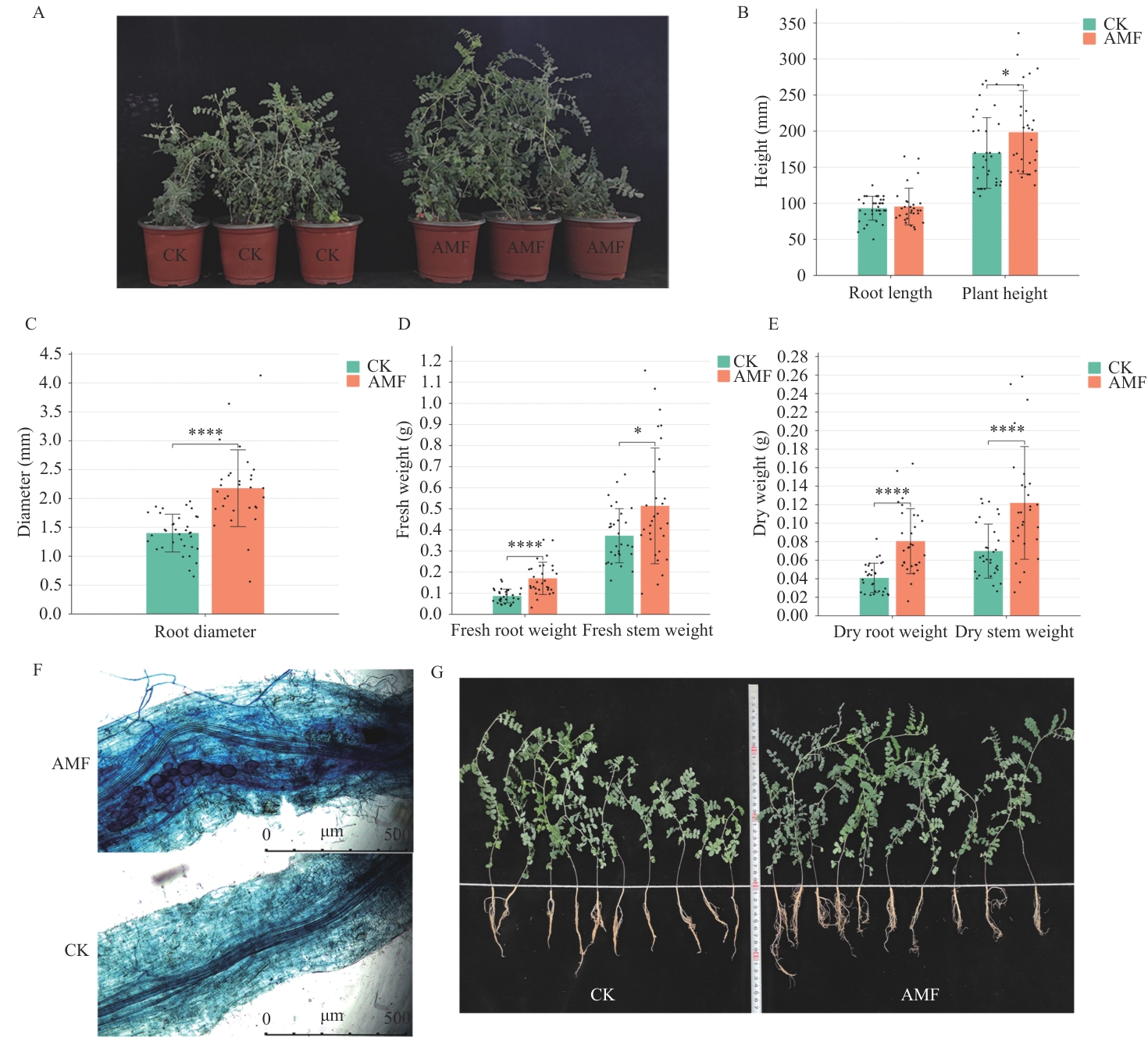
图1 AMF接种处理对黄芪生长发育的影响A、G:植株生长90 d后菌根和非菌根植物表型。B-E:植株生长90 d后菌根和非菌根植物的根长、株高、主根直径、地下部分和地上部分鲜重和干重。F:接种和未接种90 d后植物根系染色。*P<0.05,****P<0.000 1
Fig. 1 The influence of AMF inoculation treatment on growth and development of Astragalus membranaceusA, G: Phenotypic characteristics of mycorrhizal and non-mycorrhizal plants after 90 days of growth. B-E: Root length, plant height, taproot diameter, and fresh and dry weights of belowground and aboveground parts of mycorrhizal and non-mycorrhizal plants after 90 days of growth. F: Root staining of inoculated and non-inoculated plants after 90 days. *P<0.05. ****P<0.000 1
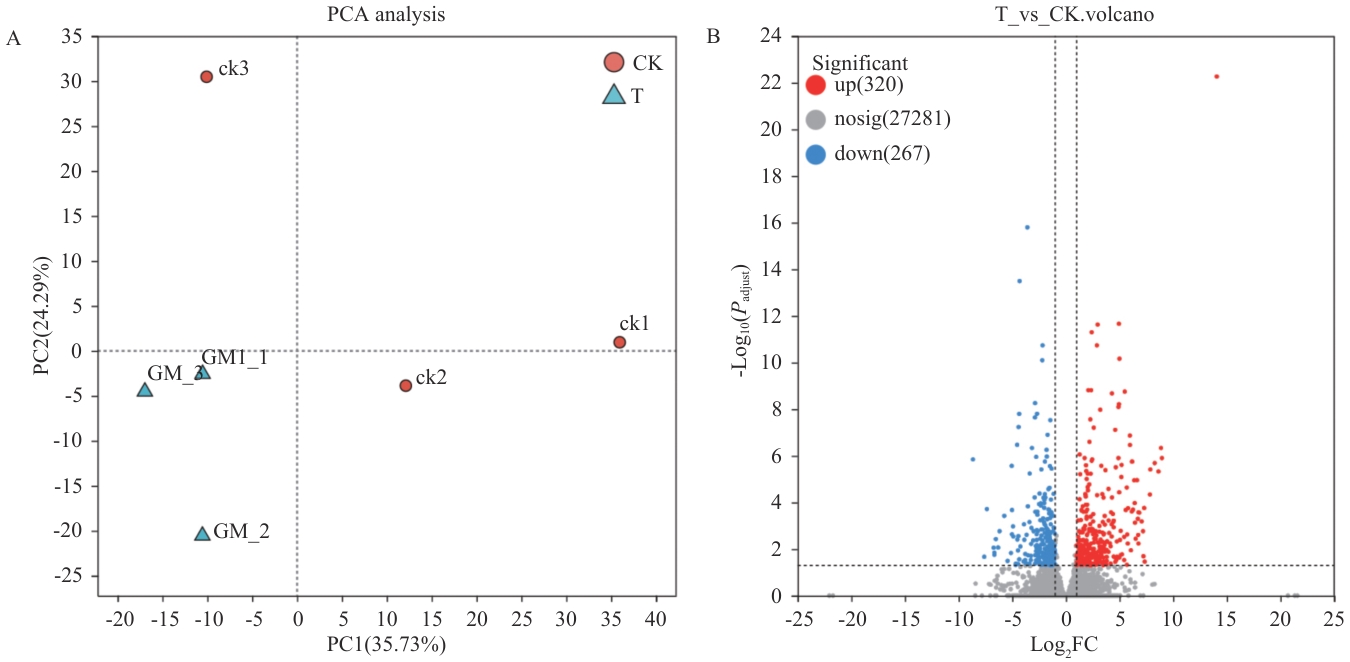
图2 转录组数据PCA分析与差异基因火山图A:各样本间PCA分析;B:AMF与CK比较分析得出的差异基因,筛选阈值参照|log2FC|>=1 & Padjust<0.05。上调基因320个,以红色标注;下调基因267个,以蓝色标注
Fig. 2 PCA analysis and volcano plot of differentially expressed genes of transcriptome dataA: PCA analysis among samples. B: Differentially expressed genes identified by comparative analysis between AMF and CK groups, with screening thresholds set as |log₂FC|≥1 & Padjust<0.05. A total of 320 up-regulated genes are marked in red, and 267 down-regulated genes are marked in blue
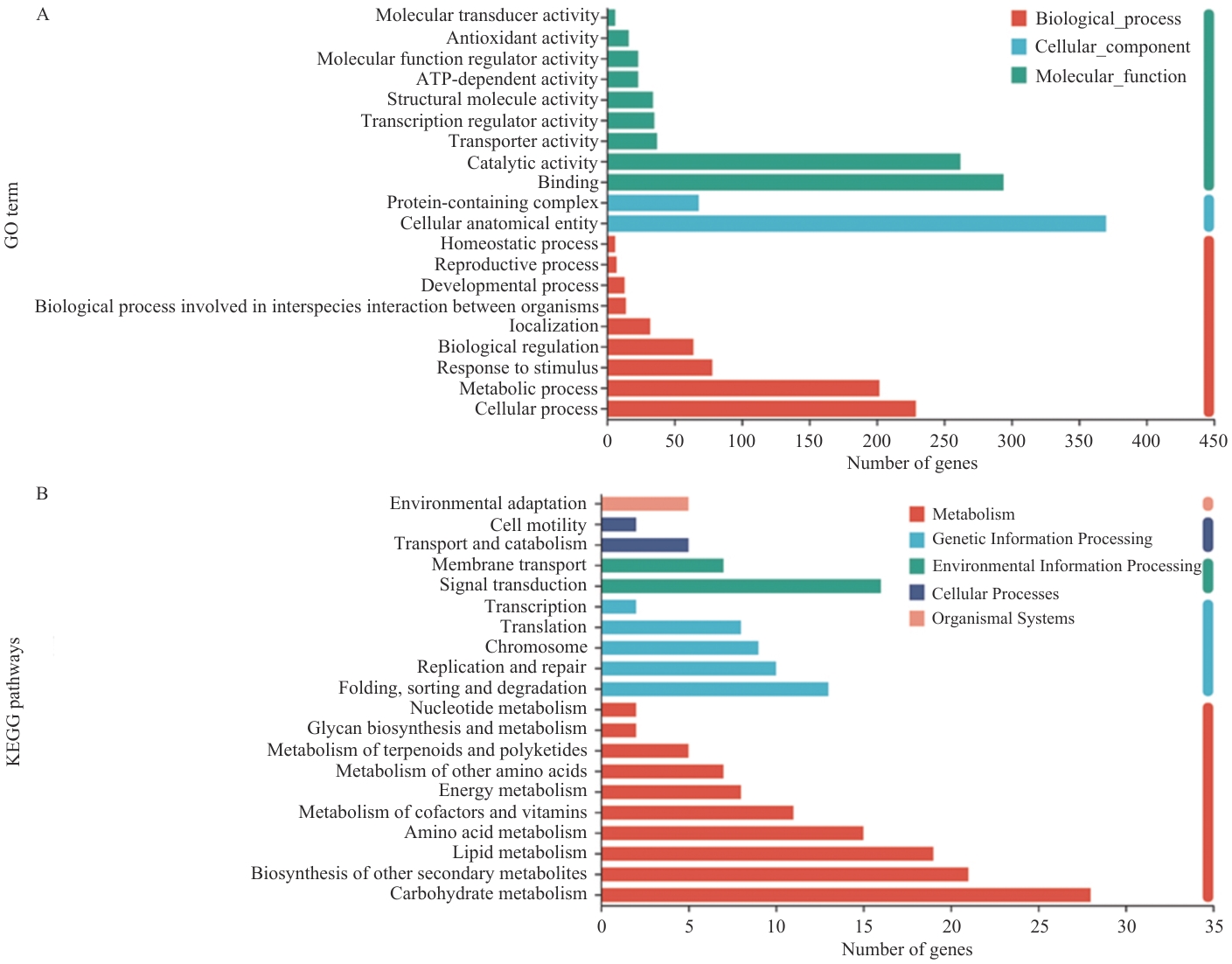
图3 差异表达基因功能注释A: GO功能注释;B: KEGG功能注释
Fig. 3 Functional annotation of differentially expressed genesA: GO functional annotation; B: KEGG functional annotation
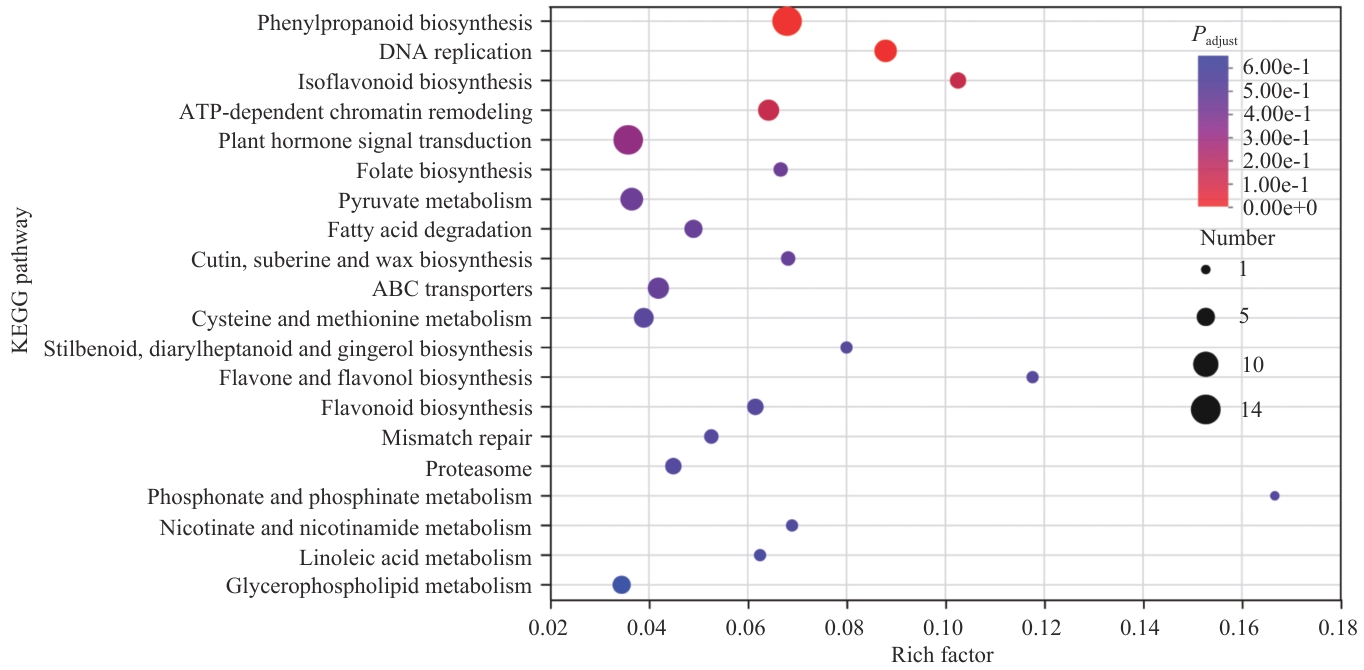
图4 差异基因KEGG通路富集分析横坐标指通路中富集的差异基因占总差异基因的比例,纵坐标指富集的KEGG通路
Fig. 4 KEGG pathway enrichment of DEGsThe x-axis indicates to the number of pathway-specific DEGs divided by the total number of DEGs, the y-axis represents the KEGG pathways
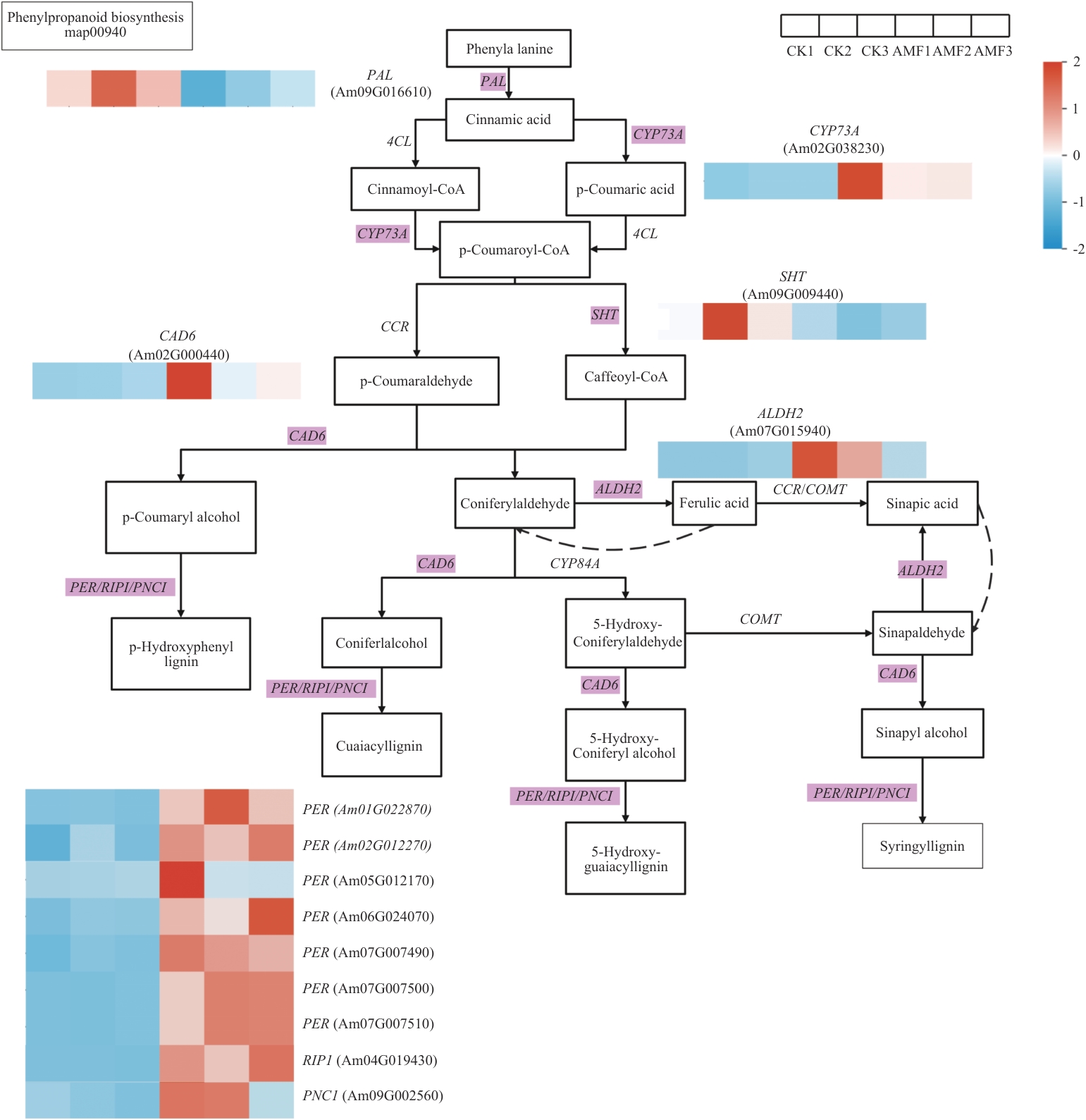
图5 苯丙烷生物合成通路PAL:苯丙氨酸解氨酶;CYP73A:肉桂酸-4-羟化酶;4CL:4-香豆酸辅酶A连接酶;SHT:5-羟色胺N-羟基肉桂酰基转移酶;CCR:肉桂酰辅酶A还原酶;CAD6:肉桂醇脱氢酶6;PER/RIP1/PNC1:过氧化物酶类;ALDH2:醛脱氢酶2。紫色标注的基因为差异表达基因并附带表达量热图
Fig. 5 Phenylpropanoid biosynthesis pathwayPAL: Phenylalanine ammonia-lyase; CYP73A: Cinnamate-4-hydroxylase; 4CL: 4-coumarate: CoA ligase; SHT: Serotonin N-hydroxycinnamoyltransferase; CCR: Cinnamoyl-CoA reductase; CAD6: Cinnamyl alcohol dehydrogenase 6; PER/RIP1/PNC1: Peroxidases; ALDH2: Aldehyde dehydrogenase 2. Genes marked in purple are differentially expressed genes, accompanied by a gene expression heatmap
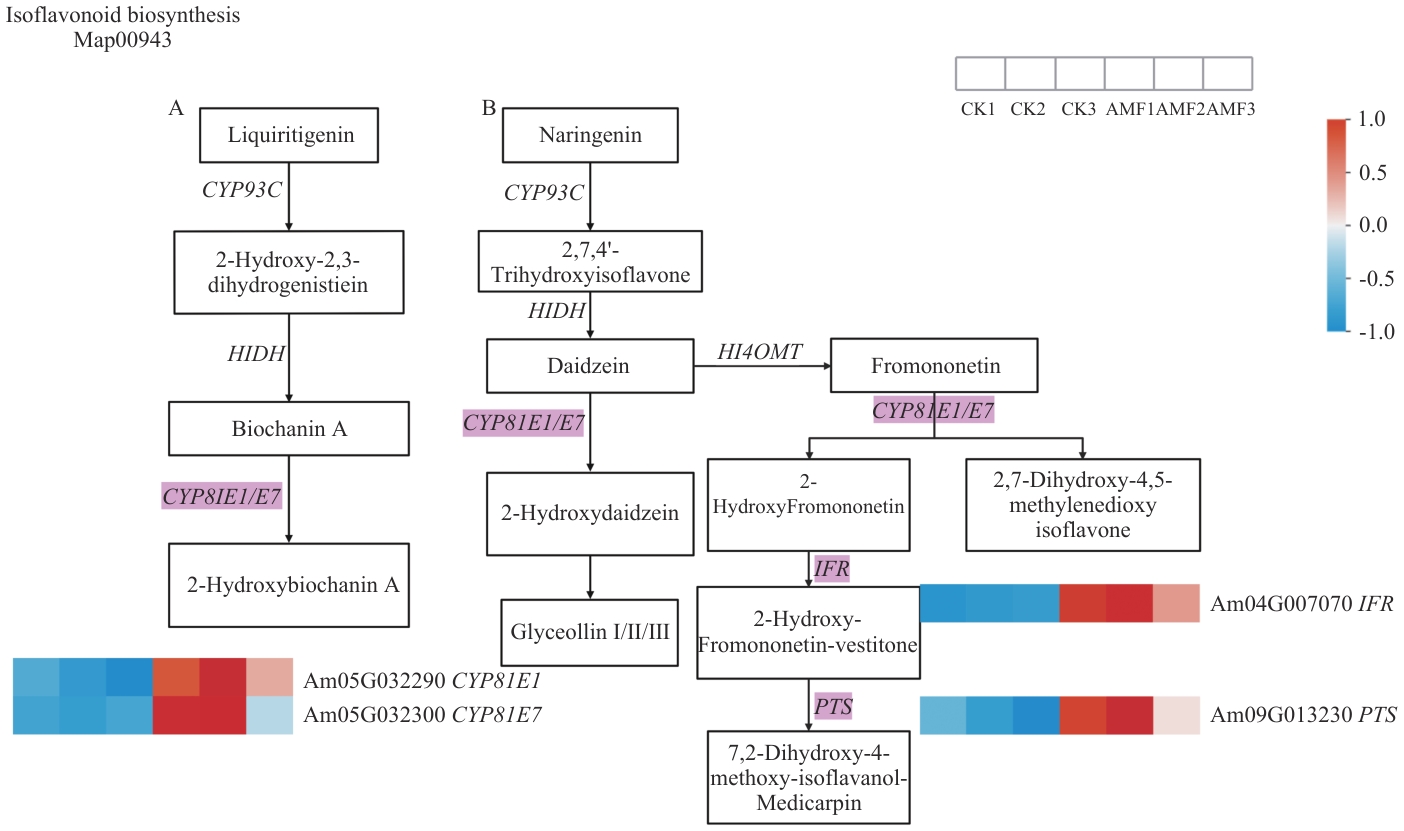
图6 异黄酮生物合成通路CYP93C:细胞色素P450酶家族;CYP81E1/E7:细胞色素P450酶;IFR:细胞色素P450单加氧酶;PTS:紫檀烷合成酶。紫色标注的基因为差异基因并附带表达量热图
Fig. 6 Isoflavonoid biosynthesis pathwayCYP93C: Cytochrome P450 enzyme family; CYP81E1/E7: Cytochrome P450 enzyme; IFR: Cytochrome P450 monooxygenase; PTS: Pterocarpan synthase. Genes marked in purple are differentially expressed genes, accompanied by a gene expression heatmap
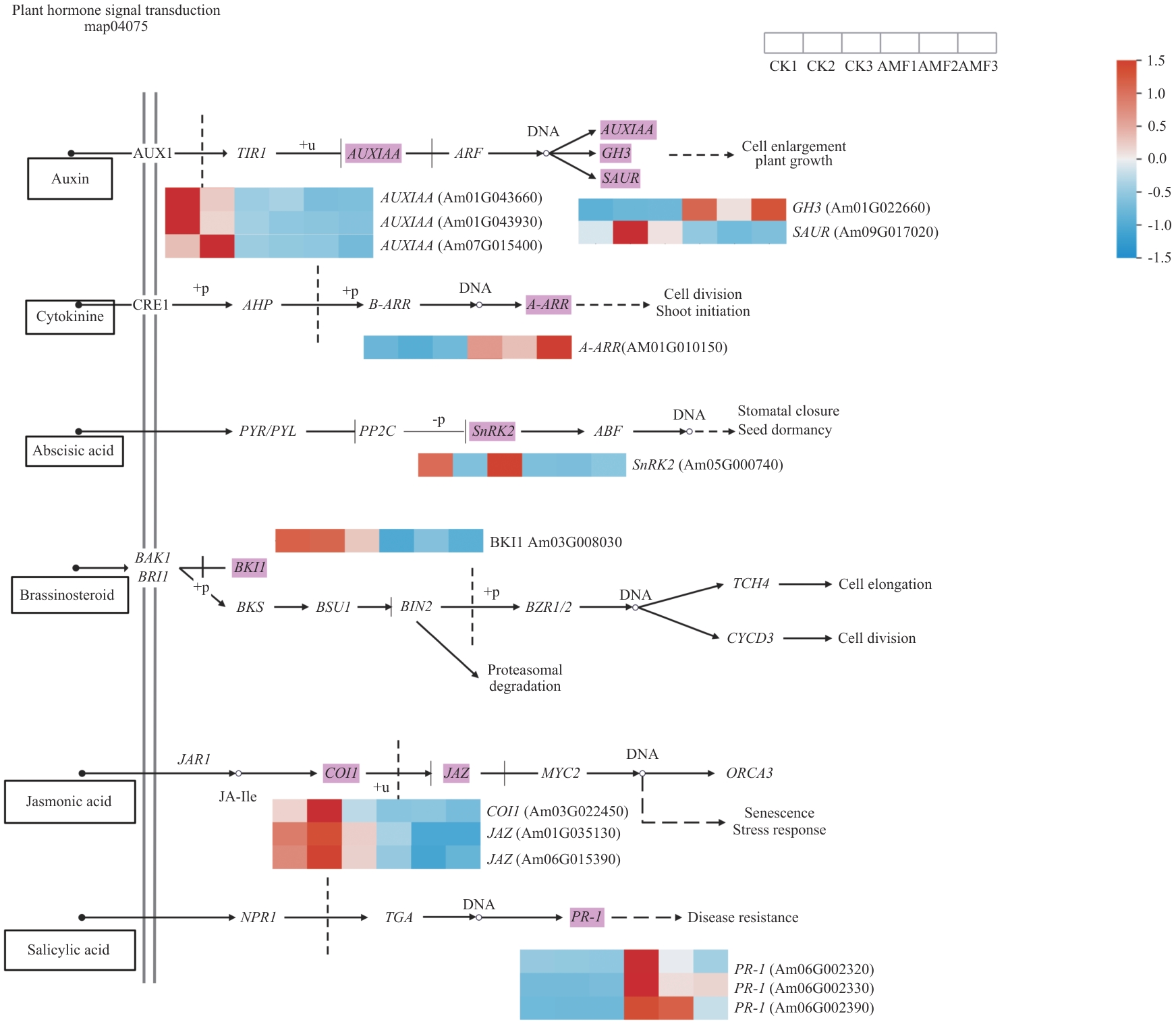
图7 植物激素信号转导通路Auxin:生长素;AUX/IAA、GH3、SAUR:生长素早期响应基因。Cytokinin:细胞分裂素;A-ARR:细胞分裂素响应因子。Abscisic acid:脱落酸;SnRK2:蔗糖非发酵-1-相关蛋白激酶2。Brassinosteroid:油菜素甾醇;BKI1:油菜素内酯受体激酶BRI1的负调控因子。Jasmonic acid:茉莉酸;COI1:茉莉酸受体;JAZ:转录抑制因子;Salicylic acid:水杨酸;PR-1:病程相关蛋白1。紫色标注的基因为差异表达基因并附带表达量热图
Fig. 7 Plant hormone signal transduction pathwayAuxin: Auxin; AUX/IAA, GH3, SAUR: Early auxin-responsive genes. Cytokinin: Cytokinin; A-ARR: Cytokinin response factor. Abscisic acid: Abscisic acid; SnRK2: Sucrose non-fermenting-1-related protein kinase 2. Brassinosteroid: Brassinosteroid; BKI1: Negative regulator of brassinolide receptor kinase BRI1. Jasmonic acid: Jasmonic acid; COI1: Jasmonate receptor; JAZ: Transcriptional repressor. Salicylic acid: Salicylic acid; PR-1: Pathogenesis-related protein 1. Genes marked in purple are differentially expressed genes, accompanied by a gene expression heatmap
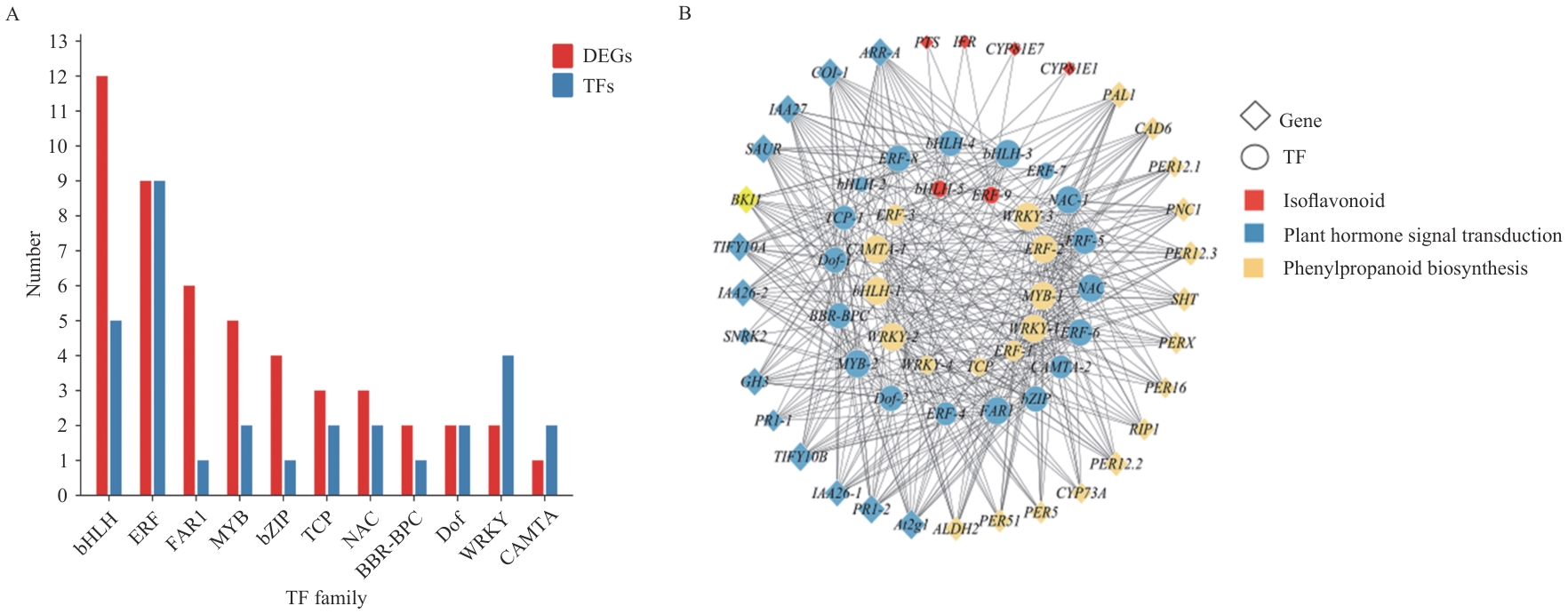
图8 转录因子调控网络A:不同转录因子家族调控的差异基因数,以及转录因子家族中转录因子的数量。B:3个通路差异基因与转录因子的调控网络图
Fig. 8 Transcription factor regulatory networkA: The number of DEGs regulated by different transcription factor families, and the size of each respective family. B: Regulatory network diagram of differentially expressed genes and transcription factors in the three pathways
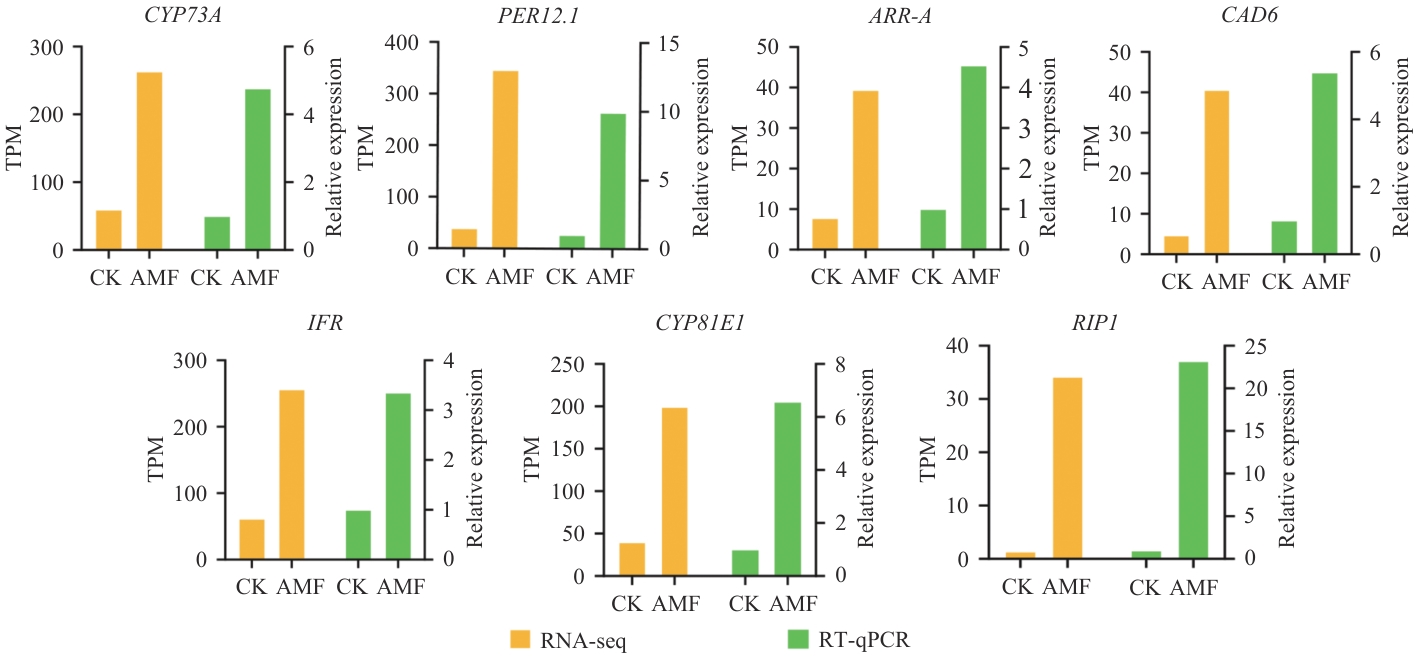
图9 差异表达基因的实时荧光定量PCR验证CK:未接种摩西球囊霉;AMF:接种摩西球囊霉
Fig. 9 Validation of differentially expressed genes using RT-qPCRCK: Samples not inoculated with G. mosseae; AMF: Samples inoculated with G. mosseae
| [1] | Dong PB, Wang LJ, Qiu DY, et al. Evaluation of the environmental factors influencing the quality of Astragalus membranaceus var. mongholicus based on HPLC and the Maxent model [J]. BMC Plant Biol, 2024, 24: 697. |
| [2] | 胡明勋, 陈安家, 郭宝林, 等. 影响山西恒山野生蒙古黄芪质量的环境因素研究 [J]. 中草药, 2012, 43(5): 984-989. |
| Hu MX, Chen AJ, Guo BL, et al. Effects of environmental factors on quality of wild Astragalus membranaceus var. mongholicus grown in Hengshan Mountain, Shanxi Province [J]. Chin Tradit Herb Drugs, 2012, 43(5): 984-989. | |
| [3] | 张雨晴, 王蕾. 黄芪双向调节血压的作用机制研究进展 [J]. 国际中医中药杂志, 2019, 41(8): 907-910. |
| Zhang YQ, Wang L. Review of mechanism on Astragalus membranaceus in two-ways regulation of blood pressure [J]. Inter J Tradit Chin Med, 2019, 41(8):907-910. | |
| [4] | Fu J, Wang ZH, Huang LF, et al. Review of the botanical characteristics, phytochemistry, and pharmacology of Astragalus membranaceus (Huangqi) [J]. Phytother Res, 2014, 28(9): 1275-1283. |
| [5] | 周易, 李新星, 邹宇轩, 等. 不同种植模式黄芪药材质量与综合效益评价 [J]. 中国现代中药, 2025, 27(2): 296-303. |
| Zhou Y, Li XX, Zou YX, et al. Quality and comprehensive benefits of Astragalus membranaceus var. mongholicus cultivated in different patterns [J]. Mod Chin Med, 2025, 27(2): 296-303. | |
| [6] | 关佳莉, 丛悦, 徐媛媛, 等. 不同种植模式下黄芪根际环境与活性成分相关性研究 [J]. 中草药, 2025, 56(12): 4399-4409. |
| Guan JL, Cong Y, Xu YY, et al. Correlation between rhizosphere environment and contents of active components of Astragali Radix from different cropping modes [J]. Chin Tradit Herb Drugs, 2025, 56(12): 4399-4409. | |
| [7] | 李志军, 孙德智, 贾俊英, 等. 不同栽培方式对蒙古黄芪药效品质及土壤微生态的影响 [J]. 时珍国医国药, 2024, 35(1): 197-200. |
| Li ZJ, Sun DZ, Jia JY, et al. Effects of different cultivation methods on pharmacological quality and soil microecology of Astragalus mongholicus [J]. Lishizhen Med Mater Med Res, 2024, 35(1): 197-200. | |
| [8] | 陈燕, 张鑫, 张丹, 等. 微生物菌肥对黄芪生长、活性物质积累及土壤养分吸收的影响 [J]. 中草药, 2025, 56(11): 4057-4068. |
| Chen Y, Zhang X, Zhang D, et al. Effects of microbial fertilizers on plant growth, bioactive metabolites accumulation, and soil nutrient absorption of Astragalus mongholicus [J]. Chin Tradit Herb Drugs, 2025, 56(11): 4057-4068. | |
| [9] | 杨振宇, 王宝慧, 宋诗娟, 等. 固氮菌剂对黄芪生长、土壤养分及酶活性的影响 [J]. 山西农业科学, 2022, 50(6): 861-868. |
| Yang ZY, Wang BH, Song SJ, et al. Effects of nitrogen-fixing bacteria on growth of Astragalus membranaceus, soil nutrient, and enzyme activity [J]. J Shanxi Agric Sci, 2022, 50(6): 861-868. | |
| [10] | Liang JP, Xue ZQ, Yang ZY, et al. Effects of microbial organic fertilizers on Astragalus membranaceus growth and rhizosphere microbial community [J]. Ann Microbiol, 2021, 71: 11. |
| [11] | 樊良帅, 黄振斌, 晋小军, 等. 三种生物菌剂对黄芪根腐病防效及生长发育的影响 [J]. 农药学学报, 2025, 27(1): 160-170. |
| Fan LS, Huang ZB, Jin XJ, et al. Effects of three microbial agents on the control of Astragalus membranaceus var. mongholicus root rot and their influence growth and development [J]. Chin J Pestic Sci, 2025, 27(1): 160-170. | |
| [12] | Genre A, Lanfranco L, Perotto S, et al. Unique and common traits in mycorrhizal symbioses [J]. Nat Rev Microbiol, 2020, 18(11): 649-660. |
| [13] | Kaur S, Campbell BJ, Suseela V. Root metabolome of plant-arbuscular mycorrhizal symbiosis mirrors the mutualistic or parasitic mycorrhizal phenotype [J]. New Phytol, 2022, 234(2): 672-687. |
| [14] | Kakouridis A, Hagen JA, Kan MP, et al. Routes to roots: direct evidence of water transport by arbuscular mycorrhizal fungi to host plants [J]. New Phytol, 2022, 236(1): 210-221. |
| [15] | Wang GW, Jin ZX, George TS, et al. Arbuscular mycorrhizal fungi enhance plant phosphorus uptake through stimulating hyphosphere soil microbiome functional profiles for phosphorus turnover [J]. New Phytol, 2023, 238(6): 2578-2593. |
| [16] | Karthikeyan B, Abitha B, Henry AJ, et al. Interaction of rhizobacteria with arbuscular mycorrhizal fungi (AMF) and their role in stress abetment in agriculture [M]//Pagano MC. Recent Advances on Mycorrhizal Fungi. Cham: Springer International Publishing, 2016: 117-142. |
| [17] | Gao TT, Liu XM, Shan L, et al. Dopamine and arbuscular mycorrhizal fungi act synergistically to promote apple growth under salt stress [J]. Environ Exp Bot, 2020, 178: 104159. |
| [18] | Huang D, Ma MN, Wang Q, et al. Arbuscular mycorrhizal fungi enhanced drought resistance in apple by regulating genes in the MAPK pathway [J]. Plant Physiol Biochem, 2020, 149: 245-255. |
| [19] | Adeyemi NO, Atayese MO, Sakariyawo OS, et al. Alleviation of heavy metal stress by arbuscular mycorrhizal symbiosis in Glycine max (L.) grown in copper, lead and zinc contaminated soils [J]. Rhizosphere, 2021, 18: 100325. |
| [20] | Zhang CF, van der Heijden MGA, Dodds BK, et al. Correction: a tripartite bacterial-fungal-plant symbiosis in the mycorrhiza-shaped microbiome drives plant growth and mycorrhization [J]. Microbiome, 2024, 12: 30. |
| [21] | Bohrer KE, Friese CF, Amon JP. Seasonal dynamics of arbuscular mycorrhizal fungi in differing wetland habitats [J]. Mycorrhiza, 2004, 14(5): 329-337. |
| [22] | Wang SY, Wei H, Chen KY, et al. Practical Methods for Arbuscular Mycorrhizal Fungal Spore Density, Hyphal Density and Colonization Rate of AMF[M]//Microbiome Protocols eBook. Bio-101: e2104253. |
| [23] | Yang CQ, Fang X, Wu XM, et al. Transcriptional regulation of plant secondary metabolism [J]. J Integr Plant Biol, 2012, 54(10): 703-712. |
| [24] | 刘云龙, 钱浩宇, 张鑫, 等. 丛枝菌根真菌对豆科作物生长和生物固氮及磷素吸收的影响 [J]. 应用生态学报, 2021, 32(5): 1761-1767. |
| Liu YL, Qian HY, Zhang X, et al. Impacts of arbuscular mycorrhizal fungi (AMF) on growth, N bio-fixation, and phosphor-us uptake of legume crop [J]. Chin J Appl Ecol, 2021, 32(5): 1761-1767. | |
| [25] | Jing S, Li YC, Zhu LC, et al. Transcriptomics and metabolomics reveal effect of arbuscular mycorrhizal fungi on growth and development of apple plants [J]. Front Plant Sci, 2022, 13: 1052464. |
| [26] | Lynch J. Root architecture and plant productivity [J]. Plant Physiol, 1995, 109(1): 7-13. |
| [27] | Dong NQ, Lin HX. Contribution of phenylpropanoid metabolism to plant development and plant-environment interactions [J]. J Integr Plant Biol, 2021, 63(1): 180-209. |
| [28] | Boerjan W, Ralph J, Baucher M. Lignin biosynthesis [J]. Annu Rev Plant Biol, 2003, 54: 519-546. |
| [29] | Li MT, Cheng CX, Zhang XF, et al. Overexpression of pear (Pyrus pyrifolia) CAD2 in tomato affects lignin content [J]. Molecules, 2019, 24(14): 2595. |
| [30] | Cao KF, Wang SJ, Zhang HM, et al. Transcriptomic regulatory mechanisms of isoflavone biosynthesis in Trifolium pratense [J]. Agronomy, 2025, 15(5): 1061. |
| [31] | Sugiyama A, Yamazaki Y, Yamashita K, et al. Developmental and nutritional regulation of isoflavone secretion from soybean roots [J]. Biosci Biotechnol Biochem, 2016, 80(1): 89-94. |
| [32] | Tian F, Jia TJ, Yu BJ. Physiological regulation of seed soaking with soybean isoflavones on drought tolerance of Glycine max and Glycine soja [J]. Plant Growth Regul, 2014, 74(3): 229-237. |
| [33] | Waadt R, Seller CA, Hsu PK, et al. Plant hormone regulation of abiotic stress responses [J]. Nat Rev Mol Cell Biol, 2022, 23(10): 680-694. |
| [34] | Kang NY, Kim MJ, Jeong S, et al. HIGH PLOIDY2-mediated SUMOylation of transcription factor ARR1 controls two-component signaling in Arabidopsis [J]. Plant Cell, 2024, 36(9): 3521-3542. |
| [35] | Dar MH, Razvi SM, Singh N, et al. Arbuscular mycorrhizal fungi for salinity stress: Anti-stress role and mechanisms [J]. Pedosphere, 2023, 33(1): 212-224. |
| [36] | Ruiz-Lozano JM, Aroca R, Zamarreño ÁM, et al. Arbuscular mycorrhizal symbiosis induces strigolactone biosynthesis under drought and improves drought tolerance in lettuce and tomato [J]. Plant Cell Environ, 2016, 39(2): 441-452. |
| [1] | 王鑫, 陈炜, 孙博. 植物花分生组织活性的调控机制[J]. 生物技术通报, 2026, 42(9): 1-13. |
| [2] | 范丽金, 宋晓飞, 李晓丽, 闫立英, 谢洋. 基于转录组与代谢组解析黄瓜雌花花冠延迟开放的关键调控通路[J]. 生物技术通报, 2026, 42(9): 147-156. |
| [3] | 谭澍, 沈红建, 高晓磊, 尹倩, 邹锋. 油茶MYB转录因子家族鉴定及CoMYB107基因在雄蕊发育中的功能分析[J]. 生物技术通报, 2026, 42(9): 196-209. |
| [4] | 申瑞雪, 郭子卿, 庞星辰, 李志远, 丁炜, 董琦, 李森, 宋红霞. 转录组和代谢组联合解析‘泽州芹菜’露地越冬的机制[J]. 生物技术通报, 2026, 42(8): 251-262. |
| [5] | 刘佳, 孟宇, 荆晓艳. 单细胞拉曼光谱揭示聚球藻PCC7942对无机碳源的利用偏好性[J]. 生物技术通报, 2026, 42(8): 331-340. |
| [6] | 危潇, 黎妍妍, 袁勤峰, 姚经武, 曹春霞, 黄大野. 一株分离自烟草根际的生防菌株鉴定及其生防潜力研究[J]. 生物技术通报, 2026, 42(7): 279-291. |
| [7] | 陈义焰, 张冬儿, 张涛, 刘育灏, 唐杰, 盛夏冰, 胡远艺, 艾治勇, 李应将, 刘小林. 水稻OsSULTR2;2基因功能及调控苗期耐盐性分析[J]. 生物技术通报, 2026, 42(7): 116-125. |
| [8] | 王鸿睿, 赵怡如, 饶书培, 陈金焕. 黑果枸杞 LrCYP78A5 基因在干旱与盐胁迫响应中的功能研究[J]. 生物技术通报, 2026, 42(7): 182-192. |
| [9] | 董亚茹, 修妤, 赵东晓, 朱红, 朱琳, 刘惠芬. 基于转录组的桑树GRAS基因家族鉴定及MnGRAS22盐胁迫响应分析[J]. 生物技术通报, 2026, 42(7): 193-203. |
| [10] | 王家彬, 胡玥, 陈嘉杰, 王蒙, 何秀云, 李之勇, 李健, 王美娜. 紫纹兜兰不同部位的代谢组和转录组联合分析[J]. 生物技术通报, 2026, 42(6): 279-293. |
| [11] | 张英英, 吴之涛, 常浩, 徐志鹏, 杨小龙, 杨克泽, 魏玉杰. 连作年限对黄芪根际土壤性质及微生物群落结构的影响[J]. 生物技术通报, 2026, 42(5): 174-184. |
| [12] | 王玉昆, 原远, 王斌, 朱云娜, 任晓强, 任飞, 叶红. 转录组和脂质代谢组联合分析不同紫苏α-亚麻酸合成调控差异[J]. 生物技术通报, 2026, 42(4): 129-140. |
| [13] | 刘青媛, 吴洪启, 陈秀娥, 陈剑, 姜远泽, 何燕子, 喻奇伟, 刘仁祥. 转录因子NtMYB96a调控烟草耐旱性的功能研究[J]. 生物技术通报, 2026, 42(4): 239-250. |
| [14] | 杨婷, 杨宗桃, 艾静, 王禹童, 李燕烨, 邓军, 刘家勇, 赵勇, 张跃彬. 不同基因型甘蔗表型特征及根部转录组学分析[J]. 生物技术通报, 2026, 42(4): 190-201. |
| [15] | 王潇奕, 李金焱, 邢醒, 朱鸿亮. 基于乙烯响应筛选调控番茄成熟且影响呼吸的基因及其功能分析[J]. 生物技术通报, 2026, 42(3): 275-282. |
| 阅读次数 | ||||||
|
全文 |
|
|||||
|
摘要 |
|
|||||
