







生物技术通报 ›› 2026, Vol. 42 ›› Issue (2): 51-64.doi: 10.13560/j.cnki.biotech.bull.1985.2025-1001
• 厌氧微生物专题(专题主编:承磊 研究员) • 上一篇 下一篇
陈玲嫣( ), 李伟勋, 逄欣欣, 高翔(), 焦绪瑶()
收稿日期:2025-09-22
出版日期:2026-02-26
发布日期:2026-03-17
通讯作者:
高翔,男,博士,教授,研究方向 :肠道微生物与环境互作;E-mail: xgao@email.sdu.edu.cn作者简介:陈玲嫣,女,博士研究生,研究方向 :肠道微生物;E-mail: 202520481@mail.sdu.edu.cn
基金资助:
CHEN Ling-yan(), LI Wei-xun, PANG Xin-xin, GAO Xiang(), JIAO Xu-yao()
Received:2025-09-22
Published:2026-02-26
Online:2026-03-17
摘要:
拟杆菌属(Bacteroides)作为人体肠道微生物组中极为丰富且功能重要的共生菌群,在营养代谢、免疫调节及疾病发生中发挥着关键作用。然而,由于该属细菌具有严格厌氧生长的特性及活跃的限制-修饰系统等内在因素,长期以来,针对其的研究面临遗传工具稀缺、操作效率低下等技术瓶颈。本文系统回顾了拟杆菌遗传操作工具箱的发展历程,总结了这些工具在功能基因验证、代谢途径解析及活菌疗法开发等方面的具体应用。文章首先概述了拟杆菌遗传操作所需的基本元件;继而介绍了靶向已知基因的编辑方法,包括同源重组、CRISPR-Cas系统以及基因回补表达系统等;进而阐述了全基因组范围内筛选新功能基因的策略,如转座子诱变等;结合具体案例,分析了这些技术在解析拟杆菌致病机制与代谢调控网络等方面的应用;最后对当前面临的挑战进行展望,指出多位点编辑、群落水平操作等未来发展方向。本综述旨在为研究人员提供一套系统而实用的遗传操作策略,以推动拟杆菌功能机制的深入研究及其在合成生物学领域的应用拓展。
陈玲嫣, 李伟勋, 逄欣欣, 高翔, 焦绪瑶. 拟杆菌遗传操作工具箱:从传统方法到合成生物学前沿[J]. 生物技术通报, 2026, 42(2): 51-64.
CHEN Ling-yan, LI Wei-xun, PANG Xin-xin, GAO Xiang, JIAO Xu-yao. Bacteroides Genetic Manipulation Toolbox: From Conventional Methods to the Frontiers of Synthetic Biology[J]. Biotechnology Bulletin, 2026, 42(2): 51-64.
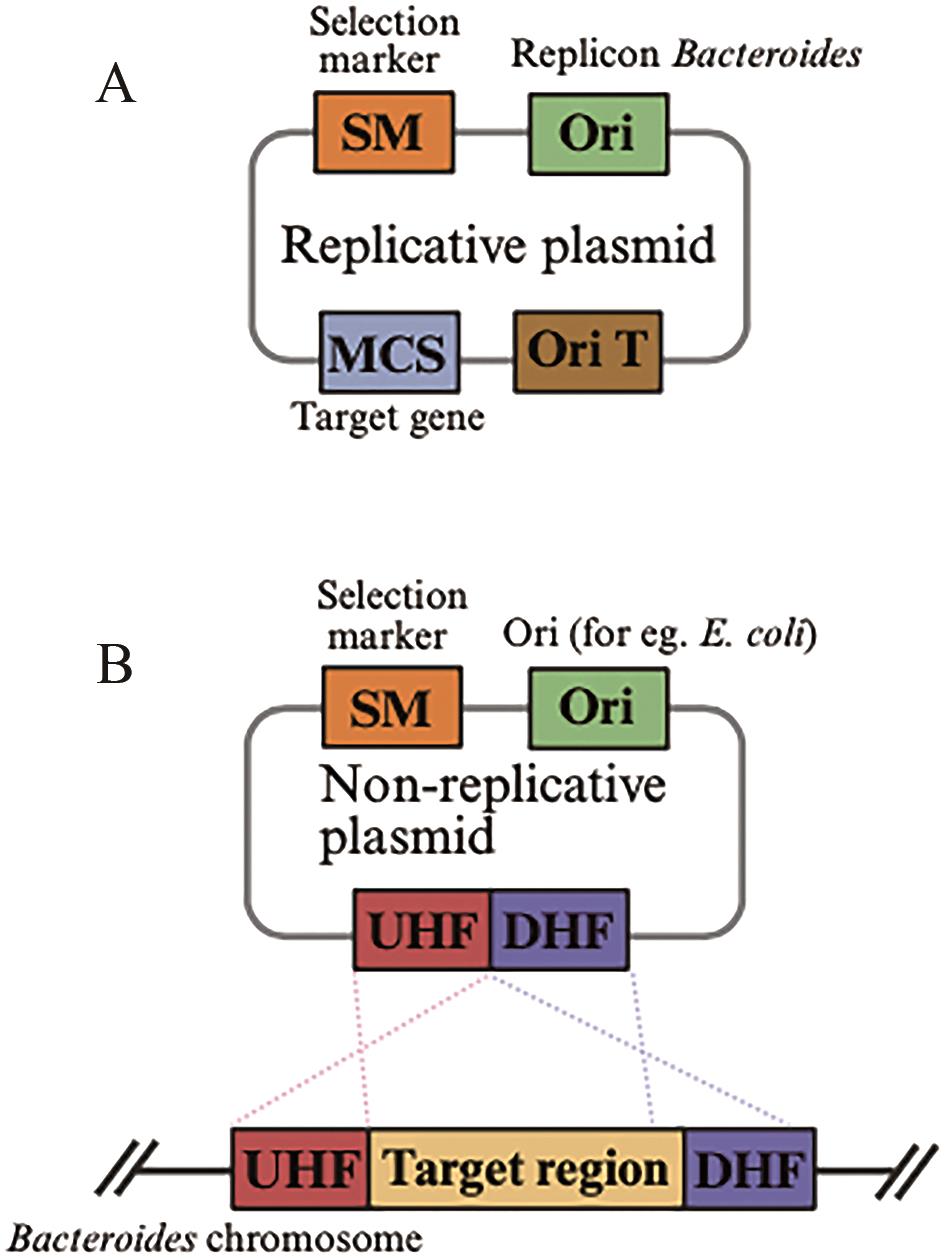
图1 复制型质粒(A)和非复制型质粒(B)示意图
Fig. 1 Schematic diagram of replicative (A) and non-replicative (B) plasmids
类型 Type | 名称/系统 Name/System | 诱导剂 Inducer | 动态范围 Dynamic range | 来源/策略 Source/Strategy | 参考文献 References |
|---|---|---|---|---|---|
| 组成型启动子 | PBT1311 | 内源启动子,基于σ因子 | [ | ||
| P1、PcfiA、PcepA、PcfxA | 内源启动子 | [ | |||
| PAM1-PAM4 | 20倍 | 在PBT1311特定位点插入26 bp序列 | [ | ||
| PBfP1E6及其变体 | 3×10⁴倍 | 源自噬菌体基因组,通过点突变获得 | [ | ||
| 诱导型启动子 | 鼠李糖诱导系统 | 鼠李糖 | 104倍 | 由转录激活因子RhaR介导 | [ |
| 甘露聚糖诱导系统 | 甘露聚糖 | 100倍 | 基于多糖利用位点启动子 | [ | |
| 葡聚糖诱导系统 | 葡聚糖 | 3-5倍 | 基于多糖利用位点启动子 | [ | |
| PBT3324启动子 | 硫酸软骨素 | 60倍 | 由杂合双组分系统BT3334控制 | [ | |
| PBT0268启动子 | 阿拉伯半乳聚糖 | 29倍 | 由杂合双组分系统BT0267控制 | [ | |
| IPTG诱导系统 | IPTG | 8倍和22倍 | 基于大肠杆菌LacI系统改造 | [ | |
| P1TDP启动子 | 脱水四环素 | 将tetO2操纵子插入P1启动子,并与RBS组合优化 | [ | ||
| 胆汁酸诱导系统 | 胆汁酸 | 超过400倍 | 将操纵子插入PcfxA启动子,用PBT1311驱动调节基因 | [ |
表1 用于拟杆菌基因表达调控的启动子工具库
Table 1 Promoter toolbox for Bacteroides spp. gene expression and regulation
类型 Type | 名称/系统 Name/System | 诱导剂 Inducer | 动态范围 Dynamic range | 来源/策略 Source/Strategy | 参考文献 References |
|---|---|---|---|---|---|
| 组成型启动子 | PBT1311 | 内源启动子,基于σ因子 | [ | ||
| P1、PcfiA、PcepA、PcfxA | 内源启动子 | [ | |||
| PAM1-PAM4 | 20倍 | 在PBT1311特定位点插入26 bp序列 | [ | ||
| PBfP1E6及其变体 | 3×10⁴倍 | 源自噬菌体基因组,通过点突变获得 | [ | ||
| 诱导型启动子 | 鼠李糖诱导系统 | 鼠李糖 | 104倍 | 由转录激活因子RhaR介导 | [ |
| 甘露聚糖诱导系统 | 甘露聚糖 | 100倍 | 基于多糖利用位点启动子 | [ | |
| 葡聚糖诱导系统 | 葡聚糖 | 3-5倍 | 基于多糖利用位点启动子 | [ | |
| PBT3324启动子 | 硫酸软骨素 | 60倍 | 由杂合双组分系统BT3334控制 | [ | |
| PBT0268启动子 | 阿拉伯半乳聚糖 | 29倍 | 由杂合双组分系统BT0267控制 | [ | |
| IPTG诱导系统 | IPTG | 8倍和22倍 | 基于大肠杆菌LacI系统改造 | [ | |
| P1TDP启动子 | 脱水四环素 | 将tetO2操纵子插入P1启动子,并与RBS组合优化 | [ | ||
| 胆汁酸诱导系统 | 胆汁酸 | 超过400倍 | 将操纵子插入PcfxA启动子,用PBT1311驱动调节基因 | [ |
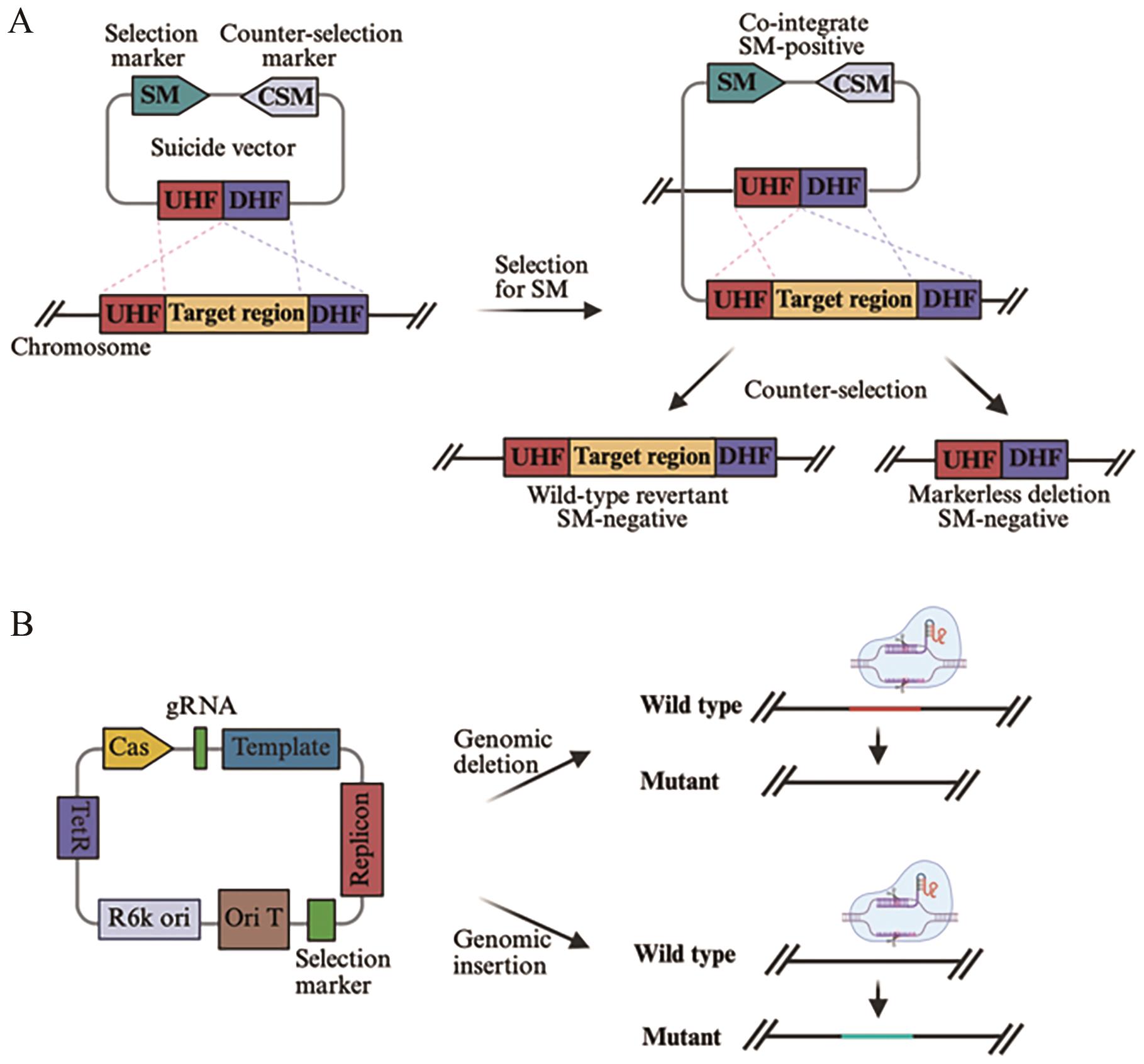
图2 基因敲除系统示意图A:等位基因交换;B:CRISPR-Cas基因编辑工具
Fig. 2 Schematic diagram of the gene knockout systemA: Allelic exchange. B: CRISPR-Cas gene editing tool

图3 酪氨酸整合酶IntN2介导的基因整合
Fig. 3 IntN2 tyrosine integrase-mediated gene integration
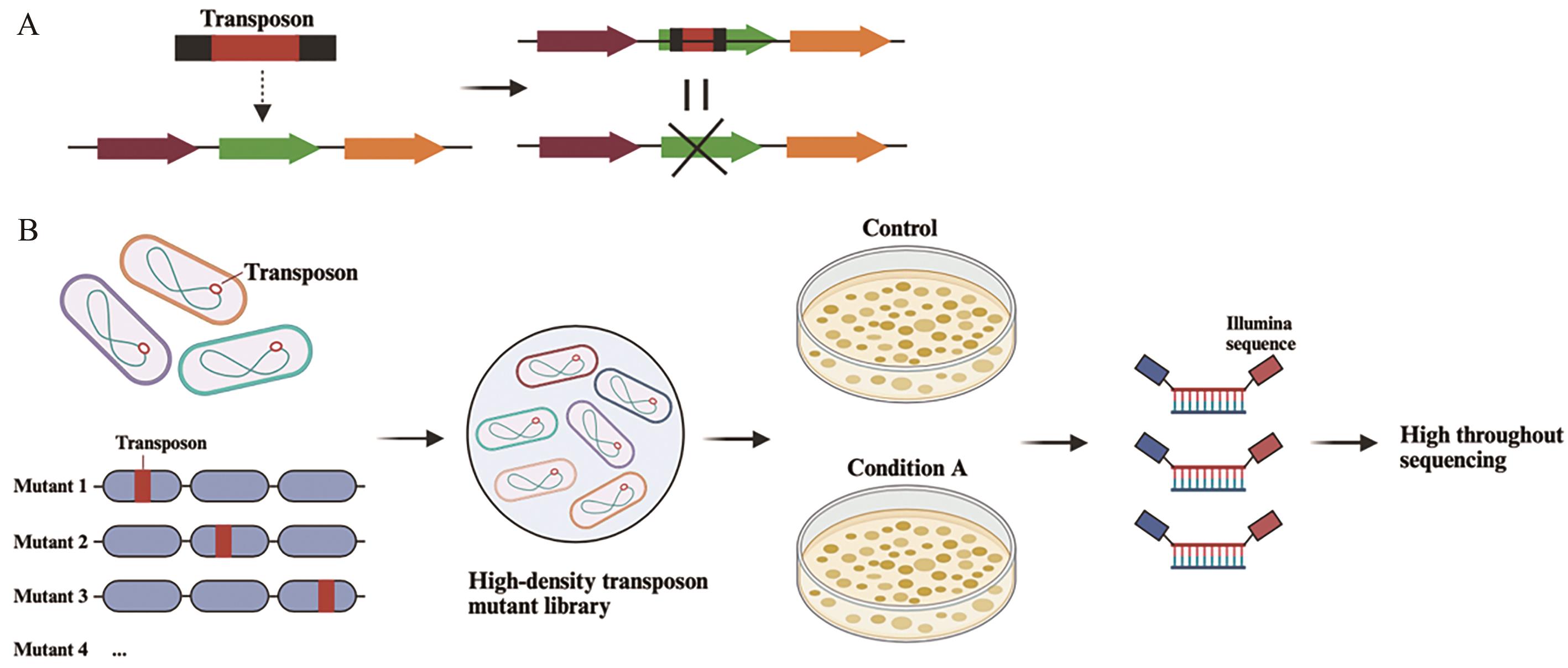
图4 转座子随机诱变破坏基因(A)及INSeq(B)示意图
Fig. 4 Schematic diagram of gene disruption by transposon random mutagenesis (A) and INSeq (B)
基因编辑工具 Genome-editing tools | 分子 Molecules | 基因/蛋白质 Genes/Proteins | 效果/机制 Effect/Mechanism | 参考文献 References |
|---|---|---|---|---|
| 同源重组 | 吲哚、吲哚硫酸盐(IS) | BT1492 | 敲除BT1492,阻断了色氨酸向吲哚的转化,降低尿毒症毒素(吲哚硫酸盐)的水平 | [ |
| 同源重组 | 荚膜多糖(CPS) | CPS合成相关基因 | 删除不同CPS合成基因簇,揭示每种CPS赋予拟杆菌在多种生态位中定植与生存的能力 | [ |
| 同源重组 | 硫酸酯酶、外膜囊泡(OMVs) | 厌氧硫酸酯酶成熟酶(anSME) | anSME缺失菌株无法诱导小鼠发生结肠炎,证实OMVs与宿主免疫细胞之间的互作具有硫酸酯酶依赖性 | [ |
| CRISPR-Cas12 | 母乳寡糖(HMOs) | PUL33基因簇 | GH33是介导唾液酸化HMOs利用的关键基因 | [ |
| 同源重组 | TGF-β、KGF-2 | 卵形拟杆菌的木聚糖调控系统 | 利用木聚糖调控系统实现了TGF-β和KGF-2等治疗分子的原位递送 | [ |
| 异源表达 | 丁酸盐 | 丁酸盐生物合成途径相关基因 | 在B. thetaiotaomicron中异源表达丁酸盐合成途径,实现治疗浓度丁酸盐的合成,有助于维持肠道稳态 | [ |
| 启动子替换、异源表达 | 草酸 | 草酸降解途径相关基因 | 表达草酸降解途径,将启动子替换为紫菜聚糖诱导型启动子,实现了工程菌在肠道中的可控定植并降解草酸,显著降低高草酸尿症水平 | [ |
| 同源重组、异源表达 | OmpA、SseB、H5N1、KGF-2 | OmpA、SseB等基因 | 利用OMVs作为载体向黏膜有效递送疫苗抗原和治疗性蛋白,证明其作为黏膜生物制剂和递送平台的实用性和有效性 | [ |
表2 遗传操作技术在拟杆菌研究中的应用
Table 2 Application of genetic manipulation toolbox in Bacteroides research
基因编辑工具 Genome-editing tools | 分子 Molecules | 基因/蛋白质 Genes/Proteins | 效果/机制 Effect/Mechanism | 参考文献 References |
|---|---|---|---|---|
| 同源重组 | 吲哚、吲哚硫酸盐(IS) | BT1492 | 敲除BT1492,阻断了色氨酸向吲哚的转化,降低尿毒症毒素(吲哚硫酸盐)的水平 | [ |
| 同源重组 | 荚膜多糖(CPS) | CPS合成相关基因 | 删除不同CPS合成基因簇,揭示每种CPS赋予拟杆菌在多种生态位中定植与生存的能力 | [ |
| 同源重组 | 硫酸酯酶、外膜囊泡(OMVs) | 厌氧硫酸酯酶成熟酶(anSME) | anSME缺失菌株无法诱导小鼠发生结肠炎,证实OMVs与宿主免疫细胞之间的互作具有硫酸酯酶依赖性 | [ |
| CRISPR-Cas12 | 母乳寡糖(HMOs) | PUL33基因簇 | GH33是介导唾液酸化HMOs利用的关键基因 | [ |
| 同源重组 | TGF-β、KGF-2 | 卵形拟杆菌的木聚糖调控系统 | 利用木聚糖调控系统实现了TGF-β和KGF-2等治疗分子的原位递送 | [ |
| 异源表达 | 丁酸盐 | 丁酸盐生物合成途径相关基因 | 在B. thetaiotaomicron中异源表达丁酸盐合成途径,实现治疗浓度丁酸盐的合成,有助于维持肠道稳态 | [ |
| 启动子替换、异源表达 | 草酸 | 草酸降解途径相关基因 | 表达草酸降解途径,将启动子替换为紫菜聚糖诱导型启动子,实现了工程菌在肠道中的可控定植并降解草酸,显著降低高草酸尿症水平 | [ |
| 同源重组、异源表达 | OmpA、SseB、H5N1、KGF-2 | OmpA、SseB等基因 | 利用OMVs作为载体向黏膜有效递送疫苗抗原和治疗性蛋白,证明其作为黏膜生物制剂和递送平台的实用性和有效性 | [ |
| [1] | Huttenhower C, Gevers D, Knight R, et al. Structure, function and diversity of the healthy human microbiome [J]. Nature, 2012, 486(7402): 207-214. |
| [2] | Wexler AG, Goodman AL. An insider’s perspective: Bacteroides as a window into the microbiome [J]. Nat Microbiol, 2017, 2: 17026. |
| [3] | Rowland I, Gibson G, Heinken A, et al. Gut microbiota functions: metabolism of nutrients and other food components [J]. Eur J Nutr, 2018, 57(1): 1-24. |
| [4] | Sommer F, Bäckhed F. The gut microbiota—Masters of host development and physiology [J]. Nat Rev Microbiol, 2013, 11(4): 227-238. |
| [5] | Visconti A, Le Roy CI, Rosa F, et al. Interplay between the human gut microbiome and host metabolism [J]. Nat Commun, 2019, 10: 4505. |
| [6] | Ryan D. Gene regulation in Bacteroides fragilis: adaptive control in a dynamic host environment [J]. Microbiol Mol Biol Rev, 2025: e00225-25. |
| [7] | Hong SN. Unraveling the ties between irritable bowel syndrome and intestinal microbiota [J]. World J Gastroenterol, 2014, 20(10): 2470. |
| [8] | Tseng CH, Wu CY. The gut microbiome in obesity [J]. J Formos Med Assoc, 2019, 118: S3-S9. |
| [9] | Yang H, Gan Y, Jiang SH, et al. Genomic alterations in Bacteroides fragilis favor adaptation in colorectal cancer microenvironment [J]. BMC Genom, 2025, 26(1): 269. |
| [10] | Jiang K, Pang XX, Li WX, et al. Interbacterial warfare in the human gut: insights from Bacteroidales’ perspective [J]. Gut Microbes, 2025, 17(1): 2473522. |
| [11] | Koropatkin NM, Martens EC, Gordon JI, et al. Starch catabolism by a prominent human gut symbiont is directed by the recognition of amylose helices [J]. Structure, 2008, 16(7): 1105-1115. |
| [12] | Jia W, Xie GX, Jia WP. Bile acid-microbiota crosstalk in gastrointestinal inflammation and carcinogenesis [J]. Nat Rev Gastroenterol Hepatol, 2018, 15(2): 111-128. |
| [13] | Koh A, Bäckhed F. From association to causality: the role of the gut microbiota and its functional products on host metabolism [J]. Mol Cell, 2020, 78(4): 584-596. |
| [14] | Qu ZP, Liu HB, Yang J, et al. Selective utilization of medicinal polysaccharides by human gut Bacteroides and Parabacteroides species [J]. Nat Commun, 2025, 16: 638. |
| [15] | Frye KA, Piamthai V, Hsiao A, et al. Mobilization of vitamin B12 transporters alters competitive dynamics in a human gut microbe [J]. Cell Rep, 2021, 37(13): 110164. |
| [16] | Shoemaker NB, Vlamakis H, Hayes K, et al. Evidence for extensive resistance gene transfer among Bacteroides spp. and among Bacteroides and other Genera in the human colon [J]. Appl Environ Microbiol, 2001, 67(2): 561-568. |
| [17] | Forster SC, Liu JY, Kumar N, et al. Strain-level characterization of broad host range mobile genetic elements transferring antibiotic resistance from the human microbiome [J]. Nat Commun, 2022, 13: 1445. |
| [18] | García-Bayona L, Coyne MJ, Comstock LE. Mobile Type VI secretion system loci of the gut Bacteroidales display extensive intra-ecosystem transfer, multi-species spread and geographical clustering [J]. PLoS Genet, 2021, 17(4): e1009541. |
| [19] | Salyers AA, Shoemaker N, Cooper A, et al. 8 genetic methods for Bacteroides Species [M]//Genetic Methods for Diverse Prokaryotes. Amsterdam: Elsevier, 1999: 229-249. |
| [20] | Bayley DP, Rocha ER, Smith CJ. Analysis of cepA and other Bacteroides fragilis genes reveals a unique promoter structure [J]. FEMS Microbiol Lett, 2000, 193(1): 149-154. |
| [21] | Vingadassalom D, Kolb A, Mayer C, et al. An unusual primary sigma factor in the Bacteroidetes Phylum [J]. Mol Microbiol, 2005, 56(4): 888-902. |
| [22] | Ichimura M, Nakayama-Imaohji H, Wakimoto S, et al. Efficient electrotransformation of Bacteroides fragilis [J]. Appl Environ Microbiol, 2010, 76(10): 3325-3332. |
| [23] | Tan Y, Liang J, Lai MC, et al. Advances in synthetic biology toolboxes paving the way for mechanistic understanding and strain engineering of gut commensal Bacteroides spp. and Clostridium spp [J]. Biotechnol Adv, 2023, 69: 108272. |
| [24] | Jahn M, Vorpahl C, Hübschmann T, et al. Copy number variability of expression plasmids determined by cell sorting and Droplet Digital PCR [J]. Microb Cell Fact, 2016, 15(1): 211. |
| [25] | Barkocy-Gallagher GA, Foley JW, Lantz MS. Activities of the Porphyromonas gingivalis PrtP proteinase determined by construction of prtP-Deficient mutants and expression of the gene in Bacteroides Species [J]. J Bacteriol, 1999, 181(1): 246-255. |
| [26] | Zheng LG, Tan Y, Hu YC, et al. CRISPR/cas-based genome editing for human gut commensal Bacteroides species [J]. ACS Synth Biol, 2022, 11(1): 464-472. |
| [27] | Coyne MJ, Weinacht KG, Krinos CM, et al. Mpi recombinase globally modulates the surface architecture of a human commensal bacterium [J]. Proc Natl Acad Sci U S A, 2003, 100(18): 10446-10451. |
| [28] | Rajeev L, Salyers AA, Gardner JF. Characterization of the integrase of NBU1, a Bacteroides mobilizable transposon [J]. Mol Microbiol, 2006, 61(4): 978-990. |
| [29] | Lai Y, Hayashi N, Lu TK. Engineering the human gut commensal Bacteroides thetaiotaomicron with synthetic biology [J]. Curr Opin Chem Biol, 2022, 70: 102178. |
| [30] | Wegmann U, Horn N, Carding SR. Defining the Bacteroides ribosomal binding site [J]. Appl Environ Microbiol, 2013, 79(6): 1980-1989. |
| [31] | Goto T, Tanaka K, Minh Tran C, et al. Complete sequence of pBFUK1, a carbapenemase-harboring mobilizable plasmid from Bacteroides fragilis, and distribution of pBFUK1-like plasmids among carbapenem-resistant B. fragilis clinical isolates [J]. J Antibiot, 2013, 66(4): 239-242. |
| [32] | Parker AC, Smith CJ. Genetic and biochemical analysis of a novel Ambler class A beta-lactamase responsible for cefoxitin resistance in Bacteroides species [J]. Antimicrob Agents Chemother, 1993, 37(5): 1028-1036. |
| [33] | Mimee M, Tucker AC, Voigt CA, et al. Programming a human commensal bacterium, Bacteroides thetaiotaomicron, to sense and respond to stimuli in the murine gut microbiota [J]. Cell Syst, 2015, 1(1): 62-71. |
| [34] | Whitaker WR, Shepherd ES, Sonnenburg JL. Tunable expression tools enable single-cell strain distinction in the gut microbiome [J]. Cell, 2017, 169(3): 538-546.e12. |
| [35] | Horn N, Carvalho AL, Overweg K, et al. A novel tightly regulated gene expression system for the human intestinal symbiont Bacteroides thetaiotaomicron [J]. Front Microbiol, 2016, 7: 1080. |
| [36] | Jones DR, Smith MB, McLean R, et al. Engineering dual-glycan responsive expression systems for tunable production of heterologous proteins in Bacteroides thetaiotaomicron [J]. Sci Rep, 2019, 9: 17400. |
| [37] | Martens EC, Lowe EC, Chiang H, et al. Recognition and degradation of plant cell wall polysaccharides by two human gut symbionts [J]. PLoS Biol, 2011, 9(12): e1001221. |
| [38] | Martens EC, Chiang HC, Gordon JI. Mucosal glycan foraging enhances fitness and transmission of a saccharolytic human gut bacterial symbiont [J]. Cell Host Microbe, 2008, 4(5): 447-457. |
| [39] | Lim B, Zimmermann M, Barry NA, et al. Engineered regulatory systems modulate gene expression of human commensals in the gut [J]. Cell, 2017, 169(3): 547-558.e15. |
| [40] | Taketani M, Zhang JB, Zhang SY, et al. Genetic circuit design automation for the gut resident species Bacteroides thetaiotaomicron [J]. Nat Biotechnol, 2020, 38(8): 962-969. |
| [41] | Michael J Coyne MC. Role of glycan synthesis in colonization of the mammalian gut by the bacterial symbiont Bacteroides fragilis [J]. Proc Natl Acad Sci U S A, 2008, 105(35): 13099-13104. |
| [42] | Reyrat JM, Pelicic V, Gicquel B, et al. Counterselectable markers: untapped tools for bacterial genetics and pathogenesis [J]. Infect Immun, 1998, 66(9): 4011-4017. |
| [43] | Marx CJ, Lidstrom ME. Broad-host-range cre-lox system for antibiotic marker recycling in gram-negative bacteria [J]. BioTechniques, 2002, 33(5): 1062-1067. |
| [44] | Recorbet G, Robert C, Givaudan A, et al. Conditional suicide system of Escherichia coli released into soil that uses the Bacillus subtilis sacB gene [J]. Appl Environ Microbiol, 1993, 59(5): 1361-1366. |
| [45] | Sonnenburg ED, Zheng HJ, Joglekar P, et al. Specificity of polysaccharide use in intestinal Bacteroides species determines diet-induced microbiota alterations [J]. Cell, 2010, 141(7): 1241-1252. |
| [46] | Wegmann U, Carvalho AL, Stocks M, et al. Use of genetically modified bacteria for drug delivery in humans: Revisiting the safety aspect [J]. Sci Rep, 2017, 7: 2294. |
| [47] | Anthony D Baughn MHM. A mitochondrial-like aconitase in the bacterium Bacteroides fragilis: implications for the evolution of the mitochondrial Krebs cycle [J]. Proc Natl Acad Sci U S A, 2002, 99(7): 4662-4667. |
| [48] | Kino Y, Nakayama-Imaohji H, Fujita M, et al. Counterselection employing mutated pheS for markerless genetic deletion in Bacteroides species [J]. Anaerobe, 2016, 42: 81-88. |
| [49] | García-Bayona L, Comstock LE. Streamlined genetic manipulation of Diverse Bacteroides and Parabacteroides Isolates from the human gut microbiota [J]. mBio, 2019, 10(4): e01762-19. |
| [50] | Bencivenga-Barry NA, Lim B, Herrera CM, et al. Genetic manipulation of wild human Gut Bacteroides [J]. J Bacteriol, 2020, 202(3): 00544-00563. |
| [51] | Jiang K, Li WX, Tong M, et al. Bacteroides fragilis ubiquitin homologue drives intraspecies bacterial competition in the gut microbiome [J]. Nat Microbiol, 2024, 9(1): 70-84. |
| [52] | Haft DH, Selengut J, Mongodin EF, et al. A guild of 45 CRISPR-associated (cas) protein families and multiple CRISPR/cas subtypes exist in prokaryotic genomes [J]. PLoS Comput Biol, 2005, 1(6): e60. |
| [53] | Burstein D, Sun CL, Brown CT, et al. Major bacterial lineages are essentially devoid of CRISPR-Cas viral defence systems [J]. Nat Commun, 2016, 7(1): 1-8. |
| [54] | Jore MM, Lundgren M, van Duijn E, et al. Structural basis for CRISPR RNA-guided DNA recognition by cascade [J]. Nat Struct Mol Biol, 2011, 18(5): 529-536. |
| [55] | Tajkarimi M, Wexler HM. CRISPR-cas systems in Bacteroides fragilis, an important pathobiont in the human gut microbiome [J]. Front Microbiol, 2017, 8: 2234. |
| [56] | Lam TJ, Mortensen K, Ye YZ. Diversity and dynamics of the CRISPR-Cas systems associated with Bacteroides fragilis in human population [J]. BMC Genom, 2022, 23(1): 573. |
| [57] | Feng J, Qian YL, Zhou ZC, et al. Polysaccharide utilization loci in Bacteroides determine population fitness and community-level interactions [J]. Cell Host Microbe, 2022, 30(2): 200-215.e12. |
| [58] | Liang J, Tan Y. Highly efficient CRISPR-mediated base editing for the gut Bacteroides spp. with pnCasBS-CBE [J]. Biotechnol J, 2023, 18(7): 2200504. |
| [59] | Molla KA, Yang YN. CRISPR/cas-mediated base editing: technical considerations and practical applications [J]. Trends Biotechnol, 2019, 37(10): 1121-1142. |
| [60] | Qi LS, Larson MH, Gilbert LA, et al. Repurposing CRISPR as an RNA-guided platform for sequence-specific control of gene expression [J]. Cell, 2013, 152(5): 1173-1183. |
| [61] | Mali P, Esvelt KM, Church GM. Cas9 as a versatile tool for engineering biology [J]. Nat Meth, 2013, 10(10): 957-963. |
| [62] | 田开仁, 薛二淑, 宋倩倩, 等. CRISPR-dCas9调控基因转录的研究进展 [J]. 中国生物工程杂志, 2018, 38(7): 94-101. |
| Tian KR, Xue ES, Song QQ, et al. The research progress of CRISPR-dCas9 in transcriptional regulation [J]. China Biotechnol, 2018, 38(7): 94-101. | |
| [63] | Beller ZW, Wesener DA, Seebeck TR, et al. Inducible CRISPR-targeted "knockdown" of human gut Bacteroides in gnotobiotic mice discloses glycan utilization strategies [J]. Proc Natl Acad Sci U S A, 2023, 120(39): e2311422120. |
| [64] | Shoemaker NB, Wang GR, Stevens AM, et al. Excision, transfer, and integration of NBU1, a mobilizable site-selective insertion element [J]. J Bacteriol, 1993, 175(20): 6578-6587. |
| [65] | Wang J, Shoemaker NB, Wang G-R, et al. Characterization of a Bacteroides Mobilizable transposon, NBU2 which carries a functional lincomycin resistance gene [J]. J Bacteriol, 2000, 182(12): 3559-3571. |
| [66] | Li LY, Shoemaker NB, Wang GR, et al. The mobilization regions of two integrated Bacteroides elements, NBU1 and NBU2, have only a single mobilization protein and may be on a cassette [J]. J Bacteriol, 1995, 177(14): 3940-3945. |
| [67] | Li LY, Shoemaker NB, Salyers AA. Characterization of the mobilization region of a Bacteroides insertion element (NBU1) that is excised and transferred by Bacteroides conjugative transposons [J]. J Bacteriol, 1993, 175(20): 6588-6598. |
| [68] | Shepherd ES, DeLoache WC, Pruss KM, et al. An exclusive metabolic niche enables strain engraftment in the gut microbiota [J]. Nature, 2018, 557(7705): 434-438. |
| [69] | Wexler AG, Bao YQ, Whitney JC, et al. Human symbionts inject and neutralize antibacterial toxins to persist in the gut [J]. Proc Natl Acad Sci U S A, 2016, 113(13): 3639-3644. |
| [70] | Huang YY, Price MN, Hung A, et al. Barcoded overexpression screens in gut Bacteroidales identify genes with roles in carbon utilization and stress resistance [J]. Nat Commun, 2024, 15: 6618. |
| [71] | Datta MS, Kishony R. A spotlight on bacterial mutations for 75 years [J]. Nature, 2018, 563(7733): 633-644. |
| [72] | Shumaker AM, Laclare McEneany V, Coyne MJ, et al. Identification of a fifth antibacterial toxin produced by a single Bacteroides fragilis strain [J]. J Bacteriol, 2019, 201(8): 00577-00595. |
| [73] | Goodman AL, McNulty NP, Zhao Y, et al. Identifying genetic determinants needed to establish a human gut symbiont in its habitat [J]. Cell Host Microbe, 2009, 6(3): 279-289. |
| [74] | Tong M, Xu JH, Li WX, et al. A highly conserved SusCD transporter determines the import and species-specific antagonism of Bacteroides ubiquitin homologues [J]. Nat Commun, 2024, 15: 8794. |
| [75] | Shoemaker NB, Getty C, Gardner JF, et al. Tn4351 transposes in Bacteroides spp. and mediates the integration of plasmid R751 into the Bacteroides chromosome [J]. J Bacteriol, 1986, 165(3): 929-936. |
| [76] | Veeranagouda Y, Husain F, Wexler HM. Transposon mutagenesis of the anaerobic commensal, Bacteroides fragilis, using the EZ: : TN5 transposome [J]. FEMS Microbiol Lett, 2012, 333(2): 94-100. |
| [77] | Robillard NJ, Tally FP, Malamy MH. Tn4400, a compound transposon isolated from Bacteroides fragilis, functions in Escherichia coli [J]. J Bacteriol, 1985, 164(3): 1248-1255. |
| [78] | Ichimura M, Uchida K, Nakayama-Imaohji H, et al. Mariner-based transposon mutagenesis for Bacteroides species [J]. J Basic Microbiol, 2014, 54(6): 558-567. |
| [79] | Liu HL, Shiver AL, Price MN, et al. Functional genetics of human gut commensal Bacteroides thetaiotaomicron reveals metabolic requirements for growth across environments [J]. Cell Rep, 2021, 34(9): 108789. |
| [80] | Wu M, McNulty NP, Rodionov DA, et al. Genetic determinants of in vivo fitness and diet responsiveness in multiple human gut Bacteroides [J]. Science, 350(6256): aac5992. |
| [81] | Veeranagouda Y, Husain F, Wexler HM. Transposon mutagenesis of Bacteroides fragilis [M]//Microbial Transposon Mutagenesis. New York, NY: Springer New York, 2019: 105-116. |
| [82] | Basta DW, Campbell IW, Sullivan EJ, et al. Inducible transposon mutagenesis identifies bacterial fitness determinants during infection in mice [J]. Nat Microbiol, 2025, 10(5): 1171-1183. |
| [83] | Arjes HA, Sun JW, Liu HL, et al. Construction and characterization of a genome-scale ordered mutant collection of Bacteroides thetaiotaomicron [J]. BMC Biol, 2022, 20(1): 285. |
| [84] | Veeranagouda Y, Wexler HM. The application of transposon insertion sequencing in identifying essential genes in B. fragilis [M]//Essential Genes and Genomes. New York, NY: Springer US, 2021: 303-315. |
| [85] | Nord O, Gustrin A, Nygren PÃ. Fluorescent detection of β- lactamase activity in living Escherichia coli cells via esterase supplementation [J]. FEMS Microbiol Lett, 2005, 242(1): 73-79. |
| [86] | Devlin AS, Marcobal A, Dodd D, et al. Modulation of a circulating uremic solute via rational genetic manipulation of the gut microbiota [J]. Cell Host Microbe, 2016, 20(6): 709-715. |
| [87] | Porter NT, Canales P, Peterson DA, et al. A subset of polysaccharide capsules in the human symbiont Bacteroides thetaiotaomicron promote increased competitive fitness in the mouse gut [J]. Cell Host Microbe, 2017, 22(4): 494-506.e8. |
| [88] | Hickey CA, Kuhn KA, Donermeyer DL, et al. Colitogenic Bacteroides thetaiotaomicron antigens access host immune cells in a sulfatase-dependent manner via outer membrane vesicles [J]. Cell Host Microbe, 2015, 17(5): 672-680. |
| [89] | Kijner S, Ennis D, Shmorak S, et al. CRISPR-Cas-based identification of a sialylated human milk oligosaccharides utilization cluster in the infant gut commensal Bacteroides dorei [J]. Nat Commun, 2024, 15: 105. |
| [90] | Hamady ZZR, Scott N, Farrar MD, et al. Xylan-regulated delivery of human keratinocyte growth factor-2 to the inflamed colon by the human anaerobic commensal bacterium Bacteroides ovatus [J]. Gut, 2010, 59(4): 461-469. |
| [91] | Hamady ZZR, Scott N, Farrar MD, et al. Treatment of colitis with a commensal gut bacterium engineered to secrete human tgf-β1 under the control of dietary xylan [J]. Inflamm Bowel Dis, 2011, 17(9): 1925-1935. |
| [92] | Kim K, Choe D, Song Y, et al. Engineering Bacteroides thetaiotaomicron to produce non-native butyrate based on a genome-scale metabolic model-guided design [J]. Metab Eng, 2021, 68: 174-186. |
| [93] | Whitaker WR, Russ ZN, Stanley Shepherd E, et al. Controlled colonization of the human gut with a genetically engineered microbial therapeutic [J]. Science, 2025, 389(6757): 303-308. |
| [94] | Carvalho AL, Fonseca S, Miquel-Clopés A, et al. Bioengineering commensal bacteria-derived outer membrane vesicles for delivery of biologics to the gastrointestinal and respiratory tract [J]. J Extracell Vesicles, 2019, 8(1): 1632100. |
| [95] | Ripka J, Florentine, Lu K T, Mimee MK. Engineered bacteroides outer membrane vesicles [Z]. |
| [96] | Yang Y, Yang L, Yang YL, et al. Bacteroides Fragilis-derived outer membrane vesicles deliver miR-5119 and alleviate colitis by targeting PD-L1 to inhibit GSDMD-mediated neutrophil extracellular trap formation [J]. Adv Sci, 2025, 12(35): e00781. |
| [97] | Zhan Y, Zheng L, Shen J, et al. Development of a miniaturized CRISPR/Cas gene editing tool for human gut Bacteroides [J]. Sheng Wu Gong Cheng Xue Bao, 2025, 41(6): 2360-2372. |
| [98] | Ma W, Xu YS, Sun XM, et al. Transposon-associated CRISPR-cas system: a powerful DNA insertion tool [J]. Trends Microbiol, 2021, 29(7): 565-568. |
| [99] | Zheng WT, Wang YX, Cui J, et al. ReaL-MGE is a tool for enhanced multiplex genome engineering and application to malonyl-CoA anabolism [J]. Nat Commun, 2024, 15: 9790. |
| [100] | Rubin BE, Diamond S, Cress BF, et al. Species- and site-specific genome editing in complex bacterial communities [J]. Nat Microbiol, 2022, 7(1): 34-47. |
| [101] | Hsu BB, Plant IN, Lyon L, et al. In situ reprogramming of gut bacteria by oral delivery [J]. Nat Commun, 2020, 11: 5030. |
| [1] | 刁辰洋, 崔有志, 李炳志. 靶向诱变介导的微生物进化技术研究进展[J]. 生物技术通报, 2025, 41(8): 11-21. |
| [2] | 余永霞, 杜再慧, 朱龙佼, 许文涛. 基因编辑技术在牛种中的应用及研究进展[J]. 生物技术通报, 2025, 41(8): 34-41. |
| [3] | 邓美壁, 严浪, 詹志田, 朱敏, 和玉兵. RUBY辅助的水稻高效CRISPR基因编辑[J]. 生物技术通报, 2025, 41(8): 65-73. |
| [4] | 周倩, 唐梦君, 张小燕, 陆俊贤, 唐修君, 杨星星, 高玉时. 基于CRISPR-Cas系统的多重耐药菌防治技术研究进展[J]. 生物技术通报, 2025, 41(5): 42-51. |
| [5] | 陈晓军, 惠建, 马洪文, 白海波, 钟楠, 李稼润, 樊云芳. 利用单碱基基因编辑技术创制OsALS抗除草剂水稻种质资源[J]. 生物技术通报, 2025, 41(4): 106-114. |
| [6] | 文博霖, 万敏, 胡建军, 王克秀, 景晟林, 王心悦, 朱博, 唐铭霞, 李兵, 何卫, 曾子贤. 马铃薯川芋50遗传转化及基因编辑体系的建立[J]. 生物技术通报, 2025, 41(4): 88-97. |
| [7] | 张文斐, 杨菲, 刘旭霞. 基因编辑食品标识制度的理论证成、国际比较及中国方案[J]. 生物技术通报, 2025, 41(3): 25-34. |
| [8] | 梁丽存, 王克芬, 宋祖洹, 刘梦婷, 李佳玉, 罗会颖, 姚斌, 杨浩萌. 优化sgRNA提高塔宾曲霉基因编辑效率[J]. 生物技术通报, 2025, 41(3): 62-70. |
| [9] | 薛瑞莹, 刘永菊, 姜燕燕, 彭欣雅, 曹东, 李云, 刘宝龙, 包雪梅. 5′UTR区的编辑降低大麦GBSSI基因表达[J]. 生物技术通报, 2025, 41(3): 83-89. |
| [10] | 胡万可, 陈雲霞, 罗帝洲, 吴斯宇, 李建波, 翟少伦, 巨向红, 廖明, 魏文康, 余界石. 中国丁型流感病毒株D/JY3002反向遗传操作系统的构建与功能验证[J]. 生物技术通报, 2025, 41(12): 95-105. |
| [11] | 刘梓琦, 钟沛, 李琴, 郭成, 张艳梅, 张乃锋, 屠焰, 刁其玉, 毕研亮. CRISPR/Cas9技术在益生菌编辑中的应用与进展[J]. 生物技术通报, 2025, 41(11): 89-99. |
| [12] | 蒙亚琦, 王嵩, 杨鹏, 于航, 姚旭东, 郭延华, 唐红, 张译元, 王立民, 周平. 基于AncBE4max系统精准编辑绵羊成纤维细胞FGF18基因[J]. 生物技术通报, 2025, 41(10): 313-320. |
| [13] | 孙晶, 杨韵龙, 刘荣志, 余泓, 路铁刚. 加强高光效基础研究,支撑作物高产育种[J]. 生物技术通报, 2025, 41(10): 1-5. |
| [14] | 童玮婧, 罗数, 陆新露, 沈建福, 陆柏益, 李开绵, 马秋香, 张鹏. CRISPR/Cas9编辑MeHNL基因创制低生氰糖苷木薯[J]. 生物技术通报, 2024, 40(9): 11-19. |
| [15] | 侯文婷, 孙琳, 张艳军, 董合忠. 基因编辑技术在棉花种质创新和遗传改良中的应用[J]. 生物技术通报, 2024, 40(7): 68-77. |
| 阅读次数 | ||||||
|
全文 |
|
|||||
|
摘要 |
|
|||||
