







生物技术通报 ›› 2026, Vol. 42 ›› Issue (9): 262-275.doi: 10.13560/j.cnki.biotech.bull.1985.2025-1268
• 综述与专论 • 上一篇
杨佳妮, 武陶( ), 张宏扬, 黄冰光, 卢敏, 何佳杰, 阮海华()
收稿日期:2025-11-20
出版日期:2026-09-26
发布日期:2026-09-16
通讯作者:
武陶wutao@tjcu.edu.cn基金资助:
YANG Jia-ni, WU Tao(), ZHANG Hong-yang, HUANG Bing-guang, LU Min, HE Jia-jie, RUAN Hai-hua()
Received:2025-11-20
Published:2026-09-26
Online:2026-09-16
摘要:
丝状真菌因其独特的结构和复杂的遗传背景,传统的基因编辑技术无法实现对其大范围的基因改造。近年来,CRISPR-Cas9系统因结构简单、操作便捷和成本低廉等优势,逐渐成为丝状真菌基因工程研究的重要工具,而sgRNA是CRISPR-Cas9基因编辑系统及其衍生技术中的重要元件。本文归纳了sgRNA的设计原则和构建方法及其在丝状真菌中的转化与表达策略,分析了sgRNA在功能基因解析、菌株代谢工程改造和工业菌株放大生产中的应用现状,同时指出丝状真菌CRISPR-Cas9基因编辑过程中普遍存在的编辑效率低和脱靶效应等问题,主要与sgRNA的设计合理性、表达效率及宿主修复机制密切相关。最后,针对sgRNA的优化方向与未来应用进行展望,以期为构建高效、稳定的丝状真菌基因编辑平台提供参考。
杨佳妮, 武陶, 张宏扬, 黄冰光, 卢敏, 何佳杰, 阮海华. sgRNA的设计策略及其在丝状真菌中的表达与应用[J]. 生物技术通报, 2026, 42(9): 262-275.
YANG Jia-ni, WU Tao, ZHANG Hong-yang, HUANG Bing-guang, LU Min, HE Jia-jie, RUAN Hai-hua. Design Strategies of sgRNA and Its Expression and Application in Filamentous Fungi[J]. Biotechnology Bulletin, 2026, 42(9): 262-275.
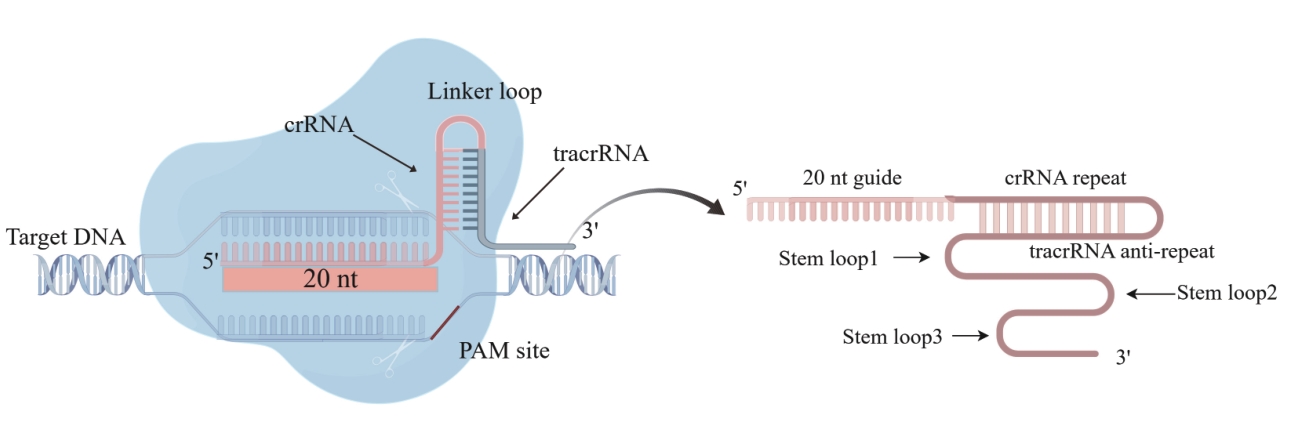
图1 sgRNA结构示意图
Fig. 1 Schematic diagram of sgRNA structure
sgRNA启动子类型 Type of sgRNA promoter | 表达方式 Expression method | 转化方式 Conversion method | 核定位信号 NLS | 修复方式 DSB repair | 效率 Efficiency (%) | 应用 Application | ||
|---|---|---|---|---|---|---|---|---|
| RNA聚合酶Ⅱ型启动子Pol Ⅱ promoter | Pgpda | Plasmid | PMT | stuA | NHEJ | 64.2 | Alternaria alternata[ | |
| Plasmid | PMT | SV40 | NHEJ | / | Penicillium rubens[ | |||
| Ptrpc | Plasmid | AMT | c-Myc | NHEJ /HDR | 18-26 | Cordyceps militaris[ | ||
| RNA聚合酶Ⅲ型启动子Pol III promoter | U6 | Plasmid | PMT | H2B | HDR | 80-100 | Fusarium[ | |
| Plasmid | PMT | SV40 | BE | 47.36-100 | Aspergillus niger[ | |||
| Plasmid | PMT | SV40 | MMEJ | 67 | Aspergillus fumigatus[ | |||
| U3 | Plasmid | PMT | SV40 | HDR | 23.55-66.7 | Aspergillus niger[ | ||
| 5SrRNA | Plasmid | PMT | SV40 | HDR | 36.67 | Penicillium oxalicum[ | ||
| Plasmid | PMT | HTB/VEL | HDR | 58.3-79.2 | Fusarium fujikuroi[ | |||
| tRNA | Plasmid | PMT | SV40 | HDR | 45-80 | Aspergillus aculeatus[ | ||
| SNR52 | Plasmid | PMT | SV40 | HDR | 25-53 | Aspergillus fumigatus[ | ||
体外 In vitro | T7 | Plasmid and vitro | PMT | SV40 | MMEJ | 100 | Aspergillus nidulans[ | |
| / | RNP | PMT | SV40 | NHEJ | 68 | Botrytis cinerea[ | ||
表1 sgRNA在CRISPR-Cas9系统中的应用
Table 1 Applications of sgRNA in the CRISPR-Cas9 system
sgRNA启动子类型 Type of sgRNA promoter | 表达方式 Expression method | 转化方式 Conversion method | 核定位信号 NLS | 修复方式 DSB repair | 效率 Efficiency (%) | 应用 Application | ||
|---|---|---|---|---|---|---|---|---|
| RNA聚合酶Ⅱ型启动子Pol Ⅱ promoter | Pgpda | Plasmid | PMT | stuA | NHEJ | 64.2 | Alternaria alternata[ | |
| Plasmid | PMT | SV40 | NHEJ | / | Penicillium rubens[ | |||
| Ptrpc | Plasmid | AMT | c-Myc | NHEJ /HDR | 18-26 | Cordyceps militaris[ | ||
| RNA聚合酶Ⅲ型启动子Pol III promoter | U6 | Plasmid | PMT | H2B | HDR | 80-100 | Fusarium[ | |
| Plasmid | PMT | SV40 | BE | 47.36-100 | Aspergillus niger[ | |||
| Plasmid | PMT | SV40 | MMEJ | 67 | Aspergillus fumigatus[ | |||
| U3 | Plasmid | PMT | SV40 | HDR | 23.55-66.7 | Aspergillus niger[ | ||
| 5SrRNA | Plasmid | PMT | SV40 | HDR | 36.67 | Penicillium oxalicum[ | ||
| Plasmid | PMT | HTB/VEL | HDR | 58.3-79.2 | Fusarium fujikuroi[ | |||
| tRNA | Plasmid | PMT | SV40 | HDR | 45-80 | Aspergillus aculeatus[ | ||
| SNR52 | Plasmid | PMT | SV40 | HDR | 25-53 | Aspergillus fumigatus[ | ||
体外 In vitro | T7 | Plasmid and vitro | PMT | SV40 | MMEJ | 100 | Aspergillus nidulans[ | |
| / | RNP | PMT | SV40 | NHEJ | 68 | Botrytis cinerea[ | ||
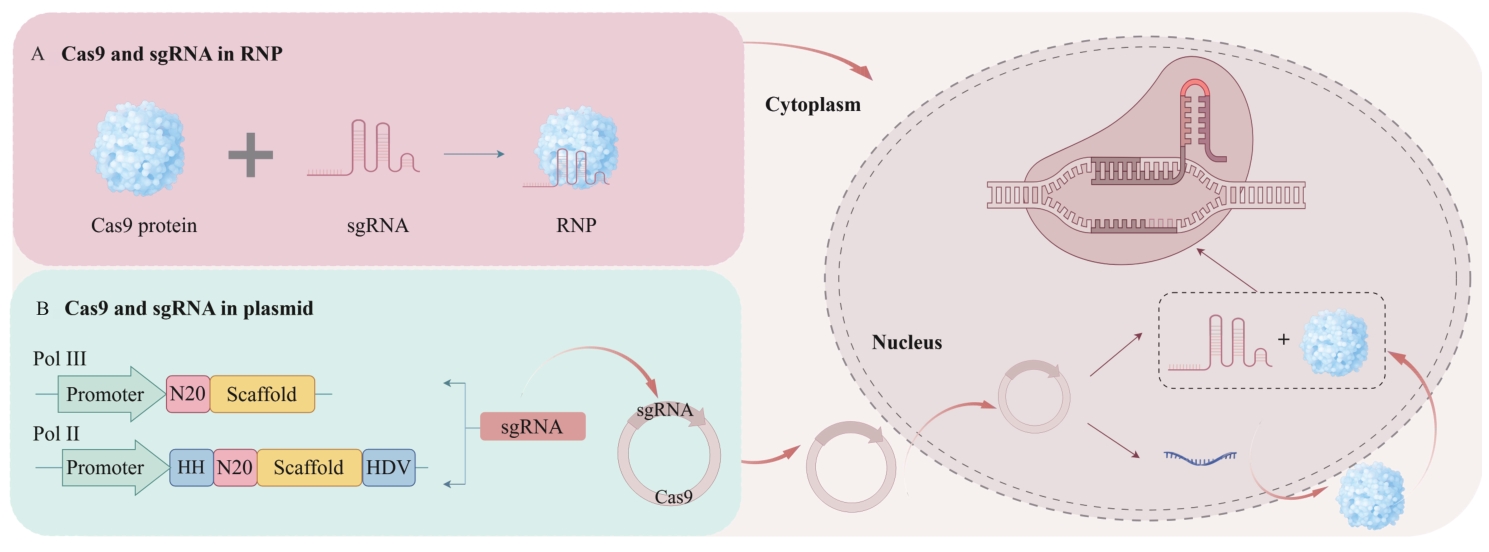
图2 sgRNA表达方式示意图A:体外转录,RNP复合体直接进入细胞核执行基因编辑功能。B:体内表达,Cas9蛋白和sgRNA序列组装在质粒上。质粒进入细胞核后,Cas9序列转录成mRNA,然后转运到细胞质中翻译成Cas9蛋白,进入细胞核与sgRNA协作执行编辑功能
Fig. 2 Schematic representation of sgRNA expression patternsA: In vitro transcription, where the RNP complex directly enters the nucleus to perform gene editing functions. B: In vivo expression, where the Cas9 protein and sgRNA sequences are assembled on a plasmid. After the plasmid enters the nucleus, the Cas9 sequence is transcribed into mRNA, which is then transported to the cytoplasm for translation into the Cas9 protein. This protein subsequently enters the nucleus to collaborate with the sgRNA and execute editing functions
| Pol III promoter | 优点 Merit | 局限性 Limitation | 应用 Application |
|---|---|---|---|
| U6 | 转录效率高; 具有明确的终止信号[ | 物种特异性强;sgRNA需要以5′-G开头,限制了序列的选择 | Aspergillus oryzae[ Humicola insolens[ Aspergillus fumigatus[ Trichoderma reesei[ |
| 5S rRNA | 转录水平高且稳定;转录起始位点精确;转录终止信号简单(4-6个连续的T)[ | 具有物种特异性,需要进行验证和优化;不直接适用于多重sgRNA表达 | |
| tRNA | 高度的基因组拷贝数能够促进高效转录;能够形成多顺反子的“tRNA-sgRNA”阵列,实现多重表达[ | 复杂的阵列设计需要优化;取决于内源性tRNA的加工效率;转录起始位点可能存在变异 | Aspergillus niger[ |
表2 三种代表性RNA聚合酶Ⅲ型启动子的比较
Table 2 Comparison of three representative RNA Polymerase III promoters
| Pol III promoter | 优点 Merit | 局限性 Limitation | 应用 Application |
|---|---|---|---|
| U6 | 转录效率高; 具有明确的终止信号[ | 物种特异性强;sgRNA需要以5′-G开头,限制了序列的选择 | Aspergillus oryzae[ Humicola insolens[ Aspergillus fumigatus[ Trichoderma reesei[ |
| 5S rRNA | 转录水平高且稳定;转录起始位点精确;转录终止信号简单(4-6个连续的T)[ | 具有物种特异性,需要进行验证和优化;不直接适用于多重sgRNA表达 | |
| tRNA | 高度的基因组拷贝数能够促进高效转录;能够形成多顺反子的“tRNA-sgRNA”阵列,实现多重表达[ | 复杂的阵列设计需要优化;取决于内源性tRNA的加工效率;转录起始位点可能存在变异 | Aspergillus niger[ |
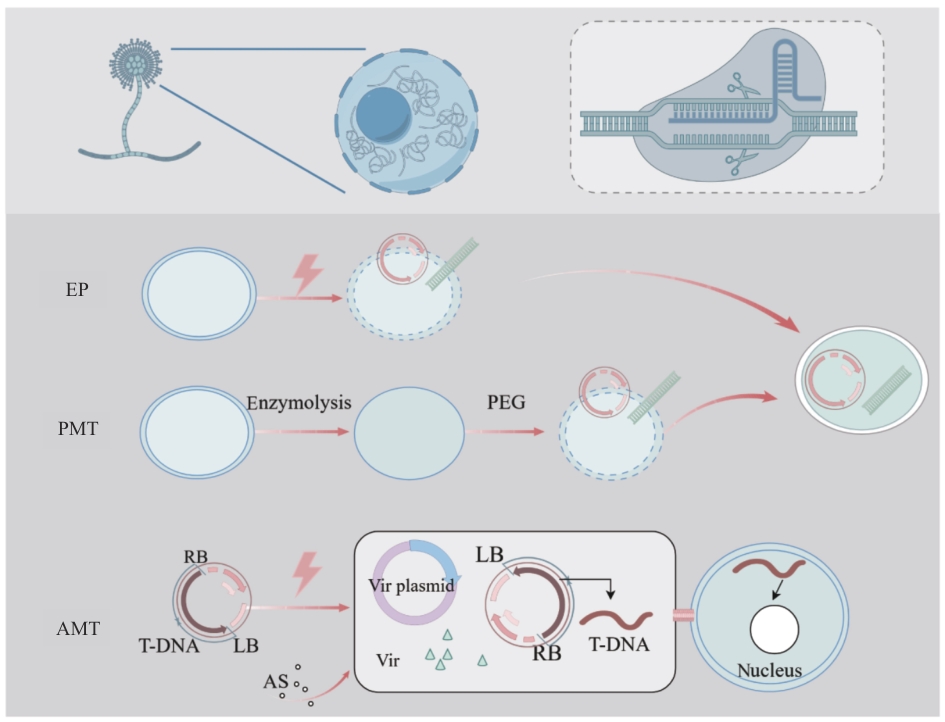
图3 丝状真菌中常见的3种外源DNA的转化方式EP(电击转化):通过高强度电场在细胞膜上产生暂时孔洞,使外源DNA进入细胞内;PMT(原生质体介导的转化):酶解去除细胞壁后,利用PEG促进DNA与细胞膜融合,实现外源DNA的导入;AMT(农杆菌介导的转化):利用根癌农杆菌天然的基因传递能力,Ti质粒上的转移DNA(T-DNA)在Vir基因的介导下被转运到植物细胞,并随机整合到目标基因组中,实现外源基因导入
Fig. 3 Three common methods for transforming exogenous DNA into filamentous fungiEP (Electroporation): DNA introduced via electrical perforation. PMT (Protoplast-mediated transformation): Exogenous DNA absorbed by protoplasts after cell wall removal via enzymatic digestion, facilitated by PEG. AMT (Agrobacterium-mediated transformation): Utilizes the natural gene transfer capability of rhizobium-associated Agrobacterium; the Ti plasmid in Agrobacterium contains a specific DNA segment (T-DNA) that, upon activation of the Vir gene, transfers and integrates T-DNA into the targeted genome
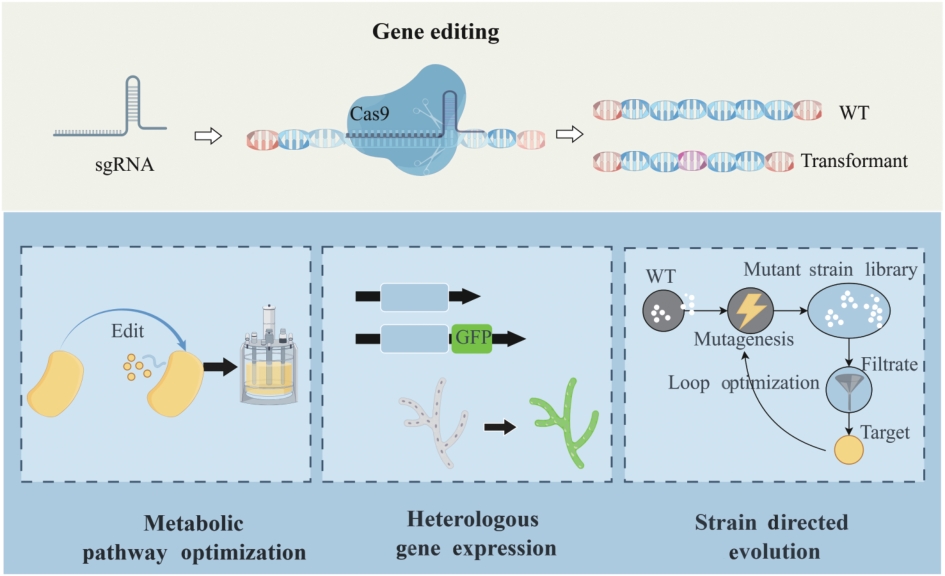
图4 sgRNA在丝状真菌中的应用
Fig. 4 Application of sgRNA in filamentous fungi
物种 Species | 启动子类型 Promoter type | 递送方式 Delivery method | 编辑效率 Editing efficiency |
|---|---|---|---|
| Myceliophthora thermophila[ | U6 promoter | sgRNA表达盒 | 在多重编辑中,单个基因的编辑效率范围在13%-41%之间 |
| Aspergillus niger[ | tRNA promoter sgRNA array | pLM2质粒递送 | 三重整合效率达到23.5% |
| Pleurotus ostreatus[ | tRNA promoter sgRNA array | 质粒递送 | 经过启动子和tRNA序列优化后,效率提升至20% |
| Trichoderma reesei[ | 5SrRNA promoter tRNA-sgRNA array | 质粒递送 | 成功实现了cbh1和cbh2的双基因敲除 |
| Aspergillus niger[ | T7 promoter | RNP递送 | 采用双sgRNA策略构建pyrG营养缺陷型突变体,阳性率达到100% |
表3 丝状真菌多位点编辑中sgRNA表达方式及其编辑效率
Table 3 The sgRNA expression strategy and editing efficiency in multi-site editing of filamentous fungi
物种 Species | 启动子类型 Promoter type | 递送方式 Delivery method | 编辑效率 Editing efficiency |
|---|---|---|---|
| Myceliophthora thermophila[ | U6 promoter | sgRNA表达盒 | 在多重编辑中,单个基因的编辑效率范围在13%-41%之间 |
| Aspergillus niger[ | tRNA promoter sgRNA array | pLM2质粒递送 | 三重整合效率达到23.5% |
| Pleurotus ostreatus[ | tRNA promoter sgRNA array | 质粒递送 | 经过启动子和tRNA序列优化后,效率提升至20% |
| Trichoderma reesei[ | 5SrRNA promoter tRNA-sgRNA array | 质粒递送 | 成功实现了cbh1和cbh2的双基因敲除 |
| Aspergillus niger[ | T7 promoter | RNP递送 | 采用双sgRNA策略构建pyrG营养缺陷型突变体,阳性率达到100% |
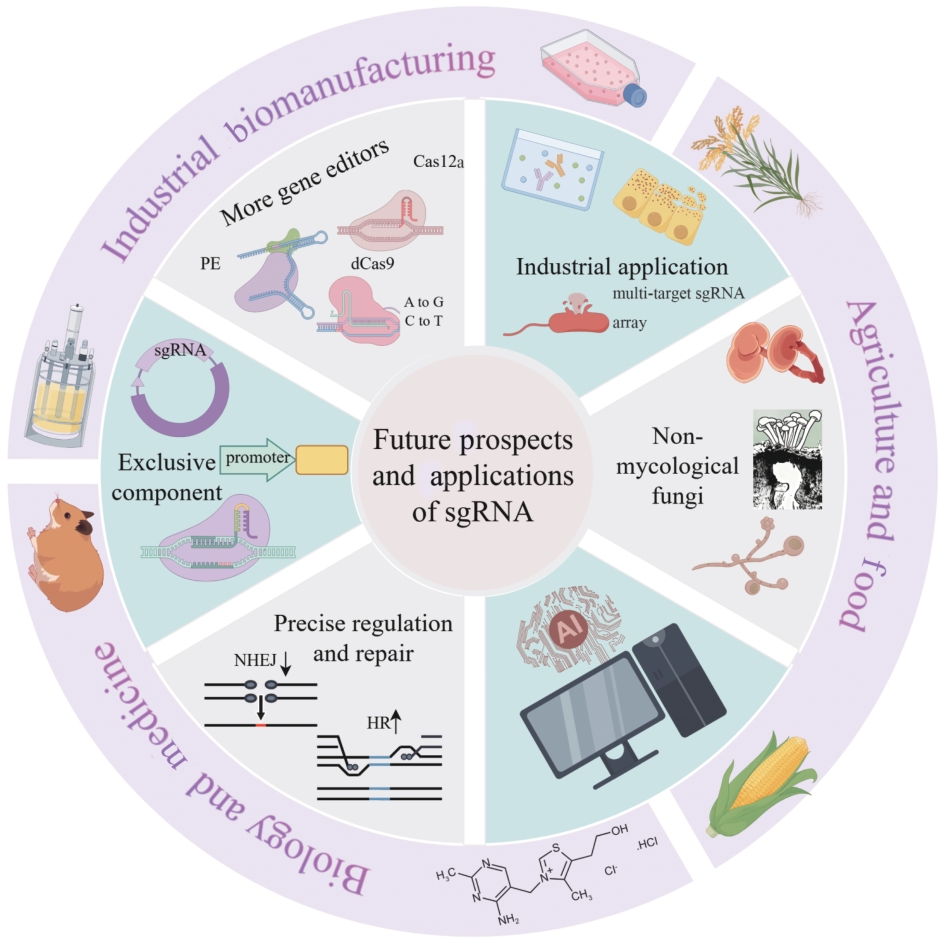
图5 sgRNA的未来应用与展望
Fig. 5 Future applications and prospects of sgRNA
| [1] | 刘婧, 郑积敏. CRISPR-Cas9基因编辑技术的应用与展望 [J]. 化学教育: 中英文, 2025, 46(4): 1-8. |
| Liu J, Zheng JM. Application and prospect of CRISPR-Cas9 [J]. Chin J Chem Educ, 2025, 46(4): 1-8. | |
| [2] | 刘星晨, 谷守芹, 董金皋. CRISPR/Cas9介导的基因组定点编辑技术在丝状真菌中的研究进展 [J]. 微生物学报, 2017, 57(11): 1634-1642. |
| Liu XC, Gu SQ, Dong JG. Research progress of CRISPR/Cas9 system in genome targeted editing of filamentous fungi [J]. Acta Microbiol Sin, 2017, 57(11): 1634-1642. | |
| [3] | 李金根, 刘倩, 刘德飞, 等. 丝状真菌代谢工程研究进展 [J]. 生物工程学报, 2021, 37(5): 1637-1658. |
| Li JG, Liu Q, Liu DF, et al. Advances in metabolic engineering of filamentous fungi [J]. Chin J Biotechnol, 2021, 37(5): 1637-1658. | |
| [4] | 杨浩萌, 梁丽存, 宋祖洹, 等. 提高丝状真菌精准基因编辑效率的策略 [J]. 微生物学通报, 2024, 51(5): 1425-1440. |
| Yang HM, Liang LC, Song ZH, et al. Strategies for improving the efficiency of precise gene editing in filamentous fungi [J]. Microbiol China, 2024, 51(5): 1425-1440. | |
| [5] | Riesenberg S, Helmbrecht N, Kanis P, et al. Improved gRNA secondary structures allow editing of target sites resistant to CRISPR-Cas9 cleavage [J]. Nat Commun, 2022, 13: 489. |
| [6] | 苏楠, 吴正红, 祁小乐. CRISPR/Cas9系统RNP体内递送的挑战与解决策略 [J]. 沈阳药科大学学报, 2023, 40(7): 964-976. |
| Su N, Wu ZH, Qi XL. Challenges and strategies for in vivo delivery of CRISPR/Cas9-RNP [J]. J Shenyang Pharm Univ, 2023, 40(7): 964-976. | |
| [7] | Wang SX, Zong Y, Lin QP, et al. Precise, predictable multi-nucleotide deletions in rice and wheat using APOBEC-Cas9 [J]. Nat Biotechnol, 2020, 38(12): 1460-1465. |
| [8] | 杨毅, 毛雨丰, 杨春贺, 等. 面向微生物遗传操作的编辑序列设计工具的研究进展 [J]. 合成生物学, 2023, 4(1): 30-46. |
| Yang Y, Mao YF, Yang CH, et al. Recent progress in computational tools for designing editing sequences used in microbial genetic manipulations [J]. Synth Biol J, 2023, 4(1): 30-46. | |
| [9] | 李光正, 李岩, 李建容, 等. 利用CRISPR/Cas 9基因编辑技术提高贵州禾产量研究 [J]. 种子, 2021, 40(6): 1-5, 13. |
| Li GZ, Li Y, Li JR, et al. Study on yield improvement of ‘Guizhouhe’ Based on CRISPR/cas 9 gene editing technology [J]. Seed, 2021, 40(6): 1-5, 13. | |
| [10] | Xu K, Ren CH, Liu ZT, et al. Efficient genome engineering in eukaryotes using Cas9 from Streptococcus thermophilus [J]. Cell Mol Life Sci, 2015, 72(2): 383-399. |
| [11] | Tian Y, Xu Q, Pang M, et al. CRISPR-Cas9 cytidine-base-editor mediated continuous in vivo evolution in Aspergillus nidulans [J]. ACS Synth Biol, 2025, 14(2): 621-628. |
| [12] | Dong C, Gou YW, Lian JZ. SgRNA engineering for improved genome editing and expanded functional assays [J]. Curr Opin Biotechnol, 2022, 75: 102697. |
| [13] | Li C, Chu W, Ali Gill R, et al. Computational tools and resources for CRISPR/Cas genome editing [J]. Genom Proteom Bioinform, 2023, 21(1): 108-126. |
| [14] | Ham DT, Browne TS, Banglorewala PN, et al. A generalizable Cas9/sgRNA prediction model using machine transfer learning with small high-quality datasets [J]. Nat Commun, 2023, 14: 5514. |
| [15] | He W, Wang H, Wei YJ, et al. GuidePro: a multi-source ensemble predictor for prioritizing sgRNAs in CRISPR/Cas9 protein knockouts [J]. Bioinformatics, 2021, 37(1): 134-136. |
| [16] | Chuai GH, Ma HH, Yan JF, et al. DeepCRISPR: optimized CRISPR guide RNA design by deep learning [J]. Genome Biol, 2018, 19: 80. |
| [17] | Kuan PF, Powers S, He SY, et al. A systematic evaluation of nucleotide properties for CRISPR sgRNA design [J]. BMC Bioinform, 2017, 18: 297. |
| [18] | Zhang D, Hurst T, Duan DS, et al. Unified energetics analysis unravels SpCas9 cleavage activity for optimal gRNA design [J]. Proc Natl Acad Sci USA, 2019, 116(18): 8693-8698. |
| [19] | Wenderoth M, Pinecker C, Voß B, et al. Establishment of CRISPR/Cas9 in Alternaria alternata [J]. Fungal Genet Biol, 2017, 101: 55-60. |
| [20] | Mózsik L, Hoekzema M, de Kok NAW, et al. CRISPR-based transcriptional activation tool for silent genes in filamentous fungi [J]. Sci Rep, 2021, 11: 1118. |
| [21] | Chen BX, Xue LN, Wei T, et al. Multiplex gene precise editing and large DNA fragment deletion by the CRISPR-Cas9-TRAMA system in edible mushroom Cordyceps militaris [J]. Microb Biotechnol, 2022, 15(12): 2982-2991. |
| [22] | Shinkado S, Saito H, Yamazaki M, et al. Genome editing using a versatile vector-based CRISPR/Cas9 system in Fusarium species [J]. Sci Rep, 2022, 12: 16243. |
| [23] | Huang LG, Dong HZ, Zheng JW, et al. Highly efficient single base editing in Aspergillus niger with CRISPR/Cas9 cytidine deaminase fusion [J]. Microbiol Res, 2019, 223: 44-50. |
| [24] | Zhang C, Meng XH, Wei XL, et al. Highly efficient CRISPR mutagenesis by microhomology-mediated end joining in Aspergillus fumigatus [J]. Fungal Genet Biol, 2016, 86: 47-57. |
| [25] | Yuan GL, Deng S, Czajka JJ, et al. CRISPR-Cas9/Cas12a systems for efficient genome editing and large genomic fragment deletions in Aspergillus niger [J]. Front Bioeng Biotechnol, 2024, 12: 1452496. |
| [26] | Wang Q, Zhao QQ, Liu Q, et al. CRISPR/Cas9-mediated genome editing in Penicillium oxalicum and Trichoderma reesei using 5S rRNA promoter-driven guide RNAs [J]. Biotechnol Lett, 2021, 43(2): 495-502. |
| [27] | Shi TQ, Gao J, Wang WJ, et al. CRISPR/Cas9-based genome editing in the filamentous fungus Fusarium fujikuroi and its application in strain engineering for gibberellic acid production [J]. ACS Synth Biol, 2019, 8(2): 445-454. |
| [28] | Jarczynska ZD, Garcia Vanegas K, Deichmann M, et al. A versatile in vivo DNA assembly toolbox for fungal strain engineering [J]. ACS Synth Biol, 2022, 11(10): 3251-3263. |
| [29] | Fuller KK, Chen S, Loros JJ, et al. Development of the CRISPR/Cas9 system for targeted gene disruption in Aspergillus fumigatus [J]. Eukaryot Cell, 2015, 14(11): 1073-1080. |
| [30] | Chen ZQ, Zhang C, Pei LL, et al. Production of L-malic acid by metabolically engineered Aspergillus nidulans based on efficient CRISPR-Cas9 and cre-loxP systems [J]. JoF, 2023, 9(7): 719. |
| [31] | Leisen T, Werner J, Pattar P, et al. Multiple knockout mutants reveal a high redundancy of phytotoxic compounds contributing to necrotrophic pathogenesis of Botrytis cinerea [J]. PLoS Pathog, 2022, 18(3): e1010367. |
| [32] | Werner J, Zuo WL, Doehlemann G. CRISPR/Cas9 ribonucleoprotein-mediated mutagenesis in Sporisorium reilianum [J]. Bio Protoc, 2024, 14(1343): 1-10. |
| [33] | 蒋慧慧, 王强, 饶志明, 等. 酿酒酵母启动子工程研究进展 [J]. 中国生物工程杂志, 2023, 43(11): 78-91. |
| Jiang HH, Wang Q, Rao ZM, et al. Research progress of the promoter engineering in Saccharomyces cerevisiae [J]. China Biotechnol, 2023, 43(11): 78-91. | |
| [34] | Wang Q, Coleman JJ. Progress and challenges: development and implementation of CRISPR/Cas9 technology in filamentous fungi [J]. Comput Struct Biotechnol J, 2019, 17: 761-769. |
| [35] | 邓大杰, 孟亚南, 邓二杰, 等. 丝状真菌遗传筛选系统的研究及其应用 [J]. 微生物学通报, 2019, 46(5): 1165-1178. |
| Deng DJ, Meng YN, Deng EJ, et al. Application of genetic selection system in filamentous fungi: a review [J]. Microbiol China, 2019, 46(5): 1165-1178. | |
| [36] | Pohl C, Mózsik L, Driessen AJM, et al. Genome editing in Penicillium chrysogenum using Cas9 ribonucleoprotein particles [M]//Braman JC. Synthetic Biology: Methods and Protocols. New York, NY: Springer New York, 2018: 213-232. |
| [37] | Pohl C, Kiel JAKW, Driessen AJM, et al. CRISPR/Cas9 based genome editing of Penicillium chrysogenum [J]. ACS Synth Biol, 2016, 5(7): 754-764. |
| [38] | Tan Y, Yu XL, Zhang ZG, et al. An efficient CRISPR/Cas9 genome editing system for a Ganoderma lucidum cultivated strain by ribonucleoprotein method [J]. JoF, 2023, 9(12): 1170. |
| [39] | Ree Yoon H, Han S, Chul Shin S, et al. Improved natural food colorant production in the filamentous fungus Monascus ruber using CRISPR-based engineering [J]. Food Res Int, 2023, 167: 112651. |
| [40] | Walther J, Porenta D, Wilbie D, et al. Comparative analysis of lipid Nanoparticle-mediated delivery of CRISPR-Cas9 RNP versus mRNA/sgRNA for gene editing in vitro and in vivo [J]. Eur J Pharm Biopharm, 2024, 196: 114207. |
| [41] | Hendel A, Bak RO, Clark JT, et al. Chemically modified guide RNAs enhance CRISPR-Cas genome editing in human primary cells [J]. Nat Biotechnol, 2015, 33(9): 985-989. |
| [42] | 林继聪, 邹根, 刘宏民, 等. CRISPR/Cas基因组编辑技术在丝状真菌次级代谢产物合成中的应用 [J]. 合成生物学, 2023, 4(4): 738-755. |
| Lin JC, Zou G, Liu HM, et al. Application of CRISPR/Cas genome editing technology in the synthesis of secondary metabolites of filamentous fungi [J]. Synth Biol J, 2023, 4(4): 738-755. | |
| [43] | Benites-Pariente JS, Samolski I, Ludeña Y, et al. CRISPR/Cas9 mediated targeted knock-in of eglA gene to improve endoglucanase activity of Aspergillus fumigatus LMB-35Aa [J]. Sci Rep, 2024, 14: 19661. |
| [44] | Gong YX, Li SF, Liu QR, et al. CRISPR/Cas9 system is a suitable gene targeting editing tool to filamentous fungus Monascus pilosus [J]. Appl Microbiol Biotechnol, 2024, 108: 154. |
| [45] | Masi A, Wögerbauer K, Mach RL, et al. Genomic deletions in Aureobasidium pullulans by an AMA1 plasmid for gRNA and CRISPR/Cas9 expression [J]. Fungal Biol Biotechnol, 2024, 11: 6. |
| [46] | Xing JX, Luo AJ, Wang XH, et al. Identification of U6 promoter and establishment of gene-editing system in Larix kaempferi (lamb.) Carr [J]. Plants, 2025, 14(1): 45. |
| [47] | Kumar V. rDNA gene structure, transcription, and its coregulation [M]//Emerging Concepts in Ribosome Structure, Biogenesis, and Function. Amsterdam: Elsevier, 2021: 33-45. |
| [48] | Milner MJ, Sharma M, Bates RE, et al. Differential editing efficiencies in cereal crops: a comparative analysis of tRNA and ribozyme multiplexed guide delivery [J]. Front Plant Sci, 2024, 15: 1426184. |
| [49] | Li YZ, Chen ZM, Zhang F, et al. The C2H2-type zinc-finger regulator AoKap5 is required for the growth and kojic acid synthesis in Aspergillus oryzae [J]. Fungal Genet Biol, 2023, 167: 103813. |
| [50] | Fan C, Zhang W, Su XY, et al. CRISPR/Cas9-mediated genome editing directed by a 5S rRNA-tRNAGly hybrid promoter in the thermophilic filamentous fungus Humicola insolens [J]. Biotechnol Biofuels, 2021, 14: 206. |
| [51] | Baldin C, Kühbacher A, Merschak P, et al. Inducible selectable marker genes to improve Aspergillus fumigatus genetic manipulation [J]. JoF, 2021, 7(7): 506. |
| [52] | Wu C, Chen YM, Qiu YF, et al. A simple approach to mediate genome editing in the filamentous fungus Trichoderma reesei by CRISPR/Cas9-coupled in vivo gRNA transcription [J]. Biotechnol Lett, 2020, 42(7): 1203-1210. |
| [53] | Li C, Zhou JW, Rao SQ, et al. Visualized multigene editing system for Aspergillus niger [J]. ACS Synth Biol, 2021, 10(10): 2607-2616. |
| [54] | 肖晗, 刘宜欣. CRISPR-Cas系统编辑丝状真菌的进展与挑战 [J]. 合成生物学, 2021, 2(2): 274-286. |
| Xiao H, Liu YX. Progress and challenge of the CRISPR-Cas system in gene editing for filamentous fungi [J]. Synth Biol J, 2021, 2(2): 274-286. | |
| [55] | Li YY, Li C, Fu YS, et al. A CRISPR/Cas9-based visual toolkit enabling multiplex integration at specific genomic loci in Aspergillus niger [J]. Synth Syst Biotechnol, 2024, 9(2): 209-216. |
| [56] | Choi YJ, Eom H, Yang SH, et al. Heterokaryosis, the main obstacle in the generation of PPO1-edited Agaricus bisporus by CRISPR/Cas9 system [J]. Sci Hortic, 2023, 318: 112095. |
| [57] | Dey SS, Ramalingam S, Taneja B. A dual-plasmid-based CRISPR/Cas9-mediated strategy enables targeted editing of pH regulatory gene pacC in a clinical isolate of Trichophyton rubrum [J]. JoF, 2022, 8(12): 1241. |
| [58] | 王艳梅, 寇航, 马梅, 等. 利用CRISPR-Cas9技术失活黑曲霉中果胶酶基因及突变株性能评价 [J]. 中国生物工程杂志, 2021, 41(5): 35-44. |
| Wang YM, Kou H, Ma M, et al. CRISPR/Cas9-mediated inactivation of the pectinase gene in Aspergillus niger and evaluation of the mutant strain [J]. China Biotechnol, 2021, 41(5): 35-44. | |
| [59] | Katayama T, Tanaka Y, Okabe T, et al. Development of a genome editing technique using the CRISPR/Cas9 system in the industrial filamentous fungus Aspergillus oryzae [J]. Biotechnol Lett, 2016, 38(4): 637-642. |
| [60] | Nandre R, Eom H, Choi YJ, et al. CRISPR/Cas9-mediated gene editing in filamentous fungi, focusing on mushrooms and plant-pathogenic fungi [J]. Fungal Biol Rev, 2025, 54: 100446. |
| [61] | Rahangdale S, Vishwakarma A, Chauhan R, et al. Engineered sgRNA captures single-stranded donor template and delivers at the DSB site to enhance HDR [J]. Int J Biol Macromol, 2025, 332: 148614. |
| [62] | Jin S, Alberti F. Protocol for generating protoplasts of Trichoderma koningiopsis and transformation of plasmid DNA [J]. STAR Protoc, 2025, 6(1): 103668. |
| [63] | Li DD, Tang Y, Lin J, et al. Methods for genetic transformation of filamentous fungi [J]. Microb Cell Fact, 2017, 16: 168. |
| [64] | Zheng YM, Lin FL, Gao H, et al. Development of a versatile and conventional technique for gene disruption in filamentous fungi based on CRISPR-Cas9 technology [J]. Sci Rep, 2017, 7: 9250. |
| [65] | Schuster M, Kahmann R. CRISPR-Cas9 genome editing approaches in filamentous fungi and oomycetes [J]. Fungal Genet Biol, 2019, 130: 43-53. |
| [66] | Yuan B, Keller NP, Oakley BR, et al. Manipulation of the global regulator mcrA upregulates secondary metabolite production in Aspergillus wentii using CRISPR-Cas9 with in vitro assembled ribonucleoproteins [J]. ACS Chem Biol, 2022, 17(10): 2828-2835. |
| [67] | Feng J, Li WJ, Hwang SF, et al. Enhanced gene replacement frequency in KU70 disruption strain of Stagonospora nodorum [J]. Microbiol Res, 2012, 167(3): 173-178. |
| [68] | He Y, Liu QP, Shao YC, et al. Ku70 and Ku80 null mutants improve the gene targeting frequency in Monascus ruber M7 [J]. Appl Microbiol Biotechnol, 2013, 97(11): 4965-4976. |
| [69] | 张峰. Aspergillus pachycristatus棘白菌素B合成中脯氨酸羟化酶的功能分析及CRISPR/Cas9基因编辑体系的构建 [D]. 济南: 山东大学, 2019. |
| Zhang F. Functional characterization of proline hydroxylase in echinocandin biosynthesis and developing CRISPR/Cas9 gene editing system in Aspergillus pachycristatus [D]. Jinan: Shandong University, 2019. | |
| [70] | 王磊, 解军, 刘佳龙, 等. 一种里氏木霉奎宁酸诱导型CRISPR/Cas9基因编辑系统与应用: CN118531039A [P]. 2024-08-23. |
| Wang L, Xie J, Liu JL, et al. A quinic acid-inducible CRISPR/Cas9 gene editing system for Trichoderma reesei and its application: CN118531039A [P]. 2024-08-23. | |
| [71] | Liu Q, Zhang YL, Li FY, et al. Upgrading of efficient and scalable CRISPR-Cas-mediated technology for genetic engineering in thermophilic fungus Myceliophthora thermophila [J]. Biotechnol Biofuels, 2019, 12: 293. |
| [72] | Xu HB, Nakazawa T, Zhang YF, et al. Introducing multiple-gene mutations in Pleurotus ostreatus using a polycistronic tRNA and CRISPR guide RNA strategy [J]. FEMS Microbiol Lett, 2022, 369(1): fnac102. |
| [73] | Zhang JX, Li KH, Sun Y, et al. An efficient CRISPR/Cas9 genome editing system based on a multiple sgRNA processing platform in Trichoderma reesei for strain improvement and enzyme production [J]. Biotechnol Biofuels, 2024, 17: 22. |
| [74] | Sun JC, Jiang X, Xu F, et al. Constructing pyrG marker by CRISPR/Cas facilities the highly-efficient precise genome editing on industrial Aspergillus niger strain [J]. Bioprocess Biosyst Eng, 2025, 48(4): 679-691. |
| [75] | Liu Q, Gao RR, Li JG, et al. Development of a genome-editing CRISPR/Cas9 system in thermophilic fungal Myceliophthora species and its application to hyper-cellulase production strain engineering [J]. Biotechnol Biofuels, 2017, 10: 1. |
| [76] | Choi H, Park SW, Oh J, et al. Efficient disruption of CmHk1 using CRISPR/Cas9 ribonucleoprotein delivery in Cordyceps militaris [J]. FEMS Microbiol Lett, 2023, 370: fnad072. |
| [77] | Wang PA, Xiao H, Zhong JJ. CRISPR-Cas9 assisted functional gene editing in the mushroom Ganoderma lucidum [J]. Appl Microbiol Biotechnol, 2020, 104(4): 1661-1671. |
| [78] | Zhu HD, Wang H, Wang L, et al. CRISPR/Cas9-based genome engineering in the filamentous fungus Rhizopus oryzae and its application to L-lactic acid production [J]. Biotechnol J, 2024, 19(9): 2400309. |
| [79] | Nie HM, Jin MM, Wang ZB, et al. Heterologous expression of Candida antarctica lipase B in Aspergillus niger using CRISPR/Cas9-mediated multi-gene editing [J]. Biotech & Bioengineering, 2025, 122(7): 1770-1779. |
| [80] | Rojas-Sánchez U, López-Calleja AC, Millán-Chiu BE, et al. Enhancing the yield of human erythropoietin in Aspergillus niger by introns and CRISPR-Cas9 [J]. Protein Expr Purif, 2020, 168: 105570. |
| [81] | Zhou YS, Duan Y, Chen LM, et al. Engineering dispersed Mycelium morphology in Aspergillus niger for enhanced mycoprotein production via CRISPR/Cas9-mediated genome editing [J]. Bioresour Technol, 2025, 432: 132652. |
| [82] | Jinek M, Chylinski K, Fonfara I, et al. A programmable dual-RNA-guided DNA endonuclease in adaptive bacterial immunity [J]. Science, 2012, 337(6096): 816-821. |
| [83] | Hsu PD, Scott DA, Weinstein JA, et al. DNA targeting specificity of RNA-guided Cas9 nucleases [J]. Nat Biotechnol, 2013, 31(9): 827-832. |
| [84] | 黄梅艳, 刘炳环, 颉永红, 等. CRISPR/Cas9系统的脱靶效应及应对策略 [J/OL]. 分子植物育种, 2023: 1-19. . |
| Huang MY, Liu BH, Xie YH, et al. Off-target effect and countermeasures of CRISPR/Cas9 system [J/OL]. Mol Plant Breed, 2023: 1-19. . | |
| [85] | Al Abdallah Q, Souza ACO, Martin-Vicente A, et al. Whole-genome sequencing reveals highly specific gene targeting by in vitro assembled Cas9-ribonucleoprotein complexes in Aspergillus fumigatus [J]. Fungal Biol Biotechnol, 2018, 5: 11. |
| [86] | Gardiner DM, Kazan K. Selection is required for efficient Cas9-mediated genome editing in Fusarium graminearum [J]. Fungal Biol, 2018, 122(2/3): 131-137. |
| [87] | Miller TA, Hudson DA, Johnson RD, et al. Dissection of the epoxyjanthitrem pathway in Epichloë sp. LpTG-3 strain AR37 by CRISPR gene editing [J]. Front Fungal Biol, 2022, 3: 944234. |
| [88] | Xiong YC, Su YY, He RG, et al. EXPERT expands prime editing efficiency and range of large fragment edits [J]. Nat Commun, 2025, 16: 1592. |
| [89] | Xia Y, Liang ZY, Du XW, et al. Design of function-regulating RNA via deep learning and AlphaFold 3 [J]. Brief Bioinform, 2025, 26(4): bbaf419. |
| [90] | Lei XL, Huang AH, Chen DD, et al. Rapid generation of long, chemically modified pegRNAs for prime editing [J]. Nat Biotechnol, 2025, 43(7): 1156-1167. |
| [91] | Arentshorst M, Kooloth Valappil P, Mózsik L, et al. A CRISPR/Cas9-based multicopy integration system for protein production in Aspergillus niger [J]. FEBS J, 2023, 290(21): 5127-5140. |
| [92] | Barber HM, Pater AA, Gagnon KT, et al. Chemical engineering of CRISPR-Cas systems for therapeutic application [J]. Nat Rev Drug Discov, 2025, 24(3): 209-230. |
| [93] | Kumar P, Sahoo DK, Sharma D. The identification of novel promoters and terminators for protein expression and metabolic engineering applications in Kluyveromyces marxianus [J]. Metab Eng Commun, 2021, 12: e00160. |
| [1] | 刘娜威, 钱孟英, 张洪映, 王召军, 崔红, 闫筱筱. NtWUN负调控烟草表皮毛发育[J]. 生物技术通报, 2026, 42(9): 128-136. |
| [2] | 金曼, 龚奕杭, 潘文波, 罗培润, 高伟, 李平东, 唐晓艳. 基因编辑技术在创制抗除草剂水稻中的研究进展[J]. 生物技术通报, 2026, 42(8): 8-21. |
| [3] | 曾亚丹, 毕佳俊, 李兴龙, 常悦, 角德灵, 魏红江, 赵恒. Cas12a介导的猪细胞定点插入体系构建与效率评估[J]. 生物技术通报, 2026, 42(8): 72-80. |
| [4] | 刘淼, 林涛, 贾乐松, 胡丰, 李涛, 李志万, 刘美芳, 郑方燕, 崔龙. 从野生到栽培:番茄果实色泽的演化与调控机制[J]. 生物技术通报, 2026, 42(3): 187-202. |
| [5] | 胡秋玲, 陈灵, 黄嘉怡, 赵梓乔, 潘璐怡, 刘慧丽, 刘太波. 多胺调控果实发育的研究进展[J]. 生物技术通报, 2026, 42(3): 203-212. |
| [6] | 马世杰, 李铮, 李蔚, 郭仰东, 张娜. 光信号调控园艺作物果实发育的研究进展[J]. 生物技术通报, 2026, 42(3): 5-18. |
| [7] | 袁梦博, 赵光伟, 贺玉花, 黄祥, 徐永阳, 张健, 孔维虎, 田小琴, 户克云, 唐伶俐. CmCRC基因影响甜瓜性别分化的功能研究[J]. 生物技术通报, 2026, 42(3): 294-301. |
| [8] | 陈玲嫣, 李伟勋, 逄欣欣, 高翔, 焦绪瑶. 拟杆菌遗传操作工具箱:从传统方法到合成生物学前沿[J]. 生物技术通报, 2026, 42(2): 51-64. |
| [9] | 刁辰洋, 崔有志, 李炳志. 靶向诱变介导的微生物进化技术研究进展[J]. 生物技术通报, 2025, 41(8): 11-21. |
| [10] | 余永霞, 杜再慧, 朱龙佼, 许文涛. 基因编辑技术在牛种中的应用及研究进展[J]. 生物技术通报, 2025, 41(8): 34-41. |
| [11] | 邓美壁, 严浪, 詹志田, 朱敏, 和玉兵. RUBY辅助的水稻高效CRISPR基因编辑[J]. 生物技术通报, 2025, 41(8): 65-73. |
| [12] | 周倩, 唐梦君, 张小燕, 陆俊贤, 唐修君, 杨星星, 高玉时. 基于CRISPR-Cas系统的多重耐药菌防治技术研究进展[J]. 生物技术通报, 2025, 41(5): 42-51. |
| [13] | 陈晓军, 惠建, 马洪文, 白海波, 钟楠, 李稼润, 樊云芳. 利用单碱基基因编辑技术创制OsALS抗除草剂水稻种质资源[J]. 生物技术通报, 2025, 41(4): 106-114. |
| [14] | 文博霖, 万敏, 胡建军, 王克秀, 景晟林, 王心悦, 朱博, 唐铭霞, 李兵, 何卫, 曾子贤. 马铃薯川芋50遗传转化及基因编辑体系的建立[J]. 生物技术通报, 2025, 41(4): 88-97. |
| [15] | 张文斐, 杨菲, 刘旭霞. 基因编辑食品标识制度的理论证成、国际比较及中国方案[J]. 生物技术通报, 2025, 41(3): 25-34. |
| 阅读次数 | ||||||
|
全文 |
|
|||||
|
摘要 |
|
|||||
