







生物技术通报 ›› 2026, Vol. 42 ›› Issue (4): 332-344.doi: 10.13560/j.cnki.biotech.bull.1985.2025-0996
• 研究报告 • 上一篇
苏畅( ), 文凤, 王业林, 邵瑞盈, 唐家杰, 夏占峰()
收稿日期:2025-09-17
出版日期:2026-04-26
发布日期:2026-02-09
通讯作者:
夏占峰,教授,研究方向 :微生物资源挖掘及其应用;E-mail: fenge3721@163.com作者简介:苏畅,男,硕士研究生,研究方向 :微生物资源挖掘及其应用;E-mail: 1094615208@qq.com
基金资助:
SU Chang(), WEN Feng, WANG Ye-lin, SHAO Rui-ying, TANG Jia-jie, XIA Zhan-feng()
Received:2025-09-17
Published:2026-04-26
Online:2026-02-09
摘要:
目的 对一株来自沙漠土壤分离的产表面活性素的菌株Bacillus australimaris TRM82479进行发酵条件优化,并检测其对农业害虫的防治作用。 方法 通过Plackett-Burman实验筛选关键因素,结合Box-Behnken响应面实验优化发酵条件,采用排油圈法和HPLC-MS方法测定了碳源、氮源等多种营养物质以及培养时间、温度、摇床转速、初始pH、接种量、装液量对该菌株产表面活性素(surfactin)的产量影响;采用饲料染毒法和叶片浸渍法测定菌液的杀虫谱;采用五点取样法测定不同浓度菌液的大田防效。 结果 适合该菌表面活性素产生的最佳液体培养基组成及发酵参数为:麦芽糖8.912 g/L、酵母浸粉7.135 g/L、氯化钠7 g/L、硫酸镁0.2 g/L,发酵温度28 ℃、发酵时间75 h、转速160 r/min、装液量150 mL、接种量4 %;surfactin产量较优化前提高了约1.88倍,浓度约为1 355.78 mg/L。菌液对7种农业害虫都有一定的致死作用,杀虫谱较广,其中对蚜虫致死率最高,48 h校正死亡率达到了91.23%。田间试验中,浓度为108、107、106 CFU/mL的上清液对蚜虫防治7 d后的防效分别为77.33%、70.48%和66.26%,均高于化学农药25%氟啶虫酰胺的56.95%。 结论 菌株TRM82479发酵工艺优化后,产量达到了1 355.78 mg/L,对多种农业害虫有良好的防治作用,对蚜虫7 d后的大田防效高达77.33%,显著高于化学农药25%氟啶虫酰胺,具有开发为微生物杀虫剂的巨大潜力。
苏畅, 文凤, 王业林, 邵瑞盈, 唐家杰, 夏占峰. 一株产表面活性素芽胞杆菌发酵优化及其防治应用[J]. 生物技术通报, 2026, 42(4): 332-344.
SU Chang, WEN Feng, WANG Ye-lin, SHAO Rui-ying, TANG Jia-jie, XIA Zhan-feng. Fermentation Optimization of a Surfactin-producing Bacillus Strain and Its Application in Prevention and Control[J]. Biotechnology Bulletin, 2026, 42(4): 332-344.
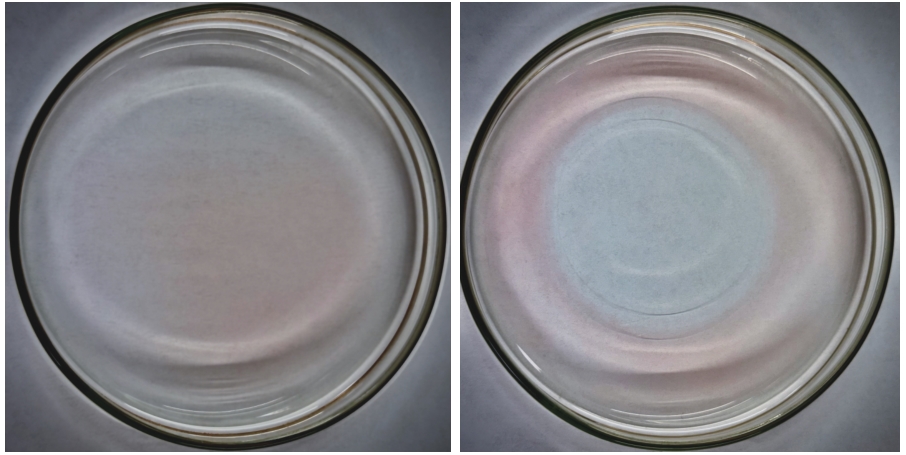
图1 排油圈对照组(左)与试验组(右)
Fig. 1 Oil ring drainage control group (left) and experimental group (right)
编码水平 Coding proficiency | A 麦芽糖Maltose (g/L) | B 酵母浸粉Yeast (g/L) | C 氯化钠NaCl (g/L) | D 温度Temperature (℃) | E 发酵时间 Fermented time (h) | F pH | G 转速 Rotational speed (r/min) | H 装液量 Loaded liquid (mL) |
|---|---|---|---|---|---|---|---|---|
| 低Low(-1) | 8 | 2 | 4 | 25 | 48 | 5 | 120 | 100 |
| 高Hight(1) | 16 | 8 | 10 | 35 | 96 | 8 | 160 | 200 |
表1 Plackett-Burman 试验设计因素的种类和水平
Table 1 Types and levels of factors in the Plackett-Burman experimental design
编码水平 Coding proficiency | A 麦芽糖Maltose (g/L) | B 酵母浸粉Yeast (g/L) | C 氯化钠NaCl (g/L) | D 温度Temperature (℃) | E 发酵时间 Fermented time (h) | F pH | G 转速 Rotational speed (r/min) | H 装液量 Loaded liquid (mL) |
|---|---|---|---|---|---|---|---|---|
| 低Low(-1) | 8 | 2 | 4 | 25 | 48 | 5 | 120 | 100 |
| 高Hight(1) | 16 | 8 | 10 | 35 | 96 | 8 | 160 | 200 |
因素 Factor | 编码水平 Horizontal encoding | |||
|---|---|---|---|---|
| -1 | 0 | 1 | ||
| 酵母浸粉 Yeast (g/L) | 6 | 7 | 8 | |
| 麦芽糖 Maltose (g/L) | 10.5 | 9 | 7.5 | |
| 摇床转速 Rotational speed (r/min) | 150 | 160 | 170 | |
表2 Box-Behnken 试验中变量及其水平
Table 2 Variables and their levels in the Box-Behnken experiment
因素 Factor | 编码水平 Horizontal encoding | |||
|---|---|---|---|---|
| -1 | 0 | 1 | ||
| 酵母浸粉 Yeast (g/L) | 6 | 7 | 8 | |
| 麦芽糖 Maltose (g/L) | 10.5 | 9 | 7.5 | |
| 摇床转速 Rotational speed (r/min) | 150 | 160 | 170 | |
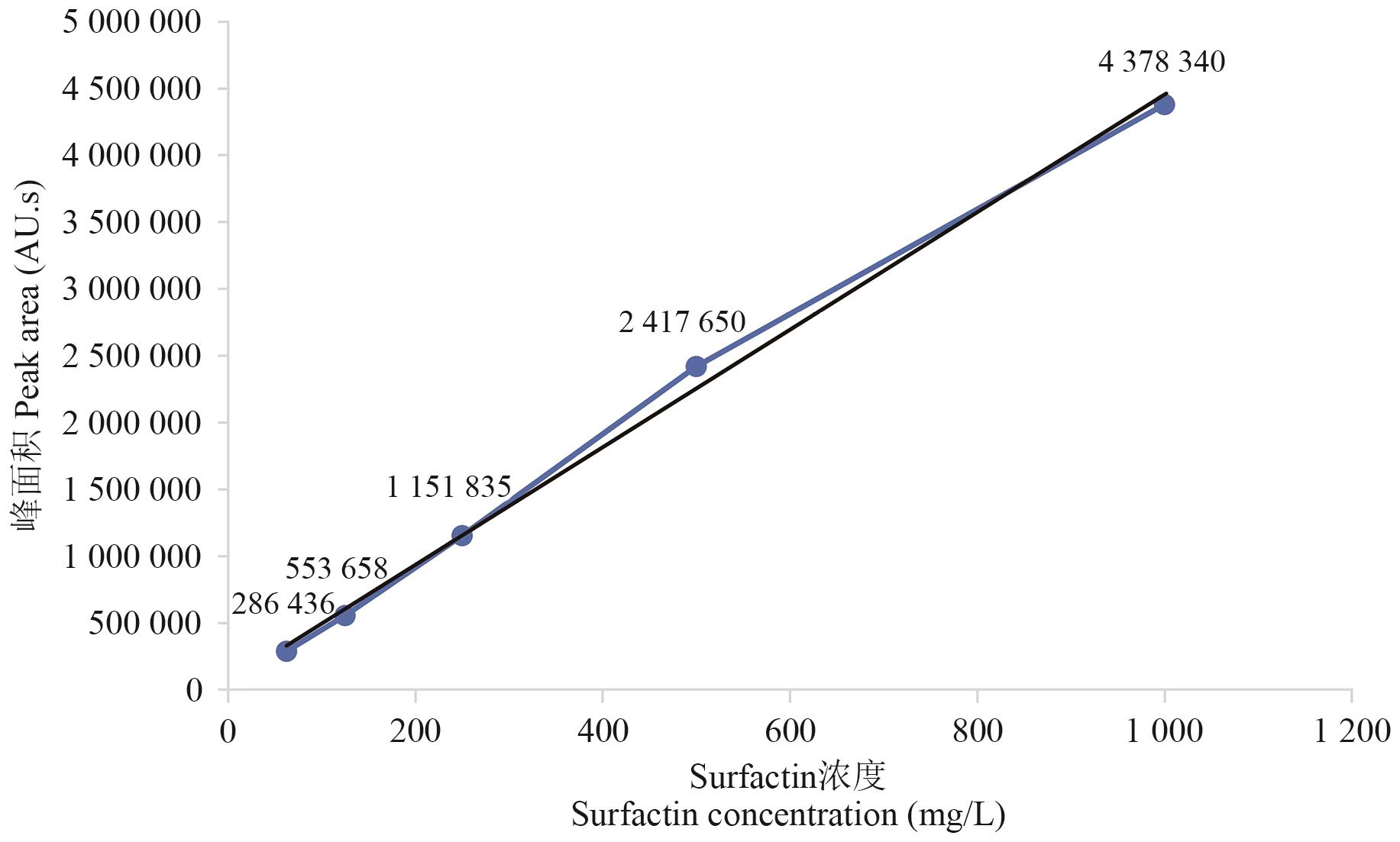
图2 表面活性素标准曲线
Fig. 2 Surfactin standard curve
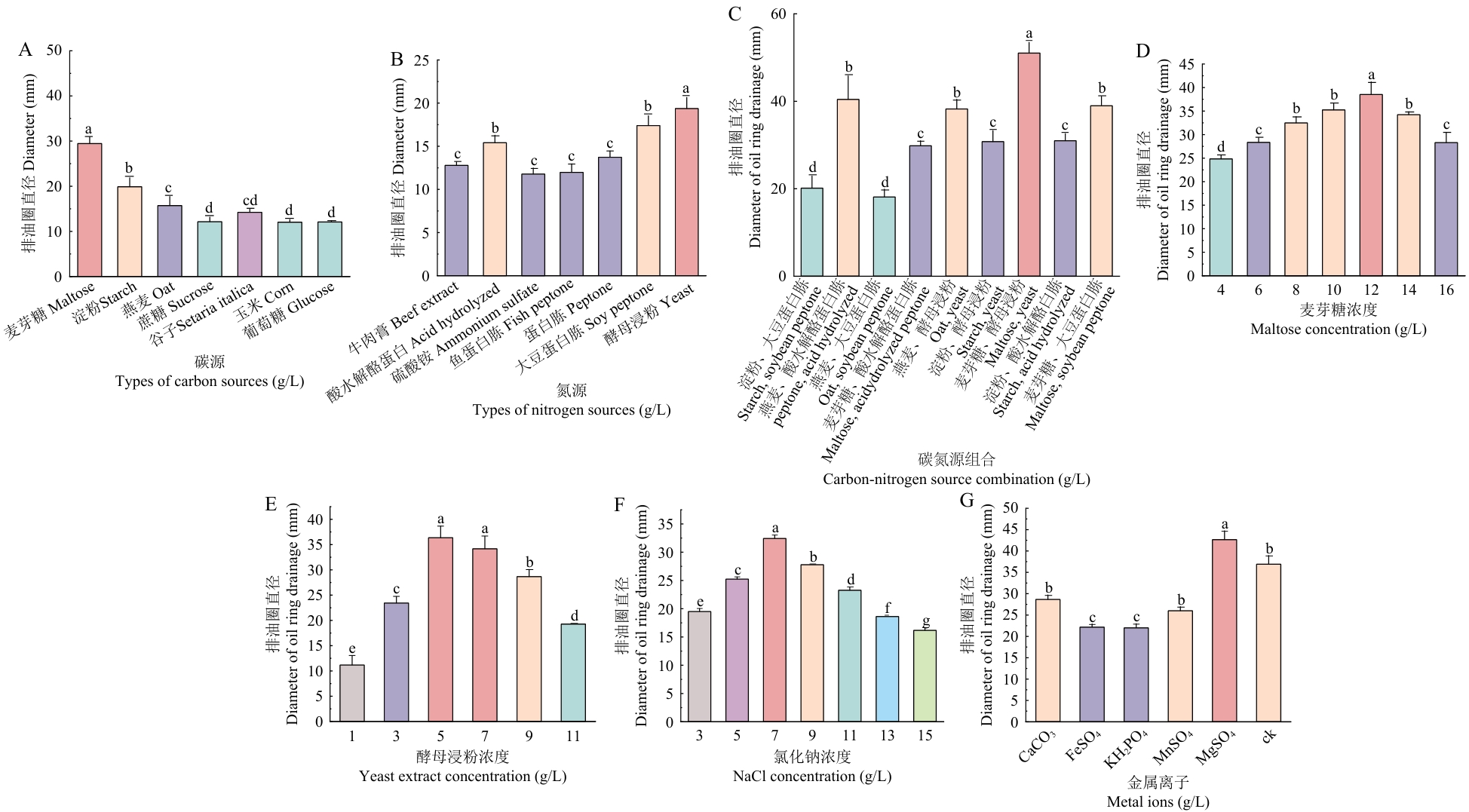
图3 菌株TRM82479的发酵培养基优化不同小写字母表示差异显著(P<0.05),下同
Fig. 3 Optimization of the fermentation medium for strain TRM82479Different lowercase letters indicate significant difference at 0.05 level, the same below
组别 Group | 碳源种类 Carbon source (g/L) | 氮源种类 Nitrogen source (g/L) | 排油圈直径 Diameter of oil ring drainage (mm) |
|---|---|---|---|
| 1 | 淀粉 | 大豆蛋白胨 | 20.15 |
| 2 | 燕麦 | 酸水解酪蛋白 | 40.44 |
| 3 | 燕麦 | 大豆蛋白胨 | 18.13 |
| 4 | 麦芽糖 | 酸水解酪蛋白 | 29.83 |
| 5 | 燕麦 | 酵母浸粉 | 38.24 |
| 6 | 淀粉 | 酵母浸粉 | 30.78 |
| 7 | 麦芽糖 | 酵母浸粉 | 51.03 |
| 8 | 淀粉 | 酸水解酪蛋白 | 30.98 |
| 9 | 麦芽糖 | 大豆蛋白胨 | 39.11 |
表3 碳氮源正交实验组合表及结果
Table 3 Combined table and results of the orthogonal experimental group of carbon and nitrogen sources
组别 Group | 碳源种类 Carbon source (g/L) | 氮源种类 Nitrogen source (g/L) | 排油圈直径 Diameter of oil ring drainage (mm) |
|---|---|---|---|
| 1 | 淀粉 | 大豆蛋白胨 | 20.15 |
| 2 | 燕麦 | 酸水解酪蛋白 | 40.44 |
| 3 | 燕麦 | 大豆蛋白胨 | 18.13 |
| 4 | 麦芽糖 | 酸水解酪蛋白 | 29.83 |
| 5 | 燕麦 | 酵母浸粉 | 38.24 |
| 6 | 淀粉 | 酵母浸粉 | 30.78 |
| 7 | 麦芽糖 | 酵母浸粉 | 51.03 |
| 8 | 淀粉 | 酸水解酪蛋白 | 30.98 |
| 9 | 麦芽糖 | 大豆蛋白胨 | 39.11 |
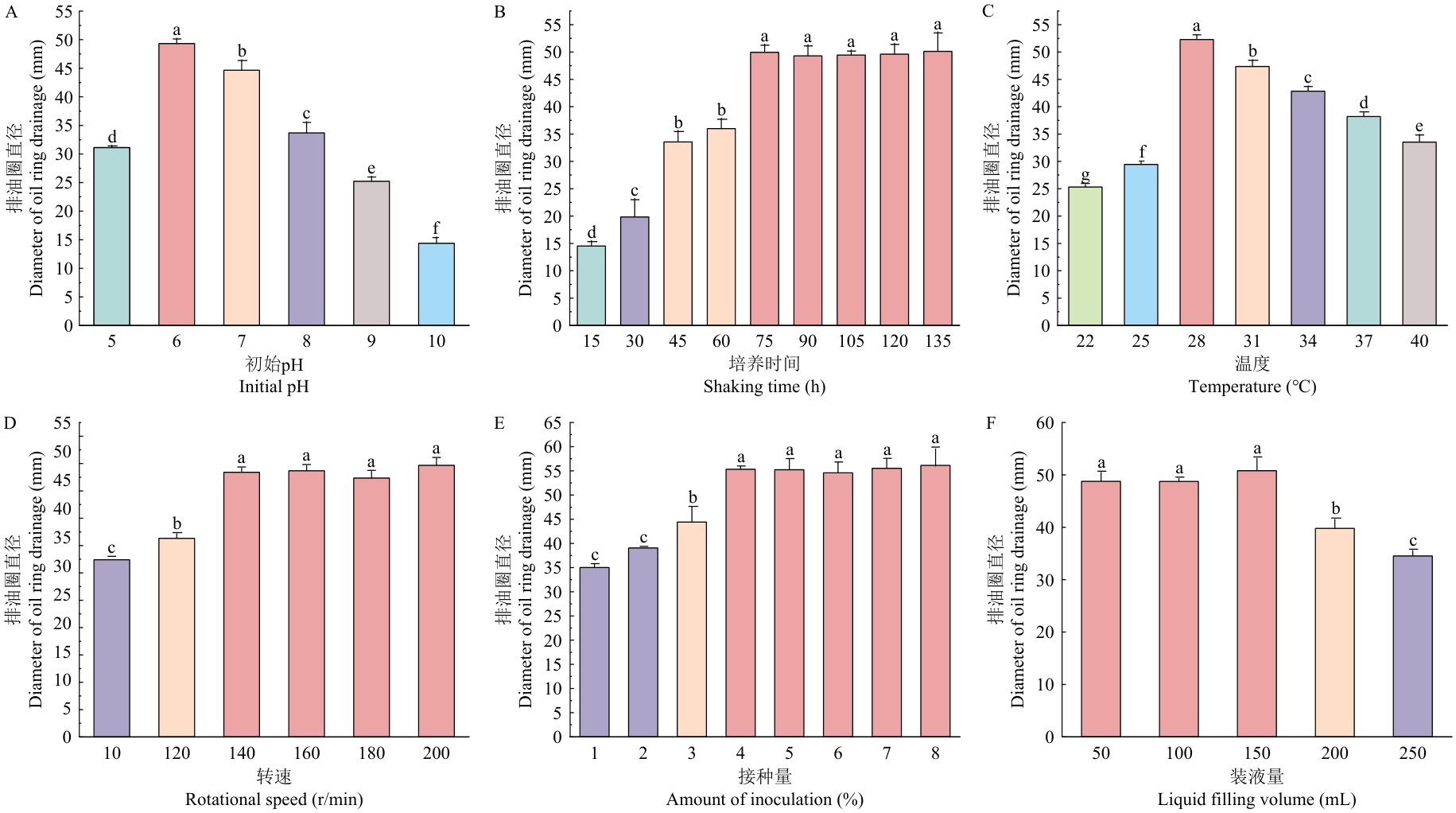
图4 菌株TRM82479的发酵条件优化
Fig. 4 Optimization of fermentation conditions for strain TRM82479
组别 Group | Plackett-Burman实验因素 Plackett-Burman experimental factors | 排油圈直径 Diameter of oil ring drainage (mm) | |||||||
|---|---|---|---|---|---|---|---|---|---|
| A | B | C | D | E | F | G | H | ||
| 1 | 1 | 1 | -1 | 1 | 1 | 1 | -1 | -1 | 32.87 |
| 2 | -1 | 1 | 1 | -1 | 1 | 1 | 1 | -1 | 71.88 |
| 3 | 1 | -1 | 1 | 1 | -1 | 1 | 1 | 1 | 27.79 |
| 4 | -1 | 1 | -1 | 1 | 1 | -1 | 1 | 1 | 66.40 |
| 5 | -1 | -1 | 1 | -1 | 1 | 1 | -1 | 1 | 36.01 |
| 6 | -1 | -1 | -1 | 1 | -1 | 1 | 1 | -1 | 31.76 |
| 7 | 1 | -1 | -1 | -1 | 1 | -1 | 1 | 1 | 37.65 |
| 8 | 1 | 1 | -1 | -1 | -1 | 1 | -1 | 1 | 41.94 |
| 9 | 1 | 1 | 1 | -1 | -1 | -1 | 1 | -1 | 65.53 |
| 10 | -1 | 1 | 1 | 1 | -1 | -1 | -1 | 1 | 60.86 |
| 11 | 1 | -1 | 1 | 1 | 1 | -1 | -1 | -1 | 22.83 |
| 12 | -1 | -1 | -1 | -1 | -1 | -1 | -1 | -1 | 18.11 |
表4 Plackett-Burman 实验设计与结果
Table 4 Plackett-Burman experimental design and results
组别 Group | Plackett-Burman实验因素 Plackett-Burman experimental factors | 排油圈直径 Diameter of oil ring drainage (mm) | |||||||
|---|---|---|---|---|---|---|---|---|---|
| A | B | C | D | E | F | G | H | ||
| 1 | 1 | 1 | -1 | 1 | 1 | 1 | -1 | -1 | 32.87 |
| 2 | -1 | 1 | 1 | -1 | 1 | 1 | 1 | -1 | 71.88 |
| 3 | 1 | -1 | 1 | 1 | -1 | 1 | 1 | 1 | 27.79 |
| 4 | -1 | 1 | -1 | 1 | 1 | -1 | 1 | 1 | 66.40 |
| 5 | -1 | -1 | 1 | -1 | 1 | 1 | -1 | 1 | 36.01 |
| 6 | -1 | -1 | -1 | 1 | -1 | 1 | 1 | -1 | 31.76 |
| 7 | 1 | -1 | -1 | -1 | 1 | -1 | 1 | 1 | 37.65 |
| 8 | 1 | 1 | -1 | -1 | -1 | 1 | -1 | 1 | 41.94 |
| 9 | 1 | 1 | 1 | -1 | -1 | -1 | 1 | -1 | 65.53 |
| 10 | -1 | 1 | 1 | 1 | -1 | -1 | -1 | 1 | 60.86 |
| 11 | 1 | -1 | 1 | 1 | 1 | -1 | -1 | -1 | 22.83 |
| 12 | -1 | -1 | -1 | -1 | -1 | -1 | -1 | -1 | 18.11 |
来源 Source | 平方和 Sum of squares | 自由度 DF | 均方 Mean square | F值 F-value | P值 P-value | 显著性 Significance |
|---|---|---|---|---|---|---|
| 模型 Model | 3 699.19 | 8 | 462.40 | 18.73 | 0.017 4 | * |
| A | 265.27 | 1 | 265.27 | 10.74 | 0.046 5 | * |
| B | 2 278.11 | 1 | 2 278.11 | 92.25 | 0.002 4 | ** |
| C | 262.95 | 1 | 262.95 | 10.65 | 0.047 | * |
| D | 68.23 | 1 | 68.23 | 2.76 | 0.195 1 | |
| E | 39.07 | 1 | 39.07 | 1.58 | 0.297 4 | |
| F | 70.7 | 1 | 70.7 | 2.86 | 0.189 2 | |
| G | 651.02 | 1 | 651.02 | 26.36 | 0.014 3 | * |
| H | 63.85 | 1 | 63.85 | 2.59 | 0.206 2 | |
| 残差 Residual | 74.08 | 3 | 24.69 | |||
| 总和 Cor total | 3 773.27 | 11 | ||||
| R2 | 0.980 4 | Predicted R2 | 0.685 9 | |||
| R2adj | 0.928 0 | Adeq precision | 11.991 4 |
表5 Plackett-Burman 试验因素、水平及显著性分析
Table 5 Plackett-Burman experiment factors, levels and significance analysis
来源 Source | 平方和 Sum of squares | 自由度 DF | 均方 Mean square | F值 F-value | P值 P-value | 显著性 Significance |
|---|---|---|---|---|---|---|
| 模型 Model | 3 699.19 | 8 | 462.40 | 18.73 | 0.017 4 | * |
| A | 265.27 | 1 | 265.27 | 10.74 | 0.046 5 | * |
| B | 2 278.11 | 1 | 2 278.11 | 92.25 | 0.002 4 | ** |
| C | 262.95 | 1 | 262.95 | 10.65 | 0.047 | * |
| D | 68.23 | 1 | 68.23 | 2.76 | 0.195 1 | |
| E | 39.07 | 1 | 39.07 | 1.58 | 0.297 4 | |
| F | 70.7 | 1 | 70.7 | 2.86 | 0.189 2 | |
| G | 651.02 | 1 | 651.02 | 26.36 | 0.014 3 | * |
| H | 63.85 | 1 | 63.85 | 2.59 | 0.206 2 | |
| 残差 Residual | 74.08 | 3 | 24.69 | |||
| 总和 Cor total | 3 773.27 | 11 | ||||
| R2 | 0.980 4 | Predicted R2 | 0.685 9 | |||
| R2adj | 0.928 0 | Adeq precision | 11.991 4 |
组别 Group | 步长 Step size | 酵母浸粉 Yeast (g/L) | 麦芽糖 Maltose (g/L) | 转速 Rotational speed (r/min) | 排油圈直径 Diameter of oil ring drainage (mm) |
|---|---|---|---|---|---|
| 1 | 0 | 5 | 12 | 140 | 58.73b |
| 2 | 0+1Δ | 6 | 10.5 | 150 | 61.56b |
| 3 | 0+2Δ | 7 | 9 | 160 | 70.55a |
| 4 | 0+3Δ | 8 | 7.5 | 170 | 60.94b |
| 5 | 0+4Δ | 9 | 6 | 180 | 43.48c |
| 6 | 0+5Δ | 10 | 4.5 | 190 | 39.05c |
表6 最陡爬坡实验设计
Table 6 Design of the steep slope climbing experiment
组别 Group | 步长 Step size | 酵母浸粉 Yeast (g/L) | 麦芽糖 Maltose (g/L) | 转速 Rotational speed (r/min) | 排油圈直径 Diameter of oil ring drainage (mm) |
|---|---|---|---|---|---|
| 1 | 0 | 5 | 12 | 140 | 58.73b |
| 2 | 0+1Δ | 6 | 10.5 | 150 | 61.56b |
| 3 | 0+2Δ | 7 | 9 | 160 | 70.55a |
| 4 | 0+3Δ | 8 | 7.5 | 170 | 60.94b |
| 5 | 0+4Δ | 9 | 6 | 180 | 43.48c |
| 6 | 0+5Δ | 10 | 4.5 | 190 | 39.05c |
组别 Group | 酵母浸粉 Yeast (g/L) | 麦芽糖 Maltose (g/L) | 转速 Rotational speed(r/min) | 排油圈直径 Diameter of oil ring drainage (mm) |
|---|---|---|---|---|
| 1 | -1 | -1 | 0 | 54.81 |
| 2 | 1 | -1 | 0 | 58.79 |
| 3 | -1 | 1 | 0 | 48.86 |
| 4 | 1 | 1 | 0 | 58.38 |
| 5 | -1 | 0 | -1 | 44.28 |
| 6 | 1 | 0 | -1 | 52.73 |
| 7 | -1 | 0 | 1 | 49.84 |
| 8 | 1 | 0 | 1 | 55.35 |
| 9 | 0 | -1 | -1 | 52.81 |
| 10 | 0 | 1 | -1 | 53.01 |
| 11 | 0 | -1 | 1 | 57.97 |
| 12 | 0 | 1 | 1 | 55.53 |
| 13 | 0 | 0 | 0 | 74.84 |
| 14 | 0 | 0 | 0 | 76.73 |
| 15 | 0 | 0 | 0 | 73.84 |
| 16 | 0 | 0 | 0 | 75.84 |
| 17 | 0 | 0 | 0 | 75.68 |
表7 Box-Behnken 试验设计及其结果
Table 7 Box-Behnken experimental design and results
组别 Group | 酵母浸粉 Yeast (g/L) | 麦芽糖 Maltose (g/L) | 转速 Rotational speed(r/min) | 排油圈直径 Diameter of oil ring drainage (mm) |
|---|---|---|---|---|
| 1 | -1 | -1 | 0 | 54.81 |
| 2 | 1 | -1 | 0 | 58.79 |
| 3 | -1 | 1 | 0 | 48.86 |
| 4 | 1 | 1 | 0 | 58.38 |
| 5 | -1 | 0 | -1 | 44.28 |
| 6 | 1 | 0 | -1 | 52.73 |
| 7 | -1 | 0 | 1 | 49.84 |
| 8 | 1 | 0 | 1 | 55.35 |
| 9 | 0 | -1 | -1 | 52.81 |
| 10 | 0 | 1 | -1 | 53.01 |
| 11 | 0 | -1 | 1 | 57.97 |
| 12 | 0 | 1 | 1 | 55.53 |
| 13 | 0 | 0 | 0 | 74.84 |
| 14 | 0 | 0 | 0 | 76.73 |
| 15 | 0 | 0 | 0 | 73.84 |
| 16 | 0 | 0 | 0 | 75.84 |
| 17 | 0 | 0 | 0 | 75.68 |
来源 Source | 平方和 Sum of squares | 自由度 DF | 均方 Mean square | F值 F-value | P值 P-value | 显著性 Significance |
|---|---|---|---|---|---|---|
| 模型 Model | 1 885.85 | 9 | 209.54 | 209.76 | <0.000 1 | ** |
| A | 94.23 | 1 | 94.23 | 94.33 | <0.000 1 | ** |
| B | 9.23 | 1 | 9.23 | 9.24 | 0.018 9 | * |
| C | 31.46 | 1 | 31.46 | 31.49 | 0.000 8 | ** |
| AB | 7.68 | 1 | 7.68 | 7.69 | 0.027 6 | * |
| AC | 2.17 | 1 | 2.17 | 2.17 | 0.183 9 | |
| BC | 1.75 | 1 | 1.75 | 1.75 | 0.227 6 | |
| A² | 629.49 | 1 | 629.49 | 630.15 | <0.000 1 | ** |
| B² | 265.98 | 1 | 265.98 | 266.26 | <0.000 1 | ** |
| C² | 669.22 | 1 | 669.22 | 669.92 | <0.000 1 | ** |
| 残差 Residual | 6.99 | 7 | 0.999 | |||
| 失拟 Lack of fit | 2.18 | 3 | 0.726 5 | 0.603 8 | 0.646 3 | |
| 变异系数CV(%) | 1.67% | 校正决定系数R2 | 0.996 3 | |||
| 复相关系数R2adj | 0.991 6 | |||||
| 预测系数 Pred R2 | 0.977 6 | |||||
| 精密度 Adeq precision | 40.421 9 |
表8 Box-Behnken 试验设计二次模型方差分析
Table 8 ANOVA of the quadratic model based on Box-Behnken design
来源 Source | 平方和 Sum of squares | 自由度 DF | 均方 Mean square | F值 F-value | P值 P-value | 显著性 Significance |
|---|---|---|---|---|---|---|
| 模型 Model | 1 885.85 | 9 | 209.54 | 209.76 | <0.000 1 | ** |
| A | 94.23 | 1 | 94.23 | 94.33 | <0.000 1 | ** |
| B | 9.23 | 1 | 9.23 | 9.24 | 0.018 9 | * |
| C | 31.46 | 1 | 31.46 | 31.49 | 0.000 8 | ** |
| AB | 7.68 | 1 | 7.68 | 7.69 | 0.027 6 | * |
| AC | 2.17 | 1 | 2.17 | 2.17 | 0.183 9 | |
| BC | 1.75 | 1 | 1.75 | 1.75 | 0.227 6 | |
| A² | 629.49 | 1 | 629.49 | 630.15 | <0.000 1 | ** |
| B² | 265.98 | 1 | 265.98 | 266.26 | <0.000 1 | ** |
| C² | 669.22 | 1 | 669.22 | 669.92 | <0.000 1 | ** |
| 残差 Residual | 6.99 | 7 | 0.999 | |||
| 失拟 Lack of fit | 2.18 | 3 | 0.726 5 | 0.603 8 | 0.646 3 | |
| 变异系数CV(%) | 1.67% | 校正决定系数R2 | 0.996 3 | |||
| 复相关系数R2adj | 0.991 6 | |||||
| 预测系数 Pred R2 | 0.977 6 | |||||
| 精密度 Adeq precision | 40.421 9 |
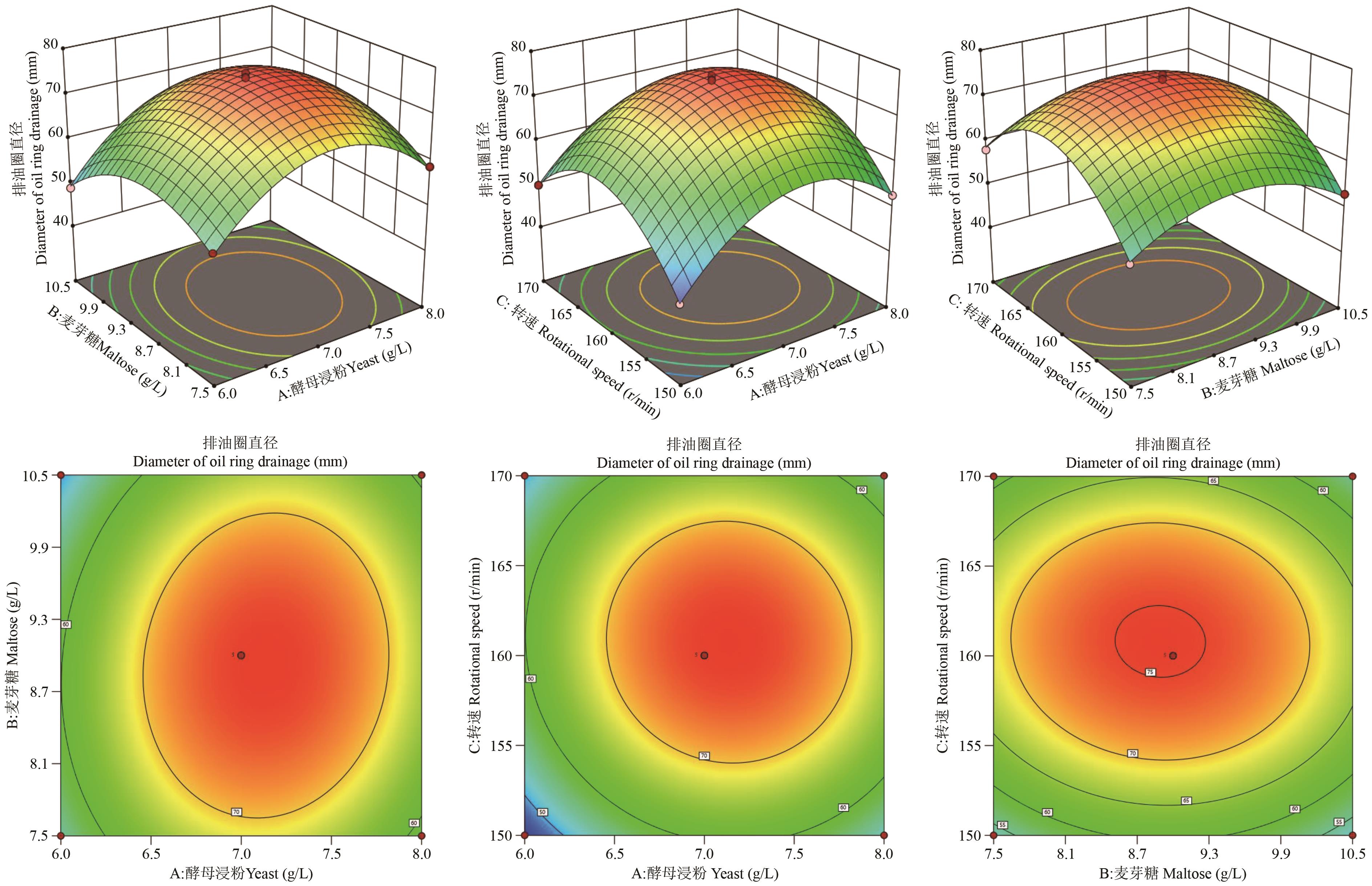
图5 各因素交互作用对排油圈直径影响的响应面和等高线
Fig. 5 Response surfaces and contour lines of the interactions between various factors on the diameter of oil discharge ring
供试虫源 Insect source tested | 虫态 Instar | 死亡率 Mortality (%) | 校正死亡率 Corrected mortality (%) |
|---|---|---|---|
| 棉铃虫 Helicoverpa armigera | 2龄幼虫 2nd instar larva | 23.33±7.64 e | 21.05±0 e |
| 草地贪夜蛾 Spodoptera frugiperda | 2龄幼虫 2nd instar larva | 36.67±2.89 d | 32.15±0.99 d |
| 甜菜夜蛾 Spodoptera exigua | 2龄幼虫 2nd instar larva | 65±5.00 b | 61.11±5.56 b |
| 玉米螟 Ostrinia nubilalis | 2龄幼虫 2nd instar larva | 35±5.00 d | 29.13±3.68 de |
| 黏虫 Mythimna separata | 2龄幼虫 2nd instar larva | 51.64±7.64 c | 48.15±8.52 c |
| 斜纹夜蛾 Prodenia litura | 2龄幼虫 2nd instar larva | 66.67±2.89 b | 64.23±3.77 b |
| 蚜虫 Aphis gossypii | 若虫期 Nymphal stage | 91.67±2.89 a | 91.23±3.04 a |
表9 TRM82479发酵液杀虫活性
Table 9 Insecticidal activity of fermentation broth of TRM82479
供试虫源 Insect source tested | 虫态 Instar | 死亡率 Mortality (%) | 校正死亡率 Corrected mortality (%) |
|---|---|---|---|
| 棉铃虫 Helicoverpa armigera | 2龄幼虫 2nd instar larva | 23.33±7.64 e | 21.05±0 e |
| 草地贪夜蛾 Spodoptera frugiperda | 2龄幼虫 2nd instar larva | 36.67±2.89 d | 32.15±0.99 d |
| 甜菜夜蛾 Spodoptera exigua | 2龄幼虫 2nd instar larva | 65±5.00 b | 61.11±5.56 b |
| 玉米螟 Ostrinia nubilalis | 2龄幼虫 2nd instar larva | 35±5.00 d | 29.13±3.68 de |
| 黏虫 Mythimna separata | 2龄幼虫 2nd instar larva | 51.64±7.64 c | 48.15±8.52 c |
| 斜纹夜蛾 Prodenia litura | 2龄幼虫 2nd instar larva | 66.67±2.89 b | 64.23±3.77 b |
| 蚜虫 Aphis gossypii | 若虫期 Nymphal stage | 91.67±2.89 a | 91.23±3.04 a |
药剂 Insecticides | 虫口基数Number of aphids | 药后1 d One day later | 药后2 d Two days later | 药后7 d Seven days later | |||
|---|---|---|---|---|---|---|---|
残虫数 Left aphids | 校正防效 Control efficacy (%) | 残虫数 Left aphids | 校正防效 Control efficacy (%) | 残虫数 Left aphids | 校正防效 Control efficacy (%) | ||
| 108 CFU /mL菌液 | 86 | 19 | 77.61±6.43a | 14 | 80.45±7.98a | 16 | 77.33±6.79a |
| 107 CFU /mL菌液 | 74 | 23 | 73.82±5.53ab | 20 | 72.05±8.80ab | 18 | 70.48±4.72ab |
| 106 CFU /mL菌液 | 75 | 30 | 70.78±6.79ab | 23 | 71.29±7.27ab | 22 | 66.26±2.38b |
| 25%氟啶虫酰胺 | 97 | 27 | 67.03±3.59b | 24 | 68.10±2.21b | 36 | 56.95±9.02c |
| 清水 | 71 | 66 | _ | 63 | _ | 60 | _ |
表10 TRM82479发酵液对棉蚜的大田防效
Table 10 Field efficacy of TRM82479 fermentation broth against cotton aphids
药剂 Insecticides | 虫口基数Number of aphids | 药后1 d One day later | 药后2 d Two days later | 药后7 d Seven days later | |||
|---|---|---|---|---|---|---|---|
残虫数 Left aphids | 校正防效 Control efficacy (%) | 残虫数 Left aphids | 校正防效 Control efficacy (%) | 残虫数 Left aphids | 校正防效 Control efficacy (%) | ||
| 108 CFU /mL菌液 | 86 | 19 | 77.61±6.43a | 14 | 80.45±7.98a | 16 | 77.33±6.79a |
| 107 CFU /mL菌液 | 74 | 23 | 73.82±5.53ab | 20 | 72.05±8.80ab | 18 | 70.48±4.72ab |
| 106 CFU /mL菌液 | 75 | 30 | 70.78±6.79ab | 23 | 71.29±7.27ab | 22 | 66.26±2.38b |
| 25%氟啶虫酰胺 | 97 | 27 | 67.03±3.59b | 24 | 68.10±2.21b | 36 | 56.95±9.02c |
| 清水 | 71 | 66 | _ | 63 | _ | 60 | _ |
| [1] | Arima K, Kakinuma A, Tamura G. Surfactin, a crystalline peptidelipid surfactant produced by Bacillus subtilis: Isolation, characterization and its inhibition of fibrin clot formation [J]. Biochem Biophys Res Commun, 1968, 31(3): 488-494. |
| [2] | 张齐, 刘朋, 杨诚洁, 等. 口服表面活性素对母猪乳源性免疫力的影响 [J]. 南京农业大学学报, 2024, 47(6): 1122-1129. |
| Zhang Q, Liu P, Yang CJ, et al. Effect of orally surfactin on lactogenic immunity in sows [J]. J Nanjing Agric Univ, 2024, 47(6): 1122-1129. | |
| [3] | Cao XH, Wang AH, Wang CL, et al. Surfactin induces apoptosis in human breast cancer MCF-7 cells through a ROS/JNK-mediated mitochondrial/caspase pathway [J]. Chem Biol Interact, 2010, 183(3): 357-362. |
| [4] | Jung M, Lee S, Kim H, et al. Recent studies on natural products as anti-HIV agents [J]. Curr Med Chem, 2000, 7(6): 649-661. |
| [5] | 罗星荣, 陈小龙. Surfactin发酵生产及应用研究进展 [J]. 发酵科技通讯, 2014, 43(4): 14-18. |
| Luo XR, Chen XL. Research progress in Surfactin fermentation and its application [J]. Bull Ferment Sci Technol, 2014, 43(4): 14-18. | |
| [6] | 杨丽莉, 吕凤霞, 别小妹, 等. 枯草芽胞杆菌抗菌脂肽对嗜水气单胞菌抑菌效果 [J]. 食品科学, 2011, 32(1): 193-198. |
| Yang LL, Lu FX, Bie XM, et al. Study on the anti-aeromonas hydrophila effect in vitro of lipopeptide from Bacillus subtilis fmbJ [J]. Food Sci, 2011, 32(1): 193-198. | |
| [7] | Carolin C F, Kumar PS, Ngueagni PT. A review on new aspects of lipopeptide biosurfactant: Types, production, properties and its application in the bioremediation process [J]. J Hazard Mater, 2021, 407: 124827. |
| [8] | Wan NF, Fu LW, Dainese M, et al. Pesticides have negative effects on non-target organisms [J]. Nat Commun, 2025, 16: 1360. |
| [9] | Ghribi D, Abdelkefi-Mesrati L, Boukedi H, et al. The impact of the Bacillus subtilis SPB1 biosurfactant on the midgut histology of Spodoptera littoralis (Lepidoptera: Noctuidae) and determination of its putative receptor [J]. J Invertebr Pathol, 2012, 109(2): 183-186. |
| [10] | Abdelkefi-Mesrati L, Boukedi H, Dammak-Karray M, et al. Study of the Bacillus thuringiensis Vip3Aa16 histopathological effects and determination of its putative binding proteins in the midgut of Spodoptera littoralis [J]. J Invertebr Pathol, 2011, 106(2): 250-254. |
| [11] | Xia MY, Munir S, Li YM, et al. Bacillus subtilis YZ-1 surfactins are involved in effective toxicity against agricultural pests [J]. Pest Manag Sci, 2024, 80(2): 333-340. |
| [12] | Di Giácomo AL, Azcurra LN, García GR, et al. Safety assessment of surfactin-producing Bacillus strains and their lipopeptides extracts in vitro and in vivo [J]. J Basic Microbiol, 2023, 63(8): 877-887. |
| [13] | Zhao SF, Li YP, Cao ZL, et al. Sorption-desorption mechanisms and environmental friendliness of different surfactants in enhancing remediation of soil contaminated with polycyclic aromatic hydrocarbons [J]. J Soils Sediments, 2020, 20(7): 2817-2828. |
| [14] | Brakstad OG, Sarno A, Geerts R, et al. Ultimate and primary biodegradation of a range of nonpolymeric and polymeric surfactants in seawater [J]. Environ Toxicol Chem, 2023, 42(7): 1472-1484. |
| [15] | Lu M, Zhang GY, Holmberg K. Toxicity and environmental aspects of surfactants [J]. Tenside Surfactants Deterg, 2024, 61(6): 505-518. |
| [16] | 王军强, 王连国, 郭荣君, 等. 枯草芽胞杆菌B006产表面活性素的培养条件优化 [J]. 生物技术通报, 2017, 33(4): 214-221. |
| Wang JQ, Wang LG, Guo RJ, et al. Optimization of culture conditions for the enhancement of surfactin production from Bacillus substilis B006 [J]. Biotechnol Bull, 2017, 33(4): 214-221. | |
| [17] | 李高强, 张旭斌, 牛俊轲, 等. 枯草芽胞杆菌BYA-KC-4产表面活性素发酵条件的优化 [J]. 饲料研究, 2024, 47(14): 107-112. |
| Li GQ, Zhang XB, Niu JK, et al. Optimizing fermentation conditions for production of surfactin from Bacillus subtilis BYA-KC-4 [J]. Feed Res, 2024, 47(14): 107-112. | |
| [18] | 陈敏, 陈磊, 胡美忠, 等. 高产Surfactin发酵培养基的筛选优化 [J]. 农技服务, 2021, 38(7): 59-62. |
| Chen M, Chen L, Hu MZ, et al. Screening and optimization of fermentation medium for high-yield Surfactin [J]. Agric Technol Serv, 2021, 38(7): 59-62. | |
| [19] | 艾嘉, 陆兆新, 别小妹, 等. 高效液相色谱法测定发酵液中表面活性素的含量 [J]. 食品科学, 2009, 30(6): 188-190. |
| Ai J, Lu ZX, Bie XM, et al. High performance liquid chromatography analysis of surfactin content in fermentation broth of Bacillus amyloliquefaciens ES-2 [J]. Food Sci, 2009, 30(6): 188-190. | |
| [20] | 张飞龙, 张祥胜, 董晓刚, 等. 生物表面活性剂高产菌用排油圈法初筛时的影响因素分析 [J]. 化学工程师, 2009, 23(2): 3-4. |
| Zhang FL, Zhang XS, Dong XG, et al. Analysis of influencing factors of preliminary screening of high yield biosurfactant-producing bacteria by oil spreading method [J]. Chem Eng, 2009, 23(2): 3-4. | |
| [21] | 张凡, 佘跃惠. 排油圈法对生物表面活性剂的定性与定量 [J]. 化学工程师, 2005, 19(1): 14-15, 38. |
| Zhang F, She YH. Quantitative and qualitative analysis of biosurfactant by oil spreading method [J]. Chem Eng, 2005, 19(1): 14-15, 38. | |
| [22] | Wei YH, Wang LF, Chang JS. Optimizing iron supplement strategies for enhanced surfactin production with Bacillus subtilis [J]. Biotechnol Prog, 2004, 20(3): 979-983. |
| [23] | 刘超, 李小慧, 李静. 五种金属离子对S5产表面活性剂性能的影响 [J]. 环保科技, 2011, 17(2): 40-44. |
| Liu C, Li XH, Li J. Effects of five metal ions on the performance of surfactant produced by S5 [J]. Environ Prot Technol, 2011, 17(2): 40-44. | |
| [24] | 刘记成, 司伟民, 孙玉梅. 硫酸亚铁和硫酸锰对苍白杆菌产生物表面活性剂的影响 [J]. 中国酿造, 2019, 38(12): 20-24. |
| Liu JC, Si WM, Sun YM. Effect of FeSO4 and MnSO4 on biosurfactant production by Ochrobactrum [J]. China Brew, 2019, 38(12): 20-24. | |
| [25] | Abdel-Mawgoud AM, Aboulwafa MM, Hassouna NA. Optimization of surfactin production by Bacillus subtilis isolate BS5 [J]. Appl Biochem Biotechnol, 2008, 150(3): 305-325. |
| [26] | Ferreira SLC, Bruns RE, Ferreira HS, et al. Box-Behnken design: an alternative for the optimization of analytical methods [J]. Anal Chim Acta, 2007, 597(2): 179-186. |
| [27] | 李立梅, 左彤彤, 邹建军, 等. 一株具有杀虫活性链霉菌的研究 [J]. 植物保护, 2019, 45(6): 214-221. |
| Li LM, Zuo TT, Zou JJ, et al. Study on the insecticidal activity of a Streptomyces strain [J]. Plant Prot, 2019, 45(6): 214-221. | |
| [28] | 中华人民共和国农业部. 农药田间药效试验准则(二)第75部分:杀虫剂防治棉花蚜虫: [S].北京:中国标准出版社,2004. |
| Ministry of Agriculture of the People’s Republic of China. Pesticides - guidelines for field efficacy trials (II) - Part 75: Insecticides for control of cotton aphids: [S]. Beijing: China Standards Press, 2004. | |
| [29] | Wibisana A, Sumaryono W, Mirawati Sudiro T, et al. Optimization of surfactin production by Bacillus amyloliquefaciens MD4-12 using response surface methodology [J]. Microbiol Indones, 2015, 9(3): 120-128. |
| [30] | Zhou YJ, Yang XX, Li Q, et al. Optimization of fermentation conditions for surfactin production by B. subtilis YPS-32 [J]. BMC Microbiol, 2023, 23(1): 117. |
| [31] | Chen MC, Zheng MX, Chen YP, et al. Effect of metal ions on lipopeptide secretion from Bacillus subtilis strain FJAT‐4: Negative regulation by Ca2+ [J]. J Appl Microbiol, 2022, 132(3): 2167-2176. |
| [32] | 王业林, 文凤, 李丽霞, 等. 一株沙漠来源的具杀棉蚜活性芽胞杆菌的研究 [J]. 植物保护, 2025, 51(3): 182-194. |
| Wang YL, Wen F, Li LX, et al. Study on an active Bacillus strain from desert for controlling cotton aphids [J]. Plant Prot, 2025, 51(3): 182-194. | |
| [33] | Liu QY, Zhao WY, Li WY, et al. Lipopeptides from Bacillus velezensis ZLP-101 and their mode of action against bean aphids Acyrthosiphon pisum Harris [J]. BMC Microbiol, 2024, 24(1): 231. |
| [34] | Denoirjean T, Doury G, Poli P, et al. Effects of Bacillus lipopeptides on the survival and behavior of the rosy apple aphid Dysaphis plantaginea [J]. Ecotoxicol Environ Saf, 2021, 226: 112840. |
| [35] | Ramesar DR, Hunter CH. Elucidation of lipopeptide biosurfactants responsible for the larvicidal activity of Bacillus velezensis PHP1601 towards Lucilia cuprina larvae [J]. Biocontrol Sci Technol, 2023, 33(8): 772-787. |
| [1] | 林宝妹, 李珊珊, 李海明, 洪佳敏, 张帅, 吴妙鸿, 吴维坚, 吴水金. 香蕉枯萎病拮抗菌的筛选鉴定与生防作用[J]. 生物技术通报, 2026, 42(4): 272-286. |
| [2] | 陈艳, 刘鑫, 施竹凤, 普特, 刘恩德, 张义杰, 曹艳茹, 杨佩文. 三株硫氧化细菌的筛选鉴定及其生物活性[J]. 生物技术通报, 2026, 42(1): 315-328. |
| [3] | 张蔓, 党静波, 蒋媛, 位杰, 邢杰, 王哲, 孙黎. 梨火疫病生防菌的筛选、鉴定及防效测定[J]. 生物技术通报, 2026, 42(1): 279-293. |
| [4] | 吕镇, 甘恬, 霍思羽, 赵晨笛, 赵梦瑶, 李亚涛, 马玉超, 耿玉清. 产Surfactin贝莱斯芽胞杆菌C5A-1的鉴定和所产Surfactin对植物的促生效果[J]. 生物技术通报, 2025, 41(9): 265-276. |
| [5] | 廉少杰, 唐胜硕, 康传利, 刘磊, 郑德强, 杜帅, 汤丽伟, 张美霞, 刘蔷. 高产银耳多糖酶菌株的分离、鉴定、发酵条件优化及其酶的特性分析[J]. 生物技术通报, 2025, 41(9): 302-313. |
| [6] | 石艳华, 李朔, 高玉珠, 郑保坤, 朱杰华, 张岱, 杨志辉. 贝莱斯芽胞杆菌NZ-4挥发性有机物的促生作用及其活性成分分析[J]. 生物技术通报, 2025, 41(8): 300-310. |
| [7] | 彭钿钿, 马云龙, 许沛冬, 陈迪, 谢丙炎, 李彦. 芽胞杆菌防治植物病害作用机制与应用[J]. 生物技术通报, 2025, 41(8): 42-52. |
| [8] | 董栩焜, 车永梅, 王明硕, 罗政刚, 管恩森, 赵方贵, 叶青, 刘新. 纳米硅和蜡样芽胞杆菌SS1共处理对烟草生长的影响[J]. 生物技术通报, 2025, 41(7): 292-298. |
| [9] | 张津浩, 邓辉, 张清壮, 陶禹, 周池, 李鑫. 贝莱斯芽胞杆菌XY40-1对百合球茎生长、品质及镉含量的调控作用[J]. 生物技术通报, 2025, 41(7): 281-291. |
| [10] | 张越, 毕钰, 慕雪男, 郑子薇, 王志刚, 徐伟慧. 小麦赤霉病拮抗菌JB7的生防特性[J]. 生物技术通报, 2025, 41(7): 261-271. |
| [11] | 张慧, 卢文才, 王冬, 刘倩, 马连杰. 一株高产吲哚乙酸的Bacillus cereus YT2-1C的鉴定及促生作用[J]. 生物技术通报, 2025, 41(5): 300-309. |
| [12] | 张吉昌, 许云凤, 蒋凌雁. 柱花草内生细菌ZW21发酵条件优化及其抑菌物质稳定性测定[J]. 生物技术通报, 2025, 41(5): 280-289. |
| [13] | 赵逸凡, 王彤, 叶岚, 赵乐, 张宝, 杜鹏强, 何海荣. 地黄根腐病拮抗类芽胞杆菌的筛选、鉴定和全基因组分析[J]. 生物技术通报, 2025, 41(12): 328-341. |
| [14] | 罗明凯, 张豪杰, 石晖琴, 李亚楠, 封瑞超, 沈硕. 三株马铃薯炭疽病生防菌的分离鉴定及其高抑菌活性培养物发酵参数优化[J]. 生物技术通报, 2025, 41(12): 313-327. |
| [15] | 吕济敏, 刘巍, 孙敏, 李洪顺, 彭振兴, 邱鹏飞, 朱其立. 马铃薯早疫病拮抗菌的筛选鉴定和发酵条件优化[J]. 生物技术通报, 2025, 41(10): 175-185. |
| 阅读次数 | ||||||
|
全文 |
|
|||||
|
摘要 |
|
|||||
