







生物技术通报 ›› 2026, Vol. 42 ›› Issue (11): 58-69.doi: 10.13560/j.cnki.biotech.bull.1985.2025-1417
• 综述与专论 • 上一篇
赵芯悦1,2, 曾威1, 张立苹1, 夏继桥2( ), 毕延震1()
收稿日期:2025-12-25
出版日期:2026-11-26
发布日期:2026-11-03
通讯作者:
毕延震sukerbyz@126.com基金资助:
ZHAO Xin-yue1,2, ZENG Wei1, ZHANG Li-ping1, XIA Ji-qiao2(), BI Yan-zhen1()
Received:2025-12-25
Published:2026-11-26
Online:2026-11-03
摘要:
猪繁殖与呼吸综合征(porcine reproductive and respiratory syndrome, PRRS)又名蓝耳病,是由猪繁殖与呼吸综合征病毒(porcine reproductive and respiratory syndrome virus, PRRSV)引起的一种严重危害全球养猪业的重大疫病。由于PRRSV存在复杂的免疫逃逸与高频变异机制,传统疫苗防控难以达到预期效果。培育具有遗传抗性的猪种是从源头防控该病的关键,而基因编辑技术凭借精准靶向特定基因的优势,有效克服了传统育种周期长、效率低的瓶颈,为PRRS抗病育种提供了高效路径。猪CD163已被证实为PRRSV侵染宿主靶细胞不可或缺的关键受体,针对该受体的精准编辑及抗病种质创新已经成为猪育种领域国际研究前沿。本文系统综述了CD163受体的结构特征及其生理功能,全面梳理了基于该受体研制抗PRRS猪的基因编辑技术发展脉络。现有研究表明,针对靶点的编辑策略正经历着从早期的非精准破坏向关键结构域精细修饰的演变,在成功赋予猪只PRRS抗性的同时,能够最大程度保留CD163的核心生理功能。针对现有技术的局限性与实际产业需求,本文进一步探讨了该领域未来的重点突破方向:首先,基于单碱基编辑技术实现单氨基酸位点的精准替换是未来趋势,但亟须通过脱氨酶定向改造及隐蔽剪接位点的AI预测来克服旁观者效应与脱靶风险;其次,面对多病原共感染压力及PRRSV的其他辅助受体,单一靶向CD163存在局限性,探索CD163与其他受体或经济性状基因的多基因协同编辑是必然要求;最后,随着美国FDA等国际监管审批的破冰以及我国相关生物安全评价指南的加速完善,基因编辑抗PRRS猪正稳步迈向商业化应用,展现出广阔的产业化前景。以期为后续精准培育具备广谱、持久抗病能力的猪新品种提供理论支撑与前瞻性参考。
赵芯悦, 曾威, 张立苹, 夏继桥, 毕延震. 基于CD163基因编辑的抗蓝耳猪研究进展[J]. 生物技术通报, 2026, 42(11): 58-69.
ZHAO Xin-yue, ZENG Wei, ZHANG Li-ping, XIA Ji-qiao, BI Yan-zhen. Research Progress in CD163 Gene Editing to Develop PRRSV-resistant Pigs[J]. Biotechnology Bulletin, 2026, 42(11): 58-69.
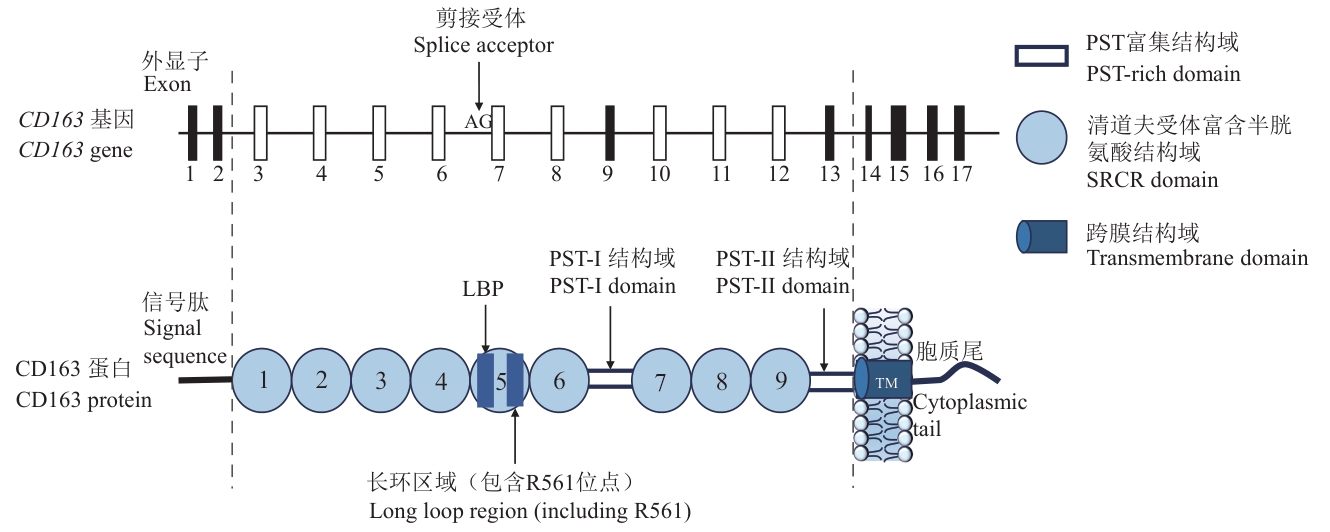
图1 猪CD163基因与蛋白结构及其抗PRRS编辑靶点示意图空心方框表示主要编码CD163胞外SRCR结构域(SRCR1-SRCR9)的外显子;黑色实心方框表示主要编码非SRCR区域的外显子(包括信号肽、PST连接区、跨膜区及胞质尾等)
Fig. 1 Schematic of porcine CD163 gene and protein structure, and its editing targets for PRRS-resistanceOpen boxes represent exons that predominantly encode the extracellular SRCR domains (SRCR1-SRCR9) of CD163. Black filled boxes represent exons that predominantly encode non-SRCR regions, including the signal peptide, the PST linkers, the transmembrane domain, and the cytoplasmic tail
基因编辑技术 Gene editing technologies | 编辑靶点 Targeting site | 编辑结果 Editing results | 参考文献 References |
|---|---|---|---|
| CRISPR/Cas9-NHEJ | CD163 | 移码突变,大片段缺失 Frameshift mutation, large fragment deletion | [ |
| 移码突变 Frame shift mutation | [ | ||
| CRISPR/Cas9-HDR | SRCR5 | 人源CD163 SRCR8结构域替换 Replacement with human CD163 SRCR8 | [ |
| 删除 Deletion | [ | ||
| LBP | 含LBP在内的41个氨基酸删除 Deletion of 41 amino acids containing the LBP | [ | |
| Long loop | 含loop 5-6部分区域的40个氨基酸删除 Deletion of 40 amino acids containing part of loop 5-6 | [ | |
| R561 | 第561位的精氨酸(R)替换为丙氨酸(A) An arginine (R) to alanine (A) substitution at position 561 | [ | |
| PSTII | 前12个氨基酸删除 Deletion of the first 12 amino acids | [ | |
单碱基编辑技术 Base editing technology | 外显子7 Exon 7 | 胞嘧啶(C)到胸腺嘧啶(T)的转换 C was converted to T | [ |
| 内含子6 Intron 6 | 剪接受体位点由AG突变为GG The splice acceptor site AG was mutated to GG | [ |
表1 基于CD163受体研制抗PRRS猪的基因编辑技术代表性应用实例
Table 1 Application of gene editing technologies for developing PRRS-resistant pigs via CD163 receptor targeting
基因编辑技术 Gene editing technologies | 编辑靶点 Targeting site | 编辑结果 Editing results | 参考文献 References |
|---|---|---|---|
| CRISPR/Cas9-NHEJ | CD163 | 移码突变,大片段缺失 Frameshift mutation, large fragment deletion | [ |
| 移码突变 Frame shift mutation | [ | ||
| CRISPR/Cas9-HDR | SRCR5 | 人源CD163 SRCR8结构域替换 Replacement with human CD163 SRCR8 | [ |
| 删除 Deletion | [ | ||
| LBP | 含LBP在内的41个氨基酸删除 Deletion of 41 amino acids containing the LBP | [ | |
| Long loop | 含loop 5-6部分区域的40个氨基酸删除 Deletion of 40 amino acids containing part of loop 5-6 | [ | |
| R561 | 第561位的精氨酸(R)替换为丙氨酸(A) An arginine (R) to alanine (A) substitution at position 561 | [ | |
| PSTII | 前12个氨基酸删除 Deletion of the first 12 amino acids | [ | |
单碱基编辑技术 Base editing technology | 外显子7 Exon 7 | 胞嘧啶(C)到胸腺嘧啶(T)的转换 C was converted to T | [ |
| 内含子6 Intron 6 | 剪接受体位点由AG突变为GG The splice acceptor site AG was mutated to GG | [ |
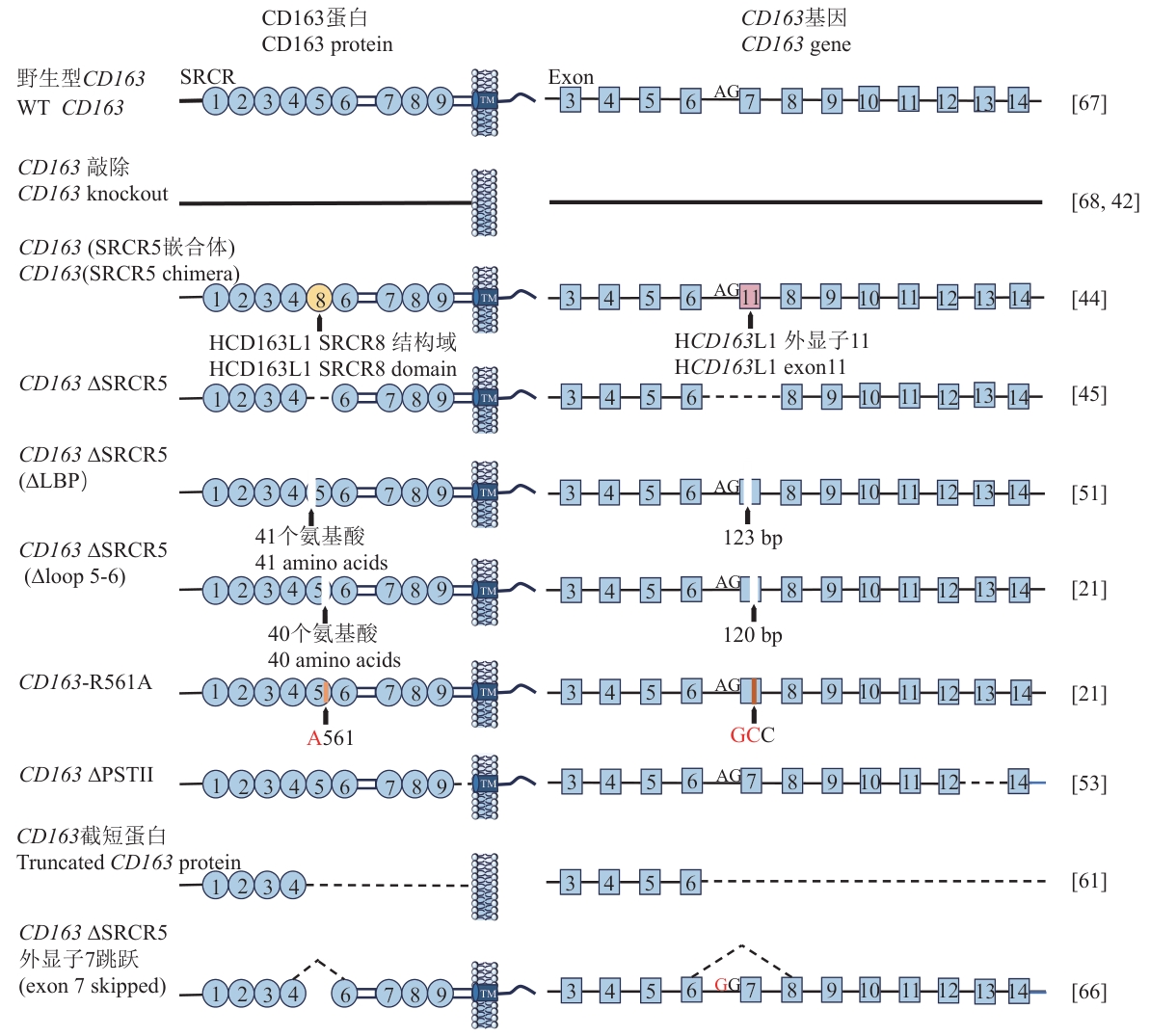
图2 基于CD163受体研制抗PRRS猪的基因编辑策略示意图
Fig. 2 Schematic of gene-editing strategies for generating PRRS-resistant pigs via CD163 receptor targeting
| [1] | Liu GQ, Huang XY, Yang YB, et al. GP2a I118 and GP4 D43 play critical roles in the attachment of PRRSV to the CD163 receptor: implications for anti-PRRSV infection targets [J]. J Virol, 2025, 99(9): e00963-25. |
| [2] | 郭赛楠, 潘琳, 牛明福. 猪繁殖与呼吸综合征病毒逃逸宿主免疫反应机制的研究进展 [J]. 中国预防兽医学报, 2023, 45(12): 1309-1316. |
| Guo SN, Pan L, Niu MF. Research progress of immune escape mechanism of PRRSV [J]. Chin J Prev Vet Med, 2023, 45(12): 1309-1316. | |
| [3] | Weng CZ, Huang XX, Chen ZA, et al. Genetic evolution, epidemic trends, and recombination dynamics of PRRSV-1 in China [J]. Front Vet Sci, 2025, 12: 1632917. |
| [4] | Nelsen CJ, Murtaugh MP, Faaberg KS. Porcine reproductive and respiratory syndrome virus comparison: divergent evolution on two continents [J]. J Virol, 1999, 73(1): 270-280. |
| [5] | 郭宝清, 陈章水, 刘文兴, 等. 从疑似PRRS流产胎儿分离PRRSV的研究 [J]. 中国畜禽传染病, 1996, 18(2): 1-5. |
| Guo BQ, Chen ZS, Liu WX, et al. Isolation and identification of porcine reproductory and respiratory syndrome (PRRS) virus from aborted fetuses suspected of PRRS [J]. Chin J Prev Vet Med, 1996, 18(2): 1-5. | |
| [6] | Tian KG, Yu XL, Zhao TZ, et al. Emergence of fatal PRRSV variants: unparalleled outbreaks of atypical PRRS in China and molecular dissection of the unique hallmark [J]. PLoS One, 2007, 2(6): e526. |
| [7] | Liu KY, Zhang K, Wang XD, et al. Characterization of a novel, virulent PRRSV-1 subtype 1 strain with intestinal tropism in China [J]. Microb Pathog, 2025, 208: 107951. |
| [8] | Wang HL, Feng WH. Current status of porcine reproductive and respiratory syndrome vaccines [J]. Vaccines, 2024, 12(12): 1387. |
| [9] | Zhao K, Ye C, Chang XB, et al. Importation and recombination are responsible for the latest emergence of highly pathogenic porcine reproductive and respiratory syndrome virus in China [J]. J Virol, 2015, 89(20): 10712-10716. |
| [10] | Ren BH, Liu RY, Huang FB, et al. Isolation and pathogenicity of the novel porcine reproductive and respiratory syndrome virus 1 strain ZJ01 in South China [J]. Front Cell Infect Microbiol, 2025, 15: 1646425. |
| [11] | Chen XX, Zhou XY, Guo TD, et al. Efficacy of a live attenuated highly pathogenic PRRSV vaccine against a NADC30-like strain challenge: implications for ADE of PRRSV [J]. BMC Vet Res, 2021, 17: 260. |
| [12] | Bhatia S, Pooja, Yadav SK. CRISPR-Cas for genome editing: Classification, mechanism, designing and applications [J]. Int J Biol Macromol, 2023, 238: 124054. |
| [13] | Delputte PL, Costers S, Nauwynck HJ. Analysis of porcine reproductive and respiratory syndrome virus attachment and internalization: distinctive roles for heparan sulphate and sialoadhesin [J]. J Gen Virol, 2005, 86(5): 1441-1445. |
| [14] | Van Breedam W, Van Gorp H, Zhang JQ, et al. The M/GP5 glycoprotein complex of porcine reproductive and respiratory syndrome virus binds the sialoadhesin receptor in a sialic acid-dependent manner [J]. PLoS Pathog, 2010, 6(1): e1000730. |
| [15] | Prather RS, Rowland RRR, Ewen C, et al. An intact sialoadhesin (Sn/SIGLEC1/CD169) is not required for attachment/internalization of the porcine reproductive and respiratory syndrome virus [J]. J Virol, 2013, 87(17): 9538-9546. |
| [16] | Wei X, Li R, Qiao SL, et al. Porcine reproductive and respiratory syndrome virus utilizes viral apoptotic mimicry as an alternative pathway to infect host cells [J]. J Virol, 2020, 94(17): e00709-20. |
| [17] | Chen JY, Wang HT, Bai JH, et al. Generation of pigs resistant to highly pathogenic-porcine reproductive and respiratory syndrome virus through gene editing of CD163 [J]. Int J Biol Sci, 2019, 15(2): 481-492. |
| [18] | Burkard C, Lillico SG, Reid E, et al. Precision engineering for PRRSV resistance in pigs: Macrophages from genome edited pigs lacking CD163 SRCR5 domain are fully resistant to both PRRSV genotypes while maintaining biological function [J]. PLoS Pathog, 2017, 13(2): e1006206. |
| [19] | Calvert JG, Slade DE, Shields SL, et al. CD163 expression confers susceptibility to porcine reproductive and respiratory syndrome viruses [J]. J Virol, 2007, 81(14): 7371-7379. |
| [20] | Patton JB, Rowland RR, Yoo D, et al. Modulation of CD163 receptor expression and replication of porcine reproductive and respiratory syndrome virus in porcine macrophages [J]. Virus Res, 2009, 140(1/2): 161-171. |
| [21] | Xu K, Zhou YR, Shang HT, et al. Pig macrophages with site-specific edited CD163 decrease the susceptibility to infection with porcine reproductive and respiratory syndrome virus [J]. J Integr Agric, 2023, 22(7): 2188-2199. |
| [22] | Rowland RRR, Brandariz-Nuñez A. Role of CD163 in PRRSV infection [J]. Virology, 2024, 600: 110262. |
| [23] | Stoian AMM, Rowland RRR, Brandariz-Nuñez A. Mutations within scavenger receptor cysteine-rich (SRCR) protein domain 5 of porcine CD163 involved in infection with porcine reproductive and respiratory syndrome virus (PRRS) [J]. J Gen Virol, 2022, 103: 001740. |
| [24] | 方鑫玉, 周磊, 杨汉春. 猪繁殖与呼吸综合征病毒受体CD163的研究进展 [J]. 中国兽医杂志, 2024, 60(12): 99-105. |
| Fang XY, Zhou L, Yang HC. Research progress on porcine reproductive and respiratory syndrome virus receptor CD163 [J]. Chin J Vet Med, 2024, 60(12): 99-105. | |
| [25] | Xu H, Song XH, Su XD. Calcium-dependent oligomerization of scavenger receptor CD163 facilitates the endocytosis of ligands [J]. Nat Commun, 2025, 16: 6679. |
| [26] | Su CM, Rowland RRR, Yoo D. Recent advances in PRRS virus receptors and the targeting of receptor-ligand for control [J]. Vaccines, 2021, 9(4): 354. |
| [27] | Moreno JA, Muñoz-García B, Martín-Ventura JL, et al. The CD163-expressing macrophages recognize and internalize TWEAK potential consequences in atherosclerosis [J]. Atherosclerosis, 2009, 207(1): 103-110. |
| [28] | Fabriek BO, Polfliet MMJ, Vloet RPM, et al. The macrophage CD163 surface glycoprotein is an erythroblast adhesion receptor [J]. Blood, 2007, 109(12): 5223-5229. |
| [29] | Fabriek BO, van Bruggen R, Deng DM, et al. The macrophage scavenger receptor CD163 functions as an innate immune sensor for bacteria [J]. Blood, 2009, 113(4): 887-892. |
| [30] | Van Gorp H, Van Breedam W, Van Doorsselaere J, et al. Identification of the CD163 protein domains involved in infection of the porcine reproductive and respiratory syndrome virus [J]. J Virol, 2010, 84(6): 3101-3105. |
| [31] | Lee YJ, Park CK, Nam E, et al. Generation of a porcine alveolar macrophage cell line for the growth of porcine reproductive and respiratory syndrome virus [J]. J Virol Meth, 2010, 163(2): 410-415. |
| [32] | Li LL, Wu CY, Hou GP, et al. Generation of murine macrophage-derived cell lines expressing porcine CD163 that support porcine reproductive and respiratory syndrome virus infection [J]. BMC Biotechnol, 2017, 17: 77. |
| [33] | Wang XP, Wei RF, Li QY, et al. PK-15 cells transfected with porcine CD163 by PiggyBac transposon system are susceptible to porcine reproductive and respiratory syndrome virus [J]. J Virol Meth, 2013, 193(2): 383-390. |
| [34] | Wang TY, Liu YG, Li L, et al. Porcine alveolar macrophage CD163 abundance is a pivotal switch for porcine reproductive and respiratory syndrome virus infection [J]. Oncotarget, 2018, 9(15): 12174-12185. |
| [35] | Li N, Huang K, Chen YJ, et al. microRNA ssc-miR-124a exhibits antiviral activity against porcine reproductive and respiratory syndrome virus via suppression of host genes CD163 [J]. Vet Microbiol, 2021, 261: 109216. |
| [36] | Ratner LD, La Motta GE, Briski O, et al. Practical approaches for knock-out gene editing in pigs [J]. Front Genet, 2021, 11: 617850. |
| [37] | Lin QY, Otoi T, Widodo OS, et al. Synergistic enhancement of clustered regularly interspaced short palindromic repeats (CRISPR)/CRISPR-associated protein 9-mediated gene editing in porcine zygotes through combined lipofection and electroporation of cationic lipid-packaged ribonucleoproteins [J]. Vet World, 2025: 3806. |
| [38] | Kim S, Kim D, Cho SW, et al. Highly efficient RNA-guided genome editing in human cells via delivery of purified Cas9 ribonucleoproteins [J]. Genome Res, 2014, 24(6): 1012-1019. |
| [39] | Hirata M, Wittayarat M, Namula Z, et al. Generation of mutant pigs by lipofection-mediated genome editing in embryos [J]. Sci Rep, 2021, 11: 23806. |
| [40] | Peng ZW, Duan WX, Fan YH, et al. PAM-flexible SpCas9 variants expand the targeting scope for porcine genome editing and cellular disease modeling [J]. BMC Biotechnol, 2026, 26(1): 83. |
| [41] | Zhao YJ, Li XY, Liu C, et al. Improving the efficiency of CRISPR ribonucleoprotein-mediated precise gene editing by small molecules in porcine fibroblasts [J]. Animals, 2024, 14(5): 719. |
| [42] | Whitworth KM, Lee K, Benne JA, et al. Use of the CRISPR/Cas9 system to produce genetically engineered pigs from in vitro-derived oocytes and embryos [J]. Biol Reprod, 2014, 91(3): 78. |
| [43] | Whitworth KM, Rowland RRR, Ewen CL, et al. Gene-edited pigs are protected from porcine reproductive and respiratory syndrome virus [J]. Nat Biotechnol, 2016, 34(1): 20-22. |
| [44] | Yang HQ, Zhang J, Zhang XW, et al. CD163 knockout pigs are fully resistant to highly pathogenic porcine reproductive and respiratory syndrome virus [J]. Antivir Res, 2018, 151: 63-70. |
| [45] | Wells KD, Bardot R, Whitworth KM, et al. Replacement of porcine CD163 scavenger receptor cysteine-rich domain 5 with a CD163-like homolog confers resistance of pigs to genotype 1 but not genotype 2 porcine reproductive and respiratory syndrome virus [J]. J Virol, 2017, 91(2): e01521-16. |
| [46] | Xu K, Zhou YR, Mu YL, et al. CD163 and pAPN double-knockout pigs are resistant to PRRSV and TGEV and exhibit decreased susceptibility to PDCoV while maintaining normal production performance [J]. eLife, 2020, 9: e57132. |
| [47] | Nesbitt C, Galina Pantoja L, Beaton B, et al. Pigs lacking the SRCR5 domain of CD163 protein demonstrate heritable resistance to the PRRS virus and no changes in animal performance from birth to maturity [J]. Front Genome Ed, 2024, 6: 1322012. |
| [48] | Burkard C, Opriessnig T, Mileham AJ, et al. Pigs lacking the scavenger receptor cysteine-rich domain 5 of CD163 are resistant to porcine reproductive and respiratory syndrome virus 1 infection [J]. J Virol, 2018, 92(16): e00415-18. |
| [49] | Wang HT, Shen LC, Chen JY, et al. Deletion of CD163 exon 7 confers resistance to highly pathogenic porcine reproductive and respiratory viruses on pigs [J]. Int J Biol Sci, 2019, 15(9): 1993-2005. |
| [50] | Van Gorp H, Delputte PL, Nauwynck HJ. Scavenger receptor CD163, a Jack-of-all-trades and potential target for cell-directed therapy [J]. Mol Immunol, 2010, 47(7/8): 1650-1660. |
| [51] | Ma HF, Jiang LG, Qiao SL, et al. The crystal structure of the fifth scavenger receptor cysteine-rich domain of porcine CD163 reveals an important residue involved in porcine reproductive and respiratory syndrome virus infection [J]. J Virol, 2017, 91(3): e01897-16. |
| [52] | Guo CH, Wang M, Zhu ZB, et al. Highly efficient generation of pigs harboring a partial deletion of the CD163 SRCR5 domain, which are fully resistant to porcine reproductive and respiratory syndrome virus 2 infection [J]. Front Immunol, 2019, 10: 1846. |
| [53] | Stoian AMM, Rowland RRR, Brandariz-Nuñez A. Identification of CD163 regions that are required for porcine reproductive and respiratory syndrome virus (PRRSV) infection but not for binding to viral envelope glycoproteins [J]. Virology, 2022, 574: 71-83. |
| [54] | Salgado B, Rivas RB, Pinto D, et al. Genetically modified pigs lacking CD163 PSTII-domain-coding exon 13 are completely resistant to PRRSV infection [J]. Antivir Res, 2024, 221: 105793. |
| [55] | Rowland RRR, Salgado B, Lowe J, et al. Deletion of maternal CD163 PSTII-domain-coding exon 13 protects fetuses from infection with porcine reproductive and respiratory syndrome virus (PRRSV) [J]. Vet Microbiol, 2024, 298: 110255. |
| [56] | Liang YH, Chen FB, Wang KP, et al. Base editors: development and applications in biomedicine [J]. Front Med, 2023, 17(3): 359-387. |
| [57] | Wang DW, Zhang YZ, Zhang JN, et al. Advances in base editing: a focus on base transversions [J]. Mutat Res Rev Mutat Res, 2024, 794: 108515. |
| [58] | 赵无迪, 黄国斌, 朱向星, 等. 碱基编辑技术在猪遗传改良中的应用研究进展 [J]. 生物工程学报, 2023, 39(10): 3936-3947. |
| Zhao WD, Huang GB, Zhu XX, et al. Application of single base editing technique in pig genetic improvement: a review [J]. Chin J Biotechnol, 2023, 39(10): 3936-3947. | |
| [59] | Ye LJ, Zhao DD, Li J, et al. Glycosylase-based base editors for efficient T-to-G and C-to-G editing in mammalian cells [J]. Nat Biotechnol, 2024, 42(10): 1538-1547. |
| [60] | Tong HW, Wang HQ, Wang XC, et al. Development of deaminase-free T-to-S base editor and C-to-G base editor by engineered human uracil DNA glycosylase [J]. Nat Commun, 2024, 15: 4897. |
| [61] | 高靖静. 胞嘧啶单碱基编辑器编辑结果的分析与建模预测 [D]. 北京: 北京协和医学院, 2022. |
| Gao JJ. Analysis and modeling prediction of cytosine single base editor editing results [D]. Beijing: Peking Union Medical College, 2022. | |
| [62] | 赵为民, 王慧利, 曹少先, 等. 猪CD163基因的单碱基编辑研究 [J]. 畜牧兽医学报, 2022, 53(4): 1041-1050. |
| Zhao WM, Wang HL, Cao SX, et al. The study of base editing of porcine CD163 gene [J]. Acta Vet Zootechnica Sin, 2022, 53(4): 1041-1050. | |
| [63] | Wang Y, Bi DF, Qin GS, et al. Cytosine base editor (hA3A-BE3-NG)-mediated multiple gene editing for pyramid breeding in pigs [J]. Front Genet, 2020, 11: 592623. |
| [64] | Zheng SW, Zhong HW, Zhou XQ, et al. Efficient and safe editing of porcine endogenous retrovirus genomes by multiple-site base-editing editor [J]. Cells, 2022, 11(24): 3975. |
| [65] | Chen M, Manley JL. Mechanisms of alternative splicing regulation: insights from molecular and genomics approaches [J]. Nat Rev Mol Cell Biol, 2009, 10(11): 741-754. |
| [66] | Zhao WD, Zhu XX, Huang GB, et al. Application of multiple base-editing mediated by polycistronic tRNA-gRNA-processing system in pig cells [J]. Biotech & Bioengineering, 2025, 122(4): 779-791. |
| [67] | Bu W, Creighton CJ, Heavener KS, et al. Efficient cancer modeling through CRISPR-Cas9/HDR-based somatic precision gene editing in mice [J]. Sci Adv, 2023, 9(19): eade0059. |
| [68] | Mathew SM. Strategies for generation of mice via CRISPR/HDR-mediated knock-in [J]. Mol Biol Rep, 2023, 50(4): 3189-3204. |
| [69] | Durazo-Martínez K, Chaudhari J, Sherry LM, et al. Modification of the splice acceptor in CD163 exon 7 of pigs is insufficient to confer resistance to PRRSV [J]. Vet Microbiol, 2025, 304: 110450. |
| [70] | Vanderheijden N, Delputte PL, Favoreel HW, et al. Involvement of sialoadhesin in entry of porcine reproductive and respiratory syndrome virus into porcine alveolar macrophages [J]. J Virol, 2003, 77(15): 8207-8215. |
| [71] | Delputte PL, Vanderheijden N, Nauwynck HJ, et al. Involvement of the matrix protein in attachment of porcine reproductive and respiratory syndrome virus to a heparinlike receptor on porcine alveolar macrophages [J]. J Virol, 2002, 76(9): 4312-4320. |
| [72] | Li LL, Xue BY, Sun WY, et al. Recombinant MYH9 protein C-terminal domain blocks porcine reproductive and respiratory syndrome virus internalization by direct interaction with viral glycoprotein 5 [J]. Antivir Res, 2018, 156: 10-20. |
| [73] | Yang K, Dong JR, Li J, et al. The neonatal Fc receptor (FcRn) is required for porcine reproductive and respiratory syndrome virus uncoating [J]. J Virol, 2025, 99: e01218-24. |
| [74] | Xie JX, Christiaens I, Yang B, et al. Molecular cloning of porcine Siglec-3, Siglec-5 and Siglec-10, and identification of Siglec-10 as an alternative receptor for porcine reproductive and respiratory syndrome virus (PRRSV) [J]. J Gen Virol, 2017, 98(8): 2030-2042. |
| [1] | 杨佳妮, 武陶, 张宏扬, 黄冰光, 卢敏, 何佳杰, 阮海华. sgRNA的设计策略及其在丝状真菌中的表达与应用[J]. 生物技术通报, 2026, 42(9): 262-275. |
| [2] | 刘娜威, 钱孟英, 张洪映, 王召军, 崔红, 闫筱筱. NtWUN负调控烟草表皮毛发育[J]. 生物技术通报, 2026, 42(9): 128-136. |
| [3] | 赵磊, 戴阳明, 何姝颖, 朱玲, 徐志文. 基于RAA-CRISPR/EsCas13d的猪繁殖与呼吸综合征病毒II型的可视化快速检测方法[J]. 生物技术通报, 2026, 42(8): 81-89. |
| [4] | 金曼, 龚奕杭, 潘文波, 罗培润, 高伟, 李平东, 唐晓艳. 基因编辑技术在创制抗除草剂水稻中的研究进展[J]. 生物技术通报, 2026, 42(8): 8-21. |
| [5] | 曾亚丹, 毕佳俊, 李兴龙, 常悦, 角德灵, 魏红江, 赵恒. Cas12a介导的猪细胞定点插入体系构建与效率评估[J]. 生物技术通报, 2026, 42(8): 72-80. |
| [6] | 区琦, 冯瑶, 韦柳婷, 庄站伟, 赵云翔, 陈富美. 全基因组关联分析(GWAS)在母猪繁殖性状研究中的应用进展[J]. 生物技术通报, 2026, 42(4): 65-71. |
| [7] | 刘淼, 林涛, 贾乐松, 胡丰, 李涛, 李志万, 刘美芳, 郑方燕, 崔龙. 从野生到栽培:番茄果实色泽的演化与调控机制[J]. 生物技术通报, 2026, 42(3): 187-202. |
| [8] | 胡秋玲, 陈灵, 黄嘉怡, 赵梓乔, 潘璐怡, 刘慧丽, 刘太波. 多胺调控果实发育的研究进展[J]. 生物技术通报, 2026, 42(3): 203-212. |
| [9] | 马世杰, 李铮, 李蔚, 郭仰东, 张娜. 光信号调控园艺作物果实发育的研究进展[J]. 生物技术通报, 2026, 42(3): 5-18. |
| [10] | 袁梦博, 赵光伟, 贺玉花, 黄祥, 徐永阳, 张健, 孔维虎, 田小琴, 户克云, 唐伶俐. CmCRC基因影响甜瓜性别分化的功能研究[J]. 生物技术通报, 2026, 42(3): 294-301. |
| [11] | 陈玲嫣, 李伟勋, 逄欣欣, 高翔, 焦绪瑶. 拟杆菌遗传操作工具箱:从传统方法到合成生物学前沿[J]. 生物技术通报, 2026, 42(2): 51-64. |
| [12] | 杨泰然, 郑鑫祺, 胡超, 安婷婷, 文龙, 李有利, 陈峥宏, 崔古贞, 李博岩, 田益明. 猪δ冠状病毒核衣壳蛋白稳转细胞株的构建及其功能探究[J]. 生物技术通报, 2026, 42(10): 328-338. |
| [13] | 刁辰洋, 崔有志, 李炳志. 靶向诱变介导的微生物进化技术研究进展[J]. 生物技术通报, 2025, 41(8): 11-21. |
| [14] | 余永霞, 杜再慧, 朱龙佼, 许文涛. 基因编辑技术在牛种中的应用及研究进展[J]. 生物技术通报, 2025, 41(8): 34-41. |
| [15] | 邓美壁, 严浪, 詹志田, 朱敏, 和玉兵. RUBY辅助的水稻高效CRISPR基因编辑[J]. 生物技术通报, 2025, 41(8): 65-73. |
| 阅读次数 | ||||||
|
全文 |
|
|||||
|
摘要 |
|
|||||
