







Biotechnology Bulletin ›› 2025, Vol. 41 ›› Issue (10): 98-109.doi: 10.13560/j.cnki.biotech.bull.1985.2025-0379
Previous Articles Next Articles
ZHANG Yu-xuan1( ), ZHANG Shi-yi1, CHEN Hui-fang1, CAI Kun-xiu2, LI Chen-ye1, YANG Jun-jie2, ZHENG Tao2, QIU Ming-yue1, YANG You-si-yuan1, CHEN Ying1()
Received:2025-04-12
Online:2025-10-26
Published:2025-10-28
Contact:
CHEN Ying
E-mail:13506987207@163.com;000q020057@fafu.edu.cn
ZHANG Yu-xuan, ZHANG Shi-yi, CHEN Hui-fang, CAI Kun-xiu, LI Chen-ye, YANG Jun-jie, ZHENG Tao, QIU Ming-yue, YANG You-si-yuan, CHEN Ying. Differential Accumulation of Carotenoids in Ludisia discolor under Different Light Qualities Based on Multiomics[J]. Biotechnology Bulletin, 2025, 41(10): 98-109.
| 基因名称 Gene name | 基因ID Gene ID | 正向引物 Forward primer (5′-3′) | 反向引物 Reverse primer (5′-3′) |
|---|---|---|---|
| CAC | Reference gene | TCCGACAAATTGGAGGTTGC | TGCTGCTGACAACAATCACG |
| PSY-1 | TRINITY_DN3430_c0_g1 | CGAAGATGCCACAGGGAAGT | TTCTGTCAGCTGCTGTGAGG |
| NCED | TRINITY_DN3795_c2_g1 | ATCCATTGGAAGGGTTGCCC | ACAGGCCTGTTTTAGAGGACC |
| ZEP | TRINITY_DN761_c0_g1 | AGGCAAAGCTTGAAATGCGG | AAGCTGCGGCACTGTATCTT |
| CrtZ | TRINITY_DN11602_c0_g1 | CTGGCAATCCGGATCCAACT | TCCGACGTCAACGATCGTTT |
| Z-ISO | TRINITY_DN19139_c0_g1 | TTGGGGCTAGAAGTTTGGGG | GCATGGTGCGAACTATAAGGAC |
| CYP707A-1 | TRINITY_DN5732_c0_g1 | TCTCCATGATCCGACTGCAC | GACCGAAAGTCGAGAGTCTCA |
| LUT1 | TRINITY_DN5391_c0_g1 | TCAATCTCCCCTGACCGTCT | CTTGAACCAGACAGCCCCTT |
| VDE | TRINITY_DN10121_c0_g1 | AGCAAACGCAAACTCCCCTA | ACTAACCTGCATGCCCCAAA |
Table 1 Primers for RT-qPCR
| 基因名称 Gene name | 基因ID Gene ID | 正向引物 Forward primer (5′-3′) | 反向引物 Reverse primer (5′-3′) |
|---|---|---|---|
| CAC | Reference gene | TCCGACAAATTGGAGGTTGC | TGCTGCTGACAACAATCACG |
| PSY-1 | TRINITY_DN3430_c0_g1 | CGAAGATGCCACAGGGAAGT | TTCTGTCAGCTGCTGTGAGG |
| NCED | TRINITY_DN3795_c2_g1 | ATCCATTGGAAGGGTTGCCC | ACAGGCCTGTTTTAGAGGACC |
| ZEP | TRINITY_DN761_c0_g1 | AGGCAAAGCTTGAAATGCGG | AAGCTGCGGCACTGTATCTT |
| CrtZ | TRINITY_DN11602_c0_g1 | CTGGCAATCCGGATCCAACT | TCCGACGTCAACGATCGTTT |
| Z-ISO | TRINITY_DN19139_c0_g1 | TTGGGGCTAGAAGTTTGGGG | GCATGGTGCGAACTATAAGGAC |
| CYP707A-1 | TRINITY_DN5732_c0_g1 | TCTCCATGATCCGACTGCAC | GACCGAAAGTCGAGAGTCTCA |
| LUT1 | TRINITY_DN5391_c0_g1 | TCAATCTCCCCTGACCGTCT | CTTGAACCAGACAGCCCCTT |
| VDE | TRINITY_DN10121_c0_g1 | AGCAAACGCAAACTCCCCTA | ACTAACCTGCATGCCCCAAA |
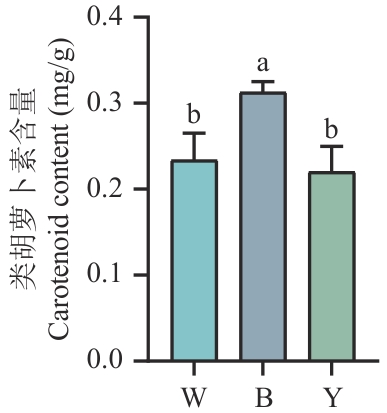
Fig. 1 Total carotenoid content in Ludisia discolor under different light qualitiesW: White light. B: Blue light. Y: Yellow light. Different letters indicate significant differences at the 0.05 level (P<0.05). The same below
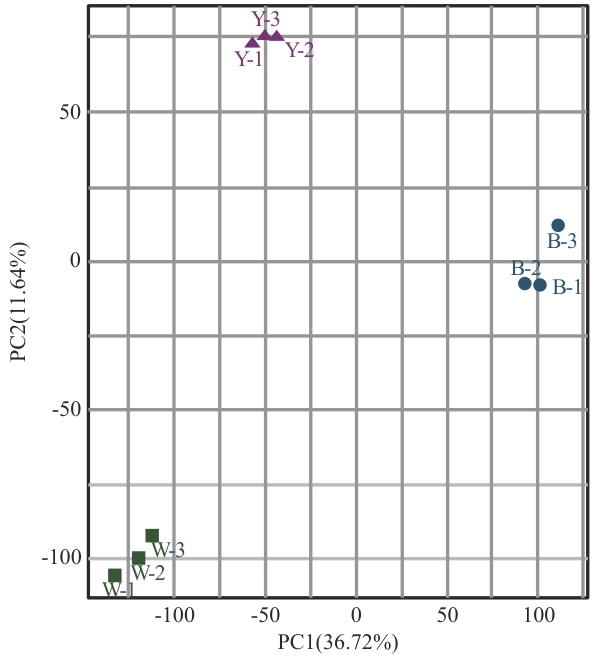
Fig. 2 PCA of differential metabolites in L. discolor under different light qualities
| 序号No. | 名称 Name | 分子式 Formula | KEGG注释 KEGG_annotation |
|---|---|---|---|
| 1 | 黄原酸 Xanthoxic acid | C15H22O4 | C13454 |
| 2 | 反式法呢基二磷酸酯 Trans,trans-Farnesyl diphosphate | C15H28O7P2 | C00448 |
| 3 | 脱落酸醇 Abscisic alcohol | C15H22O3 | C13456 |
| 4 | 独脚金内酯ABC-环 Strigolactone ABC-rings | C14H18O3 | C18036 |
| 5 | 黄酮糖苷 Rhodopinal glucoside | C46H66O7 | C16271 |
| 6 | 螺旋黄质 Spheroidenone | C41H58O2 | C15903 |
| 7 | 3',4'-二氢紫菌红醇 3',4'-Dihydrorhodovibrin | C41H62O2 | C15887 |
| 8 | 前八氢番茄红素二磷酸酯 Prephytoene diphosphate | C40H68O7P2 | C03427 |
| 9 | 羟基螺环菌素 Hydroxyspirilloxanthin | C41H58O2 | C15879 |
| 10 | 链孢霉黄素 Neurosporaxanthin | C35H46O2 | C08607 |
| 11 | 氯黄质 Chloroxanthin | C40H60O | C15892 |
| 12 | 黄质醛 Xanthoxin | C15H22O3 | C13453 |
| 13 | 脱落酸葡萄糖酯 Abscisic acid glucose ester | C21H30O9 | C15970 |
| 14 | 脱落酸 Abscisate | C15H20O4 | C06082 |
| 15 | 独角金醇 Strigol | C19H22O6 | C09190 |
| 16 | 8'-羟基脱落物 8'-Hydroxyabscisate | C15H20O5 | C15514 |
| 17 | 螺旋黄质 Spirilloxanthin | C42H60O2 | C15881 |
| 18 | 玉米黄质二葡萄糖苷 Zeaxanthin diglucoside | C52H76O12 | C15969 |
| 19 | (2'S)-脱氧麦芽醇2'-(2,4-二-O-甲基-α-L-葡萄糖苷) (2'S)-Deoxymyxol 2'-(2,4-di-O-methyl-alpha-L-fucoside) | C48H70O6 | C15935 |
| 20 | 脱落醛 Abscisic aldehyde | C15H20O3 | C13455 |
| 21 | 叶黄素 Lutein | C40H56O2 | C08601 |
| 22 | 二氢相酸 Dihydrophaseic acid | C15H22O5 | C15971 |
| 23 | 视紫红醛 Rhodopinal | C40H56O2 | C16270 |
Table 2 Carotenoid-related differential metabolites in L. discolor under different light qualities
| 序号No. | 名称 Name | 分子式 Formula | KEGG注释 KEGG_annotation |
|---|---|---|---|
| 1 | 黄原酸 Xanthoxic acid | C15H22O4 | C13454 |
| 2 | 反式法呢基二磷酸酯 Trans,trans-Farnesyl diphosphate | C15H28O7P2 | C00448 |
| 3 | 脱落酸醇 Abscisic alcohol | C15H22O3 | C13456 |
| 4 | 独脚金内酯ABC-环 Strigolactone ABC-rings | C14H18O3 | C18036 |
| 5 | 黄酮糖苷 Rhodopinal glucoside | C46H66O7 | C16271 |
| 6 | 螺旋黄质 Spheroidenone | C41H58O2 | C15903 |
| 7 | 3',4'-二氢紫菌红醇 3',4'-Dihydrorhodovibrin | C41H62O2 | C15887 |
| 8 | 前八氢番茄红素二磷酸酯 Prephytoene diphosphate | C40H68O7P2 | C03427 |
| 9 | 羟基螺环菌素 Hydroxyspirilloxanthin | C41H58O2 | C15879 |
| 10 | 链孢霉黄素 Neurosporaxanthin | C35H46O2 | C08607 |
| 11 | 氯黄质 Chloroxanthin | C40H60O | C15892 |
| 12 | 黄质醛 Xanthoxin | C15H22O3 | C13453 |
| 13 | 脱落酸葡萄糖酯 Abscisic acid glucose ester | C21H30O9 | C15970 |
| 14 | 脱落酸 Abscisate | C15H20O4 | C06082 |
| 15 | 独角金醇 Strigol | C19H22O6 | C09190 |
| 16 | 8'-羟基脱落物 8'-Hydroxyabscisate | C15H20O5 | C15514 |
| 17 | 螺旋黄质 Spirilloxanthin | C42H60O2 | C15881 |
| 18 | 玉米黄质二葡萄糖苷 Zeaxanthin diglucoside | C52H76O12 | C15969 |
| 19 | (2'S)-脱氧麦芽醇2'-(2,4-二-O-甲基-α-L-葡萄糖苷) (2'S)-Deoxymyxol 2'-(2,4-di-O-methyl-alpha-L-fucoside) | C48H70O6 | C15935 |
| 20 | 脱落醛 Abscisic aldehyde | C15H20O3 | C13455 |
| 21 | 叶黄素 Lutein | C40H56O2 | C08601 |
| 22 | 二氢相酸 Dihydrophaseic acid | C15H22O5 | C15971 |
| 23 | 视紫红醛 Rhodopinal | C40H56O2 | C16270 |

Fig. 3 Heat map of relevant differential metabolites in L. discolor under different light qualitiesDark green indicates high expression, light green indicates low expression, color bar legend indicates the multiple of differences. The same below
| 基因名称 Gene name | 基因ID Gene ID | 酶编号 Corresponding enzyme | KO号 Enzyme KO |
|---|---|---|---|
| CrtZ | TRINITY_DN11602_c0_g1 | [EC:1.14.15.24] | K15746 |
| Z-ISO | TRINITY_DN19139_c0_g1 | [EC:5.2.1.12] | K15744 |
| PSY-1 | TRINITY_DN3430_c0_g1 | [EC:2.5.1.32] | K02291 |
| PSY-2 | TRINITY_DN3430_c0_g2 | [EC:2.5.1.32] | K02291 |
| CYP707A-1 | TRINITY_DN5732_c0_g1 | [EC:1.14.14.137] | K09843 |
| CYP707A-2 | TRINITY_DN10055_c0_g1 | [EC:1.14.14.137] | K09843 |
| LUT1 | TRINITY_DN5391_c0_g1 | [EC:1.14.14.158] | K09837 |
| VDE | TRINITY_DN10121_c0_g1 | [EC:1.23.5.1] | K09839 |
| NCED | TRINITY_DN3795_c2_g1 | [EC:1.13.11.51] | K09840 |
| ZDS | TRINITY_DN25937_c0_g1 | [EC:1.3.5.6] | K00514 |
| ZEP | TRINITY_DN761_c0_g1 | [EC:1.14.15.21] | K09838 |
Table 3 Carotenoid-related differentially expressed genes in L. discolor under different light qualities
| 基因名称 Gene name | 基因ID Gene ID | 酶编号 Corresponding enzyme | KO号 Enzyme KO |
|---|---|---|---|
| CrtZ | TRINITY_DN11602_c0_g1 | [EC:1.14.15.24] | K15746 |
| Z-ISO | TRINITY_DN19139_c0_g1 | [EC:5.2.1.12] | K15744 |
| PSY-1 | TRINITY_DN3430_c0_g1 | [EC:2.5.1.32] | K02291 |
| PSY-2 | TRINITY_DN3430_c0_g2 | [EC:2.5.1.32] | K02291 |
| CYP707A-1 | TRINITY_DN5732_c0_g1 | [EC:1.14.14.137] | K09843 |
| CYP707A-2 | TRINITY_DN10055_c0_g1 | [EC:1.14.14.137] | K09843 |
| LUT1 | TRINITY_DN5391_c0_g1 | [EC:1.14.14.158] | K09837 |
| VDE | TRINITY_DN10121_c0_g1 | [EC:1.23.5.1] | K09839 |
| NCED | TRINITY_DN3795_c2_g1 | [EC:1.13.11.51] | K09840 |
| ZDS | TRINITY_DN25937_c0_g1 | [EC:1.3.5.6] | K00514 |
| ZEP | TRINITY_DN761_c0_g1 | [EC:1.14.15.21] | K09838 |
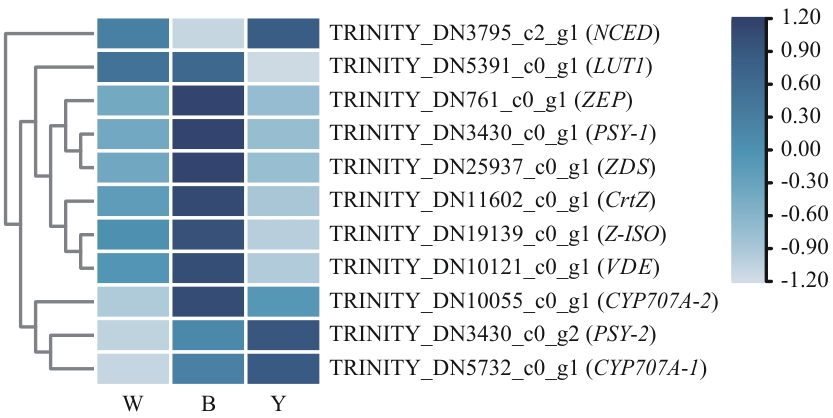
Fig. 4 Heat map of differentially expressed genes in L. discolor under different light qualitiesDark blue indicates high expression, and light blue indicates low expression

Fig. 5 Carotenoid biosynthetic metabolic pathways in L. discolor under different light qualities
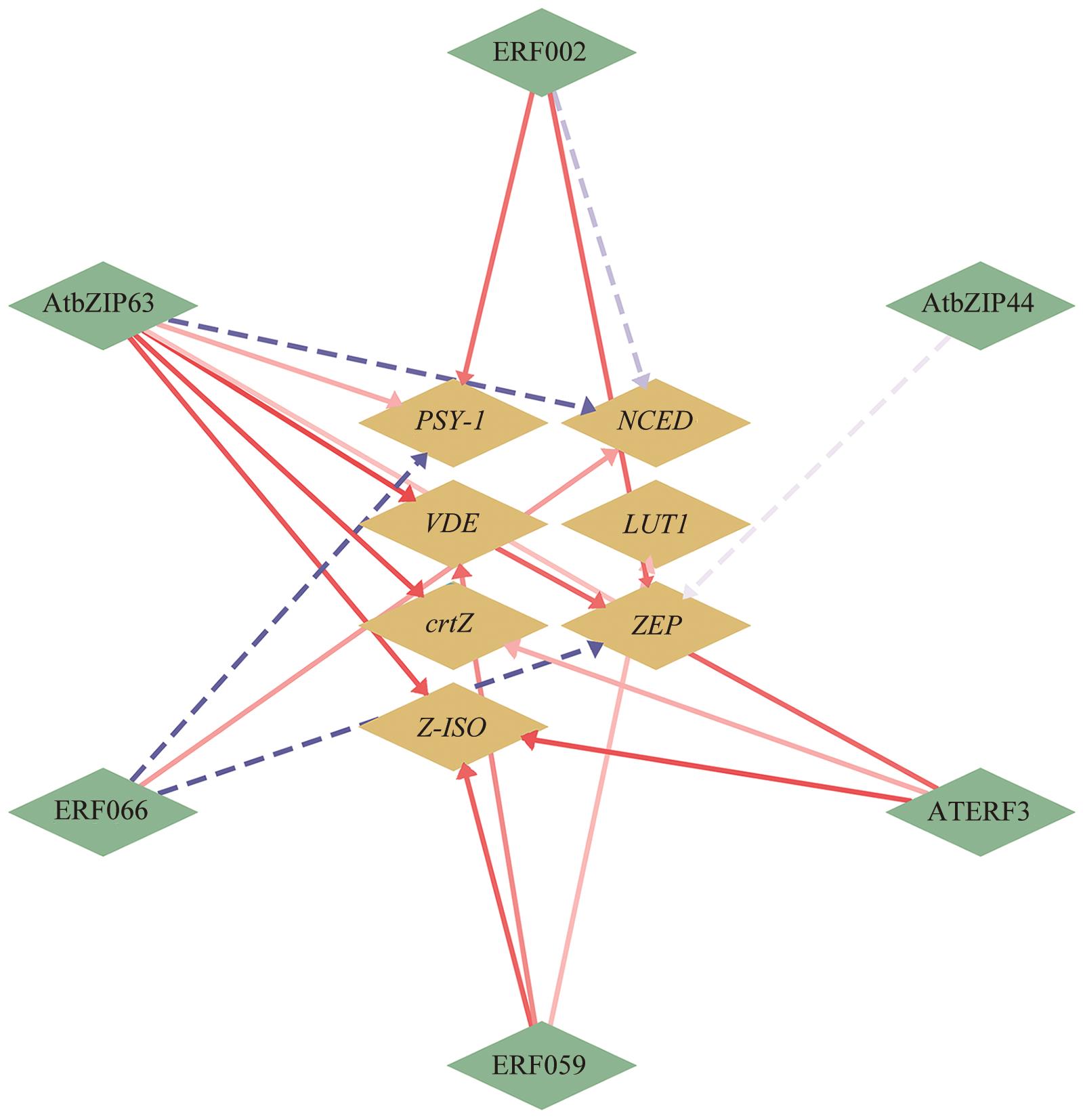
Fig. 6 Regulatory relationships between carotenoid-related transcription factors and enzyme genes in L. discolorRed solid line indicates positive correlation, blue dashed line indicates negative correlation, and the darker the color of the line, the stronger the correlation
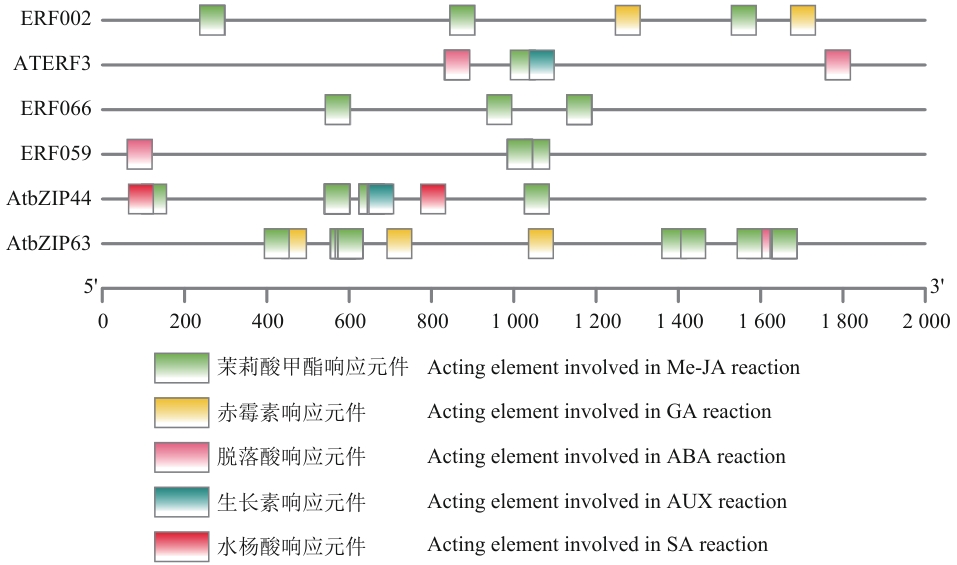
Fig. 7 Analysis of cis-acting elements in the promoters of carotenoid-related transcription factors in L. discolor

Fig. 8 RT-qPCR verification of metabolizing enzyme genes related to carotenoid biosynthesis in L. discolor
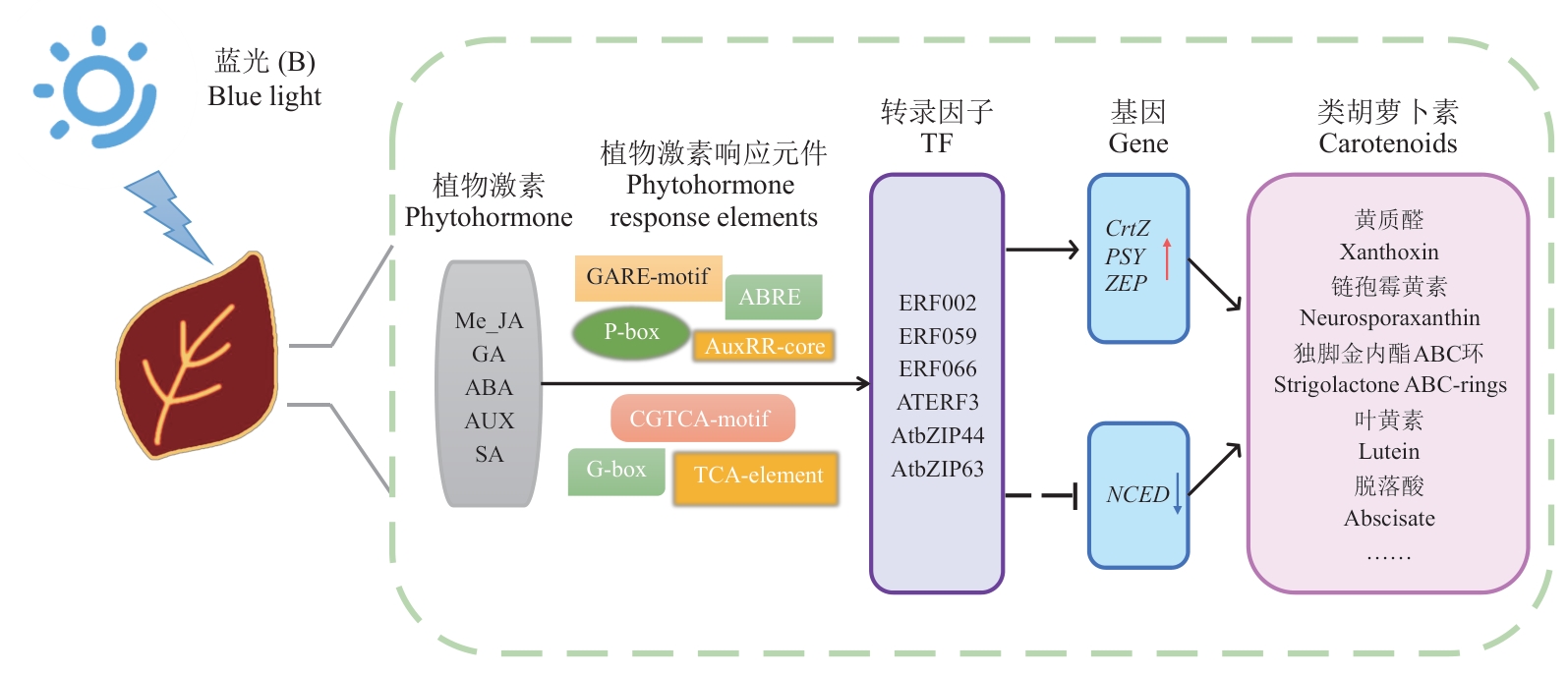
Fig. 9 Model of carotenoid metabolism regulation relationship in L. discolor under blue lightRed arrows indicate a relative increase in gene expression, blue arrows indicate a relative decrease in gene expression
| [1] | 林振兴. 观赏南药资源血叶兰的研究进展 [J]. 福建热作科技, 2012, 37(2): 4-5. |
| Lin ZX. Research progress on ornamental medicinal resources of Ophiopogon japonicus [J]. Fujian Sci Technol Trop Crops, 2012, 37(2): 4-5. | |
| [2] | 陈育青, 陈荣珠, 邹毅辉, 等. 闽草药公石松转录组分析及黄酮类合成功能基因的挖掘 [J]. 分子植物育种, 2022, 20(14): 4654-4664. |
| Chen YQ, Chen RZ, Zou YH, et al. Transcriptome analysis and mining of functional genes ivolved in flavonoid biosynthesis in Fujian folk-herb gongshisong [J]. Mol Plant Breed, 2022, 20(14): 4654-4664. | |
| [3] | 王昊, 尹莲, 刘洁霞, 等. 类胡萝卜素裂解双加氧酶基因AgCCD4调控芹菜不同组织的着色 [J]. 中国农业科学, 2021, 54(15): 3279-3294. |
| Wang H, Yin L, Liu JX, et al. The carotenoid cleavage dioxygenases gene AgCCD4 regulates the pigmentation of celery tissues with different colors [J]. Sci Agric Sin, 2021, 54(15): 3279-3294. | |
| [4] | Maoka T. Carotenoids as natural functional pigments [J]. J Nat Med, 2020, 74(1): 1-16. |
| [5] | 于良晓, 郭远, 翟晓娜, 等. 叶黄素生物活性和环境因素对其稳定性影响研究进展 [J]. 保鲜与加工, 2023, 23(10): 62-70. |
| Yu LX, Guo Y, Zhai XN, et al. Research progress on the bioactivity of lutein and the influence of environmental factors on its stability [J]. Storage Process, 2023, 23(10): 62-70. | |
| [6] | 梁婉凤, 曾菁菁, 胡若群, 等. 转录组与代谢组分析不同生长时期金线莲类胡萝卜素的积累 [J]. 生物技术通报, 2024, 40(10): 262-274. |
| Liang WF, Zeng JJ, Hu RQ, et al. Transcriptional and metabolomic analysis of carotenoid accumulation in Anoectochilus roxburghii during different growth periods [J]. Biotechnol Bull, 2024, 40(10): 262-274. | |
| [7] | 胡若群, 曾菁菁, 梁婉凤, 等. 转录组和代谢组联合分析探究不同遮光条件下金线莲类胡萝卜素合成代谢机制 [J]. 生物技术通报, 2025, 41(5): 231-243. |
| Hu RQ, Zeng JJ, Liang WF, et al. Integrated transcriptome and metabolome analysis to explore the carotenoid synthesis and metabolism mechanism in Anoectochilus roxburghii under different shading conditions [J]. Biotechnol Bull, 2025, 41(5): 231-243. | |
| [8] | 唐丽. LED光质在植物组织培养和芽苗菜栽培中的调控作用及机理 [D]. 南京: 南京农业大学, 2013. |
| Tang L. Regulation and mechanism of LED light quality in plant tissue culture and sprout vegetable cultivation [D]. Nanjing: Nanjing Agricultural University, 2013. | |
| [9] | Frede K, Winkelmann S, Busse L, et al. The effect of LED light quality on the carotenoid metabolism and related gene expression in the genus Brassica [J]. BMC Plant Biol, 2023, 23(1): 328. |
| [10] | 李元翔. 杜氏盐藻类胡萝卜素代谢对光强和光质变化的响应机制 [D]. 青岛: 中国科学院大学(中国科学院海洋研究所), 2019. |
| Li YX. The response mechanism of carotenoid biosynthesis pathway under different intensities and wavelengths of light in Dunaliella salina [D]. Qingdao: Institute of Oceanology, Chinese Academy of Sciences, 2019. | |
| [11] | 董雪田. 三孢布拉霉中光照对类胡萝卜素生物合成的影响及其部分调控元件的初步挖掘 [D]. 无锡: 江南大学, 2022 |
| Dong XT. Effect of light on carotenoid biosynthesis in Blakeslea trispora and preliminary excavation of some regulatory elements [D]. Wuxi: Jiangnan University, 2022 | |
| [12] | Conceição D, Lopes RG, Derner RB, et al. The effect of light intensity on the production and accumulation of pigments and fatty acids in Phaeodactylum tricornutum [J]. J Appl Phycol, 2020, 32(2): 1017-1025. |
| [13] | 池铭, 孙丽娟, 郝浩然, 等. 不同光照条件对卷枝毛霉生长发育及类胡萝卜素合成的影响 [J]. 江西农业学报, 2023, 35(5): 97-102, 121. |
| Chi M, Sun LJ, Hao HR, et al. Effects of different light conditions on growth, development and carotenoid synthesis of Mucor circinelloides [J]. Acta Agric Jiangxi, 2023, 35(5): 97-102, 121. | |
| [14] | Pola W, Sugaya S, Photchanachai S. Color development and phytochemical changes in mature green chili (Capsicum annuum L.) exposed to red and blue light-emitting diodes [J]. J Agric Food Chem, 2020, 68(1): 59-66. |
| [15] | Brazaitytė A, Sakalauskienė S, Samuolienė G, et al. The effects of LED illumination spectra and intensity on carotenoid content in Brassicaceae microgreens [J]. Food Chem, 2015, 173: 600-606. |
| [16] | Zhang T, Chi JY, Zhang Y, et al. Effects of light quality on physiological characteristics of tomato seedlings [C]//2018 15th China International Forum on Solid State Lighting: International Forum on Wide Bandgap Semiconductors China (SSLChina: IFWS). Shenzhen, China: IEEE, 2018: 1-4. |
| [17] | 吴迪, 张燕燕, 林楠, 等. 基于代谢组学和转录组学探究草珊瑚叶和根中黄酮类成分差异积累的转录调控机制 [J]. 中国中药杂志, 2023, 48(21): 5767-5778. |
| Wu D, Zhang YY, Lin N, et al. Transcriptional regulation mechanism of differential accumulation of flavonoids in leaves and roots of Sarcandra glabra based on metabonomics and transcriptomics [J]. China J Chin Mater Med, 2023, 48(21): 5767-5778. | |
| [18] | Zhang JY, Li SG, An HS, et al. Integrated transcriptome and metabolome analysis reveals the anthocyanin biosynthesis mechanisms in blueberry (Vaccinium corymbosum L.) leaves under different light qualities [J]. Front Plant Sci, 2022, 13: 1073332. |
| [19] | Zhan WM, Guo GH, Cui LH, et al. Combined transcriptome and metabolome analysis reveals the effects of light quality on maize hybrids [J]. BMC Plant Biol, 2023, 23(1): 41. |
| [20] | Tadda SA, Li CY, Ding JT, et al. Integrated metabolome and transcriptome analyses provide insight into the effect of red and blue LEDs on the quality of sweet potato leaves [J]. Front Plant Sci, 2023, 14: 1181680. |
| [21] | Zhang PA, Lu SW, Liu ZJ, et al. Transcriptomic and metabolomic profiling reveals the effect of LED light quality on fruit ripening and anthocyanin accumulation in cabernet sauvignon grape [J]. Front Nutr, 2021, 8: 790697. |
| [22] | 沈颖, 陈惠琴, 吴妃, 等. 血叶兰化学成分及其生物活性研究 [J]. 广西植物, 2024, 44(12): 2279-2290. |
| Shen Y, Chen HQ, Wu F, et al. Chemical constituents and their biological activities of Ludisia discolor [J]. Guihaia, 2024, 44(12): 2279-2290. | |
| [23] | 饶秋容, 张芬, 何伟强. 血叶兰的组织培养和快速繁殖 [J]. 植物生理学通讯, 2003, 39(1): 36. |
| Rao QR, Zhang F, He WQ. Tissue culture and rapid propagation of Ludisia discolor [J]. Plant Physiol Commun, 2003, 39(1): 36. | |
| [24] | 杨泽秀, 陈英转, 吴文碟, 等. 血叶兰组培苗与内生真菌共生培养的生长效应研究 [J]. 热带林业, 2023, 51(2): 24-28. |
| Yang ZX, Chen YZ, Wu WD, et al. Symbiotic culture growth effect of Ludisia discolor seedlings and endophytic fungi [J]. Trop For, 2023, 51(2): 24-28. | |
| [25] | 陈蔚琪, 李丽容, 林晶, 等. 漳州市种植血叶兰的气候适应性分析 [J]. 福建热作科技, 2022, 47(4): 5-8. |
| Chen WQ, Li LR, Lin J, et al. Analysis about the climate suitability of planting Ludisia discolor in Zhangzhou [J]. Fujian Sci Technol Trop Crops, 2022, 47(4): 5-8. | |
| [26] | 高俊凤. 植物生理学实验指导 [M]. 北京: 高等教育出版社, 2006: 76-224. |
| Gao JF. Experimental guidance for plant physiology [M]. Beijing: Higher Education Press, 2006. | |
| [27] | Zhao H, Wu D, Kong FY, et al. The Arabidopsis thaliana nuclear factor Y transcription factors [J]. Front Plant Sci, 2017, 7: 2045. |
| [28] | 刘正霞, 徐阳, 徐进梅, 等. 不同引物及数据分析方法对定量PCR结果的影响 [J]. 南京医科大学学报: 自然科学版, 2009, 29(8): 1112-1117. |
| Liu ZX, Xu Y, Xu JM, et al. The Effects of different primers and data analysis methods on real-time PCR [J]. Acta Univ Med Nanjing Nat Sci, 2009, 29(8): 1112-1117. | |
| [29] | 黄枝, 王美娟, 林碧英. LED光质对豌豆芽苗菜产量及品质的影响 [J]. 亚热带农业研究, 2015, 11(2): 90-94. |
| Huang Z, Wang MJ, Lin BY. Effects of LED light quality on the yield and quality of Pisum sativum sprouts [J]. Subtrop Agric Res, 2015, 11(2): 90-94. | |
| [30] | Iwata-Reuyl D, Math SK, Desai SB, et al. Bacterial phytoene synthase: molecular cloning, expression, and characterization of Erwinia herbicola phytoene synthase [J]. Biochemistry, 2003, 42(11): 3359-3365. |
| [31] | 张印, 胡路艳, 王淑明, 等. ABA调控果实成熟研究进展 [J]. 园艺学报, 2023, 50(9): 1889-1898. |
| Zhang Y, Hu LY, Wang SM, et al. Research advances in ABA-mediated fruit ripening [J]. Acta Hortic Sin, 2023, 50(9): 1889-1898. | |
| [32] | 农倩, 谢金兰, 林丽, 等. 干旱胁迫下外源ABA对甘蔗幼苗生理特性和基因表达的影响 [J]. 热带作物学报, 2023, 44(3): 553-561. |
| Nong Q, Xie JL, Lin L, et al. Effects of exogenous ABA on physiological characteristics and gene expression in sugarcane seedlings under drought stress [J]. Chin J Trop Crops, 2023, 44(3): 553-561. | |
| [33] | Miller AP, Hornero-Méndez D, Bandara S, et al. Bioavailability and provitamin A activity of neurosporaxanthin in mice [J]. Commun Biol, 2023, 6(1): 1068. |
| [34] | 雷建军, 朱张生, 陈长明, 等. 辣椒分子育种研究进展 [J]. 西南大学学报: 自然科学版, 2023, 45(7): 1-20, 247. |
| Lei JJ, Zhu ZS, Chen CM, et al. Progress on molecular breeding of pepper [J]. J Southwest Univ Nat Sci Ed, 2023, 45(7): 1-20, 247. | |
| [35] | 宋松泉, 唐翠芳, 雷华平, 等. ABA调控种子发育的研究进展 [J]. 广西植物, 2023, 43(9): 1553-1567. |
| Song SQ, Tang CF, Lei HP, et al. Research progress on seed development regulated by ABA [J]. Guihaia, 2023, 43(9): 1553-1567. | |
| [36] | Magdaong NM, LaFountain AM, Greco JA, et al. High efficiency light harvesting by carotenoids in the LH2 complex from photosynthetic bacteria: unique adaptation to growth under low-light conditions [J]. J Phys Chem B, 2014, 118(38): 11172-11189. |
| [37] | 李君霞, 马小倩, 代书桃, 等. 谷子品质性状研究进展 [J]. 河南农业科学, 2023, 52(9): 14-23. |
| Li JX, Ma XQ, Dai ST, et al. Research progress on quality traits of foxtail millet [J]. J Henan Agric Sci, 2023, 52(9): 14-23. | |
| [38] | 龙海成, 马燕勤, 周玉洁, 等. 利用CRISPR/Cas9技术创制黄果番茄新种质 [J]. 农业生物技术学报, 2024, 32(7): 1693-1702. |
| Long HC, Ma YQ, Zhou YJ, et al. Creating new germplasm of yellow fruit tomato (Solanum lycopersicum) using CRISPR/Cas9 technology [J]. J Agric Biotechnol, 2024, 32(7): 1693-1702. | |
| [39] | 张丽, 陈丰酆, 王红霞, 等. 甘薯类胡萝卜素的代谢调控研究进展 [J]. 农业生物技术学报, 2023, 31(8): 1719-1729. |
| Zhang L, Chen FF, Wang HX, et al. Research progress on metabolic regulation of carotenoids in sweetpotato (Ipomoea batatas) [J]. J Agric Biotechnol, 2023, 31(8): 1719-1729. | |
| [40] | Tuan PA, Kim JK, Park NI, et al. Carotenoid content and expression of phytoene synthase and phytoene desaturase genes in bitter melon (Momordica charantia) [J]. Food Chem, 2011, 126(4): 1686-1692. |
| [41] | 董书琦, 陈达, 秦巧平, 等. 高等植物叶绿素和类胡萝卜素代谢研究进展 [J]. 植物生理学报, 2023, 59(5): 793-802. |
| Dong SQ, Chen D, Qin QP, et al. Advances in metabolism of chlorophylls and carotenoids in higher plants [J]. Plant Physiol J, 2023, 59(5): 793-802. | |
| [42] | 吴健婷. 紫黄质脱环氧化酶VDE介导油菜抗黑腐病的功能研究 [D]. 合肥: 安徽农业大学, 2023. |
| Wu JT. Study on the function of violet lutein decyclic oxidase VDE mediating rape resistance to black rot [D]. Hefei: Anhui Agricultural University, 2023. | |
| [43] | Song HY, Liu JH, Chen CQ, et al. Down-regulation of NCED leads to the accumulation of carotenoids in the flesh of F1 generation of peach hybrid [J]. Front Plant Sci, 2022, 13: 1055779. |
| [44] | 张桐, 李智强, 伍国强. WRKY转录因子在植物逆境响应中的作用 [J]. 生物技术通报, 2021, 37(10): 203-215. |
| Zhang T, Li ZQ, Wu GQ. Role of WRKY transcription factor in plant response to stresses [J]. Biotechnol Bull, 2021, 37(10): 203-215. | |
| [45] | 吴迪, 张燕燕, 林楠, 等. 基于转录组学和代谢组学联合分析草珊瑚萜类化合物生物合成的组织特异性分布 [J]. 生物工程学报, 2024, 40(2): 542-561. |
| Wu D, Zhang YY, Lin N, et al. Tissue specific distribution of terpenoid biosynthesis in Sarcandra glabra based on transcriptome and metabolome analysis [J]. Chin J Biotechnol, 2024, 40(2): 542-561. | |
| [46] | 曾旭梅, 席婉, 朱琳琳, 等. 类胡萝卜素代谢途径基因变异导致园艺植物色泽差异的研究进展 [J]. 华中农业大学学报: 自然科学版, 2022, 41(3): 181-190. |
| Zeng XM, Xi W, Zhu LL, et al. Progress on studying color difference of horticultural plants caused by gene variation of carotenoid metabolic pathway [J]. J Huazhong Agric Univ Nat Sci Ed, 2022, 41(3): 181-190. | |
| [47] | 李松文, 孟凡亮, 刘丽红, 等. 番茄SlPSY1基因转录调控因子筛选及互作验证 [J]. 核农学报, 2023, 37(1): 8-16. |
| Li SW, Meng FL, Liu LH, et al. Screening and verification of transcription regulators interacted with SlPSY1 in tomato [J]. J Nucl Agric Sci, 2023, 37(1): 8-16. | |
| [48] | 郭文通, 余越, 王思月, 等. 基因沉默SlERF14促进番茄果实成熟 [J]. 中国生物化学与分子生物学报, 2023, 39(10): 1476-1486. |
| Guo WT, Yu Y, Wang SY, et al. Silencing SlERF14 promotes tomato fruit ripening [J]. Chin J Biochem Mol Biol, 2023, 39(10): 1476-1486. | |
| [49] | Toledo-Ortiz G, Johansson H, Lee KP, et al. The HY5-PIF regulatory module coordinates light and temperature control of photosynthetic gene transcription [J]. PLoS Genet, 2014, 10(6): e1004416. |
| [50] | Wang WH, Wang PW, Li XJ, et al. The transcription factor SlHY5 regulates the ripening of tomato fruit at both the transcriptional and translational levels [J]. Hortic Res, 2021, 8(1): 83. |
| [51] | 吴迪, 游小凤, 郑亦铮, 等. 草珊瑚中类胡萝卜素合成的内源激素调控机制分析 [J]. 生物技术通报, 2024, 40(5): 203-214. |
| Wu D, You XF, Zheng YZ, et al. Analysis of endogenous hormone regulation mechanism for carotenoid synthesis in Sarcandra glabra [J]. Biotechnol Bull, 2024, 40(5): 203-214. | |
| [52] | Wang NY, Sun YC, Lian R, et al. Genome-wide screening of AP2/ERF transcription factors involved in Citrus maxima ‘Sanhongmiyou’ exocarp coloring [J]. Sci Hortic, 2023, 318: 112041. |
| [53] | 陆晨飞, 高月霞, 黄河, 等. 植物类胡萝卜素代谢及调控研究进展 [J]. 园艺学报, 2022, 49(12): 2559-2578. |
| Lu CF, Gao YX, Huang H, et al. Carotenoid metabolism and regulation in plants [J]. Acta Hortic Sin, 2022, 49(12): 2559-2578. |
| [1] | LIU Jian-guo, LIU Ge-er, GUO Ying-xin, WANG Bin, WANG Yu-kun, LU Jin-feng, HUANG Wen-ting, ZHU Yun-na. Integrate Transcriptomic and Metabolomic Analysis of Fruits Quality Differences between ‘Guiyou No. 1’ and ‘Shatianyou’ Pomelo (Citrus maxima) [J]. Biotechnology Bulletin, 2025, 41(9): 168-181. |
| [2] | LIU Ze-zhou, DUAN Nai-bin, YUE Li-xin, WANG Qing-hua, YAO Xing-hao, GAO Li-min, KONG Su-ping. Analysis of Wax Components and Screening of Wax-deficient Gene Ggl-1 in Garlic (Allium sativum L.) [J]. Biotechnology Bulletin, 2025, 41(9): 219-231. |
| [3] | YAN Meng-yang, LIANG Xiao-yang, DAI Jun-ang, ZHANG Yan, GUAN Tuan, ZHANG Hui, LIU Liang-bo, SUN Zhi-hua. Screening of Amoxicillin-degrading Bacteria and Study on Its Degradation Mechanisms [J]. Biotechnology Bulletin, 2025, 41(9): 314-325. |
| [4] | BAI Yu-guo, LI Wan-di, LIANG Jian-ping, SHI Zhi-yong, LU Geng-long, LIU Hong-jun, NIU Jing-ping. Growth-promoting Mechanism of Trichoderma harzianum T9131 on Astragalus membranaceus Seedlings [J]. Biotechnology Bulletin, 2025, 41(8): 175-185. |
| [5] | ZHANG Yue, BI Yu, MU Xue-nan, ZHENG Zi-wei, WANG Zhi-gang, XU Wei-hui. Biocontrol Characteristics of Strain JB7 against Fusarium graminearum [J]. Biotechnology Bulletin, 2025, 41(7): 261-271. |
| [6] | LI Cheng-hua, DOU Fei-fei, REN Yu-zhao, LIU Cai-xia, LIU Feng-lou, WANG Zhang-jun, LI Qing-feng. Effect of Exogenous Salicylic Acid on Wheat Infested with Blumeria graminis f. sp. tritici and Its Transcriptome Analysis [J]. Biotechnology Bulletin, 2025, 41(7): 272-280. |
| [7] | GUO Xiu-juan, FENG Yu, WU Rui-xiang, WANG Li-qin, YANG Jian-chun. Transcriptome Analysis of the Effect of Ca 2+ Treatment on the Seed Germination of Flax [J]. Biotechnology Bulletin, 2025, 41(7): 139-149. |
| [8] | LI Xia, ZHANG Ze-wei, LIU Ze-jun, WANG Nan, GUO Jiang-bo, XIN Cui-hua, ZHANG Tong, JIAN Lei. Cloning and Functional Study of Transcription Factor StMYB96 in Potato [J]. Biotechnology Bulletin, 2025, 41(7): 181-192. |
| [9] | WANG Yue-chen, HAN Xin-qi, WEI Wen-min, CUI Zhao-lan, LUO Yang-mei, CHEN Peng-ru, WANG Hai-gang, LIU long-long, ZHANG Li, WANG Lun. Biological Basis Study for Grain Shattering in Proso Millet and Identification of Genes Regulating Grain Shattering [J]. Biotechnology Bulletin, 2025, 41(7): 164-171. |
| [10] | LIU Yuan, ZHAO Ran, LU Zhen-fang, LI Rui-li. Research Progress in the Biological Metabolic Pathway and Functions of Plant Carotenoids [J]. Biotechnology Bulletin, 2025, 41(5): 23-31. |
| [11] | HU Ruo-qun, ZENG Jing-jing, LIANG Wan-feng, CAO Jia-yu, HUANG Xiao-wei, LIANG Xiao-ying, QIU Ming-yue, CHEN Ying. Integrated Transcriptome and Metabolome Analysis to Explore the Carotenoid Synthesis and Metabolism Mechanism in Anoectochilus roxburghii under Different Shading Conditions [J]. Biotechnology Bulletin, 2025, 41(5): 231-243. |
| [12] | SONG Shu-yi, JIANG Kai-xiu, LIU Huan-yan, HUANG Ya-cheng, LIU Lin-ya. Identification of the TCP Gene Family in Actinidia chinensis var. Hongyang and Their Expression Analysis in Fruit [J]. Biotechnology Bulletin, 2025, 41(3): 190-201. |
| [13] | LIU Jie, WANG Fei, TAO Ting, ZHANG Yu-jing, CHEN Hao-ting, ZHANG Rui-xing, SHI Yu, ZHANG Yi. Overexpression of SlWRKY41 Improves the Tolerance of Tomato Seedlings to Drought [J]. Biotechnology Bulletin, 2025, 41(2): 107-118. |
| [14] | ZHAO Chang-yan, LIU Yan-tao, JIA Xiu-ping, LIU Sheng-li, LEI Zhong-hua, WANG Peng, ZHU Zhi-feng, DONG Hong-ye, LYU Zeng-shuai, DUAN Wei, WAN Su-mei. Research Progress in the Effect of Melatonin on Crop Physiological Mechanism under Saline-alkali Stress [J]. Biotechnology Bulletin, 2025, 41(2): 18-29. |
| [15] | LI Yan-wei, YANG Yan-yan, SUN Ya-ling, HUO Yu-meng, WANG Zhen-bao, LIU Bing-jiang. Regulation Mechanism of Plant Hormones Related to Onion Bulb Enlargement and Development Based on Transcriptome Analysis [J]. Biotechnology Bulletin, 2025, 41(2): 187-201. |
| Viewed | ||||||
|
Full text |
|
|||||
|
Abstract |
|
|||||
