







Biotechnology Bulletin ›› 2026, Vol. 42 ›› Issue (10): 188-197.doi: 10.13560/j.cnki.biotech.bull.1985.2025-0940
LIANG Zhi-lun, QI Si-qing, LI Xin-yang, LIANG Jian-hao, LIU Su-shuang( )
)
Received:2025-09-02
Online:2026-10-26
Published:2026-10-15
Contact:
LIU Su-shuang
E-mail:liu@zjhzu.edu.cn
LIANG Zhi-lun, QI Si-qing, LI Xin-yang, LIANG Jian-hao, LIU Su-shuang. Identification of the CmPOD Gene Family in Melon and Expression Analysis of Leaf Tissues under Low-temperature Stress[J]. Biotechnology Bulletin, 2026, 42(10): 188-197.
顺式作用元件 Cis-acting element | 功能 Function |
|---|---|
| ABRE | 脱落酸响应元件,参与ABA信号通路和胁迫响应 |
| DRE core | 脱水响应元件,响应低温与干旱 |
| MYB | 转录因子结合位点,参与发育、代谢和胁迫响应 |
| MYC | 转录因子结合位点,参与JA信号通路和胁迫响应 |
| ARE | 抗氧化响应元件,参与活性氧清除和氧化胁迫防御 |
| LTR | 低温响应元件,参与冷胁迫基因调控 |
| ERE | 乙烯响应元件,调控果实成熟和胁迫响应 |
| GARE-motif | 赤霉素响应元件,介导GA信号通路 |
| AuxRR-core | 生长素响应元件,调控生长素依赖基因表达 |
| Box | 光响应元件,调控光诱导基因表达 |
| Box 4 | 光响应元件,参与光调控基因表达 |
| Sp1 | 通用转录因子结合位点,增强基础转录 |
| W box | WRKY转录因子结合位点,调控病原菌防御反应和SA信号通路 |
| TC-rich repeats | 防御和胁迫响应元件,参与病原体应答及机械损伤响应 |
| MBS | MYB结合位点,参与干旱诱导基因表达 |
| TATA-box | 核心启动子元件,介导RNA聚合酶Ⅱ的转录起始定位 |
| CAAT-box | 增强子元件,提高基础转录效率 |
| GC-motif | 增强子元件,参与光诱导和胁迫响应 |
Table 1 Cis-acting element functions in the CmPOD family
顺式作用元件 Cis-acting element | 功能 Function |
|---|---|
| ABRE | 脱落酸响应元件,参与ABA信号通路和胁迫响应 |
| DRE core | 脱水响应元件,响应低温与干旱 |
| MYB | 转录因子结合位点,参与发育、代谢和胁迫响应 |
| MYC | 转录因子结合位点,参与JA信号通路和胁迫响应 |
| ARE | 抗氧化响应元件,参与活性氧清除和氧化胁迫防御 |
| LTR | 低温响应元件,参与冷胁迫基因调控 |
| ERE | 乙烯响应元件,调控果实成熟和胁迫响应 |
| GARE-motif | 赤霉素响应元件,介导GA信号通路 |
| AuxRR-core | 生长素响应元件,调控生长素依赖基因表达 |
| Box | 光响应元件,调控光诱导基因表达 |
| Box 4 | 光响应元件,参与光调控基因表达 |
| Sp1 | 通用转录因子结合位点,增强基础转录 |
| W box | WRKY转录因子结合位点,调控病原菌防御反应和SA信号通路 |
| TC-rich repeats | 防御和胁迫响应元件,参与病原体应答及机械损伤响应 |
| MBS | MYB结合位点,参与干旱诱导基因表达 |
| TATA-box | 核心启动子元件,介导RNA聚合酶Ⅱ的转录起始定位 |
| CAAT-box | 增强子元件,提高基础转录效率 |
| GC-motif | 增强子元件,参与光诱导和胁迫响应 |
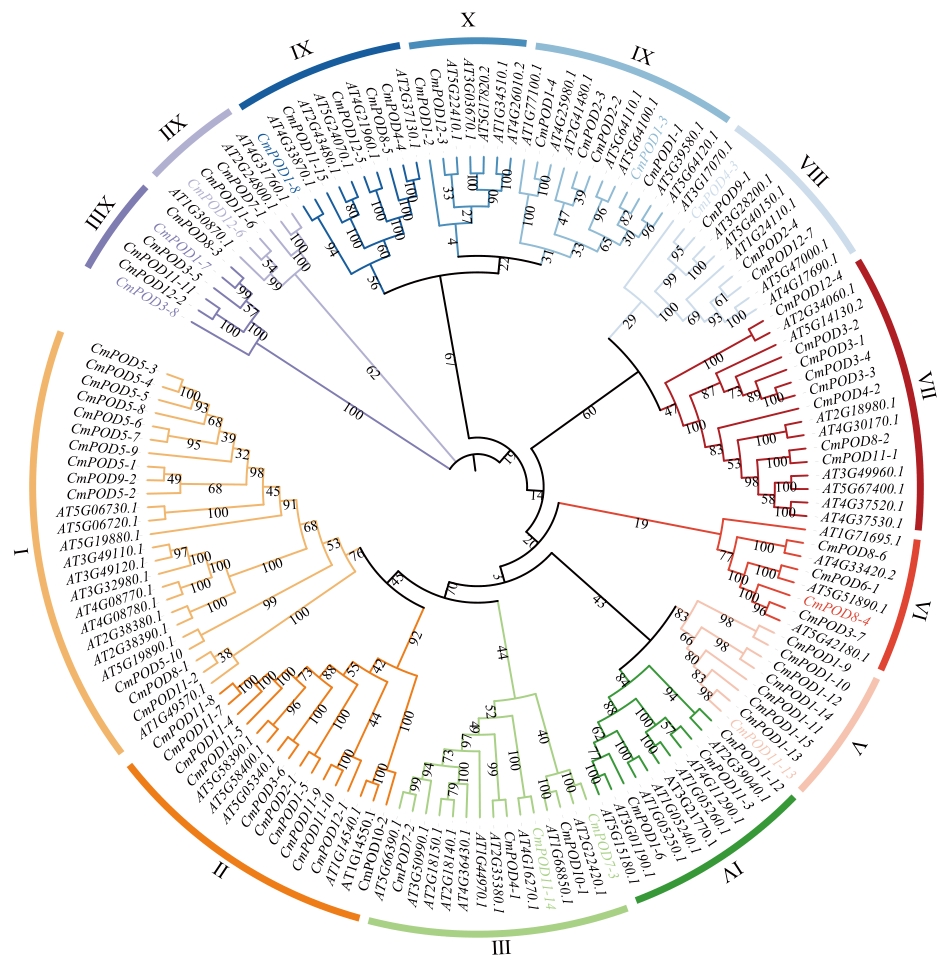
Fig. 1 Construction of the phylogenetic tree of the CmPOD family
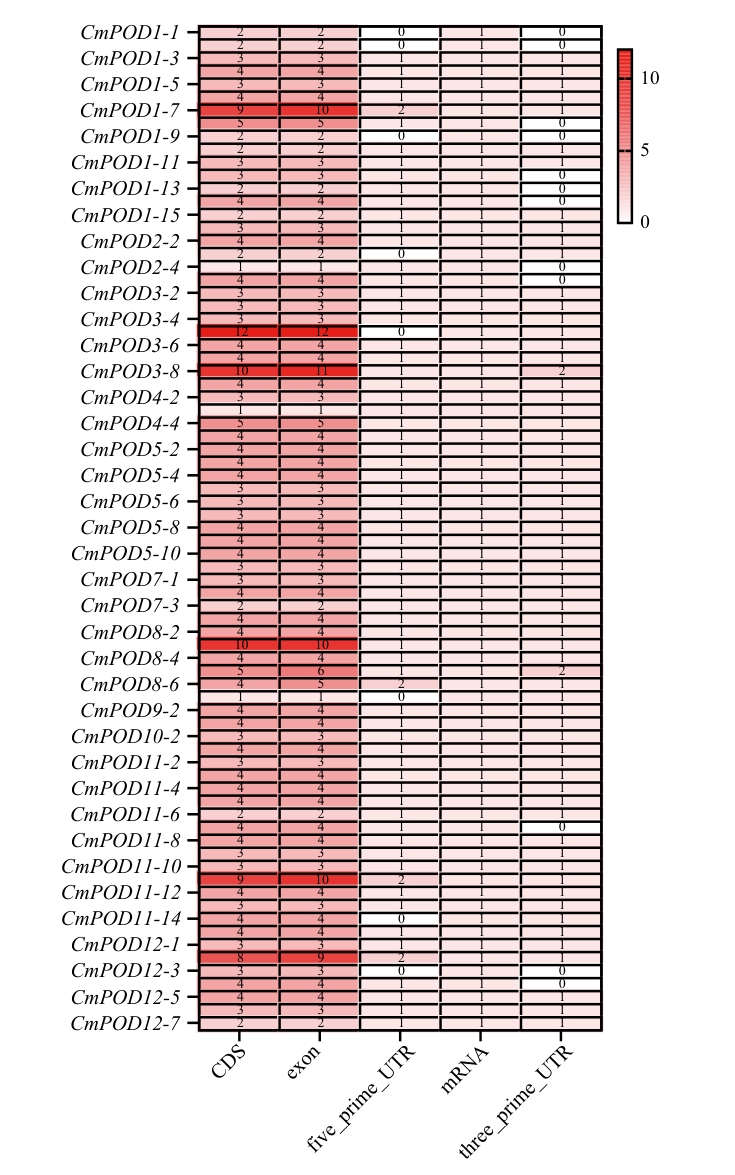
Fig. 2 Quantitative analysis of gene structure in the CmPOD familyCDS: Coding sequence; exon: exon; five prime UTR: 5′ untranslated region; mRNA: messenger RNA; three prime UTR: 3′ untranslated region
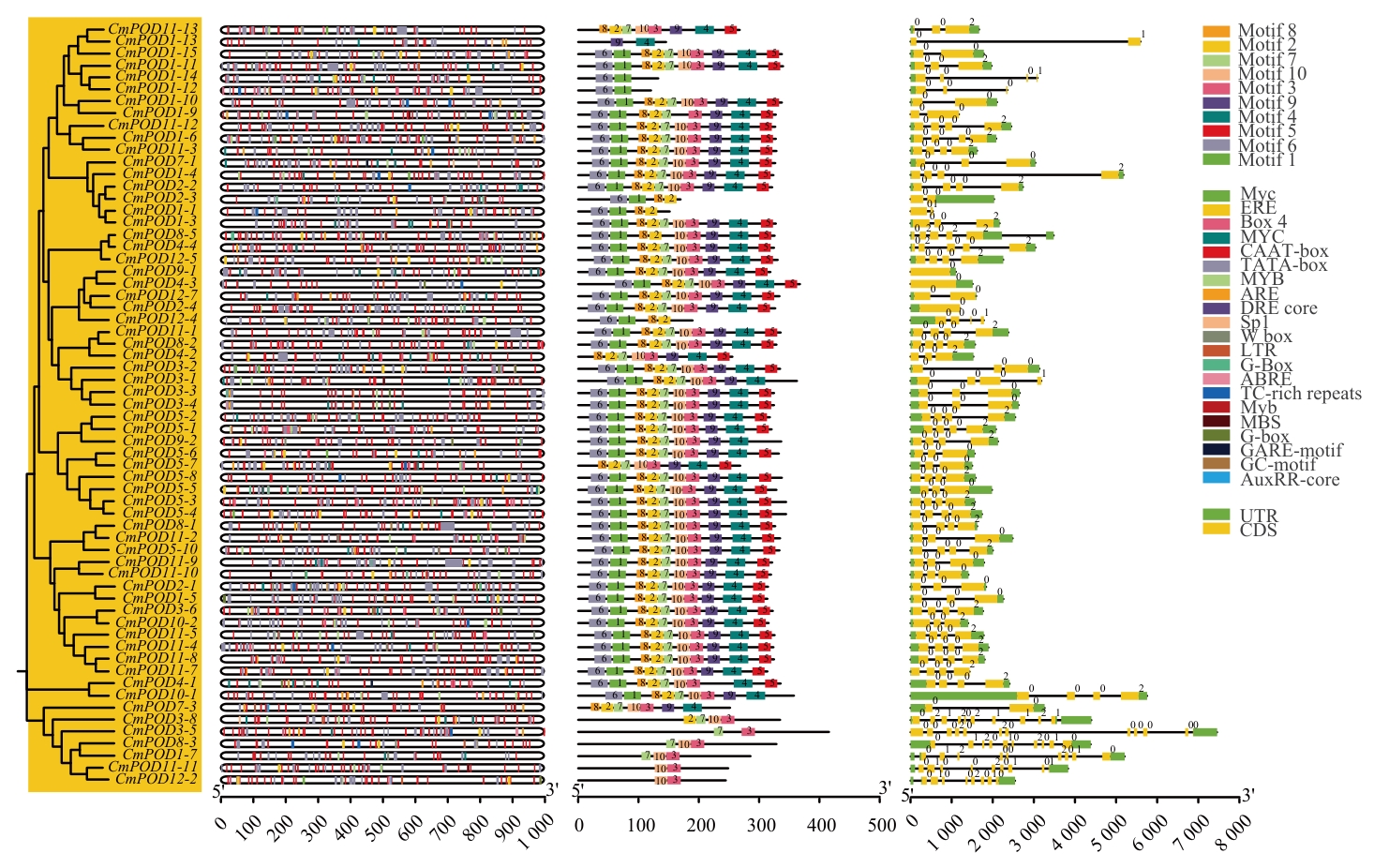
Fig. 3 Analysis of the gene structure and regulatory elements in the CmPOD family0, 1, and 2 indicate intron phases
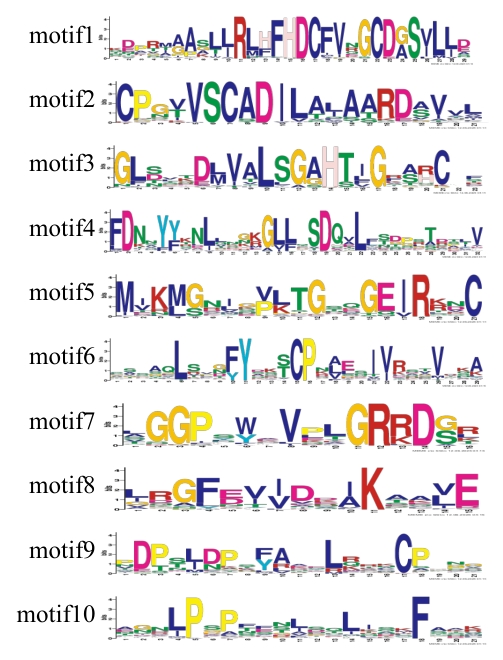
Fig. 4 Motif composition of the CmPOD family
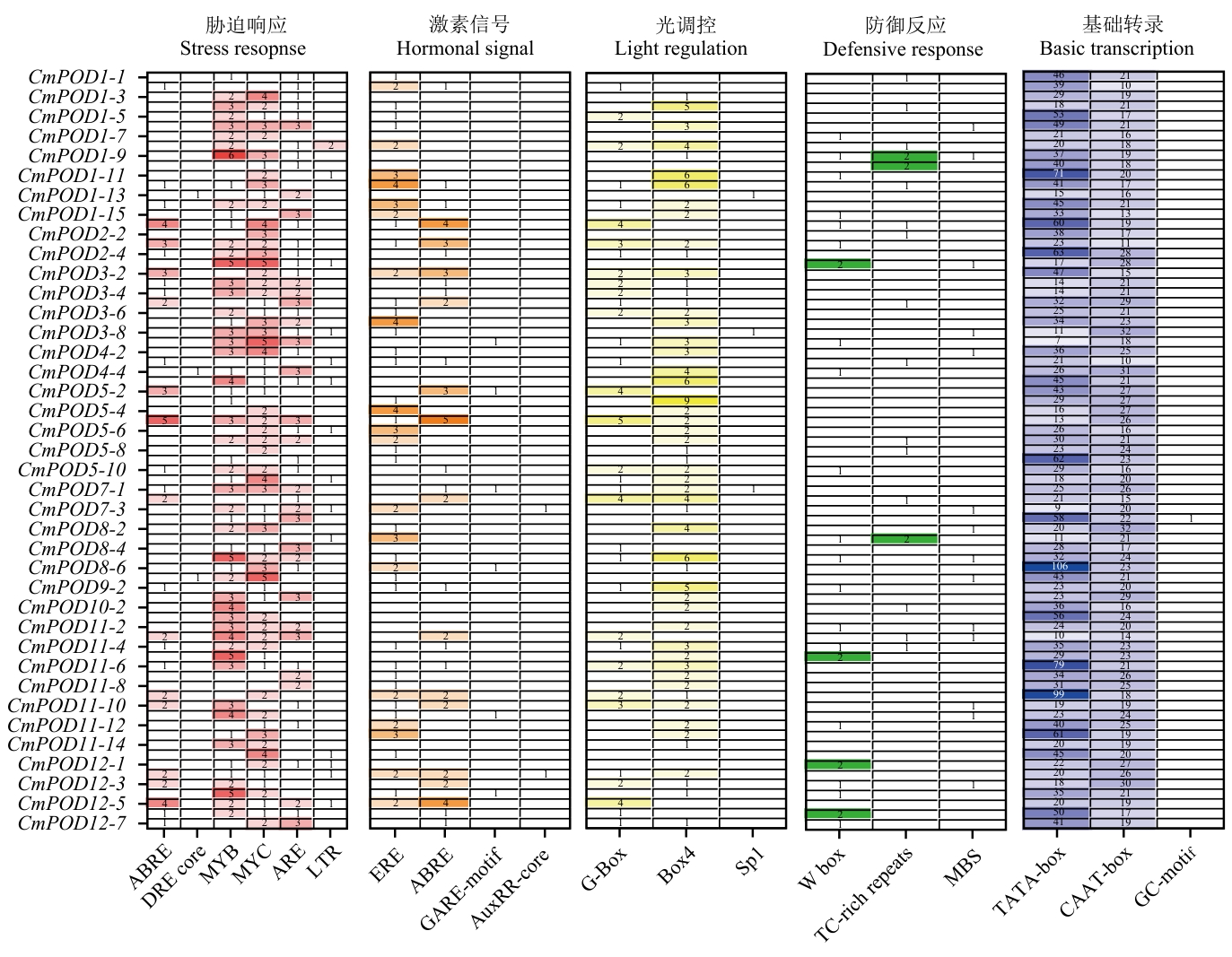
Fig. 5 Cis-acting element statistics in the CmPOD family
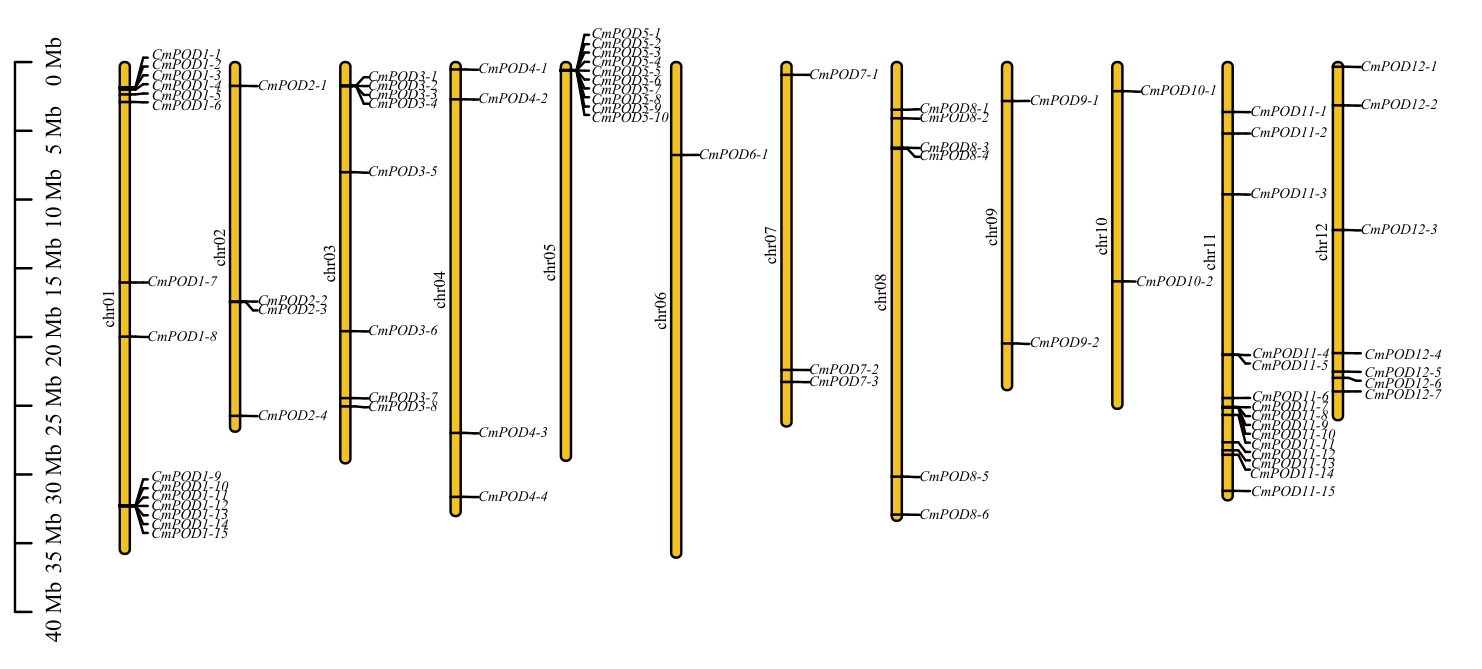
Fig. 6 Chromosomal localization of the CmPOD family
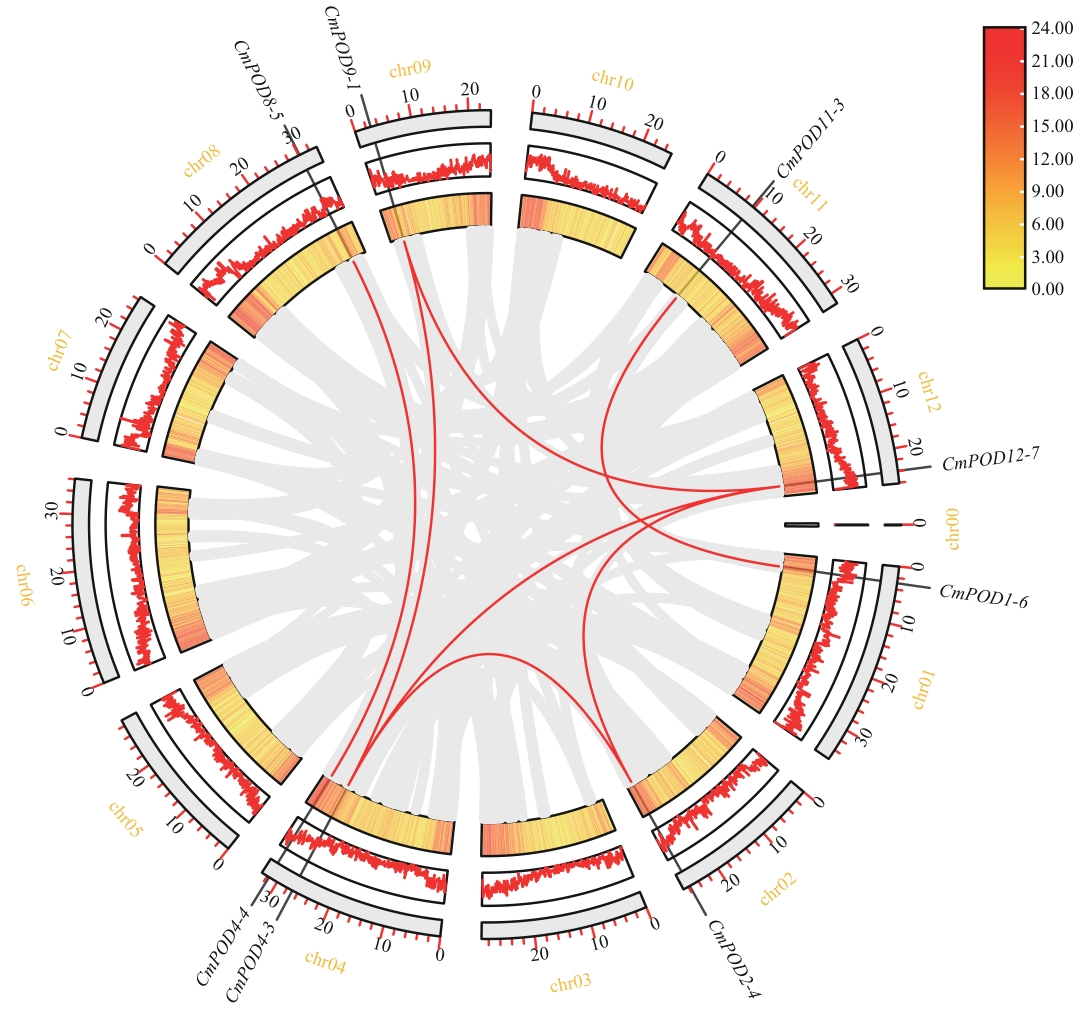
Fig. 7 Intraspecific collinearity analysis of the CmPOD family
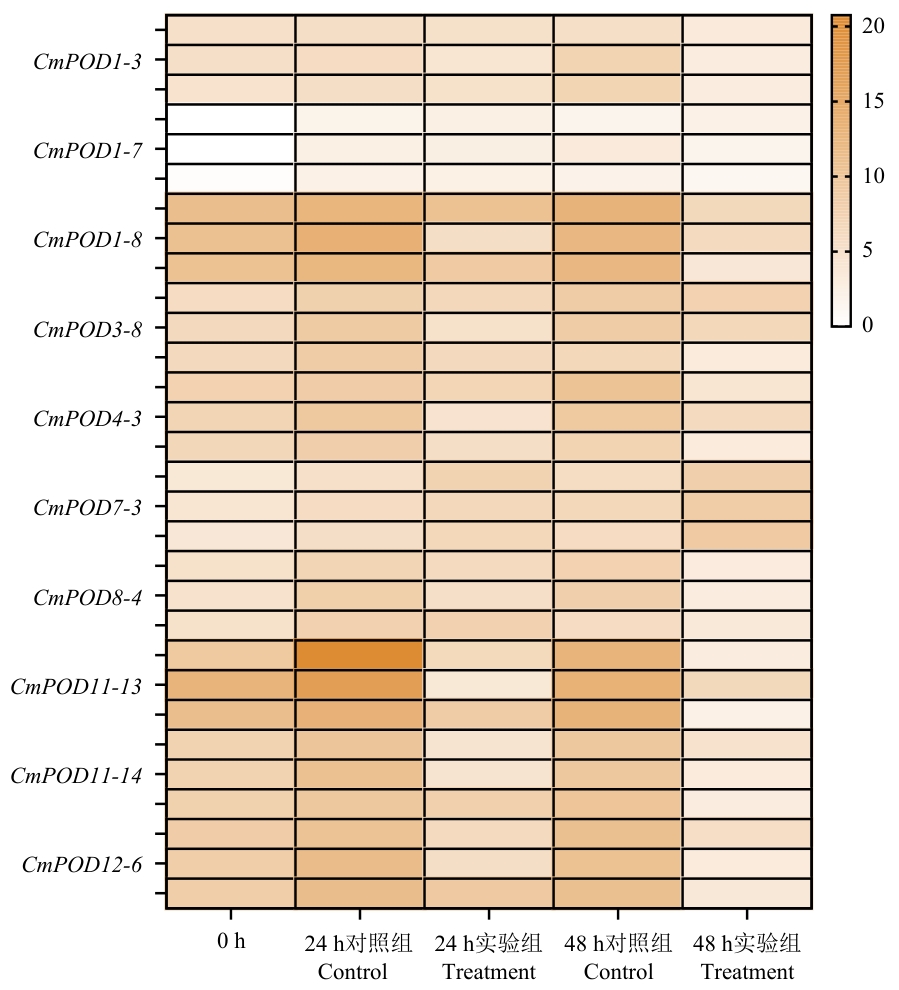
Fig. 8 Heatmap of CmPOD family leaf expression
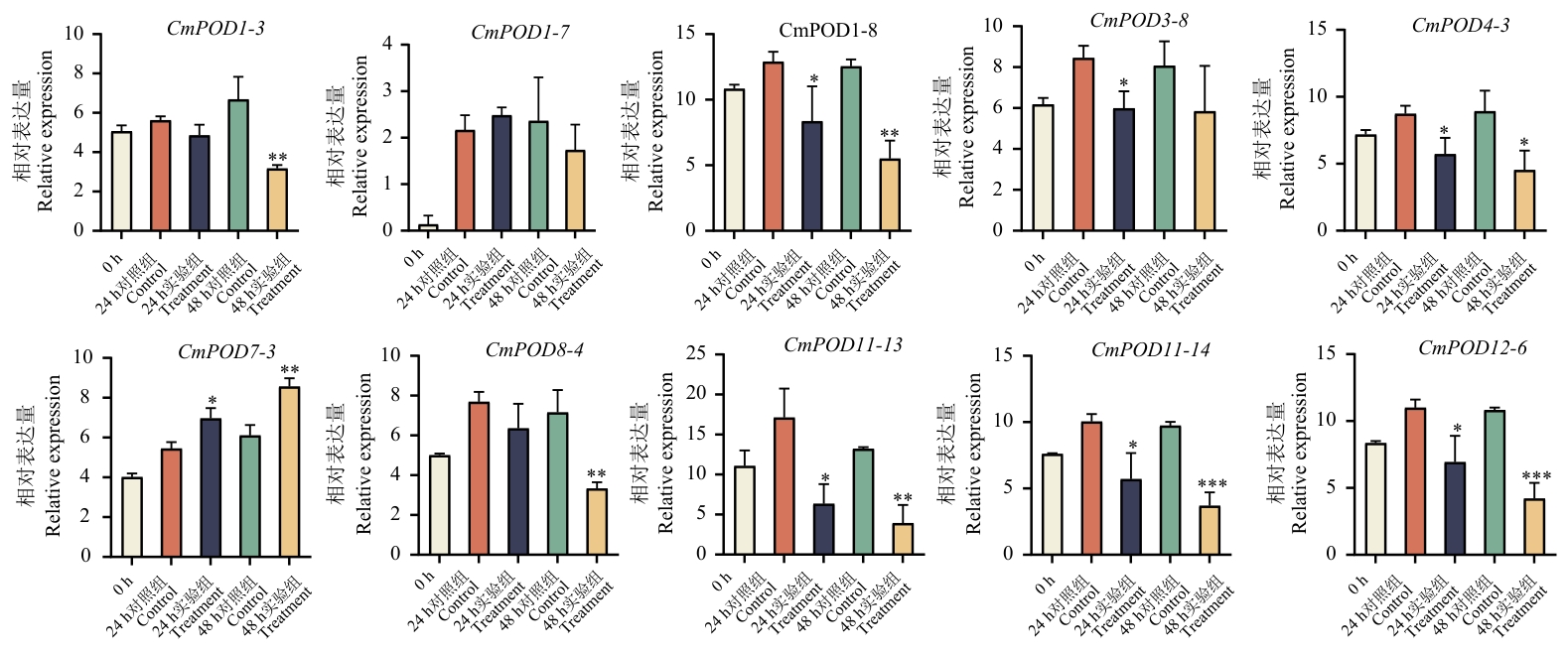
Fig. 9 Expression differences of selected CmPOD family members in leaves
| [1] | 林德佩. 中国栽培甜瓜植物的起源、分类及进化 [J]. 中国瓜菜, 2010, 23(4): 34-36. |
| Lin DP. Origin classification and evolution for cultivated plants of Chinese melon [J]. China Cucurbits Veg, 2010, 23(4): 34-36. | |
| [2] | 王琛, 吴敬学, 杨艳涛. 世界甜瓜生产贸易分析及对中国的启示 [J]. 中国食物与营养, 2016, 22(2): 18-22. |
| Wang C, Wu JX, Yang YT. Production and trade of world muskmelon and its enlightenment to China [J]. Food Nutr China, 2016, 22(2): 18-22. | |
| [3] | 谢奇君, 夏咏. 中国农产品出口贸易潜力研究——以甜瓜为例 [J]. 北方经贸, 2024(12): 38-42. |
| Xie QJ, Xia Y. Potential of China’s cantaloupe export trade [J]. North Econ Trade, 2024(12): 38-42. | |
| [4] | 闫巧俐, 张雁鸣, 陶永霞, 等. 甜瓜营养品质分析及其代表性指标探究 [J]. 食品与机械, 2019, 35(9): 15-19, 25. |
| Yan QL, Zhang YM, Tao YX, et al. Nutritional quality analysis and representative indexes of melon [J]. Food Mach, 2019, 35(9): 15-19, 25. | |
| [5] | 王志丹. 中国甜瓜产业经济发展研究 [D]. 北京: 中国农业科学院, 2014. |
| Wang ZD. Study on the development of muskmelon industry economy in China [D]. Beijing: Chinese Academy of Agricultural Sciences, 2014. | |
| [6] | 姚雪. 甜瓜种质资源耐冷性的鉴定评价及其关联分析研究 [D]. 哈尔滨: 东北农业大学, 2016. |
| Yao X. Studies on identification and evaluation of chilling-tolerance and association analysis in melon germplasm [D]. Harbin: Northeast Agricultural University, 2016. | |
| [7] | 王兴虎. 低温对厚皮甜瓜幼苗生长及生理生化特性的影响 [D]. 兰州: 甘肃农业大学, 2005. |
| Wang XH. Effects of low temperature on seedling growth and physiological & biochemical properties of muskmelon (Cucumis melo L.) seedlings [D]. Lanzhou: Gansu Agricultural University, 2005. | |
| [8] | 郝敬虹, 李天来, 孟思达, 等. 夜间低温对薄皮甜瓜果实糖积累及代谢相关酶活性的影响 [J]. 中国农业科学, 2009, 42(10): 3592-3599. |
| Hao JH, Li TL, Meng SD, et al. Effects of night low temperature on sugar accumulation and sugar-metabolizing enzyme activities in melon fruit [J]. Sci Agric Sin, 2009, 42(10): 3592-3599. | |
| [9] | 吕星光, 周梦迪, 李敏. 低温胁迫对甜瓜嫁接苗和自根苗生长及生理特性的影响 [J]. 中国蔬菜, 2016(5): 53-57. |
| Lyu XG, Zhou MD, Li M. Effects of low temperature stress on growth and physiological characteristics of grafted and own root melon seedlings [J]. China Veg, 2016(5): 53-57. | |
| [10] | 和红云. 低温胁迫对甜瓜幼苗生长及生理生化的影响 [D]. 石河子: 石河子大学, 2008. |
| He HY. Effects of low temperature injure on seedling growth and physiological & biochemical of muskmelon (Cucumis melo L.) [D]. Shihezi: Shihezi University, 2008. | |
| [11] | Almagro L, Gómez Ros LV, Belchi-Navarro S, et al. Class III peroxidases in plant defence reactions [J]. J Exp Bot, 2009, 60(2): 377-390. |
| [12] | Kidwai M, Ahmad IZ, Chakrabarty D. Class III peroxidase: an indispensable enzyme for biotic/abiotic stress tolerance and a potent candidate for crop improvement [J]. Plant Cell Rep, 2020, 39(11): 1381-1393. |
| [13] | 牛红军, 岳鹍, 滕文华, 等. 过氧化物酶和PeroxiBase过氧化物酶数据库 [J]. 生命科学研究, 2012, 16(6): 539-544. |
| Niu HJ, Yue K, Teng WH, et al. Peroxidases and the database of peroxidases: PeroxiBase [J]. Life Sci Res, 2012, 16(6): 539-544. | |
| [14] | 田国忠, 李怀方, 裘维蕃. 植物过氧化物酶研究进展 [J]. 武汉植物学研究, 2001, 19(4): 332-344. |
| Tian GZ, Li HF, Qiu WF. Advances on research of plant peroxidases [J]. J Wuhan Bot Res, 2001, 19(4): 332-344. | |
| [15] | Lee TT. Role of phenolic inhibitors in peroxidase-mediated degradation of indole-3-acetic acid [J]. Plant Physiol, 1977, 59(3): 372-375. |
| [16] | 杜秀敏, 殷文璇, 赵彦修, 等. 植物中活性氧的产生及清除机制 [J]. 生物工程学报, 2001, 17(2): 121-125. |
| Du XM, Yin WX, Zhao YX, et al. The production and scavenging of reactive oxygen species in plants [J]. Chin J Biotechnol, 2001, 17(2): 121-125. | |
| [17] | 梁艳荣, 胡晓红, 张颍力, 等. 植物过氧化物酶生理功能研究进展 [J]. 内蒙古农业大学学报: 自然科学版, 2003, 24(2): 110-113. |
| Liang YR, Hu XH, Zhang YL, et al. Prdgress on physiological function research of plant peroxidase [J]. J Inn Mong Agric Univ Nat Sci Ed, 2003, 24(2): 110-113. | |
| [18] | Shigeto J, Tsutsumi Y. Diverse functions and reactions of class III peroxidases [J]. New Phytol, 2016, 209(4): 1395-1402. |
| [19] | Cheng LT, Ma LX, Meng LJ, et al. Genome-wide identification and analysis of the class III peroxidase gene family in tobacco (Nicotiana tabacum) [J]. Front Genet, 2022, 13: 916867. |
| [20] | Yan J, Su PS, Li W, et al. Genome-wide and evolutionary analysis of the class III peroxidase gene family in wheat and Aegilops tauschii reveals that some members are involved in stress responses [J]. BMC Genom, 2019, 20: 666. |
| [21] | Tognolli M, Penel C, Greppin H, et al. Analysis and expression of the class III peroxidase large gene family in Arabidopsis thaliana [J]. Gene, 2002, 288(1/2): 129-138. |
| [22] | Chen CJ, Wu Y, Li JW, et al. TBtools-II: a “one for all, all for one” bioinformatics platform for biological big-data mining [J]. Mol Plant, 2023, 16(11): 1733-1742. |
| [23] | 郭安源, 朱其慧, 陈新, 等. GSDS: 基因结构显示系统 [J]. 遗传, 2007, 29(8): 1023-1026. |
| Guo AY, Zhu QH, Chen X, et al. GSDS a gene structure display server [J]. Hereditas, 2007, 29(8): 1023-1026. | |
| [24] | Hu B, Jin JP, Guo AY, et al. GSDS 2.0: an upgraded gene feature visualization server [J]. Bioinformatics, 2015, 31(8): 1296-1297. |
| [25] | 黄丽芳, 刘建汀, 王彬, 等. 西葫芦过氧化物酶POD1基因的分离及表达分析 [J]. 福建农业学报, 2018, 33(9): 943-949. |
| Huang LF, Liu JT, Wang B, et al. Isolation and expression of peroxidase POD1 gene from Cucurbita pepo [J]. Fujian J Agric Sci, 2018, 33(9): 943-949. | |
| [26] | Cai KW, Liu HX, Chen S, et al. Genome-wide identification and analysis of class III peroxidases in Betula pendula [J]. BMC Genom, 2021, 22: 314. |
| [27] | Khan WU, Khan LU, Khan NM, et al. Comprehensive identification, characterization and expression analyses of the class III POD gene family in water lily (Nymphaea colorata) [J]. Front Plant Sci, 2025, 15: 1524657. |
| [28] | 杨广东, 郭瑜敏. 低温胁迫对青椒苗期和花期脱落酸含量的影响 [J]. 山西农业科学, 1998, 26(2): 45-48. |
| Yang GD, Guo YM. Effect of low temperature stress on ABA contents of sweet pepper during seedling and florescence [J]. J Shanxi Agric Sci, 1998, 26(2): 45-48. | |
| [29] | Zhang YQ, Liu H, Ma XY, et al. Genome-wide identification and expression analysis of the class III peroxidase gene (PRXIII) family in Medicago sativa L. and its function in the abiotic stress response [J]. BMC Plant Biol, 2025, 25: 443. |
| [30] | 刘荣梅, 李凤兰, 徐永清, 等. 低温胁迫对转基因烟草生理生化的影响 [J]. 湖北农业科学, 2010, 49(11): 2819-2821. |
| Liu RM, Li FL, Xu YQ, et al. Effects of low temperature stress on physiological and biochemical changes of the transgenic tobacco [J]. Hubei Agric Sci, 2010, 49(11): 2819-2821. | |
| [31] | 高山, 许端祥, 陈中钐, 等. 苦瓜McAPX2基因及其启动子的克隆与表达分析 [J]. 热带作物学报, 2016, 37(12): 2384-2391. |
| Gao S, Xu DX, Chen ZS, et al. Cloning and expression analysis of the McAPX2 gene and its promotor in Momordica charantia L [J]. Chin J Trop Crops, 2016, 37(12): 2384-2391. |
| [1] | SANG Zhi-peng, HOU Dong, WANG Hui-ting, YUE Hong-zhong, LI Ya-li, XIE Jian-ming, LU Wen, XU Zhao-tai. Identification of the Cucumber CsHXKs Gene Family and Regulation of Floral Organ Sugar Accumulation by CsHKL1.2 [J]. Biotechnology Bulletin, 2026, 42(9): 157-168. |
| [2] | YUAN Shu-qi, ZHANG Yan-fang, NIE Yu-shan, LI Na, SUO Ning-ning, TAN Gui-lian, HUO Xiu-wen. Identification of HXKs in Yam and Validation of Proteins Interacting with DoHXK3 [J]. Biotechnology Bulletin, 2026, 42(9): 306-315. |
| [3] | NIE Yu-shan, ZHANG Yan-fang, YUAN Shu-qi, LI Na, SUO Ning-ning, TAN Gui-lian, HUO Xiu-wen. Identification of the AGPL Gene Family in Yam and Screening of DoAGPL1 Interacting Proteins [J]. Biotechnology Bulletin, 2026, 42(9): 316-326. |
| [4] | TAN Shu, SHEN Hong-jian, GAO Xiao-lei, YIN Qian, ZOU Feng. Genome-wide Identification of the MYB Transcription Factor Family in Camellia oleifera and Functional Analysis of CoMYB107 in Stamen Development [J]. Biotechnology Bulletin, 2026, 42(9): 196-209. |
| [5] | DONG Xiang-xiang, HOU Wei-wei, MIAO Bai-ling, CHEN Juan-juan, LI Liang-jie, ZHAI Min, ZHU Qing-song, LIU Song-hu. Overexpression of FvBBX22 from Fragaria Vesca Promotes Anthocyanin Synthesis and Delays Flowering Time in Arabidopsis thaliana [J]. Biotechnology Bulletin, 2026, 42(9): 231-237. |
| [6] | LYU Zheng, LIAN Ru-ying, LIU Yi-de, LIU Yi-ke, NING Qiang, WANG Shu-ping. Wheat HD-Zip Gene Family: Identification and Response to Fusarium graminearum [J]. Biotechnology Bulletin, 2026, 42(8): 123-132. |
| [7] | QIN Juan, LU Wei-Wen, LI Jia-Hui, LI Chen, LI Bin, WANG Zhi-ye. Cloning and Expression Analysis of Two G6PDH Genes from Safflower [J]. Biotechnology Bulletin, 2026, 42(8): 217-228. |
| [8] | CHEN Cui, LAN Li-xia, SU Meng-yu, WENG Nian-dong, ZHANG Zhen. Cloning and Functional Identification of Apple Protein Phosphatase Gene MdPP2C24 [J]. Biotechnology Bulletin, 2026, 42(8): 153-161. |
| [9] | XIN Qing, ZHENG Yong-jie, LI Yu-hua, TU Bai-lian, LIU Xin-liang, ZHANG Yue-ting, WU Yan-fang. Genome-wide Identification and Expression Analysis of MYC Transcription Factors in Cinnamomum camphora [J]. Biotechnology Bulletin, 2026, 42(7): 214-225. |
| [10] | YAN Xiao-guang, DU Yan-wei, MA Zhi-yuan, WANG Bin, WANG Guo-liang, HU Dan-zhu. Genome-wide Identification and Expression Pattern Analysis of ZmDIR Gene Family in Maize [J]. Biotechnology Bulletin, 2026, 42(7): 126-137. |
| [11] | HUANG Xu-sheng, ZHOU Ya-li, JIA Zheng-rong, SHEN Shan, CHEN Jin-chai, ZHOU Guang-li, LI Xin-xin, WANG Ji-ping, LI Run-zhi, JIA Xiao-yun. Whole-genome Identification of the Perilla frutescens ARF Transcription Factor Family and Functional Analysis of Its Role in Abiotic Stress Responses [J]. Biotechnology Bulletin, 2026, 42(7): 148-162. |
| [12] | DUAN Ya-xin, LI Cheng-chen, PAN Yu-ling, WANG Li, AN Kang, LI Xiao-bo, ZHU Guang-tao, LIU Ji-tao. Identification and Functional Analysis of the LEA_2 Gene Family in Potato in Response to Cold Stress and Hormones [J]. Biotechnology Bulletin, 2026, 42(6): 40-52. |
| [13] | ZHANG Ya-ning, MAO Chun-li, HU Zhi-yong, YANG Dan, WU Jia-hai, WANG Bi-xian, HUANG Lin-kai. Genome-wide Analysis of Dof Transcription Factors in Elephant Grass and Their Response to Cold Stress [J]. Biotechnology Bulletin, 2026, 42(6): 267-278. |
| [14] | LI Xu-long, XU Shi-qiang, ZHANG Long, LI Jing-yu, HE Wei-xian, CHEN Li-kai, WANG Ji-hua. Genome-wide Identification, Evolution and Expression Pattern Analysis of Terpene Synthase Gene Family in Morinda officinalis [J]. Biotechnology Bulletin, 2026, 42(6): 314-325. |
| [15] | JIN Xuan, XIANG Fen, DAI Cui-ting, YANG Hui, LI Sai-jun, LIU Hong-yan, QIAN Si-wei, LIN Wan-huang, LI Wei. Cloning and Expression Analysis of CsTDIFL and Its Regulation on Amino Acid Synthesis in Tea Plants (Camellia sinensis) [J]. Biotechnology Bulletin, 2026, 42(5): 323-331. |
| Viewed | ||||||
|
Full text |
|
|||||
|
Abstract |
|
|||||
