







Biotechnology Bulletin ›› 2025, Vol. 41 ›› Issue (12): 40-49.doi: 10.13560/j.cnki.biotech.bull.1985.2025-1011
Previous Articles Next Articles
ZHU Shan-shan( ), XU Jun, PAN Xing-lu, DONG Feng-shou, ZHENG Yong-quan, WU Xiao-hu()
Received:2025-09-22
Online:2025-12-26
Published:2026-01-06
Contact:
WU Xiao-hu
E-mail:18338157428@163.com;xhwu@ippcaas.cn
ZHU Shan-shan, XU Jun, PAN Xing-lu, DONG Feng-shou, ZHENG Yong-quan, WU Xiao-hu. Research Advances in Microbial Remediation of Soil Pesticide Residues[J]. Biotechnology Bulletin, 2025, 41(12): 40-49.
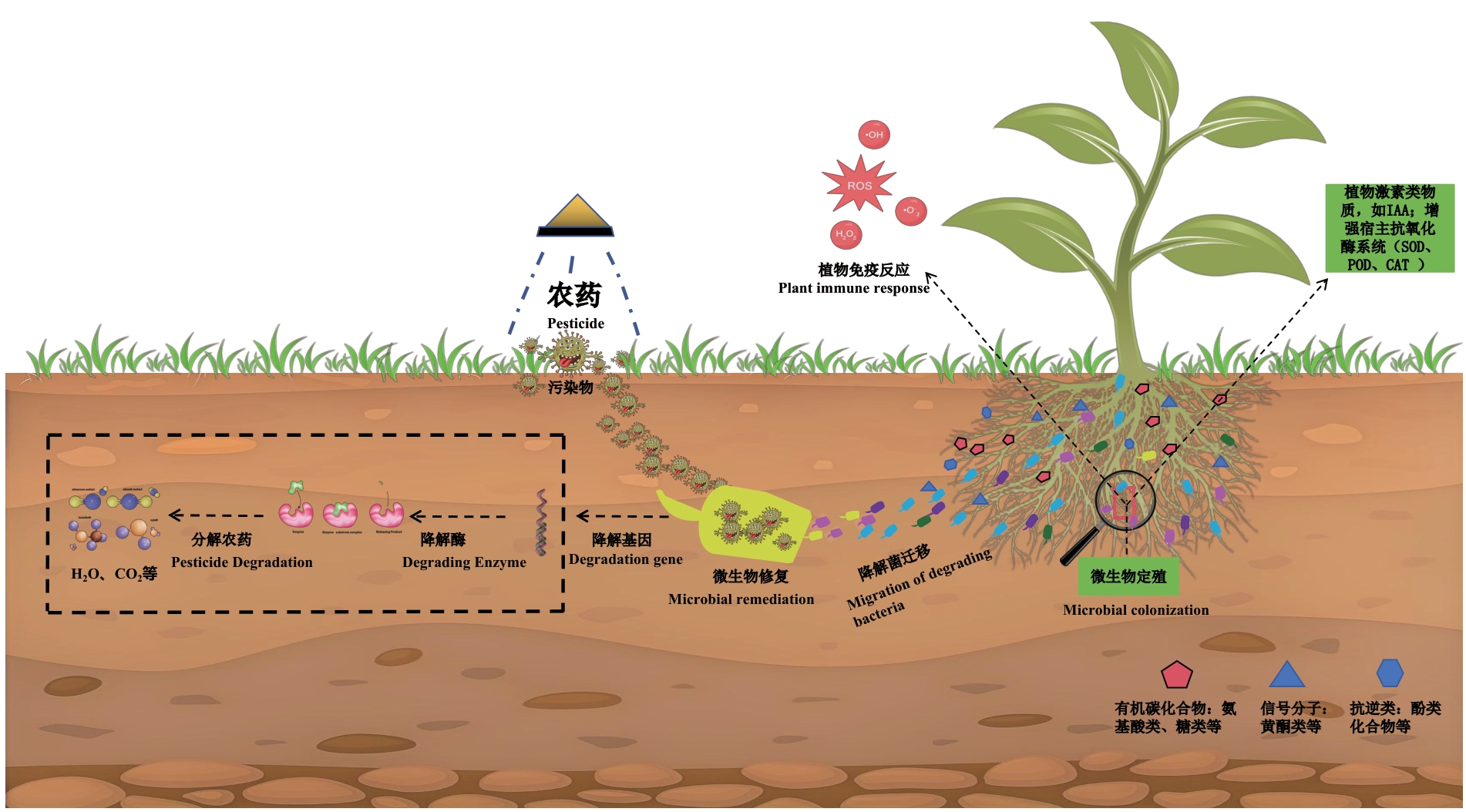
Fig. 1 Plant-microbe synergistic degradation of pesticides in soil
| [1] | Wang K, Ren YS, Pan XL, et al. Insights on persistent herbicides in cropland soils in northern China: Occurrence, ecological risks, and phytotoxicity to subsequent crops [J]. J Hazard Mater, 2025, 490: 137794. |
| [2] | Navarro I, Royano S, Alonso C, et al. Environmental exposure and risk assessment of pesticide mixtures in aquatic organisms from the Tagus River Basin [J]. Ecotoxicol Environ Saf, 2025, 305: 119221. |
| [3] | Sun MJ, Li H, Jaisi DP. Degradation of glyphosate and bioavailability of phosphorus derived from glyphosate in a soil-water system [J]. Water Res, 2019, 163: 114840. |
| [4] | Zhou Y, Wang LP, Sui JY, et al. Pathway elucidation and key enzymatic processes in the biodegradation of difenoconazole by Pseudomonas putida A-3 [J]. J Agric Food Chem, 2025, 73(8): 4770-4786. |
| [5] | Yang XY, Wei HY, Zhu CX, et al. Biodegradation of atrazine by the novel Citricoccus sp. strain TT3 [J]. Ecotoxicol Environ Saf, 2018, 147: 144-150. |
| [6] | Khatoon H, Rai JPN. Optimization studies on biodegradation of atrazine by Bacillus badius ABP6 strain using response surface methodology [J]. Biotechnol Rep, 2020, 26: e00459. |
| [7] | Li MR, Zhan FD, Chen JJ, et al. Atrazine degradation pathway and genes of Arthrobacter sp. FM326 [J]. Pol J Environ Stud, 2020, 29(5): 3683-3689. |
| [8] | Chen SM, Li YY, Fan ZW, et al. Soil bacterial community dynamics following bioaugmentation with Paenarthrobacter sp. W11 in atrazine-contaminated soil [J]. Chemosphere, 2021, 282: 130976. |
| [9] | Cao DT, He SH, Li X, et al. Characterization, genome functional analysis, and detoxification of atrazine by Arthrobacter sp. C2 [J]. Chemosphere, 2021, 264: 128514. |
| [10] | Zhao WS, Wang C, Xu L, et al. Biodegradation of nicosulfuron by a novel Alcaligenes faecalis strain ZWS11 [J]. J Environ Sci, 2015, 35: 151-162. |
| [11] | Wang L, Zhang XL, Li YM. Degradation of nicosulfuron by a novel isolated bacterial strain Klebsiella sp. Y1: condition optimization, kinetics and degradation pathway [J]. Water Sci Technol, 2016, 73(12): 2896-2903. |
| [12] | Zhao HY, Zhu JY, Liu SN, et al. Kinetics study of nicosulfuron degradation by a Pseudomonas nitroreducens strain NSA02 [J]. Biodegradation, 2018, 29(3): 271-283. |
| [13] | Ma QY, Kong DL, Zhang Q, et al. Microbacterium sulfonylureivorans sp. nov., isolated from sulfonylurea herbicides degrading consortium [J]. Arch Microbiol, 2022, 204(2): 136. |
| [14] | Chen W, Gao Y, Shi GL, et al. Enhanced degradation of fomesafen by a rhizobial strain Sinorhizobium sp. W16 in symbiotic association with soybean [J]. Appl Soil Ecol, 2023, 187:104847. |
| [15] | Hao ZY, Zhang S, Shao YX, et al. Preparation and inoculation of Bacillus spp. and Sinorhizobium meliloti strains immobilized on biochar-humic acid improve potted soybean traits and soil parameters [J]. Environ Technol Innov, 2025, 38: 104210. |
| [16] | Feng ZZ, Li QF, Zhang J, et al. Microbial degradation of fomesafen by a newly isolated strain Pseudomonas zeshuii BY-1 and the biochemical degradation pathway [J]. J Agric Food Chem, 2012, 60(29): 7104-7110. |
| [17] | Ma LY, Wan Q, Ge J, et al. Growth-promoting bacterium Enterobacter sp. CS8-gfp triggers jasmonate signaling pathway for atrazine and thiamethoxam degradation in rice (Oryza sativa L.) [J]. J Clean Prod, 2025, 522: 146373. |
| [18] | Ni H, Hu L, Jiang CYZ, et al. Effect of Phanerochaete chrysosporium induced phosphate precipitation on bacterial diversity during the soil remediation process [J]. Environmental Science and Pollution Research, 2024, 31(9): 13523-13534. |
| [19] | Yin R, Chang MD, Ma R, et al. Insights into the imidaclothiz biodegradation by the white-rot fungus Phanerochaete sordida YK-624 under ligninolytic conditions [J]. J Agric Food Chem, 2025, 73(21): 12877-12886. |
| [20] | Gupta M, Mathur S, Sharma TK, et al. A study on metabolic prowess of Pseudomonas sp. RPT 52 to degrade imidacloprid, endosulfan and coragen [J]. J Hazard Mater, 2016, 301: 250-258. |
| [21] | 徐丰俊, 刘泽钒, 彭睿琪, 等. 单细胞水平微流体技术筛选北极沉积物中的联苯降解菌 [J]. 环境科学学报, 2022, 42(9): 1-8. |
| Xu FJ, Liu ZF, Peng RQ, et al. Isolation of biphenyl-degrading bacteria in Arctic sediments by single-cell level isolation of microfluidics (SLIM) technology [J]. Acta Sci Circumstantiae, 2022, 42(9): 1-8. | |
| [22] | Yu X, Zhou H, Tang J, et al. Degradation kinetics and mechanism of β-cypermethrin and 3-phenoxybenzoic acid by Lysinibacillus pakistanensis VF-2 in soil remediation [J]. J Agric Food Chem, 2025, 73(1): 202-215. |
| [23] | Gong T, Xu XQ, Dang YL, et al. An engineered Pseudomonas putida can simultaneously degrade organophosphates, pyrethroids and carbamates [J]. Sci Total Environ, 2018, 628/629: 1258-1265. |
| [24] | Zhao MH, Xiao YF, Yang BB, et al. Enhanced biodegradation potential of Klebsiella michiganensis ES15 for acetochlor: Gene knockout, heterologous expression, molecular docking, and bioremediation [J]. Pestic Biochem Physiol, 2025, 214: 106530. |
| [25] | Xiao YF, Dong MQ, Wu X, et al. Enrichment, domestication, degradation, adaptive mechanism, and nicosulfuron bioremediation of bacteria consortium YM21 [J]. J Integr Agric, 2025, 24(9): 3529-3545. |
| [26] | Jiang HY, Yuan PP, Ding JJ, et al. Novel biodegradation pathway of insecticide flonicamid mediated by an amidase and its unusual substrate spectrum [J]. J Hazard Mater, 2023, 441: 129952. |
| [27] | Zhu SY, Zhang JL, Chen AW, et al. Newly discovered cyanobacteria Nostoc sp. PCC7120 for high efficiency biodegradation of thiamethoxam: Photosynthesis response, enzyme strategies, and molecular mechanisms [J]. Bioresour Technol, 2025, 436: 132979. |
| [28] | Aswathi A, Pandey A, Madhavan A, et al. Chlorpyrifos induced proteome remodelling of Pseudomonas nitroreducens AR-3 potentially aid efficient degradation of the pesticide [J]. Environ Technol Innov, 2021, 21: 101307. |
| [29] | Wang BJ, Chen J, Wu S, et al. Reusable carboxylesterase immobilized in ZIF for efficient degradation of chlorpyrifos in enviromental water [J]. Pestic Biochem Physiol, 2023, 194: 105519. |
| [30] | An TC, Zu L, Li GY, et al. One-step process for debromination and aerobic mineralization of tetrabromobisphenol-a by a novel Ochrobactrum sp. T isolated from an e-waste recycling site [J]. Bioresour Technol, 2011, 102(19): 9148-9154. |
| [31] | Zhang JJ, Chen YF, Fang T, et al. Co-metabolic degradation of tribenuron methyl, a sulfonylurea herbicide, by Pseudomonas sp. strain NyZ42 [J]. Int Biodeterior Biodegrad, 2013, 76: 36-40. |
| [32] | Rentz, JA, Alvarez, PJJ, Schnoor, JL. Benzo[α]pyrene co-metabolism in the presence of plant root extracts and exudates: Implications for phytoremediation [J]. Environ Pollut, 2005, 136(3): 477-484. |
| [33] | Zhao JY, Jia DY, Du J, et al. Substrate regulation on co-metabolic degradation of β-cypermethrin by Bacillus licheniformis B-1 [J]. AMB Express, 2019, 9(1): 83. |
| [34] | 王镔, 蔡凯, 邵汝英, 等. 苯胺高效降解菌的筛选及共代谢机制 [J]. 环境保护科学, 2020, 46(4): 117-121. |
| Wang B, Cai K, Shao RY, et al. Study on the screening of aniline-degrading strain and its co-metabolism mechanism [J]. Environ Prot Sci, 2020, 46(4): 117-121. | |
| [35] | Lin ZQ, Pang SM, Zhou Z, et al. Novel pathway of acephate degradation by the microbial consortium ZQ01 and its potential for environmental bioremediation [J]. J Hazard Mater, 2022, 426: 127841. |
| [36] | Castilla-Alcantara JC, Posada-Baquero R, Ortega-Calvo JJ. Taxis-mediated bacterial transport and its implication for the cometabolism of pyrene in a model aquifer [J]. Water Res, 2024, 248: 120850. |
| [37] | Perera M, Wijayarathna D, Wijesundera S, et al. Biofilm mediated synergistic degradation of hexadecane by a naturally formed community comprising Aspergillus flavus complex and Bacillus cereus group [J]. BMC Microbiol, 2019, 19(1): 84. |
| [38] | Li Y, Feng FY, Mu QE, et al. Foliar spraying of chlorpyrifos triggers plant production of linolenic acid recruiting rhizosphere bacterial Sphingomonas sp [J]. Environ Sci Technol, 2023, 57(45): 17312-17323. |
| [39] | Liu XJ, Sun L, Wang SB, et al. Genomic analysis and phytoprobiotic characteristics of Acinetobacter pittii P09: a p-hydroxybenzoic acid-degrading plant-growth promoting rhizobacteria [J]. Environ Technol Innov, 2025, 38: 104113. |
| [40] | 周慧, 冯红丽, 董彤彤, 等. 胁迫条件下DEHP降解菌的分离及特性研究 [J]. 环境科学与技术, 2022, 45(2): 16-24. |
| Zhou H, Feng HL, Dong TT, et al. DEHP degradation bacteria under stress condition: isolation and characterization [J]. Environ Sci Technol, 2022, 45(2): 16-24. | |
| [41] | Wang JL, Liu ZY, Wang XY, et al. Combatting glufosinate-induced pepper toxicity: jasmonic acid recruiting rhizosphere bacterial strain Rhodococcus gordoniae [J]. Microbiome, 2025, 13(1): 158. |
| [42] | Zhang HH, Liu YP, Wu GW, et al. Bacillus velezensis tolerance to the induced oxidative stress in root colonization contributed by the two-component regulatory system sensor ResE [J]. Plant Cell Environ, 2021, 44(9): 3094-3102. |
| [43] | Ma KW, Niu YL, Jia Y, et al. Coordination of microbe-host homeostasis by crosstalk with plant innate immunity [J]. Nat Plants, 2021, 7(6): 814-825. |
| [44] | Liu Y, Tang SK, Wang X, et al. A novel thermostable and salt-tolerant carboxylesterase involved in the initial aerobic degradation pathway for pyrethroids in Glycomyces salinus [J]. J Hazard Mater, 2023, 451: 131128. |
| [45] | Feng RC, Wang HC, Liu TT, et al. Response of microbial communities in the phyllosphere ecosystem of tobacco exposed to the broad-spectrum copper hydroxide [J]. Front Microbiol, 2023, 14: 1229294. |
| [46] | Chen XYL, Wicaksono WA, Berg G, et al. Bacterial communities in the plant phyllosphere harbour distinct responders to a broad-spectrum pesticide [J]. Sci Total Environ, 2021, 751: 141799. |
| [47] | Schulz-Bohm K, Gerards S, Hundscheid M, et al. Calling from distance: attraction of soil bacteria by plant root volatiles [J]. ISME J, 2018, 12(5): 1252-1262. |
| [48] | Liao QH, Liu H, Lu C, et al. Root exudates enhance the PAH degradation and degrading gene abundance in soils [J]. Sci Total Environ, 2021, 764: 144436. |
| [49] | Li JL, Hong M, Tang R, et al. Isolation of Diaphorobacter sp. LW2 capable of degrading Phenanthrene and its migration mediated by Pythium ultimum [J]. Environ Technol, 2024, 45(8): 1497-1507. |
| [50] | Ma YP, Deng YL, Hua HJ, et al. Distinct bacterial population dynamics and disease dissemination after biofilm dispersal and disassembly [J]. ISME J, 2023, 17(8): 1290-1302. |
| [51] | Li JL, Hong M, Lv J, et al. Enhancement on migration and biodegradation of Diaphorobacter sp. LW2 mediated by Pythium ultimum in soil with different particle sizes [J]. Front Microbiol, 2024, 15: 1391553. |
| [52] | Elyamine AM, Hu CX. Earthworms and rice straw enhanced soil bacterial diversity and promoted the degradation of phenanthrene [J]. Environ Sci Eur, 2020, 32(1): 124. |
| [53] | Zhane C, Pan XL, Wu XM, et al. Removal of dimethachlon from soils using immobilized cells and enzymes of a novel potential degrader Providencia stuartii JD [J]. J Hazard Mater, 2019, 378: 120606. |
| [54] | 滕晓, 沈心怡, 张步瑶, 等. 二苯醚类除草剂降解菌Bacillus sp. za微生物制剂的研发与初步应用 [J]. 土壤, 2023, 55(3): 682-688. |
| Teng X, Shen XY, Zhang BY, et al. Development and preliminary application of microbial preparation of diphenyl ether herbicede degrading strain Bacillus sp. za [J]. Soils, 2023, 55(3): 682-688. | |
| [55] | Copeland C, Schulze-Lefert P, Ma KW. Potential and challenges for application of microbiomes in agriculture [J]. Plant Cell, 2025, 37(8): koaf185. |
| [56] | 伊国云, 李娟, 程亮, 等. 纤维素降解菌产酶条件优化及其堆肥效果研究 [J]. 福建农业学报, 2025, 40(2): 208-218. |
| Yi GY, Li J, Cheng L, et al. Enzyme generation and effect in composting of cellulolytic bacteria [J]. Fujian J Agric Sci, 2025, 40(2): 208-218. | |
| [57] | Sun JQ, Feng YM, Zheng R, et al. Solar-enhanced low-temperature biological wastewater treatment [J]. Nat Sustain, 2025, 8(9): 1048-1057. |
| [58] | Aluffi ME, Magnoli K, Carranza CS, et al. Ability of mixed fungal cultures to remove glyphosate from soil microcosms under stressful conditions [J]. Biodegradation, 2025, 36(3): 31. |
| [1] | YAN Meng-yang, LIANG Xiao-yang, DAI Jun-ang, ZHANG Yan, GUAN Tuan, ZHANG Hui, LIU Liang-bo, SUN Zhi-hua. Screening of Amoxicillin-degrading Bacteria and Study on Its Degradation Mechanisms [J]. Biotechnology Bulletin, 2025, 41(9): 314-325. |
| [2] | LI Chong, YANG Ya-nan, WANG Cui-xia, ZHENG Hai-xin. Synergistic Remediation of Multiple Pollutants in Agricultural Environment by Microorganisms and Biochar [J]. Biotechnology Bulletin, 2024, 40(10): 86-97. |
| [3] | ZHANG Lin-lin, SHEN Hu-sheng, YANG Bing, HE Meng-han, PIAO Feng-zhi, SHEN Shun-shan. Control Ability and Identification of Biocontrol Agent HK11-9 Against Corynespora Leaf Spot of Cucumber [J]. Biotechnology Bulletin, 2023, 39(12): 209-218. |
| [4] | LI Ying, LONG Chang-mei, JIANG Biao, HAN Li-zhen. Colonization on the Peanuts of Two Plant-growth Promoting Rhizobacteria Strains and Effects on the Bacterial Community Structure of Rhizosphere [J]. Biotechnology Bulletin, 2022, 38(9): 237-247. |
| [5] | MA Qing-yun, JIANG Xu, LI Qing-qing, SONG Jin-long, ZHOU Yi-qing, RUAN Zhi-yong. Isolation and Identification of Nicosulfuron Degrading Strain Chryseobacterium sp. LAM-M5 and Study on Its Degradation Pathway [J]. Biotechnology Bulletin, 2022, 38(2): 113-122. |
| [6] | LI Si-si, ZHANG Bo-yuan, FU Yun-hui, ZHOU Jia, QU Jian-hang. Condition Optimization of an Efficient Phosphate-dissolving Bacterial Strain and Its Phosphate-dissolving Characteristics [J]. Biotechnology Bulletin, 2022, 38(12): 274-286. |
| [7] | NIU Hong-yu, SHU Qian, YANG Hai-jun, YAN Zhi-yong, TAN Ju. Isolation, Identification, Degradation Characteristics and Metabolic Pathway of an Efficient Sodium Dodecyl Sulfate-degrading Bacterium [J]. Biotechnology Bulletin, 2022, 38(12): 287-299. |
| [8] | ZHANG Ya-han, ZHU Li-xia, HU Jing, ZHU Ya-jing, ZHANG Xue-jing, CAO Ye-zhong. Opportunities and Challenges of Glyphosate in the Application of Biotechnology Breeding in China [J]. Biotechnology Bulletin, 2022, 38(11): 1-9. |
| [9] | ZHU Yong-an, WANG Miao, CAO Jing, YU He, CAO Zhen, JIN Mao-jun, WANG Jing, SHE Yong-xin. Research Progress in the Immobilization of Key Enzymes for Pesticides Residue Detection [J]. Biotechnology Bulletin, 2022, 38(1): 258-268. |
| [10] | XIAO Xiao-shuang, AN Xue-jiao, YE Han-yuan, WANG Lin-ping, ZHONG Bin, ZHANG Qing-hua. Research Progress on Microbial Degradation of Thiocyanate in Wastewater [J]. Biotechnology Bulletin, 2021, 37(2): 224-235. |
| [11] | WANG Wei-xiong, SHEN Bo, JIA Hong-bai, QIAO Jun-qing, NIU Ben. Application of Rhizospheric Biocontrol Consortia and the Potential Mechanisms of Their Enhancing Efficacy on Disease-suppressive Effect [J]. Biotechnology Bulletin, 2020, 36(9): 31-41. |
| [12] | WANG Jing, DAI Dong, WU Shu-geng, ZHANG Hai-jun, QI Guang-hai. Advances in Successional Development and Early Establishment of the Chicken Intestinal Microbiota [J]. Biotechnology Bulletin, 2020, 36(2): 1-8. |
| [13] | WANG Ya-ni, SONG Jin-long, HAN Gang, MU Ying-chun, JIANG Xu, WANG Jin-yao, RUAN Zhi-yong, LI Le. Analysis of Diversity of Malachite Green-degrading Microbial Community and Degradation Characteristics of Efficiently-degrading Bacteria [J]. Biotechnology Bulletin, 2019, 35(9): 150-155. |
| [14] | LIU Na, LIU Zhi-min, SONG Dong-hui. Degradation Characteristics of Catechol and Sodium Benzoate by a Petroleum-degrading Bacterium [J]. Biotechnology Bulletin, 2019, 35(9): 156-164. |
| [15] | HUA Tao, LI Sheng-nan, DI Zhi-hun, ZHOU Bo, ZENG Wen-lu, ZHOU Qi-xing, LI Feng-xiang. Review on Mechanism and Application of Microbe Degrading Petroleum Pollutants [J]. Biotechnology Bulletin, 2018, 34(10): 26-34. |
| Viewed | ||||||
|
Full text |
|
|||||
|
Abstract |
|
|||||
