







Biotechnology Bulletin ›› 2026, Vol. 42 ›› Issue (8): 22-34.doi: 10.13560/j.cnki.biotech.bull.1985.2025-1272
Previous Articles Next Articles
LONG Jun-jie1, HE Rui-xi1, NI Zi-fu1, ZHANG Min1, QI Yan-li1( ), LI Cheng-wei1,2()
Received:2025-11-21
Online:2026-08-26
Published:2026-08-17
Contact:
QI Yan-li, LI Cheng-wei
E-mail:yliqi2021@haut.edu.cn;lcw@haut.edu.cn
LONG Jun-jie, HE Rui-xi, NI Zi-fu, ZHANG Min, QI Yan-li, LI Cheng-wei. Paclitaxel Production by Endophytic Fungi in Plants: Research Advances and Prospects[J]. Biotechnology Bulletin, 2026, 42(8): 22-34.
| 来源 Source | 参考文献 References |
|---|---|
| 红豆杉属 Taxus spp. | [ |
小叶罗汉松 Podocarpus pilgeri 细叶罗汉松 P. gracilior | [ [ |
| 艾蒿 Artemisia judaica | [ |
| 印度紫檀 Terminalia arjuna | [ |
| 辣木 Moringa oleifera | [ |
| 长蒴黄麻 Corchorus olitorius | [ |
| 欧洲榛 Corylus avellana | [ |
| 棕榈 Trachycarpus | [ |
| 木橘 Aegle marmelos | [ |
| 诺丽果树 Morinda citrifolia | [ |
| 银杏 Ginkgo biloba | [ |
| 落叶松 Larix leptolepis | [ |
| 香橼 Citrus medica | [ |
| 朱槿 Hibiscus rosa-sinensis | [ |
| 马松子 Melochia corchorifolia | [ |
Table 1 Reported plant hosts of paclitaxel-producing endophytic fungi
| 来源 Source | 参考文献 References |
|---|---|
| 红豆杉属 Taxus spp. | [ |
小叶罗汉松 Podocarpus pilgeri 细叶罗汉松 P. gracilior | [ [ |
| 艾蒿 Artemisia judaica | [ |
| 印度紫檀 Terminalia arjuna | [ |
| 辣木 Moringa oleifera | [ |
| 长蒴黄麻 Corchorus olitorius | [ |
| 欧洲榛 Corylus avellana | [ |
| 棕榈 Trachycarpus | [ |
| 木橘 Aegle marmelos | [ |
| 诺丽果树 Morinda citrifolia | [ |
| 银杏 Ginkgo biloba | [ |
| 落叶松 Larix leptolepis | [ |
| 香橼 Citrus medica | [ |
| 朱槿 Hibiscus rosa-sinensis | [ |
| 马松子 Melochia corchorifolia | [ |
内生真菌 Endophytic fungi | 产量 Yield | 参考文献References |
|---|---|---|
| 曲霉 Aspergillus sp. | 432 μg/L | [ |
| 110.2 μg/L | [ | |
| 560 μg/L | [ | |
| 334.2 μg/L | [ | |
| 1 137.6 μg/L | [ | |
| 链格孢 Alternaria sp. | 140.8 μg/L | [ |
| 195.4 μg/L | [ | |
| 124.3 μg/L | [ | |
| 环纹炭团菌 Annulohypoxylon sp. | 282 μg/L | [ |
| 担子菌 Basidiomycete sp. | 382.2 μg/L | [ |
| 7.5 mg/L | [ | |
| 枝孢霉 Cladosporium sp. | 550 μg/L | [ |
| 毛壳菌 Chaetomium sp. | 77.2 μg/L | [ |
| 附球菌 Epicoccum sp. | 1 364.6 μg/L | [ |
| 1.32-1.75 μg/L | [ | |
| 镰孢菌 Fusarium sp. | 0.0153 mg/L | [ |
| 18.2 μg/L | [ | |
| 粘帚霉 Gliocladium sp. | 10.7 μg/L | [ |
| 二孢菌 Lasiodiplodia sp. | 245 μg/L | [ |
| 毛霉 Mucor sp. | 195.1 mg/L | [ |
| 假双球孢菌 Pseudodidymocyrtis sp. | 0.361 mg/g | [ |
| 茎点霉 Phoma sp. | 1.215 mg/L | [ |
| 拟盘多毛孢菌 Pestalotiopsis sp. | 64 μg/L | [ |
| 叶点霉 Phyllosticta sp. | 274 μg/L | [ |
Table 2 Taxonomic classification of representative endophytic fungi and their paclitaxel yield
内生真菌 Endophytic fungi | 产量 Yield | 参考文献References |
|---|---|---|
| 曲霉 Aspergillus sp. | 432 μg/L | [ |
| 110.2 μg/L | [ | |
| 560 μg/L | [ | |
| 334.2 μg/L | [ | |
| 1 137.6 μg/L | [ | |
| 链格孢 Alternaria sp. | 140.8 μg/L | [ |
| 195.4 μg/L | [ | |
| 124.3 μg/L | [ | |
| 环纹炭团菌 Annulohypoxylon sp. | 282 μg/L | [ |
| 担子菌 Basidiomycete sp. | 382.2 μg/L | [ |
| 7.5 mg/L | [ | |
| 枝孢霉 Cladosporium sp. | 550 μg/L | [ |
| 毛壳菌 Chaetomium sp. | 77.2 μg/L | [ |
| 附球菌 Epicoccum sp. | 1 364.6 μg/L | [ |
| 1.32-1.75 μg/L | [ | |
| 镰孢菌 Fusarium sp. | 0.0153 mg/L | [ |
| 18.2 μg/L | [ | |
| 粘帚霉 Gliocladium sp. | 10.7 μg/L | [ |
| 二孢菌 Lasiodiplodia sp. | 245 μg/L | [ |
| 毛霉 Mucor sp. | 195.1 mg/L | [ |
| 假双球孢菌 Pseudodidymocyrtis sp. | 0.361 mg/g | [ |
| 茎点霉 Phoma sp. | 1.215 mg/L | [ |
| 拟盘多毛孢菌 Pestalotiopsis sp. | 64 μg/L | [ |
| 叶点霉 Phyllosticta sp. | 274 μg/L | [ |
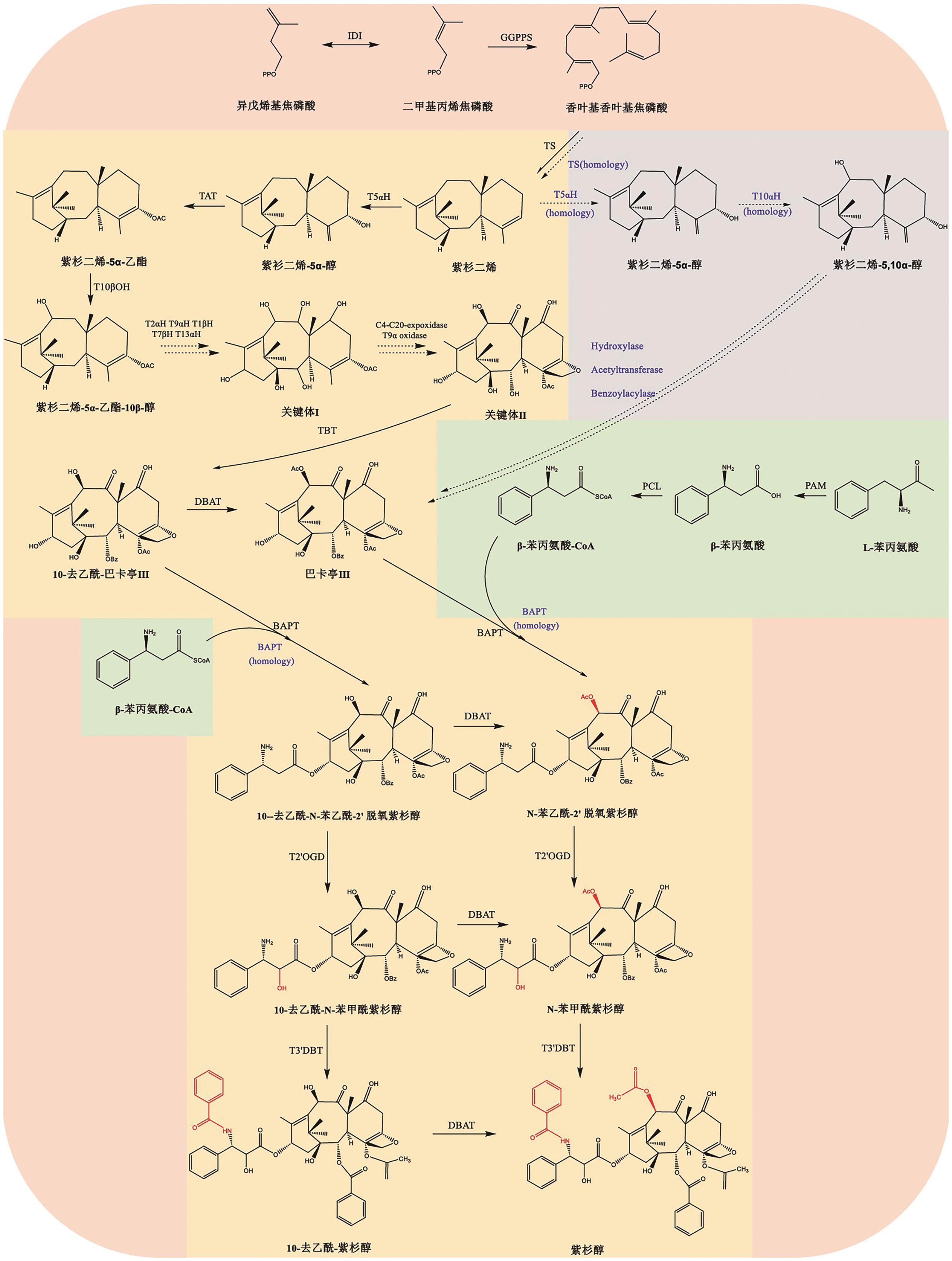
Fig. 1 Schematic diagram of paclitaxel biosynthetic pathwayThe key enzymes involved in the paclitaxel biosynthetic pathway include: 1) core skeleton synthases: IDI, GGPPS, TS; 2) core skeleton-modifying enzymes: multi-site hydroxylases (T5αH, T10βH, T13αH, T9αH, T7βH, T2αH, T1βH, T2'OGD) and acyltransferases (TAT, TBT, DBAT); 3) side-chain synthesis and assembly enzymes: PAM, BAPT, T3'DBT. The genes related to hydroxylases, acetyltransferases, and benzoylation in the paclitaxel biosynthesis pathway of endophytic fungi of the genus Taxus remain to be elucidated (marked in blue)
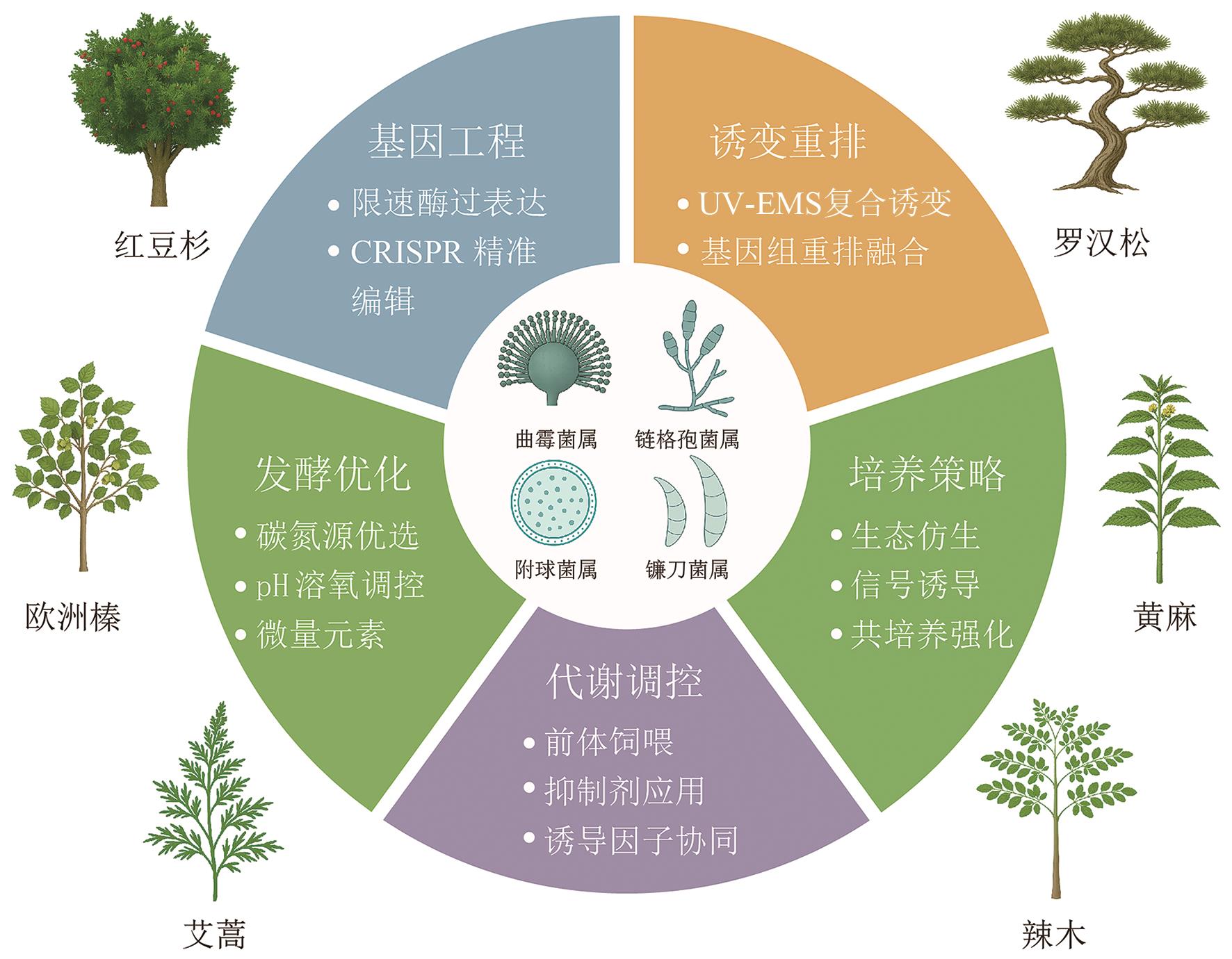
Fig. 2 Engineering strategies for high-yield production of paclitaxel by plant endophytic fungi
| [1] | Zwawiak J, Zaprutko L, Pawelczyk A. Strategies in taxol development: a review [J]. Mini Rev Med Chem, 2025, 25(5): 341-353. |
| [2] | Thiruvengadam M, Ahmed Khalil A, Rauf A, et al. Recent developments and anticancer therapeutics of paclitaxel: an update [J]. Curr Pharm Des, 2022, 28(41): 3363-3373. |
| [3] | Perez-Matas E, Hanano A, Moyano E, et al. Insights into the control of taxane metabolism: Molecular, cellular, and metabolic changes induced by elicitation in Taxus baccata cell suspensions [J]. Front Plant Sci, 2022, 13: 942433. |
| [4] | Gallego-Jara J, Lozano-Terol G, Sola-Martínez RA, et al. A compressive review about taxol®: history and future challenges [J]. Molecules, 2020, 25(24): 5986. |
| [5] | Tan RX, Chen XY. Uncovering the baccatin III biosynthetic pathway for sustainable taxoid supply [J]. Sci Bull, 2024, 69(9): 1182-1184. |
| [6] | Tomilova SV, Globa EB, Demidova EV, et al. Secondary metabolism in Taxus spp. plant cell culture in vitro [J]. Russ J Plant Physiol, 2023, 70(3): 23. |
| [7] | Jian ZY, Meng L, Hu XQ. An endophytic fungus efficiently producing paclitaxel isolated from Taxus wallichiana var. mairei [J]. Medicine, 2017, 96(27): e7406. |
| [8] | Bhunjun CS, Phukhamsakda C, Hyde KD, et al. Do all fungi have ancestors with endophytic lifestyles? [J]. Fungal Divers, 2024, 125(1): 73-98. |
| [9] | Li CY, Qi YL, Sun ZK, et al. Way to efficient microbial paclitaxel mass production [J]. Synth Syst Biotechnol, 2023, 8(4): 673-681. |
| [10] | Sonowal S, Gogoi U, Buragohain K, et al. Endophytic fungi as a potential source of anti-cancer drug [J]. Arch Microbiol, 2024, 206(3): 122. |
| [11] | Wang XC, Zhang W, Peng JB, et al. Lifestyle changes in Botryosphaeriaceae as evidenced by ancestral genome expansion and horizontal gene transfer [J]. Fungal Divers, 2024, 125(1): 221-241. |
| [12] | Kusari S, Singh S, Jayabaskaran C. Rethinking production of Taxol® (paclitaxel) using endophyte biotechnology [J]. Trends Biotechnol, 2014, 32(6): 304-311. |
| [13] | Qiao WC, Tang TH, Ling F. Comparative transcriptome analysis of a taxol-producing endophytic fungus, Aspergillus aculeatinus Tax-6, and its mutant strain [J]. Sci Rep, 2020, 10: 10558. |
| [14] | Qiao WC, Ling F, Yu L, et al. Enhancing taxol production in a novel endophytic fungus, Aspergillus aculeatinus Tax-6, isolated from Taxus chinensis var. mairei [J]. Fungal Biol, 2017, 121(12): 1037-1044. |
| [15] | Fu YF, Li XY, Yuan XH, et al. Alternaria alternata F3, a novel taxol-producing endophytic fungus isolated from the fruits of Taxus cuspidata: isolation, characterization, taxol yield improvement, and antitumor activity [J]. Appl Biochem Biotechnol, 2024, 196(4): 2246-2269. |
| [16] | Gauchan DP, Vélëz H, Acharya A, et al. Annulohypoxylon sp. strain MUS1, an endophytic fungus isolated from Taxus wallichiana Zucc., produces taxol and other bioactive metabolites [J]. 3 Biotech, 2021, 11(3): 152. |
| [17] | El-Sayed ER, Zaki AG, Ahmed AS, et al. Production of the anticancer drug taxol by the endophytic fungus Epicoccum nigrum TXB502: enhanced production by gamma irradiation mutagenesis and immobilization technique [J]. Appl Microbiol Biotechnol, 2020, 104(16): 6991-7003. |
| [18] | Somjaipeng S, Medina A, Kwaśna H, et al. Isolation, identification, and ecology of growth and taxol production by an endophytic strain of Paraconiothyrium variabile from English yew trees (Taxus baccata) [J]. Fungal Biol, 2015, 119(11): 1022-1031. |
| [19] | Jian ZY, Wang HS, Wang N, et al. Isolation and identification of an endophytic fungus producing paclitaxel from Taxus wallichiana var mairei [J]. Nutr Hosp, 2015, 32(6): 2932-2937. |
| [20] | Sharma A, Thakur P, Thakur V, et al. Paclitaxel production from endophytic Mucor circinelloides isolated from Taxus sp. of the Northern Himalayan region [J]. 3 Biotech, 2024, 14(10): 251. |
| [21] | Cao XY, Xu LX, Wang JY, et al. Endophytic fungus Pseudodidymocyrtis lobariellae KL27 promotes taxol biosynthesis and accumulation in Taxus chinensis [J]. BMC Plant Biol, 2022, 22: 12. |
| [22] | Vu THN, Quach NT, Pham QA, et al. Fusarium solani PQF9 isolated from Podocarpus pilgeri growing in Vietnam as a new producer of paclitaxel [J]. Indian J Microbiol, 2023, 63(4): 596-603. |
| [23] | El-Sayed ASA, Safan S, Mohamed NZ, et al. Induction of Taxol biosynthesis by Aspergillus terreus, endophyte of Podocarpus gracilior Pilger, upon intimate interaction with the plant endogenous microbes [J]. Process Biochem, 2018, 71: 31-40. |
| [24] | Obiedallah M, Yasien AA, Mohamed SS, et al. Endophytic Aspergillus fumigatiaffinis: Novel paclitaxel production and optimization insights [J]. Appl Microbiol Biotechnol, 2024, 108: 405. |
| [25] | Gill H, Vasundhara M. Isolation of taxol producing endophytic fungus Alternaria brassicicola from non-Taxus medicinal plant Terminalia arjuna [J]. World J Microbiol Biotechnol, 2019, 35(5): 74. |
| [26] | Ismaiel AA, Ahmed AS, Hassan IA, et al. Production of paclitaxel with anticancer activity by two local fungal endophytes, Aspergillus fumigatus and Alternaria tenuissima [J]. Appl Microbiol Biotechnol, 2017, 101(14): 5831-5846. |
| [27] | Raj KG, Manikandan R, Arulvasu C, et al. Anti-proliferative effect of fungal taxol extracted from Cladosporium oxysporum against human pathogenic bacteria and human colon cancer cell line HCT 15 [J]. Spectrochim Acta Part A Mol Biomol Spectrosc, 2015, 138: 667-674. |
| [28] | Das A, Rahman MI, Ferdous AS, et al. An endophytic Basidiomycete, Grammothele lineata, isolated from Corchorus olitorius, produces paclitaxel that shows cytotoxicity [J]. PLoS One, 2017, 12(6): e0178612. |
| [29] | Mohammadi Ballakuti N, Ghanati F, Zare-Maivan H, et al. Taxoid profile in endophytic fungi isolated from Corylus avellana, introduces potential source for the production of Taxol in semi-synthetic approaches [J]. Sci Rep, 2022, 12: 9390. |
| [30] | Ghaly M, Talat IE, Abeer A, et al. Isolation of anticancer drug taxol producing endophytic fungus Alternaria Alternata by using HPLC and LC-MS [J]. Am J Clin Pathol, 2020, 154(): S137-S138. |
| [31] | Gangadevi V, Muthumary J. Taxol, an anticancer drug produced by an endophytic fungus Bartalinia robillardoides Tassi, isolated from a medicinal plant, Aegle marmelos Correa ex Roxb [J]. World J Microbiol Biotechnol, 2008, 24(5): 717-724. |
| [32] | Pandi M, Kumaran RS, Choi YK, et al. Isolation and detection of taxol an anticancer drug produced from Lasiodiplodia theobromae an endophytic fungus of the medicinal plant Morinda citrifolia [J].Afr J Biotechnol, 2011, 10(8): 1428-1435 |
| [33] | Kumaran RS. Isolation of taxol, an anticancer drug produced by the endophytic fungus, Phoma betae [J]. Afr J Biotechnol, 2012, 11(4): 950-960. |
| [34] | Kumaran RS, Hur BK. Screening of species of the endophytic fungus Phomopsis for the production of the anticancer drug taxol [J]. Biotech And App Biochem, 2009, 54(1): 21-30. |
| [35] | Kumaran RS, Muthumary J, Hur BK. Taxol from Phyllosticta citricarpa, a leaf spot fungus of the angiosperm Citrus medica [J]. J Biosci Bioeng, 2008, 106(1): 103-106. |
| [36] | Kumaran RS, Muthumary J, Kim EK, et al. Production of taxol from Phyllosticta dioscoreae, a leaf spot fungus isolated from Hibiscus rosa-sinensis [J]. Biotechnol Bioproc E, 2009, 14(1): 76-83. |
| [37] | Kumaran RS, Muthumary J, Hur BK. Isolation and identification of an anticancer drug, taxol from Phyllosticta tabernaemontanae, a leaf spot fungus of an angiosperm, Wrightia tinctoria [J]. J Microbiol, 2009, 47(1): 40-49. |
| [38] | 孙端方, 冉雪琴, 王嘉福. 一株产紫杉醇罗汉松内生真菌的分离和鉴定 [J]. 微生物学报, 2008, 48(5): 589-595. |
| Sun DF, Ran XQ, Wang JF. Isolation and identification of a taxol-producing endophytic fungus from Podocrapus [J]. Acta Microbiol Sin, 2008, 48(5): 589-595. | |
| [39] | Sreekanth D, Sushim GK, Syed A, et al. Molecular and morphological characterization of a taxol-producing endophytic fungus, Gliocladium sp., from Taxus baccata [J]. Mycobiology, 2011, 39(3): 151-157. |
| [40] | Kathiravan G, Sri Raman V. In vitro TAXOL production, by Pestalotiopsis breviseta—a first report [J]. Fitoterapia, 2010, 81(6): 557-564. |
| [41] | Yang CS, Wang Y, Su Z, et al. Biosynthesis of the highly oxygenated tetracyclic core skeleton of Taxol [J]. Nat Commun, 2024, 15: 2339. |
| [42] | Xiong XY, Gou JB, Liao QG, et al. The Taxus genome provides insights into paclitaxel biosynthesis [J]. Nat Plants, 2021, 7(8): 1026-1036. |
| [43] | Zhang YJ, Wiese L, Fang H, et al. Synthetic biology identifies the minimal gene set required for paclitaxel biosynthesis in a plant chassis [J]. Mol Plant, 2023, 16(12): 1951-1961. |
| [44] | Jiang B, Gao L, Wang HJ, et al. Characterization and heterologous reconstitution of Taxus biosynthetic enzymes leading to baccatin III [J]. Science, 2024, 383(6683): 622-629. |
| [45] | Guerra-Bubb J, Croteau R, Williams RM. The early stages of taxol biosynthesis: an interim report on the synthesis and identification of early pathway metabolites [J]. Nat Prod Rep, 2012, 29(6): 683. |
| [46] | Sanchez-Muñoz R, Perez-Mata E, Almagro L, et al. A novel hydroxylation step in the taxane biosynthetic pathway: a new approach to paclitaxel production by synthetic biology [J]. Front Bioeng Biotechnol, 2020, 8: 410. |
| [47] | Sabzehzari M, Zeinali M, Naghavi MR. Alternative sources and metabolic engineering of Taxol: Advances and future perspectives [J]. Biotechnol Adv, 2020, 43: 107569. |
| [48] | Miao Z, Wang Y, Yu X, et al. A new endophytic taxane production fungus from Taxus chinensis [J]. Appl Biochem Microbiol, 2009, 45(1): 81-86. |
| [49] | Miao LY, Mo XC, Xi XY, et al. Transcriptome analysis of a taxol-producing endophytic fungus Cladosporium cladosporioides MD2 [J]. AMB Expr, 2018, 8: 41. |
| [50] | Kasaei A, Mobini-Dehkordi M, Mahjoubi F, et al. Isolation of taxol-producing endophytic fungi from Iranian yew through novel molecular approach and their effects on human breast cancer cell line [J]. Curr Microbiol, 2017, 74(6): 702-709. |
| [51] | Jiang L, Lv KJ, Zhu GL, et al. Norditerpenoids biosynthesized by variediene synthase-associated P450 machinery along with modifications by the host cell Aspergillus oryzae [J]. Synth Syst Biotechnol, 2022, 7(4): 1142-1147. |
| [52] | Weng CY, Han JY, Dong ZT, et al. Combinatorial strategy of modular metabolic engineering and fermentation optimization jointly improved gibberellic acid production in Fusarium fujikuroi [J]. Biotechnol J, 2025, 20(7): e70088. |
| [53] | Keller NP. Fungal secondary metabolism: regulation, function and drug discovery [J]. Nat Rev Microbiol, 2019, 17(3): 167-180. |
| [54] | Lutzoni F, Nowak MD, Alfaro ME, et al. Contemporaneous radiations of fungi and plants linked to symbiosis [J]. Nat Commun, 2018, 9: 5451. |
| [55] | Soliman SSM, Mosa KA, El-Keblawy AA, et al. Exogenous and endogenous increase in fungal GGPP increased fungal Taxol production [J]. Appl Microbiol Biotechnol, 2017, 101(20): 7523-7533. |
| [56] | El-Sayed ASA, Shindia AA, AbouZeid A, et al. Triggering the biosynthetic machinery of Taxol by Aspergillus flavipes via cocultivation with Bacillus subtilis: proteomic analyses emphasize the chromatin remodeling upon fungal-bacterial interaction [J]. Environ Sci Pollut Res, 2021, 28(29): 39866-39881. |
| [57] | El-Sayed ASA, Ali DMI, Yassin MA, et al. Sterol inhibitor “Fluconazole” enhance the Taxol yield and molecular expression of its encoding genes cluster from Aspergillus flavipes [J]. Process Biochem, 2019, 76: 55-67. |
| [58] | Soliman SSM, Raizada MN. Interactions between co-habitating fungi elicit synthesis of taxol from an endophytic fungus in host Taxus plants [J]. Front Microbio, 2013, 4: 3. |
| [59] | El-Sayed ER, Ismaiel AA, Ahmed AS, et al. Bioprocess optimization using response surface methodology for production of the anticancer drug paclitaxel by Aspergillus fumigatus and Alternaria tenuissima: Enhanced production by ultraviolet and gamma irradiation [J]. Biocatal Agric Biotechnol, 2019, 18: 100996. |
| [60] | Wei YM. Engineering taxol biosynthetic pathway for improving taxol yield in taxol-producing endophytic fungus EFY-21 (Ozonium sp.) [J]. Afr J Biotechnol, 2012, 11(37). |
| [61] | Subban K, Kempken F. Insights into Taxol® biosynthesis by endophytic fungi [J]. Appl Microbiol Biotechnol, 2023, 107(20): 6151-6162. |
| [62] | Wang T, Chen YM, Zhuang WB, et al. Transcriptome sequencing reveals regulatory mechanisms of taxol synthesis in Taxus wallichiana var. Mairei [J]. Int J Genom, 2019, 2019: 1596895. |
| [63] | He SQ, Bekhof AMW, Popova EZ, et al. Improved taxadiene production by optimizing DXS expression and fusing short-chain prenyltransferases [J]. New Biotechnol, 2024, 83: 66-73. |
| [64] | Do R, Kiss RS, Gaudet D, et al. Squalene synthase: a critical enzyme in the cholesterol biosynthesis pathway [J]. Clin Genet, 2009, 75(1): 19-29. |
| [65] | El-Sayed ASA, Abdel-Ghany SE, Ali GS. Genome editing approaches: manipulating of lovastatin and taxol synthesis of filamentous fungi by CRISPR/Cas9 system [J]. Appl Microbiol Biotechnol, 2017, 101(10): 3953-3976. |
| [66] | Callari R, Meier Y, Ravasio D, et al. Dynamic control of ERG20 and ERG9 expression for improved casbene production in Saccharomyces cerevisiae [J]. Front Bioeng Biotechnol, 2018, 6: 160. |
| [67] | Xu XR, Huang RY, Yin WB. An optimized and efficient CRISPR/Cas9 system for the endophytic fungus Pestalotiopsis fici [J]. JoF, 2021, 7(10): 809. |
| [68] | Xu F, Tao WY, Cheng L, et al. Strain improvement and optimization of the media of taxol-producing fungus Fusarium maire [J]. Biochem Eng J, 2006, 31(1): 67-73. |
| [69] | El-Sayed ER, Ahmed AS, Al-Hagar OEA. Agro-industrial wastes for production of paclitaxel by irradiated Aspergillus fumigatus under solid-state fermentation [J]. J Appl Microbiol, 2020, 128(5): 1427-1439. |
| [70] | Duan HT, Su X, Fan QQ, et al. Intergeneric protoplast fusion for probiotic strain improvement: Molecular mechanisms and metabolic analysis [J]. Food Biosci, 2025, 68: 106642. |
| [71] | Magocha TA, Zabed H, Yang MM, et al. Improvement of industrially important microbial strains by genome shuffling: Current status and future prospects [J]. Bioresour Technol, 2018, 257: 281-289. |
| [72] | Zhao K, Ping WX, Zhang LN, et al. Screening and breeding of high taxol producing fungi by genome shuffling [J]. Sci China Ser C-Life Sci, 2008, 51(3): 222-231. |
| [73] | Zhao K, Sun L, Ma X, et al. Improved taxol production in Nodulisporium sylviforme derived from inactivated protoplast fusion [J]. Afr J Biotechnol, 2011, 10(20):4175-4182. |
| [74] | Garyali S, Kumar A, Reddy MS. Enhancement of taxol production from endophytic fungus Fusarium redolens [J]. Biotechnol Bioproc E, 2014, 19(5): 908-915. |
| [75] | El-Sayed ASA, El Sayed MT, Nada HS, et al. Production and characterization of taxol as anticancer agent from Aspergillus terreus [J]. J Pure Appl Microbiol, 2019, 13(4): 2055-2063. |
| [76] | Naik BS. Developments in taxol production through endophytic fungal biotechnology: a review [J]. Orient Pharm Exp Med, 2019, 19(1): 352. |
| [77] | El-Sayed ASA, Fathalla M, Yassin MA, et al. Conjugation of Aspergillus flavipes taxol with porphyrin increases the anticancer activity of taxol and ameliorates its cytotoxic effects [J]. Molecules, 2020, 25(2): 263. |
| [78] | Subban K, Subramani R, Srinivasan VPM, et al. Salicylic acid as an effective elicitor for improved taxol production in endophytic fungus Pestalotiopsis microspora [J]. PLoS One, 2019, 14(2): e0212736. |
| [79] | Salehi M, Moieni A, Safaie N. Elicitors derived from hazel (Corylus avellana L.) cell suspension culture enhance growth and paclitaxel production of Epicoccum nigrum [J]. Sci Rep, 2018, 8: 12053. |
| [80] | Salehi M, Moieni A, Safaie N, et al. New synergistic co-culture of Corylus avellana cells and Epicoccum nigrum for paclitaxel production [J]. J Ind Microbiol Biotechnol, 2019, 46(5): 613-623. |
| [81] | Guo LC, Xi BW, Lu LS. Strategies to enhance production of metabolites in microbial co-culture systems [J]. Bioresour Technol, 2024, 406: 131049. |
| [82] | Yin JY, Lai M, Yu XY, et al. Comprehensive strategies for paclitaxel production: insights from plant cell culture, endophytic microorganisms, and synthetic biology [J]. Hortic Res, 2025, 12(3): uhae346. |
| [83] | Liang FY, Xie YM, Zhang C, et al. Elucidation of the final steps in Taxol biosynthesis and its biotechnological production [J]. Nat Synth, 2025, 4(10): 1212-1222. |
| [84] | Woodcraft C, Chooi YH, Roux I. The expanding CRISPR toolbox for natural product discovery and engineering in filamentous fungi [J]. Nat Prod Rep, 2023, 40(1): 158-173. |
| [85] | Mutanda I, Li JH, Xu FL, et al. Recent advances in metabolic engineering, protein engineering, and transcriptome-guided insights toward synthetic production of taxol [J]. Front Bioeng Biotechnol, 2021, 9: 632269. |
| [86] | Xie LF, Gao JQ, Zhou YJ. Synthetic biology for Taxol biosynthesis and sustainable production [J]. Trends Biotechnol, 2024, 42(6): 674-676. |
| [87] | Fernie AR, Liu F, Zhang YJ. Post-genomic illumination of paclitaxel biosynthesis [J]. Nat Plants, 2024, 10(12): 1875-1885. |
| [1] | LI Shu-ting, WANG Ying, DING Jia-hao, HU Rong-fang, LI Chen, SONG Ya-nan, XUE Jin-ai. Genome-wide Identification of the FAT Gene Family and Functional Analysis of CeFATA in Cyperus esculentus [J]. Biotechnology Bulletin, 2026, 42(8): 162-172. |
| [2] | GUO Wei, GENG Yue, LIANG Xiao, LIU Ying, WU Chun-ling, CHEN Qing. Effects of Insect-resistant and Insect-susceptible Cassava Varieties on the Expression of Wax Biosynthesis Genes in Phenacoccus manihoti [J]. Biotechnology Bulletin, 2026, 42(6): 128-138. |
| [3] | ZHANG Xin, CHEN Cheng, HUO Yuan-Bo, HUANG Ren-Li, ZHANG Li, ZHANG Kai, TONG Hua-rong, YUAN Lian-Yu. Cloning of the CsCRD1 in Tea Plants and Its Impact on Chlorophyll Biosynthesis [J]. Biotechnology Bulletin, 2026, 42(5): 280-291. |
| [4] | NI Fei-fei, CHEN Yi-cun, GAO Ming, ZHANG Sheng-jiao, PENG Fang-you, CHEN Tao-mei, ZHAO Yun-xiao, WANG Yang-dong. Identification of Litsea cubebaTCP Genes and Their Roles in the Regulation of Terpenoid Biosynthesis [J]. Biotechnology Bulletin, 2026, 42(4): 227-238. |
| [5] | YAN Xin, WU Xiao, HE Si-yu, DUAN Yu-huan, QIU Wu-xia, YUAN Xiao-qin, MAO Xin-fang, LIU Zhong-yuan. Inositol Biosynthesis and Fermentation Optimization of an Inositol Biosynthesis Pathway Using Citrus sinensis Inositol Phosphate Synthase Gene Csino3 [J]. Biotechnology Bulletin, 2026, 42(4): 345-356. |
| [6] | LIU Xiu-ping, ZHU Xing-yu, WANG Guang-yi. Research Progress in Metabolic Engineering for Modification and Syngas-directed Conversion by Acetogenic Clostridium [J]. Biotechnology Bulletin, 2026, 42(2): 65-76. |
| [7] | WANG Ting, MENG Yi-jiang, WANG Han, JIA Kai-xuan, QIAO Xiao-yu, HAN Bing-bing, LIU Xiao-qing, GE Shu-jun. Study on the Function of Ata4CL Gene in Flavonoid Synthesis and Drought Resistance in Aster tataricus [J]. Biotechnology Bulletin, 2026, 42(1): 230-240. |
| [8] | LIU Yu-shi, LI Zhen, ZOU Yu-chen, TANG Wei-wei, LI Bin. Advances in Spatial Metabolomics in Medicinal Plants [J]. Biotechnology Bulletin, 2025, 41(9): 22-31. |
| [9] | WANG Bin, LIN Chong, YUAN Xiao, JIANG Yuan-yuan, WANG Yu-kun, XIAO Yan-hui. Cloning of bHLH Transcription Factor UNE10 and Its Regulatory Roles in the Biosynthesis of Volatile Compounds in Clove Basil [J]. Biotechnology Bulletin, 2025, 41(9): 207-218. |
| [10] | CAI Ru-feng, YANG Yu-xuan, YU Ji-zheng, LI Jia-nan. Artificial Intelligence Transforms Protein Engineering: From Structural Analysis to Synthetic Biology through Algorithmic Advancements [J]. Biotechnology Bulletin, 2025, 41(8): 1-10. |
| [11] | GAO Jing, CHENG Yi-cun, GAO Ming, ZHAO Yun-xiao, WANG Yang-dong. Regulation of Plant Tannin Synthesis and Mechanisms of Its Responses to Environment [J]. Biotechnology Bulletin, 2025, 41(7): 49-59. |
| [12] | HUANG Xu-sheng, ZHOU Ya-li, CHAI Xu-dong, WEN Jing, WANG Ji-ping, JIA Xiao-yun, LI Run-zhi. Cloning of Plastidial PfLPAT1B Gene from Perilla frutescens and Its Functional Analysis in Oil Biosynthesis [J]. Biotechnology Bulletin, 2025, 41(7): 226-236. |
| [13] | WU Ya, YAO Run, YANG Han-ting, LIU Wei, YANG Shuai, SONG Chi, CHEN Shi-lin. Genome-wide Identification and Expression Analysis of SDR Gene Family in Mentha suaveolens ‘Variegata’ [J]. Biotechnology Bulletin, 2025, 41(5): 175-185. |
| [14] | LIU Shuang, JIANG Zhou, ZHAO Shuai, ZHAO Lei-zhen, HUANG Feng, ZHOU Jia, QU Jian-hang. Screening, Identification, and Fermentation Optimization of a Protease-producing Bacterial Strain [J]. Biotechnology Bulletin, 2025, 41(4): 335-344. |
| [15] | LU Tian-yi, LI Ai-peng, FEI Qiang. Research Progress in the Biosynthesis of Polylactic Acid [J]. Biotechnology Bulletin, 2025, 41(4): 47-60. |
| Viewed | ||||||
|
Full text |
|
|||||
|
Abstract |
|
|||||
