







Biotechnology Bulletin ›› 2025, Vol. 41 ›› Issue (1): 312-323.doi: 10.13560/j.cnki.biotech.bull.1985.2024-0387
Previous Articles Next Articles
JIANG Hong-yan( ), CHEN Shi-chun, LIAO Shu-ran, CHEN Ting-xu, WANG Xiao-qing()
Received:2024-04-23
Online:2025-01-26
Published:2025-01-22
Contact:
WANG Xiao-qing
E-mail:jianghy925@sina.com;wangxiaoqing2891@126.com
JIANG Hong-yan, CHEN Shi-chun, LIAO Shu-ran, CHEN Ting-xu, WANG Xiao-qing. The Complete Sequences and Phylogenetic Analysis of Mitochondrial Genomes in Eocanthecona concinna and Picromerus lewisi[J]. Biotechnology Bulletin, 2025, 41(1): 312-323.

Fig. 1 Mitochondrial genome structures of E. concinna(A)and P. lewis(B)
| 基因 Gene | 基因位置Gene position/bp | 基因长度Gene length/bp | 基因间隔Intergenic space/bp | 起始密码子/终止密码子Start codon/Stop codon | |||||||
|---|---|---|---|---|---|---|---|---|---|---|---|
| 曙厉蝽 E. concinna | 益蝽 P. lewisi | 曙厉蝽 E. concinna | 益蝽 P. lewisi | 曙厉蝽 E. concinna | 益蝽 P. lewisi | 曙厉蝽 E. concinna | 益蝽 P. lewisi | ||||
| cox1 | 1-1 537 | 1-1 537 | 1 537 | 1 537 | 15 | 7 | TTG/T- | TTG/T- | |||
| trnL2 | 1 538-1 602 | 1 538-1 601 | 65 | 64 | 0 | 0 | |||||
| cox2 | 1 603-2 281 | 1 602-2 280 | 679 | 679 | 0 | 0 | ATA/T- | ATA/T- | |||
| trnK | 2 282-2 354 | 2 281-2 354 | 73 | 74 | 0 | 0 | |||||
| trnD | 2 354-2 420 | 2 358-2 424 | 67 | 67 | -1 | 3 | |||||
| atp8 | 2 421-2 582 | 2 425-2 583 | 162 | 159 | 0 | 0 | TTG/TAA | GTG/TAA | |||
| atp6 | 2 576-3 250 | 2 577-3 251 | 675 | 675 | -7 | -7 | ATG/TAA | ATG/TAA | |||
| cox3 | 3 256-4 044 | 3 259-4 047 | 789 | 789 | 5 | 7 | ATG/TAA | ATG/TAA | |||
| trnG | 4 066-4 130 | 4 049-4 112 | 65 | 64 | 21 | 1 | |||||
| nad3 | 4 131-4 484 | 4 114-4 467 | 354 | 354 | 0 | 1 | ATC/TAA | ATA/TAA | |||
| trnA | 4 497-4 560 | 4 487-4 555 | 64 | 69 | 12 | 19 | |||||
| trnR | 4 590-4 654 | 4 562-4 628 | 65 | 67 | 29 | 6 | |||||
| trnN | 4 658-4 724 | 4 635-4 702 | 67 | 68 | 3 | 6 | |||||
| trnS1 | 4 731-4 800 | 4 702-4 771 | 70 | 70 | 6 | -1 | |||||
| trnE | 4 800-4 865 | 4 771-4 836 | 66 | 66 | -1 | -1 | |||||
| trnF | 4 882-4 946 | 4 837-4 904 | 65 | 68 | 16 | 0 | |||||
| nad5 | 4 947-6 654 | 4 915-6 624 | 1 708 | 1 710 | 0 | 10 | ATT/T- | ATT/TAA | |||
| trnH | 6 656-6 726 | 6 626-6 694 | 71 | 69 | 1 | 1 | |||||
| nad4 | 6 729-8 060 | 6 699-8 027 | 1 332 | 1 329 | 2 | 4 | ATG/TAA | ATG/TAA | |||
| nad4L | 8 054-8 341 | 8 021-8 308 | 288 | 288 | -7 | -7 | ATT/TAA | ATT/TAA | |||
| trnT | 8 344-8 407 | 8 311-8 377 | 64 | 67 | 2 | 2 | |||||
| trnP | 8 408-8 471 | 8 378-8 441 | 64 | 64 | 0 | 0 | |||||
| nad6 | 8 473-8 952 | 8 446-8 925 | 480 | 480 | 1 | 4 | ATG/TAA | ATG/TAA | |||
| cob | 8 968-10 107 | 8 933-10 072 | 1 140 | 1 140 | 15 | 7 | ATG/TAA | ATG/TAG | |||
| trnS2 | 10 119-10 187 | 10 075-10 143 | 69 | 69 | 11 | 2 | |||||
| nad1 | 10 216-11 136 | 10 169-11 089 | 921 | 921 | 28 | 25 | TTG/TAA | TTG/TAA | |||
| trnL1 | 11 137-11 202 | 11 090-11 156 | 66 | 67 | 0 | 0 | |||||
| rrnL | 11 203-12 482 | 11 157-12 449 | 1 280 | 1 293 | 0 | 0 | |||||
| trnV | 12 483-12 550 | 12 450-12 517 | 68 | 68 | 0 | 0 | |||||
| rrnS | 12 551-13 343 | 12 518-13 318 | 793 | 801 | 0 | 0 | |||||
| CR | 13 344-17 205 | 13 319-15 756 | 3 862 | 2 438 | 0 | 0 | |||||
| trnI | 17 206-17 272 | 15 757-15 823 | 67 | 67 | 0 | 0 | |||||
| trnQ | 17 374-17 442 | 15 827-15 897 | 69 | 71 | 101 | 3 | |||||
| trnM | 17 451-17 518 | 15 912-15 982 | 68 | 71 | 8 | 14 | |||||
| nad2 | 17 538-18 500 | 15 983-16 963 | 963 | 981 | 19 | 0 | ATA/TAG | ATT/TAA | |||
| trnW | 18 520-18 585 | 16 981-17 047 | 66 | 67 | 19 | 17 | |||||
| trnC | 18 591-18 653 | 17 040-17 102 | 63 | 63 | 5 | -8 | |||||
| trnY | 18 661-18 725 | 17 108-17 174 | 65 | 67 | 7 | 5 | |||||
Table 1 Gene composition of the mitochondrial genomes of E. concinna and P. lewisi
| 基因 Gene | 基因位置Gene position/bp | 基因长度Gene length/bp | 基因间隔Intergenic space/bp | 起始密码子/终止密码子Start codon/Stop codon | |||||||
|---|---|---|---|---|---|---|---|---|---|---|---|
| 曙厉蝽 E. concinna | 益蝽 P. lewisi | 曙厉蝽 E. concinna | 益蝽 P. lewisi | 曙厉蝽 E. concinna | 益蝽 P. lewisi | 曙厉蝽 E. concinna | 益蝽 P. lewisi | ||||
| cox1 | 1-1 537 | 1-1 537 | 1 537 | 1 537 | 15 | 7 | TTG/T- | TTG/T- | |||
| trnL2 | 1 538-1 602 | 1 538-1 601 | 65 | 64 | 0 | 0 | |||||
| cox2 | 1 603-2 281 | 1 602-2 280 | 679 | 679 | 0 | 0 | ATA/T- | ATA/T- | |||
| trnK | 2 282-2 354 | 2 281-2 354 | 73 | 74 | 0 | 0 | |||||
| trnD | 2 354-2 420 | 2 358-2 424 | 67 | 67 | -1 | 3 | |||||
| atp8 | 2 421-2 582 | 2 425-2 583 | 162 | 159 | 0 | 0 | TTG/TAA | GTG/TAA | |||
| atp6 | 2 576-3 250 | 2 577-3 251 | 675 | 675 | -7 | -7 | ATG/TAA | ATG/TAA | |||
| cox3 | 3 256-4 044 | 3 259-4 047 | 789 | 789 | 5 | 7 | ATG/TAA | ATG/TAA | |||
| trnG | 4 066-4 130 | 4 049-4 112 | 65 | 64 | 21 | 1 | |||||
| nad3 | 4 131-4 484 | 4 114-4 467 | 354 | 354 | 0 | 1 | ATC/TAA | ATA/TAA | |||
| trnA | 4 497-4 560 | 4 487-4 555 | 64 | 69 | 12 | 19 | |||||
| trnR | 4 590-4 654 | 4 562-4 628 | 65 | 67 | 29 | 6 | |||||
| trnN | 4 658-4 724 | 4 635-4 702 | 67 | 68 | 3 | 6 | |||||
| trnS1 | 4 731-4 800 | 4 702-4 771 | 70 | 70 | 6 | -1 | |||||
| trnE | 4 800-4 865 | 4 771-4 836 | 66 | 66 | -1 | -1 | |||||
| trnF | 4 882-4 946 | 4 837-4 904 | 65 | 68 | 16 | 0 | |||||
| nad5 | 4 947-6 654 | 4 915-6 624 | 1 708 | 1 710 | 0 | 10 | ATT/T- | ATT/TAA | |||
| trnH | 6 656-6 726 | 6 626-6 694 | 71 | 69 | 1 | 1 | |||||
| nad4 | 6 729-8 060 | 6 699-8 027 | 1 332 | 1 329 | 2 | 4 | ATG/TAA | ATG/TAA | |||
| nad4L | 8 054-8 341 | 8 021-8 308 | 288 | 288 | -7 | -7 | ATT/TAA | ATT/TAA | |||
| trnT | 8 344-8 407 | 8 311-8 377 | 64 | 67 | 2 | 2 | |||||
| trnP | 8 408-8 471 | 8 378-8 441 | 64 | 64 | 0 | 0 | |||||
| nad6 | 8 473-8 952 | 8 446-8 925 | 480 | 480 | 1 | 4 | ATG/TAA | ATG/TAA | |||
| cob | 8 968-10 107 | 8 933-10 072 | 1 140 | 1 140 | 15 | 7 | ATG/TAA | ATG/TAG | |||
| trnS2 | 10 119-10 187 | 10 075-10 143 | 69 | 69 | 11 | 2 | |||||
| nad1 | 10 216-11 136 | 10 169-11 089 | 921 | 921 | 28 | 25 | TTG/TAA | TTG/TAA | |||
| trnL1 | 11 137-11 202 | 11 090-11 156 | 66 | 67 | 0 | 0 | |||||
| rrnL | 11 203-12 482 | 11 157-12 449 | 1 280 | 1 293 | 0 | 0 | |||||
| trnV | 12 483-12 550 | 12 450-12 517 | 68 | 68 | 0 | 0 | |||||
| rrnS | 12 551-13 343 | 12 518-13 318 | 793 | 801 | 0 | 0 | |||||
| CR | 13 344-17 205 | 13 319-15 756 | 3 862 | 2 438 | 0 | 0 | |||||
| trnI | 17 206-17 272 | 15 757-15 823 | 67 | 67 | 0 | 0 | |||||
| trnQ | 17 374-17 442 | 15 827-15 897 | 69 | 71 | 101 | 3 | |||||
| trnM | 17 451-17 518 | 15 912-15 982 | 68 | 71 | 8 | 14 | |||||
| nad2 | 17 538-18 500 | 15 983-16 963 | 963 | 981 | 19 | 0 | ATA/TAG | ATT/TAA | |||
| trnW | 18 520-18 585 | 16 981-17 047 | 66 | 67 | 19 | 17 | |||||
| trnC | 18 591-18 653 | 17 040-17 102 | 63 | 63 | 5 | -8 | |||||
| trnY | 18 661-18 725 | 17 108-17 174 | 65 | 67 | 7 | 5 | |||||
| 基因区域 Gene region | A/% | T/% | C/% | G/% | A+T/% | AT-偏斜AT-skew | GC-偏斜GC-skew | ||||||||||||||
|---|---|---|---|---|---|---|---|---|---|---|---|---|---|---|---|---|---|---|---|---|---|
| 曙厉蝽 E. concinna | 益蝽 P. lewisi | 曙厉蝽 E. concinna | 益蝽 P. lewisi | 曙厉蝽 E. concinna | 益蝽 P. lewisi | 曙厉蝽 E. concinna | 益蝽 P. lewisi | 曙厉蝽 E. concinna | 益蝽 P. lewisi | 曙厉蝽 E. concinna | 益蝽 P. lewisi | 曙厉蝽 E. concinna | 益蝽 P. lewisi | ||||||||
| 全基因组 Whole genome | 40.52 | 40.80 | 33.94 | 32.97 | 14.47 | 15.31 | 11.07 | 10.91 | 74.46 | 73.77 | 0.088 | 0.106 | -0.133 | -0.168 | |||||||
| 蛋白质编码基因PCG | 31.47 | 31.76 | 41.12 | 40.86 | 13.91 | 13.81 | 13.49 | 13.57 | 72.60 | 72.62 | -0.133 | -0.125 | -0.015 | -0.009 | |||||||
| 1st codon | 34.50 | 35.36 | 34.88 | 34.30 | 12.26 | 12.14 | 18.35 | 18.20 | 69.39 | 69.66 | -0.005 | 0.015 | 0.199 | 0.200 | |||||||
| 2nd codon | 21.03 | 20.73 | 45.82 | 45.76 | 18.48 | 18.29 | 14.67 | 15.22 | 66.86 | 66.49 | -0.371 | -0.376 | -0.115 | -0.092 | |||||||
| 3rd codon | 38.88 | 39.18 | 42.67 | 42.53 | 10.99 | 11.01 | 7.46 | 7.28 | 81.55 | 81.71 | -0.046 | -0.041 | -0.192 | -0.204 | |||||||
| tRNA | 38.58 | 37.79 | 37.08 | 36.99 | 11.11 | 11.57 | 13.22 | 13.65 | 75.66 | 74.78 | 0.020 | 0.011 | 0.087 | 0.083 | |||||||
| rRNA | 33.77 | 32.81 | 43.37 | 43.94 | 8.25 | 8.31 | 14.62 | 14.95 | 77.13 | 76.74 | -0.124 | -0.145 | 0.278 | 0.285 | |||||||
Table 2 Nucleotide composition of the mitochondrial genomes of E. concinna and P. lewisi
| 基因区域 Gene region | A/% | T/% | C/% | G/% | A+T/% | AT-偏斜AT-skew | GC-偏斜GC-skew | ||||||||||||||
|---|---|---|---|---|---|---|---|---|---|---|---|---|---|---|---|---|---|---|---|---|---|
| 曙厉蝽 E. concinna | 益蝽 P. lewisi | 曙厉蝽 E. concinna | 益蝽 P. lewisi | 曙厉蝽 E. concinna | 益蝽 P. lewisi | 曙厉蝽 E. concinna | 益蝽 P. lewisi | 曙厉蝽 E. concinna | 益蝽 P. lewisi | 曙厉蝽 E. concinna | 益蝽 P. lewisi | 曙厉蝽 E. concinna | 益蝽 P. lewisi | ||||||||
| 全基因组 Whole genome | 40.52 | 40.80 | 33.94 | 32.97 | 14.47 | 15.31 | 11.07 | 10.91 | 74.46 | 73.77 | 0.088 | 0.106 | -0.133 | -0.168 | |||||||
| 蛋白质编码基因PCG | 31.47 | 31.76 | 41.12 | 40.86 | 13.91 | 13.81 | 13.49 | 13.57 | 72.60 | 72.62 | -0.133 | -0.125 | -0.015 | -0.009 | |||||||
| 1st codon | 34.50 | 35.36 | 34.88 | 34.30 | 12.26 | 12.14 | 18.35 | 18.20 | 69.39 | 69.66 | -0.005 | 0.015 | 0.199 | 0.200 | |||||||
| 2nd codon | 21.03 | 20.73 | 45.82 | 45.76 | 18.48 | 18.29 | 14.67 | 15.22 | 66.86 | 66.49 | -0.371 | -0.376 | -0.115 | -0.092 | |||||||
| 3rd codon | 38.88 | 39.18 | 42.67 | 42.53 | 10.99 | 11.01 | 7.46 | 7.28 | 81.55 | 81.71 | -0.046 | -0.041 | -0.192 | -0.204 | |||||||
| tRNA | 38.58 | 37.79 | 37.08 | 36.99 | 11.11 | 11.57 | 13.22 | 13.65 | 75.66 | 74.78 | 0.020 | 0.011 | 0.087 | 0.083 | |||||||
| rRNA | 33.77 | 32.81 | 43.37 | 43.94 | 8.25 | 8.31 | 14.62 | 14.95 | 77.13 | 76.74 | -0.124 | -0.145 | 0.278 | 0.285 | |||||||
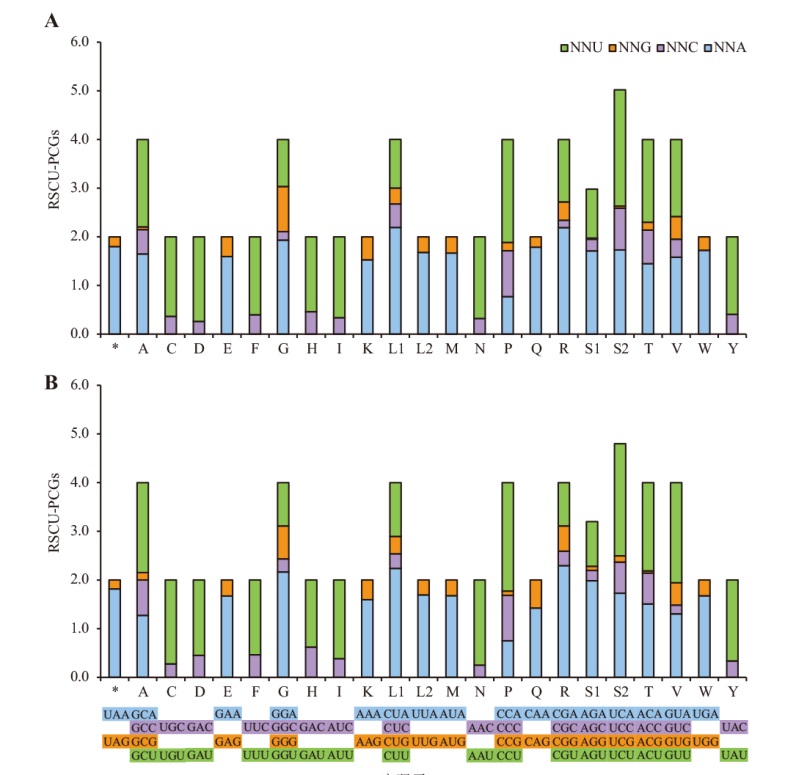
Fig. 2 Synonymous codon usage of PCGs in the mitochondrial genomes of E. concinna(A)and P. lewisi(B)
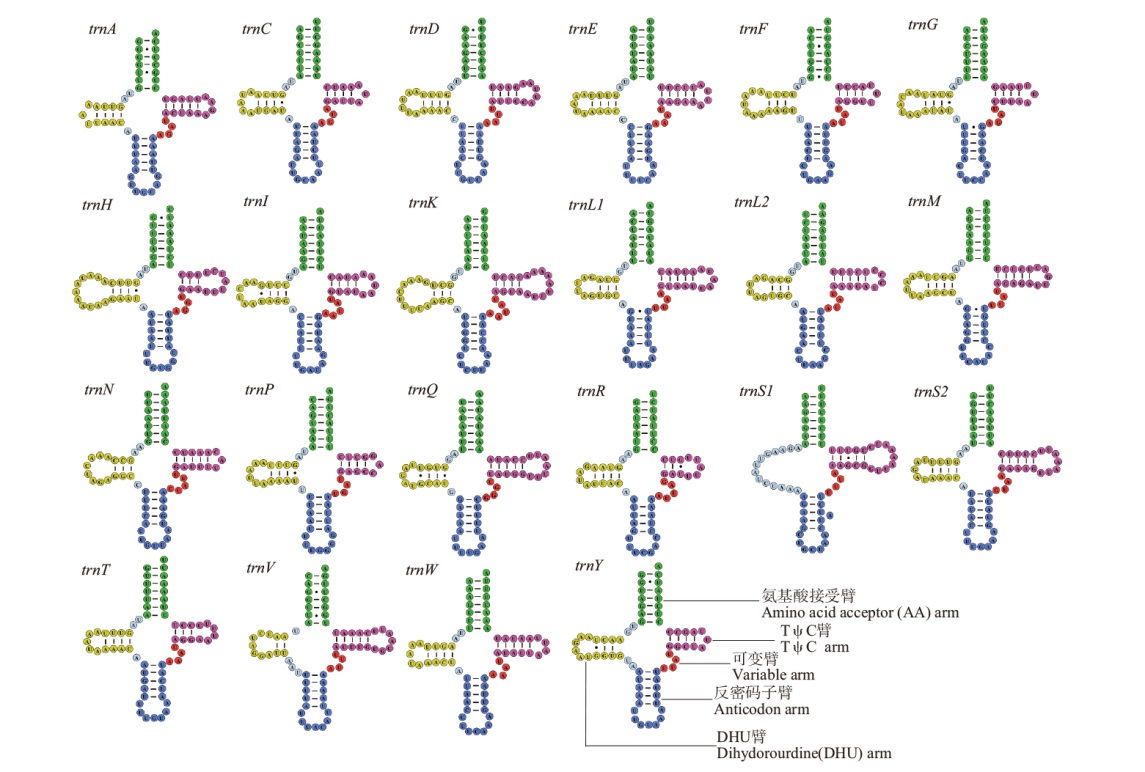
Fig. 3 Prediction of tRNA secondary structure in the mitochondrial genome of E. concinna
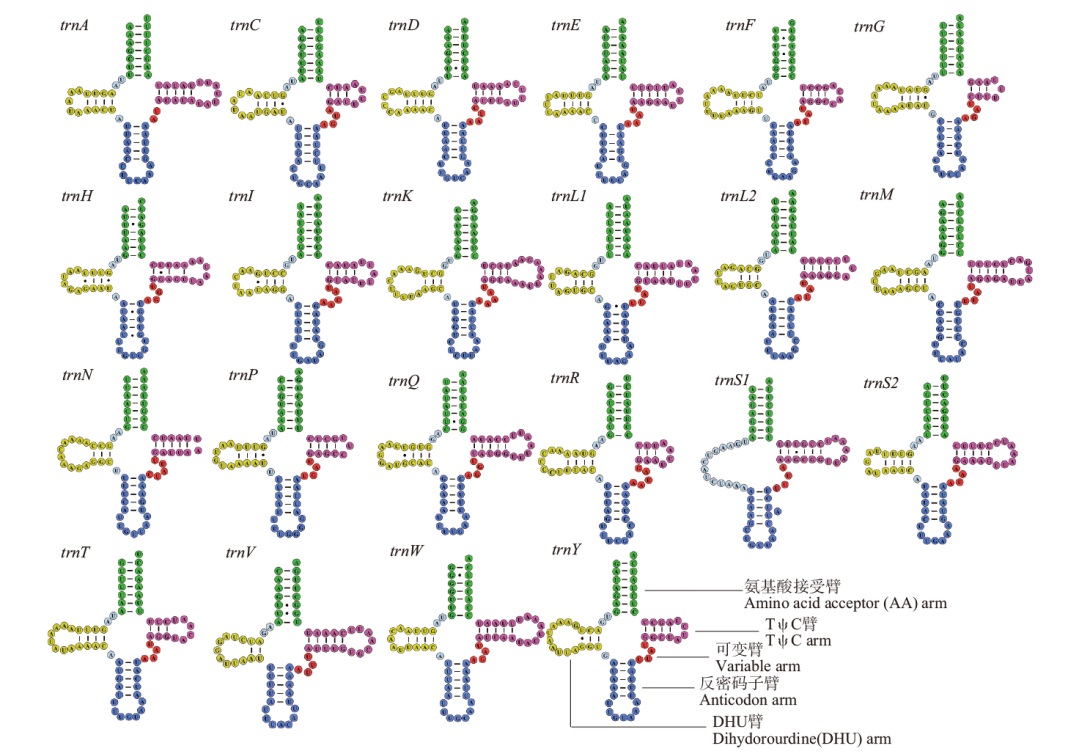
Fig. 4 Prediction of tRNA secondary structure in the mitochondrial genome of P. lewisi

Fig. 5 Structure of the control region in the mitochondrial genomes of Eocanthecona and Picromerus
| 曙厉蝽 E. concinna | 益蝽1 P. lewisi 1 | 益蝽2 P. lewisi 2 | 益蝽3 P. lewisi 3 | 益蝽4 P. lewisi 4 | 叉角曙厉蝽E. furcellata | 黑曙厉蝽1 E. thomsoni 1 | 黑曙厉蝽2 E. thomsoni 2 | 黑益蝽 P. griseus | 绿点益蝽P. viridipunctatus | 欧亚绿蝽 A. custos | 朝鲜镯蝽 A. koreana | 峰疣蝽 C. horvathi | 疣蝽C. verrucosa | 奥缘蝽D. dybowskyi | 蓝蝽 Z. caerulea | |
|---|---|---|---|---|---|---|---|---|---|---|---|---|---|---|---|---|
| 曙厉蝽 E. concinna | —— | 71.53 | 71.58 | 68.64 | 73.60 | 70.88 | 68.32 | 63.87 | 67.45 | 68.94 | 67.22 | 66.12 | 67.49 | 66.62 | 67.10 | 66.39 |
| 益蝽1 P. lewisi 1 | 81.24 | —— | 85.62 | 93.24 | 91.79 | 76.22 | 74.45 | 69.99 | 76.57 | 78.70 | 73.59 | 72.61 | 73.53 | 72.62 | 74.18 | 72.26 |
| 益蝽2 P. lewisi 2 | 81.13 | 98.16 | —— | 81.18 | 88.45 | 66.73 | 64.99 | 61.46 | 66.98 | 68.67 | 64.35 | 63.50 | 64.57 | 63.73 | 64.77 | 63.24 |
| 益蝽3 P. lewisi 3 | 81.17 | 99.80 | 98.17 | —— | 85.41 | 81.10 | 79.46 | 74.52 | 79.66 | 82.21 | 78.58 | 77.48 | 78.74 | 77.21 | 78.42 | 76.98 |
| 益蝽4 P. lewisi 4 | 81.07 | 98.43 | 98.60 | 98.47 | —— | 72.41 | 70.22 | 66.41 | 72.21 | 74.37 | 69.73 | 68.78 | 69.73 | 68.75 | 70.04 | 68.45 |
| 叉角曙厉蝽 E. furcellata | 83.23 | 82.59 | 82.36 | 82.54 | 82.18 | —— | 81.44 | 75.76 | 78.23 | 80.49 | 79.90 | 78.94 | 80.06 | 78.48 | 79.54 | 78.88 |
| 黑曙厉蝽1 E. thomsoni 1 | 81.59 | 81.34 | 81.48 | 81.24 | 81.35 | 83.41 | —— | 75.71 | 76.37 | 78.10 | 79.55 | 78.47 | 78.72 | 77.88 | 77.99 | 78.15 |
| 黑曙厉蝽2 E. thomsoni 2 | 81.43 | 81.39 | 81.41 | 81.36 | 81.47 | 82.46 | 81.42 | —— | 72.43 | 74.39 | 76.89 | 75.80 | 75.15 | 74.53 | 74.48 | 77.96 |
| 黑益蝽P. griseus | 79.26 | 81.68 | 81.83 | 81.66 | 81.71 | 80.31 | 79.47 | 79.78 | —— | 81.15 | 75.61 | 74.68 | 76.13 | 75.69 | 76.66 | 74.75 |
| 绿点益蝽 P. viridipunctatus | 81.39 | 84.39 | 84.04 | 84.32 | 84.03 | 82.99 | 81.26 | 82.21 | 82.45 | —— | 77.35 | 76.36 | 78.03 | 77.59 | 78.31 | 76.54 |
| 欧亚绿蝽 A. custos | 81.71 | 81.57 | 81.60 | 81.52 | 81.51 | 83.06 | 81.50 | 81.90 | 79.48 | 81.70 | —— | 86.40 | 79.22 | 77.91 | 78.89 | 82.62 |
| 朝鲜镯蝽 A. koreana | 80.14 | 80.29 | 80.23 | 80.21 | 80.06 | 81.74 | 80.19 | 80.66 | 78.18 | 80.36 | 86.97 | —— | 78.19 | 77.30 | 77.57 | 81.18 |
| 峰疣蝽 C. horvathi | 80.84 | 81.23 | 81.14 | 81.15 | 81.10 | 82.33 | 80.66 | 81.88 | 79.44 | 81.61 | 82.45 | 81.19 | —— | 80.73 | 79.20 | 78.88 |
| 疣蝽C. verrucosa | 79.94 | 79.57 | 79.53 | 79.48 | 79.52 | 80.94 | 79.48 | 81.08 | 78.56 | 80.53 | 80.93 | 80.06 | 82.22 | —— | 78.52 | 77.33 |
| 奥缘蝽 D. dybowskyi | 79.84 | 80.32 | 80.65 | 80.25 | 80.64 | 80.99 | 79.67 | 80.61 | 78.27 | 80.08 | 81.29 | 79.64 | 80.98 | 80.21 | —— | 77.78 |
| 蓝蝽Z. caerulea | 81.33 | 81.07 | 81.19 | 81.01 | 81.03 | 83.00 | 81.14 | 81.85 | 79.41 | 81.69 | 84.44 | 83.04 | 82.81 | 81.18 | 81.11 | —— |
Table 3 Mitochondrial genome similarity composition of 12 species of Asopina
| 曙厉蝽 E. concinna | 益蝽1 P. lewisi 1 | 益蝽2 P. lewisi 2 | 益蝽3 P. lewisi 3 | 益蝽4 P. lewisi 4 | 叉角曙厉蝽E. furcellata | 黑曙厉蝽1 E. thomsoni 1 | 黑曙厉蝽2 E. thomsoni 2 | 黑益蝽 P. griseus | 绿点益蝽P. viridipunctatus | 欧亚绿蝽 A. custos | 朝鲜镯蝽 A. koreana | 峰疣蝽 C. horvathi | 疣蝽C. verrucosa | 奥缘蝽D. dybowskyi | 蓝蝽 Z. caerulea | |
|---|---|---|---|---|---|---|---|---|---|---|---|---|---|---|---|---|
| 曙厉蝽 E. concinna | —— | 71.53 | 71.58 | 68.64 | 73.60 | 70.88 | 68.32 | 63.87 | 67.45 | 68.94 | 67.22 | 66.12 | 67.49 | 66.62 | 67.10 | 66.39 |
| 益蝽1 P. lewisi 1 | 81.24 | —— | 85.62 | 93.24 | 91.79 | 76.22 | 74.45 | 69.99 | 76.57 | 78.70 | 73.59 | 72.61 | 73.53 | 72.62 | 74.18 | 72.26 |
| 益蝽2 P. lewisi 2 | 81.13 | 98.16 | —— | 81.18 | 88.45 | 66.73 | 64.99 | 61.46 | 66.98 | 68.67 | 64.35 | 63.50 | 64.57 | 63.73 | 64.77 | 63.24 |
| 益蝽3 P. lewisi 3 | 81.17 | 99.80 | 98.17 | —— | 85.41 | 81.10 | 79.46 | 74.52 | 79.66 | 82.21 | 78.58 | 77.48 | 78.74 | 77.21 | 78.42 | 76.98 |
| 益蝽4 P. lewisi 4 | 81.07 | 98.43 | 98.60 | 98.47 | —— | 72.41 | 70.22 | 66.41 | 72.21 | 74.37 | 69.73 | 68.78 | 69.73 | 68.75 | 70.04 | 68.45 |
| 叉角曙厉蝽 E. furcellata | 83.23 | 82.59 | 82.36 | 82.54 | 82.18 | —— | 81.44 | 75.76 | 78.23 | 80.49 | 79.90 | 78.94 | 80.06 | 78.48 | 79.54 | 78.88 |
| 黑曙厉蝽1 E. thomsoni 1 | 81.59 | 81.34 | 81.48 | 81.24 | 81.35 | 83.41 | —— | 75.71 | 76.37 | 78.10 | 79.55 | 78.47 | 78.72 | 77.88 | 77.99 | 78.15 |
| 黑曙厉蝽2 E. thomsoni 2 | 81.43 | 81.39 | 81.41 | 81.36 | 81.47 | 82.46 | 81.42 | —— | 72.43 | 74.39 | 76.89 | 75.80 | 75.15 | 74.53 | 74.48 | 77.96 |
| 黑益蝽P. griseus | 79.26 | 81.68 | 81.83 | 81.66 | 81.71 | 80.31 | 79.47 | 79.78 | —— | 81.15 | 75.61 | 74.68 | 76.13 | 75.69 | 76.66 | 74.75 |
| 绿点益蝽 P. viridipunctatus | 81.39 | 84.39 | 84.04 | 84.32 | 84.03 | 82.99 | 81.26 | 82.21 | 82.45 | —— | 77.35 | 76.36 | 78.03 | 77.59 | 78.31 | 76.54 |
| 欧亚绿蝽 A. custos | 81.71 | 81.57 | 81.60 | 81.52 | 81.51 | 83.06 | 81.50 | 81.90 | 79.48 | 81.70 | —— | 86.40 | 79.22 | 77.91 | 78.89 | 82.62 |
| 朝鲜镯蝽 A. koreana | 80.14 | 80.29 | 80.23 | 80.21 | 80.06 | 81.74 | 80.19 | 80.66 | 78.18 | 80.36 | 86.97 | —— | 78.19 | 77.30 | 77.57 | 81.18 |
| 峰疣蝽 C. horvathi | 80.84 | 81.23 | 81.14 | 81.15 | 81.10 | 82.33 | 80.66 | 81.88 | 79.44 | 81.61 | 82.45 | 81.19 | —— | 80.73 | 79.20 | 78.88 |
| 疣蝽C. verrucosa | 79.94 | 79.57 | 79.53 | 79.48 | 79.52 | 80.94 | 79.48 | 81.08 | 78.56 | 80.53 | 80.93 | 80.06 | 82.22 | —— | 78.52 | 77.33 |
| 奥缘蝽 D. dybowskyi | 79.84 | 80.32 | 80.65 | 80.25 | 80.64 | 80.99 | 79.67 | 80.61 | 78.27 | 80.08 | 81.29 | 79.64 | 80.98 | 80.21 | —— | 77.78 |
| 蓝蝽Z. caerulea | 81.33 | 81.07 | 81.19 | 81.01 | 81.03 | 83.00 | 81.14 | 81.85 | 79.41 | 81.69 | 84.44 | 83.04 | 82.81 | 81.18 | 81.11 | —— |
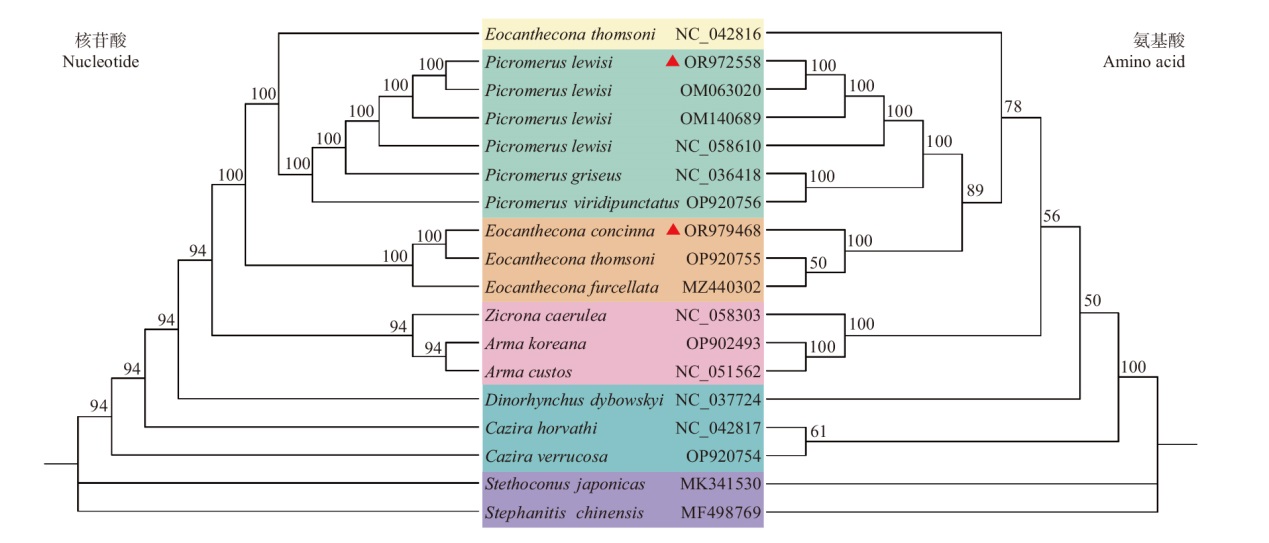
Fig. 6 Phylogenetic tree of 12 species of Asopinae insects
| [1] |
唐艺婷, 王孟卿, 李玉艳, 等. 捕食性蝽防治草地贪夜蛾的研究进展[J]. 中国生物防治学报, 2019, 35(5): 682-690.
doi: 10.16409/j.cnki.2095-039x.2019.05.014 |
| Tang YT, Wang MQ, Li YY, et al. Research advances of predatory bugs to Spodoptera frugiperda[J]. Chin J Biol Contr, 2019, 35(5): 682-690. | |
| [2] | 唐艺婷. 一种新天敌——益蝽的生物防治潜能研究[D]. 北京: 中国农业科学院, 2020. |
| Tang YT. Study on potential of a novel natural enemy insect Picromerus lewisi Scott in biological control[D]. Beijing: Chinese Academy of Agricultural Sciences, 2020. | |
| [3] | 唐美君, 王志博, 张欣欣, 等. 茶园新天敌绿点益蝽的初步研究[J]. 植物保护, 2023, 49(3): 231-235. |
| Tang MJ, Wang ZB, Zhang XX, et al. Picromerus viridipunctatus Yang: a new natural enemy in tea plantations[J]. Plant Prot, 2023, 49(3): 231-235. | |
| [4] | 陈琴. 植食性和捕食性蝽线粒体基因组比较研究[D]. 贵阳: 贵州师范大学, 2022. |
| Chen Q. Comparative study on the mitochondrial genomes of phytophagous and predatory stink bugs[D]. Guiyang: Guizhou Normal University, 2022. | |
| [5] | 魏书军, 陈学新. 昆虫比较线粒体基因组学研究进展[J]. 应用昆虫学报, 2011, 48(6): 1573-1585. |
| Wei SJ, Chen XX. Progress in research on the comparative mitogenomics of insects[J]. Chin J Appl Entomol, 2011, 48(6): 1573-1585. | |
| [6] | 王维, 孟智启, 石放雄, 等. 鳞翅目昆虫比较线粒体基因组学研究进展[J]. 科学通报, 2013, 58(30): 3017-3029. |
| Wang W, Meng ZQ, Shi FX, et al. Advances in comparative mitogenomic studies of Lepidoptera(Arthropoda: Insecta)[J]. Chin Sci Bull, 2013, 58(30): 3017-3029. | |
| [7] | 赵玲. 蝽科四亚科代表物种的比较线粒体基因组学研究[D]. 太谷: 山西农业大学, 2021. |
| Zhao L. Study on the comparative mitochondrial genomes of representative species of four subfamilies of Pentatomidae(Hemiptera: Pentatomoidea)[D]. Taigu: Shanxi Agricultural University, 2021. | |
| [8] | 廉丹, 魏久锋, 丁晓飞, 等. 蝽科线粒体基因组tRNA和rRNA基因的比较及应用(半翅目: 蝽总科)[J]. 福建农林大学学报: 自然科学版, 2022, 51(6): 782-791. |
| Lian D, Wei JF, Ding XF, et al. Comparison and application of tRNA and rRNA genes in the mitochondrial genome of Pentatomidae(Hemiptera: Pentatomoidea)[J]. J Fujian Agric For Univ Nat Sci Ed, 2022, 51(6): 782-791. | |
| [9] | 李荣荣, 李敏, 孙珊珊, 等. 红角辉蝽和紫翅果蝽线粒体完整基因组测序及蝽亚科系统发育分析(半翅目:蝽科)(英文)[J]. 昆虫学报, 2022, 65(10): 1343-1353. |
| Li RR, Li M, Sun SS, et al. Sequencing of the complete mitochondrial genomes of Carbula crassiventris and Carpocoris purpureipennis and phylogenetic analysis of Pentatominae(Hemiptera: Pentatomidae)[J]. Acta Entomologica Sinca, 2022, 65(10): 1343-1353. | |
| [10] | 李根丽, 王宇宸, 刘鑫阳, 等. 褐兜蝽线粒体全基因组序列及系统发育分析[J]. 福建农林大学学报: 自然科学版, 2023, 52(2): 149-159. |
| Li GL, Wang YC, Liu XY, et al. Complete mitochondrial genome and phylogenetic analysis of Coridius brunneus[J]. J Fujian Agric For Univ Nat Sci Ed, 2023, 52(2): 149-159. | |
| [11] | Zhao Q, Wei JF, Zhao WQ, et al. The first mitochondrial genome for the subfamily asopinae(Heteroptera: Pentatomidae)and its phylogenetic implications[J]. Mitochondrial DNA B Resour, 2017, 2(2): 804-805. |
| [12] | Mu YL, Zhang CH, Zhang YJ, et al. Characterizing the complete mitochondrial genome of Arma custos and Picromerus lewisi(Hemiptera: Pentatomidae: asopinae)and conducting phylogenetic analysis[J]. J Insect Sci, 2022, 22(1): 6. |
| [13] | Chen XH, Leng M, Yao DH, et al. The complete mitochondrial genome of Picromerus lewisi Scott 1874(Hemiptera: Pentatomidae: asopinae)[J]. Mitochondrial DNA B Resour, 2023, 8(2): 285-287. |
| [14] | Yuan ML, Zhang QL, Guo ZL, et al. Comparative mitogenomic analysis of the superfamily pentatomoidea(Insecta: Hemiptera: Heteroptera)and phylogenetic implications[J]. BMC Genomics, 2015, 16(1): 460. |
| [15] | 赵清. 中国益蝽亚科修订及蠋蝽属、辉蝽属和二星蝽属的DNA分类学研究(半翅目: 蝽科)[D]. 天津: 南开大学, 2013. |
| Zhao Q. A revision of the Asopinae from China and the study of DNA taxonomy of Arma, Carbula and Eysarcoris(Hemipetra: Pentatomidae)[D]. Tianjin: Nankai University, 2013. | |
| [16] | Thomas DB. Taxonomic synopsis of the old world asopine Genera(Heteroptera: Pentatomidae)[J]. Insect Mundi, 1994, 8: 145-212. |
| [17] | Thomas DB. Taxonomic synopsis of the asopinae Pentatomidae(Heteroptera)of thewestemn Hemisphere[M]. Lanham: Thomas Say foundation monographs - Entomological Society of American, 1992. |
| [18] |
Brugnera R, Campos LA, Grazia J. Revision of Tynacantha Dallas with description of two new species(Hemiptera: Heteroptera: Pentatomidae: asopinae)[J]. Zootaxa, 2019, 4656(3): 445-458.
doi: 10.11646/zootaxa.4656.3.3 |
| [19] | David AD, 郑乐怡. 中国蝽科名录与有关学名变动I.益蝽亚科(半翅目: 异翅亚目)[J]. 昆虫分类学报, 2002, 24(2): 107-115. |
| David AD, Zheng YY. Checklist and nomenclatural notes on the Chinese Pentatomidae(Heteroptera)I. Asopinae[J]. Entomotaxonomia, 2002, 24(2): 107-115. | |
| [20] | 曾明森, 吴光远, 王庆森. 茶园害虫捕食性天敌——厉蝽的生物学特性初步研究[J]. 福建农业学报, 2004, 19(3): 137-139. |
| Zeng MS, Wu GY, Wang QS. Biological characteristics of Can-theconidea concinna Walker, a natural enemy to pests in tea garden[J]. Fujian J Agric Sci, 2004, 19(3): 137-139. | |
| [21] | 曾明森, 吴光远, 王庆森. 茶园天敌厉蝽的初步研究[J]. 武夷科学, 2003, 19(0): 76-79. |
| Zeng MS, Wu GY, Wang QS. Preliminary studies on Cantheconidea concinna walker[J]. Wuyi Sci J, 2003, 19(0): 76-79. | |
| [22] | Lai Y, Li KY, Liu XY. Comprehensive DNA barcode reference library and optimization of genetic divergence threshold facilitate the exploration of species diversity of green lacewings(Neuroptera: Chrysopidae)[J]. Insect Sci, 2024, 31(2): 613-632. |
| [23] |
Li BY, Duan YG, Du ZY, et al. Natural selection and genetic diversity maintenance in a parasitic wasp during continuous biological control application[J]. Nat Commun, 2024, 15(1): 1379.
doi: 10.1038/s41467-024-45631-2 pmid: 38355730 |
| [24] |
Li HR, Peng Y, Wang YS, et al. Global patterns of genomic and phenotypic variation in the invasive harlequin ladybird[J]. BMC Biol, 2023, 21(1): 141.
doi: 10.1186/s12915-023-01638-7 pmid: 37337183 |
| [25] | Bernt M, Donath A, Jühling F, et al. MITOS: improved de novo metazoan mitochondrial genome annotation[J]. Mol Phylogenet Evol, 2013, 69(2): 313-319. |
| [26] | Lowe TM, Chan PP. tRNAscan-SE on-line: integrating search and context for analysis of transfer RNA genes[J]. Nucleic Acids Res, 2016, 44(W1): W54-W57. |
| [27] |
Lefort V, Longueville JE, Gascuel O. SMS: smart model selection in PhyML[J]. Mol Biol Evol, 2017, 34(9): 2422-2424.
doi: 10.1093/molbev/msx149 pmid: 28472384 |
| [28] |
Zhang D, Gao FL, Jakovlić I, et al. PhyloSuite: an integrated and scalable desktop platform for streamlined molecular sequence data management and evolutionary phylogenetics studies[J]. Mol Ecol Resour, 2020, 20(1): 348-355.
doi: 10.1111/1755-0998.13096 pmid: 31599058 |
| [29] | Nguyen LT, Schmidt HA, von Haeseler A, et al. IQ-TREE: a fast and effective stochastic algorithm for estimating maximum-likelihood phylogenies[J]. Mol Biol Evol, 2015, 32(1): 268-274. |
| [30] | Chen SC, Jiang HY, Liao SR, et al. Complete mitochondrial genome of Stethoconus japonicus(Hemiptera: Miridae): insights into the evolutionary traits within the family Miridae[J]. Gene, 2024, 891: 147830. |
| [31] | Zhang H, Lu CC, Liu Q, et al. Insights into the evolution of aphid mitogenome features from new data and comparative analysis[J]. Animals, 2022, 12(15): 1970. |
| [32] | 丁晓飞, 魏久锋, 高晓云, 等. 天敌昆虫蠋蝽线粒体基因组蛋白编码基因分析[J]. 山西农业科学, 2023, 51(2): 123-132. |
| Ding XF, Wei JF, Gao XY, et al. Analysis of protein coding genes in mitochondrial genome of a natural enemy, Arma custos[J]. J Shanxi Agric Sci, 2023, 51(2): 123-132. |
| [1] | LIU Dan-dan, WANG Lei-gang, SUN Ming-hui, JIAO Xiao-yu, WU Qiong, WANG Wen-jie. Genome-wide Identification and Expression Pattern Profiling of the Trehalose-6-phosphate Synthase(TPS)Gene Family in Tea Plant(Camellia sinensis) [J]. Biotechnology Bulletin, 2024, 40(8): 152-163. |
| [2] | WU Cui-cui, XIAO Shui-ping. Genome-wide Identification of HD-Zip Gene Family in Gossypium hirsutum L. and Expression Analysis in Response to Abiotic Stress [J]. Biotechnology Bulletin, 2024, 40(2): 130-145. |
| [3] | QU Chun-juan, ZHU Yue, JIANG Chen, QU Ming-jing, WANG Xiang-yu, LI Xiao. Whole Mitochondrial Genome and Phylogeny Analysis of Anomala corpulenta [J]. Biotechnology Bulletin, 2023, 39(2): 263-273. |
| [4] | LIN Xing-yu, SONG Nan. Comparative Mitochondrial Genome and Phylogenetic Analysis of Atteva charopis Turner, 1903 [J]. Biotechnology Bulletin, 2023, 39(12): 300-310. |
| [5] | LIU Xiong-wei, LIU Chang, ZENG Xian-fa, YANG Xiao-ying, FENG Ting-ting, ZHAO Jie-hong, ZHOU Ying. Comparative and Phylogenetic Analyses of Complete Chloroplast Genomes in Ardisia crenata [J]. Biotechnology Bulletin, 2023, 39(1): 232-242. |
| [6] | LIU Jing-ju, ZHANG Yu-sen, CHEN Juan, SUN Bing-da, ZHAO Guo-zhu. Research Progress in Modern Taxonomy and Nomenclature of Aspergillus [J]. Biotechnology Bulletin, 2022, 38(7): 109-118. |
| [7] | XUE Qing, DU Hong-rui, XUE Hui-ying, WANG Yi-hao, WANG Xuan, LI Hong-mei. Mitochondrial Genome and Phylogeny of Aphelenchoides medicagus [J]. Biotechnology Bulletin, 2021, 37(7): 98-106. |
| [8] | WANG Ping, CONG Ling, WANG Chun-yu, ZHU Zhen-xing, A Ashok KUMAR, ZHANG Li-xia, LU Xiao-chun. Comparison of Mitochondrial Genome Between A1 Cytoplasmic Male Sterile Line and Maintainer Line of Sorghum bicolor [J]. Biotechnology Bulletin, 2019, 35(5): 42-47. |
| [9] | JIN Qiao, LIU Xia, GAN Zhi-Kai. Sequencing and Analyzing Mitochondrial Genome of Cacopsylla coccinea [J]. Biotechnology Bulletin, 2018, 34(11): 127-135. |
| [10] | ZHU Xin-ni, WANG Shan-shan, ZHOU Jia-qin, ZHU Shi-hua. Research Advances of NDPKs in Plants [J]. Biotechnology Bulletin, 2017, 33(11): 19-28. |
| [11] | ZHANG Zhe,HUANG Chien-hsun,QI Ji. Revealing Deep Phylogeny of Brassicaceae Using Composition Analysis of Low-copy Nuclear Genes [J]. Biotechnology Bulletin, 2016, 32(12): 86-95. |
| [12] | Liu Guohong, Liu Bo, Lin Yingzhi, Tang Jianyang. The Comparsion of Bacillus Species Classification Based on Fatty Acid and 16S rRNA Gene [J]. Biotechnology Bulletin, 2015, 31(3): 146-153. |
| [13] | Ding Mei, Chen Xiang, Xu Houqiang, Wu Tonggui, Feng Wenwu, Bai Lin,. Phylogenetic Analysis of Three Domestic Pig Breeds in Guizhou Province [J]. Biotechnology Bulletin, 2014, 30(4): 96-101. |
| Viewed | ||||||
|
Full text |
|
|||||
|
Abstract |
|
|||||
