







Biotechnology Bulletin ›› 2025, Vol. 41 ›› Issue (2): 221-233.doi: 10.13560/j.cnki.biotech.bull.1985.2024-0704
KUANG Jian-hua1( ), CHENG Zhi-peng1, ZHAO Yong-jing1, YANG Jie1, CHEN Run-qiao2, CHEN Long-qing1, HU Hui-zhen1()
Received:2024-07-21
Online:2025-02-26
Published:2025-02-28
Contact:
HU Hui-zhen
E-mail:wyzdzjy_6-09@swfu.edu.cn;Jenny_0129@swfu.edu.cn
KUANG Jian-hua, CHENG Zhi-peng, ZHAO Yong-jing, YANG Jie, CHEN Run-qiao, CHEN Long-qing, HU Hui-zhen. Expression Analysis of the GH3 Gene Family in Nelumbo nucifera underHormonal and Abiotic Stresses[J]. Biotechnology Bulletin, 2025, 41(2): 221-233.
| 序号 No. | 基因名称 Gene name | 正向引物 Forward primer (5′-3′) | 反向引物 Reverse primer (5′-3′) |
|---|---|---|---|
| 1 | NnGH3.1 | TCACTCAGTTCTGGCACCAC | TGCAAGACCCCCTTTCGTTT |
| 2 | NnGH3.2 | GGCAACCCATGACTACGTGA | CTGTACGCCCATTAAGCCCA |
| 3 | NnGH3.3 | GATGGTTCGAAGAGGTCGCA | GAGGTGTACAGGGCTTCCAG |
| 4 | NnGH3.4 | CTCACGCCTGTGATGAACCT | CTGGTCTTGAAGTGGTCGCT |
| 5 | NnGH3.5 | GGTTCGAAGAGGTGGCAGAA | AATCCGCATGGGAAGCAAGA |
| 6 | NnGH3.6 | AGCGCCCATGTCGAATACTT | GGGTAATCCGCAGAGGATGG |
| 7 | NnGH3.7 | CTAACGGGGAGGCATCAAGG | GACAGGCACCAGCAGGTTAT |
| 8 | NnGH3.8 | CCTGACTTCCGCCAATCCTT | CTAGTTCAGGGTTGGGCCTG |
| 9 | NnGH3.9 | GTCTGGACCAAGGGAAAGGG | CTCGCTGTACCAGACCACAA |
| 10 | NnGH3.10 | GTACAAAGGGGAGGAGGCAC | GACGCTTGAACGTTGTCACC |
| 11 | NnGH3.11 | ACTACGGAAGCTGGAGGACT | GGGCGTAGTCGTCGTAAGAG |
| 12 | NnGH3.12 | CCTCTTGCTTCCCATGCAGA | ACCCTTGATCTGTAAGCGGC |
| 13 | NnGH3.13 | AGTTCTGGAACTTCTGCGGG | ACCTGGCGTCTTTGTCTCTG |
| 14 | NnGH3.14 | AGCCCCCATATGATCGTTGC | GATCGGTTCTGACTCAGCGT |
| 15 | NnACT | CTCCGTGTTGCCCCTGAAG | CCAGCAAGGTCCAACCGAAG |
Table 1 Sequences of primers
| 序号 No. | 基因名称 Gene name | 正向引物 Forward primer (5′-3′) | 反向引物 Reverse primer (5′-3′) |
|---|---|---|---|
| 1 | NnGH3.1 | TCACTCAGTTCTGGCACCAC | TGCAAGACCCCCTTTCGTTT |
| 2 | NnGH3.2 | GGCAACCCATGACTACGTGA | CTGTACGCCCATTAAGCCCA |
| 3 | NnGH3.3 | GATGGTTCGAAGAGGTCGCA | GAGGTGTACAGGGCTTCCAG |
| 4 | NnGH3.4 | CTCACGCCTGTGATGAACCT | CTGGTCTTGAAGTGGTCGCT |
| 5 | NnGH3.5 | GGTTCGAAGAGGTGGCAGAA | AATCCGCATGGGAAGCAAGA |
| 6 | NnGH3.6 | AGCGCCCATGTCGAATACTT | GGGTAATCCGCAGAGGATGG |
| 7 | NnGH3.7 | CTAACGGGGAGGCATCAAGG | GACAGGCACCAGCAGGTTAT |
| 8 | NnGH3.8 | CCTGACTTCCGCCAATCCTT | CTAGTTCAGGGTTGGGCCTG |
| 9 | NnGH3.9 | GTCTGGACCAAGGGAAAGGG | CTCGCTGTACCAGACCACAA |
| 10 | NnGH3.10 | GTACAAAGGGGAGGAGGCAC | GACGCTTGAACGTTGTCACC |
| 11 | NnGH3.11 | ACTACGGAAGCTGGAGGACT | GGGCGTAGTCGTCGTAAGAG |
| 12 | NnGH3.12 | CCTCTTGCTTCCCATGCAGA | ACCCTTGATCTGTAAGCGGC |
| 13 | NnGH3.13 | AGTTCTGGAACTTCTGCGGG | ACCTGGCGTCTTTGTCTCTG |
| 14 | NnGH3.14 | AGCCCCCATATGATCGTTGC | GATCGGTTCTGACTCAGCGT |
| 15 | NnACT | CTCCGTGTTGCCCCTGAAG | CCAGCAAGGTCCAACCGAAG |
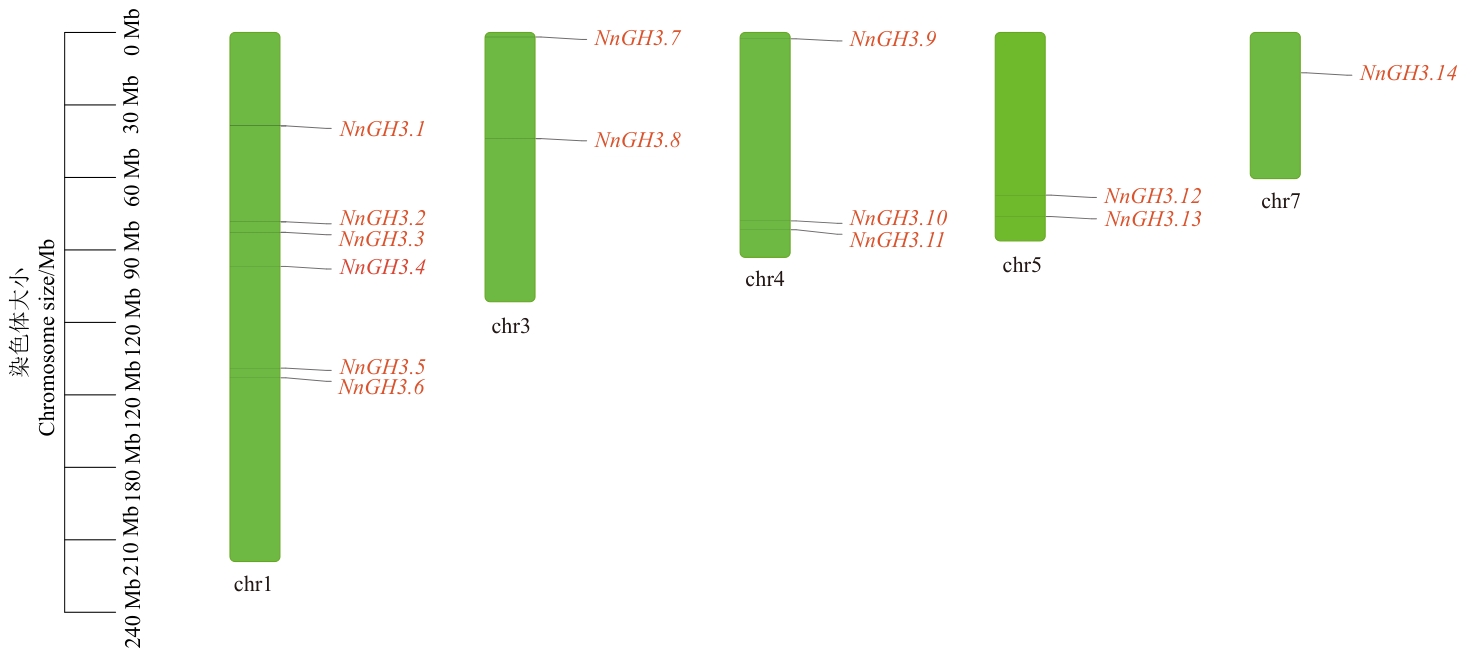
Fig. 1 Chromosomal localization of the GH3 gene family members in N. nucifera
基因名称 Gene name | 基因ID Gene identifier | 氨基酸数目 Amino acid amount | α螺旋 Alpha helix (Hh)/% | 无规则卷曲Random coil (Cc)/% | 延伸链 Extended strand (Ee)/% | β折叠 Beta turn (Tt)/% | 跨膜结构域数目 Transmembrane domain number | 信号肽数 Signal peptides |
|---|---|---|---|---|---|---|---|---|
| NnGH3.1 | Nn1g01814.2 | 586 | 34.64 | 57.85 | 7.51 | 0.00 | 0 | 0 |
| NnGH3.2 | Nn1g03776.1 | 621 | 34.14 | 60.39 | 5.48 | 0.00 | 0 | 0 |
| NnGH3.3 | Nn1g03969.3 | 590 | 32.88 | 59.49 | 7.63 | 0.00 | 0 | 0 |
| NnGH3.4 | Nn1g04653.2 | 599 | 36.06 | 58.76 | 5.18 | 0.00 | 0 | 0 |
| NnGH3.5 | Nn1g06683.3 | 595 | 34.62 | 55.63 | 9.75 | 0.00 | 0 | 0 |
| NnGH3.6 | Nn1g06894.2 | 616 | 36.04 | 59.25 | 4.71 | 0.00 | 0 | 0 |
| NnGH3.7 | Nn3g16244.1 | 630 | 40.48 | 54.60 | 4.92 | 0.00 | 0 | 0 |
| NnGH3.8 | Nn3g19075.2 | 587 | 34.58 | 57.24 | 8.18 | 0.00 | 0 | 0 |
| NnGH3.9 | Nn4g22107.1 | 615 | 36.91 | 57.24 | 5.85 | 0.00 | 0 | 0 |
| NnGH3.10 | Nn4g25867.1 | 603 | 36.15 | 58.71 | 5.14 | 0.00 | 0 | 0 |
| NnGH3.11 | Nn4g26117.1 | 579 | 38.51 | 53.71 | 7.77 | 0.00 | 0 | 0 |
| NnGH3.12 | Nn5g29859.2 | 592 | 29.73 | 59.63 | 10.64 | 0.00 | 0 | 0 |
| NnGH3.13 | Nn5g30464.6 | 595 | 34.45 | 60.84 | 4.71 | 0.00 | 0 | 0 |
| NnGH3.14 | Nn7g36856.1 | 365 | 22.78 | 58.89 | 18.33 | 0.00 | 0 | 0 |
Table 2 Prediction of secondary structure of N. nuciferaNnGH3 gene family
基因名称 Gene name | 基因ID Gene identifier | 氨基酸数目 Amino acid amount | α螺旋 Alpha helix (Hh)/% | 无规则卷曲Random coil (Cc)/% | 延伸链 Extended strand (Ee)/% | β折叠 Beta turn (Tt)/% | 跨膜结构域数目 Transmembrane domain number | 信号肽数 Signal peptides |
|---|---|---|---|---|---|---|---|---|
| NnGH3.1 | Nn1g01814.2 | 586 | 34.64 | 57.85 | 7.51 | 0.00 | 0 | 0 |
| NnGH3.2 | Nn1g03776.1 | 621 | 34.14 | 60.39 | 5.48 | 0.00 | 0 | 0 |
| NnGH3.3 | Nn1g03969.3 | 590 | 32.88 | 59.49 | 7.63 | 0.00 | 0 | 0 |
| NnGH3.4 | Nn1g04653.2 | 599 | 36.06 | 58.76 | 5.18 | 0.00 | 0 | 0 |
| NnGH3.5 | Nn1g06683.3 | 595 | 34.62 | 55.63 | 9.75 | 0.00 | 0 | 0 |
| NnGH3.6 | Nn1g06894.2 | 616 | 36.04 | 59.25 | 4.71 | 0.00 | 0 | 0 |
| NnGH3.7 | Nn3g16244.1 | 630 | 40.48 | 54.60 | 4.92 | 0.00 | 0 | 0 |
| NnGH3.8 | Nn3g19075.2 | 587 | 34.58 | 57.24 | 8.18 | 0.00 | 0 | 0 |
| NnGH3.9 | Nn4g22107.1 | 615 | 36.91 | 57.24 | 5.85 | 0.00 | 0 | 0 |
| NnGH3.10 | Nn4g25867.1 | 603 | 36.15 | 58.71 | 5.14 | 0.00 | 0 | 0 |
| NnGH3.11 | Nn4g26117.1 | 579 | 38.51 | 53.71 | 7.77 | 0.00 | 0 | 0 |
| NnGH3.12 | Nn5g29859.2 | 592 | 29.73 | 59.63 | 10.64 | 0.00 | 0 | 0 |
| NnGH3.13 | Nn5g30464.6 | 595 | 34.45 | 60.84 | 4.71 | 0.00 | 0 | 0 |
| NnGH3.14 | Nn7g36856.1 | 365 | 22.78 | 58.89 | 18.33 | 0.00 | 0 | 0 |

Fig. 2 Tertiary structure of proteins encoded by GH3 gene family members of N. nucifera

Fig. 3 Unrooted phylogenetic tree of the GH3 gene family in N. nucifera(14), A. thaliana(19) and O. sativa(13)indicates NnGH3s: Nelumbo nucifera; indicates AtGH3s: Arabidopsis thaliana; indicates OsGH3s: Oryza sativa

Fig. 4 Motif and gene structure of the NnGH3 family in N. nucifera

Fig. 5 Intraspecific covariance analysis of the NnGH3 family (A) and interspecific covariance analysis (B) of N. nucifera, A. thaliana, and O. sativaChr1-Chr8 indicate chromosome 1-8 of N. nucifera, the heat map indicates gene density, red lines indicate intragroup and interspecies covariate gene pairs for the NnGH3 gene
基因对 Gene pair | 非同义替换率 Non-synonymous substitution rate (Ka) | 同义替换率 Synonymous substitution rate (Ks) | Ka/Ks |
|---|---|---|---|
| NnGH3.1/NnGH3.8 | 0.082 | 0.651 | 0.126 |
| NnGH3.4/NnGH3.13 | 0.043 | 0.523 | 0.081 |
Table 3 Ka/Ks values of collinear gene pairs of GH3 gene family in N. nucifera
基因对 Gene pair | 非同义替换率 Non-synonymous substitution rate (Ka) | 同义替换率 Synonymous substitution rate (Ks) | Ka/Ks |
|---|---|---|---|
| NnGH3.1/NnGH3.8 | 0.082 | 0.651 | 0.126 |
| NnGH3.4/NnGH3.13 | 0.043 | 0.523 | 0.081 |

Fig. 6 Cis-acting elements analysis in the promotors of NnGH3 gene family in N. nucifera

Fig. 7 Expression analysis of the NnGH3 gene family in N. nucifera treated with exogenous 0.1 mmol/L IAA, 5 mmol/L SA, 1 mmol/L JA, and (4℃) low temperature, flooding, 300 mmol/L NaCl for 6 h* P<0.05, **: P<0.01, indicates that the expression of the gene is significantly different from the control
| 1 | Chapman EJ, Estelle M. Mechanism of auxin-regulated gene expression in plants [J]. Annu Rev Genet, 2009, 43: 265-285. |
| 2 | 余姝姝, 周俊琴, 卢梦琪, 等.油茶3个 ARF 基因的克隆及表达分析 [J] .植物生理学报, 2021, 57(5): 1151-1162. |
| Yu SS, Zhou JQ, Lu MQ, et al. Cloning and expression analysis of three ARF genes in Camellia oleifera [J] . Plant Physiol J, 2021, 57(5): 1151-1162. | |
| 3 | Park JE, Park JY, Kim YS, et al. GH3-mediated auxin homeostasis links growth regulation with stress adaptation response in Arabidopsis [J]. J Biol Chem, 2007, 282(13): 10036-10046. |
| 4 | Hagen G, Kleinschmidt A, Guilfoyle T. Auxin-regulated gene expression in intact soybean hypocotyl and excised hypocotyl sections [J]. Planta, 1984, 162(2): 147-153. |
| 5 | Conner TW, Goekjian VH, LaFayette PR, et al. Structure and expression of two auxin-inducible genes from Arabidopsis [J]. Plant Mol Biol, 1990, 15(4): 623-632. |
| 6 | Staswick PE, Serban B, Rowe M, et al. Characterization of an Arabidopsis enzyme family that conjugates amino acids to indole-3-acetic acid [J]. Plant Cell, 2005, 17(2): 616-627. |
| 7 | Terol J, Domingo C, Talón M. The GH3 family in plants: genome wide analysis in rice and evolutionary history based on EST analysis [J]. Gene, 2006, 371(2): 279-290. |
| 8 | Tuskan GA, Difazio S, Jansson S, et al. The genome of black cottonwood, Populus trichocarpa (Torr. & Gray) [J]. Science, 2006, 313(5793): 1596-1604. |
| 9 | Kumar R, Agarwal P, Tyagi AK, et al. Genome-wide investigation and expression analysis suggest diverse roles of auxin-responsive GH3 genes during development and response to different stimuli in tomato (Solanum lycopersicum) [J]. Mol Genet Genomics, 2012, 287(3): 221-235. |
| 10 | Yuan HZ, Zhao K, Lei HJ, et al. Genome-wide analysis of the GH3 family in apple (Malus × domestica) [J]. BMC Genomics, 2013, 14: 297. |
| 11 | 侯黔东, 沈天娇, 余欢欢, 等. 甜樱桃GH3基因家族全基因组鉴定与表达分析 [J]. 园艺学报, 2021, 48(12): 2360-2374. |
| Hou QD, Shen TJ, Yu HH, et al. Genome-wide identification and expression analysis of Prunus avium gretchen Hagen 3 (GH3) gene family [J]. Acta Hortic Sin, 2021, 48(12): 2360-2374. | |
| 12 | Hagen G, Guilfoyle T. Auxin-responsive gene expression: genes, promoters and regulatory factors [J]. Plant Mol Biol, 2002, 49(3/4): 373-385. |
| 13 | Sherp AM, Westfall CS, Alvarez S, et al. Arabidopsis thaliana GH3.15 acyl acid amido synthetase has a highly specific substrate preference for the auxin precursor indole-3-butyric acid [J]. J Biol Chem, 2018, 293(12): 4277-4288. |
| 14 | 园园, 恩和巴雅尔, 齐艳华. 植物GH3基因家族生物学功能研究进展 [J]. 植物学报, 2023, 58(5): 770-782. |
| Yuan Y, En HBYE, Qi YH. Research advances in biological functions of GH3 gene family in plants [J]. Chin Bull Bot, 2023, 58(5): 770-782. | |
| 15 | Hui SG, Hao MY, Liu HB, et al. The group I GH3 family genes encoding JA-Ile synthetase act as positive regulator in the resistance of rice to Xanthomonas oryzae pv. oryzae [J]. Biochem Biophys Res Commun, 2019, 508(4): 1062-1066. |
| 16 | Rao MV, Lee H, Creelman RA, et al. Jasmonic acid signaling modulates ozone-induced hypersensitive cell death [J]. Plant Cell, 2000, 12(9): 1633-1646. |
| 17 | Jagadeeswaran G, Raina S, Acharya BR, et al. Arabidopsis GH3-LIKE DEFENSE GENE 1 is required for accumulation of salicylic acid, activation of defense responses and resistance to Pseudomonas syringae [J]. Plant J, 2007, 51(2): 234-246. |
| 18 | 周淑瑶, 李建明, 毛娟. AtGH3.17调控拟南芥生长素和油菜素甾醇的响应 [J]. 植物学报, 2023, 58(3): 373-384. |
| Zhou SY, Li JM, Mao J. AtGH3.17-mediated regulation of auxin and brassinosteroid response in Arabidopsis thaliana [J]. Chin Bull Bot, 2023, 58(3): 373-384. | |
| 19 | 曾亚, 丁新华, 沈祥陵, 等. 水稻抗病基因介导的抗白叶枯病反应中蛋白质表达谱的比较分析 [J]. 中国水稻科学, 2008, 22(3): 234-242. |
| Zeng Y, Ding XH, Shen XL, et al. Analysis of protein expression profiling in rice disease resistance gene-mediated resistance to Xanthomonas oryzae pv. oryzae [J]. Chin J Rice Sci, 2008, 22(3): 234-242. | |
| 20 | Ding XH, Cao YL, Huang LL, et al. Activation of the indole-3-acetic acid-amido synthetase GH3-8 suppresses expansin expression and promotes salicylate- and jasmonate-independent basal immunity in rice [J]. Plant Cell, 2008, 20(1): 228-240. |
| 21 | Wang SK, Bai YH, Shen CJ, et al. Auxin-related gene families in abiotic stress response in Sorghum bicolor [J]. Funct Integr Genom, 2010, 10(4): 533-546. |
| 22 | Singh VK, Jain M, Garg R. Genome-wide analysis and expression profiling suggest diverse roles of GH3 genes during development and abiotic stress responses in legumes [J]. Front Plant Sci, 2015, 5: 789. |
| 23 | 王其超, 张行言.荷花发展前景——从中国视角展望 [J] .中国园林, 2011, 27(1): 50-53. |
| Wang QC, Zhang XY. The development prospect of Nelumbo nucifera-from the perspective of China [J] .Chin Landsc Archit, 2011, 27(1): 50-53. | |
| 24 | 程志鹏, 汪仲毅, 匡健华, 等. 荷花PIN基因家族的鉴定及非生物胁迫表达分析 [J]. 西北植物学报, 2024, 44(1): 1-12. |
| Cheng ZP, Wang ZY, Kuang JH, et al. Genome-wide identification and expression pattern of the PIN gene family under abiotic stress in Nelumbo nucifera [J]. Acta Bot Boreali Occidentalia Sin, 2024, 44(1): 1-12. | |
| 25 | 李祥志, 刘兆磊, 陈发棣, 等. 荷花耐深水评价体系及耐深水鉴定 [J]. 安徽农业科学, 2014, 42(3): 679-682. |
| Li XZ, Liu ZL, Chen FD, et al. Study on establishment of evaluation system for deepwater tolerance and its identification of Nelumbo nucifera gaertn [J]. J Anhui Agric Sci, 2014, 42(3): 679-682. | |
| 26 | 汪仲毅, 程志鹏, 顾伟卓, 等. 荷花(Nelumbo nucifera)全基因组PRR基因家族鉴定及其在多种非生物胁迫下的表达模式 [J]. 基因组学与应用生物学, 2023, 42(1): 60-72. |
| Wang ZY, Cheng ZP, Gu WZ, et al. Genome-wide identification and expression pattern of PRR gene family in Nelumbo nucifera under various abiotic stresses [J]. Genom Appl Biol, 2023, 42(1): 60-72. | |
| 27 | Zou WH, Lin PX, Zhao ZN, et al. Genome-wide identification of auxin-responsive GH3 gene family in Saccharum and the expression of ScGH3-1 in stress response [J]. Int J Mol Sci, 2022, 23(21): 12750. |
| 28 | Pinto RT, Freitas NC, Máximo WPF, et al. Genome-wide analysis, transcription factor network approach and gene expression profile of GH3 genes over early somatic embryogenesis in Coffea spp [J]. BMC Genomics, 2019, 20(1): 812. |
| 29 | Yang YJ, Yue RQ, Sun T, et al. Genome-wide identification, expression analysis of GH3 family genes in Medicago truncatula under stress-related hormones and Sinorhizobium meliloti infection [J]. Appl Microbiol Biotechnol, 2015, 99(2): 841-854. |
| 30 | Feng L, Li GR, He ZB, et al. The ARF, GH3, and Aux/IAA gene families in castor bean (Ricinus communis L.): Genome-wide identification and expression profiles in high-stalk and dwarf strains [J]. Ind Crops Prod, 2019, 141: 111804. |
| 31 | 林晓艺, 唐梦洁, 李小芳, 等. 龙眼GH3家族成员的全基因组鉴定及表达分析 [J]. 福建农林大学学报: 自然科学版, 2023, 52(2): 166-177. |
| Lin XY, Tang MJ, Li XF, et al. Genome-wide identification and expression analysis of GH3 gene family in Dimocarpus longan [J]. J Fujian Agric For Univ Nat Sci Ed, 2023, 52(2): 166-177. | |
| 32 | 岳龙, 罗振兴, 张永鑫, 等. 梨PbrGH3基因家族的鉴定与分析 [J]. 分子植物育种, 2024, 22(7): 2137-2143. |
| Yue L, Luo ZX, Zhang YX, et al. Identification and analysis of the PbrGH3 gene family in Pyrus bretschneideri [J]. Mol Plant Breed, 2024, 22(7): 2137-2143. | |
| 33 | 邢媛, 宋健, 李俊怡, 等. 谷子AP基因家族鉴定及其对非生物胁迫的响应分析 [J]. 生物技术通报, 2023, 39(11): 238-251. |
| Xing Y, Song J, Li JY, et al. Identification of AP gene family and its response analysis to abiotic stress in Setaria italica [J]. Biotechnol Bull, 2023, 39(11): 238-251. | |
| 34 | 陈凯, 佟晓楠, 张晓媛, 等. 枳LEA基因家族鉴定及其对非生物胁迫的响应 [J]. 西北植物学报, 2023, 43(6): 918-928. |
| Chen K, Tong XN, Zhang XY, et al. Genome-wide identification and abiotic stress responses of LEA gene family in Poncirus trifoliata [J]. Acta Bot Boreali Occidentalia Sin, 2023, 43(6): 918-928. | |
| 35 | Yan SP, Dong XN. Perception of the plant immune signal salicylic acid [J]. Curr Opin Plant Biol, 2014, 20: 64-68. |
| 36 | Li JY, Min XY, Luo K, et al. Molecular characterization of the GH3 family in alfalfa under abiotic stress [J]. Gene, 2023, 851: 146982. |
| 37 | Vijayan P, Shockey J, Lévesque CA, et al. A role for jasmonate in pathogen defense of Arabidopsis [J]. Proc Natl Acad Sci U S A, 1998, 95(12): 7209-7214. |
| 38 | Du H, Wu N, Fu J, et al. A GH3 family member, OsGH3-2, modulates auxin and abscisic acid levels and differentially affects drought and cold tolerance in rice [J]. J Exp Bot, 2012, 63(18): 6467-6480. |
| 39 | Westfall CS, Zubieta C, Herrmann J, et al. Structural basis for prereceptor modulation of plant hormones by GH3 proteins [J]. Science, 2012, 336(6089): 1708-1711. |
| [1] | JIA Zi-jian, WANG Bao-qiang, CHEN Li-fei, WANG Yi-zhen, WEI Xiao-hong, ZHAO Ying. Expression Patterns of CHX Gene Family in Quinoa in Response to NO under Saline-alkali Stress [J]. Biotechnology Bulletin, 2025, 41(2): 163-174. |
| [2] | YAN Wei, CHEN Hui-ting, YE Qing, LIU Guang-chao, LIU Xin, HOU Li-xia. Identification of the Grape HCT Gene Family and Their Responses to Low-temperature Stress [J]. Biotechnology Bulletin, 2025, 41(2): 175-186. |
| [3] | DU Pin-ting, WU Guo-jiang, WANG Zhen-guo, LI Yan, ZHOU Wei, ZHOU Ya-xing. Identification and Expression Analysis of CPP Gene Family in Sorghum [J]. Biotechnology Bulletin, 2025, 41(1): 132-142. |
| [4] | WANG Zi-ao, TIAN Rui, CUI Yong-mei, BAI Yi-xiong, YAO Xiao-hua, AN Li-kun, WU Kun-lun. Bioinformatics and Expression Pattern Analysis of HvnJAZ4 Gene in Hulless Barley [J]. Biotechnology Bulletin, 2025, 41(1): 173-185. |
| [5] | LI Cai-xia, LI Yi, MU Hong-xiu, LIN Jun-xuan, BAI Long-qiang, SUN Mei-hua, MIAO Yan-xiu. Identification and Bioinformatics Analysis of the bHLH Transcription Factor Family in Cucurbita moschata Duch. [J]. Biotechnology Bulletin, 2025, 41(1): 186-197. |
| [6] | KONG Qing-yang, ZHANG Xiao-long, LI Na, ZHANG Chen-jie, ZHANG Xue-yun, YU Chao, ZHANG Qi-xiang, LUO Le. Identification and Expression Analysis of GRAS Transcription Factor Family in Rosa persica [J]. Biotechnology Bulletin, 2025, 41(1): 210-220. |
| [7] | SONG Bing-fang, LIU Ning, CHENG Xin-yan, XU Xiao-bin, TIAN Wen-mao, GAO Yue, BI Yang, WANG Yi. Identification of Potato G6PDH Gene Family and Its Expression Analysis in Damaged Tubers [J]. Biotechnology Bulletin, 2024, 40(9): 104-112. |
| [8] | WU Hui-qin, WANG Yan-hong, LIU Han, SI Zheng, LIU Xue-qing, WANG Jing, YANG Yi, CHENG Yan. Identification and Expression Analysis of UGT Gene Family in Pepper [J]. Biotechnology Bulletin, 2024, 40(9): 198-211. |
| [9] | TAN Bo-wen, ZHANG Yi, ZHANG Peng, WANG Zhen-yu, MA Qiu-xiang. Identification and Bioinformatics Analysis of Gene in the Magnesium Transporter Family in Cassava [J]. Biotechnology Bulletin, 2024, 40(9): 20-32. |
| [10] | MAN Quan-cai, MENG Zi-nuo, LI Wei, CAI Xin-ru, SU Run-dong, FU Chang-qing, GAO Shun-juan, CUI Jiang-hui. Identification and Expression Analysis of AQP Gene Family in Potato [J]. Biotechnology Bulletin, 2024, 40(9): 51-63. |
| [11] | WU Juan, WU Xiao-juan, WANG Pei-jie, XIE Rui, NIE Hu-shuai, LI Nan, MA Yan-hong. Screening and Expression Analysis of ERF Gene Related to Anthocyanin Synthesis in Colored Potato [J]. Biotechnology Bulletin, 2024, 40(9): 82-91. |
| [12] | WU Shuai, XIN Yan-ni, MAI Chun-hai, MU Xiao-ya, WANG Min, YUE Ai-qin, ZHAO Jin-zhong, WU Shen-jie, DU Wei-jun, WANG Li-xiang. Genome-wide Identification and Stress Response Analysis of Soybean GS Gene Family [J]. Biotechnology Bulletin, 2024, 40(8): 63-73. |
| [13] | LIU Dan-dan, WANG Lei-gang, SUN Ming-hui, JIAO Xiao-yu, WU Qiong, WANG Wen-jie. Genome-wide Identification and Expression Pattern Profiling of the Trehalose-6-phosphate Synthase(TPS)Gene Family in Tea Plant(Camellia sinensis) [J]. Biotechnology Bulletin, 2024, 40(8): 152-163. |
| [14] | YANG Wei, ZHAO Li-fen, TANG Bing, ZHOU Lin-bi, YANG Juan, MO Chuan-yuan, ZHANG Bao-hui, LI Fei, RUAN Song-lin, DENG Ying. Genome-wide Identification and Expression Analysis of the SRO Gene Family in Brassica juncea L. [J]. Biotechnology Bulletin, 2024, 40(8): 129-141. |
| [15] | ZHOU Lin, HUANG Shun-man, SU Wen-kun, YAO Xiang, QU Yan. Identification of the bHLH Gene Family and Selection of Genes Related to Color Formation in Camellia reticulata [J]. Biotechnology Bulletin, 2024, 40(8): 142-151. |
| Viewed | ||||||
|
Full text |
|
|||||
|
Abstract |
|
|||||
