







Biotechnology Bulletin ›› 2025, Vol. 41 ›› Issue (3): 230-239.doi: 10.13560/j.cnki.biotech.bull.1985.2024-1004
PENG Ting1,3( ), LIN Ying2, TAN Yuan-yuan1, RAO Ying1, HUANG Qin3, ZHANG Wen-e1, WANG Bo4, TIAN Rui-feng5, LIU Guo-feng2()
Received:2024-10-15
Online:2025-03-26
Published:2025-03-20
Contact:
LIU Guo-feng
E-mail:tpeng@mail.hzau.edu.cn;gfliu@mail.hzau.edu.cn
PENG Ting, LIN Ying, TAN Yuan-yuan, RAO Ying, HUANG Qin, ZHANG Wen-e, WANG Bo, TIAN Rui-feng, LIU Guo-feng. Cloning and Expression Analysis of AwANS Genes in Allium wallichii[J]. Biotechnology Bulletin, 2025, 41(3): 230-239.

Fig. 1 Five flower developmental stages of purple and white Allium wallichii
引物名称 Primer name | 序列 Primer sequence(5′-3′) | 用途 Usage |
|---|---|---|
| AwANSs-Fw | AACTACAACATTACCTACAAACACAA | cDNA克隆 |
| AwANSs-Rev | TGTAGACGAACCAGGCTCAA | cDNA克隆 |
| AwANSs-qFw | TCACACCACCACCTGCAAGAGT | RT-qPCR |
| AwANSs-qRev | CGGATGAGCGAAGGTCGGTTATTG | RT-qPCR |
| AwTUB2-qFw | GAAAATCCGAGAAGAATACCCAGAC | RT-qPCR |
| AwTUB2-qRev | TGTCGTAAAGGGCTTCGTTGTC | RT-qPCR |
Table 1 Primer sequences used in this study
引物名称 Primer name | 序列 Primer sequence(5′-3′) | 用途 Usage |
|---|---|---|
| AwANSs-Fw | AACTACAACATTACCTACAAACACAA | cDNA克隆 |
| AwANSs-Rev | TGTAGACGAACCAGGCTCAA | cDNA克隆 |
| AwANSs-qFw | TCACACCACCACCTGCAAGAGT | RT-qPCR |
| AwANSs-qRev | CGGATGAGCGAAGGTCGGTTATTG | RT-qPCR |
| AwTUB2-qFw | GAAAATCCGAGAAGAATACCCAGAC | RT-qPCR |
| AwTUB2-qRev | TGTCGTAAAGGGCTTCGTTGTC | RT-qPCR |
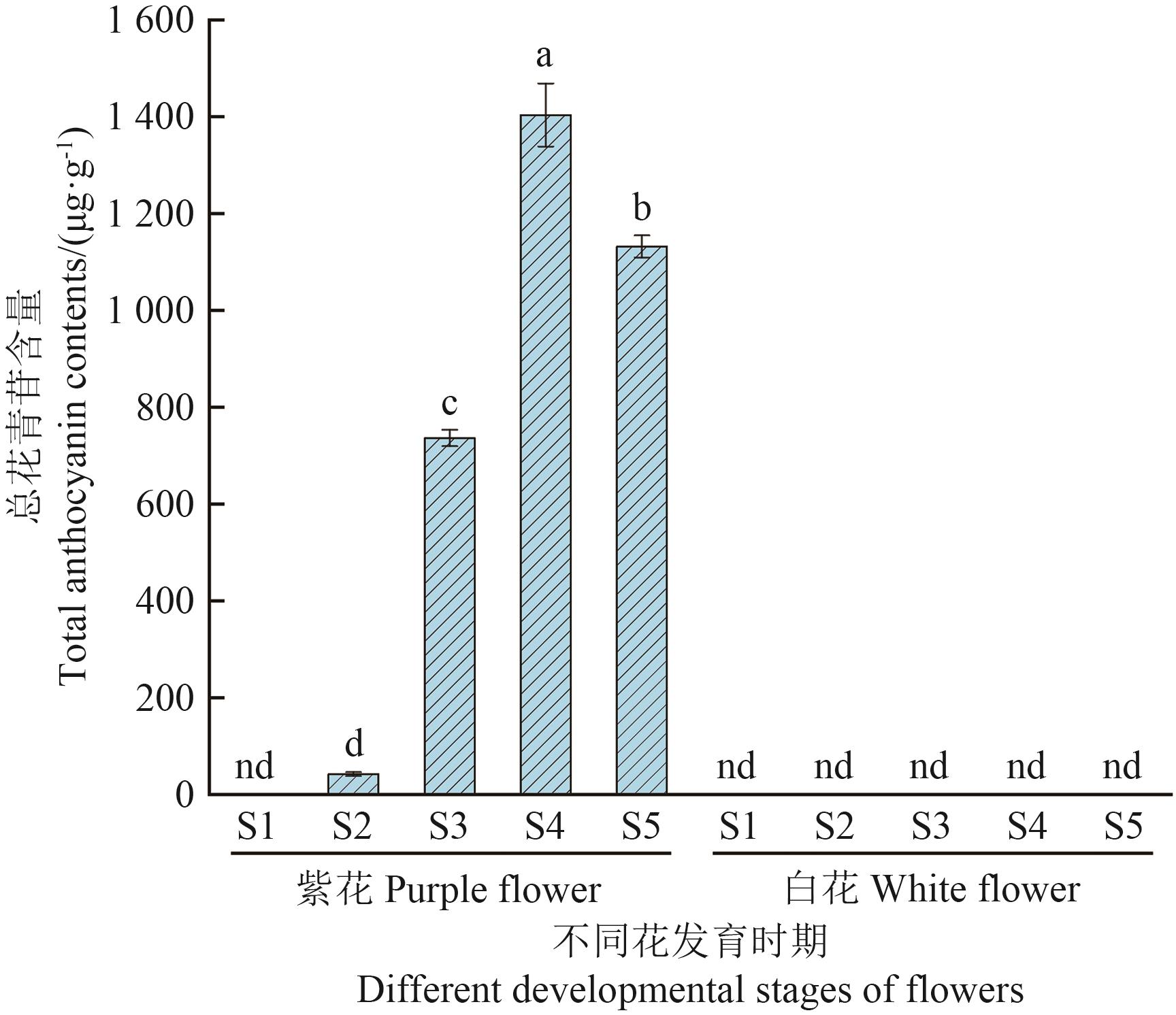
Fig. 2 Total anthocyanin contents at different developmental stages of flowers in A. wallichiiData are as mean±SE of three independent biological replicates. According to the Duncan multiple test, the different letters above each column indicate significant differences at 0.05 level. The same below. “nd” indicates that the total anthocyanin content is not detected
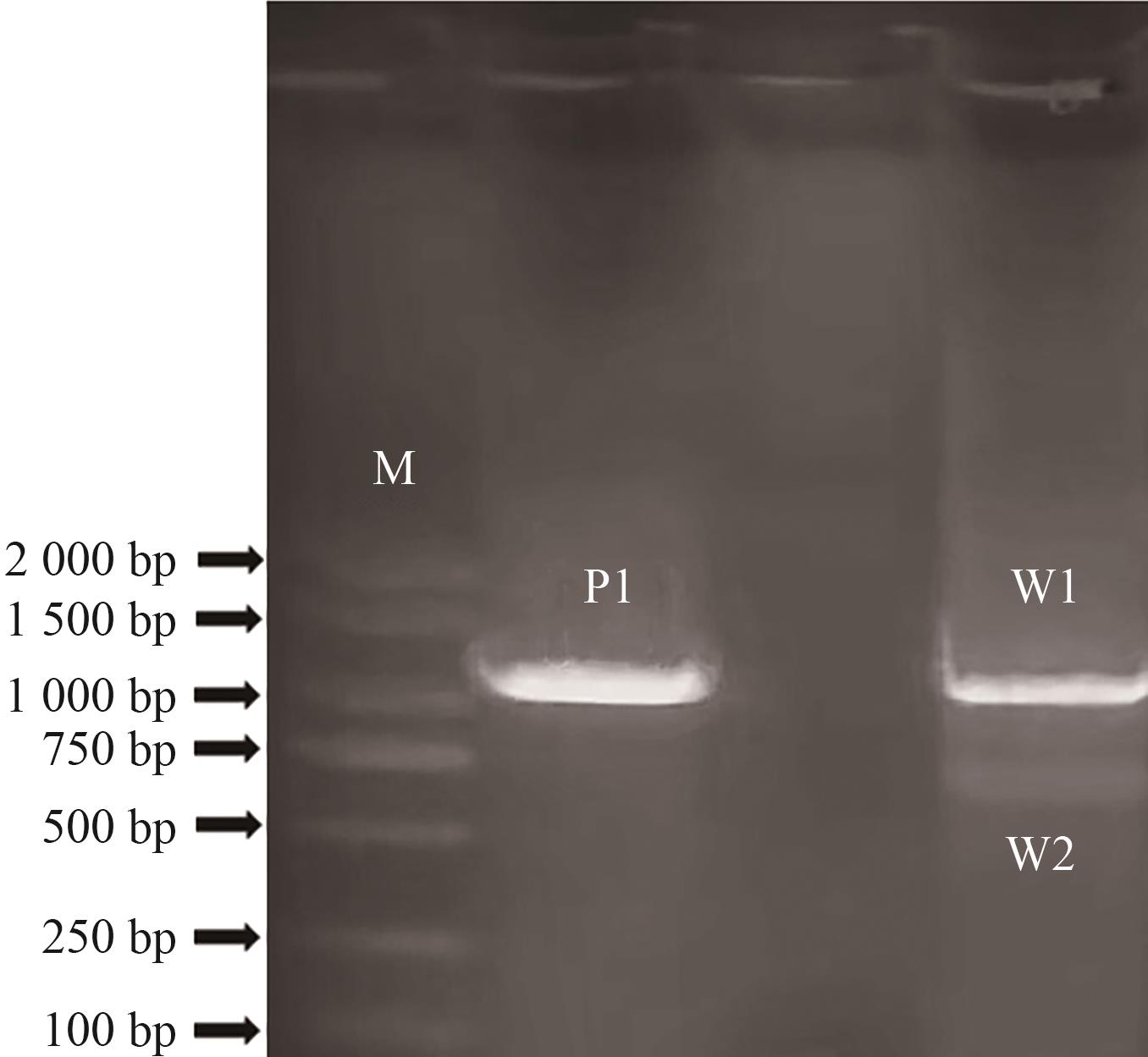
Fig. 3 Amplification of AwANSsM refers to marker. P1 indicates purple A. wallichii. W1 and W2 indicate white A. wallichii

Fig. 4 Sequence alignment of ANSs from A. wallichii and other speciesAwANSs were aligned with other ANSs from Oryza sativa (OsANS: CAA69252.1), Arabidopsis thaliana (AtANS: AT4G22880), Tulipa gesneriana (TgANS: USH59355.1), and Allium cepa (AcANSL: ABM66367.1). Conserved domain 2OG-Fe Ⅱ_Oxy is indicated by the solid line. Conserved residues that are required for ferrous-iron coordination and 2-oxoglutarate binding are marked by * and #, respectively
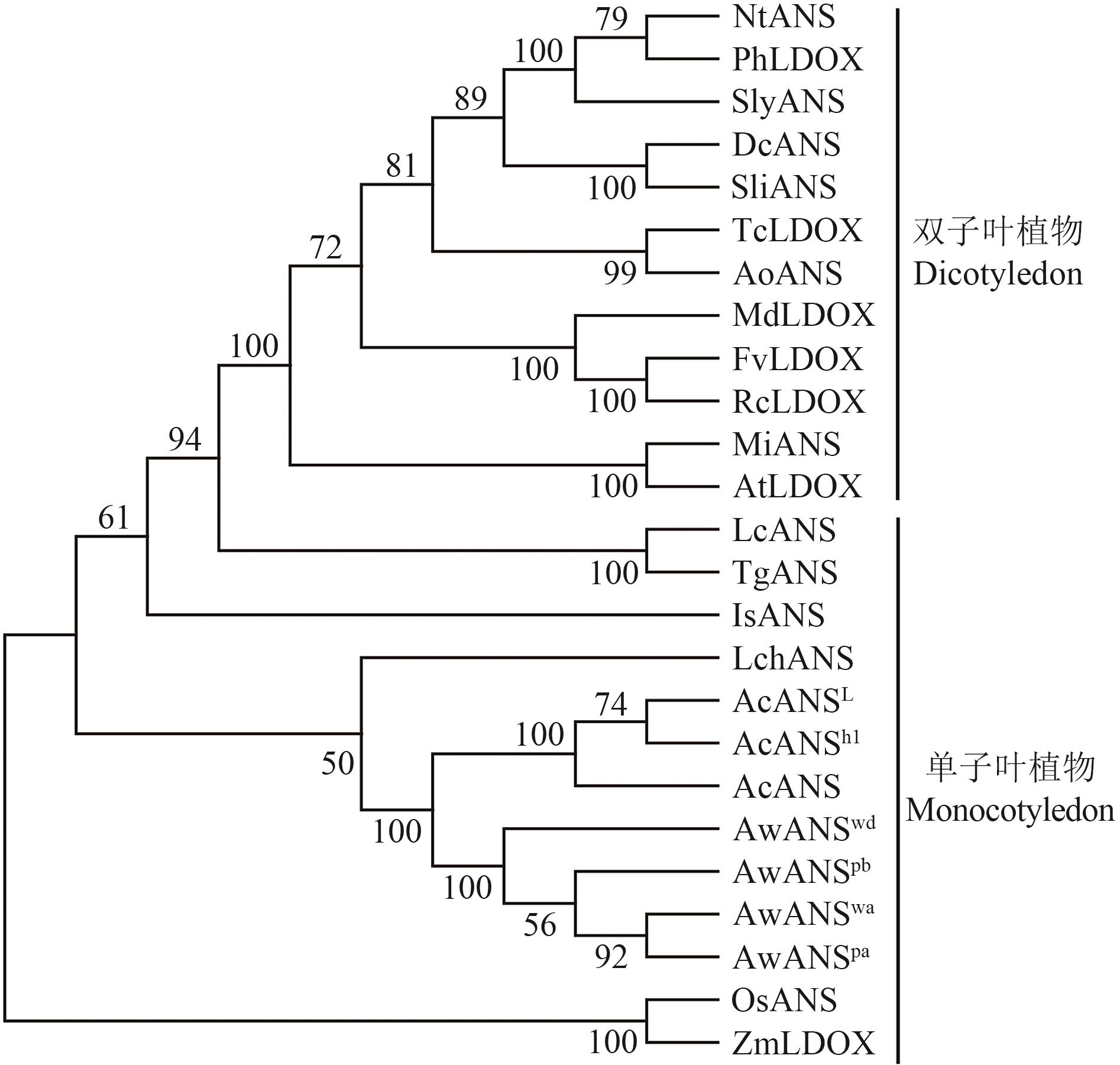
Fig. 5 Phylogenetic analysis of AwANSs from A. wallichii and ANS from other speciesNt: Nicotiana tabacum; Ph: Petunia×hybrida; Sly: Solanum lycopersicum; Dc: Dianthus caryophyllus; Sli: Silene littorea; Tc: Theobroma cacao; Ao: Althaea officinalis; Md: Malus domestica; Fv: Fragaria vesca subsp. Vesca; Rc: Rosa chinensis; Mi: Matthiola incana; At: Arabidopsis thaliana; Lc: Lilium cernuum; Tg: Tulipa gesneriana; Is: Iris sanguinea; Os: Oryza sativa; Zm: Zea mays; Lch: Lycoris chinensis; Ac: Allium cepa; Aw: Allium wallichii
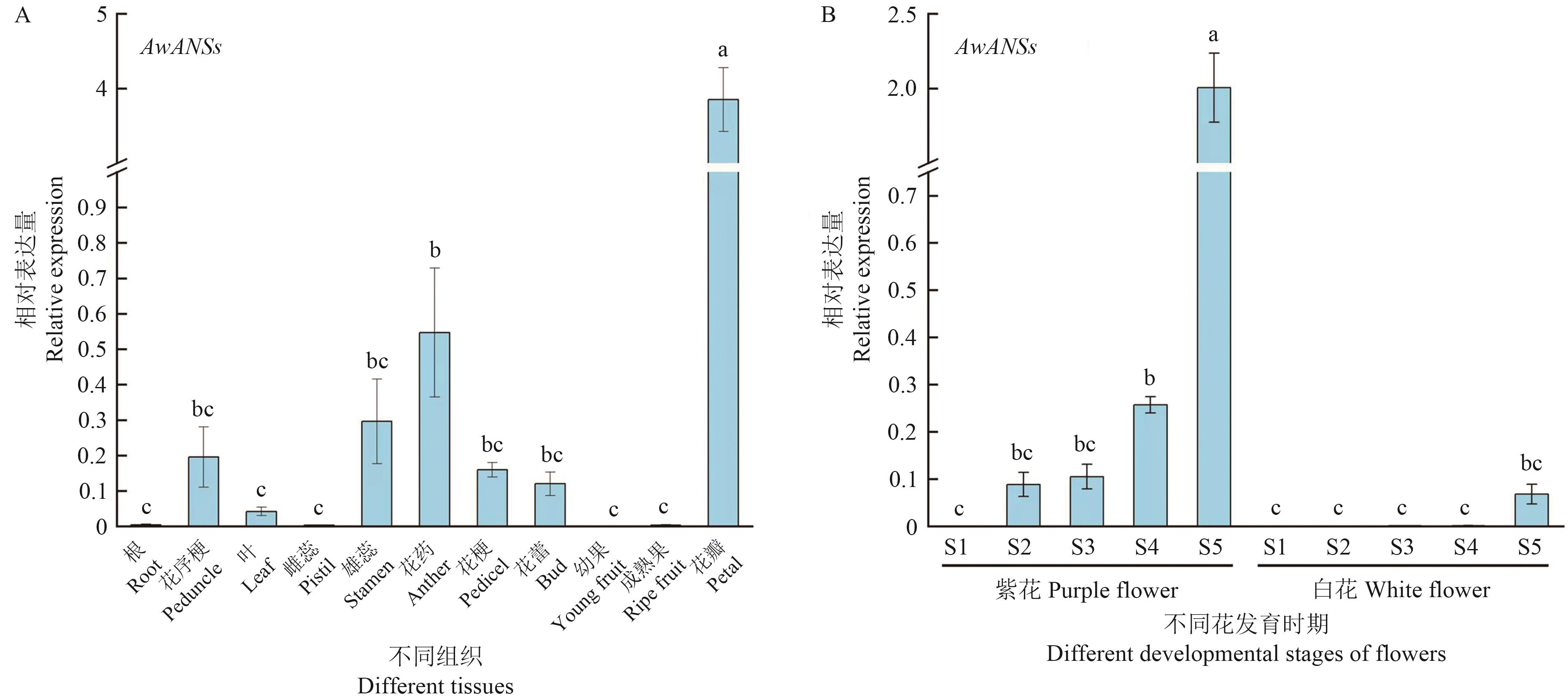
Fig. 6 Spatio-temporal expression analysis of AwANSs
| 1 | Tanaka Y, Sasaki N, Ohmiya A. Biosynthesis of plant pigments: anthocyanins, betalains and carotenoids [J]. Plant J, 2008, 54(4): 733-749. |
| 2 | Zhao XC, Zhang YR, Long T, et al. Regulation mechanism of plant pigments biosynthesis: anthocyanins, carotenoids, and betalains [J]. Metabolites, 2022, 12(9): 871. |
| 3 | 刘玥, 李月庆, 孟祥宇, 等. 大花君子兰查尔酮合酶基因CmCHS的克隆及其功能验证 [J]. 园艺学报, 2021, 48(10): 1847-1858. |
| Liu Y, Li YQ, Meng XY, et al. Cloning and functional characterization of chalcone synthase genes (CmCHS) from Clivia miniata [J]. Acta horticulturae sinica, 2021, 48(10): 1847-1858. | |
| 4 | Li XL, Fan JZ, Luo SM, et al. Comparative transcriptome analysis identified important genes and regulatory pathways for flower color variation in Paphiopedilum hirsutissimum [J]. BMC Plant Biol, 2021, 21(1): 495. |
| 5 | Gu ZY, Zhu J, Hao Q, et al. A novel R2R3-MYB transcription factor contributes to petal blotch formation by regulating organ-specific expression of PsCHS in tree peony (Paeonia suffruticosa) [J]. Plant Cell Physiol, 2019, 60(3): 599-611. |
| 6 | Wang S, Li LX, Zhang Z, et al. Ethylene precisely regulates anthocyanin synthesis in apple via a module comprising MdEIL1, MdMYB1, and MdMYB17 [J]. Hortic Res, 2022, 9: uhac034. |
| 7 | Jaakola L. New insights into the regulation of anthocyanin biosynthesis in fruits [J]. Trends Plant Sci, 2013, 18(9): 477-483. |
| 8 | 赵维萍, 丁子俊, 王方平, 等. ‘滁菊’花青素合成酶(CmANS)基因的分子特征、原核表达与表达分析 [J]. 植物生理学报, 2022, 58(4): 677-686. |
| Zhao WP, Ding ZJ, Wang FP, et al. Molecular characterization, prokaryotic expression and expression pattern analysis of an anthocyanin synthase gene from Chrysanthemum morifolium ‘Chuju’[J]. Plant Physiol J, 2022, 58(4): 677-686. | |
| 9 | Feng YQ, Tian XC, Liang W, et al. Genome-wide identification of grape ANS gene family and expression analysis at different fruit coloration stages [J]. BMC Plant Biol, 2023, 23(1): 632. |
| 10 | 黄玲, 胡先梅, 梁泽慧, 等. 郁金香花青素合成酶基因TgANS的克隆与功能鉴定 [J]. 园艺学报, 2022, 49(9): 1935-1944. |
| Huang L, Hu XM, Liang ZH, et al. Cloning and function identification of anthocyanidin synthase gene TgANS in Tulipa gesneriana [J]. Acta Hortic Sin, 2022, 49(9): 1935-1944. | |
| 11 | Wu XX, Zhou Y, Yao D, et al. DNA methylation of LDOX gene contributes to the floral colour variegation in peach [J]. J Plant Physiol, 2020, 246/247: 153116. |
| 12 | Zhang HL, Zhao XJ, Zhang JP, et al. Functional analysis of an anthocyanin synthase gene StANS in potato [J]. Sci Hortic, 2020, 272: 109569. |
| 13 | Weiss D, van der Luit AH, Kroon JT, et al. The Petunia homologue of the Antirrhinum majus candi and Zea mays A2 flavonoid genes; homology to flavanone 3-hydroxylase and ethylene-forming enzyme [J]. Plant Mol Biol, 1993, 22(5): 893-897. |
| 14 | Nakajima J, Tanaka Y, Yamazaki M, et al. Reaction mechanism from leucoanthocyanidin to anthocyanidin 3-glucoside, a key reaction for coloring in anthocyanin biosynthesis [J]. J Biol Chem, 2001, 276(28): 25797-25803. |
| 15 | Szankowski I, Flachowsky H, Li HH, et al. Shift in polyphenol profile and sublethal phenotype caused by silencing of anthocyanidin synthase in apple (Malus sp.) [J]. Planta, 2009, 229(3): 681-692. |
| 16 | Lin CC, Xing PY, Jin H, et al. Loss of anthocyanidin synthase gene is associated with white flowers of Salvia miltiorrhiza Bge. f. alba, a natural variant of S. miltiorrhiza [J]. Planta, 2022, 256(1): 15. |
| 17 | Ben-Simhon Z, Judeinstein S, Trainin T, et al. A"white" anthocyanin-less pomegranate (Punica granatum L.) caused by an insertion in the coding region of the leucoanthocyanidin dioxygenase (LDOX; ANS) gene [J]. PLoS One, 2015, 10(11): e0142777. |
| 18 | Chen X, Krug L, Yang MF, et al. The Himalayan onion (Allium wallichii kunth) harbors unique spatially organized bacterial communities [J]. Microb Ecol, 2021, 82(4): 909-918. |
| 19 | 霍冬敖, 田瑞丰, 任永权, 等. 基于UPLC-MS/MS技术的野生及栽培韭菜籽的代谢组学研究 [J]. 广西植物, 2022, 42(12): 1995-2006. |
| Huo DA, Tian RF, Ren YQ, et al. UPLC-MS/MS-based metabolomic characterization and contrastive analysis between Allium wallichii and A. tuberosum seeds [J]. Guihaia, 2022, 42(12): 1995-2006. | |
| 20 | Bhandari J, Muhammad B, Thapa P, et al. Study of phytochemical, anti-microbial, anti-oxidant, and anti-cancer properties of Allium wallichii [J]. BMC Complement Altern Med, 2017, 17(1): 102. |
| 21 | Iqbal J, Abbasi BA, Batool R, et al. Potential phytocompounds for developing breast cancer therapeutics: nature's healing touch [J]. Eur J Pharmacol, 2018, 827: 125-148. |
| 22 | 张宇澄, 周颂东, 任海燕, 等. 中国西南葱属10种20居群的核型研究 [J]. 武汉植物学研究, 2009, 27(4): 351-360. |
| Zhang YC, Zhou SD, Ren HY, et al. Karyotype in 20 populations belonging to 10 species of Allium from Southwest China [J]. J Wuhan Bot Res, 2009, 27(4): 351-360. | |
| 23 | 唐汉青, 王晓月, 张子楠, 等. 多星韭(Allium wallichii)的传粉生态学初探 [J]. 广西植物, 2020, 40(11): 1613-1622. |
| Tang HQ, Wang XY, Zhang ZN, et al. Pollination biology of Allium wallichii [J]. Guihaia, 2020, 40(11): 1613-1622. | |
| 24 | Lin YX, Hou GY, Jiang YY, et al. Joint transcriptomic and metabolomic analysis reveals differential flavonoid biosynthesis in a high-flavonoid strawberry mutant [J]. Front Plant Sci, 2022, 13: 919619. |
| 25 | Lin Y, Liu GF, Rao Y, et al. Identification and validation of reference genes for qRT-PCR analyses under different experimental conditions in Allium wallichii [J]. J Plant Physiol, 2023, 281: 153925. |
| 26 | Zhang SS, Lu SJ, Yi SS, et al. Functional conservation and divergence of five SEPALLATA-like genes from a basal eudicot tree, Platanus acerifolia [J]. Planta, 2017, 245(2): 439-457. |
| 27 | 王青, 吕彤, 吕英民. 百合花被片的结构和色素成分对花色的影响 [J]. 园艺学报, 2021, 48(10): 1873-1884. |
| Wang Q, Lü T, Lü YM. The impact of tepal structure and pigment composition on the flower colour of lily [J]. Acta Hortic Sin, 2021, 48(10): 1873-1884. | |
| 28 | Morita Y, Hoshino A. Recent advances in flower color variation and patterning of Japanese morning glory and Petunia [J]. Breed Sci, 2018, 68(1): 128-138. |
| 29 | 邹晓菊, 黄瑞复, 翟书华. 六倍体多星韭的发现及多星韭种内倍性组成及演化的分析 [J]. 西北植物学报, 2013, 33(6): 1114-1122. |
| Zou XJ, Huang RF, Zhai SH. Detection of hexaploid and mechanisms of polyploidy formation in Allium wallichii kunth [J]. Acta Bot Boreali Occidentalia Sin, 2013, 33(6): 1114-1122. | |
| 30 | 赵莉丽, 王锦. 昆明梁王山多星韭与滇韭的核型比较 [J]. 西南林学院学报, 2009, 29(3): 22-25. |
| Zhao LL, Wang J. Comparative analysis on karyotype of Allium wallichii and Allium mairei from mount Liangwang in Kunming area [J]. J Southwest For Coll, 2009, 29(3): 22-25. | |
| 31 | 杨爽, 王锦. 云南多星韭细胞核型研究 [J]. 西南林学院学报, 2007, 27(5): 38-41. |
| Yang S, Wang J. Study on cytological karyotype of Allium wallichii in Liangwang Mountain area, Yunnan Province [J]. J Southwest For Coll, 2007, 27(5): 38-41. | |
| 32 | 翟艳红, 杨莹, 星耀武, 等. 云贵高原多星韭二倍体—四倍体分布格局研究 [J]. 植物科学学报, 2011, 29(1): 50-57. |
| Zhai YH, Yang Y, Xing YW, et al. Diploid and tetraploid distribution of Allium wallichii Kunth (Ailiaceae) in the Yunnan-Guizhou Plateau [J]. Plant Sci J, 2011, 29(1): 50-57. | |
| 33 | 安维忠, 刘雅莉, 刘红利, 等. 葡萄风信子MaANS基因及启动子的克隆与分析 [J]. 西北植物学报, 2015, 35(9): 1728-1734. |
| An WZ, Liu YL, Liu HL, et al. Isolation and analysis of Muscari armeniacum MaANS gene and its promoter [J]. Acta Bot Boreali Occidentalia Sin, 2015, 35(9): 1728-1734. | |
| 34 | Nakatsuka T, Nishihara M, Mishiba K, et al. Temporal expression of flavonoid biosynthesis-related genes regulates flower pigmentation in gentian plants [J]. Plant Sci, 2005, 168(5): 1309-1318. |
| 35 | Rosati C, Cadic A, Duron M, et al. Molecular characterization of the anthocyanidin synthase gene in Forsythia × intermedia reveals organ-specific expression during flower development [J]. Plant Sci, 1999, 149(1): 73-79. |
| 36 | 洪艳, 武宇薇, 宋想, 等. 光照调控园艺作物花青素苷生物合成的分子机制 [J]. 园艺学报, 2021, 48(10): 1983-2000. |
| Hong Y, Wu YW, Song X, et al. Molecular mechanism of light-induced anthocyanin biosynthesis in horticultural crops [J]. Acta Hortic Sin, 2021, 48(10): 1983-2000. | |
| 37 | Grotewold E. The genetics and biochemistry of floral pigments [J]. Annu Rev Plant Biol, 2006, 57: 761-780. |
| 38 | Davies KM, Albert NW, Schwinn KE. From landing lights to mimicry: the molecular regulation of flower colouration and mechanisms for pigmentation patterning [J]. Funct Plant Biol, 2012, 39(8): 619-638. |
| 39 | 刘恺媛, 王茂良, 辛海波, 等. 植物花青素合成与调控研究进展 [J]. 中国农学通报, 2021, 37(14): 41-51. |
| Liu KY, Wang ML, Xin HB, et al. Anthocyanin biosynthesis and regulate mechanisms in plants: a review [J]. Chin Agric Sci Bull, 2021, 37(14): 41-51. | |
| 40 | 郑清冬, 王艺, 欧悦, 等. 兰科植物花色相关基因研究进展 [J]. 园艺学报, 2021, 48(10): 2057-2072. |
| Zheng QD, Wang Y, Ou Y, et al. Research advances of genes responsible for flower colors in Orchidaceae [J]. Acta Hortic Sin, 2021, 48(10): 2057-2072. | |
| 41 | Nakatsuka T, Saito M, Sato-Ushiku Y, et al. Development of DNA markers that discriminate between white- and blue-flowers in Japanese gentian plants [J]. Euphytica, 2012, 184(3): 335-344. |
| 42 | Rafique MZ, Carvalho E, Stracke R, et al. Nonsense mutation inside anthocyanidin synthase gene controls pigmentation in yellow raspberry (Rubus idaeus L.) [J]. Front Plant Sci, 2016, 7: 1892. |
| 43 | 王晰, 丁文杰, 李娅, 等. 长筒石蒜花青素合成酶基因LlANS的克隆与表达分析 [J]. 河南农业大学学报, 2018, 52(4): 611-617. |
| Wang X, Ding WJ, Li Y, et al. Cloning and expression analysis of anthocyanidin synthase(LlANS) in Lycoris longituba [J]. J Henan Agric Univ, 2018, 52(4): 611-617. | |
| 44 | Oren-Shamir M. Does anthocyanin degradation play a significant role in determining pigment concentration in plants? [J]. Plant Sci, 2009, 177(4): 310-316. |
| 45 | Luo HH, Deng SF, Fu W, et al. Characterization of active anthocyanin degradation in the petals of Rosa chinensis and Brunfelsia calycina reveals the effect of gallated catechins on pigment maintenance [J]. Int J Mol Sci, 2017, 18(4): 699. |
| 46 | Zipor G, Duarte P, Carqueijeiro I, et al. In planta anthocyanin degradation by a vacuolar class Ⅲ peroxidase in Brunfelsia calycina flowers [J]. New Phytol, 2015, 205(2): 653-665. |
| 47 | Liu J, Wang YX, Zhang MH, et al. Color fading in Lotus (Nelumbo nucifera) petals is manipulated both by anthocyanin biosynthesis reduction and active degradation [J]. Plant Physiol Biochem, 2022, 179: 100-107. |
| 48 | Li SH, He YJ, Li LZ, et al. New insights on the regulation of anthocyanin biosynthesis in purple Solanaceous fruit vegetables [J]. Sci Hortic, 2022, 297: 110917. |
| [1] | XU Yuan-meng, MAO Jiao, WANG Meng-yao, WANG Shu, REN Jiang-ling, LIU Yu-han, LIU Si-chen, QIAO Zhi-jun, WANG Rui-yun, CAO Xiao-ning. Cloning and Expression Characteristics Analysis of Millet Genes PmDEP1 and PmEP3 [J]. Biotechnology Bulletin, 2025, 41(2): 150-162. |
| [2] | JIAO Xiao-yu, WU Qiong, LIU Dan-dan, SUN Ming-hui, RUAN Xu, WANG Lei-gang, WANG Wen-jie. Cloning and Functional Analysis of CsWAK8 Gene from Camellia sinensis during Cold Stress [J]. Biotechnology Bulletin, 2025, 41(2): 210-220. |
| [3] | QIAO Yan, YANG Fang, REN Pan-rong, QI Wei-liang, AN Pei-pei, LI Qian, LI Dan, XIAO Jun-fei. Cloning and Function Analysis of the ScDHNS Gene of Crotonase/Enoyl-CoA Superfamily from a Wild Potato Species [J]. Biotechnology Bulletin, 2024, 40(9): 92-103. |
| [4] | SHEN Zhen-hui, CAO Yao, YANG Lin-lei, LUO Xiang-ying, ZI Ling-shan, LU Qing-qing, LI Rong-chun. Cloning and Bioinformatics Analysis of the Ergothioneine Biosynthesis Genes in Naematelia aurantialba and Stereum hirsutum [J]. Biotechnology Bulletin, 2024, 40(7): 259-272. |
| [5] | HUANG Dan, JIANG Shan, PENG Tao. Cloning of FfCYP98 Gene and Its Functional Analysis in Folioceros fuciformis [J]. Biotechnology Bulletin, 2024, 40(7): 273-284. |
| [6] | PANG Meng-zhen, XU Han-qin, LIU Hai-yan, SONG Juan, WANG Jia-han, SUN Li-na, JI Pei-mei, YIN Ze-zhi, HU You-chuan, ZHAO Xiao-meng, LIANG Shan-shan, ZHANG Si-ju, LUAN Wei-jiang. Gene Identification and Functional Analysis of Yellowish and Early Heading Mutant hz1 in Rice [J]. Biotechnology Bulletin, 2024, 40(7): 125-136. |
| [7] | WANG Yu-shu, ZHAO Lin-lin, ZHAO Shuang, HU Qi, BAI Hui-xia, WANG Huan, CAO Ye-ping, FAN Zhen-yu. Cloning and Expression Analysis of BrCYP83B1 Gene in Chinese Cabbage [J]. Biotechnology Bulletin, 2024, 40(6): 152-160. |
| [8] | HAO Si-yi, ZHANG Jun-ke, WANG Bin, QU Peng-yan, LI Rui-de, CHENG Chun-zhen. Cloning and Expression Analysis of Banana EARLY FLOWERING 3(ELF3)Genes [J]. Biotechnology Bulletin, 2024, 40(5): 131-140. |
| [9] | DU Ze-guang, REN Shao-wen, ZHANG Feng-qin, LI Mei-lan, LI Gai-zhen, QI Xian-hui. Cloning,Expression and Functional Identification of BrMLP328 Gene in Brassica rapa subsp. pekinensis [J]. Biotechnology Bulletin, 2024, 40(4): 122-129. |
| [10] | LIU Huan-huan, YANG Li-chun, LI Huo-gen. Cloning and Functional Analysis of LtMYB305 in Liriodendron tulipifera [J]. Biotechnology Bulletin, 2024, 40(4): 179-188. |
| [11] | ZHONG Yun, LIN Chun, LIU Zheng-jie, DONG Chen-wen-hua, MAO Zi-chao, LI Xing-yu. Cloning and Prokaryotic Expression Analysis of Asparagus Saponin Synthesis Related Glycosyltransferase Genes [J]. Biotechnology Bulletin, 2024, 40(4): 255-263. |
| [12] | YANG Yan, HU Yang, LIU Ni-ru, YIN Lu, YANG Rui, WANG Peng-fei, MU Xiao-peng, ZHANG Shuai, CHENG Chun-zhen, ZHANG Jian-cheng. Cloning and Functional Analysis of MbbZIP43 Gene in ‘Hongmantang’ Red-flesh Apple [J]. Biotechnology Bulletin, 2024, 40(2): 146-159. |
| [13] | YUAN Xin-yu, ZHONG Cai-hong, ZHANG Long, ZHENG Hao, LI Ji-tao, ZHANG Qiong. Identification and Function Analysis of AcMYB88 in Kiwifruit (Actinidia chinensis) [J]. Biotechnology Bulletin, 2024, 40(2): 183-196. |
| [14] | HUA Xuan, TIAN Bo-wen, ZHOU Xin-tong, JIANG Zi-han, WANG Shi-qi, HUANG Qian-hui, ZHANG Jian, CHEN Yan-hong. Cloning SmERF B3-45 from Salix matsudana and Functional Analysis on Its Tolerance to Salt [J]. Biotechnology Bulletin, 2024, 40(12): 124-135. |
| [15] | KONG Lan, YE Xiu-xian, LIN Rong-yan, LIN Bing, ZHONG Huai-qin. Cloning and Expression Analysis of DkTPS7 in Dendrobium kingianum [J]. Biotechnology Bulletin, 2024, 40(12): 160-169. |
| Viewed | ||||||
|
Full text |
|
|||||
|
Abstract |
|
|||||
