







HE Jing-jing, PENG Mao-la-zhuan, YAO Xiao-hua, YAO You-hua, WU Kun-lun( ), CUI Yong-mei()
Received:2026-01-04
Online:2026-06-30
Contact:
WU Kun-lun, CUI Yong-mei
E-mail:wklqaaf@sina.com;15251892177@163.com
HE Jing-jing, PENG Mao-la-zhuan, YAO Xiao-hua, YAO You-hua, WU Kun-lun, CUI Yong-mei. Cloning and Functional Characterization of HvNAC53 from Hulless Barley[J]. Biotechnology Bulletin, doi: 10.13560/j.cnki.biotech.bull.1985.2026-0002.
元件 Site name | 序列 Sequence | 功能 Function | 数量 Amount |
|---|---|---|---|
| Box 4 | ATTAAT | 参与光响应的保守 DNA 模块的一部分 Part of a conserved DNA module involved in light responsiveness | 3 |
| LTR | CCGAAA | 参与低温响应性的顺式作用元件 Cis-acting element involved in low-temperature responsiveness | 1 |
| TATA-box | ATTATA;TATAA;TATA;TATAAA | 启动子核心元件 Core promoter element | 12 |
| TGACG-motif | TGACG | 参与MeJA反应性的顺式作用调节元件 Cis-acting regulatory element involved in the MeJA-responsiveness | 3 |
| GC-motif | CCCCCG | 参与缺氧特异性诱导的增强子样元件 Enhancer-like element involved in anoxic specific inducibility | 1 |
| CGTCA-motif | CGTCA | 参与MeJA反应性的顺式作用调节元件 Cis-acting regulatory element involved in the MeJA-responsiveness | 3 |
| A-box | CCGTCC | 顺式作用调节元件 Cis-acting regulatory element | 4 |
| MBS | CAACTG | MYB结合位点参与干旱诱导 MYB binding site involved in drought-inducibility | 3 |
| I-box | gGATAAGGTG | 光响应元件 Part of a light responsive element | 1 |
| G-box | CACGTC;TACGTG;CACGAC; GCCACGTGGA;CACGTG; ACACGTGT;TCCACATGGCA; | 参与光响应的顺式作用调节元件 Cis-acting regulatory element involved in light responsiveness | 18 |
| GA-motif | ATAGATAA | 光响应元件 Part of a light responsive element | 1 |
| LAMP-element | CCTTATCCA | 光响应元件 Part of a light responsive element | 1 |
| TCA-element | CCATCTTTTT | 参与水杨酸反应性的顺式作用元件 Cis-acting element involved in salicylic acid responsiveness | 1 |
| ABRE | ACGTG;CGTACGTGCA; CACGTG; GACACGTGGC; CGCACGTGTC | 参与脱落酸反应的顺式作用元件 Cis-acting element involved in the abscisic acid responsiveness | 15 |
| CAAT-box | CCAAT;TGCCAAC;CAAAT | 启动子和增强子区域中的常见顺式作用元件 Common cis-acting element in promoter and enhancer regions | 6 |
| MRE | AACCTAA | MYB结合位点参与光响应 MYB binding site involved in light responsiveness | 1 |
| ACE | GACACGTATG | 参与光响应的顺式作用调节元件 Cis-acting element involved in light responsiveness | 1 |
Table 1 Analysis of cis-elements in the promoter region of the HvNAC53 gene in hulless barley
元件 Site name | 序列 Sequence | 功能 Function | 数量 Amount |
|---|---|---|---|
| Box 4 | ATTAAT | 参与光响应的保守 DNA 模块的一部分 Part of a conserved DNA module involved in light responsiveness | 3 |
| LTR | CCGAAA | 参与低温响应性的顺式作用元件 Cis-acting element involved in low-temperature responsiveness | 1 |
| TATA-box | ATTATA;TATAA;TATA;TATAAA | 启动子核心元件 Core promoter element | 12 |
| TGACG-motif | TGACG | 参与MeJA反应性的顺式作用调节元件 Cis-acting regulatory element involved in the MeJA-responsiveness | 3 |
| GC-motif | CCCCCG | 参与缺氧特异性诱导的增强子样元件 Enhancer-like element involved in anoxic specific inducibility | 1 |
| CGTCA-motif | CGTCA | 参与MeJA反应性的顺式作用调节元件 Cis-acting regulatory element involved in the MeJA-responsiveness | 3 |
| A-box | CCGTCC | 顺式作用调节元件 Cis-acting regulatory element | 4 |
| MBS | CAACTG | MYB结合位点参与干旱诱导 MYB binding site involved in drought-inducibility | 3 |
| I-box | gGATAAGGTG | 光响应元件 Part of a light responsive element | 1 |
| G-box | CACGTC;TACGTG;CACGAC; GCCACGTGGA;CACGTG; ACACGTGT;TCCACATGGCA; | 参与光响应的顺式作用调节元件 Cis-acting regulatory element involved in light responsiveness | 18 |
| GA-motif | ATAGATAA | 光响应元件 Part of a light responsive element | 1 |
| LAMP-element | CCTTATCCA | 光响应元件 Part of a light responsive element | 1 |
| TCA-element | CCATCTTTTT | 参与水杨酸反应性的顺式作用元件 Cis-acting element involved in salicylic acid responsiveness | 1 |
| ABRE | ACGTG;CGTACGTGCA; CACGTG; GACACGTGGC; CGCACGTGTC | 参与脱落酸反应的顺式作用元件 Cis-acting element involved in the abscisic acid responsiveness | 15 |
| CAAT-box | CCAAT;TGCCAAC;CAAAT | 启动子和增强子区域中的常见顺式作用元件 Common cis-acting element in promoter and enhancer regions | 6 |
| MRE | AACCTAA | MYB结合位点参与光响应 MYB binding site involved in light responsiveness | 1 |
| ACE | GACACGTATG | 参与光响应的顺式作用调节元件 Cis-acting element involved in light responsiveness | 1 |
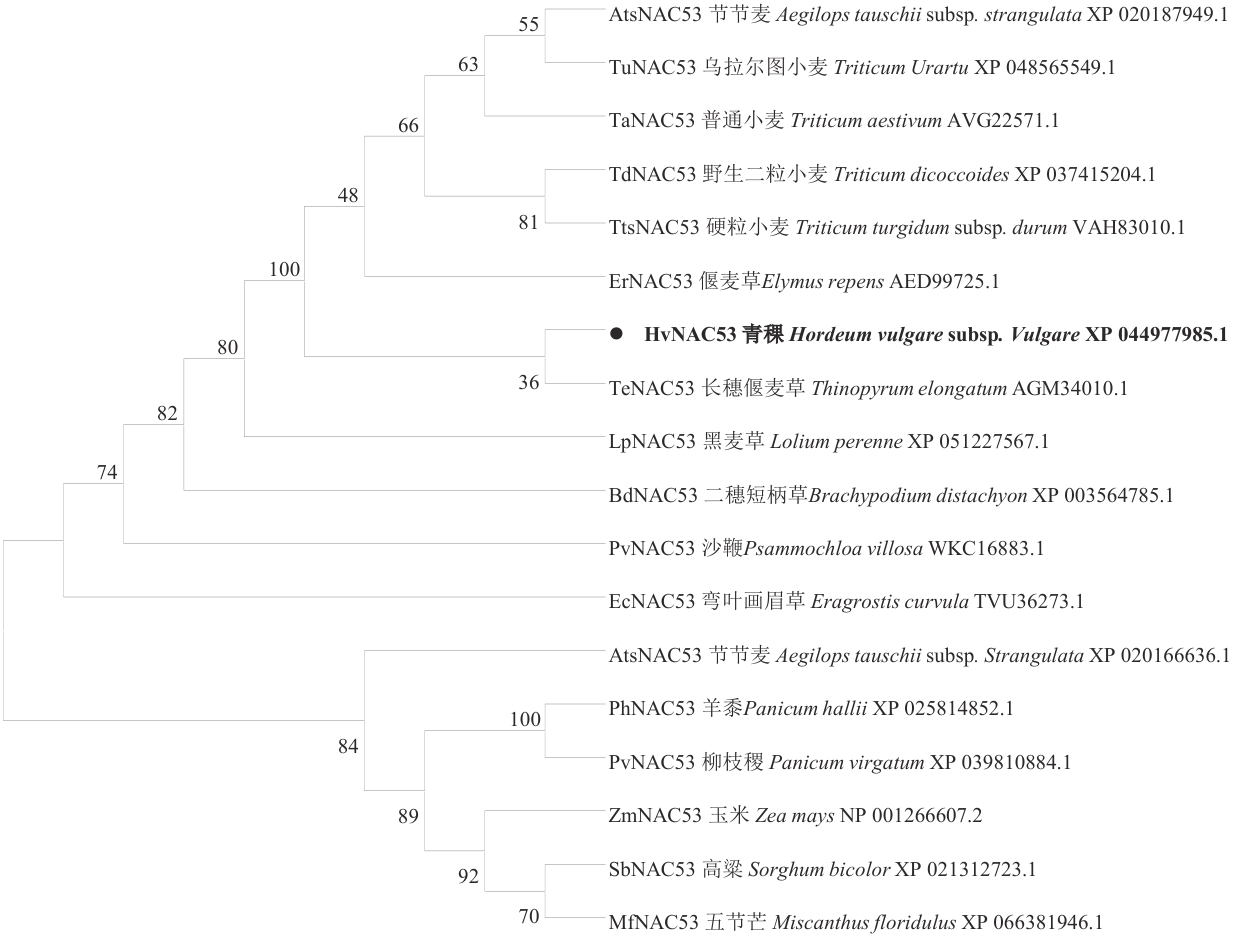
Fig. 1 Phylogenetic tree of HvNAC53 in hulless barley with the homologous proteins of other plants
| 蛋白名称 Protein name | 注释 Annotation |
|---|---|
| M0XWR0_HORVV | 含NAC结构域的蛋白 |
| M0ZFS5_HORVV | WD_REPEATS_REGION含有结构域的蛋白质 |
| A0A287LB51 | EGF_CA含有结构域的蛋白质 |
| A0A287IMF4 | Ipi1_N含有结构域的蛋白质 |
| F2DHF8_H0RVV | Pescadillo同源物;核糖体RNA成熟和大核糖体亚基形成所必需的 |
| A0A287EA93 | 核糖体生物发生蛋白BOP1同源物;核糖体RNA成熟和大核糖体亚基形成所必需的;属于WD重复 BOP1/ERB1 家族 |
| M0XXL5_HORVV | 生长素反应因子 |
| M0XAA8_HORVV | 生长素反应因子 |
| A0A287TNV8 | 生长素反应因子 |
Table 2 Functional annotation of interacting proteins with HvNAC53
| 蛋白名称 Protein name | 注释 Annotation |
|---|---|
| M0XWR0_HORVV | 含NAC结构域的蛋白 |
| M0ZFS5_HORVV | WD_REPEATS_REGION含有结构域的蛋白质 |
| A0A287LB51 | EGF_CA含有结构域的蛋白质 |
| A0A287IMF4 | Ipi1_N含有结构域的蛋白质 |
| F2DHF8_H0RVV | Pescadillo同源物;核糖体RNA成熟和大核糖体亚基形成所必需的 |
| A0A287EA93 | 核糖体生物发生蛋白BOP1同源物;核糖体RNA成熟和大核糖体亚基形成所必需的;属于WD重复 BOP1/ERB1 家族 |
| M0XXL5_HORVV | 生长素反应因子 |
| M0XAA8_HORVV | 生长素反应因子 |
| A0A287TNV8 | 生长素反应因子 |
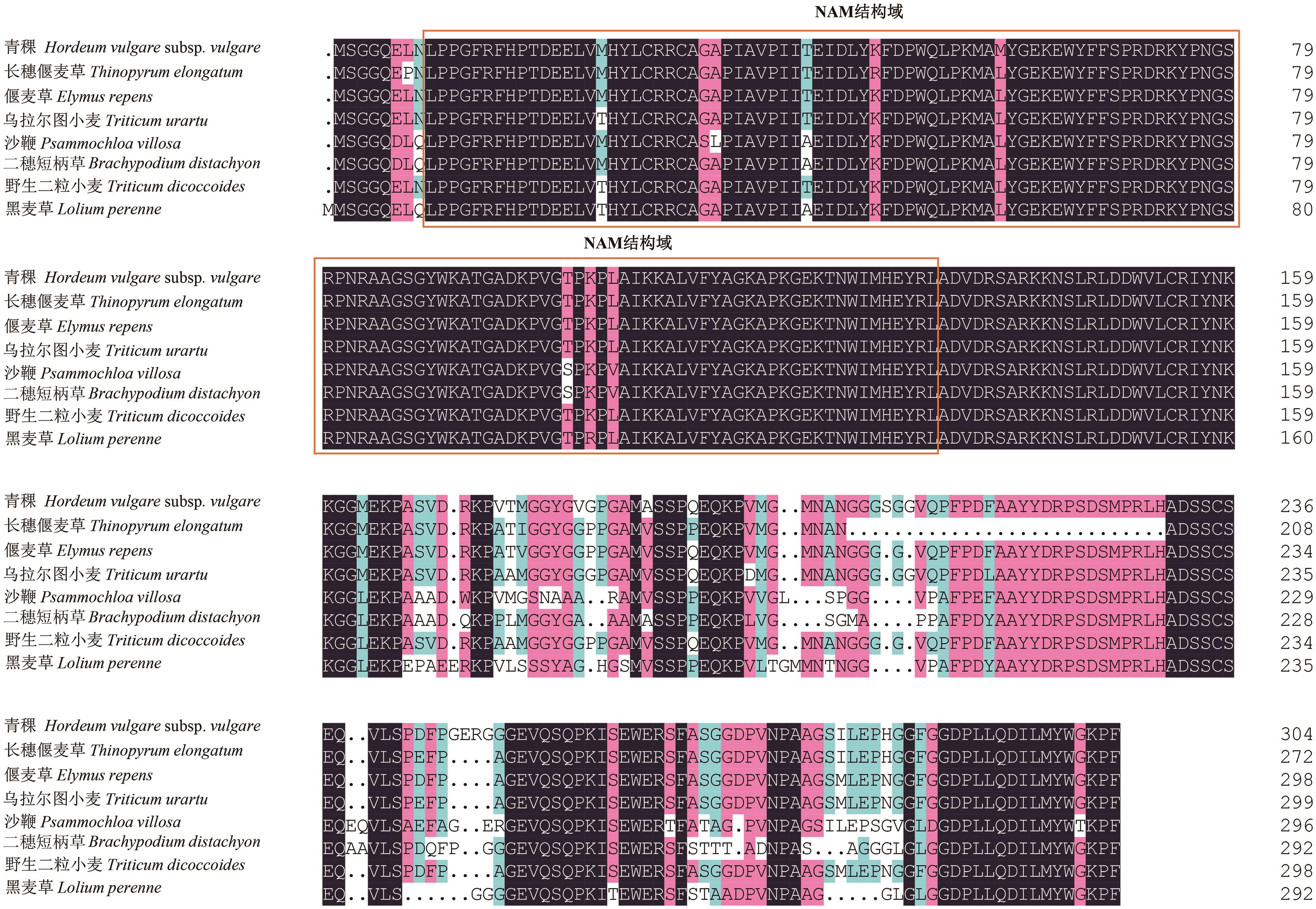
Fig. 2 Multiple sequence alignment of HvNAC53 protein with homologous proteins of other species
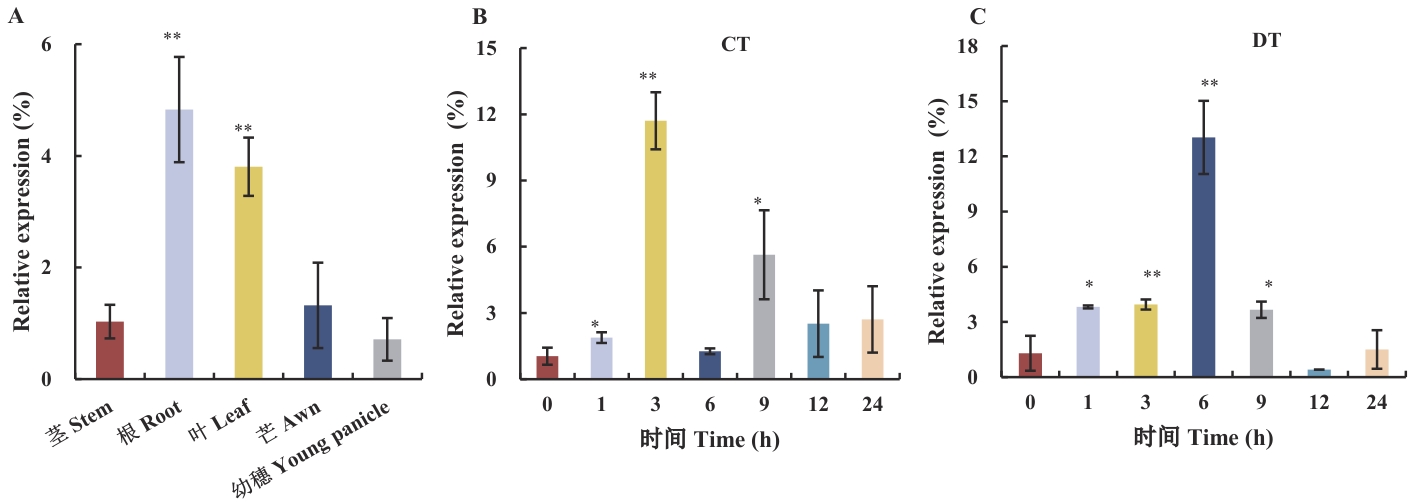
Fig. 3 Expression pattern analysis of HvNAC53A: Tissue expression pattern of HvNAC53. B: Low-temperature induced expression pattern of HvNAC53 gene. C: Drought stress induced expression pattern of HvNAC53 gene. * P<0.05, ** P<0.01. The same below
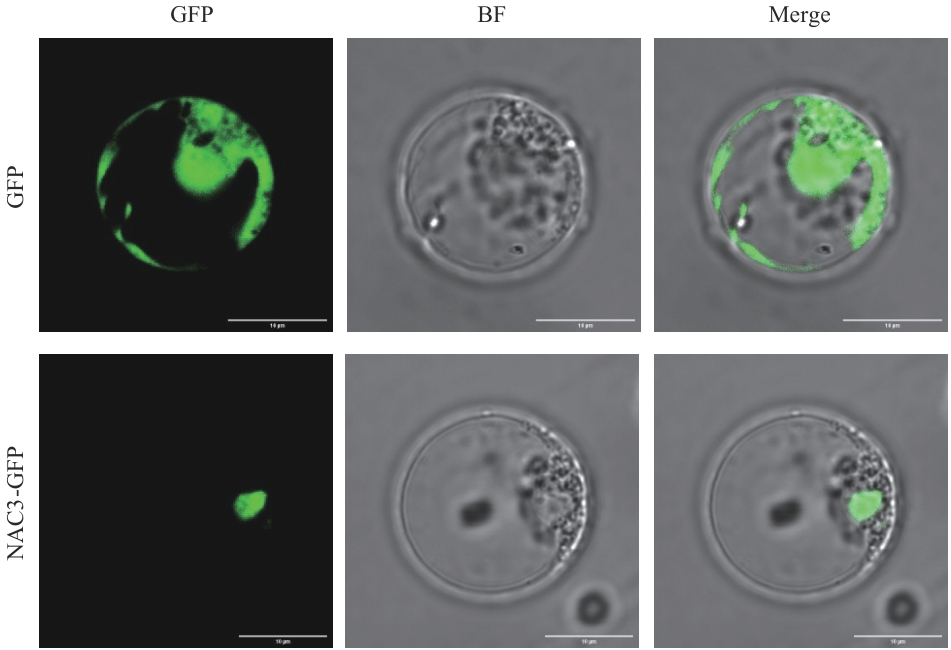
Fig. 4 HvNAC53 fusion protein expressed in barley protoplasts
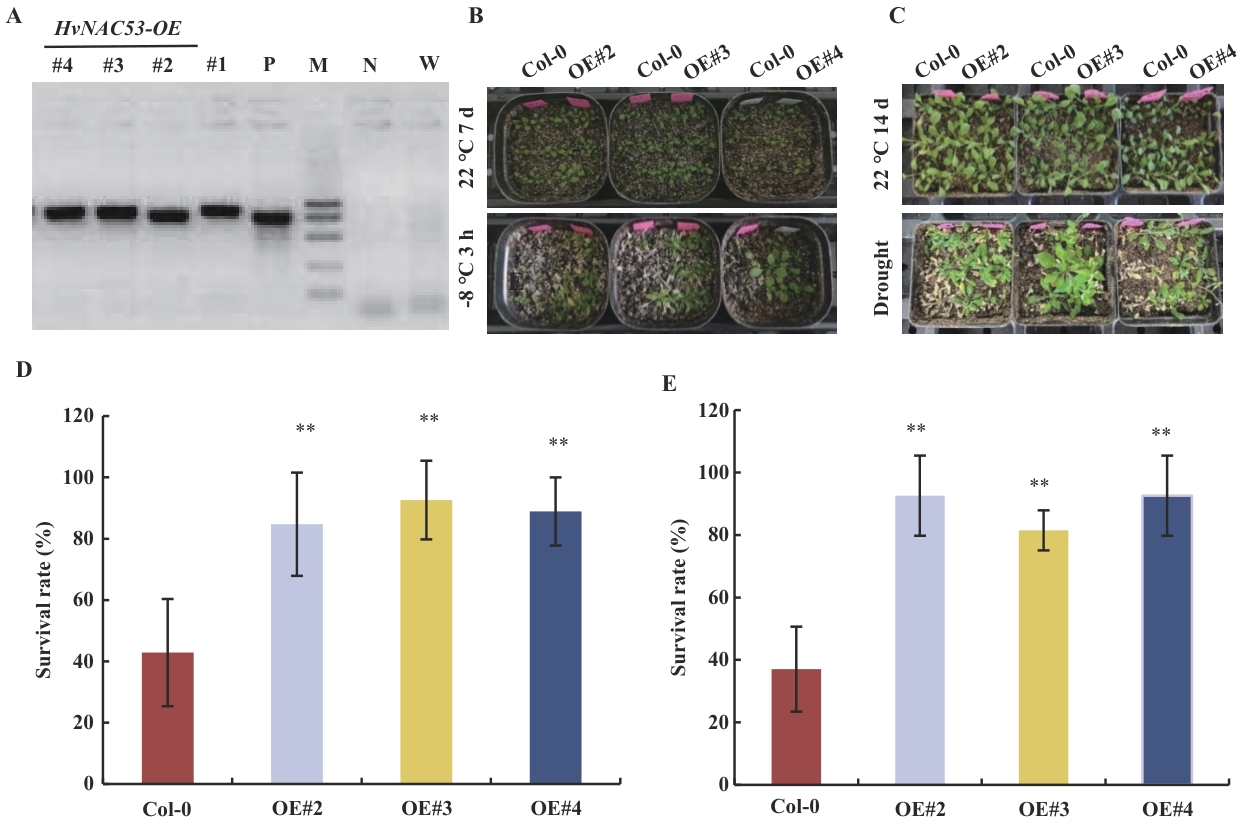
Fig. 5 Functional verification of HvNAC53 heterologous overexpression lines in Arabidopsis thaliana under cold and drought stressesA: Identification of T3 generation HvNAC53 transgenic Arabidopsis thaliana (M: DL2000 DNA marker; P: positive control; W: water control; 1‒4: overexpression plants). B, D: Growth phenotype (B) and survival rate (D) of WT and HvNAC53-OE lines under cold stress. C, E: Growth phenotype (C) and survival rate (E) of WT and HvNAC53-OE lines under drought stress
| [1] | Mohanta TK, Yadav D, Khan A, et al. Genomics, molecular and evolutionary perspective of NAC transcription factors [J]. PLoS One, 2020, 15(4): e0231425. |
| [2] | Xiong HY, He HD, Chang Y, et al. Multiple roles of NAC transcription factors in plant development and stress responses [J]. J Integr Plant Biol, 2025, 67(3): 510-538. |
| [3] | Li WH, Li HW, Wei YF, et al. Overexpression of a Fragaria vesca NAM ATAF and CUC (NAC) transcription factor gene (FvNAC29) increases salt and cold tolerance in Arabidopsis thaliana [J]. Int J Mol Sci, 2024, 25(7): 4088. |
| [4] | 孙欣, 上官凌飞, 房经贵, 等. 葡萄NAC转录因子家族生物信息学分析 [J]. 基因组学与应用生物学, 2011, 30(2): 229-242. |
| Sun X, Shangguan LF, Fang JG, et al. Bioinformatics analysis of the NAC transcription factor family in grapevine [J]. Genom Appl Biol, 2011, 30(2): 229-242. | |
| [5] | 李圣龙, 王传铭, 李晓静. 石榴NAC转录因子家族的生物信息学分析 [J]. 分子植物育种, 2021, 19(1): 88-99. |
| Li SL, Wang CM, Li XJ. Bioinformatic analysis of the NAC transcription factor family in Punica granatum L [J]. Mol Plant Breed, 2021, 19(1): 88-99. | |
| [6] | 代梦媛, 高梅, 李文昌. 蓖麻NAC转录因子家族的鉴定及生物信息学分析 [J]. 分子植物育种, 2020, 18(6): 1808-1817. |
| Dai MY, Gao M, Li WC. Identification and bioinformatics analysis of NAC transcription factor family in castor bean [J]. Mol Plant Breed, 2020, 18(6): 1808-1817. | |
| [7] | Wang GR, Yuan Z, Zhang PY, et al. Genome-wide analysis of NAC transcription factor family in maize under drought stress and rewatering [J]. Physiol Mol Biol Plants, 2020, 26(4): 705-717. |
| [8] | Liu XW, wang T, Bartholomew E, et al. Comprehensive analysis of NAC transcription factors and their expression during fruit spine development in cucumber (Cucumis sativus L.) [J]. Hortic Res, 2018, 5: 31. |
| [9] | 王晓菲, 高利盈, 刘宁, 等. 桃基因PpNAC的鉴定及其在不同发育时期的表达分析 [J]. 河南农业大学学报, 2024, 58(3): 412-423. |
| Wang XF, Gao LY, Liu N, et al. Identification and expression analysis of PpNAC genes during different development stages of peach fruit [J]. J Henan Agric Univ, 2024, 58(3): 412-423. | |
| [10] | 曲硕, 刘芳, 孙浩文, 等. 大豆NAC转录因子生物信息学分析及GmNAC-1克隆和亚细胞定位 [J]. 大豆科学, 2024, 43(5): 523-538. |
| Qu S, Liu F, Sun HW, et al. Bioinformatics analysis of soybean NAC transcription factor and cloning and subcellular localization of GmNAC-1 [J]. Soybean Sci, 2024, 43(5): 523-538. | |
| [11] | Xu PP, Ma W, Hu JB, et al. The nitrate-inducible NAC transcription factor NAC056 controls nitrate assimilation and promotes lateral root growth in Arabidopsis thaliana [J]. PLoS Genet, 2022, 18(3): e1010090. |
| [12] | Lee MH, Jeon HS, Kim HG, et al. An Arabidopsis NAC transcription factor NAC4 promotes pathogen-induced cell death under negative regulation by microRNA164 [J]. New Phytol, 2017, 214(1): 343-360. |
| [13] | Gao F, Xiong AS, Peng RH, et al. OsNAC52, a rice NAC transcription factor, potentially responds to ABA and confers drought tolerance in transgenic plants [J]. Plant Cell Tiss Organ Cult, 2010, 100(3): 255-262. |
| [14] | Xu PP, Ma W, Feng HF, et al. The NAC056 transcription factor confers freezing tolerance by positively regulating expression of CBFs and NIA1 in Arabidopsis [J]. Plant Commun, 2024, 5(7): 100923. |
| [15] | 魏婵, 姚晓华, 姚有华, 等. 青稞HvnRPS2基因克隆及其在条纹病胁迫下的表达分析 [J]. 西北植物学报, 2021, 41(12): 2021-2029. |
| Wei C, Yao XH, Yao YH, et al. Isolation and expression analysis of HvnRPS2 in hulless barley under leaf stripe stress [J]. Acta Bot Boreali Occidentalia Sin, 2021, 41(12): 2021-2029. | |
| [16] | 王子傲, 田瑞, 崔永梅, 等. 青稞茉莉酸合成途径关键基因HvnAOC克隆、生物信息学和表达模式研究 [J]. 湖南农业科学, 2025(1): 1-8. |
| Wang ZA, Tian R, Cui YM, et al. Cloning, bioinformatics analysis, and expression pattern analysis of HvnAOC, a key gene of jasmonic acid biosynthesis in hulless barley [J]. Hunan Agric Sci, 2025(1): 1-8. | |
| [17] | 徐瑶. 青稞和燕麦营养特性及血糖生成指数的研究 [D]. 兰州: 兰州理工大学, 2024. |
| Xu Y. The research on the nutritional characteristics and glycemic index of highland barley and oats [D]. Lanzhou: Lanzhou University of Technology, 2024. | |
| [18] | 郝帅, 宋艳玲, 孙爽, 等. 气候变化对青藏高原青稞生产影响的研究综述 [J]. 中国农业气象, 2023, 44(5): 398-409. |
| Hao S, Song YL, Sun S, et al. Review on the impacts of climate change on highland barley production in Tibet Plateau [J]. Chin J Agrometeorol, 2023, 44(5): 398-409. | |
| [19] | 强小林, 巴桑玉珍, 扎西罗布. 青藏高原区域青稞生产现状调研考察初报 [J]. 西藏农业科技, 2011, 33(1): 36-38. |
| Qiang XL, Ba S, Zha X. Preliminary study of analysis on plateau area highland barley production in Qinghai-Tibet suggested countermeasure [J]. Tibet J Agric Sci, 2011, 33(1): 36-38. | |
| [20] | Lin Z, Li Y, Zhang ZJ, et al. A RAF-SnRK2 kinase cascade mediates early osmotic stress signaling in higher plants [J]. Nat Commun, 2020, 11: 613. |
| [21] | 李丽杰, 胥佳静, 吴雯霏, 等. 拟南芥葡萄糖磷酸变位酶(PGM)基因调控植株耐盐性的功能研究 [J]. 基因组学与应用生物学, 2023, 42(5): 471-480. |
| Li LJ, Xu JJ, Wu WF, et al. Functional study on the regulation of salt tolerance by glucose-phosphate mutase (PGM) gene in Arabidopsis thaliana [J]. Genom Appl Biol, 2023, 42(5): 471-480. | |
| [22] | Chang TL, Zhao Y, He HY, et al. Exogenous melatonin improves growth in hulless barley seedlings under cold stress by influencing the expression rhythms of circadian clock genes [J]. PeerJ, 2021, 9: e10740. |
| [23] | 袁雷, 刘依兰. 基于GIS和气候-土地利用信息的西藏青稞种植适宜性区划 [J]. 中国农学通报, 2017, 33(17): 92-97. |
| Yuan L, Liu YL. Suitability regionalization for highland barley in Tibet based on climate, land use information and GIS [J]. Chin Agric Sci Bull, 2017, 33(17): 92-97. | |
| [24] | 戴飞. 大麦耐低温种质资源筛选和耐性机理研究 [D]. 杭州: 浙江大学, 2009. |
| Dai F. Studies on screening of barley genotypes with frost tolerance: physiological and genetic aspects [D]. Hangzhou: Zhejiang University, 2009. | |
| [25] | 李洁. 青稞苗期耐旱性状的关联分析和候选基因的筛选 [D]. 雅安: 四川农业大学, 2022. |
| Li J. Association analysis of drought tolerance traits and screening of candidate genes at seedling stage of hulless barley [D]. Ya’an: Sichuan Agricultural University, 2022. | |
| [26] | 姚晓华, 王越, 安立昆, 等. 青稞HvtAGO1基因的克隆及其在条纹病胁迫下的表达 [J]. 西北植物学报, 2021, 41(1): 20-28. |
| Yao XH, Wang Y, An LK, et al. Identification and expression analysis of HvtAGO1 gene in response to barley leaf stripe in Tibetan hulless barley [J]. Acta Bot Boreali Occidentalia Sin, 2021, 41(1): 20-28. | |
| [27] | 房安石, 阮成江, 张莞晨, 等. 沙棘不同发育期种子粒重和大小基因表达的qRT-PCR分析 [J]. 分子植物育种, 2019, 17(19): 6405-6409. |
| Fang AS, Ruan CJ, Zhang WC, et al. Quantitative expression of genes involved in seed weight and size in developing sea buckthorn seeds by qRT-PCR analysis [J]. Mol Plant Breed, 2019, 17(19): 6405-6409. | |
| [28] | 卢敏. 玉米ZmSNAC1和高粱SbSNAC1基因的克隆与功能分析 [D]. 北京: 中国农业科学院, 2013. |
| Lu M. Cloning and functional analysis of ZmSNACl in maize (Zea mays L.) and SbSNACl gene in sorghum [Sorghum bicolor (L.) moench] [D]. Beijing: Chinese Academy of Agricultural Sciences, 2013. | |
| [29] | Nuruzzaman M, Manimekalai R, Sharoni AM, et al. Genome-wide analysis of NAC transcription factor family in rice [J]. Gene, 2010, 465(1/2): 30-44. |
| [30] | 刘福根. 水稻NAC转录因子基因OsNAC071的表达及功能分析 [D]. 昆明: 云南农业大学, 2023. |
| Liu FG. Expression and functional analysis of a NAC transcription factor gene OsNAC071 in rice [D]. Kunming: Yunnan Agricultural University, 2023. | |
| [31] | Hu HH, Dai MQ, Yao JL, et al. Overexpressing a NAM, ATAF, and CUC (NAC) transcription factor enhances drought resistance and salt tolerance in rice [J]. Proc Natl Acad Sci U S A, 2006, 103(35): 12987-12992. |
| [32] | 牛丽, 王勇胜, 王长杰, 等. 大麦NAC基因家族鉴定分析及HvNAC38的耐盐功能验证 [J]. 作物学报, 2026, 52(3): 688-707. |
| Niu L, Wang YS, Wang CJ, et al. Identification and analysis of the NAC gene family in barley (Hordeum vulgare L.) and functional validation of HvNAC38 in salt tolerance [J]. Acta Agron Sin, 2026, 52(3): 688-707. | |
| [33] | Jeong JS, Kim YS, Baek KH, et al. Root-specific expression of OsNAC10 improves drought tolerance and grain yield in rice under field drought conditions [J]. Plant Physiol, 2010, 153(1): 185-197. |
| [34] | Le DT, Nishiyama R, Watanabe Y, et al. Genome-wide survey and expression analysis of the plant-specific NAC transcription factor family in soybean during development and dehydration stress [J]. DNA Res, 2011, 18(4): 263-276. |
| [35] | Song SY, Chen Y, Chen J, et al. Physiological mechanisms underlying OsNAC5-dependent tolerance of rice plants to abiotic stress [J]. Planta, 2011, 234(2): 331-345. |
| [36] | Hong YB, Zhang HJ, Huang L, et al. Overexpression of a stress-responsive NAC transcription factor gene ONAC022 improves drought and salt tolerance in rice [J]. Front Plant Sci, 2016, 7: 4. |
| [37] | 陈吉宝, 赵丽英, 毛新国, 等. 转PvP5CS1基因拟南芥植株对干旱和盐胁迫的反应 [J]. 作物学报, 2010, 36(1): 147-153. |
| Chen JB, Zhao LY, Mao XG, et al. Response of PvP5CS1 transgenie Arabidopsis plants to drought-and salt-stress [J]. Acta Agron Sin, 2010, 36(1): 147-153. | |
| [38] | Qiang ZQ, Zeng Z, Ma DF, et al. NAC transcription factor LpNAC22 positively regulates drought tolerance in perennial ryegrass [J]. Plant Cell Environ, 2025, 48(10): 7256-7270. |
| [39] | Wu ZX, Wang P. PcNAC25, a NAC transcription factor of Pugionium cornutum (L.) Gaertn conferring enhanced drought and salt stress tolerances in Arabidopsis [J]. Sci Rep, 2025, 15: 1501. |
| [40] | Meng XG, Kang Z, Wang JZ, et al. The SlMYC2-SlNAC90-SlNAC102 module mediates low-temperature stress responses in tomato by regulating jasmonic acid biosynthesis [J]. Plant Cell Environ, 2026, 49(2): 968-982. |
| [41] | Zhang HF, Pei YP, Zhu FL, et al. CaSnRK2.4-mediated phosphorylation of CaNAC035 regulates abscisic acid synthesis in pepper (Capsicum annuum L.) responding to cold stress [J]. Plant J, 2024, 117(5): 1377-1391. |
| [1] | ZHANG Xin, CHEN Cheng, HUO Yuan-Bo, HUANG Ren-Li, ZHANG Li, ZHANG Kai, TONG Hua-rong, YUAN Lian-Yu. Cloning of the CsCRD1 in Tea Plants and Its Impact on Chlorophyll Biosynthesis [J]. Biotechnology Bulletin, 2026, 42(5): 280-291. |
| [2] | GUO Miao, XU Jia-jia, SUN Tian-guo, CAI Can, CAO Wan-di, BAO Ji-xing, SHA Wei, ZHANG Mei-juan, PENG Yi-fang, MA Tian-yi. Overexpression of RcOLEO1 Enhanced the Tolerance of Arabidopsis thaliana toDrought and High-temperature Stress [J]. Biotechnology Bulletin, 2026, 42(5): 312-322. |
| [3] | HE Ting-ting, LI Ling-juan. Research Progress in the Enhancement of Plant Resistance to Drought by Synthetic Microbial Communities [J]. Biotechnology Bulletin, 2026, 42(5): 51-62. |
| [4] | YIN Ya-long, ZHANG Ming-yang, WANG Jie-min, MIAO Xue-xue, CHEN Jin, WANG Wei-ping. Advances in Coordinated Tolerance Mechanisms to Abiotic Stresses in Rice [J]. Biotechnology Bulletin, 2026, 42(4): 26-37. |
| [5] | LIU Qing-yuan, WU Hong-qi, CHEN Xiu-e, CHEN Jian, JIANG Yuan-ze, HE Yan-zi, YU Qi-wei, LIU Ren-xiang. Function of Transcription Factor NtMYB96a in Regulating the Tolerance of Tobacco to Drought [J]. Biotechnology Bulletin, 2026, 42(4): 239-250. |
| [6] | CHEN Deng-ke, LAN Gang, XIA Zhi, HOU Bao-guo, YANG Liu-liu, CAO Cai-rong, LI Peng-bo, WU Cui-cui. Identification of ZF-HD Gene Family in Arachis hypogaea and Analysis in Response to Abiotic Stress [J]. Biotechnology Bulletin, 2026, 42(4): 114-128. |
| [7] | DONG Ya-ru, NIE Yu-xia, ZHU Hong, WANG Zhao-hong, LIU Hui-fen, GUO Guang. Overexpression of Mulberry MnERF2 Enhances Resistance to Drought in Arabidopsis thaliana [J]. Biotechnology Bulletin, 2026, 42(4): 182-189. |
| [8] | YIN Yue, QIN Xiao-ya, MI Jia, AN Wei, HE Jun, ZHANG Feng-feng. Identification of FBN Gene Family and Its Relationship with Carotenoids Metabolism in Lyciumbarbarum [J]. Biotechnology Bulletin, 2026, 42(3): 338-348. |
| [9] | DONG Ya-ru, ZHU Hong, WANG Zhao-hong, ZHAO Dong-xiao, LIU Hui-fen. Cloning and Salt-drought Tolerance Analysis of MnDREB6E Gene in Mulberry [J]. Biotechnology Bulletin, 2026, 42(2): 306-316. |
| [10] | ZHANG Dong-ling, ZHANG Yin-sheng, WANG Jian-jun, YE Fei-yu, LU Zi-han, MA Chen-chen, LIU Hua-feng, HU De-sheng, DENG Ya-zhou, CAO Li-ru. Expression Characteristics and Functions of HSFs Transcription Factors Family in Maize under Drought Stress [J]. Biotechnology Bulletin, 2026, 42(2): 178-187. |
| [11] | ZENG Ting, ZHANG Lan, LUO Rui. Functional Analysis of the Transcription Factor MpR2R3-MYB17 in Regulating Gemma Development in Marchantia polymorpha L. [J]. Biotechnology Bulletin, 2026, 42(1): 208-217. |
| [12] | REN Yun-er, WU Guo-qiang, CHENG Bin, WEI Ming. Genome-wide Identification of the BvATGs Genes Family in Sugar Beet (Beta vulgaris L.) and Analysis of Their Expression Pattern under Salt Stress [J]. Biotechnology Bulletin, 2026, 42(1): 184-197. |
| [13] | WANG Ting, MENG Yi-jiang, WANG Han, JIA Kai-xuan, QIAO Xiao-yu, HAN Bing-bing, LIU Xiao-qing, GE Shu-jun. Study on the Function of Ata4CL Gene in Flavonoid Synthesis and Drought Resistance in Aster tataricus [J]. Biotechnology Bulletin, 2026, 42(1): 230-240. |
| [14] | YANG Juan, FENG Hui, JI Nai-zhe, SUN Li-ping, WANG Yun, ZHANG Jia-nan, ZHAO Shi-wei. Cloning and Functional Analysis of AP2/ERF Transcription Factors RcERF4 and RcRAP2-12 in Rose [J]. Biotechnology Bulletin, 2026, 42(1): 150-160. |
| [15] | ZHANG Yue, DAI Yue-hua, ZHANG Ying-ying, LI Ao-hui, LI Chu-hui, XUE Jin-ai, QIN Hui-bin, CHEN Yan, NIE Meng-en, ZHANG Hai-ping. Cloning and Functional Analysis of the Soybean Enoyl-CoA Reductase ECR14 Gene [J]. Biotechnology Bulletin, 2026, 42(1): 95-104. |
| Viewed | ||||||
|
Full text |
|
|||||
|
Abstract |
|
|||||
