







Biotechnology Bulletin ›› 2026, Vol. 42 ›› Issue (11): 222-229.doi: 10.13560/j.cnki.biotech.bull.1985.2026-0173
WU Yu-jie, WANG Yu-qian, LIU Cui-shuang, YU Yu-xiao, GENG Jing-ze, GAI Ying( )
Received:2026-02-04
Online:2026-11-26
Published:2026-11-03
Contact:
GAI Ying
E-mail:gaiying@bjfu.edu.cn
WU Yu-jie, WANG Yu-qian, LIU Cui-shuang, YU Yu-xiao, GENG Jing-ze, GAI Ying. Cloning and Expression Characteristics Analysis of LkNiR Promoter from Larix kaempferi[J]. Biotechnology Bulletin, 2026, 42(11): 222-229.
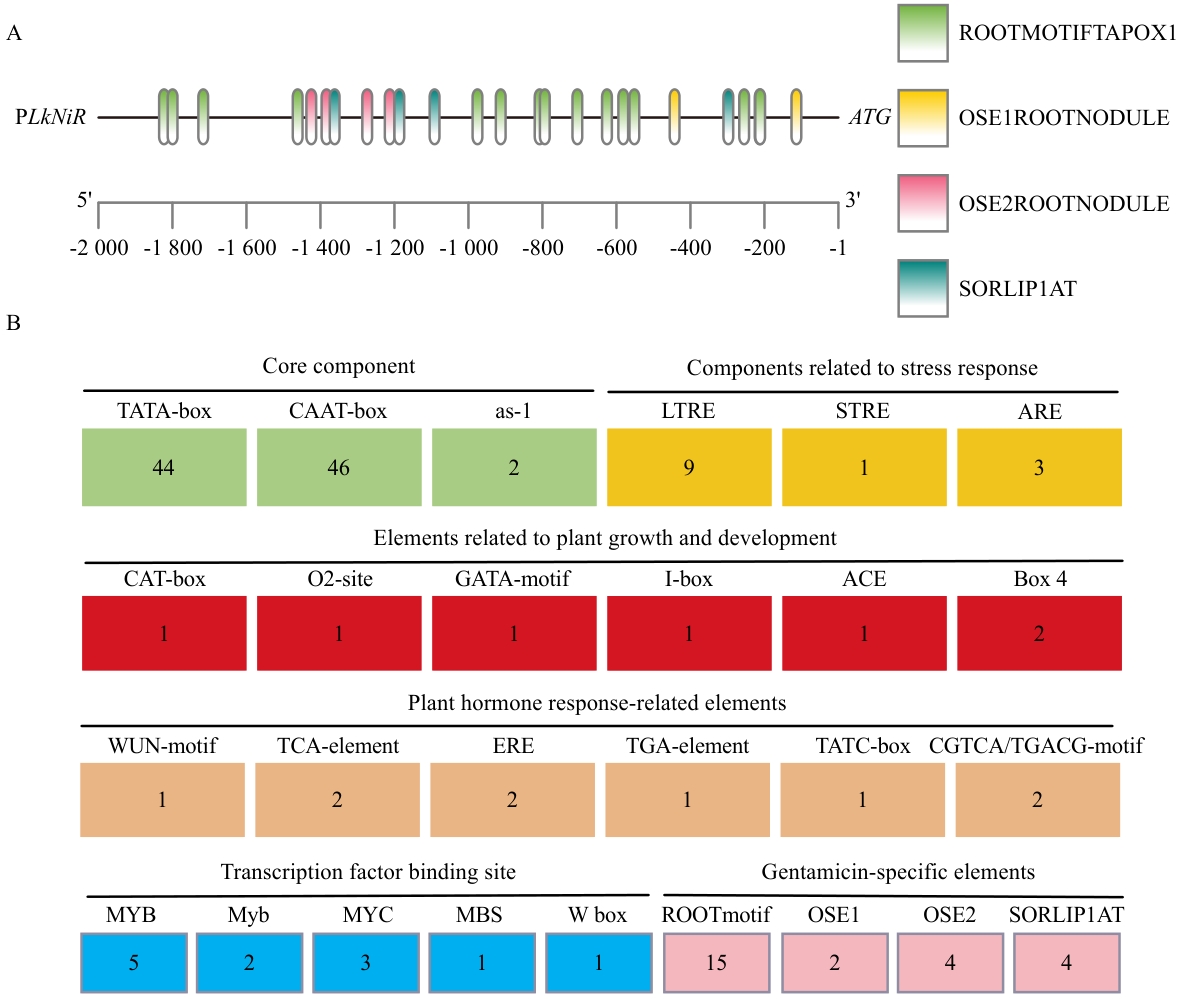
Fig. 1 Distribution of cis-acting elements in the LkNiR gene promoterA: Distribution of root-specific cis-acting elements in the LkNiR gene promoter. B: Number of core cis-acting elements in the LkNiR gene promoter
序号 No. | 物种 Species | 元件数量 No. of elements |
|---|---|---|
| 1 | 落叶松 Larix kaempferi | 9 |
| 2 | 油松 Pinus tabuliformis | 6 |
| 3 | 火炬松 Pinus taeda | 10 |
| 4 | 挪威云杉 Picea abies | 8 |
| 5 | 白云杉 Picea glauca | 3 |
| 6 | 杨树 Populus trichocarpa | 14 |
| 7 | 拟南芥 Arabidopsis thaliana | 5 |
| 8 | 大豆 Glycine max | 16 |
| 9 | 水稻 Oryza sativa | 10 |
| 10 | 玉米 Zea mays | 9 |
Table 1 Number of nitrogen assimilation-responsive elements in NiR gene promoters from different species
序号 No. | 物种 Species | 元件数量 No. of elements |
|---|---|---|
| 1 | 落叶松 Larix kaempferi | 9 |
| 2 | 油松 Pinus tabuliformis | 6 |
| 3 | 火炬松 Pinus taeda | 10 |
| 4 | 挪威云杉 Picea abies | 8 |
| 5 | 白云杉 Picea glauca | 3 |
| 6 | 杨树 Populus trichocarpa | 14 |
| 7 | 拟南芥 Arabidopsis thaliana | 5 |
| 8 | 大豆 Glycine max | 16 |
| 9 | 水稻 Oryza sativa | 10 |
| 10 | 玉米 Zea mays | 9 |
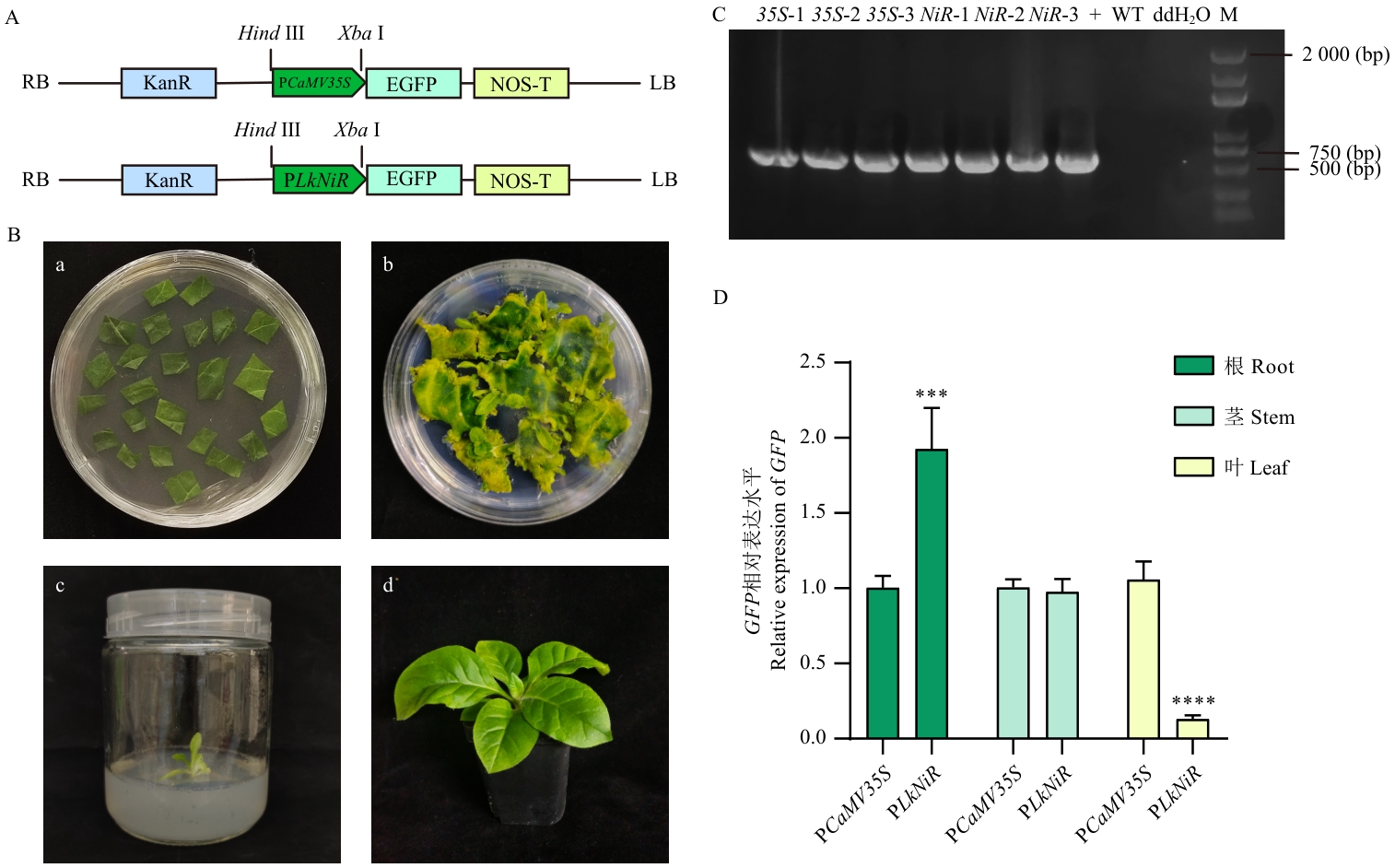
Fig. 2 Tissue expression analysis in transgenic tobaccoA: Schematic diagram of recombinant vector construction. B: Four stages of transgenic tobacco plants (a: pre-culture, b: regeneration culture, c: rooting culture, d: hardening stage). C: PCR identification result of transgenic tobacco (+: positive control; WT: wild-type control; ddH2O: negative control; M: 2 000 bp DNA marker). D: Relative expression level of GFP gene in roots, stems and leaves of transgenic tobacco.* P<0.05, ** P<0.01, *** P<0.001, **** P<0.000 1 (t-test). The same below
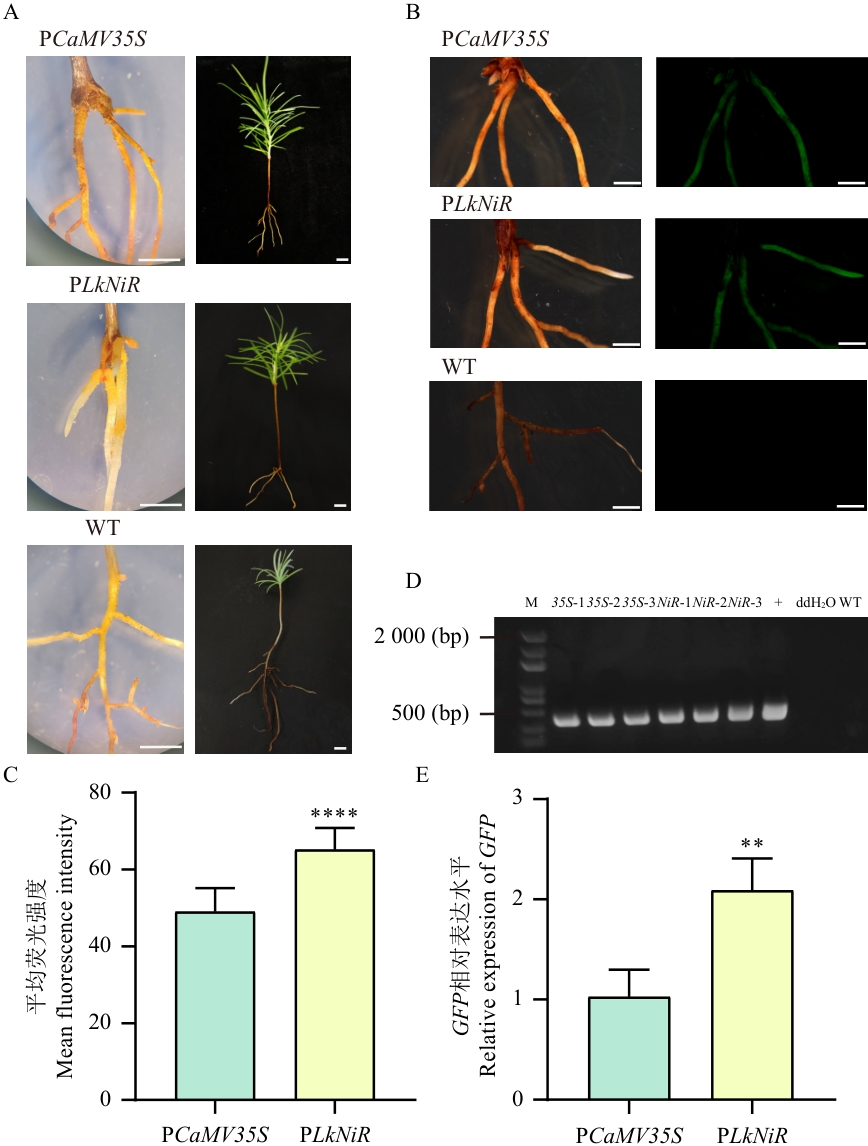
Fig. 3 Activity analysis of the LkNiR promoter in transgenic L. kaempferi hairy rootsA: Phenotypic observation of L. kaempferi hairy roots, scale bar=5 mm. B: GFP fluorescence observation of L. kaempferi hairy roots, scale bar=3 mm. C: Quantitative analysis of GFP fluorescence intensity in transgenic hairy roots. D: PCR identification result of transgenic hairy roots. E: Relative expression level of GFP gene in transgenic hairy roots
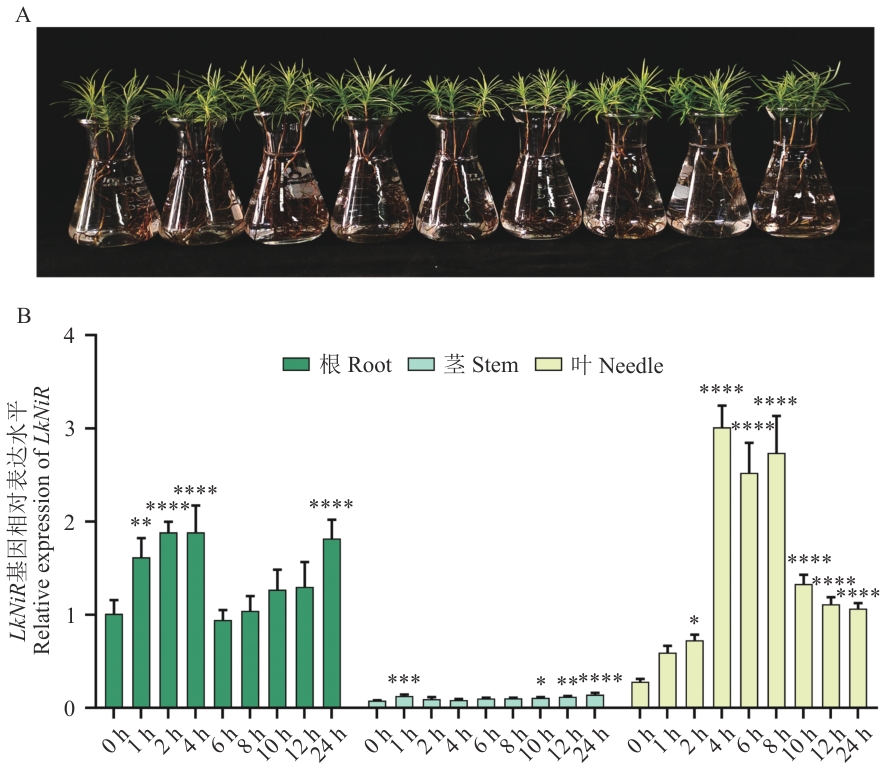
Fig. 4 Spatiotemporal expression pattern analysis of the LkNiR promoter in response to nitrite stressA: Schematic diagram of nitrite stress treatment on L. kaempferi seedlings. B: Spatiotemporal expression pattern analysis of the LkNiR gene under nitrite stress
| [1] | Chen GD, Wang L, Fabrice MR, et al. Physiological and nutritional responses of pear seedlings to nitrate concentrations [J]. Front Plant Sci, 2018, 9: 1679. |
| [2] | Du EZ, de Vries W. Links between nitrogen limitation and saturation in terrestrial ecosystems [J]. Glob Change Biol, 2025, 31(6): e70271. |
| [3] | Lan YH, Wang SQ, Zhang H, et al. Intercropping and nitrogen enhance eucalyptus productivity through the positive interaction between soil fertility factors and bacterial communities along with the maintenance of soil enzyme activities [J]. Land Degrad Dev, 2023, 34(8): 2403-2417. |
| [4] | Mattoo R, B M S. Microbial roles in the terrestrial and aquatic nitrogen cycle—implications in climate change [J]. FEMS Microbiol Lett, 2023, 370: fnad061. |
| [5] | 李思亮, 刘丛强, 肖化云. 地表环境氮循环过程中微生物作用及同位素分馏研究综述 [J]. 地质地球化学, 2002, 30(4): 40-45. |
| Li SL, Liu CQ, Xiao HY. Microbial effect on nitrogen cycle and nitrogen isotope fractionation on the Earth’s surface-a review [J]. Geology-geochemistry, 2002, 30(4): 40-45. | |
| [6] | Gao L, Smith AR, Geng BL, et al. Nitrogen uptake strategies of coexisting plant species in forest ecosystems of Northeast China: Implications for afforestation [J]. For Ecol Manag, 2025, 578: 122481. |
| [7] | Li ZH, Guan LK, Zhang CT, et al. Nitrogen assimilation genes in poplar: Potential targets for improving tree nitrogen use efficiency [J]. Ind Crops Prod, 2024, 216: 118705. |
| [8] | Wang X, Li J, Ge H, et al. Plant traits mediate foliar uptake of deposited nitrogen by mature woody plants [J]. Plant Cell Environ, 2024, 47(12): 4870-4885. |
| [9] | Zhang YJ, Si YL, Ju SB, et al. Synergistic effects of nitrogen deposition and phosphorus distribution patterns on root morphological and chemical traits, and nutrient efficiency in Chinese fir [J]. J Plant Ecol, 2025, 18(4): rtaf062. |
| [10] | 张庆芳, 李美玉, 王晓辉, 等. 微生物亚硝酸盐还原酶的研究进展 [J]. 微生物学通报, 2019, 46(11): 3148-3157. |
| Zhang QF, Li MY, Wang XH, et al. Research progress of microbial nitrite reductase [J]. Microbiol China, 2019, 46(11): 3148-3157. | |
| [11] | May Sandar Kyaing, 顾立江, 程红梅. 植物中硝酸还原酶和亚硝酸还原酶的作用 [J]. 生物技术进展, 2011, 1(3): 159-164. |
| Kyaing MS, Gu LJ, Cheng HM. The role of nitrate reductase and nitrite reductase in plant [J]. Curr Biotechnol, 2011, 1(3): 159-164. | |
| [12] | 郭晋艳, 郑晓瑜, 邹翠霞, 等. 植物非生物胁迫诱导启动子顺式元件及转录因子研究进展 [J]. 生物技术通报, 2011, 27(4): 16-20, 30. |
| Guo JY, Zheng XY, Zou CX, et al. Research progress of cis-elements of abiotic stress inducible promoters and associated transcription factors [J]. Biotechnol Bull, 2011, 27(4): 16-20, 30. | |
| [13] | 张超, 邓勇, 黄思齐, 等. 红麻亚硝酸还原酶基因HcNiR的克隆与表达分析 [J]. 福建农业学报, 2022, 37(5): 600-608. |
| Zhang C, Deng Y, Huang SQ, et al. Cloning and expression of nitrite reductase gene HcNiR in kenaf [J]. Fujian J Agric Sci, 2022, 37(5): 600-608. | |
| [14] | 张芸香, 吕世琪, 刘泰瑞, 等. 关帝山3个典型森林群落优势种的氮素利用策略差异 [J]. 林业科学, 2024, 60(2): 12-20. |
| Zhang YX, Lü SQ, Liu TR, et al. Differentiation of nitrogen use strategies of three typical forest community dominant species in Guandishan forest region [J]. Sci Silvae Sin, 2024, 60(2): 12-20. | |
| [15] | Sun C, Xie YH, Li Z, et al. The Larix kaempferi genome reveals new insights into wood properties [J]. J Integr Plant Biol, 2022, 64(7): 1364-1373. |
| [16] | Liu Z, Ren H, Zhang S, et al. Effects of long-term nitrogen addition on root nitrogen acquisition strategy: Insights from a 19-year experiment in two temperate tree species [J]. For Ecol Manag, 2024, 570: 122220. |
| [17] | Gao CC, Chen C, Liu N, et al. Genetic diversity and association analysis of traits related to water-use efficiency and nitrogen-use efficiency of Populus deltoides based on SSR markers [J]. Int J Mol Sci, 2024, 25(21): 11515. |
| [18] | Qin D, Wu R, Niu L, et al. Optimizing nitrogen use efficiency in forest plantations: mechanistic insights from Arabidopsis, crops, and natural forestry ecosystems [J]. For Res, 2025, 5: e029. |
| [19] | Lu JY, Sun N, Tian M, et al. Fluorescent Larix hairy root construction and its application to gene function in larch [J]. Plant Cell Tiss Organ Cult, 2025, 161: 23. |
| [20] | Kasten D, Mithöfer A, Georgii E, et al. Nitrite is the driver, phytohormones are modulators while NO and H2O2 act as promoters of NO2-induced cell death [J]. J Exp Bot, 2016, 67(22): 6337-6349. |
| [21] | Li XW, Zhang CL, Zhang BB, et al. Underappreciated role of canopy nitrogen deposition for forest productivity [J]. Proc Natl Acad Sci U S A, 2025, 122(34): e2508925122. |
| [22] | Kraus A, Spät P, Timm S, et al. Protein NirP1 regulates nitrite reductase and nitrite excretion in cyanobacteria [J]. Nat Commun, 2024, 15: 1911. |
| [23] | Han X, Wu K, Fu XD, et al. Improving coordination of plant growth and nitrogen metabolism for sustainable agriculture [J]. aBIOTECH, 2020, 1(4): 255-275. |
| [24] | Marchive C, Roudier F, Castaings L, et al. Nuclear retention of the transcription factor NLP7 orchestrates the early response to nitrate in plants [J]. Nat Commun, 2013, 4: 1713. |
| [25] | Yu J, Xuan W, Tian YL, et al. Enhanced OsNLP4-OsNiR cascade confers nitrogen use efficiency by promoting tiller number in rice [J]. Plant Biotechnol J, 2021, 19(1): 167-176. |
| [26] | Ge M, Wang YC, Liu YH, et al. The NIN-like protein 5 (ZmNLP5) transcription factor is involved in modulating the nitrogen response in maize [J]. Plant J, 2020, 102(2): 353-368. |
| [27] | Wei M, Zhang MQ, Sun JL, et al. PuHox52 promotes coordinated uptake of nitrate, phosphate, and iron under nitrogen deficiency in Populus ussuriensis [J]. J Integr Plant Biol, 2023, 65(3): 791-809. |
| [28] | Konishi M, Yanagisawa S. Identification of a nitrate-responsive cis-element in the Arabidopsis NIR1 promoter defines the presence of multiple cis-regulatory elements for nitrogen response [J]. Plant J, 2010, 63(2): 269-282. |
| [29] | 曹雄军, 卢晓鹏, 熊江, 等. 枳NLP转录因子响应干旱胁迫并与NRE顺式作用元件互作 [J]. 中国农业科学, 2018, 51(17): 3370-3378. |
| Cao XJ, Lu XP, Xiong J, et al. The Poncirus trifoliata (L.) Raf.NIN-like protein transcription factors responses to drought stress and bind the nitrate-responsive cis-element [J]. Sci Agric Sin, 2018, 51(17): 3370-3378. | |
| [30] | Konishi M, Yanagisawa S. Roles of the transcriptional regulation mediated by the nitrate-responsive cis-element in higher plants [J]. Biochem Biophys Res Commun, 2011, 411(4): 708-713. |
| [31] | Warning HO, Hachtel W. Functional analysis of a nitrite reductase promoter from birch in transgenic tobacco [J]. Plant Sci, 2000, 155(2): 141-151. |
| [32] | Sander L, Jensen PE, Back LF, et al. Structure and expression of a nitrite reductase gene from bean (Phaseolus vulgaris) and promoter analysis in transgenic tobacco [J]. Plant Mol Biol, 1995, 27(1): 165-177. |
| [33] | Zhang CY, Ye ZL, Qi LW, et al. Screening and functional evaluation of four Larix kaempferi promoters [J]. Plants, 2024, 13(19): 2777. |
| [1] | YUAN Shu-qi, ZHANG Yan-fang, NIE Yu-shan, LI Na, SUO Ning-ning, TAN Gui-lian, HUO Xiu-wen. Identification of HXKs in Yam and Validation of Proteins Interacting with DoHXK3 [J]. Biotechnology Bulletin, 2026, 42(9): 306-315. |
| [2] | NIE Yu-shan, ZHANG Yan-fang, YUAN Shu-qi, LI Na, SUO Ning-ning, TAN Gui-lian, HUO Xiu-wen. Identification of the AGPL Gene Family in Yam and Screening of DoAGPL1 Interacting Proteins [J]. Biotechnology Bulletin, 2026, 42(9): 316-326. |
| [3] | TAN Shu, SHEN Hong-jian, GAO Xiao-lei, YIN Qian, ZOU Feng. Genome-wide Identification of the MYB Transcription Factor Family in Camellia oleifera and Functional Analysis of CoMYB107 in Stamen Development [J]. Biotechnology Bulletin, 2026, 42(9): 196-209. |
| [4] | DONG Xiang-xiang, HOU Wei-wei, MIAO Bai-ling, CHEN Juan-juan, LI Liang-jie, ZHAI Min, ZHU Qing-song, LIU Song-hu. Overexpression of FvBBX22 from Fragaria Vesca Promotes Anthocyanin Synthesis and Delays Flowering Time in Arabidopsis thaliana [J]. Biotechnology Bulletin, 2026, 42(9): 231-237. |
| [5] | LYU Zheng, LIAN Ru-ying, LIU Yi-de, LIU Yi-ke, NING Qiang, WANG Shu-ping. Wheat HD-Zip Gene Family: Identification and Response to Fusarium graminearum [J]. Biotechnology Bulletin, 2026, 42(8): 123-132. |
| [6] | QIN Juan, LU Wei-Wen, LI Jia-Hui, LI Chen, LI Bin, WANG Zhi-ye. Cloning and Expression Analysis of Two G6PDH Genes from Safflower [J]. Biotechnology Bulletin, 2026, 42(8): 217-228. |
| [7] | CHEN Cui, LAN Li-xia, SU Meng-yu, WENG Nian-dong, ZHANG Zhen. Cloning and Functional Identification of Apple Protein Phosphatase Gene MdPP2C24 [J]. Biotechnology Bulletin, 2026, 42(8): 153-161. |
| [8] | YAN Xiao-guang, DU Yan-wei, MA Zhi-yuan, WANG Bin, WANG Guo-liang, HU Dan-zhu. Genome-wide Identification and Expression Pattern Analysis of ZmDIR Gene Family in Maize [J]. Biotechnology Bulletin, 2026, 42(7): 126-137. |
| [9] | LI Can-ni, PAN Wei-song, WU Tai-ru, WU Chuan, Keung Eric Tsang Po, LI Wei-zhan. Research Progress in the Expression of Recombinant Proteins in Endosperm Bioreactors [J]. Biotechnology Bulletin, 2026, 42(7): 67-80. |
| [10] | ZHOU Tao, LI Ya-qiang, HE Hui-juan, HU Hai-fang, CHEN Tong-seng, PAN Yue, WANG Tian-bin. Establishment of Hairy Root Genetic Transformation System in Xanthoceras sorbifolium Mediated by Agrobacterium rhizogenes [J]. Biotechnology Bulletin, 2026, 42(7): 97-104. |
| [11] | ZHANG Ya-ning, MAO Chun-li, HU Zhi-yong, YANG Dan, WU Jia-hai, WANG Bi-xian, HUANG Lin-kai. Genome-wide Analysis of Dof Transcription Factors in Elephant Grass and Their Response to Cold Stress [J]. Biotechnology Bulletin, 2026, 42(6): 267-278. |
| [12] | SHEN Chen, CHE Yan-nian, DING Zhong-ping, WANG Xiang-wen, GE Yu-jian, FU Dong-qing, ZHOU Ya-xing-qiao, LI Rui-mei. Screening of Upstream Transcription Factors of MeGLYI-13 Gene Related to Postharvest Physiological Deterioration of Cassava [J]. Biotechnology Bulletin, 2026, 42(6): 98-106. |
| [13] | DUAN Ya-xin, LI Cheng-chen, PAN Yu-ling, WANG Li, AN Kang, LI Xiao-bo, ZHU Guang-tao, LIU Ji-tao. Identification and Functional Analysis of the LEA_2 Gene Family in Potato in Response to Cold Stress and Hormones [J]. Biotechnology Bulletin, 2026, 42(6): 40-52. |
| [14] | ZHANG Shan, SUN Zhi-peng, ZHAO De-gang, ZHAO Yi-chen. Developing Highly Efficient Grafting Rootstocks Based on Eucommia ulmoides BGL Gene [J]. Biotechnology Bulletin, 2026, 42(5): 292-301. |
| [15] | ZHANG Xin, CHEN Cheng, HUO Yuan-Bo, HUANG Ren-Li, ZHANG Li, ZHANG Kai, TONG Hua-rong, YUAN Lian-Yu. Cloning of the CsCRD1 in Tea Plants and Its Impact on Chlorophyll Biosynthesis [J]. Biotechnology Bulletin, 2026, 42(5): 280-291. |
| Viewed | ||||||
|
Full text |
|
|||||
|
Abstract |
|
|||||
