







Biotechnology Bulletin ›› 2026, Vol. 42 ›› Issue (2): 169-177.doi: 10.13560/j.cnki.biotech.bull.1985.2025-0670
Previous Articles Next Articles
WANG Cheng-cheng1( ), HUANG Tian-yu1, ZHANG Qing1, SHI Lai-quan1, FANG Hui-min2(), ZHANG Long1()
Received:2025-06-25
Online:2026-02-26
Published:2026-03-17
Contact:
FANG Hui-min, ZHANG Long
E-mail:3208814158@qq.com;hmfang@yzu.edu.cn;zhanglong@yzu.edu.cn
WANG Cheng-cheng, HUANG Tian-yu, ZHANG Qing, SHI Lai-quan, FANG Hui-min, ZHANG Long. Phenotypic Analysis and Genetic Mapping of a Rice Floury Endosperm Mutant[J]. Biotechnology Bulletin, 2026, 42(2): 169-177.
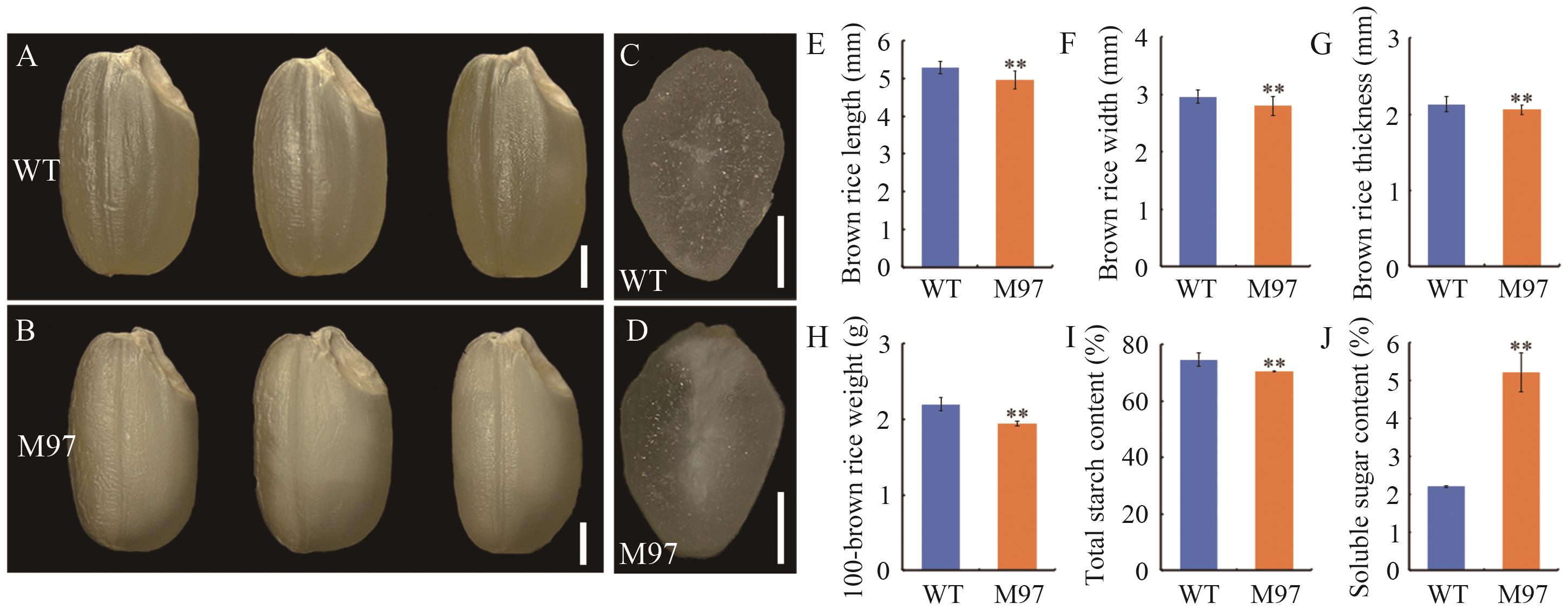
Fig. 1 Appearance phenotype and components of brown riceA, B: Brown rice. C, D: Cross-section of brown rice. E-H: Quantification of brown rice length (E), width (F), thickness (G), 100-brown rice weight (H). I: Total starch content. J: Soluble sugar content. Scale bars, 1 mm. The data were analyzed by the t-test, *P<0.05, **P<0.01, the same below
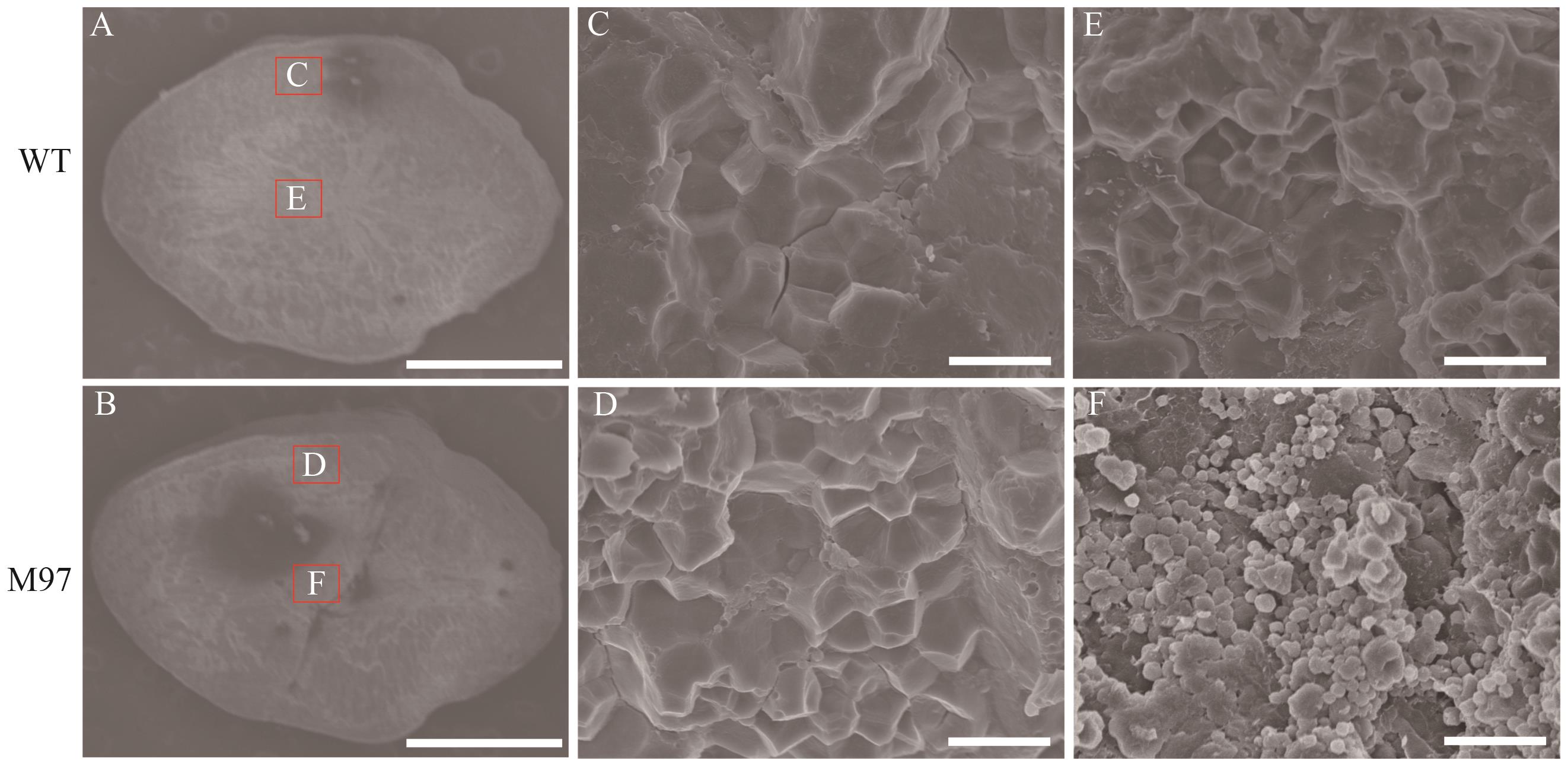
Fig. 2 Morphologies of starch granulesA-F: Scanning electron microscope photograph of starch granules. Scale bars, 10 μm
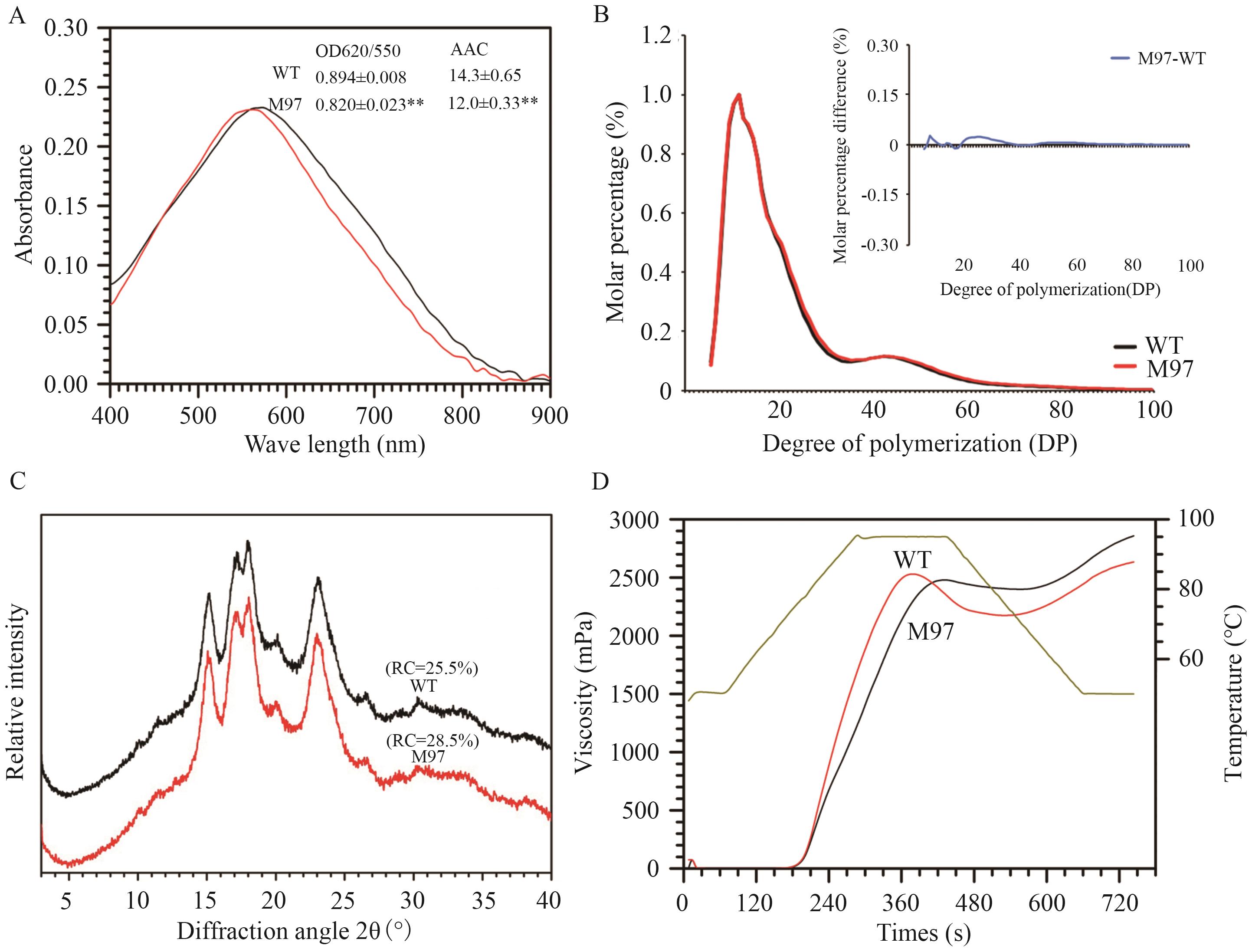
Fig. 3 Determination of starch chain length distribution and functional propertiesA: Iodine absorbance spectra. B: Chain length distribution of amylopectin. C: X-ray diffraction patterns of starches. D: RVA patterns of the starch. RC: Relative crystallinity
| Genotype | Watering solubility | Swelling power | RVA parameters of the starch (mPa/s) | ||||
|---|---|---|---|---|---|---|---|
| PV | HV | BV | FV | SV | |||
| WT | 6.2±0.1 | 17.2±1.0 | 2 480±9 | 2 393±9 | 87±18 | 2 863±2 | 470±7 |
| M97 | 5.5±0.1** | 24.5±1.3** | 2 568±53 | 2 205±44* | 363±9** | 2 668±41* | 463±3 |
Table 1 Swelling power, water solubility and pasting parameters of starches
| Genotype | Watering solubility | Swelling power | RVA parameters of the starch (mPa/s) | ||||
|---|---|---|---|---|---|---|---|
| PV | HV | BV | FV | SV | |||
| WT | 6.2±0.1 | 17.2±1.0 | 2 480±9 | 2 393±9 | 87±18 | 2 863±2 | 470±7 |
| M97 | 5.5±0.1** | 24.5±1.3** | 2 568±53 | 2 205±44* | 363±9** | 2 668±41* | 463±3 |
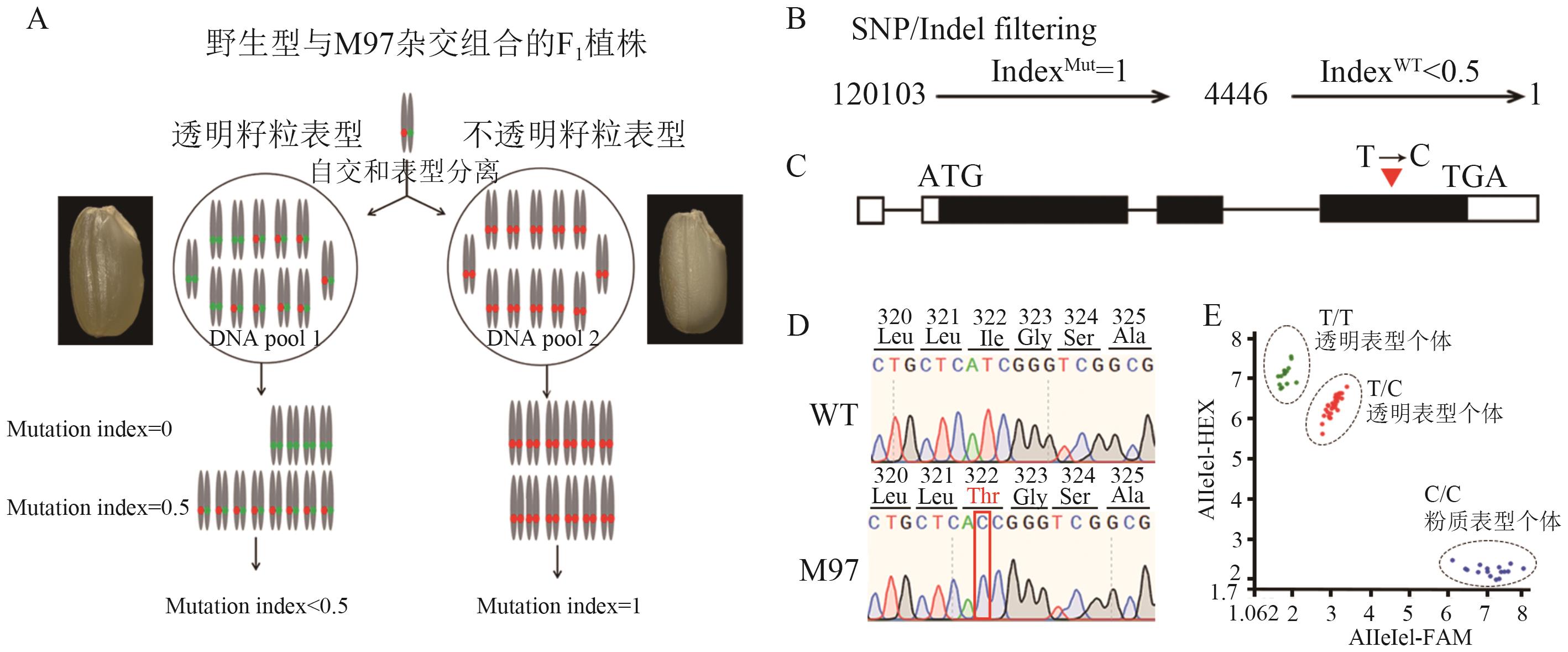
Fig. 4 Mapping of the mutated gene in M97A: Flowchart of MutMap method for locating mutant gene. B: SNP/Indel-Index filtering principle of candidate sites. C. Candidate gene structure. The 965th base with T is replaced by C. D: Sequence chromatograms of the mutation site. The 322nd amino acid Ile is replased with Thr, and the mutation site is marked with a red box. E: Co-separation analysis was performed using KASP marker
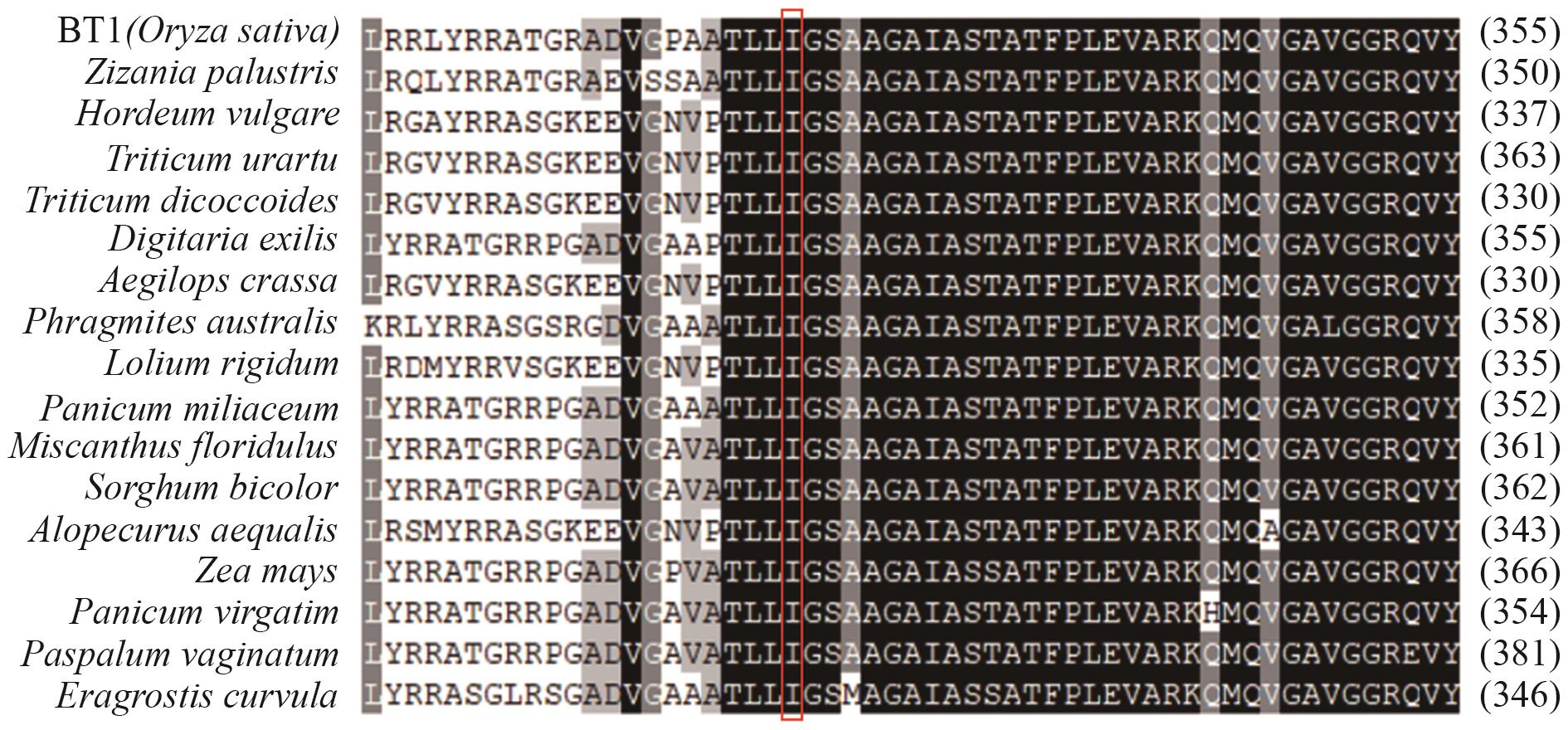
Fig. 5 Amino acid sequence alignment of BT1 protein mutation region in different species
| [1] | Ren DY, Ding CQ, Qian Q. Molecular bases of rice grain size and quality for optimized productivity [J]. Sci Bull, 2023, 68(3): 314-350. |
| [2] | Huang LC, Tan HY, Zhang CQ, et al. Starch biosynthesis in cereal endosperms: an updated review over the last decade [J]. Plant Commun, 2021, 2(5): 100237. |
| [3] | 李一博, 赵雷. 水稻品质性状的遗传改良及其关键科学问题 [J]. 生命科学, 2016, 28(10): 1168-1179. |
| Li YB, Zhao L. Genetic improvement and key scientific questions of grain quality traits in rice [J]. Chin Bull Life Sci, 2016, 28(10): 1168-1179. | |
| [4] | Li SF, Wei XJ, Ren YL, et al. OsBT1 encodes an ADP-glucose transporter involved in starch synthesis and compound granule formation in rice endosperm [J]. Sci Rep, 2017, 7: 40124. |
| [5] | Jeon JS, Ryoo N, Hahn TR, et al. Starch biosynthesis in cereal endosperm [J]. Plant Physiol Biochem, 2010, 48(6): 383-392. |
| [6] | Crofts N, Nakamura Y, Fujita N. Critical and speculative review of the roles of multi-protein complexes in starch biosynthesis in cereals [J]. Plant Sci, 2017, 262: 1-8. |
| [7] | James MG, Denyer K, Myers AM. Starch synthesis in the cereal endosperm [J]. Curr Opin Plant Biol, 2003, 6(3): 215-222. |
| [8] | Sullivan TD, Strelow LI, Illingworth CA, et al. Analysis of maize brittle-1 alleles and a defective suppressor-mutator-induced mutable allele [J]. Plant Cell, 1991, 3(12): 1337-1348. |
| [9] | Sullivan TD, Kaneko Y. The maize brittle1 gene encodes amyloplast membrane polypeptides [J]. Planta, 1995, 196(3): 477-484. |
| [10] | Kao-Chih She HK. A novel factor FLOURY ENDOSPERM2 is involved in regulation of rice grain size and starch quality [J]. Plant Cell, 2010, 22(10): 3280-3294. |
| [11] | Kang HG, Park S, Matsuoka M, et al. White-core endosperm floury endosperm-4 in rice is generated by knockout mutations in the C4-type pyruvate orthophosphate dikinase gene (OsPPDKB) [J]. Plant J, 2005, 42(6): 901-911. |
| [12] | Ryoo N, Yu C, Park CS, et al. Knockout of a starch synthase gene OsSSIIIa/Flo5 causes white-core floury endosperm in rice (Oryza sativa L.) [J]. Plant Cell Rep, 2007, 26(7): 1083-1095. |
| [13] | Peng C, Wang YH, Liu F, et al. FLOURY ENDOSPERM6 encodes a CBM48 domain-containing protein involved in compound granule formation and starch synthesis in rice endosperm [J]. Plant J, 2014, 77(6): 917-930. |
| [14] | Zhang L, Ren YL, Lu BY, et al. FLOURY ENDOSPERM7 encodes a regulator of starch synthesis and amyloplast development essential for peripheral endosperm development in rice [J]. J Exp Bot, 2016, 67(3): 633-647. |
| [15] | Long WH, Dong BN, Wang YH, et al. FLOURY ENDOSPERM8, encoding the UDP-glucose pyrophosphorylase 1, affects the synthesis and structure of starch in rice endosperm [J]. J Plant Biol, 2017, 60(5): 513-522. |
| [16] | Fang LB, Ma LY, Zhao SL, et al. Alanine aminotransferase (OsAlaAT1) modulates nitrogen utilization, grain yield, and quality in rice [J]. J Genet Genom, 2022, 49(5): 510-513. |
| [17] | Yu MZ, Wu MM, Ren YL, et al. Rice FLOURY ENDOSPERM 18 encodes a pentatricopeptide repeat protein required for 5' processing of mitochondrial nad5 messenger RNA and endosperm development [J]. J Integr Plant Biol, 2021, 63(5): 834-847. |
| [18] | Lei J, Teng X, Wang YF, et al. Plastidic pyruvate dehydrogenase complex E1 component subunit Alpha1 is involved in galactolipid biosynthesis required for amyloplast development in rice [J]. Plant Biotechnol J, 2022, 20(3): 437-453. |
| [19] | 张龙, 赵玲珑, 任银会, 等. 水稻粉质胚乳突变体M37的基因定位及变异分析 [J]. 扬州大学学报: 农业与生命科学版, 2019, 40(4): 10-17. |
| Zhang L, Zhao LL, Ren YH, et al. Gene mapping and mutation analysis of floury endosperm mutant M37 in rice [J]. J Yangzhou Univ Agric Life Sci Ed, 2019, 40(4): 10-17. | |
| [20] | 徐斌, 满建民, 韦存虚. 粉末X射线衍射图谱计算植物淀粉结晶度方法的探讨 [J]. 植物学报, 2012, 47(3): 278-285. |
| Xu B, Man JM, Wei CX. Methods for determining relative crystallinity of plant starch X-ray powder diffraction spectra [J]. Chin Bull Bot, 2012, 47(3): 278-285. | |
| [21] | 郭可. 甘薯块根C-型淀粉结构特性及其对土壤温度变化的响应研究 [D]. 扬州: 扬州大学, 2023. |
| Guo K. Structural characterization of C-type starch in sweet potato root tuber and its response to soil temperature change [D]. Yangzhou: Yangzhou University, 2023. | |
| [22] | Lin LS, Li Z, Ning MY, et al. A mutant allele of the Wx gene encoding granule-bound starch synthase I results in extremely low amylose content in rice [J]. Plant Physiol, 2024, 196(4): 2296-2299. |
| [23] | 王忠, 顾蕴洁, 陈刚, 等. 稻米的品质和影响因素 [J]. 分子植物育种, 2003, 1(2): 231-241. |
| Wang Z, Gu YJ, Chen G, et al. Rice quality and its affecting factors [J]. Mol Plant Breed, 2003, 1(2): 231-241. | |
| [24] | 何巍, 范孝旭, 王志峰, 等. 小角X射线散射波谱的定量作图分析法在作物淀粉研究中的应用 [J]. 作物学报, 2017, 43(12): 1827-1834. |
| He W, Fan XX, Wang ZF, et al. Application of quantitative graphical method based on small angle X-ray scattering spectrum in crop starch study [J]. Acta Agron Sin, 2017, 43(12): 1827-1834. | |
| [25] | Carcea M, Acquistucci R. Isolation and physicochemical characterization of fonio (Digitaria exilis Stapf) starch [J]. Starch Stärke, 1997, 49(4): 131-135. |
| [26] | Cakir B, Shiraishi S, Tuncel A, et al. Analysis of the rice ADP-glucose transporter (OsBT1) indicates the presence of regulatory processes in the amyloplast stroma that control ADP-glucose flux into starch [J]. Plant Physiol, 2016, 170(3): 1271-1283. |
| [27] | Zhang L, Zhao LL, Zhang XR, et al. Characterization and starch properties of a waxy mutant in Japonica rice kitaake [J]. J Agric Crops, 2018, 4(11): 117-124. |
| [28] | Huang XR, Su F, Huang S, et al. Novel Wx alleles generated by base editing for improvement of rice grain quality [J]. J Integr Plant Biol, 2021, 63(9): 1632-1638. |
| [1] | YIN Ya-long, ZHANG Ming-yang, WANG Jie-min, MIAO Xue-xue, CHEN Jin, WANG Wei-ping. Advances in Coordinated Tolerance Mechanisms to Abiotic Stresses in Rice [J]. Biotechnology Bulletin, 2026, 42(4): 26-37. |
| [2] | YANG Yue-qin, XING Ying, ZHONG Zi-he, TIAN Wei-jun, YANG Xue-qing, WANG Jian-xu. Expression and Functional Analysis of OsMATE34 in Rice under Mercury Stress [J]. Biotechnology Bulletin, 2026, 42(1): 86-94. |
| [3] | FEI Si-tian, HOU Ying-xiang, LI Lan, ZHANG Chao. Biological Functions and Regulatory Network of SLR1, a Negative Regulator of Gibberellin Signaling in Rice [J]. Biotechnology Bulletin, 2026, 42(1): 13-30. |
| [4] | DENG Mei-bi, YAN Lang, ZHAN Zhi-tian, ZHU Min, HE Yu-bing. Efficient CRISPR Gene Editing in Rice Assisted by RUBY [J]. Biotechnology Bulletin, 2025, 41(8): 65-73. |
| [5] | HOU Ying-xiang, FEI Si-tian, LI Ni, LI Lan, SONG Song-quan, WANG Wei-ping, ZHANG Chao. Research Progress in Response of Rice miRNAs to Biotic Stress [J]. Biotechnology Bulletin, 2025, 41(7): 69-80. |
| [6] | WU Hao, DONG Wei-feng, HE Zi-tian, LI Yan-xiao, XIE Hui, SUN Ming-zhe, SHEN Yang, SUN Xiao-li. Genome-wide Identification and Expression Analysis of the Rice BXL Gene Family [J]. Biotechnology Bulletin, 2025, 41(6): 87-98. |
| [7] | DU Liang-heng, TANG Huang-lei, ZHANG Zhi-guo. Map-based Cloning of Light-responsive Gene ELM1 in Rice [J]. Biotechnology Bulletin, 2025, 41(5): 82-89. |
| [8] | LIU Yuan-yuan, CHEN Xi-feng, QIAN Qian, GAO Zhen-yu. Advances in Molecular Mechanisms Regulating Panicle Development in Rice [J]. Biotechnology Bulletin, 2025, 41(5): 1-13. |
| [9] | CHEN Xiao-jun, HUI Jian, MA Hong-wen, BAI Hai-Bo, ZHONG Nan, LI Jia-run, FAN Yun-fang. Creating Rice Gerplasm Resources OsALS Rsistant to Herbicide through Single Base Gene Editing Technology [J]. Biotechnology Bulletin, 2025, 41(4): 106-114. |
| [10] | LI Xin-peng, ZHANG Wu-han, ZHANG Li, SHU Fu, HE Qiang, GUO Yang, DENG Hua-feng, WANG Yue, SUN Ping-yong. Creation of Rice Mutant by Gamma-ray and Its Molecular Identification [J]. Biotechnology Bulletin, 2025, 41(3): 35-43. |
| [11] | FANG Hui-min, GU Yi-shu, ZHANG Jing, ZHANG Long. Isolation and Physicochemical Properties Analysis of Starch from Rice Leaves [J]. Biotechnology Bulletin, 2025, 41(2): 51-57. |
| [12] | LI Jun-chen, ZHAO Xiang-yuan, WANG Fu-dong, WANG Yi-fan, ZHANG Jian-feng, WANG Shu-sheng. Boosting Rice Yield in Saline-alkali Lands Using Enterobacter hormaechei QT2: A Wild Rice Endophytic Bacterium [J]. Biotechnology Bulletin, 2025, 41(12): 106-113. |
| [13] | FAN Yan-fei, YE Lu-huan, LI Yu-tong, WANG Chuan-luo, ZHANG Rui, LUO Jian-hua, WANG Peng. Utilizing Wheat Hybrid Lines to Mine Genes Regulating Cyclic Electron Flow and Applying Them in Improving Photosynthetic Efficiency in Crops [J]. Biotechnology Bulletin, 2025, 41(10): 72-86. |
| [14] | LI Bo-di, LI Zhi-chao, ZHU Guo-hui, PENG Xin-xiang, ZHANG Zhi-sheng. Expression of Glycolate Oxidase in Rice Chloroplasts and Its Effects on Photosynthesis and Growth [J]. Biotechnology Bulletin, 2025, 41(10): 87-97. |
| [15] | JIN Su-kui, GUO Qian-qian, LIU Qiao-quan, GAO Ji-ping. A Simplified Method for Extracting Genomic DNA from Rice Leaves [J]. Biotechnology Bulletin, 2025, 41(1): 74-84. |
| Viewed | ||||||
|
Full text |
|
|||||
|
Abstract |
|
|||||
