







Biotechnology Bulletin ›› 2026, Vol. 42 ›› Issue (7): 351-360.doi: 10.13560/j.cnki.biotech.bull.1985.2025-1159
PENG Hai-yan1, LIU Jia-xin1, SHI Yu-han1, LI Xian-zhen1, GUO Xiao-yu1( ), YUAN Yue2()
Received:2025-10-30
Online:2026-07-26
Published:2026-07-20
Contact:
GUO Xiao-yu, YUAN Yue
E-mail:xiaoguo1987214@126.com;yuanyue_123@foxmail.com
PENG Hai-yan, LIU Jia-xin, SHI Yu-han, LI Xian-zhen, GUO Xiao-yu, YUAN Yue. Heterologous Expression and Enzymatic Properties of the Processive Endoglucanase BvCel5[J]. Biotechnology Bulletin, 2026, 42(7): 351-360.
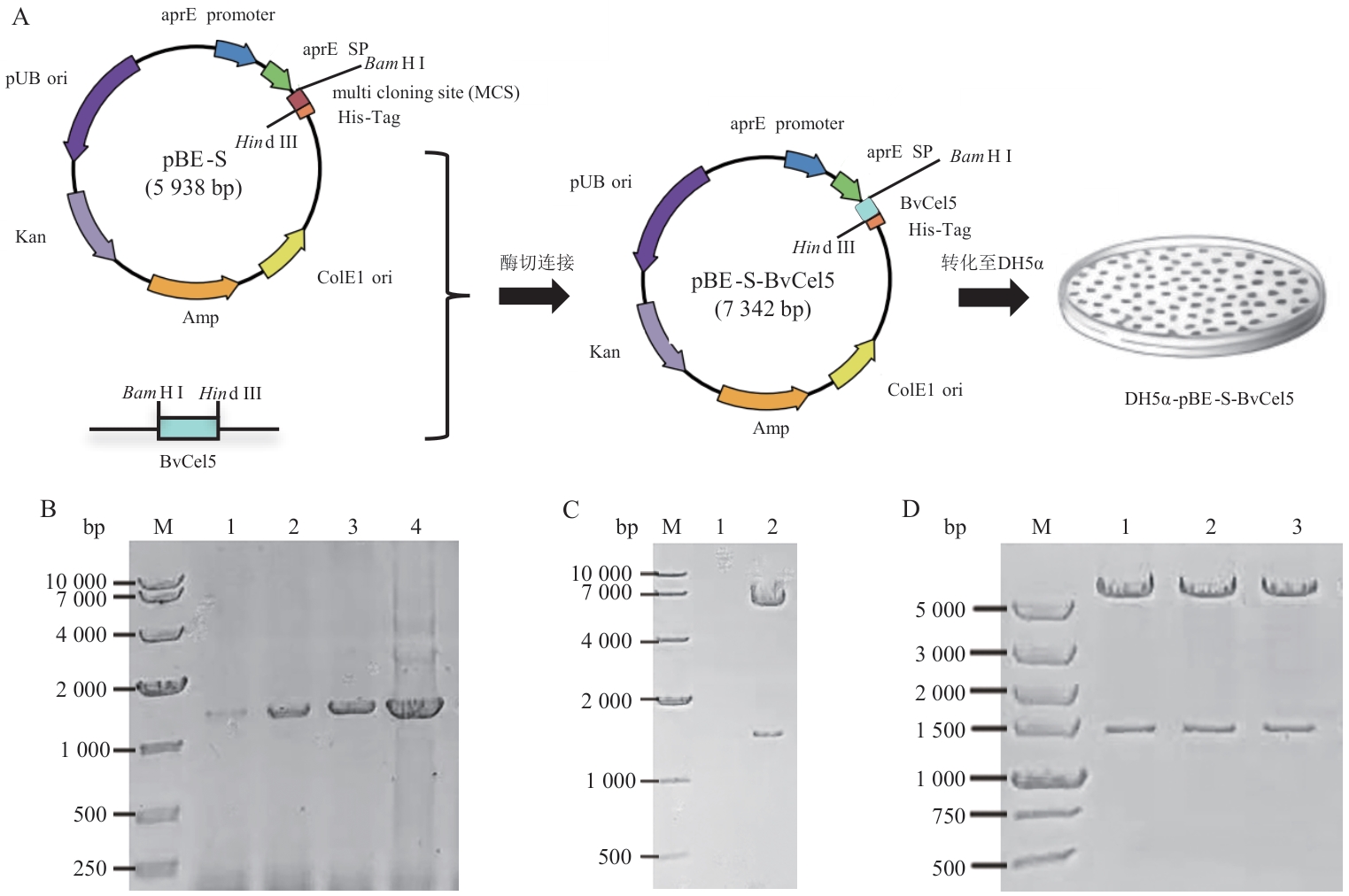
Fig. 1 Construction of the RIK 1285-pBE-S-BvCel5 expression strainA: Vector construction flowchart. B: Graph of the colony PCR results of DH5α transformants of pBE-S-BvCel5 (M: 10 000 bp Marker; lane 1-4: DH5α transformants of pBE-S-BvCel5). C: graph of the identification results of enzyme digestion products of pBE-S-BvCel5 plasmid (M: 10 000 bp marker; lanes 1-2: pBE-S-BvCel5). D: Extraction of the RIK 1285-pBE-S-BvCel5 plasmid and identification results of enzyme-digestion product (M: 5 000 bp marker; lane 1-3: Three transformants of RIK 1285-pBE-S-BvCel5)
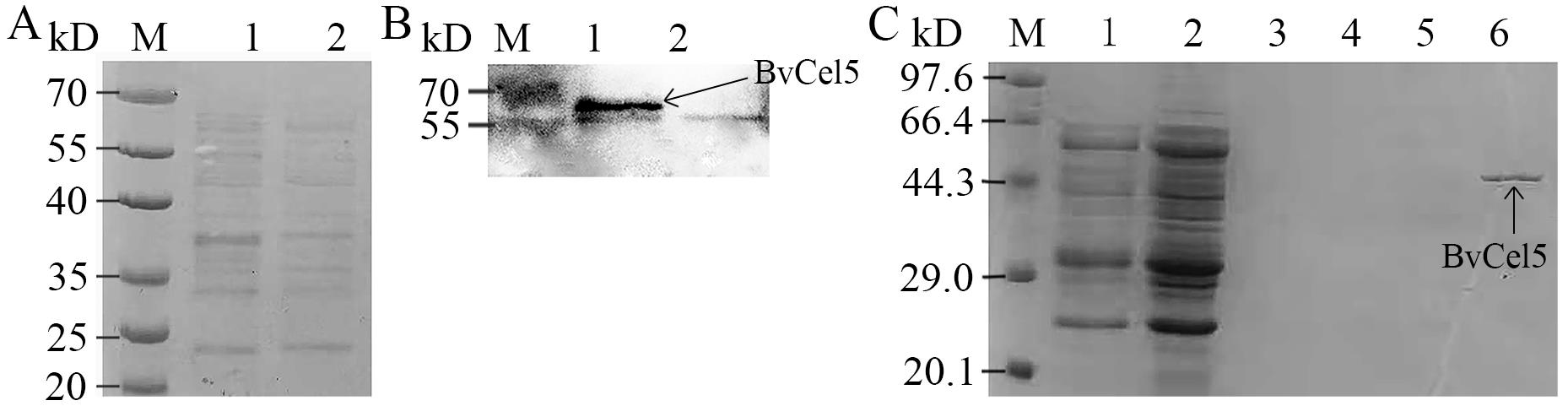
Fig. 2 Expression and purification of BvCel5A: SDS-PAGE electrophoresis gel of RIK 1285-pBE-S-BvCel5 (M: pre-stained marker; lane 1: RIK 1285-pBE-S-BvCel5 fermentation supernatant; lane 2: RIK 1285-pBE-S fermentation supernatant). B: Western blot results for RIK 1285-pBE-S-BvCel5 (M: pre-stained marker; lane 1: RIK 1285-pBE-S-BvCel5 fermentation supernatant; lane 2: RIK 1285-pBE-S fermentation supernatant). C: SDS-PAGE electrophoresis gel image of pure protein RIK 1285-pBE-S-BvCel5 (M: Low molecular weight marker; lane 1: crude enzyme solution; lane 2: perfusion fluid; lane 3-6: 50 mmol/L imidazole buffer eluate)
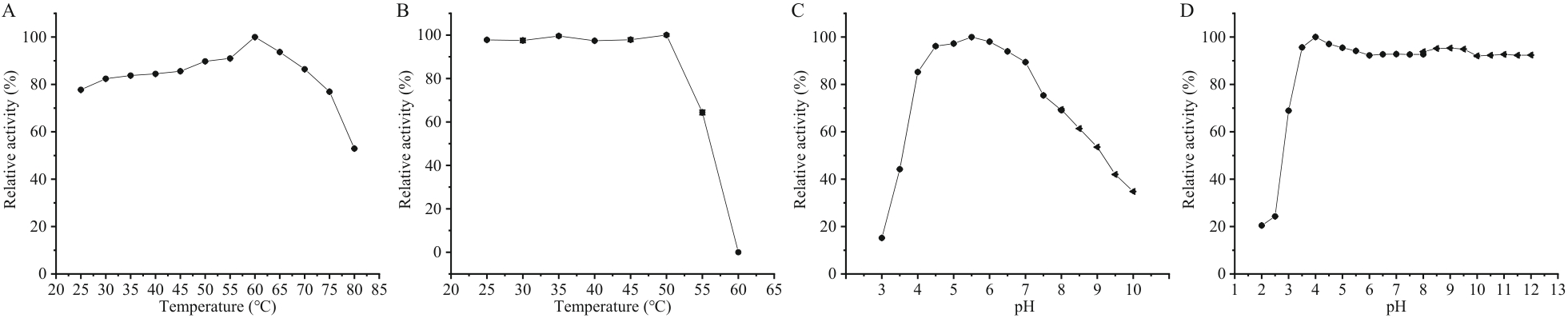
Fig. 3 Enzymatic properties analysis of BvCel5
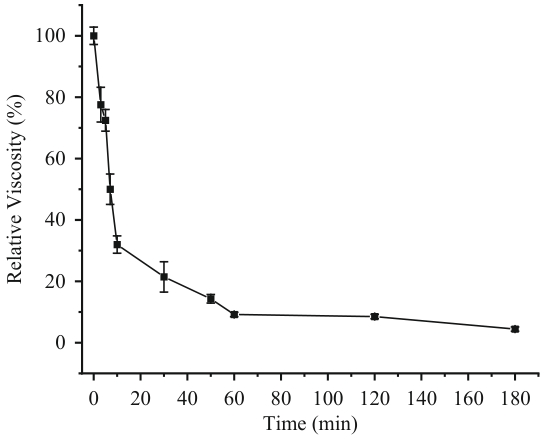
Fig. 4 Viscosity change curve of the reaction product between BvCel5 and CMC
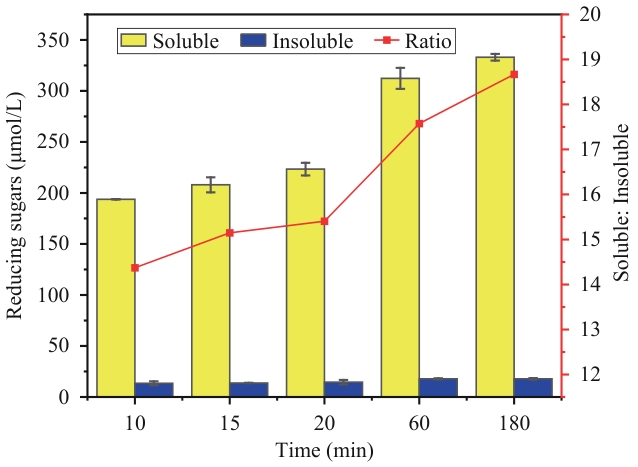
Fig. 5 Analysis of BvCel5 sustained degradation capacityYellow column: soluble reduction end. Blue column: insoluble reduction end. Broken line: Ratio of soluble reduction end to insoluble reduction end. Error bars: mean values ± standard error of three replicate experiments
| 底物 | G1 | G2 | G3 | |||
|---|---|---|---|---|---|---|
| 含量(mg/L) | 占比(%) | 含量(mg/L) | 占比(%) | 含量(mg/L) | 占比(%) | |
| CMC | 66.06±2.76 | 18.77 | 119.90±4.16 | 34.07 | 165.93±0.96 | 47.15 |
| 滤纸 | 1.84±0.13 | 1.92 | 21.93±2.33 | 22.87 | 72.10±2.04 | 75.21 |
| PH-101 | 1.49±0.23 | 1.55 | 25.77±1.51 | 26.75 | 69.07±2.44 | 71.70 |
Table 1 Proportions of components in reaction products between BvCel5 and different substrates
| 底物 | G1 | G2 | G3 | |||
|---|---|---|---|---|---|---|
| 含量(mg/L) | 占比(%) | 含量(mg/L) | 占比(%) | 含量(mg/L) | 占比(%) | |
| CMC | 66.06±2.76 | 18.77 | 119.90±4.16 | 34.07 | 165.93±0.96 | 47.15 |
| 滤纸 | 1.84±0.13 | 1.92 | 21.93±2.33 | 22.87 | 72.10±2.04 | 75.21 |
| PH-101 | 1.49±0.23 | 1.55 | 25.77±1.51 | 26.75 | 69.07±2.44 | 71.70 |
| [1] | Reshmy R, Philip E, Madhavan A, et al. Lignocellulose in future biorefineries: Strategies for cost-effective production of biomaterials and bioenergy [J]. Bioresour Technol, 2022, 344: 126241. |
| [2] | Percival Zhang YH, Himmel ME, Mielenz JR. Outlook for cellulase improvement: Screening and selection strategies [J]. Biotechnol Adv, 2006, 24(5): 452-481. |
| [3] | Li Z, Cai CJ, Huo XX, et al. Sucrose-nonfermenting 1 kinase activates histone acetylase GCN5 to promote cellulase production in Trichoderma [J]. Appl Microbiol Biotechnol, 2023, 107(15): 4917-4930. |
| [4] | 张丹. 纤维素酶的研究进展及其展望 [J]. 青海畜牧兽医杂志, 2017, 47(3): 49-52. |
| Zhang D. Research progress of cellulase and its prospect [J]. Chin. Qinghai J Anim Vet Sci, 2017, 47(3): 49-52. | |
| [5] | Irwin DC, Spezio M, Walker LP, et al. Activity studies of eight purified cellulases: Specificity, synergism, and binding domain effects [J]. Biotech & Bioengineering, 1993, 42(8): 1002-1013. |
| [6] | Ghatge SS, Telke AA, Waghmode TR, et al. Multifunctional cellulolytic auxiliary activity protein HcAA10-2 from Hahella chejuensis enhances enzymatic hydrolysis of crystalline cellulose [J]. Appl Microbiol Biotechnol, 2015, 99(7): 3041-3055. |
| [7] | Konar A, Aich S, Katakojwala R, et al. A processive GH9 family endoglucanase of Bacillus licheniformis and the role of its carbohydrate-binding domain [J]. Appl Microbiol Biotechnol, 2022, 106(18): 6059-6075. |
| [8] | Gavande PV, Nath P, Kumar K, et al. Highly efficient, processive and multifunctional recombinant endoglucanase RfGH5_4 from Ruminococcus flavefaciens FD-1 v3 for recycling lignocellulosic plant biomasses [J]. Int J Biol Macromol, 2022, 209: 801-813. |
| [9] | Patel A, Shah A. Purification and characterization of novel, thermostable and non-processive GH5 family endoglucanase from Fomitopsis meliae CFA 2 [J]. Int J Biol Macromol, 2021, 182: 1161-1169. |
| [10] | Asha P, Divya J, Bright Singh IS. Purification and characterisation of processive-type endoglucanase and β-glucosidase from Aspergillus ochraceus MTCC 1810 through saccharification of delignified coir pith to glucose [J]. Bioresour Technol, 2016, 213: 245-248. |
| [11] | Li JH, Du LK, Wang LS. Glycosidic-bond hydrolysis mechanism catalyzed by cellulase Cel7A from Trichoderma reesei: a comprehensive theoretical study by performing MD, QM, and QM/MM calculations [J]. J Phys Chem B, 2010, 114(46): 15261-15268. |
| [12] | Badino SF, Christensen SJ, Kari J, et al. Exo-exo synergy between Cel6A and Cel7A from Hypocrea jecorina: Role of carbohydrate binding module and the endo-lytic character of the enzymes [J]. Biotech & Bioengineering, 2017, 114(8): 1639-1647. |
| [13] | Lee CR, Chi WJ, Lim JH, et al. Expression and characterization of the processive exo-β-1,4-cellobiohydrolase SCO6546 from Streptomyces coelicolor A(3) [J]. J Basic Microbiol, 2018, 58(4): 310-321. |
| [14] | Lv KM, Shao WY, Pedroso MM, et al. Enhancing the catalytic activity of a GH5 processive endoglucanase from Bacillus subtilis BS-5 by site-directed mutagenesis [J]. Int J Biol Macromol, 2021, 168: 442-452. |
| [15] | Cohen R, Suzuki MR, Hammel KE. Processive endoglucanase active in crystalline cellulose hydrolysis by the brown rot Basidiomycete Gloeophyllum trabeum [J]. Appl Environ Microbiol, 2005, 71(5): 2412-2417. |
| [16] | Haq IU, Akram F, Ali Khan M, et al. CenC, a multidomain thermostable GH9 processive endoglucanase from Clostridium thermocellum: cloning, characterization and saccharification studies [J]. World J Microbiol Biotechnol, 2015, 31(11): 1699-1710. |
| [17] | Chiriac AI, Cadena EM, Vidal T, et al. Engineering a family 9 processive endoglucanase from Paenibacillus barcinonensis displaying a novel architecture [J]. Appl Microbiol Biotechnol, 2010, 86(4): 1125-1134. |
| [18] | Gavande PV, Kumar K, Ahmed J, et al. Multifunctionality and mechanism of processivity of family GH5 endoglucanase, RfGH5_4 from Ruminococcus flavefaciens on lignocellulosic polymers [J]. Int J Biol Macromol, 2023, 224: 1395-1411. |
| [19] | Røjel N, Kari J, Sørensen TH, et al. Substrate binding in the processive cellulase Cel7A: Transition state of complexation and roles of conserved tryptophan residues [J]. J Biol Chem, 2020, 295(6): 1454-1463. |
| [20] | Araújo EA, Dias AHS, Kadowaki MAS, et al. Impact of cellulose properties on enzymatic degradation by bacterial GH48 enzymes: Structural and mechanistic insights from processive Bacillus licheniformis Cel48B cellulase [J]. Carbohydr Polym, 2021, 264: 118059. |
| [21] | Lee HJ, Kim IJ, Youn HJ, et al. Cellotriose-hydrolyzing activity conferred by truncating the carbohydrate-binding modules of Cel5 from Hahella chejuensis [J]. Bioprocess Biosyst Eng, 2017, 40(2): 241-249. |
| [22] | Chen XY, Gao ZL, Wang S, et al. Processivity and enzymatic mechanism of a non-modular family 5 endoglucanase from Sporocytophaga sp. CX11 with potential applications in cellulose saccharification [J]. Enzyme Microb Technol, 2025, 185: 110609. |
| [23] | Gilad R, Rabinovich L, Yaron S, et al. CelI, a noncellulosomal family 9 enzyme from Clostridium thermocellum, is a processive endoglucanase that degrades crystalline cellulose [J]. J Bacteriol, 2003, 185(2): 391-398. |
| [24] | 赵荪琦, 张明辉, 高学军. 枯草芽胞杆菌同源重组表达外源基因在畜牧业应用的研究进展 [J]. 吉林畜牧兽医, 2024, 45(1): 7-9. |
| Zhao SQ, Zhang MH, Gao XJ. Research progress on the application of homologous recombination expression of foreign genes by Bacillus subtilis in animal husbandry [J]. Jilin Anim Husb Vet Med, 2024, 45(1): 7-9. | |
| [25] | 高乐. 斜卧青霉胞外纤维二糖水解酶多样性及催化机理研究 [D]. 济南: 山东大学, 2012. |
| Gao L. Diversity and catalytic mechanism of CBHs from pencillium decumbens [D]. Jinan: Shandong University, 2012. | |
| [26] | Lee JM, Heitmann JA, Pawlak JJ. Rheology of carboxymethyl cellulose solutions treated with cellulases [J]. BioResources, 2007, 2(1): 20-33. |
| [27] | Liu SY, Shibu MA, Jhan HJ, et al. Purification and characterization of novel glucanases from Trichoderma harzianum ETS 323 [J]. J Agric Food Chem, 2010, 58(19): 10309-10314. |
| [28] | 陶敏, 王振兴, 陈晓艺, 等. 持续性内切纤维素酶高效催化的研究进展 [J]. 微生物学杂志, 2019, 39(5): 98-104. |
| Tao M, Wang ZX, Chen XY, et al. Advances in high efficiency catalysis of persistent endoglucanase [J]. J Microbiol, 2019, 39(5): 98-104. | |
| [29] | 王辛. 持续性纤维素内切酶SmCel5A降解纤维素的研究 [D]. 大连: 大连工业大学, 2021. |
| Wang X. Study on degradation of cellulose by processive endoglucanase SmCel5A [D]. Dalian: Dalian Polytechnic University, 2021. | |
| [30] | Zhou LC, Zhang R, Jiang B, et al. Efficient production of an alginate lyase in Bacillus subtilis with combined strategy: vector and host selection, promoter and signal peptide screening, and modification of a translation initiation region [J]. J Agric Food Chem, 2024, 72(35): 19403-19412. |
| [31] | Zhang P, Gong JS, Xie ZH, et al. Efficient secretory expression of phospholipase D for the high-yield production of phosphatidylserine and phospholipid derivates from soybean lecithin [J]. Synth Syst Biotechnol, 2023, 8(2): 273-280. |
| [32] | Basak A, Gavande PV, Murmu N, et al. Optimization and biochemical characterization of a thermotolerant processive cellulase, PtCel1, of Parageobacillus thermoglucosidasius NBCB1 [J]. J Basic Microbiol, 2023, 63(3/4): 326-339. |
| [33] | Mejia-Castillo T, Hidalgo-Lara ME, Brieba LG, et al. Purification, characterization and modular organization of a cellulose-binding protein, CBP105, a processive β-1,4-endoglucanase from Cellulomonas flavigena [J]. Biotechnol Lett, 2008, 30(4): 681-687. |
| [34] | Chundawat SPS, Nemmaru B, Hackl M, et al. Molecular origins of reduced activity and binding commitment of processive cellulases and associated carbohydrate-binding proteins to cellulose Ⅲ [J]. J Biol Chem, 2021, 296: 100431. |
| [35] | Moraïs S, Stern J, Kahn A, et al. Enhancement of cellulosome-mediated deconstruction of cellulose by improving enzyme thermostability [J]. Biotechnol Biofuels, 2016, 9: 164. |
| [36] | Zverlov VV, Schantz N, Schwarz WH. A major new component in the cellulosome of Clostridium thermocellum is a processive endo-β-1,4-glucanase producing cellotetraose [J]. FEMS Microbiol Lett, 2005, 249(2): 353-358. |
| [37] | Posta K, Béki E, Wilson DB, et al. Cloning, characterization and phylogenetic relationships of cel5B, a new endoglucanase encoding gene from Thermobifida fusca [J]. J Basic Microbiol, 2004, 44(5): 383-399. |
| [38] | Stepnov AA, Fredriksen L, Steen IH, et al. Identification and characterization of a hyperthermophilic GH9 cellulase from the Arctic Mid-Ocean Ridge vent field [J]. PLoS One, 2019, 14(9): e0222216. |
| [39] | Zuo JP, Zhang J, Ma HY, et al. Site-directed mutagenesis increased the catalytic activity and stability of Oenococcus oeni β-glucosidase: characterization of enzymatic properties and exploration of mechanisms [J]. Int J Mol Sci, 2025, 26(9): 3983. |
| [40] | Thangaraj B, Jia ZH, Dai LM, et al. Effect of silica coating on Fe3O4 magnetic nanoparticles for lipase immobilization and their application for biodiesel production [J]. Arab J Chem, 2019, 12(8): 4694-4706. |
| [41] | Ghatge SS, Telke AA, Kang SH, et al. Characterization of modular bifunctional processive endoglucanase Cel5 from Hahella chejuensis KCTC 2396 [J]. Appl Microbiol Biotechnol, 2014, 98(10): 4421-4435. |
| [42] | Wu B, Zheng S, Pedroso MM, et al. Processivity and enzymatic mechanism of a multifunctional family 5 endoglucanase from Bacillus subtilis BS-5 with potential applications in the saccharification of cellulosic substrates [J]. Biotechnol Biofuels, 2018, 11: 20. |
| [43] | Abdeljalil S, Borgi I, Ben Hmad I, et al. Large-scale analysis of the genome of the rare alkaline-halophilic Stachybotrys microspora reveals 46 cellulase genes [J]. FEBS Open Bio, 2023, 13(4): 670-683. |
| [44] | Zhang XZ, Sathitsuksanoh N, Zhang YHP. Glycoside hydrolase family 9 processive endoglucanase from Clostridium phytofermentans: Heterologous expression, characterization, and synergy with family 48 cellobiohydrolase [J]. Bioresour Technol, 2010, 101(14): 5534-5538. |
| [45] | Zhang C, Wang Y, Li Z, et al. Characterization of a multi-function processive endoglucanase CHU_2103 from Cytophaga hutchinsonii [J]. Appl Microbiol Biotechnol, 2014, 98(15): 6679-6687. |
| [46] | Zhang KD, Li W, Wang YF, et al. Processive degradation of crystalline cellulose by a multimodular endoglucanase via a wirewalking mode [J]. Biomacromolecules, 2018, 19(5): 1686-1696. |
| [47] | Glasgow E, Vander Meulen K, Kuch N, et al. Multifunctional cellulases are potent, versatile tools for a renewable bioeconomy [J]. Curr Opin Biotechnol, 2021, 67: 141-148. |
| [1] | SU Yan-yan, ZUO Qiang, SONG Zhi-shuang, MU Lin-ying, LYU Jia-yin, XIAO Zi-min, LU Zhi-jun, XIE Hua. Identification and Functional Analysis of Disease Prevention and Growth Promotion of Bacillus velezensis BPC37 [J]. Biotechnology Bulletin, 2026, 42(7): 269-279. |
| [2] | ZHANG Ya-ning, MAO Chun-li, HU Zhi-yong, YANG Dan, WU Jia-hai, WANG Bi-xian, HUANG Lin-kai. Genome-wide Analysis of Dof Transcription Factors in Elephant Grass and Their Response to Cold Stress [J]. Biotechnology Bulletin, 2026, 42(6): 267-278. |
| [3] | ZHANG Man, DANG Jing-bo, JIANG Yuan, WEI Jie, XING Jie, WANG Zhe, SUN Li. Screening, Identification and Efficacy Determination of Biocontrol Bacteria against Pear Fire Blight [J]. Biotechnology Bulletin, 2026, 42(1): 279-293. |
| [4] | LYU Zhen, GAN Tian, HUO Si-yu, ZHAO Chen-di, ZHAO Meng-yao, LI Ya-tao, MA Yu-chao, GENG Yu-qing. Identification of Surfactin-producing Bacillus Velezensis C5A-1 and Evaluation of the Plant Growth-promoting Effects of Its Surfactin [J]. Biotechnology Bulletin, 2025, 41(9): 265-276. |
| [5] | LI Yu-zhen, LI Meng-dan, ZHANG Wei, PENG Ting. Functional Study of RmEXPB2 Genein Rosa multiflora Based on the Identification of the Expansin Gene Family in Rosa sp. [J]. Biotechnology Bulletin, 2025, 41(9): 182-194. |
| [6] | SHI Yan-hua, LI Shuo, GAO Yu-zhu, ZHENG Bao-kun, ZHU Jie-hua, ZHANG Dai, YANG Zhi-hui. Analysis of the Growth-promoting Effects and Active Components of Volatile Organic Compounds Produced by Bacillus velezensis NZ-4 [J]. Biotechnology Bulletin, 2025, 41(8): 300-310. |
| [7] | ZHANG Jin-hao, DENG Hui, ZHANG Qing-zhuang, TAO Yu, ZHOU Chi, LI Xin. Modulation of the Growth, Quality, and Cadmium Content of Lily Bulbs by Bacillus velezensis XY40-1 [J]. Biotechnology Bulletin, 2025, 41(7): 281-291. |
| [8] | HUANG Xu-sheng, ZHOU Ya-li, CHAI Xu-dong, WEN Jing, WANG Ji-ping, JIA Xiao-yun, LI Run-zhi. Cloning of Plastidial PfLPAT1B Gene from Perilla frutescens and Its Functional Analysis in Oil Biosynthesis [J]. Biotechnology Bulletin, 2025, 41(7): 226-236. |
| [9] | WANG Hao, CAO An-ni, GAO Xin-yi, GUO Min-liang. Enzymatic Characterization and Directed Evolution of Agrobacterium tumefaciens O-demethylase Atu1420 [J]. Biotechnology Bulletin, 2025, 41(3): 319-329. |
| [10] | YANG Tao, LI Lin, MO Xiao-lian, CHEN Xiao-long, WANG Jian, HUANG Yuan, ZHAO Jie-hong, ZOU Jie. Functional Study of DoDELLA2 in Dendrobium officinale Kimura et Migo [J]. Biotechnology Bulletin, 2025, 41(12): 240-253. |
| [11] | YE Yan, WU Yu-xuan, ZHOU Zhe-min, CUI Wen-jing. Exploration, Characterization, and Application of Transaminase New Enzymes in the Biocatalytic Conversion of 2-aminobutyric Acid [J]. Biotechnology Bulletin, 2025, 41(11): 134-142. |
| [12] | LYU Ji-min, LIU Wei, SUN Min, LI Hong-shun, PENG Zhen-xing, QIU Peng-fei, ZHU Qi-li. Screening, Identification and Optimization of Fermentation Conditions of Antagonistic Bacteria against Potato Early Blight [J]. Biotechnology Bulletin, 2025, 41(10): 175-185. |
| [13] | LIU Qian, MA Lian-jie, ZHANG Hui, WANG Dong, FAN Mao, LIAO Dun-xiu, ZHAO Zheng-wu, LU Wen-cai. Screening, Identification and Control Effects of Biocontrol Strain TN2 against Pepper Anthracnose [J]. Biotechnology Bulletin, 2025, 41(1): 287-297. |
| [14] | ZHANG Man-yu, DONG Jia-cheng, GOU Fu-fan, GONG Chao-hui, LIU Qian, SUN Wen-liang, KONG zhen, HAO Jie, WANG Min, TIAN Chao-guang. Cloning, Expression, Characterization and Application of the Pectin Esterase MtCE12-1 from Myceliophthora thermophila [J]. Biotechnology Bulletin, 2024, 40(9): 291-300. |
| [15] | LIN Tong, YUAN Cheng, DONG Chen-wen-hua, ZENG Meng-qiong, YANG Yan, MAO Zi-chao, LIN Chun. Screening and Functional Analysis of Gene CqSTK Associated with Gametophyte Development of Quinoa [J]. Biotechnology Bulletin, 2024, 40(8): 83-94. |
| Viewed | ||||||
|
Full text |
|
|||||
|
Abstract |
|
|||||
