







Biotechnology Bulletin ›› 2026, Vol. 42 ›› Issue (4): 141-152.doi: 10.13560/j.cnki.biotech.bull.1985.2025-0657
Previous Articles Next Articles
FENG Cheng-hao( ), DANG Yu-le, WANG Zhi-ze, NIE Wei-dan, YANG Zhong-min, DU Chong()
Received:2025-06-23
Online:2026-04-26
Published:2026-04-30
Contact:
DU Chong
E-mail:1274849136@qq.com;godv2018@163.com
FENG Cheng-hao, DANG Yu-le, WANG Zhi-ze, NIE Wei-dan, YANG Zhong-min, DU Chong. Screening of Differentially Expressed Genes in Tomato Defense against Meloidogyne incognita Based on RNA-seq and Expression Characteristics Analysis of RPP13 Gene[J]. Biotechnology Bulletin, 2026, 42(4): 141-152.
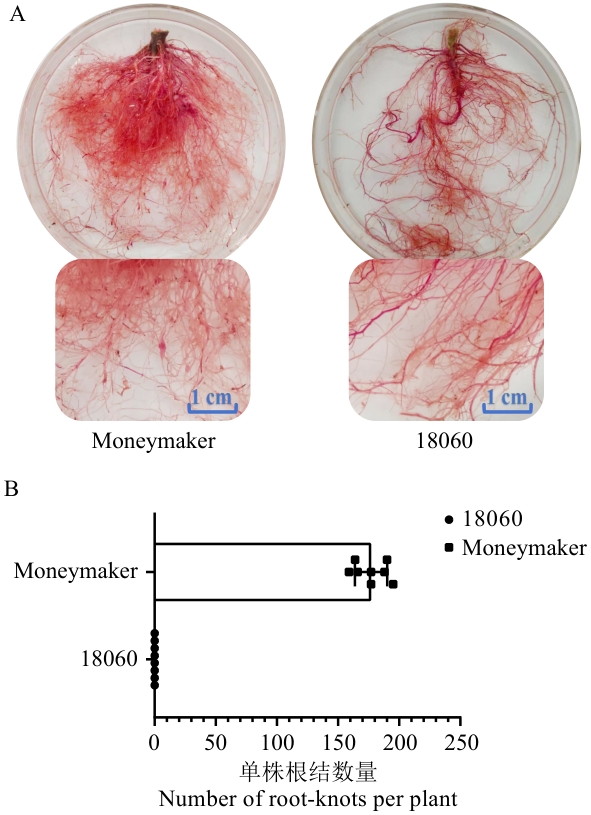
Fig. 1 Statistics of root galls numbers after inoculation of disease-resistant tomato '18060' and disease-susceptible tomato 'Moneymaker'A: The staining results of the root parts of the tested tomato materials after inoculation with acid fuchsin solution. B: Number statistics of root-knots on the roots of 10 tested tomato plants for both resistant and susceptible materials
| 样本Sample | 干净数据Clean data (Gb) | Q30 (%) | GC含量 GC content (%) | 总比对率Total mapped reads | 唯一映射的读段Unique mapped reads | 基因区间Intergenic (%) | 外显子Exon(%) |
|---|---|---|---|---|---|---|---|
| MM-0d-1 | 5.88 | 96.29 | 42.35 | 97.11 | 94.01 | 5.95 | 88.38 |
| MM-0d-2 | 6.16 | 95.50 | 42.19 | 97.14 | 94.26 | 6.21 | 87.17 |
| MM-0d-3 | 5.74 | 96.37 | 42.37 | 97.38 | 94.42 | 5.69 | 88.99 |
| MM-2d-1 | 6.08 | 95.65 | 42.19 | 96.96 | 94.18 | 5.97 | 87.66 |
| MM-2d-2 | 5.98 | 95.62 | 42.34 | 97.16 | 94.55 | 5.86 | 87.97 |
| MM-2d-3 | 6.54 | 96.54 | 42.33 | 97.58 | 94.94 | 5.41 | 89.42 |
| MM-4d-1 | 5.87 | 96.32 | 42.33 | 96.60 | 93.88 | 5.72 | 89.04 |
| MM-4d-2 | 5.76 | 96.50 | 42.27 | 97.60 | 95.10 | 5.55 | 89.74 |
| MM-4d-3 | 6.05 | 96.17 | 42.32 | 97.03 | 94.51 | 5.89 | 89.19 |
| XH-0d-1 | 6.03 | 96.50 | 42.30 | 95.98 | 93.72 | 6.10 | 88.70 |
| XH-0d-2 | 6.10 | 96.10 | 42.29 | 95.87 | 93.65 | 6.18 | 88.21 |
| XH-0d-3 | 6.07 | 96.27 | 42.22 | 94.94 | 92.70 | 6.31 | 87.35 |
| XH-2d-1 | 6.21 | 95.78 | 42.36 | 95.29 | 93.21 | 6.39 | 87.50 |
| XH-2d-2 | 6.29 | 95.56 | 42.17 | 94.96 | 92.97 | 6.58 | 86.90 |
| XH-2d-3 | 5.98 | 95.89 | 42.26 | 95.30 | 92.81 | 6.16 | 88.18 |
| XH-4d-1 | 6.43 | 96.39 | 42.35 | 96.58 | 94.26 | 5.90 | 88.63 |
| XH-4d-2 | 6.42 | 96.04 | 41.95 | 95.90 | 93.85 | 6.14 | 87.90 |
| XH-4d-3 | 6.10 | 95.95 | 42.20 | 96.21 | 93.99 | 5.95 | 88.32 |
Table 1 Statistics and quality assessment of transcriptome sequencing data
| 样本Sample | 干净数据Clean data (Gb) | Q30 (%) | GC含量 GC content (%) | 总比对率Total mapped reads | 唯一映射的读段Unique mapped reads | 基因区间Intergenic (%) | 外显子Exon(%) |
|---|---|---|---|---|---|---|---|
| MM-0d-1 | 5.88 | 96.29 | 42.35 | 97.11 | 94.01 | 5.95 | 88.38 |
| MM-0d-2 | 6.16 | 95.50 | 42.19 | 97.14 | 94.26 | 6.21 | 87.17 |
| MM-0d-3 | 5.74 | 96.37 | 42.37 | 97.38 | 94.42 | 5.69 | 88.99 |
| MM-2d-1 | 6.08 | 95.65 | 42.19 | 96.96 | 94.18 | 5.97 | 87.66 |
| MM-2d-2 | 5.98 | 95.62 | 42.34 | 97.16 | 94.55 | 5.86 | 87.97 |
| MM-2d-3 | 6.54 | 96.54 | 42.33 | 97.58 | 94.94 | 5.41 | 89.42 |
| MM-4d-1 | 5.87 | 96.32 | 42.33 | 96.60 | 93.88 | 5.72 | 89.04 |
| MM-4d-2 | 5.76 | 96.50 | 42.27 | 97.60 | 95.10 | 5.55 | 89.74 |
| MM-4d-3 | 6.05 | 96.17 | 42.32 | 97.03 | 94.51 | 5.89 | 89.19 |
| XH-0d-1 | 6.03 | 96.50 | 42.30 | 95.98 | 93.72 | 6.10 | 88.70 |
| XH-0d-2 | 6.10 | 96.10 | 42.29 | 95.87 | 93.65 | 6.18 | 88.21 |
| XH-0d-3 | 6.07 | 96.27 | 42.22 | 94.94 | 92.70 | 6.31 | 87.35 |
| XH-2d-1 | 6.21 | 95.78 | 42.36 | 95.29 | 93.21 | 6.39 | 87.50 |
| XH-2d-2 | 6.29 | 95.56 | 42.17 | 94.96 | 92.97 | 6.58 | 86.90 |
| XH-2d-3 | 5.98 | 95.89 | 42.26 | 95.30 | 92.81 | 6.16 | 88.18 |
| XH-4d-1 | 6.43 | 96.39 | 42.35 | 96.58 | 94.26 | 5.90 | 88.63 |
| XH-4d-2 | 6.42 | 96.04 | 41.95 | 95.90 | 93.85 | 6.14 | 87.90 |
| XH-4d-3 | 6.10 | 95.95 | 42.20 | 96.21 | 93.99 | 5.95 | 88.32 |
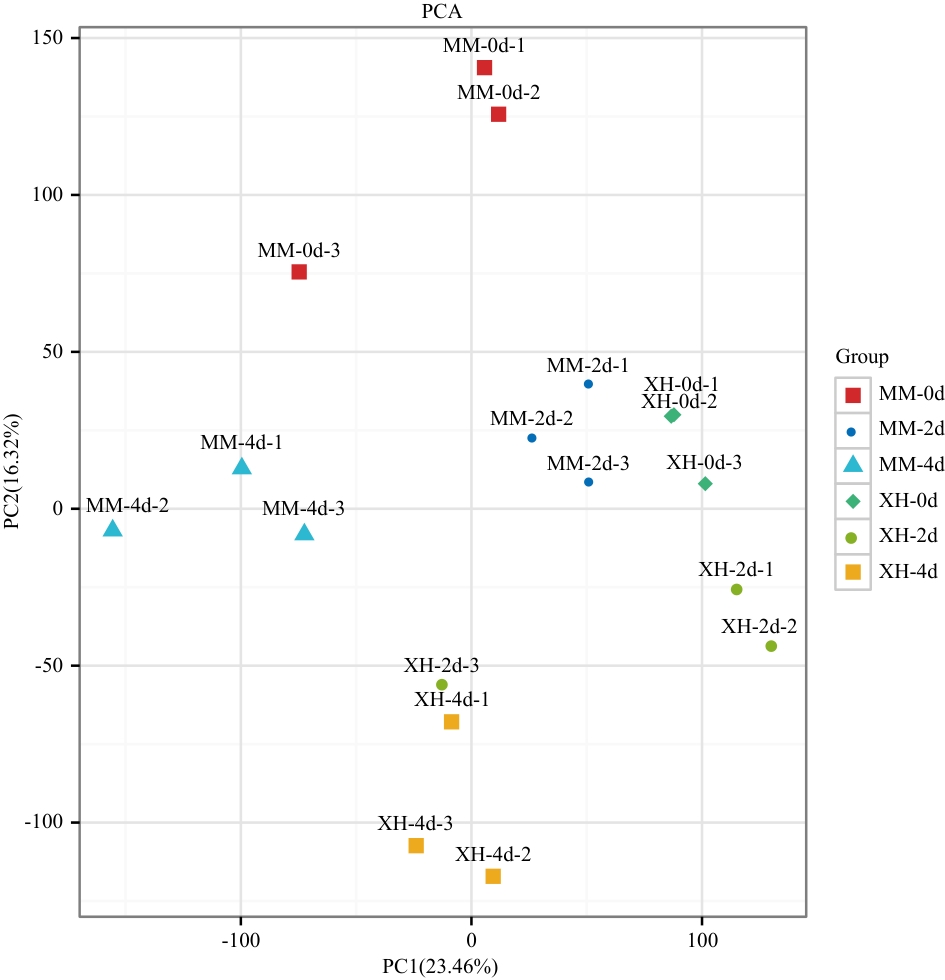
Fig. 2 PCA distribution of 18 samples of the tested tomatoes based on RNA-seqThe different coordinates refer to different principal components, and the percentages refer to the contribution value of the corresponding principal component to the sample’s variance. Each point indicate a sample, and samples in different groups are marked by different colors and shapes
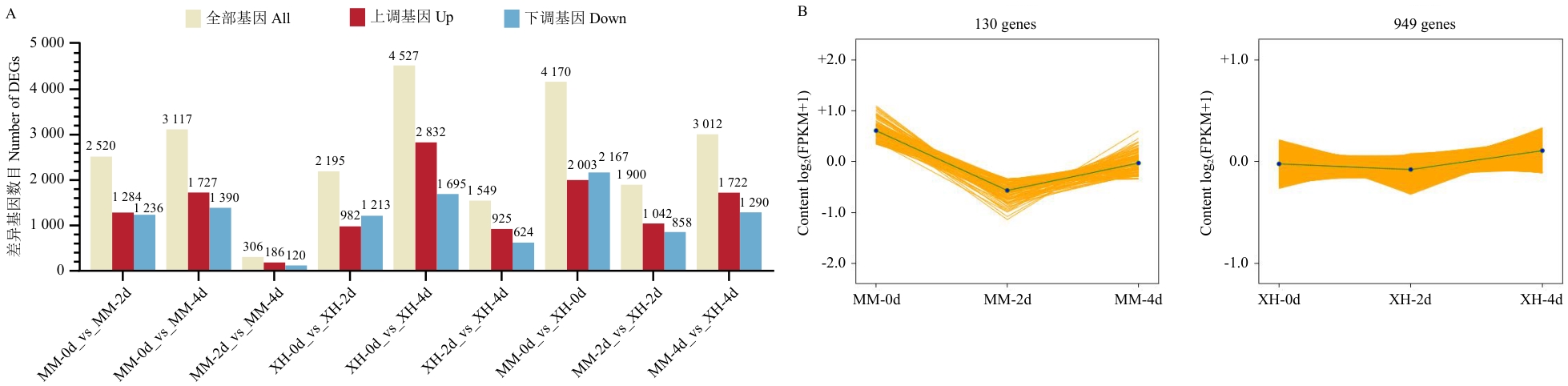
Fig. 3 Statistical analysis of DEGs under different comparison strategies (A) and analysis of the co-expression trend within the resistant and susceptible groups (B)
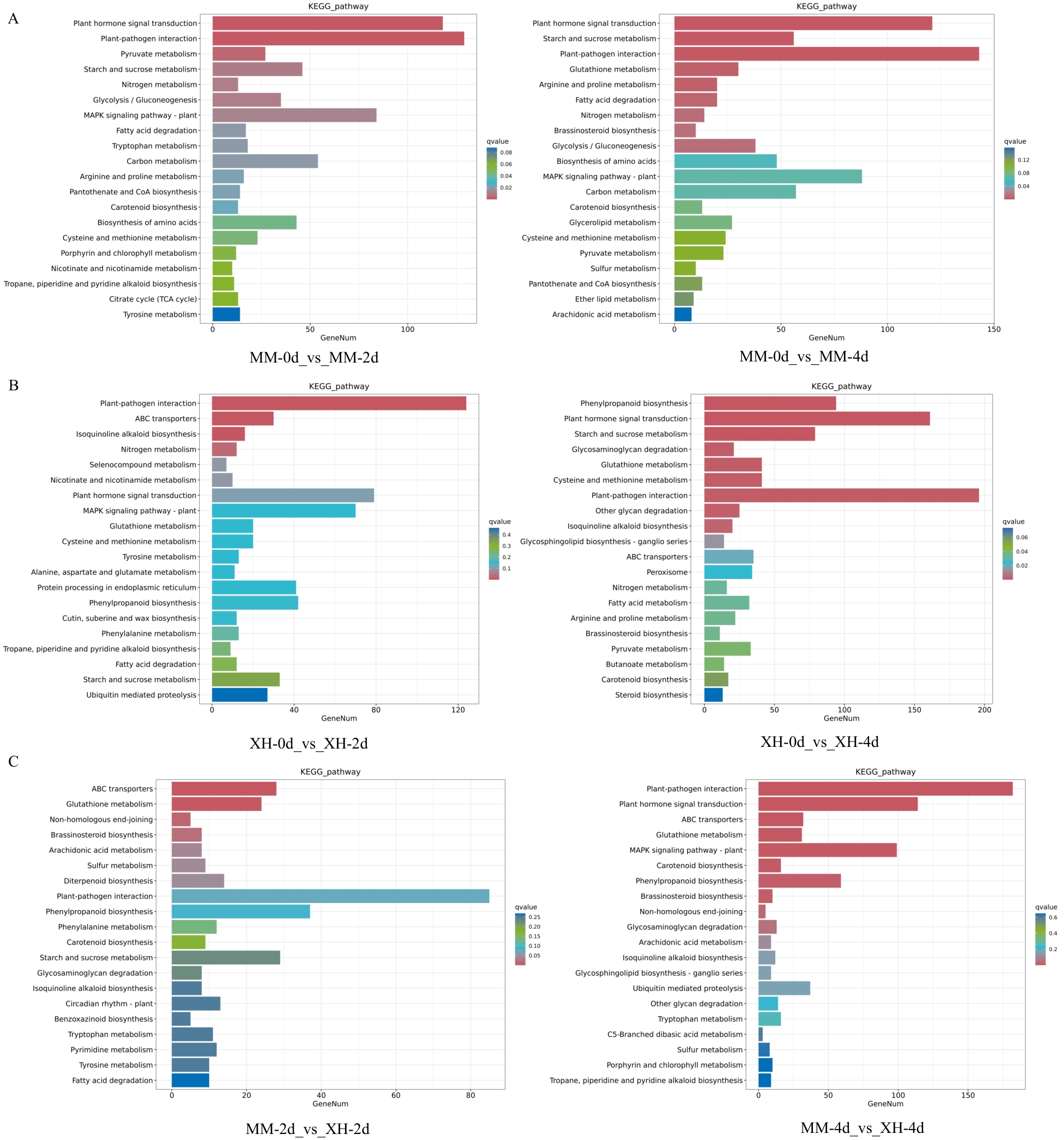
Fig. 4 KEGG enrichment pathway of DEGs in different comparison groups
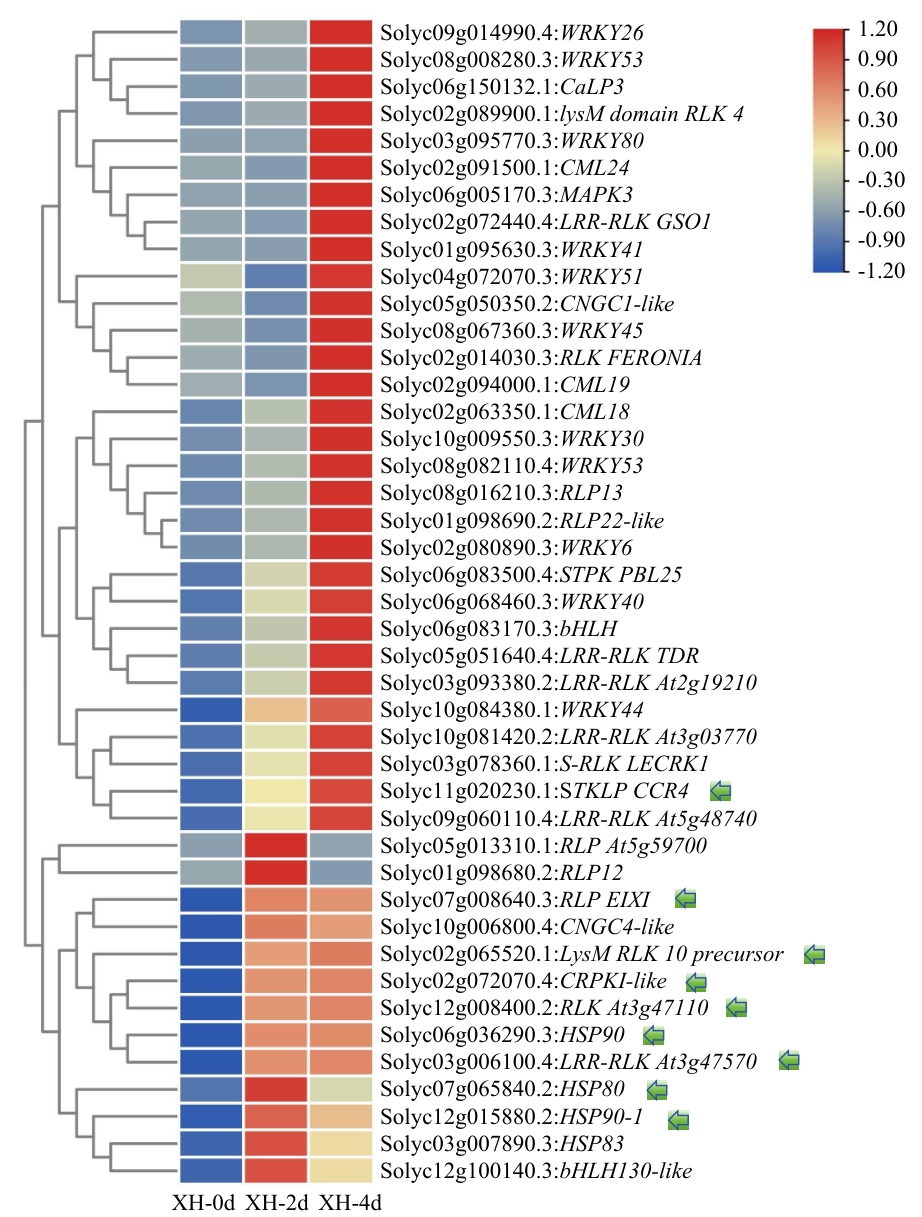
Fig. 5 Cluster analysis of FPKM values of DEGs enriched in the plant-pathogen interaction pathway in the XH groupThe heatmap shows the FPKM values of DEGs in the XH group at different treatment stages, the colors of the modules indicate the size of FPKM, and the green arrows indicate the DEGs that were jointly selected
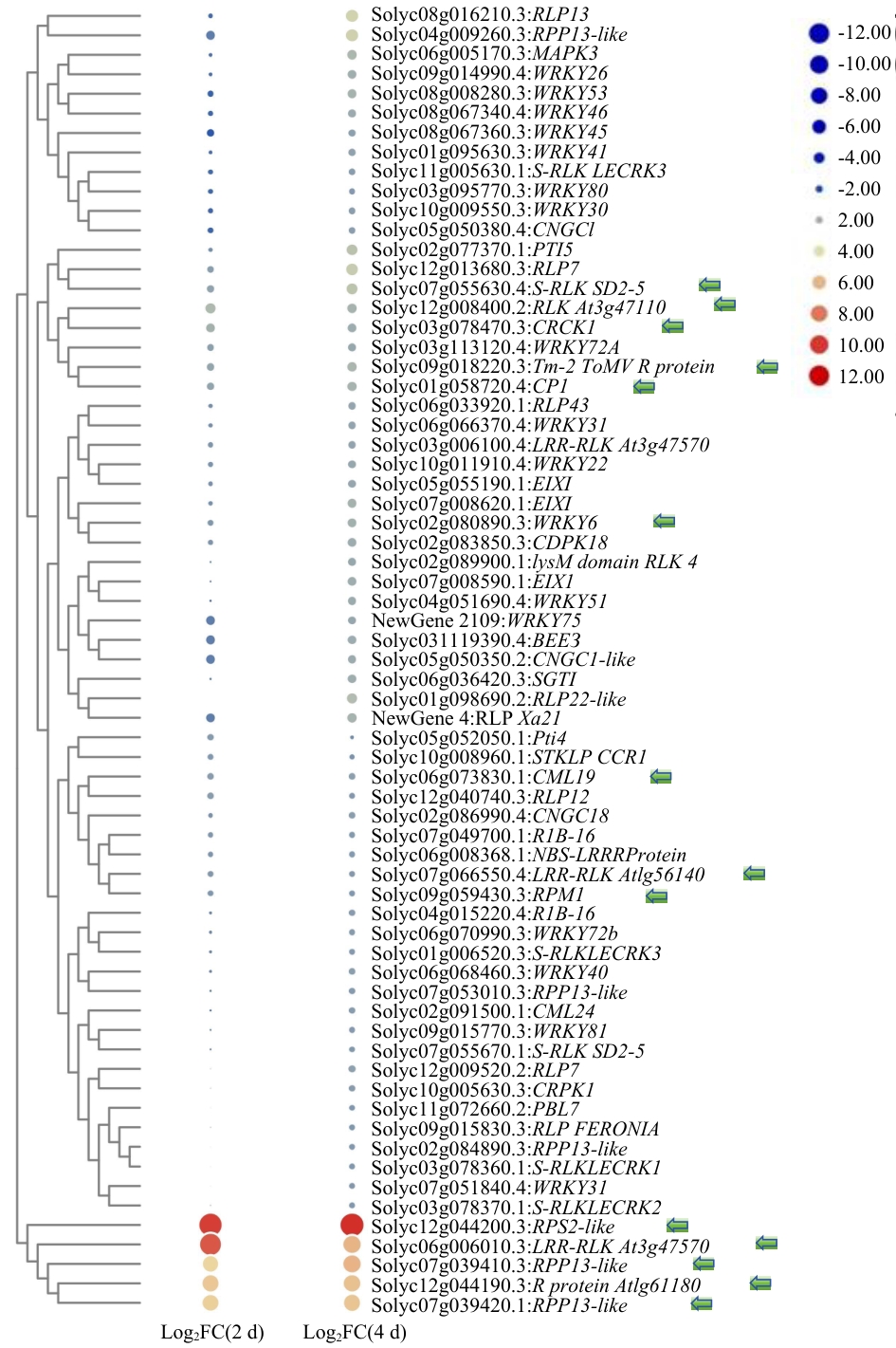
Fig. 6 Cluster analysis of log2FC values for DEGs enriched in the plant-pathogen interaction pathway during inter-group comparisons (MM_vs_XH)The cluster heatmap indicates the statistical log2FC values of DEGs in the MM_vs_XH group comparison at different inoculation stages, the colors and sizes of the circles indicate the numerical values of FPKM, and the green arrows indicate the DEGs that are jointly selected
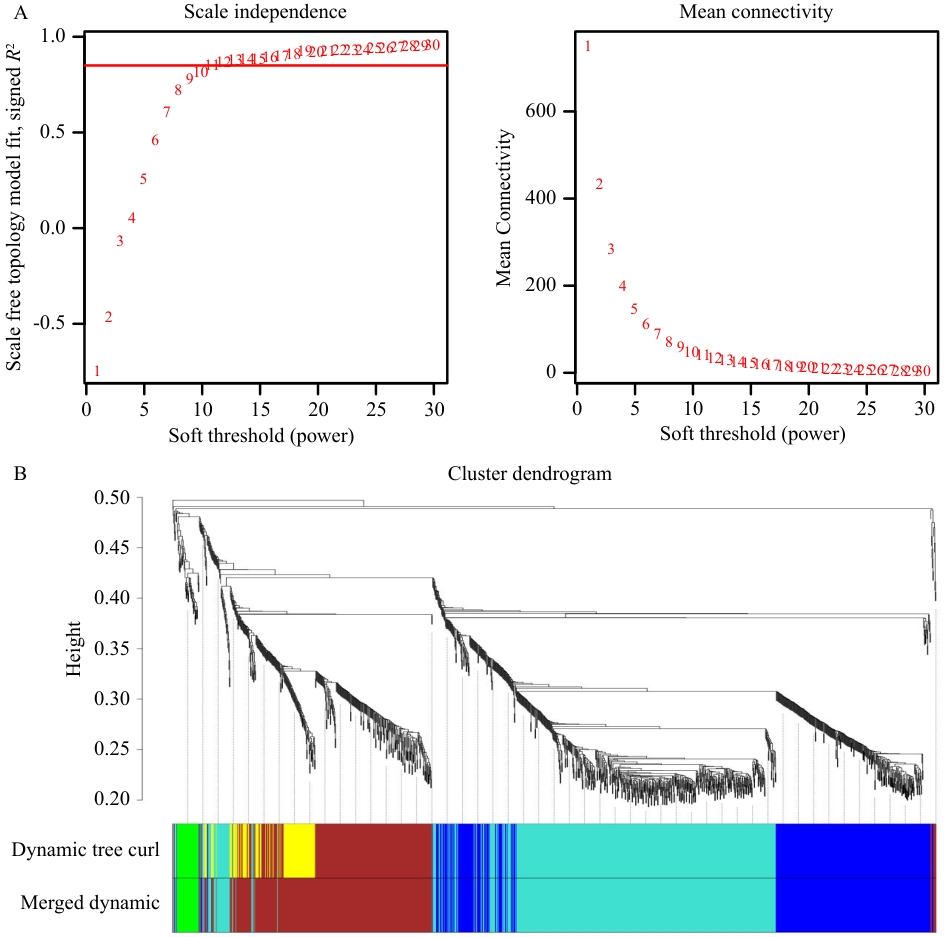
Fig. 7 Hierarchical clustering and module divisionA: Selection of the optimal soft threshold. B: The system clustering tree of DEGs and the division of gene modules, with different colors indicating different modules
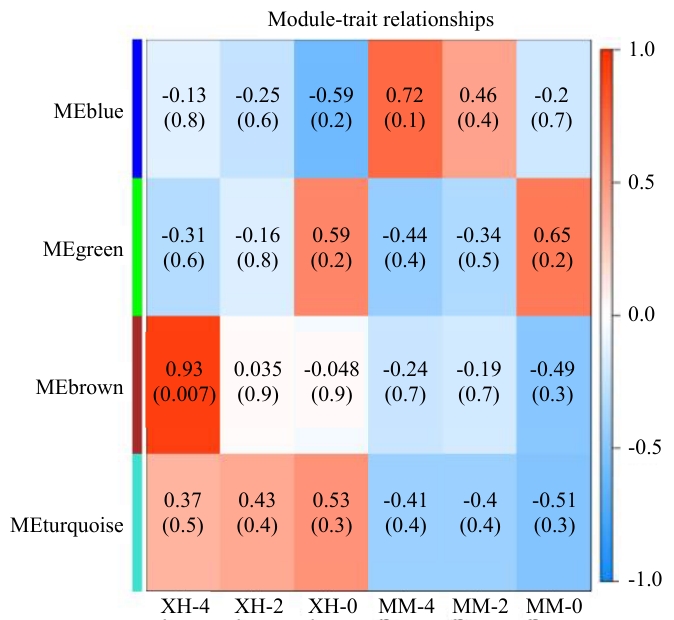
Fig. 8 Correlation analysis between the module and different samplesThe horizontal axis indicates different materials and different inoculation periods, the vertical axis indicates the module name, and the darker the color of the module, the stronger the correlation
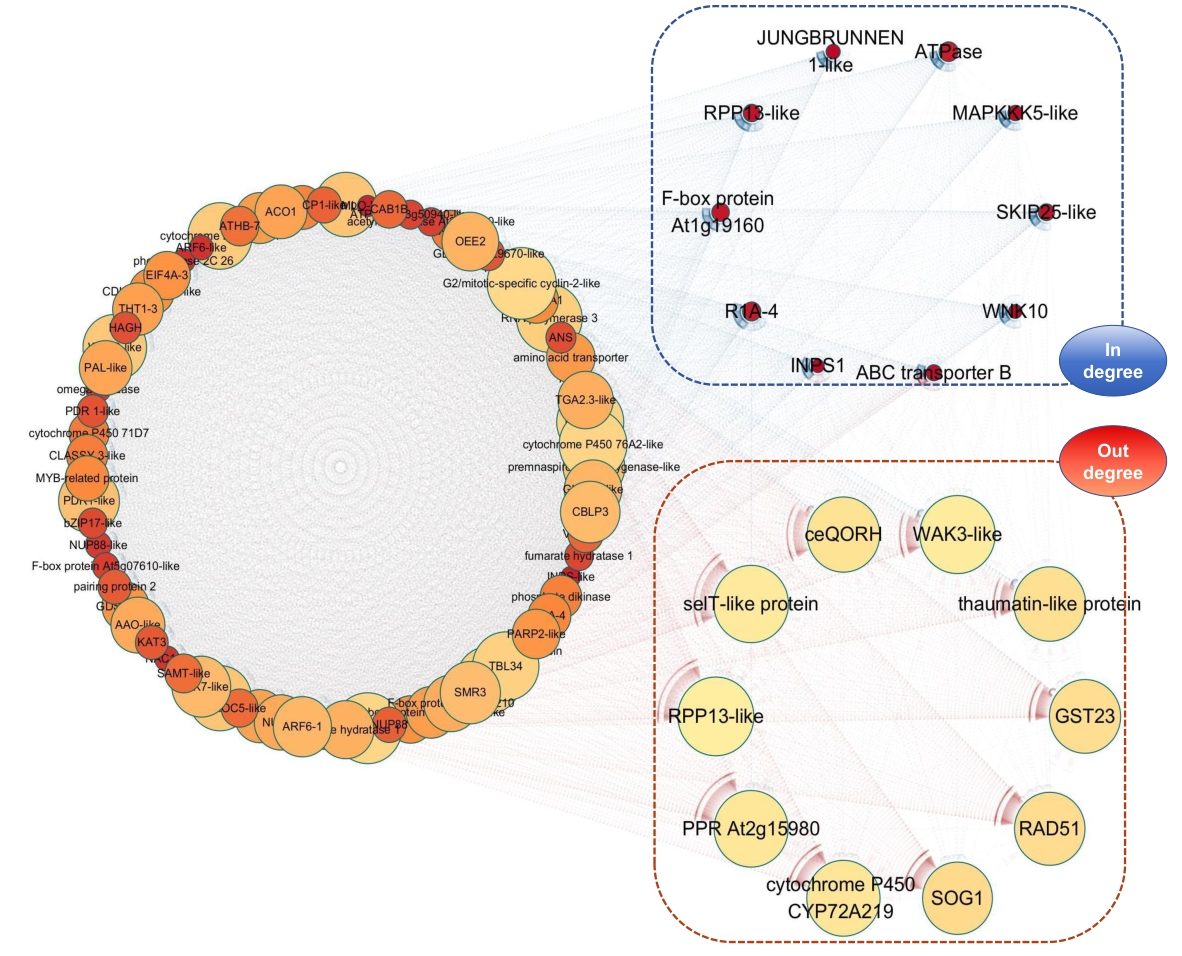
Fig. 9 Construction diagram of co-expression networkThe darker the color of a node, the greater the number of in degree. The larger the circle, the greater the number of out degree. The nodes within the dotted box indicate the top ten hub genes in terms of in degree and out degree respectively
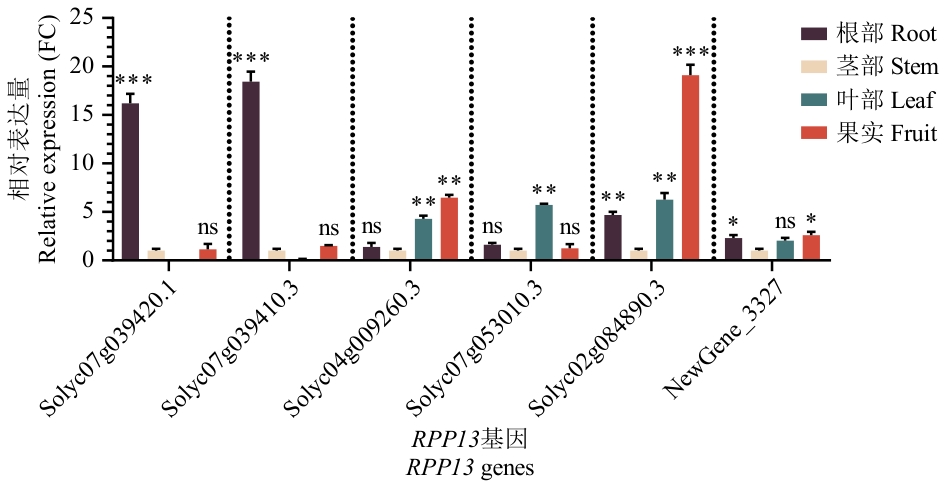
Fig. 10 Analysis of the tissue-specific expressions of the RPP13 genesns: Significant difference (one-way ANOVA, P>0.05), *:P<0.05, **P<0.01, *** P<0.001. The same below
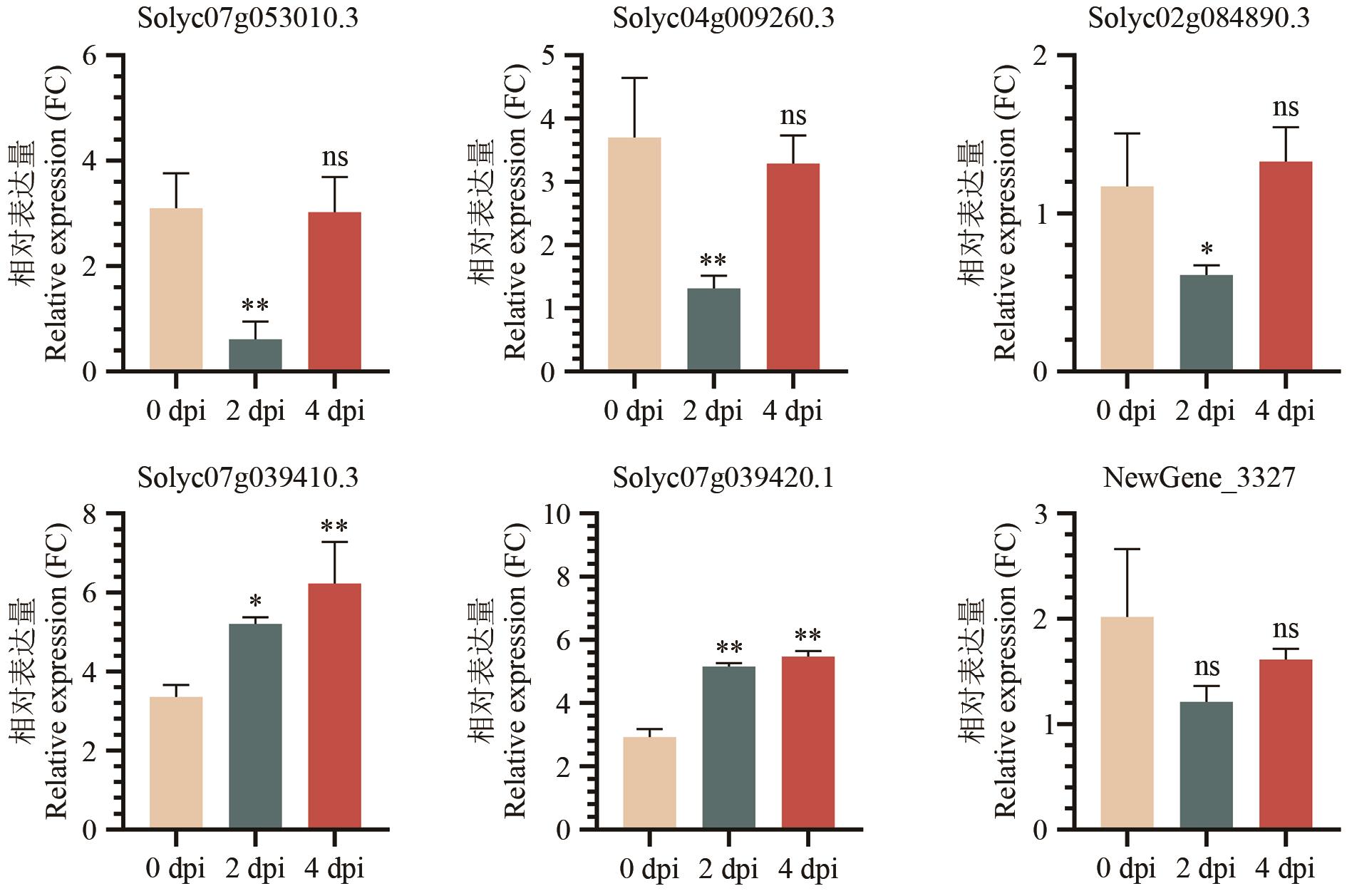
Fig. 11 Identification of the root expression pattern of the RPP13 genes
| [1] | Gao J, Wang MZ, Chen LT, et al. First report of the root-knot nematode Meloidogyne incognita parasitizing Chenopodium album in China [J]. Plant Dis, 2024, 108(11): 3419. |
| [2] | Castañeda NEN, Alves GSC, Almeida RM, et al. Gene expression analysis in Musa acuminata during compatible interactions with Meloidogyne incognita [J]. Ann Bot, 2017, 119(5): 915-930. |
| [3] | Santini L, de Freitas Munhoz C, Bonfim MF Jr, et al. Host transcriptional profiling at early and later stages of the compatible interaction between Phaseolus vulgaris and Meloidogyne incognita [J]. Phytopathology, 2016, 106(3): 282-294. |
| [4] | 李琳, 刘薇, 张倩倩, 等. 设施蔬菜根结线虫的综合防治研究进展 [J]. 黑龙江农业科学, 2024(11): 114-120. |
| Li L, Liu W, Zhang QQ, et al. Research progress on comprehensive control of root-knot nematodes in facility vegetables [J]. Heilongjiang Agric Sci, 2024(11): 114-120. | |
| [5] | 许静, 项朝阳, 刘梅. 我国番茄产业成本收益分析及提质增效路径研究 [J]. 中国蔬菜, 2025(6): 1-8. |
| Xu J, Xiang ZY, Liu M. Study on cost-benefit analysis and quality-productivity improvement approaches in Chinese tomato industry [J]. China Veg, 2025(6): 1-8. | |
| [6] | 孙永珍, 贺靖, 魏芳, 等. “十三五”我国番茄产业发展及其国际竞争力评价 [J]. 中国瓜菜, 2023, 36(1): 112-116. |
| Sun YZ, He J, Wei F, et al. Evaluation on the development and international competitiveness of China’s tomato industry during the 13th Five-Year Plan period [J]. China Cucurbits Veg, 2023, 36(1): 112-116. | |
| [7] | Alekcevetch JC, de Lima Passianotto AL, Ferreira EGC, et al. Genome-wide association study for resistance to the Meloidogyne javanica causing root-knot nematode in soybean [J]. Theor Appl Genet, 2021, 134(3): 777-792. |
| [8] | 陈银霞, 王志泽, 冯成蒿, 等. 番茄抗根结线虫病Mi基因探索与WRKY转录因子参与抗病调控的研究进展 [J]. 江苏农业科学, 2025, 53(4): 16-22. |
| Chen YX, Wang ZZ, Feng CH, et al. Research progress of Mi gene against root-knot nematode disease in tomato and WRKY transcription factors involved in disease resistance regulation [J]. Jiangsu Agric Sci, 2025, 53(4): 16-22. | |
| [9] | El-Sappah AH, Islam MM, El-awady, HH, et al. Tomato natural resistance genes in controlling the root-knot nematode [J]. Genes, 2019, 10(11): 925. |
| [10] | Corbett BP, Jia LL, Sayler RJ, et al. The effects of root-knot nematode infection and mi-mediated nematode resistance in tomato on plant fitness [J]. J Nematol, 2011, 43(2): 82-89. |
| [11] | Yaghoobi J, Yates JL, Williamson VM. Fine mapping of the nematode resistance gene Mi-3 in Solanum peruvianum and construction of a S. lycopersicum DNA contig spanning the locus [J]. Mol Genet Genomics, 2005, 274(1): 60-69. |
| [12] | Wang YL, Yang WC, Zhang W, et al. Mapping of a heat-stable gene for resistance to southern root-knot nematode in Solanum lycopersicum [J]. Plant Mol Biol Report, 2013, 31(2): 352-362. |
| [13] | Dang YL, Wang ZZ, Nie WD, et al. SlWRKY30, a positive regulator of resistance to Meloidogyne incognita in Solanum lycopersicum [J]. Sci Hortic, 348: 114224. |
| [14] | Liu Y, Cao HY, Ling J, et al. Molecular cloning and functional analysis of the pepper resistance gene Me3 to root-knot nematode [J]. Hortic Plant J, 2023, 9(1): 133-144. |
| [15] | 李宁, 宫丽媛, 高升华, 等. 辣椒种质的抗性基因分子标记检测 [J]. 中国蔬菜, 2020(8): 19-32. |
| Li N, Gong LY, Gao SH, et al. Detection of resistance gene of Capsicum spp. germplasm by molecular markers [J]. China Veg, 2020(8): 19-32. | |
| [16] | Xu J, Narabu T, Mizukubo T, et al. A molecular marker correlated with selected virulence against the tomato resistance gene Mi in Meloidogyne incognita, M. javanica, and M. arenaria [J]. Phytopathology, 2001, 91(4): 377-382. |
| [17] | 叶德友, 钱春桃, 陈劲枫. 抗南方根结线虫黄瓜-酸黄瓜渐渗系的筛选及鉴定 [J]. 园艺学报, 2011, 38(12): 2281-2288. |
| Ye DY, Qian CT, Chen JF. Screening and identification of cucumber-sour cucumber introgression lines resistant to the root-knot nematode Meloidogyne incognita [J]. Acta Hortic Sin, 2011, 38(12): 2281-2288. | |
| [18] | Bhattarai KK, Atamian HS, Kaloshian I, et al. WRKY72-type transcription factors contribute to basal immunity in tomato and Arabidopsis as well as gene-for-gene resistance mediated by the tomato R gene Mi-1 [J]. Plant J, 2010, 63(2): 229-240. |
| [19] | Cap GB, Roberts PA, Thomason IJ. Inheritance of heat-stable resistance to Meloidogyne incognita in Lycopersicon peruvianum and its relationship to the Mi gene [J]. Theor Appl Genet, 1993, 85(6/7): 777-783. |
| [20] | Thor K, Jiang SS, Michard E, et al. The calcium-permeable channel OSCA1.3 regulates plant stomatal immunity [J]. Nature, 2020, 585(7826): 569-573. |
| [21] | Zhang DL, Yang XX, Wen ZY, et al. Proxitome profiling reveals a conserved SGT1-NSL1 signaling module that activates NLR-mediated immunity [J]. Mol Plant, 2024, 17(9): 1369-1391. |
| [22] | Moeder W, Phan V, Yoshioka K. Ca2+ to the rescue-Ca2+ channels and signaling in plant immunity [J]. Plant Sci, 2019, 279: 19-26. |
| [23] | Lin YL, Xu C, Li LL, et al. A conserved fungal effector disturbs Ca2+ sensing and ROS homeostasis to induce plant cell death [J]. Nat Commun, 2025, 16(1): 3523. |
| [24] | Wang DC, Wei LR, Liu T, et al. Suppression of ETI by PTI priming to balance plant growth and defense through an MPK3/MPK6-WRKYs-PP2Cs module [J]. Mol Plant, 2023, 16(5): 903-918. |
| [25] | Wen Q, Wang SY, Zhang XL, et al. Recent advances of NLR receptors in vegetable disease resistance [J]. Plant Sci, 2024, 348: 112224. |
| [26] | Joos HJ, Mauch-Mani B, Slusarenko AJ. Molecular mapping of the Arabidopsis locus RPP11 which conditions isolate-specific hypersensitive resistance against downy mildew in ecotype RLD [J]. Theor Appl Genet, 1996, 92(2): 281-284. |
| [27] | Serra H, Choi K, Zhao XH, et al. Interhomolog polymorphism shapes meiotic crossover within the Arabidopsis RAC1 and RPP13 disease resistance genes [J]. PLoS Genet, 2018, 14(12): e1007843. |
| [28] | Qiu DY, Xiao J, Xie WB, et al. Rice gene network inferred from expression profiling of plants overexpressing OsWRKY13, a positive regulator of disease resistance [J]. Mol Plant, 2008, 1(3): 538-551. |
| [29] | Mun JH, Yu HJ, Park S, et al. Genome-wide identification of NBS-encoding resistance genes in Brassica rapa [J]. Mol Genet Genomics, 2009, 282(6): 617-631. |
| [30] | Wang XT, Yang Q, Dai ZJ, et al. Identification of QTLs for resistance to maize rough dwarf disease using two connected RIL populations in maize [J]. PLoS One, 2019, 14(12): e0226700. |
| [31] | Prigozhin DM, Krasileva KV. Analysis of intraspecies diversity reveals a subset of highly variable plant immune receptors and predicts their binding sites [J]. Plant Cell, 2021, 33(4): 998-1015. |
| [32] | Guo SY, Zhang F, Du XY, et al. TaANK-TPR1 enhances wheat resistance against stripe rust via controlling gene expression and protein activity of NLR protein TaRPP13L1 [J]. Dev Cell, 2025, 60(12): 1702-1718.e6. |
| [33] | Chen YC, Wu W, Yang BH, et al. Grapevine VaRPP13 protein enhances oomycetes resistance by activating SA signal pathway [J]. Plant Cell Rep, 2022, 41(12): 2341-2350. |
| [34] | Yuan BQ, Li C, Wang QF, et al. Identification and functional characterization of the RPP13 gene family in potato (Solanum tuberosum L.) for disease resistance [J]. Front Plant Sci, 2024, 15: 1515060. |
| [35] | Chen L, Meng J, He XL, et al. Solanum lycopersicum microRNA1916 targets multiple target genes and negatively regulates the immune response in tomato [J]. Plant Cell Environ, 2019, 42(4): 1393-1407. |
| [36] | Zhang M, Zhang HY, Tan J, et al. Transcriptome analysis of eggplant root in response to root-knot nematode infection [J]. Pathogens, 2021, 10(4): 470. |
| [1] | YANG Ting, YANG Zong-tao, AI Jing, WANG Yu-tong, LI Yan-ye, DENG jun, LIU Jia-yong, ZHAO Yong, ZHANG Yue-bin. Analysis of Phenotypic Characteristics and Root Transcriptomics of Sugarcane with Different Genotypes [J]. Biotechnology Bulletin, 2026, 42(4): 190-201. |
| [2] | LIU Na, ZENG Bao-zhen, JIA Zhao-xing, ZHU Ying-fang. Advances in Epigenetic Regulation of Tomato Fruit Development and Ripening [J]. Biotechnology Bulletin, 2026, 42(3): 37-47. |
| [3] | DU Dan, GUO Xiang, HU Xin, PAN Yu. Advances in the Regulatory Mechanisms of Plastid Development on Fruit Ripening and Quality [J]. Biotechnology Bulletin, 2026, 42(3): 48-59. |
| [4] | JIANG Zhe-hui, WANG Xiao-long, WANG Shou-chuang, ZHOU Ke. Advances in the Elucidation of Metabolic Pathways and Molecular Breeding for Tomato Flavor [J]. Biotechnology Bulletin, 2026, 42(3): 60-78. |
| [5] | WANG Xiao-yi, LI Jin-yan, XING Xing, ZHU Hong-liang. Screening and Functional Analysis of Ethylene-responsive Genes Regulating Tomato Fruit Ripening and Respiration [J]. Biotechnology Bulletin, 2026, 42(3): 275-282. |
| [6] | LI Ying-hui, WANG Yang-bo-han, ZHOU Hao-bo, LU Xin-ru, ZHANG Ke-xin, YU Yang, LI Chuan-you, SUN Chuan-long. Identification of VPE Gene Family and Their Functional Analysis under Abiotic Stress in Tomato [J]. Biotechnology Bulletin, 2026, 42(3): 263-274. |
| [7] | LIU Miao, LIN Tao, JIA Le-song, HU Feng, LI Tao, LI Zhi-wan, LIU Mei-fang, ZHENG Fang-yan, CUI Long. From Wild to Cultivated: Evolution and Regulatory Mechanisms of Tomato Fruit Color [J]. Biotechnology Bulletin, 2026, 42(3): 187-202. |
| [8] | LI Ya-ni, HAN Hong-yu, GENG Meng-shuang, MI Ruo-lan, Wang Wei-qi, Yu Wen-jing, MENG Xian-wen, LI Chuan-you. Mechanistic Study on ChiC-mediated Regulation Mechanism of Tomato Resistance to Botrytis cinerea [J]. Biotechnology Bulletin, 2026, 42(3): 255-262. |
| [9] | CHENG Yun-xia, ZHANG Jun-hong, YE Jie. Advances in the Genetic Regulation of Soluble Solid Accumulation in Tomato Fruits [J]. Biotechnology Bulletin, 2026, 42(3): 145-155. |
| [10] | YAN Chen-lin, LI Fan, YAN Chun-ting, CHENG Jiao-wen, HU Kai-lin, YE Zhi-biao, SONG Jian-wen. Advances in Genes Related to Tomato Fruit Morphogenesis [J]. Biotechnology Bulletin, 2026, 42(3): 172-186. |
| [11] | SU Xiu-min, HAN Wen-qing, WANG Jiao, LI Peng, WANG Qiu-lan, LI Wan-xing, CAO Jin-jun. Isolation, Identification, Biological Characteristics and Biocontrol Effects of Trichoderma harzianum M408 against Tomato Early Blight [J]. Biotechnology Bulletin, 2025, 41(9): 277-288. |
| [12] | ZHU Li-juan, ZHANG Kai, WEN Xiao-lei, CHU Jia-hao, SHI Feng-yu, WANG Yan-li. Mining the Core Genes Being Tolerant to Cadmium in Wild Soybean by WGCNA [J]. Biotechnology Bulletin, 2025, 41(8): 124-136. |
| [13] | NIU Jing-ping, ZHAO Jing, GUO Qian, WANG Shu-hong, ZHAO Jin-zhong, DU Wei-jun, YIN Cong-cong, YUE Ai-qin. Identification and Induced Expression Analysis of Transcription Factors NAC in Soybean Resistance to Soybean Mosaic Virus Based on WGCNA [J]. Biotechnology Bulletin, 2025, 41(7): 95-105. |
| [14] | HOU Ya-tao, LI Ying-hui, DENG Lei, LI Chang-bao, LI Chuan-you, SUN Chuan-long. Development of Functional Molecular Markers for Tomato Fruit Weight Gene and Population Genotyping Analysis [J]. Biotechnology Bulletin, 2025, 41(4): 98-105. |
| [15] | LI Xu-juan, LI Chun-jia, LIU Hong-bo, XU Chao-hua, LIN Xiu-qin, LU Xin, LIU Xin-long. Transcriptome Analysis of Axillary Bud Formation and Development in Sugarcane [J]. Biotechnology Bulletin, 2025, 41(3): 202-218. |
| Viewed | ||||||
|
Full text |
|
|||||
|
Abstract |
|
|||||
