







Biotechnology Bulletin ›› 2026, Vol. 42 ›› Issue (10): 98-107.doi: 10.13560/j.cnki.biotech.bull.1985.2025-1388
WANG Yi-xue, LIU Jia-hui, XU Fan, HU Xin, WANG Yu-chuan, HOU Li-yuan, WU Shen-jie, HAO Yao-shan( ), DONG Yan-hui()
Received:2025-12-20
Online:2026-10-26
Published:2026-10-15
Contact:
HAO Yao-shan, DONG Yan-hui
E-mail:haoyaoshan@163.com;dongfang5513@163.com
WANG Yi-xue, LIU Jia-hui, XU Fan, HU Xin, WANG Yu-chuan, HOU Li-yuan, WU Shen-jie, HAO Yao-shan, DONG Yan-hui. Identification of G6PDH Gene Family in Chenopodium quinoa and Functional Analysis of CqG6PDH1 in Salt Tolerance[J]. Biotechnology Bulletin, 2026, 42(10): 98-107.
基因 Gene | 基因ID Gene ID | 染色体位置 Chromosome distribution | 长度 Length (aa) | 分子量 MW (kD) | 等电点pI | 不稳定系数 Instability index | 总平均亲水性 GRAVY | 亚细胞定位 Subcellular location |
|---|---|---|---|---|---|---|---|---|
| CqG6PDH1 | AUR62018096-RA | Chr.04,36190960-36202858 | 519 | 59.42 | 6.71 | 42.68 | -0.419 | 细胞质Cytoplasm |
| CqG6PDH2 | AUR62006786-RA | Chr.05,76135361-76150678 | 722 | 79.58 | 7.24 | 43.99 | -0.266 | 叶绿体Chloroplast |
| CqG6PDH3 | AUR62031998-RA | Chr.11,28856918-28875861 | 578 | 65.58 | 5.24 | 43.16 | -0.537 | 细胞质Cytoplasm |
| CqG6PDH4 | AUR62000441-RA | Chr.12,4929849-4939869 | 652 | 72.92 | 6.18 | 47.43 | -0.129 | 叶绿体Chloroplast |
| CqG6PDH5 | AUR62005655-RA | Chr.14,55157363-55161143 | 569 | 64.48 | 8.04 | 43.28 | -0.380 | 叶绿体Chloroplast |
| CqG6PDH6 | AUR62029100-RA | Chr.00,39600961-39607326 | 527 | 59.30 | 8.69 | 46.13 | -0.237 | 叶绿体Chloroplast |
Table 1 Information about G6PDH gene family members of quinoa (Chenopodium quinoa Willd.)
基因 Gene | 基因ID Gene ID | 染色体位置 Chromosome distribution | 长度 Length (aa) | 分子量 MW (kD) | 等电点pI | 不稳定系数 Instability index | 总平均亲水性 GRAVY | 亚细胞定位 Subcellular location |
|---|---|---|---|---|---|---|---|---|
| CqG6PDH1 | AUR62018096-RA | Chr.04,36190960-36202858 | 519 | 59.42 | 6.71 | 42.68 | -0.419 | 细胞质Cytoplasm |
| CqG6PDH2 | AUR62006786-RA | Chr.05,76135361-76150678 | 722 | 79.58 | 7.24 | 43.99 | -0.266 | 叶绿体Chloroplast |
| CqG6PDH3 | AUR62031998-RA | Chr.11,28856918-28875861 | 578 | 65.58 | 5.24 | 43.16 | -0.537 | 细胞质Cytoplasm |
| CqG6PDH4 | AUR62000441-RA | Chr.12,4929849-4939869 | 652 | 72.92 | 6.18 | 47.43 | -0.129 | 叶绿体Chloroplast |
| CqG6PDH5 | AUR62005655-RA | Chr.14,55157363-55161143 | 569 | 64.48 | 8.04 | 43.28 | -0.380 | 叶绿体Chloroplast |
| CqG6PDH6 | AUR62029100-RA | Chr.00,39600961-39607326 | 527 | 59.30 | 8.69 | 46.13 | -0.237 | 叶绿体Chloroplast |
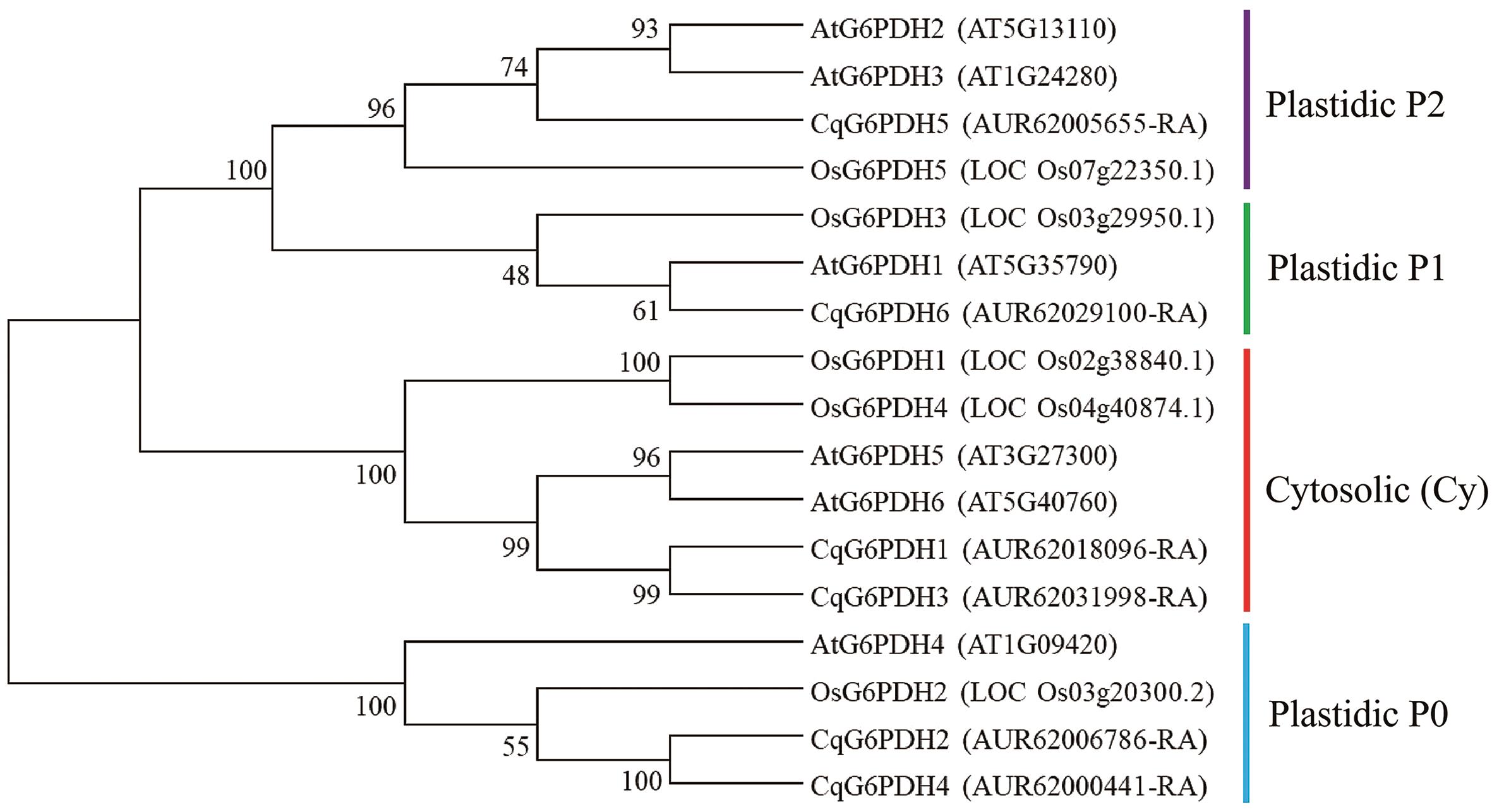
Fig. 1 Phylogenetic tree of G6PDH gene family in Chenopodium quinoa, Arabidopsis thaliana and Oryza sativa
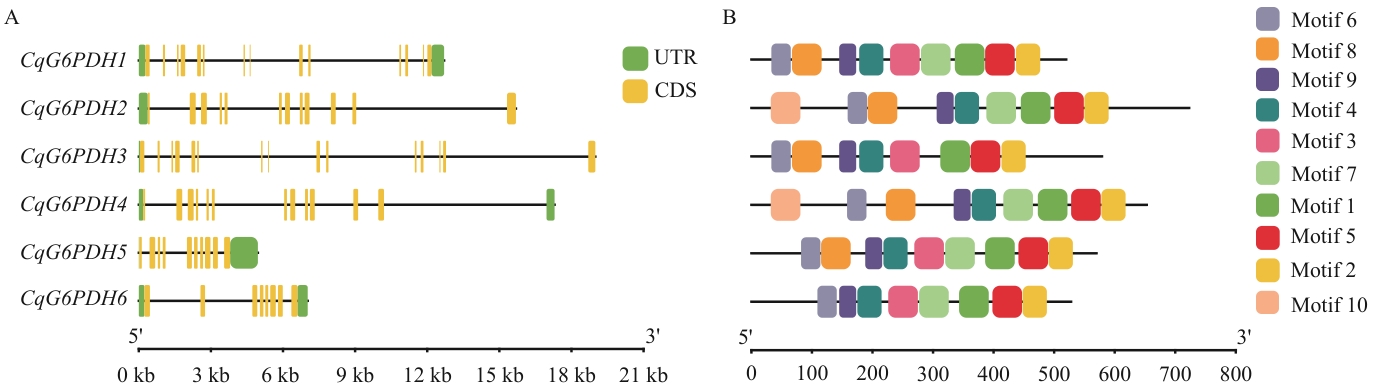
Fig. 2 Gene structures (A) and conserved domains (B) of G6PDH gene family in C. quinoa
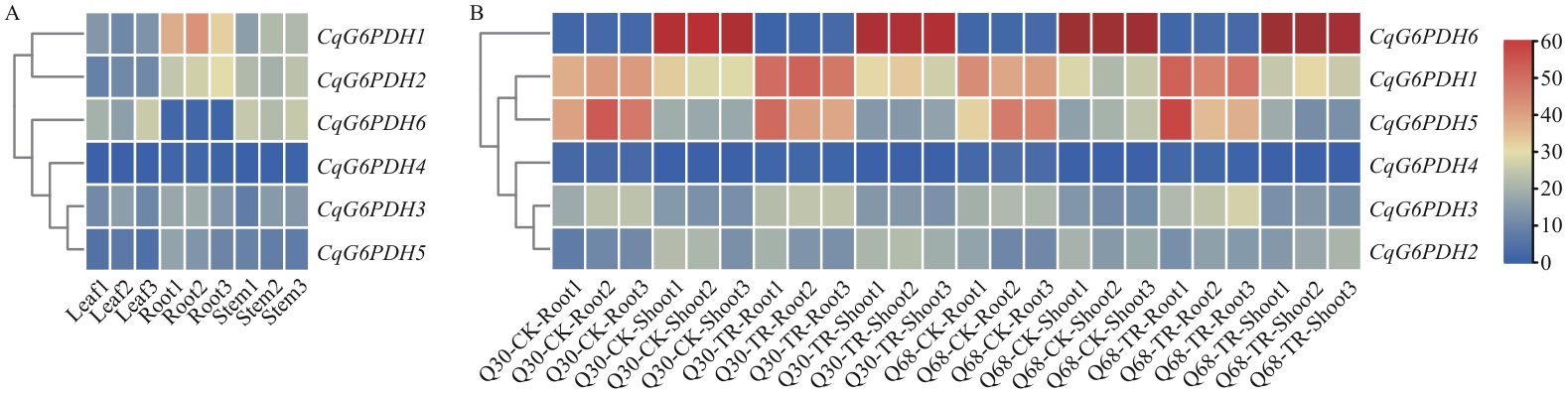
Fig. 3 Expression heat map of CqG6PDH gene familyin different tissues (A) and salt stress (B) in C. quinoa
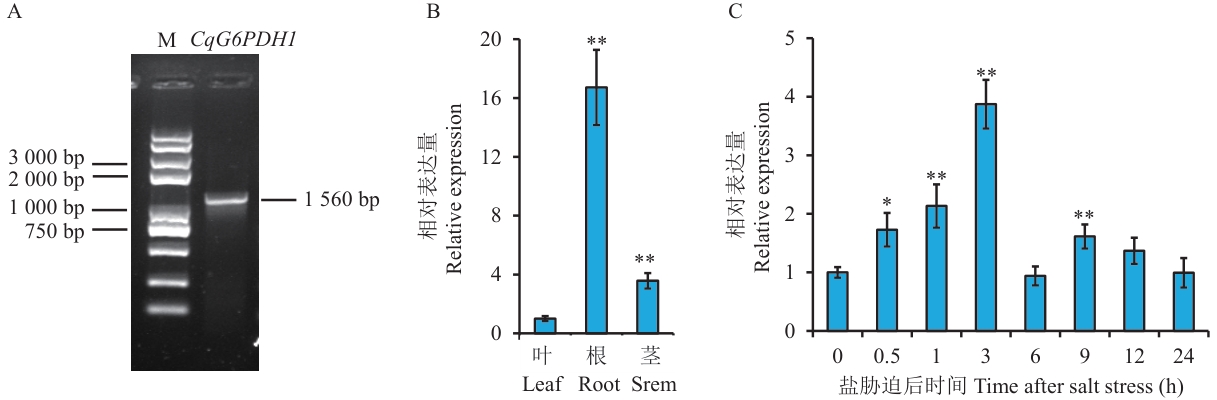
Fig. 4 Gene cloning of CqG6PDH1 in quinoa (A), and expression analysis in different tissues (B) and salt stress (C)
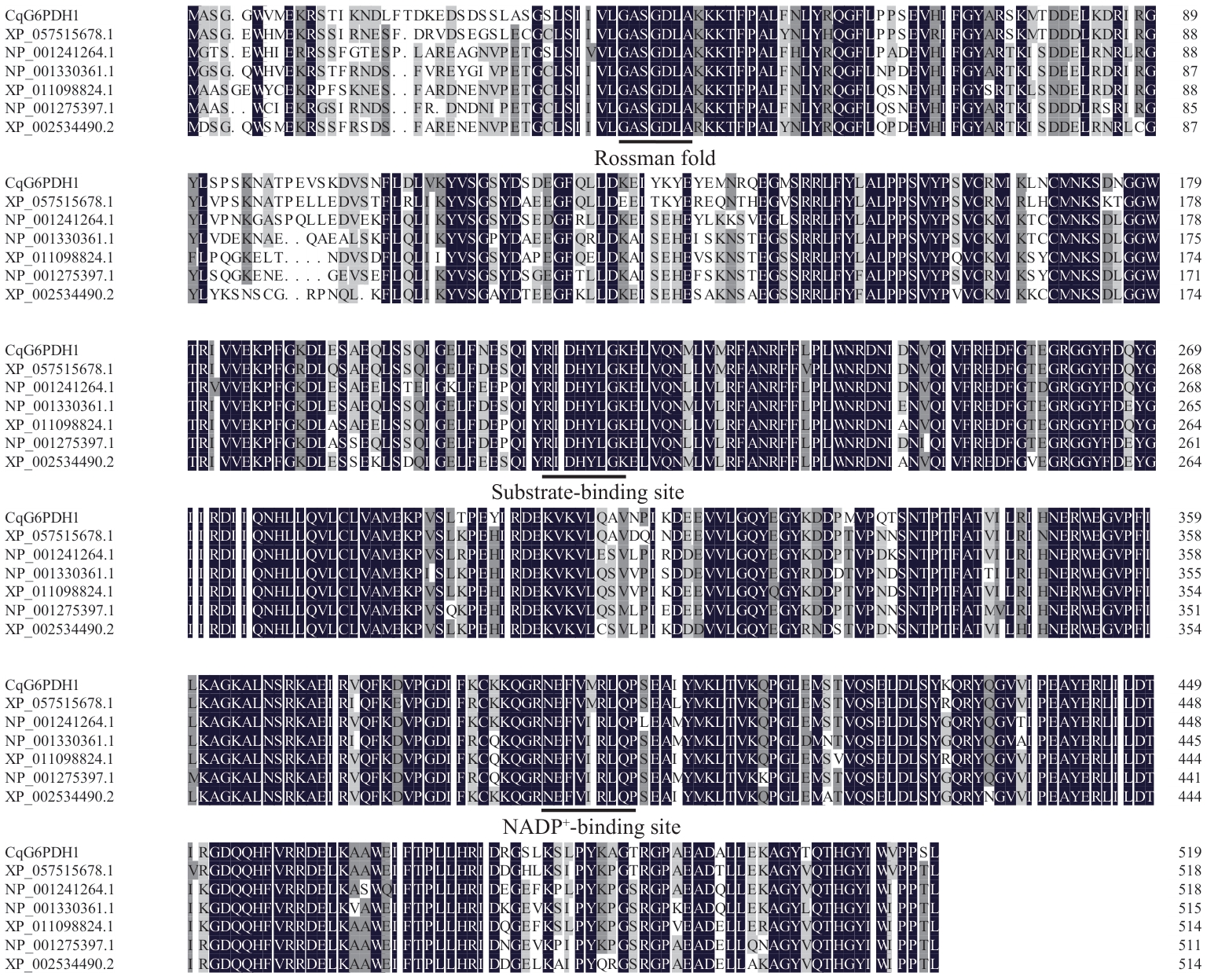
Fig. 5 Amino acid sequence alignment of CqG6PDH1 with other speciesXP_057515678.1: Amaranthus tricolor; NP_001241264.1: Glycine max; NP_001330361.1: Arabidopsis thaliana; XP_011098824.1: Sesamum indicum; NP_001275397.1: Solanum tuberosum; XP_002534490.2: Ricinus communis
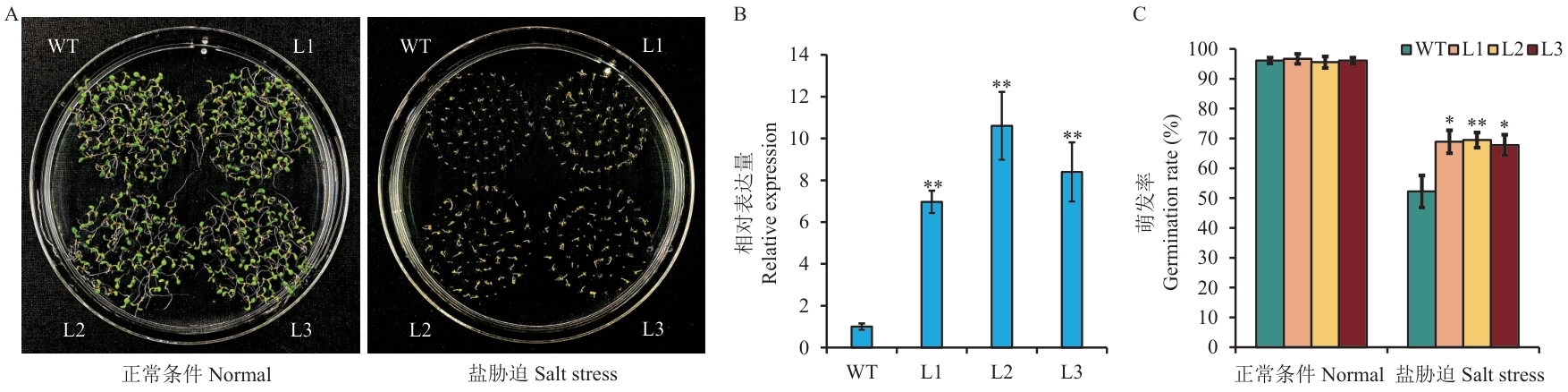
Fig. 6 Phenotype analysis of Arabidopsis seeds with over-expressing CqG6PDH1 under NaCl treatmentA: Germination phenotype. B: Expression analysis of CqG6PDH1. C: Statistics of germination rate
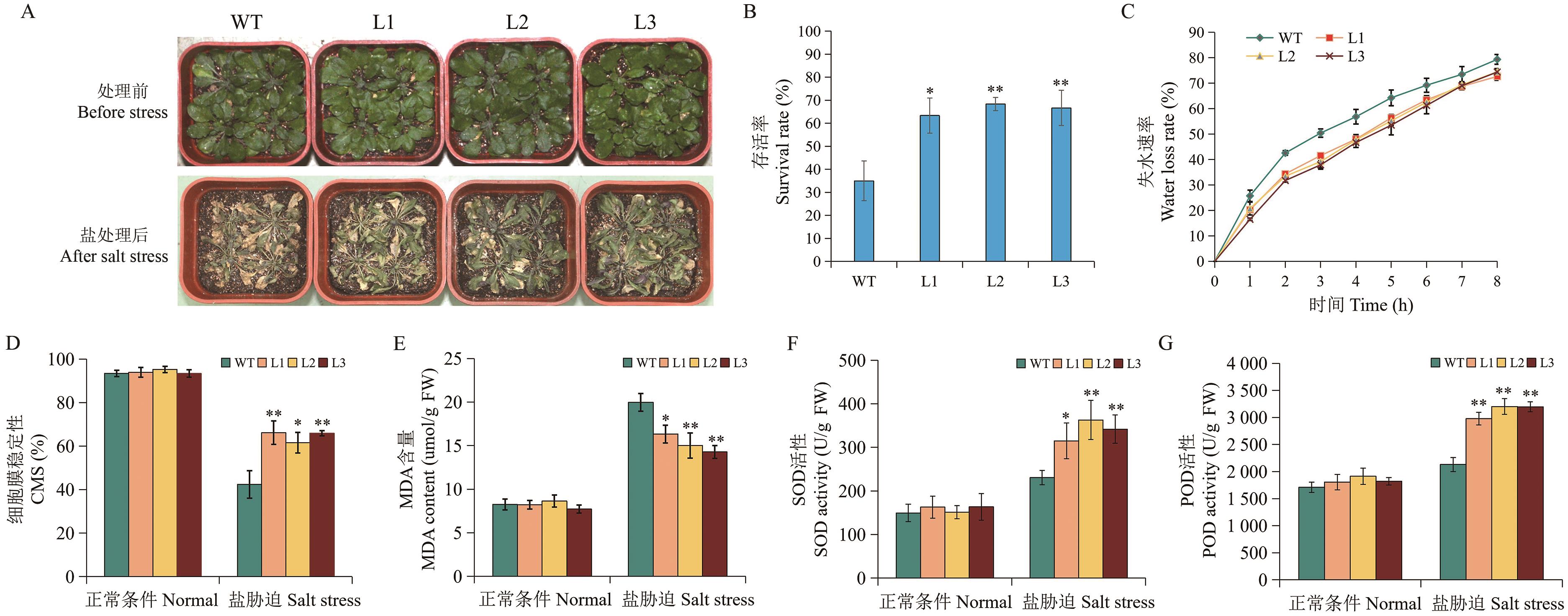
Fig. 7 Phenotypes (A) of Arabidopsis seedlings with over-expressing CqG6PDH1 under NaCl treatment and determination of physiological indexes (B-G)
| [1] | Jacobsen SE. The worldwide potential for quinoa (Chenopodium quinoa Willd.) [J]. Food Rev Int, 2003, 19(1/2): 167-177. |
| [2] | Angeli V, Miguel Silva P, Crispim Massuela D, et al. Quinoa (Chenopodium quinoa Willd.): an overview of the potentials of the “golden grain” and socio-economic and environmental aspects of its cultivation and marketization [J]. Foods, 2020, 9(2): 216. |
| [3] | 胡一晨, 赵钢, 秦培友, 等. 藜麦活性成分研究进展 [J]. 作物学报, 2018, 44(11): 1579-1591. |
| Hu YC, Zhao G, Qin PY, et al. Research progress on bioactive components of quinoa (Chenopodium quinoa Willd.) [J]. Acta Agron Sin, 2018, 44(11): 1579-1591. | |
| [4] | 于定群, 汤浩茹, 张勇, 等. 高等植物葡萄糖-6-磷酸脱氢酶的研究进展 [J]. 生物工程学报, 2012, 28(7): 800-812. |
| Yu DQ, Tang HR, Zhang Y, et al. Research progress in glucose-6-phosphate dehydrogenase in higher plants [J]. Chin J Biotechnol, 2012, 28(7): 800-812. | |
| [5] | Wang XM, Ma YY, Huang CH, et al. Involvement of glucose-6-phosphate dehydrogenase in reduced glutathione maintenance and hydrogen peroxide signal under salt stress [J]. Plant Signal Behav, 2008, 3(6): 394-395. |
| [6] | Scharte J, Schön H, Tjaden Z, et al. Isoenzyme replacement of glucose-6-phosphate dehydrogenase in the cytosol improves stress tolerance in plants [J]. Proc Natl Acad Sci U S A, 2009, 106(19): 8061-8066. |
| [7] | Tian Y, Peng KK, Bao YZ, et al. Glucose-6-phosphate dehydrogenase and 6-phosphogluconate dehydrogenase genes of winter wheat enhance the cold tolerance of transgenic Arabidopsis [J]. Plant Physiol Biochem, 2021, 161: 86-97. |
| [8] | Li X, Cai Q, Yu T, et al. ZmG6PDH1 in glucose-6-phosphate dehydrogenase family enhances cold stress tolerance in maize [J]. Front Plant Sci, 2023, 14: 1116237. |
| [9] | Jin J, Li KK, Qin J, et al. The response mechanism to salt stress in Arabidopsis transgenic lines over-expressing of GmG6PD [J]. Plant Physiol Biochem, 2021, 162: 74-85. |
| [10] | Yang YT, Fu ZW, Su YC, et al. A cytosolic glucose-6-phosphate dehydrogenase gene, ScG6PDH, plays a positive role in response to various abiotic stresses in sugarcane [J]. Sci Rep, 2014, 4: 7090. |
| [11] | Lin YZ, Lin SZ, Guo H, et al. Functional analysis of PsG6PDH, a cytosolic glucose-6-phosphate dehydrogenase gene from Populus suaveolens, and its contribution to cold tolerance improvement in tobacco plants [J]. Biotechnol Lett, 2013, 35(9): 1509-1518. |
| [12] | Wakao S, Benning C. Genome-wide analysis of glucose-6-phosphate dehydrogenases in Arabidopsis [J]. Plant J, 2005, 41(2): 243-256. |
| [13] | 宋兵芳, 柳宁, 程新艳, 等. 马铃薯G6PDH基因家族鉴定及其在损伤块茎的表达分析 [J]. 生物技术通报, 2024, 40(9): 104-112. |
| Song BF, Liu N, Cheng XY, et al. Identification of potato G6PDH gene family and its expression analysis in damaged tubers [J]. Biotechnol Bull, 2024, 40(9): 104-112. | |
| [14] | Zhao Y, Cui YF, Huang SY, et al. Genome-wide analysis of the glucose-6-phosphate dehydrogenase family in soybean and functional identification of GmG6PDH2 involvement in salt stress [J]. Front Plant Sci, 2020, 11: 214. |
| [15] | 车卓, 张沛沛, 陈涛, 等. 小麦G6PDH基因家族的鉴定与表达分析 [J]. 麦类作物学报, 2023, 43(8): 947-957. |
| Che Z, Zhang PP, Chen T, et al. Identification and expression analysis of G6PDH gene family in wheat [J]. J Triticeae Crops, 2023, 43(8): 947-957. | |
| [16] | Long XY, He B, Fang YJ, et al. Identification and characterization of the glucose-6-phosphate dehydrogenase gene family in the para rubber tree, Hevea brasiliensis [J]. Front Plant Sci, 2016, 7: 215. |
| [17] | Zhang YT, Luo MW, Cheng LJ, et al. Identification of the cytosolic glucose-6-phosphate dehydrogenase gene from strawberry involved in cold stress response [J]. Int J Mol Sci, 2020, 21(19): 7322. |
| [18] | Ding PC, Tang P, Li XF, et al. Genome-wide identification, phylogeny and expression analysis of the R2R3-MYB gene family in quinoa (Chenopodium quinoa) under abiotic stress [J]. Funct Plant Biol, 2024, 51: FP23261. |
| [19] | Clough SJ, Bent AF. Floral dip: a simplified method for Agrobacterium-mediated transformation of Arabidopsis thaliana [J]. Plant J, 1998, 16(6): 735-743. |
| [20] | Xu QF, Mao XG, Wang YX, et al. A wheat gene TaSAP17-D encoding an AN1/AN1 zinc finger protein improves salt stress tolerance in transgenic Arabidopsis [J]. J Integr Agric, 2018, 17(3): 507-516. |
| [21] | Smaili FZ, Tian SY, Roy A, et al. QAUST: protein function prediction using structure similarity, protein interaction, and functional motifs [J]. Genom Proteom Bioinform, 2021, 19(6): 998-1011. |
| [22] | 李丽丽, 姜奇彦, 牛风娟, 等. 藜麦耐盐机制研究进展 [J]. 中国农业科技导报, 2016, 18(2): 31-40. |
| Li LL, Jiang QY, Niu FJ, et al. Research progress on salt tolerance mechanisms in quinoa [J]. J Agric Sci Technol, 2016, 18(2): 31-40. | |
| [23] | 鲍庆晗, 王洋. 藜麦响应盐碱胁迫的基因家族功能与信号通路研究进展 [J]. 吉林师范大学学报: 自然科学版, 2025, 46(4): 96-100. |
| Bao QH, Wang Y. Research progress on gene family functions and signaling pathways of quinoa in response to saline-alkali stress [J]. Jilin Norm Univ J Nat Sci Ed, 2025, 46(4): 96-100. | |
| [24] | 王洋, 潘晓为, 杜会石, 等. 藜麦植物资源开发利用与抗逆性研究进展 [J]. 吉林师范大学学报: 自然科学版, 2023, 44(4): 118-122. |
| Wang Y, Pan XW, Du HS, et al. Research progress in the utilization and stress resistance on the plant resource of quinoa [J]. J Jilin Norm Univ Nat Sci Ed, 2023, 44(4): 118-122. | |
| [25] | Feng RJ, Wang XM, He L, et al. Identification, characterization, and stress responsiveness of glucose-6-phosphate dehydrogenase genes in highland barley [J]. Plants, 2020, 9(12): 1800. |
| [26] | Munns R, Tester M. Mechanisms of salinity tolerance [J]. Annu Rev Plant Biol, 2008, 59: 651-681. |
| [27] | Liu Y, Wu R, Wan Q, et al. Glucose-6-phosphate dehydrogenase plays a pivotal role in nitric oxide-involved defense against oxidative stress under salt stress in red kidney bean roots [J]. Plant Cell Physiol, 2007, 48(3): 511-522. |
| [28] | Wang HH, Yang LD, Li Y, et al. Involvement of ABA- and H2O2-dependent cytosolic glucose-6-phosphate dehydrogenase in maintaining redox homeostasis in soybean roots under drought stress [J]. Plant Physiol Biochem, 2016, 107: 126-136. |
| [29] | Liu J, Wang XM, Hu YF, et al. Glucose-6-phosphate dehydrogenase plays a pivotal role in tolerance to drought stress in soybean roots [J]. Plant Cell Rep, 2013, 32(3): 415-429. |
| [30] | Dal Santo S, Stampfl H, Krasensky J, et al. Stress-induced GSK3 regulates the redox stress response by phosphorylating glucose-6-phosphate dehydrogenase in Arabidopsis [J]. Plant Cell, 2012, 24(8): 3380-3392. |
| [1] | SANG Zhi-peng, HOU Dong, WANG Hui-ting, YUE Hong-zhong, LI Ya-li, XIE Jian-ming, LU Wen, XU Zhao-tai. Identification of the Cucumber CsHXKs Gene Family and Regulation of Floral Organ Sugar Accumulation by CsHKL1.2 [J]. Biotechnology Bulletin, 2026, 42(9): 157-168. |
| [2] | DONG Xiang-xiang, HOU Wei-wei, MIAO Bai-ling, CHEN Juan-juan, LI Liang-jie, ZHAI Min, ZHU Qing-song, LIU Song-hu. Overexpression of FvBBX22 from Fragaria Vesca Promotes Anthocyanin Synthesis and Delays Flowering Time in Arabidopsis thaliana [J]. Biotechnology Bulletin, 2026, 42(9): 231-237. |
| [3] | XIN Qing, ZHENG Yong-jie, LI Yu-hua, TU Bai-lian, LIU Xin-liang, ZHANG Yue-ting, WU Yan-fang. Genome-wide Identification and Expression Analysis of MYC Transcription Factors in Cinnamomum camphora [J]. Biotechnology Bulletin, 2026, 42(7): 214-225. |
| [4] | YAN Xiao-guang, DU Yan-wei, MA Zhi-yuan, WANG Bin, WANG Guo-liang, HU Dan-zhu. Genome-wide Identification and Expression Pattern Analysis of ZmDIR Gene Family in Maize [J]. Biotechnology Bulletin, 2026, 42(7): 126-137. |
| [5] | HUANG Xu-sheng, ZHOU Ya-li, JIA Zheng-rong, SHEN Shan, CHEN Jin-chai, ZHOU Guang-li, LI Xin-xin, WANG Ji-ping, LI Run-zhi, JIA Xiao-yun. Whole-genome Identification of the Perilla frutescens ARF Transcription Factor Family and Functional Analysis of Its Role in Abiotic Stress Responses [J]. Biotechnology Bulletin, 2026, 42(7): 148-162. |
| [6] | LI Xu-long, XU Shi-qiang, ZHANG Long, LI Jing-yu, HE Wei-xian, CHEN Li-kai, WANG Ji-hua. Genome-wide Identification, Evolution and Expression Pattern Analysis of Terpene Synthase Gene Family in Morinda officinalis [J]. Biotechnology Bulletin, 2026, 42(6): 314-325. |
| [7] | GUO Miao, XU Jia-jia, SUN Tian-guo, CAI Can, CAO Wan-di, BAO Ji-xing, SHA Wei, ZHANG Mei-juan, PENG Yi-fang, MA Tian-yi. Overexpression of RcOLEO1 Enhanced the Tolerance of Arabidopsis thaliana toDrought and High-temperature Stress [J]. Biotechnology Bulletin, 2026, 42(5): 312-322. |
| [8] | ZHANG Xin, CHEN Cheng, HUO Yuan-Bo, HUANG Ren-Li, ZHANG Li, ZHANG Kai, TONG Hua-rong, YUAN Lian-Yu. Cloning of the CsCRD1 in Tea Plants and Its Impact on Chlorophyll Biosynthesis [J]. Biotechnology Bulletin, 2026, 42(5): 280-291. |
| [9] | ZHANG Gao-xiang, WU Yu-bi, GUO Ya-jing, JI Wei, YANG Zhong-yi. Identification and Expression Analysis of WD40 Gene Family in Grape [J]. Biotechnology Bulletin, 2026, 42(3): 324-337. |
| [10] | LI Tian-yuan, QI Xin-liang, LIU Shan, ZHANG Jian-cheng, WANG Peng-fei, ZHANG Shuai, JIA Lu-ting, MU Xiao-peng. Identification of Cerasus humilisSPL Gene Family and Expression Analysis during Fruit Development [J]. Biotechnology Bulletin, 2026, 42(3): 362-373. |
| [11] | LYU Cheng-cong, HENG Meng, CHEN Si-qi, JIN Xue-hua. Cloning and Functional Analysis of ZhGSTF Related to Anthocyanin Transport Zantedeschia hybrida [J]. Biotechnology Bulletin, 2026, 42(1): 161-169. |
| [12] | YANG Juan, FENG Hui, JI Nai-zhe, SUN Li-ping, WANG Yun, ZHANG Jia-nan, ZHAO Shi-wei. Cloning and Functional Analysis of AP2/ERF Transcription Factors RcERF4 and RcRAP2-12 in Rose [J]. Biotechnology Bulletin, 2026, 42(1): 150-160. |
| [13] | WU Cui-cui, CHEN Deng-ke, LAN Gang, XIA Zhi, LI Peng-bo. Bioinformatics Analysis of Peanut Transcription Factor AhHDZ70 and Its Tolerances to Salt and Drought [J]. Biotechnology Bulletin, 2026, 42(1): 198-207. |
| [14] | CHENG Ting-ting, LIU Jun, WANG Li-li, LIAN Cong-long, WEI Wen-jun, GUO Hui, WU Yao-lin, YANG Jing-fan, LAN Jin-xu, CHEN Sui-qing. Genome-wide Identification of the Chalcone Isomerase Gene Family in Eucommia ulmoides and Analysis of Their Expression Patterns [J]. Biotechnology Bulletin, 2025, 41(9): 242-255. |
| [15] | XU Xiao-ping, YANG Cheng-long, HE Xing, GUO Wen-jie, WU Jian, FANG Shao-zhong. Cloning of the LoAPS1 and Its Function Analysis during the Process of Dormancy Release in Lilium [J]. Biotechnology Bulletin, 2025, 41(9): 195-206. |
| Viewed | ||||||
|
Full text |
|
|||||
|
Abstract |
|
|||||
