







生物技术通报 ›› 2026, Vol. 42 ›› Issue (4): 114-128.doi: 10.13560/j.cnki.biotech.bull.1985.2025-0806
陈登科1,2( ), 兰刚1, 夏芝1, 侯保国1, 杨六六1, 曹彩荣1, 李朋波1, 吴翠翠1()
收稿日期:2025-07-26
出版日期:2026-04-26
发布日期:2026-02-09
通讯作者:
吴翠翠,女,博士,副研究员,研究方向 :作物遗传育种;E-mail: wucuicui19821021@126.com作者简介:陈登科,男,硕士研究生,研究方向 :花生抗逆分子机制;E-mail: 205436960@qq.com
基金资助:
CHEN Deng-ke1,2(), LAN Gang1, XIA Zhi1, HOU Bao-guo1, YANG Liu-liu1, CAO Cai-rong1, LI Peng-bo1, WU Cui-cui1()
Received:2025-07-26
Published:2026-04-26
Online:2026-02-09
摘要:
目的 分析花生ZF-HD基因家族的基本特性及其在多种非生物胁迫下的表达模式,为揭示ZF-HD在调控花生非生物胁迫中的作用奠定基础。 方法 利用生物信息学方法筛选花生ZF-HD基因家族成员,并对其理化性质、系统进化关系、保守基序、保守结构域、基因结构、启动子顺式作用元件、染色体定位、基因共线性和蛋白互作等进行分析,基于转录组数据分析AhZHDs基因在花生不同组织器官和不同非生物胁迫中的表达模式,以及利用实时荧光定量PCR技术分析该家族部分成员在不同非生物胁迫处理后的表达情况。 结果 在花生Tifrunner基因组中共鉴定到40个花生ZF-HD基因,根据系统发育关系将其分为ZHD Ⅰ、ZHD Ⅱ、ZHD Ⅲ、ZHD Ⅳ、ZHD Ⅴ和MIF 6个亚族,同一亚家族中的AhZHDs基因具有相似的结构特征,且大部分AhZHDs基因没有内含子。顺式作用元件分析表明,花生ZF-HD基因家族成员广泛参与激素响应、生长发育响应、非生物胁迫和光响应。染色体定位和共线性分析可知,40个AhZHDs基因不均匀地分布在16条染色体上,全基因组复制(WGD)事件或片段复制可能是AhZHDs基因进化的主要动力。蛋白互作分析表明大部分AhZHD蛋白之间存在复杂的互作关系,可能通过协同调控的方式参与花生发育和胁迫反应。转录组分析及荧光定量PCR验证实验表明,AhZHD5/9/10/17/23/29/30/32/40等9个AhZHD基因在花生不同组织器官或胁迫下表达模式丰富,其中大部分AhZHD基因在非生物胁迫下表达水平显著变化,推测该基因家族在花生应对非生物胁迫中可能发挥着重要作用;亚细胞定位实验表明,AhZHD5/17/29/32在细胞核中发挥作用。 结论 40个AhZHD基因在结构和特性上具有差异,AhZHDs不仅广泛参与花生生长发育和激素信号转导,还在非生物胁迫中发挥重要调控作用。
陈登科, 兰刚, 夏芝, 侯保国, 杨六六, 曹彩荣, 李朋波, 吴翠翠. 花生ZF-HD基因家族的鉴定和非生物胁迫响应分析[J]. 生物技术通报, 2026, 42(4): 114-128.
CHEN Deng-ke, LAN Gang, XIA Zhi, HOU Bao-guo, YANG Liu-liu, CAO Cai-rong, LI Peng-bo, WU Cui-cui. Identification of ZF-HD Gene Family in Arachis hypogaea and Analysis in Response to Abiotic Stress[J]. Biotechnology Bulletin, 2026, 42(4): 114-128.
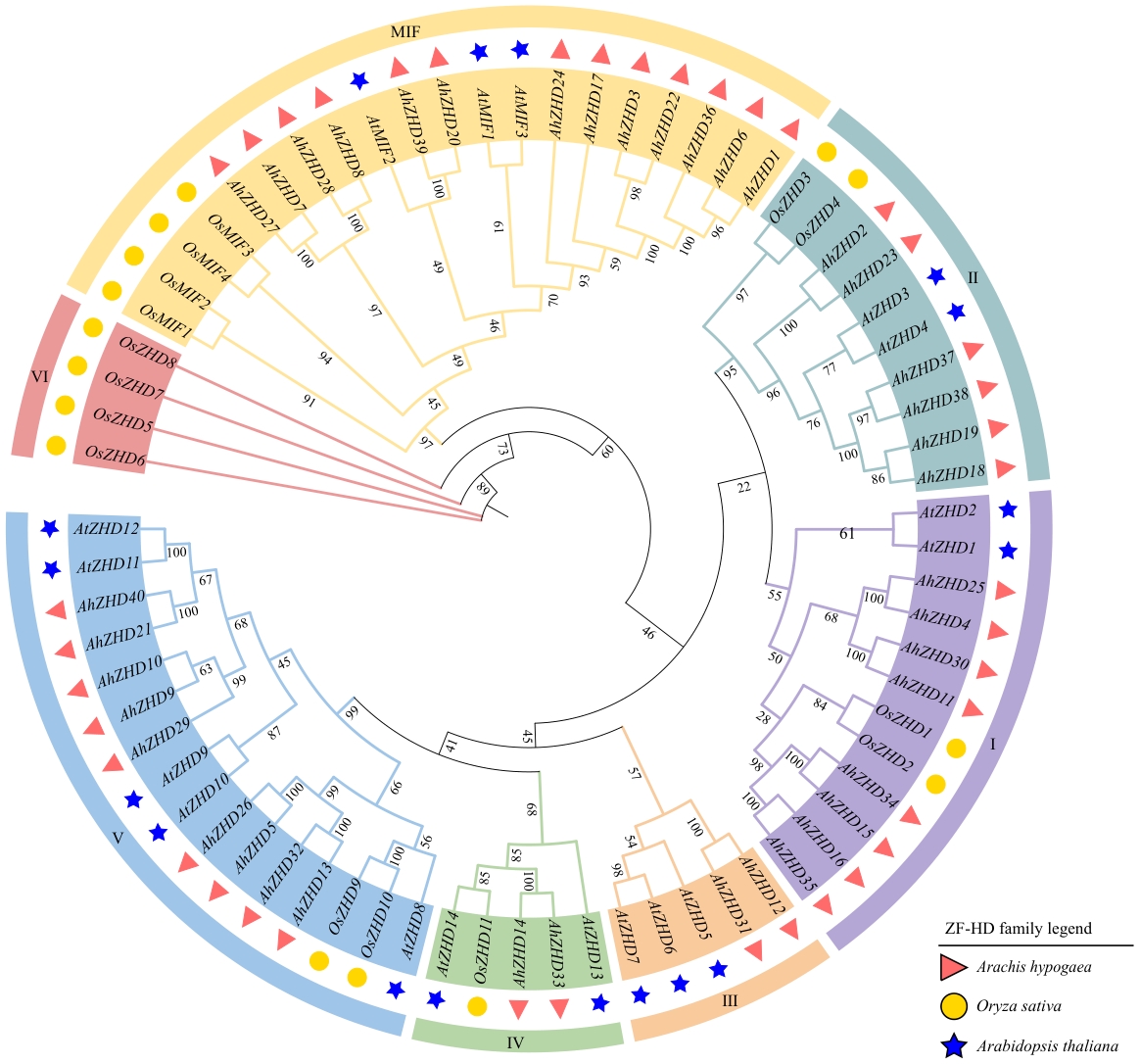
图1 花生、拟南芥和水稻ZF-HD基因家族系统进化树
Fig. 1 Phylogenetic tree of ZF-HD gene family in A. hypogaea, A. thaliana and O. sativa
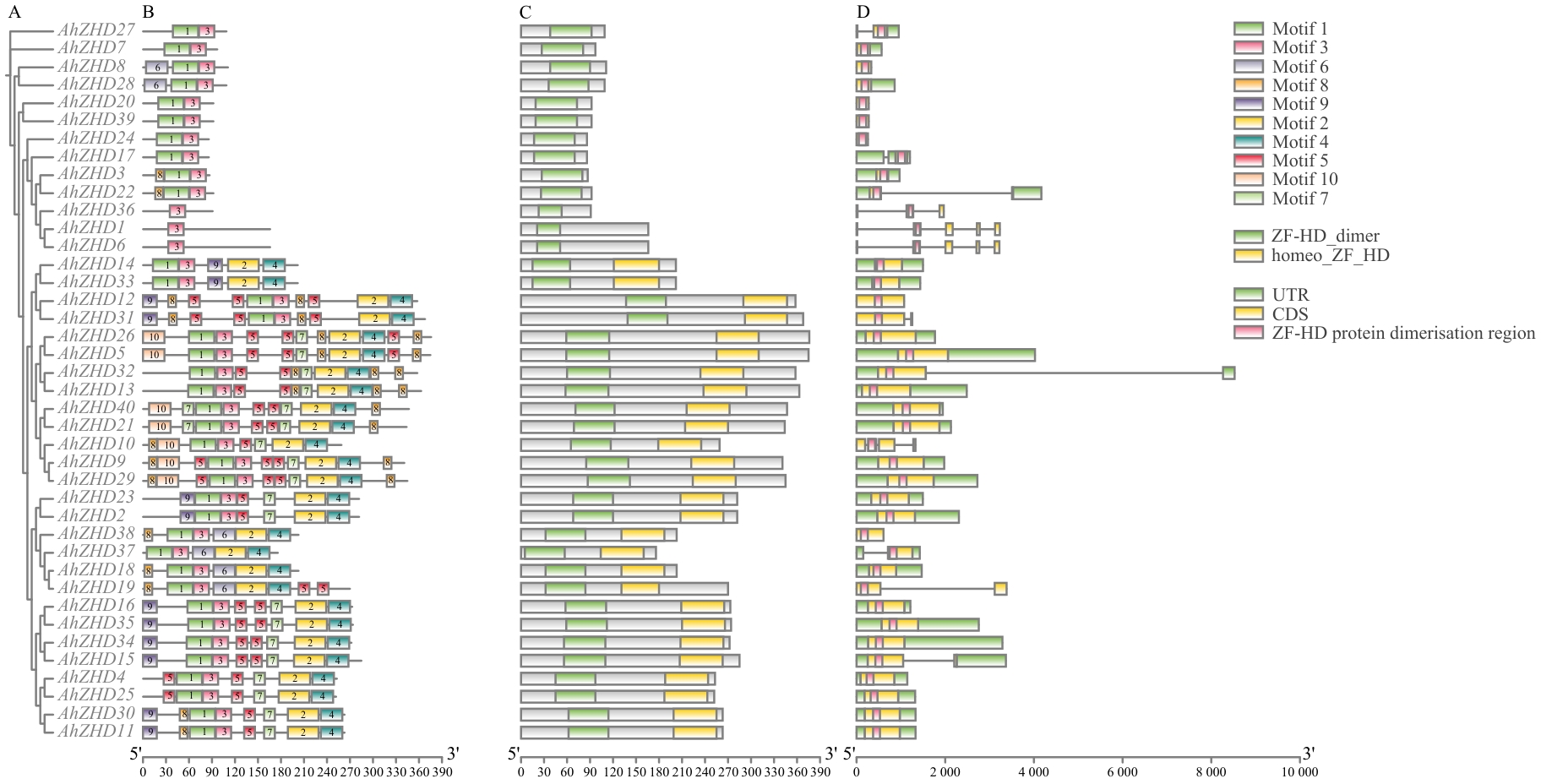
图2 AhZF-HD家族成员进化关系(A)、保守基序(B)、保守结构域(C)及基因结构分析(D)
Fig. 2 Phylogenetic relationship (A), conserved motif (B), conserved domain (C), and gene structure analysis (D) of AhZF-HD family members
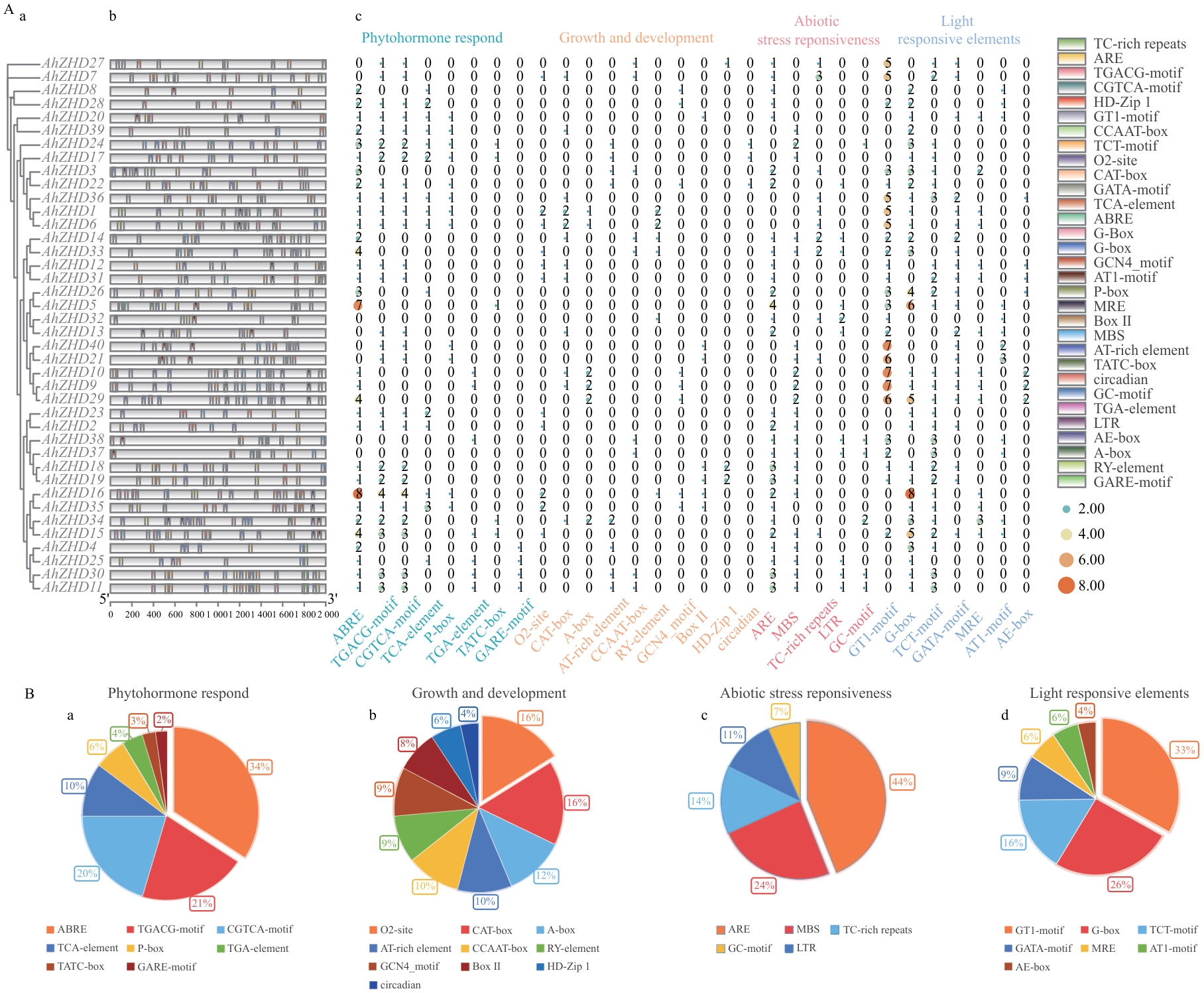
图3 花生ZF-HD基因启动子区顺式作用元件分析A:AhZHD家族成员顺式作用元件(a:AhZHD家族成员进化关系;b:AhZHD家族顺式元件;c:AhZHD家族顺式元件热图);B:AhZHD家族中顺式调控元件的功能分类(a:植物激素响应类元件;b:生长发育相关元件;c:非生物胁迫响应类元件;d:光响应类元件)。图中百分比数值代表了各类特定元件在其所属功能类别中的比例
Fig. 3 Analysis of cis-acting elements in the promoter regions of ZF-HD genes in A. hypogaeaA: Cis-acting elements in AhZHD family members (a: Phylogenetic relationship of AhZHD family members. b: Cis-acting elements in the AhZHD family. c: Heatmap of cis-acting elements in the AhZHD family). B: Functional categorization of cis-regulatory elements in the AhZHD family (a: Phytohormone-responsive elements. b: Elements involved in growth and development. c: Abiotic stress-responsive elements. d: Light-responsive elements). The proportion of each specific element type within the respective functional category is indicated as a percentage
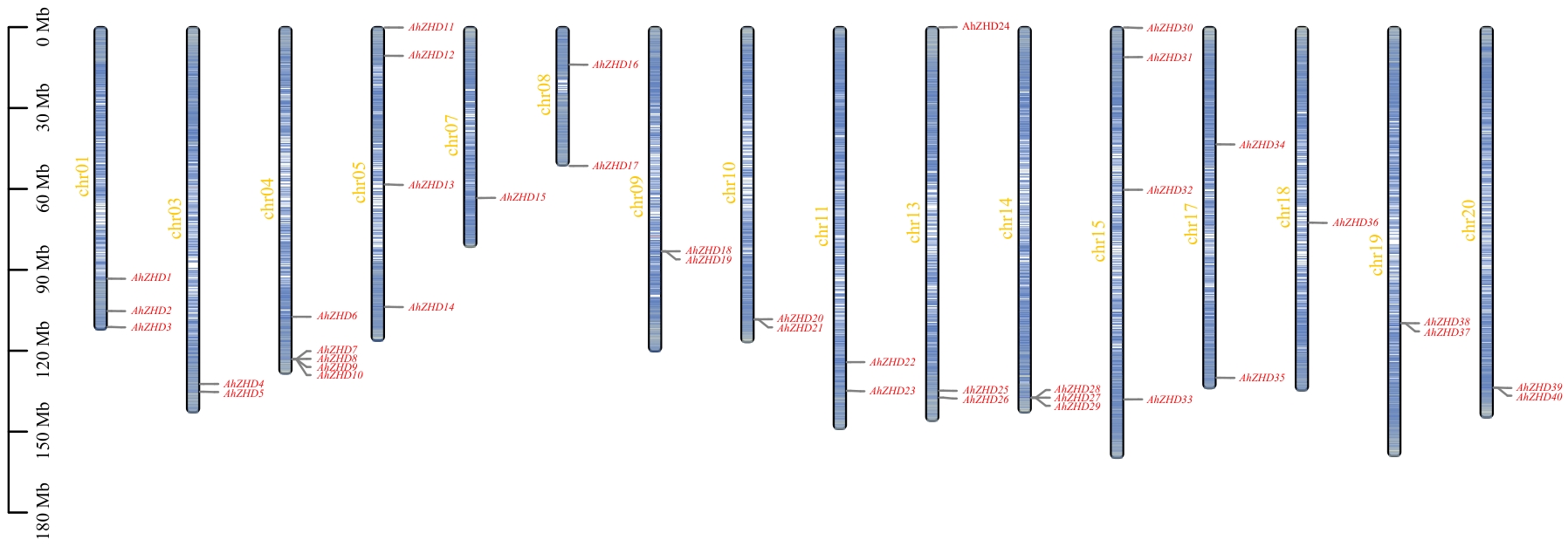
图4 AhZHDs基因在染色体上的分布
Fig. 4 Distribution of AhZHDs genes on chromosomes
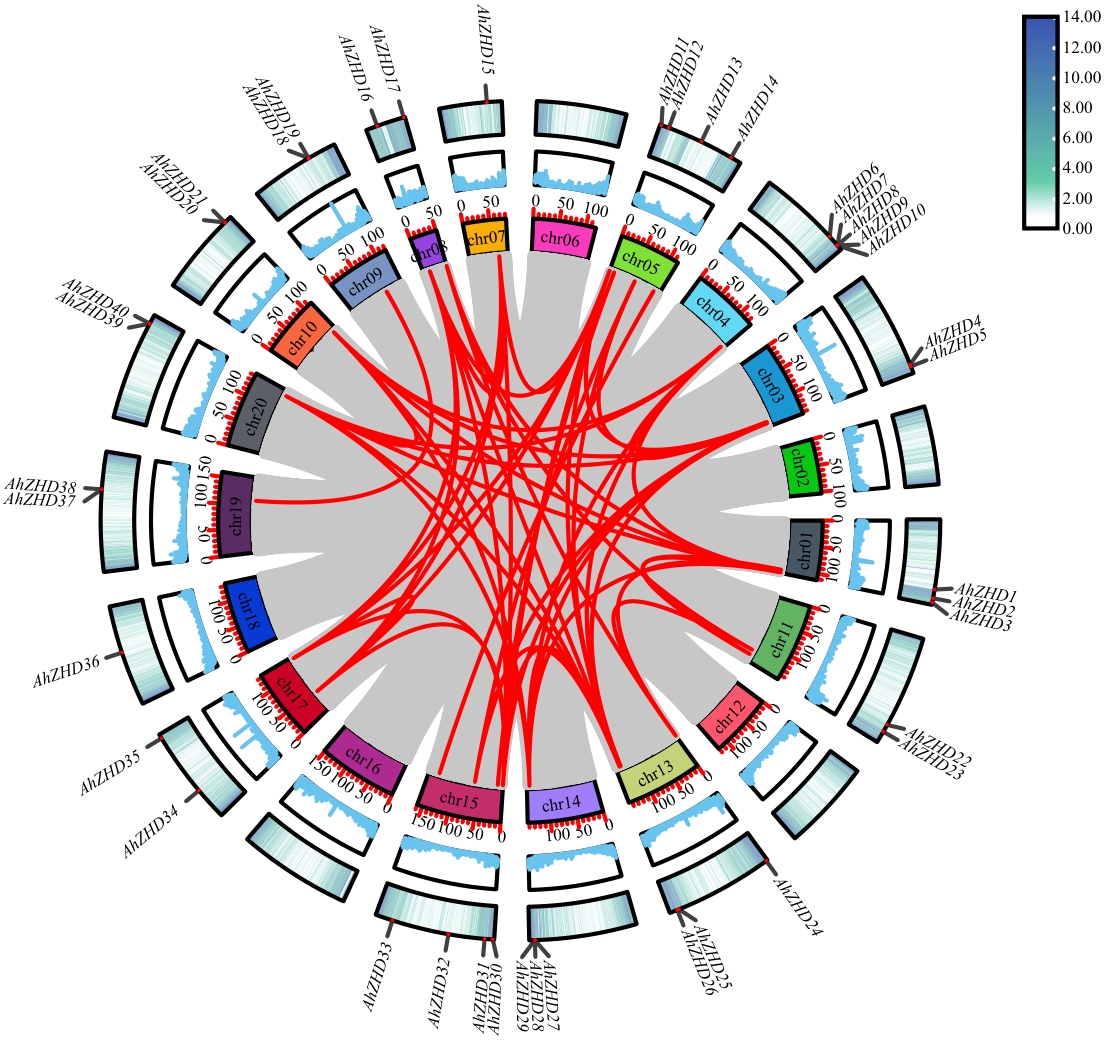
图5 花生ZF-HD基因家族物种内共线性分析
Fig. 5 Collinearity analysis of the ZF-HD gene family in A. hypogaea
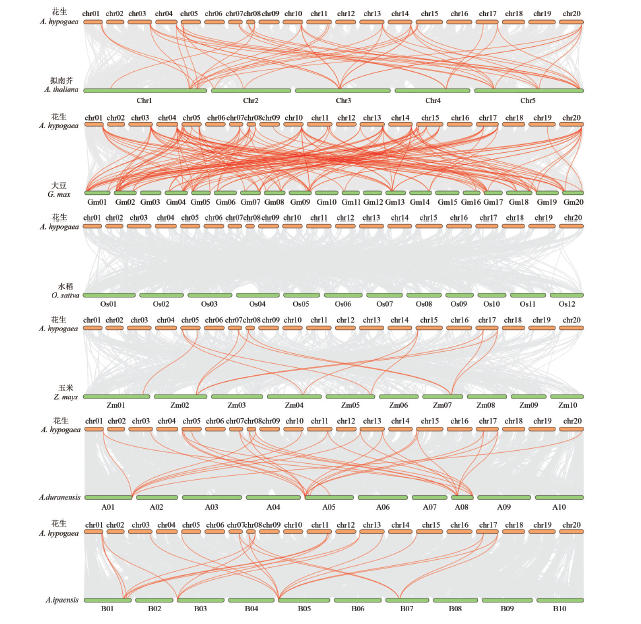
图6 栽培种花生与其他6个代表性物种之间ZF-HD基因的共线性分析
Fig. 6 Collinearity analysis of ZF-HD genes between cultivated A. hypogaea and six other representative species
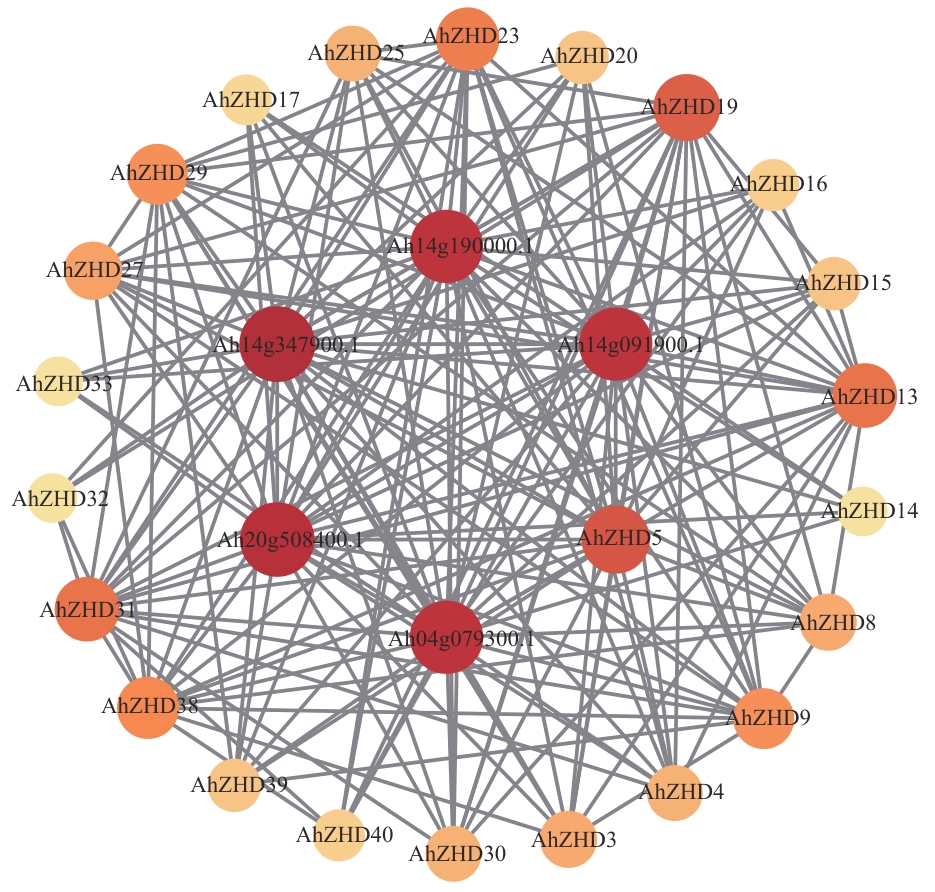
图7 花生ZF-HD蛋白互作网络分析
Fig. 7 Interaction network analysis of A. hypogaea ZF-HD proteins
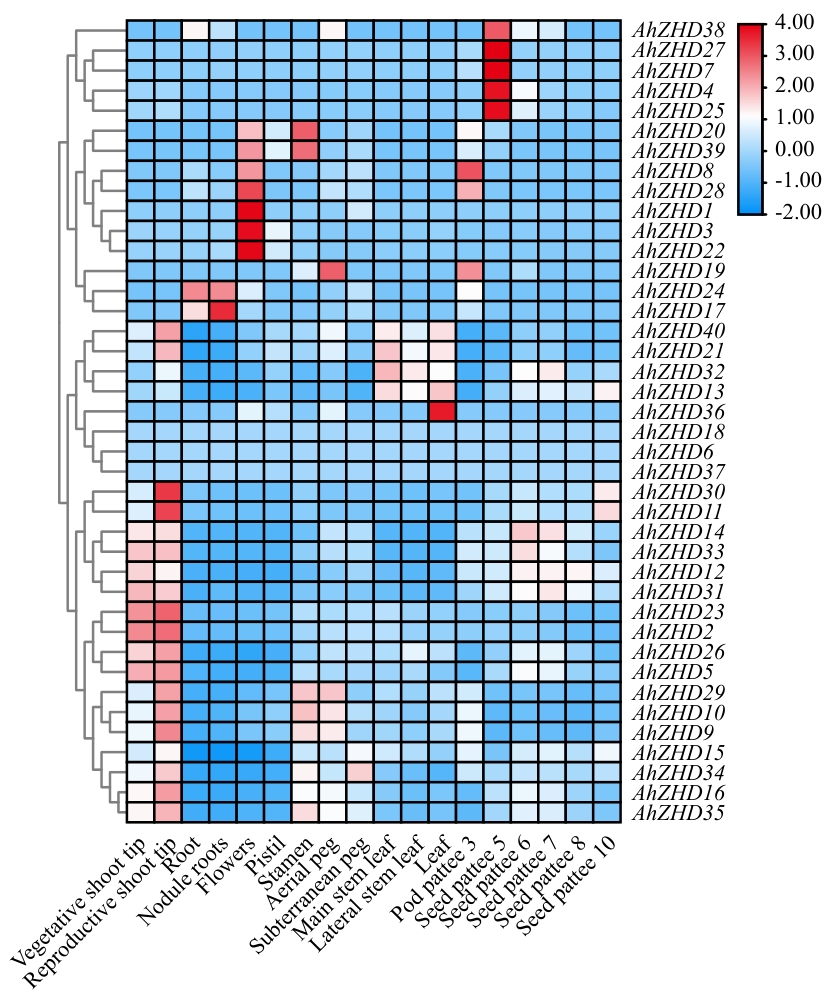
图8 花生ZF-HD基因在不同组织中的表达分析
Fig. 8 Expression analysis of A. hypogaea ZF-HD genes in different tissues
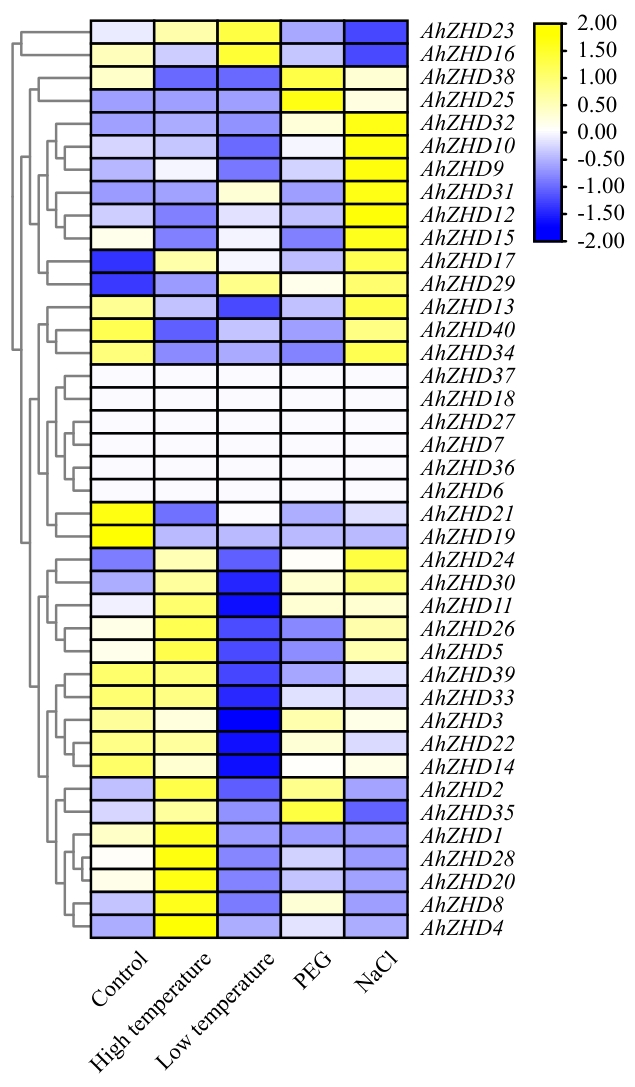
图9 花生ZF-HD基因在高温、低温、干旱和盐处理后的表达分析
Fig. 9 Expression analysis of ZF-HD genes in A. hypogaea under high temperature, low temperature, drought, and salt stress treatments
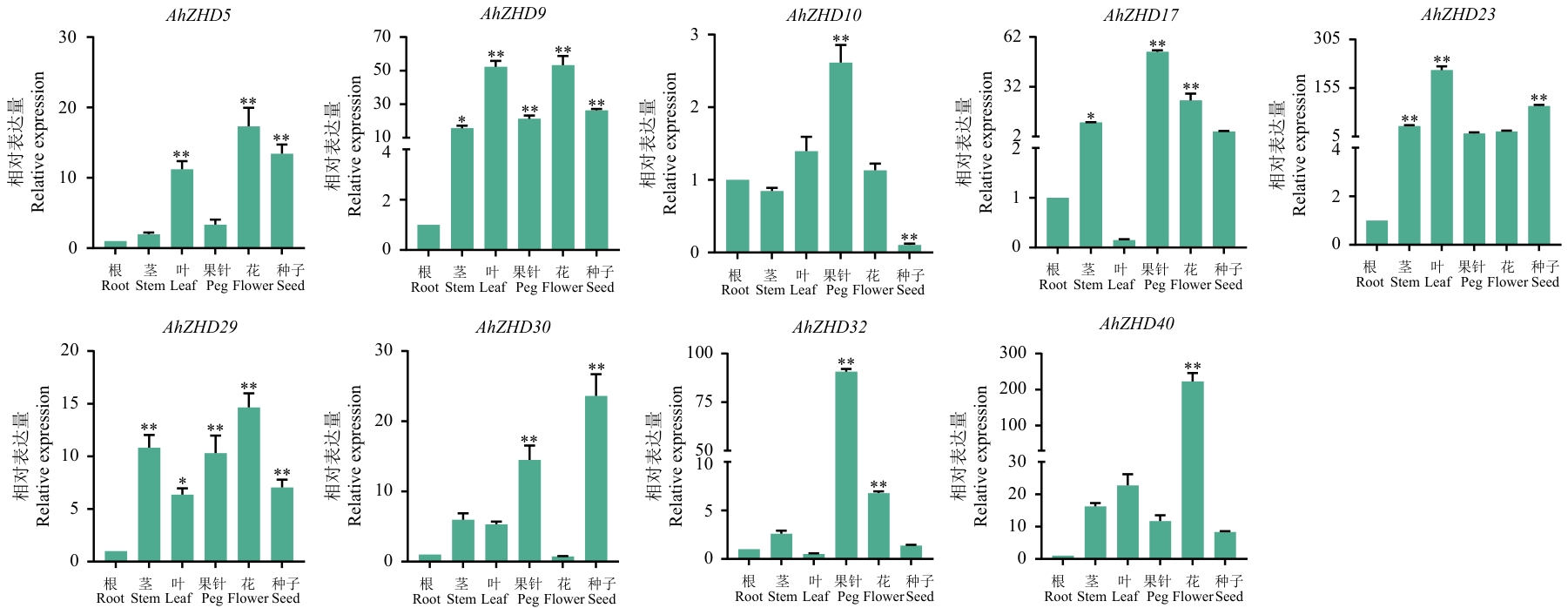
图10 基于RT-qPCR的不同组织器官中9个AhZHDs基因的表达差异*,**分别表示在0.05、0.01水平上差异显著,下同
Fig. 10 Expression differences of 9 AhZHDs genes under different tissues and organs based on RT-qPCR* and ** indicate significant differences at the level of 0.05, 0.01 respectively. The same below
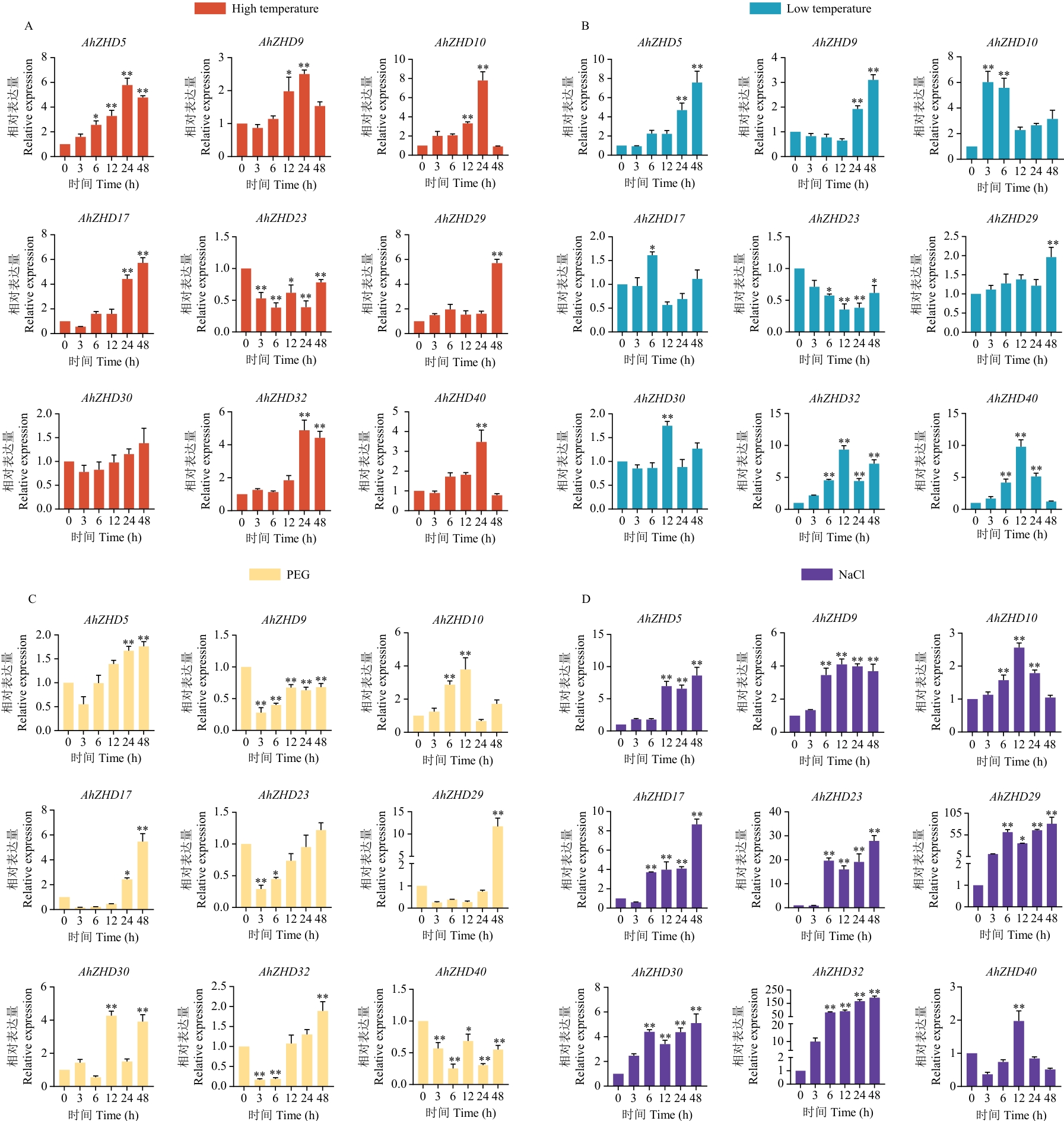
图11 基于RT-qPCR的不同胁迫处理下9个AhZHDs基因的表达差异
Fig. 11 Expression differences of 9 AhZHDs genes under different stress treatments based on RT-qPCR
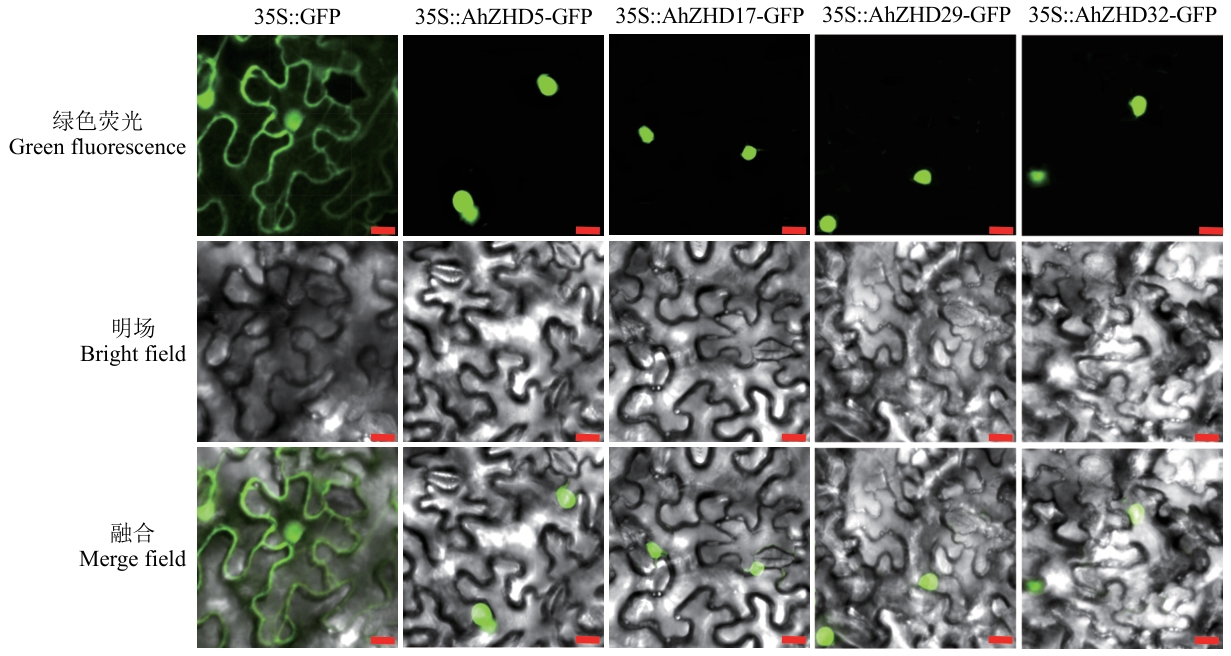
图12 AhZHD5、AhZHD17、AhZHD29和AhZHD32的亚细胞定位
Fig. 12 Subcellular localization of AhZHD5, AhZHD17, AhZHD29 and AhZHD32 (Bar=50 μm)
| [1] | Wani SH, Anand S, Singh B, et al. WRKY transcription factors and plant defense responses: latest discoveries and future prospects [J]. Plant Cell Rep, 2021, 40(7): 1071-1085. |
| [2] | Dhatterwal P, Sharma N, Prasad M. Decoding the functionality of plant transcription factors [J]. J Exp Bot, 2024, 75(16): 4745-4759. |
| [3] | Thilakarathne AS, Liu F, Zou ZW. Plant signaling hormones and transcription factors: key regulators of plant responses to growth, development, and stress [J]. Plants, 2025, 14(7): 1070. |
| [4] | Piya S, Lopes-Caitar VS, Kim WS, et al. Title: hypermethylation of miRNA genes during nodule development [J]. Front Mol Biosci, 2021, 8: 616623. |
| [5] | Wolberger C. Homeodomain interactions [J]. Curr Opin Struct Biol, 1996, 6(1): 62-68. |
| [6] | Ariel FD, Manavella PA, Dezar CA, et al. The true story of the HD-Zip family [J]. Trends Plant Sci, 2007, 12(9): 419-426. |
| [7] | Hu W, DePamphilis CW, Ma H. Phylogenetic analysis of the plant-specific zinc finger-homeobox and mini zinc finger gene families [J]. J Integr Plant Biol, 2008, 50(8): 1031-1045. |
| [8] | Liu MD, Liu H, Liu WY, et al. Systematic analysis of zinc finger-homeodomain transcription factors (ZF-HDs) in barley (Hordeum vulgare L.) [J]. Genes, 2024, 15(5): 578. |
| [9] | Windhövel A, Hein I, Dabrowa R, et al. Characterization of a novel class of plant homeodomain proteins that bind to the C4 phosphoenolpyruvate carboxylase gene of Flaveria trinervia [J]. Plant Mol Biol, 2001, 45(2): 201-214. |
| [10] | Tan QK, Irish VF. The Arabidopsis zinc finger-homeodomain genes encode proteins with unique biochemical properties that are coordinately expressed during floral development [J]. Plant Physiol, 2006, 140(3): 1095-1108. |
| [11] | Lee YK, Kumari S, Olson A, et al. Role of a ZF-HD transcription factor in miR157-mediated feed-forward regulatory module that determines plant architecture in Arabidopsis [J]. Int J Mol Sci, 2022, 23(15): 8665. |
| [12] | Islam MAU, Nupur JA, Khalid MHB, et al. Genome-wide identification and in silico analysis of ZF-HD transcription factor genes in Zea mays L [J]. Genes, 2022, 13(11): 2112. |
| [13] | Wang WL, Wu P, Li Y, et al. Genome-wide analysis and expression patterns of ZF-HD transcription factors under different developmental tissues and abiotic stresses in Chinese cabbage [J]. Mol Genet Genomics, 2016, 291(3): 1451-1464. |
| [14] | Zhang KP, Yan RQ, Feng XQ, et al. Genome-wide identification and expression analysis of ZF-HD family in sunflower (Helianthus annuus L.) under drought and salt stresses [J]. BMC Plant Biol, 2025, 25(1): 140. |
| [15] | Zhou CZ, Zhu C, Xie SY, et al. Genome-wide analysis of zinc finger motif-associated homeodomain (ZF-HD) family genes and their expression profiles under abiotic stresses and phytohormones stimuli in tea plants (Camellia sinensis) [J]. Sci Hortic, 2021, 281: 109976. |
| [16] | Barth O, Vogt S, Uhlemann R, et al. Stress induced and nuclear localized HIPP26 from Arabidopsis thaliana interacts via its heavy metal associated domain with the drought stress related zinc finger transcription factor ATHB29 [J]. Plant Mol Biol, 2009, 69(1/2): 213-226. |
| [17] | Li QF, Ren YZ, Long JH, et al. Genome-wide identification of zinc finger-homeodomain (ZF-HD) gene family and expression analysis during abiotic stress in rye [J]. Genet Resour Crop Evol, 2025, 72(8): 9927-9943. |
| [18] | Kazerooni EA, Maharachchikumbura SSN, Al-Sadi AM, et al. Effects of the rhizosphere fungus Cunninghamella bertholletiae on the Solanum lycopersicum response to diverse abiotic stresses [J]. Int J Mol Sci, 2022, 23(16): 8909. |
| [19] | Zhao TT, Hu JK, Gao YM, et al. Silencing of the SL-ZH13 transcription factor gene decreases the salt stress tolerance of tomato [J]. J Amer Soc Hort Sci, 2018, 143(5): 391-396. |
| [20] | Liu H, Yang Y, Zhang LS. Zinc finger-homeodomain transcriptional factors (ZF-HDs) in wheat (Triticum aestivum L.): identification, evolution, expression analysis and response to abiotic stresses [J]. Plants, 2021, 10(3): 593. |
| [21] | Lai W, Zhu CX, Hu ZY, et al. Identification and transcriptional analysis of zinc finger-homeodomain (ZF-HD) family genes in cucumber [J]. Biochem Genet, 2021, 59(4): 884-901. |
| [22] | Sun JH, Xie MM, Li XX, et al. Systematic investigations of the ZF-HD gene family in tobacco reveal their multiple roles in abiotic stresses [J]. Agronomy, 2021, 11(3): 406. |
| [23] | 郭曼莉, 李晓彤, 吴澎, 等. 花生加工副产物的综合利用及精深加工 [J]. 粮油食品科技, 2018, 26(3): 27-31. |
| Guo ML, Li XT, Wu P, et al. Comprehensive utilization and deep processing of peanut processing by-products [J]. Sci Technol Cereals Oils Foods, 2018, 26(3): 27-31. | |
| [24] | Sorita GD, Leimann FV, Ferreira SRS. Biorefinery approach: Is it an upgrade opportunity for peanut by-products [J]. Trends Food Sci Technol, 2020, 105: 56-69. |
| [25] | 孙海艳, 侯乾, 董文召, 等. 我国花生品种发展现状 [J]. 中国种业, 2022(7): 15-17. |
| Sun HY, Hou Q, Dong WZ, et al. Development status of peanut varieties in China [J]. China Seed Ind, 2022(7): 15-17. | |
| [26] | 王永慧, 杨久涛, 彭科研, 等. 中国花生产业现状及展望 [J]. 农业展望, 2024, 20(8): 86-91. |
| Wang YH, Yang JT, Peng KY, et al. Current situation and prospects of peanut industry in China [J]. Agric Outlook, 2024, 20(8): 86-91. | |
| [27] | Clevenger J, Chu Y, Scheffler B, et al. A developmental transcriptome map for allotetraploid Arachis hypogaea [J]. Front Plant Sci, 2016, 7: 1446. |
| [28] | Chen CJ, Wu Y, Li JW, et al. TBtools-Ⅱ: a “one for all, all for one” bioinformatics platform for biological big-data mining [J]. Mol Plant, 2023, 16(11): 1733-1742. |
| [29] | Otasek D, Morris JH, Bouças J, et al. Cytoscape Automation: empowering workflow-based network analysis [J]. Genome Biol, 2019, 20(1): 185. |
| [30] | Nicholas Carpita DS. Determination of the pore size of cell walls of living plant cells [J]. Science, 1979, 205(4411): 1144-1147. |
| [31] | Zhang H, Zhao XB, Sun QX, et al. Comparative transcriptome analysis reveals molecular defensive mechanism of Arachis hypogaea in response to salt stress [J]. Int J Genom, 2020, 2020(1): 6524093. |
| [32] | Sparkes IA, Runions J, Kearns A, et al. Rapid, transient expression of fluorescent fusion proteins in tobacco plants and generation of stably transformed plants [J]. Nat Protoc, 2006, 1(4): 2019-2025. |
| [33] | Rizwan HM, He JY, Nawaz M, et al. The members of zinc finger-homeodomain (ZF-HD) transcription factors are associated with abiotic stresses in soybean: insights from genomics and expression analysis [J]. BMC Plant Biol, 2025, 25(1): 56. |
| [34] | Jain M, Tyagi AK, Khurana JP. Genome-wide identification, classification, evolutionary expansion and expression analyses of homeobox genes in rice [J]. FEBS J, 2008, 275(11): 2845-2861. |
| [35] | Yang N, Yang ZZ, Zhu ZJ, et al. Identification and expression analysis of ZF-HD transcription factor family and their expression profiles under abiotic and biotic stresses in mango (Mangifera indica) [J]. Physiol Mol Plant Pathol, 2025, 139: 102816. |
| [36] | Xing LX, Peng K, Xue S, et al. Genome-wide analysis of zinc finger-homeodomain (ZF-HD) transcription factors in diploid and tetraploid cotton [J]. Funct Integr Genomics, 2022, 22(6): 1269-1281. |
| [37] | He K, Li CX, Zhang ZY, et al. Genome-wide investigation of the ZF-HD gene family in two varieties of alfalfa (Medicago sativa L.) and its expression pattern under alkaline stress [J]. BMC Genomics, 2022, 23(1): 150. |
| [38] | Bowers JE, Chapman BA, Rong JK, et al. Unravelling angiosperm genome evolution by phylogenetic analysis of chromosomal duplication events [J]. Nature, 2003, 422(6930): 433-438. |
| [39] | Niu HL, Xia PL, Hu YF, et al. Genome-wide identification of ZF-HD gene family in Triticum aestivum: Molecular evolution mechanism and function analysis [J]. PLoS One, 2021, 16(9): e0256579. |
| [40] | 李濯雪, 陈信波. 植物诱导型启动子及相关顺式作用元件研究进展 [J]. 生物技术通报, 2015, 31(10): 8-15. |
| Li ZX, Chen XB. Research advances on plant inducible promoters and related cis-acting elements [J]. Biotechnol Bull, 2015, 31(10): 8-15. | |
| [41] | Ezeh OS, Yamamoto YY. Combinatorial effects of cis-regulatory elements and functions in plants [J]. Rev Agric Sci, 2024, 12: 79-92. |
| [42] | Xu CZ, Luo F, Hochholdinger F. LOB domain proteins: beyond lateral organ boundaries [J]. Trends Plant Sci, 2016, 21(2): 159-167. |
| [43] | Kim MJ, Kim M, Kim J. Combinatorial interactions between LBD10 and LBD27 are essential for male gametophyte development in Arabidopsis [J]. Plant Signal Behav, 2015, 10(8): e1044193. |
| [44] | Zimmermann P, Hirsch-Hoffmann M, Hennig L, et al. GENEVESTIGATOR. Arabidopsis microarray database and analysis toolbox [J]. Plant Physiol, 2004, 136(1): 2621-2632. |
| [45] | Maffucci T, Falasca M. Specificity in pleckstrin homology (PH) domain membrane targeting: a role for a phosphoinositide-protein co-operative mechanism [J]. FEBS Lett, 2001, 506(3): 173-179. |
| [46] | Yamagishi K, Nagata N, Yee KM, et al. TANMEI/EMB2757 encodes a WD repeat protein required for embryo development in Arabidopsis [J]. Plant Physiol, 2005, 139(1): 163-173. |
| [47] | 游晓慧, 李威, 陶启长, 等. WD40重复蛋白家族基因At1g65030调控拟南芥种子的重量与体积 [J]. 植物生理学报, 2011, 47(7): 715-725. |
| You XH, Li W, Tao QC, et al. At1g65030, a WD40-repeat protein gene, regulates seed mass and size in Arabidopsis [J]. Plant Physiol J, 2011, 47(7): 715-725. | |
| [48] | 舒英杰. 大豆Homeobox基因GmSbh1的分离、表达分析及其与种子劣变的关系 [D]. 南京: 南京农业大学, 2014. |
| Shu YJ. Isolation and expression analysis of soybean Homeobox gene GmSbh1 and its relationship with seed deterioration [D]. Nanjing: Nanjing Agricultural University, 2014. | |
| [49] | Xu XR, Zhou H, Yang QH, et al. ZF-HD gene family in rapeseed (Brassica napus L.): genome-wide identification, phylogeny, evolutionary expansion and expression analyses [J]. BMC Genomics, 2024, 25(1): 1181. |
| [50] | Shi BW, Haq IU, Fiaz S, et al. Genome-wide identification and expression analysis of the ZF-HD gene family in pea (Pisum sativum L.) [J]. Front Genet, 2022, 13: 1089375. |
| [1] | 殷亚龙, 张明洋, 王洁敏, 苗雪雪, 陈劲, 王伟平. 水稻非生物胁迫协同耐受机制研究进展[J]. 生物技术通报, 2026, 42(4): 26-37. |
| [2] | 刘青媛, 吴洪启, 陈秀娥, 陈剑, 姜远泽, 何燕子, 喻奇伟, 刘仁祥. 转录因子NtMYB96a调控烟草耐旱性的功能研究[J]. 生物技术通报, 2026, 42(4): 239-250. |
| [3] | 苏燕竹, 李达, 张爱爱, 刘永光, 张秀荣, 薛其勤. 大豆CAD基因家族的鉴定及表达分析[J]. 生物技术通报, 2026, 42(4): 101-113. |
| [4] | 李迎辉, 王杨博涵, 周浩博, 卢心如, 张珂欣, 于洋, 李传友, 孙传龙. 番茄VPE基因家族鉴定和抗逆功能分析[J]. 生物技术通报, 2026, 42(3): 263-274. |
| [5] | 崔之瀚, 魏庆镇, 胡娜, 包崇来, 王华森. 园艺作物IQD基因研究进展[J]. 生物技术通报, 2026, 42(3): 230-241. |
| [6] | 张高翔, 吴玉碧, 郭亚静, 纪薇, 杨忠义. 葡萄WD40基因家族鉴定及表达量分析[J]. 生物技术通报, 2026, 42(3): 324-337. |
| [7] | 尹跃, 秦小雅, 米佳, 安巍, 何军, 张锋锋. 枸杞FBN基因家族鉴定及与类胡萝卜素代谢的相关性分析[J]. 生物技术通报, 2026, 42(3): 338-348. |
| [8] | 李天源, 亓新亮, 刘珊, 张建成, 王鹏飞, 张帅, 贾璐婷, 穆霄鹏. 欧李SPL基因家族的鉴定及在果实发育过程中的表达分析[J]. 生物技术通报, 2026, 42(3): 362-373. |
| [9] | 徐泽, 周陈平, 邝瑞彬, 吴夏明, 杨敏, 刘传和, 贺涵, 魏岳荣. 番木瓜PG基因家族鉴定及其在果实软化中的功能[J]. 生物技术通报, 2026, 42(3): 349-361. |
| [10] | 刘林娅, 刘欢艳, 梁鑫钰, 宋姝熠, 何斌, 王绪英, 黄亚成. ‘红阳’猕猴桃BGAL基因家族的全基因组鉴定与表达分析[J]. 生物技术通报, 2026, 42(3): 312-323. |
| [11] | 张冬岭, 张寅生, 王建军, 叶飞宇, 卢子涵, 马晨晨, 柳华峰, 胡德升, 邓亚洲, 曹丽茹. 玉米HSFs转录因子家族在干旱胁迫下的表达特性及功能[J]. 生物技术通报, 2026, 42(2): 178-187. |
| [12] | 何启露, 田卓, 邓静, 李俊杨, 杨汶霖, 刘湘, 余秀梅. 产铁载体细菌对石灰性紫色土壤中花生的影响[J]. 生物技术通报, 2026, 42(2): 188-196. |
| [13] | 杨子涵, 李葵秀, 李俊良, 吕文慧, 何温婷, 刘旭燕, 刘冠泽. 三七RALF基因家族鉴定及表达分析[J]. 生物技术通报, 2026, 42(2): 278-292. |
| [14] | 付涵, 孙书豪, 张思晴, 艾妞, 于杨, 于连伟, 王琼琼, 韩晓玉, 施艳, 韩卫丽, 杨雪. 本氏烟BOI家族基因的全基因组鉴定与表达分析[J]. 生物技术通报, 2026, 42(2): 207-217. |
| [15] | 农韦优, 赵昌祖, 钱禛锋, 丁倩, 王誉洁, 陈疏影, 何丽莲, 李富生. 蔗茅EfBBX基因家族鉴定及冷胁迫下表达模式分析[J]. 生物技术通报, 2026, 42(2): 267-277. |
| 阅读次数 | ||||||
|
全文 |
|
|||||
|
摘要 |
|
|||||
