







彭楚1,2( ), 孙娟利1, 郑蓓蓓1, 张若西1, 韩月彭1(), 赵云1()
收稿日期:2026-02-02
出版日期:2026-03-20
通讯作者:
韩月彭,男,博士,研究员,研究方向 :果实品质遗传与改良;E-mail: yphan@wbgcas.cn作者简介:彭楚,女,硕士研究生,研究方向 :果实色泽品质形成;E-mail: pengchu2026@163.com
基金资助:
PENG Chu1,2(), SUN Juan-li1, ZHENG Bei-bei1, ZHANG Ruo-xi1, HAN Yue-peng1(), ZHAO Yun1()
Received:2026-02-02
Published:2026-03-20
摘要:
花色苷是一类广泛存在于植物体内的天然水溶性色素,作为决定果实外观色泽与营养品质的关键组分,其积累水平直接影响果实商品经济价值。然而,部分研究表明花色苷过量积累会影响某些果实香气和口感,因此维持其积累动态平衡可为果实品质改良提供新思路。花色苷较不稳定,易受光照、温度等外界环境因子的影响而降解。花色苷降解对维持其代谢稳态起着关键作用,酶促降解是介导植物体内花色苷降解的核心途径。本文系统综述了花色苷降解相关酶类及其作用机制的研究进展,重点概述了β-葡萄糖苷酶、过氧化物酶及多酚氧化酶3类关键酶介导的花色苷降解模型。β-葡萄糖苷酶可特异性水解花色苷糖苷键,释放稳定性较低的花色素苷元并自发裂解,促进其降解;花色素苷元亦可被过氧化物酶进一步氧化降解。过氧化物酶与多酚氧化酶/漆酶可将酚类底物催化为强氧化活性的醌类中间体,并与花色苷发生耦合氧化反应介导其降解。此外,多酚氧化酶/漆酶在体外条件下可直接降解花色苷。上述酶类在液泡中协同介导花色苷降解,参与果实色泽品质形成,但其调控的分子机制仍有待深入解析。本文围绕降解酶催化机制、多酶协同模式、合成与降解互作关系及环境响应机制等关键科学问题与研究挑战展开论述,旨在为精准调控花色苷积累的动态平衡、多维度改良果实品质提供理论支撑。
彭楚, 孙娟利, 郑蓓蓓, 张若西, 韩月彭, 赵云. 果实花色苷酶促降解机制研究进展[J]. 生物技术通报, doi: 10.13560/j.cnki.biotech.bull.1985.2026-0164.
PENG Chu, SUN Juan-li, ZHENG Bei-bei, ZHANG Ruo-xi, HAN Yue-peng, ZHAO Yun. Research Progress in the Enzymatic Degradation Mechanism of Anthocyanins in Fruits[J]. Biotechnology Bulletin, doi: 10.13560/j.cnki.biotech.bull.1985.2026-0164.
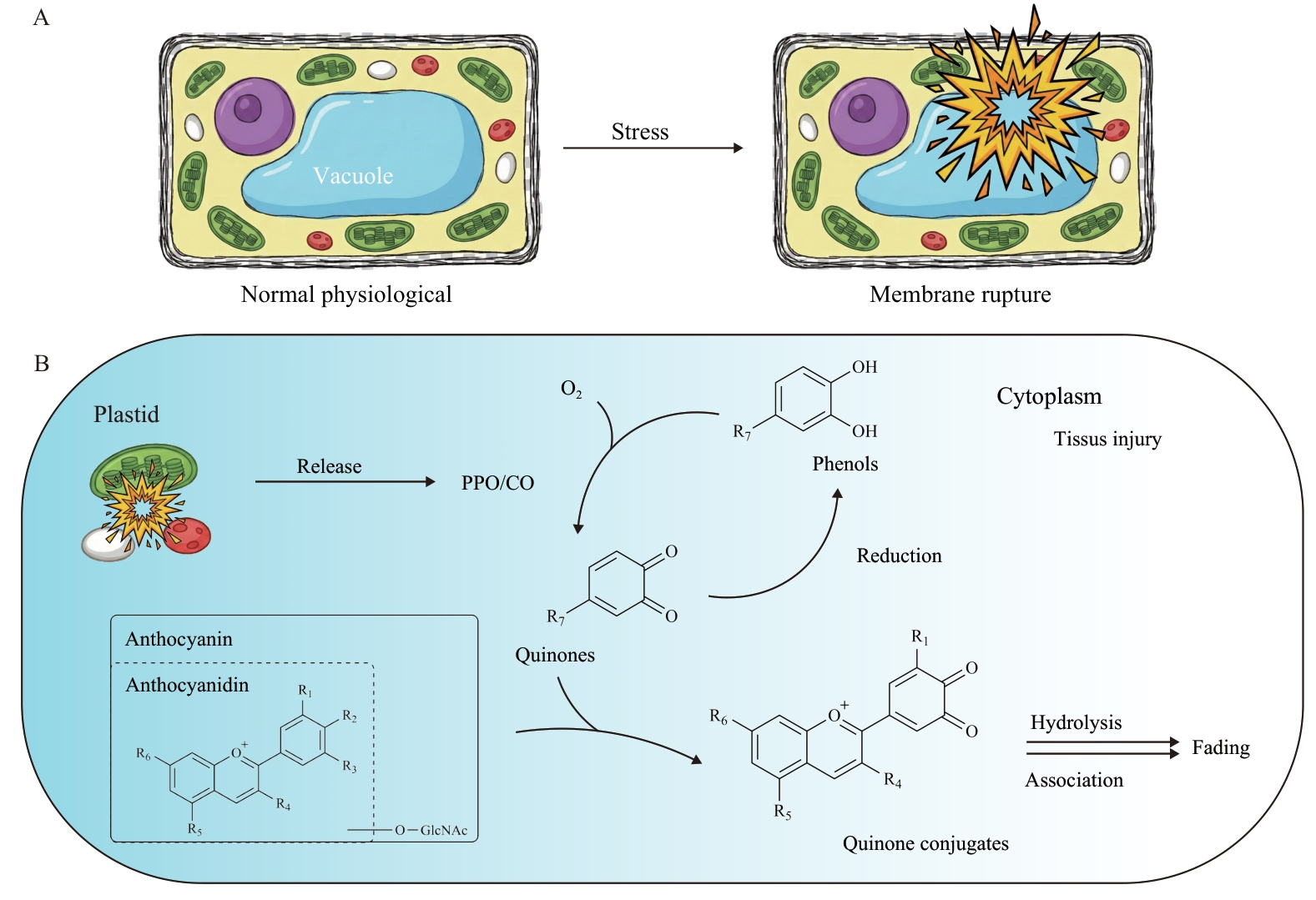
图1 组织损伤条件下细胞质中花色苷降解途径示意图A:植物受各类胁迫作用时,其细胞膜结构完整性受损,导致膜体系解体,质体中的PPO/CO被释放至细胞质;B:释放的PPO/CO可氧化游离酚类底物生成醌类物质,后者与花色苷形成耦合物,该耦合物经水解、聚合反应导致组织褪色;此外,该过程中生成的醌类物质可被快速还原为酚类底物,形成循环反应,高效降解细胞质中的花色苷;PPO/CO:多酚氧化酶家族中儿茶酚氧化酶类型
Fig. 1 Schematic representation of cytoplasmic anthocyanin degradation triggered by tissue injuryA: Under various stress conditions, the disruption of cellular membrane integrity leads to the breakdown of membrane systems, resulting in the release of plastid-localized PPO/CO into the cytoplasm. B: The released PPO/CO catalyzes the oxidation of free phenolic substrates to generate reactive quinone intermediates, which form conjugates with anthocyanins. These conjugates subsequently undergo hydrolysis and polymerization, ultimately causing tissue discoloration. Moreover, the quinone intermediates can be rapidly reduced back to phenolic substrates, establishing a redox cycle that facilitates efficient anthocyanin degradation in the cytoplasm. PPO/CO: Catechol oxidase belonging to the polyphenol oxidase family
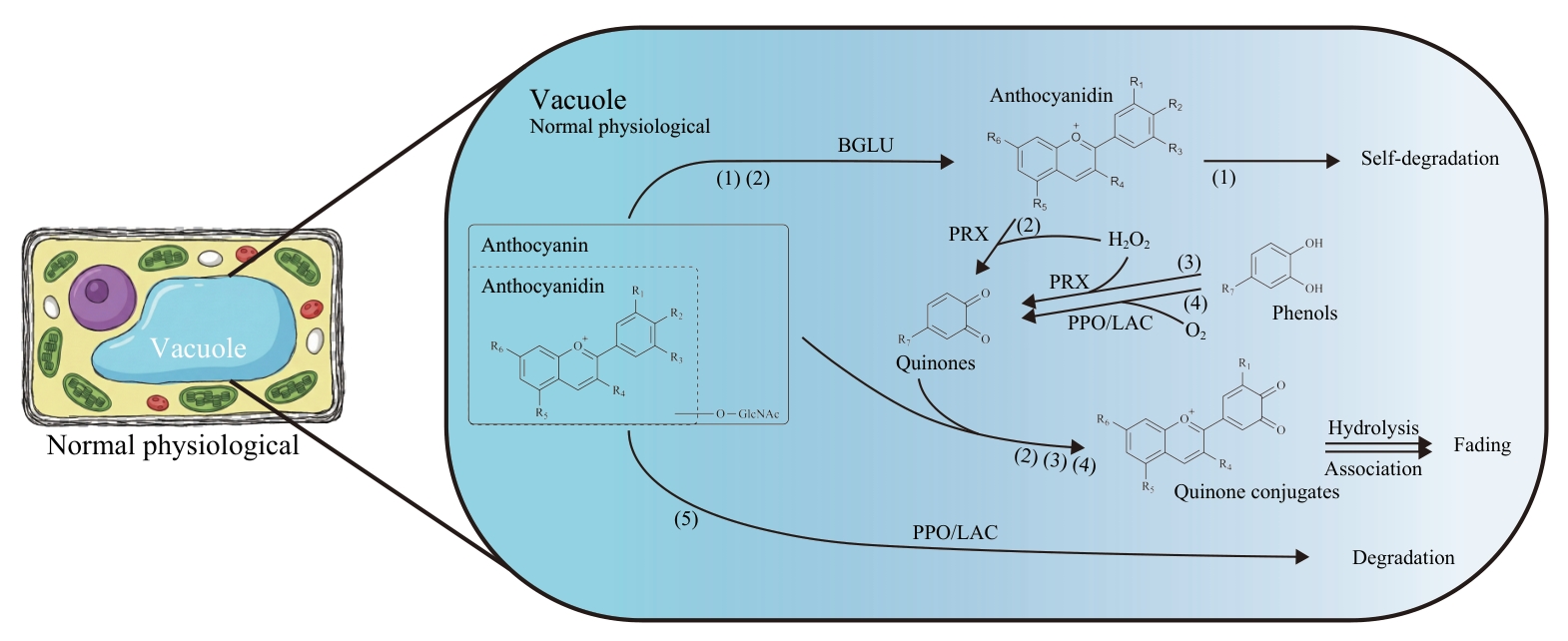
图2 正常生理条件下液泡内花色苷降解途径示意图正常生理条件下液泡内花色苷酶促降解途径。(1)花色苷经BGLU水解生成花色素苷元,后者可一定程度上发生自发裂解;(2)BGLU水解产生的花色素苷元被PRX氧化为醌类物质,再与花色苷耦合形成醌类共轭物,经水解或聚合导致花色苷降解;(3)(4)液泡中游离酚类物质分别被PRX和PPO/LAC氧化为醌类,进而通过与途径(2)相似的耦合反应介导花色苷降解;(5)花色苷可被PPO/LAC直接降解。BGLU:β-葡萄糖苷酶;PRX:过氧化物酶;PPO/LAC:多酚氧化酶家族中漆酶类型
Fig. 2 Proposed schematic model illustrating enzymatic degradation pathways of anthocyanins in the vacuole under normal physiological conditionsUnder normal physiological conditions, anthocyanins sequestered in the vacuole undergo enzymatic degradation through multiple degradation routes. 1) Anthocyanins are hydrolyzed by BGLU to generate anthocyanidins, which are inherently unstable and prone to spontaneous decomposition. 2) Anthocyanidins generated by BGLU are further oxidized to quinones by PRX, which then couple with anthocyanins to form quinone conjugates, leading to anthocyanin degradation through hydrolysis or polymerization. 3) 4) Free phenol compounds present in the vacuole are oxidized to quinones by PRX and PPO/LAC, which then mediate anthocyanin degradation by a coupling reaction similar to the pathway 2). 5) Anthocyanins are directly oxidatively degraded by PPO/LAC. BGLU: β-glucosidase; PRX: Peroxidase; PPO/LAC: the laccase belonging to the polyphenol oxidase family
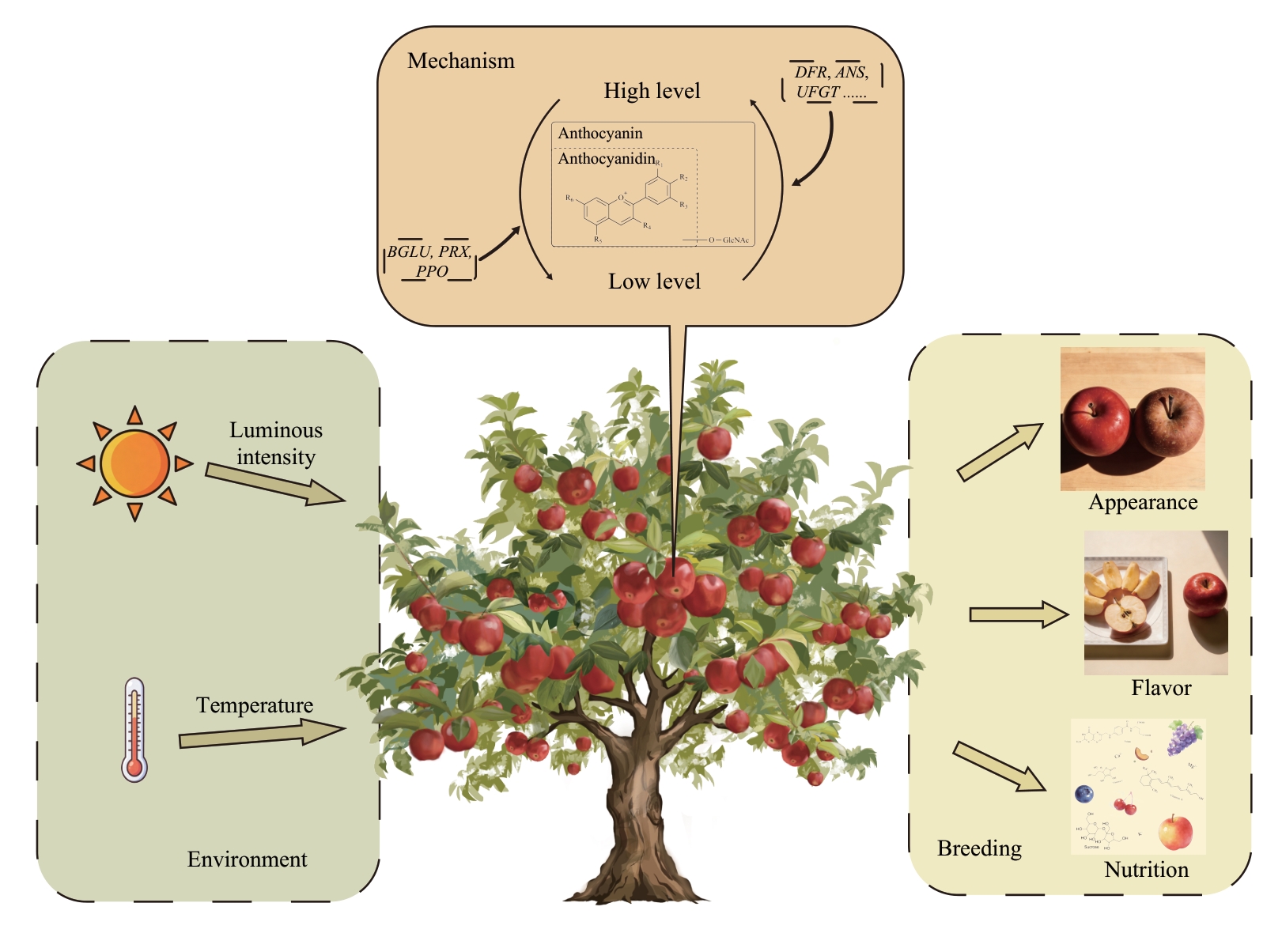
图3 环境因子调控果实花色苷代谢及育种应用示意图光照、温度作为影响果实花色苷积累的关键环境因子,可通过协同调控花色苷生物合成通路与降解途径中关键基因的表达水平,精准调控果实花色苷积累量。其中,DFR、ANS和UFGT等花色苷生物合成关键结构基因,其表达量上调可显著促进花色苷积累;而BGLU、PRX和PPO等花色苷降解酶相关基因,其表达量上调则会加速花色苷分解代谢进程。花色苷合成与降解代谢过程在转录调控层面协同响应光照、温度等环境信号的变化,二者之间的动态平衡共同维持果实花色苷代谢稳态。解析环境因子协同调控花色苷合成与降解的分子机制,不仅可为研发以色泽改良为核心的品质调控技术提供理论依据,也可为果实品质性状的遗传改良提供新思路。DFR:二氢黄酮醇4-还原酶;ANS:花色素合成酶;UFGT:UDP葡萄糖-类黄酮3-O-葡糖基转移酶;BGLU:β-葡萄糖苷酶;PRX:过氧化物酶;PPO:多酚氧化酶
Fig. 3 Schematic diagram illustrating environmental regulation of anthocyanin metabolism in fruit and its applications in breeding programsEnvironmental factors such as light and temperature regulate anthocyanin accumulation in fruit by coordinately modulating the expressions of key genes involved in both biosynthesis and degradation. Enhanced expressions of key biosynthetic genes, including DFR, ANS and UFGT, promotes anthocyanin accumulation, whereas the upregulation of degradation-associated genes such as BGLU, PRX and PPO accelerates anthocyanin turnover. Anthocyanin biosynthesis and degradation respond coordinately to changes in environmental cues at the transcriptional level, and their coordinated interplay maintains anthocyanin metabolic homeostasis in fruit. Deciphering the molecular mechanism by which environmental factors coordinately regulate anthocyanin biosynthesis and degradation will provide a foundation for coloration quality improvement strategies and genetic enhancement of fruit quality traits. DFR: Dihydroflavonol 4-reductase; ANS: Anthocyanidin synthase; UFGT: UDP-glucose: flavonoid 3-O-glucosyltransferase; BGLU: β-glucosidase; PRX: peroxidase; PPO: polyphenol oxidase
| [1] | Zhao L, Sun JL, Cai YM, et al. PpHYH is responsible for light-induced anthocyanin accumulation in fruit peel of Prunus persica [J]. Tree Physiol, 2022, 42(8): 1662-1677. |
| [2] | Li Z, Ahammed GJ. Plant stress response and adaptation via anthocyanins: a review [J]. Plant Stress, 2023, 10: 100230. |
| [3] | Grünig N, Horz JM, Pucker B. Diversity and ecological functions of anthocyanins [J]. BMC Plant Biol, 2026, 26: 146. |
| [4] | Moyer RA, Hummer KE, Finn CE, et al. Anthocyanins, phenolics, and antioxidant capacity in diverse small fruits: Vaccinium, Rubus, and Ribes [J]. J Agric Food Chem, 2002, 50(3): 519-525. |
| [5] | 常仁杰, 何勇, 朱祝军. 植物花色苷抗逆性作用研究进展 [J]. 北方园艺, 2013(9): 216-219. |
| Chang RJ, He Y, Zhu ZJ. Research progress of the resistance of plant anthocyanin to stress [J]. North Hortic, 2013(9): 216-219. | |
| [6] | Geng ZQ, Zhou LJ, Wang YG, et al. A U-box E3 ubiquitin ligase CmPUB15 targets CmMYB73 to regulate anthocyanin biosynthesis in response to low temperatures in Chrysanthemum [J]. New Phytol, 2025, 248(3): 1304-1320. |
| [7] | Zhu CL, Yang XH, Chen WW, et al. WD40 protein OsTTG1 promotes anthocyanin accumulation and CBF transcription factor-dependent pathways for rice cold tolerance [J]. Plant Physiol, 2024, 197: kiae604. |
| [8] | Hu YF, Zhao HY, Xue LY, et al. IbMYC2 contributes to salt and drought stress tolerance via modulating anthocyanin accumulation and ROS-scavenging system in sweet potato [J]. Int J Mol Sci, 2024, 25(4): 2096. |
| [9] | Wang Y, Yang Y, Chen MK, et al. The MpbZIP46-MpERF105 module responds to ABA and ethylene signalling to promote anthocyanin synthesis in Malus ‘profusion’ under rust stress [J]. Plant Cell Environ, 2026, 49(1): 193-208. |
| [10] | Duan XY, Wang KR, Tang RK, et al. Recent advances in biosynthesis and regulation of strawberry anthocyanins [J]. Hortic Res, 2025, 12(8): uhaf135. |
| [11] | Golovko TK. Plant anthocyanins: structure, biosynthesis regulation, functions, and ecology [J]. Russ J Plant Physiol, 2023, 70(7): 161. |
| [12] | Adnan, Bao TT, Zheng X, et al. Functional characterization of 5-O-glycosyltranferase transforming 3-O anthocyanins into 3,5-O anthocyanins in Freesia hybrida [J]. Int J Mol Sci, 2025, 26(10): 4542. |
| [13] | Aravena-Calvo J, Busck-Mellor S, Laursen T. Global organization of phenylpropanoid and anthocyanin pathways revealed by proximity labeling of trans-cinnamic acid 4-hydroxylase in Petunia inflata petal protoplasts [J]. Front Plant Sci, 2024, 15: 1295750. |
| [14] | Alabd A, Ahmad M, Zhang X, et al. Light-responsive transcription factor PpWRKY44 induces anthocyanin accumulation by regulating PpMYB10 expression in pear [J]. Hortic Res, 2022, 9: uhac199. |
| [15] | Alabd A, Cheng HY, Ahmad M, et al. Abre-binding factor3-wrky dna-binding protein44 module promotes salinity-induced malate accumulation in pear [J]. Plant Physiol, 2023, 192(3): 1982-1996. |
| [16] | Hu DG, Sun CH, Ma QJ, et al. MdMYB1 regulates anthocyanin and malate accumulation by directly facilitating their transport into vacuoles in apples [J]. Plant Physiol, 2016, 170(3): 1315-1330. |
| [17] | Xie XB, Li S, Zhang RF, et al. The bHLH transcription factor MdbHLH3 promotes anthocyanin accumulation and fruit colouration in response to low temperature in apples [J]. Plant Cell Environ, 2012, 35(11): 1884-1897. |
| [18] | Yu JQ, Gu KD, Sun CH, et al. The apple bHLH transcription factor MdbHLH3 functions in determining the fruit carbohydrates and malate [J]. Plant Biotechnol J, 2021, 19(2): 285-299. |
| [19] | Cao XM, Su YK, Zhao T, et al. Multi-omics analysis unravels chemical roadmap and genetic basis for peach fruit aroma improvement [J]. Cell Rep, 2024, 43(8): 114623. |
| [20] | Oren-Shamir M. Does anthocyanin degradation play a significant role in determining pigment concentration in plants? [J]. Plant Sci, 2009, 177(4): 310-316. |
| [21] | Li LQ, Liu HY, Liu TY, et al. β-glucosidase: progress from basic mechanism to frontier application [J]. Fermentation, 2025, 11(10): 588. |
| [22] | Wang H, Zhang YJ, Feng XF, et al. Analysis of the β-glucosidase family reveals genes involved in the lignification of stone cells in Chinese white pear (Pyrus bretschneideri Rehd.) [J]. Front Plant Sci, 2022, 13: 852001. |
| [23] | Kongdin M, Mahong BC, Lee SK, et al. Action of multiple rice β-glucosidases on abscisic acid glucose ester [J]. Int J Mol Sci, 2021, 22(14): 7593. |
| [24] | Ma LJ, Liu X, Guo LW, et al. Discovery of plant chemical defence mediated by a two-component system involving β-glucosidase in Panax species [J]. Nat Commun, 2024, 15: 602. |
| [25] | Godse R, Fernandes JM, Kulkarni R. Characterization of β-glucosidase activity of a lactiplantibacillus plantarum 6-phospho-β-glucosidase [J]. Appl Microbiol Biotechnol, 2025, 109: 86. |
| [26] | Yuan KL, Wu GK, Li XS, et al. Anthocyanins degradation mediated by β-glycosidase contributes to the color loss during alcoholic fermentation in a structure-dependent manner [J]. Food Res Int, 2024, 175: 113732. |
| [27] | Yuan KL, Li XS, Zeng YY, et al. Chemical stability of carboxylpyranocyanidin-3-O-glucoside under β-glucosidase treatment and description of their interaction [J]. Food Chem, 2024, 447: 138840. |
| [28] | Sakamura S, Obata Y. Anthocyanase and anthocyanins occurring in eggplant, Solanum melongena L.(I) [J]. Agric Biol Chem, 1961, 25(10): 750-756. |
| [29] | Nadarajan S, Kumar V, Ovadia R, et al. Active anthocyanin degradation in Solanum macranthum flowers involves both peroxidase and β-glucosidase enzymes [J]. Physiol Plant, 2025, 177(6): e70603. |
| [30] | Barbagallo RN, Palmeri R, Fabiano S, et al. Characteristic of β-glucosidase from Sicilian blood oranges in relation to anthocyanin degradation [J]. Enzyme Microb Technol, 2007, 41(5): 570-575. |
| [31] | 庞学群, 黄雪梅, 杨晓棠, 等. 多酚氧化酶在荔枝果皮花色素苷降解中的作用 [J]. 中国农业科学, 2008, 41(2): 540-545. |
| Pang XQ, Huang XM, Yang XT, et al. Role of polyphenol oxidase in anthocyanin degradation of lychee pericarp [J]. Sci Agric Sin, 2008, 41(2): 540-545. | |
| [32] | Veitch NC. Horseradish peroxidase: a modern view of a classic enzyme [J]. Phytochemistry, 2004, 65(3): 249-259. |
| [33] | Freitas CDT, Costa JH, Germano TA, et al. Class III plant peroxidases: From classification to physiological functions [J]. Int J Biol Macromol, 2024, 263: 130306. |
| [34] | Mathé C, Barre A, Jourda C, et al. Evolution and expression of class III peroxidases [J]. Arch Biochem Biophys, 2010, 500(1): 58-65. |
| [35] | Passardi F, Penel C, Dunand C. Performing the paradoxical: how plant peroxidases modify the cell wall [J]. Trends Plant Sci, 2004, 9(11): 534-540. |
| [36] | Hiraga S, Sasaki K, Ito H, et al. A large family of class III plant peroxidases [J]. Plant Cell Physiol, 2001, 42(5): 462-468. |
| [37] | Quiroga M, Guerrero C, Botella MA, et al. A tomato peroxidase involved in the synthesis of lignin and suberin [J]. Plant Physiol, 2000, 122(4): 1119-1128. |
| [38] | Zhang ZQ, Pang XQ, Duan XW, et al. Role of peroxidase in anthocyanin degradation in litchi fruit pericarp [J]. Food Chem, 2005, 90(1/2): 47-52. |
| [39] | Sun TT, Wang MZ, Ren HF, et al. Comprehensive analysis of the physiological, metabolome, and transcriptome provided insights into anthocyanin biosynthesis and degradation of Malus crabapple [J]. Plant Physiol Biochem, 2025, 223: 109821. |
| [40] | Zipor G, Duarte P, Carqueijeiro I, et al. In planta anthocyanin degradation by a vacuolar class III peroxidase in Brunfelsia calycina flowers [J]. New Phytol, 2015, 205(2): 653-665. |
| [41] | Liu J, Wang YX, Zhang MH, et al. Color fading in lotus (Nelumbo nucifera) petals is manipulated both by anthocyanin biosynthesis reduction and active degradation [J]. Plant Physiol Biochem, 2022, 179: 100-107. |
| [42] | Yamada Y, Nakayama M, Shibata H, et al. Anthocyanin production and enzymatic degradation during the development of dark purple and lilac paprika fruit [J]. J Amer Soc Hort Sci, 2019, 144(5): 329-338. |
| [43] | Movahed N, Pastore C, Cellini A, et al. The grapevine VviPrx31 peroxidase as a candidate gene involved in anthocyanin degradation in ripening berries under high temperature [J]. J Plant Res, 2016, 129(3): 513-526. |
| [44] | Xu JH, Xiong L, Yao JL, et al. Hypermethylation in the promoter regions of flavonoid pathway genes is associated with skin color fading during ‘Daihong’ apple fruit development [J]. Hortic Res, 2024, 11(3): uhae031. |
| [45] | Zhao G, Li YN, Peng JL, et al. Anthocyanin degradation drives heat-induced petal fading in Chrysanthemum morifolium at full bloom: a multi-omics analysis [J]. Agriculture, 2025, 15(9): 950. |
| [46] | Zou H, Xiao Q, Li GC, et al. Revisiting the advancements in plant polyphenol oxidases research [J]. Sci Hortic, 2025, 341: 113960. |
| [47] | Zhou F, Lin HY, Luo Y, et al. Advances and application of polyphenol oxidase immobilization technology in plants [J]. Plants, 2025, 14(15): 2335. |
| [48] | Araji S, Grammer TA, Gertzen R, et al. Novel roles for the polyphenol oxidase enzyme in secondary metabolism and the regulation of cell death in walnut[J]. Plant Physiol, 2014, 164(3): 1191-1203. |
| [49] | Zhang J, Sun XL. Recent advances in polyphenol oxidase-mediated plant stress responses [J]. Phytochemistry, 2021, 181: 112588. |
| [50] | Zhang S. Recent advances of polyphenol oxidases in plants [J]. Molecules, 2023, 28(5): 2158. |
| [51] | Fronk P, Hartmann H, Bauer M, et al. Polyphenoloxidase from Riesling and Dornfelder wine grapes (Vitis vinifera) is a tyrosinase [J]. Food Chem, 2015, 183: 49-57. |
| [52] | Abbasi E. Melanin biosynthesis and functional roles in insects: insights into immunological defense, physiological regulation, and environmental adaptation [J]. Ann Med Surg, 2025, 87(12): 8643-8653. |
| [53] | Sullivan ML. Beyond brown: polyphenol oxidases as enzymes of plant specialized metabolism [J]. Front Plant Sci, 2015, 5: 783. |
| [54] | Prexler SM, Frassek M, Moerschbacher BM, et al. Catechol oxidase versus tyrosinase classification revisited by site-directed mutagenesis studies [J]. Angew Chem Int Ed, 2019, 58(26): 8757-8761. |
| [55] | Mayer AM, Staples RC. Laccase: new functions for an old enzyme [J]. Phytochemistry, 2002, 60(6): 551-565. |
| [56] | Munk L, Sitarz AK, Kalyani DC, et al. Can laccases catalyze bond cleavage in lignin? [J]. Biotechnol Adv, 2015, 33(1): 13-24. |
| [57] | Turlapati PV, Kim KW, Davin LB, et al. The laccase multigene family in Arabidopsis thaliana: towards addressing the mystery of their gene function(s) [J]. Planta, 2011, 233(3): 439-470. |
| [58] | Wang H, Zhong HX, Zhang FC, et al. Identification of grape laccase genes and their potential role in secondary metabolite synthesis [J]. Int J Mol Sci, 2024, 25(19): 10574. |
| [59] | Balarynová J, Klčová B, Sekaninová J, et al. The loss of polyphenol oxidase function is associated with hilum pigmentation and has been selected during pea domestication [J]. New Phytol, 2022, 235(5): 1807-1821. |
| [60] | Fan XT. Chemical inhibition of polyphenol oxidase and cut surface browning of fresh-cut apples [J]. Crit Rev Food Sci Nutr, 2023, 63(27): 8737-8751. |
| [61] | Li X, Wu XY, Bi JF, et al. Polyphenols accumulation effects on surface color variation in apple slices hot air drying process [J]. LWT, 2019, 108: 421-428. |
| [62] | Burke AE. Quantifying flesh browning, polyphenoloxidase, total phenolic content and vitamin C in select apple varieties and progeny [D]. Ithaca: Cornell University, 2010. |
| [63] | Taranto F, Pasqualone A, Mangini G, et al. Polyphenol oxidases in crops: biochemical, physiological and genetic aspects [J]. Int J Mol Sci, 2017, 18(2): 377. |
| [64] | Bisswanger H. Enzyme assays [J]. Perspect Sci, 2014, 1(1/2/3/4/5/6): 41-55. |
| [65] | Shrestha L, Kulig B, Moscetti R, et al. Optimisation of physical and chemical treatments to control browning development and enzymatic activity on fresh-cut apple slices [J]. Foods, 2020, 9(1): 76. |
| [66] | Fan J, Du W, Chen QL, et al. Comparative transcriptomic analyses provide insights into the enzymatic browning mechanism of fresh-cut sand pear fruit [J]. Horticulturae, 2021, 7(11): 502. |
| [67] | Wei JB, Zhang X, Zhong RH, et al. Laccase-mediated flavonoid polymerization leads to the pericarp browning of litchi fruit [J]. J Agric Food Chem, 2021, 69(50): 15218-15230. |
| [68] | Li CL, Qiu XX, Hou XM, et al. Polymerization of proanthocyanidins under the catalysis of miR397a-regulated laccases in Salvia miltiorrhiza and Populus trichocarpa [J]. Nat Commun, 2025, 16: 1513. |
| [69] | Tilley A, McHenry MP, McHenry JA, et al. Enzymatic browning: The role of substrates in polyphenol oxidase mediated browning [J]. Curr Res Food Sci, 2023, 7: 100623. |
| [70] | Kader F, Haluk JP, Nicolas JP, et al. Degradation of cyanidin 3-glucoside by blueberry polyphenol oxidase: kinetic studies and mechanisms [J]. J Agric Food Chem, 1998, 46(8): 3060-3065. |
| [71] | Shen YW, Wang S, Wan R, et al. Integrated transcriptomic and physiological analysis highlights the candidate genes regulating enzymatic browning, antioxidant capacity, and lipid metabolism in pomegranate aril browning [J]. Postharvest Biol Technol, 2026, 231: 113889. |
| [72] | Fang F, Zhang XL, Luo HH, et al. An intracellular laccase is responsible for the epicatechin mediated anthocyanin degradation in litchi fruit pericarp [J]. Plant Physiol, 2015: pp.00359.2015. |
| [73] | Zhao GP, Xiang FX, Zhang SC, et al. PbLAC4-like, activated by PbMYB26, related to the degradation of anthocyanin during color fading in pear [J]. BMC Plant Biol, 2021, 21: 469. |
| [74] | Giménez P, Just-Borràs A, Gombau J, et al. Effects of laccase from Botrytis cinerea on the oxidative degradation of anthocyanins [J]. OENO One, 2023, 57(3): 243-253. |
| [75] | Dong BY, Luo HH, Liu B, et al. BcXyl, a β-xylosidase isolated from Brunfelsia calycina flowers with anthocyanin-β-glycosidase activity [J]. Int J Mol Sci, 2019, 20(6): 1423. |
| [76] | Ren J, Liu ZY, Chen WS, et al. Anthocyanin degrading and chlorophyll accumulation lead to the formation of bicolor leaf in ornamental kale [J]. Int J Mol Sci, 2019, 20(3): 603. |
| [77] | Xue HK, Zhao JD, Wang Y, et al. Factors affecting the stability of anthocyanins and strategies for improving their stability: a review [J]. Food Chem X, 2024, 24: 101883. |
| [78] | Tkaczyńska A, Sendra E, Jiménez-Redondo N, et al. Studying the stability of anthocyanin pigments isolated from juices of colored-fleshed potatoes [J]. Int J Mol Sci, 2024, 25(20): 11116. |
| [79] | 孙建霞, 张燕, 胡小松, 等. 花色苷的结构稳定性与降解机制研究进展 [J]. 中国农业科学, 2009, 42(3): 996-1008. |
| Sun JX, Zhang Y, Hu XS, et al. Structural stability and degradation mechanisms of anthocyanins [J]. Sci Agric Sin, 2009, 42(3): 996-1008. | |
| [80] | 白新祥. 菊花花色形成的表型分析 [D]. 北京: 北京林业大学, 2007. |
| Bai XX. Phenotype analysis of flower coloration of Chrysanthemum×morifolium Ramat. [D]. Beijing: Beijing Forestry University, 2007. | |
| [81] | 赵昶灵, 陈俊愉, 刘雪兰, 等. 理化因素对梅花'南京红须'花色色素颜色呈现的效应 [J]. 南京林业大学学报: 自然科学版, 2004, 28(2): 27-32. |
| Zhao CL, Chen JY, Liu XL, et al. Effects of physical and chemical factors on the color expression of the flower color pigment of Prunus mume sieb.et zucc. ‘Nanjing hongxu’ (Nanjing red-bearded) [J]. J Nanjing For Univ, 2004, 28(2): 27-32. | |
| [82] | Zhu HF, Li XF, Zhai W, et al. Effects of low light on photosynthetic properties, antioxidant enzyme activity, and anthocyanin accumulation in purple pak-choi (Brassica campestris ssp. Chinensis Makino) [J]. PLoS One, 2017, 12(6): e0179305. |
| [83] | Liu YK, Zhang XW, Liu X, et al. Phytochrome interacting factor MdPIF7 modulates anthocyanin biosynthesis and hypocotyl growth in apple [J]. Plant Physiol, 2022, 188(4): 2342-2363. |
| [84] | Bu HD, Gu GJ, Hu YH, et al. Research advances in the synthesis and regulation of apple anthocyanins [J]. Biology, 2025, 14(10): 1322. |
| [85] | Li SR, Ou CQ, Wang F, et al. Ppbbx24-del mutant positively regulates light-induced anthocyanin accumulation in the ‘Red Zaosu’ pear (Pyrus pyrifolia White Pear Group) [J]. J Integr Agric, 2025, 24(7): 2619-2639. |
| [86] | Cao HW, Qu YY, Guo L, et al. Anthocyanin accumulation differences in European pears caused by phytochrome-interacting factor 3 (PcPIF3) promoter mutations under UV-B [J]. J Adv Res, 2026, 80: 125-136. |
| [87] | Du MN, Wang YN, Zhang XZ, et al. Integrated metabolomic and transcriptomic analyses elucidate anthocyanin-mediated flesh coloration mechanisms in red-fleshed pear [J]. Front Plant Sci, 2025, 16: 1670229. |
| [88] | 孙萍, 朱文灿, 林贤锐, 等. 基于代谢组和转录组解析多雨寡照对桃果皮着色和类黄酮积累的影响 [J]. 中国农业科学, 2025, 58(6): 1173-1194. |
| Sun P, Zhu WC, Lin XR, et al. Effects of rainy and low light conditions on coloration and flavonoid accumulation in peach peel based on metabolomic and transcriptomic analyses [J]. Sci Agric Sin, 2025, 58(6): 1173-1194. | |
| [89] | Chen QQ, Man YP, Lu XM, et al. High temperature affects synthesis and degradation of anthocyanin in red-fleshed kiwifruit (Actinidia chinensis): pathway and kinetics analysis [J]. Plant Physiol Biochem, 2026, 230: 110936. |
| [90] | Zhou M, Chen QQ, Bi JF, et al. Degradation kinetics of cyanidin 3-O-glucoside and cyanidin 3-O-rutinoside during hot air and vacuum drying in mulberry (Morus alba L.) fruit: a comparative study based on solid food system [J]. Food Chem, 2017, 229: 574-579. |
| [91] | Gouot JC, Smith JP, Holzapfel BP, et al. Grape berry flavonoids: a review of their biochemical responses to high and extreme high temperatures [J]. J Exp Bot, 2019, 70(2): 397-423. |
| [92] | Kui LW, Micheletti D, Palmer J, et al. High temperature reduces apple fruit colour via modulation of the anthocyanin regulatory complex [J]. Plant Cell Environ, 2011, 34(7): 1176-1190. |
| [93] | Zhang LP, Wang L, Zeng XG, et al. Comparative transcriptome analysis reveals fruit discoloration mechanisms in postharvest strawberries in response to high ambient temperature [J]. Food Chem X, 2019, 2: 100025. |
| [94] | Niu JP, Zhang GJ, Zhang WT, et al. Anthocyanin concentration depends on the counterbalance between its synthesis and degradation in plum fruit at high temperature [J]. Sci Rep, 2017, 7: 7684. |
| [1] | 刘梦茹, 夏琳, 刘瑞霞, 闫新可, 杨军, 张菁华, 武明珠. 烟草多酚氧化酶NtPPO1-2基因克隆及功能分析[J]. 生物技术通报, 2026, 42(2): 218-227. |
| [2] | 陈强, 于璎霏, 张颖, 张冲. 茉莉酸甲酯对薄皮甜瓜‘绿宝石’采后冷害的调控[J]. 生物技术通报, 2025, 41(9): 105-114. |
| [3] | 刘佳丽, 宋经荣, 赵文宇, 张馨元, 赵子洋, 曹一博, 张凌云. 蓝莓R2R3-MYB基因鉴定及类黄酮调控基因表达分析[J]. 生物技术通报, 2025, 41(9): 124-138. |
| [4] | 巩慧玲, 邢玉洁, 马俊贤, 蔡霞, 冯再平. 马铃薯LAC基因家族的鉴定及盐胁迫下表达分析[J]. 生物技术通报, 2025, 41(9): 82-93. |
| [5] | 刘建国, 刘格儿, 郭颖欣, 王斌, 王玉昆, 卢金凤, 黄文庭, 朱云娜. 转录组和代谢组联合解析‘桂柚1号’和‘沙田柚’果实品质差异[J]. 生物技术通报, 2025, 41(9): 168-181. |
| [6] | 段敏杰, 李怡斐, 王春萍, 黄任中, 黄启中, 张世才. 辣椒果实颜色性状与SSR分子标记的关联分析及指纹图谱构建[J]. 生物技术通报, 2025, 41(7): 81-94. |
| [7] | 林佳怡, 陈强, 张磊, 刘宏鑫, 郑晓明, 逄洪波. 褪黑素在植物低温胁迫中的研究进展[J]. 生物技术通报, 2025, 41(7): 37-48. |
| [8] | 程慧娟, 王昕, 石小涛, 马东旭, 龚大春, 胡骏鹏, 谢智文. 转录因子CREA敲除对黑曲霉形态和分泌β-葡萄糖苷酶的影响[J]. 生物技术通报, 2025, 41(6): 344-354. |
| [9] | 罗嗣芳, 张祖铭, 谢丽芳, 郭紫晶, 陈兆星, 杨月华, 严翔, 张洪铭. 山金柑GATA基因家族全基因组鉴定及在果实发育中的表达分析[J]. 生物技术通报, 2025, 41(5): 218-230. |
| [10] | 刘园园, 陈析丰, 钱前, 高振宇. 水稻穗发育调控的分子机制研究进展[J]. 生物技术通报, 2025, 41(5): 1-13. |
| [11] | 杨朝结, 张兰, 陈红, 黄娟, 石桃雄, 朱丽伟, 陈庆富, 李洪有, 邓娇. 苦荞转录因子基因FtbHLH3调控类黄酮生物合成的功能鉴定[J]. 生物技术通报, 2025, 41(4): 134-144. |
| [12] | 陈慧婷, 夏一楠, 颜伟, 张梦菲, 陈周梅, 侯丽霞, 刘新. 外源绿原酸处理对设施番茄果实品质的影响[J]. 生物技术通报, 2025, 41(2): 119-126. |
| [13] | 张晓丹, 尹铮, 刘清晨, 李雪梅, 刘晓华, 梁美霞. 基于代谢组和转录组联合解析山桃响应冻害机制[J]. 生物技术通报, 2025, 41(12): 225-239. |
| [14] | 梁欣敏, 崔玉琴, 雷梦婷, 韩婧, 贾定洪, 王波, 彭卫红, 何晓兰, 刘询. 酪氨酸酶和漆酶基因在不同颜色金针菇中的表达模式[J]. 生物技术通报, 2025, 41(10): 303-312. |
| [15] | 王静, 常雪瑞, 贾旭, 黄嘉欣, 王田田, 梁燕平. 辣椒CaUBC38基因的克隆及功能分析[J]. 生物技术通报, 2025, 41(10): 242-252. |
| 阅读次数 | ||||||
|
全文 |
|
|||||
|
摘要 |
|
|||||
