







Biotechnology Bulletin ›› 2025, Vol. 41 ›› Issue (11): 75-88.doi: 10.13560/j.cnki.biotech.bull.1985.2025-0153
Previous Articles Next Articles
LYU Huan-huan1( ), ZHANG Gao-yang1(), WANG Sai-di1, SUN Zhong-ke1, LI Cheng-wei1, LUO De-ping2()
Received:2025-01-20
Online:2025-11-26
Published:2025-12-09
Contact:
ZHANG Gao-yang, LUO De-ping
E-mail:lvhuanhuan@stu.haut.edu.cn;gaoyangzhang@haut.edu.cn;dpluo@haut.edu.cn
LYU Huan-huan, ZHANG Gao-yang, WANG Sai-di, SUN Zhong-ke, LI Cheng-wei, LUO De-ping. Advances in the Biosynthesis of 5-aminolevulinic Acid (5-ALA)[J]. Biotechnology Bulletin, 2025, 41(11): 75-88.
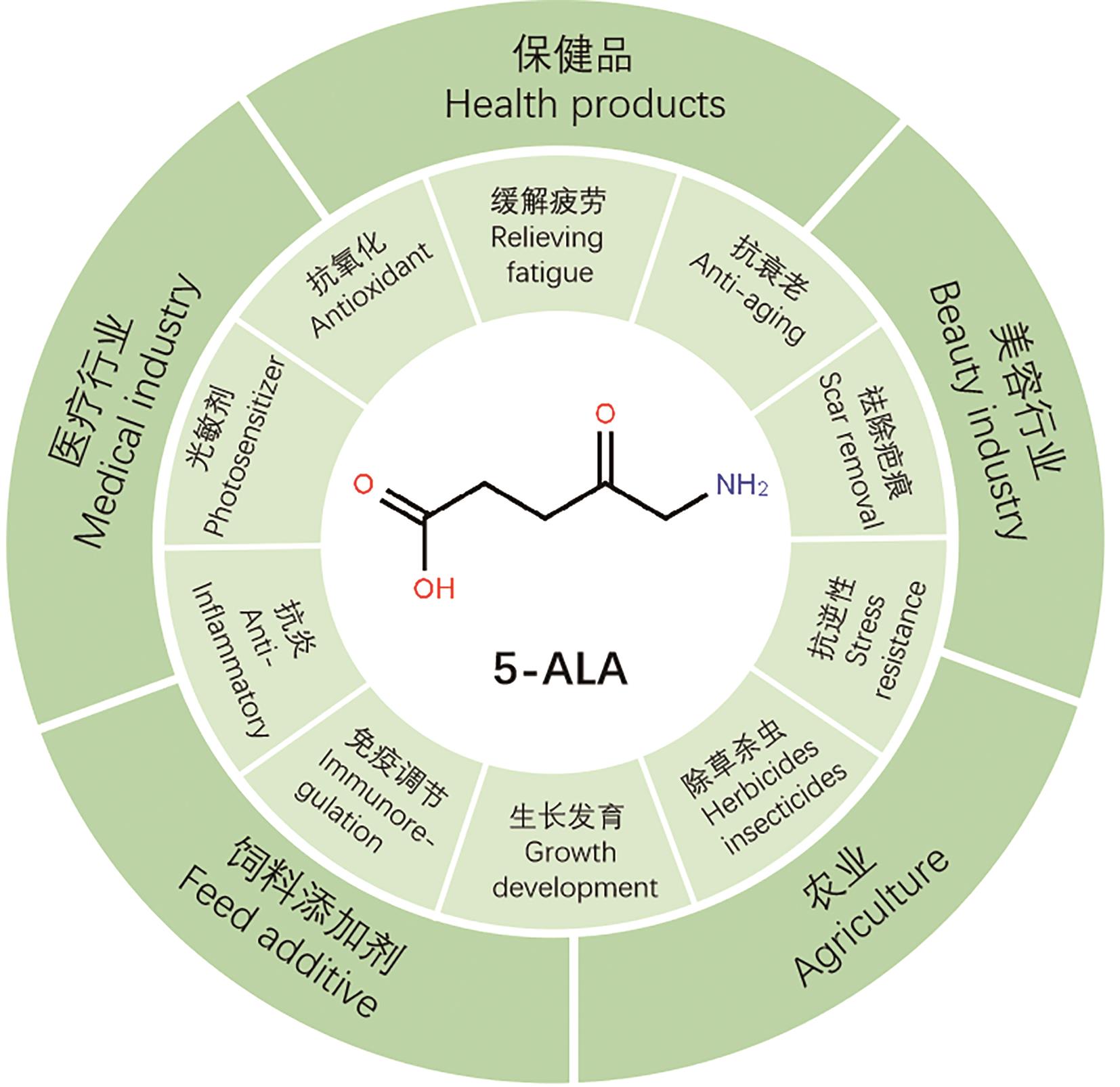
Fig. 1 Functions and applications of 5-ALA
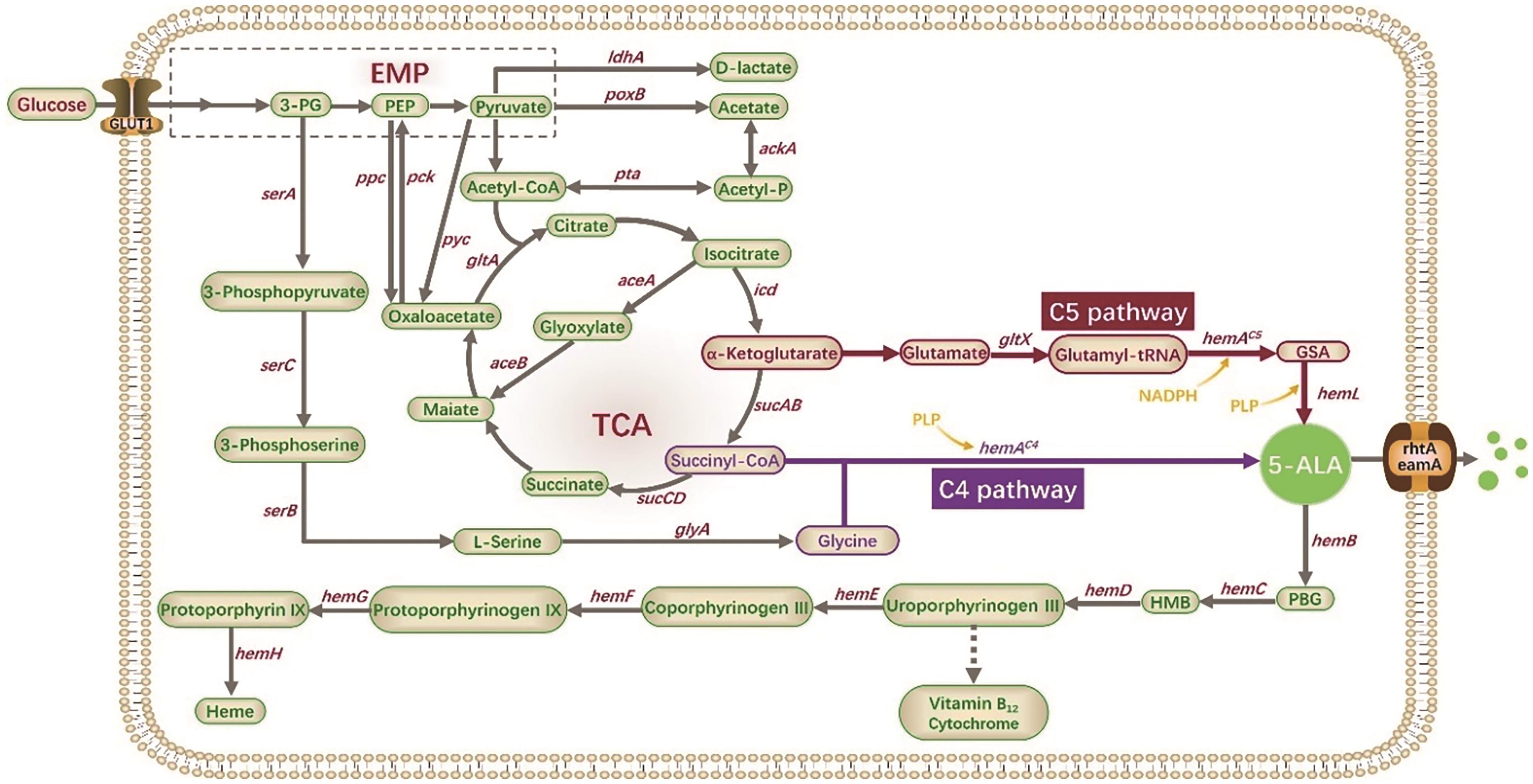
Fig. 2 Biosynthetic pathways of 5-ALA and tetrapyrrole compounds
菌株 Strain | 底物 Substrate | 策略 Strategy | 滴度 Titer (g/L) | 参考文献 Reference |
|---|---|---|---|---|
大肠杆菌 E. coli | 葡萄糖Glucose 甘油Glycerol | 过表达荚膜红细菌来源的ALAS酶并进行密码子优化,过表达伴侣蛋白GroELS,培养基中添加铁离子 | 15.6 | [ |
葡萄糖Glucose 谷氨酸Glutamate | 异源表达拟南芥来源的hemA基因和GluTR调节蛋白PGR7,优化宿主菌株 | 7.64 | [ | |
| 葡萄糖Glucose | 选择不同来源的C5途径关键酶并优化其表达比例,微调竞争性代谢途径,优化辅因子再生途径 | 12.1 | [ | |
大肠杆菌 E. coliB | 葡萄糖Glucose 甘氨酸Glycine | 过表达荚膜红细菌来源的ALAS酶,加强PLP补救途径 | 8.21 | [ |
葡萄糖Glucose 甘氨酸Glycine琥珀酸Succinate | 过表达球形红杆菌来源的hemA基因,过表达外排蛋白基因rhtA, 过表达pdxK和pdxY基因以增加辅因子PLP的再生,引入伴侣蛋白DnaK和GroELS | 7.47 | [ | |
| 葡萄糖Glucose | 过表达ALAS酶,过表达过氧化氢酶CAT和超氧化物歧化酶SOD以增强抗氧化系统 | 11.5 | [ | |
葡萄糖Glucose 磷酸吡哆醛PLP 泛酸PA | 进化分析筛选新的ALAS酶,识别并修改4个关键靶标,开发动态控制系统以平衡氧化还原稳态和碳通量,协同优化辅因子 | 63.39 | [ | |
| 葡萄糖Glucose | 过表达hemARS 基因,基于RGMS技术的eamA基因定向进化,过表达sodB和katE基因提高抗氧化性,减弱hemB基因的表达 | 19.02 | [ | |
葡萄糖Glucose 甘氨酸Glycine | 建立5-ALA响应生物传感器,筛选HemA酶和菌株突变体,加强5-ALA外排,抑制下游基因表达,提高前体和辅因子供应 | 58.54 | [ | |
谷氨酸棒状杆菌 C. glutamicum | 葡萄糖Glucose | 过表达荚膜红细菌来源的hemA基因,过表达外排蛋白基因rhtA,敲除sucCD基因,采用“生长-产酸”两阶段发酵模式 | 14.7 | [ |
| 葡萄糖Glucose | RBS工程优化RphemA基因的表达,敲除odhI和sdhA基因,用small RNA抑制hemB基因的表达,过表达外排蛋白基因eamA | 25.05 | [ | |
| 葡萄糖Glucose | 定向诱变odhI基因,增加谷氨酸供应,添加诱导剂吐温40和乙胺丁醇 | 2.9 | [ | |
葡萄糖Glucose 甘氨酸Glycine | 过表达球形红杆菌来源的ALAS酶,削弱竞争途径,过表达ppc基因和外排蛋白基因rhtA,敲除细胞壁合成相关蛋白HMW-PBP | 7.53 | [ | |
葡萄糖Glucose 木薯渣Cassava bagasse | 筛选比较不同来源的ALAS酶,RBS工程优化hemA基因和ppc基因平衡表达,利用廉价可再生原料替代葡萄糖 | 18.5 | [ | |
| 葡萄糖Glucose | 通过3种不同策略调节odhA基因表达,响应血红素浓度变化自动调节rhtA基因表达,精确调控5-ALA合成和辅因子再生关键基因 | 3.16 | [ |
Table 1 Progress in metabolic engineering for microbial synthesis of 5-ALA
菌株 Strain | 底物 Substrate | 策略 Strategy | 滴度 Titer (g/L) | 参考文献 Reference |
|---|---|---|---|---|
大肠杆菌 E. coli | 葡萄糖Glucose 甘油Glycerol | 过表达荚膜红细菌来源的ALAS酶并进行密码子优化,过表达伴侣蛋白GroELS,培养基中添加铁离子 | 15.6 | [ |
葡萄糖Glucose 谷氨酸Glutamate | 异源表达拟南芥来源的hemA基因和GluTR调节蛋白PGR7,优化宿主菌株 | 7.64 | [ | |
| 葡萄糖Glucose | 选择不同来源的C5途径关键酶并优化其表达比例,微调竞争性代谢途径,优化辅因子再生途径 | 12.1 | [ | |
大肠杆菌 E. coliB | 葡萄糖Glucose 甘氨酸Glycine | 过表达荚膜红细菌来源的ALAS酶,加强PLP补救途径 | 8.21 | [ |
葡萄糖Glucose 甘氨酸Glycine琥珀酸Succinate | 过表达球形红杆菌来源的hemA基因,过表达外排蛋白基因rhtA, 过表达pdxK和pdxY基因以增加辅因子PLP的再生,引入伴侣蛋白DnaK和GroELS | 7.47 | [ | |
| 葡萄糖Glucose | 过表达ALAS酶,过表达过氧化氢酶CAT和超氧化物歧化酶SOD以增强抗氧化系统 | 11.5 | [ | |
葡萄糖Glucose 磷酸吡哆醛PLP 泛酸PA | 进化分析筛选新的ALAS酶,识别并修改4个关键靶标,开发动态控制系统以平衡氧化还原稳态和碳通量,协同优化辅因子 | 63.39 | [ | |
| 葡萄糖Glucose | 过表达hemARS 基因,基于RGMS技术的eamA基因定向进化,过表达sodB和katE基因提高抗氧化性,减弱hemB基因的表达 | 19.02 | [ | |
葡萄糖Glucose 甘氨酸Glycine | 建立5-ALA响应生物传感器,筛选HemA酶和菌株突变体,加强5-ALA外排,抑制下游基因表达,提高前体和辅因子供应 | 58.54 | [ | |
谷氨酸棒状杆菌 C. glutamicum | 葡萄糖Glucose | 过表达荚膜红细菌来源的hemA基因,过表达外排蛋白基因rhtA,敲除sucCD基因,采用“生长-产酸”两阶段发酵模式 | 14.7 | [ |
| 葡萄糖Glucose | RBS工程优化RphemA基因的表达,敲除odhI和sdhA基因,用small RNA抑制hemB基因的表达,过表达外排蛋白基因eamA | 25.05 | [ | |
| 葡萄糖Glucose | 定向诱变odhI基因,增加谷氨酸供应,添加诱导剂吐温40和乙胺丁醇 | 2.9 | [ | |
葡萄糖Glucose 甘氨酸Glycine | 过表达球形红杆菌来源的ALAS酶,削弱竞争途径,过表达ppc基因和外排蛋白基因rhtA,敲除细胞壁合成相关蛋白HMW-PBP | 7.53 | [ | |
葡萄糖Glucose 木薯渣Cassava bagasse | 筛选比较不同来源的ALAS酶,RBS工程优化hemA基因和ppc基因平衡表达,利用廉价可再生原料替代葡萄糖 | 18.5 | [ | |
| 葡萄糖Glucose | 通过3种不同策略调节odhA基因表达,响应血红素浓度变化自动调节rhtA基因表达,精确调控5-ALA合成和辅因子再生关键基因 | 3.16 | [ |
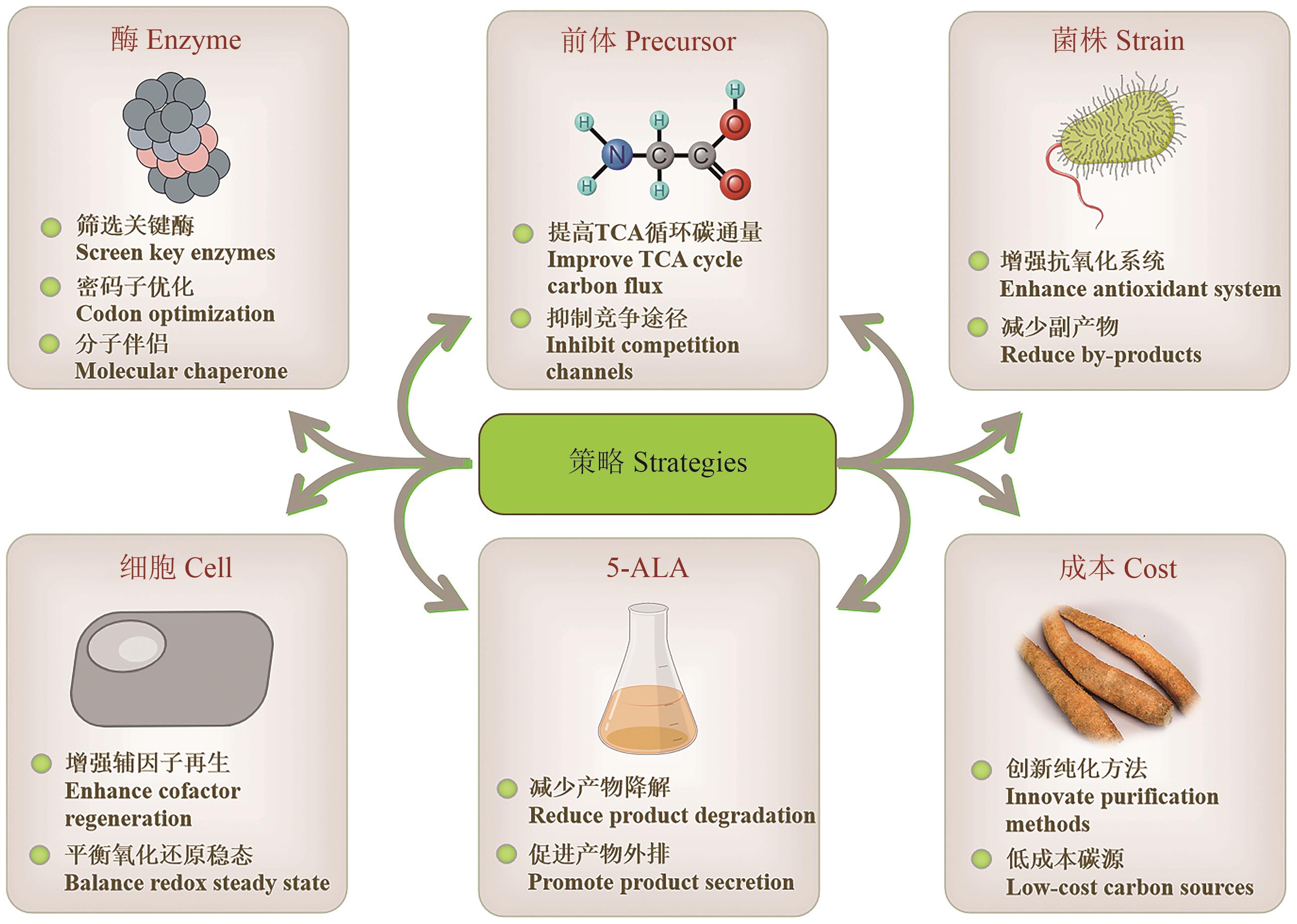
Fig. 3 Metabolic engineering strategies for 5-ALA biosynthesis
| [1] | Kang Z, Zhang JL, Zhou JW, et al. Recent advances in microbial production of δ-aminolevulinic acid and vitamin B12 [J]. Biotechnol Adv, 2012, 30(6): 1533-1542. |
| [2] | Yi YC, Shih IT, Yu TH, et al. Challenges and opportunities of bioprocessing 5-aminolevulinic acid using genetic and metabolic engineering: a critical review [J]. Bioresour Bioprocess, 2021, 8(1): 100. |
| [3] | Pignatelli P, Umme S, D’Antonio DL, et al. Reactive oxygen species produced by 5-aminolevulinic acid photodynamic therapy in the treatment of cancer [J]. Int J Mol Sci, 2023, 24(10): 8964. |
| [4] | Higashikawa F, Kanno K, Ogata A, et al. Reduction of fatigue and anger-hostility by the oral administration of 5-aminolevulinic acid phosphate: a randomized, double-blind, placebo-controlled, parallel study [J]. Sci Rep, 2020, 10(1): 16004. |
| [5] | Yang LY, Deng HH, Chen YM, et al. 5-aminolevulinic acid-hyaluronic acid complexes enhance skin retention of 5-aminolevulinic acid and therapeutic efficacy in the treatment of hypertrophic scar [J]. AAPS PharmSciTech, 2022, 23(6): 216. |
| [6] | Tan SY, Cao J, Xia XL, et al. Advances in 5-aminolevulinic acid priming to enhance plant tolerance to abiotic stress [J]. Int J Mol Sci, 2022, 23(2): 702. |
| [7] | Cheng FX, Wang J, Song ZQ, et al. Nematicidal effects of 5-aminolevulinic acid on plant-parasitic nematodes [J]. J Nematol, 2017, 49(3): 295-303. |
| [8] | Hendawy AO, Khattab MS, Sugimura S, et al. Effects of 5-aminolevulinic acid as a supplement on animal performance, iron status, and immune response in farm animals: a review [J]. Animals, 2020, 10(8): 1352. |
| [9] | Chen YY, Huang JC, Wu CY, et al. A comprehensive review on the recent advances for 5-aminolevulinic acid production by the engineered bacteria [J]. Crit Rev Biotechnol, 2025, 45(1): 148-163. |
| [10] | QYResearch(恒州博智). 2025-2031全球及中国5-ALA行业研究及十五五规划分析报告 [EB]. (2025-03-19). |
| QYResearch, 2025-2031 Global and China 5-ALA Industry Research and 15th Five-Year Plan Analysis Report [EB]. (2025-03-19). | |
| [11] | Zhou HM, Zhang CY, Li ZL, et al. Systematic development of a highly efficient cell factory for 5-aminolevulinic acid production [J]. Trends Biotechnol, 2024, 42(11): 1479-1502. |
| [12] | Luo ZS, Yu SQ, Zeng WZ, et al. Comparative analysis of the chemical and biochemical synthesis of keto acids [J]. Biotechnol Adv, 2021, 47: 107706. |
| [13] | Jiang MR, Hong KQ, Mao YF, et al. Natural 5-aminolevulinic acid: sources, biosynthesis, detection and applications [J]. Front Bioeng Biotechnol, 2022, 10: 841443. |
| [14] | Kang Z, Ding WW, Gong X, et al. Recent advances in production of 5-aminolevulinic acid using biological strategies [J]. World J Microbiol Biotechnol, 2017, 33(11): 200. |
| [15] | Fu WQ, Lin JP, Cen PL. Expression of a hemA gene from Agrobacterium radiobacter in a rare codon optimizing Escherichia coli for improving 5-aminolevulinate production [J]. Appl Biochem Biotechnol, 2010, 160(2): 456-466. |
| [16] | Kang DK, Kim SS, Chi WJ, et al. Cloning and expression of the Rhodobacter capsulatus hemA gene in E. coli for the production of 5-aminolevulinic acid [J]. Journal of Microbiology and Biotechnology, 2004, 14(6): 1327-1332. |
| [17] | Shemin D, Russell CS. δ-aminolevulinic acid, its role in the biosynthesis of porphyrins and PURINES [J]. J Am Chem Soc, 1953, 75(19): 4873-4874. |
| [18] | Ge FL, Li XK, Ge QR, et al. Modular control of multiple pathways of Corynebacterium glutamicum for 5-aminolevulinic acid production [J]. AMB Express, 2021, 11(1): 179. |
| [19] | Zou YL, Chen T, Feng LL, et al. Enhancement of 5-aminolevulinic acid production by metabolic engineering of the Glycine biosynthesis pathway in Corynebacterium glutamicum [J]. Biotechnol Lett, 2017, 39(9): 1369-1374. |
| [20] | Yang P, Liu WJ, Cheng XL, et al. A new strategy for production of 5-aminolevulinic acid in recombinant Corynebacterium glutamicum with high yield [J]. Appl Environ Microbiol, 2016, 82(9): 2709-2717. |
| [21] | Sasaki K, Watanabe M, Tanaka T, et al. Biosynthesis, biotechnological production and applications of 5-aminolevulinic acid [J]. Appl Microbiol Biotechnol, 2002, 58(1): 23-29. |
| [22] | Liu SL, Zhang GM, Li XK, et al. Microbial production and applications of 5-aminolevulinic acid [J]. Appl Microbiol Biotechnol, 2014, 98(17): 7349-7357. |
| [23] | Stojanovski BM, Hunter GA, Jahn M, et al. Unstable reaction intermediates and hysteresis during the catalytic cycle of 5-aminolevulinate synthase implications from using pseudo and alternate substrates and a promiscuous enzyme variant [J]. J Biol Chem, 2014, 289(33): 22915-22925. |
| [24] | Beale SI. The biosynthesis of delta-aminolevulinic acid in Chlorella [J]. Plant Physiol, 1970, 45(4): 504-506. |
| [25] | Schneegurt MA, Beale SI. Characterization of the RNA required for biosynthesis of δ-aminolevulinic acid from glutamate [J]. Plant Physiol, 1988, 86(2): 497-504. |
| [26] | Li JM, Russell CS, Cosloy SD. Cloning and structure of the hemA gene of Escherichia coli K-12 [J]. Gene, 1989, 82(2): 209-217. |
| [27] | Schauer S, Chaturvedi S, Randau L, et al. Escherichia coli Glutamyl-tRNA Reductase trapping the thioester intermediate [J]. J Biol Chem, 2002, 277(50): 48657-48663. |
| [28] | Jahn D, Verkamp E, Söll D. Glutamyl-transfer RNA: a precursor of heme and chlorophyll biosynthesis [J]. Trends Biochem Sci, 1992, 17(6): 215-218. |
| [29] | Zhang JL, Kang Z, Chen J, et al. Optimization of the heme biosynthesis pathway for the production of 5-aminolevulinic acid in Escherichia coli [J]. Sci Rep, 2015, 5: 8584. |
| [30] | Weinstein JD, Beale SI. Separate physiological roles and subcellular compartments for two tetrapyrrole biosynthetic pathways in Euglena gracilis [J]. J Biol Chem, 1983, 258(11): 6799-6807. |
| [31] | Pedró-Rosa L, Buckner FS, Ranade RM, et al. Identification of potent inhibitors of the Trypanosoma brucei methionyl-tRNA synthetase via high-throughput orthogonal screening [J]. SLAS Discov, 2015, 20(1): 122-130. |
| [32] | Ge JZ, Wang XL, Bai YG, et al. Engineering Escherichia coli for efficient assembly of heme proteins [J]. Microb Cell Fact, 2023, 22(1): 59. |
| [33] | Lüer C, Schauer S, Möbius K, et al. Complex formation between glutamyl-tRNA reductase and glutamate-1-semialdehyde 2, 1-aminomutase in Escherichia coli during the initial reactions of porphyrin biosynthesis [J]. J Biol Chem, 2005, 280(19): 18568-18572. |
| [34] | Wang P, Liang FC, Wittmann D, et al. Chloroplast SRP43 acts as a chaperone for glutamyl-tRNA reductase, the rate-limiting enzyme in tetrapyrrole biosynthesis [J]. Proc Natl Acad Sci USA, 2018, 115(15): E3588-E3596. |
| [35] | Chen HX, Jiang P. Metabolic engineering of Escherichia coli for efficient biosynthesis of fluorescent phycobiliprotein [J]. Microb Cell Fact, 2019, 18(1): 58. |
| [36] | Choby JE, Skaar EP. Heme synthesis and acquisition in bacterial pathogens [J]. J Mol Biol, 2016, 428(17): 3408-3428. |
| [37] | Sasaki K, Ikeda S, Nishizawa Y, et al. Production of 5-aminolevulinic acid by photosynthetic bacteria [J]. J Ferment Technol, 1987, 65(5): 511-515. |
| [38] | Nishikawa S, Watanabe K, Tanaka T, et al. Rhodobacter sphaeroides mutants which accumulate 5-aminolevulinic acid under aerobic and dark conditions [J]. J Biosci Bioeng, 1999, 87(6): 798-804. |
| [39] | Yu TH, Tan SI, Yi YC, et al. New insight into the codon usage and medium optimization toward stable and high-level 5-aminolevulinic acid production in Escherichia coli [J]. Biochem Eng J, 2022, 177: 108259. |
| [40] | Zhao AG, Zhai MZ. Production of 5-aminolevulinic acid from glutamate by overexpressing HemA1 and pgr7 from Arabidopsis thaliana in Escherichia coli [J]. World J Microbiol Biotechnol, 2019, 35(11): 175. |
| [41] | Luo ZS, Pan F, Zhu YF, et al. Synergistic improvement of 5-aminolevulinic acid production with synthetic scaffolds and system pathway engineering [J]. ACS Synth Biol, 2022, 11(8): 2766-2778. |
| [42] | Xue CF, Yu TH, Ng IS. Engineering pyridoxal kinase Pd x Y-integrated Escherichia coli strain and optimization for high-level 5-aminolevulinic acid production [J]. J Taiwan Inst Chem Eng, 2021, 120: 49-58. |
| [43] | Shih IT, Yi YC, Ng IS. Plasmid-free system and modular design for efficient 5-aminolevulinic acid production by engineered Escherichia coli [J]. Appl Biochem Biotechnol, 2021, 193(9): 2858-2871. |
| [44] | Zhu CC, Chen JZ, Wang Y, et al. Enhancing 5-aminolevulinic acid tolerance and production by engineering the antioxidant defense system of Escherichia coli [J]. Biotechnol Bioeng, 2019, 116(8): 2018-2028. |
| [45] | Yang YT, Zou YH, Chen X, et al. Metabolic engineering of Escherichia coli for the production of 5-aminolevulinic acid based on combined metabolic pathway modification and reporter-guided mutant selection (RGMS) [J]. Biotechnol Biofuels Bioprod, 2024, 17(1): 82. |
| [46] | Wang Q, Jia MJ, Li HJ, et al. Design of a genetically encoded biosensor for high-throughput screening and engineering 5-aminolevulinic acid hyper-producing Escherichia coli [J]. ACS Sustainable Chem Eng, 2024, 12(12): 4846-4857. |
| [47] | 王丽君, 闫思翰, 杨套伟, 等. 代谢改造重组谷氨酸棒杆菌C4途径高效合成5-氨基乙酰丙酸 [J]. 生物工程学报, 2021, 37(12): 4314-4328. |
| Wang LJ, Yan SH, Yang TW, et al. Engineering the C4 pathway of Corynebacterium glutamicum for efficient production of 5-aminolevulinic acid [J]. Chin J Biotech, 2021, 37(12): 4314-4328. | |
| [48] | Ko YJ, You SK, Kim M, et al. Enhanced production of 5-aminolevulinic acid via flux redistribution of TCA cycle toward l-glutamate in Corynebacterium glutamicum [J]. Biotechnol Bioprocess Eng, 2019, 24(6): 915-923. |
| [49] | Feng LL, Zhang Y, Fu J, et al. Metabolic engineering of Corynebacterium glutamicum for efficient production of 5-aminolevulinic acid [J]. Biotechnol Bioeng, 2016, 113(6): 1284-1293. |
| [50] | Chen JZ, Wang Y, Guo X, et al. Efficient bioproduction of 5-aminolevulinic acid, a promising biostimulant and nutrient, from renewable bioresources by engineered Corynebacterium glutamicum [J]. Biotechnol Biofuels, 2020, 13: 41. |
| [51] | Zhang CL, Li YJ, Zhu FZ, et al. Metabolic engineering of an auto-regulated Corynebacterium glutamicum chassis for biosynthesis of 5-aminolevulinic acid [J]. Bioresour Technol, 2020, 318: 124064. |
| [52] | Guo YY, Zhao HL, Lin ZB, et al. Heme in cardiovascular diseases: a ubiquitous dangerous molecule worthy of vigilance [J]. Front Cell Dev Biol, 2022, 9: 781839. |
| [53] | van der Werf MJ, Zeikus JG. 5-Aminolevulinate production by Escherichia coli containing the Rhodobacter sphaeroides hemA gene [J]. Appl Environ Microbiol, 1996, 62(10): 3560-3566. |
| [54] | Choi HP, Hong JW, Rhee KH, et al. Cloning, expression, and characterization of 5-aminolevulinic acid synthase from Rhodopseudomonas palustris KUGB306 [J]. FEMS Microbiol Lett, 2004, 236(2): 175-181. |
| [55] | Lou JW, Zhu L, Wu MB, et al. High-level soluble expression of the hemA gene from Rhodobacter capsulatus and comparative study of its enzymatic properties [J]. J Zhejiang Univ Sci B, 2014, 15(5): 491-499. |
| [56] | Wang WQ, Xiang YL, Yin GB, et al. Construction of 5-aminolevulinic acid microbial cell factories through identification of novel synthases and metabolic pathway screens and transporters [J]. J Agric Food Chem, 2024, 72(14): 8006-8017. |
| [57] | He GM, Jiang MR, Cui ZZ, et al. Construction of 5-aminolevulinic acid synthase variants by cysteine-targeted mutation to release heme inhibition [J]. J Biosci Bioeng, 2022, 134(5): 416-423. |
| [58] | Kim A, Stewart JD. Exploring the structure-function relationships in a 5-aminolevulinic acid synthase and the use of protein engineering to expand its substrate range [J]. Biochemistry, 2025, 64(1): 238-249. |
| [59] | Du S, Zheng N, Zhang ZH, et al. Rational design engineering of 5-aminolevulinate synthase with activity and stability enhancement [J]. J Agric Food Chem, 2025, 73(3): 1892-1901. |
| [60] | Yu TH, Yi YC, Shih IT, et al. Enhanced 5-aminolevulinic acid production by co-expression of codon-optimized hemA gene with chaperone in genetic engineered Escherichia coli [J]. Appl Biochem Biotechnol, 2020, 191(1): 299-312. |
| [61] | Miscevic D, Mao JY, Kefale T, et al. Strain engineering for high-level 5-aminolevulinic acid production in Escherichia coli [J]. Biotechnol Bioeng, 2021, 118(1): 30-42. |
| [62] | Ren J, Zhou LB, Wang C, et al. An unnatural pathway for efficient 5-aminolevulinic acid biosynthesis with Glycine from glyoxylate based on retrobiosynthetic design [J]. ACS Synth Biol, 2018, 7(12): 2750-2757. |
| [63] | Zhu ZW, Fu B, Lu JJ, et al. Engineered production of 5-aminolevulinic acid in recombinant Escherichia coli BL21 [J]. Prep Biochem Biotechnol, 2025, 55(4): 446-456. |
| [64] | Cui ZY, Jiang ZN, Zhang JH, et al. Stable and efficient biosynthesis of 5-aminolevulinic acid using plasmid-free Escherichia coli [J]. J Agric Food Chem, 2019, 67(5): 1478-1483. |
| [65] | Ramzi AB, Hyeon JE, Kim SW, et al. 5-Aminolevulinic acid production in engineered Corynebacterium glutamicum via C5 biosynthesis pathway [J]. Enzyme Microb Technol, 2015, 81: 1-7. |
| [66] | Zhang B, Ye BC. Pathway engineering in Corynebacterium glutamicum S9114 for 5-aminolevulinic acid production [J]. 3 Biotech, 2018, 8(5): 247. |
| [67] | Man ZW, Xu MJ, Rao ZM, et al. Systems pathway engineering of Corynebacterium crenatum for improved L-arginine production [J]. Sci Rep, 2016, 6: 28629. |
| [68] | Wen JB, Bao J. Engineering Corynebacterium glutamicum triggers glutamic acid accumulation in biotin-rich corn stover hydrolysate [J]. Biotechnol Biofuels, 2019, 12: 86. |
| [69] | Noh MH, Lim HG, Park S, et al. Precise flux redistribution to glyoxylate cycle for 5-aminolevulinic acid production in Escherichia coli [J]. Metab Eng, 2017, 43: 1-8. |
| [70] | Zhang JL, Weng HJ, Zhou ZX, et al. Engineering of multiple modular pathways for high-yield production of 5-aminolevulinic acid in Escherichia coli [J]. Bioresour Technol, 2019, 274: 353-360. |
| [71] | Yi Y-C, Xue CF, Ng IS. Low-carbon-footprint production of high-end 5-aminolevulinic acid via integrative strain engineering and RuBisCo-equipped Escherichia coli [J]. ACS Sustainable Chem Eng, 2021, 9(46): 15623-15633. |
| [72] | Lin H, San KY, Bennett GN. Effect of Sorghum vulgare phosphoenolpyruvate carboxylase and Lactococcus lactis pyruvate carboxylase coexpression on succinate production in mutant strains of Escherichia coli [J]. Appl Microbiol Biotechnol, 2005, 67(4): 515-523. |
| [73] | Buch AD, Archana G, Kumar GN. Enhanced citric acid biosynthesis in Pseudomonas fluorescens ATCC 13525 by overexpression of the Escherichia coli citrate synthase gene [J]. Microbiology, 2009, 155(Pt 8): 2620-2629. |
| [74] | Lai PH, Ng IS. Accelerated 5-aminolevulinic acid biosynthesis by coupling aconitase and ALA synthase in engineered Escherichia coli [J]. Biochem Eng J, 2024, 209: 109419. |
| [75] | Effendi SSW, Ng IS. Non-native pathway engineering with CRISPRi for carbon dioxide assimilation and valued 5-aminolevulinic acid synthesis in Escherichia coli nissle [J]. ACS Synth Biol, 2024, 13(7): 2038-2044. |
| [76] | Ding WW, Weng HJ, Du GC, et al. 5-Aminolevulinic acid production from inexpensive glucose by engineering the C4 pathway in Escherichia coli [J]. J Ind Microbiol Biotechnol, 2017, 44(8): 1127-1135. |
| [77] | Ge FL, Wen DM, Ren Y, et al. Downregulating of hemB via synthetic antisense RNAs for improving 5-aminolevulinic acid production in Escherichia coli [J]. 3 Biotech, 2021, 11(5): 230. |
| [78] | Yu XL, Jin HY, Liu WJ, et al. Engineering Corynebacterium glutamicum to produce 5-aminolevulinic acid from glucose [J]. Microb Cell Fact, 2015, 14: 183. |
| [79] | Su TY, Guo Q, Zheng Y, et al. Fine-tuning of hemB using CRISPRi for increasing 5-aminolevulinic acid production in Escherichia coli [J]. Front Microbiol, 2019, 10: 1731. |
| [80] | Zhang J, Wang ZG, Su TY, et al. Tuning the binding affinity of heme-responsive biosensor for precise and dynamic pathway regulation [J]. iScience, 2020, 23(5): 101067. |
| [81] | Yu XL, Jin HY, Cheng XL, et al. Transcriptomic analysis for elucidating the physiological effects of 5-aminolevulinic acid accumulation on Corynebacterium glutamicum [J]. Microbiol Res, 2016, 192: 292-299. |
| [82] | Elfsson B, Wallin I, Eksborg S, et al. Stability of 5-aminolevulinic acid in aqueous solution [J]. Eur J Pharm Sci, 1999, 7(2): 87-91. |
| [83] | Hunter GA, Rivera E, Ferreira GC. Supraphysiological concentrations of 5-aminolevulinic acid dimerize in solution to produce superoxide radical anions via a protonated dihydropyrazine intermediate [J]. Arch Biochem Biophys, 2005, 437(2): 128-137. |
| [84] | Bechara EJH, Dutra F, Cardoso VES, et al. The dual face of endogenous α-aminoketones: pro-oxidizing metabolic weapons [J]. Comp Biochem Physiol Part C Toxicol Pharmacol, 2007, 146(1-2): 88-110. |
| [85] | Wu J, Wu J, He RL, et al. Modularized engineering of Shewanella oneidensis MR-1 for efficient and directional synthesis of 5-aminolevulinic acid [J]. Metab Eng, 2024, 83: 206-215. |
| [86] | Pu W, Chen JZ, Zhou YY, et al. Systems metabolic engineering of Escherichia coli for hyper-production of 5-aminolevulinic acid [J]. Biotechnol Biofuels Bioprod, 2023, 16(1): 31. |
| [87] | Park SY, Yang D, Ha SH, et al. Metabolic engineering of microorganisms for the production of natural compounds [J]. Adv Biosys, 2018, 2(1): 1700190. |
| [88] | Xu P, Li LY, Zhang FM, et al. Improving fatty acids production by engineering dynamic pathway regulation and metabolic control [J]. Proc Natl Acad Sci USA, 2014, 111(31): 11299-11304. |
| [89] | Tan SI, You SC, Shih IT, et al. Quantification, regulation and production of 5-aminolevulinic acid by green fluorescent protein in recombinant Escherichia coli [J]. J Biosci Bioeng, 2020, 129(4): 387-394. |
| [90] | Su HF, Chen SJ, Chen XL, et al. Utilizing a high-throughput visualization screening technology to develop a genetically encoded biosensor for monitoring 5-aminolevulinic acid production in engineered Escherichia coli [J]. Biosens Bioelectron, 2025, 267: 116806. |
| [91] | 陈久洲, 王钰, 蒲伟, 等. 5-氨基乙酰丙酸生物合成技术的发展及展望 [J]. 合成生物学, 2021, 2(6): 1000-1016. |
| Chen JZ, Wang Y, Pu W, et al. Development and prospects of 5-aminolevulinic acid biosynthesis technology [J]. Synthetic Biology, 2021, 2(6): 1000-1016. |
| [1] | LIU Yu-shi, LI Zhen, ZOU Yu-chen, TANG Wei-wei, LI Bin. Advances in Spatial Metabolomics in Medicinal Plants [J]. Biotechnology Bulletin, 2025, 41(9): 22-31. |
| [2] | WANG Bin, LIN Chong, YUAN Xiao, JIANG Yuan-yuan, WANG Yu-kun, XIAO Yan-hui. Cloning of bHLH Transcription Factor UNE10 and Its Regulatory Roles in the Biosynthesis of Volatile Compounds in Clove Basil [J]. Biotechnology Bulletin, 2025, 41(9): 207-218. |
| [3] | LI Jia-yi, LI Jin-yi, BAI Xue, BAI Ying-guo, LIU Bo, ZHANG Zhi-wei. Enhancing 5-Aminolevulinic Acid Biosynthesis through Tandem Rare Codon-mediated Attenuation of HemB Expression [J]. Biotechnology Bulletin, 2025, 41(8): 74-81. |
| [4] | CAI Ru-feng, YANG Yu-xuan, YU Ji-zheng, LI Jia-nan. Artificial Intelligence Transforms Protein Engineering: From Structural Analysis to Synthetic Biology through Algorithmic Advancements [J]. Biotechnology Bulletin, 2025, 41(8): 1-10. |
| [5] | HUANG Xu-sheng, ZHOU Ya-li, CHAI Xu-dong, WEN Jing, WANG Ji-ping, JIA Xiao-yun, LI Run-zhi. Cloning of Plastidial PfLPAT1B Gene from Perilla frutescens and Its Functional Analysis in Oil Biosynthesis [J]. Biotechnology Bulletin, 2025, 41(7): 226-236. |
| [6] | GAO Jing, CHENG Yi-cun, GAO Ming, ZHAO Yun-xiao, WANG Yang-dong. Regulation of Plant Tannin Synthesis and Mechanisms of Its Responses to Environment [J]. Biotechnology Bulletin, 2025, 41(7): 49-59. |
| [7] | WU Ya, YAO Run, YANG Han-ting, LIU Wei, YANG Shuai, SONG Chi, CHEN Shi-lin. Genome-wide Identification and Expression Analysis of SDR Gene Family in Mentha suaveolens ‘Variegata’ [J]. Biotechnology Bulletin, 2025, 41(5): 175-185. |
| [8] | LU Tian-yi, LI Ai-peng, FEI Qiang. Research Progress in the Biosynthesis of Polylactic Acid [J]. Biotechnology Bulletin, 2025, 41(4): 47-60. |
| [9] | LI Xiao-ming, SHANG Xiu-hua, WANG You-shuang, WU Zhi-hua. Research Progress in Benzoxazinoids in Plants [J]. Biotechnology Bulletin, 2025, 41(4): 9-20. |
| [10] | ZHANG Ji-jiao, WANG Hui-ying, FANG Huan, ZHANG Da-wei. A Decade Review and Technological Advances in the Field of Vitamin B 12 Biosysthesis [J]. Biotechnology Bulletin, 2025, 41(11): 62-74. |
| [11] | XU Xin-xin, LI Yan-jun, ZHANG Wei, HUANG Huo-qing, LUO Hui-ying, YAO Bin. Artificial Starch Biosynthesis Technology: Progress, Challenges, and Prospects [J]. Biotechnology Bulletin, 2025, 41(11): 22-27. |
| [12] | WEI Min-hua, LI Xiao-tong, JIANG Ya-wen, ZHOU Piao-piao, WANG Kai, SUN Hao, LU Nan, ZHANG Cheng-lin. Systems Metabolic Engineering for Highly Efficient L-isoleucine Production in Escherichia coli [J]. Biotechnology Bulletin, 2025, 41(11): 110-120. |
| [13] | YANG Yi-chen, ZHU Hong-yu, SU Xiao-yun, WANG Yuan, LUO Hui-ying, TIAN Jian, YAO Bin, HUANG Huo-qing, ZHANG Jie. Construction of an Efficient Microbial Cell Factory for Inositol Production from Glucose-fructose Syrup [J]. Biotechnology Bulletin, 2025, 41(11): 121-133. |
| [14] | JI Meng-ran, ZHANG Rui-ying, LIU Hong-dan, FENG Wei-meng, LIU Xiu-yu, MA Rui, CHEN Sui-qing. Combined Metabolome and Transcriptome Analysis of the Differences in Terpenoids between New and Old Leaves of Artemisia argyi H. Lév. & Vaniot [J]. Biotechnology Bulletin, 2025, 41(10): 277-291. |
| [15] | RAO Jun, ZHAO Chen, LI Duan-hua, LIAO Hao, HUANG Jia-yu, WANG Lu. Application of Auto-induction Strategy in Ergothioneine Biosynthesis [J]. Biotechnology Bulletin, 2025, 41(1): 333-346. |
| Viewed | ||||||
|
Full text |
|
|||||
|
Abstract |
|
|||||
