






Biotechnology Bulletin ›› 2026, Vol. 42 ›› Issue (11): 174-185.doi: 10.13560/j.cnki.biotech.bull.1985.2026-0040
ZHANG Yu-jing1,2, CHEN Chen3, GOU Ning-ning4, JIANG Nan1( ), WUYUN Ta-na1()
Received:2026-01-12
Online:2026-11-26
Published:2026-11-03
Contact:
JIANG Nan, WUYUN Ta-na
E-mail:jiangnan@caf.ac.cn;tanatanan@163.com
ZHANG Yu-jing, CHEN Chen, GOU Ning-ning, JIANG Nan, WUYUN Ta-na. ABA Response Characteristics and the Regulatory Network of SPLs during Prunus armeniaca Fruit Ripening[J]. Biotechnology Bulletin, 2026, 42(11): 174-185.
物种 Species | 基因 Gene | 功能 Function | 拟南芥同源基因 Arabidopsis ortholog gene | 杏同源基因 Apricot ortholog gene |
|---|---|---|---|---|
| 香蕉 Musa acuminata | MaSPL1 | 果实成熟 | AtSPL3/4/5 | PaSPL11/12 |
| MaSPL16 | 果实成熟 | AtSPL13 | PaSPL4/9 | |
| 蓝莓 Vaccinium spp. | VvSPL2 | 果实成熟 | AtSPL2/10/11 | PaSPL5 |
| 苹果 Malus domestica | MdSPL6 | 株型 | AtSPL6 | PaSPL6 |
| MdSPL13B | 单性结实 | AtSPL13 | PaSPL4/9 | |
| 柑橘 Citrus reticulata | CiSPL2 | 果实成熟 | AtSPL2 | PaSPL5 |
| CiSPL3 | 株型 | AtSPL3/4/5 | PaSPL11/12 | |
| CiSPL6 | 株型 | AtSPL6 | PaSPL6 |
Table 1 Function of SPL transcription factors in various plant species
物种 Species | 基因 Gene | 功能 Function | 拟南芥同源基因 Arabidopsis ortholog gene | 杏同源基因 Apricot ortholog gene |
|---|---|---|---|---|
| 香蕉 Musa acuminata | MaSPL1 | 果实成熟 | AtSPL3/4/5 | PaSPL11/12 |
| MaSPL16 | 果实成熟 | AtSPL13 | PaSPL4/9 | |
| 蓝莓 Vaccinium spp. | VvSPL2 | 果实成熟 | AtSPL2/10/11 | PaSPL5 |
| 苹果 Malus domestica | MdSPL6 | 株型 | AtSPL6 | PaSPL6 |
| MdSPL13B | 单性结实 | AtSPL13 | PaSPL4/9 | |
| 柑橘 Citrus reticulata | CiSPL2 | 果实成熟 | AtSPL2 | PaSPL5 |
| CiSPL3 | 株型 | AtSPL3/4/5 | PaSPL11/12 | |
| CiSPL6 | 株型 | AtSPL6 | PaSPL6 |
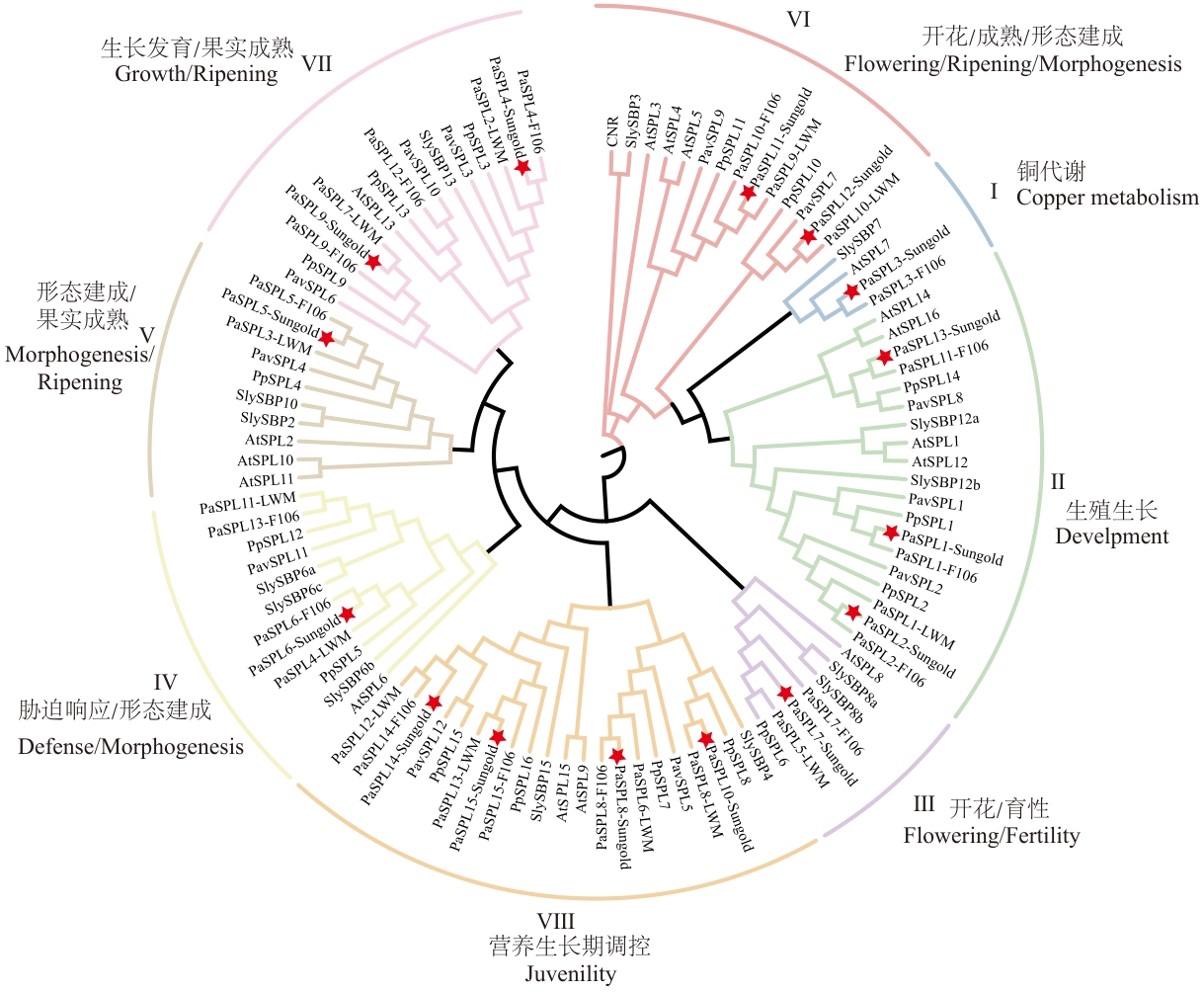
Fig. 1 Phylogenetic tree of SPL family proteins in Prunus armeniaca 'Sungold', P. sibirica 'F106', P. armeniaca × P. sibirica 'LWM', Arabidopsis thaliana, Solanum lycopersicum, P. avium and P. persica
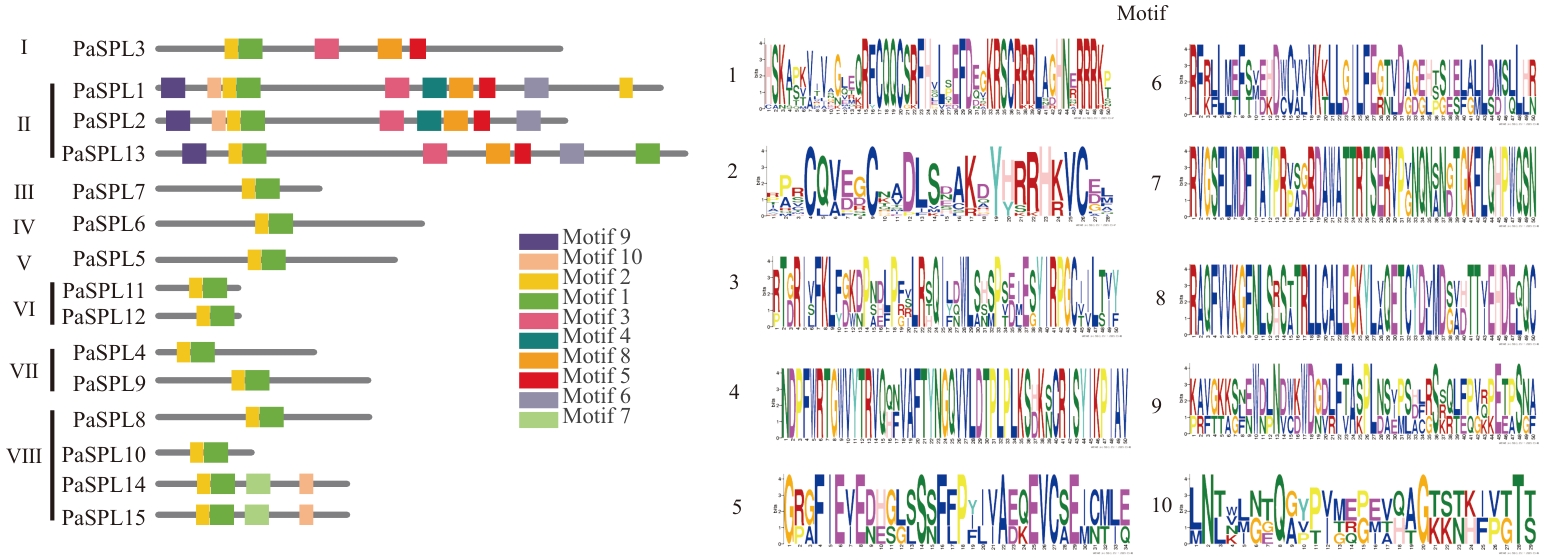
Fig. 2 Conserved motif analysis of the PaSPLs gene family in P. armeniaca
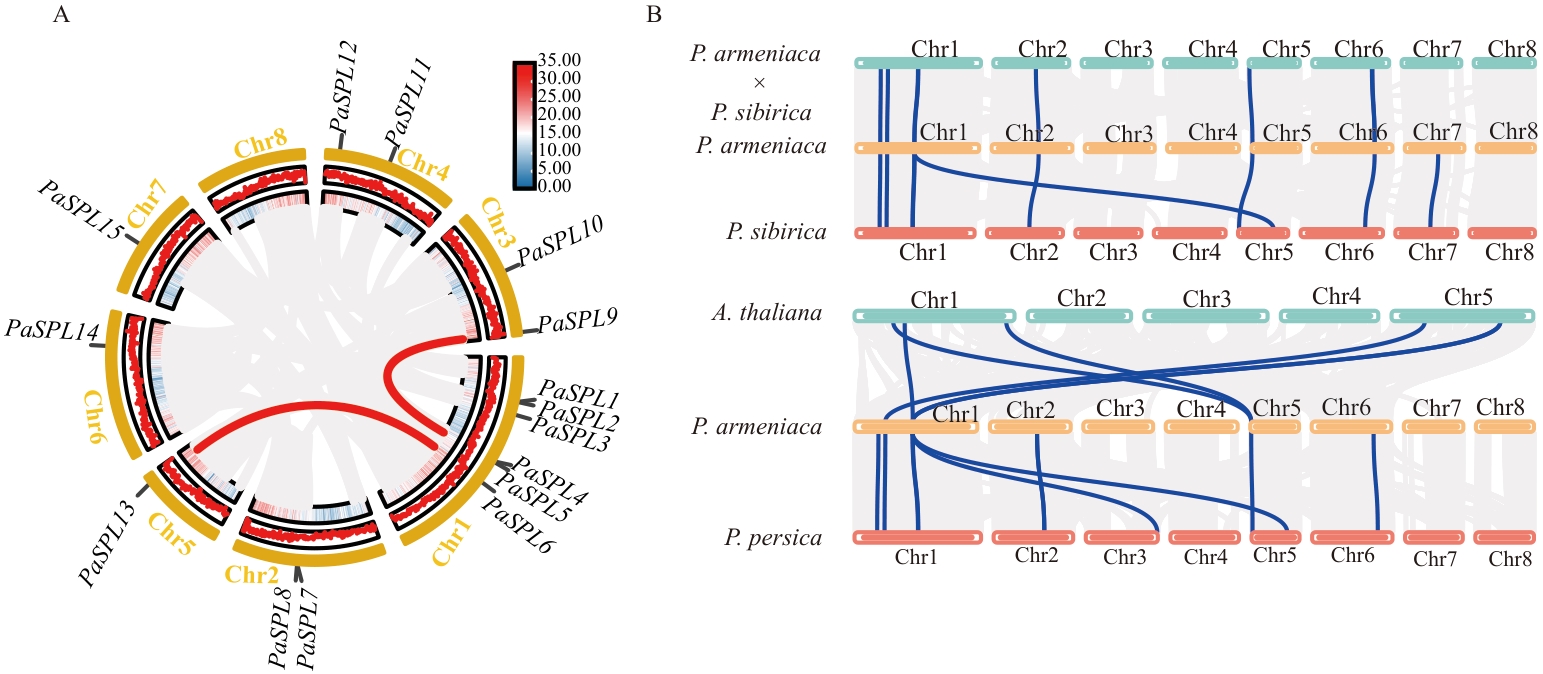
Fig. 3 Collinearity analysis of PaSPLs genes within species (A) and between species (B) in P. armeniaca
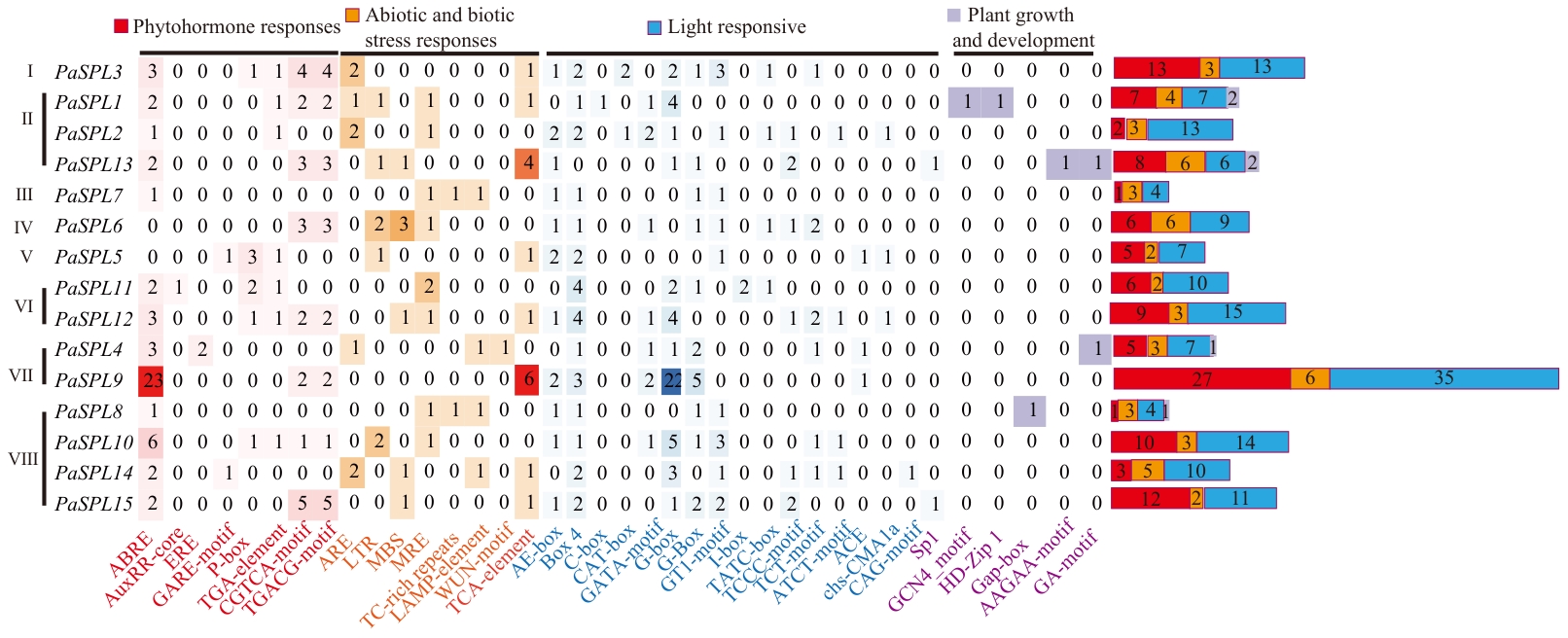
Fig. 4 Analysis of the cis-elements in the promoter region of the PaSPL gene family in P. armeniaca
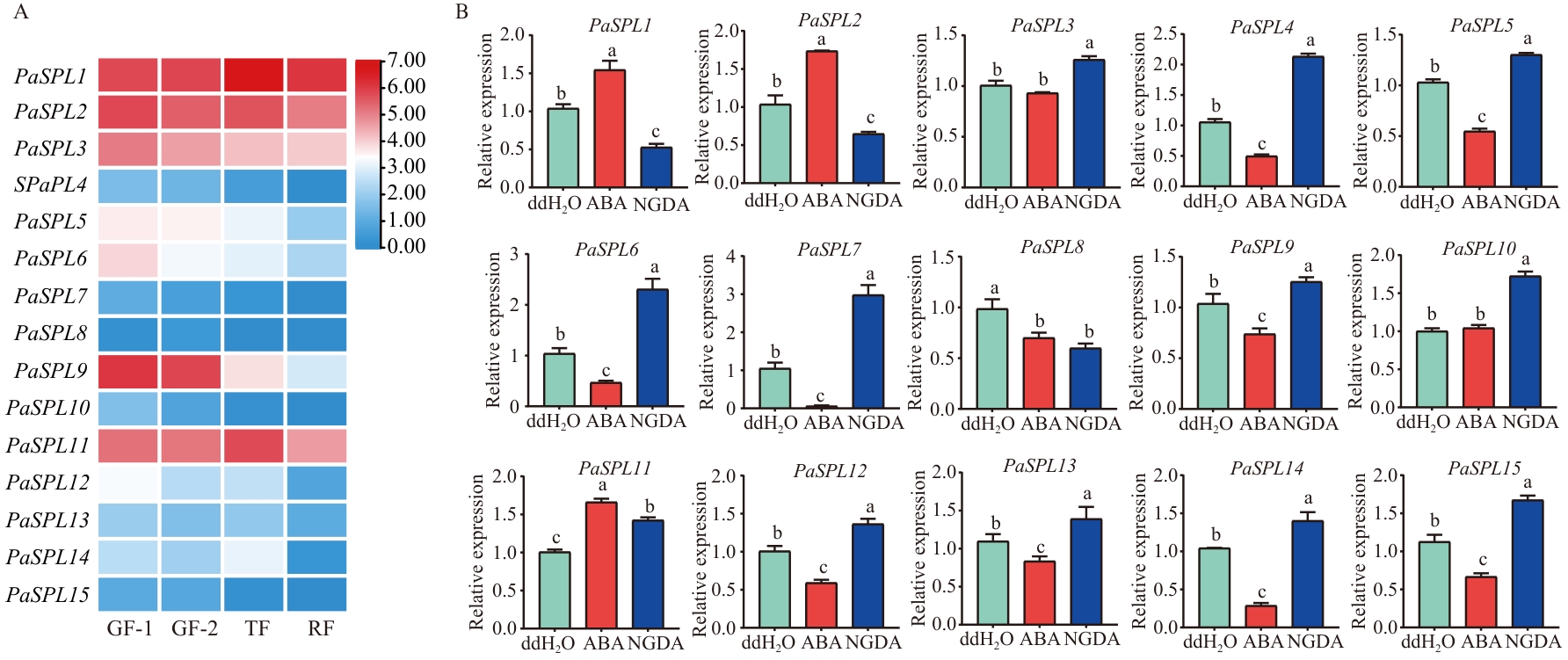
Fig. 5 Changes in the expression of PaSPLs in P. armeniaca at different developmental stages (A) and in response to exogenous ABA treatment (B)GF-1: 63 DAFB, green fruit stage-1; GF-2: 70 DAFB, green fruit stage-2; TF: 74 DAFB, turning fruit stage; RF: 84 DAFB, ripening fruit stage. Different letters indicate significant differences at 0.05 level (P < 0.05). The same below
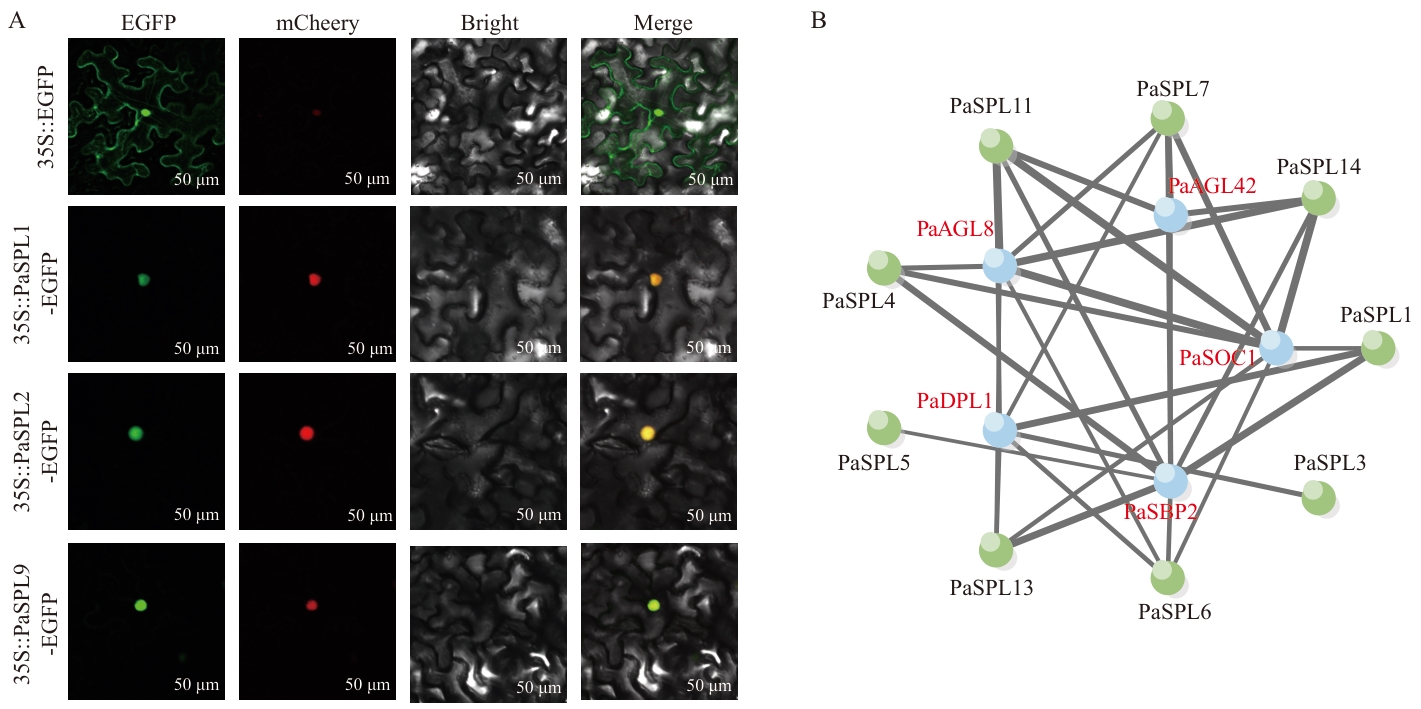
Fig. 6 Subcellular localization (A) and protein interaction analysis (B) of PaSPL in P. armeniaca
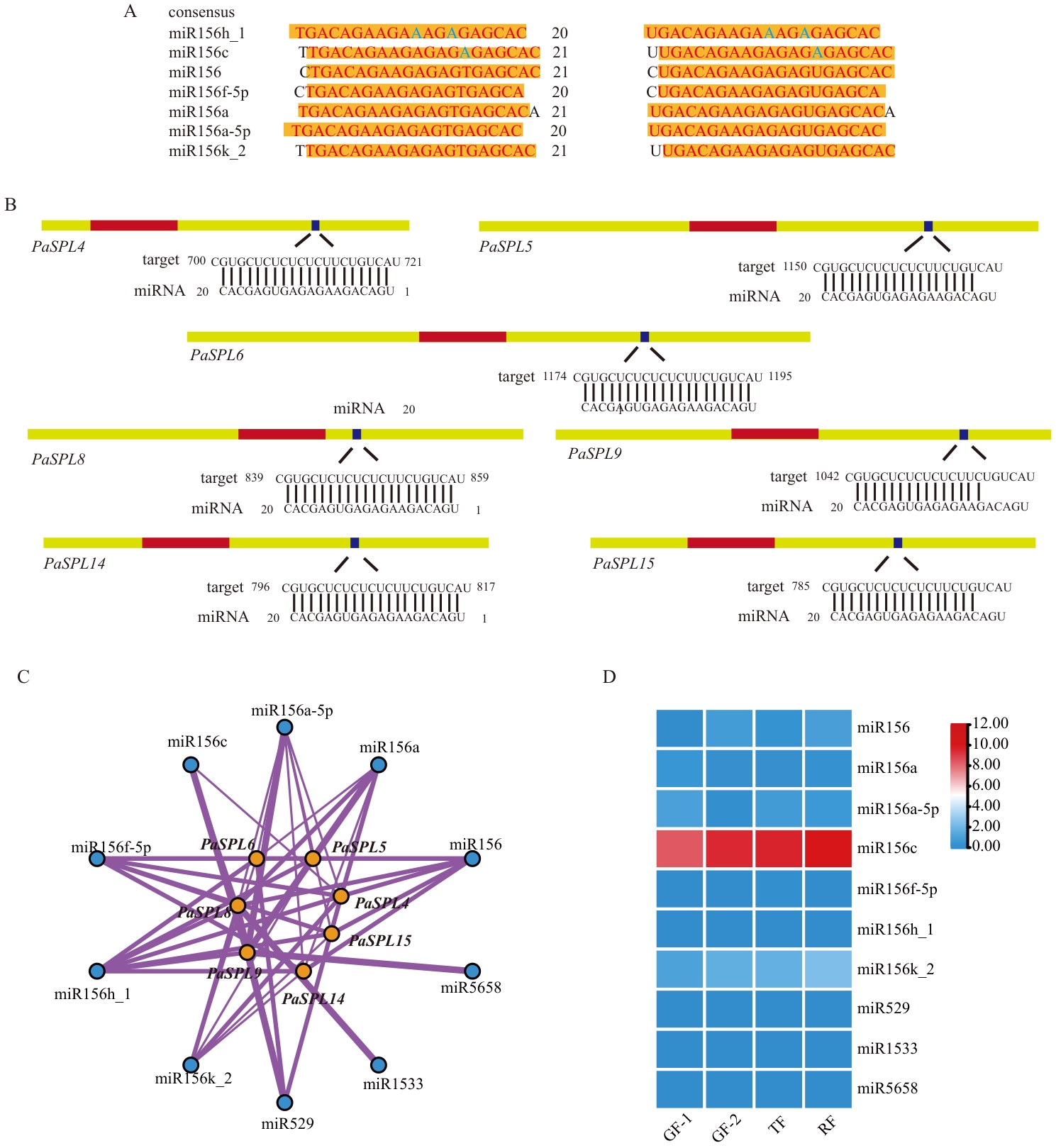
Fig. 7 Analysis of target site prediction and regulatory network of miR156-PaSPLs in P. armeniacaA: Alignment of mature sequences of seven miR156 family members. B: miR156 target sites in PaSPL4/5/6/8/9/14/15 genes. Yellow boxes represent the coding sequences (CDS) of PaSPLs genes, purple boxes represent the SBP domain, and blue boxes represent the miR156 target sites. C: Regulatory network between miRNAs and PaSPLs genes. D: Expression variation of miRNAs in common apricot at different developmental stages
| [1] | Yao T, Park BS, Mao HZ, et al. Regulation of flowering time by SPL10/MED25 module in Arabidopsis [J]. New Phytol, 2019, 224(1): 493-504. |
| [2] | Wang L, Ming LC, Liao KY, et al. Bract suppression regulated by the miR156/529-SPLs-NL1-PLA1 module is required for the transition from vegetative to reproductive branching in rice [J]. Mol Plant, 2021, 14(7): 1168-1184. |
| [3] | Jadhao KR, Kale SS, Chavan NS, et al. Genome-wide analysis of the SPL transcription factor family and its response to water stress in sunflower (Helianthus annuus) [J]. Cell Stress Chaperones, 2023, 28(6): 943-958. |
| [4] | Lai TF, Wang Y, Zhou T, et al. Virus-induced LeSPL-CNR silencing inhibits fruit ripening in tomato [J]. J Agric Sci, 2015, 7(7): 184-195. |
| [5] | Manning K, Tör M, Poole M, et al. A naturally occurring epigenetic mutation in a gene encoding an SBP-box transcription factor inhibits tomato fruit ripening [J]. Nat Genet, 2006, 38(8): 948-952. |
| [6] | Wang B, Dou TX, Sheng O, et al. Characterization of SPL family genes in banana reveals the critical role of MaSPL1 in regulating fruit ripening [J]. Horticulturae, 2025, 11(6): 576. |
| [7] | Han YC, Gao HY, Chen HJ, et al. The involvement of papaya CpSBP1 in modulating fruit softening and carotenoid accumulation by repressing CpPME1/2 and CpPDS4 [J]. Sci Hortic, 2019, 256: 108582. |
| [8] | Li XY, Hou YM, Xie X, et al. A blueberry miR156a-SPL12 module coordinates the accumulation of chlorophylls and anthocyanins during fruit ripening [J]. J Exp Bot, 2020, 71(19): 5976-5989. |
| [9] | Chen SY, Song XW, Zheng QX, et al. The transcription factor SPL13 mediates strigolactone suppression of shoot branching by inhibiting cytokinin synthesis in Solanum lycopersicum [J]. J Exp Bot, 2023, 74(18): 5722-5735. |
| [10] | Fan XQ, Li HX, Xiong Y, et al. Strigolactones inhibit axillary bud outgrowth through transcription factor MdSPL6-mediated regulation of ABA levels in apple [J]. Plant Physiol, 2025, 199(3): kiaf517. |
| [11] | Wei W, Yang YY, Wu CJ, et al. MaSPL16 positively regulates fruit ripening in bananas via the direct transcriptional induction of MaNAC029 [J]. Hortic Adv, 2023, 1: 10. |
| [12] | Jung JH, Ju Y, Seo PJ, et al. The SOC1-SPL module integrates photoperiod and gibberellic acid signals to control flowering time in Arabidopsis [J]. Plant J, 2012, 69(4): 577-588. |
| [13] | Li DD, Mou WS, Xia R, et al. Integrated analysis of high-throughput sequencing data shows abscisic acid-responsive genes and miRNAs in strawberry receptacle fruit ripening [J]. Hortic Res, 2019, 6: 26. |
| [14] | Wang DR, Zhang CL, Wang X, et al. microRNA156-SPL13B module induces parthenocarpy through the gibberellin pathway [J]. Plant Biotechnol J, 2025, 23(12): 5536-5549. |
| [15] | Chen M, Zhang TL, Zhang WB, et al. miR156-SPLs module regulates flowering and controls plant height by modulating gibberellin biosynthesis in citrus [J]. Plant Biotechnol J, 2025, 23(10): 4271-4289. |
| [16] | Li HX, Wang SW, Zhai LL, et al. The miR156/SPL12 module orchestrates fruit colour change through directly regulating ethylene production pathway in blueberry [J]. Plant Biotechnol J, 2024, 22(2): 386-400. |
| [17] | 吴锦秋, 白海坤, 王楚, 等. 不同砧穗组合对杏果实大小及品质的影响 [J]. 西北农林科技大学学报: 自然科学版, 2025, 53(9): 93-103. |
| Wu JQ, Bai HK, Wang C, et al. Effects of different rootstock-scion combinations on fruit size and quality of apricot [J]. J Northwest A F Univ Nat Sci Ed, 2025, 53(9): 93-103. | |
| [18] | 陈学森, 王楠, 彭福田, 等. 中国重要落叶果树果实品质和熟期育种研究进展 [J]. 园艺学报, 2024, 51(1): 8-26. |
| Chen XS, Wang N, Peng FT, et al. Advances in quality and maturity breeding of important deciduous fruit trees in China [J]. Acta Hortic Sin, 2024, 51(1): 8-26. | |
| [19] | Jia MX, Feng J, Zhang LN, et al. PaPYL9 is involved in the regulation of apricot fruit ripening through ABA signaling pathway [J]. Hortic Plant J, 2022, 8(4): 461-473. |
| [20] | Chen CJ, Wu Y, Li JW, et al. TBtools-II: a “one for all, all for one” bioinformatics platform for biological big-data mining [J]. Mol Plant, 2023, 16(11): 1733-1742. |
| [21] | Kumar S, Stecher G, Suleski M, et al. MEGA12: molecular evolutionary genetic analysis version 12 for adaptive and green computing [J]. Mol Biol Evol, 2024, 41(12): msae263. |
| [22] | Love J, Selker R, Marsman M, et al. JASP: graphical statistical software for common statistical designs [J]. J Stat Soft, 2019, 88(2): 1-17. |
| [23] | Cardon G, Höhmann S, Klein J, et al. Molecular characterisation of the Arabidopsis SBP-box genes [J]. Gene, 1999, 237(1): 91-104. |
| [24] | Salinas M, Xing SP, Höhmann S, et al. Genomic organization, phylogenetic comparison and differential expression of the SBP-box family of transcription factors in tomato [J]. Planta, 2012, 235(6): 1171-1184. |
| [25] | Xiong JS, Zheng D, Zhu HY, et al. Genome-wide identification and expression analysis of the SPL gene family in woodland strawberry Fragaria vesca [J]. Genome, 2018, 61(9): 675-683. |
| [26] | Sun YT, Wang YY, Xiao YQ, et al. Genome-wide identification of the SQUAMOSA promoter-binding protein-like (SPL) transcription factor family in sweet cherry fruit [J]. Int J Mol Sci, 2023, 24(3): 2880. |
| [27] | 张晓辉, 魏小春, 李锡香, 等. 苹果全基因组SBP-box基因家族分析及代表成员的分子克隆 [J]. 园艺学报, 2014, 41(2): 215-226. |
| Zhang XH, Wei XC, Li XX, et al. Genome-wide analysis of SBP-box gene family and molecular cloning of its typical members in Malus × domestica [J]. Acta Hortic Sin, 2014, 41(2): 215-226. | |
| [28] | 李天源, 亓新亮, 刘珊, 等. 欧李SPL基因家族的鉴定及在果实发育过程中的表达分析 [J]. 生物技术通报, 2026, 42(3): 362-373. |
| Li TY, Qi XL, Liu S, et al. Identification of Cerasus humilis SPL gene family and expression analysis during fruit development [J]. Biotechnol Bull, 2026, 42(3): 362-373. | |
| [29] | 阿丽亚·外力, 陈永坤, 克拉热木·克里木江, 等. 核桃SPL基因家族的系统进化和表达分析 [J]. 生物技术通报, 2024, 40(6): 180-189. |
| ALIYA W, CHEN YK, KELAREMU K, et al. Phylogenetic evolution and expression analysis of SPL gene family in Juglans regia [J]. Biotechnol Bull, 2024, 40(6): 180-189. | |
| [30] | 李静, 房震, 李美芸, 等. 新疆野苹果WRKY基因家族鉴定及低温沙藏过程中的表达模式分析 [J]. 西北农林科技大学学报: 自然科学版, 2026, 54(1): 9-23. |
| Li J, Fang Z, Li MY, et al. Identification of WRKY gene family in Malus sieversii and analysis of its expression patterns during low-temperature sand storage [J]. J Northwest A&F Univ Nat Sci Ed, 2026, 54(1): 9-23. | |
| [31] | Tong C, Jia Y, Hu HF, et al. Pangenome and pantranscriptome as the new reference for gene-family characterization: a case study of basic helix-loop-helix (bHLH) genes in barley [J]. Plant Commun, 2025, 6(1): 101190. |
| [32] | Jiang FC, Zhang JH, Wang S, et al. The apricot (Prunus armeniaca L.) genome elucidates Rosaceae evolution and beta-carotenoid synthesis [J]. Hortic Res, 2019, 6: 128. |
| [33] | Magadum S, Banerjee U, Murugan P, et al. Gene duplication as a major force in evolution [J]. J Genet, 2013, 92(1): 155-161. |
| [34] | Li L, Xu JB, Zhu ZW, et al. Genome-wide identification and expression analysis of the SPL transcription factor family and its response to abiotic stress in Pisum sativum L [J]. BMC Genom, 2024, 25: 539. |
| [35] | Chao LM, Liu YQ, Chen DY, et al. Arabidopsis transcription factors SPL1 and SPL12 confer plant thermotolerance at reproductive stage [J]. Mol Plant, 2017, 10(5): 735-748. |
| [36] | Dong HX, Yan SL, Jing YX, et al. miR156-targeted SPL9 is phosphorylated by SnRK2s and interacts with ABI5 to enhance ABA responses in Arabidopsis [J]. Front Plant Sci, 2021, 12: 708573. |
| [37] | Pérez-Antón M, Schneider I, Kroll P, et al. Explosive seed dispersal depends on SPL7 to ensure sufficient copper for localized lignin deposition via laccases [J]. Proc Natl Acad Sci U S A, 2022, 119(24): e2202287119. |
| [38] | Li CL, Lu SF. Molecular characterization of the SPL gene family in Populus trichocarpa [J]. BMC Plant Biol, 2014, 14(1): 131. |
| [39] | Xing SP, Salinas M, Höhmann S, et al. miR156-targeted and nontargeted SBP-box transcription factors act in concert to secure male fertility in Arabidopsis [J]. Plant Cell, 2011, 22(12): 3935-3950. |
| [40] | Su ZW, Wang XC, Xuan XX, et al. Characterization and action mechanism analysis of VvmiR156b/c/d-VvSPL9 module responding to multiple-hormone signals in the modulation of grape berry color formation [J]. Foods, 2021, 10(4): 896. |
| [41] | Zhang L, Xu CY, Xu YH, et al. The miR156k- SQUAMOSA promoter-binding protein-like2 module regulates the abscisic acid receptor PYL 2 during citrus fruit ripening [J]. Plant Physiol, 2025, 198(3): kiaf278. |
| [1] | SANG Zhi-peng, HOU Dong, WANG Hui-ting, YUE Hong-zhong, LI Ya-li, XIE Jian-ming, LU Wen, XU Zhao-tai. Identification of the Cucumber CsHXKs Gene Family and Regulation of Floral Organ Sugar Accumulation by CsHKL1.2 [J]. Biotechnology Bulletin, 2026, 42(9): 157-168. |
| [2] | REN Wen-bin, CHEN Deng-ke, WU Cui-cui. Bioinformatics Analysis and Salt Tolerance Study of the Peanut Transcription Factor AhZHD9 [J]. Biotechnology Bulletin, 2026, 42(9): 297-305. |
| [3] | DONG Xiang-xiang, HOU Wei-wei, MIAO Bai-ling, CHEN Juan-juan, LI Liang-jie, ZHAI Min, ZHU Qing-song, LIU Song-hu. Overexpression of FvBBX22 from Fragaria Vesca Promotes Anthocyanin Synthesis and Delays Flowering Time in Arabidopsis thaliana [J]. Biotechnology Bulletin, 2026, 42(9): 231-237. |
| [4] | ZHENG Xiao-yu, WANG Yi-xue, ZHAO Xiao-min, WU Jun-zhang, REN Jie-xin, QIAN Ya-xin, XIAO Zhi-liang, LIU Zheng-wen, PAN Xiao-wei, LI Yi-ting. In vitro Functional Identification of Tobacco Sesquiterpene Synthase Gene NtEAS [J]. Biotechnology Bulletin, 2026, 42(8): 197-206. |
| [5] | CUI Xiu-yan, DAI Chun-yang, ZHANG Yi-ting, TIAN Xiang, CHEN Ling, QIAO Zhi-jun, WANG Hai-gang, WANG Jun-jie. Identification of the Pseudo-response Regulator PRR Gene Family in Broomcorn Millet and Its Response to Photoperiod [J]. Biotechnology Bulletin, 2026, 42(8): 133-141. |
| [6] | WANG Jian-bo, LI Shi-ya, XING He-xuan, ZHOU Rui-jin, LI Gui-rong, WANG Ling. Functional Analysis of the Trehalose-6-phosphate Synthase Gene VvTPS10 in Salt Tolerance and Growth and Development of Grapevine [J]. Biotechnology Bulletin, 2026, 42(8): 188-196. |
| [7] | XIN Qing, ZHENG Yong-jie, LI Yu-hua, TU Bai-lian, LIU Xin-liang, ZHANG Yue-ting, WU Yan-fang. Genome-wide Identification and Expression Analysis of MYC Transcription Factors in Cinnamomum camphora [J]. Biotechnology Bulletin, 2026, 42(7): 214-225. |
| [8] | RAN Dan-dan, TAI Sen-lin, OU Xiao-hong, ZHOU Tao, XU Jiao. Genome-wide Identification and Characterization of UDP-glycosyltransferase Gene Family in Gastrodia elata [J]. Biotechnology Bulletin, 2026, 42(7): 163-172. |
| [9] | YAN Xiao-guang, DU Yan-wei, MA Zhi-yuan, WANG Bin, WANG Guo-liang, HU Dan-zhu. Genome-wide Identification and Expression Pattern Analysis of ZmDIR Gene Family in Maize [J]. Biotechnology Bulletin, 2026, 42(7): 126-137. |
| [10] | HUANG Xu-sheng, ZHOU Ya-li, JIA Zheng-rong, SHEN Shan, CHEN Jin-chai, ZHOU Guang-li, LI Xin-xin, WANG Ji-ping, LI Run-zhi, JIA Xiao-yun. Whole-genome Identification of the Perilla frutescens ARF Transcription Factor Family and Functional Analysis of Its Role in Abiotic Stress Responses [J]. Biotechnology Bulletin, 2026, 42(7): 148-162. |
| [11] | WANG Jiang-qing, ZHANG Die, WANG Hui-jie, YUAN Zhu-dong, FU Yan-hong, HUANG Ya-nan, WANG Hong-yang. Identification of the AP2/ERF Gene Family in Potato and Expression Analysis in Response to Phytophthora infestans Stress [J]. Biotechnology Bulletin, 2026, 42(6): 116-127. |
| [12] | XIONG Shi-fa, CHEN Yi-cun, WU Li-wen, SHI Xiang, ZHANG Sheng-jiao, PENG Fang-you, CHEN Tao-mei, WANG Yang-dong. Identification and Functional Analysis of the TCP Gene Family in Quercus fabri [J]. Biotechnology Bulletin, 2026, 42(6): 258-266. |
| [13] | LI Xu-long, XU Shi-qiang, ZHANG Long, LI Jing-yu, HE Wei-xian, CHEN Li-kai, WANG Ji-hua. Genome-wide Identification, Evolution and Expression Pattern Analysis of Terpene Synthase Gene Family in Morinda officinalis [J]. Biotechnology Bulletin, 2026, 42(6): 314-325. |
| [14] | ZHANG Ai-cen, YAN Hui, MA Ju-kui, ZHANG Yun-gang, LI Qiang. Genome-wide Identification and Expression Analysis of DNA Methyltransferase and Demethylase Gene Family in Sweetpotato [J]. Biotechnology Bulletin, 2026, 42(6): 1-12. |
| [15] | GUO Wei, GENG Yue, LIANG Xiao, LIU Ying, WU Chun-ling, CHEN Qing. Effects of Insect-resistant and Insect-susceptible Cassava Varieties on the Expression of Wax Biosynthesis Genes in Phenacoccus manihoti [J]. Biotechnology Bulletin, 2026, 42(6): 128-138. |
| Viewed | ||||||
|
Full text |
|
|||||
|
Abstract |
|
|||||
