







Biotechnology Bulletin ›› 2026, Vol. 42 ›› Issue (6): 340-350.doi: 10.13560/j.cnki.biotech.bull.1985.2025-1004
LI Xue-feng1,2( ), ZHANG Ning-bo1,2, LONG Jun-Jiang2,3, LONG Yang2,3, JIN Tai-hua1, LYU Shen-Jin1, FAN Xue-mei1,2, JI Jiu-xiu1(), LI Yong-zhu1,2()
Received:2025-09-22
Online:2026-06-26
Published:2026-07-11
Contact:
JI Jiu-xiu, LI Yong-zhu
E-mail:15168956251@163.com;Jijiuiu@lyu.edu.cn;liyongzhu@lyu.edu.cn
LI Xue-feng, ZHANG Ning-bo, LONG Jun-Jiang, LONG Yang, JIN Tai-hua, LYU Shen-Jin, FAN Xue-mei, JI Jiu-xiu, LI Yong-zhu. Effects of Probiotics on Growth Performance, Cecal Flora Diversity and Short-chain Fatty Acid of Yimeng Chicken Hybrid Line[J]. Biotechnology Bulletin, 2026, 42(6): 340-350.
原料组成 Ingredient | 含量 Content (%) | 营养水平 Nutrient levels | 含量 Content (%) |
|---|---|---|---|
| 玉米 Corn | 55.95 | 粗蛋白质 Crude protein | 19.50 |
| 大豆粕 Soybean meal | 14.44 | 代谢能 ME/(MJ/kg) | 12.10 |
| 麸皮 Rice bran | 5.60 | 钙 Ca | 0.90 |
| 玉米胚芽粕 Corn germ meal | 5.00 | 总磷 Total phosphorus | 0.65 |
| 进口 DDGS | 10.00 | 有效磷 Available phosphorus | 0.45 |
| 石粉 Limestone | 1.00 | 赖氨酸 Lys | 1.15 |
| 玉米蛋白粉 Corn gluten meal | 5.00 | 蛋氨酸 Met | 0.39 |
| 磷酸氢钙 CaHPO4 | 1.20 | 蛋氨酸+胱氨酸 Met+Sys | 0.76 |
| DL-蛋氨酸 Met | 0.15 | 苏氨酸 Thr | 0.85 |
| 盐 NaCl | 0.30 | ||
| 70%赖氨酸 Lys | 0.25 | ||
| 70%氯化胆碱 Choline chloride | 0.10 | ||
| 预混料 Premix | 1.00 | ||
| 合计 Total | 100.00 |
Table 1 Main ingredients and nutritional level of ration (air-dry basis)
原料组成 Ingredient | 含量 Content (%) | 营养水平 Nutrient levels | 含量 Content (%) |
|---|---|---|---|
| 玉米 Corn | 55.95 | 粗蛋白质 Crude protein | 19.50 |
| 大豆粕 Soybean meal | 14.44 | 代谢能 ME/(MJ/kg) | 12.10 |
| 麸皮 Rice bran | 5.60 | 钙 Ca | 0.90 |
| 玉米胚芽粕 Corn germ meal | 5.00 | 总磷 Total phosphorus | 0.65 |
| 进口 DDGS | 10.00 | 有效磷 Available phosphorus | 0.45 |
| 石粉 Limestone | 1.00 | 赖氨酸 Lys | 1.15 |
| 玉米蛋白粉 Corn gluten meal | 5.00 | 蛋氨酸 Met | 0.39 |
| 磷酸氢钙 CaHPO4 | 1.20 | 蛋氨酸+胱氨酸 Met+Sys | 0.76 |
| DL-蛋氨酸 Met | 0.15 | 苏氨酸 Thr | 0.85 |
| 盐 NaCl | 0.30 | ||
| 70%赖氨酸 Lys | 0.25 | ||
| 70%氯化胆碱 Choline chloride | 0.10 | ||
| 预混料 Premix | 1.00 | ||
| 合计 Total | 100.00 |
项目 Item | 分组 Group | 品种 Breed | P-value | |||
|---|---|---|---|---|---|---|
| C1/T1 | C2/T2 | C3/T3 | Breed | P×B | ||
平均日增重 Average daily gain (ADG) | C | 8.51±1.28Bb | 9.80±1.66a | 9.60±1.83Ba | 0.001 | 0.057 |
| T | 9.30±1.24Ac | 10.25±1.58b | 11.33±1.78Aa | 0.001 | ||
| P-value | 0.010 | 0.113 | 0.001 | |||
平均日采食量 Average daily feed intake (ADFI) | C | 25.39±0.39b | 28.34±1.32Aa | 23.89±1.32Bb | 0.007 | 0.001 |
| T | 24.45±0.96b | 25.63±0.84Bab | 27.15±0.99Aa | 0.033 | ||
| P-value | 0.281 | 0.007 | 0.002 | |||
料重比 Feed/Gain (F/G) | C | 2.99±0.00Aa | 2.89±0.00Ab | 2.49±0.00Ac | 0.001 | 0.035 |
| T | 2.63±0.00Ba | 2.50±0.00Bb | 2.40±0.00Bc | 0.001 | ||
| P-value | 0.001 | 0.001 | 0.003 | |||
Table 2 Effects of probiotics on the growth performance of Yimeng chicken hybrid lines
项目 Item | 分组 Group | 品种 Breed | P-value | |||
|---|---|---|---|---|---|---|
| C1/T1 | C2/T2 | C3/T3 | Breed | P×B | ||
平均日增重 Average daily gain (ADG) | C | 8.51±1.28Bb | 9.80±1.66a | 9.60±1.83Ba | 0.001 | 0.057 |
| T | 9.30±1.24Ac | 10.25±1.58b | 11.33±1.78Aa | 0.001 | ||
| P-value | 0.010 | 0.113 | 0.001 | |||
平均日采食量 Average daily feed intake (ADFI) | C | 25.39±0.39b | 28.34±1.32Aa | 23.89±1.32Bb | 0.007 | 0.001 |
| T | 24.45±0.96b | 25.63±0.84Bab | 27.15±0.99Aa | 0.033 | ||
| P-value | 0.281 | 0.007 | 0.002 | |||
料重比 Feed/Gain (F/G) | C | 2.99±0.00Aa | 2.89±0.00Ab | 2.49±0.00Ac | 0.001 | 0.035 |
| T | 2.63±0.00Ba | 2.50±0.00Bb | 2.40±0.00Bc | 0.001 | ||
| P-value | 0.001 | 0.001 | 0.003 | |||
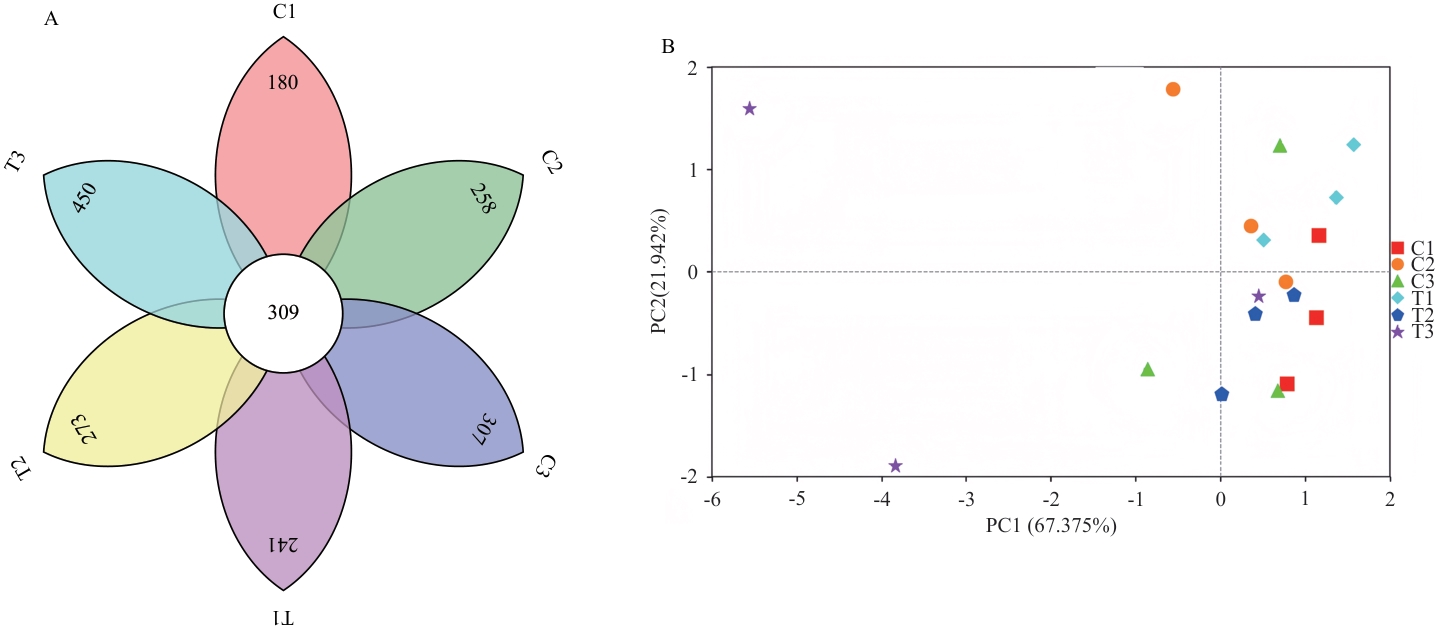
Fig. 1 Intestinal flora Wayne diagram (A) and cecal microbial β diversity PCA (B) of Yimeng chicken hybrid line
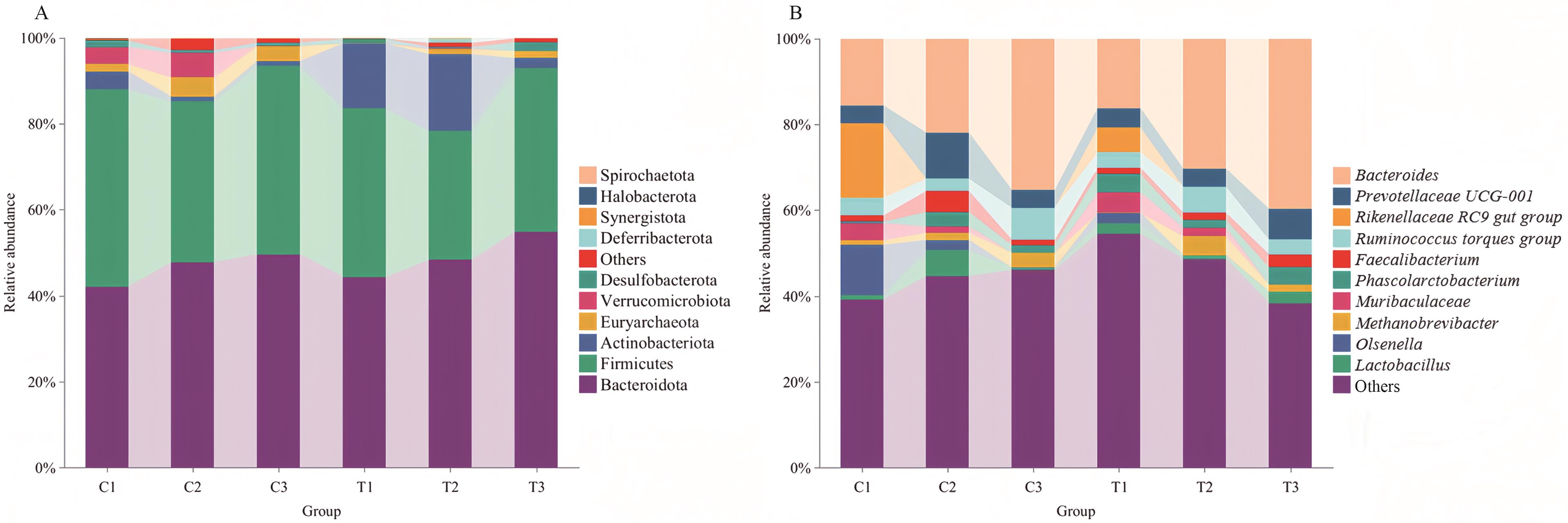
Fig. 2 Columnar diagram of relative abundance of probiotics on cecal microbial phylum and genus level of Yimeng chicken hybrid line
项目 Item | 分组 Group | 品种 Breed | P值 P-value | |||
|---|---|---|---|---|---|---|
| C1/T1 | C2/T2 | C3/T3 | Breed | P×B | ||
乙酸 Acetic acid (mg/kg) | C | 235.19±8.39Bc | 311.83±2.10Bb | 438.20±7.44Ba | 0.001 | 0.011 |
| T | 286.50±10.59Ac | 338.71±5.23Ab | 503.76±15.44Aa | 0.001 | ||
| P-value | 0.001 | 0.004 | 0.001 | |||
丙酸 Propionic acid (mg/kg) | C | 224.56±6.43c | 251.98±13.74Bb | 292.59±5.19Ba | 0.003 | 0.001 |
| T | 218.52±5.30c | 300.25±4.69Ab | 459.75±11.52Aa | 0.001 | ||
| P-value | 0.060 | 0.001 | 0.001 | |||
戊酸 Valeric acid (mg/kg) | C | 25.37±0.26Ab | 34.83±1.91Aa | 25.73±0.38Bb | 0.001 | 0.001 |
| T | 23.70±0.59Bb | 31.13±0.50Ba | 31.77±0.84Aa | 0.001 | ||
| P-value | 0.048 | 0.001 | 0.001 | |||
异戊酸 Isovaleric acid (mg/kg) | C | 6.69±0.07Ab | 13.21±0.23Aa | 3.77±0.17Bc | 0.001 | 0.001 |
| T | 5.28±0.17Bb | 6.17±0.19Ba | 4.92±0.17Ab | 0.007 | ||
| P-value | 0.001 | 0.001 | 0.005 | |||
丁酸 Butyric acid (mg/kg) | C | 101.79±2.44Bc | 131.81±2.50Ab | 163.59±2.48Ba | 0.001 | 0.001 |
| T | 138.54±2.95Ab | 121.26±2.94Bc | 203.74±7.16Aa | 0.001 | ||
| P-value | 0.001 | 0.003 | 0.003 | |||
异丁酸 Isobutyric acid (mg/kg) | C | 24.61±0.93Ab | 42.97±0.83Aa | 14.30±0.30Bc | 0.001 | 0.001 |
| T | 22.05±1.15Bb | 19.94±0.28Bb | 28.90±2.17Aa | 0.001 | ||
| P-value | 0.003 | 0.001 | 0.001 | |||
Table 3 Effects of probiotics on cecal short-chain fatty acids in Yimeng chicken hybrid lines
项目 Item | 分组 Group | 品种 Breed | P值 P-value | |||
|---|---|---|---|---|---|---|
| C1/T1 | C2/T2 | C3/T3 | Breed | P×B | ||
乙酸 Acetic acid (mg/kg) | C | 235.19±8.39Bc | 311.83±2.10Bb | 438.20±7.44Ba | 0.001 | 0.011 |
| T | 286.50±10.59Ac | 338.71±5.23Ab | 503.76±15.44Aa | 0.001 | ||
| P-value | 0.001 | 0.004 | 0.001 | |||
丙酸 Propionic acid (mg/kg) | C | 224.56±6.43c | 251.98±13.74Bb | 292.59±5.19Ba | 0.003 | 0.001 |
| T | 218.52±5.30c | 300.25±4.69Ab | 459.75±11.52Aa | 0.001 | ||
| P-value | 0.060 | 0.001 | 0.001 | |||
戊酸 Valeric acid (mg/kg) | C | 25.37±0.26Ab | 34.83±1.91Aa | 25.73±0.38Bb | 0.001 | 0.001 |
| T | 23.70±0.59Bb | 31.13±0.50Ba | 31.77±0.84Aa | 0.001 | ||
| P-value | 0.048 | 0.001 | 0.001 | |||
异戊酸 Isovaleric acid (mg/kg) | C | 6.69±0.07Ab | 13.21±0.23Aa | 3.77±0.17Bc | 0.001 | 0.001 |
| T | 5.28±0.17Bb | 6.17±0.19Ba | 4.92±0.17Ab | 0.007 | ||
| P-value | 0.001 | 0.001 | 0.005 | |||
丁酸 Butyric acid (mg/kg) | C | 101.79±2.44Bc | 131.81±2.50Ab | 163.59±2.48Ba | 0.001 | 0.001 |
| T | 138.54±2.95Ab | 121.26±2.94Bc | 203.74±7.16Aa | 0.001 | ||
| P-value | 0.001 | 0.003 | 0.003 | |||
异丁酸 Isobutyric acid (mg/kg) | C | 24.61±0.93Ab | 42.97±0.83Aa | 14.30±0.30Bc | 0.001 | 0.001 |
| T | 22.05±1.15Bb | 19.94±0.28Bb | 28.90±2.17Aa | 0.001 | ||
| P-value | 0.003 | 0.001 | 0.001 | |||
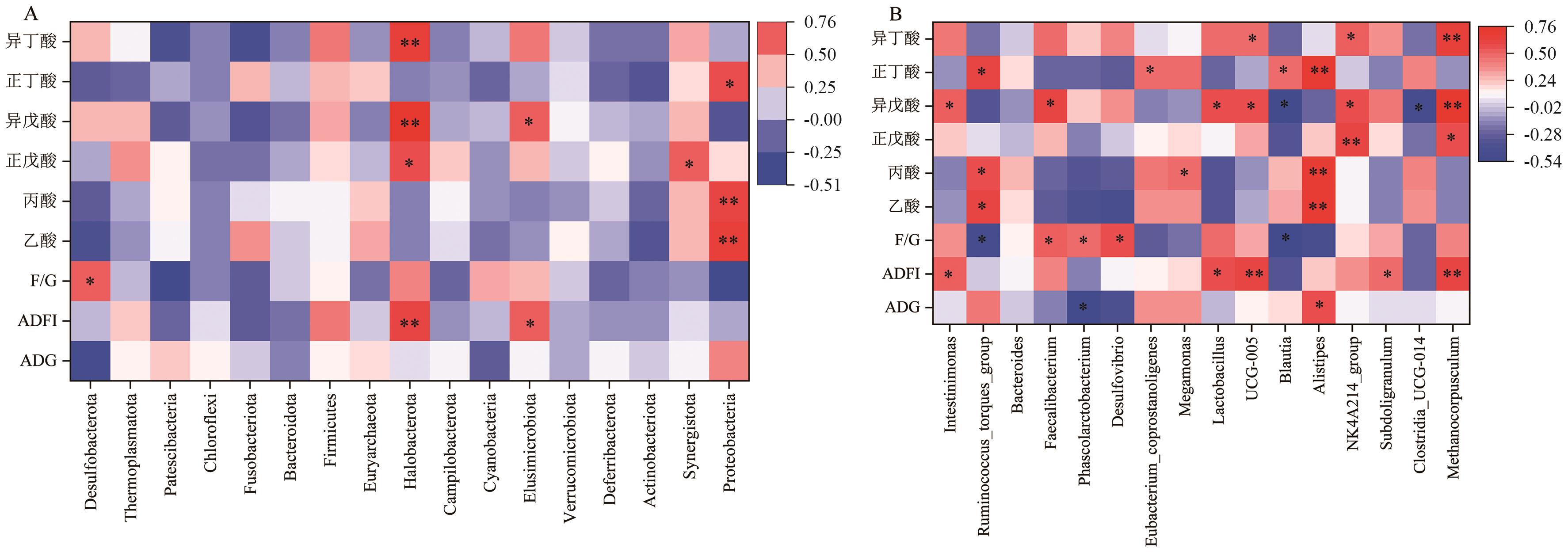
Fig. 3 Pearson correlation analysis of cecal microbial phylum and genus with growth performance and short-chain fatty acids in 42-day-old Yimeng chicken hybrid lines
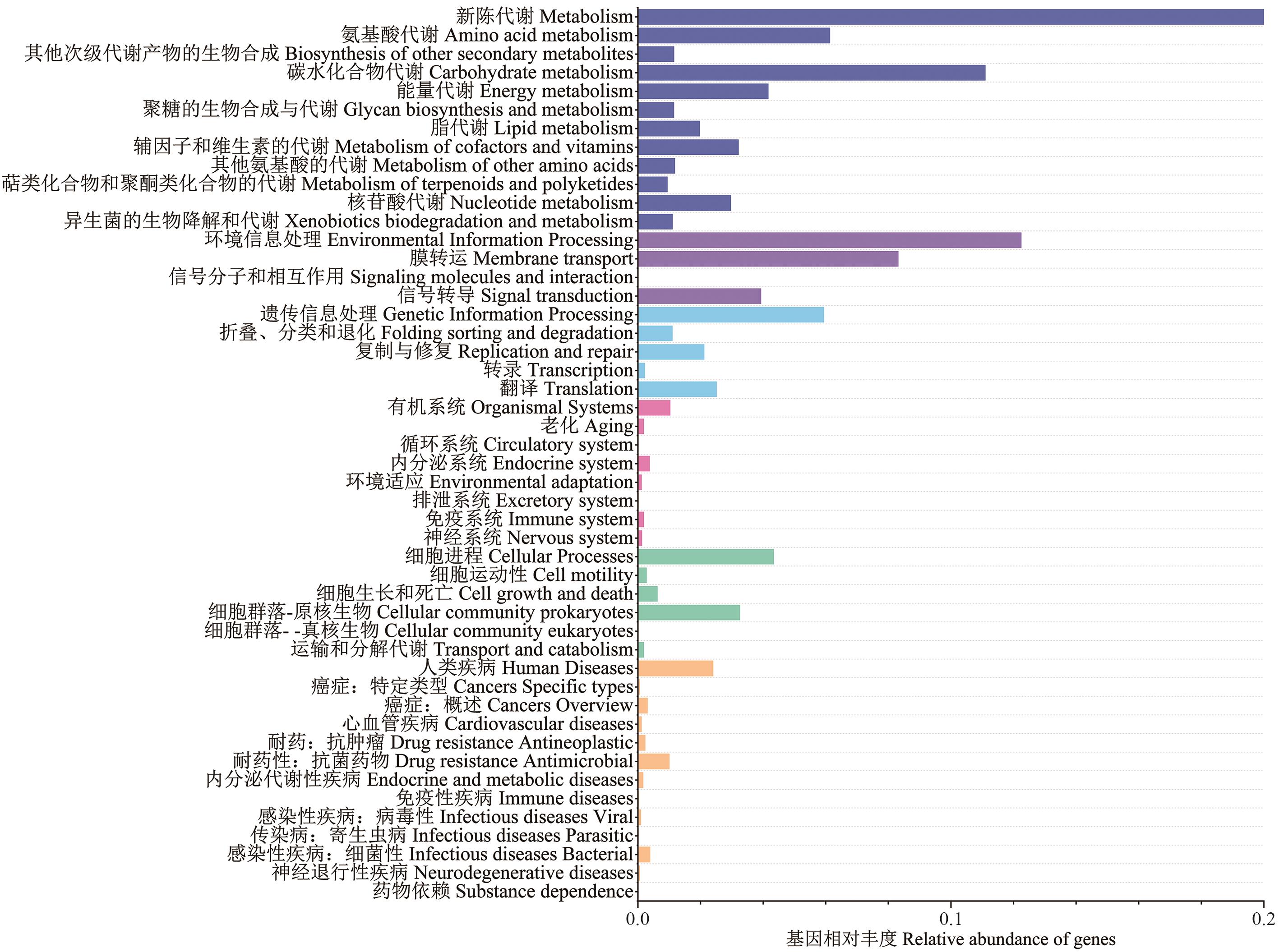
Fig. 4 KEGG pathway annotation of cecal microbiota in Yimeng chicken hybrid lines
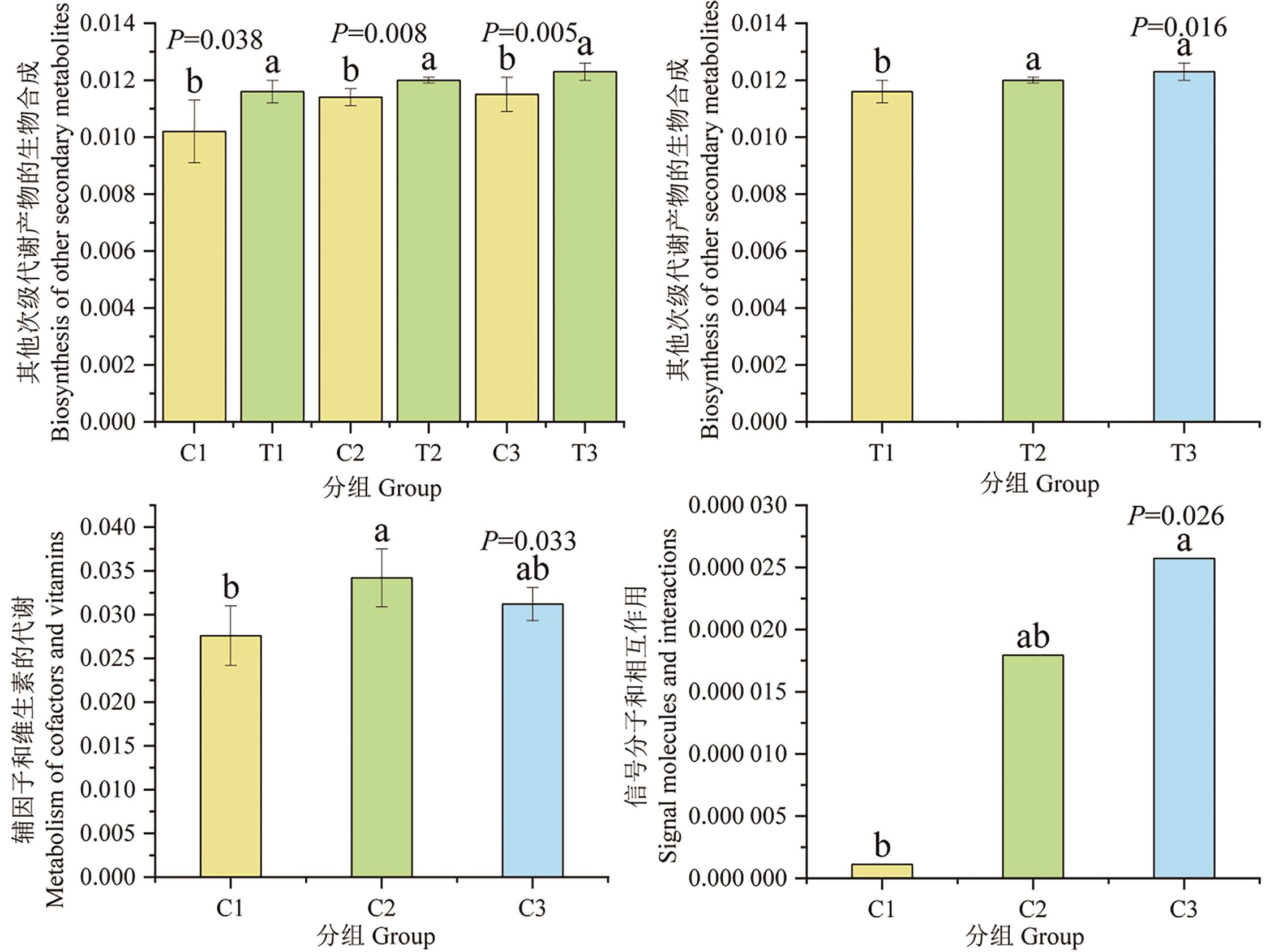
Fig. 5 Difference analysis of KEGG pathway enrichment of intestinal flora in Yimeng chicken hybrid line (level 2)Different letters indicate significant difference (P 0.05), the same below
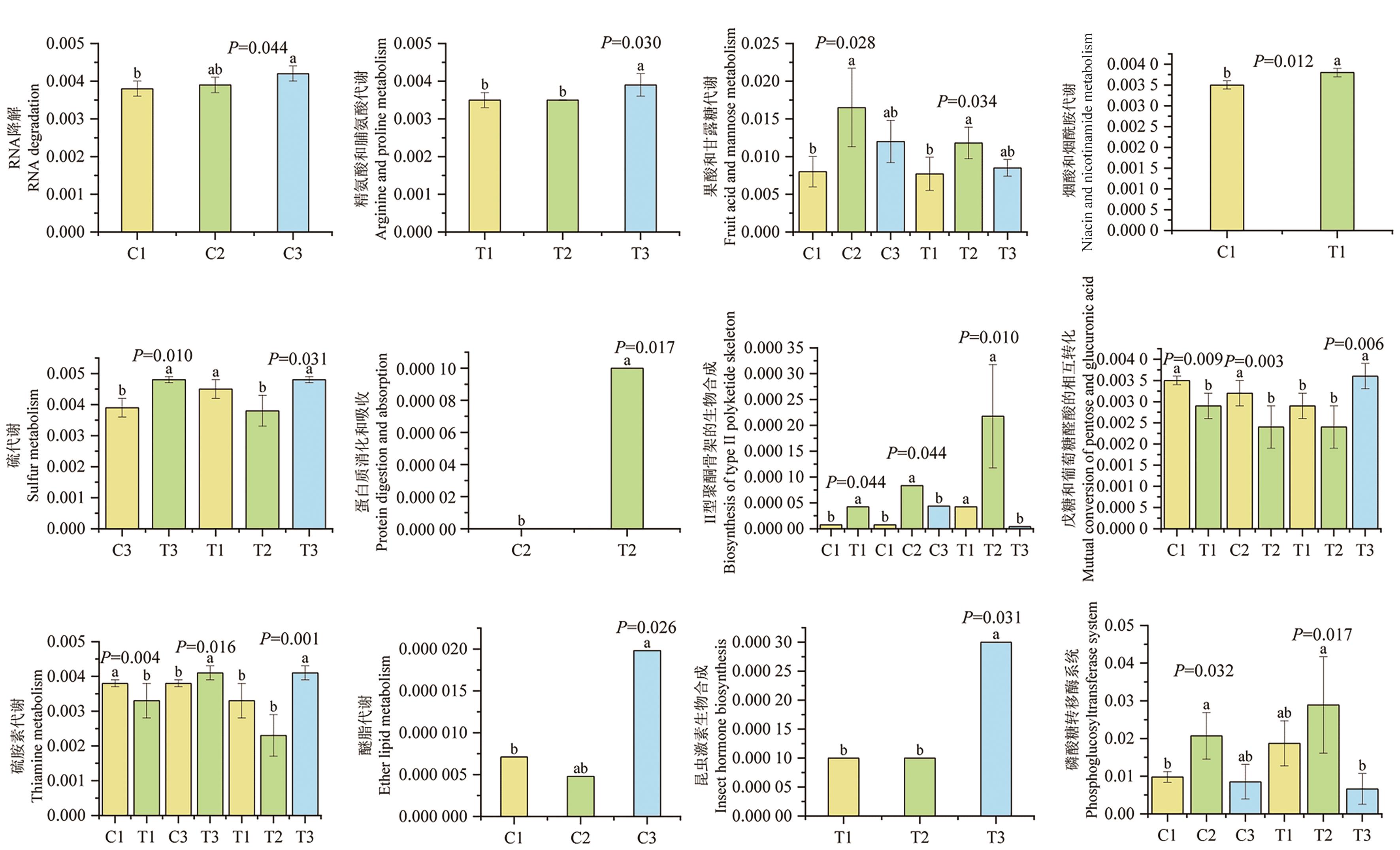
Fig. 6 Difference analysis of KEGG pathway enrichment of intestinal flora in Yimeng chicken hybrid line (level 3)
| [1] | Zhao JM, Yuan JW, Wang YM, et al. Assessment of feed efficiency and its relationship with egg quality in two purebred chicken lines and their reciprocal crosses [J]. Agriculture, 2022, 12(12): 2171. |
| [2] | Sungkhapreecha P, Chankitisakul V, Duangjinda M, et al. Combining abilities, heterosis, growth performance, and carcass characteristics in a diallel cross from black-bone chickens and Thai native chickens [J]. Animals, 2022, 12(13): 1602. |
| [3] | Negash F, Abegaz S, Tadesse Y, et al. Estimation of crossbreeding parameters for growth and feed efficiency traits in exotic chicken breed crosses with Fayoumi under reciprocal mating [J]. Sci Afr, 2023, 21: e01851. |
| [4] | Kabir S L. The dynamics of probiotics in enhancing poultry meat production and quality [J]. Int J Poult Sci, 2009, 3: 361-4. |
| [5] | Pan X, Cai YL, Kong LL, et al. Probiotic effects of Bacillus licheniformis DSM5749 on growth performance and intestinal microecological balance of laying hens [J]. Front Nutr, 2022, 9: 868093. |
| [6] | Casula G, Cutting SM. Bacillus Probiotics: spore germination in the gastrointestinal tract [J]. Appl Environ Microbiol, 2002, 68(5): 2344-2352. |
| [7] | Xiao YP, Xiang Y, Zhou WD, et al. Microbial community mapping in intestinal tract of broiler chicken [J]. Poult Sci, 2017, 96(5): 1387-1393. |
| [8] | Liu LX, Li QQ, Yang YJ, et al. Biological function of short-chain fatty acids and its regulation on intestinal health of poultry [J]. Front Vet Sci, 2021, 8: 736739. |
| [9] | Dibner JJ, Richards JD. Antibiotic growth promoters in agriculture: history and mode of action [J]. Poult Sci, 2005, 84(4): 634-643. |
| [10] | Corrêa-Oliveira R, Fachi JL, Vieira A, et al. Regulation of immune cell function by short-chain fatty acids [J]. Clin Transl Immunol, 2016, 5(4): e73. |
| [11] | Sleeth ML, Thompson EL, Ford HE, et al. Free fatty acid receptor 2 and nutrient sensing: a proposed role for fibre, fermentable carbohydrates and short-chain fatty acids in appetite regulation [J]. Nutr Res Rev, 2010, 23(1): 135-145. |
| [12] | Yin HD, Gilbert ER, Chen SY, et al. Effect of hybridization on carcass traits and meat quality of erlang mountainous chickens [J]. Asian-Australas J Anim Sci, 2013, 26(10): 1504-1510. |
| [13] | Hussien A, Ismael E, Elleithy E M, et al. Influence of Bacillus subtilis and Bacillus licheniformis probiotic supplementation via the drinking water on performance and gut health of broiler chickens [J]. J Adv Vet Res, 2023, 13(1): 94-102. |
| [14] | Stanley D, Geier MS, Denman SE, et al. Identification of chicken intestinal microbiota correlated with the efficiency of energy extraction from feed [J]. Vet Microbiol, 2013, 164(1/2): 85-92. |
| [15] | Khawaja T, Khan SH, Parveen A, et al. Growth performance, meat composition and haematological parameters of first generation of newly evolved hybridized pure chicken and their crossbred parents [J]. Vet Arhiv, 2016, 86(1): 135-148. |
| [16] | Adedeji TA, Amusan SA, Adebambo OA. Effect of chicken genotype on growth performance of pure and crossbred progenies in the development of a broiler line [J]. Int J Agric Innov Res, 2015, 4: 134-138. |
| [17] | 马萌, 杨利博. 枯草芽孢杆菌对肉鸡生产性能、屠宰性能及经济效益的影响 [J]. 中国饲料, 2024(20): 43-46. |
| Ma M, Yang LB. The Bacillus subtilis on production performance, slaughter performance and economic benefits of broilers [J]. China Feed, 2024(20): 43-46. | |
| [18] | Biswas S, Kim M H, Baek DH, et al. Probiotic mixture (Bacillus subtilis and Bacillus licheniformis) a potential in‐feedadditive toimprove broiler productionefficiency, nutrient digestibility, caecal microflora, meat qualityand todiminishhazardous odour emission[J]. J Anim Physiol An N, 2023, 107(4): 1065-1072. |
| [19] | Khasanah H, Kusbianto DE, Purnamasari L, et al. Modulation of chicken gut microbiota for enhanced productivity and health: a review [J]. Vet World, 2024: 1073-1083. |
| [20] | Magne F, Gotteland M, Gauthier L, et al. The firmicutes/bacteroidetes ratio: a relevant marker of gut dysbiosis in obese patients? [J]. Nutrients, 2020, 12(5): 1474. |
| [21] | Ranjani A, Dhanasekaran D, Gopinath PM. An introduction to Actinobacteria [M]//Actinobacteria - Basics and Biotechnological Applications: InTech, 2016 |
| [22] | Zhou CM, Gao XN, Cao XH, et al. Gut microbiota and serum metabolite potential interactions in growing layer hens exposed to high-ambient temperature [J]. Front Nutr, 2022, 9: 877975. |
| [23] | Du MF, Chen YP, Wang SQ, et al. Effects of dietary palygorskite supplementation on the growth performance, oxidative status, immune function, intestinal barrier and cecal microbial community of broilers [J]. Front Microbiol, 2022, 13: 985784. |
| [24] | Fan Y, Ju TT, Bhardwaj T, et al. Week-old chicks with high Bacteroides abundance have increased short-chain fatty acids and reduced markers of gut inflammation [J]. Microbiol Spectr, 2023, 11(2): e03616-22. |
| [25] | Dong XX, Hu B, Wan WL, et al. Effects of husbandry systems and Chinese indigenous chicken strain on cecum microbial diversity [J]. Asian-Australas J Anim Sci, 2020, 33(10): 1610-1616. |
| [26] | Qiu MH, Hu JQ, Peng H, et al. Research note: The gut microbiota varies with dietary fiber levels in broilers [J]. Poult Sci, 2022, 101(7): 101922. |
| [27] | Zeng S, Shao LQ, Zhao MM, et al. Effects of different rearing methods on the intestinal morphology, intestinal metabolites, and gut microbiota of Lueyang black-bone chickens [J]. Animals, 2025, 15(12): 1758. |
| [28] | Polansky O, Sekelova Z, Faldynova M, et al. Important metabolic pathways and biological processes expressed by chicken cecal microbiota [J]. Appl Environ Microbiol, 2016, 82(5): 1569-1576. |
| [29] | Rychlik I. Composition and function of chicken gut microbiota [J]. Animals, 2020, 10(1): 103. |
| [30] | Xiang H, Gan JK, Zeng DS, et al. Specific microbial taxa and functional capacity contribute to chicken abdominal fat deposition [J]. Front Microbiol, 2021, 12: 643025. |
| [31] | Zhang YY, Liu YS, Li JL, et al. Dietary resistant starch modifies the composition and function of caecal microbiota of broilers [J]. J Sci Food Agric, 2020, 100(3): 1274-1284. |
| [32] | Raman M, Ambalam P, Doble M. Short-chain fatty acids [M]//Probiotics and Bioactive Carbohydrates in Colon Cancer Management. New Delhi: Springer India, 2016: 97-115. |
| [33] | Ali Q, Ma S, La SK, et al. Microbial short-chain fatty acids: a bridge between dietary fibers and poultry gut health—a review [J]. Anim Biosci, 2022, 35(10): 1461-1478. |
| [34] | Aljumaah MR, Alkhulaifi MM, Abudabos AM, et al. Bacillus subtilis PB6 based probiotic supplementation plays a role in the recovery after the necrotic enteritis challenge [J]. PLoS One, 2020, 15(6): e0232781. |
| [35] | Xu YL, Yu Y, Shen YY, et al. Effects of Bacillus subtilis and Bacillus licheniformis on growth performance, immunity, short chain fatty acid production, antioxidant capacity, and cecal microflora in broilers [J]. Poult Sci, 2021, 100(9): 101358. |
| [36] | Miska KB, Fetterer RH, Wong EA. The mRNA expression of amino acid transporters, aminopeptidase N, and the di- and tri-peptide transporter PepT1 in the embryo of the domesticated chicken (Gallus gallus) shows developmental regulation [J]. Poult Sci, 2014, 93(9): 2262-2270. |
| [1] | MA Shun, ZHAO Xu, LIU Xue, CHEN Guang-kun, GAO Yue, DING Jin, ZHANG Jing-yi, ZHAO Yi-meng, GONG Li-yu, LI Hong-tao. Effects of γ-Aminobutyric Acid on Antioxidant Capacity and Cecal Microbial Structure of Broilers [J]. Biotechnology Bulletin, 2025, 41(12): 351-359. |
| [2] | LIU Zi-qi, ZHONG Pei, LI Qin, GUO Cheng, ZHANG Yan-mei, ZHANG Nai-feng, TU Yan, DIAO Qi-yu, BI Yan-liang. Application and Progress of CRISPR/Cas9 Technology in Probiotic Editing [J]. Biotechnology Bulletin, 2025, 41(11): 89-99. |
| [3] | ZHOU Si-yan, DING Wei-quan, DONG Ping, WENG Han-zhi, XU Rui-rui, KANG Zhen. Advances in Synthetic Biology Platform Development and Application for Escherichiacoli Nissle 1917 [J]. Biotechnology Bulletin, 2025, 41(11): 47-61. |
| [4] | GENG Ruo-han, WANG Bing-he, XU Chang-wen, QIAN Hong-ping, LIN Jin-xing, CUI Ya-ning. Research Progress in the Regulation of Protein Post-translational Modification in Plant Vesicle Transport [J]. Biotechnology Bulletin, 2024, 40(10): 139-148. |
| [5] | JIAO Shuai, FU Yu-ze, CUI Kai, ZHANG Ji-xian, WANG Jie, BI Yan-liang, DIAO Qi-yu, ZHANG Jian-xin, ZHANG Nai-feng. Effects of Bacillus pumilus on the Intestinal Inflammation and Barrier Function of Goat Kids [J]. Biotechnology Bulletin, 2024, 40(1): 344-352. |
| [6] | JIANG Xian-zhe, ZHANG Bo-yan, LUO Hai-ling, ZHANG Xin-meng, WANG Bing. Role of Gut-Liver Axis in Animal Nutritional Metabolism and Immunity [J]. Biotechnology Bulletin, 2022, 38(7): 128-135. |
| [7] | ZHONG Ming-yue, LIU Chun-yan, YAN Yan, ZHANG Xiao-hui, YUAN Hai-sheng, XU Guo-quan, ZHANG He-ping, WANG Yu-zhen. Improvement Effect of Bifidobacterium lactis V9 on NAFLD Rats Induced by High-fat Diet [J]. Biotechnology Bulletin, 2022, 38(3): 181-187. |
| [8] | MA Tao, DIAO Qi-yu. Recent Advance in the Study of the Regulation of Early Life Gut Microbiota by Probiotics in Livestock [J]. Biotechnology Bulletin, 2020, 36(2): 17-26. |
| [9] | YU Jie, LIU Xin, ZHANG Chi, ZHAO Ji-chun, LI Fu-hua, MING Jian. Anti-aging Effect and Molecular Mechanism of Probiotics:A Review [J]. Biotechnology Bulletin, 2020, 36(1): 167-174. |
| [10] | DU Ruo-xi, GUO Ming-zhang, XIE Zi-xin, HE Xiao-yun, HUANG Kun-lun, XU Wen-tao. Application and Prospect of Synthetic Biology in Improving Intestinal Health [J]. Biotechnology Bulletin, 2018, 34(1): 49-59. |
| [11] | WANG Li-jie, YU Xiao-bin, FANG Yin-bing, GU Qiu-ya. Screening of Probiotics for Inhibiting Pathogens and Preliminary Determination of Antimicrobial Substances [J]. Biotechnology Bulletin, 2017, 33(11): 123-129. |
| [12] | Xin Yueqiang, Liang Rongrong, Wang Ruiming. Effects of Galactooligosaccharide on Exopolysaccharide Produced by Intestinal Probiotics [J]. Biotechnology Bulletin, 2015, 31(6): 144-150. |
| [13] | Sun Hongmei, Wang Tengfei, Li Piwu, Tang Weihua, Qu Lina, Wang Ruiming . Tolerance of Three Potentially Piglets Feed Probiotic and Antagonistic Pathogens Research [J]. Biotechnology Bulletin, 2013, 0(8): 155-159. |
| Viewed | ||||||
|
Full text |
|
|||||
|
Abstract |
|
|||||
