







Biotechnology Bulletin ›› 2026, Vol. 42 ›› Issue (9): 42-56.doi: 10.13560/j.cnki.biotech.bull.1985.2026-0049
Previous Articles Next Articles
HUANG Run-huan1, CHEN Yun-yi1, CHEN Hui-fang1, YIN Li-li2, YU Chao1( )
)
Received:2026-01-12
Online:2026-09-26
Published:2026-09-16
Contact:
YU Chao
E-mail:yuchao@bjfu.edu.cn
HUANG Run-huan, CHEN Yun-yi, CHEN Hui-fang, YIN Li-li, YU Chao. Functions and Applications of Trichomes in Ornamental Plants[J]. Biotechnology Bulletin, 2026, 42(9): 42-56.
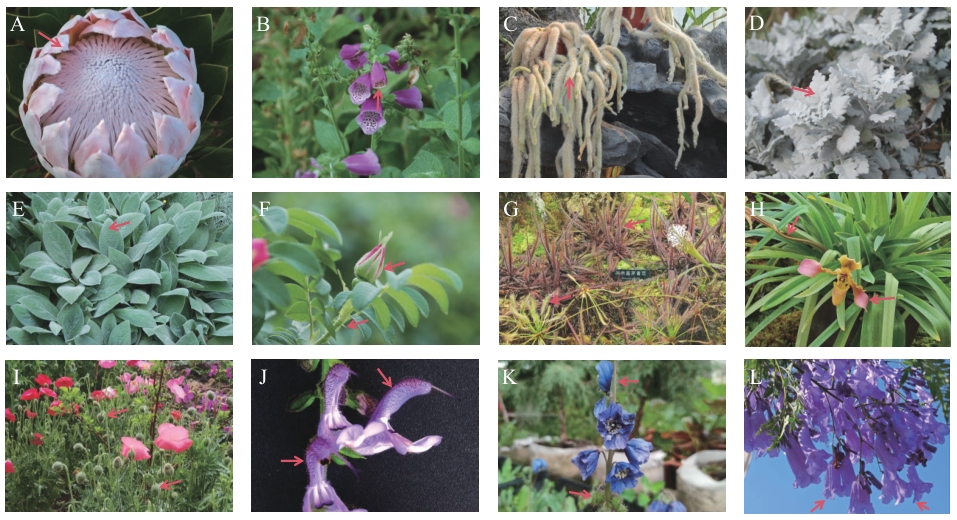
Fig. 1 Effects of trichomes on ornamental value of ornamental plantsA: Protea cynaroides; B: Digitalis purpurea; C: Hildewintera colademononis; D: Jacobaea maritima; E: Stachys byzantina; F: Rosa rugosa; G: Drosera adelae; H: Paphiopedilum; I: Papaver rhoeas; J: Salvia miltiorrhiza; K: Meconopsis; L: Jacaranda mimosifolia. The distribution of trichomes is indicated by the red arrows in the figure
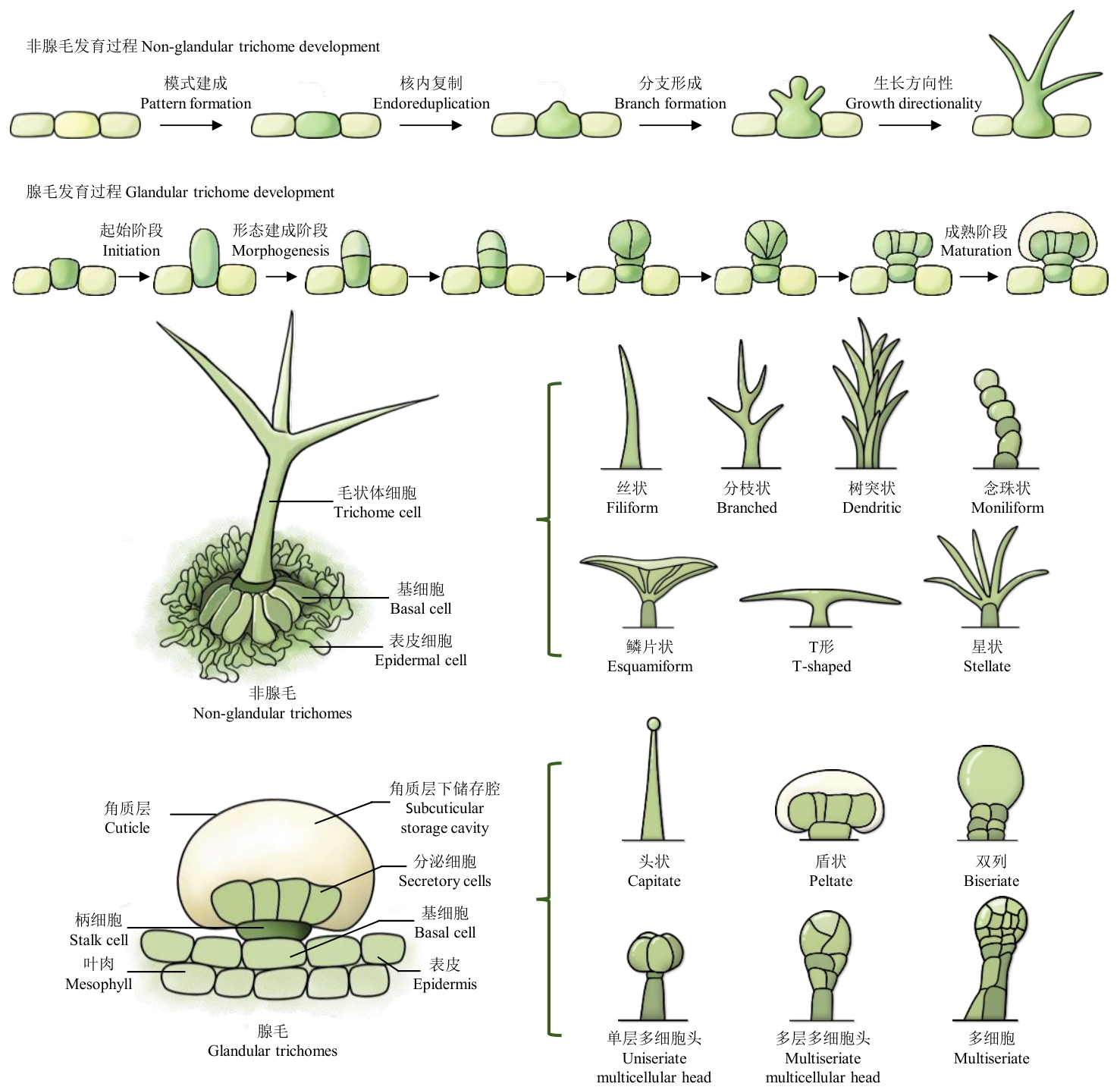
Fig. 2 Schematic diagram of trichome types, structure, and developmental process
编号 No. | 科 Family | 腺毛类型 Glandular trichomes (GTs) types | 非腺毛类型 Non-glandular trichomes (NGTs) types | 结构特征 Structural characteristics | 植物器官 Plant organ | 核心功能 Core function | 参考文献 References |
|---|---|---|---|---|---|---|---|
| 1 | 菊科 Asteraceae | 头状、直形、盾状、双列盾状、凹陷状、双列 | 双列、单列、T形、丝状、鞭状、星状、分枝状、鳞片状、多层 | 腺毛多具多细胞头部、单/多细胞柄;盾状腺毛头部呈盘状;T形非腺毛具伸长顶端细胞 | 叶片、花序梗、苞片、花瓣、总苞片、茎、花冠、果实等 | 合成萜类、酚类、青蒿素等,可抗菌、抗虫、吸引传粉者,抗UV-B、减少蒸腾、抗虫 | [ |
| 2 | 紫葳科 Bignoniaceae | 盾状、头状、凹陷状 | - | 盾状腺毛具盘状头部与单细胞颈;头状腺毛具多细胞头、单细胞颈、宽大多细胞柄 | 花梗、花萼、子房、叶片、花冠筒、花瓣 | 吸引传粉者;合成挥发性萜类与多糖;防御植食性昆虫 | [ |
| 3 | 百合科 Liliaceae | - | 多细胞、单细胞、星状 | 多细胞、无分支、无腺体 | 花被片、茎、叶片 | 抗UV-B、抗蚜虫、物理防御 | [ |
| 4 | 蔷薇科 Rosaceae | 头状、盾状、圆锥形、帽状、碗状 | 带状、针状、鞭状、分支状、钩状 | 腺毛头部多细胞;非腺毛包括单细胞与多细胞类型 | 花瓣、萼片、果实、叶片、花梗、托杯 | 防御昆虫、抗UV-B、储水 | [ |
| 5 | 茅膏菜科 Droseraceae | 星状 | - | 由两个基细胞、两个柄细胞和一个两层细胞构成的头部组成 | 陷阱、叶柄、裂片 | 分泌黏液;具有溶质转运功能 | [ |
| 6 | 唇形科 Lamiaceae | 盾状、头状、指状 | 简单多细胞、双细胞、单细胞 | 腺毛头部多细胞,盾状腺毛头部呈球形;非腺毛多为1-7个细胞 | 叶片、花萼、茎、花 | 合成精油、酚酸、黄酮类;可抗菌、抗虫、吸引传粉者 | [ |
| 7 | 蝶形花科 Fabaceae | 大型头状 | 短毛 | 腺毛具多细胞头部和大型多列柄;非腺毛短小 | 花序轴、花梗、苞片、萼片、花托 | 抵御植食性动物和病原体 | [ |
| 8 | 猪笼草科 Nepenthaceae | 盾状 | 丛生毛 | 盾状腺毛具基部细胞、多细胞柄和多细胞头部 | 捕虫笼 | 抵御寄生生物和草食动物,形成物理屏障或固定害虫 | [ |
| 9 | 毛茛科 Ranunculaceae | - | 单细胞长毛、短毛 | 单细胞 | 花瓣 | 过滤花粉、防止花蜜干涸、辅助传粉者获取花蜜 | [ |
| 10 | 芍药科 Paeoniaceae | - | 长圆锥形、扁平状、圆锥形 | 简单、单一、无腺、单细胞结构 | 叶片 | 重要的鉴别特征 | [ |
| 11 | 兰科 Orchidaceae | 肝褐色腺毛 | 短柔毛、念珠状、乳突状 | 腺毛由2‒5个细胞组成;短柔毛由多细胞毛状体构成,由4‒11个细胞组成 | 侧瓣、唇瓣、叶片 | 辅助实现拟态传粉策略,吸引传粉者 | [ |
| 12 | 山茶科 Theaceae | - | 绒毛:单细胞、无分支结构 | 单细胞无分支毛状体,整体呈单一的丝状形态 | 嫩叶、顶芽、叶片 | 抵御昆虫取食、反射紫外线与强光、隔绝高温、防止微生物侵袭、决定茶叶品质的核心因素 | [ |
| 13 | 石竹科 Caryophyllaceae | 腺毛 | 多细胞、长绵毛状 | - | 茎、叶、花梗、花萼、花瓣喉部、花柱 | [ | |
| 14 | 莲科 Nelumbonaceae | 乳头状腺毛 | - | 分泌型毛状体 | 柱头、花柱道内壁 | 分泌黏液或化学物质,可能有助于捕捉花粉、提供萌发介质或保护雌蕊 | [ |
Table 1 Trichome types, structural characteristics, and functions in important ornamental plants
编号 No. | 科 Family | 腺毛类型 Glandular trichomes (GTs) types | 非腺毛类型 Non-glandular trichomes (NGTs) types | 结构特征 Structural characteristics | 植物器官 Plant organ | 核心功能 Core function | 参考文献 References |
|---|---|---|---|---|---|---|---|
| 1 | 菊科 Asteraceae | 头状、直形、盾状、双列盾状、凹陷状、双列 | 双列、单列、T形、丝状、鞭状、星状、分枝状、鳞片状、多层 | 腺毛多具多细胞头部、单/多细胞柄;盾状腺毛头部呈盘状;T形非腺毛具伸长顶端细胞 | 叶片、花序梗、苞片、花瓣、总苞片、茎、花冠、果实等 | 合成萜类、酚类、青蒿素等,可抗菌、抗虫、吸引传粉者,抗UV-B、减少蒸腾、抗虫 | [ |
| 2 | 紫葳科 Bignoniaceae | 盾状、头状、凹陷状 | - | 盾状腺毛具盘状头部与单细胞颈;头状腺毛具多细胞头、单细胞颈、宽大多细胞柄 | 花梗、花萼、子房、叶片、花冠筒、花瓣 | 吸引传粉者;合成挥发性萜类与多糖;防御植食性昆虫 | [ |
| 3 | 百合科 Liliaceae | - | 多细胞、单细胞、星状 | 多细胞、无分支、无腺体 | 花被片、茎、叶片 | 抗UV-B、抗蚜虫、物理防御 | [ |
| 4 | 蔷薇科 Rosaceae | 头状、盾状、圆锥形、帽状、碗状 | 带状、针状、鞭状、分支状、钩状 | 腺毛头部多细胞;非腺毛包括单细胞与多细胞类型 | 花瓣、萼片、果实、叶片、花梗、托杯 | 防御昆虫、抗UV-B、储水 | [ |
| 5 | 茅膏菜科 Droseraceae | 星状 | - | 由两个基细胞、两个柄细胞和一个两层细胞构成的头部组成 | 陷阱、叶柄、裂片 | 分泌黏液;具有溶质转运功能 | [ |
| 6 | 唇形科 Lamiaceae | 盾状、头状、指状 | 简单多细胞、双细胞、单细胞 | 腺毛头部多细胞,盾状腺毛头部呈球形;非腺毛多为1-7个细胞 | 叶片、花萼、茎、花 | 合成精油、酚酸、黄酮类;可抗菌、抗虫、吸引传粉者 | [ |
| 7 | 蝶形花科 Fabaceae | 大型头状 | 短毛 | 腺毛具多细胞头部和大型多列柄;非腺毛短小 | 花序轴、花梗、苞片、萼片、花托 | 抵御植食性动物和病原体 | [ |
| 8 | 猪笼草科 Nepenthaceae | 盾状 | 丛生毛 | 盾状腺毛具基部细胞、多细胞柄和多细胞头部 | 捕虫笼 | 抵御寄生生物和草食动物,形成物理屏障或固定害虫 | [ |
| 9 | 毛茛科 Ranunculaceae | - | 单细胞长毛、短毛 | 单细胞 | 花瓣 | 过滤花粉、防止花蜜干涸、辅助传粉者获取花蜜 | [ |
| 10 | 芍药科 Paeoniaceae | - | 长圆锥形、扁平状、圆锥形 | 简单、单一、无腺、单细胞结构 | 叶片 | 重要的鉴别特征 | [ |
| 11 | 兰科 Orchidaceae | 肝褐色腺毛 | 短柔毛、念珠状、乳突状 | 腺毛由2‒5个细胞组成;短柔毛由多细胞毛状体构成,由4‒11个细胞组成 | 侧瓣、唇瓣、叶片 | 辅助实现拟态传粉策略,吸引传粉者 | [ |
| 12 | 山茶科 Theaceae | - | 绒毛:单细胞、无分支结构 | 单细胞无分支毛状体,整体呈单一的丝状形态 | 嫩叶、顶芽、叶片 | 抵御昆虫取食、反射紫外线与强光、隔绝高温、防止微生物侵袭、决定茶叶品质的核心因素 | [ |
| 13 | 石竹科 Caryophyllaceae | 腺毛 | 多细胞、长绵毛状 | - | 茎、叶、花梗、花萼、花瓣喉部、花柱 | [ | |
| 14 | 莲科 Nelumbonaceae | 乳头状腺毛 | - | 分泌型毛状体 | 柱头、花柱道内壁 | 分泌黏液或化学物质,可能有助于捕捉花粉、提供萌发介质或保护雌蕊 | [ |
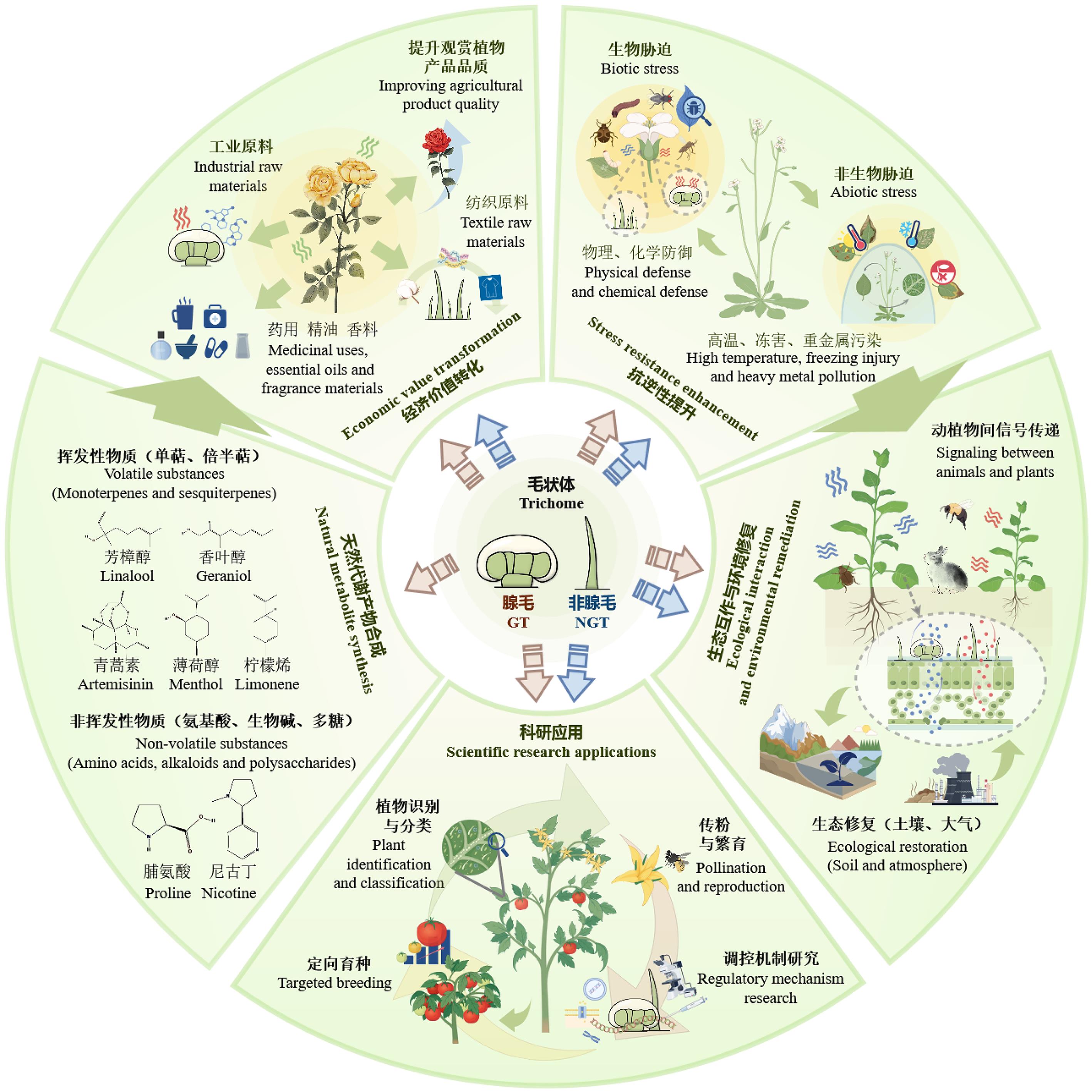
Fig. 3 Trichome functions and future application prospects
| [1] | David Marks M. Plant Development: The making of a plant hair [J]. Curr Biol, 1994, 4(7): 621-623. |
| [2] | Tissier A. Glandular trichomes: what comes after expressed sequence tags [J]. Plant J, 2012, 70(1): 51-68. |
| [3] | Fahn A. Structure and function of secretory cells [M]//Advances in Botanical Research Volume 31. Amsterdam: Elsevier, 2000: 37-75. |
| [4] | Dhankhar R, Regmi K, Kawatra A, et al. Trichomics: trichomes as natural chemical factories [M]//Swamy MK, Kumar A. Phytochemical Genomics: Plant Metabolomics and Medicinal Plant Genomics. Singapore: Springer Nature Singapore, 2022: 379-402. |
| [5] | Zhang MH, Li MY, An YY, et al. Single-nucleus transcriptomics reveal the morphogenesis and artemisinin biosynthesis in Artemisia annua glandular trichomes [J]. Nat Commun, 2025, 16: 8646. |
| [6] | Livingston SJ, Quilichini TD, Booth JK, et al. Cannabis glandular trichomes alter morphology and metabolite content during flower maturation [J]. Plant J, 2020, 101(1): 37-56. |
| [7] | Maffei M, Chialva F, Sacco T. Glandular trichomes and essential oils in developing peppermint leaves: I. Variation of peltate trichome number and terpene distribution within leaves [J]. New Phytol, 1989, 111(4): 707-716. |
| [8] | Guan YQ, Jiang L, Wang Y, et al. CmMYC2-CmMYBML1 module orchestrates the resistance to herbivory by synchronously regulating the trichome development and constitutive terpene biosynthesis in Chrysanthemum [J]. New Phytol, 2024, 244(3): 914-933. |
| [9] | Zhu YH, Zheng J, Kang HZ, et al. Spatial variations in leaf trichomes and their coordination with stomata in Quercus variabilis across Eastern Asia [J]. J Plant Ecol, 2024, 17(3): rtae023. |
| [10] | Zhan JY, Di TT, Chen X, et al. CbMYB108 integrates the regulation of diterpene biosynthesis and trichome development in Conyza blinii against UV-B [J]. Plant Cell Environ, 2024, 47(4): 1300-1318. |
| [11] | Arteaga N, Savic M, Méndez-Vigo B, et al. MYB transcription factors drive evolutionary innovations in Arabidopsis fruit trichome patterning [J]. Plant Cell, 2021, 33(3): 548-565. |
| [12] | Hua B, Chang J, Han XQ, et al. H and HL synergistically regulate jasmonate-triggered trichome formation in tomato [J]. Hortic Res, 2022, 9: uhab080. |
| [13] | Zheng XZ, Jian YF, Long Q, et al. SlASR3 mediates crosstalk between auxin and jasmonic acid signaling to regulate trichome formation in tomato [J]. Plant J, 2025, 121(4): e70053. |
| [14] | Feng ZX, Sun L, Dong MM, et al. Novel players in organogenesis and flavonoid biosynthesis in cucumber glandular trichomes [J]. Plant Physiol, 2023, 192(4): 2723-2736. |
| [15] | Wang YN, Zhou Q, Zhang JL, et al. Natural variation at the cotton HIC locus increases trichome density and enhances resistance to aphids [J]. Plant J, 2024, 120(4): 1304-1316. |
| [16] | Johnson NM, Baucom RS. The double life of trichomes: understanding their dual role in herbivory and herbicide resistance [J]. Evol, 2024, 78(6): 1121-1132. |
| [17] | Wang S, Cui H, Lin Y, et al. Glandular trichome heads confer cadmium tolerance in Nicotiana tabacum L. via the co-regulation of JA and ABA signaling [J]. J Hazard Mater, 2025, 492: 138034. |
| [18] | Li C, Mo YY, Wang NN, et al. The overlooked functions of trichomes: Water absorption and metal detoxication [J]. Plant Cell Environ, 2023, 46(3): 669-687. |
| [19] | Gao PP, Zhang XM, Xue PY, et al. Mechanism of Pb accumulation in Chinese cabbage leaves: Stomata and trichomes regulate foliar uptake of Pb in atmospheric PM2.5 [J]. Environ Pollut, 2022, 293: 118585. |
| [20] | Ishfaq M, Shakoor N, Rillig MC, et al. Airborne microplastics in leaves and food safety risks [J]. Trends Plant Sci, 2025, 30(10): 1063-1065. |
| [21] | Zheng CC, Ren ZX, Li SQ, et al. Pollen-like trichomes may reward pollinators of Cypripedium wardii (Orchidaceae) [J]. iScience, 2025, 28(12): 113951. |
| [22] | Ali R, Gao MH, Liu JN, et al. Research progress of using ornamental plants to cope approach environmental pollutants, a breakthrough of bioremediation technology [J]. Land Degrad Dev, 2025: ldr.70193. |
| [23] | 赵梁军. 观赏植物生物学 [M]. 2版. 北京: 中国农业大学出版社, 2011: 1-405. |
| Zhao LJ. Biology of ornamental plants [M]. 2nd ed. Beijing: China Agricultural University Press, 2011: 1-405. | |
| [24] | Wilson EH. 中国: 世界园林之母——一位博物学家在华西的旅行笔记[M]. 胡启明, 译. 北京: 北京大学出版社, 2022: 1-381. |
| Wilson EH. China: The mother of gardens——A naturalist's travel notes in West China [M]. Hu QM, trans. Beijing: Peking University Press, 2022: 1-381. | |
| [25] | 罗乐, 杨玉勇, 张启翔. 中国蔷薇属 [M]. 北京: 中国林业出版社, 2024: 1-534. |
| Luo L, Yang YY, Zhang QX. Genus Rosa L. in China [M]. Beijing: China Forestry Publishing House, 2024: 1-534. | |
| [26] | Katinas L. Trichomes in Asteraceae: names standardization and a unified classification [J]. Bot Rev, 2025, 91(1): 9311. |
| [27] | Jia WQ, Wang YL, Qi Q, et al. Leaf epidermal morphology of ten wild tree peonies in China and its taxonomic significance [J]. Horticulturae, 2022, 8(6): 502. |
| [28] | Cowan JM. The Rhododendron Leaf: A Study of the Epidermal Appendages [M]. Edinburgh: Oliver and Boyd, 1950: 1-120. |
| [29] | Peng CX, Yao X, Fu XH, et al. Evolution of short trichomes and long hairs on Nigella petals through co-option of bHLH and non-MIXTA MYB genes [J]. Nat Commun, 2025, 16: 8304. |
| [30] | 李海芯. 茉莉酸甲酯及光照强度处理对神农香菊 (Dendranthema indicum var. aromaticum) 毛状体及腺毛分泌物的影响 [D]. 哈尔滨: 东北林业大学, 2015. |
| Li HX. Effects of methyl jasmonate and light intensity on the denisity of glandular trichomes and glandular trichome secretions of Dendranthema indicum var. aromaticum [D]. Harbin: Northeast Forestry University, 2015. | |
| [31] | Chen YY, Jiang ZY, Wu SH, et al. Structure and release function of fragrance glands [J]. Hortic Res, 2025, 12(5): uhaf031. |
| [32] | Hao N, Kamiya T, Wu T. Morphology of glandular trichome and lignin-based structure for its function [J]. Fundam Res, 2025, 6 (2):834‑836. |
| [33] | Payne WW. A glossary of plant hair terminology [J]. Brittonia, 1978, 30(2): 239‑255. |
| [34] | Watts S, Kariyat R. Morphological characterization of trichomes shows enormous variation in shape, density and dimensions across the leaves of 14 Solanum species [J]. aob PLANTS, 2021, 13(6): plab071. |
| [35] | Dai XB, Wang GD, Yang DS, et al. TrichOME: a comparative omics database for plant trichomes[J]. Plant Physiol, 2009, 152(1): 44-54. |
| [36] | Muravnik LE, Kostina OV, Shavarda AL. Glandular trichomes of Tussilago farfara (Senecioneae, Asteraceae) [J]. Planta, 2016, 244(3): 737-752. |
| [37] | Guan YQ, Chen SM, Chen FD, et al. Exploring the relationship between trichome and terpene chemistry in Chrysanthemum [J]. Plants, 2022, 11(11): 1410. |
| [38] | Kellogg AA, Branaman TJ, Jones NM, et al. Morphological studies of developing Rubusprickles suggest that they are modified glandular trichomes [J]. Botany, 2011, 89(4): 217-226. |
| [39] | Zhang XW, Gélin U, Spicer RA, et al. Rapid Eocene diversification of spiny plants in subtropical woodlands of central Tibet [J]. Nat Commun, 2022, 13: 3787. |
| [40] | Chen TT, Liu H, Li YP, et al. AaSEPALLATA1 integrates jasmonate and light-regulated glandular secretory trichome initiation in Artemisia annua [J]. Plant Physiol, 2023, 192(2): 1483-1497. |
| [41] | Lu ZG, Zou HL, Cui JW, et al. The Rhus chinensis genome provides insights into tannin, flavonoid biosynthesis, and glandular trichome development [J]. Plant Biotechnol J, 2025: pbi.70392. |
| [42] | Judd R, Bagley MC, Li MZ, et al. Artemisinin biosynthesis in non-glandular trichome cells of Artemisia annua [J]. Mol Plant, 2019, 12(5): 704-714. |
| [43] | Ran RL, Li XF, Zhang JW, et al. Monocot-like leaf structure and trichome-water relations in early growth stages of the C3 plant sand rice (Agriophyllum squarrosum) [J]. Plant Sci, 2025, 355: 112480. |
| [44] | Matallana-Puerto CA, Brito VLG, Kuster VC, et al. Sex, flies and flower trap: Trapping trichomes and their function in pollination [J]. Funct Ecol, 2024, 38(10): 2261-2270. |
| [45] | Lv ZY, Li JX, Qiu S, et al. The transcription factors TLR1 and TLR2 negatively regulate trichome density and artemisinin levels in Artemisia annua [J]. J Integr Plant Biol, 2022, 64(6): 1212-1228. |
| [46] | Muravnik LE, Mosina AA, Zaporozhets NL, et al. Glandular trichomes of the flowers and leaves in Millingtonia hortensis (Bignoniaceae) [J]. Planta, 2021, 253: 13. |
| [47] | Xin Y, Pan WQ, Zhao YJ, et al. The NAC transcription factor LpNAC48 promotes trichome formation in Lilium pumilum [J]. Plant Physiol, 2024, 197(1): kiaf001. |
| [48] | Moreno SR. Ontologically spiky: Behind trichome formation in lilies sepals [J]. Plant Physiol, 2025, 197(3): kiaf063. |
| [49] | Žarković LD, Stanković SS, Veljić MM, et al. Flower micromorphology of eight wild-growing Rosa species (Rosaceae) from Serbia [J]. Biologia, 2022, 77(2): 351-359. |
| [50] | Zhong MC, Jiang XD, Yang GQ, et al. Rose without prickle: genomic insights linked to moisture adaptation [J]. Natl Sci Rev, 2021, 8(12): nwab092. |
| [51] | Płachno BJ, Kapusta M, Stolarczyk P, et al. Stellate trichomes in Dionaea muscipula Ellis (Venus flytrap) traps, structure and functions [J]. Int J Mol Sci, 2023, 24(1): 553. |
| [52] | Zhou PN, Chen HY, Dang JJ, et al. Single-cell transcriptome of Nepeta tenuifolia leaves reveal differentiation trajectories in glandular trichomes [J]. Front Plant Sci, 2022, 13: 988594. |
| [53] | Yu MY, Li CY, Wang XQ, et al. Integrative chromosome-level genomics and metabolomics uncover regulatory networks linking monoterpenoid biosynthesis and glandular trichome formation in Mosla chinensis [J]. Hortic Res, 2026, 13(1): uhaf263. |
| [54] | Zhang YN, Zhang JZ, Miao JH, et al. Micromorphology and molecular insights into glandular trichomes in two different thymes: glandular trichomes formation process and the function of the main regulator TqHD1 [J]. Plant Cell Environ, 2025, 48(8): 6269-6284. |
| [55] | Konarska A, Łotocka B. Glandular trichomes of Robinia viscosa Vent. var. hartwigii (Koehne) Ashe (Faboideae, Fabaceae)—morphology, histochemistry and ultrastructure [J]. Planta, 2020, 252(6): 102. |
| [56] | Płachno BJ, Kapusta M, Feldo M, et al. External glands of Nepenthes Traps: structure and potential function [J]. Int J Mol Sci, 2025, 26(16): 7788. |
| [57] | Zheng CC, Luo YB, Jiao RF, et al. Cypripedium lichiangense (Orchidaceae) mimics a humus-rich oviposition site to attract its female pollinator, Ferdinandea cuprea (Syrphidae) [J]. Plant Biol J, 2022, 24(1): 145-156. |
| [58] | Li PH, Fu JM, Xu YJ, et al. CsMYB1 integrates the regulation of trichome development and catechins biosynthesis in tea plant domestication [J]. New Phytol, 2022, 234(3): 902-917. |
| [59] | 中国科学院中国植物志编辑委员会. 中国植物志-第26卷 [M]. 北京: 科学出版社, 1978. |
| Editorial Committee of Flora of China, Chinese Academy of Sciences. Flora Reipublicae Popularis Sinicae, Tomus 26 [M]. Beijing: Science Press, 1978. | |
| [60] | Hayes V, Schneider EL, Carlquist S. Floral development of Nelumbo nucifera (Nelumbonaceae) [J]. Int J Plant Sci, 2000, 161(S6): S183-S191. |
| [61] | Krings M, Kellogg DW, Kerp H, et al. Trichomes of the seed fern Blanzyopteris praedentata: implications for plant-insect interactions in the Late Carboniferous [J]. Bot J Linn Soc, 2003, 141(2): 133-149. |
| [62] | Krings M, Taylor TN, Kellogg DW. Touch-sensitive glandular trichomes: a mode of defence against herbivorous arthropods in the Carboniferous[J]. Evol Ecol Res, 2002, 4: 779-786. |
| [63] | Xiao L, Tan HX, Zhang L. Artemisia annua glandular secretory trichomes: the biofactory of antimalarial agent artemisinin [J]. Sci Bull, 2016, 61(1): 26-36. |
| [64] | Szymanski DB, Jilk RA, Pollock SM, et al. Control of GL2 expression in Arabidopsis leaves and trichomes [J]. Development, 1998, 125(7): 1161-1171. |
| [65] | Mathur J. Trichome cell morphogenesis in Arabidopsis: a continuum of cellular decisions[J]. Can J Bot, 2006, 84(4): 604-612. |
| [66] | Popowski J, Warma L, Abarca Cifuentes A, et al. Glandular trichome rupture in tomato plants is an ultra-fast and sensitive defense mechanism against insects [J]. J Exp Bot, 2025, 76(21): 6508-6519. |
| [67] | Livingston SJ, Bae EJ, Unda F, et al. Cannabis glandular trichome cell walls undergo remodeling to store specialized metabolites [J]. Plant Cell Physiol, 2021, 62(12): 1944-1962. |
| [68] | Schuurink R, Tissier A. Glandular trichomes: micro-organs with model status [J]. New Phytol, 2020, 225(6): 2251-2266. |
| [69] | Tissier A, Morgan JA, Dudareva N. Plant volatiles: going ‘In’ but not ‘out’ of trichome cavities [J]. Trends Plant Sci, 2017, 22(11): 930-938. |
| [70] | Maleci LB, Lippi MM, Mori B. Secreting trichomes in Primula obconica Hance [J]. Caryologia, 1992, 45(2): 123-134. |
| [71] | Balcke GU, Bennewitz S, Bergau N, et al. Multi-omics of tomato glandular trichomes reveals distinct features of central carbon metabolism supporting high productivity of specialized metabolites [J]. Plant Cell, 2017, 29(5): 960-983. |
| [72] | Dong MM, Xue SD, Bartholomew ES, et al. Transcriptomic and functional analysis provides molecular insights into multicellular trichome development [J]. Plant Physiol, 2022, 189(1): 301-314. |
| [73] | Hülskamp M. Plant trichomes: a model for cell differentiation [J]. Nat Rev Mol Cell Biol, 2004, 5(6): 471-480. |
| [74] | Zhang YN, Wang D, Li H, et al. Formation mechanism of glandular trichomes involved in the synthesis and storage of terpenoids in lavender [J]. BMC Plant Biol, 2023, 23: 307. |
| [75] | Han YJ, Wang HY, Wang XD, et al. Mechanism of floral scent production in Osmanthus fragrans and the production and regulation of its key floral constituents, β-ionone and linalool [J]. Hortic Res, 2019, 6: 106. |
| [76] | Kabir N, Wahid S, Rehman SU, et al. The intricate world of trichome development: From signaling pathways to transcriptional regulation [J]. Environ Exp Bot, 2024, 217: 105549. |
| [77] | Lan JQ, Zhang JZ, Yuan RR, et al. TCP transcription factors suppress Cotyledon trichomes by impeding a cell differentiation-regulating complex [J]. Plant Physiol, 2021, 186(1): 434-451. |
| [78] | Qi TC, Song SS, Ren QC, et al. The Jasmonate-ZIM-domain proteins interact with the WD-Repeat/bHLH/MYB complexes to regulate Jasmonate-mediated anthocyanin accumulation and trichome initiation in Arabidopsis thaliana [J]. Plant Cell, 2011, 23(5): 1795-1814. |
| [79] | Zhang HY, Xu HC, Xu MX, et al. Transcription factors NtHD9 and NtHD12 control long glandular trichome formation via jasmonate signaling [J]. Plant Physiol, 2023, 191(4): 2385-2399. |
| [80] | Satterlee JW, Alonso D, Gramazio P, et al. Convergent evolution of plant prickles by repeated gene co-option over deep time [J]. Science, 2024, 385(6708): eado1663. |
| [81] | Gong ZH, Luo YQ, Zhang WF, et al. A SlMYB75-centred transcriptional cascade regulates trichome formation and zsesquiterpene accumulation in tomato [J]. J Exp Bot, 2021, 72(10): 3806-3820. |
| [82] | Wang ZL, Yuan YX, Dong R, et al. Salicylic acid regulates biosynthesis of floral fragrance (E)-β-farnesene via NPR3-WRKY1 module in Chrysanthemum [J]. Mol Horticulture, 2025, 5: 52. |
| [83] | Yu N, Cai WJ, Wang SC, et al. Temporal control of trichome distribution by microRNA156-targeted SPL genes in Arabidopsis thaliana [J]. Plant Cell, 2010, 22(7): 2322-2335. |
| [84] | Tan Y, Barnbrook M, Wilson Y, et al. Shared mutations in a novel glutaredoxin repressor of multicellular trichome fate underlie parallel evolution of Antirrhinum species [J]. Curr Biol, 2020, 30(8): 1357-1366.e4. |
| [85] | Savi PJ, De Moraes GJ, Boiça AL Jr, et al. Impact of leaflet trichomes on settlement and oviposition of Tetranychus evansi (Acari: Tetranychidae) in African and South American tomatoes [J]. Saa, 2019, 24(10): 2559-2576. |
| [86] | Blanco-Sánchez L, Planelló R, Ferrero V, et al. More than trichomes and acylsugars: the role of jasmonic acid as mediator of aphid resistance in tomato [J]. J Plant Interact, 2023, 18: 2255597. |
| [87] | Feng Y, Li ZQ, Kong XJ, et al. Plant coping with cold stress: molecular and physiological adaptive mechanisms with future perspectives [J]. Cells, 2025, 14(2): 110. |
| [88] | Henshaw FR, Dewsbury LS, Lim CK, et al. The effects of cannabinoids on pro- and anti-inflammatory cytokines: a systematic review of in vivo studies [J]. Cannabis Cannabinoid Res, 2021, 6(3): 177-195. |
| [89] | Chauhan RS, Kaul MK, Shahi AK, et al. Chemical composition of essential oils in Mentha spicata L. accession [IIIM(J)26] from North-West Himalayan region, India [J]. Ind Crops Prod, 2009, 29(2/3): 654-656. |
| [90] | Prokop P. Trichomes as a defense mechanism against climbing plants [J]. Plant Signal Behav, 2025, 20: 2548303. |
| [91] | Peters RD, Noble SD. Characterization of leaf surface phenotypes based on light interaction [J]. Plant Meth, 2023, 19: 26. |
| [92] | Song XL, Zhang CX, Chen WF, et al. Growth responses and physiological and biochemical changes in five ornamental plants grown in urban lead-contaminated soils [J]. Plant Enviro Interact, 2020, 1(1): 29-47. |
| [93] | Chen HX, Wang DH, Zhu YL, et al. Integrative transcriptomics and proteomics elucidate the regulatory mechanism of Hydrangea macrophylla flower-color changes induced by exogenous aluminum [J]. Agronomy, 2022, 12(4): 969. |
| [94] | 张成丽, 钱静, 张伟平, 等. 观赏性植物对土壤重金属的修复效果及其环境效应分析——以开封市菊花为例 [J]. 环境化学, 2020, 39(7): 1883-1893. |
| Zhang CL, Qian J, Zhang WP, et al. Study on the remediation effect and environmental benefits of ornamental plants on heavy metal soil: a case study of Kaifeng city Chrysanthemum [J]. Environ Chem, 2020, 39(7): 1883-1893. | |
| [95] | 徐晓丹, 马志影, 张杰, 等. 植物叶表毛状体对空气PM净沉降的影响 [J]. 中国城市林业, 2021, 19(6): 35-40. |
| Xu XD, Ma ZY, Zhang J, et al. Effects of leaf-surface trichomes on the net-deposition of airborne particulate matters [J]. J Chin Urban For, 2021, 19(6): 35-40. | |
| [96] | Ram SS, Majumder S, Chaudhuri P, et al. A review on air pollution monitoring and management using plants with special reference to foliar dust adsorption and physiological stress responses [J]. Crit Rev Environ Sci Technol, 2015, 45(23): 2489-2522. |
| [97] | Song WT, Huang H, Qu F, et al. IPENS: Interactive unsupervised framework for rapid plant phenotyping extraction via NeRF-SAM2 fusion [J]. Plant Phenomics, 2025, 7(4): 100106. |
| [98] | Mirnezami SV, Young T, Assefa T, et al. Automated trichome counting in soybean using advanced image-processing techniques [J]. Appl Plant Sci, 2020, 8(7): e11375. |
| [1] | CHEN Ning-yi, WU Wen-tong, ZHAO Guo-chun, JIA Li-ming, CHEN Zhong. Functional Study of SmHD-ZIP25 and SmHD-ZIP29 Genes in Flower Development of Sapindus mukorossi [J]. Biotechnology Bulletin, 2026, 42(9): 210-220. |
| [2] | LIU Na-wei, QIAN Meng-ying, ZHANG Hong-ying, WANG Zhao-jun, CUI Hong, YAN Xiao-xiao. NtWUN Negatively Regulates Tobacco Trichome Development [J]. Biotechnology Bulletin, 2026, 42(9): 128-136. |
| [3] | XIN Qing, ZHENG Yong-jie, LI Yu-hua, TU Bai-lian, LIU Xin-liang, ZHANG Yue-ting, WU Yan-fang. Genome-wide Identification and Expression Analysis of MYC Transcription Factors in Cinnamomum camphora [J]. Biotechnology Bulletin, 2026, 42(7): 214-225. |
| [4] | WANG Hong-yang, QIU Yan-hong, WANG De-xin, XIA Yang, MENG Shu-chun, XU Xiu-lan, ZHANG Hai-jun. Research Progress in NO Regulating Seed Dormancy and Germination [J]. Biotechnology Bulletin, 2026, 42(6): 164-174. |
| [5] | WANG He-yao, SUN Hong-mei. Research Progress in the Function and Formation Mechanism of Trichomes in Horticultural Plants [J]. Biotechnology Bulletin, 2026, 42(3): 242-254. |
| [6] | LI Cheng-quan, SHI Qing-hua, YANG Xiao-yu. microRNA-based Regulatory Network for Fruit Development of Horticultural Crops: From Molecular Mechanism to Germplasm Innovation [J]. Biotechnology Bulletin, 2026, 42(3): 19-36. |
| [7] | ZHANG Xue-qiong, PAN Su-jun, LI Wei, DAI Liang-ying. Research Progress of Plant Phosphate Transporters in the Response to Stress [J]. Biotechnology Bulletin, 2025, 41(7): 28-36. |
| [8] | WANG Cong-huan, WU Guo-qiang, WEI Ming. Functional Mechanism of Plant CBL in Regulating the Responses to Abiotic and Biotic Stresses [J]. Biotechnology Bulletin, 2025, 41(7): 1-16. |
| [9] | LIU Yuan, ZHAO Ran, LU Zhen-fang, LI Rui-li. Research Progress in the Biological Metabolic Pathway and Functions of Plant Carotenoids [J]. Biotechnology Bulletin, 2025, 41(5): 23-31. |
| [10] | JI Ying-tong, GAO Jia-ning, QIAN Meng-ying, PAN Ning, ZHANG Jun, CUI Hong, YAN Xiao-xiao. Function Study of NtMYC2 Gene on Tobacco Trichome Development [J]. Biotechnology Bulletin, 2025, 41(4): 278-288. |
| [11] | LI Xiao-ming, SHANG Xiu-hua, WANG You-shuang, WU Zhi-hua. Research Progress in Benzoxazinoids in Plants [J]. Biotechnology Bulletin, 2025, 41(4): 9-20. |
| [12] | SI Xu-peng, CUI Xiu-wen, OUYANG Li-zhi, FANG Dan-dan, PEI Long-ying, FANG Gui-ping, PU Xi-lei, MA Yi-mian, ZHANG Zheng. Transcriptome Analysis of Different Parts of Ferula Sinkiangensis K. M. Shen and Exploration of Genes Related to Sesquiterpene Synthesis [J]. Biotechnology Bulletin, 2025, 41(12): 280-293. |
| [13] | HU Miao-miao, QIN Shu-fang. Application and Research Progress of Synthetic Biology in the Synthesis of Human Milk Oligosaccharides [J]. Biotechnology Bulletin, 2025, 41(11): 28-34. |
| [14] | YANG Yi-chen, ZHU Hong-yu, SU Xiao-yun, WANG Yuan, LUO Hui-ying, TIAN Jian, YAO Bin, HUANG Huo-qing, ZHANG Jie. Construction of an Efficient Microbial Cell Factory for Inositol Production from Glucose-fructose Syrup [J]. Biotechnology Bulletin, 2025, 41(11): 121-133. |
| [15] | BAI Fan, ZHOU Yong-jin. Yeast Single-cell Proteins Promote the Development and Application of Food Industry [J]. Biotechnology Bulletin, 2025, 41(11): 14-21. |
| Viewed | ||||||
|
Full text |
|
|||||
|
Abstract |
|
|||||
