







生物技术通报 ›› 2026, Vol. 42 ›› Issue (6): 1-12.doi: 10.13560/j.cnki.biotech.bull.1985.2025-0743
• 薯类生物技术专题 • 下一篇
张艾岑( ), 闫会, 马居奎, 张允刚, 李强()
收稿日期:2025-07-10
出版日期:2026-06-26
发布日期:2026-07-11
通讯作者:
李强,男,博士,研究员,研究方向 :甘薯遗传育种;E-mail: instrong@163.com作者简介:张艾岑,女,博士,助理研究员,研究方向 :甘薯遗传育种;E-mail: zhangaicen1992@126.com
基金资助:
ZHANG Ai-cen(), YAN Hui, MA Ju-kui, ZHANG Yun-gang, LI Qiang()
Received:2025-07-10
Published:2026-06-26
Online:2026-07-11
摘要:
目的 鉴定甘薯DNA甲基转移酶(IbC5-MTase)及去甲基化酶(IbdMTase)基因家族成员并分析其结构及表达模式,为深入探究甘薯DNA甲基化的分子基础及生物学功能提供理论支撑。 方法 利用生物信息学方法对IbC5-MTase及IbdMTase基因家族成员进行理化性质、序列、进化及结构分析,并结合转录组和RT-qPCR技术分析IbC5-MTase及IbdMTase在甘薯不同组织、非生物及生物胁迫下的表达情况。 结果 在甘薯全基因组中共鉴定出7个C5-MTase基因和4个dMTase基因,分布于8个连锁群上。IbC5-MTase和IbdMTase蛋白含有355-1 305个氨基酸,理论等电点(pI)介于4.81-9.81,亚细胞定位预测结果表明其中9个蛋白位于细胞核;系统进化分析将IbC5-MTase和IbdMTase蛋白分别分为4个和3个亚族;保守基序分析结果显示,IbC5-MTase和IbdMTase蛋白具有完全不同的motif;启动子分析发现,IbC5-MTase和IbdMTase基因启动子区富含光响应、激素响应及应激响应元件。组织特异性表达分析表明,IbDRM2和IbCMT3b表达量较高,两类基因家族在甘薯地上部表达水平高于根部,且在幼嫩组织中表达量更高。甘薯非生物胁迫转录组数据显示,IbC5-MTase和IbdMTase基因在甘薯响应盐、干旱、冷胁迫中表达模式发生显著变化。茎线虫接种后转录组及RT-qPCR结果表明,IbC5-MTase和IbdMTase家族基因也受到生物胁迫诱导,其中,IbCMT3a和IbDRM2表达量显著降低,IbCMT3b与IbROS1基因表达量升高。 结论 甘薯C5-MTase和dMTase基因在生物及非生物胁迫中均具有潜在功能。
张艾岑, 闫会, 马居奎, 张允刚, 李强. 甘薯DNA甲基转移酶和去甲基化酶基因家族的全基因组鉴定与表达分析[J]. 生物技术通报, 2026, 42(6): 1-12.
ZHANG Ai-cen, YAN Hui, MA Ju-kui, ZHANG Yun-gang, LI Qiang. Genome-wide Identification and Expression Analysis of DNA Methyltransferase and Demethylase Gene Family in Sweetpotato[J]. Biotechnology Bulletin, 2026, 42(6): 1-12.
基因 Gene | 正向引物 Forward primer (5′-3′) | 反向引物 Reverse primer (5′-3′) |
|---|---|---|
| Tubulin | TCAATGCTGCTGTTGCCACT | CAGTGAACGAACGCCCTCT |
| IbCMT3a | GGTGCCCTTCCTGGAGAAAA | CATCACCAAGGAAAAGCGCC |
| IbCMT3b | ACGAGGACAGCGAGTTTGTT | CTCAGTGCCCTTCTGGTAGC |
| IbDRM2 | AACTCTTCCGGAGCAAGCAA | GTCCGTGGAGGAATGGGAAG |
| IbROS1 | GCCCTTACCTCAGACTGTCG | GGCACTTCGACAATTGGCTC |
表1 基因表达分析的实时荧光定量引物
Table 1 RT-qPCR primers for gene expression analysis
基因 Gene | 正向引物 Forward primer (5′-3′) | 反向引物 Reverse primer (5′-3′) |
|---|---|---|
| Tubulin | TCAATGCTGCTGTTGCCACT | CAGTGAACGAACGCCCTCT |
| IbCMT3a | GGTGCCCTTCCTGGAGAAAA | CATCACCAAGGAAAAGCGCC |
| IbCMT3b | ACGAGGACAGCGAGTTTGTT | CTCAGTGCCCTTCTGGTAGC |
| IbDRM2 | AACTCTTCCGGAGCAAGCAA | GTCCGTGGAGGAATGGGAAG |
| IbROS1 | GCCCTTACCTCAGACTGTCG | GGCACTTCGACAATTGGCTC |
基因家族 Gene family | 基因 Gene | 基因号 Gene ID | 氨基酸数目 Amino acid length (aa) | 分子量 Molecular weight (Da) | 等电点 pI | 亲水性平均值 GRAVY value | 亚细胞定位预测 Subcellular localization prediction |
|---|---|---|---|---|---|---|---|
| IbC5-MTase | IbCMT3a | IB02G00540 | 566 | 64 206.59 | 4.81 | -0.396 | 细胞核 |
| IbCMT3b | IB08G17210 | 782 | 87 453.08 | 5.10 | -0.365 | 细胞核 | |
| IbMET1a | IB14G25930 | 1 305 | 148 434.28 | 7.73 | -0.431 | 细胞膜、细胞核 | |
| IbMET1b | IB14G25950 | 406 | 45 303.61 | 6.84 | -0.414 | 细胞核 | |
| IbCMT2 | IB04G14710 | 355 | 40 821.35 | 7.64 | -0.280 | 细胞核 | |
| IbDRM2 | IB10G09160 | 593 | 66 752.48 | 4.85 | -0.443 | 细胞膜、细胞质、细胞核等 | |
| IbDNMT2 | IB11G24750 | 389 | 44 472.12 | 5.53 | -0.484 | 细胞核 | |
| IbdMTase | IbDME1 | IB01G25690 | 1 294 | 144 598.76 | 7.43 | -0.621 | 细胞核 |
| IbDME2 | IB07G04730 | 601 | 67 543.83 | 6.90 | -0.436 | 细胞核 | |
| IbROS1 | IB14G14640 | 419 | 47 514.26 | 5.64 | -0.474 | 细胞核 | |
| IbDML3 | IB02G03320 | 861 | 96 384.00 | 4.93 | -0.449 | 细胞核 |
表2 IbC5-MTase和IbdMTase家族基因信息及其编码蛋白理化性质
Table 2 IbC5-MTase and IbdMTase gene families information and the physicochemical properties of their encoded proteins
基因家族 Gene family | 基因 Gene | 基因号 Gene ID | 氨基酸数目 Amino acid length (aa) | 分子量 Molecular weight (Da) | 等电点 pI | 亲水性平均值 GRAVY value | 亚细胞定位预测 Subcellular localization prediction |
|---|---|---|---|---|---|---|---|
| IbC5-MTase | IbCMT3a | IB02G00540 | 566 | 64 206.59 | 4.81 | -0.396 | 细胞核 |
| IbCMT3b | IB08G17210 | 782 | 87 453.08 | 5.10 | -0.365 | 细胞核 | |
| IbMET1a | IB14G25930 | 1 305 | 148 434.28 | 7.73 | -0.431 | 细胞膜、细胞核 | |
| IbMET1b | IB14G25950 | 406 | 45 303.61 | 6.84 | -0.414 | 细胞核 | |
| IbCMT2 | IB04G14710 | 355 | 40 821.35 | 7.64 | -0.280 | 细胞核 | |
| IbDRM2 | IB10G09160 | 593 | 66 752.48 | 4.85 | -0.443 | 细胞膜、细胞质、细胞核等 | |
| IbDNMT2 | IB11G24750 | 389 | 44 472.12 | 5.53 | -0.484 | 细胞核 | |
| IbdMTase | IbDME1 | IB01G25690 | 1 294 | 144 598.76 | 7.43 | -0.621 | 细胞核 |
| IbDME2 | IB07G04730 | 601 | 67 543.83 | 6.90 | -0.436 | 细胞核 | |
| IbROS1 | IB14G14640 | 419 | 47 514.26 | 5.64 | -0.474 | 细胞核 | |
| IbDML3 | IB02G03320 | 861 | 96 384.00 | 4.93 | -0.449 | 细胞核 |
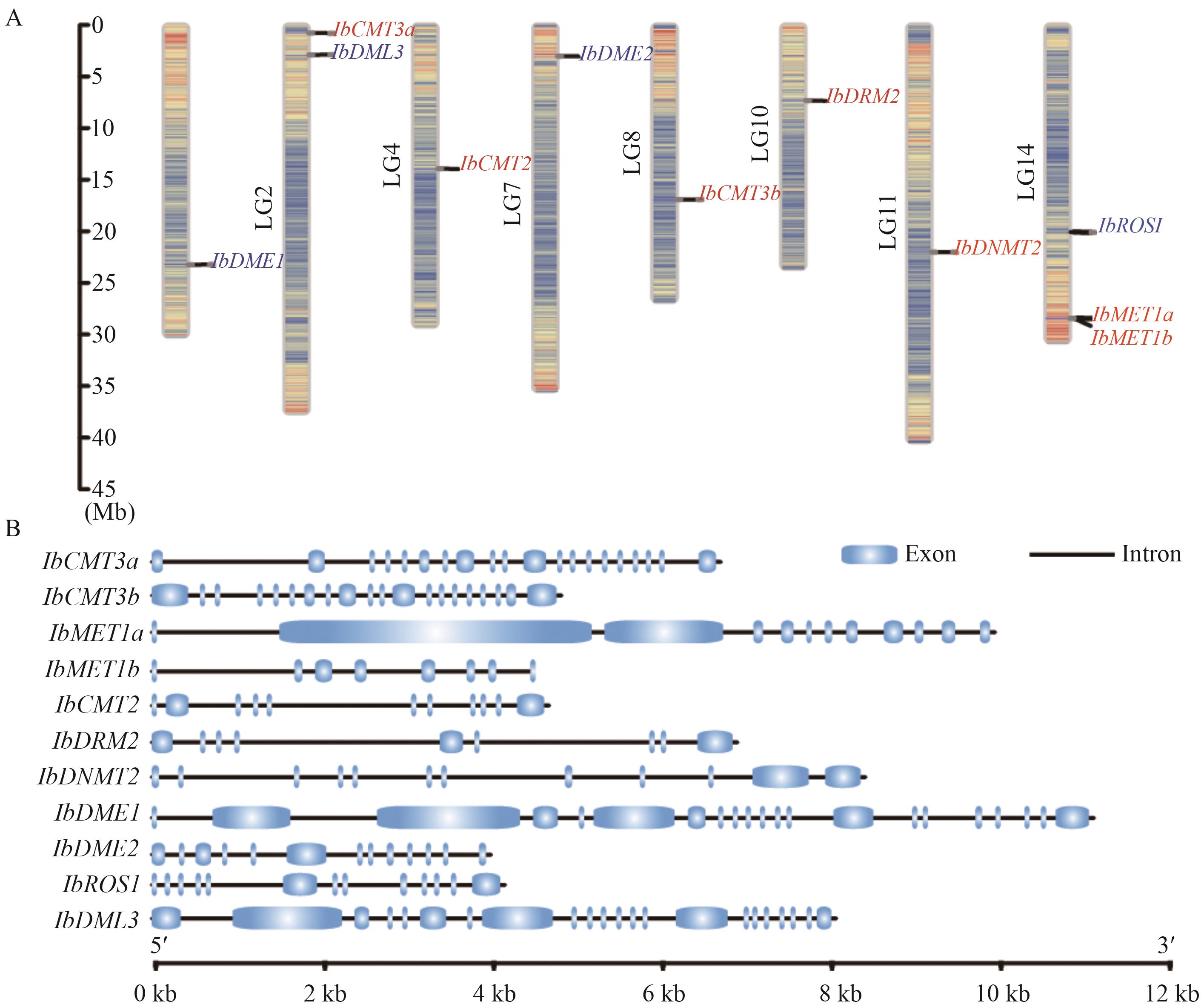
图1 IbC5-MTase和IbdMTase基因家族染色体分布及结构分析A:基因在连锁群上的分布,红色为IbC5-MTase家族基因,蓝色为IbdMTase家族基因;B:基因外显子-内含子分布,蓝色方块代表外显子,黑线代表内含子
Fig. 1 Chromosome distribution and structural analysis of the IbC5-MTase and IbdMTase gene familyA: Distribution of genes on linkage groups, red indicates the IbC5-MTase genes, blue indicates the IbdMTase genes. B: The exon-intron distribution of genes, with blue squares indicating exons and black lines representing introns
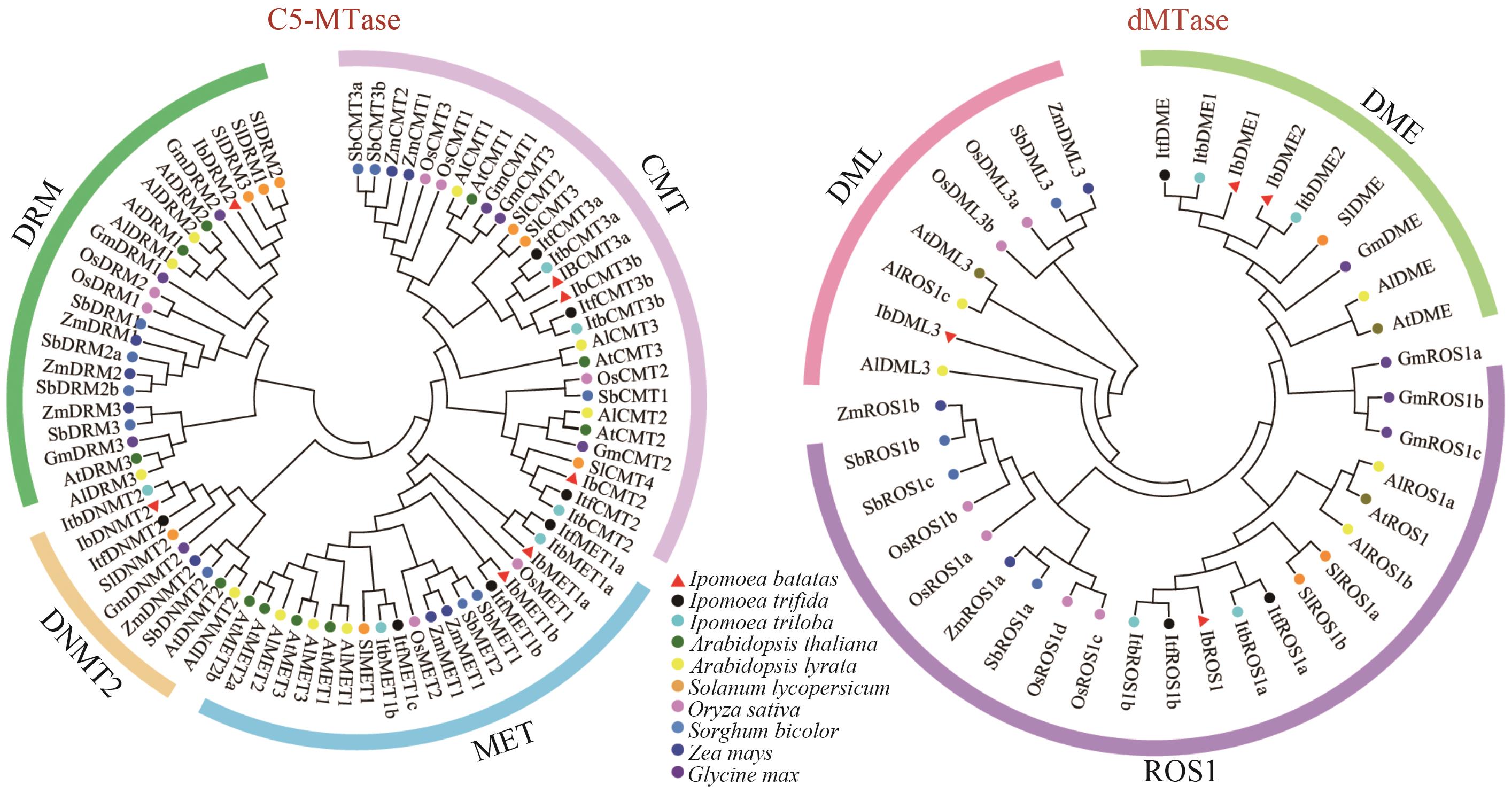
图2 不同植物C5-MTase和dMTase蛋白的系统进化树Ib:甘薯;Itf:三浅裂野牵牛;Itb:三裂叶薯;At:拟南芥;Al:琴叶拟南芥;Sl:番茄;Os:水稻;Sb:高粱;Zm:玉米;Gm:大豆
Fig. 2 Phylogenetic trees of C5-MTase and dMTase proteins in different plantsIb: Ipomoea batatas; Itf: Ipomoea trifida; Itb: Ipomoea triloba; At: Arabidopsis thaliana; Al: Arabidopsis lyrata; Sl: Solanum lycopersicum; Os: Oryza sativa; Sb:Sorghum bicolor; Zm:Zea mays; Gm: Glycine max
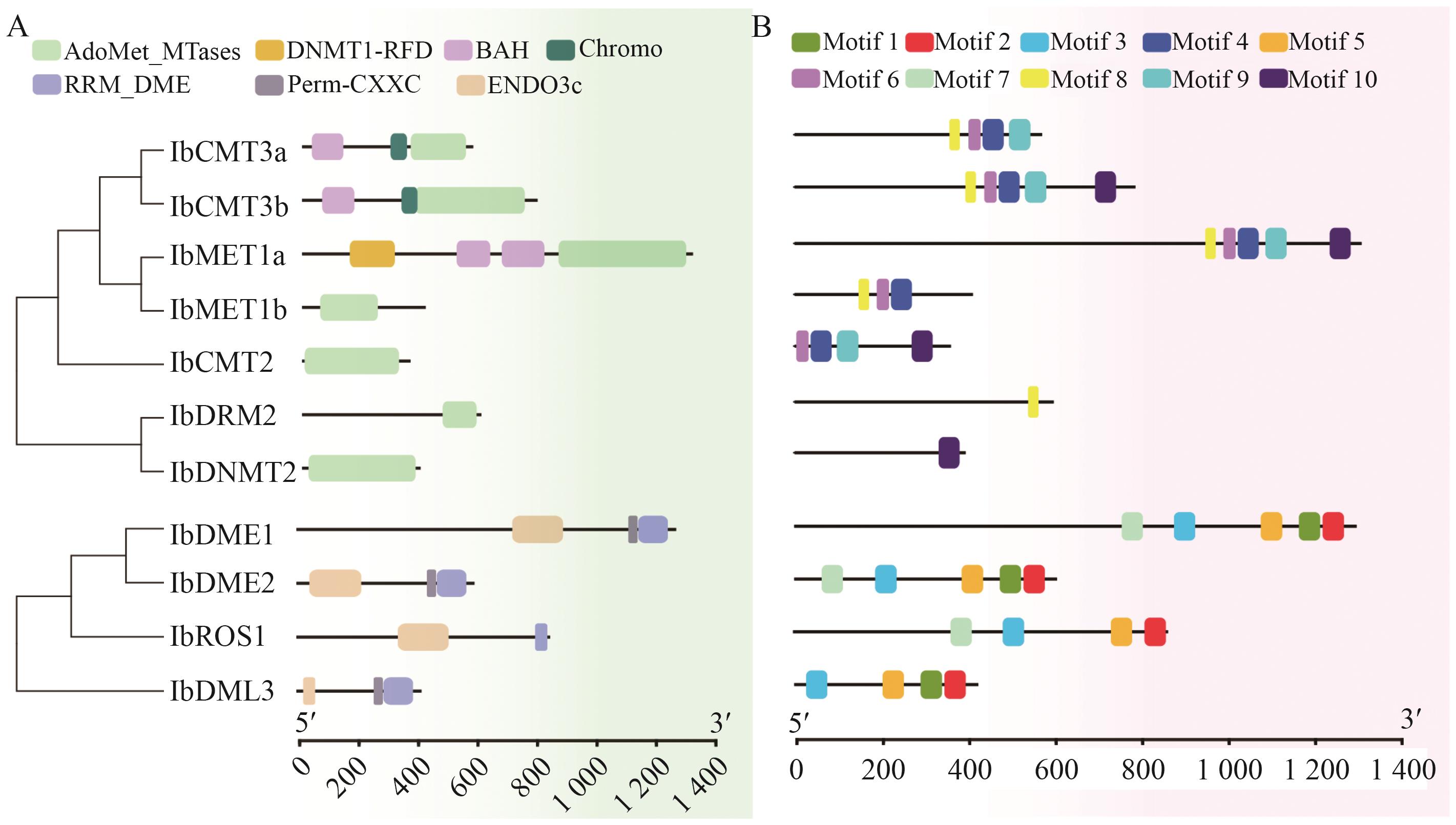
图3 IbC5-MTase和IbdMTase蛋白保守结构域及基序分析A:IbC5-MTase和IbdMTase蛋白保守结构域; B:IbC5-MTase和IbdMTase蛋白基序图
Fig. 3 Conserved domain and motif analysis of IbC5-MTase and IbdMTase proteinsA: Conserved domains of IbC5-MTase and IbdMTase proteins. B: Motif diagrams of IbC5-MTase and IbdMTase proteins
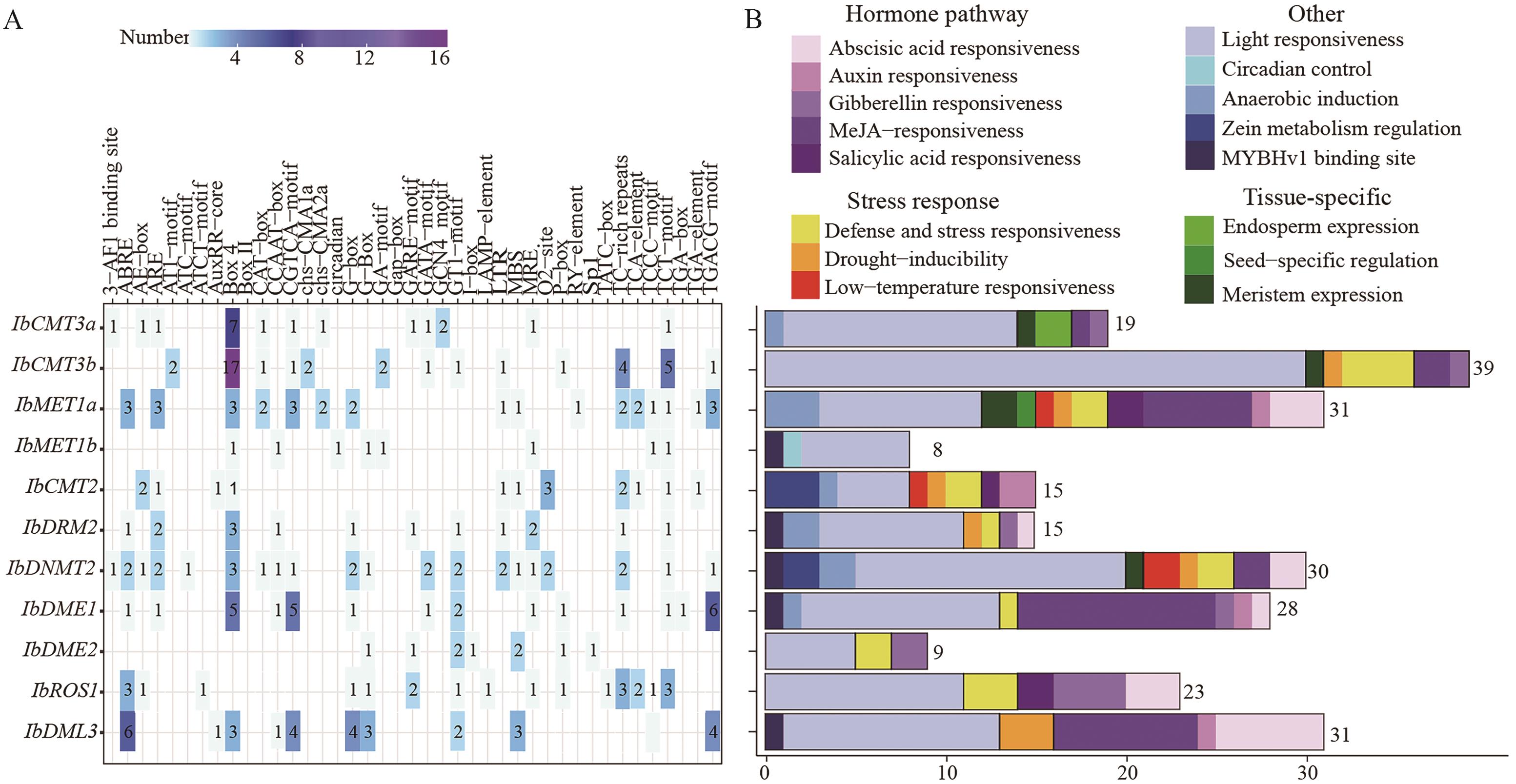
图4 IbC5-MTase和IbdMTase基因家族启动子区顺式调控元件的分布A:IbC5-MTase和IbdMTase基因家族中每个基序的数目,颜色的深浅表示数目。B:不同生物学功能相关的顺式作用元件统计
Fig. 4 Distribution of cis-regulatory elements in the promoter regions of the IbC5-MTase and IbdMTase gene familiesA: The number of each motif in the IbC5-MTase and IbdMTase gene families, with the depth of color indicating the number. B: Statistics of cis-acting elements related to different biological functions
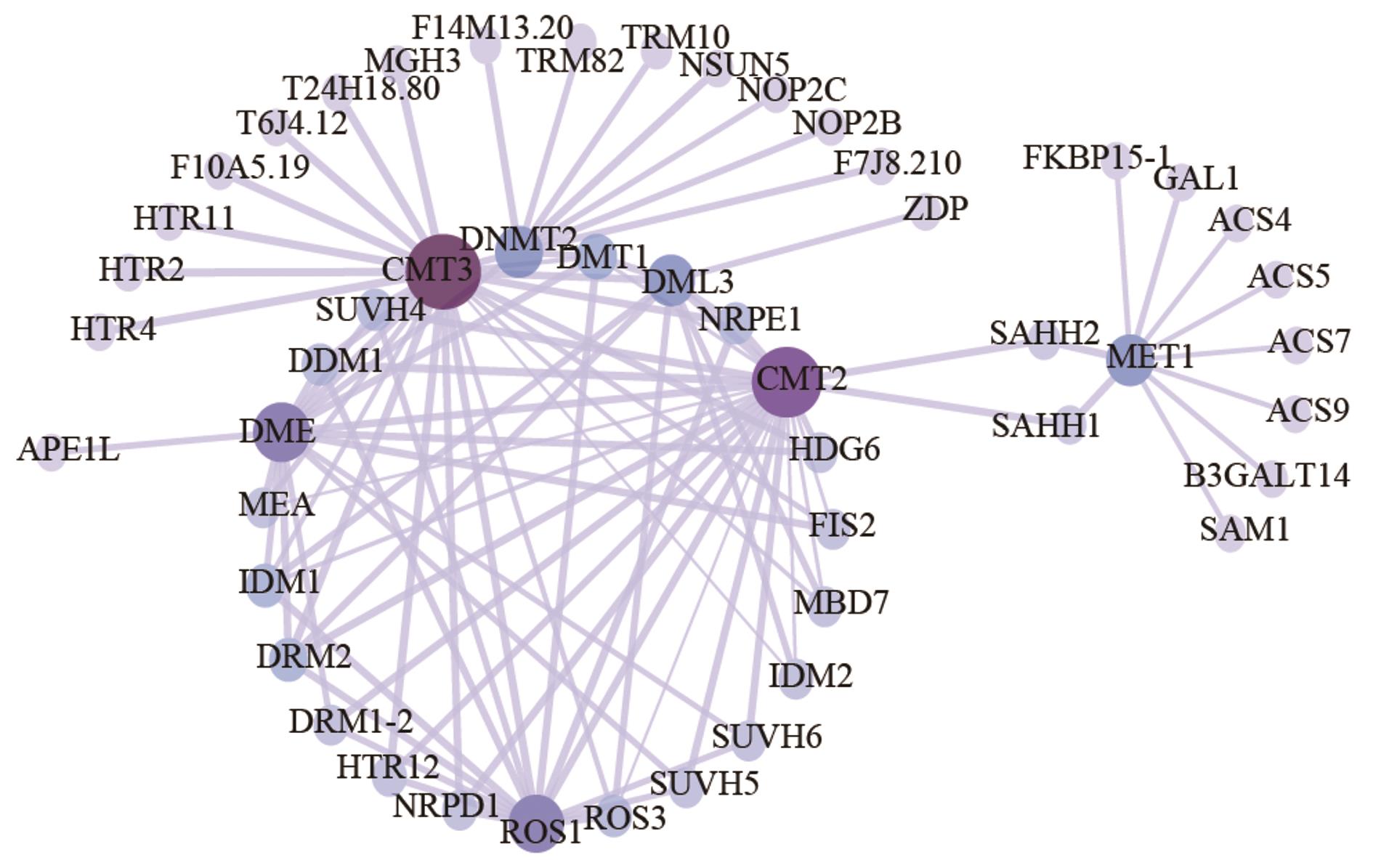
图5 IbC5-MTases和IbdMTases潜在的蛋白-蛋白相互作用网络节点表示蛋白质,其大小与颜色深度代表与之相互作用的蛋白质数量;边表示蛋白质间存在的相互作用
Fig. 5 Potential PPI network among IbC5-MTases and IbdMTasesEach node indicates a protein. The size and color intensity of a node are proportional to the number of its interacting proteins. The edges between nodes indicate predicted interactions
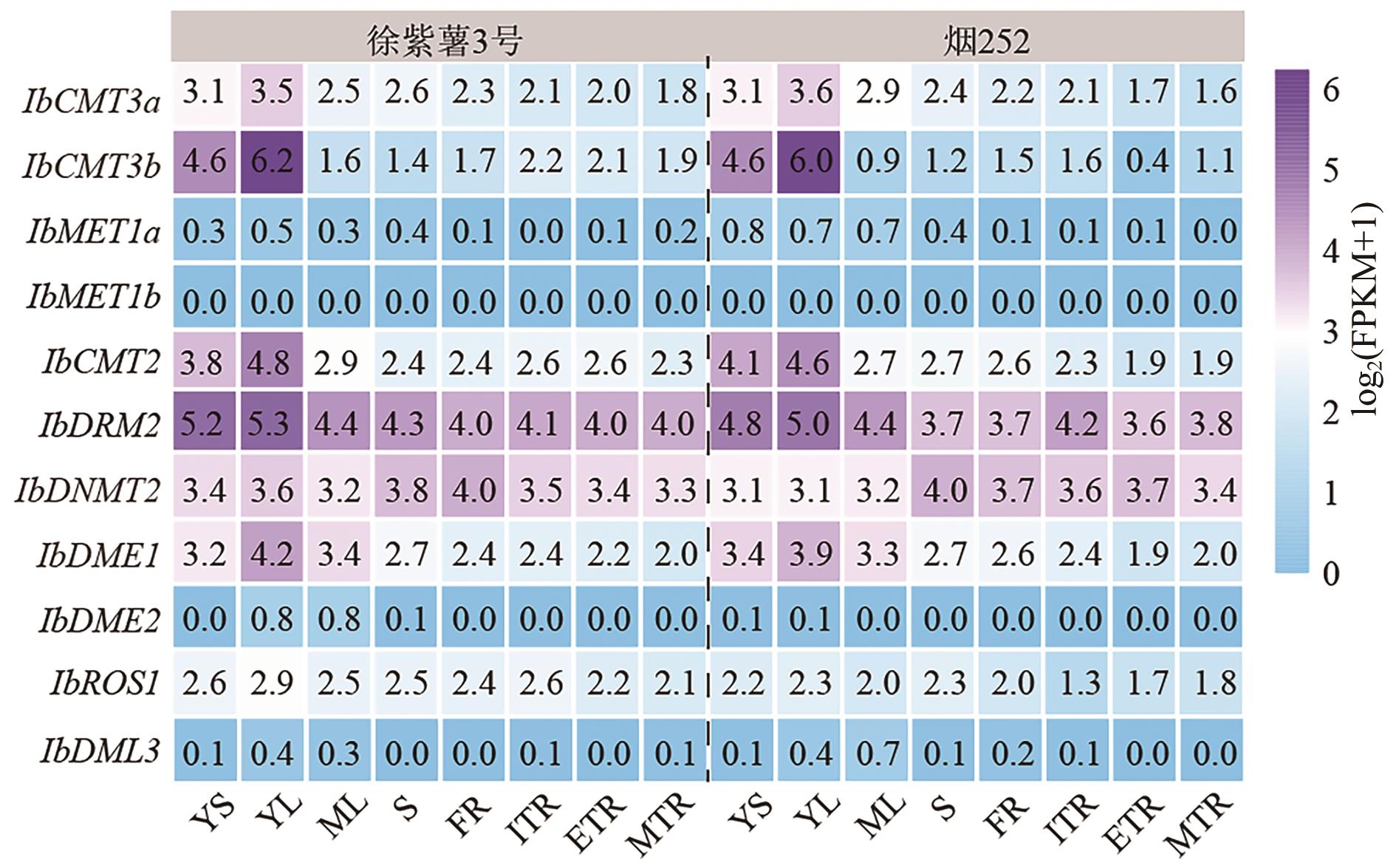
图6 IbC5-MTase和IbdMTase基因组织表达模式YS:幼苗地上部;YL:幼叶;ML:成熟叶;S:茎;FR:须根;ITR:初期块根;ETR:膨大期块根;MTR:成熟块根;Xu:徐紫薯3号;Yan:烟252
Fig. 6 Tissue expression patterns of IbC5-MTase and IbdMTase genesYS: Young shoot; YL: young leaf; ML: mature leaf; S:stem; FR: fibrous root; ITR: initial tuberous root; ETR: expanding tuberous root; MTR: mature tuberous root; Xu: Xuzishu No. 3; Yan: Yan 252
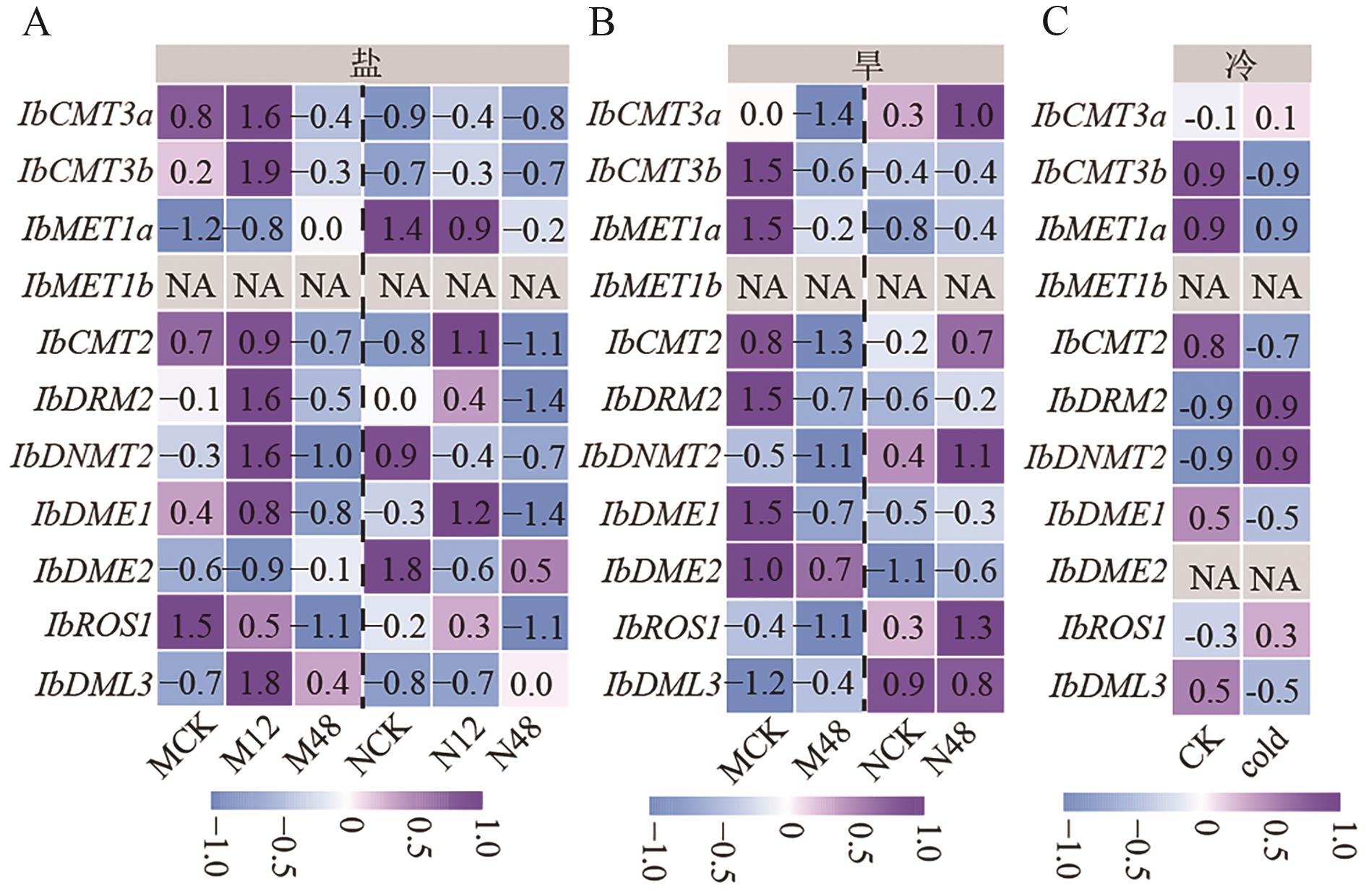
图7 IbC5-MTase和IbdMTase基因在非生物胁迫下的表达分析SM:盐敏感材料栗子香;SN:耐盐材料ND98;DM:干旱敏感材料18-12-3;DN:耐旱材料XS161819;盐:200 mmol/L NaCl处理;旱:20% PEG处理;冷:4 ℃处理;灰色方块代表未检测到基因表达A:盐胁迫处理下IbC5-MTase和IbdMTase基因家族表达分析;B:干旱胁迫处理下IbC5-MTase和IbdMTase基因家族表达分析;C:冷胁迫处理下IbC5-MTase和IbdMTase基因家族表达分析
Fig. 7 Expression analysis of IbC5-MTase and IbdMTase genes under abiotic stressSM: Salt-sensitive material Lizixiang. SN: Salt-resistant material ND98. DM: Drought-sensitive material 18-12-3. DN: Drought-resistant material XS161819. Salt: 200 mmol/L NaCl treatment; drought: 20% PEG treatment; cold: 4 ℃ treatment. The grey square indicates that no gene expression has been detected.A: Expression analysis of IbC5-MTase and IbdMTase gene families under salt stress treatment. B: Expression analysis of IbC5-MTase and IbdMTase gene families under drought stress treatment. C: Expression analysis of IbC5-MTase and IbdMTase gene families under cold stress treatment
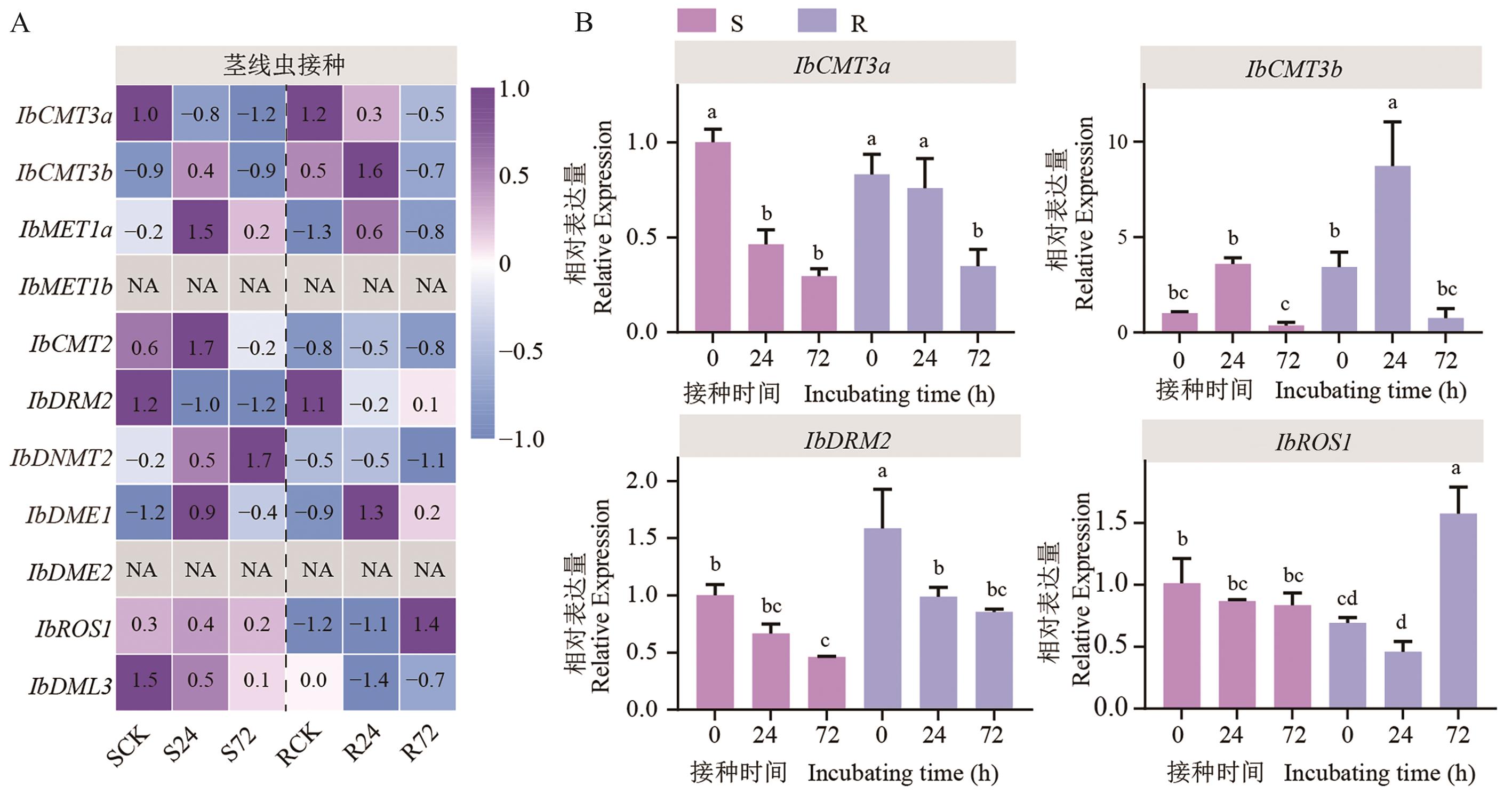
图8 IbC5-MTase和IbdMTase基因茎线虫接种处理表达分析R:高抗茎线虫材料徐18-203;S:高感茎线虫材料徐紫薯8号;柱状图上不同小写字母表示在P0.05水平时显著差异A:茎线虫接种处理下IbC5-MTase和IbdMTase基因家族转录水平分析;B:IbC5-MTase和IbdMTase基因响应茎线虫的RT-qPCR验证
Fig. 8 Expression analysis of IbC5-MTase and IbdMTase genes in stem nematode inoculation treatmentR: Stem nematode-highly resistant material Xu 18-203. S: Stem nematode-highly susceptible material Xuzi 8. Different lowercase letters above the bars indicate significant differences at the P0.05 levelA: Transcriptional level analysis of the IbC5-MTase and IbdMTase gene families under stem nematode inoculation treatment. B: RT-qPCR verification of the response of IbC5-MTase and IbdMTase genes to stem nematodes
| [1] | Zhang HM, Lang ZB, Zhu JK. Dynamics and function of DNA methylation in plants [J]. Nat Rev Mol Cell Biol, 2018, 19(8): 489-506. |
| [2] | Liu RE, Lang ZB. The mechanism and function of active DNA demethylation in plants [J]. J Integr Plant Biol, 2020, 62(1): 148-159. |
| [3] | Law JA, Jacobsen SE. Establishing, maintaining and modifying DNA methylation patterns in plants and animals [J]. Nat Rev Genet, 2010, 11(3): 204-220. |
| [4] | Eissenberg JC. Molecular biology of the chromo domain: an ancient chromatin module comes of age [J]. Gene, 2001, 275(1): 19-29. |
| [5] | Ahmad F, Huang X, Lan HX, et al. Comprehensive gene expression analysis of the DNA (cytosine-5) methyltransferase family in rice (Oryza sativa L.) [J]. Genet Mol Res, 2014, 13(3): 5159-5172. |
| [6] | Qian YX, Xi YL, Cheng BJ, et al. Genome-wide identification and expression profiling of DNA methyltransferase gene family in maize [J]. Plant Cell Rep, 2014, 33(10): 1661-1672. |
| [7] | Guo XH, Xie Q, Li BY, et al. Molecular characterization and transcription analysis of DNA methyltransferase genes in tomato (Solanum lycopersicum) [J]. Genet Mol Biol, 2020, 43: e20180295. |
| [8] | Gu TT, Ren S, Wang YH, et al. Characterization of DNA methyltransferase and demethylase genes in Fragaria vesca [J]. Mol Genet Genom, 2016, 291(3): 1333-1345. |
| [9] | 翟琼, 郑浩霞, 胡博. 花生DNA甲基转移酶基因家族生物信息学分析 [J/OL]. 分子植物育种, 2022: 1-22. (2022-10-22). . |
| Zhai Q, Zheng HX, Hu B. Bioinformatics analysis of peanut DNA methyltransferase gene family [J/OL]. Mol Plant Breed, 2022: 1-22. (2022-10-22). . | |
| [10] | Yu ZM, Zhang GH, Teixeira da Silva JA, et al. Genome-wide identification and analysis of DNA methyltransferase and demethylase gene families in Dendrobium officinale reveal their potential functions in polysaccharide accumulation [J]. BMC Plant Biol, 2021, 21(1): 21. |
| [11] | Xu R, Wang YH, Zheng H, et al. Salt-induced transcription factor MYB74 is regulated by the RNA-directed DNA methylation pathway in Arabidopsis [J]. J Exp Bot, 2015, 66(19): 5997-6008. |
| [12] | Mao HD, Wang HW, Liu SX, et al. A transposable element in a NAC gene is associated with drought tolerance in maize seedlings [J]. Nat Commun, 2015, 6: 8326. |
| [13] | Wang Y, Zuo LL, Wei TL, et al. CHH methylation of genes associated with fatty acid and jasmonate biosynthesis contributes to cold tolerance in autotetraploids of Poncirus trifoliata [J]. J Integr Plant Biol, 2022, 64(12): 2327-2343. |
| [14] | Le TN, Schumann U, Smith NA, et al. DNA demethylases target promoter transposable elements to positively regulate stress responsive genes in Arabidopsis [J]. Genome Biol, 2014, 15(9): 458. |
| [15] | 李强, 赵海, 靳艳玲, 等. 中国甘薯产业助力国家粮食安全的分析与展望 [J]. 江苏农业学报, 2022, 38(6): 1484-1491. |
| Li Q, Zhao H, Jin YL, et al. Analysis and perspectives of sweetpotato industry contributing to national food security in China [J]. Jiangsu J Agric Sci, 2022, 38(6): 1484-1491. | |
| [16] | 王崇, 兰孟焦, 肖满秋, 等. 甘薯PAL基因家族的全基因组鉴定及生物信息学分析 [J]. 植物遗传资源学报, 2025, 26(6): 1091-1105. |
| Wang C, Lan MJ, Xiao MQ, et al. Genome-wide identification and bioinformatics analysis of the PAL gene family in sweetpotato [Ipomoea batatas (L.) Lam.] [J]. J Plant Genet Resour, 2025, 26(6): 1091-1105. | |
| [17] | Zhang H, Zhang Q, Zhai H, et al. Transcript profile analysis reveals important roles of jasmonic acid signalling pathway in the response of sweet potato to salt stress [J]. Sci Rep, 2017, 7: 40819. |
| [18] | 闫会, 张成玲, 张允刚, 等. 甘薯茎线虫病抗扩展性遗传特性分析与QTL定位 [J]. 植物遗传资源学报, 2023, 24(6): 1766-1777. |
| Yan H, Zhang CL, Zhang YG, et al. Analysis of resistance inheritance and QTL mapping of sweet potato stem nematode disease [J]. J Plant Genet Resour, 2023, 24(6): 1766-1777. | |
| [19] | Cheng JF, Niu QF, Zhang B, et al. Downregulation of RdDM during strawberry fruit ripening [J]. Genome Biol, 2018, 19(1): 212. |
| [20] | Cao XF, Jacobsen SE. Role of the Arabidopsis DRM methyltransferases in de novo DNA methylation and gene silencing [J]. Curr Biol, 2002, 12(13): 1138-1144. |
| [21] | Khouider S, Borges F, LeBlanc C, et al. Male fertility in Arabidopsis requires active DNA demethylation of genes that control pollen tube function [J]. Nat Commun, 2021, 12: 410. |
| [22] | Wang Q, Qu YQ, Yu YH, et al. Genome-wide identification and comparative analysis of DNA methyltransferase and demethylase gene families in two ploidy Cyclocarya paliurus and their potential function in heterodichogamy [J]. BMC Genom, 2023, 24(1): 287. |
| [23] | Zhang YX, He XQ, Zhao HC, et al. Genome-wide identification of DNA methylases and demethylases in kiwifruit (Actinidia chinensis) [J]. Front Plant Sci, 2020, 11: 514993. |
| [24] | Bennett M, Cleaves K, Hewezi T. Expression patterns of DNA methylation and demethylation genes during plant development and in response to phytohormones [J]. Int J Mol Sci, 2021, 22(18): 9681. |
| [25] | 袁超, 张少伟, 牛义, 等. 植物DNA甲基化作用机制的研究进展 [J]. 生物工程学报, 2020, 36(5): 838-848. |
| Yuan C, Zhang SW, Niu Y, et al. Advances in research on the mechanism of DNA methylation in plants [J]. Chin J Biotechnol, 2020, 36(5): 838-848. | |
| [26] | Rao XL, Yang SL, Lü SY, et al. DNA methylation dynamics in response to drought stress in crops [J]. Plants, 2024, 13(14): 1977. |
| [27] | Huang ML, Zhang Y, Wang Y, et al. Active DNA demethylation regulates MAMP-triggered immune priming in Arabidopsis [J]. J Genet Genom, 2022, 49(8): 796-809. |
| [28] | Zhang YD, Zhong J, Munawar A, et al. Knocking down a DNA demethylase gene affects potato plant defense against a specialist insect herbivore [J]. J Exp Bot, 2024, 75(1): 483-499. |
| [29] | Wang LF, Cao S, Wang PT, et al. DNA hypomethylation in tetraploid rice potentiates stress-responsive gene expression for salt tolerance [J]. Proc Natl Acad Sci U S A, 2021, 118(13): e2023981118. |
| [30] | Gouil Q, Baulcombe DC. Paramutation-like features of multiple natural epialleles in tomato [J]. BMC Genom, 2018, 19(1): 203. |
| [31] | Zhang H, Zhu JK. Epigenetic gene regulation in plants and its potential applications in crop improvement [J]. Nat Rev Mol Cell Biol, 2025, 26(1): 51-67. |
| [32] | Song XW, Tang SJ, Liu H, et al. Inheritance of acquired adaptive cold tolerance in rice through DNA methylation [J]. Cell, 2025, 188(16): 4213-4224.e12. |
| [33] | Chen YP, Li D, Lang ZB, et al. An emerging role beyond genetics: DNA methylation in horticultural quality shaping [J]. Innov Life, 2024, 2(1): 100050. |
| [1] | 王江清, 张蝶, 王荟洁, 袁柱东, 付艳鸿, 黄娅楠, 王洪洋. 马铃薯AP2/ERF基因家族鉴定及响应致病疫霉胁迫的表达分析[J]. 生物技术通报, 2026, 42(6): 116-127. |
| [2] | 熊仕发, 陈益存, 吴立文, 施翔, 张盛剿, 彭方有, 陈涛梅, 汪阳东. 白栎TCP基因家族的鉴定及功能分析[J]. 生物技术通报, 2026, 42(6): 258-266. |
| [3] | 李旭龙, 徐世强, 张龙, 李静宇, 何伟贤, 陈立凯, 王继华. 巴戟天萜烯合成酶基因家族鉴定、进化及表达模式分析[J]. 生物技术通报, 2026, 42(6): 314-325. |
| [4] | 李建功, 邓逸桐, 赵路宽, 王珧, 曹清河. 流式细胞术的优化及其在甘薯倍性鉴定中的应用[J]. 生物技术通报, 2026, 42(6): 77-86. |
| [5] | 金旋, 向芬, 戴翠婷, 杨辉, 李赛君, 刘红艳, 钱思维, 蔺万煌, 李维. 茶树CsTDIFL基因的克隆、表达特性分析及其对氨基酸合成的调控[J]. 生物技术通报, 2026, 42(5): 323-331. |
| [6] | 郭苗, 许家佳, 孙天国, 蔡璨, 曹婉笛, 包纪星, 沙伟, 张梅娟, 彭疑芳, 马天意. 过表达砂藓RcOLEO1基因增强拟南芥的耐旱性及耐高温性[J]. 生物技术通报, 2026, 42(5): 312-322. |
| [7] | 梁慧琪, 陈益存, 汪阳东, 赵耘霄, 高暝. 山苍子PAT1基因亚家族鉴定及其在嫁接愈合过程中的表达分析[J]. 生物技术通报, 2026, 42(5): 302-311. |
| [8] | 冯成蒿, 党雨乐, 王志泽, 聂蔚丹, 杨中敏, 杜崇. 基于RNA-seq筛选番茄防御南方根结线虫病的差异基因与RPP13的表达特征分析[J]. 生物技术通报, 2026, 42(4): 141-152. |
| [9] | 倪飞飞, 陈益存, 高暝, 张盛剿, 彭方有, 陈涛梅, 赵耘霄, 汪阳东. 山苍子TCP基因鉴定及其调控萜类合成的研究[J]. 生物技术通报, 2026, 42(4): 227-238. |
| [10] | 陈登科, 兰刚, 夏芝, 侯保国, 杨六六, 曹彩荣, 李朋波, 吴翠翠. 花生ZF-HD基因家族的鉴定和非生物胁迫响应分析[J]. 生物技术通报, 2026, 42(4): 114-128. |
| [11] | 孙婷, 张艳, 刘玉珊, 冯媛媛, 秦恒山, 张军, 何小岗, 张景荣. 黄秋葵AeF3H基因的克隆与功能分析[J]. 生物技术通报, 2026, 42(4): 153-160. |
| [12] | 刘林娅, 刘欢艳, 梁鑫钰, 宋姝熠, 何斌, 王绪英, 黄亚成. ‘红阳’猕猴桃BGAL基因家族的全基因组鉴定与表达分析[J]. 生物技术通报, 2026, 42(3): 312-323. |
| [13] | 徐泽, 周陈平, 邝瑞彬, 吴夏明, 杨敏, 刘传和, 贺涵, 魏岳荣. 番木瓜PG基因家族鉴定及其在果实软化中的功能[J]. 生物技术通报, 2026, 42(3): 349-361. |
| [14] | 张冬岭, 张寅生, 王建军, 叶飞宇, 卢子涵, 马晨晨, 柳华峰, 胡德升, 邓亚洲, 曹丽茹. 玉米HSFs转录因子家族在干旱胁迫下的表达特性及功能[J]. 生物技术通报, 2026, 42(2): 178-187. |
| [15] | 农韦优, 赵昌祖, 钱禛锋, 丁倩, 王誉洁, 陈疏影, 何丽莲, 李富生. 蔗茅EfBBX基因家族鉴定及冷胁迫下表达模式分析[J]. 生物技术通报, 2026, 42(2): 267-277. |
| 阅读次数 | ||||||
|
全文 |
|
|||||
|
摘要 |
|
|||||
