







生物技术通报 ›› 2026, Vol. 42 ›› Issue (9): 120-127.doi: 10.13560/j.cnki.biotech.bull.1985.2026-0021
• 植物发育生物学专题 • 上一篇
付彩霞, 张瑞花, 祝云俊, 李靖, 杨科( ), 王轩鹏()
收稿日期:2026-01-08
出版日期:2026-09-26
发布日期:2026-09-16
通讯作者:
王轩鹏996362@hainanu.edu.cn基金资助:
FU Cai-xia, ZHANG Rui-hua, ZHU Yun-jun, LI Jing, YANG Ke(), WANG Xuan-peng()
Received:2026-01-08
Published:2026-09-26
Online:2026-09-16
摘要:
目的 构建适用于拟南芥种子的胚与胚乳中基因功能研究的pOp6/LhG4AtO表达系统,并验证该系统的可行性,为基因组织特异性表达提供可靠的操作工具。 方法 基于pOp6/LhG4AtO的二元转录激活系统,选取已报道的胚(TWS1)和胚乳(FWA、ESH1)特异性启动子构建“驱动”载体。同时,选用增加核定位的荧光报告基因(H2B-Clover)构建效应载体。采用农杆菌介导的花序浸染法进行遗传转化,获得目标转基因阳性株系。通过将驱动系和效应系进行杂交,在其F1代种子中,观察授粉后2‒5 d报告基因的组织特异性表达情况,并与公共芯片转录组数据(NCBI GEO;accession number GSE12404)进行比对分析。 结果 成功构建pOp6/LhG4AtO表达系统,并获得所需的独立转基因株系,包括驱动系(pTWS1::LhG4AtO 、pFWA::LhG4AtO 、pESH1::LhG4AtO )和效应系(pOp6::H2B-Clover)。驱动系与效应系杂交后,pTWS1::LhG4AtO 驱动的效应系仅在3‒5 d的胚细胞核中观察到特异且持续高表达的绿色荧光信号;pFWA::LhG4AtO 和pESH1::LhG4AtO 驱动的效应系在授粉后2‒5 d的胚乳细胞核中观察到特异且持续高表达的绿色荧光信号。表明pOp6/LhG4AtO表达系统驱动的效应系荧光表达模式,与已发表的芯片转录组数据高度一致。 结论 建立并验证了pOp6/LhG4AtO系统在拟南芥种子的胚和胚乳中组织特异性驱动基因表达的能力,为种子发育过程中关键基因的功能研究提供了可靠的操作工具。
付彩霞, 张瑞花, 祝云俊, 李靖, 杨科, 王轩鹏. 拟南芥种子的胚与胚乳中pOp6/LhG4AtO表达系统的构建与验证[J]. 生物技术通报, 2026, 42(9): 120-127.
FU Cai-xia, ZHANG Rui-hua, ZHU Yun-jun, LI Jing, YANG Ke, WANG Xuan-peng. Construction and Validation of the pOp6/LhG4AtO Expression System in the Embryo and Endosperm of Arabidopsis Seed[J]. Biotechnology Bulletin, 2026, 42(9): 120-127.
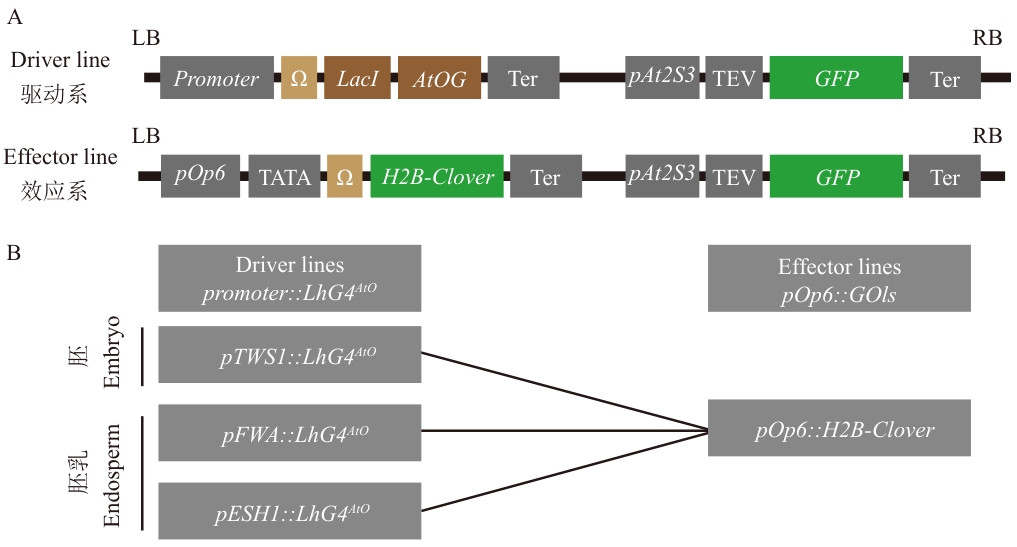
图1 pOp6/LhG4AtO 载体设计和杂交组合A:pop6/LhG4Ato载体设计结构;Promoter:启动子;Ω:翻译增强元件Omaga;Ter:终止子;TEV:烟草蚀纹病毒翻译增强子;pAt2S3:种子储藏清蛋白基因SESA3启动子;B:pop6/LhG4Ato体系中驱动系和效应系的杂交组合
Fig. 1 Vector design and hybrid combination of pOp6/LhG4AtOA: Design of pop6/LhG4Ato vector structure. Promoter: promoter. Ω: Omega, translation enhancement element. Ter: Terminator. TEV: Translation enhancer of tobacco etch virus. pAt2S3: Seed storage albumingene SESA3 promoter. B: Crossing combinations between driver lines and effector lines in the pop6/LhG4Ato system
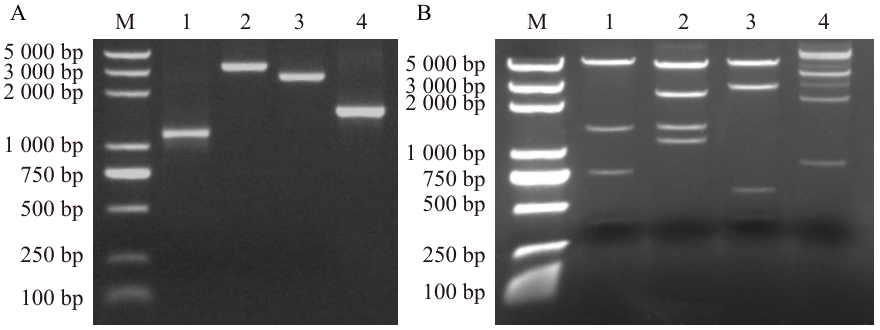
图2 胚、胚乳启动子片段克隆和双元载体酶切鉴定A:组织特异性启动子克隆(M:2 000 DNA marker;1-4:克隆片段分别为pTWS1、pFWA、pESH1、H2B-Clover);B:重组质粒酶切鉴定(M:2 000 DNA marker;1-4:酶切质粒分别为pTWS1::LhG4AtO 、pFWA::LhG4AtO 、pESH1::LhG4AtO 、pOp6::H2B-Clover)
Fig. 2 Cloning of embryo and endosperm promoter fragments and identification of binary vector digestionA: Cloning of tissue-specific promoter (M: 2 000 DNA marker. 1-4: Cloned fragments were, pTWS1, pFWA, pESH1, H2B-Clover). B: Restriction enzyme digestion identification of recombinant plasmid (M: 2 000 DNA marker. 1-4: Plasmids were pTWS1::LhG4AtO, pFWA::LhG4AtO, pESH1::LhG4AtO, pOp6::H2B-Clover, respectively)
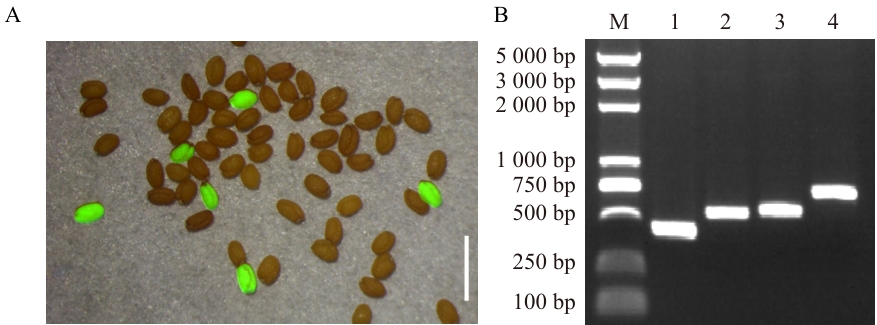
图3 转基因材料的筛选及鉴定A:转基因阳性种子的筛选;标尺为1 mm;B:转基因株系阳性鉴定的琼脂糖凝胶电泳检测(M:2 000 DNA marker;1-4分别为pTWS1::LhG4AtO 、pFWA::LhG4AtO 、pESH1::LhG4AtO 、pOp6::H2B-Clover)
Fig. 3 Screening and identification of transgenic materialsA: Screening of transgenic positive seeds. Scale bar=1 mm. B: Detection of positive identification of transgenic lines by agarose gel electrophoresis (M: 2 000 DNA marker. 1-4: The fragments were pTWS1::LhG4AtO, pFWA::LhG4AtO, pESH1::LhG4AtO, pOp6::H2B-Clover, respectively)
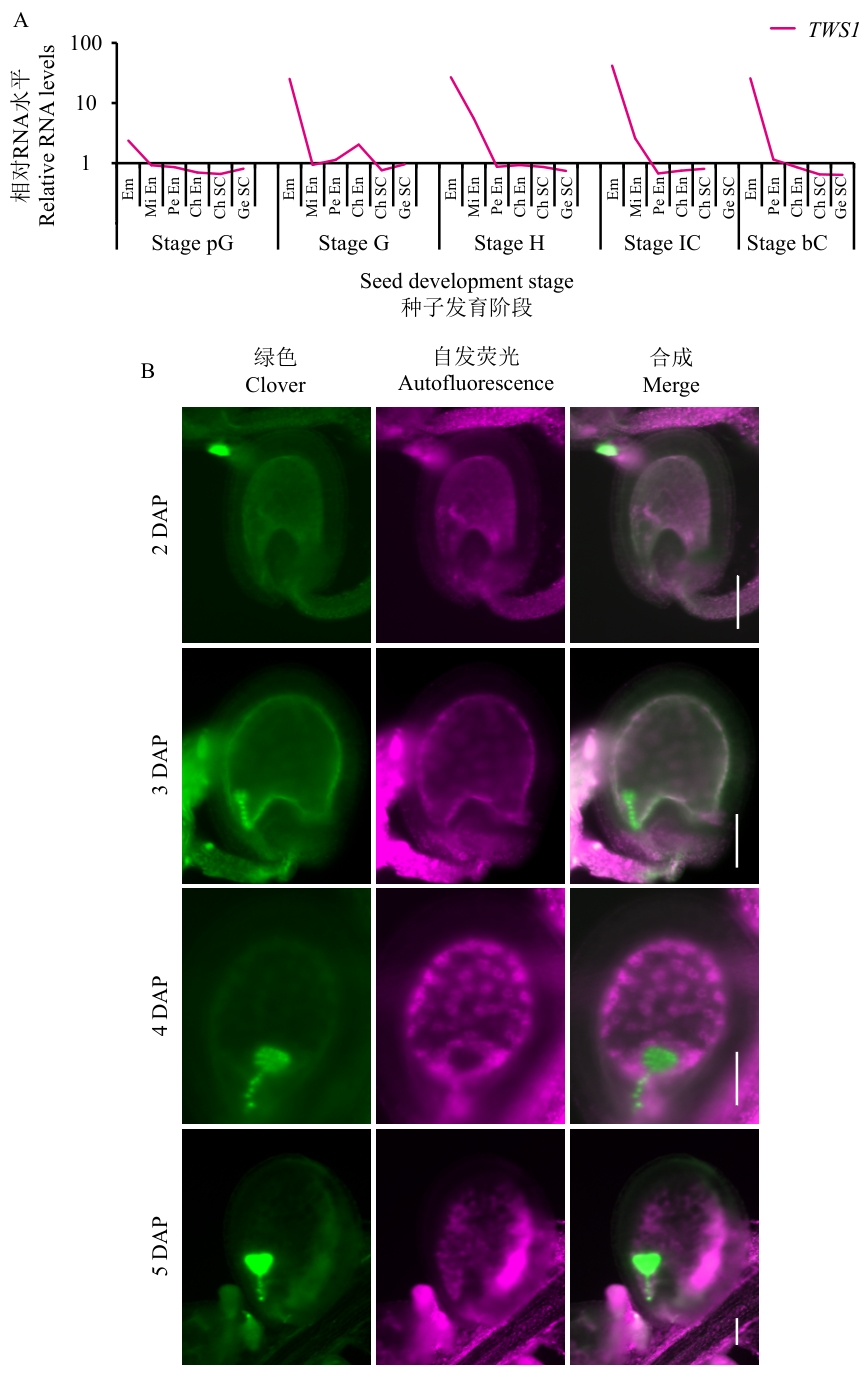
图4 TWS1在种子不同发育阶段的表达模式及其驱动的H2B-Clover报告基因表达A:TWS1在种子发育阶段的表达模式(NCBI GEO; accession number GSE12404);Stage pG:前球形期;Stage G:球形期;Stage H:心形期;Stage IC:幼嫩子叶期;Stage bC:弯曲子叶期;Em:胚;Mi En:珠孔端胚乳;Pe En:外周胚乳;Ch En:合点端胚乳;Ch SC:合点端种皮;Ge SC:常规种皮;Y轴数值是以10为基底的对数刻度值,下同;B:杂交F1 2‒5 d种子中TWS1驱动效应系的荧光表达情况;胚中核定位的绿色荧光信号为TWS1驱动的目标信号,而种皮及胚乳中质体的自发荧光呈现为红色荧光信号;DAP:授粉后的天数;标尺为50 μm。下同
Fig. 4 Relative expression of TWS1 at different developmental stages of seeds and the expression of H2B-Clover reporter gene driven by TWS1A: Expression pattern of TWS1 in seed development stage (NCBI GEO; accession number GSE12404). Stage pG: Pre-globular stage. Stage G: Globular stage. Stage H: Heart stage. Stage IC: Linage cotyledon stage. Stage bC: Bent cotyledon stage. Em: Embryo. Mi En: Micropylar endosperm. Pe En: Peripheral endosperm. Ch En: Chalazal endosperm. Ch SC: Chalazal seed coat. Ge SC: General seed coat. The Y-axis value is a logarithmic scale value based on 10. The same below. B: Fluorescence expression of the TWS1 driven effector line in F1 hybrid seeds at 2‒5 d after pollination. The nuclear-localized green fluorescent signal in the embryo indicates the TWS1 driven target signal, whereas the autofluorescence of plastids in the seed coat and endosperm appears as a red fluorescent signal. DAP is days after pollination. Scale bar, 50 μm. The same below
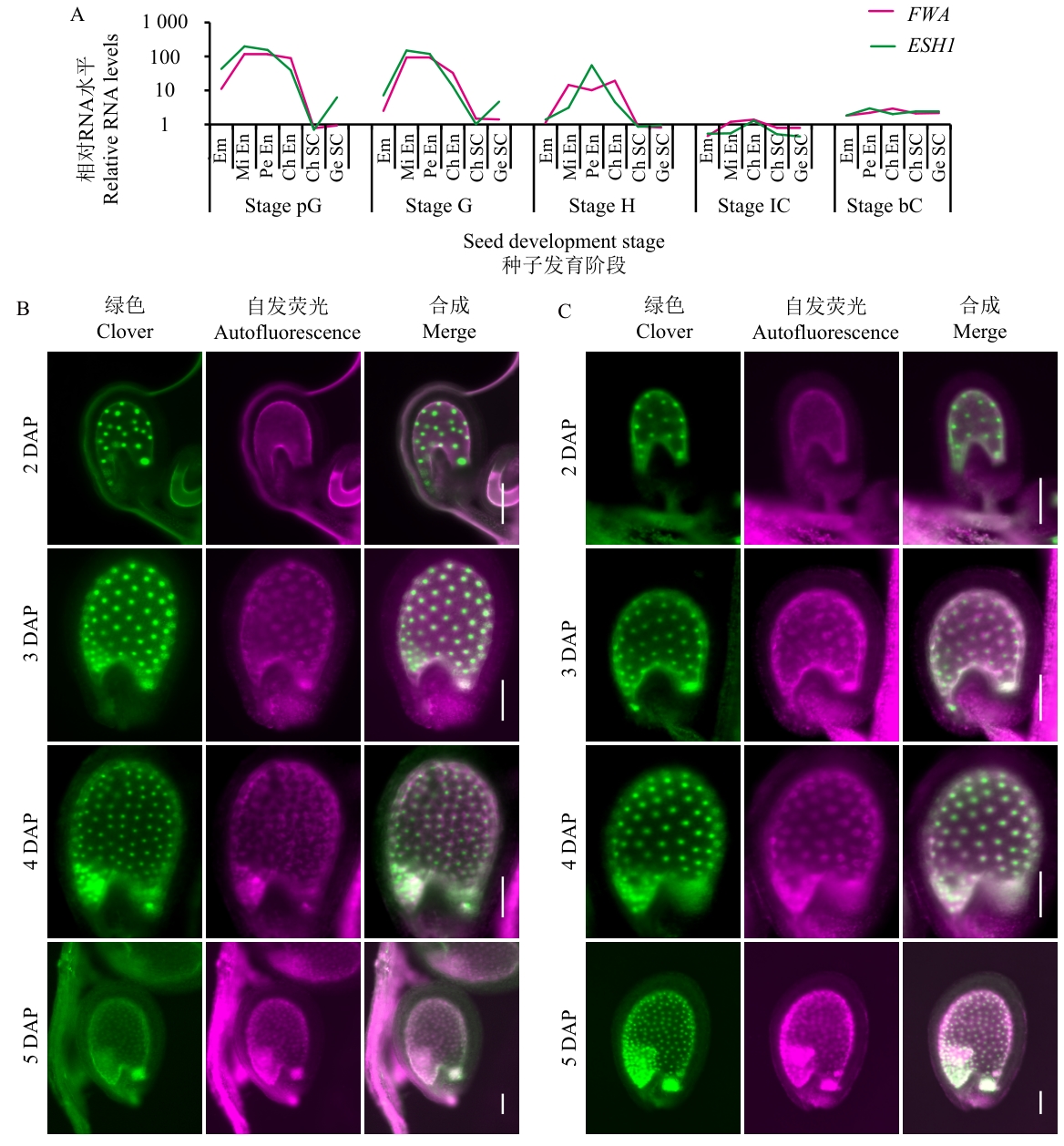
图5 FWA和ESH1在种子不同发育阶段的表达模式分析及其驱动的H2B-Clover报告基因表达A:FWA和ESH1在种子发育阶段的表达模式(NCBI GEO; accession number GSE12404);B‒C:分别是FWA和ESH1在杂交F12‒5 d种子中驱动效应系的荧光表达情况。胚乳中核定位的绿色荧光信号为FWA和ESH1驱动的目标信号,而种皮、胚和胚乳中质体的自发荧光呈现为红色荧光信号;标尺为50 μm
Fig. 5 Expression pattern analysis of FWA and ESH1 genes at different developmental stages of seeds and the expression of H2B-Clover reporter gene driven by themA: Expression patterns of FWA and ESH1 during seed development (NCBI GEO; accession number GSE12404). B‒C: Fluorescence expression of the FWA and ESH1 effector lines in F1 hybrid seeds at 2‒5 d after pollination, respectively. The nuclear-localized green fluorescent signal in the endosperm represents the target signal driven by FWA and ESH1, whereas the autofluorescence of plastids in the seed coat, embryo, and endosperm appears as a red fluorescent signal. Scale bar, 50 μm
| [1] | Pankaj R, Lima RB, Figueiredo DD. Hormonal regulation and crosstalk during early endosperm and seed coat development [J]. Plant Reprod, 2025, 38: 5. |
| [2] | Wang W, Xiong HX, Sun KT, et al. New insights into cell-cell communications during seed development in flowering plants [J]. J Integr Plant Biol, 2022, 64(2): 215-229. |
| [3] | Ingram GC. Family life at close quarters: communication and constraint in angiosperm seed development [J]. Protoplasma, 2010, 247(3/4): 195-214. |
| [4] | Doll NM, Ingram GC. Embryo-endosperm interactions [J]. Annu Rev Plant Biol, 2022, 73: 293-321. |
| [5] | Paolo D, Rotasperti L, Schnittger A, et al. The Arabidopsis MADS-domain transcription factor SEEDSTICK controls seed size via direct activation of E2Fa [J]. Plants, 2021, 10(2): 192. |
| [6] | Ali MF, Shin JM, Fatema U, et al. Cellular dynamics of coenocytic endosperm development in Arabidopsis thaliana [J]. Nat Plants, 2023, 9(2): 330-342. |
| [7] | Samakovli D, Tichá T, Vavrdová T, et al. HEAT SHOCK PROTEIN 90 proteins and YODA regulate main body axis formation during early embryogenesis [J]. Plant Physiol, 2021, 186(3): 1526-1544. |
| [8] | Tao Z, Hu HM, Luo X, et al. Embryonic resetting of the parental vernalized state by two B3 domain transcription factors in Arabidopsis [J]. Nat Plants, 2019, 5(4): 424-435. |
| [9] | Lloyd JPB, Khan A, Lister R. The switch-liker’s guide to plant synthetic gene circuits [J]. Plant J, 2025, 121(5): e70090. |
| [10] | Benfey PN, Chua NH. The cauliflower mosaic virus 35S promoter: combinatorial regulation of transcription in plants [J]. Science, 1990, 250(4983): 959-966. |
| [11] | Oh Y, Nagalakshmi U, Dahlbeck D, et al. Heritable virus-induced germline editing in tomato [J]. Plant J, 2025, 122: e70115. |
| [12] | Nishihara M, Hirabuchi A, Teshima T, et al. Flower color modification in Torenia fournieri by genetic engineering of betacyanin pigments [J]. BMC Plant Biol, 2024, 24: 614. |
| [13] | Ali ME, Waliullah S. A Core35S promoter of cauliflower mosaic virus drives more efficient replication of turnip crinkle virus [J]. Plants, 2021, 10(8): 1700. |
| [14] | Samalova M, Brzobohaty B, Moore I. pOp6/LhGR: a stringently regulated and highly responsive dexamethasone-inducible gene expression system for tobacco [J]. Plant J, 2005, 41(6): 919-935. |
| [15] | Jia HG, Van Loock B, Liao MJ, et al. Combination of the ALCR/AlcA ethanol switch and GAL4/VP16-UAS enhancer trap system enables spatial and temporal control of transgene expression in Arabidopsis [J]. Plant Biotechnol J, 2007, 5(4): 477-482. |
| [16] | Fu C, Robbins N, Cowen LE. Adaptation of the tetracycline-repressible system for modulating the expression of essential genes in Cryptococcus neoformans [J]. mSphere, 2025, 10(5): e01018-e01024. |
| [17] | Moore I, Gälweiler L, Grosskopf D, et al. A transcription activation system for regulated gene expression in transgenic plants [J]. Proc Natl Acad Sci U S A, 1998, 95(1): 376-381. |
| [18] | Craft J, Samalova M, Baroux C, et al. New pOp/LhG4 vectors for stringent glucocorticoid-dependent transgene expression in Arabidopsis [J]. Plant J, 2005, 41(6): 899-918. |
| [19] | Schürholz AK, López-Salmerón V, Li ZN, et al. A comprehensive toolkit for inducible, cell type-specific gene expression in Arabidopsis [J]. Plant Physiol, 2018, 178(1): 40-53. |
| [20] | Rutherford S, Brandizzi F, Townley H, et al. Improved transcriptional activators and their use in mis-expression traps in Arabidopsis [J]. Plant J, 2005, 43(5): 769-788. |
| [21] | López-Salmerón V, Schürholz AK, Li ZN, et al. Inducible, cell type-specific expression in Arabidopsis thaliana through LhGR-mediated Trans-activation [J]. JoVE, 2019(146): e59394. |
| [22] | Zerin T, Greb T, Wolf S. Inducible, tissue-specific gene expression in Arabidopsis using GR-LhG4-mediated trans-activation [M]//Kaufmann K, Vandepoele K. Plant Gene Regulatory Networks: Methods and Protocols. New York, Springer US, 2023: 13-25. |
| [23] | Fiume E, Guyon V, Remoué C, et al. TWS1, a novel small protein, regulates various aspects of seed and plant development [J]. Plant Physiol, 2016, 172(3): 1732-1745. |
| [24] | Doll NM, Royek S, Fujita S, et al. A two-way molecular dialogue between embryo and endosperm is required for seed development [J]. Science, 2020, 367(6476): 431-435. |
| [25] | Kinoshita T, Miura A, Choi Y, et al. One-way control of FWA imprinting in Arabidopsis endosperm by DNA methylation [J]. Science, 2004, 303(5657): 521-523. |
| [26] | Yang K, Tang YL, Li Y, et al. Two imprinted genes primed by DEMETER in the central cell and activated by WRKY10 in the endosperm [J]. J Genet Genom, 2024, 51(8): 855-865. |
| [27] | Li N, Li YH. Signaling pathways of seed size control in plants [J]. Curr Opin Plant Biol, 2016, 33: 23-32. |
| [28] | Phillips AR, Evans MMS. Maternal regulation of seed growth and patterning in flowering plants [M]//Maternal Effect Genes in Development. Amsterdam: Elsevier, 2020: 257-282. |
| [29] | Belmonte MF, Kirkbride RC, Stone SL, et al. Comprehensive developmental profiles of gene activity in regions and subregions of the Arabidopsis seed [J]. Proc Natl Acad Sci U S A, 2013, 110(5): E435-E444. |
| [30] | Mahas A, Aman R, Mahfouz M. CRISPR-Cas13d mediates robust RNA virus interference in plants [J]. Genome Biol, 2019, 20: 263. |
| [1] | 李灿妮, 潘炜松, 吴泰茹, 吴川, 曾宝强, 李伟展. 胚乳生物反应器表达重组蛋白的研究进展[J]. 生物技术通报, 2026, 42(7): 67-80. |
| [2] | 万瑞恒, 李晓艳, 李莹莹, 郭扬, 刘应红, 张军杰, 胡育峰, 李炀平, 黄玉碧, 刘汉梅. 基于YOLOv10的玉米籽粒淀粉粒识别与粒径分析系统的开发[J]. 生物技术通报, 2026, 42(6): 208-217. |
| [3] | 王程程, 黄天宇, 张晴, 史来权, 方慧敏, 张龙. 一个水稻粉质胚乳突变体的表型分析和基因定位[J]. 生物技术通报, 2026, 42(2): 169-177. |
| [4] | 郭秀娟, 冯宇, 吴瑞香, 王利琴, 杨建春. Ca2+处理对胡麻种子萌发影响的转录组分析[J]. 生物技术通报, 2025, 41(7): 139-149. |
| [5] | 刘晓天, 何毓琦, 刘畅, 薛华. 家榆UpNOA1的克隆及其互作蛋白的筛选[J]. 生物技术通报, 2025, 41(6): 297-306. |
| [6] | 王涛, 胡社伟, 张宇, 邓文文, 尚春缘, 王婉艺. 玉米籽粒淀粉生物合成及调控因素研究进展[J]. 生物技术通报, 2025, 41(3): 1-13. |
| [7] | 张欢欢, 穆晓娅, 周静宜, 吕高培, 肖楠, 李敏, 郝曜山, 吴慎杰. 糜子高频胚胎发生品种遗传转化体系的建立[J]. 生物技术通报, 2025, 41(10): 164-174. |
| [8] | 阿丽亚·外力, 陈永坤, 克拉热木·克里木江, 王宝庆, 陈凌娜. 核桃SPL基因家族的系统进化和表达分析[J]. 生物技术通报, 2024, 40(6): 180-189. |
| [9] | 花子晴, 周静远, 董合忠. 双子叶植物下胚轴和顶端弯钩发育及其对出苗的调控机制[J]. 生物技术通报, 2024, 40(4): 23-32. |
| [10] | 高登科, 马白荣, 郭怡莹, 刘薇, 刘田, 靳亚平, 江舟, 陈华涛. 利用CRISPR/Cas9技术构建Quaking敲除的小鼠胚胎成纤维细胞株[J]. 生物技术通报, 2024, 40(2): 65-72. |
| [11] | 于世霞, 姜雨彤, 林文慧. 胚珠原基起始的信号与分子机制研究进展[J]. 生物技术通报, 2023, 39(2): 1-9. |
| [12] | 李豫, 陈刚, 马骞, 邝杰华, 陈有铭. 军曹鱼nanos1的克隆及其在胚胎和性腺发育过程中的表达分析[J]. 生物技术通报, 2022, 38(5): 175-182. |
| [13] | 张晨, 左其生, 邹艺琛, 赵娟娟, 张亚妮, 李碧春. 糖酵解调控鸡体外PGCLC形成的功能研究[J]. 生物技术通报, 2021, 37(6): 163-170. |
| [14] | 吴丽芳, 魏晓梅, 陆伟东. 白刺花胚性愈伤组织诱导及体细胞胚发生和萌发[J]. 生物技术通报, 2019, 35(4): 13-19. |
| [15] | 方珞, 吴小芹. 抗松针褐斑病湿地松体细胞的悬浮培养[J]. 生物技术通报, 2019, 35(3): 13-18. |
| 阅读次数 | ||||||
|
全文 |
|
|||||
|
摘要 |
|
|||||
