







• 研究报告 • 下一篇
刘雨婷1, 肖恩乐1, 龚雨霞1, 唐湘华1,2, 黄遵锡1,2, 许波1,2( )
)
收稿日期:2025-12-31
出版日期:2026-08-21
通讯作者:
许波xubo128028@163.com基金资助:
LIU Yu-ting1, XIAO En-le1, GONG Yu-xia1, TANG Xiang-hua1,2, HUANG Zun-xi1,2, XU Bo1,2()
Received:2025-12-31
Published:2026-08-21
摘要:
目的 挖掘肠道微生物7α羟基类固醇脱氢酶(7α-HSDH)基因,异源表达、纯化并研究其酶学性质,为熊去氧胆酸(UDCA)的生物合成提供酶原。 方法 通过生物信息学分析,从西黑冠长臂猿粪便微生物宏基因组中筛选7α-HSDH基因,经PCR扩增后克隆至pEASY-E2载体,在大肠杆菌BL21(DE3)中进行异源表达。重组酶经纯化和酶学性质表征,利用高效液相色谱法测定该酶催化鹅去氧胆酸(CDCA)生成UDCA的前体7-酮石胆酸(7K-LCA)的产量。 结果 获得未被表征的7α-HSDH NC3-2,该酶为四聚体,分子量为27.03 kD,辅酶与NAD(H)相关。NC3-2较其他微生物来源的7α-HSDH 具有最高比活485.53 U/mg,最适作用条件为pH 10.0、50 ℃。该酶pH稳定性较好,pH 9.0-11.0条件下孵育12 h,保持60%以上剩余酶活;热稳定性有待提升,25、37、50、60 ℃下分别孵育12 h,剩余酶活保持在50%以上。EDTA可将其酶活性提高至128%;Triton X-100和Tween-80抑制作用较大,Ag+与SDS使其完全失活。NC3-2催化CDCA反应8 h,7K-LCA浓度即可达到0.55 mg/mL。 结论 从西黑冠长臂猿粪便微生物宏基因组中获得7α-HSDH基因NC3-2并成功实现异源表达。重组酶NC3-2具有较高的比活力与良好的耐碱性,在pH 10.0、30 ℃条件下可催化20 mmol/L CDCA生成7K-LCA,反应8 h时产物浓度趋于饱和。该酶在熊去氧胆酸的生物合成中具有应用潜力。
刘雨婷, 肖恩乐, 龚雨霞, 唐湘华, 黄遵锡, 许波. 宏基因组来源高比活7α-羟基类固醇脱氢酶结构和功能表征[J]. 生物技术通报, doi: 10.13560/j.cnki.biotech.bull.1985.2025-1466.
LIU Yu-ting, XIAO En-le, GONG Yu-xia, TANG Xiang-hua, HUANG Zun-xi, XU Bo. A High-specific-activity 7α-hydroxysteroid Dehydrogenase from Metagenome: Structural and Functional Characterization[J]. Biotechnology Bulletin, doi: 10.13560/j.cnki.biotech.bull.1985.2025-1466.
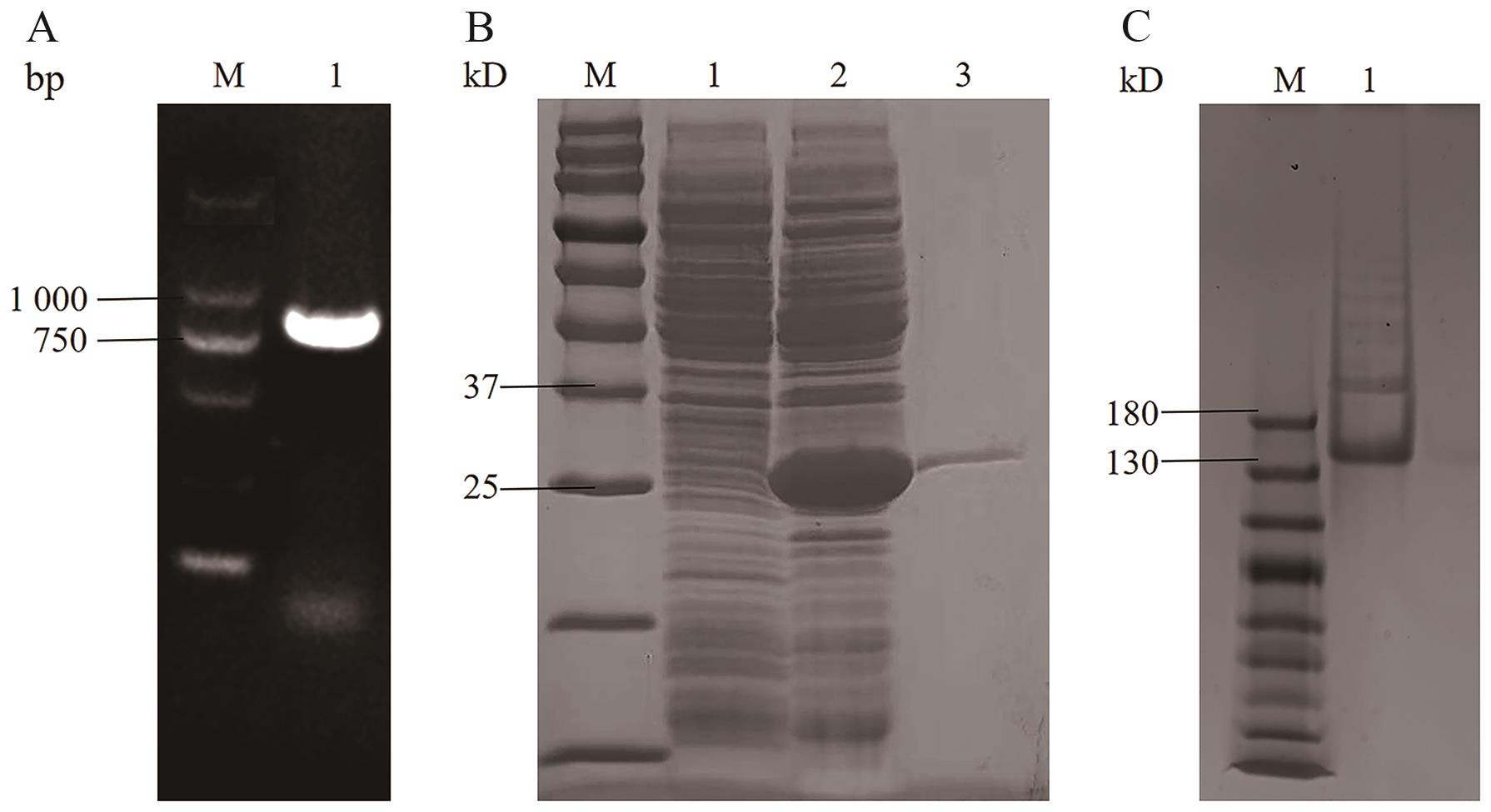
图1 NC3-2的PCR克隆(A)、SDS-PAGE分析(B)与Native-PAGE分析(C)A:M:DNA marker;1:NC3-2;B:M:蛋白分子量标准;1:含空载质粒pEASY-E2的大肠杆菌细胞裂解液;2:未纯化7α-HSDH NC3-2;3:7α-HSDH NC3-2纯酶;C:M:蛋白分子量标准;1:NC3-2纯酶
Fig. 1 PCR cloning of NC3-2 (A), SDS-PAGE analysis (B), and Native-PAGE analysis (C)A: M: DNA marker; 1: NC3-2; B: M: Protein molecular weight standard; 1: Escherichia coli cell lysate containing empty plasmid pEASY-E2; 2: Unpurified 7α- HSDH NC3-2; 3: purified 7α-HSDH NC3-2; C: M: Protein molecular weight standard; 1: purified NC3-2
| Metal ions and chemical reagents | Relative activity (%) | |
|---|---|---|
| Metal ions (1.25 mmol/L) | Control | 100 ± 4.97 |
| Co2+ | 108.58 ± 7.13 | |
| Cu2+ | 105.59 ± 13.03 | |
| Ag+ | 0.00 | |
| Mn2+ | 84.62 ± 8.01 | |
| K+ | 95.03 ± 9.54 | |
| Al3+ | 82.66 ± 9.96 | |
| Ni+ | 97.43 ± 4.86 | |
| Zn2+ | 92.38 ± 4.70 | |
| Li+ | 91.49 ± 5.36 | |
| Mg2+ | 94.46 ± 2.18 | |
| Na+ | 97.08 ± 3.10 | |
| Ca2+ | 86.64 ± 7.02 | |
| Chemical reagents (1%, v/v) | Acetone | 90.26 ± 9.35 |
| EDTA | 128.72 ± 10.49 | |
| Tween-80 | 44.93 ± 4.54 | |
| SDS | 0.00 | |
| DTT | 94.72 ± 4.71 | |
| TritonX-100 | 7.11 ±1.83 |
表1 金属离子和化学试剂对7α-羟基类固醇脱氢酶NC3-2的影响
Table 1 Effects of metal ions and chemical reagents on 7α- HSDH NC3-2
| Metal ions and chemical reagents | Relative activity (%) | |
|---|---|---|
| Metal ions (1.25 mmol/L) | Control | 100 ± 4.97 |
| Co2+ | 108.58 ± 7.13 | |
| Cu2+ | 105.59 ± 13.03 | |
| Ag+ | 0.00 | |
| Mn2+ | 84.62 ± 8.01 | |
| K+ | 95.03 ± 9.54 | |
| Al3+ | 82.66 ± 9.96 | |
| Ni+ | 97.43 ± 4.86 | |
| Zn2+ | 92.38 ± 4.70 | |
| Li+ | 91.49 ± 5.36 | |
| Mg2+ | 94.46 ± 2.18 | |
| Na+ | 97.08 ± 3.10 | |
| Ca2+ | 86.64 ± 7.02 | |
| Chemical reagents (1%, v/v) | Acetone | 90.26 ± 9.35 |
| EDTA | 128.72 ± 10.49 | |
| Tween-80 | 44.93 ± 4.54 | |
| SDS | 0.00 | |
| DTT | 94.72 ± 4.71 | |
| TritonX-100 | 7.11 ±1.83 |
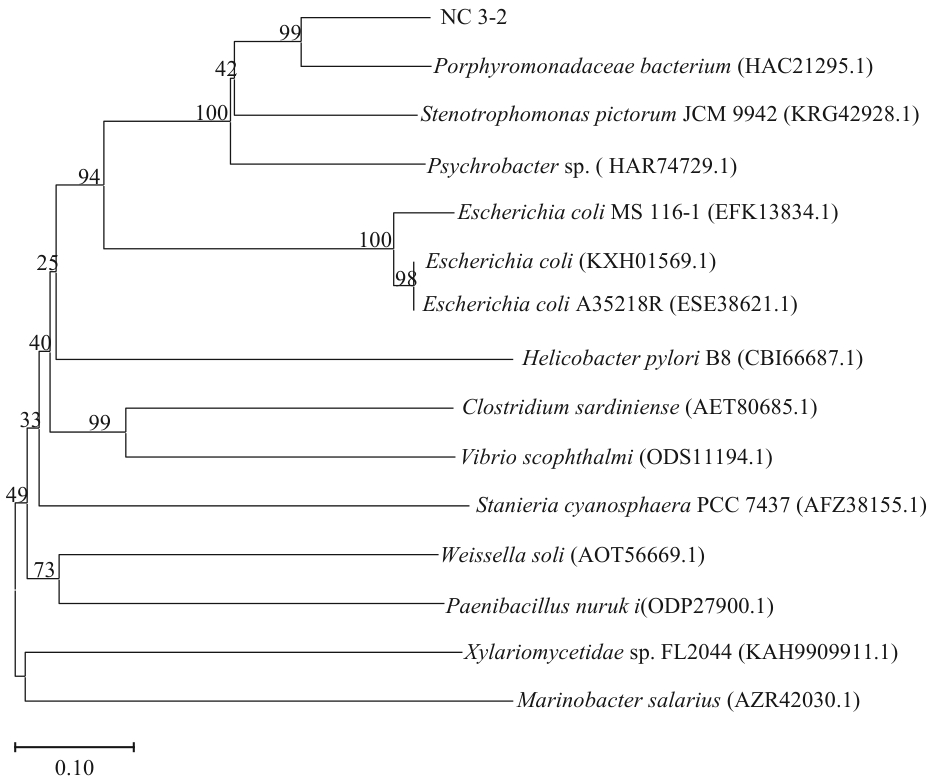
图2 NC3-2与不同微生物来源的7α-羟基类固醇脱氢酶的系统进化树
Fig. 2 Phylogenetic tree of NC3-2 and other 7α-hydroxysteroid dehydrogenases from different microorganisms
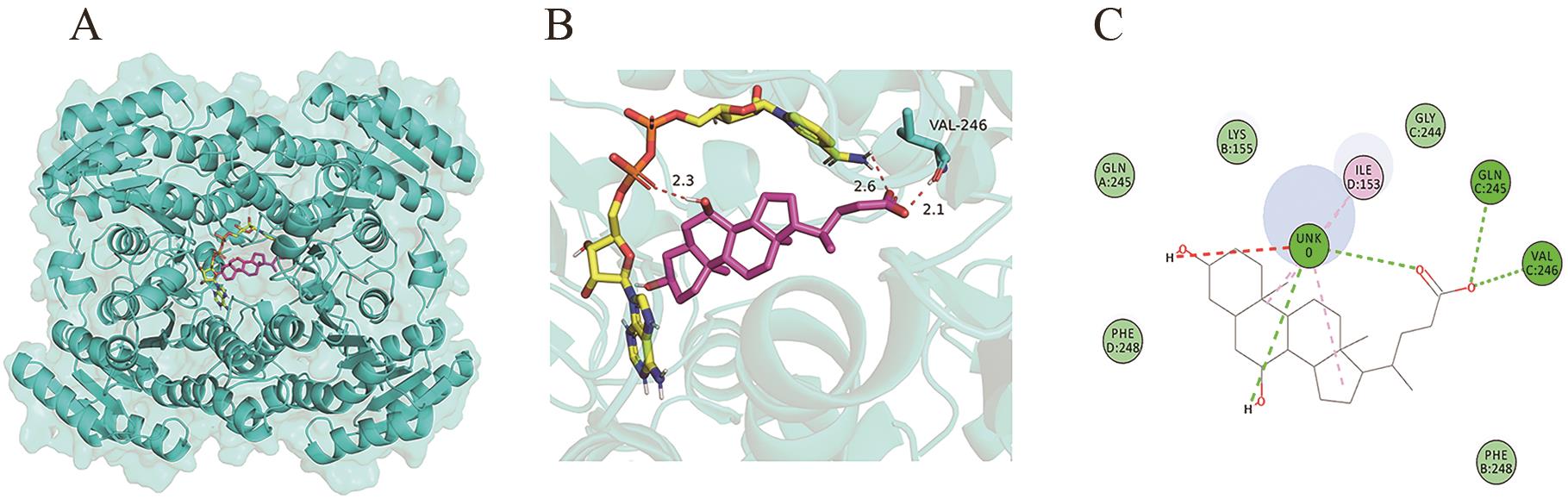
图3 NC3-2的同源四聚体三维结构模型及结合作用力可视化A:复合物整体结构;B:结合口袋相互作用(3D);C:结合作用力图(2D),其中:浅绿色为范德华力,深绿色为氢键,红色为供体,粉色为烷基
Fig. 3 Three-dimensional structure model of homotetramer of NC3-2 and visualization of binding interactionsA: The overall structure of the complex; B: binding pocket interaction (3D); C: 2D binding interaction diagram, where light green is van der Waals force, dark green is hydrogen bond, red is donor, and pink indicates alkyl interactions
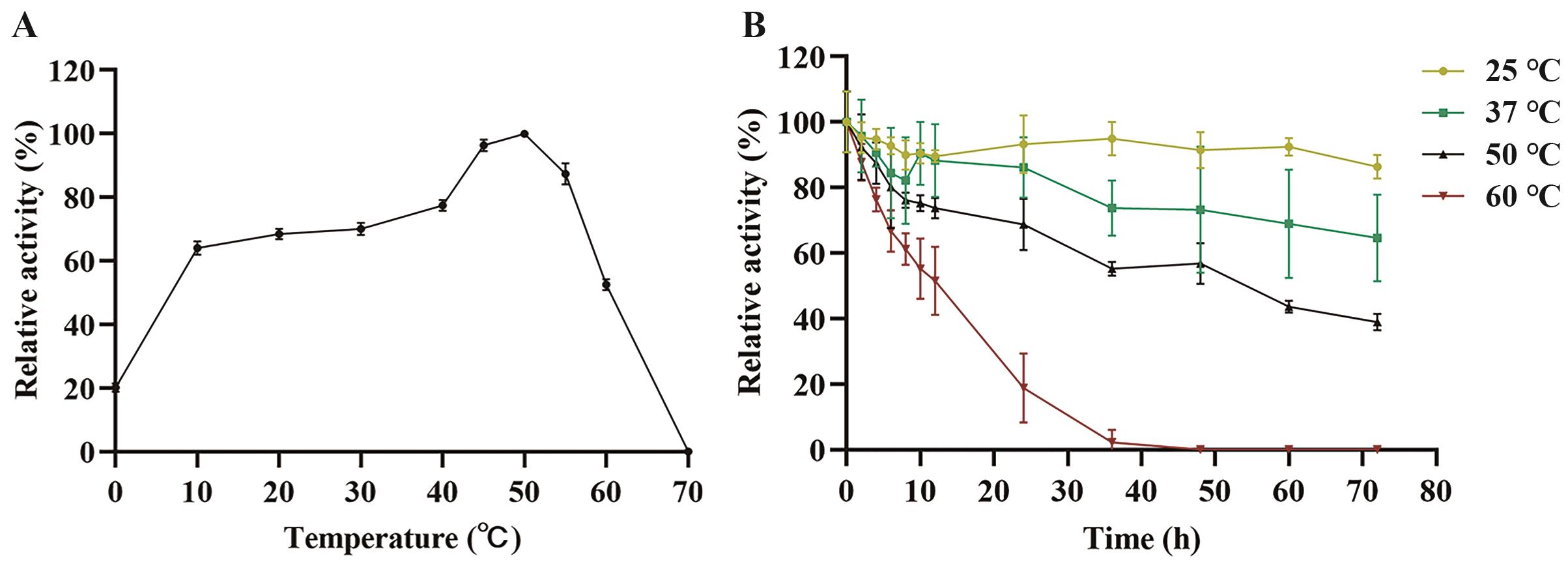
图4 7α-羟基类固醇脱氢酶NC3-2的最适温度(A)和温度稳定性(B)
Fig. 4 Optimal temperature (A) and temperature stability (B) of 7α-HSDH NC3-2
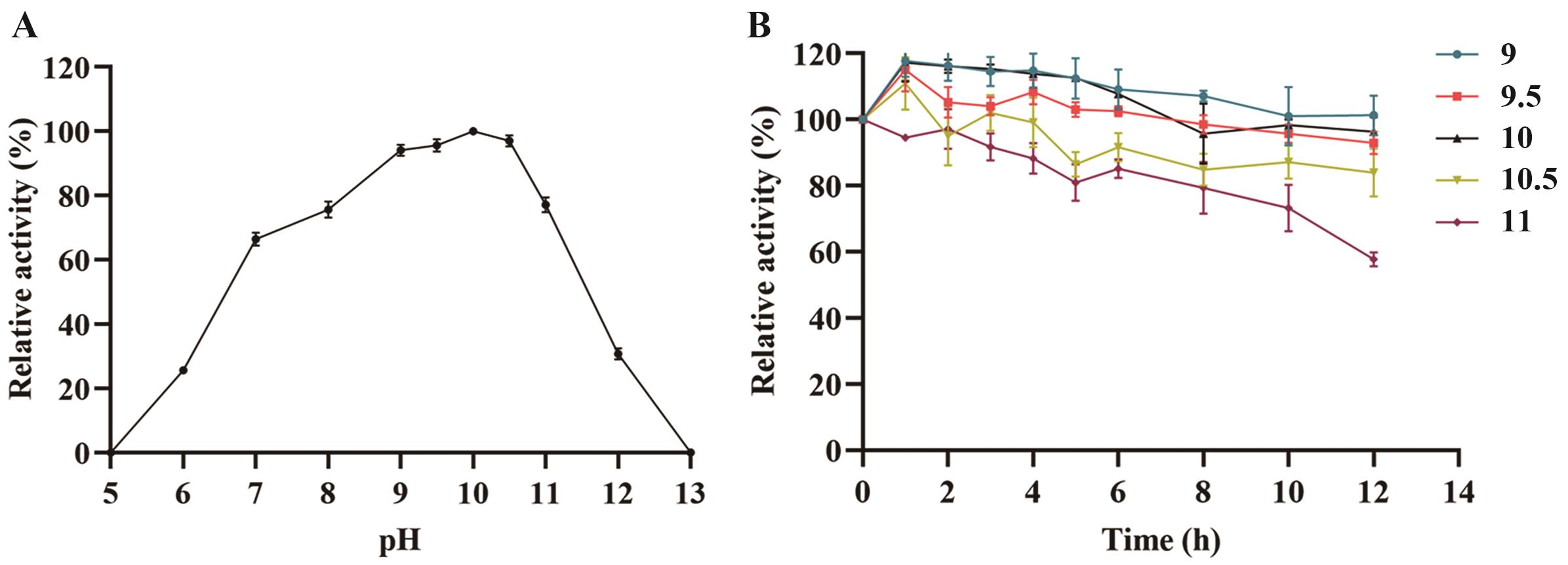
图5 7α-羟基类固醇脱氢酶NC3-2的最适pH(A)和pH稳定性(B)
Fig. 5 Optimal pH (A) and pH stability (B) of 7α-HSDH NC3-2
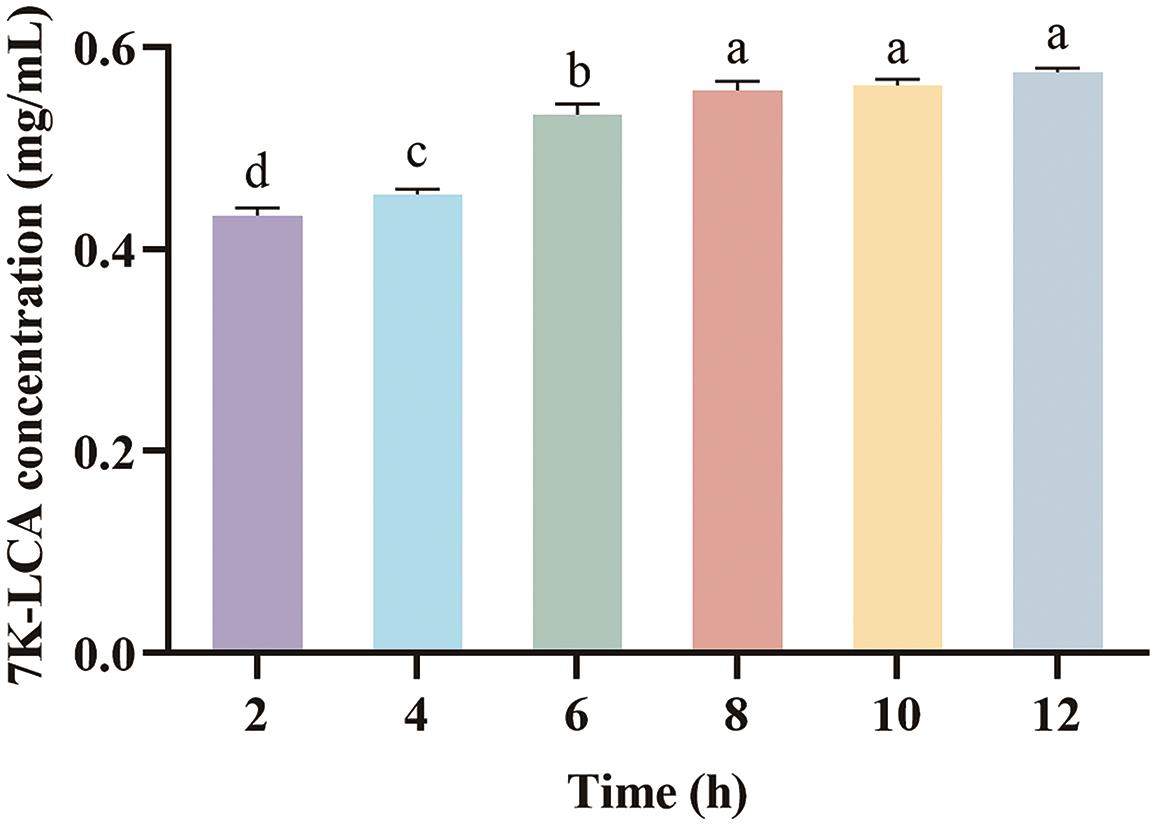
图6 7K-LCA产量
Fig. 6 Yield of 7K-LCA
| [1] | Tyagi A, Kumar V. The gut microbiota-bile acid axis: a crucial regulator of immune function and metabolic health [J]. World J Microbiol Biotechnol, 2025, 41(7): 215. |
| [2] | Li T, Ding N, Guo HQ, et al. A gut microbiota-bile acid axis promotes intestinal homeostasis upon aspirin-mediated damage [J]. Cell Host Microbe, 2024, 32(2): 191-208.e9. |
| [3] | Bai X, Duan ZG, Deng JJ, et al. Ginsenoside Rh4 inhibits colorectal cancer via the modulation of gut microbiota-mediated bile acid metabolism [J]. J Adv Res, 2025, 72: 37-52. |
| [4] | Henry ZR, Maliha S, Basaly V, et al. Ursodeoxycholic acid acts as an ileal FXR agonist in male mice with hepatic deficiency of FXR [J]. eGastroenterology, 2025, 3(3): e100227. |
| [5] | Pearson T, Caporaso JG, Yellowhair M, et al. Effects of ursodeoxycholic acid on the gut microbiome and colorectal adenoma development [J]. Cancer Med, 2019, 8(2): 617-628. |
| [6] | Lou DS, Liu X, Tan J. An overview of 7α- and 7β-hydroxysteroid dehydrogenases: structure, specificity and practical application [J]. Protein Pept Lett, 2021, 28(11): 1206-1219. |
| [7] | Thibaut MM, Roumain M, Piron E, et al. The microbiota-derived bile acid taurodeoxycholic acid improves hepatic cholesterol levels in mice with cancer Cachexia [J]. Gut Microbes, 2025, 17: 2449586. |
| [8] | Shi ZH, Wang BY, Wang SQ, et al. Dynamic regulation of gut microbiota in high-fat or normal-fed mice by dietary phosphatidylcholine and phosphatidylethanolamine [J]. Food Biosci, 2025, 71: 107314. |
| [9] | Ueda S, Od M, Imamura S, et al. Molecular and enzymatic properties of 7α-hydroxysteroid dehydrogenase from Pseudomonas sp. B-0831 [J]. Int J Biol Macromol, 2004, 4(1): 33-38. |
| [10] | Pedrini P, Andreotti E, Guerrini A, et al. Xanthomonas maltophilia CBS 897.97 as a source of new 7β- and 7α-hydroxysteroid dehydrogenases and cholylglycine hydrolase: Improved biotransformations of bile acids [J]. Steroids, 2006, 71(3): 189-198. |
| [11] | Coleman JP, Hudson LL, Adams MJ. Characterization and regulation of the NADP-linked 7 alpha-hydroxysteroid dehydrogenase gene from Clostridium sordellii [J]. J Bacteriol, 1994, 176(16): 4865-4874. |
| [12] | Ji W, Chen YA, Zhang H, et al. Cloning, expression and characterization of a putative 7alpha-hydroxysteroid dehydrogenase in Comamonas testosteroni [J]. Microbiol Res, 2014, 169(2/3): 148-154. |
| [13] | Franklund CV, de Prada P, Hylemon PB. Purification and characterization of a microbial, NADP-dependent bile acid 7 alpha-hydroxysteroid dehydrogenase [J]. J Biol Chem, 1990, 265(17): 9842-9849. |
| [14] | Baron SF, Franklund CV, Hylemon PB. Cloning, sequencing, and expression of the gene coding for bile acid 7 alpha-hydroxysteroid dehydrogenase from Eubacterium sp. strain VPI 12708 [J]. J Bacteriol, 1991, 173(15): 4558-4569. |
| [15] | 柳志永, 张荣珍, 徐岩. Met196突变提高Brucella melitensis 7α -羟基类固醇脱氢酶的催化效率和稳定性 [J]. 微生物学报, 2022, 62(5): 1769-1783. |
| Liu ZY, Zhang RZ, Xu Y. Met196 mutation improves catalytic efficiency and stability of Brucella melitensis 7α-hydroxysteroid dehydrogenase [J]. Acta Microbiol Sin, 2022, 62(5): 1769-1783. | |
| [16] | 许波, 杨富亚, 慕跃林, 等. 胃肠道微生物及其分子生态学技术研究进展 [J]. 微生物学通报, 2014, 41(1): 136-145. |
| Xu B, Yang FY, Mu YL, et al. Molecular ecology applied to gastrointestinal tract microorganisms [J]. Microbiol China, 2014, 41(1): 136-145. | |
| [17] | Wang WL, Xu SY, Ren ZG, et al. Application of metagenomics in the human gut microbiome [J]. World J Gastroenterol, 2015, 21(3): 803. |
| [18] | Lou DS, Cao YY, Duan HT, et al. Characterization of a novel thermostable 7α-hydroxysteroid dehydrogenase [J]. Protein Pept Lett, 2024, 31(2): 153-160. |
| [19] | Tang SJ, Pan YP, Lou DS, et al. Structural and functional characterization of a novel acidophilic 7α-hydroxysteroid dehydrogenase [J]. Protein Sci, 2019, 28(5): 910-919. |
| [20] | Fan PF, Ni QY, Sun GZ, et al. Gibbons under seasonal stress: the diet of the black crested gibbon (Nomascus concolor) on Mt. Wuliang, Central Yunnan, China [J]. Primates, 2009, 50(1): 37-44. |
| [21] | Li XY, Wang XC, Wang ZM, et al. The relationship between gut microbiome and bile acids in Primates with diverse diets [J]. Front Microbiol, 2022, 13: 899102. |
| [22] | Liu ZY, Zhang RZ, Zhang WC, et al. Ile258Met mutation of Brucella melitensis 7α-hydroxysteroid dehydrogenase significantly enhances catalytic efficiency, cofactor affinity, and thermostability [J]. Appl Microbiol Biotechnol, 2021, 105(9): 3573-3586. |
| [23] | Lu YY, Fan CN, Li P, et al. Short chain fatty acids prevent high-fat-diet-induced obesity in mice by regulating G protein-coupled receptors and gut microbiota [J]. Sci Rep, 2016, 6: 37589. |
| [24] | Avilés-Jiménez F, Yu GQ, Torres-Poveda K, et al. On the search to elucidate the role of microbiota in the genesis of cancer: the cases of gastrointestinal and cervical cancer [J]. Arch Med Res, 2017, 48(8): 754-765. |
| [25] | Liu SS, Liang ZX, Zhu LS, et al. FXR-mediated antigen-specific CD8+T cell enhances antitumor immunity in intrahepatic cholangiocarcinoma [J]. J Immunother Cancer, 2025, 13(11): e012259. |
| [26] | Kim KH, Lee CW, Pardhe BD, et al. Crystal structure of an apo 7α-hydroxysteroid dehydrogenase reveals key structural changes induced by substrate and co-factor binding [J]. J Steroid Biochem Mol Biol, 2021, 212: 105945. |
| [27] | Chen X, Cui YF, Feng JH, et al. Flavin oxidoreductase-mediated regeneration of nicotinamide adenine dinucleotide with dioxygen and catalytic amount of flavin mononucleotide for one-pot multi-enzymatic preparation of ursodeoxycholic acid [J]. Adv Synth Catal, 2019, 361(11): 2497-2504. |
| [28] | Ji SL, Pan YP, Zhu LC, et al. A novel 7α-hydroxysteroid dehydrogenase: Magnesium ion significantly enhances its activity and thermostability [J]. Int J Biol Macromol, 2021, 177: 111-118. |
| [29] | Xu YP, Yang L, Zhao SJ, et al. Large-scale production of tauroursodeoxycholic acid products through fermentation optimization of engineered Escherichia coli cell factory [J]. Microb Cell Fact, 2019, 18: 34. |
| [30] | Zhang X, Xin JG, Liu MY, et al. Cost-effective whole-cell biosynthesis of ursodeoxycholic acid using engineered Escherichia coli with a multienzyme cascade [J]. Front Microbiol, 2025, 16: 1538237. |
| [31] | Yoshimoto T, Higashi H, Kanatani A, et al. Cloning and sequencing of the 7 alpha-hydroxysteroid dehydrogenase gene from Escherichia coli HB101 and characterization of the expressed enzyme [J]. J Bacteriol, 1991, 173(7): 2173-2179. |
| [32] | Bakonyi D, Hummel W. Cloning, expression, and biochemical characterization of a novel NADP+-dependent 7α-hydroxysteroid dehydrogenase from Clostridium difficile and its application for the oxidation of bile acids [J]. Enzyme Microb Technol, 2017, 99: 16-24. |
| [33] | Jin LN, Chen M, Yang L, et al. Structure-guided single-point mutagenesis and carboxyl-terminal truncation improved the substrate selectivity of 7α-hydroxysteroid dehydrogenase [J]. Int J Biol Macromol, 2025, 328: 147545. |
| [34] | Song P, Zhang X, Feng W, et al. Biological synthesis of ursodeoxycholic acid [J]. Front Microbiol, 2023, 14: 1140662. |
| [1] | 彭海燕, 刘佳鑫, 史禹涵, 李宪臻, 郭小宇, 袁悦. 持续性内切纤维素酶BvCel5的异源表达及酶学性质研究[J]. 生物技术通报, 2026, 42(7): 351-360. |
| [2] | 张雅宁, 毛春力, 胡志勇, 杨丹, 吴佳海, 王碧娴, 黄琳凯. 象草Dof转录因子的全基因组分析及其对低温胁迫的响应[J]. 生物技术通报, 2026, 42(6): 267-278. |
| [3] | 朱华珺, 段德勇, 吴胜莲, 周小玲, 方勇, 黄思娣, 刘明星, 刘絮宁, 许隽, 刘洋. 昆虫病原线虫共生菌对二化螟体内微生物群落结构的影响[J]. 生物技术通报, 2026, 42(5): 213-221. |
| [4] | 胡阔均, 黄晓辉, 黄谊, 张宇宇, 邓征宇, 郭军, 曾银, 尹华群, 周向平, 孟德龙. 大球盖菇基质对烟草青枯病和土壤微生物功能的影响[J]. 生物技术通报, 2026, 42(5): 124-133. |
| [5] | 张建霞, 姜成英, 吴文俊, 金高明, 张聪聪, 姚玉芳, 张荣, 戚建莉. 不同土壤条件下油橄榄园根际土壤理化性质及细菌群落特征[J]. 生物技术通报, 2026, 42(4): 287-296. |
| [6] | 李玉珍, 李梦丹, 张蔚, 彭婷. 基于月季扩展蛋白基因家族鉴定的野蔷薇RmEXPB2基因功能研究[J]. 生物技术通报, 2025, 41(9): 182-194. |
| [7] | 张津浩, 邓辉, 张清壮, 陶禹, 周池, 李鑫. 贝莱斯芽胞杆菌XY40-1对百合球茎生长、品质及镉含量的调控作用[J]. 生物技术通报, 2025, 41(7): 281-291. |
| [8] | 黄旭升, 周雅莉, 柴旭东, 闻婧, 王计平, 贾小云, 李润植. 紫苏质体型PfLPAT1B基因的克隆及其在油脂合成中的功能分析[J]. 生物技术通报, 2025, 41(7): 226-236. |
| [9] | 李晨莹, 孔大帅, 李若楠, 张玉波, 阎萍, 李奎, 孔思远. 前沿组学技术创新助力畜禽生物育种[J]. 生物技术通报, 2025, 41(6): 71-86. |
| [10] | 杨涛, 李琳, 莫小连, 陈晓龙, 王健, 黄园, 赵杰宏, 邹颉. 铁皮石斛DoDELLA2的功能研究[J]. 生物技术通报, 2025, 41(12): 240-253. |
| [11] | 叶妍, 吴雨萱, 周哲敏, 崔文璟. 转氨酶新酶的挖掘、表征及在2-氨基丁酸生物转化中的应用[J]. 生物技术通报, 2025, 41(11): 134-142. |
| [12] | 徐远志, 胡珊, 代思泽, 游帅, 郑明明, 单凯. 高活性脂肪酶的发掘、评价及在甘油二脂合成中应用[J]. 生物技术通报, 2025, 41(11): 177-189. |
| [13] | 张曼玉, 董嘉诚, 苟福凡, 弓朝晖, 刘倩, 孙文良, 孔臻, 郝捷, 王敏, 田朝光. 嗜热毁丝霉果胶酯酶MtCE12-1的克隆表达及其酶学性质和应用研究[J]. 生物技术通报, 2024, 40(9): 291-300. |
| [14] | 林彤, 袁程, 董陈文华, 曾孟琼, 杨燕, 毛自朝, 林春. 藜麦配子发育相关基因CqSTK的筛选及功能分析[J]. 生物技术通报, 2024, 40(8): 83-94. |
| [15] | 闫欢欢, 尚怡彤, 王丽红, 田学琴, 廖海艳, 曾斌, 胡志宏. 米曲霉异源表达合成虫草素[J]. 生物技术通报, 2024, 40(6): 290-298. |
| 阅读次数 | ||||||
|
全文 |
|
|||||
|
摘要 |
|
|||||
