







• 研究报告 •
金维煜1, 孟晗1, 陈雅心1, 康旗帅1, 常佳佳1, 李许真2,3, 杨路明1( ), 牛欢欢1()
收稿日期:2026-02-28
出版日期:2026-09-07
通讯作者:
杨路明lumingyang@henau.edu.cn基金资助:
JIN Wei-yu1, MENG Han1, CHEN Ya-xin1, KANG Qi-shuai1, CHANG Jia-jia1, LI Xu-zhen2,3, YANG Lu-ming1(), NIU Huan-huan1()
Received:2026-02-28
Published:2026-09-07
摘要:
目的 解析西瓜ERF转录因子ClESR2在调控叶片形态稳定中的功能,为叶片发育调控机制解析提供理论依据和候选基因资源。 方法 利用农杆菌侵染获得西瓜ClESR2转基因株系,观察转基因株系的叶片形态,利用石蜡切片和扫描电镜等技术进一步观察并统计叶片细胞形态和数量,使用RNA-seq进行叶片转录组测序,使用RT-qPCR检测叶片发育相关基因的表达量,并检测转基因株系叶片中生长素的含量,最后利用CRISPR/Cas技术获得Clesr2突变体,并对其互作蛋白进行筛选和鉴定。 结果 西瓜ClESR2过表达后,叶片表面呈现突起、褶皱及叶边缘上卷的表型;下表皮细胞形态观察和叶表皮扫描电镜分析结果表明,过表达后植株叶片在单位面积内的细胞数量显著减少,而细胞面积显著增加;叶片石蜡切片结果表明,过表达后的叶片上表皮和下表皮细胞表面有明显突起的细胞组织;RNA-seq结果发现,大量与生长素途径及叶片发育相关的基因显著富集并差异表达;ClESR2突变后影响叶片形态,并且还与ClSAUR6存在蛋白水平互作。 结论 西瓜ClESR2是维持叶片发育的关键转录因子,可能通过影响生长素途径调控叶片形态。
金维煜, 孟晗, 陈雅心, 康旗帅, 常佳佳, 李许真, 杨路明, 牛欢欢. 西瓜ClESR2在维持叶片形态稳定中的功能分析[J]. 生物技术通报, doi: 10.13560/j.cnki.biotech.bull.1985.2026-0243.
JIN Wei-yu, MENG Han, CHEN Ya-xin, KANG Qi-shuai, CHANG Jia-jia, LI Xu-zhen, YANG Lu-ming, NIU Huan-huan. Functional Analysis of ClESR2 in Maintaining Leaf Morphological Stability in Watermelon[J]. Biotechnology Bulletin, doi: 10.13560/j.cnki.biotech.bull.1985.2026-0243.
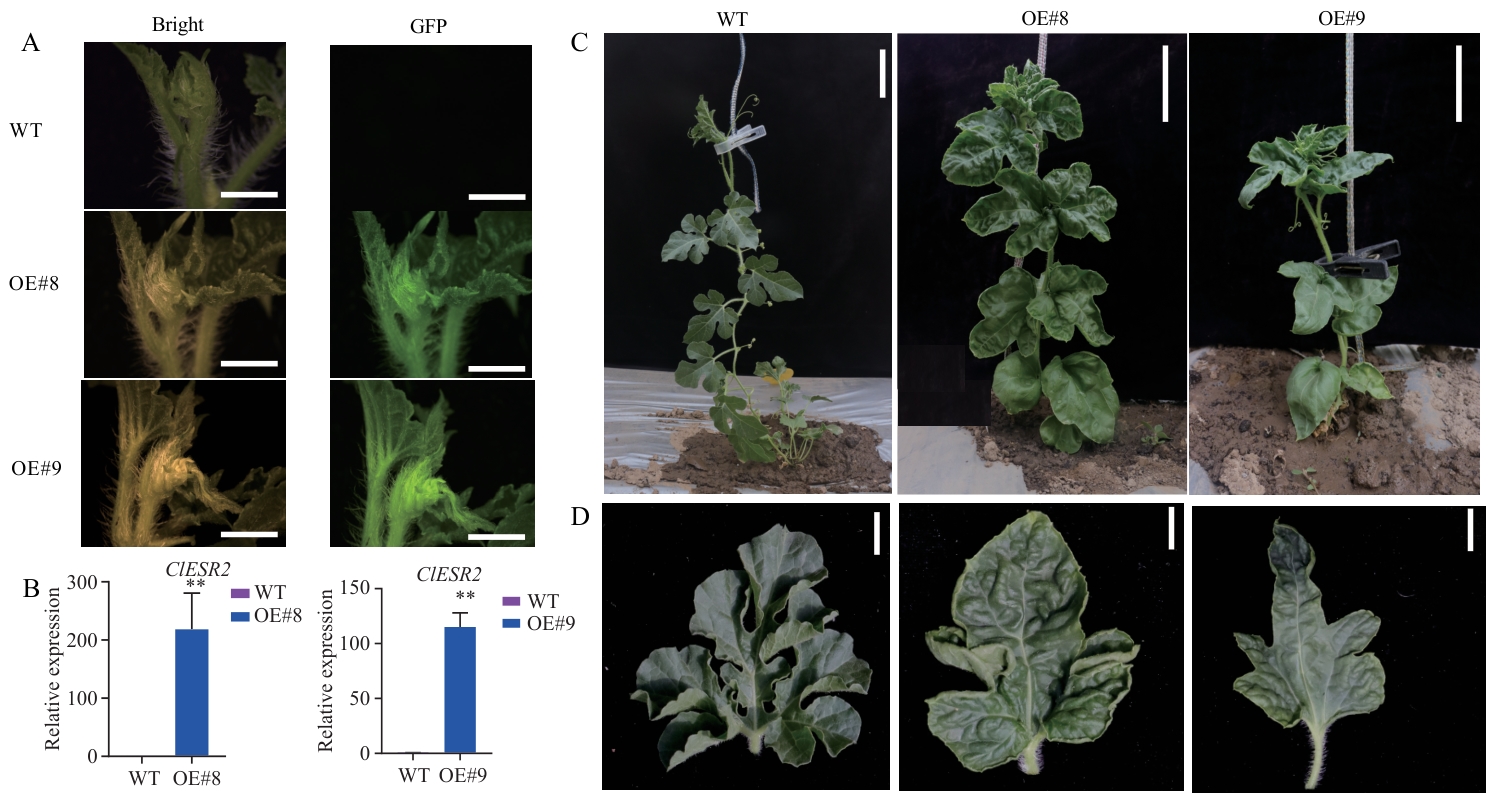
图1 ClESR2过表达植株鉴定及叶片形态观察A:过表达株系的荧光鉴定,标尺=2 mm;B:ClESR2表达量检测;C:植株表型观察,标尺=8 cm;D:相同节位叶片形态观察,标尺=4.5 cm。数据以平均值±标准差表示(n=3)
Fig. 1 Identification of ClESR2-overexpressing plants and observation of leaf morphologyA: Fluorescence identification of overexpression lines, bar=2 mm. B: Detection of ClESR2 expression level. C: Plant phenotypic observation, bar=8 cm. D: Leaf morphology at the same node position, bar=4.5 cm. Data are presented as mean ± standard deviation (n=3). **P<0.01. The same below
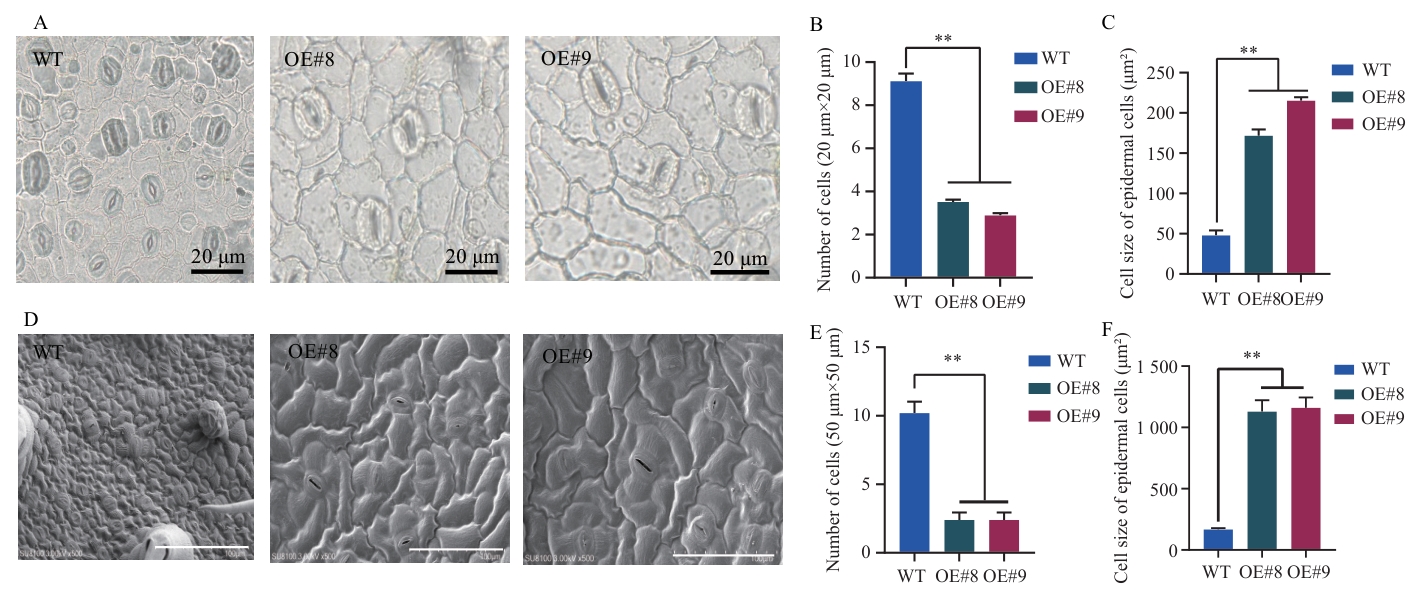
图2 ClESR2过表达植株叶片上表皮和下表皮细胞形态观察与统计分析A:WT与ClESR2过表达株系叶片下表皮细胞形态观察,标尺=20 μm;B:下表皮细胞数量;C:下表皮细胞大小;D:叶片上表皮细胞的扫描电镜观察,标尺=100 μm;E:上表皮细胞数量;F:上表皮细胞大小。数据以平均值±标准差表示(n=10)
Fig. 2 Morphological observation and statistical analysis of adaxial and abaxial epidermal cells in leaves of ClESR2-overexpressing plantsA: Morphological observation of abaxial epidermal cells in leaves of WT and ClESR2-overexpressing lines, bar=20 μm. B: Abaxial epidermal cell number. C: Cell size of abaxial epidermal cells. D: Scanning electron microscopy observation of adaxial epidermal cells in leaves, bar=100 μm. E: Adaxial epidermal cell number. F: Cell size of adaxial epidermal cells. Data are presented as mean ± standard deviation (n=10)
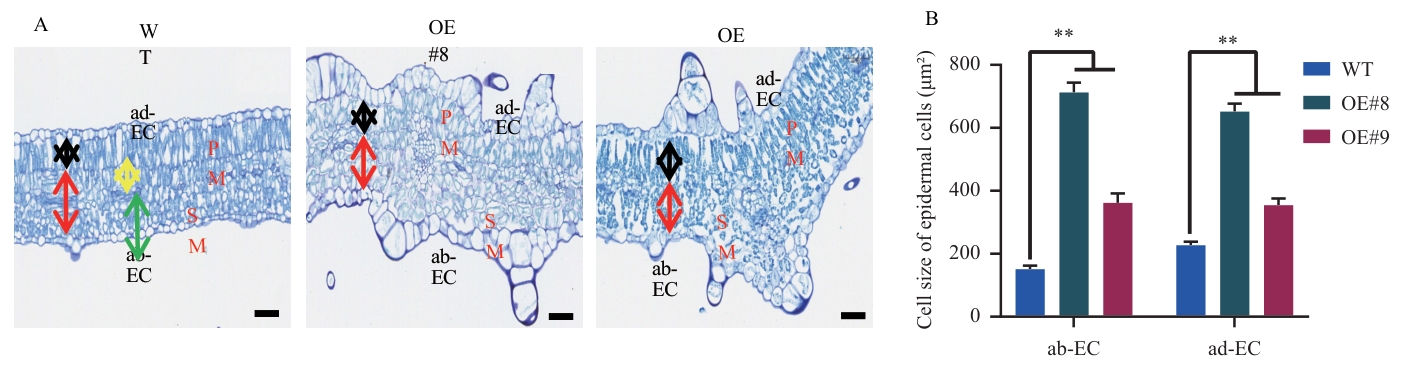
图3 ClESR2过表达植株叶片细胞组织切片观察与统计分析A:WT与ClESR2过表达株系叶片在甲苯胺蓝染色后石蜡切片结果,标尺=50 μm;B:WT与ClESR2过表达株系叶片近轴表皮细胞(ad-EC)和远轴表皮细胞(ab-EC)大小统计;PM:栅栏组织细胞;SM:海绵组织细胞;黄色:叶片近轴端;绿色:叶片远轴端。数据以平均值±标准差表示(n=10)
Fig. 3 Observation and statistical analysis of leaf tissue sections from ClESR2-overexpressing plantsA: Paraffin sections of leaves from WT and ClESR2-overexpressing lines stained with toluidine blue, Bar=50 μm. B: Cell size statistics of adaxial epidermal cells (ad-EC) and abaxial epidermal cells (ab-EC) in leaves of WT and ClESR2-overexpressing lines. PM: Palisade mesophyll cells. SM: Spongy mesophyll cells. Yellow: Adaxial side of leaf blade. Green: Abaxial side of leaf blade. Data are presented as mean ± standard deviation (n=10)
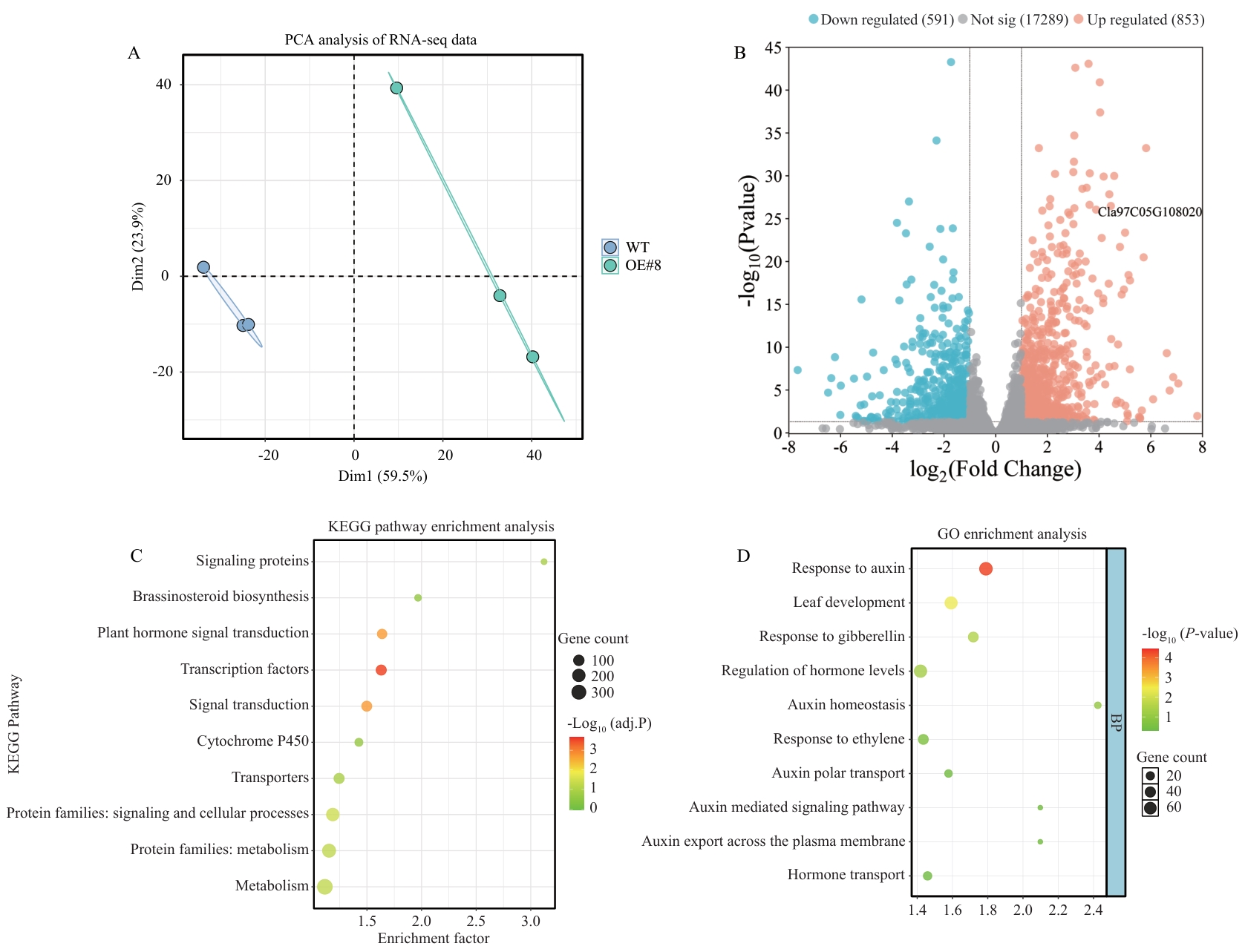
图4 ClESR2过表达植株叶片转录组测序分析A:PCA分析;B:火山图分析;C:KEGG分析;D:GO富集分析
Fig. 4 Transcriptome sequencing analysis of leaves from ClESR2-overexpressing plantsA: Principal component analysis (PCA). B: Volcano plot analysis. C: KEGG (Kyoto encyclopedia of genes and genomes) pathway analysis. D: GO (gene ontology) enrichment analysis
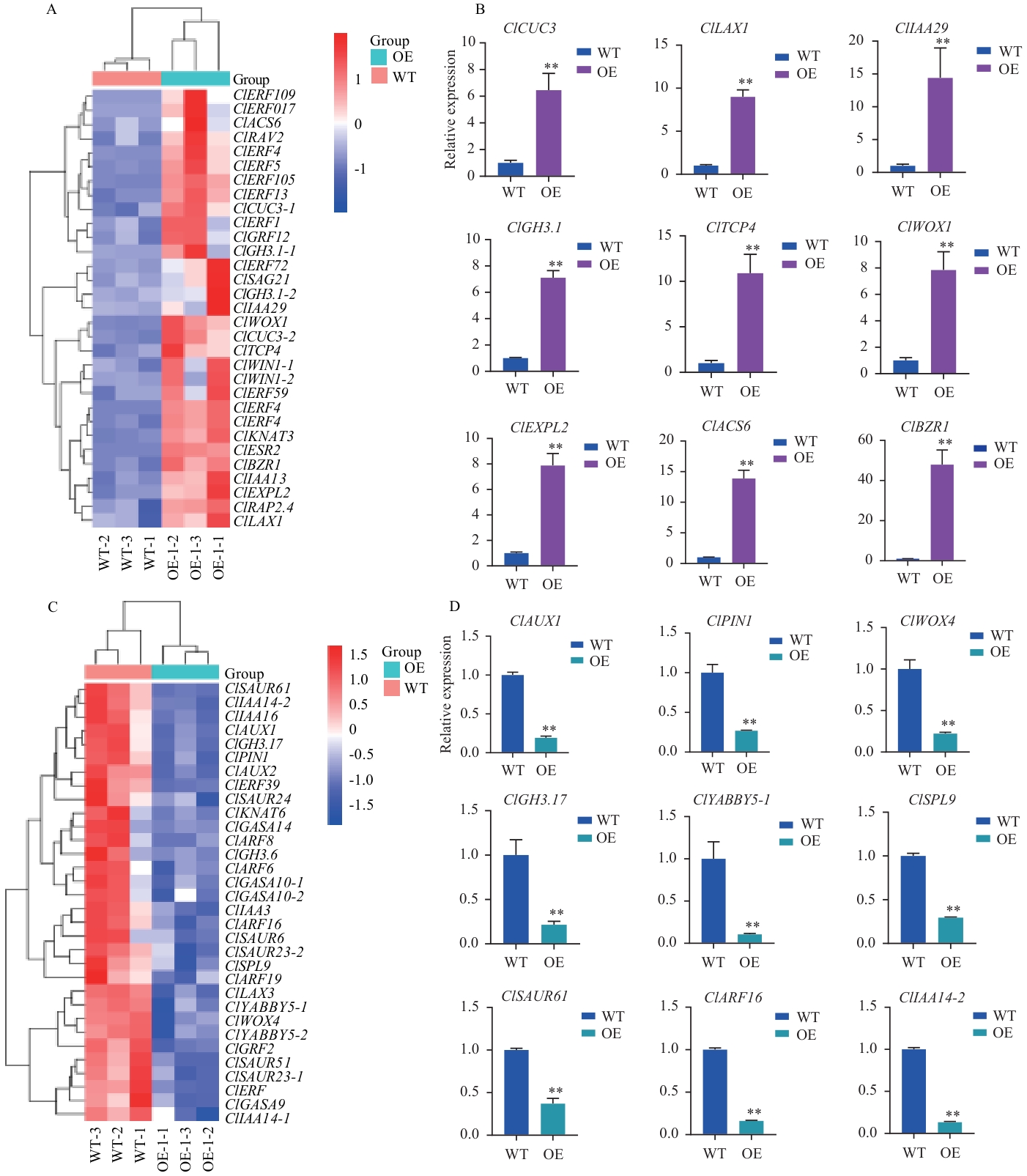
图5 ClESR2过表达植株叶片转录组中部分差异表达基因验证A:部分上调表达基因热图分析;B:部分上调表达基因RT-qPCR分析;C:部分下调表达基因热图分析;D:部分下调表达基因RT-qPCR分析。数据以平均值±标准差表示(n=3)
Fig. 5 Validation of selected differentially expressed genes in the transcriptome of leaves from ClESR2-overexpressing plantsA: Heatmap analysis of partially upregulated expressed genes. B: RT-qPCR analysis of partially upregulated expressed genes. C: Heatmap analysis of partially downregulated expressed genes. D: RT-qPCR analysis of partially downregulated expressed genes. Data are presented as mean±standard deviation (n=3)
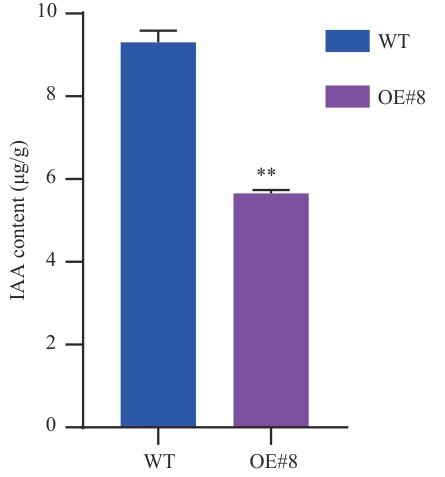
图6 WT与ClESR2过表达株系叶片中生长素含量的检测
Fig. 6 Detection of auxin content in leaves of WT and ClESR2-overexpressing line
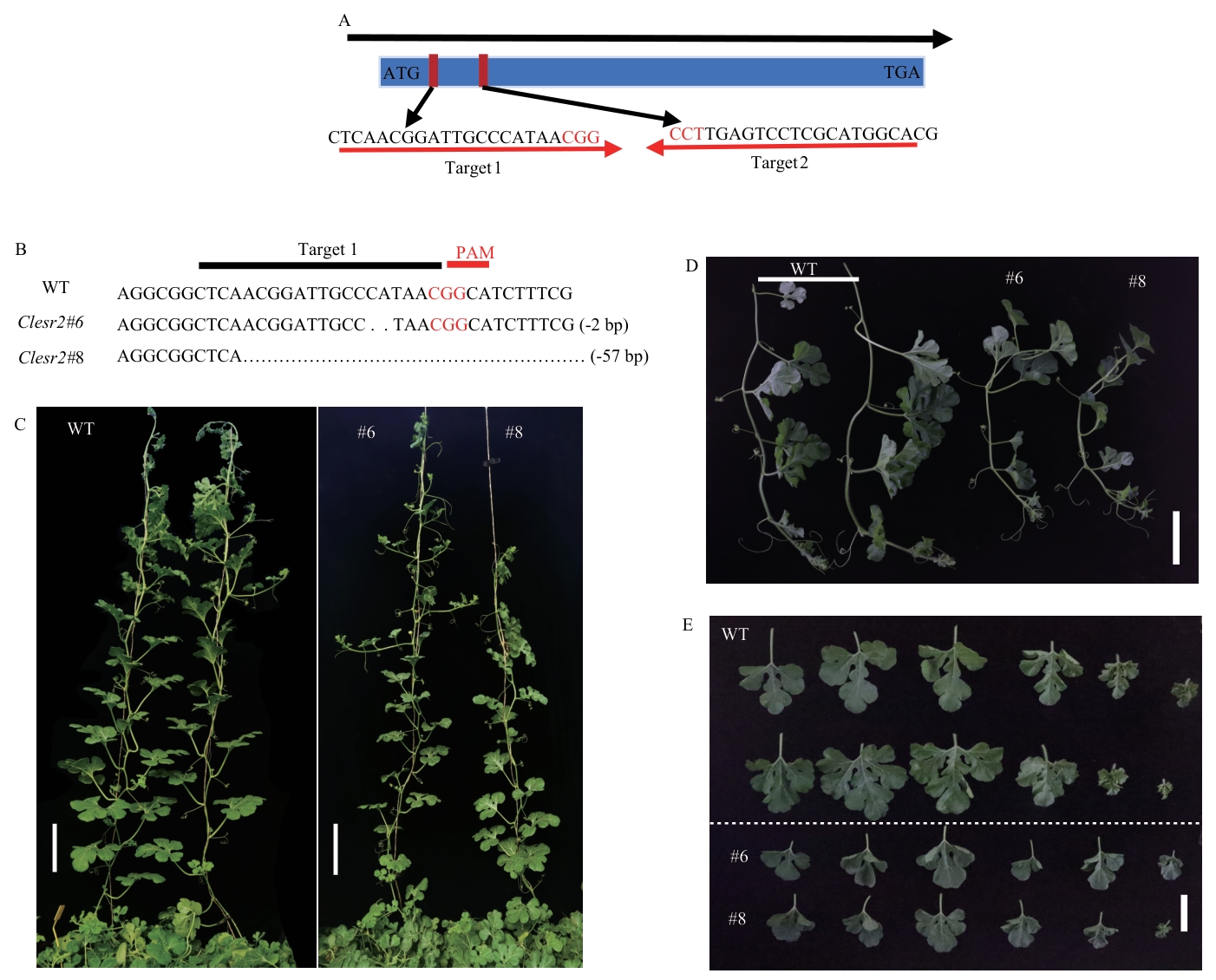
图7 ClESR2纯合编辑植株叶片形态观察A:ClESR2靶点位置及核苷酸序列;B:ClESR2突变形式鉴定;C:WT与ClESR2纯合编辑植株(Clesr2#6和Clesr2#8)田间定植30 d时的植株形态,标尺=12 cm;D:WT与ClESR2纯合编辑植株(Clesr2#6和Clesr2#8)相同节位侧枝形态,标尺=10 cm;E:对照植株与ClESR2纯合编辑植株相同节位叶片形态对比,标尺=6 cm
Fig. 7 Observation of leaf morphology in homozygous ClESR2-edited plantsA: Target site and nucleotide sequence of ClESR2. B: Identification of mutation types in ClESR2. C: Plant morphology of WT and homozygous ClESR2-edited plants (Clesr2#6 and Clesr2#8) at 30 days after field transplanting, bar=12 cm. D: Lateral branch morphology at the same node position of WT and homozygous ClESR2-edited plants (Clesr2#6 and Clesr2#8), bar=10 cm. E: Comparison of leaf morphology at the same node position between WT and homozygous ClESR2-edited plants, bar=6 cm
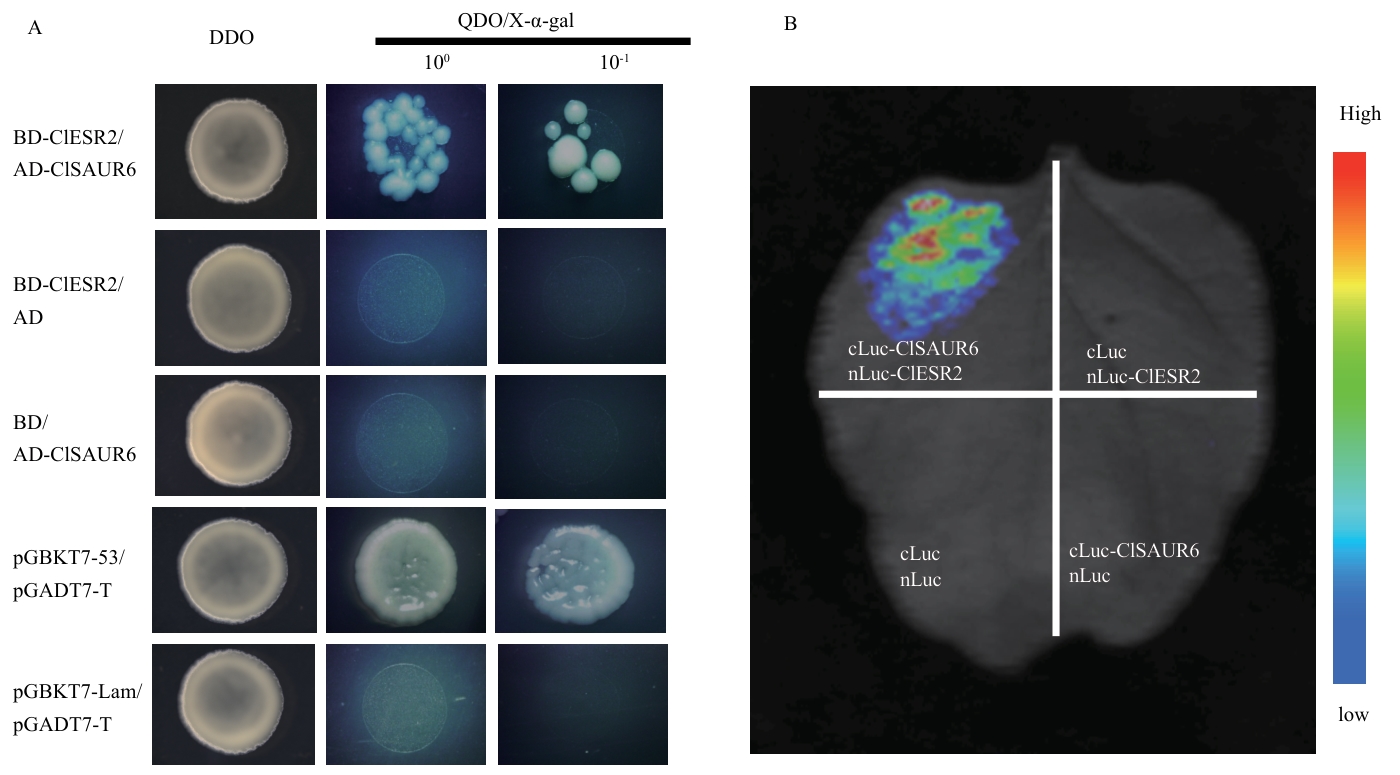
图8 ClESR2与ClSAUR6存在蛋白水平的互作A:酵母双杂交分析;DDO:二缺培养基(SD/-Leu/-Trp);QDO:四缺培养基(SD/-Ade/-His/-Leu/-Trp/X-α-gal/30 mmol/L 3AT);pGBKT7-53/pGADT7-T组合为阳性对照;pGBKT7-Lam/pGADT7-T组合为阴性对照;B:萤火虫荧光素酶互补成像分析
Fig. 8 Protein interaction between ClESR2 and ClSAUR6A: Yeast two‑hybrid assay. DDO indicates double dropout medium (SD/-Leu/-Trp). QDO indicates quadruple dropout medium (SD/-Ade/-His/-Leu/-Trp supplemented with X‑α‑gal and 30 mmol/L 3‑AT). The pGBKT7‑53/pGADT7‑T combination served as the positive control, and pGBKT7‑Lam/pGADT7‑T as the negative control. B: Firefly luciferase complementation imaging assay
| [1] | 何双呈. 转录因子STK和WIP2调控十字花科植物种子油脂积累与叶片发育的机制解析 [D]. 杨凌: 西北农林科技大学, 2025. |
| He SC. Study on the mechanism of transcription factors STK and WIP2 underlying seed oil accumulation and leaf development in cruciferous plants [D]. Yangling: Northwest A & F University, 2025. | |
| [2] | Tsukaya H. Leaf development [J]. Arab Book, 2013, 11: e0163. |
| [3] | Wang H, Niu HH, Li C, et al. WUSCHEL-related homeobox1 (WOX1) regulates vein patterning and leaf size in Cucumis sativus [J]. Hortic Res, 2020, 7(1): 182. |
| [4] | Wang H, Zhang WH, Zheng DW, et al. Transcription factor ClTCP4 regulates leaf size and wavy margin in leaf morphogenesis of Citrullus lanatus [J]. Physiol Plant, 2025, 177(4): e70416. |
| [5] | Li S, Liu JQ, Wang JQ, et al. CmCYC2d is a regulator of leaf abaxial curling in Chrysanthemum morifolium [J]. Plant Cell Environ, 2025, 48(6): 4245-4265. |
| [6] | Zhan JJ, Zhang XS, Wang Y, et al. The GhWL1-GhH1-GhGA2OX1 transcriptional module regulates cotton leaf morphology [J]. Adv Sci, 2025, 12(20): e2410783. |
| [7] | 李耀琪, 王志恒. 植物叶片形态的生态功能、地理分布与成因 [J]. 植物生态学报, 2021, 45(10): 1154-1172. |
| Li YQ, Wang ZH. Leaf morphological traits: ecological function, geographic distribution and drivers [J]. Chin J Plant Ecol, 2021, 45(10): 1154-1172. | |
| [8] | Hagedorn F, Shiyatov SG, Mazepa VS, et al. Treeline advances along the Urals mountain range-driven by improved winter conditions? [J]. Glob Change Biol, 2014, 20(11): 3530-3543. |
| [9] | Peppe DJ, Royer DL, Cariglino B, et al. Sensitivity of leaf size and shape to climate: global patterns and paleoclimatic applications [J]. New Phytol, 2011, 190(3): 724-739. |
| [10] | Nath U, Crawford BCW, Carpenter R, et al. Genetic control of surface curvature [J]. Science, 2003, 299(5611): 1404-1407. |
| [11] | Shi TT, Zhou L, Ye YF, et al. Characterization of YABBY transcription factors in Osmanthus fragrans and functional analysis of OfYABBY12 in floral scent formation and leaf morphology [J]. BMC Plant Biol, 2024, 24(1): 589. |
| [12] | Juarez MT, Kui JS, Thomas J, et al. microRNA-mediated repression of rolled leaf1 specifies maize leaf polarity [J]. Nature, 2004, 428(6978): 84-88. |
| [13] | Sarvepalli K, Das Gupta M, Challa KR, et al. Molecular cartography of leaf development-role of transcription factors [J]. Curr Opin Plant Biol, 2019, 47: 22-31. |
| [14] | Niu HH, Tan JY, Yan WK, et al. Advances in functional genomics for watermelon and melon breeding: current progress and future perspectives [J]. Horticulturae, 2025, 11(9): 1100. |
| [15] | Wang QQ, Marconi M, Guan CM, et al. Polar auxin transport modulates early leaf flattening [J]. Proc Natl Acad Sci U S A, 2022, 119(50): e2215569119. |
| [16] | Mehmood M, Pérez-Llorca M, Casadesús A, et al. Leaf size modulation by cytokinins in sesame plants [J]. Plant Physiol Biochem, 2021, 167: 763-770. |
| [17] | Jia Y, Yu P, Shao W, et al. Up-regulation of LsKN1 promotes cytokinin and suppresses gibberellin biosynthesis to generate wavy leaves in lettuce [J]. J Exp Bot, 2022, 73(19): 6615-6629. |
| [18] | Schneider M, Van Bel M, Inzé D, et al. Leaf growth-complex regulation of a seemingly simple process [J]. Plant J, 2024, 117(4): 1018-1051. |
| [19] | Oh MH, Sun JD, Oh DH, et al. Enhancing Arabidopsis leaf growth by engineering the BRASSINOSTEROID INSENSITIVE1 receptor kinase [J]. Plant Physiol, 2011, 157(1): 120-131. |
| [20] | Wang HF, Jiang HJ, Xu YT, et al. Systematic analysis of gibberellin pathway components in Medicago truncatula reveals the potential application of gibberellin in biomass improvement [J]. Int J Mol Sci, 2020, 21(19): 7180. |
| [21] | Zada A, Lv MH, Li J. Molecular lesions in BRI1 and its orthologs in the plant Kingdom [J]. Int J Mol Sci, 2024, 25(15): 8111. |
| [22] | Geldhof B, Novák O, Van de Poel B. Leaf ontogeny modulates epinasty through shifts in hormone dynamics during waterlogging in tomato [J]. J Exp Bot, 2024, 75(3): 1081-1097. |
| [23] | Han LL, Jiang CG, Zhang W, et al. Morphological characterization and transcriptome analysis of new dwarf and narrow-leaf (dnl2) mutant in maize [J]. Int J Mol Sci, 2022, 23(2): 795. |
| [24] | Michniewicz M, Zago MK, Abas L, et al. Antagonistic regulation of PIN phosphorylation by PP2A and PINOID directs auxin flux [J]. Cell, 2007, 130(6): 1044-1056. |
| [25] | Donaldson JG, Jackson CL. ARF family G proteins and their regulators: roles in membrane transport, development and disease [J]. Nat Rev Mol Cell Biol, 2011, 12(6): 362-375. |
| [26] | Zhou L, Chen SH, Cai MH, et al. ESCRT-III component OsSNF7.2 modulates leaf rolling by trafficking and endosomal degradation of auxin biosynthetic enzyme OsYUC8 in rice [J]. JIPB, 2023, 65(6): 1408-1422. |
| [27] | Rasheed H, Shi L, Winarsih C, et al. Plant growth regulators: an overview of WOX gene family [J]. Plants, 2024, 13(21): 3108. |
| [28] | Nardmann J, Ji JB, Werr W, et al. The maize duplicate genes narrow sheath1 and narrow sheath2 encode a conserved homeobox gene function in a lateral domain of shoot apical meristems [J]. Development, 2004, 131(12): 2827-2839. |
| [29] | Yang LM, Liu HQ, Zhao JY, et al. LITTLELEAF (LL) encodes a WD40 repeat domain-containing protein associated with organ size variation in cucumber [J]. Plant J, 2018, 95(5): 834-847. |
| [30] | Romanova MA, Maksimova AI, Pawlowski K, et al. YABBY genes in the development and evolution of land plants [J]. Int J Mol Sci, 2021, 22(8): 4139. |
| [31] | Preciado J, Begcy K, Liu T. The Arabidopsis HDZIP class II transcription factor ABA INSENSITIVE TO GROWTH 1 functions in leaf development [J]. J Exp Bot, 2022, 73(7): 1978-1991. |
| [32] | Chen K, Qu C, Zhang XY, et al. Molecular mechanism of leaf adaxial upward curling caused by BpPIN3 suppression in Betula pendula [J]. Front Plant Sci, 2022, 13: 1060228. |
| [33] | Niu HH, Liu XF, Tong C, et al. The WUSCHEL-related homeobox1 gene of cucumber regulates reproductive organ development [J]. J Exp Bot, 2018, 69(22): 5373-5387. |
| [34] | Zang YH, Xu CY, Yu LS, et al. GHCU, a molecular chaperone, regulates leaf curling by modulating the distribution of KNGH1 in cotton [J]. Adv Sci, 2024, 11(26): 2402816. |
| [35] | Tsukaya H. Mechanism of leaf-shape determination [J]. Annu Rev Plant Biol, 2006, 57: 477-496. |
| [36] | Du MM, Spalding EP, Gray WM. Rapid auxin-mediated cell expansion [J]. Annu Rev Plant Biol, 2020, 71: 379-402. |
| [37] | Spartz AK, Lee SH, Wenger JP, et al. The SAUR19 subfamily of SMALL AUXIN UP RNA genes promote cell expansion [J]. Plant J, 2012, 70(6): 978-990. |
| [38] | Spartz AK, Lor VS, Ren H, et al. Constitutive expression of Arabidopsis SMALL AUXIN UP RNA19 (SAUR19) in tomato confers auxin-independent hypocotyl elongation [J]. Plant Physiol, 2017, 173(2): 1453-1462. |
| [39] | Lan JQ, Qin GJ. The regulation of CIN-like TCP transcription factors [J]. Int J Mol Sci, 2020, 21(12): 4498. |
| [40] | Wang H, Cao LH, Guo YL, et al. Enhancer of Shoot Regeneration 2 (ESR2) regulates pollen maturation and vitality in watermelon (Citrullus lanatus) [J]. J Integr Agric, 2024, 23(10): 3506-3521. |
| [41] | 李鹏飞, 陈子豪, 张敏娟, 等. 西瓜遗传转化体系的优化 [J]. 中国瓜菜, 2024, 37(3): 9-19. |
| Li PF, Chen ZH, Zhang MJ, et al. Optimization of the genetic transformation system in watermelon [J]. China Cucurbits Veg, 2024, 37(3): 9-19. | |
| [42] | Xu ZY, Wang RK, Kong KK, et al. An APETALA2/ethylene responsive factor transcription factor GmCRF4a regulates plant height and auxin biosynthesis in soybean [J]. Front Plant Sci, 2022, 13: 983650. |
| [43] | Li QF, Zhang L, Chen PW, et al. Genome-wide identification of APETALA2/ETHYLENE RESPONSIVE FACTOR transcription factors in Cucurbita moschata and their involvement in ethylene response [J]. Front Plant Sci, 2022, 13: 847754. |
| [44] | Chandler JW. Class VIIIb APETALA2 ethylene response factors in plant development [J]. Trends Plant Sci, 2018, 23(2): 151-162. |
| [45] | Niu HH, Wang H, Zhao BS, et al. Exogenous auxin-induced enhancer of shoot regeneration 2 (esr2) enhances femaleness of cucumber by activating the CsACS2 gene [J]. Hortic Res, 2022, 9: uhab085. |
| [46] | Ramos-Tamayo CC, Peralta-Castro A, Guerrero-Largo H, et al. The transcription factor BOLITA/ENHANCER OF SHOOT REGENERATION 2/DÖRNROSCHEN-LIKE (BOL/ESR2/DRNL) interacts with the glutaredoxins ROXY1 and ROXY2 during floral organ development in Arabidopsis [J]. Plant Physiol Biochem, 2026, 233: 111224. |
| [47] | Capua Y, Eshed Y. Coordination of auxin-triggered leaf initiation by tomato LEAFLESS [J]. Proc Natl Acad Sci U S A, 2017, 114(12): 3246-3251. |
| [48] | Li L, Shi ZY, Li L, et al. Overexpression of ACL1 (abaxially curled leaf 1) increased bulliform cells and induced abaxial curling of leaf blades in rice [J]. Mol Plant, 2010, 3(5): 807-817. |
| [49] | Xu Y, Wang YH, Long QZ, et al. Overexpression of OsZHD1, a zinc finger homeodomain class homeobox transcription factor, induces abaxially curled and drooping leaf in rice [J]. Planta, 2014, 239(4): 803-816. |
| [50] | 严松, 严长杰, 顾铭洪. 植物叶发育的分子机理 [J]. 遗传, 2008, 30(9): 1127-1135. |
| Yan S, Yan CJ, Gu MH. Molecular mechanism of leaf development [J]. Hereditas, 2008, 30(9): 1127-1135. | |
| [51] | Wilson-Sánchez D, Bhatia N, Runions A, et al. From genes to shape in leaf development and evolution [J]. Curr Biol, 2022, 32(21): R1215-R1222. |
| [52] | Guo DD, Chen LH, Liu SQ, et al. Curling leaf 1, encoding a MYB-domain protein, regulates leaf morphology and affects plant yield in rice [J]. Plants, 2023, 12(17): 3127. |
| [53] | Park JB, Sendon PM, Kwon SH, et al. Overexpression of stress-related genes, BrERF4 and AtMYB44, in Arabidopsis thaliana alters cell expansion but not cell proliferation during leaf growth [J]. J Plant Biol, 2012, 55(5): 406-412. |
| [54] | Seo YJ, Park JB, Cho YJ, et al. Overexpression of the ethylene-responsive factor gene BrERF4 from Brassica rapa increases tolerance to salt and drought in Arabidopsis plants [J]. Mol Cells, 2010, 30(3): 271-277. |
| [55] | Luo C, Wang SL, Ning K, et al. LsAP2 regulates leaf morphology by inhibiting CIN-like TCP transcription factors and repressing LsKAN2 in lettuce [J]. Hortic Res, 2021, 8: 184. |
| [56] | Ren H, Gray WM. SAUR proteins as effectors of hormonal and environmental signals in plant growth [J]. Mol Plant, 2015, 8(8): 1153-1164. |
| [57] | Qiu T, Qi MY, Ding XH, et al. The SAUR41 subfamily of SMALL AUXIN UP RNA genes is abscisic acid inducible to modulate cell expansion and salt tolerance in Arabidopsis thaliana seedlings [J]. Ann Bot, 2020, 125(5): 805-819. |
| [58] | Kong YY, Zhu YB, Gao C, et al. Tissue-specific expression of SMALL AUXIN UP RNA41 differentially regulates cell expansion and root meristem patterning in Arabidopsis [J]. Plant Cell Physiol, 2013, 54(4): 609-621. |
| [1] | 王建波, 李诗雅, 邢鹤炫, 周瑞金, 李桂荣, 王玲. 海藻糖-6-磷酸合成酶基因VvTPS10在葡萄耐盐和生长发育中的功能分析[J]. 生物技术通报, 2026, 42(8): 188-196. |
| [2] | 危潇, 黎妍妍, 袁勤峰, 姚经武, 曹春霞, 黄大野. 一株分离自烟草根际的生防菌株鉴定及其生防潜力研究[J]. 生物技术通报, 2026, 42(7): 279-291. |
| [3] | 黄旭升, 周雅莉, 贾峥嵘, 沈珊, 陈锦钗, 周广立, 李鑫鑫, 王计平, 李润植, 贾小云. 紫苏ARF转录因子家族全基因组鉴定及其在非生物胁迫响应中的功能分析[J]. 生物技术通报, 2026, 42(7): 148-162. |
| [4] | 翟莹, 高双, 计俊杰, 于海伟, 赵艳, 马天意, 张梅娟, 李珊珊. 工业大麻转录因子CsMYB12抗旱功能的研究[J]. 生物技术通报, 2026, 42(6): 294-303. |
| [5] | 赵文娟, 李辉, 杨雪莹, 王朝露, 祝建波. 马铃薯‘新疆2号’遗传转化体系的建立[J]. 生物技术通报, 2026, 42(6): 87-97. |
| [6] | 刘青媛, 吴洪启, 陈秀娥, 陈剑, 姜远泽, 何燕子, 喻奇伟, 刘仁祥. 转录因子NtMYB96a调控烟草耐旱性的功能研究[J]. 生物技术通报, 2026, 42(4): 239-250. |
| [7] | 王晶, 刘卓艳, 张晓磊, 刘宝海, 关海涛, 温洪涛. 基于LAMP-CRISPR/Cas12a技术快速检测转基因玉米DBN9501转化体特异性[J]. 生物技术通报, 2026, 42(2): 149-157. |
| [8] | 张驰昊, 刘晋囡, 董家乐, 晁跃辉. 紫花苜蓿酵母表达文库的构建及候选耐盐基因的筛选与鉴定[J]. 生物技术通报, 2026, 42(2): 239-249. |
| [9] | 杨娟, 冯慧, 吉乃喆, 孙丽萍, 王赟, 张佳楠, 赵世伟. 月季AP2/ERF转录因子RcERF4和RcRAP2-12的克隆及功能分析[J]. 生物技术通报, 2026, 42(1): 150-160. |
| [10] | 翟莹, 计俊杰, 陈炯辛, 于海伟, 李珊珊, 赵艳, 马天意. 异源过表达大豆GmNF-YB24提高转基因烟草抗旱性[J]. 生物技术通报, 2025, 41(8): 137-145. |
| [11] | 李成花, 豆飞飞, 任毓昭, 刘彩霞, 刘凤楼, 王掌军, 李清峰. 外施水杨酸对白粉菌侵染小麦的影响及白粉菌转录组分析[J]. 生物技术通报, 2025, 41(7): 272-280. |
| [12] | 郭涛, 艾丽皎, 邹世慧, 周玲, 李学梅. 山茶CjRAV1调控开花延迟的功能研究[J]. 生物技术通报, 2025, 41(6): 208-217. |
| [13] | 田琴, 刘奎, 吴翔纬, 纪媛媛, 曹一博, 张凌云. 转录因子VcMYB17调控蓝莓抗旱性的功能研究[J]. 生物技术通报, 2025, 41(4): 198-210. |
| [14] | 李文兰, 侯辛未, 李燕, 赵瑞君, 孟昭东, 岳润清. 转基因抗虫耐除草剂玉米LD05纯杂合植株的鉴定及抗性检测[J]. 生物技术通报, 2025, 41(4): 123-133. |
| [15] | 李艳伟, 杨妍妍, 孙亚玲, 霍雨猛, 王振宝, 刘冰江. 基于转录组分析植物激素对洋葱鳞茎膨大发育的调控机制[J]. 生物技术通报, 2025, 41(2): 187-201. |
| 阅读次数 | ||||||
|
全文 |
|
|||||
|
摘要 |
|
|||||
