







• 综述与专论 • 下一篇
李子凡, 徐兴健, 温丽, 马奔驰, 韩烽, 梁爽, 诺敏, 孙乌日娜( )
)
收稿日期:2026-03-29
出版日期:2026-08-28
通讯作者:
孙乌日娜nana6377@163.com基金资助:
LI Zi-fan, XU Xing-jian, WEN Li, MA Ben-chi, HAN Feng, LIANG Shuang, NUO Min, SUN Wu-ri-na()
Received:2026-03-29
Published:2026-08-28
摘要:
水稻食味品质作为衡量稻米商品价值和食用口感的核心指标,是由胚乳中淀粉、蛋白质、2-乙酰-1-吡咯啉(2-acetyl-1-pyrroline, 2-AP)及脂质等多类代谢产物共同积累所决定的复杂性状。研究表明,直链淀粉的积累主要由Wx、SSIIa、SBEIIb等关键基因控制,2-AP的积累与OsBADH2基因功能缺失密切相关,bZIP、NAC等转录因子通过调控关键酶基因的表达构建了品质形成的上游调控框架,且该网络受光温、氮素等环境因子的显著影响。本文综述了水稻食味品质形成的代谢基础、关键代谢途径的转录调控网络以及环境信号通过转录因子调控食味品质的响应机制,讨论了当前不同代谢途径间互作认知不足及碳氮代谢协调机制尚不明确等存在的问题,旨在为解析水稻食味品质形成的分子调控全貌提供参考,并为面向优质目标的水稻分子设计育种提供理论依据。
李子凡, 徐兴健, 温丽, 马奔驰, 韩烽, 梁爽, 诺敏, 孙乌日娜. 水稻食味品质形成的代谢基础与转录调控研究进展[J]. 生物技术通报, doi: 10.13560/j.cnki.biotech.bull.1985.2026-0353.
LI Zi-fan, XU Xing-jian, WEN Li, MA Ben-chi, HAN Feng, LIANG Shuang, NUO Min, SUN Wu-ri-na. Advances in Metabolic Basis and Transcriptional Regulation of Rice Eating Quality Formation[J]. Biotechnology Bulletin, doi: 10.13560/j.cnki.biotech.bull.1985.2026-0353.
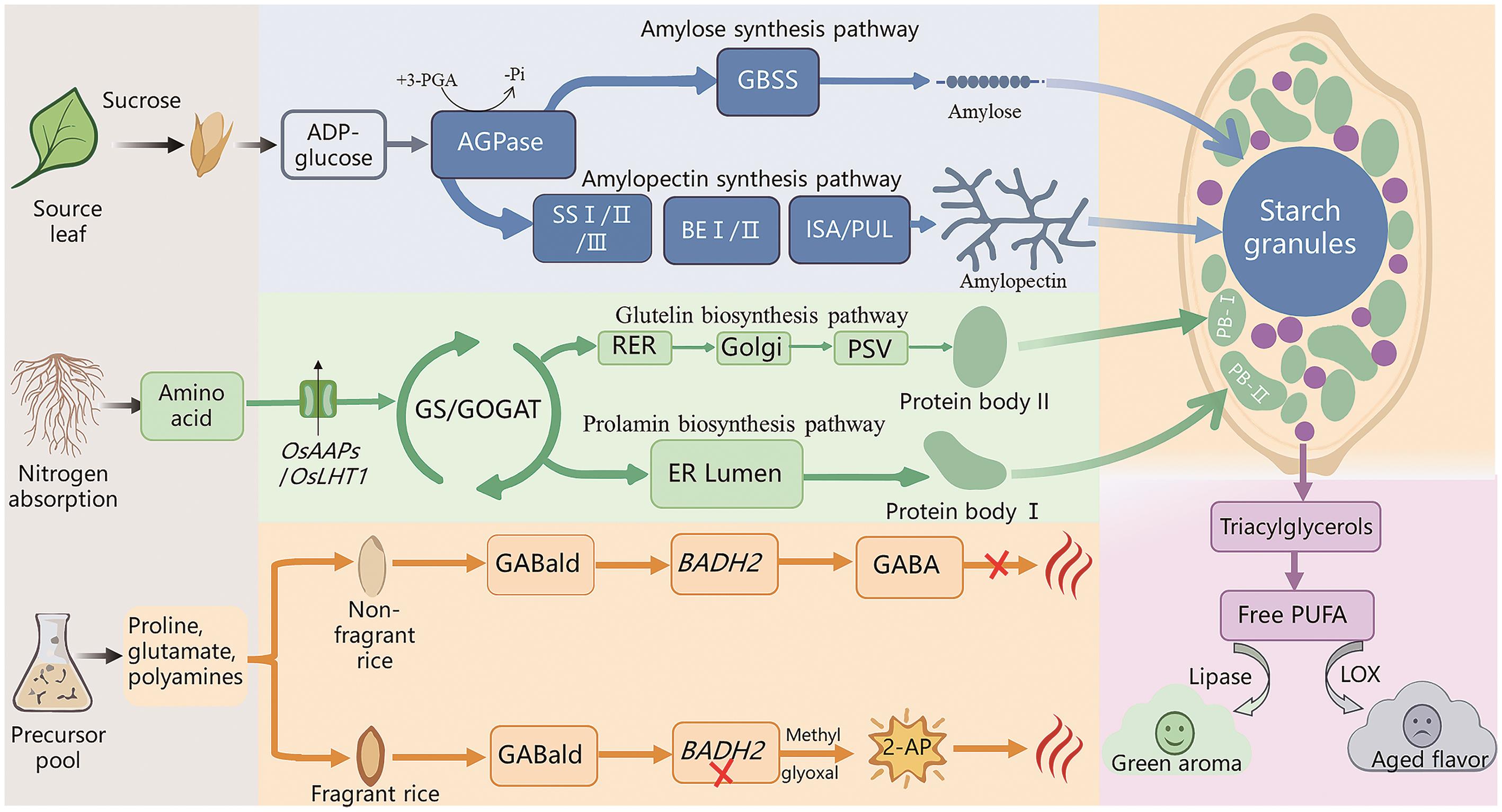
图1 水稻胚乳食味品质核心代谢物合成与积累的模型蓝色模块表示蔗糖经ADP-葡萄糖途径形成直链淀粉和支链淀粉的过程,涉及AGPase、GBSS、SS、BE、ISA和PUL等关键酶;绿色模块表示氮素吸收后经GS/GOGAT循环、氨基酸转运及内质网/液泡加工形成谷蛋白和醇溶蛋白,并最终积累为PB-I和PB-II;橙色模块表示以脯氨酸、谷氨酸和多胺代谢为基础的2-AP形成过程,其中GABald、GABA和BADH2是关键代谢节点。紫色模块表示三酰甘油分解、游离多不饱和脂肪酸释放及LOX介导的脂质氧化过程,与稻米清香和陈化风味形成相关。红叉表示基因功能缺失或代谢途径阻断
Fig. 1 Model for the synthesis and accumulation of core metabolites determining rice eating quality in rice endospermThe blue module shows the pathway from sucrose to amylose and amylopectin through the ADP-glucose pathway, involving key enzymes such as AGPase, GBSS, SS, BE, ISA, and PUL. The green module indicates the pathway from nitrogen uptake to glutelin and prolamin formation via the GS/GOGAT cycle, amino acid transport, and ER/vacuolar processing, ultimately accumulating as PB-I and PB-II. The orange module indicates 2-AP formation based on proline, glutamate, and polyamine metabolism, with GABald, GABA, and BADH2 serving as key metabolic nodes. The purple module indicates triacylglycerol breakdown, release of free polyunsaturated fatty acids, and LOX-mediated lipid oxidation, which are associated with the formation of fragrant and aged flavor in rice. Red crosses indicate loss of gene function or blockage of metabolic pathways
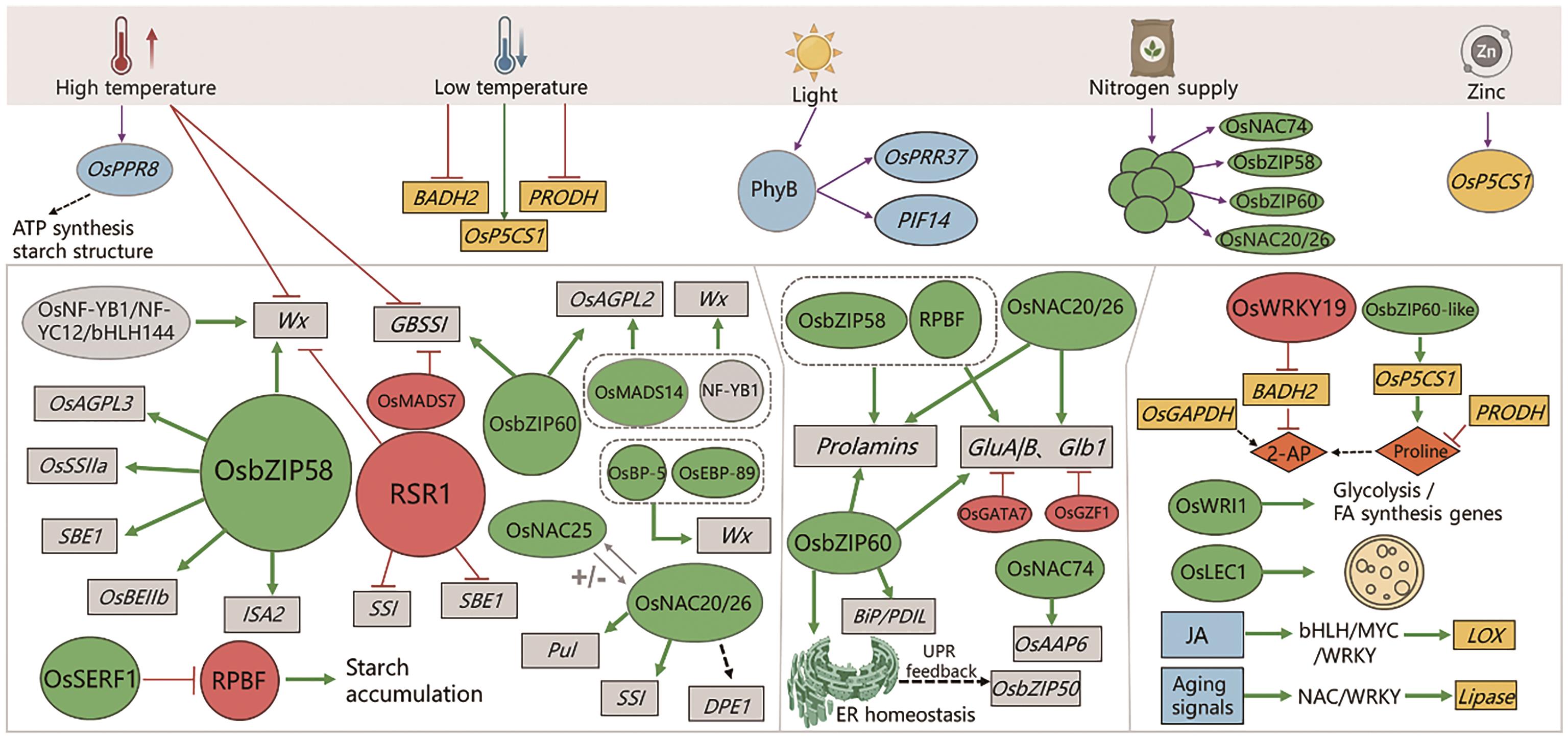
图2 水稻食味品质多途径转录调控网络模型左侧模块展示了OsbZIP58、RSR1、OsMADS14、OsNAC20/26等转录因子对Wx、OsAGPL3、SBE1、OsBEIIb、ISA2等淀粉合成相关基因的调控关系;中间模块展示了RISBZ1/RPBF、OsNAC20/26、OsNAC74、OsbZIP60等因子对谷蛋白、醇溶蛋白、氨基酸转运及内质网加工相关基因的调控;右侧模块展示了OsWRKY19、OsbZIP60-like、OsWRI1、OsLEC1等因子对2-AP形成、脯氨酸代谢、脂质积累及LOX/Lipase相关通路的调控。上方模块进一步概括了高温、低温、光照、氮素和锌等环境或营养信号对上述调控网络的影响。绿色实线箭头表示直接转录激活,红色实线平头表示直接转录抑制,黑色虚线箭头表示间接或多步调控,紫色实线箭头表示信号转导,灰色虚线框表示蛋白质复合物或蛋白质互作,带“+/-”灰色双箭头表示双重调控
Fig. 2 A multi-pathway transcriptional regulatory network model for rice eating qualityThe left panel shows the regulatory relationships of transcription factors including OsbZIP58, RSR1, OsMADS14, and OsNAC20/26 with starch biosynthesis‑related genes such as Wx, OsAGPL3, SBE1, OsBEIIb, and ISA2. The middle module shows the regulation of factors including RISBZ1/RPBF, OsNAC20/26, OsNAC74, and OsbZIP60 on genes involved in glutelin and prolamin synthesis, amino acid transport, and endoplasmic reticulum processing. The right module shows the regulation of factors including OsWRKY19, OsbZIP60‑like, OsWRI1, and OsLEC1 on 2‑AP formation, proline metabolism, lipid accumulation, and LOX/lipase‑related pathways. The upper part of the figure further summarizes the effects of environmental or nutritional signals, including high/low temperature, light, nitrogen, and zinc, on the above regulatory networks. Green solid arrows indicate direct transcriptional activation; red solid lines with flat heads indicate direct transcriptional inhibition; black dashed arrows indicate indirect or multi-step regulation; purple solid arrows indicate signal transduction; gray dashed boxes indicate protein complexes or protein interactions; gray double‑headed arrows with “+/-” indicate dual regulation
| [1] | 王卫才. 基于大食物观的农业食物体系与粮食安全研究 [D]. 太原: 山西大学, 2024. |
| Wang WC. Research on agri-food system and food security under the great food view [D]. Taiyuan: Shanxi University, 2024. | |
| [2] | Duan SM, Ai H, Liu SQ, et al. Functional nutritional rice: current progresses and future prospects [J]. Front Plant Sci, 2024, 15: 1488210. |
| [3] | 陈越,赵灿,刘坤伦,等.水稻籽粒灌浆与淀粉合成的生理调控机制研究进展 [J]. 扬州大学学报(农业与生命科学版), 2025, 46(5): 1-13. |
| Chen Y, Zhao C, Liu KL, et al. Research progress on physiological regulation mechanism of rice grain filling and starch synthesis [J]. J Yangzhou Univ (Agr Life Sci), 2025, 46(5): 1-13. | |
| [4] | Prodhan ZH, Samonte SOPB, Sanchez DL, et al. Profiling and improvement of grain quality traits for consumer preferable basmati rice in the United States [J]. Plants, 2024, 13(16): 2326. |
| [5] | Li SZ, Ren Y, Hou YJ, et al. Polysaccharide-based composite films: promising biodegradable food packaging materials [J]. Foods, 2024, 13(22): 3674. |
| [6] | Kavakli IH, Greene TW, Salamone PR, et al. Investigation of subunit function in ADP-glucose pyrophosphorylase [J]. Biochem Biophys Res Commun, 2001, 281(3): 783-787. |
| [7] | Wang CX, Cai XG, Qian QS. Regulation of starch biosynthesis pathway for improved grain quality in rice [J]. Rgg, 2025, 16(4): 219-236. |
| [8] | Dong NN, Jiao GA, Cao RJ, et al. OsLESV and OsESV1 promote transitory and storage starch biosynthesis to determine rice grain quality and yield [J]. Plant Commun, 2024, 5(7): 100893. |
| [9] | Shen LS, Li JY, Li YH. Resistant starch formation in rice: Genetic regulation and beyond [J]. Plant Commun, 2022, 3(3): 100329. |
| [10] | Huang KY, Lu FF, Chen PF, et al. A large-scale gene regulatory network for rice endosperm starch biosynthesis and its application in genetic improvement of rice quality [J]. Plant Biotechnol J, 2025, 23(7): 2583-2594. |
| [11] | Ying YN, Xu FF, Zhang ZW, et al. Dynamic change in starch biosynthetic enzymes complexes during grain-filling stages in BEIIb active and deficient rice [J]. Int J Mol Sci, 2022, 23(18): 10714. |
| [12] | Fujita N, Miura S, Crofts N. Effects of various allelic combinations of starch biosynthetic genes on the properties of endosperm starch in rice [J]. Rice, 2022, 15: 24. |
| [13] | 周翌城, 郭哈伦, 陆尧, 等. 胚乳蛋白质对稻米品质影响的研究进展 [J]. 中国稻米,2023,29(1)27-34. |
| Zhou YC, Guo HL, Lu Y, et al. Research progress for the effect of endosperm protein on rice quality [J]. China Rice, 2023, 29(1): 27-34. | |
| [14] | Tegeder M, Masclaux-Daubresse C. Source and sink mechanisms of nitrogen transport and use [J]. New Phytol, 2018, 217(1): 35-53. |
| [15] | Lu K, Wu BW, Wang J, et al. Blocking amino acid transporter OsAAP3 improves grain yield by promoting outgrowth buds and increasing tiller number in rice [J]. Plant Biotechnol J, 2018, 16(10): 1710-1722. |
| [16] | Peng B, Sun XY, Tian XY, et al. OsNAC74 affects grain protein content and various biological traits by regulating OsAAP6 expression in rice [J]. Mol Breeding, 2023, 43(12): 87. |
| [17] | Guo N, Gu MJ, Hu JQ, et al. Rice OsLHT1 functions in leaf-to-panicle nitrogen allocation for grain yield and quality [J]. Front Plant Sci, 2020, 11: 1150. |
| [18] | Liu XJ, Hu B, Chu CC. Nitrogen assimilation in plants: current status and future prospects [J]. J Genet Genom, 2022, 49(5): 394-404. |
| [19] | Nakamura S, Katsura J, Maruyama Y, et al. Evaluation of hardness and retrogradation of cooked rice based on its pasting properties using a novel RVA testing [J]. Foods, 2021, 10(5): 987. |
| [20] | ElShamey E, Yang XM, Yang JZ, et al. A systems review of grain proteins in rice and barley: biosynthesis, regulation, and impact on end-use quality [J]. Front Plant Sci, 2025, 16: 1658144. |
| [21] | He W, Wang L, Lin QL, et al. Rice seed storage proteins: Biosynthetic pathways and the effects of environmental factors [J]. J Integr Plant Biol, 2021, 63(12): 1999-2019. |
| [22] | Xi M, Wu WG, Xu YZ, et al. Grain chalkiness traits is affected by the synthesis and dynamic accumulation of the storage protein in rice [J]. J Sci Food Agric, 2021, 101(14): 6125-6133. |
| [23] | Hu Q, Zhang KW, Jiang WQ, et al. Coordination of carbon and nitrogen metabolism through well-timed mid-stage nitrogen compensation in Japonica super rice [J]. Plants, 2024, 13(23): 3351. |
| [24] | Zhang DH, Cai YP, Lao F, et al. Insight into the binding mechanism between rice characteristic odor compounds and glutelin using multi-spectral and molecular dynamics simulation: Comparison of different functional groups [J]. Food Res Int, 2025, 208: 116112. |
| [25] | Lu L, Hu ZQ, Fang CY, et al. Characteristic flavor compounds and functional components of fragrant rice with different flavor types [J]. Foods, 2023, 12(11): 2185. |
| [26] | Xing PP, Liu MY, Pu XJ, et al. Spraying cerium oxide nanoparticles to optimize morphological structure and physiological response of fragrant rice seedlings under cadmium stress [J]. Physiol Plant, 2025, 177(4): e70384. |
| [27] | Chen SH, Yang Y, Shi WW, et al. Badh2, encoding betaine aldehyde dehydrogenase, inhibits the biosynthesis of 2-acetyl-1-pyrroline, a major component in rice fragrance [J]. Plant Cell, 2008, 20(7): 1850-1861. |
| [28] | Mo ZW, Li W, Pan SG, et al. Shading during the grain filling period increases 2-acetyl-1-pyrroline content in fragrant rice [J]. Rice, 2015, 8: 9. |
| [29] | Bindusree G, Natarajan P, Kalva S, et al. Whole genome sequencing of Oryza sativa L. cv. Seeragasamba identifies a new fragrance allele in rice [J]. PLoS One, 2017, 12(11): e0188920. |
| [30] | Hui SZ, Li HJ, Mawia AM, et al. Production of aromatic three-line hybrid rice using novel alleles of BADH2 [J]. Plant Biotechnol J, 2022, 20(1): 59-74. |
| [31] | He Q, Yu J, Kim TS, et al. Resequencing reveals different domestication rate for BADH1 and BADH2 in rice (Oryza sativa) [J]. PLoS One, 2015, 10(8): e0134801. |
| [32] | Kaikavoosi K, Kad TD, Zanan RL, et al. 2-acetyl-1-pyrroline augmentation in scented indica rice (Oryza sativa L.) varieties through Δ1-pyrroline-5-carboxylate synthetase (P5CS) gene transformation [J]. Appl Biochem Biotechnol, 2015, 177(7): 1466-1479. |
| [33] | Hinge VR, Patil HB, Nadaf AB. Aroma volatile analyses and 2AP characterization at various developmental stages in Basmati and Non-Basmati scented rice (Oryza sativa L.) cultivars [J]. Rice, 2016, 9: 38. |
| [34] | Akama K, Takaiwa F. C-terminal extension of rice glutamate decarboxylase (OsGAD2) functions as an autoinhibitory domain and overexpression of a truncated mutant results in the accumulation of extremely high levels of GABA in plant cells [J]. J Exp Bot, 2007, 58(10): 2699-2707. |
| [35] | Xin R, Ma LX, Liu R, et al. Contribution of lipids to the flavor of mussel (Mytilus edulis) Maillard reaction products [J]. Foods, 2022, 11(19): 3015. |
| [36] | Najamuddin U, Gorji SG, Fitzgerald M. Effect of post-milling process on the oxidation of the rice bran [J]. J Cereal Sci, 2023, 111: 103678. |
| [37] | Campo S, San Segundo B. Systemic induction of phosphatidylinositol-based signaling in leaves of arbuscular mycorrhizal rice plants [J]. Sci Rep, 2020, 10: 15896. |
| [38] | Yu P, Gao JD, Jia JT, et al. CRISPR/Cas9 editing of the OsLOX3 gene enhances rice grain weight and seed vigor [J]. Agronomy, 2025, 15(9): 2112. |
| [39] | Mou CL, Chen YP, Zhang P, et al. Prolongation of seed viability and grain quality in rice by editing OsLOX1 using CRISPR/Cas9 [J]. Mol Breeding, 2024, 44(10): 72. |
| [40] | Zhang LT, Pan ZY, Lu ZH, et al. Analysis of volatile compounds' changes in rice grain at different ripening stages via HS-SPME-GC-MS [J]. Foods, 2024, 13(23): 3776. |
| [41] | Zhang D, Huang SS, Wang Q, et al. Lipidomics and volatilomics reveal the changes in lipids and their volatile oxidative degradation products of brown rice during accelerated aging [J]. Food Chem, 2023, 421: 136157. |
| [42] | Liang XP, Chen L, McClements DJ, et al. Starch-guest complexes interactions: Molecular mechanisms, effects on starch and functionality [J]. Crit Rev Food Sci Nutr, 2024, 64(21): 7550-7562. |
| [43] | 翁雪莲, 姜丽秋, 唐树鹏, 等. 稻米淀粉、蛋白质和脂质与蒸煮食味品质关系研究进展 [J]. 华中农业大学学报, 2024, 43(3): 121-131. |
| Weng XL, Jiang LQ, Tang SP, et al. Progress on relationship between starch, protein, lipids and taste quality of steaming and cooking in rice [J]. J Huazhong Agric Univ, 2024, 43(3): 121-131. | |
| [44] | 吴焱, 袁嘉琦, 张超, 等. 粳稻脂肪含量对淀粉热力学特性及米饭食味品质的影响 [J]. 中国粮油学报, 2021, 36(4): 1-7, 29. |
| Wu Y, Yuan JQ, Zhang C, et al. Effect of lipid content in Japonica rice on starch thermodynamic properties and taste quality [J]. J Chin Cereals Oils Assoc, 2021, 36(4): 1-7, 29. | |
| [45] | Ma ZT, Chen X, Cao JL, et al. Carbon and nitrogen metabolism effects on eating quality in grains of diverse Japonica rice cultivars from the middle and Lower Yangtze River [J]. Food Energy Secur, 2025, 14: e70051. |
| [46] | Wang JC, Xu H, Zhu Y, et al. OsbZIP58, a basic leucine zipper transcription factor, regulates starch biosynthesis in rice endosperm [J]. J Exp Bot, 2013, 64(11): 3453-3466. |
| [47] | Fu FF, Xue HW. Coexpression analysis identifies rice starch Regulator1, a rice AP2/EREBP family transcription factor, as a novel rice starch biosynthesis regulator [J]. Plant Physiol, 2010, 154(2): 927-938. |
| [48] | Schmidt R, Schippers JHM, Mieulet D, et al. SALT-RESPONSIVE ERF1 is a negative regulator of grain filling and gibberellin-mediated seedling establishment in rice [J]. Mol Plant, 2014, 7(2): 404-421. |
| [49] | Feng TT, Wang LL, Li LY, et al. OsMADS14 and NF-YB1 cooperate in the direct activation of OsAGPL2 and Waxy during starch synthesis in rice endosperm [J]. New Phytol, 2022, 234(1): 77-92. |
| [50] | Zhang H, Xu H, Feng MJ, et al. Suppression of OsMADS7 in rice endosperm stabilizes amylose content under high temperature stress [J]. Plant Biotechnol J, 2018, 16(1): 18-26. |
| [51] | Jin SK, Xu LN, Leng YJ, et al. The OsNAC24-OsNAP protein complex activates OsGBSSI and OsSBEI expression to fine-tune starch biosynthesis in rice endosperm [J]. Plant Biotechnol J, 2023, 21(11): 2224-2240. |
| [52] | Wang J, Chen ZC, Zhang Q, et al. The NAC transcription factors OsNAC20 and OsNAC26 regulate starch and storage protein synthesis [J]. Plant Physiol, 2020, 184(4): 1775-1791. |
| [53] | Wang J, Zhang HQ, Wang YJ, et al. Regulatory loops between rice transcription factors OsNAC25 and OsNAC20/26 balance starch synthesis [J]. Plant Physiol, 2024, 195(2): 1365-1381. |
| [54] | 彭波, 邱静, 彭静, 等. NAC转录因子在水稻遗传改良中的研究进展 [J]. 信阳师范学院学报: 自然科学版, 2024(4): 540-550. |
| Peng B, Qiu J, Peng J, et al. Research progress on NAC transcription factors in genetic improvement of rice [J]. J Xinyang Norm Univ Nat Sci Ed, 2024(4): 540-550. | |
| [55] | Ren Y, Huang ZQ, Jiang H, et al. A heat stress responsive NAC transcription factor heterodimer plays key roles in rice grain filling [J]. J Exp Bot, 2021, 72(8): 2947-2964. |
| [56] | Huang KY, Chen L, Jiao GA, et al. OsMYBR1, a 1R-MYB family transcription factor regulates starch biosynthesis in rice endosperm [J]. Life, 2025, 15(6): 962. |
| [57] | Bello BK, Hou YX, Zhao J, et al. NF-YB1-YC12-bHLH144 complex directly activates Wx to regulate grain quality in rice (Oryza sativa L.) [J]. Plant Biotechnol J, 2019, 17(7): 1222-1235. |
| [58] | Zhu Y, Cai XL, Wang ZY, et al. An interaction between a MYC protein and an EREBP protein is involved in transcriptional regulation of the rice wx gene [J]. J Biol Chem, 2003, 278(48): 47803-47811. |
| [59] | Cao RJ, Zhao SL, Jiao GA, et al. OPAQUE3, encoding a transmembrane bZIP transcription factor, regulates endosperm storage protein and starch biosynthesis in rice [J]. Plant Commun, 2022, 3(6): 100463. |
| [60] | Cai YC, Li SF, Jiao GA, et al. OsPK2 encodes a plastidic pyruvate kinase involved in rice endosperm starch synthesis, compound granule formation and grain filling [J]. Plant Biotechnol J, 2018, 16(11): 1878-1891. |
| [61] | Yan HG, Zhang WW, Wang YH, et al. Rice like early starvation1 cooperates with floury endosperm6 to modulate starch biosynthesis and endosperm development [J]. Plant Cell, 2024, 36(5): 1892-1912. |
| [62] | Kawakatsu T, Yamamoto MP, Touno SM, et al. Compensation and interaction between RISBZ1 and RPBF during grain filling in rice [J]. Plant J, 2009, 59(6): 908-920. |
| [63] | Onodera Y, Suzuki A, Wu CY, et al. A rice functional transcriptional activator, RISBZ1 responsible for endosperm-specific expression of storage protein genes through GCN4 motif [J]. J Biol Chem, 2001, 276(17): 14139-14152. |
| [64] | Yamamoto MP, Onodera Y, Touno SM, et al. Synergism between RPBF dof and RISBZ1 bZIP activators in the regulation of rice seed expression genes [J]. Plant Physiol, 2006, 141(4): 1694-1707. |
| [65] | Peng B, Kong HL, Li YB, et al. OsAAP6 functions as an important regulator of grain protein content and nutritional quality in rice [J]. Nat Commun, 2014, 5: 4847. |
| [66] | Peng B, Liu Y, Qiu J, et al. OsNAC74 modulates rice growth and salt tolerance via hormone signaling pathways [J]. Sci Rep, 2025, 15: 45350. |
| [67] | Peng B, Liu Y, Sun XY, et al. The OsGAPC3 mutation significantly affects grain quality traits and improves the nutritional quality of rice [J]. Front Plant Sci, 2024, 15: 1470316. |
| [68] | Yang WP, Xu PK, Zhang JC, et al. OsbZIP60-mediated unfolded protein response regulates grain chalkiness in rice [J]. J Genet Genom, 2022, 49(5): 414-426. |
| [69] | Hayashi S, Wakasa Y, Takahashi H, et al. Signal transduction by IRE1-mediated splicing of bZIP50 and other stress sensors in the endoplasmic reticulum stress response of rice [J]. Plant J, 2012, 69(6): 946-956. |
| [70] | Iwata Y, Koizumi N. Plant transducers of the endoplasmic reticulum unfolded protein response [J]. Trends Plant Sci, 2012, 17(12): 720-727. |
| [71] | Cao N, Zhou W, Zhao FL, et al. OsGATA7 and SMOS1 cooperatively determine rice taste quality by repressing OsGluA2 expression and protein biosynthesis [J]. Nat Commun, 2025, 16: 3513. |
| [72] | Chen Y, Sun AJ, Wang M, et al. Functions of the CCCH type zinc finger protein OsGZF1 in regulation of the seed storage protein GluB-1 from rice [J]. Plant Mol Biol, 2014, 84(6): 621-634. |
| [73] | Li Y, Miao YY, Yuan HL, et al. Volatilome-based GWAS identifies OsWRKY19 and OsNAC021 as key regulators of rice aroma [J]. Mol Plant, 2024, 17(12): 1866-1882. |
| [74] | Igarashi Y, Yoshiba Y, Sanada Y, et al. Characterization of the gene for Δ1-pyrroline-5-carboxylate synthetase and correlation between the expression of the gene and salt tolerance in Oryza sativa L [J]. Plant Mol Biol, 1997, 33(5): 857-865. |
| [75] | Bao GG, Ashraf U, Li L, et al. Transcription factor OsbZIP60-like regulating OsP5CS1 gene and 2-acetyl-1-pyrroline (2-AP) biosynthesis in aromatic rice [J]. Plants, 2024, 13(1): 49. |
| [76] | Liu KQ, Tang YH, Tang YY, et al. Ectopic expression of WRINKLED1 in rice improves lipid biosynthesis but retards plant growth and development [J]. PLoS One, 2022, 17(8): e0267684. |
| [77] | Guo F, Zhang PJ, Wu Y, et al. Rice LEAFY COTYLEDON1 hinders embryo greening during the seed development [J]. Front Plant Sci, 2022, 13: 887980. |
| [78] | Zhou ML, Memelink J. Jasmonate-responsive transcription factors regulating plant secondary metabolism [J]. Biotechnol Adv, 2016, 34(4): 441-449. |
| [79] | Mach J. The lipase link: abscisic acid induces PLASTID LIPASES, which produce jasmonic acid precursors [J]. Plant Cell, 2018, 30(5): 948-949. |
| [80] | Deng F, Li QP, Chen H, et al. Relationship between chalkiness and the structural and thermal properties of rice starch after shading during grain-filling stage [J]. Carbohydr Polym, 2021, 252: 117212. |
| [81] | Shi SJ, Wang ET, Li CX, et al. Comprehensive evaluation of 17 qualities of 84 types of rice based on principal component analysis [J]. Foods, 2021, 10(11): 2883. |
| [82] | 陈虎, 贾旭东, 王志强, 等. 高温对水稻淀粉及品质的影响 [J]. 北方水稻, 2022, 52(5): 55-60. |
| Chen H, Jia XD, Wang ZQ, et al. Effects of high temperature on rice starch and quality [J]. North Rice, 2022, 52(5): 55-60. | |
| [83] | Yuan H, Zeng JR, Xu ZY, et al. OsPPR8, a pentatricopeptide repeat protein, regulates splicing of mitochondrial nad2 intron 3 to affect grain quality and high-temperature tolerance in rice [J]. Plant J, 2025, 122(5): e70246. |
| [84] | Yamakawa H, Hirose T, Kuroda M, et al. Comprehensive expression profiling of rice grain filling-related genes under high temperature using DNA microarray [J]. Plant Physiol, 2007, 144(1): 258-277. |
| [85] | Fan XL, Sun XS, Yang R, et al. Comparative analyses of grain quality in response to high temperature during the grain-filling stage between wxa and wxb under indica and Japonica backgrounds [J]. Agronomy, 2023, 13(1): 17. |
| [86] | Luo HW, Zhang QQ, Lai RF, et al. Regulation of 2-acetyl-1-pyrroline content in fragrant rice under different temperatures at the grain-filling stage [J]. J Agric Food Chem, 2024, 72(18): 10521-10530. |
| [87] | Imran M, Shafiq S, Ilahi S, et al. Post-transcriptional regulation of 2-acetyl-1-pyrroline (2-AP) biosynthesis pathway, silicon, and heavy metal transporters in response to Zn in fragrant rice [J]. Front Plant Sci, 2022, 13: 948884. |
| [88] | Luo CK, Min WF, Akhtar M, et al. Melatonin enhances drought tolerance in rice seedlings by modulating antioxidant systems, osmoregulation, and corresponding gene expression [J]. Int J Mol Sci, 2022, 23(20): 12075. |
| [89] | Zhang YF, Wang N, He CG, et al. Comparative transcriptome analysis reveals major genes, transcription factors and biosynthetic pathways associated with leaf senescence in rice under different nitrogen application [J]. BMC Plant Biol, 2024, 24: 419. |
| [90] | Ma DY, Gao HH, Du CY, et al. Transcriptomic and metabolomics analysis of different endosperm region under nitrogen treatments [J]. Int J Mol Sci, 2019, 20(17): 4212. |
| [91] | Ma ZT, Cao JL, Chen X, et al. Differences in carbon and nitrogen metabolism of soft Japonica rice in Southern China during grain filling stage under different light and nitrogen fertilizer conditions and their relationship with rice eating quality [J]. Front Plant Sci, 2025, 16: 1534625. |
| [92] | Zhang HB, Tang SQ, Wei FN, et al. The effects of photoperiodic transcription factor OsPRR37 on grain filling and starch synthesis during rice caryopsis development [J]. Plants, 2025, 14(23): 3690. |
| [93] | Alencar VTCB. Knockout in pif14 induces interruptions in starch synthesis, affecting seed formation and development of rice plants [J]. LA Referencia (Red Federada de Repositorios Institucionales de Publicaciones Científicas), 2023. |
| [94] | Lou GM, Chen PL, Li PB, et al. Antagonistic Ghd7-OsNAC42 complexes modulate carbon and nitrogen metabolism to achieve superior quality and high yield in rice [J]. Adv Sci, 2025, 12(31): e04163. |
| [95] | Sun Q, Duan EC, Jing RN, et al. The bZIP transcription factor RISBZ1 balances grain filling and ER stress response in rice grains [J]. Plant Commun, 2025, 6(9): 101458. |
| [96] | Li W, Yang K, Hu CF, et al. A natural gene on-off system confers field thermotolerance for grain quality and yield in rice [J]. Cell, 2025, 188(14): 3661-3678.e21. |
| [97] | Zhang YY, Zhang SN, Zhang JF, et al. Improving rice eating and cooking quality by enhancing endogenous expression of a nitrogen-dependent floral regulator [J]. Plant Biotechnol J, 2023, 21(12): 2654-2670. |
| [1] | 宋子慧, 薛丽, 王森, 孙建昌, 韩冰, 崔迪, 韩龙植, 赵正武, 马小定. 基于全基因组关联分析挖掘水稻抗旱相关基因[J]. 生物技术通报, 2026, 42(8): 97-105. |
| [2] | 金曼, 龚奕杭, 潘文波, 罗培润, 高伟, 李平东, 唐晓艳. 基因编辑技术在创制抗除草剂水稻中的研究进展[J]. 生物技术通报, 2026, 42(8): 8-21. |
| [3] | 杨群, 李京, 符德保, 许婷婷. OsbHLH069通过对LAX1-LAX2复合体的竞争性干扰负调控水稻穗发育[J]. 生物技术通报, 2026, 42(8): 113-122. |
| [4] | 彭彦, 安晨, 韶也, 毛毕刚, 张学文, 赵炳然. 植物重金属响应可视化系统的构建与验证[J]. 生物技术通报, 2026, 42(7): 105-115. |
| [5] | 陈义焰, 张冬儿, 张涛, 刘育灏, 唐杰, 盛夏冰, 胡远艺, 艾治勇, 李应将, 刘小林. 水稻OsSULTR2;2基因功能及调控苗期耐盐性分析[J]. 生物技术通报, 2026, 42(7): 116-125. |
| [6] | 倪飞飞, 陈益存, 高暝, 张盛剿, 彭方有, 陈涛梅, 赵耘霄, 汪阳东. 山苍子TCP基因鉴定及其调控萜类合成的研究[J]. 生物技术通报, 2026, 42(4): 227-238. |
| [7] | 殷亚龙, 张明洋, 王洁敏, 苗雪雪, 陈劲, 王伟平. 水稻非生物胁迫协同耐受机制研究进展[J]. 生物技术通报, 2026, 42(4): 26-37. |
| [8] | 刘娜, 曾宝珍, 贾兆星, 祝英方. 表观遗传调控番茄果实发育及成熟的研究进展[J]. 生物技术通报, 2026, 42(3): 37-47. |
| [9] | 殷诗情, 田泰, 黄凤庭, 冯珑强, 王浩, 张静, 何文, 陈清, 王小蓉, 王燕. 果树果实硬度的调控机制研究进展[J]. 生物技术通报, 2026, 42(3): 213-229. |
| [10] | 赵艳侠, 李倩, 孙家波, 梁红敏, 李冰冰. 草莓果实品质形成的关键调控基因及分子网络解析[J]. 生物技术通报, 2026, 42(3): 111-132. |
| [11] | 王程程, 黄天宇, 张晴, 史来权, 方慧敏, 张龙. 一个水稻粉质胚乳突变体的表型分析和基因定位[J]. 生物技术通报, 2026, 42(2): 169-177. |
| [12] | 杨跃琴, 邢英, 仲子荷, 田维军, 杨雪清, 王建旭. 甲基汞胁迫下水稻OsMATE34的表达及功能分析[J]. 生物技术通报, 2026, 42(1): 86-94. |
| [13] | 费思恬, 侯鹰翔, 李兰, 张超. 水稻赤霉素信号负调控因子SLR1的生物学功能及其调控网络[J]. 生物技术通报, 2026, 42(1): 13-30. |
| [14] | 龙林茜, 曾银萍, 王茜, 邓玉萍, 葛敏茜, 陈彦灼, 李鑫娟, 杨军, 邹建. 向日葵GH3基因家族鉴定及其在花发育中的功能分析[J]. 生物技术通报, 2026, 42(1): 125-138. |
| [15] | 陈强, 于璎霏, 张颖, 张冲. 茉莉酸甲酯对薄皮甜瓜‘绿宝石’采后冷害的调控[J]. 生物技术通报, 2025, 41(9): 105-114. |
| 阅读次数 | ||||||
|
全文 |
|
|||||
|
摘要 |
|
|||||
