







生物技术通报 ›› 2025, Vol. 41 ›› Issue (9): 168-181.doi: 10.13560/j.cnki.biotech.bull.1985.2025-0279
• 研究报告 • 上一篇
刘建国1,2( ), 刘格儿2(), 郭颖欣2, 王斌1,2, 王玉昆1,2, 卢金凤2, 黄文庭3, 朱云娜1,2()
收稿日期:2025-03-15
出版日期:2025-09-26
发布日期:2025-09-24
通讯作者:
朱云娜,女,博士,副教授,研究方向 :园艺作物栽培生理与分子生物学;E-mail: zhuyn326@126.com作者简介:刘建国,男,博士,实验师,研究方向 :园艺作物生理生态;E-mail: jgliu@sgu.edu.cn基金资助:
LIU Jian-guo1,2(), LIU Ge-er2(), GUO Ying-xin2, WANG Bin1,2, WANG Yu-kun1,2, LU Jin-feng2, HUANG Wen-ting3, ZHU Yun-na1,2()
Received:2025-03-15
Published:2025-09-26
Online:2025-09-24
摘要:
目的 解析自花授粉品种‘桂柚1号’和母本‘沙田柚’果实品质、转录调控与代谢差异,为深入研究柚果实品质形成机制及代谢调控提供理论依据。 方法 采用生化指标检测、转录组学和广泛靶向代谢组学技术,对‘桂柚1号’和‘沙田柚’果实品质、差异表达基因和代谢物谱进行系统分析。 结果 ‘桂柚1号’和‘沙田柚’在单果重、可溶性固形物、可滴定酸、VC含量等指标无显著差异;但‘桂柚1号’果实的果形指数显著大于‘沙田柚’,而其总氨基酸含量显著低于‘沙田柚’。与‘沙田柚’相比,‘桂柚1号’中筛选到285个差异表达基因,其中表达上调和下调基因分别为190和95个。这些差异基因主要富集在精氨酸和脯氨酸代谢、脂肪酸代谢、苯丙烷生物合成等途径。与‘沙田柚’相比,‘桂柚1号’中显著上调和下调的差异代谢物分别为17和30种,上调代谢物主要为生物碱和香豆素,下调代谢物则为氨基酸、类黄酮、酚酸等。转录组与代谢组联合分析发现,‘桂柚1号’与‘沙田柚’果实品质差异主要受氨基酸、生物碱、苯丙烷等代谢途径影响,筛选出GOT2、COMT、UGT73C、CYP71A、PAIC等关键基因,推测这些差异基因可能在柚果品质形成中发挥重要作用。 结论 ‘桂柚1号’与‘沙田柚’成熟期果实常规品质指标相差不大,但在氨基酸、类黄酮、酚酸、生物碱等方面存在明显不同,二者的差异基因与代谢物主要富集在氨基酸、苯丙烷等物质代谢通路。
刘建国, 刘格儿, 郭颖欣, 王斌, 王玉昆, 卢金凤, 黄文庭, 朱云娜. 转录组和代谢组联合解析‘桂柚1号’和‘沙田柚’果实品质差异[J]. 生物技术通报, 2025, 41(9): 168-181.
LIU Jian-guo, LIU Ge-er, GUO Ying-xin, WANG Bin, WANG Yu-kun, LU Jin-feng, HUANG Wen-ting, ZHU Yun-na. Integrate Transcriptomic and Metabolomic Analysis of Fruits Quality Differences between ‘Guiyou No. 1’ and ‘Shatianyou’ Pomelo (Citrus maxima)[J]. Biotechnology Bulletin, 2025, 41(9): 168-181.
基因序号 Gene ID | 基因名称 Gene name | 上游引物序列 Forward primers sequence (5′-3′) | 下游引物序列 Reverse primers sequence (5′-3′) | 用途 Usage |
|---|---|---|---|---|
| Cg8g019990 | PAL | GAAAGTCCTGACGATGGGGG | GCATCAACGGGTAAGTTGCG | 荧光定量PCR Quantitative real-time PCR |
| Cg2g026340 | 4CL | GGCTGCTTGCATTTTTCGGA | AGGCAGCACACATAGGATCG | |
| Cg4g020580 | C4H | CTGAGGAGTTTCGGCCAGAG | TGCAATCACAAGCCCCAAGA | |
| Cg1g010540 | GPPK | GGAAGCCGAAGAGATGGAGG | TGAGGGGTTTGTTGTGGCAA | |
| Cg7g018290 | CYP71A | TCTGGGCAATGTCAGAGCTA | GTCTTGGGAGTAGCATCGGG | |
| Cg7g005510 | CSE | CTCCACGGCGAAGAGGATAA | GTGCCACATCCCCTCGTAAA | |
| Cg4g014720 | CAD | GCTCGGATTGACCCAAGAAG | AGCTTCTTTTGGAATTGGCTCTATC | |
| Cg3g013930 | CER | CCTGATCTCGCATTCTCCCC | GGCTCGTGTAGAGACTTCGG | |
| Cg6g013340 | HCT | CCCTTCGCCGAATCATCAGT | ACACGTTCGCCTTTGCATTC | |
| Cg5g006480 | GAPC | GGTGGCAGGGCTGCTTCATT | AGCGTCCTTCTCCAGCCTCA | 荧光定量PCR内参基因 Reference gene for RT-qPCR |
表1 RT-qPCR验证基因及引物信息
Table 1 RT-qPCR validation gene and primer information
基因序号 Gene ID | 基因名称 Gene name | 上游引物序列 Forward primers sequence (5′-3′) | 下游引物序列 Reverse primers sequence (5′-3′) | 用途 Usage |
|---|---|---|---|---|
| Cg8g019990 | PAL | GAAAGTCCTGACGATGGGGG | GCATCAACGGGTAAGTTGCG | 荧光定量PCR Quantitative real-time PCR |
| Cg2g026340 | 4CL | GGCTGCTTGCATTTTTCGGA | AGGCAGCACACATAGGATCG | |
| Cg4g020580 | C4H | CTGAGGAGTTTCGGCCAGAG | TGCAATCACAAGCCCCAAGA | |
| Cg1g010540 | GPPK | GGAAGCCGAAGAGATGGAGG | TGAGGGGTTTGTTGTGGCAA | |
| Cg7g018290 | CYP71A | TCTGGGCAATGTCAGAGCTA | GTCTTGGGAGTAGCATCGGG | |
| Cg7g005510 | CSE | CTCCACGGCGAAGAGGATAA | GTGCCACATCCCCTCGTAAA | |
| Cg4g014720 | CAD | GCTCGGATTGACCCAAGAAG | AGCTTCTTTTGGAATTGGCTCTATC | |
| Cg3g013930 | CER | CCTGATCTCGCATTCTCCCC | GGCTCGTGTAGAGACTTCGG | |
| Cg6g013340 | HCT | CCCTTCGCCGAATCATCAGT | ACACGTTCGCCTTTGCATTC | |
| Cg5g006480 | GAPC | GGTGGCAGGGCTGCTTCATT | AGCGTCCTTCTCCAGCCTCA | 荧光定量PCR内参基因 Reference gene for RT-qPCR |
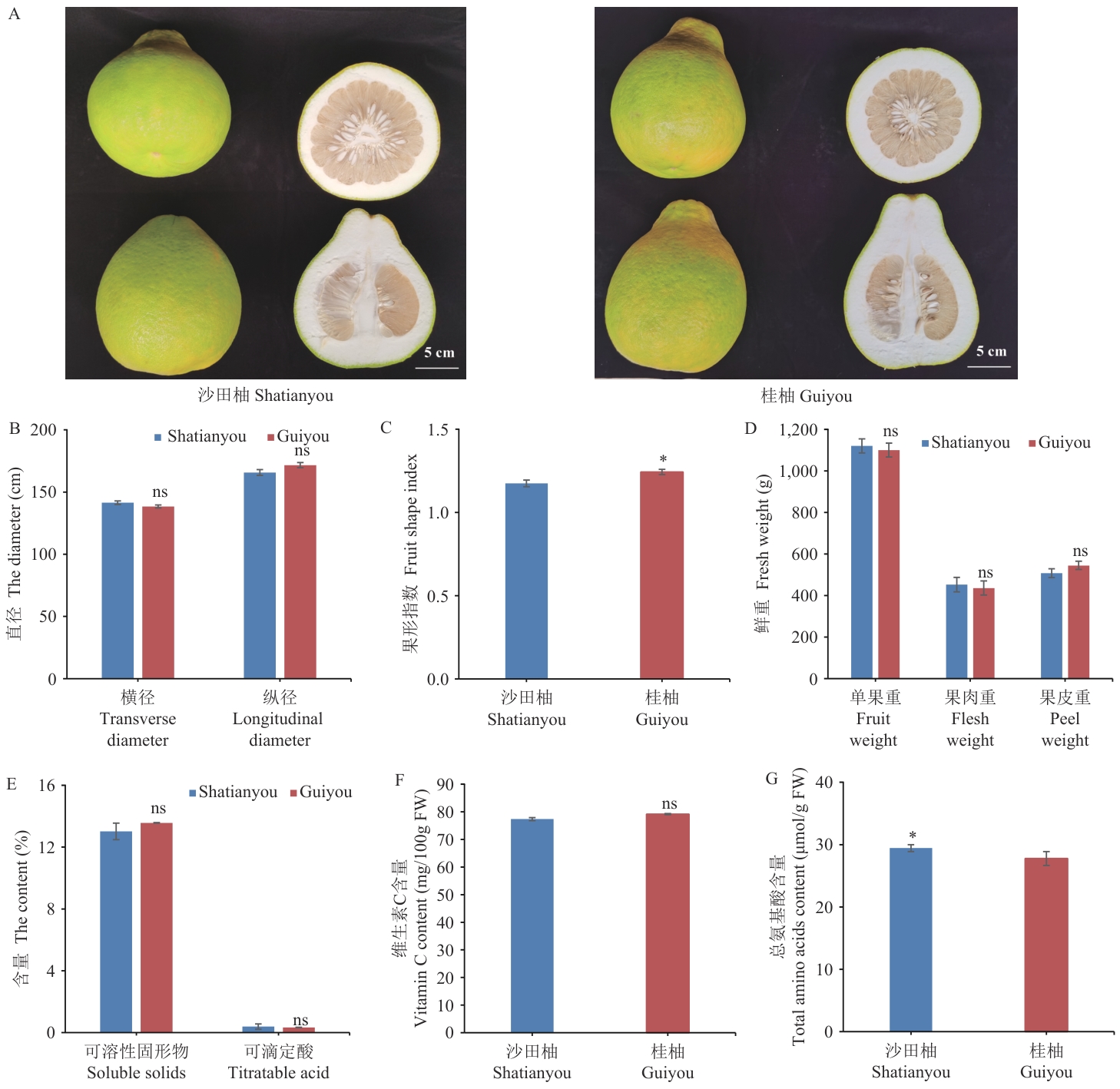
图1 ‘桂柚1号’和‘沙田柚’果实表型(A)与品质指标(B-G)*表示在P < 0.05 水平上差异显著,ns表示差异不显著
Fig. 1 Phenotypes (A) and quality indexes (B-G) of 'Guiyou No.1' and 'Shatianyou' fruits* indicates significant differences at P < 0.05 level, ns indicates no significant differences
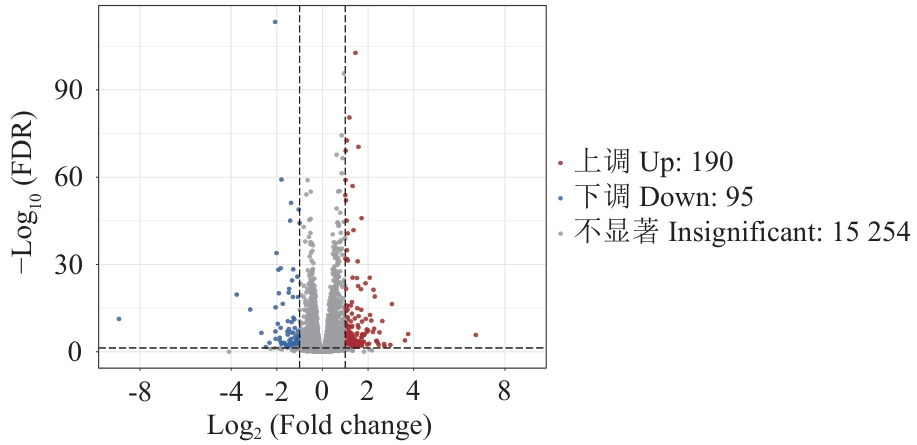
图2 ‘桂柚1号’和‘沙田柚’果实的火山图
Fig. 2 Volcano of 'Guiyou No.1' and 'Shatianyou' fruits

图3 ‘桂柚1号’和‘沙田柚’果实差异表达基因的GO富集分析(A)、KEGG通路分析(B)及代谢途径差异基因的表达热图(C)
Fig. 3 GO enrichment analysis (A), KEGG analysis of differentially expressed genes (B), and expressed heatmap involved in metabolites pathways in (C) 'Guiyou No.1' and 'Shatianyou' fruits

图4 ‘桂柚1号’和‘沙田柚’果实差异表达基因的RT-qPCR验证
Fig. 4 RT-qPCR verification of differentially expressed genes in 'Guiyou No.1' and 'Shatianyou' fruits
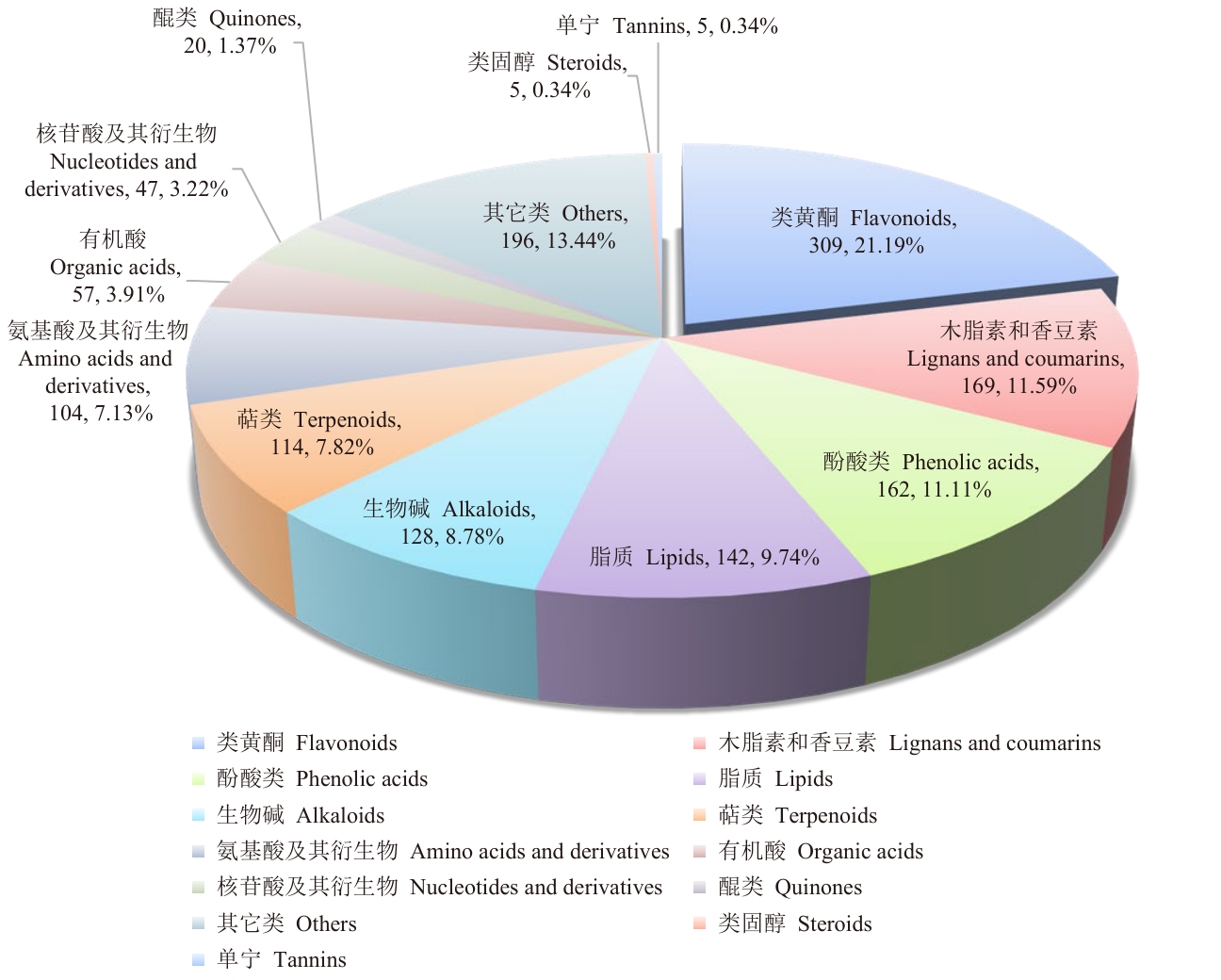
图5 ‘桂柚1号’和‘沙田柚’代谢物类别组成饼状图
Fig. 5 Pie chart of metabolite category composition in 'Guiyou No.1' and 'Shatianyou'
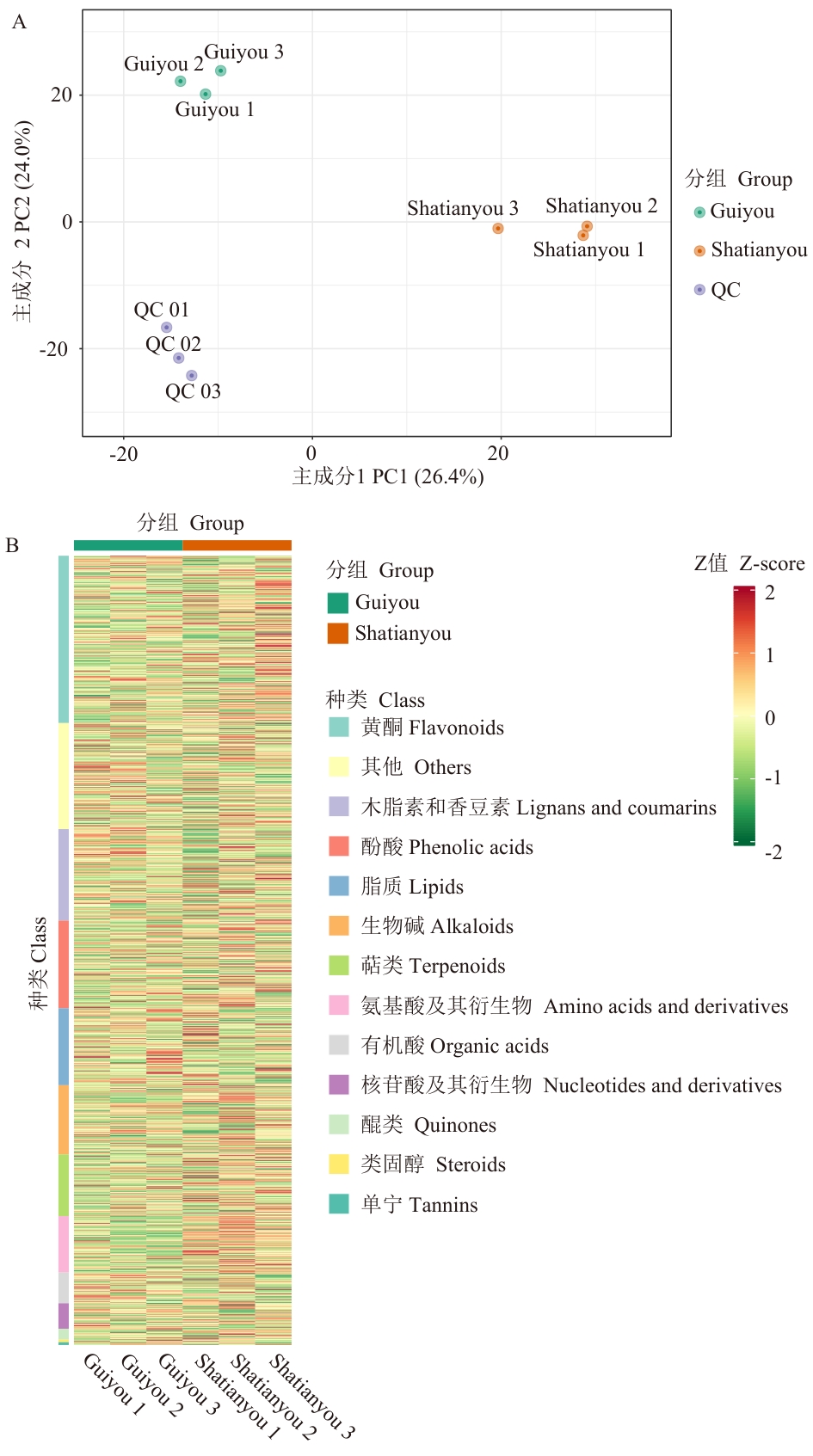
图6 ‘桂柚1号’和‘沙田柚’果实代谢物的主成分分析(A)和层次聚类分析(B)
Fig. 6 Principal components analysis (A) and hierarchical clustering analysis (B) of metabolites in 'Guiyou No.1' and 'Shatianyou' fruits

图7 ‘桂柚1号’和‘沙田柚’果实代谢物的OPLS-DA得分图、模型验证图及差异代谢物分析A:OPLS-DA得分图;B:模型验证图;C:火山图;D:差异代谢物分类图;E:差异代谢物热图
Fig. 7 OPLS-DA score diagram and verification diagram of model of metabolites in 'Guiyou No.1' and 'Shatianyou' fruits, as well as analysis of differential metabolitesA: OPLS-DA score diagram. B: Verification diagram of model. C: Volcano plot. D: Classification of differential metabolites. E: The heatmap of differential metabolites

图8 ‘桂柚1号’和‘沙田柚’果实差异代谢物的代谢通路富集分析A:KEGG分类图;B:差异丰度得分图
Fig. 8 Metabolic pathway enrichment analysis of differential metabolites between 'Guiyou No.1' and 'Shatianyou' fruitsA: KEGG classification plot. B: Differential abundance score plot

图9 ‘桂柚1号’和‘沙田柚’果实转录-代谢主要的映射通路A:相关性分析九象限图;B:KEGG富集分析;C:主要代谢通路的差异代谢物和差异基因分析
Fig. 9 Main common mapping pathways of transcription and metabolism in 'Guiyou No.1' and 'Shatianyou' fruitsA: Scatter plot of 9-quadrant associate analyses. B: KEGG enrichment analysis. C: Differential metabolites and genes analysis in major metabolic pathways
| [1] | 蒋黎艳, 李琳, 李佳灵, 等. 不同产地沙田柚籽油组成及风味特征差异的分析 [J]. 中国粮油学报, 2024, 39(7): 130-139. |
| Jiang LY, Li L, Li JL, et al. Analysis of composition and flavor characteristics of Citrus grandis seed oil from different regions [J]. J Chin Cereals Oils Assoc, 2024, 39(7): 130-139. | |
| [2] | 孙慧慧, 余元善, 吴继军, 等. 沙田柚的加工和综合利用研究 [J]. 食品研究与开发, 2018, 39(6): 209-214. |
| Sun HH, Yu YS, Wu JJ, et al. Study on production and comprehensive utilization of Citrus grandis osbeck [J]. Food Res Dev, 2018, 39(6): 209-214. | |
| [3] | 区燕丽, 殷佳佳, 胡曦丹, 等. 不同产区沙田柚化学成分及果实品质比较 [J]. 食品研究与开发, 2024, 45(14): 87-92. |
| Ou YL, Yin JJ, Hu XD, et al. Comparison of chemical composition and fruit quality of Shatian pomelos from different producing areas [J]. Food Res Dev, 2024, 45(14): 87-92. | |
| [4] | 罗伟雄, 马崇坚, 张宇鹏, 等. 长坝沙田柚产业现状及发展对策 [J]. 特种经济动植物, 2022, 25(10): 182-184. |
| Luo WX, Ma CJ, Zhang YP, et al. Present situation and development countermeasures of pomelo industry in Changsha Shatian [J]. Spec Econ Anim Plants, 2022, 25(10): 182-184. | |
| [5] | 区善汉, 梅正敏, 张社南, 等. "桂柚1号" 在广西的表现及栽培技术 [J]. 中国南方果树, 2022, 51(2): 8-11, 17. |
| Ou SH, Mei ZM, Zhang SN, et al. Performance of Guiyou No.1 pomelo in Guangxi and its cultural techniques [J]. South China Fruits, 2022, 51(2): 8-11, 17. | |
| [6] | 区善汉, 廖奎富, 肖远辉, 等. 自花结果沙田柚品种"桂柚1号"选育初报 [J]. 广西农业科学, 2010, 41(1): 4-6. |
| Ou SH, Liao KF, Xiao YH, et al. The selection of self-pollination pomelo variety “Guiyou 1” [J]. Guangxi Agric Sci, 2010, 41(1): 4-6. | |
| [19] | Zhang CZ. Determination of vitamin C in freshly squeezed peach juice by 2, 6- dichloroindophenol titration [J]. China Food Saf Mag, 2021, 24: 53, 55. |
| [20] | 兰天, 段国珍, 祁有朝, 等. 黑果枸杞和黄果枸杞的广泛靶向代谢组学分析 [J]. 食品科学, 2024, 45(12): 52-58. |
| Lan T, Duan GZ, Qi YC, et al. Widely targeted metabolomic analysis of Lycium ruthenicum Murr and Lycium barbarum L. var. auranticarpum K. F. Ching fruits [J]. Food Sci, 2024, 45(12): 52-58. | |
| [21] | Fraga CG, Clowers BH, Moore RJ, et al. Signature-discovery approach for sample matching of a nerve-agent precursor using liquid chromatography-mass spectrometry, XCMS, and chemometrics [J]. Anal Chem, 2010, 82(10): 4165-4173. |
| [22] | 廖奎富, 袁洁, 林林, 等. 桂柚1号与沙田柚主要特征的差异 [J]. 中国南方果树, 2022, 51(4): 6-10. |
| Liao KF, Yuan J, Lin L, et al. Differences between the main characteristics of Guiyou No.1 and Shatianyou [J]. South China Fruits, 2022, 51(4): 6-10. | |
| [23] | Liu H, Qiao JJ, Shangguan JL, et al. Effects of glutamate oxaloacetate transaminase on reactive oxygen species in Ganoderma lucidum [J]. Appl Microbiol Biotechnol, 2023, 107(5/6): 1845-1861. |
| [24] | Gutiérrez-Grijalva EP, López-Martínez LX, Contreras-Angulo LA, et al. Plant alkaloids: structures and bioactive properties [M]//Plant-derived Bioactives. Singapore: Springer Singapore, 2020: 85-117. |
| [25] | 尚军, 吴旺泽, 马永贵. 植物苯丙烷代谢途径 [J]. 中国生物化学与分子生物学报, 2022, 38(11): 1467-1476. |
| Shang J, Wu WZ, Ma YG. Phenylpropanoid metabolism pathway in plants [J]. Chin J Biochem Mol Biol, 2022, 38(11): 1467-1476. | |
| [26] | Duan YY, Liu ZW, Zhang QQ, et al. Dynamic changes in volatile and non-volatile components of Jinggang honey pomelo (Citrus maxima (L.) Osbeck) during growth revealed through an untargeted metabolomics approach [J]. Food Chem, 2025, 478: 143654. |
| [27] | Mandal SM, Chakraborty D, Dey S. Phenolic acids act as signaling molecules in plant-microbe symbioses [J]. Plant Signal Behav, 2010, 5(4): 359-368. |
| [7] | Chen CY, Huang Q, Peng X, et al. Alleviatory effects of salicylic acid on postharvest softening and cell wall degradation of ‘Jinshayou’ pummelo (Citrus maxima Merr.): a comparative physiological and transcriptomic analysis [J]. Food Chem, 2023, 424: 136428. |
| [8] | 曹小敏, 潘思轶. 柑橘属药食同源植物次生代谢物及生物活性研究进展 [J]. 食品科学, 2022, 43(23): 305-315. |
| Cao XM, Pan SY. Progress in research on secondary metabolites and biological activity of medicinal and edible Citrus plants [J]. Food Sci, 2022, 43(23): 305-315. | |
| [9] | 聂嘉琳, 赵希娟. 六种柚果实不同部位次生代谢产物的靶向筛查及其差异研究 [J]. 陕西师范大学学报: 自然科学版, 2021, 49(3): 105-116. |
| Nie JL, Zhao XJ. Targeted screening of secondary metabolites in different parts of six pummelo (Citrus grandis (L.) Osbeck) fruits and their difference investigation [J]. J Shaanxi Norm Univ Nat Sci Ed, 2021, 49(3): 105-116. | |
| [10] | Wang SC, Shen SQ, Wang C, et al. A metabolomics study in citrus provides insight into bioactive phenylpropanoid metabolism [J]. Hortic Res, 2023, 11(1): uhad267. |
| [11] | 赖瑞联, 吴如健, 赖钟雄. 植物类黄酮的分类、药理活性及其生物合成调控研究进展 [J]. 东南园艺, 2024, 12(2): 81-99. |
| Lai RL, Wu RJ, Lai ZX. Research progress on the classification, pharmacological activity, and biosynthesis regulation of plant flavonoid [J]. Southeast Hortic, 2024, 12(2): 81-99. | |
| [12] | Huang Y, Makkumrai W, Fu JL, et al. Genomic analysis provides insights into the origin and divergence of fruit flavor and flesh color of pummelo [J]. New Phytol, 2025, 245(1): 378-391. |
| [13] | Zheng WK, Zhang W, Liu DH, et al. Evolution-guided multiomics provide insights into the strengthening of bioactive flavone biosynthesis in medicinal pummelo [J]. Plant Biotechnol J, 2023, 21(8): 1577-1589. |
| [14] | Kim DS, Lee S, Park SM, et al. Comparative metabolomics analysis of citrus varieties [J]. Foods, 2021, 10(11): 2826. |
| [15] | 林凯, 胡重怡, 郭平, 等. 井冈蜜柚特色风味代谢基础解析 [J]. 江西农业学报, 2021, 33(11): 126-130, 137. |
| Lin K, Hu ZY, Guo P, et al. Analysis of flavor metabolism basis of Jinggang honey pomelo [J]. Acta Agric Jiangxi, 2021, 33(11): 126-130, 137. | |
| [16] | 梁敏妍, 黄翠银, 张羽, 等. 广东仁化县与广西容县沙田柚气候生态适应性比较 [J]. 南方农业学报, 2019, 50(11): 2496-2503. |
| Liang MY, Huang CY, Zhang Y, et al. Climatic and ecological adaptability of Shatian pomelo: a comparative analysis between Renhua of Guangdong and Rongxian of Guangxi [J]. J South Agric, 2019, 50(11): 2496-2503. | |
| [17] | 张志标, 杜小珍, 陶星星, 等. ‘桂柚1号’在广东的引种表现及栽培技术要点 [J]. 东南园艺, 2022, 10(5): 377-380. |
| Zhang ZB, Du XZ, Tao XX, et al. Introduction performance and key points of cultivation techniques of pomelo ‘Guiyou 1’ [J]. Southeast Hortic, 2022, 10(5): 377-380. | |
| [18] | 梅正敏, 区善汉, 刘冰浩, 等. 桂柚1号与沙田柚常温贮藏腐损及主要品质指标的差异 [J]. 中国南方果树, 2023, 52(1): 22-26. |
| Mei ZM, Ou SH, Liu BH, et al. Differences of decay rate and main quality index between Guiyou No.1 and Shantianyou pomelo stored under room temperature [J]. South China Fruits, 2023, 52(1): 22-26. | |
| [19] | 张彩珍. 2, 6-二氯靛酚滴定法测定鲜榨桃汁中维生素C含量 [J]. 食品安全导刊, 2021, 24: 53, 55. |
| [28] | Zhang M, Zhu SY, Ho CT, et al. Citrus polymethoxyflavones as regulators of metabolic homoeostasis: Recent advances for possible mechanisms [J]. Trends Food Sci Technol, 2021, 110: 743-753. |
| [29] | 余祥英, 陈晓纯, 李玉婷, 等. 不同产地和不同贮藏年限陈皮的化学成分研究进展 [J]. 食品安全质量检测学报, 2020, 11(12): 3809-3817. |
| Yu XY, Chen XC, Li YT, et al. Research progress on the chemical composition of Citri reticulatae of different regions and different storage time [J]. J Food Saf Qual, 2020, 11(12): 3809-3817. | |
| [30] | Dong NQ, Lin HX. Contribution of phenylpropanoid metabolism to plant development and plant-environment interactions [J]. J Integr Plant Biol, 2021, 63(1): 180-209. |
| [31] | Ashihara H, Mizuno K, Yokota T, et al. Xanthine alkaloids: occurrence, biosynthesis, and function in plants [J]. Prog Chem Org Nat Prod, 2017, 105: 1-88. |
| [32] | 闫少羽, 崔承彬, 姚新生. 黄皮属植物生物碱的研究进展 [J]. 中国药物化学杂志, 2002, 12(3): 179-186. |
| Yan SY, Cui CB, Yao XS. Research progress on plant alkaloids of genus Clusena [J]. Chin J Med Chem, 2002, 12(3): 179-186. | |
| [33] | Kretschmar JA, Baumann TW. Caffeine in citrus flowers [J]. Phytochemistry, 1999, 52(1): 19-23. |
| [1] | 刘佳丽, 宋经荣, 赵文宇, 张馨元, 赵子洋, 曹一博, 张凌云. 蓝莓R2R3-MYB基因鉴定及类黄酮调控基因表达分析[J]. 生物技术通报, 2025, 41(9): 124-138. |
| [2] | 白雨果, 李婉迪, 梁建萍, 石志勇, 卢庚龙, 刘红军, 牛景萍. 哈茨木霉T9131对黄芪幼苗的促生机理[J]. 生物技术通报, 2025, 41(8): 175-185. |
| [3] | 柴军发, 洪波, 贾彦霞. 转录组和代谢组联合分析三株蜡蚧轮枝菌菌株毒力差异[J]. 生物技术通报, 2025, 41(8): 311-321. |
| [4] | 王月琛, 韩鑫骐, 魏文敏, 崔兆兰, 罗阳美, 陈鹏如, 王海岗, 刘龙龙, 张莉, 王纶. 黍稷落粒的生物学基础研究及落粒调控基因的鉴定[J]. 生物技术通报, 2025, 41(7): 164-171. |
| [5] | 蒋天威, 马培杰, 李亚娇, 陈才俊, 刘晓霞, 王小利. 二穗短柄草对光周期的代谢响应分析[J]. 生物技术通报, 2025, 41(7): 237-247. |
| [6] | 张越, 毕钰, 慕雪男, 郑子薇, 王志刚, 徐伟慧. 小麦赤霉病拮抗菌JB7的生防特性[J]. 生物技术通报, 2025, 41(7): 261-271. |
| [7] | 李成花, 豆飞飞, 任毓昭, 刘彩霞, 刘凤楼, 王掌军, 李清峰. 外施水杨酸对白粉菌侵染小麦的影响及白粉菌转录组分析[J]. 生物技术通报, 2025, 41(7): 272-280. |
| [8] | 郭秀娟, 冯宇, 吴瑞香, 王利琴, 杨建春. Ca2+处理对胡麻种子萌发影响的转录组分析[J]. 生物技术通报, 2025, 41(7): 139-149. |
| [9] | 胡若群, 曾菁菁, 梁婉凤, 曹佳玉, 黄小苇, 梁晓英, 仇明月, 陈莹. 转录组和代谢组联合分析探究不同遮光条件下金线莲类胡萝卜素合成代谢机制[J]. 生物技术通报, 2025, 41(5): 231-243. |
| [10] | 李旭娟, 李纯佳, 刘洪博, 徐超华, 林秀琴, 陆鑫, 刘新龙. 甘蔗腋芽形成发育过程的转录组分析[J]. 生物技术通报, 2025, 41(3): 202-218. |
| [11] | 陈慧婷, 夏一楠, 颜伟, 张梦菲, 陈周梅, 侯丽霞, 刘新. 外源绿原酸处理对设施番茄果实品质的影响[J]. 生物技术通报, 2025, 41(2): 119-126. |
| [12] | 赵长延, 柳延涛, 贾秀苹, 刘胜利, 雷中华, 王鹏, 朱志锋, 董红业, 吕增帅, 段维, 万素梅. 盐碱胁迫下褪黑素对作物生理机制影响的研究进展[J]. 生物技术通报, 2025, 41(2): 18-29. |
| [13] | 李艳伟, 杨妍妍, 孙亚玲, 霍雨猛, 王振宝, 刘冰江. 基于转录组分析植物激素对洋葱鳞茎膨大发育的调控机制[J]. 生物技术通报, 2025, 41(2): 187-201. |
| [14] | 杨涌, 曹蕊, 康肖肖, 刘静, 王旋, 张海娥. 板栗类黄酮合成通路13个基因家族的鉴定及表达分析[J]. 生物技术通报, 2025, 41(2): 270-283. |
| [15] | 寇焙森, 程萌萌, 郭雪琴, 葛彬, 刘迪, 陆海, 李慧. 组蛋白去乙酰化酶抑制剂TSA处理对杨树茎生长发育的影响[J]. 生物技术通报, 2025, 41(1): 240-251. |
| 阅读次数 | ||||||
|
全文 |
|
|||||
|
摘要 |
|
|||||
