







生物技术通报 ›› 2026, Vol. 42 ›› Issue (2): 30-40.doi: 10.13560/j.cnki.biotech.bull.1985.2025-0963
• 厌氧微生物专题(专题主编:承磊 研究员) • 上一篇 下一篇
王晶( ), 朱伟民, 张兴泽, 李朋, 邢德峰()
收稿日期:2025-09-09
出版日期:2026-02-26
发布日期:2026-03-17
通讯作者:
邢德峰,男,博士,教授,研究方向 :污水生物处理技术;E-mail: dxing@hit.edu.cn作者简介:王晶,女,博士,副研究员,研究方向 :有机废物资源能源化处理;E-mail: wjing@hit.edu.cn
基金资助:
WANG Jing(), ZHU Wei-min, ZHANG Xing-ze, LI Peng, XING De-feng()
Received:2025-09-09
Published:2026-02-26
Online:2026-03-17
摘要:
木质纤维素生物质是丰富的可再生有机碳源,厌氧消化可将其转化为沼气(以甲烷为主),兼具能源回收与减排价值。但其致密复合的“纤维素-半纤维素-木质素”结构以及降解过程中生成的抑制性副产物,使水解受限、微生物易失稳,成为效率瓶颈。传统的物理、化学、物化以及生物预处理技术虽能在一定程度上提升底物降解性,但仍存在能耗高、成本大和副产物生成等瓶颈。近年来研究重点逐渐转向绿色高效的新兴方法,如脉冲电场、电子束辐照、低共熔溶剂(DES)和纳米酶等,它们在提高底物水解和促进甲烷生成方面展现出潜力。与此同时,多维度的过程强化策略(如共消化、外加导电材料、磁场辅助与生物电化学干预等)持续推动厌氧消化在降解效率与甲烷产率提升方面的发展。随着人工智能与数据科学的发展,建模研究也逐渐由传统机理模型厌氧消化1号模型(ADM1)转向“机理+数据”融合框架,结合人工神经网络(ANN)、支持向量机(SVM)、随机森林(RF)与极限梯度提升(XGBoost)等方法,实现对产气性能的预测与过程优化。本文系统梳理木质纤维素结构特点与消化瓶颈,综述新兴预处理与强化策略的发展与应用前景,并评述智能建模在优化运行与风险预警中的发展趋势。
王晶, 朱伟民, 张兴泽, 李朋, 邢德峰. 木质纤维素生物质厌氧消化产甲烷强化策略研究进展[J]. 生物技术通报, 2026, 42(2): 30-40.
WANG Jing, ZHU Wei-min, ZHANG Xing-ze, LI Peng, XING De-feng. Research Progress in Strategies for Enhancing Methane Production from Anaerobic Digestion of Lignocellulosic Biomass[J]. Biotechnology Bulletin, 2026, 42(2): 30-40.
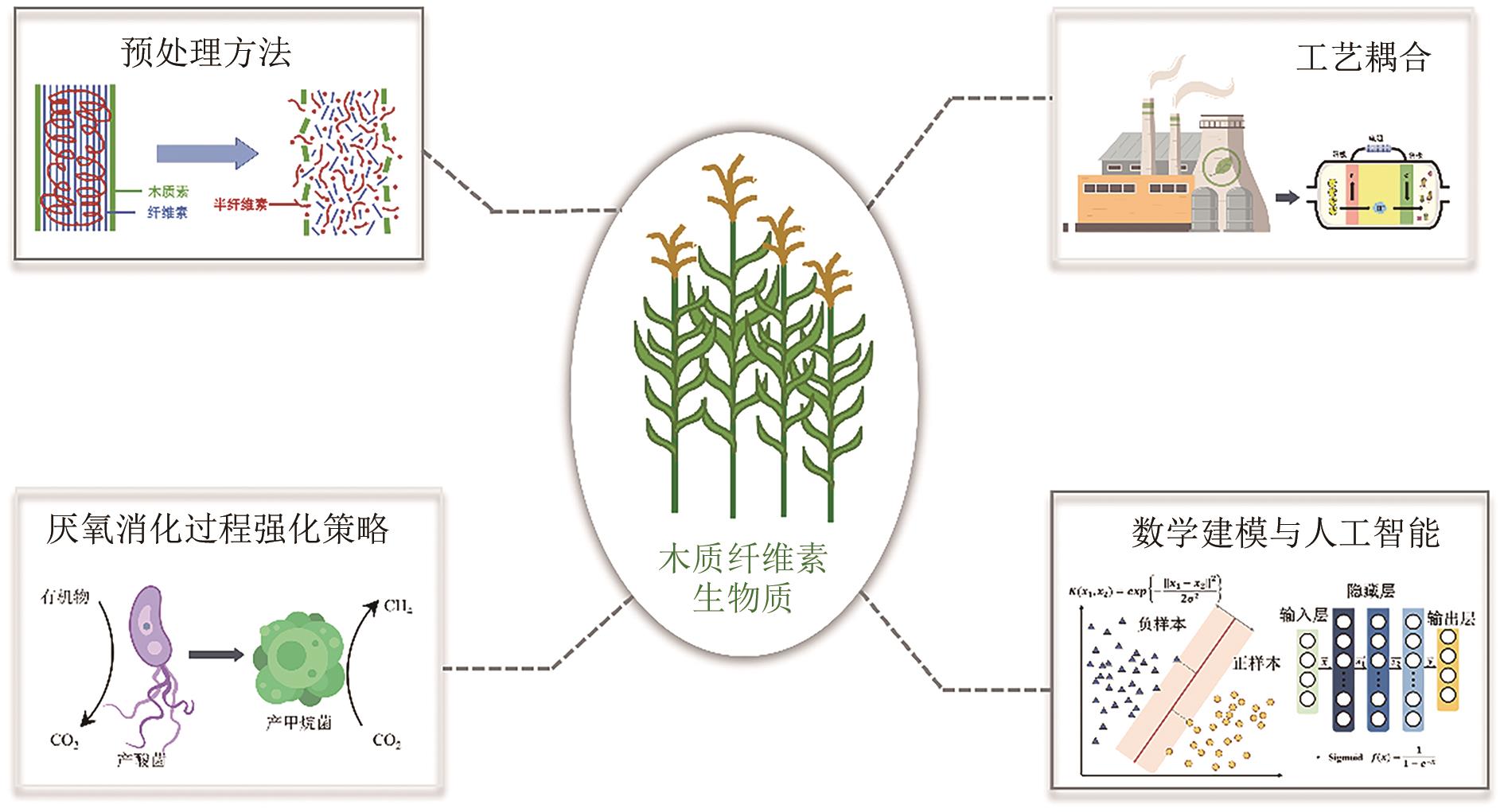
图1 木质纤维素生物质厌氧消化产甲烷的强化方法与未来研究趋势
Fig. 1 Strategies for enhancing methane production from lignocellulosic biomass via anaerobic digestion and future research trends
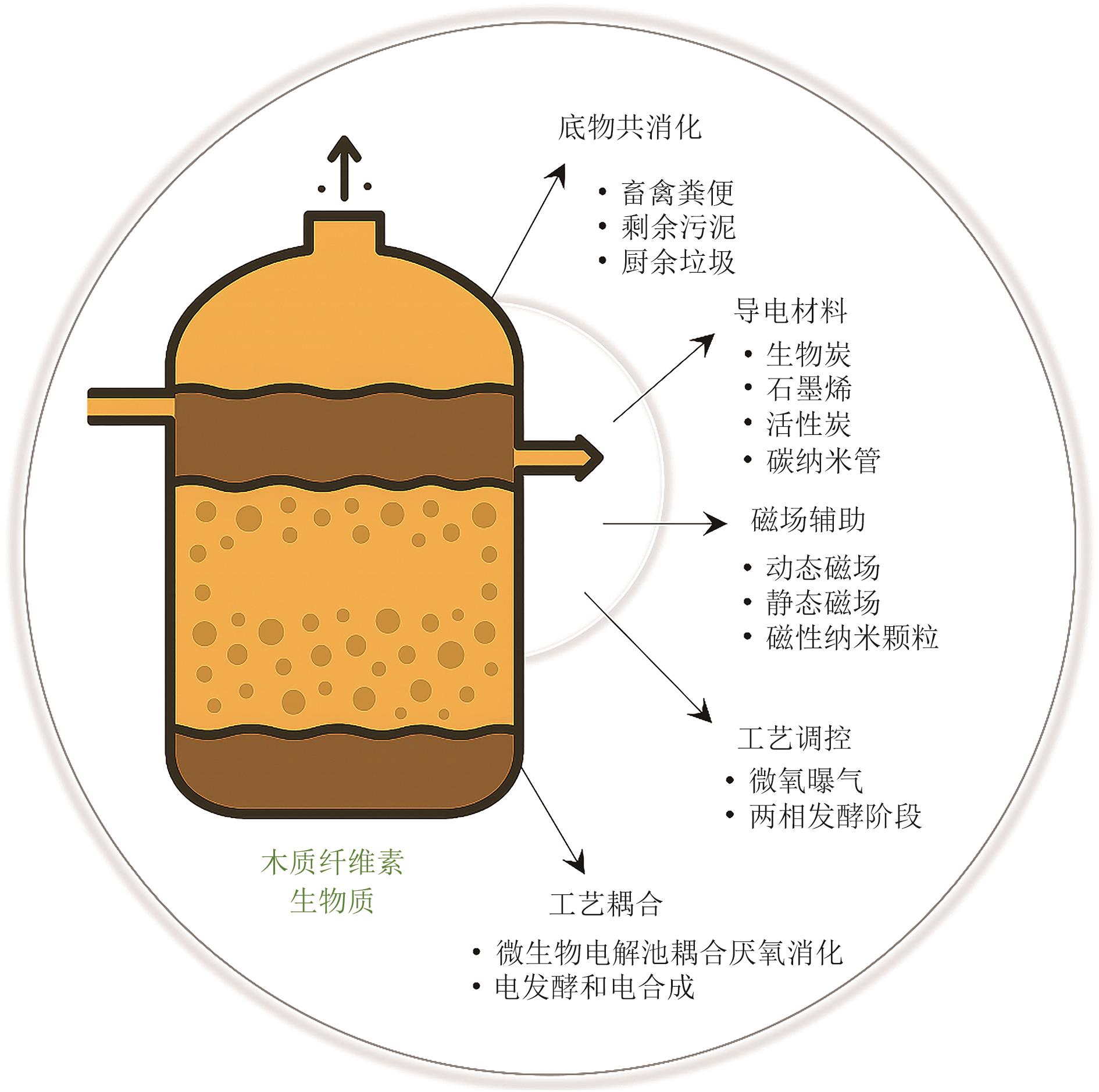
图2 木质纤维素厌氧消化强化技术策略示意图
Fig. 2 Schematic diagram of strategies for enhancing the anaerobic digestion of lignocellulose
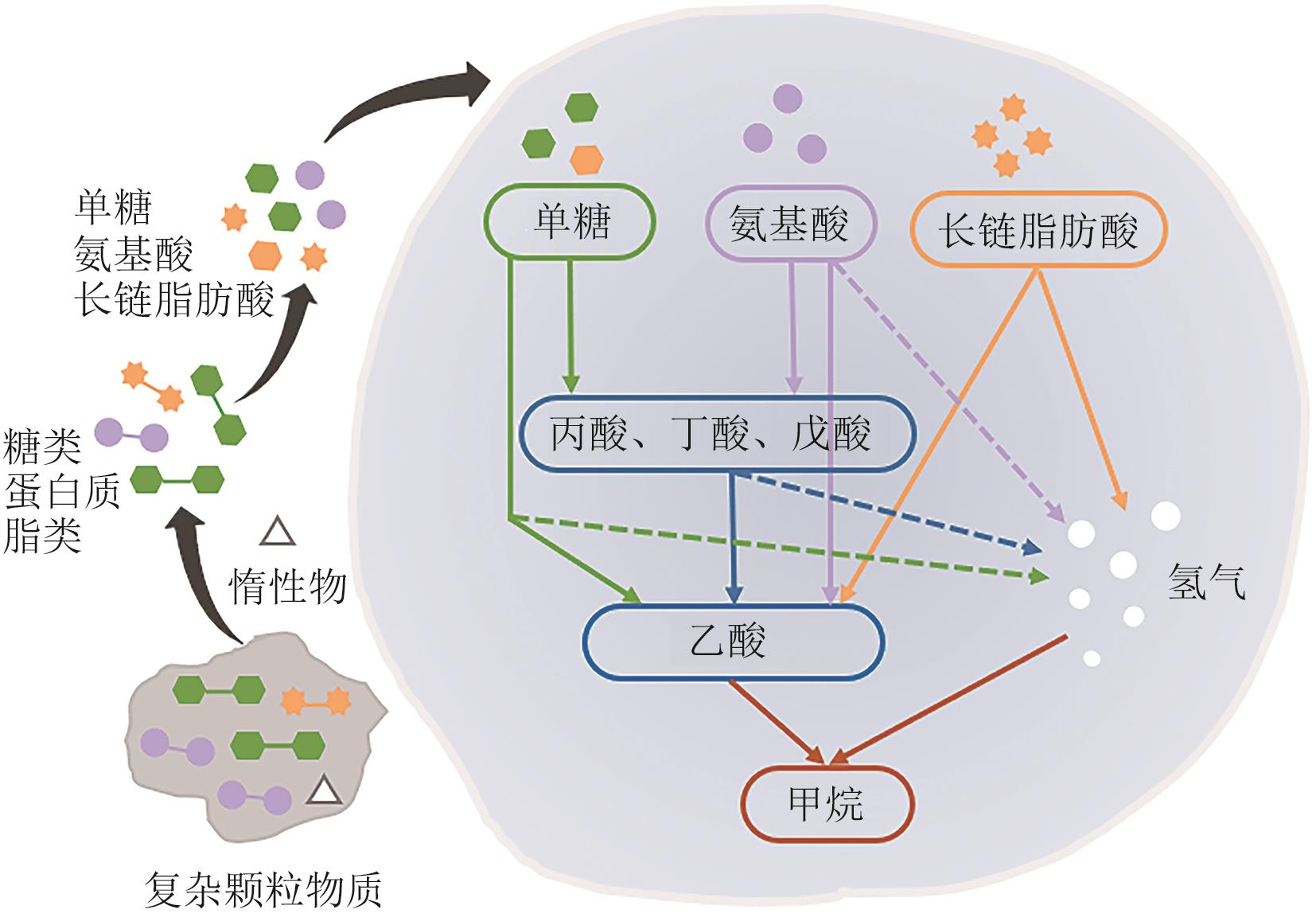
图3 厌氧消化模型1(ADM1)中的生化反应过程示意图
Fig. 3 Schematic diagram of biochemical reaction processes in Anaerobic Digestion Model 1 (ADM1)
| [1] | Liang JS, Liu SQ, Du ZP, et al. Recent advances in methane and hydrogen production from lignocellulosic degradation with anaerobic fungi [J]. Bioresour Technol, 2024, 413: 131544. |
| [2] | Ahmad F, Silva EL, Varesche MBA. Hydrothermal processing of biomass for anaerobic digestion-A review [J]. Renew Sustain Energy Rev, 2018, 98: 108-124. |
| [3] | Xu XR, Su XH, Wang X, et al. Bioaugmentation with targeted recombinant functional consortia to improve lignocellulosic biowaste co-anaerobic digestion performance [J]. Chem Eng J, 2024, 499: 156151. |
| [4] | Zhao ZT, Yang SS, Luo G, et al. Biohydrogen fermentation from pretreated biomass in lignocellulose biorefinery: Effects of inhibitory byproducts and recent progress in mitigation strategies [J]. Biotechnol Adv, 2025, 79: 108508. |
| [5] | Wang J, Ma DM, Lou Y, et al. Optimization of biogas production from straw wastes by different pretreatments: Progress, challenges, and prospects [J]. Sci Total Environ, 2023, 905: 166992. |
| [6] | Kovačić Đ, Rupčić S, Kralik D, et al. Pulsed electric field: An emerging pretreatment technology in a biogas production [J]. Waste Manag, 2021, 120: 467-483. |
| [7] | Fei XH, Jia WB, Shah A. Techno-economic analysis of electron beam irradiation pretreatment of corn straw for anaerobic digestion [J]. Sustain Energy Technol Assess, 2024, 65: 103736. |
| [8] | Wang LL, Wang ZC, Wang ZJ, et al. Delignification characteristics of rice straw pretreatment combining biogas slurry immersion with freeze-thaw [J]. Biomass Convers Biorefin, 2025, 15(10): 15437-15449. |
| [9] | Kasinath A, Fudala-Ksiazek S, Szopinska M, et al. Biomass in biogas production: Pretreatment and codigestion [J]. Renew Sustain Energy Rev, 2021, 150: 111509. |
| [10] | Chen L, Zhang YJ, Liang JS, et al. Improvement of anaerobic digestion containing sulfur with conductive materials: Focusing on recent advances and internal biological mechanisms [J]. Chem Eng J, 2023, 472: 144867. |
| [11] | Ahmad Dar R, Tsui TH, Zhang L, et al. Recent achievements in magnetic-field-assisted anaerobic digestion for bioenergy production [J]. Renew Sustain Energy Rev, 2025, 207: 114902. |
| [12] | Janesch E, Neubauer P, Junne S. Effect of phase-separation and thin-slurry recirculation on flexible biogas production from maize silage and bedding straw [J]. Bioresour Technol, 2025, 430: 132491. |
| [13] | Martínez-Ruano JA, Suazo A, Véliz F, et al. Effect of pH on metabolic pathway shift in fermentation and electro-fermentation of xylose by Clostridium autoethanogenum [J]. J Environ Manag, 2024, 351: 119918. |
| [14] | Yao J, Xiao XY, Wang M, et al. A review of low-cost production of polyhydroxyalkanoates: Strategies, challenges, and perspectives [J]. Bioresour Technol, 2025, 433: 132745. |
| [15] | Wang J, Liu ST, Feng K, et al. Anaerobic digestion of lignocellulosic biomass: Process intensification and artificial intelligence [J]. Renew Sustain Energy Rev, 2025, 210: 115264. |
| [16] | Li N, Yan KX, Rukkijakan T, et al. Selective lignin arylation for biomass fractionation and benign bisphenols [J]. Nature, 2024, 630(8016): 381-386. |
| [17] | Wang J, Cui H, Xie GJ, et al. Co-treatment of potassium ferrate and peroxymonosulfate enhances the decomposition of the cotton straw and cow manure mixture [J]. Sci Total Environ, 2020, 724: 138321. |
| [18] | 杨莉, 谭丽萍, 刘同军. 木质纤维素预处理抑制物产生及脱除方法的研究进展 [J]. 生物工程学报, 2021, 37(1): 15-29. |
| Yang L, Tan LP, Liu TJ. Progress in detoxification of inhibitors generated during lignocellulose pretreatment [J]. Chin J Biotechnol, 2021, 37(1): 15-29. | |
| [19] | Wang J, Feng K, Lou Y, et al. The synergistic effect of potassium ferrate and peroxymonosulfate application on biogas production and shaping microbial community during anaerobic co-digestion of a cow manure-cotton straw mixture [J]. Bioresour Technol, 2021, 333: 125166. |
| [20] | Yan M, Hu ZY, Duan ZH, et al. Microbiome re-assembly boosts anaerobic digestion under volatile fatty acid inhibition: Focusing on reactive oxygen species metabolism [J]. Water Res, 2023, 246: 120711. |
| [21] | 翟旭航, 李霞, 元英进. 木质纤维素预处理及高值化技术研究进展 [J]. 生物技术通报, 2021, 37(3): 162-174. |
| Zhai XH, Li X, Yuan YJ. Research progress of lignocellulose pretreatment and valorization method [J]. Biotechnol Bull, 2021, 37(3): 162-174. | |
| [22] | Zhang GM, Li JY, Liu SQ, et al. Recent advances in bioconversion of lignocellulosic biomass for volatile fatty acid production with rumen microorganisms [J]. Biotechnol Adv, 2025, 83: 108654. |
| [23] | Kumar AK, Sharma S. Recent updates on different methods of pretreatment of lignocellulosic feedstocks: A review [J]. Bioresour Bioprocess, 2017, 4(1): 7. |
| [24] | Basak B, Kumar R, AVSLS Bharadwaj, et al. Advances in physicochemical pretreatment strategies for lignocellulose biomass and their effectiveness in bioconversion for biofuel production [J]. Bioresour Technol, 2023, 369: 128413. |
| [25] | Szwarc D, Głowacka K. Increasing the biogas potential of rapeseed straw using pulsed electric field pre-treatment [J]. Energies, 2021, 14(24): 8307. |
| [26] | Shen XY, Chen L, Liu A, et al. Improvement of xylo-oligosaccharides release from Camellia oleifera shells by 3MeV electron-beam irradiation combined with hydrothermal treatment [J]. Ind Crops Prod, 2025, 235: 121713. |
| [27] | Fei XH, Jia WB, Wang JQ, et al. Study on enzymatic hydrolysis efficiency and physicochemical properties of cellulose and lignocellulose after pretreatment with electron beam irradiation [J]. Int J Biol Macromol, 2020, 145: 733-739. |
| [28] | Liao H, Wang YM, Chen HY, et al. Hydrogen peroxide pre-oxidation breaks down the recalcitrance of poplar biomass during acid/pentanol biphasic fractionation [J]. Green Chem, 2025, 27(36): 11075-11092. |
| [29] | Wang LG, Jin WX, Cai FF, et al. Performance and mechanism of various microaerobic pretreatments on anaerobic digestion of tobacco straw [J]. Bioresour Technol, 2024, 393: 130092. |
| [30] | Jeon Y, Lee KY, Seo Y, et al. Lignin-tailored lignocellulose nanofiber films for light management using a deep eutectic solvent [J]. Chem Eng J, 2025, 520: 165989. |
| [31] | Nie K, Li BY, Wang PX, et al. Efficient fractionation of kenaf chemical components by using recyclable acidic DES [J]. Ind Crops Prod, 2024, 211: 118239. |
| [32] | Man TT, Xu CX, Liu XY, et al. Hierarchically encapsulating enzymes with multi-shelled metal-organic frameworks for tandem biocatalytic reactions [J]. Nat Commun, 2022, 13: 305. |
| [33] | Li SR, Zhou ZJ, Tie ZX, et al. Data-informed discovery of hydrolytic nanozymes [J]. Nat Commun, 2022, 13: 827. |
| [34] | Wang J, Yan C, Zhong Z, et al. Mechanisms of metabolic regulation and enhanced methane production by hydrolytic nanozyme in sludge anaerobic digestion [J]. Chem Eng J, 2024, 490: 151739. |
| [35] | Fang G, Kang RN, Chong Y, et al. MOF-based DNA hydrolases optimized by atom engineering for the removal of antibiotic-resistant genes from aquatic environment [J]. Appl Catal B Environ, 2023, 320: 121931. |
| [36] | Sunar SL, Kumara MK, Oruganti RK, et al. Pretreatment and anaerobic co-digestion of lignocellulosic biomass: Recent developments [J]. Bioresour Technol Rep, 2025, 30: 102133. |
| [37] | Aklilu EG, Waday YA. Optimizing the process parameters to maximize biogas yield from anaerobic co-digestion of alkali-treated corn stover and poultry manure using artificial neural network and response surface methodology [J]. Biomass Convers Biorefin, 2023, 13(14): 12527-12540. |
| [38] | 姜杰, 冯旗, 贺鹏宸, 等. 微生物种间直接电子传递机理及应用研究进展 [J]. 微生物学通报, 2023, 50(10): 4694-4704. |
| Jiang J, Feng Q, He PC, et al. Mechanism and application of direct interspecies electron transfer [J]. Microbiol China, 2023, 50(10): 4694-4704. | |
| [39] | Valentin MT, Luo G, Zhang SC, et al. Direct interspecies electron transfer mechanisms of a biochar-amended anaerobic digestion: A review [J]. Biotechnol Biofuels Bioprod, 2023, 16(1): 146. |
| [40] | Chen SS, Rotaru AE, Shrestha PM, et al. Promoting interspecies electron transfer with biochar [J]. Sci Rep, 2014, 4: 5019. |
| [41] | Akram J, Song C, El Mashad HM, et al. Advances in microbial community, mechanisms and stimulation effects of direct interspecies electron transfer in anaerobic digestion [J]. Biotechnol Adv, 2024, 76: 108398. |
| [42] | Wei YF, Zhao HB, Qi XJ, et al. Direct interspecies electron transfer stimulated by coupling of modified anaerobic granular sludge with microbial electrolysis cell for biogas production enhancement [J]. Appl Energy, 2023, 341: 121100. |
| [43] | Yang BW, Yu QL, Zhang YB. Applying dynamic magnetic field to promote anaerobic digestion via enhancing the electron transfer of a microbial respiration chain [J]. Environ Sci Technol, 2023, 57(5): 2138-2148. |
| [44] | Zhao B, Sha H, Li JW, et al. Static magnetic field enhanced methane production via stimulating the growth and composition of microbial community [J]. J Clean Prod, 2020, 271: 122664. |
| [45] | Zieliński M, Zielińska M, Cydzik-Kwiatkowska A, et al. Effect of static magnetic field on microbial community during anaerobic digestion [J]. Bioresour Technol, 2021, 323: 124600. |
| [46] | Fu SF, Lian SJ, Angelidaki I, et al. Micro-aeration: An attractive strategy to facilitate anaerobic digestion [J]. Trends Biotechnol, 2023, 41(5): 714-726. |
| [47] | Sun Q, Burton ED, Yu ZH, et al. Iron, sulfur, and carbon dynamics collectively regulate the fate of cadmium over the sulfidation-reoxidation cycle [J]. Environ Sci Technol, 2025, 59(14): 7297-7309. |
| [48] | Li DF, Cheng SL, Varrone C, et al. Sustainable biosynthesis of caproate from waste activated sludge via electro-fermentation: Perspectives of product spectrum, economic and environmental impacts [J]. Chem Eng J, 2024, 501: 157768. |
| [49] | Das A, Das S, Das N, et al. Advancements and innovations in harnessing microbial processes for enhanced biogas production from waste materials [J]. Agriculture, 2023, 13(9): 1-34. |
| [50] | Akyol Ç, Ince O, Bozan M, et al. Fungal bioaugmentation of anaerobic digesters fed with lignocellulosic biomass: What to expect from anaerobic fungus Orpinomyces sp [J]. Bioresour Technol, 2019, 277: 1-10. |
| [51] | Ozsefil IC, Miraloglu IH, Ozbayram EG, et al. Bioaugmentation of anaerobic digesters with the enriched lignin-degrading microbial consortia through a metagenomic approach [J]. Chemosphere, 2024, 355: 141831. |
| [52] | Jourdain L, Gu WY. Designing synthetic microbial communities for enhanced anaerobic waste treatment [J]. Appl Environ Microbiol, 2025, 91(6): e00404-25. |
| [53] | Batstone DJ, Keller J, Angelidaki I, et al. The IWA anaerobic digestion model No1 (ADM1) [J]. Water Sci Technol, 2002, 45(10): 65-73. |
| [54] | 左剑恶, 凌雪峰, 顾夏声. 厌氧消化1号模型(ADM1)简介 [J]. 环境科学研究, 2003, 16(1): 57-61. |
| Zuo JE, Ling XF, Gu XS. Biref introduction to anaerobic digestion model No.1(ADM1) [J]. Res Environ Sci, 2003, 16(1): 57-61. | |
| [55] | Li PF, Pei ZJ, Liu D, et al. Application of anaerobic digestion model no. 1 for modeling anaerobic digestion of vegetable crop residues: Fractionation of crystalline cellulose [J]. J Clean Prod, 2021, 285: 124865. |
| [56] | Mo RR, Guo WJ, Batstone D, et al. Modifications to the anaerobic digestion model No. 1 (ADM1) for enhanced understanding and application of the anaerobic treatment processes-A comprehensive review [J]. Water Res, 2023, 244: 120504. |
| [57] | Ge YD, Tao JY, Wang Z, et al. A hybrid approach of anaerobic digestion model No. 1 and machine learning to model and optimize continuous anaerobic digestion processes [J]. Biomass Bioenergy, 2024, 184: 107176. |
| [58] | Parthiban A, Sathish S, Suthan R, et al. Modelling and optimization of thermophilic anaerobic digestion using biowaste [J]. Environ Res, 2023, 220: 115075. |
| [59] | Ganeshan P, Bose A, Lee J, et al. Machine learning for high solid anaerobic digestion: Performance prediction and optimization [J]. Bioresour Technol, 2024, 400: 130665. |
| [60] | Khan M, Chuenchart W, Surendra KC, et al. Applications of artificial intelligence in anaerobic co-digestion: Recent advances and prospects [J]. Bioresour Technol, 2023, 370: 128501. |
| [61] | Xu WC, Long F, Zhao H, et al. Performance prediction of ZVI-based anaerobic digestion reactor using machine learning algorithms [J]. Waste Manag, 2021, 121: 59-66. |
| [62] | Awhangbo L, Schmitt V, Marcilhac C, et al. Determination of the optimal feed recipe of anaerobic digesters using a mathematical model and a genetic algorithm [J]. Bioresour Technol, 2024, 393: 130091. |
| [63] | Machineni L, Anupoju GR. Optimization of biomethane production from sweet sorghum bagasse using artificial neural networks combined with particle swarm algorithm [J]. Environ Sci Pollut Res, 2023, 30(53): 114095-114110. |
| [64] | Nassef AM, Olabi AG, Rodriguez C, et al. Optimal operating parameter determination and modeling to enhance methane production from macroalgae [J]. Renew Energy, 2021, 163: 2190-2197. |
| [65] | Bai J, Liu H, Yin B, et al. Modeling of enhanced VFAs production from waste activated sludge by modified ADM1 with improved particle swarm optimization for parameters estimation [J]. Biochem Eng J, 2015, 103: 22-31. |
| [66] | Olafasakin O, Audia EM, Mba-Wright M, et al. Techno-economic and life cycle analysis of renewable natural gas derived from anaerobic digestion of grassy biomass: A US Corn Belt watershed case study [J]. GCB Bioenergy, 2024, 16(6): e13164. |
| [67] | Tan JB, Jamali NS, Tan WE, et al. Techno-economic assessment of on-farm anaerobic digestion system using attached-biofilm reactor in the dairy industry [J]. Sustainability, 2021, 13(4): 2063. |
| [68] | Sganzerla WG, da Rosa RG, Barroso TLCT, et al. Techno-economic assessment of on-site production of biomethane, bioenergy, and fertilizer from small-scale anaerobic digestion of jabuticaba by-product [J]. Methane, 2023, 2(2): 113-128. |
| [69] | Lin L, Shah A, Keener H, et al. Techno-economic analyses of solid-state anaerobic digestion and composting of yard trimmings [J]. Waste Manag, 2019, 85: 405-416. |
| [70] | Lu B, Zhou L, Mao JR, et al. Evaluation of anaerobic digestion performance and techno-economic analysis of different components of sugarcane leaf [J]. J Clean Prod, 2023, 423: 138691. |
| [71] | Pérez-Almada D, Galán-Martín Á, Contreras MDM, et al. Integrated techno-economic and environmental assessment of biorefineries: Review and future research directions [J]. Sustainable Energy Fuels, 2023, 7(17): 4031-4050. |
| [72] | Wild K, Dominguez JC, Moore LS, et al. Advancing the predictive techno-economic and lifecycle assessment of prairie grass and manure co-digestion for renewable natural gas applications [J]. Front Bioeng Biotechnol, 2025, 13: 1651510. |
| [1] | 周瑾洁, 李猛. 甲烷八叠球菌和甲烷丝菌的能量代谢与胞外电子传递[J]. 生物技术通报, 2026, 42(2): 17-29. |
| [2] | 赵雨婷, 喻航. 厌氧甲烷氧化古菌共生机制的研究进展[J]. 生物技术通报, 2026, 42(2): 3-16. |
| [3] | 王雪萌, 东秀珠, 薛凯, 李凌燕. 增温下直接种间电子转移对泥炭地甲烷产生的作用[J]. 生物技术通报, 2026, 42(2): 77-88. |
| [4] | 安苗苗, 赵国柱, 徐润, 许菲, 国辉, 李强. 复合菌群对厌氧消化强化效果及沼气产量影响因素分析[J]. 生物技术通报, 2026, 42(2): 89-101. |
| [5] | 安苗苗, 蔺祥淏, 梁瑞娜, 赵国柱. 碳源对产甲烷菌群调控及产甲烷能力的影响[J]. 生物技术通报, 2025, 41(6): 355-366. |
| [6] | 贾承霖, 郭晓鹏, 陆栋, 张苗苗. 增强酿酒酵母对木质纤维素水解液抑制剂耐受性的研究进展[J]. 生物技术通报, 2025, 41(4): 61-75. |
| [7] | 武威, 马秋刚, 朱选, 王健. 蒸汽爆破对木质纤维素高值化利用的研究进展[J]. 生物技术通报, 2024, 40(5): 23-37. |
| [8] | 徐发迪, 徐康, 孙东明, 李萌蕾, 赵建志, 鲍晓明. 基于杨木(Populus sp.)的二代燃料乙醇技术研究进展[J]. 生物技术通报, 2023, 39(9): 27-39. |
| [9] | 王慕镪, 陈琦, 马薇, 李春秀, 欧阳鹏飞, 许建和. 机器学习方法在酶定向进化中的应用进展[J]. 生物技术通报, 2023, 39(4): 38-48. |
| [10] | 唐瑞琪, 赵心清, 朱笃, 汪涯. 大肠杆菌对木质纤维素水解液抑制物的胁迫耐受性[J]. 生物技术通报, 2023, 39(11): 205-216. |
| [11] | 王文韬, 冯颀, 刘晨光, 白凤武, 赵心清. 氧化还原敏感型基因元件增强酵母木质纤维素水解液抑制物胁迫耐受性[J]. 生物技术通报, 2023, 39(11): 360-372. |
| [12] | 薛欣月, 于雪然, 刘晓刚, 马嘉欣, 田蕾, 李培富. 水稻锌吸收、转运、累积机理研究进展[J]. 生物技术通报, 2022, 38(4): 29-43. |
| [13] | 翟旭航, 李霞, 元英进. 木质纤维素预处理及高值化技术研究进展[J]. 生物技术通报, 2021, 37(3): 162-174. |
| [14] | 章妮, 暴涵, 左弟召, 陈克龙. 降水变化驱动下的高寒湿地产甲烷菌群落特征变化[J]. 生物技术通报, 2021, 37(11): 276-284. |
| [15] | 胡芳, 董旭, 史长伟, 吴学栋. 超声波强化木质纤维素酶解的研究进展[J]. 生物技术通报, 2021, 37(10): 234-244. |
| 阅读次数 | ||||||
|
全文 |
|
|||||
|
摘要 |
|
|||||
