







生物技术通报 ›› 2026, Vol. 42 ›› Issue (3): 242-254.doi: 10.13560/j.cnki.biotech.bull.1985.2025-0943
王鹤瑶1( ), 孙红梅1,2()
收稿日期:2025-09-03
出版日期:2026-03-26
发布日期:2026-04-23
通讯作者:
孙红梅,女,博士,教授,研究方向 :观赏植物品质调控与种质创新;E-mail: sunhm@syau.edu.cn作者简介:王鹤瑶,女,博士研究生,研究方向 :观赏植物品质调控;E-mail: wailing161@163.com
基金资助:
WANG He-yao1(), SUN Hong-mei1,2()
Received:2025-09-03
Published:2026-03-26
Online:2026-04-23
摘要:
植物表皮毛作为植物表皮细胞特化形成的附属结构,在植物与环境互作中发挥着重要作用,并被视为研究细胞分化和功能的理想模式。不同园艺植物的表皮毛在分布位置、形态特征及生物学功能上表现出丰富的多样性,已成为园艺学研究的热点之一。本文综述了植物表皮毛的分类特征、在生物胁迫和非生物胁迫响应中的功能,以及不同类型表皮毛之间的协同作用机制。从园艺学视角出发,重点探讨了表皮毛对园艺产品品质的直接与间接影响,并评述了其在生产实践中的正负效应。同时,围绕多个关键转录因子家族(如HD-Zip、MYB、C2H2、WD-repeat等)及激素信号(包括茉莉酸、生长素、赤霉素、细胞分裂素等),总结了番茄(Solanum lycopersicum)、黄瓜(Cucumis sativus L.)、大白菜(Brassica rapa L.
王鹤瑶, 孙红梅. 园艺植物表皮毛功能及其形成机制研究进展[J]. 生物技术通报, 2026, 42(3): 242-254.
WANG He-yao, SUN Hong-mei. Research Progress in the Function and Formation Mechanism of Trichomes in Horticultural Plants[J]. Biotechnology Bulletin, 2026, 42(3): 242-254.
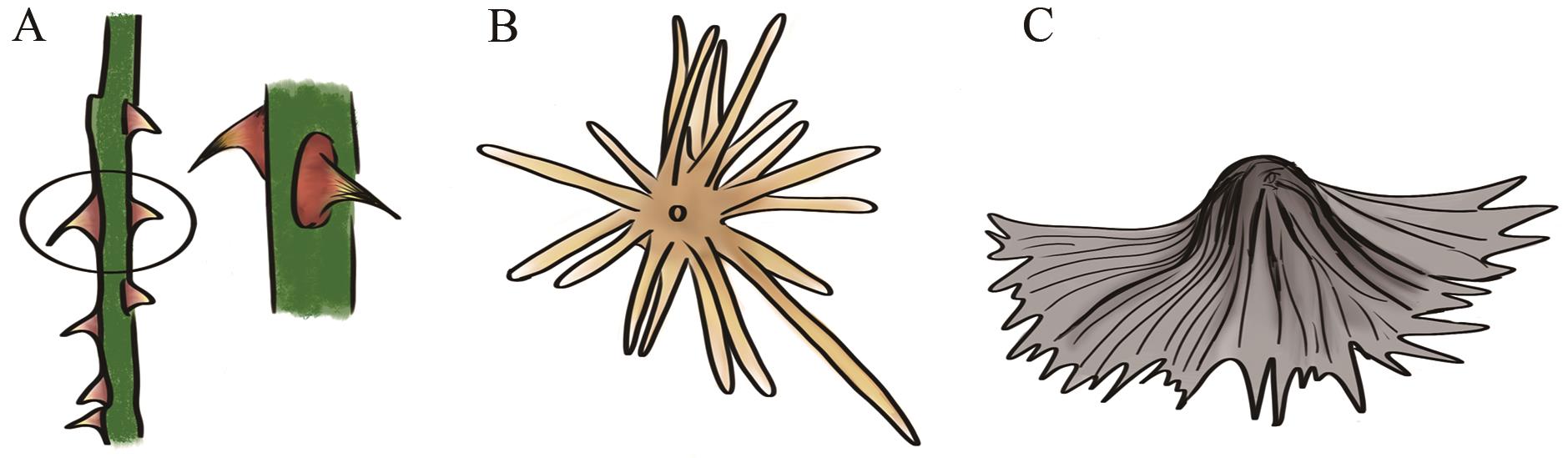
图1 园艺植物特化表皮毛类型示意图A:钩状毛(月季);B:星状毛(葡萄属植物);C:盾状毛(橄榄、胡颓子)
Fig. 1 Schematic diagram of specialized trichome types in horticultural plantsA: Hooked trichomes (Rosa chinensis Jacq.). B: Stellate trichomes (Vitis). C: Peltate trichomes (Canarium album, Elaeagnus pungens)
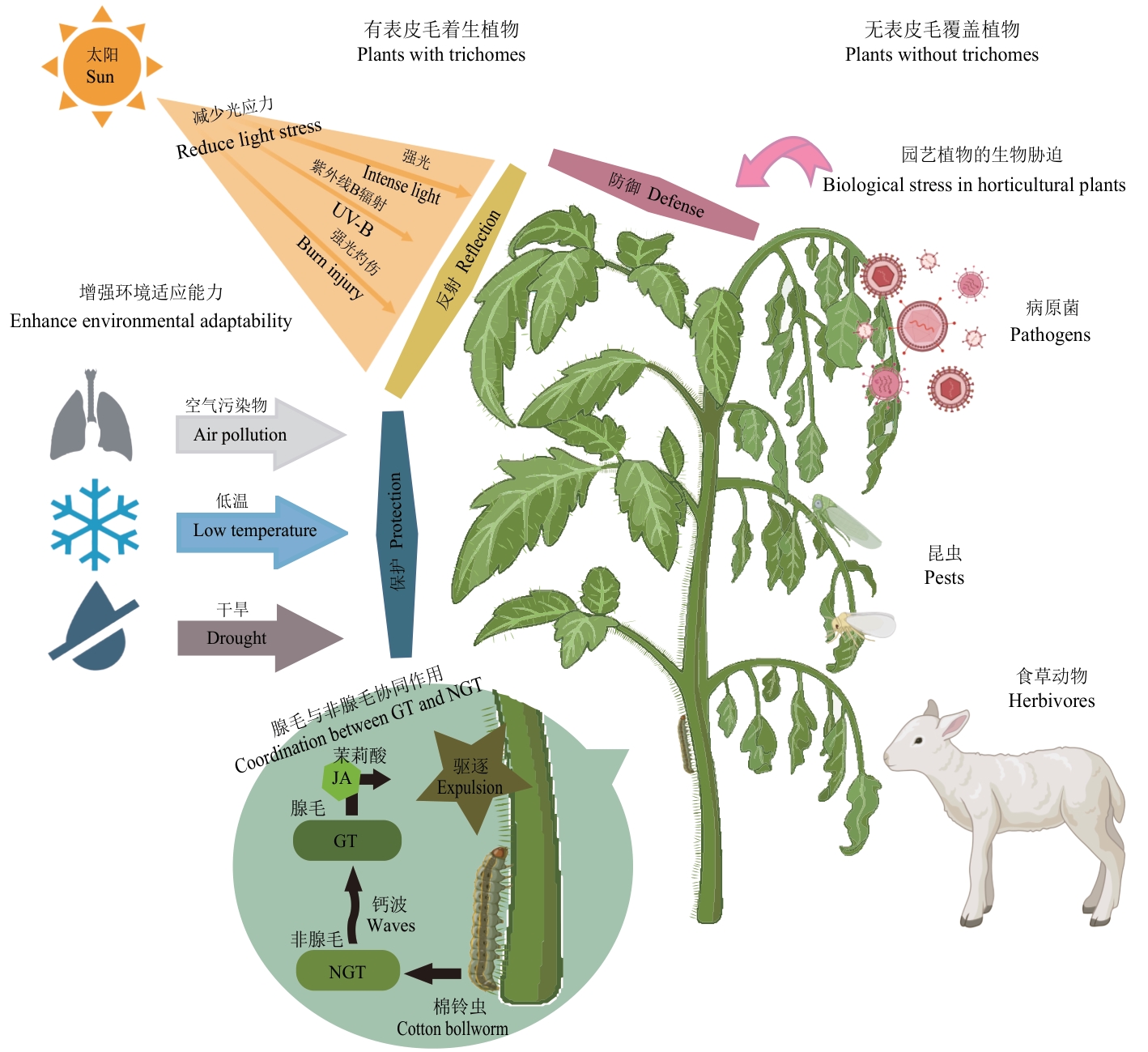
图2 园艺植物表皮毛功能示意图GT:腺毛,有分泌能力;NGT:非腺毛,无分泌能力;图片左侧有表皮毛着生的植物能通过表皮毛抵御强光/紫外线伤害、空气污染物侵入、低温、干旱等环境胁迫;还能通过腺毛(GT)与非腺毛(NGT)的协作(NGT感受到棉铃虫接触,向GT发送钙波信号,刺激GT产生茉莉酸等驱虫物质)来驱赶害虫。图片右侧无表皮毛的植物抵御生物胁迫(病虫害、动物取食)和非生物胁迫的能力降低
Fig. 2 Schematic representation of the function of trichomes in horticultural plantsGT: Glandular trichomes, have the ability to secrete. NGT: Non-glandular trichomes, lack the ability to secrete. Plants with trichomes on the left side of the image can use these hairs to defend against environmental stresses such as intense light/UV damage, air pollutant intrusion, low temperatures, and drought. They also repel pests through the cooperative action of glandular trichomes (GT) and non-glandular trichomes (NGT)—when NGT detects contact with cotton bollworms, they send calcium wave signals to GT, stimulating GT to produce insect-repelling substances like jasmonic acid. Plants on the right side of the image, lacking epidermal trichomes, have reduced resilience against both biotic stresses (pests, diseases, animal browsing) and abiotic stresses
植物 Plant | 调控因子 Regulatory factor | 类型/转录因子家族 Type/Transcription factor family | 表皮毛调控功能 Trichome regulatory function | 与番茄、黄瓜相关基因联系/特性 Relationships with genes related to tomato and cucumber/Characteristics |
|---|---|---|---|---|
大白菜 Brassica rapa L. ssp pekinensis | BrGL1/Brtri1 | R2R3-MYB | 正调控发育 | 番茄、黄瓜MYB正调控功能保守 |
| BrGL2 | HD-Zip IV | 正调控伸长 | 与番茄Wo、黄瓜CsGL3同家族 | |
| BrTTG1 | WD-repeat | 正调控发育 | 黄瓜CsTTG1同源基因 | |
| BrTRI1 | MYB | 负调控起始 | 候选基因与AtGL1同源 | |
辣椒 Capsicum annuum L. | Hairiness | C2H2 | 正调控形成 | 与番茄H、黄瓜Tu功能相似 |
| CaCycB2/3 | 细胞周期蛋白家族 | 正调控细胞分裂 | 番茄SlCycB2/3功能保守 | |
| Ptl1 | 基因座 | 正调控形成 | 显性等位基因控制 | |
| CaSD1 | 细胞壁蛋白家族 | 正调控密度 | 延迟衰老,使表皮细胞增大 | |
| Ptel1 | 基因座 | 调控密度 | 与器官特异性数量性状基因座互作 | |
| 刺梨 Rosa roxburghii Tratt | RroGL1 | MYB | 正调控发育 | 与GL3/EGL3(bHLH)互作 |
玫瑰 Rosa rugosa Thunb. | RrTTG1 | WD-repeat | 正调控形成 | 黄瓜CsTTG1同源 |
| RrCPC | R3-MYB | 负调控发育 | ||
山丹 Lilium pumilum DC. | LpGL3 | bHLH | 正调控形成 | bHLH功能保守 |
| LpNAC48 | NAC | 正调控形成 | ||
| LpBBX28 | BBX | 正调控形成 | ||
| LpbZIP29 | bZIP | 正调控形成 | 与ABA响应元件结合,启动调控通路 | |
葡萄属 Vitis | WER | MYB | 负调控发育 | 拟南芥同源基因正调控GL2 |
| LH2 | 基因位点 | 正调控密度 | 主要控制叶片背面匍匐毛密度 | |
桃 Prunus persica L. | PpMYB25 | R2R3-MYB | 正调控发育 | 协同调控桃果实表皮毛和角质层蜡质积累 |
| PpMYB26 | R2R3-MYB | 正调控发育 | ||
菊属 Chrysanthemum | CmMYC2 | bHLH | 调控发育 | 自我反馈调节,同步调控发育与代谢 |
| CmMYBML1 | R2R3-MYB | 调控发育 |
表1 园艺植物表皮毛调控因子总结与对比
Table 1 Summary and comparison of trichome regulatory factors in horticultural plants
植物 Plant | 调控因子 Regulatory factor | 类型/转录因子家族 Type/Transcription factor family | 表皮毛调控功能 Trichome regulatory function | 与番茄、黄瓜相关基因联系/特性 Relationships with genes related to tomato and cucumber/Characteristics |
|---|---|---|---|---|
大白菜 Brassica rapa L. ssp pekinensis | BrGL1/Brtri1 | R2R3-MYB | 正调控发育 | 番茄、黄瓜MYB正调控功能保守 |
| BrGL2 | HD-Zip IV | 正调控伸长 | 与番茄Wo、黄瓜CsGL3同家族 | |
| BrTTG1 | WD-repeat | 正调控发育 | 黄瓜CsTTG1同源基因 | |
| BrTRI1 | MYB | 负调控起始 | 候选基因与AtGL1同源 | |
辣椒 Capsicum annuum L. | Hairiness | C2H2 | 正调控形成 | 与番茄H、黄瓜Tu功能相似 |
| CaCycB2/3 | 细胞周期蛋白家族 | 正调控细胞分裂 | 番茄SlCycB2/3功能保守 | |
| Ptl1 | 基因座 | 正调控形成 | 显性等位基因控制 | |
| CaSD1 | 细胞壁蛋白家族 | 正调控密度 | 延迟衰老,使表皮细胞增大 | |
| Ptel1 | 基因座 | 调控密度 | 与器官特异性数量性状基因座互作 | |
| 刺梨 Rosa roxburghii Tratt | RroGL1 | MYB | 正调控发育 | 与GL3/EGL3(bHLH)互作 |
玫瑰 Rosa rugosa Thunb. | RrTTG1 | WD-repeat | 正调控形成 | 黄瓜CsTTG1同源 |
| RrCPC | R3-MYB | 负调控发育 | ||
山丹 Lilium pumilum DC. | LpGL3 | bHLH | 正调控形成 | bHLH功能保守 |
| LpNAC48 | NAC | 正调控形成 | ||
| LpBBX28 | BBX | 正调控形成 | ||
| LpbZIP29 | bZIP | 正调控形成 | 与ABA响应元件结合,启动调控通路 | |
葡萄属 Vitis | WER | MYB | 负调控发育 | 拟南芥同源基因正调控GL2 |
| LH2 | 基因位点 | 正调控密度 | 主要控制叶片背面匍匐毛密度 | |
桃 Prunus persica L. | PpMYB25 | R2R3-MYB | 正调控发育 | 协同调控桃果实表皮毛和角质层蜡质积累 |
| PpMYB26 | R2R3-MYB | 正调控发育 | ||
菊属 Chrysanthemum | CmMYC2 | bHLH | 调控发育 | 自我反馈调节,同步调控发育与代谢 |
| CmMYBML1 | R2R3-MYB | 调控发育 |
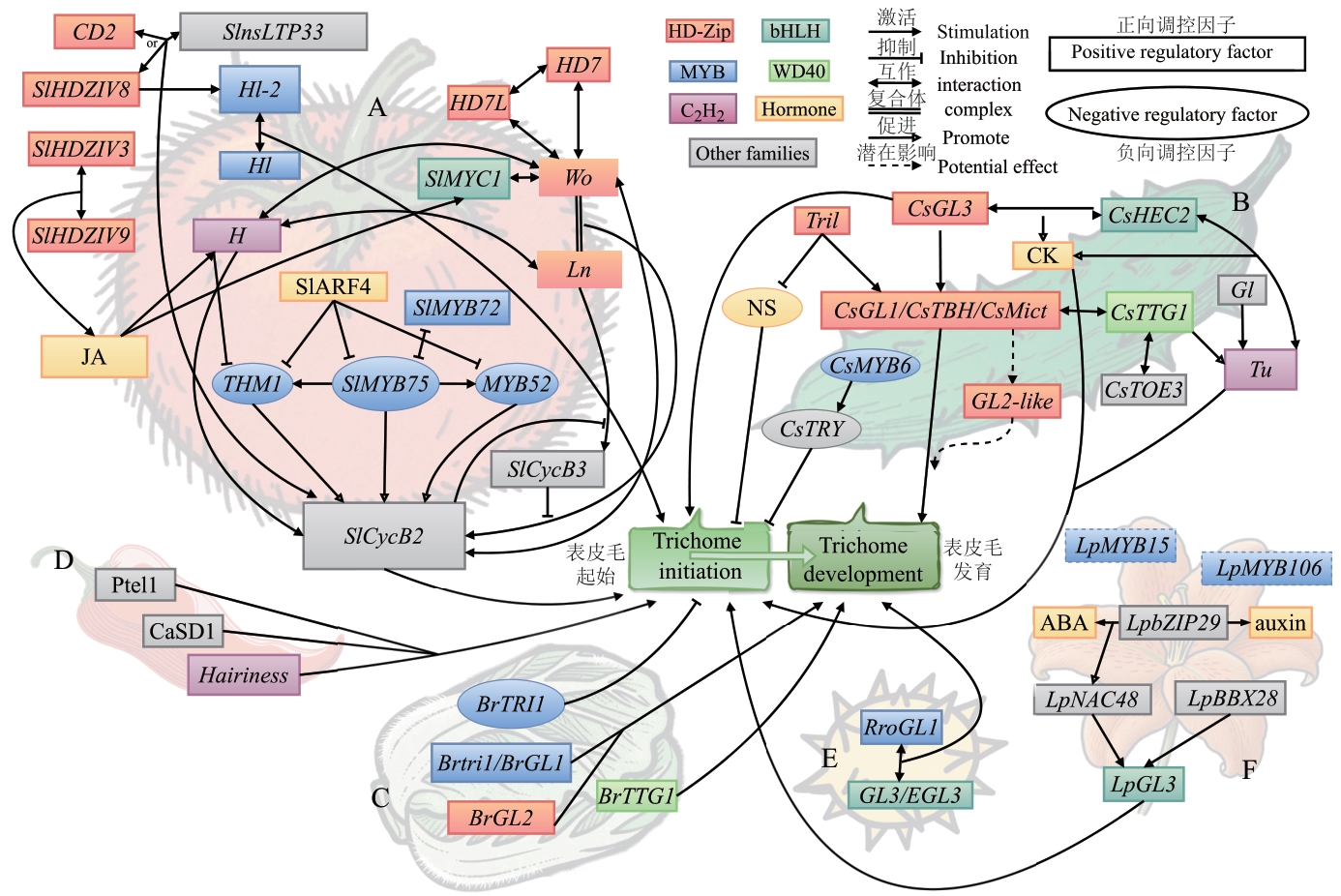
图3 园艺植物表皮毛跨家族复合调控网络大写字母代表不同园艺植物;A:番茄;B:黄瓜;C:大白菜;D:辣椒;E:刺梨;F:山丹。调控因子背景颜色代表不同转录因子家族/类型;红色:HD-Zip家族;蓝色:R2R3-MYB家族;紫色:C2H2家族;青色:bHLH家族;绿色:WD40家族;灰色:其他影响因子;黄色:激素。边框形状代表调控方向,方形边框:正向调控因子;圆形边框:负向调控因子;虚线边框:潜在调控因子
Fig. 3 Cross-family complex regulatory network of trichome in horticultural plantsCapital letters indicate different horticultural plants. A: Tomato; B: cucumber; C: Chinese cabbage; D: pepper; E: Rosa roxburghii Tratt; F: Lilium pumilum DC. The background color of regulatory factors indicates different transcription factor families/types. Red: HD-Zip family. Blue: R2R3-MYB family. Purple: C2H2 family. Cyan: bHLH family. Green: WD40 family. Gray: Other influencing factors. Yellow: Hormones. The shape of the border indicates the direction of regulation. Square border: Positive regulatory factor. Circular border: Negative regulatory factor. Dotted border: Potential regulatory factor
| [1] | Han GL, Li YX, Yang ZR, et al. Molecular mechanisms of plant trichome development [J]. Front Plant Sci, 2022, 13: 910228. |
| [2] | Chalvin C, Drevensek S, Dron M, et al. Genetic control of glandular trichome development [J]. Trends Plant Sci, 2020, 25(5): 477-487. |
| [3] | Xue SD, Dong MM, Liu XW, et al. Classification of fruit trichomes in cucumber and effects of plant hormones on type II fruit trichome development [J]. Planta, 2019, 249(2): 407-416. |
| [4] | Liu JQ, Wang HR, Liu MM, et al. Hairiness gene regulated multicellular, non-glandular trichome formation in pepper species [J]. Front Plant Sci, 2021, 12: 784755. |
| [5] | Zhang TJ, Chow WS, Liu XT, et al. A magic red coat on the surface of young leaves: anthocyanins distributed in trichome layer protect Castanopsis fissa leaves from photoinhibition [J]. Tree Physiol, 2016, 36(10): 1296-1306. |
| [6] | Ma ZY, Wen J, Ickert-Bond SM, et al. Morphology, structure, and ontogeny of trichomes of the grape genus (Vitis, Vitaceae) [J]. Front Plant Sci, 2016, 7: 704. |
| [7] | Wang DJ, Zeng JW, Ma WT, et al. Morphological and structural characters of trichomes on various organs of Rosa roxburghii [J]. HortScience, 2019, 54(1): 45-51. |
| [8] | Feng ZX, Sun L, Dong MM, et al. Novel players in organogenesis and flavonoid biosynthesis in cucumber glandular trichomes [J]. Plant Physiol, 2023, 192(4): 2723-2736. |
| [9] | Hao N, Kamiya T, Wu T. Morphology of glandular trichome and lignin-based structure for its function [J]. Fundam Res, 2025. . |
| [10] | Karabourniotis G, Liakopoulos G, Nikolopoulos D, et al. Protective and defensive roles of non-glandular trichomes against multiple stresses: structure-function coordination [J]. J For Res, 2020, 31(1): 1-12. |
| [11] | Sun C, Wei JB, Gu XY, et al. Different multicellular trichome types coordinate herbivore mechanosensing and defense in tomato [J]. Plant Cell, 2024, 36(12): 4952-4969. |
| [12] | Blaschek L. Well prepared: How trichome polymorphism creates an early-warning system against herbivory [J]. Plant Cell, 2024, 36(12): 4815-4816. |
| [13] | Domanda C, Nuzzo V, Montanaro G, et al. Trichomes affect grapevine leaf optical properties and thermoregulation [J]. Theor Exp Plant Physiol, 2023, 35(3): 299-308. |
| [14] | 郭学民, 王贵禧, 高荣孚, 等. 果实表皮毛的扫描电镜观察及其对果实表面荧光特性的影响 [J]. 内蒙古农业大学学报: 自然科学版, 2006, 27(2): 43-47. |
| Guo XM, Wang GX, Gao RF, et al. Observation on fruit trichome by sem and its effect on fluorescence characteristics of fruit epidermis [J]. J Inn Mong Agric Univ Nat Sci Ed, 2006, 27(2): 43-47. | |
| [15] | Xin Y, Pan WQ, Zhao YJ, et al. The NAC transcription factor LpNAC48 promotes trichome formation in Lilium pumilum [J]. Plant Physiol, 2024, 197(1): kiaf001. |
| [16] | 高培培, 郭佳, 孙洪欣, 等. 大白菜叶片表皮毛特征及重金属镉砷的累积特性 [J]. 河北农业大学学报, 2022, 45(1): 39-47. |
| Gao PP, Guo J, Sun HX, et al. Characteristics of trichome and the accumulation of cadmium and arsenic in leaves of Chinese cabbage [J]. J Hebei Agric Univ, 2022, 45(1): 39-47. | |
| [17] | Williams WG, Kennedy GG, Yamamoto RT, et al. 2-tridecanone: a naturally occurring insecticide from the wild tomato Lycopersicon hirsutum f. glabratum [J]. Science, 1980, 207(4433): 888-889. |
| [18] | Corti C, Meroi Arcerito FR, Fernandez de Landa G, et al. Tomato production under greenhouse conditions: Bumblebees or hormones [J]. Sci Hortic, 2024, 326: 112747. |
| [19] | Li JJ, Wang HX, Zhou DD, et al. Genetic and transcriptome analysis of leaf trichome development in Chinese cabbage (Brassica rapa L. subsp. pekinensis) and molecular marker development [J]. Int J Mol Sci, 2022, 23(21): 12721. |
| [20] | Zhang YN, Wang D, Li H, et al. Formation mechanism of glandular trichomes involved in the synthesis and storage of terpenoids in lavender [J]. BMC Plant Biol, 2023, 23(1): 307. |
| [21] | Jia WQ, Wang YL, Qi Q, et al. Leaf epidermal morphology of ten wild tree peonies in China and its taxonomic significance [J]. Horticulturae, 2022, 8(6): 502. |
| [22] | 吴恙, 崔兴勇, 苑福林, 等. 中国杨属叶表皮毛状体微形态特征 [J]. 植物研究, 2024, 44(3): 341-348. |
| Wu Y, Cui XY, Yuan FL, et al. Micromorphological characterization of leaf epidermal trichomes of Populus in China [J]. Bull Bot Res, 2024, 44(3): 341-348. | |
| [23] | Xie QM, Gao YN, Li J, et al. The HD-Zip IV transcription factor SlHDZIV8 controls multicellular trichome morphology by regulating the expression of Hairless-2 [J]. J Exp Bot, 2020, 71(22): 7132-7145. |
| [24] | Xie QM, Xiong C, Yang QH, et al. A novel regulatory complex mediated by Lanata (Ln) controls multicellular trichome formation in tomato [J]. New Phytol, 2022, 236(6): 2294-2310. |
| [25] | Li M, Fu Y, Liang XY, et al. SlHDZIV3 and SlHDZIV9 are two positive regulators in the formation of tomato trichomes [J]. Plant Cell Environ, 2025, 48(8): 5789-5801. |
| [26] | Gao YN, Ruan JJ, Wang GX, et al. SlHDZIV8-SlnsLTP33 module controls trichome density and lipid metabolism in tomato [J]. Plant J, 2025, 123(3): e70398. |
| [27] | Wu ML, Bian XX, Huang BB, et al. HD-Zip proteins modify floral structures for self-pollination in tomato [J]. Science, 2024, 384(6691): 124-130. |
| [28] | Zhang LY, Lv D, Pan J, et al. A SNP of HD-ZIP I transcription factor leads to distortion of trichome morphology in cucumber (Cucumis sativus L.) [J]. BMC Plant Biol, 2021, 21(1): 182. |
| [29] | Li Q, Cao CX, Zhang CJ, et al. The identification of Cucumis sativus Glabrous 1 (CsGL1) required for the formation of trichomes uncovers a novel function for the homeodomain-leucine zipper I gene [J]. J Exp Bot, 2015, 66(9): 2515-2526. |
| [30] | Pan YP, Bo KL, Cheng ZH, et al. The loss-of-function GLABROUS 3 mutation in cucumber is due to LTR-retrotransposon insertion in a class IV HD-ZIP transcription factor gene CsGL3 that is epistatic over CsGL1 [J]. BMC Plant Biol, 2015, 15: 302. |
| [31] | Du H, Wang G, Pan J, et al. The HD-ZIP IV transcription factor Tril regulates fruit spine density through gene dosage effects in cucumber [J]. J Exp Bot, 2020, 71(20): 6297-6310. |
| [32] | Zhang YQ, Shen JJ, Bartholomew ES, et al. TINY BRANCHED HAIR functions in multicellular trichome development through an ethylene pathway in Cucumis sativus L [J]. Plant J, 2021, 106(3): 753-765. |
| [33] | Wang ZY, Wang LM, Han LJ, et al. HECATE2 acts with GLABROUS3 and Tu to boost cytokinin biosynthesis and regulate cucumber fruit wart formation [J]. Plant Physiol, 2021, 187(3): 1619-1635. |
| [34] | Yang S, Wen CL, Liu B, et al. A CsTu-TS1 regulatory module promotes fruit tubercule formation in cucumber [J]. Plant Biotechnol J, 2019, 17(1): 289-301. |
| [35] | Wang YL, Nie JT, Chen HM, et al. Identification and mapping of Tril, a homeodomain-leucine zipper gene involved in multicellular trichome initiation in Cucumis sativus [J]. Theor Appl Genet, 2016, 129(2): 305-316. |
| [36] | Zhao JL, Pan JS, Guan Y, et al. Micro-trichome as a class I homeodomain-leucine zipper gene regulates multicellular trichome development in Cucumis sativus [J]. J Integr Plant Biol, 2015, 57(11): 925-935. |
| [37] | Yang SL, Xue SD, Shan L, et al. The CsTM alters multicellular trichome morphology and enhances resistance against aphid by interacting with CsTIP1;1 in cucumber [J]. J Adv Res, 2025, 69: 17-30. |
| [38] | Lv D, Wang G, Zhang Q, et al. Comparative transcriptome analysis of hard and tender fruit spines of cucumber to identify genes involved in the morphological development of fruit spines [J]. Front Plant Sci, 2022, 13: 797433. |
| [39] | Lv D, Wen HF, Wang G, et al. CsTs, a C-type lectin receptor-like kinase, regulates the development trichome development and cuticle metabolism in cucumber (Cucumis sativus) [J]. Hortic Res, 2024, 11(10): uhae235. |
| [40] | Dong MM, Sun L, Wang WJ, et al. B3 superfamily in cucumber (Cucumis sativus L.): identification, evolution, expression patterns, and function in glandular trichome development [J]. Int J Mol Sci, 2025, 26(9): 4031. |
| [41] | Li BY, Ding XY, Yue ZC, et al. A rare stop-gain SNP mutation in BrGL2 causes aborted trichome development in Chinese cabbage (Brassica rapa L. ssp. pekinensis) [J]. Theor Appl Genet, 2025, 138(6): 112. |
| [42] | Gong ZH, Luo YQ, Zhang WF, et al. A SlMYB75-centred transcriptional cascade regulates trichome formation and sesquiterpene accumulation in tomato [J]. J Exp Bot, 2021, 72(10): 3806-3820. |
| [43] | Yuan YJ, Xu X, Luo YQ, et al. R2R3 MYB-dependent auxin signalling regulates trichome formation, and increased trichome density confers spider mite tolerance on tomato [J]. Plant Biotechnol J, 2021, 19(1): 138-152. |
| [44] | Qi TC, Wu MB, Wang SJ, et al. SlMYB72 and SlMYB75 antagonistically regulate trichome formation via the MYB-bHLH-WD40 complex in tomato [J]. J Biol Chem, 2025, 301(3): 108313. |
| [45] | Ying SY, Su M, Wu Y, et al. Trichome regulator SlMIXTA-like directly manipulates primary metabolism in tomato fruit [J]. Plant Biotechnol J, 2020, 18(2): 354-363. |
| [46] | Ewas M, Gao YQ, Wang SC, et al. Manipulation of SlMXl for enhanced carotenoids accumulation and drought resistance in tomato [J]. Sci Bull, 2016, 61(18): 1413-1418. |
| [47] | Yang S, Cai YL, Liu XW, et al. A CsMYB6-CsTRY module regulates fruit trichome initiation in cucumber [J]. J Exp Bot, 2018, 69(8): 1887-1902. |
| [48] | Zhang LY, Pan J, Wang G, et al. Cucumber CsTRY negatively regulates anthocyanin biosynthesis and trichome formation when expressed in tobacco [J]. Front Plant Sci, 2019, 10: 1232. |
| [49] | Xin Y, Pan WQ, Chen X, et al. Transcriptome profiling reveals key genes in regulation of the tepal trichome development in Lilium pumilum D.C [J]. Plant Cell Rep, 2021, 40(10): 1889-1906. |
| [50] | Ye XL, Hu FY, Ren J, et al. Fine mapping and candidate gene analysis of Brtri1, a gene controlling trichome development in Chinese cabbage (Brassica rapa L. ssp pekinensis) [J]. Genet Mol Res, 2016, 15(4): gmr15048924. |
| [51] | Wei XC, Dong XB, Wang R, et al. Identification of a unique allele BrTRI1 regulating the trichomeless trait of Chinese cabbage (Brassica rapa L. ssp. pekinensis) [J]. Sci Hortic, 2024, 334: 113322. |
| [52] | Huang XL, Yan HQ, Zhai LS, et al. GLABROUS1 from Rosa roxburghii Tratt regulates trichome formation by interacting with the GL3/EGL3 protein [J]. Gene, 2019, 692: 60-67. |
| [53] | Chen QJ, Wang JY, Danzeng P, et al. VvMYB114 mediated by miR828 negatively regulates trichome development of Arabidopsis [J]. Plant Sci, 2021, 309: 110936. |
| [54] | 马文涛, 鲁敏, 王道静, 等. 无籽刺梨果实表皮毛形态结构及发育过程中相关基因的表达 [J]. 植物生理学报, 2021, 57(2): 362-372. |
| Ma WT, Lu M, Wang DJ, et al. Morphological structure of trichomes on Rosa sterilis fruit and expression of associated genes during development [J]. Plant Physiol J, 2021, 57(2): 362-372. | |
| [55] | Wang JW, Chu YD, Yuan XY, et al. A CAPRICE gene of Rosa rugosa (RrCPC) suppresses the trichome formation of Arabidopsis [J]. Ind Crops Prod, 2023, 194: 116340. |
| [56] | Yin L, Karn A, Cadle-Davidson L, et al. Fine mapping of leaf trichome density revealed a 747-kb region on chromosome 1 in cold-hardy hybrid wine grape populations [J]. Front Plant Sci, 2021, 12: 587640. |
| [57] | Yang QR, Yang XP, Wang L, et al. Two R2R3-MYB genes cooperatively control trichome development and cuticular wax biosynthesis in Prunus persica [J]. New Phytol, 2022, 234(1): 179-196. |
| [58] | Guan YQ, Jiang L, Wang Y, et al. CmMYC2-CmMYBML1 module orchestrates the resistance to herbivory by synchronously regulating the trichome development and constitutive terpene biosynthesis in Chrysanthemum [J]. New Phytol, 2024, 244(3): 914-933. |
| [59] | Chang J, Yu T, Yang QH, et al. Hair, encoding a single C2H2 zinc-finger protein, regulates multicellular trichome formation in tomato [J]. Plant J, 2018, 96(1): 90-102. |
| [60] | Yang XQ, Zhang WW, He HL, et al. Tuberculate fruit gene Tu encodes a C2H2 zinc finger protein that is required for the warty fruit phenotype in cucumber (Cucumis sativus L.) [J]. Plant J, 2014, 78(6): 1034-1046. |
| [61] | 任华中, 陈春花, 杨森, 等. 黄瓜CsTTG 1基因在调控植物表皮毛、果刺及刺瘤发育中的应用: CN106609267A [P]. 2017-05-03. |
| Ren HZ, Chen CH, Yang S, et al. Application of cucumber CsTTG gene to regulating of development of plant epidermal hair, fruit thorns and thorn galls: CN106609267A [P]. 2017-05-03. | |
| [62] | Guo YL, Zhao HJ, Wang YK, et al. TARGET OF EAT3 (TOE3) specifically regulates fruit spine initiation in cucumber (Cucumis sativus L.) [J]. Plant J, 2023, 115(3): 678-689. |
| [63] | Zhang JF, Lu Y, Yuan YX, et al. Map-based cloning and characterization of a gene controlling hairiness and seed coat color traits in Brassica rapa [J]. Plant Mol Biol, 2009, 69(5): 553-563. |
| [64] | Feng LG, Luan XF, Wang J, et al. Cloning and expression analysis of transcription factor RrTTG1 related to prickle development in rose (Rosa rugosa) [J]. Arch Biol Sci (Beogr), 2015, 67(4): 1219-1225. |
| [65] | 曾靖雯, 马文涛, 鲁敏, 等. 刺梨(Rosa roxbunghii)WD40类转录因子RroTTG1基因的克隆与生物信息学分析 [J]. 分子植物育种, 2019, 17(22): 7331-7337. |
| Zeng JW, Ma WT, Lu M, et al. Cloning and bioinformatics analysis of WD40 transcription factor RroTTG1 in Rosa roxburghii tratt [J]. Mol Plant Breed, 2019, 17(22): 7331-7337. | |
| [66] | Taheri A, Jayasankar S, Cline JA, et al. A WD-repeat gene from peach (Prunus persica L.) is a functional ortholog of Arabidopsis thaliana TRANSPARENT TESTA GLABRA1 [J]. Vitro Cell Dev Biol Plant, 2012, 48(1): 23-29. |
| [67] | Fonseca R, Capel C, Yuste-Lisbona FJ, et al. Functional characterization of the tomato HAIRPLUS gene reveals the implication of the epigenome in the control of glandular trichome formation [J]. Hortic Res, 2022, 9: uhab015. |
| [68] | Zhou YL, Xu MY, Zhou Y, et al. CsNWD encoding VPS62 emerges as a candidate gene conferring the glabrous phenotype in cucumber [J]. Agronomy, 2024, 14(9): 2019. |
| [69] | Zhao LJ, Fan PF, Wang YL, et al. ELONGATED HYPOTCOTYL5 and SPINE BASE SIZE1 together mediate light-regulated spine expansion in cucumber [J]. Plant Physiol, 2024, 195(1): 552-565. |
| [70] | Feng ZX, Sun L, Dong MM, et al. Identification and functional characterization of CsMYCs in cucumber glandular trichome development [J]. Int J Mol Sci, 2023, 24(7): 6435. |
| [71] | Kim HJ, Han JH, Kwon JK, et al. Fine mapping of pepper trichome locus 1 controlling trichome formation in Capsicum annuum L. CM334 [J]. Theor Appl Genet, 2010, 120(6): 1099-1106. |
| [72] | Seo E, Yeom SI, Jo S, et al. Ectopic expression of Capsicum-specific cell wall protein Capsicum annuum senescence-delaying 1 (CaSD1) delays senescence and induces trichome formation in Nicotiana benthamiana [J]. Mol Cells, 2012, 33(4): 415-422. |
| [73] | Kim HJ, Han JH, Kim S, et al. Trichome density of main stem is tightly linked to PepMoV resistance in chili pepper (Capsicum annuum L.) [J]. Theor Appl Genet, 2011, 122(6): 1051-1058. |
| [74] | Shen YY, Mao LZ, Zhou Y, et al. Transcriptome analysis reveals key genes involved in trichome formation in pepper (Capsicum annuum L.) [J]. Plants, 2024, 13(8): 1090. |
| [75] | Yang BH, Liu JQ, Gu QQ, et al. Identification of the LH2 locus for prostrate hair density in grapevine [J]. Horticulturae, 2024, 10(12): 1309. |
| [76] | Sultana S, Hu H, Gao LP, et al. Molecular cloning and characterization of the trichome specific chrysanthemyl diphosphate/chrysanthemol synthase promoter from Tanacetum cinerariifolium [J]. Sci Hortic, 2015, 185: 193-199. |
| [77] | Lu ZH, Pan L, Wei B, et al. Fine mapping of the gene controlling the fruit skin hairiness of Prunus persica and its uses for MAS in progenies [J]. Plants, 2021, 10(7): 1433. |
| [78] | Mas-Gómez J, Cantín CM, Moreno MÁ, et al. Genetic diversity and genome-wide association study of morphological and quality traits in peach using two Spanish peach germplasm collections [J]. Front Plant Sci, 2022, 13: 854770. |
| [79] | Liu YH, Xu M, Guo J, et al. Comparative transcriptome analysis provides insights into fruit trichome development in peach [J]. Agriculture, 2024, 14(3): 427. |
| [80] | Huang CC, Chen HW, Hsieh JA, et al. Transcriptomic analysis of peaches and nectarines reveals alternative mechanism for trichome formation [J]. BMC Plant Biol, 2025, 25(1): 620. |
| [81] | Gao SH, Gao YN, Xiong C, et al. The tomato B-type cyclin gene, SlCycB2, plays key roles in reproductive organ development, trichome initiation, terpenoids biosynthesis and Prodenia litura defense [J]. Plant Sci, 2017, 262: 103-114. |
| [82] | Gao SH, Li N, Niran J, et al. Transcriptome profiling of Capsicum annuum using Illumina- and PacBio SMRT-based RNA-Seq for in-depth understanding of genes involved in trichome formation [J]. Sci Rep, 2021, 11(1): 10164. |
| [83] | Hua B, Chang J, Han XQ, et al. H and HL synergistically regulate jasmonate-triggered trichome formation in tomato [J]. Hortic Res, 2022, 9: uhab080. |
| [84] | Hua B, Chang J, Wu ML, et al. Mediation of JA signalling in glandular trichomes by the woolly/SlMYC1 regulatory module improves pest resistance in tomato [J]. Plant Biotechnol J, 2021, 19(2): 375-393. |
| [85] | Xu JS, van Herwijnen ZO, Dräger DB, et al. SlMYC1 regulates type VI glandular trichome formation and terpene biosynthesis in tomato glandular cells [J]. Plant Cell, 2018, 30(12): 2988-3005. |
| [86] | Boughton AJ, Hoover K, Felton GW. Methyl jasmonate application induces increased densities of glandular trichomes on tomato, Lycopersicon esculentum . [J]. J Chem Ecol, 2005, 31(9): 2211-2216. |
| [87] | Yang SL, Feng ZX, Fan SS, et al. CsLOX facilitates glandular trichome development and increases jasmonate in cucumber (Cucumis sativus L.) [J]. Plant Physiol Biochem, 2025, 229: 110397. |
| [88] | Zeng T, Li JW, Xu ZZ, et al. TcMYC2 regulates Pyrethrin biosynthesis in Tanacetum cinerariifolium [J]. Hortic Res, 2022, 9: uhac178. |
| [89] | Yu XH, Chen GP, Tang BY, et al. The Jasmonate ZIM-domain protein gene SlJAZ2 regulates plant morphology and accelerates flower initiation in Solanum lycopersicum plants [J]. Plant Sci, 2018, 267: 65-73. |
| [90] | Huang H, Qiao H, Ma XC, et al. Roles of jasmonates in tomato growth, development and defense [J]. Veg Res, 2023, 3(1): 14. |
| [91] | Zhang XL, Yan F, Tang YW, et al. Auxin response gene SlARF3 plays multiple roles in tomato development and is involved in the formation of epidermal cells and trichomes [J]. Plant Cell Physiol, 2015, 56(11): 2110-2124. |
| [92] | Javed K, Humayun T, Humayun A, et al. PeaT1 and PeBC1 microbial protein elicitors enhanced resistance against Myzus persicae Sulzer in chili Capsicum annum L [J]. Microorganisms, 2021, 9(11): 2197. |
| [93] | Xie Q, Liu PN, Shi LX, et al. Combined fine mapping, genetic diversity, and transcriptome profiling reveals that the auxin transporter gene ns plays an important role in cucumber fruit spine development [J]. Theor Appl Genet, 2018, 131(6): 1239-1252. |
| [94] | Zhu YT, Yang J, Liu XL, et al. Transcriptome analysis reveals coexpression networks and hub genes involved in papillae development in Lilium auratum [J]. Int J Mol Sci, 2024, 25(4): 2436. |
| [95] | Sun PX, Huang C, Zhang LP, et al. Insight into the effect of low temperature treatment on trichome density and related differentially expressed genes in Chinese cabbage [J]. PLoS One, 2022, 17(9): e0274530. |
| [96] | Wu ML, Chang J, Han XQ, et al. A HD-ZIP transcription factor specifies fates of multicellular trichomes via dosage-dependent mechanisms in tomato [J]. Dev Cell, 2023, 58(4): 278-288.e5. |
| [97] | Zhang WW, He HL, Guan Y, et al. Identification and mapping of molecular markers linked to the tuberculate fruit gene in the cucumber (Cucumis sativus L.) [J]. Theor Appl Genet, 2010, 120(3): 645-654. |
| [98] | Shen YM, Li XN, Xiong R, et al. Effect of peach trichome removal on post-harvest brown rot and on the fruit surface microbiome [J]. Int J Food Microbiol, 2023, 402: 110299. |
| [1] | 秦子璐, 孙海燕, 陈赢男. 植物表皮毛发育分子调控机制研究进展[J]. 生物技术通报, 2026, 42(9): 1-13. |
| [2] | 刘青媛, 吴洪启, 陈秀娥, 陈剑, 姜远泽, 何燕子, 喻奇伟, 刘仁祥. 转录因子NtMYB96a调控烟草耐旱性的功能研究[J]. 生物技术通报, 2026, 42(4): 239-250. |
| [3] | 刘娜, 曾宝珍, 贾兆星, 祝英方. 表观遗传调控番茄果实发育及成熟的研究进展[J]. 生物技术通报, 2026, 42(3): 37-47. |
| [4] | 马世杰, 李铮, 李蔚, 郭仰东, 张娜. 光信号调控园艺作物果实发育的研究进展[J]. 生物技术通报, 2026, 42(3): 5-18. |
| [5] | 崔之瀚, 魏庆镇, 胡娜, 包崇来, 王华森. 园艺作物IQD基因研究进展[J]. 生物技术通报, 2026, 42(3): 230-241. |
| [6] | 彭楚, 孙娟利, 郑蓓蓓, 张若西, 韩月彭, 赵云. 果实花色苷酶促降解机制研究进展[J]. 生物技术通报, 2026, 42(3): 133-144. |
| [7] | 罗龙鑫, 李智, 李彤, 冯资权, 翟欣悦, 梁成林, 张亚丽, 吴上, 李媛媛, 姜翰. 苹果果实糖分形成的分子基础[J]. 生物技术通报, 2026, 42(3): 156-171. |
| [8] | 赵艳侠, 李倩, 孙家波, 梁红敏, 李冰冰. 草莓果实品质形成的关键调控基因及分子网络解析[J]. 生物技术通报, 2026, 42(3): 111-132. |
| [9] | 程云霞, 张俊红, 叶杰. 番茄果实可溶性固形物积累的遗传调控研究进展[J]. 生物技术通报, 2026, 42(3): 145-155. |
| [10] | 董亚茹, 朱红, 王照红, 赵东晓, 刘惠芬. 桑树MnDREB6E的克隆及耐盐抗旱性分析[J]. 生物技术通报, 2026, 42(2): 306-316. |
| [11] | 张冬岭, 张寅生, 王建军, 叶飞宇, 卢子涵, 马晨晨, 柳华峰, 胡德升, 邓亚洲, 曹丽茹. 玉米HSFs转录因子家族在干旱胁迫下的表达特性及功能[J]. 生物技术通报, 2026, 42(2): 178-187. |
| [12] | 孙焱森, 魏立翔, 李若冰, 张程志, 聂宇航, 李杰, 才学鹏, 乔军, 孟庆玲. AOL-113转录因子对少孢节丛孢菌菌丝生长、胁迫响应及捕食能力的调控作用[J]. 生物技术通报, 2026, 42(2): 338-350. |
| [13] | 费思恬, 侯鹰翔, 李兰, 张超. 水稻赤霉素信号负调控因子SLR1的生物学功能及其调控网络[J]. 生物技术通报, 2026, 42(1): 13-30. |
| [14] | 张驰昊, 刘晋囡, 晁跃辉. 蒺藜苜蓿bZIP转录因子MtbZIP29的克隆及功能分析[J]. 生物技术通报, 2026, 42(1): 241-250. |
| [15] | 吴翠翠, 陈登科, 兰刚, 夏芝, 李朋波. 花生转录因子AhHDZ70的生物信息学分析及耐盐耐旱性研究[J]. 生物技术通报, 2026, 42(1): 198-207. |
| 阅读次数 | ||||||
|
全文 |
|
|||||
|
摘要 |
|
|||||
