







生物技术通报 ›› 2026, Vol. 42 ›› Issue (6): 267-278.doi: 10.13560/j.cnki.biotech.bull.1985.2025-1105
• 研究报告 • 上一篇
张雅宁1( ), 毛春力1, 胡志勇2, 杨丹1, 吴佳海3,4, 王碧娴1, 黄琳凯1()
收稿日期:2025-10-16
出版日期:2026-06-26
发布日期:2026-07-11
通讯作者:
黄琳凯,男,博士,教授,博士生导师,研究方向 :草种质资源创新及育种;E-mail: huanglinkai@sicau.edu.cn作者简介:张雅宁,女,硕士研究生,研究方向 :牧草种质资源创新及育种;E-mail: 609543238@qq.com
基金资助:
ZHANG Ya-ning1(), MAO Chun-li1, HU Zhi-yong2, YANG Dan1, WU Jia-hai3,4, WANG Bi-xian1, HUANG Lin-kai1()
Received:2025-10-16
Published:2026-06-26
Online:2026-07-11
摘要:
目的 解析象草(Cenchrus purpureus)Dof转录因子家族特征及低温胁迫响应机制,对CpDof基因进行全基因组鉴定,为挖掘象草耐寒候选基因提供支撑。 方法 基于象草基因组数据,通过保守结构域检索鉴定CpDof基因,结合生物信息学方法分析其理化性质、染色体定位、系统发育及顺式作用元件特征;以‘川畜4号’象草为材料,经4 ℃低温胁迫处理后,通过转录组测序和荧光定量PCR分析基因表达特征,克隆关键基因并构建酵母表达载体,开展异源表达耐寒功能验证。 结果 在象草的基因组鉴定到68个CpDof基因,不均匀分布于14条染色体,共线性分析发现,CpDof间存在51对片段重复和2对串联重复,亚细胞定位预测结果显示,几乎所有的CpDof家族成员定位于细胞核。低温胁迫诱导下,共有28个CpDof基因显著上调表达,其中CpDof17和CpDof28的相对表达量较为突出,分别在根和茎中高表达,且低温可增强二者在根及叶片中的表达。酵母异源表达实验显示,过表达CpDof28基因可显著提升酿酒酵母的低温耐受性,CpDof17无明显效应。 结论 CpDof28可能作为关键调控因子在象草低温胁迫响应中发挥核心作用,明确了象草Dof基因家族核心特征,筛选出耐寒候选基因CpDof28,为象草抗寒分子育种及品种改良提供重要基因资源与理论依据。
张雅宁, 毛春力, 胡志勇, 杨丹, 吴佳海, 王碧娴, 黄琳凯. 象草Dof转录因子的全基因组分析及其对低温胁迫的响应[J]. 生物技术通报, 2026, 42(6): 267-278.
ZHANG Ya-ning, MAO Chun-li, HU Zhi-yong, YANG Dan, WU Jia-hai, WANG Bi-xian, HUANG Lin-kai. Genome-wide Analysis of Dof Transcription Factors in Elephant Grass and Their Response to Cold Stress[J]. Biotechnology Bulletin, 2026, 42(6): 267-278.
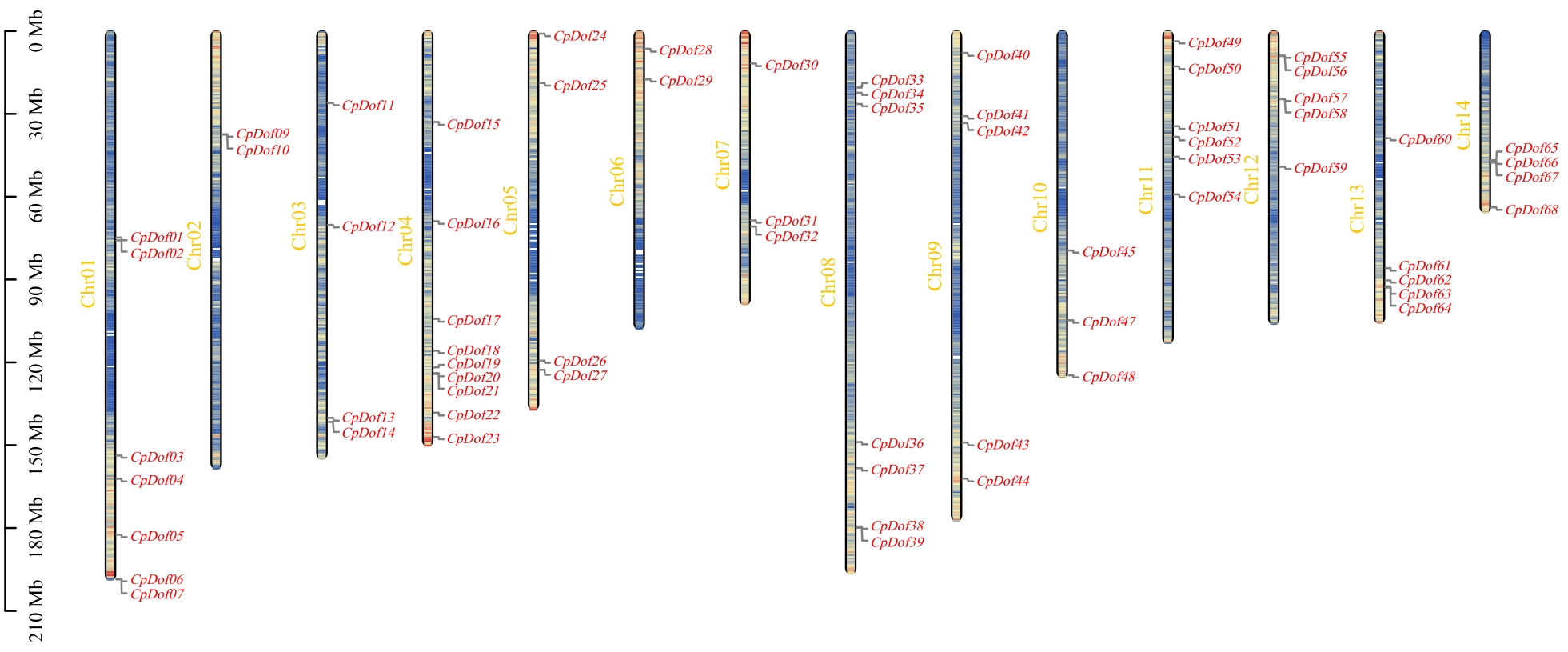
图1 CpDof基因染色体分布垂直条表示染色体密度,左侧刻度表示染色体长度
Fig. 1 Chromosomal distribution of CpDof genesVertical bars indicate chromosome density, and the scale on the left indicates chromosome length
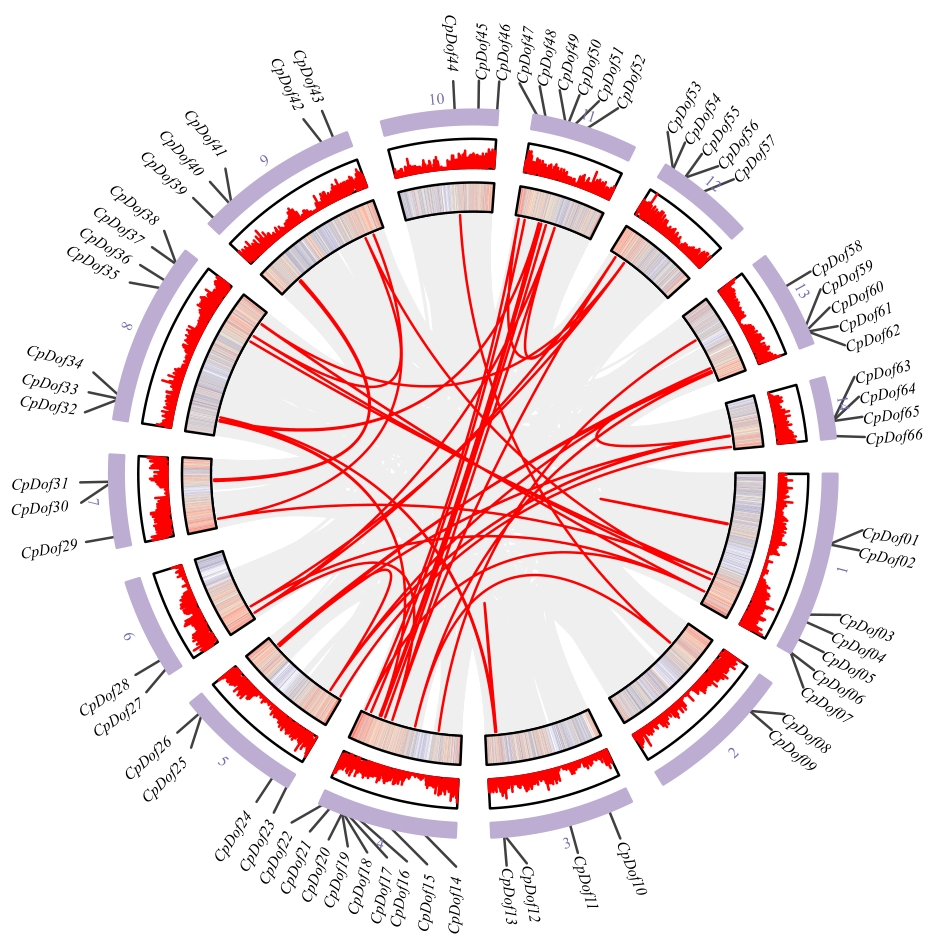
图2 Dof在象草基因组中的分布和共线性分析
Fig. 2 Distribution and collinearity analysis of Dof in the genome of elephant grass (Cenchrus purpureus)
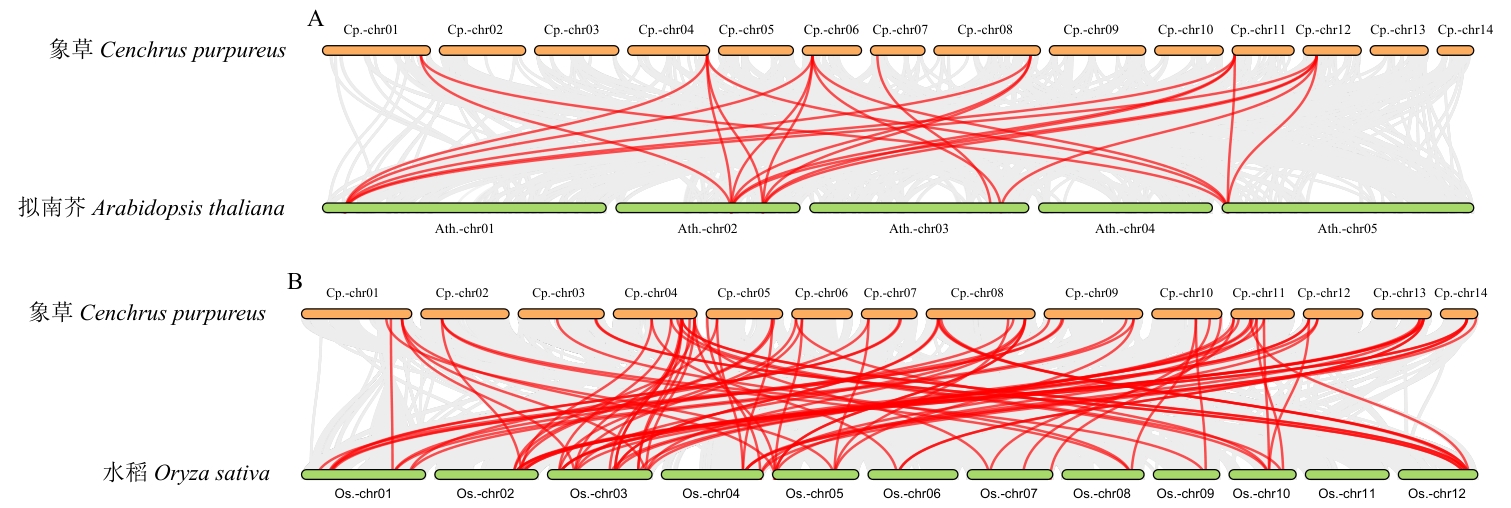
图3 象草、拟南芥和水稻Dof基因的共线性分析
Fig. 3 Synteny analysis of Dof genes between elephant grass and A. thaliana and O. sativa
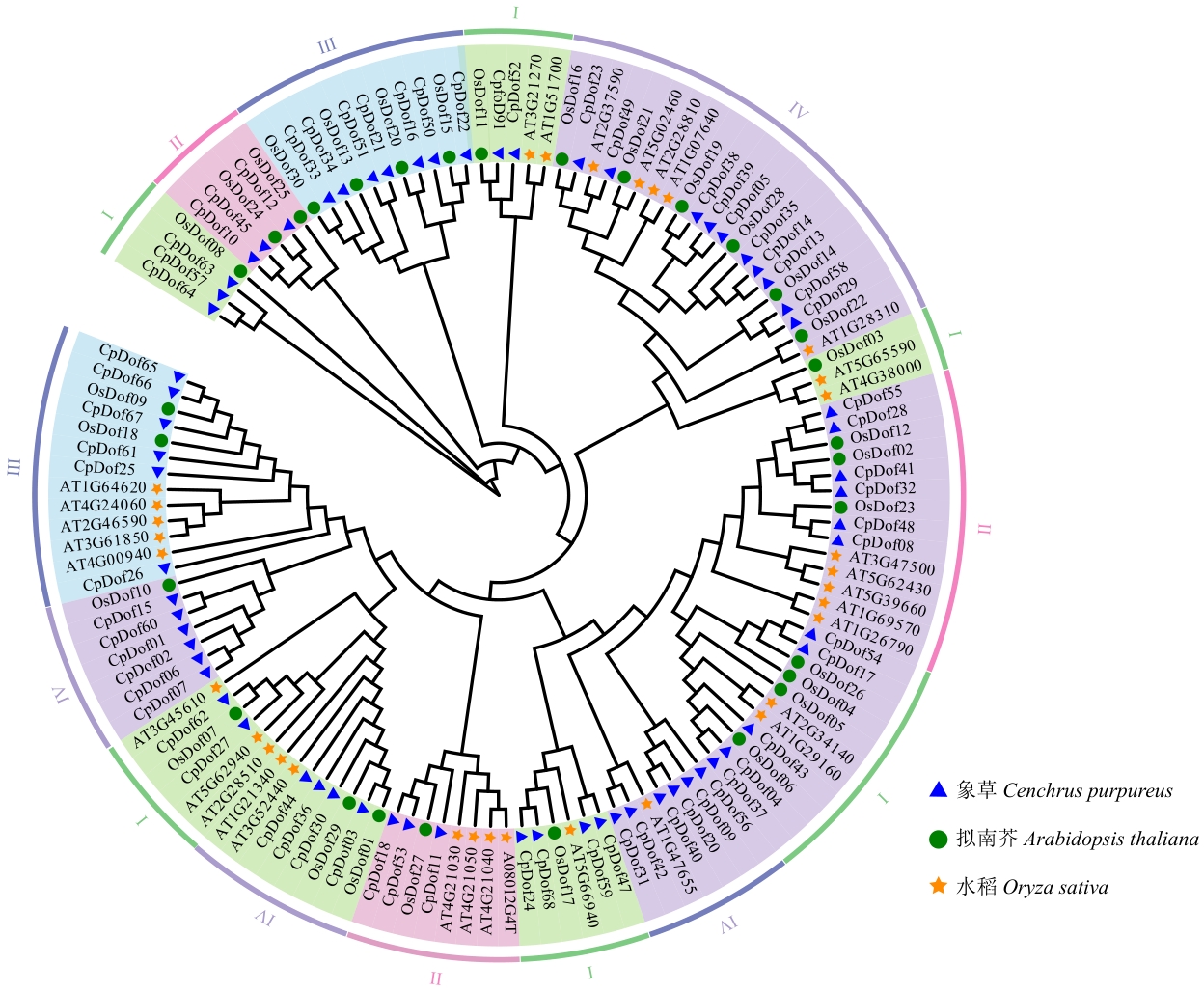
图4 象草、水稻和拟南芥中Dof成员的系统发育树
Fig. 4 Phylogenetic tree of Dof members in elephant grass, rice (O. sativa) and A. thaliana
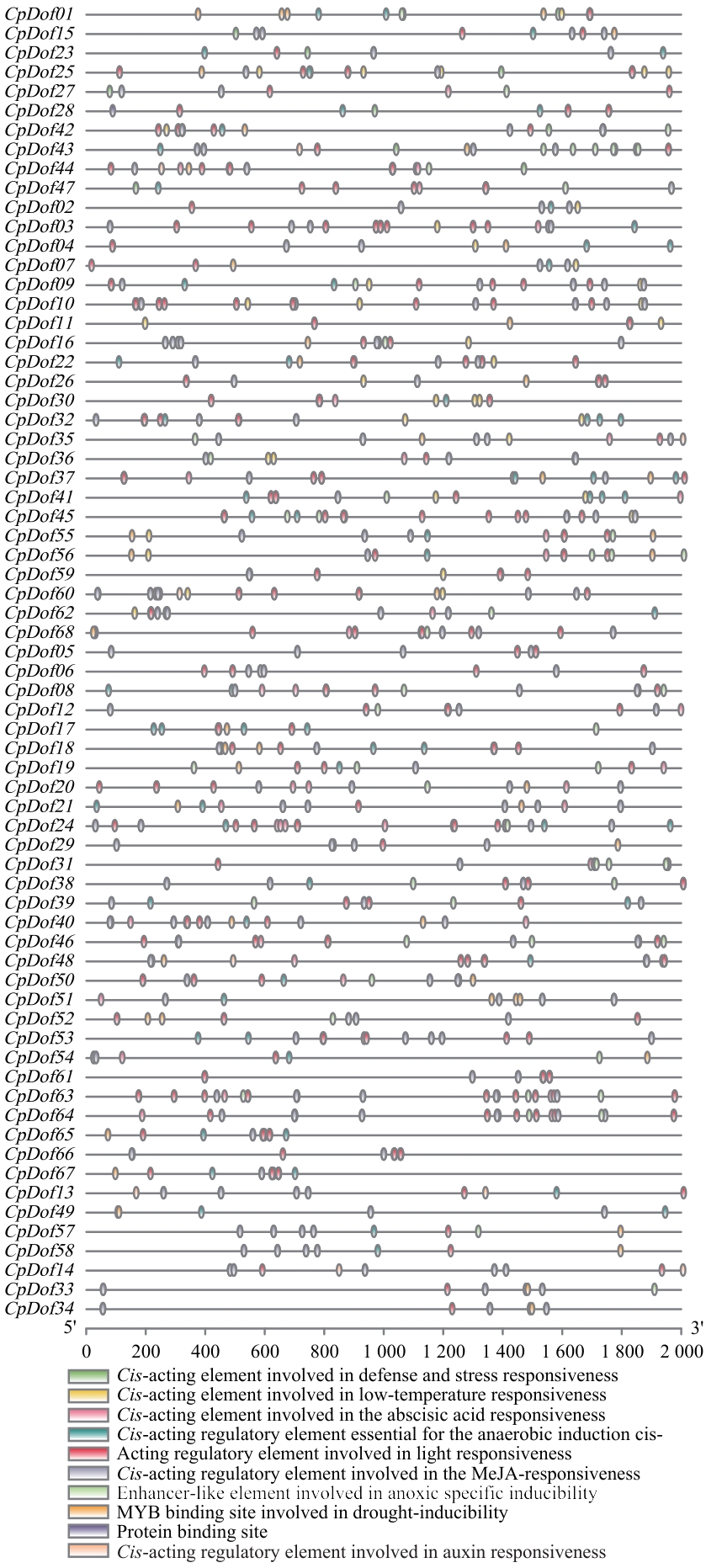
图5 CpDof顺式作用元件(CRE)分析
Fig. 5 Analysis of cis-acting elements (CREs) of CpDof
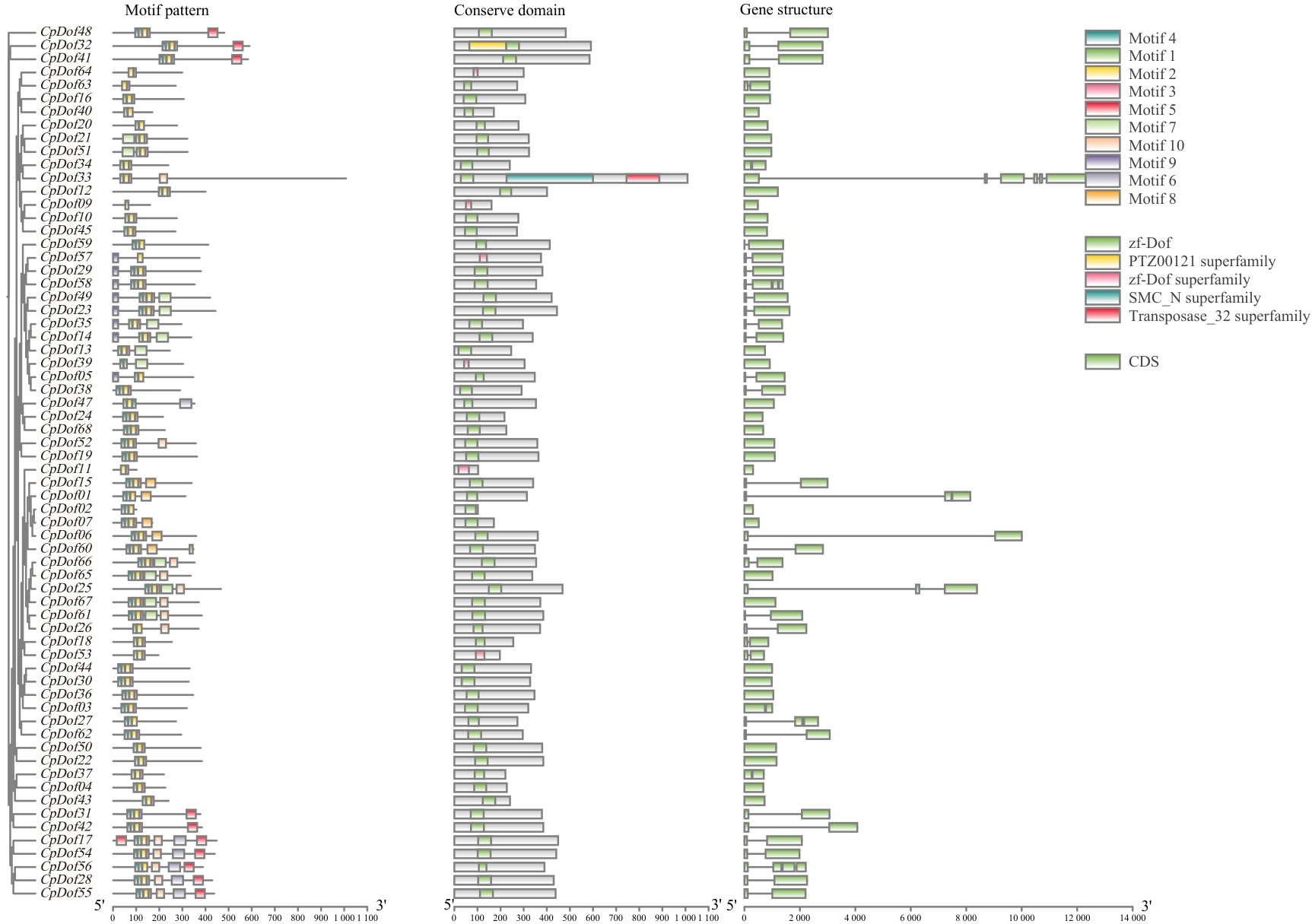
图6 CpDof家族成员的系统发育树、保守基序、保守结构域和基因结构
Fig. 6 Phylogenetic tree, conserved motifs, conserved domains, and gene structures of CpDof family members
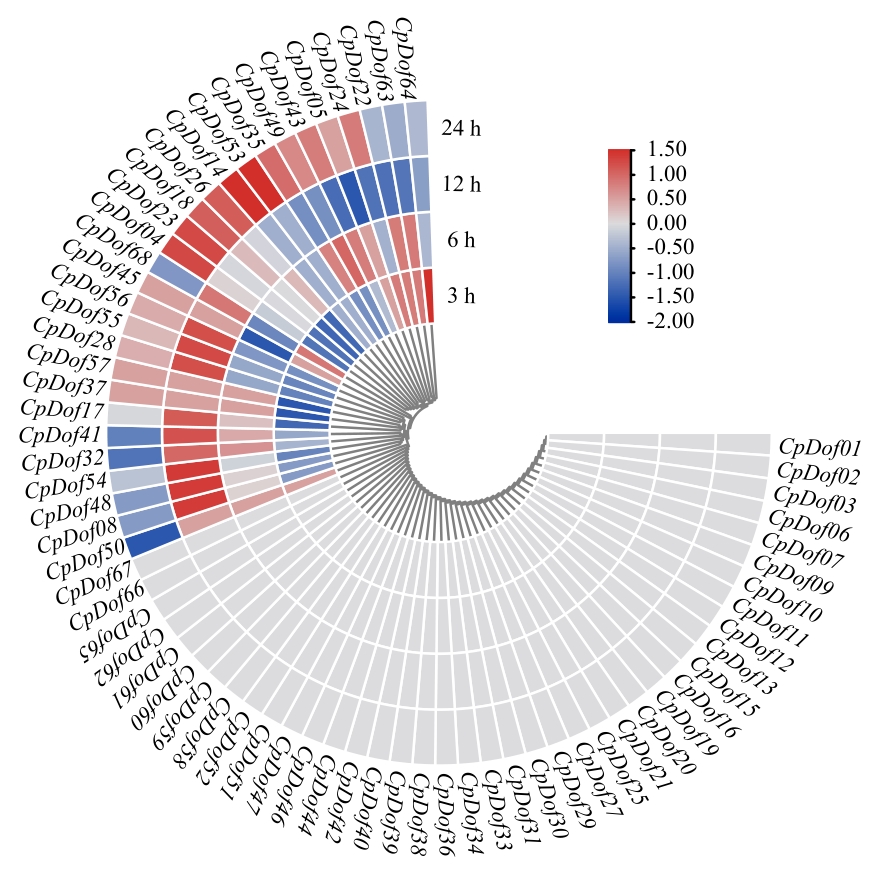
图7 ‘川畜4号’象草基因组Dof基因在低温胁迫条件下的表达水平
Fig. 7 Expressions of Dof genes in the ‘Chuanxchu No. 4’ elephant grass genome under low-temperature stress conditions
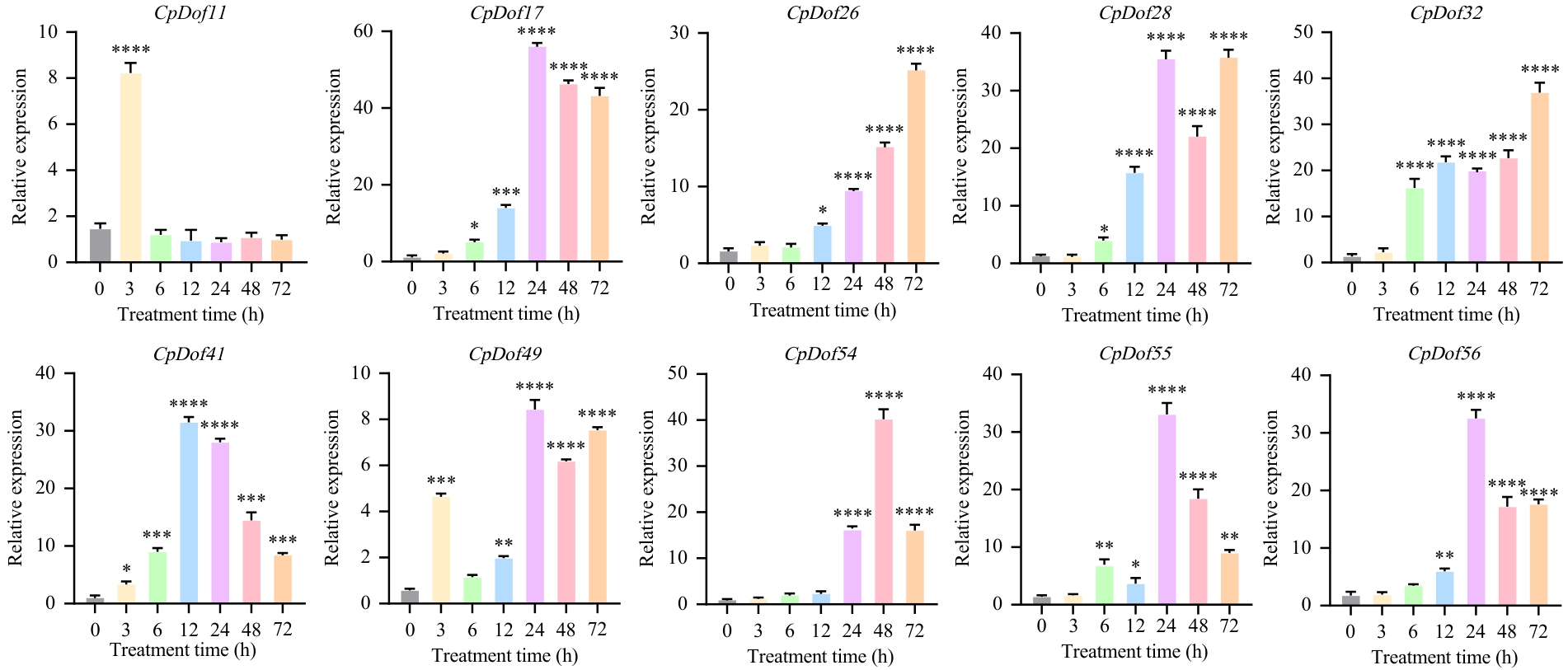
图8 10个CpDof基因在低温(4 ℃)处理下的表达水平所有实验均独立重复3次,误差线代表3次重复实验的标准差。*表示与空白对照组(0 h)相比转录水平的显著性差异(* P0.05,** P0.01,*** P0.001,**** P0.000 1)
Fig. 8 Expressions of 10 CpDof genes under low temperature (4 ℃) treatmentAll experiments were independently repeated three times. Error bars indicate the standard deviation of three replicates. * indicate significant differences in transcript levels compared to the blank control (0 h) (* P0.05, ** P0.01, *** P0.001, **** P0.000 1)
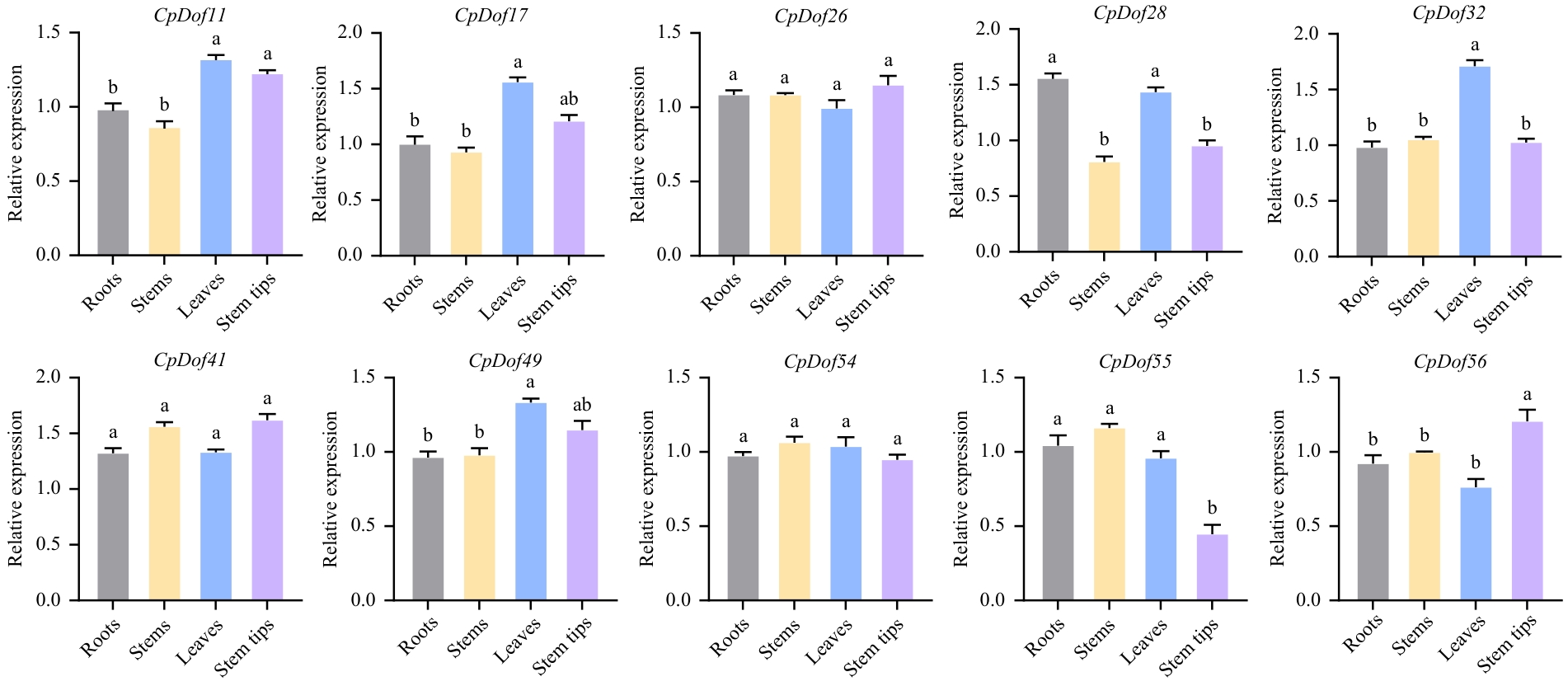
图9 10个CpDof基因在不同组织中的表达水平所有实验均独立进行3次,误差线表示3个重复的标准差。不同字母表示根据Tukey检验得出的统计学显著差异(P0.05)
Fig. 9 Expressions of 10 CpDof genes in different tissuesAll experiments were independently repeated three times. Different letters indicate statistically significant differences (P0.05) according to Tukey’s test
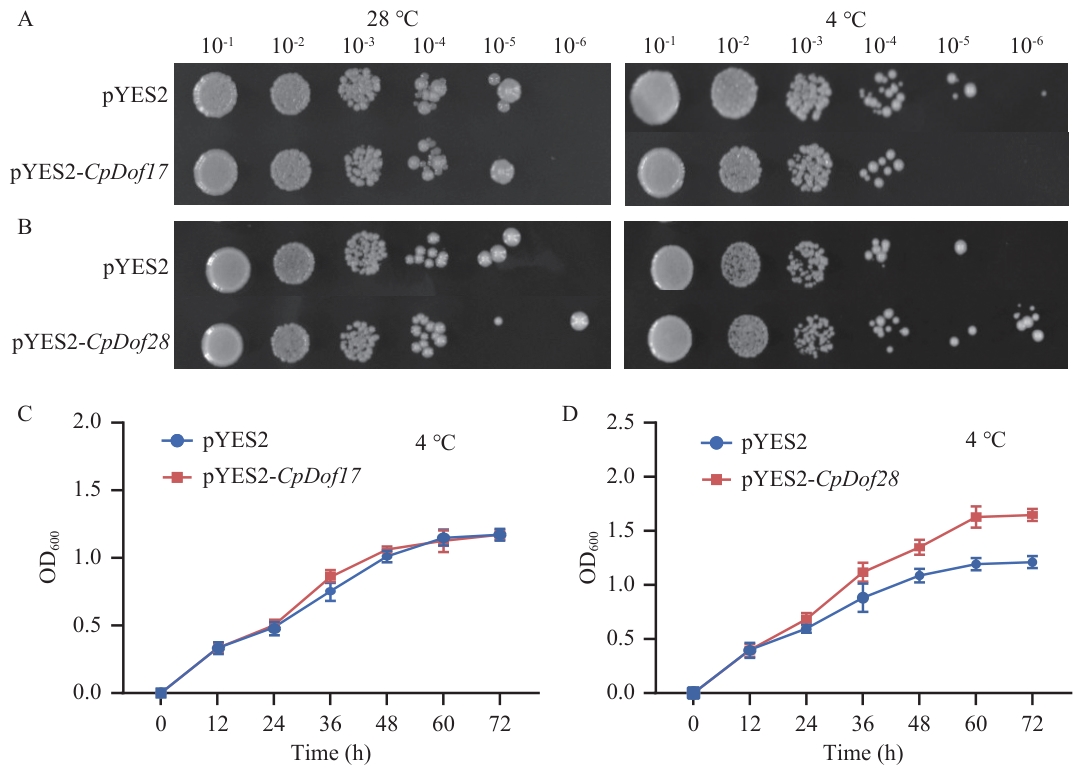
图10 过表达CpDof17和CpDof28的酵母细胞对低温胁迫的耐受性A、B:经冷处理或未经冷处理的酵母转化子连续稀释液滴;C、D:经冷处理的转基因酵母与空白对照组酵母菌株在液体培养基中的生长曲线
Fig. 10 The tolerance of yeast cells overexpressing CpDof17 and CpDof28 to low-temperature stressA, B: Serially diluted drops of yeast transformants without or with cold treatment. C, D: Growth curves of cold-treated transgenic yeast and blank control group yeast strains in liquid medium
| [1] | Samson R, Mani S, Boddey R, et al. The potential of C4 perennial grasses for developing a global BIOHEAT industry [J]. Crit Rev Plant Sci, 2005, 24(5/6): 461-495. |
| [2] | Johannes LP, Minh TTN, Xuan TD. Elephant grass (Pennisetum purpureum): a bioenergy resource overview [J]. Biomass, 2024, 4(3): 625-646. |
| [3] | Pereira AV, Lira MA, Machado JC, et al. Elephantgrass, a tropical grass for cutting and grazing [J]. Agraria, 2021, 16(2): 1-13. |
| [4] | Liang X, Erickson JE, Sollenberger LE, et al. Growth and transpiration responses of elephantgrass and energycane to soil drying [J]. Crop Sci, 2018, 58(1): 354-363. |
| [5] | Jin YR, Luo JC, Yang YC, et al. The evolution and expansion of RWP-RK gene family improve the heat adaptability of elephant grass (Pennisetum purpureum Schum.) [J]. BMC Genomics, 2023, 24(1): 510. |
| [6] | Xian JP, Wang Y, Niu KJ, et al. Transcriptional regulation and expression network responding to cadmium stress in a Cd-tolerant perennial grass Poa Pratensis [J]. Chemosphere, 2020, 250: 126158. |
| [7] | Negawo AT, Teshome A, Kumar A, et al. Opportunities for Napier grass (Pennisetum purpureum) improvement using molecular genetics [J]. Agronomy, 2017, 7(2): 28. |
| [8] | Lv Y, Song CH, Lu QW, et al. The expression characteristics of transcription factors regulated by exogenous ABA in winter wheat (Triticum aestivum) under cold stress [J]. Russ J Plant Physiol, 2018, 65(6): 842-848. |
| [9] | de Bruijn S. Out in the cold: variation in the ZmbZIP68 promoter modulates cold tolerance in maize [J]. Plant Cell, 2022, 34(8): 2813-2814. |
| [10] | Zhang ZY, Li JH, Li F, et al. OsMAPK3 phosphorylates OsbHLH002/OsICE1 and inhibits its ubiquitination to activate OsTPP1 and enhances rice chilling tolerance [J]. Dev Cell, 2017, 43(6): 731-743.e5. |
| [11] | Mao CL, Zhang J, Zhang YN, et al. Genome-wide analysis of the WRKY gene family and their response to low-temperature stress in elephant grass [J]. BMC Genomics, 2024, 25(1): 947. |
| [12] | Yanagisawa S, Sheen J. Involvement of maize Dof zinc finger proteins in tissue-specific and light-regulated gene expression [J]. Plant Cell, 1998, 10(1): 75-89. |
| [13] | Yu YH, Bian L, Wan YT, et al. Grape (Vitis vinifera) VvDOF3 functions as a transcription activator and enhances powdery mildew resistance [J]. Plant Physiol Biochem, 2019, 143: 183-189. |
| [14] | Cai XF, Zhang CJ, Shu WB, et al. The transcription factor SlDof22 involved in ascorbate accumulation and salinity stress in tomato [J]. Biochem Biophys Res Commun, 2016, 474(4): 736-741. |
| [15] | He L, Su C, Wang YC, et al. ATDOF5.8 protein is the upstream regulator of ANAC069 and is responsive to abiotic stress [J]. Biochimie, 2015, 110: 17-24. |
| [16] | Cao B, Cui Y, Lou KK, et al. Genome-wide identification and expression analysis of the dof gene family in Medicago sativa L. under various abiotic stresses [J]. DNA Cell Biol, 2020, 39(11): 1976-1989. |
| [17] | Chen PX, Yan MJ, Li L, et al. The apple DNA-binding one zinc-finger protein MdDof54 promotes drought resistance [J]. Hortic Res, 2020, 7(1): 195. |
| [18] | Su Y, Liang W, Liu ZJ, et al. Overexpression of GhDof1 improved salt and cold tolerance and seed oil content in Gossypium hirsutum [J]. J Plant Physiol, 2017, 218: 222-234. |
| [19] | Wang ZM, Wang Y, Tong Q, et al. Transcriptomic analysis of grapevine Dof transcription factor gene family in response to cold stress and functional analyses of the VaDof17d gene [J]. Planta, 2021, 253(2): 55. |
| [20] | Liu J, Meng QL, Xiang HT, et al. Genome-wide analysis of Dof transcription factors and their response to cold stress in rice (Oryza sativa L.) [J]. BMC Genomics, 2021, 22(1): 800. |
| [21] | Yan Q, Wu F, Xu P, et al. The elephant grass (Cenchrus purpureus) genome provides insights into anthocyanidin accumulation and fast growth [J]. Mol Ecol Resour, 2021, 21(2): 526-542. |
| [22] | Chen SK, Gao J, Chen JX, et al. ClusterX: a novel representation learning-based deep clustering framework for accurate visual inspection in virtual screening [J]. Brief Bioinform, 2023, 24(3): bbad126. |
| [23] | Tamura K, Stecher G, Kumar S. MEGA11: molecular evolutionary genetics analysis version 11 [J]. Mol Biol Evol, 2021, 38(7): 3022-3027. |
| [24] | Chen CJ, Wu Y, Li JW, et al. TBtools-II: a “one for all, all for one” bioinformatics platform for biological big-data mining [J]. Mol Plant, 2023, 16(11): 1733-1742. |
| [25] | Wang YP, Tang HB, Debarry JD, et al. MCScanX: a toolkit for detection and evolutionary analysis of gene synteny and collinearity [J]. Nucleic Acids Res, 2012, 40(7): e49. |
| [26] | Liu Y, Liu NN, Deng X, et al. Genome-wide analysis of wheat DNA-binding with one finger (Dof) transcription factor genes: evolutionary characteristics and diverse abiotic stress responses [J]. BMC Genomics, 2020, 21(1): 276. |
| [27] | Mortazavi A, Williams BA, McCue K, et al. Mapping and quantifying mammalian transcriptomes by RNA-Seq [J]. Nat Methods, 2008, 5(7): 621-628. |
| [28] | Pimentel H, Bray NL, Puente S, et al. Differential analysis of RNA-seq incorporating quantification uncertainty [J]. Nat Methods, 2017, 14(7): 687-690. |
| [29] | Xiang DJ, Man LL, Cao S, et al. Heterologous expression of an Agropyron cristatum SnRK2 protein kinase gene (AcSnRK2.11) increases freezing tolerance in transgenic yeast and tobacco [J]. 3 Biotech, 2020, 10(5): 209. |
| [30] | Lijavetzky D, Carbonero P, Vicente-Carbajosa J. Genome-wide comparative phylogenetic analysis of the rice and Arabidopsis Dof gene families [J]. BMC Evol Biol, 2003, 3: 17. |
| [31] | Yanagisawa S. The Dof family of plant transcription factors [J]. Trends Plant Sci, 2002, 7(12): 555-560. |
| [32] | Sun SL, Wang B, Jiang Q, et al. Genome-wide analysis of BpDof genes and the tolerance to drought stress in birch (Betula platyphylla) [J]. PeerJ, 2021, 9: e11938. |
| [33] | Zhou Y, Cheng Y, Wan CP, et al. Genome-wide characterization and expression analysis of the Dof gene family related to abiotic stress in watermelon [J]. PeerJ, 2020, 8: e8358. |
| [34] | Moreno-Risueno MÁ, Díaz I, Carrillo L, et al. The HvDOF19 transcription factor mediates the abscisic acid-dependent repression of hydrolase genes in germinating barley aleurone [J]. Plant J, 2007, 51(3): 352-365. |
| [35] | Nan H, Ludlow RA, Lu M, et al. Genome-wide analysis of dof genes and their response to abiotic stress in rose (Rosa chinensis) [J]. Front Genet, 2021, 12: 538733. |
| [36] | Venkatesh J, Won P. Genome-wide analysis and expression profiling of DNA-binding with one zinc finger (Dof) transcription factor family in potato [J]. Plant Physiol Biochem, 2015, 94: 73-85. |
| [37] | Zou XM, Sun HM. DOF transcription factors: Specific regulators of plant biological processes [J]. Front Plant Sci, 2023, 14: 1044918. |
| [38] | Chattha WS, Atif RM, Iqbal M, et al. Genome-wide identification and evolution of Dof transcription factor family in cultivated and ancestral cotton species [J]. Genomics, 2020, 112(6): 4155-4170. |
| [39] | Jiang Y, Zeng B, Zhao HN, et al. Genome-wide transcription factor gene prediction and their expressional tissue-specificities in maize [J]. J Integr Plant Biol, 2012, 54(9): 616-630. |
| [40] | Schwechheimer C, Zourelidou M, Bevan MW. Plant transcription factor studies [J]. Annu Rev Plant Physiol Plant Mol Biol, 1998, 49: 127-150. |
| [41] | Manasa S L, Panigrahy M, Panigrahi KCS, et al. Overview of cold stress regulation in plants [J]. Bot Rev, 2022, 88(3): 359-387. |
| [1] | 武小娟, 赵雪雯, 王沛捷, 聂虎帅, 李楠, 马宇, 杨恩泽, 马杰茹, 马艳红. 马铃薯GARP转录因子家族分析及StARR14-X1基因功能验证[J]. 生物技术通报, 2026, 42(6): 22-30. |
| [2] | 王江清, 张蝶, 王荟洁, 袁柱东, 付艳鸿, 黄娅楠, 王洪洋. 马铃薯AP2/ERF基因家族鉴定及响应致病疫霉胁迫的表达分析[J]. 生物技术通报, 2026, 42(6): 116-127. |
| [3] | 安飞飞, 罗秀芹, 蔡杰, 薛晶晶, 朱文丽. 木薯MeMYB106基因克隆及其在叶片花青素合成中的功能[J]. 生物技术通报, 2026, 42(6): 13-21. |
| [4] | 张欣, 陈骋, 霍元博, 黄仁丽, 张丽, 张凯, 童华荣, 袁连玉. 茶树CsCRD1基因的克隆及其对叶绿素生物合成的影响[J]. 生物技术通报, 2026, 42(5): 280-291. |
| [5] | 金旋, 向芬, 戴翠婷, 杨辉, 李赛君, 刘红艳, 钱思维, 蔺万煌, 李维. 茶树CsTDIFL基因的克隆、表达特性分析及其对氨基酸合成的调控[J]. 生物技术通报, 2026, 42(5): 323-331. |
| [6] | 倪飞飞, 陈益存, 高暝, 张盛剿, 彭方有, 陈涛梅, 赵耘霄, 汪阳东. 山苍子TCP基因鉴定及其调控萜类合成的研究[J]. 生物技术通报, 2026, 42(4): 227-238. |
| [7] | 刘青媛, 吴洪启, 陈秀娥, 陈剑, 姜远泽, 何燕子, 喻奇伟, 刘仁祥. 转录因子NtMYB96a调控烟草耐旱性的功能研究[J]. 生物技术通报, 2026, 42(4): 239-250. |
| [8] | 许孟歌, 宋火焱, 罗佳, 苏亿, 周会汶, 王灿, 孔可可. 大豆GmRLK19基因表达分析及互作蛋白的筛选[J]. 生物技术通报, 2026, 42(4): 92-100. |
| [9] | 陈登科, 兰刚, 夏芝, 侯保国, 杨六六, 曹彩荣, 李朋波, 吴翠翠. 花生ZF-HD基因家族的鉴定和非生物胁迫响应分析[J]. 生物技术通报, 2026, 42(4): 114-128. |
| [10] | 苏燕竹, 李达, 张爱爱, 刘永光, 张秀荣, 薛其勤. 大豆CAD基因家族的鉴定及表达分析[J]. 生物技术通报, 2026, 42(4): 101-113. |
| [11] | 王振泉, 钟毅, 马波, 吴静, 胡增辉. 牡丹PsMYB43调控芳樟醇合成的功能解析[J]. 生物技术通报, 2026, 42(4): 263-271. |
| [12] | 马世杰, 李铮, 李蔚, 郭仰东, 张娜. 光信号调控园艺作物果实发育的研究进展[J]. 生物技术通报, 2026, 42(3): 5-18. |
| [13] | 李天源, 亓新亮, 刘珊, 张建成, 王鹏飞, 张帅, 贾璐婷, 穆霄鹏. 欧李SPL基因家族的鉴定及在果实发育过程中的表达分析[J]. 生物技术通报, 2026, 42(3): 362-373. |
| [14] | 张高翔, 吴玉碧, 郭亚静, 纪薇, 杨忠义. 葡萄WD40基因家族鉴定及表达量分析[J]. 生物技术通报, 2026, 42(3): 324-337. |
| [15] | 王鹤瑶, 孙红梅. 园艺植物表皮毛功能及其形成机制研究进展[J]. 生物技术通报, 2026, 42(3): 242-254. |
| 阅读次数 | ||||||
|
全文 |
|
|||||
|
摘要 |
|
|||||
