







生物技术通报 ›› 2026, Vol. 42 ›› Issue (8): 298-311.doi: 10.13560/j.cnki.biotech.bull.1985.2025-1200
• 研究报告 • 上一篇
邱宇洁, 王茜, 曾琳, 侯虹吉, 苟玉梅, 邹兰( ), 黄晶()
收稿日期:2025-11-06
出版日期:2026-08-26
发布日期:2026-08-17
通讯作者:
邹兰zoulan@swust.edu.cn基金资助:
QIU Yu-jie, WANG Qian, ZENG Lin, HOU Hong-ji, GOU Yu-mei, ZOU Lan(), HUANG Jing()
Received:2025-11-06
Published:2026-08-26
Online:2026-08-17
摘要:
目的 探究枯草芽胞杆菌Bacillus subtilis JY-7-2L对乌头根腐病原菌尖孢镰刀菌(Fusarium oxysporum)的拮抗作用,解析其对大田根腐病的生防潜力,并从基因组层面剖析其抗菌机制。 方法 采用平板对峙试验检测JY-7-2L拮抗病原菌能力,大田试验检测菌株对根腐病的生防潜力和对乌头生长的影响,用Illumina NovaSeq和Oxford Nanopore ONT平台进行全基因组测序,通过COG、CAZy、GO和KEGG数据库对JY-7-2L基因组信息进行基因功能注释,并通过antiSMASH工具预测其次级代谢产物合成基因。 结果 JY-7-2L显著抑制F. oxysporum的生长,并显著降低大田根腐病发病率,生防效率为89.26%-93.77%,同时增加了植株茎、主根和子根的干重。该菌的无细胞发酵滤液和挥发性物质均能显著抑制尖孢镰刀菌的生长。JY-7-2L基因组总长度为4.19 Mb,GC含量43.57%,共编码4 234个基因。JY-7-2L基因组中含有抗生素合成、生物膜形成、抑制病原菌、促进植物生长和诱导植物系统抗性相关基因。AntiSMASH分析表明,该菌株含有11个次级代谢产物合成基因簇,其中6个基因簇能够产生拮抗真菌或细菌的活性物质,3个基因簇具有合成新型活性物质的潜力。 结论 JY-7-2L兼具生防和促生能力,具有开发作为生物肥料和生防材料的潜力。
邱宇洁, 王茜, 曾琳, 侯虹吉, 苟玉梅, 邹兰, 黄晶. 枯草芽胞杆菌JY-7-2L对乌头根腐病的生防能力及其潜在作用机制解析[J]. 生物技术通报, 2026, 42(8): 298-311.
QIU Yu-jie, WANG Qian, ZENG Lin, HOU Hong-ji, GOU Yu-mei, ZOU Lan, HUANG Jing. Biocontrol Efficacy of Bacillus subtilis JY-7-2L against Aconitum carmichaelii Debeaux Root Rot and Its Potential Mechanisms[J]. Biotechnology Bulletin, 2026, 42(8): 298-311.
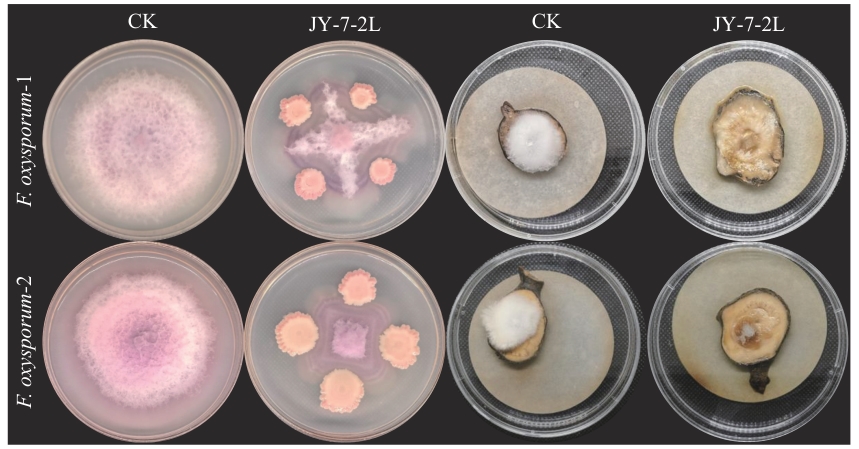
图1 JY-7-2L对F. oxysporum的抑制效果
Fig. 1 Inhibition effects of JY-7-2L against F. oxysporum
菌株 Strain | PDA平板抑菌率 Inhibition rate on PDA plate (%) | 乌头切片抑菌率 Inhibition rate on A. carmichaelii root slice (%) | ||||
|---|---|---|---|---|---|---|
| F. oxysporum-1 | F. oxysporum-2 | F. oxysporum-1 | F. oxysporum-2 | |||
| JY-7-2L | 62.75±1.96 | 64.71±2.04 | 48.10±0.73 | 33.00±0.85 | ||
表1 JY-7-2L对F. oxysporum的抑制效果
Table 1 Inhibition effects of JY-7-2L against F. oxysporum
菌株 Strain | PDA平板抑菌率 Inhibition rate on PDA plate (%) | 乌头切片抑菌率 Inhibition rate on A. carmichaelii root slice (%) | ||||
|---|---|---|---|---|---|---|
| F. oxysporum-1 | F. oxysporum-2 | F. oxysporum-1 | F. oxysporum-2 | |||
| JY-7-2L | 62.75±1.96 | 64.71±2.04 | 48.10±0.73 | 33.00±0.85 | ||
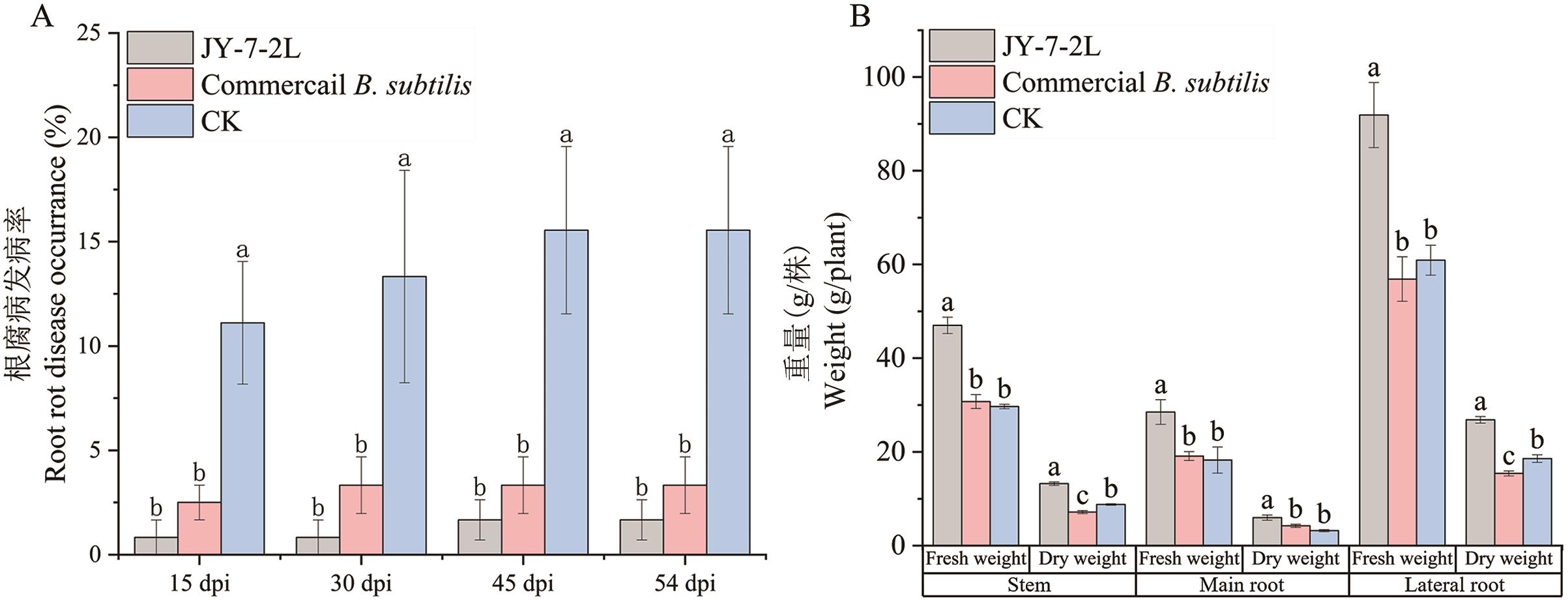
图2 JY-7-2L田间防病及促生效果A:JY-7-2L对乌头根腐病的田间防病效果(dpi:接种后天数);B:JY-7-2L对乌头生长的影响。不同小写字母表示差异显著(P<0.05),下同
Fig. 2 Biocontrol and growth-promoting efficacy of strain JY-7-2L under field conditionsA: Biocontrol effect of JY-7-2L against root rot by field experiment (dpi: days post inoculation). B: Growth-promoting effects of JY-7-2L on Aconitum carmichaelii Debx. Different lowercase letters indicate significant difference (P<0.05), the same below
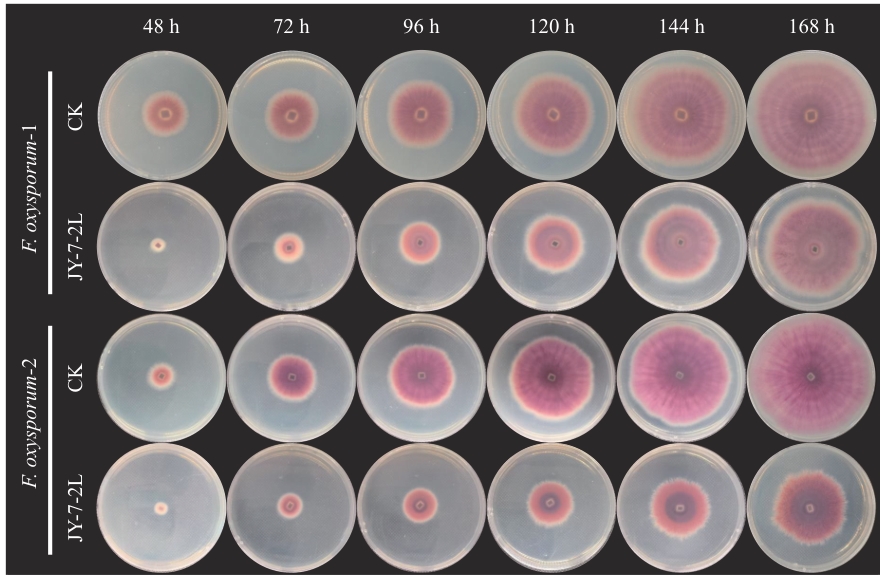
图3 JY-7-2L无细胞发酵滤液对F. oxysporum菌丝生长的影响
Fig. 3 Effects of cell-free culture filtrate of JY-7-2L on the mycelial growth of F. oxysporum
病原菌 Pathogen | 处理 Treatment | 菌落直径 Diameter of fungal colony (cm) | |||||
|---|---|---|---|---|---|---|---|
| 48 h | 72 h | 96 h | 120 h | 144 h | 168 h | ||
| F. oxysporum-1 | CK | 2.13±0.09a | 3.83±0.07a | 5.23±0.07a | 6.90±0.06a | 8.10±0.06a | 8.50±0.00a |
| JY-7-2L | 1.13±0.03b | 2.37±0.07b | 3.37±0.17b | 4.37±0.18b | 6.07±0.32b | 7.20±0.26b | |
| F. oxysporum-2 | CK | 2.08±0.03a | 3.50±0.04a | 4.55±0.03a | 5.85±0.09a | 7.13±0.08a | 8.08±0.06a |
| JY-7-2L | 0.93±0.03b | 1.85±0.03b | 2.48±0.05b | 3.45±0.03b | 4.48±0.09b | 5.50±0.07b | |
表2 JY-7-2L无细胞发酵滤液对F. oxysporum菌丝生长的影响
Table 2 Effects of cell-free culture filtrate of JY-7-2L on the mycelial growth of F. oxysporum
病原菌 Pathogen | 处理 Treatment | 菌落直径 Diameter of fungal colony (cm) | |||||
|---|---|---|---|---|---|---|---|
| 48 h | 72 h | 96 h | 120 h | 144 h | 168 h | ||
| F. oxysporum-1 | CK | 2.13±0.09a | 3.83±0.07a | 5.23±0.07a | 6.90±0.06a | 8.10±0.06a | 8.50±0.00a |
| JY-7-2L | 1.13±0.03b | 2.37±0.07b | 3.37±0.17b | 4.37±0.18b | 6.07±0.32b | 7.20±0.26b | |
| F. oxysporum-2 | CK | 2.08±0.03a | 3.50±0.04a | 4.55±0.03a | 5.85±0.09a | 7.13±0.08a | 8.08±0.06a |
| JY-7-2L | 0.93±0.03b | 1.85±0.03b | 2.48±0.05b | 3.45±0.03b | 4.48±0.09b | 5.50±0.07b | |
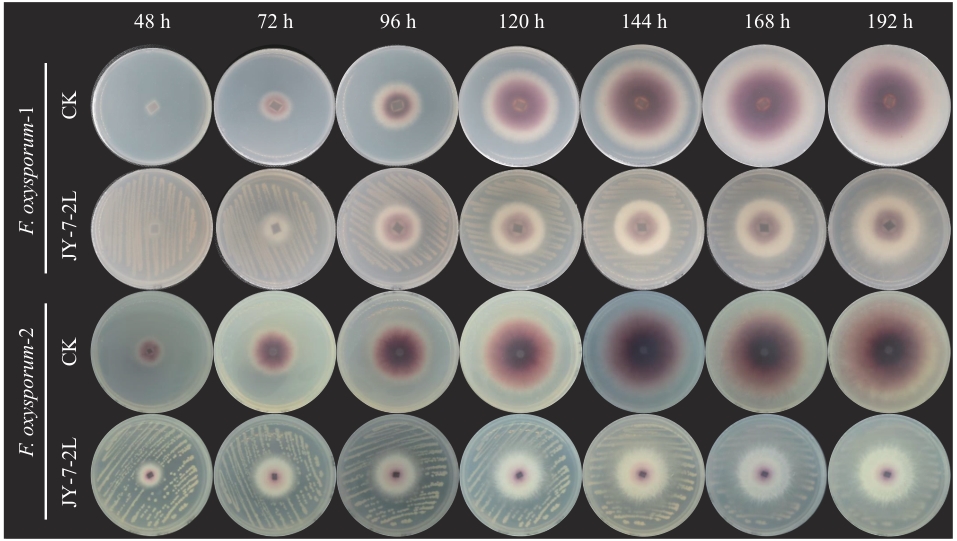
图4 JY-7-2L挥发性物质对F. oxysporum菌丝生长的影响
Fig. 4 Effects of volatile organic compounds of JY-7-2L on the mycelial growth of F. oxysporum
病原菌 Pathogen | 处理 Treatment | 菌落直径 Diameter of fungal colony (cm) | ||||||
|---|---|---|---|---|---|---|---|---|
| 48 h | 72 h | 96 h | 120 h | 144 h | 168 h | 192 h | ||
| F. oxysporum-1 | CK | 1.87±0.07a | 3.63±0.24a | 4.83±0.07a | 5.70±0.09a | 6.80±0.13a | 7.90±0.23a | 8.50±0.00a |
| JY-7-2L | 1.83±0.03a | 2.53±0.24a | 3.57±0.33b | 4.43±0.07b | 4.82±0.03b | 5.56±0.09b | 6.89±0.17b | |
| F. oxysporum-2 | CK | 2.55±0.05a | 4.13±0.05a | 5.28±0.10a | 6.38±0.09a | 7.23±0.10a | 8.08±0.25a | 8.50±0.00a |
| JY-7-2L | 2.23±0.09b | 3.53±0.09b | 3.53±0.09b | 4.83±0.12b | 5.55±0.13b | 6.18±0.06b | 6.55±0.06b | |
表3 JY-7-2L挥发性物质对F. oxysporum菌丝生长的影响
Table 3 Effects of volatile organic compounds of JY-7-2L on the mycelial growth of F. oxysporum
病原菌 Pathogen | 处理 Treatment | 菌落直径 Diameter of fungal colony (cm) | ||||||
|---|---|---|---|---|---|---|---|---|
| 48 h | 72 h | 96 h | 120 h | 144 h | 168 h | 192 h | ||
| F. oxysporum-1 | CK | 1.87±0.07a | 3.63±0.24a | 4.83±0.07a | 5.70±0.09a | 6.80±0.13a | 7.90±0.23a | 8.50±0.00a |
| JY-7-2L | 1.83±0.03a | 2.53±0.24a | 3.57±0.33b | 4.43±0.07b | 4.82±0.03b | 5.56±0.09b | 6.89±0.17b | |
| F. oxysporum-2 | CK | 2.55±0.05a | 4.13±0.05a | 5.28±0.10a | 6.38±0.09a | 7.23±0.10a | 8.08±0.25a | 8.50±0.00a |
| JY-7-2L | 2.23±0.09b | 3.53±0.09b | 3.53±0.09b | 4.83±0.12b | 5.55±0.13b | 6.18±0.06b | 6.55±0.06b | |
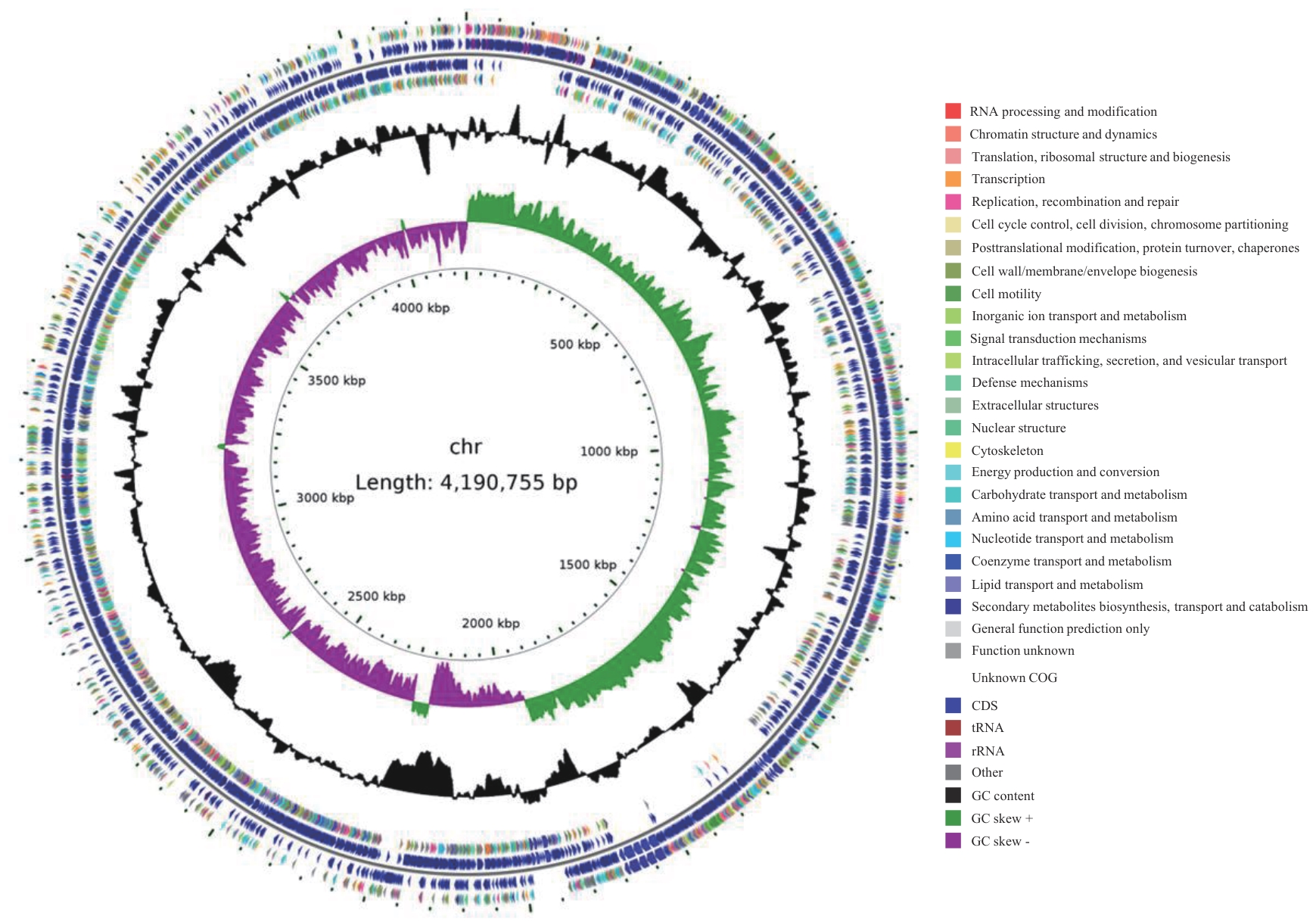
图5 菌株JY-7-2L的全基因组从内到外依次为:1:基因组的刻度(kb);2:GC偏移(向内的部分为GC偏移值为正值即G > C,向外的部分为GC偏移值为负值即G < C);3:GC含量(向内部分表示该区域GC含量低于全基因组平均GC含量,向外部分与之相反,且峰值越高表示与平均GC含量差值越大);4-7:每一个CDS所属的COG;5-6:CDS、tRNA及rRNA在基因组上的位置
Fig. 5 Whole genome of strain JY-7-2LFrom the innermost to the outermost circle: 1: The genome scale (kb). 2: GC skew (positive values (G > C) are shown as inward deflections; negative values (G < C) as outward deflections). 3: GC content (inward peaks indicate regions with GC content below the genome average, while outward peaks indicate regions with GC content above the genome average. Peak height indicates the magnitude of deviation). 4-7: Each CDS is based on its COG functional category. 5-6: The locations of CDSs, tRNAs, and rRNAs in the genome
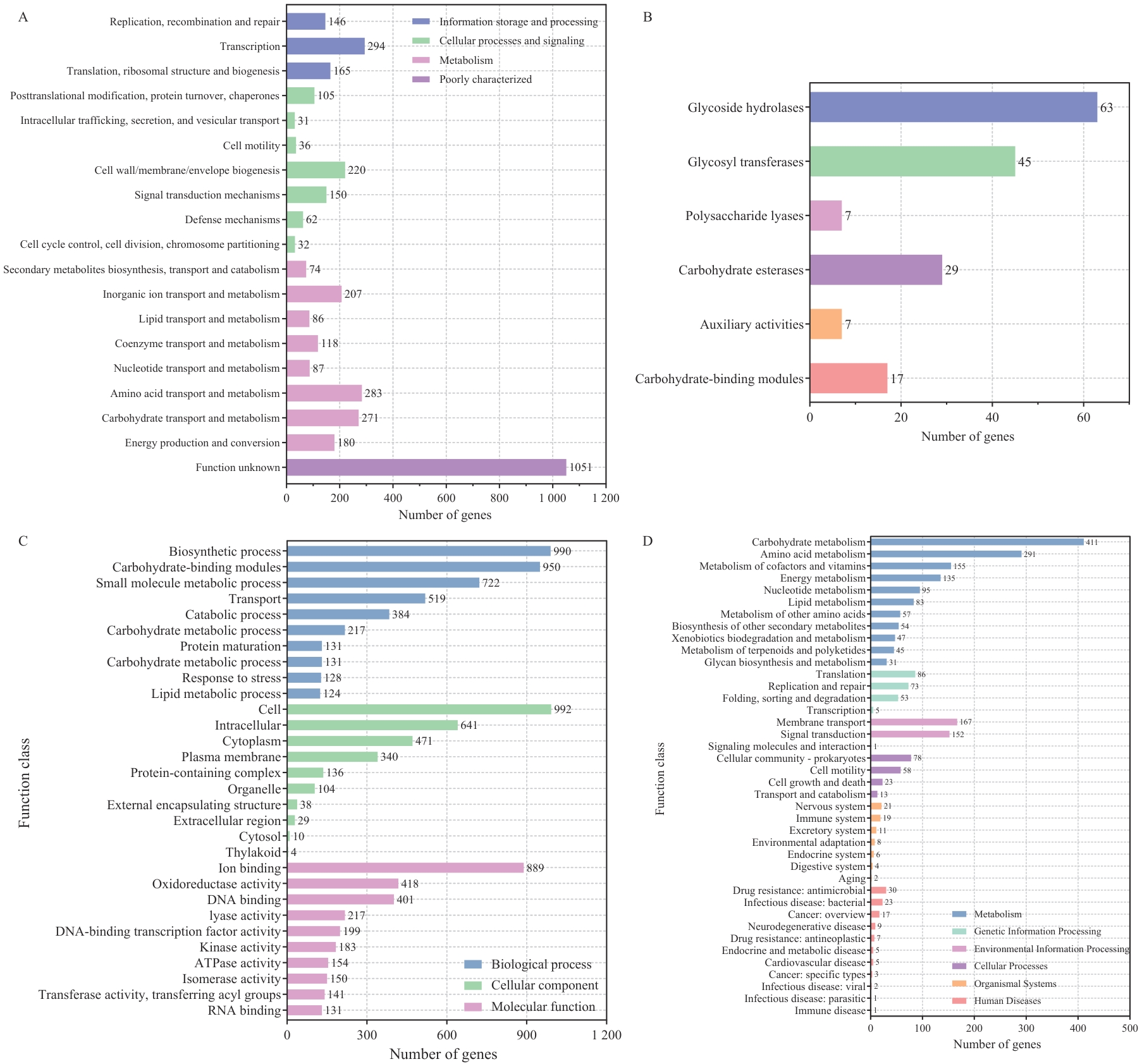
图6 JY-7-2L全基因组功能注释A:JY-7-2L基因组的COG功能分类图;B:JY-7-2L基因组的CAZy功能分类图;C:JY-7-2L基因组的GO功能分类图(每个分类的前10条通路);D:JY-7-2L基因组的KEGG功能分类图
Fig. 6 Functional annotation of the whole genome of JY-7-2LA: COG functional classification of the genome of JY-7-2L. B: CAZy functional classification of the genome of JY-7-2L. C: GO functional classification of the genome of JY-7-2L (top 10 pathways in each category). D: KEGG functional classification of the genome of JY-7-2L
基因组富集通路 Genome enrichment pathway | 富集基因数量 Number of enriched genes | 通路编号 Pathway ID |
|---|---|---|
| Novobiocin biosynthesis | 5 | ko00401 |
| Streptomycin biosynthesis | 8 | ko00521 |
| Biosynthesis of ansamycins | 1 | ko01051 |
| Penicillin and cephalosporin biosynthesis | 2 | ko00311 |
| Vancomycin resistance | 7 | ko01502 |
| Biosynthesis of vancomycin group antibiotics | 1 | ko01055 |
| Biosynthesis of various antibiotics | 10 | ko00998 |
| Acarbose and validamycin biosynthesis | 2 | ko00525 |
| Cationic antimicrobial peptide resistance | 12 | ko01503 |
| Carbapenem biosynthesis | 3 | ko00332 |
| Prodigiosin biosynthesis | 5 | ko00333 |
表4 JY-7-2L抗生素相关通路
Table 4 JY-7-2L antibiotic-related pathways
基因组富集通路 Genome enrichment pathway | 富集基因数量 Number of enriched genes | 通路编号 Pathway ID |
|---|---|---|
| Novobiocin biosynthesis | 5 | ko00401 |
| Streptomycin biosynthesis | 8 | ko00521 |
| Biosynthesis of ansamycins | 1 | ko01051 |
| Penicillin and cephalosporin biosynthesis | 2 | ko00311 |
| Vancomycin resistance | 7 | ko01502 |
| Biosynthesis of vancomycin group antibiotics | 1 | ko01055 |
| Biosynthesis of various antibiotics | 10 | ko00998 |
| Acarbose and validamycin biosynthesis | 2 | ko00525 |
| Cationic antimicrobial peptide resistance | 12 | ko01503 |
| Carbapenem biosynthesis | 3 | ko00332 |
| Prodigiosin biosynthesis | 5 | ko00333 |
类别 Category | JY-7-2L相关基因 Gene identified in JY-7-2L | 功能 Function |
|---|---|---|
生物膜形成 Biofilm formation | abrB、ydaM、kinC、ymfC、pgsA、yoaW、spo0A、sinI、sinR、tasA、sipW、tapA、bslA、iolU、mstX、epsO、epsN、epsM、epsL、epsK、epsJ、epsI、epsH、epsG、epsF、epsE、epsD、epsC、slrR、degU、bslB、slrA、yxjH、yxjG、yxaB | 定殖、生长[ Colonization and growth |
抑菌活性物质 Antifungal active substances | srfAA、srfAB、srfAC、srfAD、pksA、pksB、pksC、pksD、pksE、pksF、pksG、pksH、pksI、pksJ、pksL、pksM、pksN、pksR、pksS、ppsE、ppsD、ppsC、ppsB、ppsA、sboA、albA、albC、albD、albE、albF、albG、bacG、bacF、bacE、bacD、bacC、bacB、bacA、dhbA、dhbB、dhbC、dhbE、dhbF、yvmC、fadA、ykvQ、sleL、yvbX、ydhD、cwlQ、xkdO、yocA、yomI | 破坏真菌细胞膜、细胞壁,抑制蛋白质合成,使真菌胞内活性氧累积,干扰能量代谢,诱导细胞凋亡[ Damage fungal cell membranes and cell walls, inhibit protein synthesis, induce intracellular reactive oxygen species accumulation, disrupt energy metabolism, and induce cell apoptosis |
促生 Plant growth promotion | ysnE、ywkB、feuC、feuB、feuA、yhfQ、fhuC、fhuG、fhuB、fhuD、btr、dhbF、dhbB、dhbC、dhbA、dhbE | 促进植物细胞伸长与分裂,促进铁元素吸收和植物生长[ Promote plant cell elongation and division, enhance iron uptake, and stimulate plant growth |
诱导系统抗性 Induce systemic resistance | srfAA、srfAB、srfAC、srfAD、bdhA、ppsE、ppsD、ppsC、ppsB、ppsA、alsD、alsS、alsR | 广谱抗菌性[ Broad-spectrum antifungal activity |
表5 JY-7-2L功能基因
Table 5 Function genes of JY-7-2L
类别 Category | JY-7-2L相关基因 Gene identified in JY-7-2L | 功能 Function |
|---|---|---|
生物膜形成 Biofilm formation | abrB、ydaM、kinC、ymfC、pgsA、yoaW、spo0A、sinI、sinR、tasA、sipW、tapA、bslA、iolU、mstX、epsO、epsN、epsM、epsL、epsK、epsJ、epsI、epsH、epsG、epsF、epsE、epsD、epsC、slrR、degU、bslB、slrA、yxjH、yxjG、yxaB | 定殖、生长[ Colonization and growth |
抑菌活性物质 Antifungal active substances | srfAA、srfAB、srfAC、srfAD、pksA、pksB、pksC、pksD、pksE、pksF、pksG、pksH、pksI、pksJ、pksL、pksM、pksN、pksR、pksS、ppsE、ppsD、ppsC、ppsB、ppsA、sboA、albA、albC、albD、albE、albF、albG、bacG、bacF、bacE、bacD、bacC、bacB、bacA、dhbA、dhbB、dhbC、dhbE、dhbF、yvmC、fadA、ykvQ、sleL、yvbX、ydhD、cwlQ、xkdO、yocA、yomI | 破坏真菌细胞膜、细胞壁,抑制蛋白质合成,使真菌胞内活性氧累积,干扰能量代谢,诱导细胞凋亡[ Damage fungal cell membranes and cell walls, inhibit protein synthesis, induce intracellular reactive oxygen species accumulation, disrupt energy metabolism, and induce cell apoptosis |
促生 Plant growth promotion | ysnE、ywkB、feuC、feuB、feuA、yhfQ、fhuC、fhuG、fhuB、fhuD、btr、dhbF、dhbB、dhbC、dhbA、dhbE | 促进植物细胞伸长与分裂,促进铁元素吸收和植物生长[ Promote plant cell elongation and division, enhance iron uptake, and stimulate plant growth |
诱导系统抗性 Induce systemic resistance | srfAA、srfAB、srfAC、srfAD、bdhA、ppsE、ppsD、ppsC、ppsB、ppsA、alsD、alsS、alsR | 广谱抗菌性[ Broad-spectrum antifungal activity |
编号 Cluster ID | 位置 Location (bp) | 类型 Cluster type | 相似基因簇 Similar cluster | 相似度 Similarity | 抑制作用 Suppress object | 来源 Resource |
|---|---|---|---|---|---|---|
| Cluster 1 | 358 578-423 969 | NRPS | Surfactin | 82% | Bacteria and fungi | B. velezensis FZB42 |
| Cluster 2 | 1 111 085-1 131 888 | Terpene | — | — | — | — |
| Cluster 3 | 1 539 083-1 606 810 | NRPS | Paenilarvin A/B/C | 50% | Fungi | Paenibacillus larvae subsp. larvae DSM 25430 |
| Cluster 4 | 1 751 995-1 866 766 | transAT-PKS, PKS-like, T3PKS, NRPS | Bacillaene | 100% | Bacteria | B. velezensis FZB42 |
| Cluster 5 | 1 928 059-2 005 809 | NRPS, betalactone | Fengycin | 100% | Fungi | B. velezensis FZB42 |
| Cluster 6 | 2 067 440-2 089 338 | terpene | — | — | — | |
| Cluster 7 | 2 271 506-2 312 603 | T3PKS | 1-Carbapen-2-em-3-carboxylic acid | 16% | Bacteria | Pectobacterium carotovorum |
| Cluster 8 | 3 209 497-3 261 274 | NRP-metallophore, NRPS | bacillibactin | 100% | Bacteria and fungi | B. subtilis subsp. subtilis str. 168 |
| Cluster 9 | 3 545 060-3 565 806 | CDPS | pulcherriminic acid | 100% | Bacteria and fungi | B. subtilis subsp. subtilis str. 168 |
| Cluster 10 | 3 792 717-3 814 328 | Sactipeptide | subtilosin A | 100% | Bacteria | B. subtilis subsp. spizizenii ATCC 6633 |
| Cluster 11 | 3 821 105-3 862 523 | Other | bacilysin | 100% | Bacteria and fungi | B. velezensis FZB42 |
表6 JY-7-2L次生代谢产物合成基因簇
Table 6 Secondary metabolite gene clusters of JY-7-2L
编号 Cluster ID | 位置 Location (bp) | 类型 Cluster type | 相似基因簇 Similar cluster | 相似度 Similarity | 抑制作用 Suppress object | 来源 Resource |
|---|---|---|---|---|---|---|
| Cluster 1 | 358 578-423 969 | NRPS | Surfactin | 82% | Bacteria and fungi | B. velezensis FZB42 |
| Cluster 2 | 1 111 085-1 131 888 | Terpene | — | — | — | — |
| Cluster 3 | 1 539 083-1 606 810 | NRPS | Paenilarvin A/B/C | 50% | Fungi | Paenibacillus larvae subsp. larvae DSM 25430 |
| Cluster 4 | 1 751 995-1 866 766 | transAT-PKS, PKS-like, T3PKS, NRPS | Bacillaene | 100% | Bacteria | B. velezensis FZB42 |
| Cluster 5 | 1 928 059-2 005 809 | NRPS, betalactone | Fengycin | 100% | Fungi | B. velezensis FZB42 |
| Cluster 6 | 2 067 440-2 089 338 | terpene | — | — | — | |
| Cluster 7 | 2 271 506-2 312 603 | T3PKS | 1-Carbapen-2-em-3-carboxylic acid | 16% | Bacteria | Pectobacterium carotovorum |
| Cluster 8 | 3 209 497-3 261 274 | NRP-metallophore, NRPS | bacillibactin | 100% | Bacteria and fungi | B. subtilis subsp. subtilis str. 168 |
| Cluster 9 | 3 545 060-3 565 806 | CDPS | pulcherriminic acid | 100% | Bacteria and fungi | B. subtilis subsp. subtilis str. 168 |
| Cluster 10 | 3 792 717-3 814 328 | Sactipeptide | subtilosin A | 100% | Bacteria | B. subtilis subsp. spizizenii ATCC 6633 |
| Cluster 11 | 3 821 105-3 862 523 | Other | bacilysin | 100% | Bacteria and fungi | B. velezensis FZB42 |
| [1] | 邹兰, 王茜, 李慕仪, 等. 乌头内生细菌JY-3-1R的鉴定及其生防和促生能力研究 [J]. 生物技术通报, 2023, 39(10): 246-255. |
| Zou L, Wang Q, Li MY, et al. Identification, biocontrol and plant growth-promoting potential of endophytic bacterial strain JY-3-1R from Aconitum carmichaelii debx [J]. Biotechnol Bull, 2023, 39(10): 246-255. | |
| [2] | 胡芷涵, 张鼎, 胡跃强. 中药附子药理学及毒理学的研究进展 [J]. 湖南中医杂志, 2024, 40(12): 201-205. |
| Hu ZH, Zhang D, Hu YQ. Research progress in pharmacology and toxicology of Radix aconiti lateralis [J]. Hunan J Tradit Chin Med, 2024, 40(12): 201-205. | |
| [3] | 崔颢, 曲媛, 黄虞枫, 等. 川陕滇乌头属药用植物资源调查 [J]. 中国现代中药, 2022, 24(7): 1264-1271. |
| Cui H, Qu Y, Huang YF, et al. Investigation on medicinal plant resources of Aconitum in Sichuan, Shaanxi and Yunnan [J]. Mod Chin Med, 2022, 24(7): 1264-1271. | |
| [4] | 缪作清, 李世东, 刘杏忠, 等. 三七根腐病病原研究 [J]. 中国农业科学, 2006, 39(7): 1371-1378. |
| Miao ZQ, Li SD, Liu XZ, et al. The causal microorganisms of Panax notoginseng root rot disease [J]. Sci Agric Sin, 2006, 39(7): 1371-1378. | |
| [5] | 王飞, 杨瑾, 李雪梦, 等. 一种优化的丹参根腐病离体抗性鉴定方法及应用 [J]. 植物病理学报, 2025: 1-11. |
| Wang F, Yang J, Li XM, et al. An optimized in vitro method for evaluating resistance to root rot in Salvia miltiorrhiza and its application [J]. Acta Phytopathol Sin, 2025: 1-11. | |
| [6] | 赵林艳, 官会林, 向萍, 等. 白及根腐病植株根际土壤微生物群落组成特征分析 [J]. 生物技术通报, 2022, 38(2): 67-74. |
| Zhao LY, Guan HL, Xiang P, et al. Composition features of microbial community in the rhizospheric soil of Bletilla striata with root rot [J]. Biotechnol Bull, 2022, 38(2): 67-74. | |
| [7] | 王瑞, 董林林, 徐江, 等. 农田栽参模式中人参根腐病原菌鉴定与防治 [J]. 中国中药杂志, 2016, 41(10): 1787-1791. |
| Wang R, Dong LL, Xu J, et al. Identification and prevention of root rot pathogen in model of ginseng cultivated in farmlands [J]. China J Chin Mater Med, 2016, 41(10): 1787-1791. | |
| [8] | 陈茂婷, 胡琪琪, 书剑琴, 等. 乌头根腐病病原菌的分离与鉴定 [J]. 微生物学通报, 2020, 47(8): 2450-2457. |
| Chen MT, Hu QQ, Shu JQ, et al. Isolation and identification of pathogens causing root rot on Aconitum carmichaelii Debx [J]. Microbiol China, 2020, 47(8): 2450-2457. | |
| [9] | 胡党振, 徐嫒媛, 于梦怡, 等. 芽胞杆菌处理对柑桔苗木黄龙病抑制效果 [J]. 中国农业大学学报, 2021, 26(8): 72-83. |
| Hu DZ, Xu YY, Yu MY, et al. Inhibitory effect of Bacillus treatment on Citrus Huanglongbing disease in nursery growth plants [J]. J China Agric Univ, 2021, 26(8): 72-83. | |
| [10] | Zhang B, Li XL, Fu J, et al. Production of acetoin through simultaneous utilization of glucose, xylose, and Arabinose by engineered Bacillus subtilis [J]. PLoS One, 2016, 11(7): e0159298. |
| [11] | 姚凤琴, 林发壮, 陈昌铭, 等. 枯草芽胞杆菌Bv17对非洲菊根腐病抑菌作用及防治效果 [J]. 福建农业科技, 2019, 50(12): 55-59. |
| Yao FQ, Lin FZ, Chen CM, et al. Antibacterial effect and control effect of Bacillus subtilis Bv17 on root rot of Gerbera jamesonii [J]. Fujian Agric Sci Technol, 2019, 50(12): 55-59. | |
| [12] | Chandrasekaran M, Chun SC. Expression of PR-protein genes and induction of defense-related enzymes by Bacillus subtilis CBR05 in tomato (Solanum lycopersicum) plants challenged with Erwinia carotovora subsp. carotovora [J]. Biosci Biotechnol Biochem, 2016, 80(11): 2277-2283. |
| [13] | Yánez-Mendizábal V, Usall J, Viñas I, et al. Potential of a new strain of Bacillus subtilis CPA-8 to control the major postharvest diseases of fruit [J]. Biocontrol Sci Technol, 2011, 21(4): 409-426. |
| [14] | Gan KF, Chen M, Liang TT, et al. Biocontrol effects and underlying mechanism of Bacillus subtilis Pn1 on Panax notoginseng root rot caused by Fusarium solani [J]. Ind Crops Prod, 2025, 229: 120963. |
| [15] | Baard V, Bakare OO, Daniel AI, et al. Biocontrol potential of Bacillus subtilis and Bacillus tequilensis against four Fusarium species [J]. Pathogens, 2023, 12(2): 254. |
| [16] | Awan ZA, Shoaib A, Schenk PM, et al. Antifungal potential of volatiles produced by Bacillus subtilis BS-01 against Alternaria solani in Solanum lycopersicum [J]. Front Plant Sci, 2023, 13: 1089562. |
| [17] | Zou L, Wang Q, Wu RX, et al. Biocontrol and plant growth promotion potential of endophytic Bacillus subtilis JY-7-2L on Aconitum carmichaelii Debx [J]. Front Microbiol, 2023, 13: 1059549. |
| [18] | Walker BJ, Abeel T, Shea T, et al. Pilon: an integrated tool for comprehensive microbial variant detection and genome assembly improvement [J]. PLoS One, 2014, 9(11): e112963. |
| [19] | Lowe TM, Eddy SR. tRNAscan-SE a program for improved detection of transfer RNA genes in genomic sequence [J]. Nucleic Acids Res, 1997, 25(5): 955-964. |
| [20] | Kalvari I, Argasinska J, Quinones-Olvera N, et al. Rfam 13.0: shifting to a genome-centric resource for non-coding RNA families [J]. Nucleic Acids Res, 2018, 46(D1): D335-D342. |
| [21] | Galperin MY, Vera Alvarez R, Karamycheva S, et al. COG database update 2024 [J]. Nucleic Acids Res, 2025, 53(D1): D356-D363. |
| [22] | Lombard V, Henrissat B, Garron ML. CAZac: an activity descriptor for carbohydrate-active enzymes [J]. Nucleic Acids Res, 2025, 53(D1): D625-D633. |
| [23] | Aleksande SA, Balhoff JP, Carbon S. The Gene Ontology knowledgebase in 2026 [J]. Nucleic Acids Res, 2025, 54(D1): D1779-D1792. |
| [24] | Kanehisa M, Furumichi M, Sato Y, et al. KEGG for taxonomy-based analysis of pathways and genomes [J]. Nucleic Acids Res, 2023, 51(D1): D587-D592. |
| [25] | Blin K, Shaw S, Kloosterman AM, et al. antiSMASH 6.0: improving cluster detection and comparison capabilities [J]. Nucleic Acids Res, 2021, 49(W1): W29-W35. |
| [26] | Reddy BVB, Kallifidas D, Kim JH, et al. Natural product biosynthetic gene diversity in geographically distinct soil microbiomes [J]. Appl Environ Microbiol, 2012, 78(10): 3744-3752. |
| [27] | Gontang EA, Gaudêncio SP, Fenical W, et al. Sequence-based analysis of secondary-metabolite biosynthesis in marine Actinobacteria [J]. Appl Environ Microbiol, 2010, 76(8): 2487-2499. |
| [28] | Dahar GY, Wang HW, Rajer FU, et al. Comparative genomic analysis of Bacillus atrophaeus HAB-5 reveals genes associated with antimicrobial and plant growth-promoting activities [J]. Front Microbiol, 2024, 15: 1384691. |
| [29] | Chen L, Xu XX, Sun YX, et al. Surfactin inhibits Fusarium graminearum by accumulating intracellular ROS and inducing apoptosis mechanisms [J]. World J Microbiol Biotechnol, 2023, 39(12): 340. |
| [30] | Islam T, Rabbee MF, Choi J, et al. Biosynthesis, molecular regulation, and application of bacilysin produced by Bacillus species [J]. Metabolites, 2022, 12(5): 397. |
| [31] | Han XS, Shen DX, Xiong Q, et al. The plant-beneficial rhizobacterium Bacillus velezensis FZB42 controls the soybean pathogen Phytophthora sojae due to bacilysin production [J]. Appl Environ Microbiol, 2021, 87(23): e01601-e01621. |
| [32] | Chen ML, Wang H, Zhang C, et al. Recent advances in antimicrobial lipopeptide fengycin secreted by Bacillus: Structure, biosynthesis, antifungal mechanisms, and potential application in food preservation [J]. Food Chem, 2025, 489: 144937. |
| [33] | Algburi A, Zehm S, Netrebov V, et al. Subtilosin prevents biofilm formation by inhibiting bacterial quorum sensing [J]. Probiotics & Antimicro Prot, 2017, 9(1): 81-90. |
| [34] | Dinesen C, Vertot M, Jarmusch SA, et al. Subtilosin A production is influenced by surfactin levels in Bacillus subtilis [J]. microLife, 2025, 6: uqae029. |
| [35] | Kenig M, Abraham EP. Antimicrobial activities and antagonists of bacilysin and anticapsin [J]. J Gen Microbiol, 1976, 94(1): 37-45. |
| [36] | 李腾杰, 梁孙妍, 郭健衡, 等. 特基拉芽胞杆菌XK29挥发物2-甲基丁酸对甘薯长喙壳菌的抑制作用研究 [J]. 微生物学报, 2022, 62(12): 5018-5028. |
| Li TJ, Liang SY, Guo JH, et al. Inhibitory effects of volatile 2-methylbutyric acid produced by Bacillus tequilensis XK29 on Ceratocystis fimbriata [J]. Acta Microbiol Sin, 2022, 62(12): 5018-5028. | |
| [37] | Shao JH, Li YC, Li ZF, et al. Participating mechanism of a major contributing gene ysnE for auxin biosynthesis in Bacillus amyloliquefaciens SQR9 [J]. J Basic Microbiol, 2021, 61(6): 569-575. |
| [38] | Jung J, Ahn S, Kim DH, et al. Triple interactions for induced systemic resistance in plants [J]. Front Plant Sci, 2024, 15: 1464710. |
| [39] | 周江鸿, 夏菲, 仲丽, 等. 黄栌枯萎病拮抗细菌CCBC3-3-1的全基因组测序及比较基因组分析 [J]. 生物技术通报, 2024, 40(7): 235-246. |
| Zhou JH, Xia F, Zhong L, et al. Whole genome sequencing and comparative genomic analysis of antagonistic bacterium CCBC3-3-1 against Verticillium dahlia [J]. Biotechnol Bull, 2024, 40(7): 235-246. | |
| [40] | Amna, Xia Y, Farooq MA, et al. Multi-stress tolerant PGPR Bacillus xiamenensis PM14 activating sugarcane (Saccharum officinarum L.) red rot disease resistance [J]. Plant Physiol Biochem, 2020, 151: 640-649. |
| [41] | Wash P, Batool A, Mulk S, et al. Prevalence of antimicrobial resistance and respective genes among Bacillus spp., a versatile bio-fungicide [J]. Int J Environ Res Public Health, 2022, 19(22): 14997. |
| [42] | Wang J, Xie XY, Li B, et al. Complete genome analysis and antimicrobial mechanism of Bacillus velezensis GX0002980 reveals its biocontrol potential against mango anthracnose disease [J]. Microbiol Spectr, 2025, 13(6): e02685-e02624. |
| [43] | Ezrari S, Mhidra O, Radouane N, et al. Potential role of rhizobacteria isolated from Citrus rhizosphere for biological control of Citrus dry root rot [J]. Plants, 2021, 10(5): 872. |
| [44] | Mardanova AM, Fanisovna Hadieva G, Tafkilevich Lutfullin M, et al. Bacillus subtilis strains with antifungal activity against the phytopathogenic fungi [J]. Agric Sci, 2017, 8(1): 1-20. |
| [45] | Li Y, Zhang X, He K, et al. Isolation and identification of Bacillus subtilis LY-1 and its antifungal and growth-promoting effects [J]. Plants, 2023, 12(24): 4158. |
| [46] | Han SY, Chen JX, Zhao YJ, et al. Bacillus subtilis HSY21 can reduce soybean root rot and inhibit the expression of genes related to the pathogenicity of Fusarium oxysporum [J]. Pestic Biochem Physiol, 2021, 178: 104916. |
| [47] | Yang LY, Qu MB, Wang Z, et al. Biochemical properties of a novel cold-adapted GH19 chitinase with three chitin-binding domains from Chitinilyticum aquatile CSC-1 and its potential in biocontrol of plant pathogenic fungi [J]. J Agric Food Chem, 2024, 72(36): 19581-19593. |
| [48] | 孙潇慧, 车程川, 季俊杰, 等. Bacillaene酮还原酶结构域的异源表达及底物特异性分析 [J]. 生物工程学报, 2015, 31(9): 1355-1362. |
| Sun XH, Che CC, Ji JJ, et al. Heterologous expression and substrate specificity of ketoreductase domain in bacillaene polyketide synthase [J]. Chin J Biotechnol, 2015, 31(9): 1355-1362. | |
| [49] | Miao S, Liang JH, Xu Y, et al. Bacillaene, sharp objects consist in the arsenal of antibiotics produced by Bacillus [J]. J Cell Physiol, 2023: jcp.30974. |
| [50] | Angelini LL, dos Santos RAC, Fox G, et al. Pulcherrimin protects Bacillus subtilis against oxidative stress during biofilm development [J]. NPJ Biofilms Microbiomes, 2023, 9: 50. |
| [51] | 戚家明, 孙杉杉, 张东旭, 等. 芽胞杆菌BS-6基于全基因组数据的分类鉴定及拮抗能力分析 [J]. 生物技术通报, 2019, 35(10): 111-118. |
| Qi JM, Sun SS, Zhang DX, et al. Identification and biocontrol activity analysis of Bacillus sp. BS-6 based on genome-wide data [J]. Biotechnol Bull, 2019, 35(10): 111-118. | |
| [52] | Sood S, Steinmetz H, Beims H, et al. Paenilarvins: iturin family lipopeptides from the honey bee pathogen Paenibacillus larvae [J]. ChemBioChem, 2014, 15(13): 1947-1955. |
| [53] | Olishevska S, Nickzad A, Déziel E. Bacillus and Paenibacillus secreted polyketides and peptides involved in controlling human and plant pathogens [J]. Appl Microbiol Biotechnol, 2019, 103(3): 1189-1215. |
| [54] | McGowan SJ, Sebaihia M, O’Leary S, et al. Analysis of the carbapenem gene cluster of Erwinia carotovora: definition of the antibiotic biosynthetic genes and evidence for a novel β-lactam resistance mechanism [J]. Mol Microbiol, 1997, 26(3): 545-556. |
| [55] | Ma JY, Song XR, Li MC, et al. Global spread of carbapenem-resistant Enterobacteriaceae: Epidemiological features, resistance mechanisms, detection and therapy [J]. Microbiol Res, 2023, 266: 127249. |
| [56] | Wen F, Wu YJ, Jin J, et al. Integrating gene knockout, GC-O-MS and multivariate statistical analysis: revealing the impact of fadA and bkdB genes on the aroma characteristics of Bacillus subtilis BJ3-2 fermented soybeans [J]. RSC Adv, 2025, 15(30): 24437-24449. |
| [57] | Ali SAM, Sayyed RZ, Mir MI, et al. Induction of systemic resistance in maize and antibiofilm activity of surfactin from Bacillus velezensis MS20 [J]. Front Microbiol, 2022, 13: 879739. |
| [58] | Lam VB, Meyer T, Arias AA, et al. Bacillus cyclic lipopeptides iturin and fengycin control rice blast caused by Pyricularia oryzae in potting and acid sulfate soils by direct antagonism and induced systemic resistance [J]. Microorganisms, 2021, 9(7): 1441. |
| [59] | Peng G, Zhao XY, Li YZ, et al. Engineering Bacillus velezensis with high production of acetoin primes strong induced systemic resistance in Arabidopsis thaliana [J]. Microbiol Res, 2019, 227: 126297. |
| [60] | Afzal I, Shinwari ZK, Sikandar S, et al. Plant beneficial endophytic bacteria: Mechanisms, diversity, host range and genetic determinants [J]. Microbiol Res, 2019, 221: 36-49. |
| [1] | 迪丽拜尔·吐尔逊, 祖丽胡玛尔·亚库普, 包慧芳, 詹发强, 杨蓉, 史应武, 杨红梅, 楚敏, 房世杰, 王宁. 番茄根际放线菌GNLJ-7菌株的生物功能及全基因组分析[J]. 生物技术通报, 2026, 42(8): 276-286. |
| [2] | 高国良, 张巧玲, 冯雯杰, 高发瑞, 高波, 宗可栋, 葛林, 李上县, 王秋云, 黄信诚. 粳稻新品种济儒稻1号全基因组解析与精准设计育种策略[J]. 生物技术通报, 2026, 42(8): 106-112. |
| [3] | 彭海燕, 刘佳鑫, 史禹涵, 李宪臻, 郭小宇, 袁悦. 持续性内切纤维素酶BvCel5的异源表达及酶学性质研究[J]. 生物技术通报, 2026, 42(7): 351-360. |
| [4] | 高飞, 张宇曦, 穆頔, 陈峥, 陈洪艳. 鼠源罗伊氏黏液乳杆菌的分离鉴定及全基因组测序分析[J]. 生物技术通报, 2026, 42(7): 315-327. |
| [5] | 辛晴, 郑永杰, 李雨华, 涂白连, 刘新亮, 张月婷, 伍艳芳. 樟树MYC转录因子的全基因组鉴定与表达分析[J]. 生物技术通报, 2026, 42(7): 214-225. |
| [6] | 郭家鑫, 王梦霞, 马耀武, 张麒宇, 张振宇, 柳海涛, 裴久渤, 姜瑛. 一株耐镉促生菌的筛选、鉴定及全基因组分析[J]. 生物技术通报, 2026, 42(7): 257-268. |
| [7] | 苏艳艳, 左强, 宋志双, 穆琳英, 吕佳音, 肖自敏, 卢志军, 谢华. 贝莱斯芽胞杆菌BPC37的鉴定与防病促生效果分析[J]. 生物技术通报, 2026, 42(7): 269-279. |
| [8] | 蒋婧, 吕士鹏, 陈浩林, 熊婷, 孙晓燕, 李杰, 陈灿灿, 王高富, 任航行. 中国西南地区4个山羊品种产仔数性状全基因组关联分析[J]. 生物技术通报, 2026, 42(7): 341-350. |
| [9] | 丁洪霞, 高贵文, 黄玉兰, 赵蕊, 黄奕博, 冯和鑫, 龙莎. 一株中药渣源溶磷菌的全基因组分析及功能验证[J]. 生物技术通报, 2026, 42(7): 304-314. |
| [10] | 潘潜倩, 王蒙岑. 共生功能体及其在农业、环境及健康领域的应用[J]. 生物技术通报, 2026, 42(5): 27-36. |
| [11] | 郭道祥, 苏全, 李奥婷, 王燕, 陈清, 王小蓉, 何文. 柚MYB基因家族的鉴定及其在砧穗不亲和叶片黄化中的功能分析[J]. 生物技术通报, 2026, 42(4): 170-181. |
| [12] | 区琦, 冯瑶, 韦柳婷, 庄站伟, 赵云翔, 陈富美. 全基因组关联分析(GWAS)在母猪繁殖性状研究中的应用进展[J]. 生物技术通报, 2026, 42(4): 65-71. |
| [13] | 朱志炎, 宋芷薇, 何珊, 张德清, 何勇, 田志宏. 烟草靶斑病拮抗菌的鉴定及其防治特性[J]. 生物技术通报, 2026, 42(4): 310-320. |
| [14] | 林宝妹, 李珊珊, 李海明, 洪佳敏, 张帅, 吴妙鸿, 吴维坚, 吴水金. 香蕉枯萎病拮抗菌的筛选鉴定与生防作用[J]. 生物技术通报, 2026, 42(4): 272-286. |
| [15] | 刘林娅, 刘欢艳, 梁鑫钰, 宋姝熠, 何斌, 王绪英, 黄亚成. ‘红阳’猕猴桃BGAL基因家族的全基因组鉴定与表达分析[J]. 生物技术通报, 2026, 42(3): 312-323. |
| 阅读次数 | ||||||
|
全文 |
|
|||||
|
摘要 |
|
|||||
