







Biotechnology Bulletin ›› 2026, Vol. 42 ›› Issue (4): 202-215.doi: 10.13560/j.cnki.biotech.bull.1985.2025-0846
Previous Articles Next Articles
WEI Li-na1( ), JIANG Jing-long1(), DENG Xi-xi1, LI Yan1, LI Li2, DENG Jia-rui3, DING De-kuan3
Received:2025-08-04
Online:2026-04-26
Published:2026-04-30
Contact:
JIANG Jing-long
E-mail:www90506@163.com;jiangjinglong511@163.com
WEI Li-na, JIANG Jing-long, DENG Xi-xi, LI Yan, LI Li, DENG Jia-rui, DING De-kuan. Genetic Diversity Analysis of Citri Fructus Germplasm Resources Based on Phenotypic Traits and SSR Markers[J]. Biotechnology Bulletin, 2026, 42(4): 202-215.
| 质量性状 Quality trait | 性状描述及分级 Character description and classification | ||||||
|---|---|---|---|---|---|---|---|
| 1 | 2 | 3 | 4 | 5 | 6 | ||
| 平滑度 Peel smoothness | 光滑 Smooth | 较光滑 Slightly smooth | 粗糙 Rough | ||||
| 果实形状 Fruit shape | 类球形 Spheroid | 高扁圆形 High oblate | 倒卵圆形 Obovoid | 纺锤形 Fusiform | |||
| 果顶形状 Apex shape | 凸 Protruding | 浅凹 Slightly depressed | 平 Flatten | 乳突 Mammillated | 圆 Rounded | ||
| 果顶印圈 Areole ring | 明显 Obvious | 不明显 Indistinct | 无 None | ||||
| 果基形状 Base shape | 深凹 Depressed | 凸 Protruding | 浅凹 Slightly depressed | 平 Flatten | 圆 Rounded | 颈领 Necked | |
| 外果皮颜色 Peel color | 黄色 Yellow | 淡黄 Pale yellow | 黄绿 Green-yellow | 橙红 Orange-red | 橙黄 Orange-yellow | ||
| 白皮层颜色 Albedo color | 白色 White | 淡黄 Pale yellow | |||||
Table 1 Quality traits and grading
| 质量性状 Quality trait | 性状描述及分级 Character description and classification | ||||||
|---|---|---|---|---|---|---|---|
| 1 | 2 | 3 | 4 | 5 | 6 | ||
| 平滑度 Peel smoothness | 光滑 Smooth | 较光滑 Slightly smooth | 粗糙 Rough | ||||
| 果实形状 Fruit shape | 类球形 Spheroid | 高扁圆形 High oblate | 倒卵圆形 Obovoid | 纺锤形 Fusiform | |||
| 果顶形状 Apex shape | 凸 Protruding | 浅凹 Slightly depressed | 平 Flatten | 乳突 Mammillated | 圆 Rounded | ||
| 果顶印圈 Areole ring | 明显 Obvious | 不明显 Indistinct | 无 None | ||||
| 果基形状 Base shape | 深凹 Depressed | 凸 Protruding | 浅凹 Slightly depressed | 平 Flatten | 圆 Rounded | 颈领 Necked | |
| 外果皮颜色 Peel color | 黄色 Yellow | 淡黄 Pale yellow | 黄绿 Green-yellow | 橙红 Orange-red | 橙黄 Orange-yellow | ||
| 白皮层颜色 Albedo color | 白色 White | 淡黄 Pale yellow | |||||
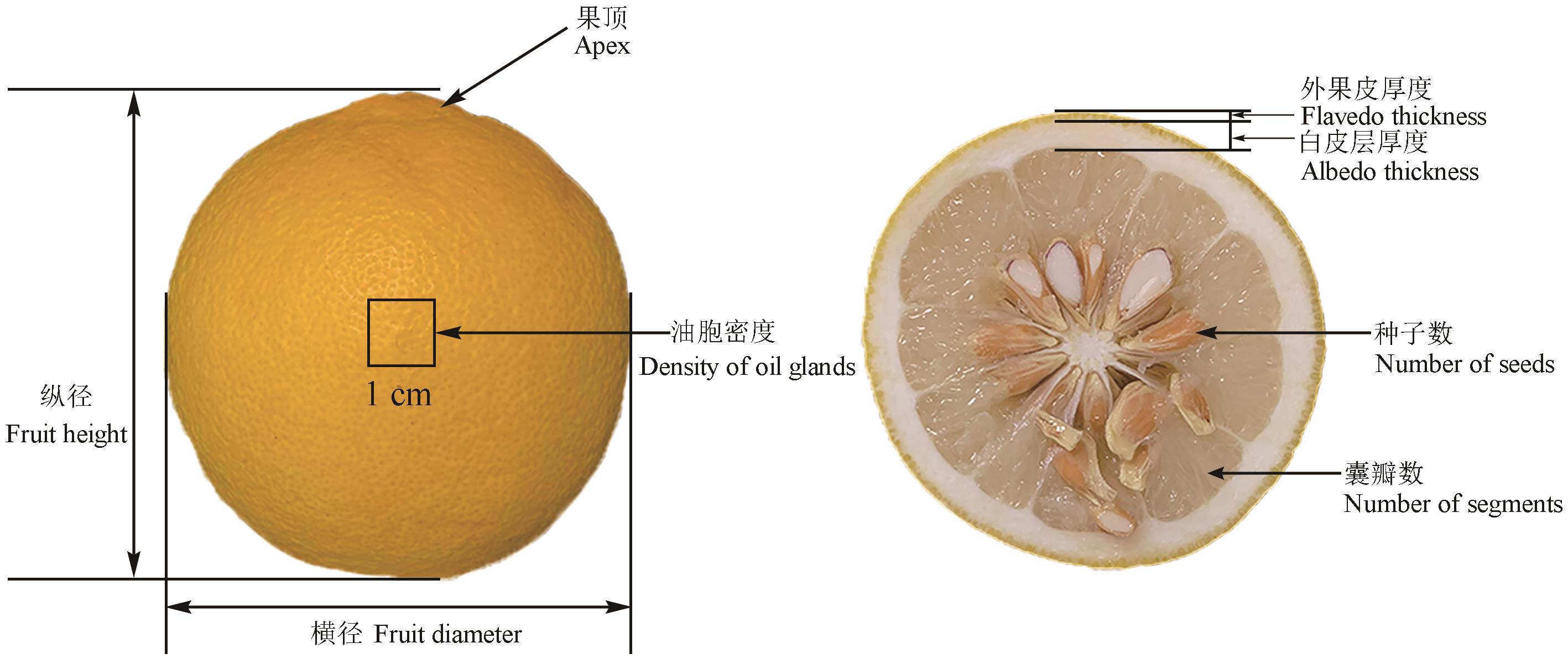
Fig. 1 Measurement diagram
| 引物名称 Primer name | 正向引物序列 Forward primer (5′‒3′) | 反向引物序列 Reverse primer (5′‒3′) | 退火温度 Tm (℃) |
|---|---|---|---|
| Cs2 | TCCACAAGGAGAAGAAACGG | GCGTCTTTACTGTTACCGGG | 56 |
| Cs3 | GTTGCGCAGTTATTCTCAAA | CCGACCACTTTTACCCACTG | 54 |
| Cs6 | AGGTCTACATTGGCATTGTC | ACATGCAGTGCTATAATGAATG | 52 |
| Cs9 | TAAAAACCAACGTCCCCTCA | CGGGCGAGGTAGAAGTAATG | 54 |
| Cs11 | CGCAAATGACTTCCCAGAAT | GCTCCCTCCGATTCTCTCTC | 52 |
| Cs13 | CACGCAGCTTGAGTTTGAAG | GTGCCGTTTAGGGTTTTCCT | 55 |
| Cs14 | CAGGCAGTAACCTCCCAGAC | AGCGAAAGCTAATGATGGTG | 54 |
| Cs15 | CGGGCTAGGCTGAGAGATA | TTCTTTGGAGCCGAACAACT | 52 |
| Cs20 | AGTGAACTGTCCATTGGATTTTCG | GTGTTGAATCCCGACCTTCTACC | 54 |
| Cs21 | GCAGCGCAACAACATAACTA | GGCCAATAGCTTCCATTCA | 52 |
Table 2 Information of primers
| 引物名称 Primer name | 正向引物序列 Forward primer (5′‒3′) | 反向引物序列 Reverse primer (5′‒3′) | 退火温度 Tm (℃) |
|---|---|---|---|
| Cs2 | TCCACAAGGAGAAGAAACGG | GCGTCTTTACTGTTACCGGG | 56 |
| Cs3 | GTTGCGCAGTTATTCTCAAA | CCGACCACTTTTACCCACTG | 54 |
| Cs6 | AGGTCTACATTGGCATTGTC | ACATGCAGTGCTATAATGAATG | 52 |
| Cs9 | TAAAAACCAACGTCCCCTCA | CGGGCGAGGTAGAAGTAATG | 54 |
| Cs11 | CGCAAATGACTTCCCAGAAT | GCTCCCTCCGATTCTCTCTC | 52 |
| Cs13 | CACGCAGCTTGAGTTTGAAG | GTGCCGTTTAGGGTTTTCCT | 55 |
| Cs14 | CAGGCAGTAACCTCCCAGAC | AGCGAAAGCTAATGATGGTG | 54 |
| Cs15 | CGGGCTAGGCTGAGAGATA | TTCTTTGGAGCCGAACAACT | 52 |
| Cs20 | AGTGAACTGTCCATTGGATTTTCG | GTGTTGAATCCCGACCTTCTACC | 54 |
| Cs21 | GCAGCGCAACAACATAACTA | GGCCAATAGCTTCCATTCA | 52 |
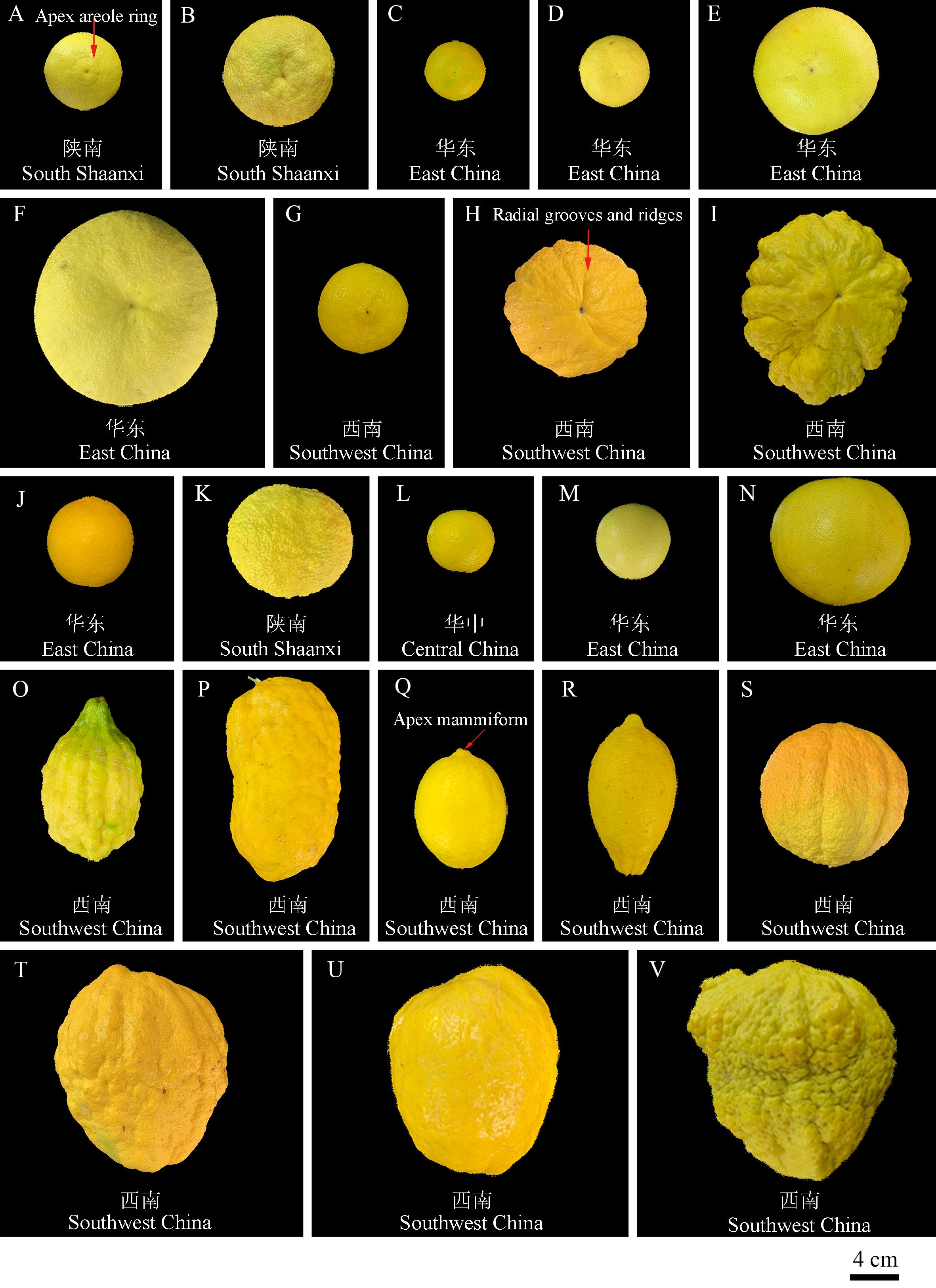
Fig. 2 Phenotypic differences of citri fructus fruit from different regions
| 质量性状 Quality trait | 分级及频率 Classification and frequency (%) | Shannon-Wiener指数 Shannon-Wiener index H | Simpson指数 Simpson index D | |||||
|---|---|---|---|---|---|---|---|---|
| 1 | 2 | 3 | 4 | 5 | 6 | |||
| 平滑度 Peel smoothness | 30.0 | 50.0 | 20.0 | - | - | - | 1.030 | 0.620 |
| 果实形状 Fruit shape | 35.0 | 37.5 | 17.5 | 10.0 | - | - | 1.277 | 0.696 |
| 果顶形状 Apex shape | 30.0 | 12.5 | 40.0 | 15.0 | 2.5 | - | 1.365 | 0.711 |
| 果顶印圈 Areole ring | 30.0 | 12.5 | 57.5 | - | - | - | 0.939 | 0.564 |
| 果基形状 Base shape | 10.0 | 5.0 | 65.0 | 5.0 | 12.5 | 2.5 | 1.161 | 0.546 |
| 外果皮颜色 Peel color | 65.0 | 12.5 | 12.5 | 2.5 | 7.5 | - | 1.084 | 0.540 |
| 白皮层颜色 Albedo color | 77.5 | 22.5 | - | - | - | - | 0.526 | 0.349 |
Table 3 Frequency distribution and diversity of 7 quality traits
| 质量性状 Quality trait | 分级及频率 Classification and frequency (%) | Shannon-Wiener指数 Shannon-Wiener index H | Simpson指数 Simpson index D | |||||
|---|---|---|---|---|---|---|---|---|
| 1 | 2 | 3 | 4 | 5 | 6 | |||
| 平滑度 Peel smoothness | 30.0 | 50.0 | 20.0 | - | - | - | 1.030 | 0.620 |
| 果实形状 Fruit shape | 35.0 | 37.5 | 17.5 | 10.0 | - | - | 1.277 | 0.696 |
| 果顶形状 Apex shape | 30.0 | 12.5 | 40.0 | 15.0 | 2.5 | - | 1.365 | 0.711 |
| 果顶印圈 Areole ring | 30.0 | 12.5 | 57.5 | - | - | - | 0.939 | 0.564 |
| 果基形状 Base shape | 10.0 | 5.0 | 65.0 | 5.0 | 12.5 | 2.5 | 1.161 | 0.546 |
| 外果皮颜色 Peel color | 65.0 | 12.5 | 12.5 | 2.5 | 7.5 | - | 1.084 | 0.540 |
| 白皮层颜色 Albedo color | 77.5 | 22.5 | - | - | - | - | 0.526 | 0.349 |
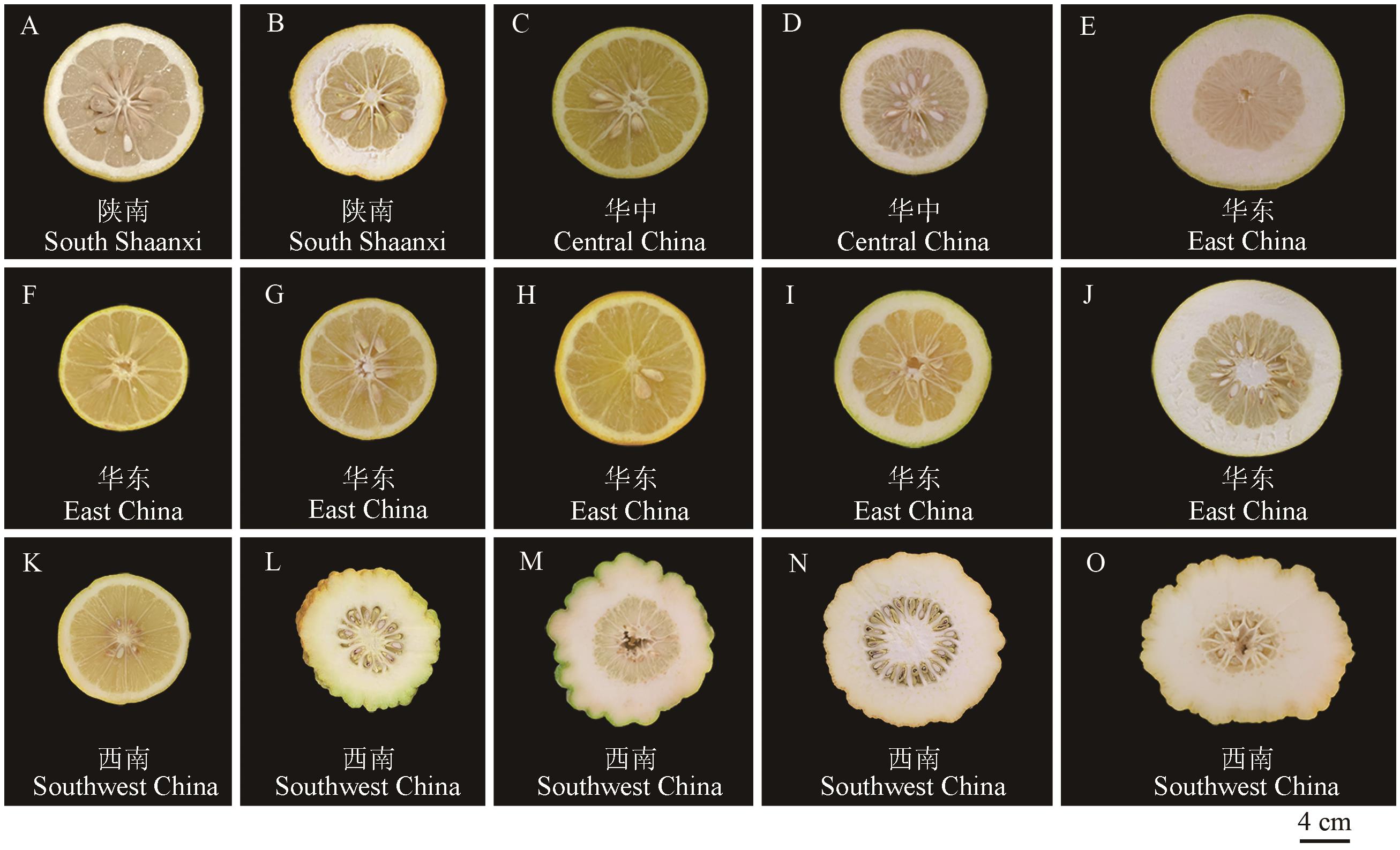
Fig. 3 Comparison of internal characteristics of citri fructus fruit from different regionsA: Xiangyuan; B: Zhique; C‒J: Xiangpao; K‒O: Juyuan
| 数量性状 Quantitative trait | 最大值 Max | 最小值 Min | 极差 Range | 平均值 Mean | 标准差 SD | 变异系数 CV (%) |
|---|---|---|---|---|---|---|
| 单果重 Single-fruit weight (g) | 2 239.28 | 93.51 | 2 145.77 | 464.32 | 469.74 | 99 |
| 纵径 Fruit height (cm) | 19.56 | 5.83 | 13.73 | 3.41 | 10.06 | 34 |
| 横径 Fruit diameter (cm) | 17.13 | 5.52 | 11.61 | 2.28 | 9.30 | 25 |
| 油胞密度 Density of oil glands (per cm²) | 108.00 | 8.00 | 100.33 | 15.77 | 22.97 | 69 |
| 外果皮厚度 Flavedo thickness (cm) | 0.34 | 0.09 | 0.26 | 0.07 | 0.20 | 35 |
| 白皮层厚度 Albedo thickness (cm) | 8.67 | 0.38 | 8.29 | 1.50 | 1.63 | 92 |
| 种子数 Number of seeds | 212.00 | 0.00 | 212.00 | 38.13 | 52.72 | 72 |
| 囊瓣数 Number of segments | 20.00 | 8.00 | 12.00 | 2.35 | 11.35 | 21 |
Table 4 Diversity analysis of eight quantitative traits
| 数量性状 Quantitative trait | 最大值 Max | 最小值 Min | 极差 Range | 平均值 Mean | 标准差 SD | 变异系数 CV (%) |
|---|---|---|---|---|---|---|
| 单果重 Single-fruit weight (g) | 2 239.28 | 93.51 | 2 145.77 | 464.32 | 469.74 | 99 |
| 纵径 Fruit height (cm) | 19.56 | 5.83 | 13.73 | 3.41 | 10.06 | 34 |
| 横径 Fruit diameter (cm) | 17.13 | 5.52 | 11.61 | 2.28 | 9.30 | 25 |
| 油胞密度 Density of oil glands (per cm²) | 108.00 | 8.00 | 100.33 | 15.77 | 22.97 | 69 |
| 外果皮厚度 Flavedo thickness (cm) | 0.34 | 0.09 | 0.26 | 0.07 | 0.20 | 35 |
| 白皮层厚度 Albedo thickness (cm) | 8.67 | 0.38 | 8.29 | 1.50 | 1.63 | 92 |
| 种子数 Number of seeds | 212.00 | 0.00 | 212.00 | 38.13 | 52.72 | 72 |
| 囊瓣数 Number of segments | 20.00 | 8.00 | 12.00 | 2.35 | 11.35 | 21 |
性状 Trait | 单果重 Fruit weight | 纵径 Fruit height | 横径 Fruit diamete | 油胞密度 Density of oil glands | 白皮层厚度 Albedo thickness | 外果皮厚度 Flavedo thickness | 种子数 Number of seeds | 囊瓣数 Number of segments |
|---|---|---|---|---|---|---|---|---|
| 单果重 Fruit weight | 1 | |||||||
| 纵径 Fruit height | 0.906** | 1 | ||||||
| 横径 Fruit diameter | 0.873** | 0.828** | 1 | |||||
| 油胞密度 Density of oil glands | -0.263 | -0.205 | -0.203 | 1 | ||||
| 白皮层厚度 Albedo thickness | 0.153 | 0.195 | 0.249 | -0.033 | 1 | |||
| 外果皮厚度 Flavedo thickness | 0.817** | 0.797** | 0.830** | -0.238 | 0.301 | 1 | ||
| 种子数 Number of seeds | 0.551** | 0.476** | 0.530** | -0.309 | -0.139 | 0.498** | 1 | |
| 囊瓣数 Number of segments | 0.567** | 0.507** | 0.604** | -0.166 | 0.232 | 0.760** | 0.335* | 1 |
Table 5 Correlation analysis of quantitative traits
性状 Trait | 单果重 Fruit weight | 纵径 Fruit height | 横径 Fruit diamete | 油胞密度 Density of oil glands | 白皮层厚度 Albedo thickness | 外果皮厚度 Flavedo thickness | 种子数 Number of seeds | 囊瓣数 Number of segments |
|---|---|---|---|---|---|---|---|---|
| 单果重 Fruit weight | 1 | |||||||
| 纵径 Fruit height | 0.906** | 1 | ||||||
| 横径 Fruit diameter | 0.873** | 0.828** | 1 | |||||
| 油胞密度 Density of oil glands | -0.263 | -0.205 | -0.203 | 1 | ||||
| 白皮层厚度 Albedo thickness | 0.153 | 0.195 | 0.249 | -0.033 | 1 | |||
| 外果皮厚度 Flavedo thickness | 0.817** | 0.797** | 0.830** | -0.238 | 0.301 | 1 | ||
| 种子数 Number of seeds | 0.551** | 0.476** | 0.530** | -0.309 | -0.139 | 0.498** | 1 | |
| 囊瓣数 Number of segments | 0.567** | 0.507** | 0.604** | -0.166 | 0.232 | 0.760** | 0.335* | 1 |
地理生态因子 Geographical ecological factors | 单果重 Fruit weight | 纵径 Fruit height | 横径 Fruit diamete | 油胞密度 Density of oil glands | 白皮层厚度 Albedo thickness | 外果皮厚度 Flavedo thickness | 种子数 Number of seeds | 囊瓣数 Number of segments |
|---|---|---|---|---|---|---|---|---|
| 纬度 Latitude | -0.037 | 0.117 | 0.093 | -0.158 | -0.051 | -0.023 | -0.158 | -0.004 |
| 经度 Longitude | -0.306 | -0.424** | -0.146 | 0.094 | -0.295 | -0.329* | -0.107 | -0.413** |
| 海拔 Altitude | 0.341* | 0.417** | 0.172 | -0.121 | 0.144 | 0.285 | 0.190 | 0.371* |
Table 6 Correlation between the quantitative traits and geographical ecological factors
地理生态因子 Geographical ecological factors | 单果重 Fruit weight | 纵径 Fruit height | 横径 Fruit diamete | 油胞密度 Density of oil glands | 白皮层厚度 Albedo thickness | 外果皮厚度 Flavedo thickness | 种子数 Number of seeds | 囊瓣数 Number of segments |
|---|---|---|---|---|---|---|---|---|
| 纬度 Latitude | -0.037 | 0.117 | 0.093 | -0.158 | -0.051 | -0.023 | -0.158 | -0.004 |
| 经度 Longitude | -0.306 | -0.424** | -0.146 | 0.094 | -0.295 | -0.329* | -0.107 | -0.413** |
| 海拔 Altitude | 0.341* | 0.417** | 0.172 | -0.121 | 0.144 | 0.285 | 0.190 | 0.371* |
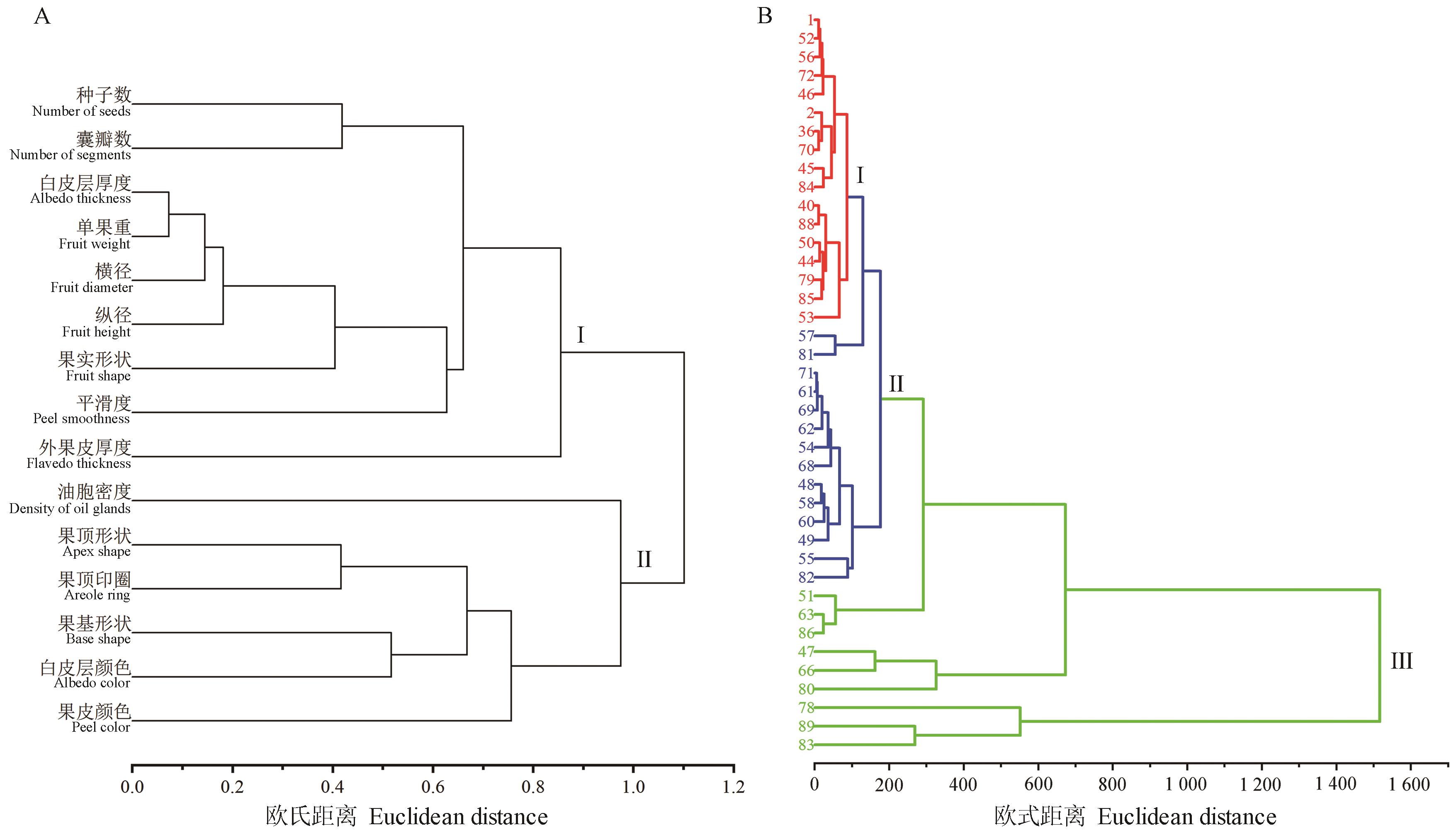
Fig. 4 Cluster analysis of phenotypic characteristics of citri fructus fruit in different regionsA: R clustering analysis of 15 phenotypic traits. B: Q clustering analysis of citri fructus
性状 Trait | 成分1 PC1 | 成分2 PC2 | 成分3 PC3 |
|---|---|---|---|
| 纵径 Fruit height | 0.875 | -0.240 | 0.135 |
| 横径 Fruit diameter | 0.930 | -0.058 | 0.106 |
| 白皮层厚度 Albedo thickness | 0.915 | -0.098 | 0.274 |
| 外果皮厚度 Flavedo thickness | 0.225 | -0.674 | -0.458 |
| 囊瓣数 Number of segments | 0.638 | 0.447 | -0.176 |
| 种子数 Number of seeds | 0.518 | 0.690 | -0.327 |
| 油胞密度 Density of oil glands | -0.362 | 0.109 | 0.746 |
| 单果重 Fruit weight | 0.931 | -0.105 | 0.201 |
| 特征值 Eigenvalue | 4.191 | 1.224 | 1.049 |
| 贡献率 Contribution rate (%) | 52.393 | 15.304 | 13.111 |
| 累计贡献率 Accumulated contribution rate (%) | 52.393 | 67.698 | 80.809 |
Table 7 Principal component analysis based on 8 quantitative traits
性状 Trait | 成分1 PC1 | 成分2 PC2 | 成分3 PC3 |
|---|---|---|---|
| 纵径 Fruit height | 0.875 | -0.240 | 0.135 |
| 横径 Fruit diameter | 0.930 | -0.058 | 0.106 |
| 白皮层厚度 Albedo thickness | 0.915 | -0.098 | 0.274 |
| 外果皮厚度 Flavedo thickness | 0.225 | -0.674 | -0.458 |
| 囊瓣数 Number of segments | 0.638 | 0.447 | -0.176 |
| 种子数 Number of seeds | 0.518 | 0.690 | -0.327 |
| 油胞密度 Density of oil glands | -0.362 | 0.109 | 0.746 |
| 单果重 Fruit weight | 0.931 | -0.105 | 0.201 |
| 特征值 Eigenvalue | 4.191 | 1.224 | 1.049 |
| 贡献率 Contribution rate (%) | 52.393 | 15.304 | 13.111 |
| 累计贡献率 Accumulated contribution rate (%) | 52.393 | 67.698 | 80.809 |

Fig. 5 Electrophoretogram amplified by Cs11 primer in 90 materials
| 引物Primer name | 条带数 Number of bands | 等位基因数 Number of alleles (Na) | 有效等位基因数 Number of effective alleles (Ne) | Shannon’s 多样性指数 Shannon’s diversity index (I) | 观察杂合度 Observed heterozygosity (Ho) | 期望杂合度 Expected heterozygosity (He) |
|---|---|---|---|---|---|---|
| Cs2 | 17 | 1.882 | 1.301 | 0.277 | 0.882 | 0.150 |
| Cs3 | 16 | 1.750 | 1.282 | 0.281 | 0.750 | 0.160 |
| Cs6 | 17 | 1.941 | 1.443 | 0.388 | 0.941 | 0.260 |
| Cs9 | 21 | 2.000 | 1.451 | 0.443 | 1.000 | 0.258 |
| Cs11 | 22 | 1.909 | 1.373 | 0.382 | 0.909 | 0.258 |
| Cs13 | 16 | 1.556 | 1.212 | 0.208 | 0.556 | 0.129 |
| Cs14 | 17 | 1.765 | 1.408 | 0.344 | 0.765 | 0.226 |
| Cs15 | 19 | 1.947 | 1.346 | 0.339 | 0.947 | 0.223 |
| Cs20 | 12 | 1.750 | 1.384 | 0.346 | 0.667 | 0.227 |
| Cs21 | 11 | 1.818 | 1.337 | 0.300 | 0.818 | 0.210 |
| 均值 Mean | 16.8 | 1.832 | 1.354 | 0.331 | 0.824 | 0.210 |
Table 8 Genetic diversity indexes in 10 pairs of SSR primers
| 引物Primer name | 条带数 Number of bands | 等位基因数 Number of alleles (Na) | 有效等位基因数 Number of effective alleles (Ne) | Shannon’s 多样性指数 Shannon’s diversity index (I) | 观察杂合度 Observed heterozygosity (Ho) | 期望杂合度 Expected heterozygosity (He) |
|---|---|---|---|---|---|---|
| Cs2 | 17 | 1.882 | 1.301 | 0.277 | 0.882 | 0.150 |
| Cs3 | 16 | 1.750 | 1.282 | 0.281 | 0.750 | 0.160 |
| Cs6 | 17 | 1.941 | 1.443 | 0.388 | 0.941 | 0.260 |
| Cs9 | 21 | 2.000 | 1.451 | 0.443 | 1.000 | 0.258 |
| Cs11 | 22 | 1.909 | 1.373 | 0.382 | 0.909 | 0.258 |
| Cs13 | 16 | 1.556 | 1.212 | 0.208 | 0.556 | 0.129 |
| Cs14 | 17 | 1.765 | 1.408 | 0.344 | 0.765 | 0.226 |
| Cs15 | 19 | 1.947 | 1.346 | 0.339 | 0.947 | 0.223 |
| Cs20 | 12 | 1.750 | 1.384 | 0.346 | 0.667 | 0.227 |
| Cs21 | 11 | 1.818 | 1.337 | 0.300 | 0.818 | 0.210 |
| 均值 Mean | 16.8 | 1.832 | 1.354 | 0.331 | 0.824 | 0.210 |
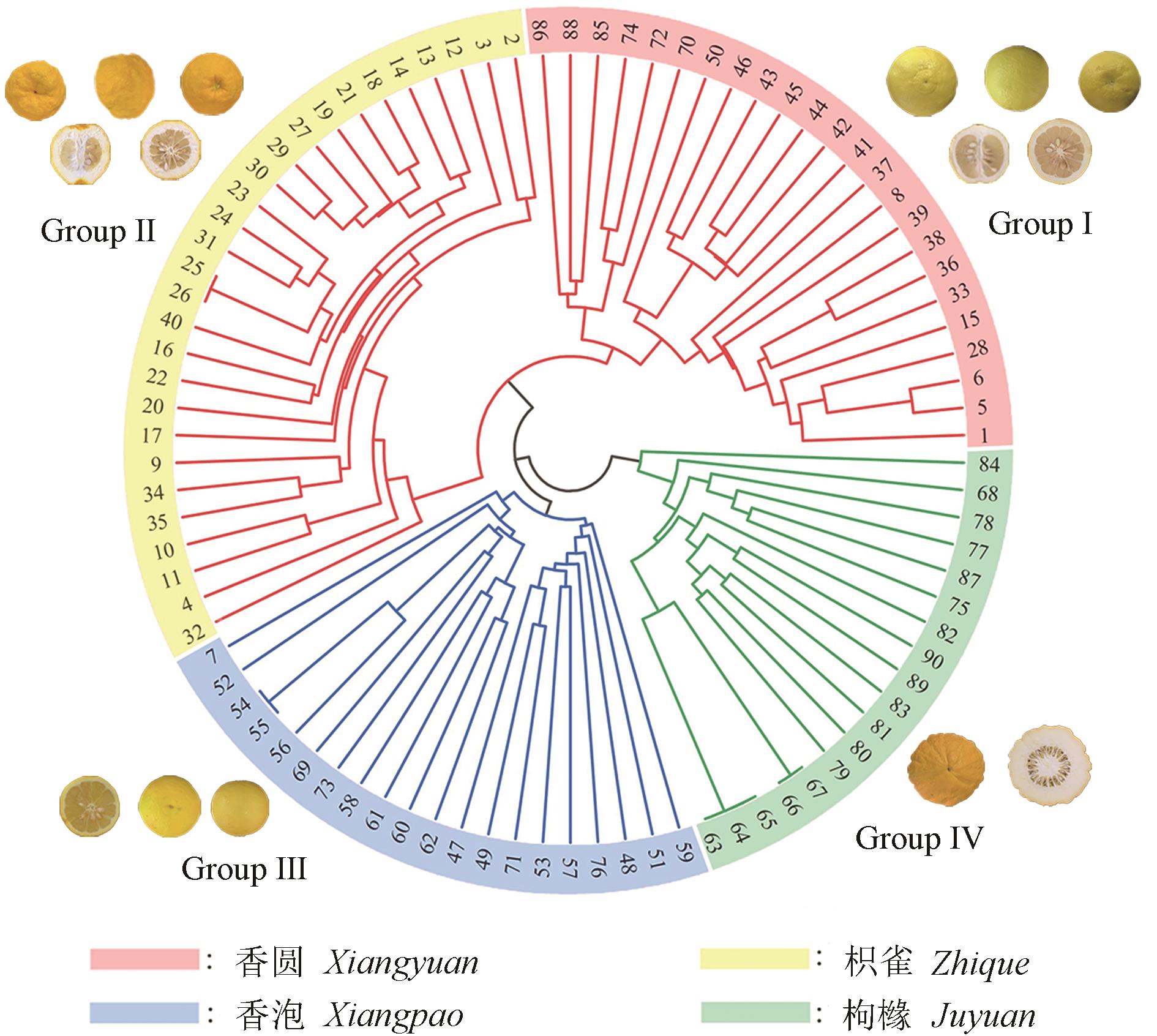
Fig. 6 UPGMA clustering analysis chart based on Nei genetic distance
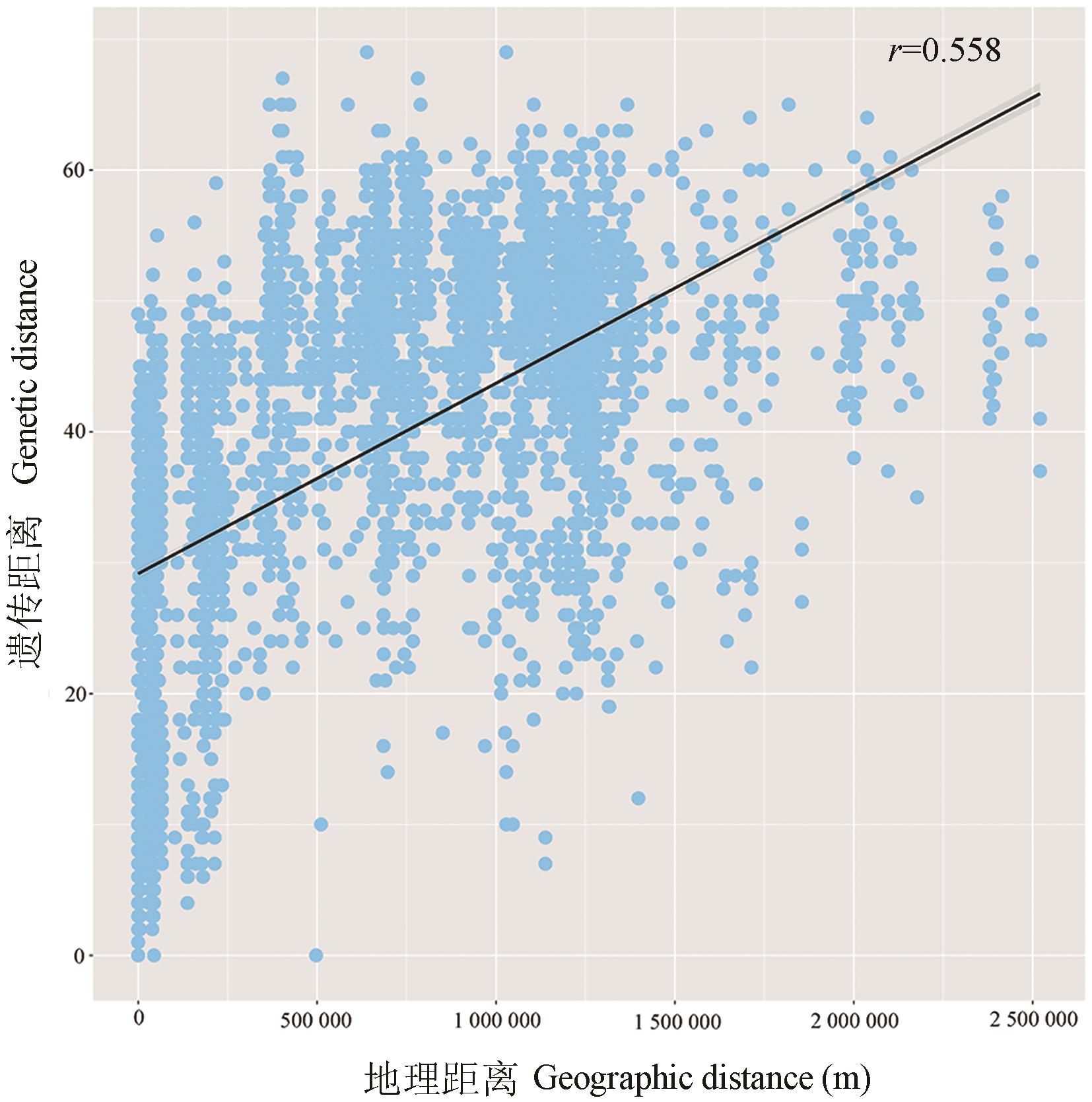
Fig. 7 Correlation test between genetic distance and geographical distance
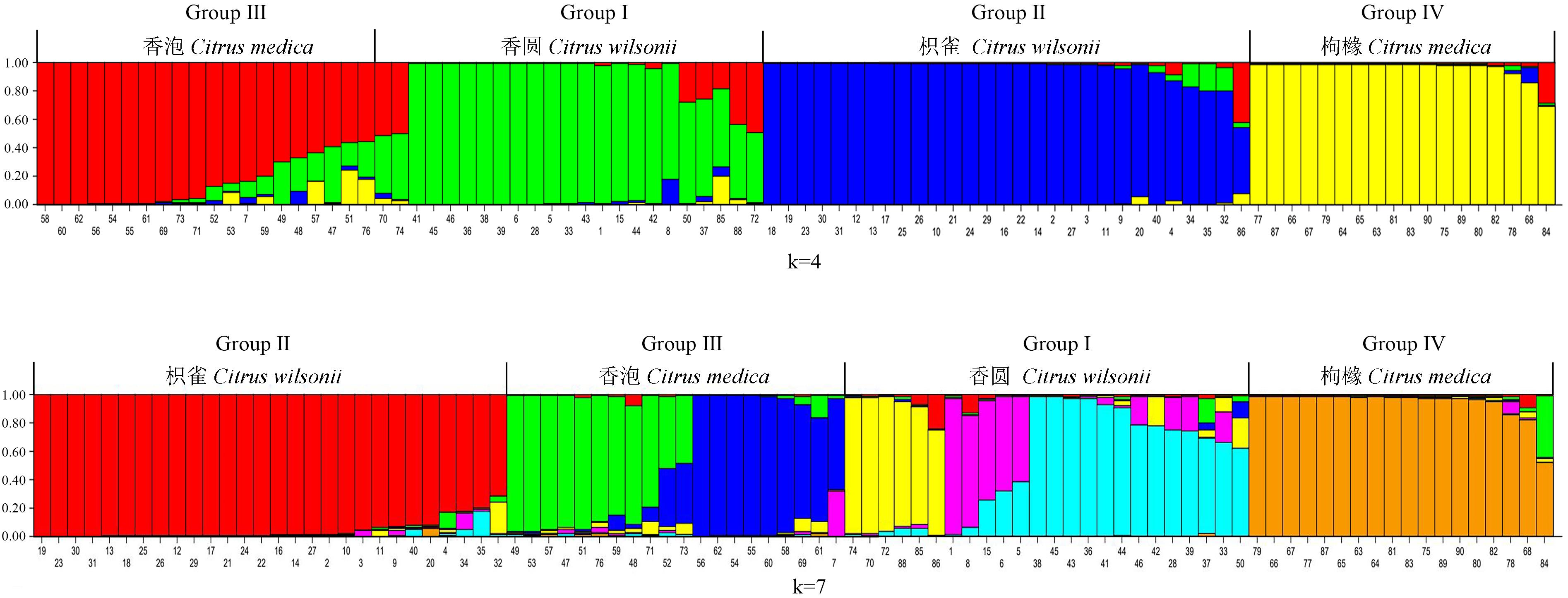
Fig. 8 Genetic structure of 90 samples at k=4 or 7
编号 Code | 样本大小Sample size | 等位基因数 Number of alleles (Na) | 有效等位基因数 Number of effective alleles (Ne) | Shannon’s 多样性指数 Shannon’s diversity index (I) | 观察杂合度 Observed heterozygosity (Ho) | 期望杂合度 Expected heterozygosity (He) | 多态位点百分比 Percentage of polymorphic loci (%) |
|---|---|---|---|---|---|---|---|
| 香圆 Xiangyuan | 23 | 1.458 | 1.250 | 0.218 | 0.391 | 0.127 | 39.11 |
| 枳雀 Zhique | 29 | 1.380 | 1.182 | 0.166 | 0.682 | 0.199 | 68.16 |
| 香泡 Xiangpao | 20 | 1.620 | 1.321 | 0.290 | 0.436 | 0.133 | 43.58 |
| 枸橼 Juyuan | 18 | 1.536 | 1.239 | 0.224 | 0.659 | 0.175 | 65.92 |
| 均值 Mean | - | 1.499 | 1.248 | 0.224 | 0.542 | 0.159 | 54.19 |
Table 9 Genetic diversity indexes of four groups
编号 Code | 样本大小Sample size | 等位基因数 Number of alleles (Na) | 有效等位基因数 Number of effective alleles (Ne) | Shannon’s 多样性指数 Shannon’s diversity index (I) | 观察杂合度 Observed heterozygosity (Ho) | 期望杂合度 Expected heterozygosity (He) | 多态位点百分比 Percentage of polymorphic loci (%) |
|---|---|---|---|---|---|---|---|
| 香圆 Xiangyuan | 23 | 1.458 | 1.250 | 0.218 | 0.391 | 0.127 | 39.11 |
| 枳雀 Zhique | 29 | 1.380 | 1.182 | 0.166 | 0.682 | 0.199 | 68.16 |
| 香泡 Xiangpao | 20 | 1.620 | 1.321 | 0.290 | 0.436 | 0.133 | 43.58 |
| 枸橼 Juyuan | 18 | 1.536 | 1.239 | 0.224 | 0.659 | 0.175 | 65.92 |
| 均值 Mean | - | 1.499 | 1.248 | 0.224 | 0.542 | 0.159 | 54.19 |
| 变异来源Source of variance | 自由度Defree of freedom | 总方差Sum of squares deviation | 均方差Mean squares deviation | 变异组分Variance component | 百分比Percent (%) |
|---|---|---|---|---|---|
| 群体间 Among populations | 3 | 443.557 | 147.852 | 5.927 | 27 |
| 群体内 Within populations | 86 | 1 377.476 | 16.017 | 16.017 | 73 |
| 总体 Total | 89 | 1 821.033 | - | 21.944 | 100 |
Table 10 AMOVA analysis from different populations
| 变异来源Source of variance | 自由度Defree of freedom | 总方差Sum of squares deviation | 均方差Mean squares deviation | 变异组分Variance component | 百分比Percent (%) |
|---|---|---|---|---|---|
| 群体间 Among populations | 3 | 443.557 | 147.852 | 5.927 | 27 |
| 群体内 Within populations | 86 | 1 377.476 | 16.017 | 16.017 | 73 |
| 总体 Total | 89 | 1 821.033 | - | 21.944 | 100 |
| ID | 香圆 C. wilsonii | 枳雀 C. wilsonii | 香泡 C. medica | 枸橼 C. medica |
|---|---|---|---|---|
| 香圆 Xiangyuan | - | 0.919 | 0.942 | 0.881 |
| 枳雀 Zhique | 0.084 | - | 0.879 | 0.845 |
| 香泡 Xiangpao | 0.059 | 0.130 | - | 0.918 |
| 枸橼 Juyuan | 0.127 | 0.169 | 0.086 | - |
Table 11 Genetic identities (above diagonal) and genetic distance between populations
| ID | 香圆 C. wilsonii | 枳雀 C. wilsonii | 香泡 C. medica | 枸橼 C. medica |
|---|---|---|---|---|
| 香圆 Xiangyuan | - | 0.919 | 0.942 | 0.881 |
| 枳雀 Zhique | 0.084 | - | 0.879 | 0.845 |
| 香泡 Xiangpao | 0.059 | 0.130 | - | 0.918 |
| 枸橼 Juyuan | 0.127 | 0.169 | 0.086 | - |
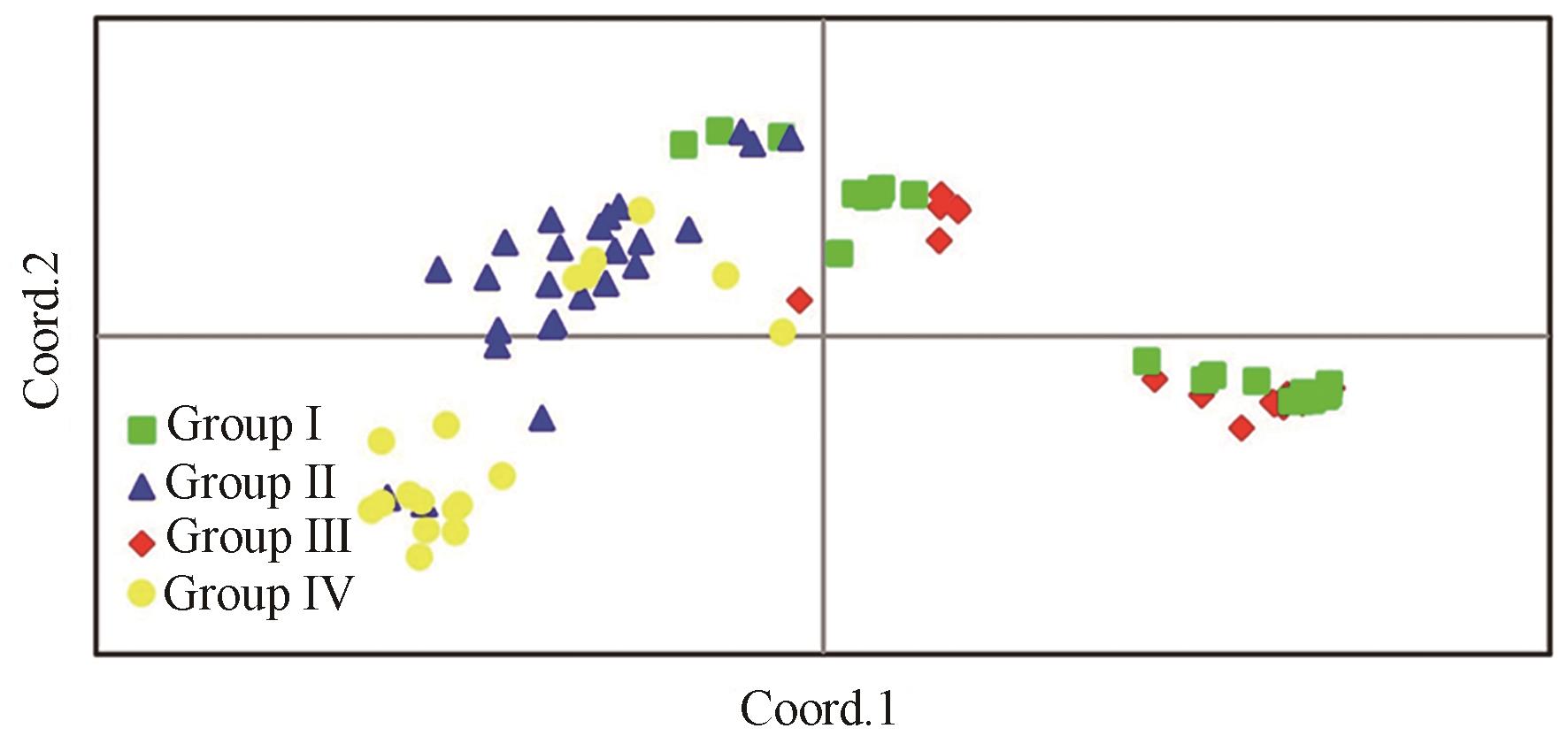
Fig. 9 Principal coordinate analysis diagram (PCoA)Group Ⅰ: Xiangyuan; Group Ⅱ: Zhique; Group Ⅲ: Xiangpao; Group Ⅳ: Juyuan
| [1] | 国家药典委员会. 中华人民共和国药典-一部: 2025年版 [M]. 北京: 中国医药科技出版社, 2025. |
| People’s republic of China (PRC) pharmacopoeia-part I: 2025 edition [M]. Beijing: China Medical Science Press, 2025. | |
| [2] | 严辉, 高明亮, 查玉玲, 等. 香橼化学成分和药理作用研究进展及其质量标志物预测分析 [J]. 中国现代应用药学, 2022, 39(7): 976-988. |
| Yan H, Gao ML, Zha YL, et al. Research progress on chemical components and pharmacological effects of citri fructus and predictive analysis on its quality marker [J]. Chin J Mod Appl Pharm, 2022, 39(7): 976-988. | |
| [3] | Zhao P, Duan L, Guo L, et al. Chemical and biological comparison of the fruit extracts of Citrus wilsonii Tanaka and Citrus medica L. [J]. Food Chem, 2015, 173: 54-60. |
| [4] | Conforti F, Statti GA, Tundis R, et al. In vitro activities of Citrus medica L. cv. Diamante (Diamante citron) relevant to treatment of diabetes and Alzheimer’s disease [J]. Phytother Res, 2007, 21(5): 427-433. |
| [5] | 杨辉, 杨培君, 李会宁. 中药材香圆挥发油成分GC-MS分析与比较 [J]. 食品与生物技术学报, 2010, 29(2): 219-229. |
| Yang H, Yang PJ, Li HN. Comparison of volatile oils from both fructus aurantii and fructus aurantii immaturus of Citrus wilsonii in Shaanxi by GC-MS [J]. J Food Sci Biotechnol, 2010, 29(2): 219-229. | |
| [6] | Chhikara N, Kour R, Jaglan S, et al. Citrus medica: nutritional, phytochemical composition and health benefits - a review [J]. Food Funct, 2018, 9(4): 1978-1992. |
| [7] | 任丽, 张余, 邓姗, 等. 基于形态标记的新育成辣椒品种特性分析 [J]. 植物遗传资源学报, 2023, 24(6): 1676-1689. |
| Ren L, Zhang Y, Deng S, et al. Characterization of new Capsicum spp. varieties based on morphological markers [J]. J Plant Genet Resour, 2023, 24(6): 1676-1689. | |
| [8] | 郭方其, 吕萍, 吴超, 等. 基于表型性状的切花多头菊种质资源遗传多样性分析 [J]. 分子植物育种, 2020, 18(18): 6205-6215. |
| Guo FQ, Lü P, Wu C, et al. Phenotypic diversity analysis of cutting flower Chrysanthemum germplasm resources based on phenotypic traits [J]. Mol Plant Breed, 2020, 18(18): 6205-6215. | |
| [9] | Laosatit K, Amkul K, Chankaew S, et al. Molecular genetic diversity of winged bean gene pool in Thailand assessed by SSR markers [J]. Hortic Plant J, 2022, 8(1): 81-88. |
| [10] | Ramadugu C, Keremane ML, Hu XL, et al. Genetic analysis of citron (Citrus medica L.) using simple sequence repeats and single nucleotide polymorphisms [J]. Sci Hortic, 2015, 195: 124-137. |
| [11] | Yang XM, Li H, Liang M, et al. Genetic diversity and phylogenetic relationships of citron (Citrus medica L.) and its relatives in southwest China [J]. Tree Genet Genomes, 2015, 11(6): 129. |
| [12] | 刘航秀, 冯迪, 龙春瑞, 等. 枸橼药用植物果实变异及地理分布研究 [J]. 中国中药杂志, 2021, 46(23): 6289-6293. |
| Liu HX, Feng D, Long CR, et al. Fruit variation and geographical distribution of citron [J]. China J Chin Mater Med, 2021, 46(23): 6289-6293. | |
| [13] | 徐静, 谭李梅, 符红艳, 等. 利用分子标记对14份枸橼种质进行多样性分析 [J]. 分子植物育种, 2021, 19(14): 4726-4737. |
| Xu J, Tan LM, Fu HY, et al. Genetic diversity analysis of 14 citron genotypes based on molecular markers [J]. Mol Plant Breed, 2021, 19(14): 4726-4737. | |
| [14] | Maurya A, Mishra BP, Mohan R, et al. Analysis of genetic diversity and environmental associations of wild citron (Citrus medica L.) in northeast India [J]. Sci Hortic, 2024, 338: 113690. |
| [15] | 魏丽娜, 胡佳, 敖义俊, 等. 陕南香圆资源调查与产业开发现状研究 [J]. 中国南方果树, 2024, 53(6): 15-23. |
| Wei LN, Hu J, Ao YJ, et al. Investigation of Citrus wilsonii resources and its industrial development in Southern Shaanxi province [J]. South China Fruits, 2024, 53(6): 15-23. | |
| [16] | 孙旺, 蒋景龙, 胡选萍, 等. 濒危植物秦岭石蝴蝶的SCoT遗传多样性分析 [J]. 西北植物学报, 2020, 40(3): 425-431. |
| Sun W, Jiang JL, Hu XP, et al. Genetic diversity analysis of endangered plant Petrocosmea qinlingensis based on SCoT [J]. Acta Bot Boreali Occidentalia Sin, 2020, 40(3): 425-431. | |
| [17] | Peakall R, Smouse PE. GenAlEx 6.5: genetic analysis in Excel. Population genetic software for teaching and research‒an update [J]. Bioinformatics, 2012, 28(19): 2537-2539. |
| [18] | Earl DA, VonHoldt BM. STRUCTURE HARVESTER: a website and program for visualizing STRUCTURE output and implementing the Evanno method [J]. Conserv Genet Resour, 2012, 4(2): 359-361. |
| [19] | 何庆海, 杨少宗, 李因刚, 等. 枫香树种群种子与果实表型性状变异分析 [J]. 植物生态学报, 2018, 42(7): 752-763. |
| He QH, Yang SZ, Li YG, et al. Phenotypic variations in seed and fruit traits of Liquidambar formosana populations [J]. Chin J Plant Ecol, 2018, 42(7): 752-763. | |
| [20] | Sivakumar J, Sridhar Reddy M, Sergeant K, et al. Principal component analysis-assisted screening and selection of salt-tolerant tomato genotypes [J]. Plant Physiol Rep, 2023, 28(2): 272-288. |
| [21] | Thakur N, Dogra BS, Kaur J, et al. Study on genetic variability and heritability in cherry tomato (Solanum lycopersicum var. cerasiforme) for yield and quality traits [J]. Agric Res J, 2022, 59(6): 1026-1033. |
| [22] | Deviona, Syukur M, Zuhry E, et al. Principal component and cluster analyses of 20 genotypes of chilli (Capsicum sp.) planted on peatlands [J]. IOP Conf Ser: Earth Environ Sci, 2023, 1228(1): 12003. |
| [23] | Bihon W, Ognakossan KE, Tignegre JB, et al. Evaluation of different tomato (Solanum lycopersicum L.) entries and varieties for performance and adaptation in Mali, west Africa [J]. Horticulturae, 2022, 8(7): 579. |
| [24] | 翟彩娇, 葛礼姣, 程玉静, 等. 基于表型性状与SSR标记的冬瓜、节瓜种质资源遗传多样性分析 [J]. 中国农业科学, 2024, 57(17): 3440-3467. |
| Zhai CJ, Ge LJ, Cheng YJ, et al. Genetic diversity analysis of wax gourd and chieh-qua germplasm resources based on phenotypic traits and SSR markers [J]. Sci Agric Sin, 2024, 57(17): 3440-3467. | |
| [25] | 林存学, 杨晓华, 刘海荣. 东北寒地96份李种质资源表型性状遗传多样性分析 [J]. 园艺学报, 2020, 47(10): 1917-1929. |
| Lin CX, Yang XH, Liu HR. Genetic diversity analysis of 96 plum germplasm resources by phenotypic traits in northeast cold area [J]. Acta Hortic Sin, 2020, 47(10): 1917-1929. | |
| [26] | Li JW, Li H, Liu ZW, et al. Molecular markers in tea plant (Camellia sinensis): Applications to evolution, genetic identification, and molecular breeding [J]. Plant Physiol Biochem, 2023, 198: 107704. |
| [27] | Fu YR, Liu FL, Li S, et al. Genetic diversity of the wild Asian Lotus (Nelumbo nucifera) from Northern China [J]. Hortic Plant J, 2021, 7(5): 488-500. |
| [28] | 刘冬峰, 陈巍, 林绍生, 等. 基于SSR标记的浙江地方柚类种质资源遗传关系分析 [J]. 果树学报, 2017, 34(2): 166-174. |
| Liu DF, Chen W, Lin SS, et al. Analysis of genetic relationship of pummelo germplasms by SSR markers in Zhejiang province [J]. J Fruit Sci, 2017, 34(2): 166-174. | |
| [29] | Wang Y, Qi YH, He W, et al. Genetic diversity of pummelo (Citrus grandis osbeck) germplasms in Sichuan Basin inferred from SSR markers [C]//2018 International Conference on Biotechnology and Bioengineering: 8TH Icbb, Budapest, Hungary, 2019: 020004. |
| [30] | Hu Y, Tian L, Shi JW, et al. Genetic structure of cultivated Zanthoxylum species investigated with SSR markers [J]. Tree Genet Genomes, 2018, 14(6): 89. |
| [31] | Lu M, Zhang HS, An HM. Chloroplast DNA-based genetic variation of Rosa roxburghii in southwest China: phylogeography and conservation implications [J]. Hortic Plant J, 2021, 7(4): 286-294. |
| [32] | Liu QW, Song Y, Liu L, et al. Genetic diversity and population structure of pear (Pyrus spp.) collections revealed by a set of core genome-wide SSR markers [J]. Tree Genet Genomes, 2015, 11(6): 128. |
| [33] | Boris KV, Trifonova AA, Dubrovsky ML, et al. Genetic diversity of apple clonal rootstocks from the collection of the michurinsk state agrarian university based on SSR markers [J]. Plants, 2023, 12(16): 2991. |
| [34] | Özkan G, Haliloğlu K, Türkoğlu A, et al. Determining genetic diversity and population structure of common bean (Phaseolus vulgaris L.) landraces from türkiye using SSR markers [J]. Genes, 2022, 13(8): 1410. |
| [35] | 徐皓, 周天华, 张智强, 等. 基于SSR分子标记的延胡索遗传多样性研究 [J]. 西北植物学报, 2018, 38(6): 1032-1038. |
| Xu H, Zhou TH, Zhang ZQ, et al. Genetic diversity of Corydalis yanhusuo W.T.Wang based on SSR molecular markers [J]. Acta Bot Boreali Occidentalia Sin, 2018, 38(6): 1032-1038. |
| [1] | CHEN Jing-huan, FANG Guo-nan, ZHU Wen-hao, YE Guang-ji, SU Wang, HE Miao-miao, YANG Sheng-long, ZHOU Yun. Starch Characterization and Related Gene Expression Analysis of Potato Germplasm Resources [J]. Biotechnology Bulletin, 2026, 42(1): 170-183. |
| [2] | LU Yao, YUAN Ping-ping, JIN Xin, MAO Xiang-hong, FAN Xiang-bin, BAI Xiao-dong. Genetic Diversity Analysis and Fingerprinting of Wild Potato and Landraces Based on SSR Markers [J]. Biotechnology Bulletin, 2025, 41(9): 94-104. |
| [3] | PEI Hong-xia, WANG Lu-yao, LI Sheng-mei, GAO Jing-xia. Genetic Diversity of 220 Pepper Germplasm Resources Using SCoT, SRAP, and SSR Molecular Markers [J]. Biotechnology Bulletin, 2025, 41(8): 165-174. |
| [4] | DUAN Min-jie, LI Yi-fei, WANG Chun-ping, HUANG Ren-zhong, HUANG Qi-zhong, ZHANG Shi-cai. Association Analysis and Fingerprint Map Construction of Fruit Color Traits in Pepper via SSR Markers [J]. Biotechnology Bulletin, 2025, 41(7): 81-94. |
| [5] | DUAN Yong-hong, YANG Xin, YU Guan-qun, XIA Jun-jun, SONG Lu-shuai, BAI Xiao-dong, PENG Suo-tang. Genetic Diversity and Principal Component Analysis of 125 Potato Germplasm Resources [J]. Biotechnology Bulletin, 2025, 41(6): 130-143. |
| [6] | HAN Meng-qiao, WU Jiang, LI Li-hua, WANG Zhao-yi, DENG Xi, WEI Feng-jie, REN Min, SUN Yang-yang, LI Fu-xin. Establishment and Optimization of a Tobacco Chromosome Preparation System [J]. Biotechnology Bulletin, 2025, 41(3): 44-50. |
| [7] | YU Jing, YU Gui-shuang, SUN Hao-jie, JIANG Chun-jiao, YUAN Guang-di, YANG Zhen, WANG Zhi-wei, WANG Chao, WANG Chuan-tang. Affecting Factors and Relevant Marker Study on Peanut Seed Quality [J]. Biotechnology Bulletin, 2025, 41(2): 284-294. |
| [8] | HE Han, LIU Chuan-he, YU Meng-fan, YUAN Meng-ping, WEI Yue-rong, YANG Min, KUANG Rui-bin, ZHOU Chen-ping, WU Xia-ming, XU Ze. Development of Insertion-deletion Markers in Ananas comosus of Genome Based on Re-sequencing Data [J]. Biotechnology Bulletin, 2025, 41(2): 65-76. |
| [9] | SONG Ying-pei, WANG Can, ZHOU Hui-wen, KONG Ke-ke, XU Meng-ge, WANG Rui-kai. Analysis of Soybean Pod Dehiscence Habit Based on Whole Genome Association Analysis and Genetic Diversity [J]. Biotechnology Bulletin, 2025, 41(2): 97-106. |
| [10] | DU Yu-qing, JIANG Lu-yuan, WANG Yi-heng, WU Chen-wei, YANG Meng-lu, LIU Xu-sheng, WANG Xiao-jun, QIU De-you, FAN Wei, YANG Yan-fang. Genetic Diversity of Taxus chinensis var. mairei in Taihang Mountains Based on SSR Molecular Markers [J]. Biotechnology Bulletin, 2025, 41(12): 214-224. |
| [11] | MAO Xiang-hong, LU Yao, FAN Xiang-bin, DU Pei-bing, BAI Xiao-dong. Genetic Diversity Analysis of Potato Varieties Based on SSR Fluorescent Marker Capillary Electrophoresis and Construction of Molecular Identity Card [J]. Biotechnology Bulletin, 2024, 40(9): 131-140. |
| [12] | KONG Xiao-ping, CHEN Li-wen, LIU Si-si, YAN Xiang-ping. Genome-wide Association Study of Bolting Related Traits in Carrot [J]. Biotechnology Bulletin, 2024, 40(5): 120-130. |
| [13] | LI Si-qi, ZHANG Wen-chen, YANG Liu, FU Qing-xin, HONG Xin, ZHANG Hai-wang. Genetic Diversity Analysis and DNA Fingerprint Construction Based on SSR Markers for Xanthoceras sorbifolia [J]. Biotechnology Bulletin, 2024, 40(5): 74-83. |
| [14] | ZENG Hong-yun, XU Lin-bing, WU Yuan-li, HUANG Bing-zhi. Identification of Banana Hybrid and Selfing Offspring Based on Internal Transcribed Spacer(ITS)Sanger Sequencing [J]. Biotechnology Bulletin, 2024, 40(12): 53-60. |
| [15] | LI Qing, SHI Yu-he, ZHU Jue, LI Xiao-ling, HOU Chao-wen, TONG Qiao-zhen. Genetic Diversity Analysis and DNA Fingerprint Construction of Atractylodes macrocephala Germplasm Resources Based on SCoT Molecular Markers [J]. Biotechnology Bulletin, 2024, 40(11): 142-151. |
| Viewed | ||||||
|
Full text |
|
|||||
|
Abstract |
|
|||||
