







Biotechnology Bulletin ›› 2025, Vol. 41 ›› Issue (10): 110-120.doi: 10.13560/j.cnki.biotech.bull.1985.2025-0776
Previous Articles Next Articles
ZHANG Chun-hui1( ), JI Jing-fang1, CAO Jia-min1, MA Xi-xi1, LIU Wen-zhong1, JI Chun-li1, ZHANG Li-tao2(), LI Run-zhi1()
Received:2025-07-20
Online:2025-10-26
Published:2025-10-28
Contact:
ZHANG Li-tao, LI Run-zhi
E-mail:chunhuizhang90@163.com;zhanglitao666@163.com;rli2001@126.com
ZHANG Chun-hui, JI Jing-fang, CAO Jia-min, MA Xi-xi, LIU Wen-zhong, JI Chun-li, ZHANG Li-tao, LI Run-zhi. Effect of Photorespiration on Astaxanthin Accumulation in Haematococcus pluvialis Induced by Carbon Sources[J]. Biotechnology Bulletin, 2025, 41(10): 110-120.
处理组 Treatment | 基础培养基 Basal medium | 外接碳源 Carbon source supplementation(1 g/L) | 是否补充光呼吸抑制剂CM Absence or presence of photorespiration inhibitor CM(0.1 mmol/L) |
|---|---|---|---|
| CK | BG-11 | 无 | 否 |
| CM | BG-11 | 无 | 是 |
| A | BG-11 | 醋酸钠 | 否 |
| A+CM | BG-11 | 醋酸钠 | 是 |
| H | BG-11 | 碳酸氢钠 | 否 |
| H+CM | BG-11 | 碳酸氢钠 | 是 |
Table 1 Medium formula for each treatment group
处理组 Treatment | 基础培养基 Basal medium | 外接碳源 Carbon source supplementation(1 g/L) | 是否补充光呼吸抑制剂CM Absence or presence of photorespiration inhibitor CM(0.1 mmol/L) |
|---|---|---|---|
| CK | BG-11 | 无 | 否 |
| CM | BG-11 | 无 | 是 |
| A | BG-11 | 醋酸钠 | 否 |
| A+CM | BG-11 | 醋酸钠 | 是 |
| H | BG-11 | 碳酸氢钠 | 否 |
| H+CM | BG-11 | 碳酸氢钠 | 是 |
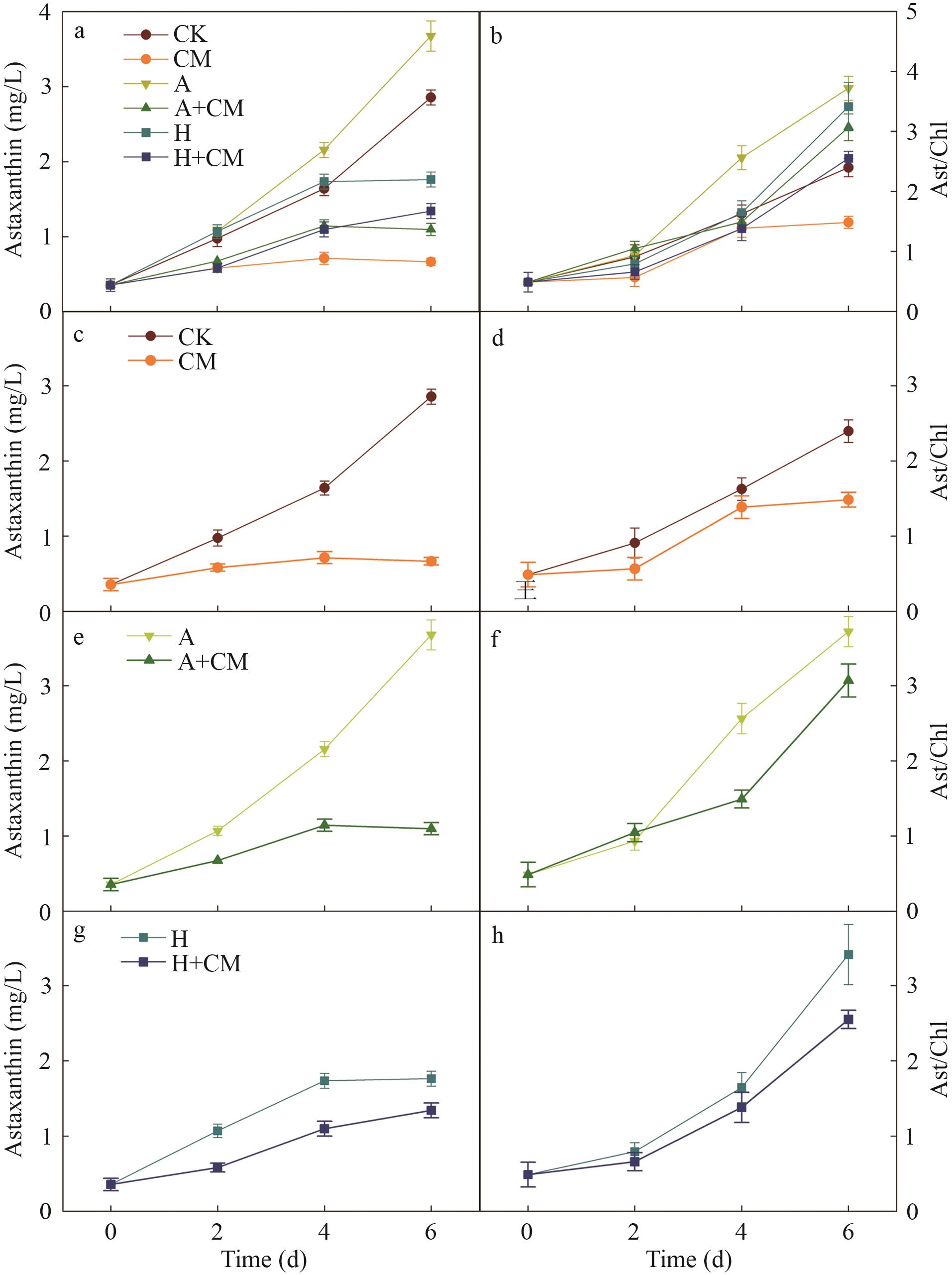
Fig. 1 Effects of photorespiration inhibitor CM on the astaxanthin content and astaxanthin/chlorophyll ratio in H. pluvialis cultured with different carbon sourcesa, c, e, g: Astaxanthin content; b, d, f, h: Astaxanthin/chlorophyll ratio

Fig. 2 Effects of photorespiration inhibitor CM on dry weights (a) and total photosynthetic rates (b) in H. pluvialis cultured with different carbon sources
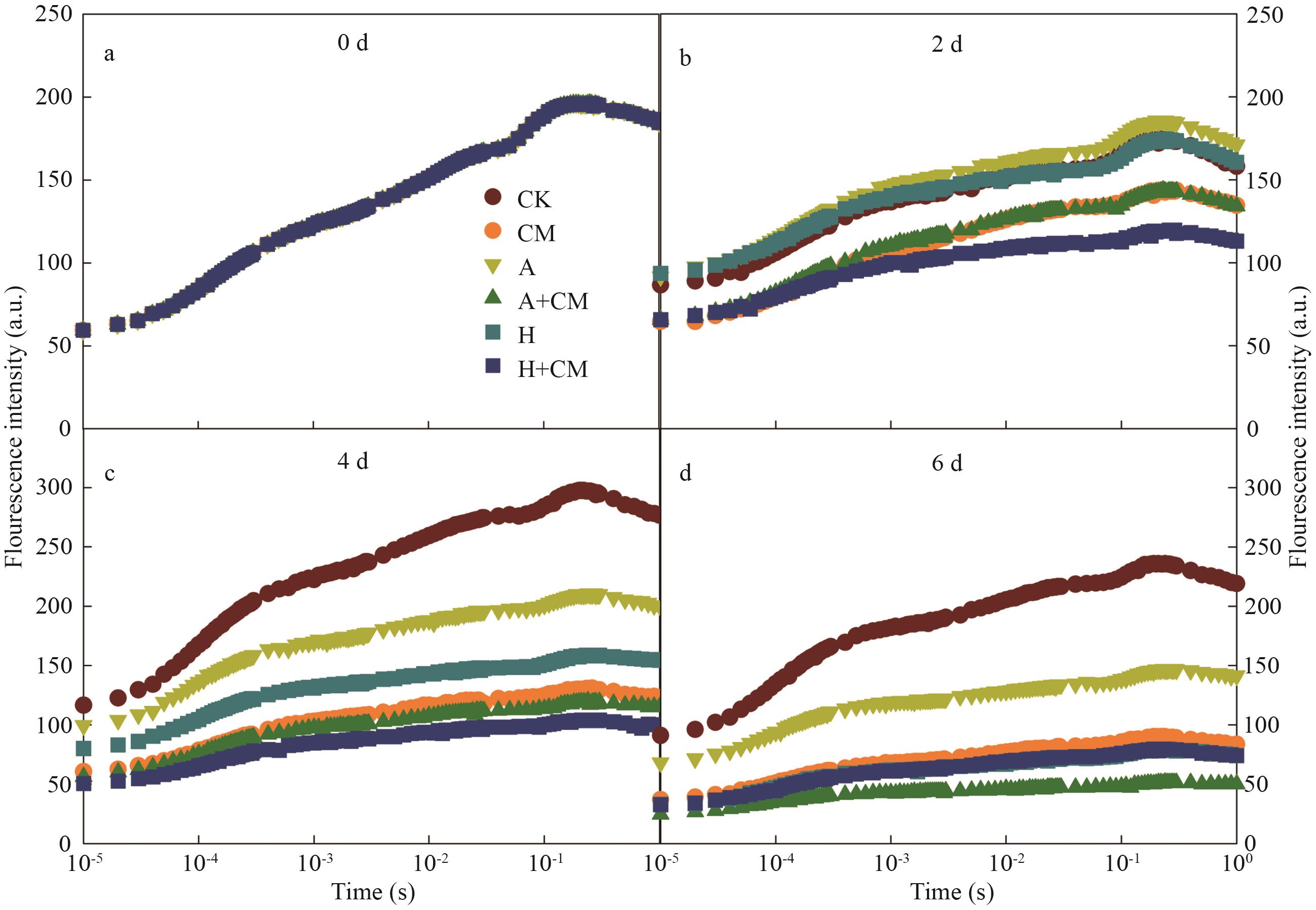
Fig. 3 Effects of photorespiration inhibitor CM on the chlorophyll a fluorescence (OJIP) transients in H. pluvialis cultured with different carbon sources
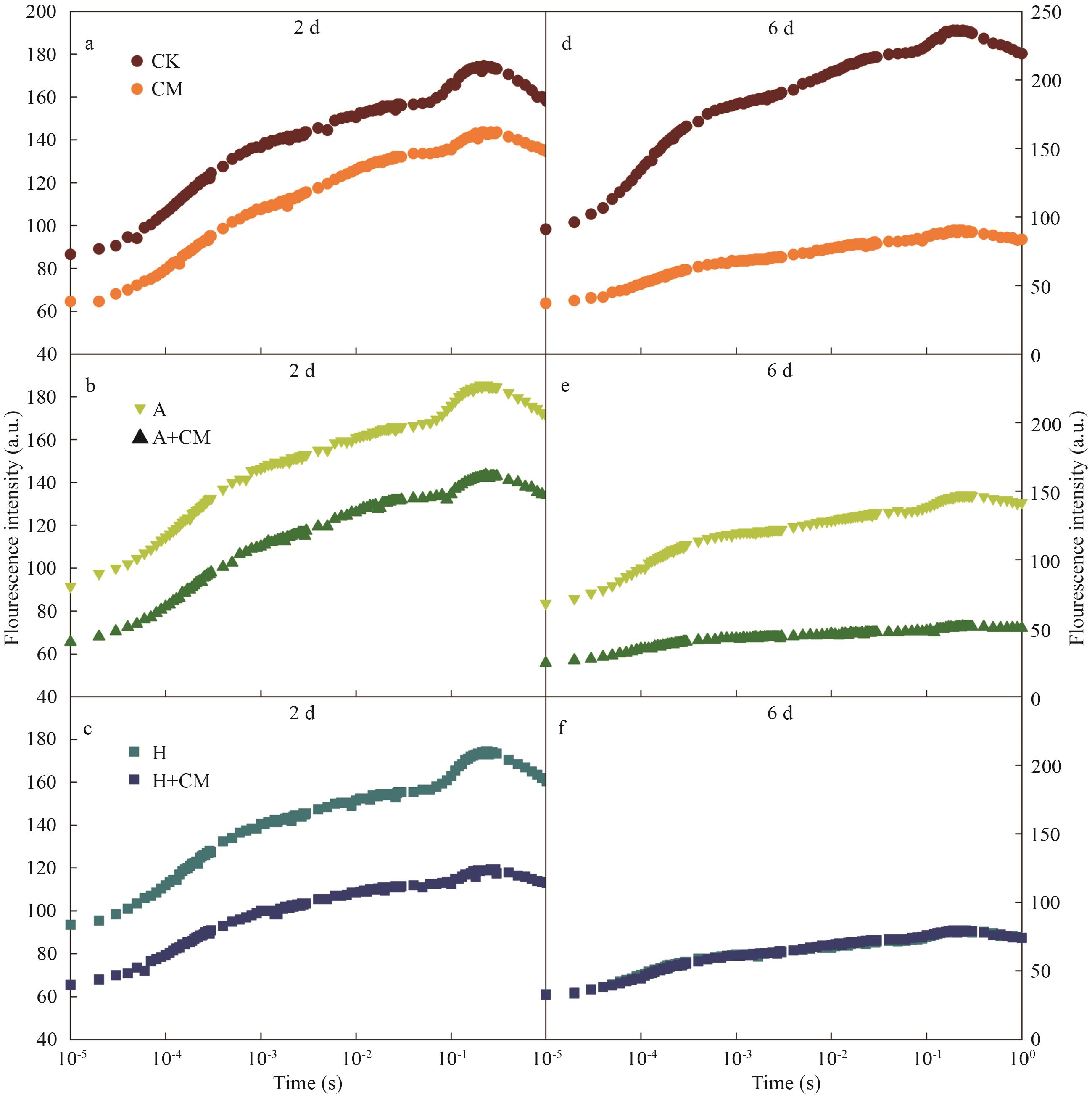
Fig. 4 Effects of photorespiration inhibitor CM on the chlorophyll a fluorescence (OJIP) transients at 2 d and 6 d in H. pluvialis cultured with different carbon sources
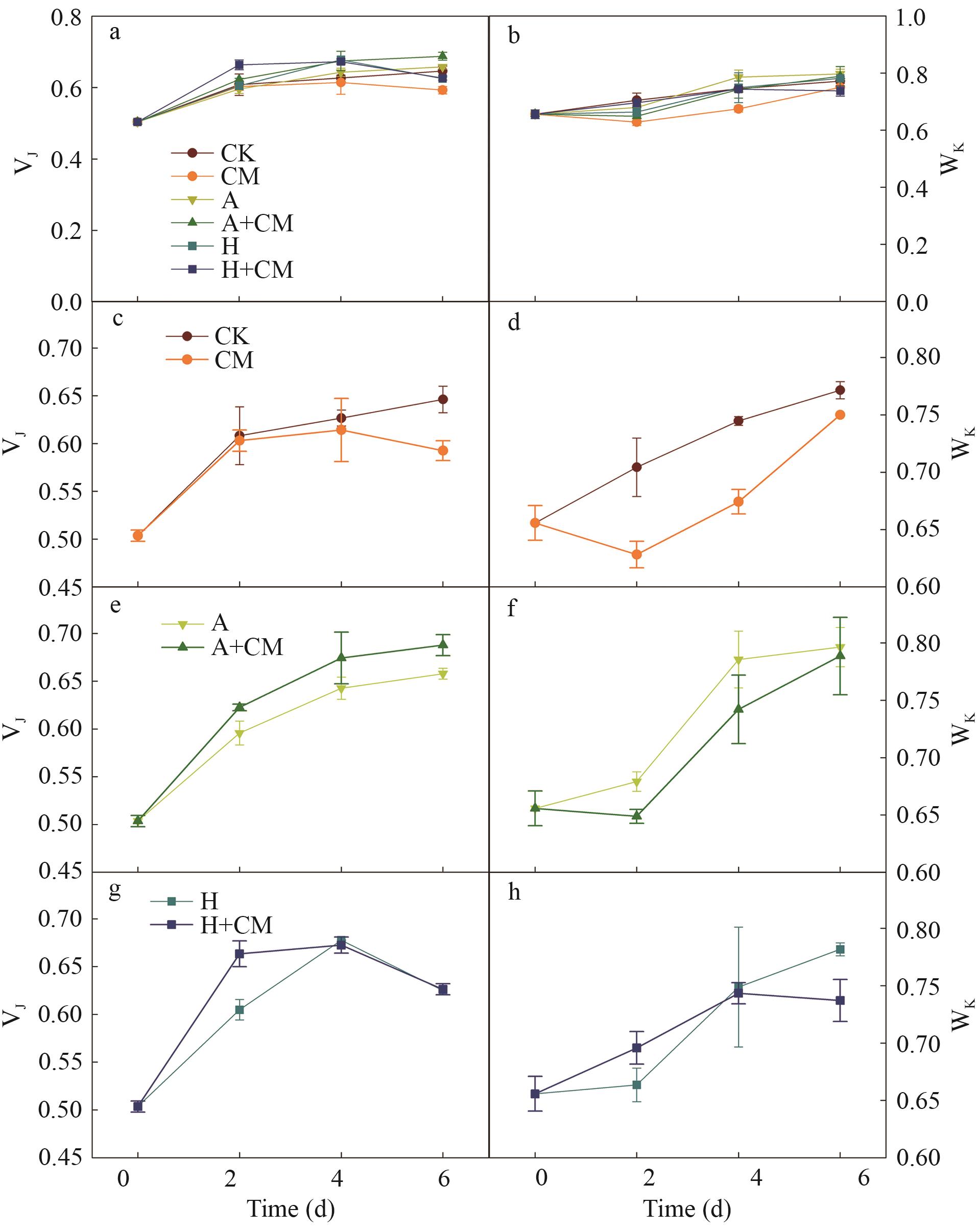
Fig. 5 Effects of photorespiration inhibitor CM on relative variable fluorescence at J-step (VJ) and at K-step (WK) in H. pluvialis cultured with different carbon sourcesa, c, e, g: Relative variable fluorescence at J-step (VJ); b, d, f, h: Relative variable fluorescence at K-step (WK)
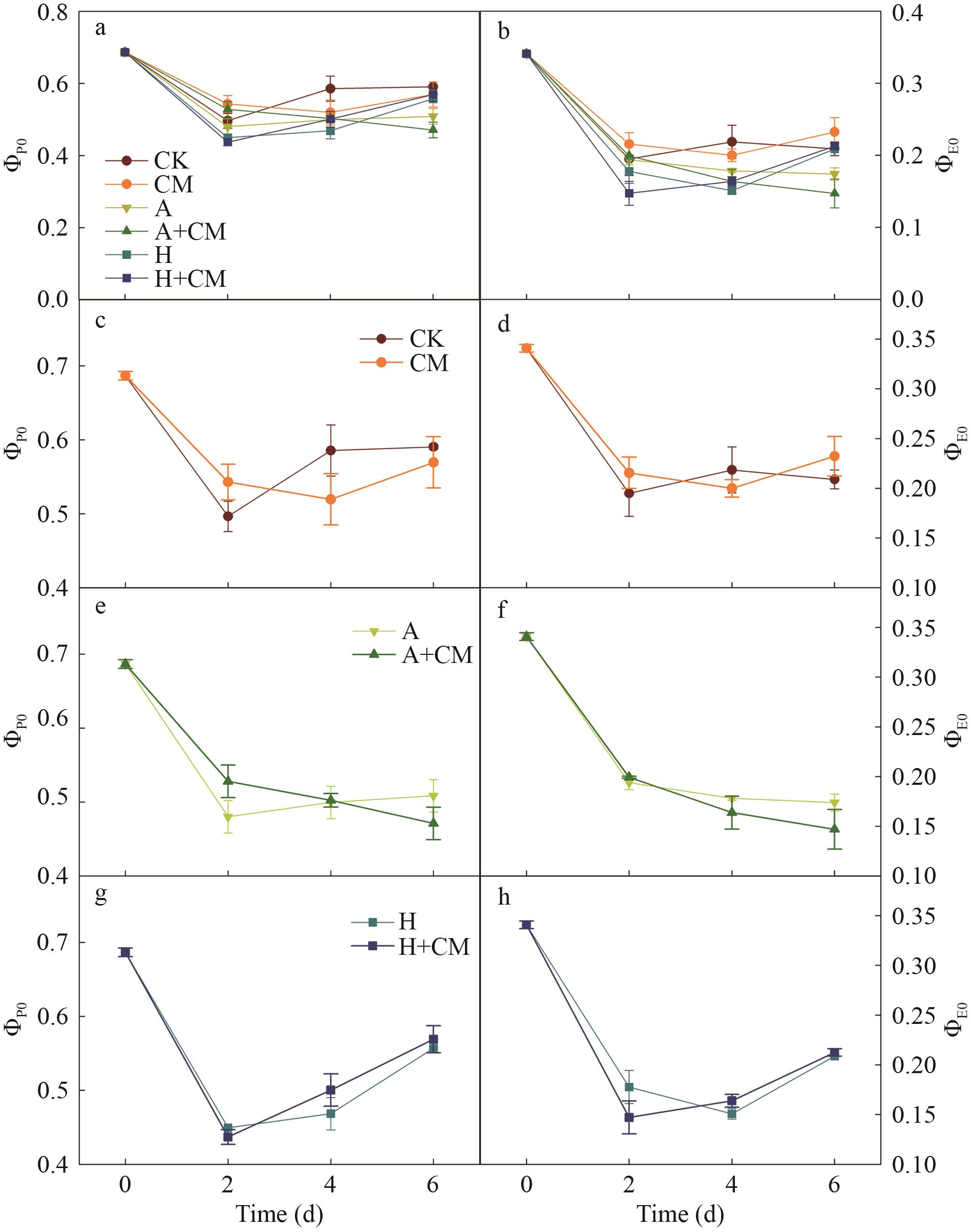
Fig. 6 Effects of photorespiration inhibitor CM on the maximum photochemical efficiency (ΦP0) and the quantum yield of electron transport (ΦE0) in H. pluvialis cultured with different carbon sourcesa, c, e, g: The maximum photochemical efficiency (ΦP0); b, d, f, h: The quantum yield of electron transport (ΦE0)

Fig. 7 Effects of photorespiration inhibitor CM on the amount of active PSII reaction centers (RCs) per excited cross section (RC/CS0), and the specific energy fluxes (per RC) for absorption (ABS/RC) in H. pluvialis cultured with different carbon sourcesa, c, e, g: The amount of active PSII reaction centers (RCs) per excited cross section (RC/CS0); b, d, f, h: The specific energy fluxes (per RC) for absorption (ABS/RC)

Fig. 8 Effects of photorespiration inhibitor CM on the trapping flux of excitation energy per active reaction center (TR0/RC), and the electron transport flux per active reaction center (ET0/RC) in H. pluvialis cultured with different carbon sourcesa, c, e, g: The trapping flux of excitation energy per active reaction center (TR0/RC); b, d, f, h: The electron transport flux per active reaction center (ET0/RC)
| [1] | Liu JG, van der Meer J, Zhang LT, et al. Cultivation of Haematococcus pluvialis for astaxanthin production [M]//Microalgal Production for Biomass and High-Value Products. Boca Raton: CRC Press, 2016: 267-293. |
| [2] | Zhang LT, Zhang CH, Xu R, Liu JG. Astaxanthin Biosynthesis in Haematococcus pluvialis: Metabolic Process, Function, and Biotechnological Applications. [M]// Paul A. Melborne (editor) An Essential Guide to Astaxanthin: Dietary Sources, Properties and Health Benefits. Nova Science Publishers, Inc: New York, 2019, 37-75. |
| [3] | van LIS R, Atteia A. Control of mitochondrial function via photosynthetic redox signals [J]. Photosynth Res, 2004, 79(2): 133-148. |
| [4] | Bauwe H, Hagemann M, Fernie AR. Photorespiration: players, partners and origin [J]. Trends Plant Sci, 2010, 15(6): 330-336. |
| [5] | Bauwe H, Hagemann M, Kern R, et al. Photorespiration has a dual origin and manifold links to central metabolism [J]. Curr Opin Plant Biol, 2012, 15(3): 269-275. |
| [6] | South PF, Cavanagh AP, Liu HW, et al. Synthetic glycolate metabolism pathways stimulate crop growth and productivity in the field [J]. Science, 2019, 363(6422): eaat9077. |
| [7] | Eisenhut M, Roell MS, Weber APM. Mechanistic understanding of photorespiration paves the way to a new green revolution [J]. New Phytol, 2019, 223(4): 1762-1769. |
| [8] | Zhang CH, Zhang LT, Liu JG. The role of photorespiration during astaxanthin accumulation in Haematococcus pluvialis (Chlorophyceae) [J]. Plant Physiol Biochem, 2016, 107: 75-81. |
| [9] | Zhang CH, Zhang LT, Liu JG. The interrelation between photorespiration and astaxanthin accumulation in Haematococcus pluvialis using metabolomic analysis [J]. Algal Res, 2019, 41: 101520. |
| [10] | 时晓晴. 光照和培养条件对雨生红球藻生长和虾青素积累影响的研究 [D]. 大连: 大连理工大学, 2023. |
| Shi XQ. Effects of light and culture conditions on the growth of Haematococcus pluvialis and astaxanthin accumulation [D]. Dalian: Dalian University of Technology, 2023. | |
| [11] | 张豪杰, 李旺宁, 梁梦静, 等. α-酮戊二酸及其钠盐对雨生红球藻生长和虾青素积累的促进作用 [J]. 海洋与湖沼, 2023, 54(1): 139-148. |
| Zhang HJ, Li WN, Liang MJ, et al. Promoting effects of α-ketoglutarate and its sodium salt on growth and astaxanthin accumulation in Haematococcus Pluvialis [J]. Oceanol Limnol Sin, 2023, 54(1): 139-148. | |
| [12] | Yu WJ, Zhang LT, Zhao J, et al. Enhancement of astaxanthin accumulation in Haematococcus pluvialis by exogenous oxaloacetate combined with nitrogen deficiency [J]. Bioresour Technol, 2022, 345: 126484. |
| [13] | Yu WJ, Zhang LT, Zhao J, et al. Exogenous sodium fumarate enhances astaxanthin accumulation in Haematococcus pluvialis by enhancing the respiratory metabolic pathway [J]. Bioresour Technol, 2021, 341: 125788. |
| [14] | Zhang LT, Zhang CH, Liu JG, et al. A strategy for stimulating astaxanthin and lipid production in Haematococcus pluvialis by exogenous glycerol application under low light [J]. Algal Res, 2020, 46: 101779. |
| [15] | Zhang CH, Zhang LT, Liu JG. Exogenous sodium acetate enhances astaxanthin accumulation and photoprotection in Haematococcus pluvialis at the non-motile stage [J]. J Appl Phycol, 2019, 31(2): 1001-1008. |
| [16] | Zhang ZS, Zhu GH, Peng XX. Photorespiration in plant adaptation to environmental changes [J]. Crop Environ, 2024, 3(4): 203-212. |
| [17] | 张豪杰. 外源α-酮戊二酸对植物氮素响应的生物学效应与作用机理研究 [D]. 太谷: 山西农业大学, 2023. |
| Zhang HJ. Biological effect and mechanism of exogenous α-ketoglutaric acid in plant response to nitrogen [D]. Taigu: Shanxi Agricultural University, 2023. | |
| [18] | 李鹏民, 高辉远, Strasser R. 快速叶绿素荧光诱导动力学分析在光合作用研究中的应用 [J]. 植物生理与分子生物学学报, 2005, 31(6): 559-566. |
| Li PM, Gao HY, Strasser R. Application of the fast chlorophyll fluorescence induction dynamics analysis in photosynthesis study [J]. Acta Photophysiol Sin, 2005, 31(6): 559-566. | |
| [19] | Zhang LT, Su F, Zhang CH, et al. Changes of photosynthetic behaviors and photoprotection during cell transformation and astaxanthin accumulation in Haematococcus pluvialis grown outdoors in tubular photobioreactors [J]. Int J Mol Sci, 2017, 18(1): 33. |
| [20] | Wingler A, Lea PJ, Quick WP, et al. Photorespiration: metabolic pathways and their role in stress protection [J]. Phil Trans R Soc Lond B, 2000, 355(1402): 1517-1529. |
| [21] | Chen Z, Chen J, Liu JH, et al. Transcriptomic and metabolic analysis of an astaxanthin-hyperproducing Haematococcus pluvialis mutant obtained by low-temperature plasma (LTP) mutagenesis under high light irradiation [J]. Algal Res, 2020, 45: 101746. |
| [22] | Obata T, Florian A, Timm S, et al. On the metabolic interactions of (photo) respiration [J]. J Exp Bot, 2016, 67(10): 3003-3014. |
| [23] | Hoefnagel MHN, Atkin OK, Wiskich JT. Interdependence between chloroplasts and mitochondria in the light and the dark [J]. Biochim Biophys Acta Bioenerg, 1998, 1366(3): 235-255. |
| [24] | Walker B, Schmiege SC, Sharkey TD. Re-evaluating the energy balance of the many routes of carbon flow through and from photorespiration [J]. Plant Cell Environ, 2024, 47(9): 3365-3374. |
| [25] | Zhang LT, Xu R, Liu JG. Strasser-Efficacy of botanical pesticide for rotifer extermination during the cultivation of Nannochloropsis oculata probed by chlorophyll a fluorescence transient [J]. Photosynthetica, 2020, 58: 341-347. |
| [26] | von Bismarck T, Wendering P, Perez de Souza L, et al. Growth in fluctuating light buffers plants against photorespiratory perturbations [J]. Nat Commun, 2023, 14: 7052. |
| [27] | Zhang LT, Zhang ZS, Gao HY, et al. Mitochondrial alternative oxidase pathway protects plants against photoinhibition by alleviating inhibition of the repair of photodamaged PSII through preventing formation of reactive oxygen species in Rumex K-1 leaves [J]. Physiol Plant, 2011, 143(4): 396-407. |
| [28] | Zhang LT, Liu JG. Effects of heat stress on photosynthetic electron transport in a marine Cyanobacterium arthrospira sp [J]. J Appl Phycol, 2016, 28(2): 757-763. |
| [29] | Yusuf MA, Kumar D, Rajwanshi R, et al. Overexpression of γ-tocopherol methyl transferase gene in transgenic Brassica juncea plants alleviates abiotic stress: Physiological and chlorophyll a fluorescence measurements [J]. Biochim Biophys Acta Bioenerg, 2010, 1797(8): 1428-1438. |
| [30] | Strasser RJ, Tsimilli-Michael M, Srivastava A. Analysis of the chlorophyll a fluorescence transient [M]//Chlorophyll a Fluorescence. Dordrecht: Springer Netherlands, 2004: 321-362. |
| [31] | Dao O, Bertrand M, Alseekh S, et al. The green algae CO2 concentrating mechanism and photorespiration jointly operate during acclimation to low CO2 [J]. Nat Commun, 2025, 16: 5296. |
| [32] | Xie XJ, Huang AY, Gu WH, et al. Photorespiration participates in the assimilation of acetate in Chlorella sorokiniana under high light [J]. New Phytol, 2016, 209(3): 987-998. |
| [33] | Huang AY, Liu LX, Yang C, et al. Phaeodactylum tricornutum photorespiration takes part in glycerol metabolism and is important for nitrogen-limited response [J]. Biotechnol Biofuels, 2015, 8(1): 73. |
| [34] | Sarojini G, Oliver DJ. Inhibition of glycine oxidation by carboxymethoxylamine, methoxylamine, and acethydrazide [J]. Plant Physiol, 1985, 77(3): 786-789. |
| [35] | Douce R, Bourguignon J, Neuburger M, et al. The glycine decarboxylase system: a fascinating complex [J]. Trends Plant Sci, 2001, 6(4): 167-176. |
| [36] | Zhang LT, Li L, He ML, et al. The role of photorespiration during H2 photoproduction in Chlorella protothecoides under nitrogen limitation [J]. Plant Cell Rep, 2016, 35(1): 1-4. |
| [37] | Li L, Shastik E, Zhang LT, et al. Photorespiration plays an important role in H2 production by marine Chlorella pyrenoidosa [J]. Algal Res, 2023, 71: 103072. |
| [38] | González-Moro B, Lacuesta M, Becerril JM, et al. Glycolate accumulation causes a decrease of photosynthesis by inhibiting RUBISCO activity in maize [J]. J Plant Physiol, 1997, 150(4): 388-394. |
| [1] | LI Bo-di, LI Zhi-chao, ZHU Guo-hui, PENG Xin-xiang, ZHANG Zhi-sheng. Expression of Glycolate Oxidase in Rice Chloroplasts and Its Effects on Photosynthesis and Growth [J]. Biotechnology Bulletin, 2025, 41(10): 87-97. |
| [2] | YANG Wei, GUAN Hai-feng, REN Xin-hui, PENG Jin-ju, CHEN Zhi-bao. Alleviating Effect of Astaxanthin on Liver Injury Induced by Aflatoxin B 1 and Its Mechanism [J]. Biotechnology Bulletin, 2025, 41(10): 334-342. |
| [3] | LI Ya-nan, ZHANG Hao-jie, LIANG Meng-jing, LUO Tao, LI Wang-ning, ZHANG Chun-hui, JI Chun-li, LI Run-zhi, XUE Jin-ai, CUI Hong-li. Identification and Expression Analysis of Calcium-dependent Protein Kinase(CDPK)Family in Haematococcus pluvialis [J]. Biotechnology Bulletin, 2024, 40(2): 300-312. |
| [4] | DUAN Zi-peng, SUN Man-li, CHEN Yan-feng, DENG Tong-xing, JIN Shao-ju, FAN Wen-juan, CHEN Xu-dong. Astaxanthin Promotes the Proliferation and Differentiation of Chicken Muscle Stem Cells via AMPK/mTOR Signaling Pathway [J]. Biotechnology Bulletin, 2024, 40(11): 312-320. |
| [5] | CHENG Shuang, ULAANDUU Namuun, LI Zhuo-lin, HU Hai-ling, DENG Xiao-xia, LI Yue-ming, WANG Jing-hong, LIN Ji-xiang. Research Progress in the Mechanism of Plant Photosystem II(PSII)Responsing to Abiotic Stress [J]. Biotechnology Bulletin, 2023, 39(12): 33-42. |
| [6] | ZHOU Lin, LIANG Xuan-ming, ZHAO Lei. Biosynthesis of Natural Carotenoids:Progress and Perspective [J]. Biotechnology Bulletin, 2022, 38(7): 119-127. |
| [7] | ZU Guo-qiang, HU Zhe, WANG Qi, LI Guang-zhe, HAO Lin. Regulatory Role of Burkholderia sp. GD17 in Rice Seedling’s Responses to Cadmium Stress [J]. Biotechnology Bulletin, 2022, 38(4): 153-162. |
| [8] | XU Zi-han, LIU Qian, MIAO Da-peng, CHEN Yue, HU Feng-rong. Impacts of Cymbidium goeringii’s miR396 Overexpression on the Leaf Growth,Photosynthesis and Chlorophyll Fluorescence in Arabidopsis thaliana [J]. Biotechnology Bulletin, 2021, 37(5): 28-37. |
| [9] | LIU Wen-fu, HUANG Dan-qiong, HU Qun-ju, WANG Chao-gang. Acquisition and Expression Analysis of the Transcription Factor Whirly1 from Haematococcus pluvialis [J]. Biotechnology Bulletin, 2021, 37(11): 248-256. |
| [10] | WANG Rui-jie, GUAN Ping, LIU Xiao, YANG Shu-jun, JI La-la, DENG Xiao-hong, WANG Jian-jian. Effects of Shading and Phosphorus Application on Growth and Chlorophyll Fluorescence Parameters of Fagopyrum dibotrys(D. Don)Hara [J]. Biotechnology Bulletin, 2019, 35(6): 32-38. |
| [11] | SUN De-zhi, YANG Heng-shan, SONG Gui-yun, FAN Fu, HOU Mi-hong, PENG Jing, HAN Xiao-ri. Remediation of Salt Damage to Tomato Seedlings from Root Application of Salicylic Acid [J]. Biotechnology Bulletin, 2019, 35(11): 30-38. |
| [12] | LIANG Dong-yu, WANG Yu-jia, SU Ao-chun, XU Hong-wei, ZHOU Xiao-fu. Alleviation Effect of Exogenous Jasmonic Acid on Detrimental Effect of Rhododendron chrysanthum Pall Under UV-B Radiation [J]. Biotechnology Bulletin, 2019, 35(10): 64-70. |
| [13] | LIU Li-juan ,GAO Hui. Photosynthesis and Chlorophyll Fluorescence Characteristics of Ophiopogon japonicus(L.F.)Ker-Gawl Under Different Shade Conditions [J]. Biotechnology Bulletin, 2018, 34(6): 96-101. |
| [14] | AN Fei-fei, CHEN Ting, YANG Long, CHEN Song-bi. Comparison on Microstructure and Chlorophyll Fluorescence Parameter in Cassava [J]. Biotechnology Bulletin, 2018, 34(1): 104-109. |
| [15] | CHEN Jia-ni, LIN Li-chun, XU Nian-jun, ZHANG Lin, SUN Xue. Effects of CO2 Concentrations on the Physiological and Biochemical Parameters of Haematococcus pluvialis [J]. Biotechnology Bulletin, 2018, 34(1): 239-246. |
| Viewed | ||||||
|
Full text |
|
|||||
|
Abstract |
|
|||||
