







Biotechnology Bulletin ›› 2026, Vol. 42 ›› Issue (4): 287-296.doi: 10.13560/j.cnki.biotech.bull.1985.2025-0755
Previous Articles Next Articles
ZHANG Jian-xia( ), JIANG Cheng-ying(), WU Wen-jun, JIN Gao-ming, ZHANG Cong-cong, YAO Yu-fang, ZHANG Rong, QI Jian-li
Received:2025-07-10
Online:2026-04-26
Published:2026-04-30
Contact:
JIANG Cheng-ying
E-mail:3457010090@qq.com;jcytxb@126.com
ZHANG Jian-xia, JIANG Cheng-ying, WU Wen-jun, JIN Gao-ming, ZHANG Cong-cong, YAO Yu-fang, ZHANG Rong, QI Jian-li. Physicochemical Properties and Bacterial Community Characteristics of Rhizosphere Soil in Olive Orchards under Different Soil Conditions[J]. Biotechnology Bulletin, 2026, 42(4): 287-296.
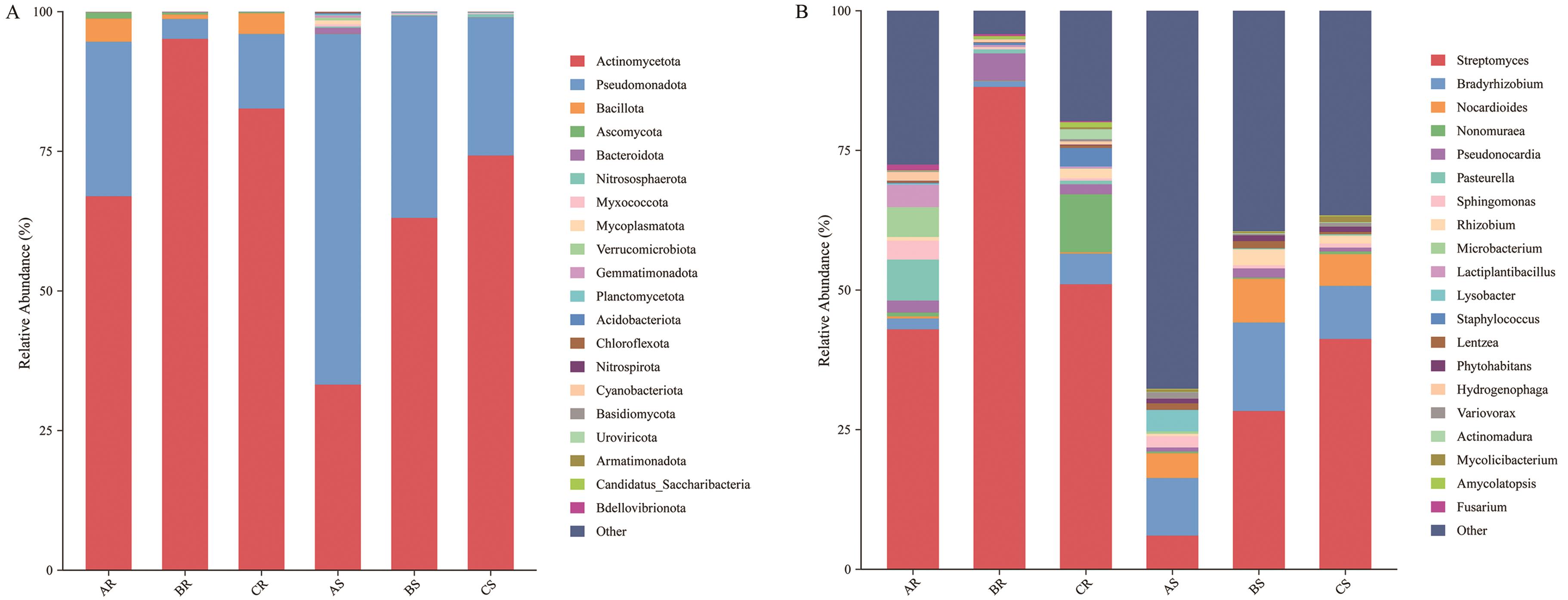
Fig. 1 Microbial community composition at the phylum (a) and genus (b) levels in the rhizosphere soil of olive orchards under different soil conditions
| 类型Type | pH | 速效氮 AN(mg/kg) | 全氮 TN(mg/g) | 速效磷 AP(mg/kg) | 全磷 TP(g/kg) | 全钾 TK(g/kg) | 速效钾 AK(mg/kg) | 有机质 OM(g/kg) |
|---|---|---|---|---|---|---|---|---|
| As | 7.93±0.03a | 40.83±0.74b | 0.81±0.00a | 11.62±0.22b | 0.72±0.02a | 11.47±0.20b | 86.86±2.86b | 10.48±0.52a |
| Bs | 7.90±0.04a | 19.98±0.89a | 1.65±0.05b | 10.89±0.10a | 0.9±0.01b | 21.28±0.28c | 42.08±0.56a | 22.15±0.66b |
| Cs | 7.87±0.05a | 186.03±0.82c | 3.47±0.06c | 33.81±0.21c | 2.23±0.03c | 10.95±0.12a | 124.87±0.30c | 64.58±1.41c |
Table 1 Statistical summary of soil physicochemical properties for olive trees
| 类型Type | pH | 速效氮 AN(mg/kg) | 全氮 TN(mg/g) | 速效磷 AP(mg/kg) | 全磷 TP(g/kg) | 全钾 TK(g/kg) | 速效钾 AK(mg/kg) | 有机质 OM(g/kg) |
|---|---|---|---|---|---|---|---|---|
| As | 7.93±0.03a | 40.83±0.74b | 0.81±0.00a | 11.62±0.22b | 0.72±0.02a | 11.47±0.20b | 86.86±2.86b | 10.48±0.52a |
| Bs | 7.90±0.04a | 19.98±0.89a | 1.65±0.05b | 10.89±0.10a | 0.9±0.01b | 21.28±0.28c | 42.08±0.56a | 22.15±0.66b |
| Cs | 7.87±0.05a | 186.03±0.82c | 3.47±0.06c | 33.81±0.21c | 2.23±0.03c | 10.95±0.12a | 124.87±0.30c | 64.58±1.41c |
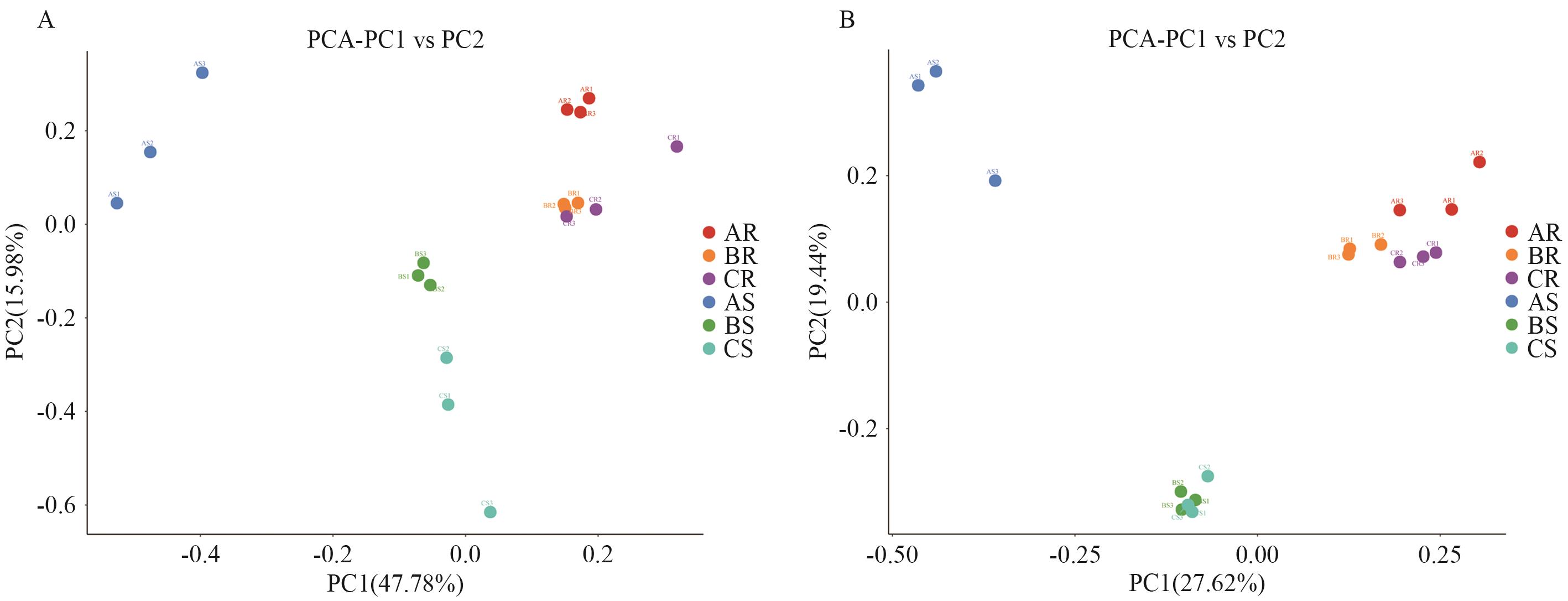
Fig. 2 Principal component analysis (PCA) of microbial communities at the phylum (A) and genus (B) levels in the rhizosphere soil of olive orchards under different soil conditions
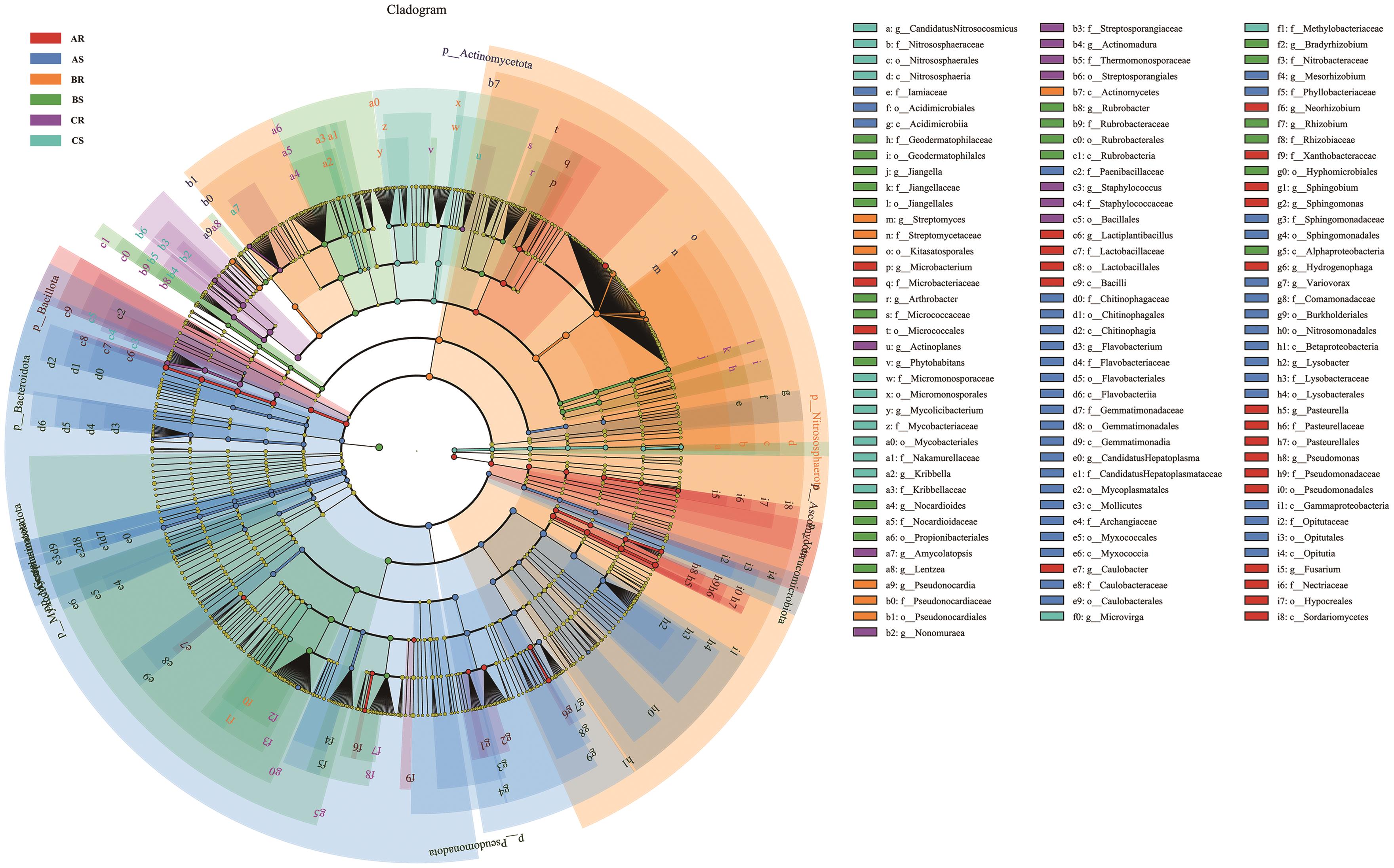
Fig. 3 LEfSe analysis of soil bacteria in different olive orchardsThe circles from the outermost to the innermost refer tothe taxonomic levels of phylum, class, order, family, and genus, respectively. The colored dots indicate important fungal groups within each category, while the yellow dots denotefungal groups that do not show significant differences in abundance across the groups
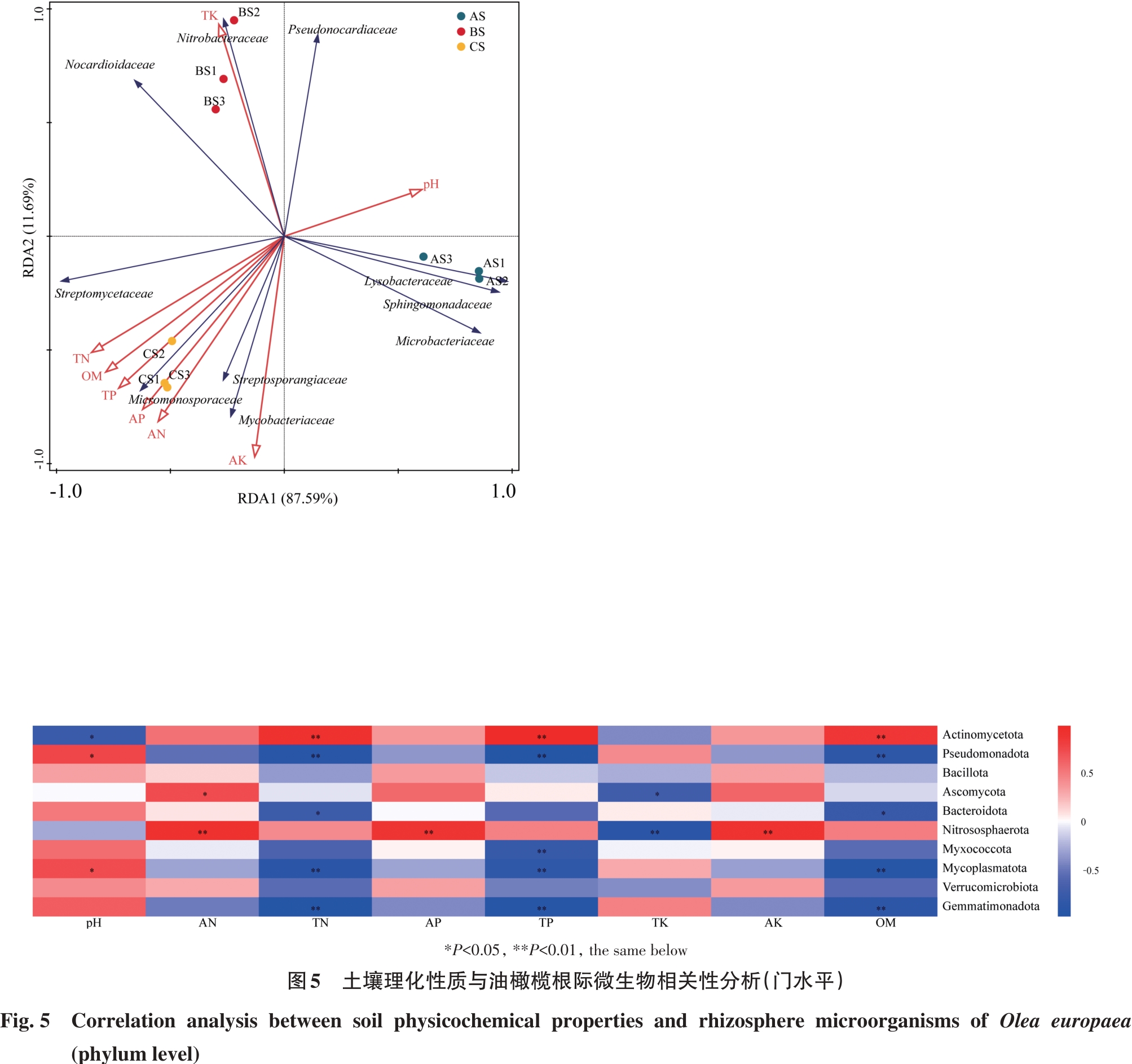
Fig. 4 Redundancy analysis of the top 10 most abundant bacterial genera in the rhizosphere soil of olive trees and environmental factors
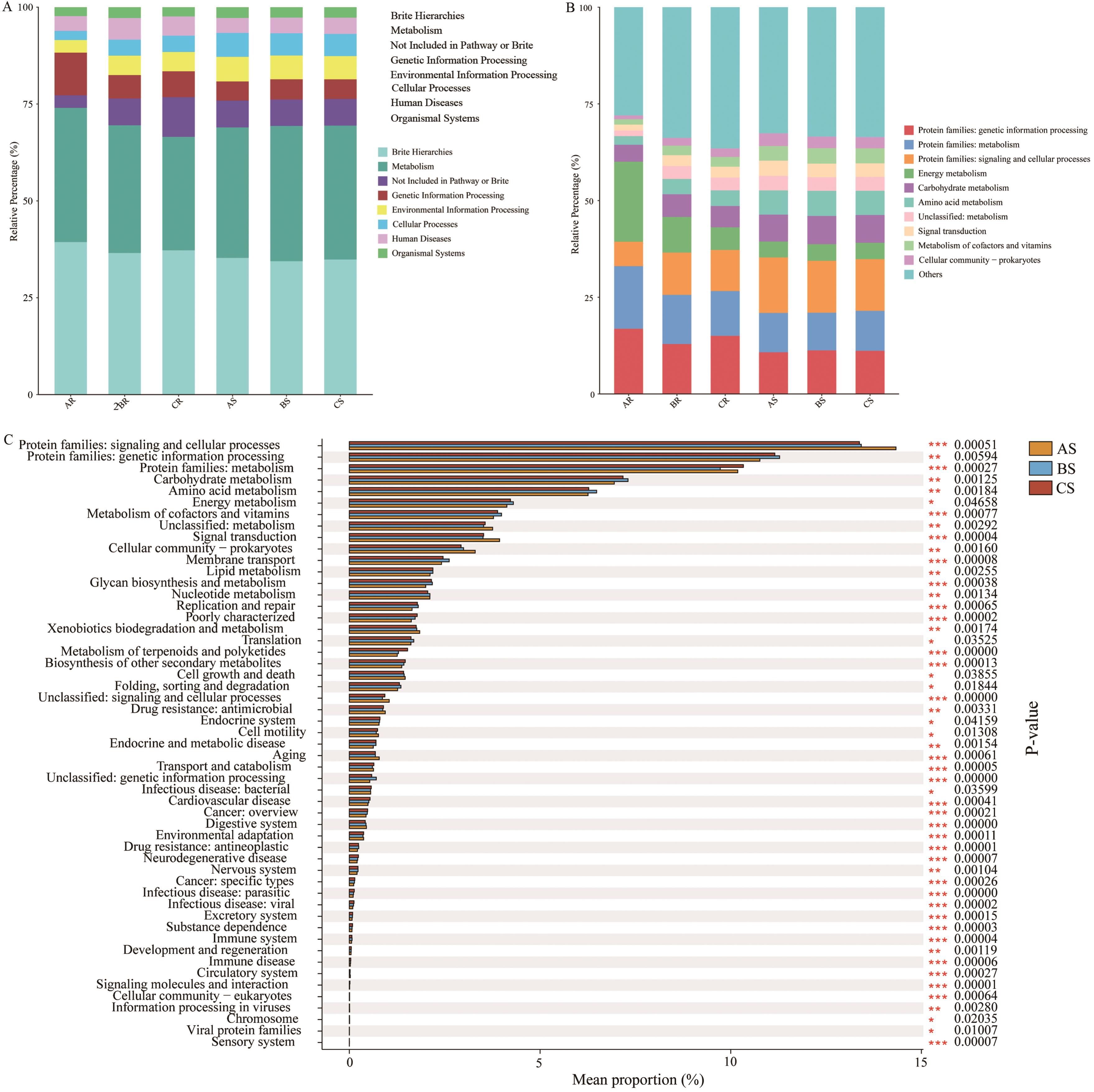
Fig. 6 Functional composition of rhizosphere soil microorganisms in olive orchards under different soil conditions at level 1 (A), level 2 (B) and level 3(C) functional categories

Fig. 7 Correlation between soil environmental factors and key microbial functions in the rhizosphere of olive trees (KEGG)
| [1] | Pereira AP, Ferreira IC, Marcelino F, et al. Phenolic compounds and antimicrobial activity of olive (Olea europaea L. cv. cobrançosa) leaves [J]. Molecules, 2007, 12(5): 1153-1162. |
| [2] | Schwingshackl L, Hoffmann G. Monounsaturated fatty acids, olive oil and health status: a systematic review and meta-analysis of cohort studies [J]. Lipds Health Dis, 2014, 13(1): 154. |
| [3] | 龙伟, 曾燕如, 盛建喜. 我国油橄榄产业发展的挑战与对策 [J]. 中国油脂, 2023, 48(12): 20-25. |
| Long W, Zeng YR, Sheng JX. Challenges and countermeasures in the development of olive industry in China [J]. China Oils Fats, 2023, 48(12): 20-25. | |
| [4] | 中国扶贫志愿服务促进会. 中国油橄榄产业发展蓝皮书 2024 [M]. 北京:研究出版社, 2025. |
| China Association of Poverty Alleviation and Development Volunteers Service. China Olive Industry Development Blue Book 2024 [M]. Beijing: Research Publishing House, 2025. | |
| [5] | 李宝军, 刘志恬, 赵敏, 等. 陇南不同种植区油橄榄果实生长期的经济性状比较 [J]. 寒旱农业科学, 2024(3): 256-265. |
| Li BJ, Liu ZT, Zhao M, et al. Comparison of economic traits during fruit ripening of olive fruits grown in different cultivation sites in Longnan [J]. J Cold Arid Agric Sci, 2024(3): 256-265. | |
| [6] | Arafat SM, Basuniy A, Elsayed ME, et al. Effect of pedological, cultivar and climatic condition on sterols and quality indices of olive oil [J]. Scientia Agric, 2016, 13(1): 23-9. |
| [7] | 王刚. 白桦树幼苗在不同土壤类型中的肥料利用效率研究 [J]. 中国林副特产, 2024(5): 42-44. |
| Wang G. Study on fertilizer use efficiency of Betula platyphylla seedling in different soil types [J]. For Prod Speciality China, 2024(5): 42-44. | |
| [8] | Rillig MC, Mummey DL. Mycorrhizas and soil structure [J]. New Phytol, 2006, 171(1): 41-53. |
| [9] | Rai S, Omar AF, Rehan M, et al. Crop microbiome: their role and advances in molecular and omic techniques for the sustenance of agriculture [J]. Planta, 2022, 257(2): 27. |
| [10] | Trivedi P, Leach JE, Tringe SG, et al. Plant-microbiome interactions: from community assembly to plant health [J]. Nat Rev Microbiol, 2020, 18(11): 607-621. |
| [11] | Adamczyk B, Sietiö OM, Straková P, et al. Plant roots increase both decomposition and stable organic matter formation in boreal forest soil [J]. Nat Commun, 2019, 10: 3982. |
| [12] | Wu DY, He XM, Jiang LM, et al. Root exudates facilitate the regulation of soil microbial community function in the genus Haloxylon [J]. Front Plant Sci, 2024, 15: 1461893. |
| [13] | Das D, Kafle A, Ho-Plágaro T, et al. Editorial: Importance of root symbiomes for plant nutrition: new insights, perspectives and future challenges, volume Ⅱ [J]. Front Plant Sci, 2023, 14: 1296604. |
| [14] | Khoso MA, Wagan S, Alam I, et al. Impact of plant growth-promoting rhizobacteria (PGPR) on plant nutrition and root characteristics: Current perspective [J]. Plant Stress, 2024, 11: 100341. |
| [15] | Coonan EC, Kirkby CA, Kirkegaard JA, et al. Microorganisms and nutrient stoichiometry as mediators of soil organic matter dynamics [J]. Nutr Cycl Agroecosyst, 2020, 117(3): 273-298. |
| [16] | Chen QX, Song YJ, An YX, et al. Soil microorganisms: their role in enhancing crop nutrition and health [J]. Diversity, 2024, 16(12): 734. |
| [17] | Vannier N, Agler M, Hacquard S. Microbiota-mediated disease resistance in plants [J]. PLoS Pathog, 2019, 15(6): e1007740. |
| [18] | Choi K, Choi J, et al. Alteration of bacterial wilt resistance in tomato plant by microbiota transplant [J]. Front Plant Sci, 2020, 11: 1186. |
| [19] | Compant S, Cassan F, Kostić T, et al. Harnessing the plant microbiome for sustainable crop production [J]. Nat Rev Microbiol, 2025, 23(1): 9-23. |
| [20] | Garbeva P, van Veen JA, van Elsas JD. MICROBIAL DIVERSITY IN SOIL: selection of microbial populations by plant and soil type and implications for disease suppressiveness [J]. Annu Rev Phytopathol, 2004, 42: 243-270. |
| [21] | Bronick CJ, Lal R. Soil structure and management: a review [J]. Geoderma, 2005, 124(1/2): 3-22. |
| [22] | Beheiry HR, Awad AAM, Hussein HAZ. Response of multi-stressed Olea europaea trees to the adjustment of soil pH by acidifying agents: impacts on nutrient uptake and productivity [J]. Agronomy, 2023, 13(2): 539. |
| [23] | Chatzistathis T, Therios I, Alifragis D, et al. Effect of sampling time and soil type on Mn, Fe, Zn, Ca, Mg, K and P concentrations of olive (Olea europaea L., cv. ‘Koroneiki’) leaves [J]. Sci Hortic, 2010, 126(2): 291-296. |
| [24] | Caravaca F, Barea JM, Figueroa D, et al. Assessing the effectiveness of mycorrhizal inoculation and soil compost addition for enhancing reafforestation with Olea europaea subsp. sylvestris through changes in soil biological and physical parameters [J]. Appl Soil Ecol, 2002, 20(2): 107-118. |
| [25] | de Oliveira AA, de Oliveira Ramalho M, Moreau CS, et al. Exploring the diversity and potential interactions of bacterial and fungal endophytes associated with different cultivars of olive (Olea europaea) in Brazil [J]. Microbiol Res, 2022, 263: 127128. |
| [26] | Fernández-González AJ, Cardoni M, Gómez-Lama Cabanás C, et al. Linking belowground microbial network changes to different tolerance level towards Verticillium wilt of olive [J]. Microbiome, 2020, 8(1): 11. |
| [27] | Fernández-González AJ, Villadas PJ, Gómez-Lama Cabanás C, et al. Defining the root endosphere and rhizosphere microbiomes from the World Olive Germplasm Collection [J]. Sci Rep, 2019, 9: 20423. |
| [28] | 戴雅婷, 闫志坚, 解继红, 等. 基于高通量测序的两种植被恢复类型根际土壤细菌多样性研究 [J]. 土壤学报, 2017, 54(3): 735-748. |
| Dai YT, Yan ZJ, Xie JH, et al. Soil bacteria diversity in rhizosphere under two types of vegetation restoration based on high throughput sequencing [J]. Acta Pedol Sin, 2017, 54(3): 735-748. | |
| [29] | 王瑞文, 郑京津, 黄颖, 等. 油橄榄育种及栽培技术研究进展 [J]. 生物资源, 2024, 46(2): 103-111. |
| Wang RW, Zheng JJ, Huang Y, et al. Research advances on breeding and cultivation techniques of olive [J]. Biotic Resour, 2024, 46(2): 103-111. | |
| [30] | Berendsen RL, Pieterse CMJ, Bakker PAHM. The rhizosphere microbiome and plant health [J]. Trends Plant Sci, 2012, 17(8): 478-486. |
| [31] | Zhang XF, Xu SJ, Li CM, et al. The soil carbon/nitrogen ratio and moisture affect microbial community structures in alkaline permafrost-affected soils with different vegetation types on the Tibetan Plateau [J]. Res Microbiol, 2014, 165(2): 128-139. |
| [32] | Thenappan DP, Thompson D, Joshi M, et al. Unraveling the spatio-temporal dynamics of soil and root-associated microbiomes in Texas olive orchards [J]. Sci Rep, 2024, 14: 18214. |
| [33] | Nalini MS, Prakash HS. Actinobacteria: diversity, plant interactions and biotechnology applications [M]//Plant Microbiomes for Sustainable Agriculture. Cham: Springer International Publishing, 2020: 199-244. |
| [34] | Mehmood N, Saeed M, et al. Multifaceted impacts of plant-beneficial Pseudomonas spp. in managing various plant diseases and crop yield improvement [J]. ACS Omega, 2023, 8(25): 22296-22315. |
| [35] | Zhao GZ, Li J, et al. Pseudonocardia bannaensis sp. nov., a novel actinomycete isolated from the surface-sterilized roots of Artemisia annua L [J]. Antonie Van Leeuwenhoek, 2011, 100(1): 35-42. |
| [36] | Wen Z, Zheng H, Zhao H, et al. Land-use intensity indirectly affects soil multifunctionality via a cascade effect of plant diversity on soil bacterial diversity [J]. Glob Ecol Conserv, 2020, 23: e01061. |
| [37] | Caliz J, Montes-Borrego M, Triadó-Margarit X, et al. Influence of edaphic, climatic, and agronomic factors on the composition and abundance of nitrifying microorganisms in the rhizosphere of commercial olive crops [J]. PLoS One, 2015, 10(5): e0125787. |
| [38] | Zarraonaindia I, Owens SM, et al. The soil microbiome influences grapevine-associated microbiota [J]. mBio, 2015, 6(2): e02527-14. |
| [39] | Melloni R, Cardoso EJBN. Microbiome associated with olive cultivation: a review [J]. Plants, 2023, 12(4): 897. |
| [1] | ZHANG Jin-hao, DENG Hui, ZHANG Qing-zhuang, TAO Yu, ZHOU Chi, LI Xin. Modulation of the Growth, Quality, and Cadmium Content of Lily Bulbs by Bacillus velezensis XY40-1 [J]. Biotechnology Bulletin, 2025, 41(7): 281-291. |
| [2] | ZHAO Qiang, CHEN Si-yu, PENG Fang-li, WANG Can, GAO Jie, ZHOU Ling-bo, ZHANG Guo-bing, JIANG Yu-wen, SHAO Ming-bo. Effects of Intercropping and Nitrogen Application on the Diversity and Functions of Soil Bacteria around Sorghum Rhizosphere [J]. Biotechnology Bulletin, 2025, 41(6): 307-316. |
| [3] | XIA Xin-yuan, XUE Dao-sheng, LI Xin-jing, LONG Jun-jie, LU Kai-xing, DING Wo-na, LI Meng-sha. Identification of Multi-function Growth-promoting Bacteria in Rice-oilseed Rape Rotation Soil and Its Effect on the Growth and Rhizosphere Bacterial Community of Oilseed Rape (Brassica napus) [J]. Biotechnology Bulletin, 2025, 41(4): 289-301. |
| [4] | FENG Xiao-hu, ZHANG Wen-mei, XU Jing, XIONG Shu-bin, WANG Li-bing, SONG Wen-jing. Screening and Biocontrol Efficiency of Phage Cocktail Targeted on a Group of Tobacco Bacterial Wilt [J]. Biotechnology Bulletin, 2025, 41(11): 311-318. |
| [5] | PAN Zhong-fei, YIN Qian, MA Rong, XIONG Huan, DONG Wen-tong, ZOU Feng. The Mechanism of Exogenous Phosphate-solubilizing Bacteria Promoting Nutrient Absorption in Camellia oleifera [J]. Biotechnology Bulletin, 2025, 41(10): 292-302. |
| [6] | WANG Jing, CHANG Xue-rui, JIA Xu, HUANG Jia-xin, WANG Tian-tian, LIANG Yan-ping. Cloning and Fuctional Analysis of CaUBC38 Gene in Pepper [J]. Biotechnology Bulletin, 2025, 41(10): 242-252. |
| [7] | MU Xue-nan, WU Tong, ZHENG Zi-wei, ZHANG Yue, WANG Zhi-gang, XU Wei-hui. Screening, Identification and Biocontrol Potential Analysis of an Antagonistic Strain against Ralstonia solanacearum [J]. Biotechnology Bulletin, 2025, 41(1): 276-286. |
| [8] | LIU Chuan-he, HE Han, SHAO Xue-hua, HE Xiu-gu. Analysis of Differential Metabolites and Bacterial Community Structure in the Soils of a Pineapple Orchard under Different Mulching Treatments [J]. Biotechnology Bulletin, 2024, 40(7): 247-258. |
| [9] | LIU Jia-ning, LI Meng, YANG Xin-sen, WU Wei, PEI Xin-wu, YUAN Qian-hua. Impact of Different Water Management Cultivation Methods on the Rhizosphere Bacteria Community of Shanlan Upland Rice [J]. Biotechnology Bulletin, 2024, 40(3): 242-250. |
| [10] | LI Xue, LI Rong-ou, KONG Mei-yi, HUANG Lei. The Growth Promoting Effect of Bacillus amyloliquefaciens SQ-2 on Rice [J]. Biotechnology Bulletin, 2024, 40(2): 109-119. |
| [11] | XU Yang, ZHANG Rui-ying, DAI Liang-xiang, ZHANG Guan-chu, DING Hong, ZHANG Zhi-meng. Regulation of Nitrogen Application on Peanut Seed Germination and Spermosphere Bacterial Community Structure Under Salt Stress [J]. Biotechnology Bulletin, 2024, 40(2): 253-265. |
| [12] | LEI Mei-ling, RAO Wen-hua, HU Jin-feng, YUE Qi, WU Zu-jian, FAN Guo-cheng. Bacterial Diversity and Structure in Rhizosphere Soil of Citrus Infested with Huanglongbing [J]. Biotechnology Bulletin, 2024, 40(2): 266-276. |
| [13] | YE Liu-jian, HE Yu-lan, WANG Xiao-hu, WEI Sheng-bo, HE Shuang, ZHU Qi-xia, LU Jie, ZHOU Li-qin. Effects of Bacillus amyloliquefaciens YK3 on the Control of Citrus reticulata cv. Orah Canker and Its Influence on the Network of Phyllosphere Bacteria [J]. Biotechnology Bulletin, 2024, 40(11): 248-258. |
| [14] | FENG Lu-yao, ZHAO Jiang-yuan, SHI Zhu-feng, MO Yan-fang, YANG Tong-yu, SHEN Yun-xin, HE Fei-fei, LI Ming-gang, YANG Pei-wen. Isolation and Identification of Bacteria in Forest Rhizosphere Soil and Their Biological Activity Screening [J]. Biotechnology Bulletin, 2024, 40(1): 294-307. |
| [15] | XIE Tian-peng, ZHANG Jia-ning, DONG Yong-jun, ZHANG Jian, JING Ming. Effect of Premature Bolting on the Rhizosphere Soil Microenvironment of Angelica sinensis [J]. Biotechnology Bulletin, 2023, 39(7): 206-218. |
| Viewed | ||||||
|
Full text |
|
|||||
|
Abstract |
|
|||||
