







生物技术通报 ›› 2026, Vol. 42 ›› Issue (6): 304-313.doi: 10.13560/j.cnki.biotech.bull.1985.2025-1079
• 研究报告 • 上一篇
莫言玲( ), 刘源橼, 裴佳玲, 樊襄曼, 邓兴连, 曾静, 刘义华()
收稿日期:2025-10-10
出版日期:2026-06-26
发布日期:2026-07-11
通讯作者:
刘义华,男,研究员,研究方向 :芥菜遗传育种;E-mail: 1163681475@qq.com作者简介:莫言玲,女,博士,副教授,研究方向 :茎瘤芥逆境胁迫机制;E-mail: moyanling26@126.com
基金资助:
MO Yan-ling(), LIU Yuan-yuan, PEI Jia-ling, FAN Xiang-man, DENG Xing-lian, ZENG Jing, LIU Yi-hua()
Received:2025-10-10
Published:2026-06-26
Online:2026-07-11
摘要:
目的 为了明确外源硒(Se)预处理缓解茎瘤芥幼苗镉(Cd)毒害的机制,为今后合理使用Se从而保障茎瘤芥在Cd污染土壤的种植安全提供理论依据。 方法 以对Cd胁迫敏感的茎瘤芥主栽品种永安小叶为研究试材,通过水培试验,分别设置CK、CK+Se、Cd、Cd+Se 4种处理条件,研究外源Se对Cd胁迫下茎瘤芥幼苗Cd积累分配、光合同化能力、抗氧化能力等的影响。 结果 与CK相比,Cd胁迫处理显著抑制了茎瘤芥幼苗的生长,降低了植株叶绿素含量及光合效率,降低了抗氧化酶活性,提高了根系和叶片组织的Cd含量至CK的45.06和72.30倍。与单独Cd胁迫相比,外源Se预处理可明显促进Cd胁迫下茎瘤芥幼苗的生长,提高植株叶绿素含量、Pn、Fv/Fm、ΦPSⅡ、ETR和qP值,提高SOD和CAT活性,增加ASA、GSH、总酚、螯合肽和半胱氨酸含量,并下调Cd吸收和转运相关基因IRT1、Nramp1、HMA2、HMA3的表达量至单独Cd胁迫处理的46.85%‒70.33%,减少根、叶组织Cd的积累量并提高细胞壁的Cd含量占比。 结论 Cd胁迫条件下,外源Se主要通过提高光合系统的转化效率、提高抗氧化能力、增强对Cd的螯合能力及区隔化作用,以及下调Cd吸收和转运相关基因的表达水平,从而缓解Cd对茎瘤芥幼苗产生的毒害作用。
莫言玲, 刘源橼, 裴佳玲, 樊襄曼, 邓兴连, 曾静, 刘义华. 外源硒预处理缓解茎瘤芥幼苗镉毒害的机制研究[J]. 生物技术通报, 2026, 42(6): 304-313.
MO Yan-ling, LIU Yuan-yuan, PEI Jia-ling, FAN Xiang-man, DENG Xing-lian, ZENG Jing, LIU Yi-hua. Study on the Mechanism of Exogenous Selenium Pretreatment Alleviating Cadmium Toxicity in Brassica juncea var. tumida Tsen et Lee Seedlings[J]. Biotechnology Bulletin, 2026, 42(6): 304-313.
| 基因 Gene | 基因登录号 Gene accession number | 正向引物 Forward primer sequence (5′‒3′) | 反向引物 Reverse primer (5′‒3′) |
|---|---|---|---|
| Actin3 | BjuA014894 | GGCTACTCTTTCACCACGAC | GGATACCAGCATTCTCCATAC |
| IRT1 | AY087095.1 | TGGCATTCTTTTTCGCGGTG | GCCGAGCATGCATTGAGAAG |
| IRT2 | BT025714.1 | CTCGTCGACCTTCTGGCTAC | ACTTGGCGACGACAGACATT |
| Nramp1 | AF165125.1 | CCCCGAAGACCGTGCTAAAT | TACCCACCACGTTTCGTAGC |
| HMA2 | NM119157.3 | GAGGATGCCACATGGTTGGA | CTTTGGTACGGCGGAAGAGT |
| HMA3 | DQ446885.1 | AACCTCGACGCTATGCACAA | GCTTGCCACGTCATCATTGG |
| HMA4 | BjuO003139 | TTCCCCACAAGAATCGCTCC | CACTCGAACCTTCCACGTCA |
表1 用于实时荧光定量PCR分析的引物序列
Table 1 Primer sequences for quantitative real-time PCR analysis
| 基因 Gene | 基因登录号 Gene accession number | 正向引物 Forward primer sequence (5′‒3′) | 反向引物 Reverse primer (5′‒3′) |
|---|---|---|---|
| Actin3 | BjuA014894 | GGCTACTCTTTCACCACGAC | GGATACCAGCATTCTCCATAC |
| IRT1 | AY087095.1 | TGGCATTCTTTTTCGCGGTG | GCCGAGCATGCATTGAGAAG |
| IRT2 | BT025714.1 | CTCGTCGACCTTCTGGCTAC | ACTTGGCGACGACAGACATT |
| Nramp1 | AF165125.1 | CCCCGAAGACCGTGCTAAAT | TACCCACCACGTTTCGTAGC |
| HMA2 | NM119157.3 | GAGGATGCCACATGGTTGGA | CTTTGGTACGGCGGAAGAGT |
| HMA3 | DQ446885.1 | AACCTCGACGCTATGCACAA | GCTTGCCACGTCATCATTGG |
| HMA4 | BjuO003139 | TTCCCCACAAGAATCGCTCC | CACTCGAACCTTCCACGTCA |
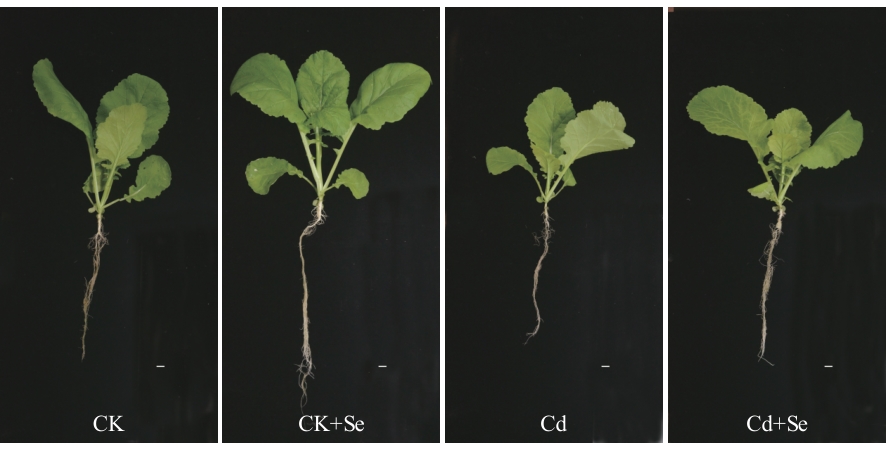
图1 各处理条件下茎瘤芥幼苗植株的外部形态特征CK:霍格兰全营养液;CK+Se:霍格兰全营养液+硒预处理;Cd:镉胁迫处理;Cd+Se:镉胁迫处理+硒预处理。bar=1 cm。下同
Fig. 1 External morphology of Brassica juncea var. tumida Tsen et Lee seedlings under different treatment conditionsCK: Hoagland’s complete nutrient solution. CK+Se: Hoagland’s complete nutrient solution + Selenium pretreatment. Cd: Cadmium stress treatment. Cd+Se: Cadmium stress treatment + Selenium pretreatment. bar=1 cm. The same below
处理 Treatment | 叶片数 Leaf number | 株高 Plant height (cm) | 根长 Root length (cm) | 地上鲜重 Shoot fresh weight (g) | 地下鲜重 Root fresh weight (g) | 地上干重 Shoot dry weight (g) | 地下干重 Root dry weight (g) |
|---|---|---|---|---|---|---|---|
| CK | 6.56±0.53a | 7.06±0.29a | 19.19±0.45a | 7.52±0.34a | 0.64±0.05a | 0.64±0.08a | 0.05±0.01ab |
| CK+Se | 6.67±0.50a | 7.12±0.36a | 19.79±1.53a | 7.55±0.24a | 0.65±0.04a | 0.63±0.08a | 0.05±0.00a |
| Cd | 5.89±0.33b | 4.22±0.30c | 12.78±1.65b | 4.37±0.26c | 0.35±0.03c | 0.25±0.02c | 0.04±0.00c |
| Cd+Se | 6.44±0.53a | 6.26±0.31b | 18.64±0.76a | 6.53±0.29b | 0.51±0.04b | 0.36±0.02b | 0.04±0.00bc |
表2 外源硒预处理对镉胁迫下茎瘤芥幼苗生长的影响
Table 2 Effect of exogenous selenium pretreatment on the growth of B. juncea var. tumida Tsen et Lee seedlings under cadmium stress
处理 Treatment | 叶片数 Leaf number | 株高 Plant height (cm) | 根长 Root length (cm) | 地上鲜重 Shoot fresh weight (g) | 地下鲜重 Root fresh weight (g) | 地上干重 Shoot dry weight (g) | 地下干重 Root dry weight (g) |
|---|---|---|---|---|---|---|---|
| CK | 6.56±0.53a | 7.06±0.29a | 19.19±0.45a | 7.52±0.34a | 0.64±0.05a | 0.64±0.08a | 0.05±0.01ab |
| CK+Se | 6.67±0.50a | 7.12±0.36a | 19.79±1.53a | 7.55±0.24a | 0.65±0.04a | 0.63±0.08a | 0.05±0.00a |
| Cd | 5.89±0.33b | 4.22±0.30c | 12.78±1.65b | 4.37±0.26c | 0.35±0.03c | 0.25±0.02c | 0.04±0.00c |
| Cd+Se | 6.44±0.53a | 6.26±0.31b | 18.64±0.76a | 6.53±0.29b | 0.51±0.04b | 0.36±0.02b | 0.04±0.00bc |
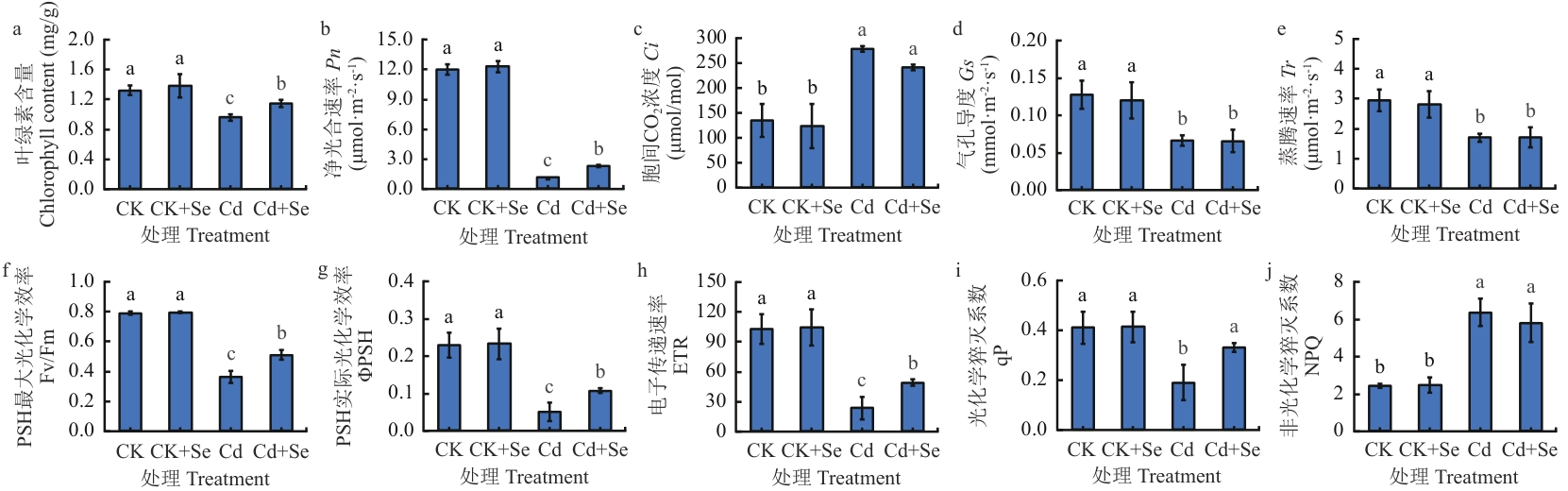
图2 外源硒预处理对镉胁迫下茎瘤芥幼苗叶绿素含量、光合参数和叶绿素荧光参数的影响
Fig. 2 Effects of exogenous selenium pretreatment on the chlorophyll content, photosynthetic parameters, and chlorophyll fluorescence parameters of B. juncea var. tumida Tsen et Lee seedlings under cadmium stress
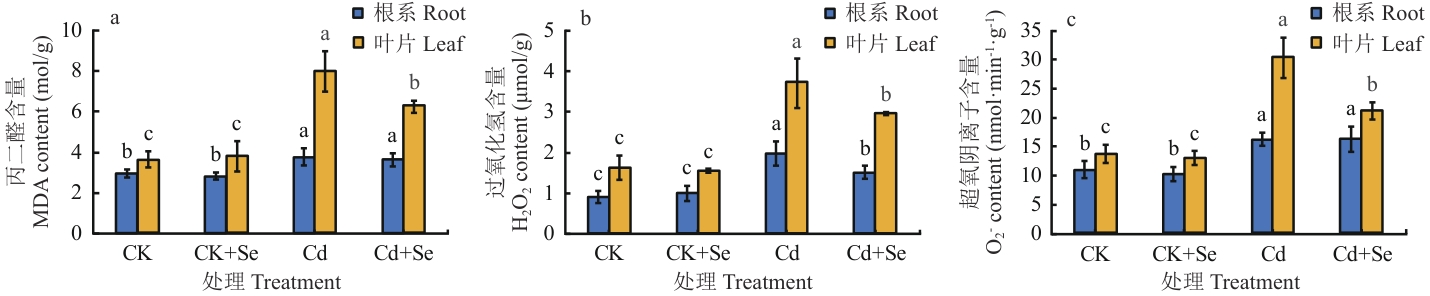
图3 外源硒预处理对镉胁迫下茎瘤芥幼苗MDA、H2O2和O2-含量的影响
Fig. 3 Effects of exogenous selenium pretreatment on the MDA, H2O2, and O2- contents of B. juncea var. tumida Tsen et Lee seedlings under cadmium stress
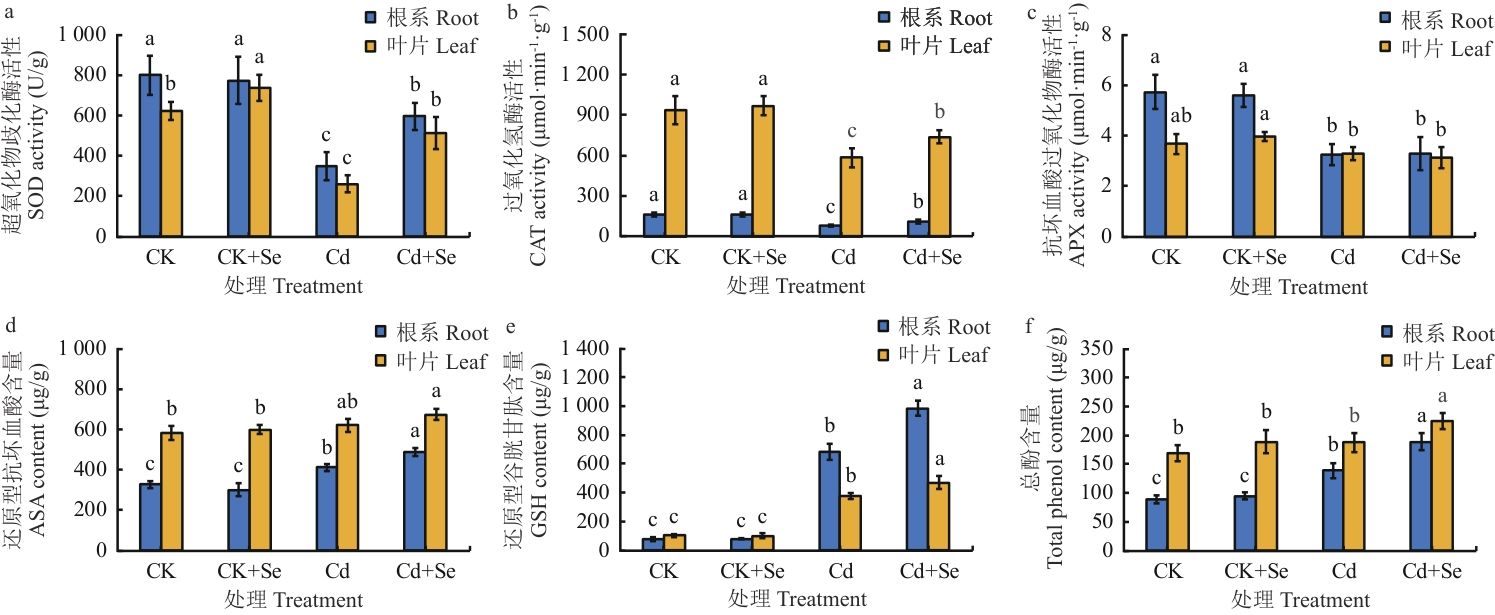
图4 外源硒预处理对镉胁迫下茎瘤芥幼苗抗氧化酶活性和抗氧化物质含量的影响
Fig. 4 Effects of exogenous selenium pretreatment on the antioxidant enzyme activities and antioxidant contents of B. juncea var. tumida Tsen et Lee seedlings under cadmium stress
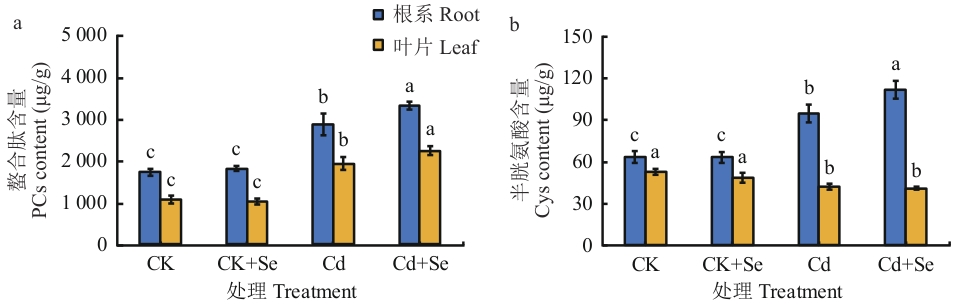
图5 外源硒预处理对镉胁迫下茎瘤芥幼苗螯合肽和半胱氨酸含量的影响
Fig. 5 Effects of exogenous selenium pretreatment on the chelating peptide and cysteinet contents of B. juncea var. tumida Tsen et Lee seedlings under cadmium stress
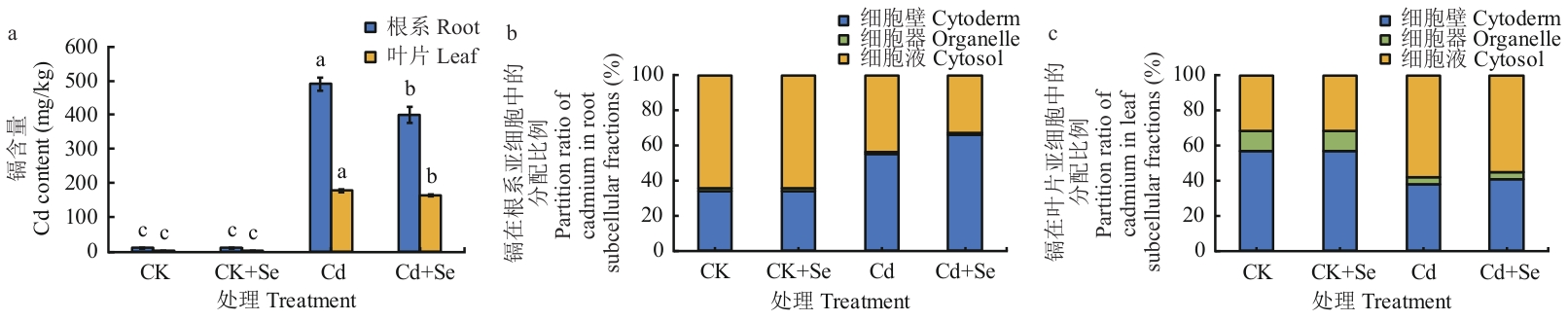
图6 外源硒预处理对镉胁迫下茎瘤芥幼苗镉积累量的影响
Fig. 6 Effects of exogenous selenium pretreatment on the cadmium accumulations of B. juncea var. tumida Tsen et Lee seedlings under cadmium stress
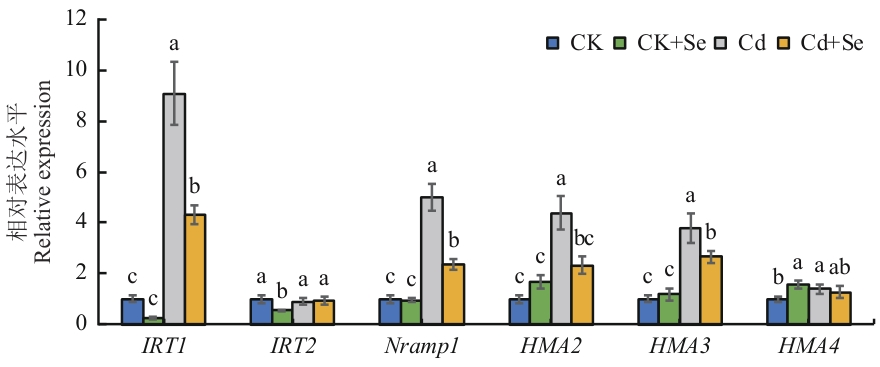
图7 外源硒预处理对镉胁迫下茎瘤芥幼苗根系镉吸收和转运相关基因表达量的影响
Fig. 7 Effects of exogenous selenium pretreatment on the expressions of genes related to cadmium uptake and transport in the roots of B. juncea var. tumida Tsen et Lee seedlings under cadmium stress
| [1] | 杜俊, 鲁先科, 蔡奎, 等. 土壤、植物中镉污染与治理技术研究现状与展望 [J]. 中国地质, 2025, 52(1): 131-158. |
| Du J, Lu XK, Cai K, et al. Cadmium pollution in soil and plant system and its remediation technology: Status and prospects [J]. Geol China, 2025, 52(1): 131-158. | |
| [2] | 吴勇, 颜惠芳, 曹受金. 镉胁迫对绣球生长及生理特性的影响 [J]. 现代园艺, 2023(18): 12-14. |
| Wu Y, Yan HF, Cao SJ. Effects of cadmium stress on the growth and physiological characteristics of Hydrangea [J]. Contemp Hortic, 2023(18): 12-14. | |
| [3] | 魏晓满. 茎瘤芥对镉胁迫的响应及硅缓解镉毒害的生理生化机制[D]. 重庆: 重庆三峡学院, 2024. |
| Wei XM. Responses of tumorous stem mustard to cadmium stress and the physiological and biochemical mechanisms of silicon alleviating its cadmium toxicity[D]. Chongqing: Chongqing Three Gorges University, 2024. | |
| [4] | 王婷, 周翠, 顾艳文, 等. 基于高光谱小波分维的茎瘤芥镉含量估算模型 [J]. 中国农业科学, 2018, 51(1): 71-81. |
| Wang T, Zhou C, Gu YW, et al. Hyperspectral estimation of cadmium content in tumorous stem mustard based on the wavelet-fractal analysis [J]. Sci Agric Sin, 2018, 51(1): 71-81. | |
| [5] | 陈鹤立, 杨文友, 吴杰, 等. 重庆市出口榨菜种植加工过程中有害元素含量的分析 [J]. 现代食品科技, 2019, 35(3): 262-269, 255. |
| Chen HL, Yang WY, Wu J, et al. Analysis of harmful elements during planting and processing of export pickle mustard in Chongqing City [J]. Mod Food Sci Technol, 2019, 35(3): 262-269, 255. | |
| [6] | 汪子昆. 四川沱江茎瘤芥产区的生态地球化学评价 [D]. 成都: 成都理工大学, 2012. |
| Wang ZK. Ecological geochemical evaluation of tumorous stem mustard land in Tuojiang town, Sichuan province [D]. Chengdu: Chengdu University of Technology, 2012. | |
| [7] | 程永毅, 李忠意, 陈杰华, 等. 重庆地区紫色土壤镉有效性水平及分异特性研究 [J]. 西南大学学报: 自然科学版, 2012, 34(1): 85-91. |
| Cheng YY, Li ZY, Chen JH, et al. Study on the available Cd level of purple soil and its differentiation characteristics in Chongqing [J]. J Southwest Univ Nat Sci Ed, 2012, 34(1): 85-91. | |
| [8] | 翟夜雨, 黄五星, 袁岐山, 等. 植物镉毒害与硒对镉胁迫的缓解作用研究进展 [J]. 河南农业大学学报, 2023, 57(3): 372-382, 392. |
| Zhai YY, Huang WX, Yuan QS, et al. Research progress on plant cadmium toxicity and the alleviation effect of selenium on cadmium stress [J]. J Henan Agric Univ, 2023, 57(3): 372-382, 392. | |
| [9] | 万亚男, 余垚, 齐田田, 等. 硒对植物吸收转运镉影响机制的研究进展 [J]. 生物技术进展, 2017, 7(5): 473-479. |
| Wan YN, Yu Y, Qi TT, et al. Progress on influence mechanism of selenium on cadmium uptake and translocation in plants [J]. Curr Biotechnol, 2017, 7(5): 473-479. | |
| [10] | 王波, 张然然, 杨如意, 等. 外源硒和耐硒细菌对镉胁迫下水稻生长、生理和硒镉积累的影响 [J]. 农业环境科学学报, 2020, 39(12): 2710-2718. |
| Wang B, Zhang RR, Yang RY, et al. Effect of exogenous selenium (Se) and Se-tolerant bacterium on the growth, physiology, and Se and cadmium (Cd) accumulation in rice (Oryza sativa L.) grown under Cd stress [J]. J Agro Environ Sci, 2020, 39(12): 2710-2718. | |
| [11] | Li D, Zhou CR, Ma JL, et al. Nanoselenium transformation and inhibition of cadmium accumulation by regulating the lignin biosynthetic pathway and plant hormone signal transduction in pepper plants [J]. J Nanobiotechnology, 2021, 19(1): 316. |
| [12] | 陈星旺. 钙、硒相互作用对辣椒蓄积镉的影响研究 [D]. 贵阳: 贵州师范大学, 2024. |
| Chen XW. Effect of interaction between calcium and selenium on cadmium accumulation in pepper [D]. Guiyang: Guizhou Normal University, 2024. | |
| [13] | 刘帅, 吴志超, 赵亚荣, 等. 外源硒对镉胁迫下菜心Fe、Mn、Cu、Zn吸收与转运的影响 [J]. 农业环境科学学报, 2018, 37(3): 431-439. |
| Liu S, Wu ZC, Zhao YR, et al. Effects of selenium on the uptake and transport of trace elements by cadmium-stressed flowering Chinese cabbage [J]. J Agro Environ Sci, 2018, 37(3): 431-439. | |
| [14] | Huang Z, Meng SL, Huang J, et al. Transcriptome analysis reveals the mechanism of exogenous selenium in alleviating cadmium stress in purple flowering stalks (Brassica campestris var. Purpuraria) [J]. Int J Mol Sci, 2024, 25(3): 1800. |
| [15] | 蒋亚, 吴道明, 周凯, 等. 生物炭联合亚硒酸钠对水稻生理特征及硒镉累积的影响 [J]. 农业环境科学学报, 2025, 44(12): 3053-3060. |
| Jiang Y, Wu DM, Zhou K, et al. Effects of biochar and sodium selenite combination on physiological characteristics and cadmium selenide accumulation in rice [J]. J Agro Environ Sci, 2025, 44(12): 3053-3060. | |
| [16] | 何依珊, 黄佳, 韦丽媛, 等. 硒浸种与叶面喷硒对水稻吸收转运镉的影响 [J]. 广西师范大学学报: 自然科学版, 2025, 43(1): 48-57. |
| He YS, Huang J, Wei LY, et al. Effects of uptake and transport of cadmium in rice (Oryza sativa L.) by soaking seeds and foliar spraying with selenium fertilizers [J]. J Guangxi Norm Univ Nat Sci Ed, 2025, 43(1): 48-57. | |
| [17] | 呼艳姣, 陈美凤, 强瑀, 等. 镉胁迫下锌硒交互作用对水稻镉毒害的缓解机制 [J]. 生物技术通报, 2022, 38(4): 143-152. |
| Hu YJ, Chen MF, Qiang Y, et al. Alleviation mechanisms of zinc-selenium interaction on the cadmium toxicity in rice under cadmium stress [J]. Biotechnol Bull, 2022, 38(4): 143-152. | |
| [18] | 袁方, 李鑫, 余君萍, 等. 分光光度法测定叶绿素含量及其比值问题的探讨 [J]. 植物生理学通讯, 2009, 45(1): 63-66. |
| Yuan F, Li X, Yu JP, et al. Methodological study on determination of chlorophyll contents and ratio of chl a/chl b by spectrophotometry [J]. Plant Physiol Commun, 2009, 45(1): 63-66. | |
| [19] | 张甜甜, 吴鹏, 杜文晴, 等. 大豆品种叶片光合特性及碳代谢酶活性演变研究 [J]. 中国油料作物学报, 2025, 47(4): 993-1001. |
| Zhang TT, Wu P, Du WQ, et al. Evolution of photosynthetic characteristics and carbon metabolic enzyme activities in leaves of soybean varieties [J]. Chin J Oil Crop Sci, 2025, 47(4): 993-1001. | |
| [20] | Bai TH, Li CY, Ma FW, et al. Responses of growth and antioxidant system to root-zone hypoxia stress in two Malus species [J]. Plant Soil, 2010, 327(1): 95-105. |
| [21] | 莫言玲, 张文静, 罗亚兰, 等. 宽柄芥种质资源农艺性状与营养品质性状鉴定与评价 [J]. 浙江农业学报, 2022, 34(2): 317-328. |
| Mo YL, Zhang WJ, Luo YL, et al. Identification and evaluation of agronomic traits and nutritional quality traits in wide handle mustard germplam resources [J]. Acta Agric Zhejiangensis, 2022, 34(2): 317-328. | |
| [22] | 魏晓满, 陈春言, 王思宇, 等. 镉胁迫对茎瘤芥种子萌发、生理特性及镉积累的影响 [J]. 种子, 2023, 42(12): 117-124. |
| Wei XM, Chen CY, Wang SY, et al. Effects of Cd stress on seed germination, physiological characteristic and cd accumulation of Brassica juncea var. tumida tsenet lee [J]. Seed, 2023, 42(12): 117-124. | |
| [23] | Wu Q, Su NN, Cai JT, et al. Hydrogen-rich water enhances cadmium tolerance in Chinese cabbage by reducing cadmium uptake and increasing antioxidant capacities [J]. J Plant Physiol, 2015, 175: 174-182. |
| [24] | 吴志超. 高低镉积累油菜品种筛选及其生化机制研究 [D]. 武汉: 华中农业大学, 2015. |
| Wu ZC. Screening of high/low cadmium accumulation Brassica napus cultivars and research on the biochemical mechanisms [D]. Wuhan: Huazhong Agricultural University, 2015. | |
| [25] | 孙全, 蔡应繁, 何晓红, 等. 茎瘤芥根和茎组织转录组比较分析 [J]. 四川大学学报: 自然科学版, 2013, 50(5): 1090-1096. |
| Sun Q, Cai YF, He XH, et al. The root and stem’s transcriptome datas analysis of Tumourous stem mustard (Brassica juncea var. tumida Tsen et Lee) [J]. J Sichuan Univ Nat Sci Ed, 2013, 50(5): 1090-1096. | |
| [26] | Schmittgen TD, Livak KJ. Analyzing real-time PCR data by the comparative C(T) method [J]. Nat Protoc, 2008, 3(6): 1101-1108. |
| [27] | 李贺, 孙亚丽, 刘世琦, 等. 增施钙对镉胁迫下大蒜生理特性及品质的影响 [J]. 园艺学报, 2015, 42(2): 377-385. |
| Li H, Sun YL, Liu SQ, et al. Effects of exogenous calcium on physiological characteristics and qualities of garlic under cadmium stress [J]. Acta Hortic Sin, 2015, 42(2): 377-385. | |
| [28] | 李颖, 杨小环, 鲁一薇, 等. 外源硒对镉胁迫下紫苏幼苗生长发育毒害的缓解效应 [J]. 山西农业科学, 2021, 49(4): 408-413. |
| Li Y, Yang XH, Lu YW, et al. Alleviating toxic effects of exogenous selenium on growth and development of Perilla frutescens seedlings under cadmium stress [J]. J Shanxi Agric Sci, 2021, 49(4): 408-413. | |
| [29] | 王智, 马媛媛, 罗新锐, 等. 外源5-ALA对镉胁迫下蚕豆幼苗抗氧化系统和光合特性的影响 [J]. 甘肃农业大学学报, 2026, 61(02): 112-120. |
| Wang Z, Ma YY, Luo XR, et al. Effects of exogenous 5-ALA on antioxidant system and photosynthetic properties of faba bean seedlings under cadmium stress [J]. J Gansu Agric Univ, 2026, 61(02): 112-120. | |
| [30] | 李二豹, 樊文华, 刘奋武, 等. 硅对镉胁迫下黄瓜苗期生长及光合作用的影响 [J]. 北方园艺, 2021(8): 8-16. |
| Li EB, Fan WH, Liu FW, et al. Effects of silicon on growth and photosynthesis of cucumber seedling under cadmium stress [J]. North Hortic, 2021(8): 8-16. | |
| [31] | 周志国, 樊双虎, 邓晨, 等. 2, 4-表油菜素内酯对镉胁迫下胡萝卜幼苗生理特性的影响 [J]. 生物技术通报, 2025, 41(5): 165-174. |
| Zhou ZG, Fan SH, Deng C, et al. Effects of exogenous 2, 4-epibrassinolide on physiological characteristics of Daucus carota L. seedlings under cadmium stress [J]. Biotechnol Bull, 2025, 41(5): 165-174. | |
| [32] | 殷业超, 董敬超, 张宇, 等. 镉胁迫下两种不同耐受性花生农艺性状与抗氧化酶活性分析 [J]. 农业环境科学学报, 2025, 44(6): 1451-1457. |
| Yin YC, Dong JC, Zhang Y, et al. Analysis of agronomic traits and antioxidant enzyme activities under cadmium stress in two different tolerant peanuts [J]. J Agro Environ Sci, 2025, 44(6): 1451-1457. | |
| [33] | 于亚新. 外源硒、硅缓解艾镉胁迫的机制研究 [D]. 杨凌: 西北农林科技大学, 2025. |
| Yu YX. The effects of exogenous selenium and silicon on alleviation of cadmium toxicity in Artemisia argyi [D]. Yangling: Northwest Agriculture and Forestry University, 2025. | |
| [34] | 全芮萍, 陈建福, 张蕾, 等. 抗氧化酶和植物螯合肽对苎麻重金属Cd胁迫的应答 [J]. 热带作物学报, 2022, 43(5): 1023-1031. |
| Quan RP, Chen JF, Zhang L, et al. Responses of ramie to antioxidant enzymes and plant chelating peptides to Cd stress [J]. Chin J Trop Crops, 2022, 43(5): 1023-1031. | |
| [35] | 时萌, 王芙蓉, 王棚涛. 植物响应重金属镉胁迫的耐性机理研究进展 [J]. 生命科学, 2016, 28(4): 504-512. |
| Shi M, Wang FR, Wang PT. Research advances in the tolerance mechanism of plant response to heavy metal cadmium stress [J]. Chin Bull Life Sci, 2016, 28(4): 504-512. | |
| [36] | 孙静文, 赵世诚, 范洪黎, 等. 苋菜IRT1基因克隆、序列及表达分析 [J]. 生物技术通报, 2012, 28(2): 59-64. |
| Sun JW, Zhao SC, Fan HL, et al. Cloning, sequence and expression analysis of the IRT1 gene in Amaranthus mangostanus L. [J]. Biotechnol Bull, 2012, 28(2): 59-64. | |
| [37] | 张腾. 转IRT1基因龙葵毛状根体系的建立及其对镉胁迫响应的初步探讨 [D]. 北京: 北京交通大学, 2016. |
| Zhang T. Establishment of IRT1 transgenic hairy roots of Solanum nigrum L. and preliminary study on its response to cadmium stress [D]. Beijing: Beijing Jiaotong University, 2016. | |
| [38] | 安婷婷, 黄帝, 王浩, 等. 植物响应镉胁迫的生理生化机制研究进展 [J]. 植物学报, 2021, 56(3): 347-362. |
| An TT, Huang D, Wang H, et al. Research advances in plant physiological and biochemical mechanisms in response to cadmium stress [J]. Chin Bull Bot, 2021, 56(3): 347-362. | |
| [39] | Zhang J, Zhang M, Song HY, et al. A novel plasma membrane-based NRAMP transporter contributes to Cd and Zn hyperaccumulation in Sedum alfredii Hance [J]. Environ Exp Bot, 2020, 176: 104121. |
| [1] | 王冰冰, 朱迪, 杨生龙, 李艺林, 杨琪, 贺苗苗. 外源褪黑素对晚疫病胁迫下马铃薯抗病性的影响[J]. 生物技术通报, 2026, 42(6): 107-115. |
| [2] | 朱丽娟, 张锴, 温晓蕾, 褚佳豪, 史凤玉, 王艳丽. 基于WGCNA挖掘野生大豆耐镉关键基因[J]. 生物技术通报, 2025, 41(8): 124-136. |
| [3] | 冯冰, 闫彩霞, 刘艺, 董凯悦, 赵楠, 赵瑞, 陈少良. 灰杨PcAHL17负调控拟南芥的镉耐受性[J]. 生物技术通报, 2025, 41(6): 269-283. |
| [4] | 周志国, 樊双虎, 邓晨, 冯雪. 2,4-表油菜素内酯对镉胁迫下胡萝卜幼苗生理特性的影响[J]. 生物技术通报, 2025, 41(5): 165-174. |
| [5] | 王斌, 王玉昆, 肖艳辉. 丁香罗勒(Ocimum gratissimum)叶片响应镉胁迫的比较转录组学分析[J]. 生物技术通报, 2025, 41(3): 255-270. |
| [6] | 马顺, 赵旭, 刘雪, 陈广坤, 高悦, 丁瑾, 张竞伊, 赵怡萌, 公丽玉, 李洪涛. γ-氨基丁酸对肉鸡抗氧化能力及盲肠菌群结构的影响[J]. 生物技术通报, 2025, 41(12): 351-359. |
| [7] | 杜仲阳, 杨泽, 梁梦静, 刘义珍, 崔红利, 史达明, 薛金爱, 孙岩, 张春辉, 季春丽, 李润植. 纳米硒(SeNPs)缓解烟草幼苗铅胁迫和促生效应[J]. 生物技术通报, 2024, 40(7): 183-196. |
| [8] | 黄秋, 刘静, 秦樊鑫, 罗帮林, 罗林, 李宛蔚, 徐安琪. 锌硒配施对水稻汞的阻隔效应[J]. 生物技术通报, 2024, 40(6): 143-151. |
| [9] | 韩志阳, 贾子苗, 梁秋菊, 王轲, 唐华丽, 叶兴国, 张双喜. 二套小麦-簇毛麦染色体附加系苗期耐盐性及籽粒硒和叶酸的含量[J]. 生物技术通报, 2023, 39(8): 185-193. |
| [10] | 余慧, 王静, 梁昕昕, 辛亚平, 周军, 赵会君. 宁夏枸杞铁镉响应基因的筛选及其功能验证[J]. 生物技术通报, 2023, 39(7): 195-205. |
| [11] | 刘辉, 卢扬, 叶夕苗, 周帅, 李俊, 唐健波, 陈恩发. 外源硫诱导苦荞镉胁迫响应的比较转录组学分析[J]. 生物技术通报, 2023, 39(5): 177-191. |
| [12] | 姜南, 石杨, 赵志慧, 李斌, 赵熠辉, 杨俊彪, 闫家铭, 靳雨璠, 陈稷, 黄进. 镉胁迫下水稻OsPT1的表达及功能分析[J]. 生物技术通报, 2023, 39(1): 166-174. |
| [13] | 呼艳姣, 陈美凤, 强瑀, 李海燕, 刘静, 秦樊鑫. 镉胁迫下锌硒交互作用对水稻镉毒害的缓解机制[J]. 生物技术通报, 2022, 38(4): 143-152. |
| [14] | 祖国蔷, 胡哲, 王琪, 李光哲, 郝林. Burkholderia sp. GD17对水稻幼苗镉耐受的调节[J]. 生物技术通报, 2022, 38(4): 153-162. |
| [15] | 杨馥榕, 王晓红, 肖琪, 方娟, 李立华. 木槿品种对镉胁迫的生理响应及耐镉能力评价[J]. 生物技术通报, 2022, 38(1): 98-107. |
| 阅读次数 | ||||||
|
全文 |
|
|||||
|
摘要 |
|
|||||
