







生物技术通报 ›› 2026, Vol. 42 ›› Issue (10): 27-36.doi: 10.13560/j.cnki.biotech.bull.1985.2026-0100
• 技术与方法 • 上一篇
苏晓梅, 刘淑梅, 吕宏君, 杨宗辉, 侯丽霞( )
收稿日期:2026-01-22
出版日期:2026-10-26
发布日期:2026-10-15
通讯作者:
侯丽霞houlx2006@163.com基金资助:
SU Xiao-mei, LIU Shu-mei, LYU Hong-jun, YANG Zong-hui, HOU Li-xia()
Received:2026-01-22
Published:2026-10-26
Online:2026-10-15
摘要:
目的 开发覆盖番茄全基因组、多态性高且便于琼脂糖凝胶电泳检测的InDel分子标记,为番茄种质资源遗传多样性分析、DNA指纹图谱构建及品种鉴定等提供高效实用的技术工具。 方法 基于已公开的番茄重测序数据,通过生物信息学方法筛选符合目标的InDel变异位点并设计引物。利用涵盖普通鲜食番茄、口感番茄、加工番茄及樱桃番茄4大类型的商业品种,对所开发标记进行多态性验证、筛选与应用分析。 结果 成功开发84个在番茄全基因组均匀分布且多态性良好的InDel标记。利用该标记体系对288份番茄品种进行分析,结果显示品种间遗传相似系数变幅为0.369-0.994,平均值为0.667。基于遗传距离的聚类分析和主成分分析将供试番茄品种划分为4大类群,其中樱桃番茄表现出最高的遗传多样性并形成独立分支,普通鲜食番茄与口感番茄遗传背景最为相近,在聚类图中呈交叉混合分布。根据标记在不同类型番茄中的多态性差异,分别筛选出适用于普通鲜食番茄、口感番茄、加工番茄和樱桃番茄的核心鉴定标记组合,分别包含48、36、48和48对引物,并据此构建了品种DNA指纹图谱。应用案例表明,利用亲本间多态性标记可实现杂交种纯度的快速鉴定,利用核心标记组合可有效区分不同品种,证实了该标记体系的实用性与可靠性。 结论 开发的全基因组InDel标记体系多态性高、检测简便,能够有效揭示番茄商业品种的遗传多样性与群体结构,并成功应用于品种指纹图谱构建、真实性鉴定及杂交种纯度检测,可为番茄种质资源管理、分子育种及品种权保护提供技术支撑。
苏晓梅, 刘淑梅, 吕宏君, 杨宗辉, 侯丽霞. 基于重测序的番茄全基因组InDel分子标记开发与应用[J]. 生物技术通报, 2026, 42(10): 27-36.
SU Xiao-mei, LIU Shu-mei, LYU Hong-jun, YANG Zong-hui, HOU Li-xia. Development and Application of Insertion-deletion (InDel) Markers in Tomato Based on Whole-genome Re-sequencing Data[J]. Biotechnology Bulletin, 2026, 42(10): 27-36.
群体类型 Group type | 平均次要等位基因频率 Mean MAF | 平均观测杂合度 Mean Ho | 平均期望杂合度 Mean He | 平均多态信息含量 Mean PIC |
|---|---|---|---|---|
| 普通鲜食番茄 Fresh tomato (B) | 0.207 4 | 0.254 8 | 0.264 0 | 0.208 8 |
| 口感番茄 Flavor tomato (K) | 0.168 0 | 0.242 7 | 0.232 4 | 0.190 1 |
| 加工番茄 Processing tomato (P) | 0.205 1 | 0.179 7 | 0.282 3 | 0.227 2 |
| 樱桃番茄 Cherry tomato (Y) | 0.279 1 | 0.337 0 | 0.360 6 | 0.284 9 |
| 总计 Total | 0.279 8 | 0.253 6 | 0.369 3 | 0.294 5 |
表1 不同类型番茄遗传多样性信息
Table 1 Genetic diversity parameters of different tomato types
群体类型 Group type | 平均次要等位基因频率 Mean MAF | 平均观测杂合度 Mean Ho | 平均期望杂合度 Mean He | 平均多态信息含量 Mean PIC |
|---|---|---|---|---|
| 普通鲜食番茄 Fresh tomato (B) | 0.207 4 | 0.254 8 | 0.264 0 | 0.208 8 |
| 口感番茄 Flavor tomato (K) | 0.168 0 | 0.242 7 | 0.232 4 | 0.190 1 |
| 加工番茄 Processing tomato (P) | 0.205 1 | 0.179 7 | 0.282 3 | 0.227 2 |
| 樱桃番茄 Cherry tomato (Y) | 0.279 1 | 0.337 0 | 0.360 6 | 0.284 9 |
| 总计 Total | 0.279 8 | 0.253 6 | 0.369 3 | 0.294 5 |
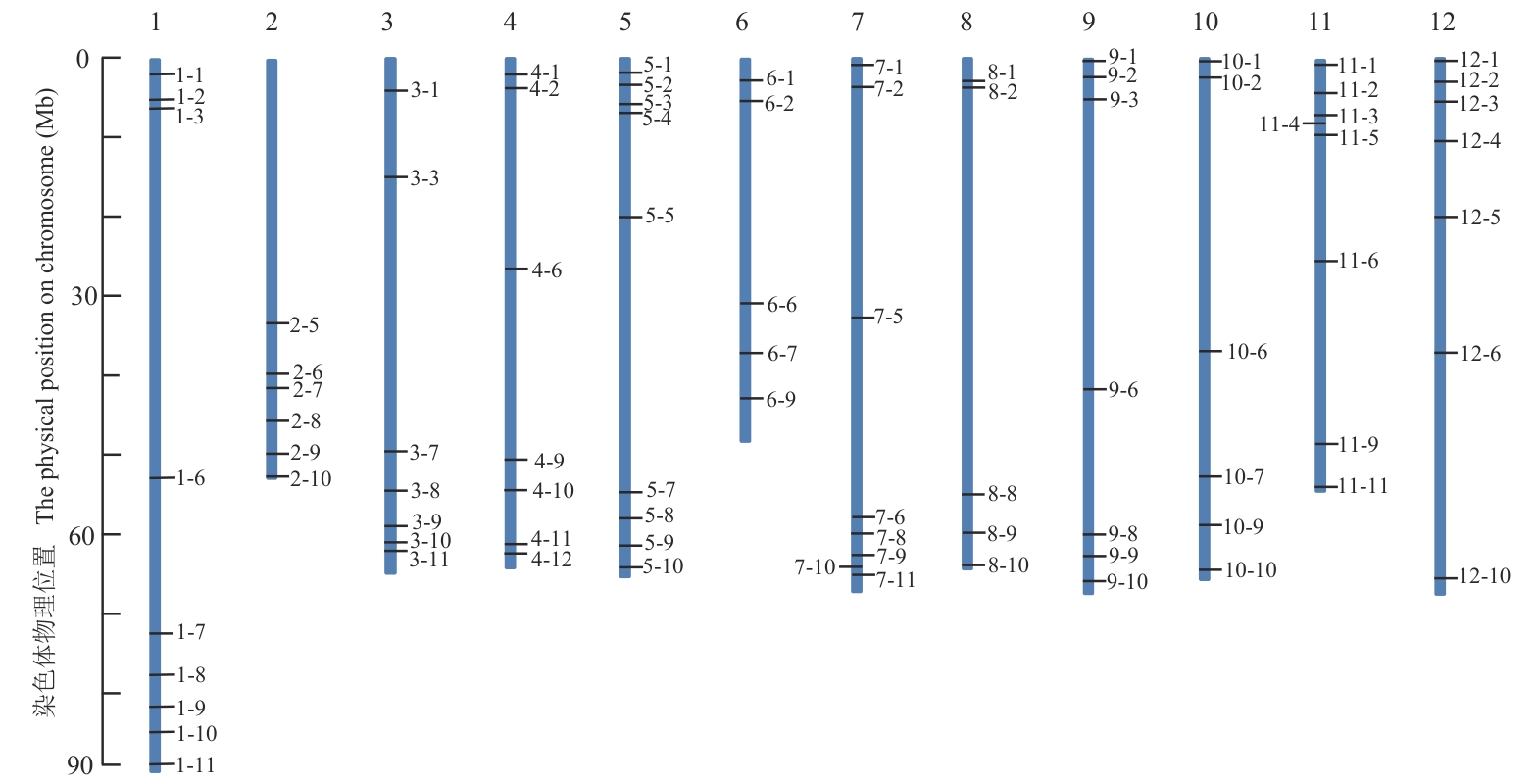
图1 84个InDel标记在番茄参考基因组的位置(SL4.0)
Fig. 1 Physical positions of 84 InDel markers on the tomato reference genome (SL4.0)
群体类型 Group type | 普通鲜食番茄 Fresh tomato (B) | 口感番茄 Flavor tomato (K) | 加工番茄 Processing tomato (P) | 樱桃番茄 Cherry tomato (Y) |
|---|---|---|---|---|
| 普通鲜食番茄 Fresh tomato (B) | 0.213 2 | — | — | — |
| 口感番茄 Flavor tomato (K) | 0.261 9 | 0.185 5 | — | — |
| 加工番茄 Processing tomato (P) | 0.315 3 | 0.345 7 | 0.259 9 | — |
| 樱桃番茄 Cherry tomato (Y) | 0.412 2 | 0.429 0 | 0.420 8 | 0.296 8 |
表2 不同类型番茄间遗传距离矩阵
Table 2 Genetic distance matrix among different tomato types
群体类型 Group type | 普通鲜食番茄 Fresh tomato (B) | 口感番茄 Flavor tomato (K) | 加工番茄 Processing tomato (P) | 樱桃番茄 Cherry tomato (Y) |
|---|---|---|---|---|
| 普通鲜食番茄 Fresh tomato (B) | 0.213 2 | — | — | — |
| 口感番茄 Flavor tomato (K) | 0.261 9 | 0.185 5 | — | — |
| 加工番茄 Processing tomato (P) | 0.315 3 | 0.345 7 | 0.259 9 | — |
| 樱桃番茄 Cherry tomato (Y) | 0.412 2 | 0.429 0 | 0.420 8 | 0.296 8 |
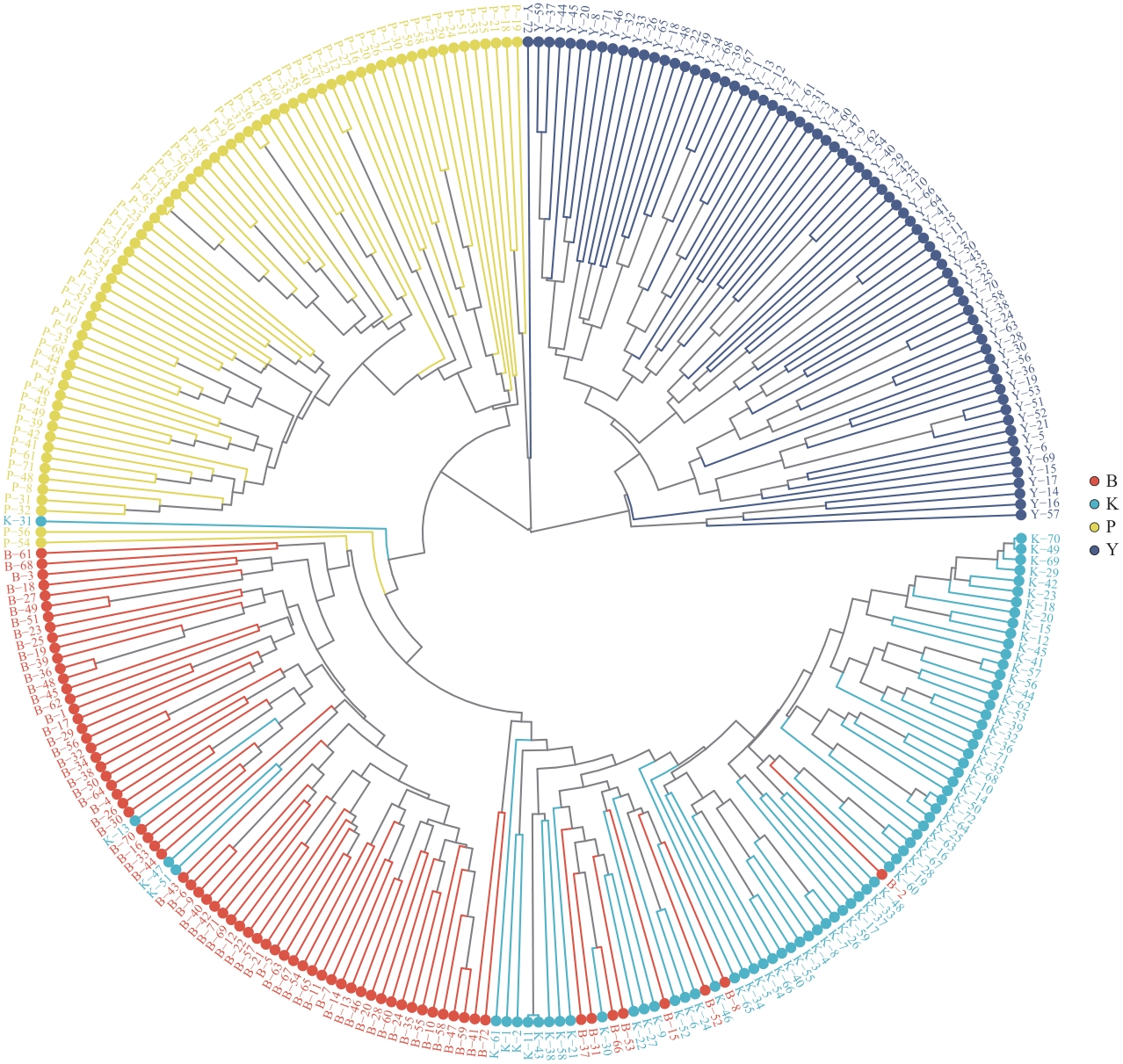
图2 基于84个InDel标记构建的288个番茄品种UPGMA系统发育树B:普通鲜食番茄;K:口感番茄;P:加工番茄;Y:樱桃番茄。下同
Fig. 2 Phylogenetic tree of 288 tomato varieties based on 84 InDel markers using the UPGMA methodB: Fresh tomato. K: Flavor tomato. P: Processing tomato. Y: Cherry tomato. The same below
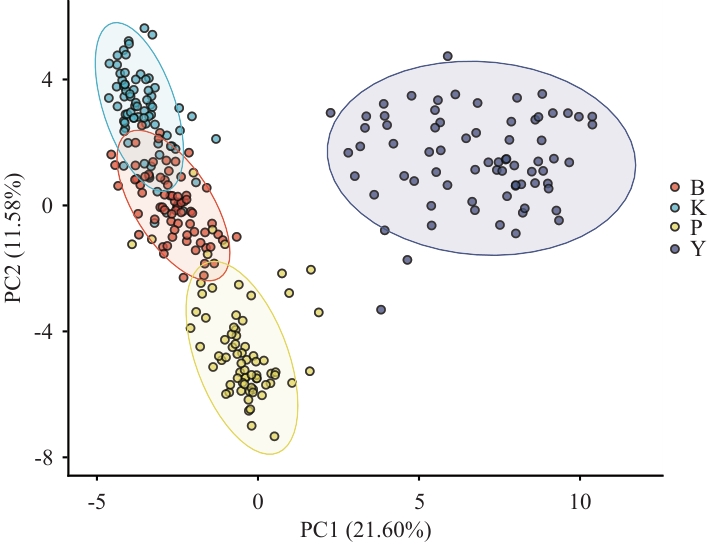
图3 基于84个InDel标记的288份番茄品种主成分分析(PCA)PC1:解释21.60%的遗传变异;PC2:解释11.58%的遗传变异
Fig. 3 Principal component analysis (PCA) of 288 tomato varieties based on 84 InDel markersPC1: Explained 21.60% of the total genetic variation; PC2: explained 11.58% of the total genetic variation
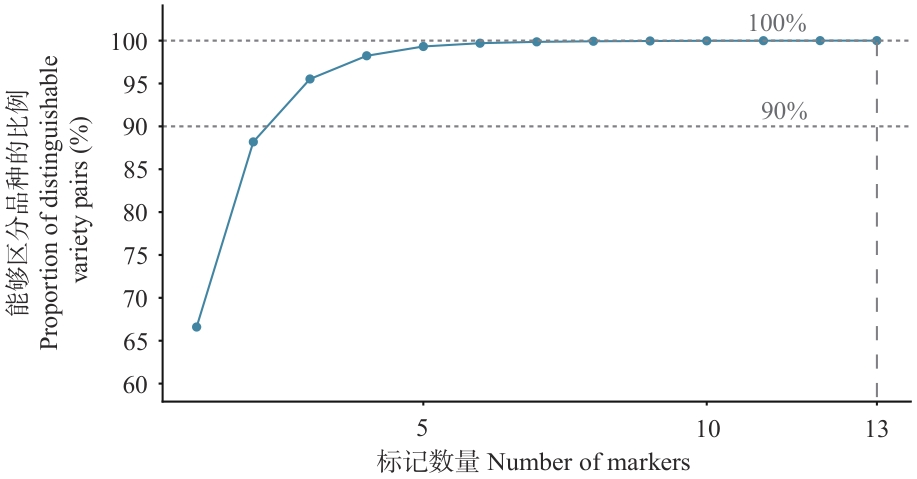
图4 InDel位点数对番茄品种的鉴定效率
Fig. 4 Efficiency of tomato variety identification using different numbers of InDel markers

图5 基于核心标记的4种类型番茄指纹图谱指纹图谱中不同颜色分别表示与参考基因组一致的纯合型(a,蓝色)、杂合型(h,白色)、纯合变异型(b,红色)
Fig. 5 DNA fingerprints of four tomato types based on core markersIn the fingerprint, different colors represent the homozygous type consistent with the reference genome (a, blue), heterozygous type (h, white) and variant homozygous type (b, red), respectively
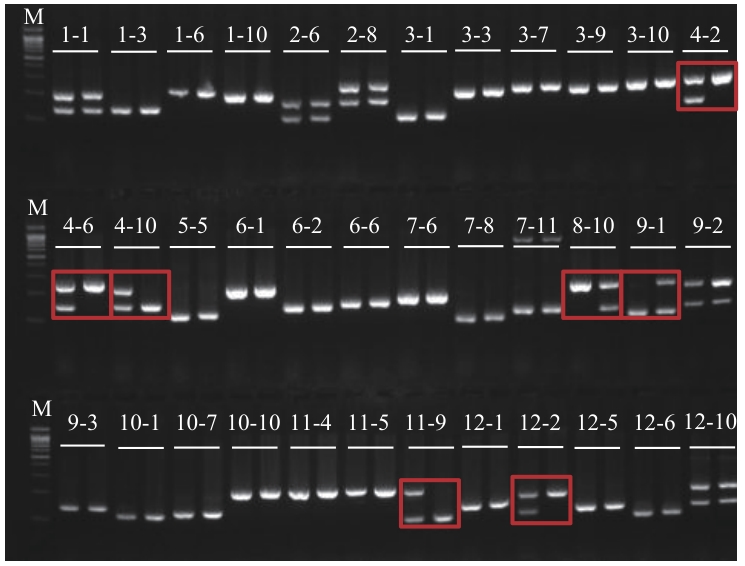
图6 基于36个核心标记的2个口感番茄品种真实性鉴定红框表示2个品种间具有差异的标记
Fig. 6 Authenticity identification of two flavor tomato varieties based on a core set of 36 markersThe red box indicates polymorphic markers between the two varieties. M: 100 bp DNA marker
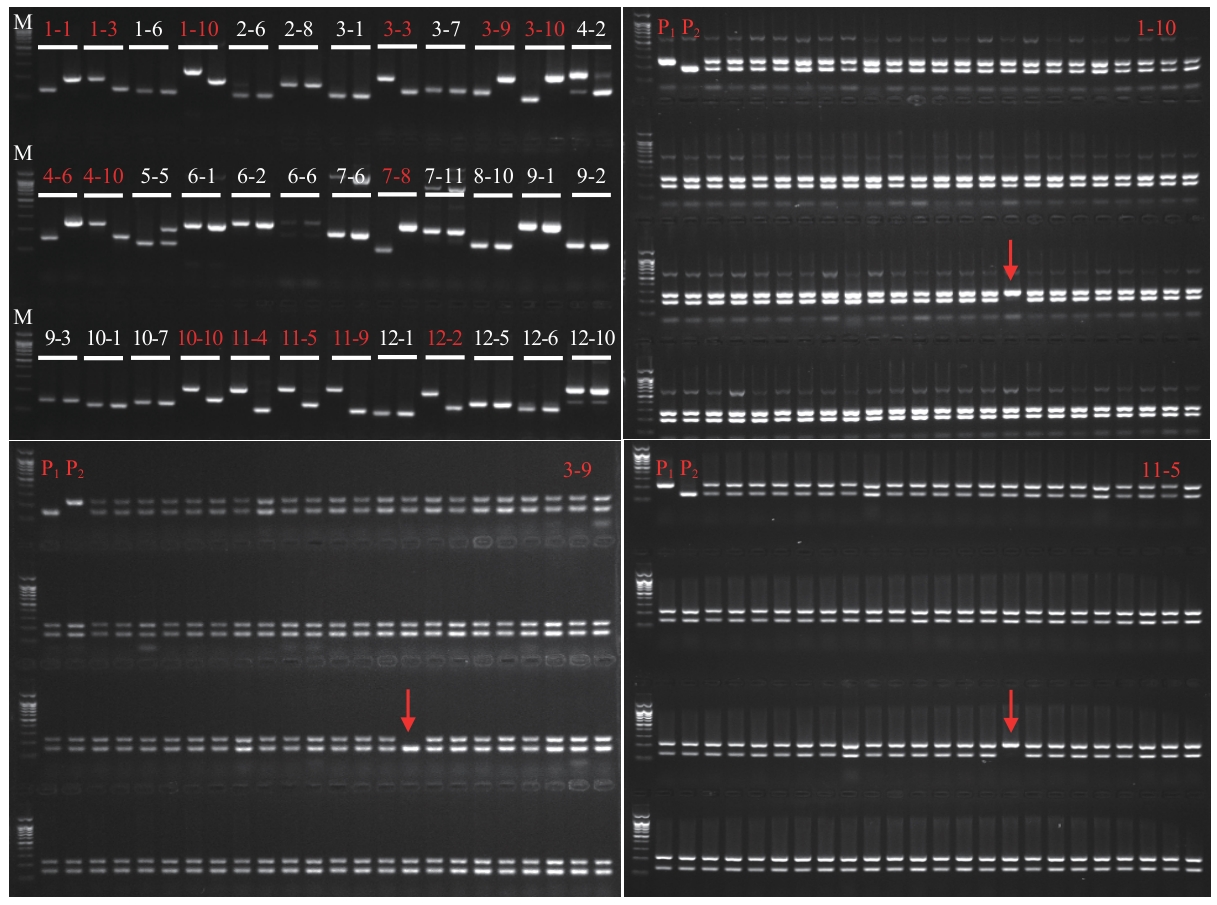
图7 基于分子标记的‘品番1933’杂交种纯度鉴定P1:母本,P2:父本;红色箭头表示杂株;红色数字表示可用于纯度鉴定的标记
Fig. 7 Purity identification of the hybrid 'Pinfan 1933' based on molecular markersP1: The female parent. P2: The male parent. The red arrows indicate the off-type plants. The red numbers indicate the markers that can be used for purity identification
| [1] | Blanca J, Montero-Pau J, Sauvage C, et al. Genomic variation in tomato, from wild ancestors to contemporary breeding accessions [J]. BMC Genom, 2015, 16: 257. |
| [2] | 李君明, 项朝阳, 王孝宣, 等. “十三五”我国番茄产业现状及展望 [J]. 中国蔬菜, 2021(2): 13-20. |
| Li JM, Xiang CY, Wang XX, et al. Current situation of tomato industry in China during ‘the thirteenth Five-Year Plan’ period and future prospect [J]. China Veg, 2021(2): 13-20. | |
| [3] | 李剑, 谢昊, 豆丹丹, 等. DNA分子标记在作物品种鉴定中的应用展望 [J]. 安徽农业科学, 2026, 54(7): 5-9. |
| Li J, Xie H, Dou DD, et al. Prospects of DNA molecular markers in crop variety identification [J]. J Anhui Agric Sci, 2026, 54(7): 5-9. | |
| [4] | Zhang J, Ren J, Yang JJ, et al. Evaluation of SNP fingerprinting for variety identification of tomato by DUS testing [J]. Agric Commun, 2023, 1(1): 100006. |
| [5] | 苏国钊, 李嫒嫒, 刘中华, 等. 苦瓜品种SSR分子标记鉴定技术体系构建与应用 [J]. 中国农业科学, 2024, 57(11): 2227-2242. |
| Su GZ, Li AA, Liu ZH, et al. Construction and application of SSR marker identification system for bitter gourd varieties [J]. Sci Agric Sin, 2024, 57(11): 2227-2242. | |
| [6] | 朱海峰, 王天鹏, 全瀚仪, 等. 基于KASP标记的芥菜种质资源分子身份证构建 [J]. 中国蔬菜, 2025(3): 34-45. |
| Zhu HF, Wang TP, Quan HY, et al. Construction of molecular identity card for mustard germplasm resources based on KASP markers [J]. China Veg, 2025(3): 34-45. | |
| [7] | 胡娜, 魏庆镇, 庞鸿涛, 等. 茄科作物DNA指纹图谱研究进展及其在遗传育种的应用 [J]. 中国蔬菜, 2025(10): 34-44. |
| Hu N, Wei QZ, Pang HT, et al. Research progress of DNA fingerprinting of Solanaceae crops and its application in genetic breeding [J]. China Veg, 2025(10): 34-44. | |
| [8] | 洪晓如, 吴智明, 陈汉才, 等. 基于重测序的芥蓝(Brassica alboglabra)全基因组InDel标记开发 [J]. 分子植物育种, 2021, 19(4): 1190-1201. |
| Hong XR, Wu ZM, Chen HC, et al. Development of InDel markers for Brassica alboglabra based on whole-genome re-sequencing data [J]. Mol Plant Breed, 2021, 19(4): 1190-1201. | |
| [9] | Zhang YY, Shi J, Shen CQ, et al. Discovery of DNA polymorphisms via genome-resequencing and development of molecular markers between two barley cultivars [J]. Plant Cell Rep, 2022, 41(12): 2279-2292. |
| [10] | Jin L, Zhao LP, Wang YL, et al. Genetic diversity of 324 cultivated tomato germplasm resources using agronomic traits and InDel markers [J]. Euphytica, 2019, 215(4): 69. |
| [11] | 张辉, 李鑫, 王志敏, 等. 基于核心InDel标记樱桃番茄种质资源的遗传多样性分析与应用 [J]. 中国蔬菜, 2023(10): 26-36. |
| Zhang H, Li X, Wang ZM, et al. Genetic diversity analysis and application of cherry tomato germplasm based on core InDel markers [J]. China Veg, 2023(10): 26-36. | |
| [12] | Adedze YMN, Lu X, Xia YC, et al. Agarose-resolvable InDel markers based on whole genome re-sequencing in cucumber [J]. Sci Rep, 2021, 11: 3872. |
| [13] | Yang JC, Meng PX, Mi H, et al. The development of ideal insertion and deletion (InDel) markers and initial indel map variation in cucumber using re-sequenced data [J]. BMC Genom, 2025, 26: 391. |
| [14] | Guo GJ, Zhang GL, Pan BG, et al. Development and application of InDel markers for Capsicum spp. based on whole-genome re-sequencing [J]. Sci Rep, 2019, 9: 3691. |
| [15] | Qureshi M, Ulusoy D, Kasapoğlu S, et al. Novel InDel marker development in pepper (Capsicum annuum L.) by ddRADSeq [J]. Trop Plant Biol, 2025, 18: 83. |
| [16] | 尤园园, 王帅, 方莹莹, 等. 茄子全基因组InDel变异特征及分子标记开发和应用 [J]. 园艺学报, 2024, 51(3): 520-532. |
| You YY, Wang S, Fang YY, et al. Variation characteristics of insertion-deletion (InDel) and molecular markers development and application in eggplant based on whole genome re-sequencing data [J]. Acta Hortic Sin, 2024, 51(3): 520-532. | |
| [17] | 杨易, 黎庭耀, 李国景, 等. 基于重测序的长豇豆基因组InDel标记开发及应用 [J]. 园艺学报, 2022, 49(4): 778-790. |
| Yang Y, Li TY, Li GJ, et al. Development and application of insertion-deletion (InDel) markers in asparagus bean based on whole genome re-sequencing data [J]. Acta Hortic Sin, 2022, 49(4): 778-790. | |
| [18] | Liu KW, Men WJ, Feng JX, et al. Development and application of InDels and SNPs markers based on whole-genome resequencing in Chinese cabbage [J]. Hortic Environ Biotechnol, 2025, 66(5): 1073-1088. |
| [19] | Yang JJ, Wang YY, Shen HL, et al. In silico identification and experimental validation of insertion-deletion polymorphisms in tomato genome [J]. DNA Res, 2014, 21(4): 429-438. |
| [20] | Zhou Y, Zhang ZY, Bao ZG, et al. Graph pangenome captures missing heritability and empowers tomato breeding [J]. Nature, 2022, 606(7914): 527-534. |
| [21] | 杨洁, 赫佳, 王丹碧, 等. InDel标记的研究和应用进展 [J]. 生物多样性, 2016, 24(2): 237-243. |
| Yang J, He J, Wang DB, et al. Progress in research and application of InDel markers [J]. Biodivers Sci, 2016, 24(2): 237-243. | |
| [22] | Duan Y, Gan P, Lin QY, et al. Genetic diversity analysis and core marker identification of shanlan upland rice landraces using highly informative InDel markers [J]. Agriculture, 2026, 16(1): 2. |
| [23] | Porras-Hurtado L, Ruiz Y, Santos C, et al. An overview of STRUCTURE: applications, parameter settings, and supporting software [J]. Front Genet, 2013, 4: 98. |
| [24] | Wang Y, Wu XH, Li YW, et al. Identification and validation of a core single-nucleotide polymorphism marker set for genetic diversity assessment, fingerprinting identification, and core collection development in bottle gourd [J]. Front Plant Sci, 2021, 12: 747940. |
| [25] | 田红丽, 杨扬, 范亚明, 等. 用于玉米品种真实性鉴定的最优核心SNP位点集的研发 [J]. 作物学报, 2024, 50(5): 1115-1123. |
| Tian HL, Yang Y, Fan YM, et al. Development of an optimal core SNP loci set for maize variety genuineness identification [J]. Acta Agron Sin, 2024, 50(5): 1115-1123. | |
| [26] | Wang T, Li HT, Zhu H, et al. Comparative analyses of genetic variation in a tomato (Solanum lycopersicum L.) germplasm collection with single nucleotide polymorphism and insertion-deletion markers [J]. Russ J Genet, 2019, 55(2): 204-211. |
| [27] | Merk HL, Yarnes SC, Van Deynze A, et al. Trait diversity and potential for selection indices based on variation among regionally adapted processing tomato germplasm [J]. J Amer Soc Hort Sci, 2012, 137(6): 427-437. |
| [28] | Phan NT, Kim MK, Sim SC. Genetic variations of F1 tomato cultivars revealed by a core set of SSR and InDel markers [J]. Sci Hortic, 2016, 212: 155-161. |
| [29] | Kim M, Jung JK, Shim EJ, et al. Genome-wide SNP discovery and core marker sets for DNA barcoding and variety identification in commercial tomato cultivars [J]. Sci Hortic, 2021, 276: 109734. |
| [30] | Sim SC, Kim M, Chung SM, et al. Assessing the genetic variation in cultivated tomatoes (Solanum lycopersicum L.) using genome-wide single nucleotide polymorphisms [J]. Hortic Environ Biotechnol, 2015, 56(6): 800-810. |
| [31] | Víquez-Zamora M, Vosman B, van de Geest H, et al. Tomato breeding in the genomics era: insights from a SNP array [J]. BMC Genom, 2013, 14: 354. |
| [1] | 谭澍, 沈红建, 高晓磊, 尹倩, 邹锋. 油茶MYB转录因子家族鉴定及CoMYB107基因在雄蕊发育中的功能分析[J]. 生物技术通报, 2026, 42(9): 196-209. |
| [2] | 秦少敏, 苗晗, 董邵云, 官健涛, 顾兴芳, 李森, 刘小萍, 张圣平. 黄瓜CAD家族基因介导木质素沉积调控叶柄夹角建成[J]. 生物技术通报, 2026, 42(9): 137-146. |
| [3] | 宋子慧, 薛丽, 王森, 孙建昌, 韩冰, 崔迪, 韩龙植, 赵正武, 马小定. 基于全基因组关联分析挖掘水稻抗旱相关基因[J]. 生物技术通报, 2026, 42(8): 97-105. |
| [4] | 迪丽拜尔·吐尔逊, 祖丽胡玛尔·亚库普, 包慧芳, 詹发强, 杨蓉, 史应武, 杨红梅, 楚敏, 房世杰, 王宁. 番茄根际放线菌GNLJ-7菌株的生物功能及全基因组分析[J]. 生物技术通报, 2026, 42(8): 276-286. |
| [5] | 邱宇洁, 王茜, 曾琳, 侯虹吉, 苟玉梅, 邹兰, 黄晶. 枯草芽胞杆菌JY-7-2L对乌头根腐病的生防能力及其潜在作用机制解析[J]. 生物技术通报, 2026, 42(8): 298-311. |
| [6] | 高国良, 张巧玲, 冯雯杰, 高发瑞, 高波, 宗可栋, 葛林, 李上县, 王秋云, 黄信诚. 粳稻新品种济儒稻1号全基因组解析与精准设计育种策略[J]. 生物技术通报, 2026, 42(8): 106-112. |
| [7] | 何浩迪, 梁振普, 张国只, 房世杰, 张小霞. 一株耐盐碱卡氏芽胞杆菌的分离及其促生功能鉴定[J]. 生物技术通报, 2026, 42(8): 312-322. |
| [8] | 苏艳艳, 左强, 宋志双, 穆琳英, 吕佳音, 肖自敏, 卢志军, 谢华. 贝莱斯芽胞杆菌BPC37的鉴定与防病促生效果分析[J]. 生物技术通报, 2026, 42(7): 269-279. |
| [9] | 蒋婧, 吕士鹏, 陈浩林, 熊婷, 孙晓燕, 李杰, 陈灿灿, 王高富, 任航行. 中国西南地区4个山羊品种产仔数性状全基因组关联分析[J]. 生物技术通报, 2026, 42(7): 341-350. |
| [10] | 丁洪霞, 高贵文, 黄玉兰, 赵蕊, 黄奕博, 冯和鑫, 龙莎. 一株中药渣源溶磷菌的全基因组分析及功能验证[J]. 生物技术通报, 2026, 42(7): 304-314. |
| [11] | 高飞, 张宇曦, 穆頔, 陈峥, 陈洪艳. 鼠源罗伊氏黏液乳杆菌的分离鉴定及全基因组测序分析[J]. 生物技术通报, 2026, 42(7): 315-327. |
| [12] | 辛晴, 郑永杰, 李雨华, 涂白连, 刘新亮, 张月婷, 伍艳芳. 樟树MYC转录因子的全基因组鉴定与表达分析[J]. 生物技术通报, 2026, 42(7): 214-225. |
| [13] | 郭家鑫, 王梦霞, 马耀武, 张麒宇, 张振宇, 柳海涛, 裴久渤, 姜瑛. 一株耐镉促生菌的筛选、鉴定及全基因组分析[J]. 生物技术通报, 2026, 42(7): 257-268. |
| [14] | 杨东升, 牛誉驰, 卢倩倩, 樊敬镛, 刘雨雷, 刘权, 郭利平, 郝水源. 29份苏丹草种质材料的SSR指纹图谱构建及分析[J]. 生物技术通报, 2026, 42(6): 198-207. |
| [15] | 王宇, 廖永琴, 贾健鹏, 刘鑫, 施竹丽, 施竹凤, 普特, 何飞飞, 杨佩文. 酚酸降解菌耐盐芽胞杆菌YNK-FB0022对番茄枯萎病罹病土壤微生物多样性的影响[J]. 生物技术通报, 2026, 42(5): 101-112. |
| 阅读次数 | ||||||
|
全文 |
|
|||||
|
摘要 |
|
|||||
