







• 研究报告 • 下一篇
陈影虹1,2,3, 曹先慧1,2,3, 易佩琴1,2,3, 詹若挺1,2,3, 马东明1,2,3,4,5( )
)
收稿日期:2026-02-05
出版日期:2026-08-21
通讯作者:
马东明madm@gzucm.edu.cn基金资助:
CHEN Ying-hong1,2,3, CAO Xian-hui1,2,3, YI Pei-qin1,2,3, ZHAN Ruo-ting1,2,3, MA Dong-ming1,2,3,4,5()
Received:2026-02-05
Published:2026-08-21
摘要:
目的 克隆并鉴定大蓟(Cirsium japonicum Fisch. ex DC.)中参与黄酮苷生物合成的关键尿苷二磷酸糖基转移酶基因CjUGT10(GenBank:PX578358),明确其底物特异性、糖基化位点及催化特性。 方法 基于大蓟转录组数据克隆CjUGT10基因;通过多序列比对与系统发育分析确定其家族分类;利用RT-qPCR检测该基因在不同组织中的表达模式;构建pMAL-CjUGT10原核表达载体,纯化重组蛋白后进行体外酶促反应,结合HPLC和酶动力学分析其底物宽泛性、糖基化位点及催化效率。 结果 CjUGT10属于UGT73家族,氨基酸序列含有高度保守的PSPG-box,第43位和第44位分别为E和Q。该基因在叶片中高表达。体外酶活表明,CjUGT10以UDP-葡萄糖为唯一糖供体,可催化柳穿鱼黄素、木犀草素和高车前素的7-OH或催化蓟黄素的4′-OH葡萄糖基化,生成4种关键黄酮苷。酶动力学参数显示,其对木犀草素的催化效率最高(kcat/Km =2.82 L/(μmol·s))。 结论 CjUGT10是一个具有底物广谱性和位点灵活性的双功能黄酮糖基转移酶,参与大蓟主要活性成分黄酮苷的生物合成。
陈影虹, 曹先慧, 易佩琴, 詹若挺, 马东明. 大蓟O-糖基转移酶CjUGT10功能表征及酶学特性[J]. 生物技术通报, doi: 10.13560/j.cnki.biotech.bull.1985.2026-0180.
CHEN Ying-hong, CAO Xian-hui, YI Pei-qin, ZHAN Ruo-ting, MA Dong-ming. Functional Characterization and Enzymatic Properties of the O-Glycosyltransferase CjUGT10 from Cirsium japonicum Fisch. ex DC.[J]. Biotechnology Bulletin, doi: 10.13560/j.cnki.biotech.bull.1985.2026-0180.
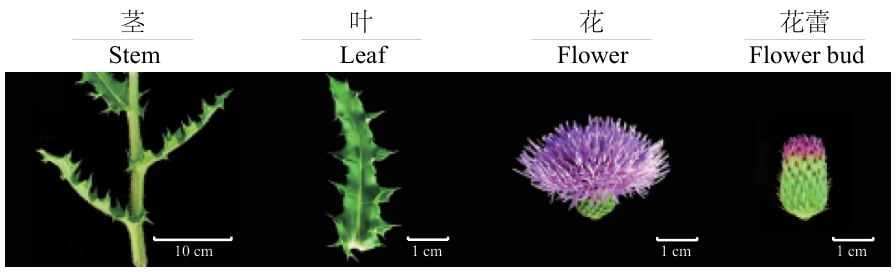
图1 大蓟不同部位植物材料
Fig. 1 Samples from different tissues of C. japonicum
引物名称 Primer name | 引物序列 Primer sequence(5′-3′) | 用途 Purpose |
|---|---|---|
| CjUGT10-F | ATGATTGAACATAGATTCAATCACTCCACCCC | ORF序列扩增 |
| CjUGT10-R | TTAGCTTAATTTCCCAGCACTGGCT | |
| pMAL-Cj10-F | GAAGGATTTCACATATGATGGCTTCCAATCTTCACTTTCTTGT (Ned Ⅰ) | ORF序列扩增 |
| pMAL-Cj10-R | GTTTTATTTGAAGCTTTTAGCCAGCCAAGCCCTTATTTTTATG (Hind Ⅲ) | |
| qCjGAPDH-F | TCATGGCCAATGGAAGCACA | 大蓟内参基因 |
| qCjGAPDH-R | ACCACCCTTCAAGTGAGCAG | |
| qGlcT10-F | CTCTCTTGATCCGTGGGTGG | 实时荧光定量PCR |
| qGlcT10-R | GCTCCTGAAACTGAGGCCAT |
表1 本研究使用的引物序列
Table 1 Primer sequences used in this study
引物名称 Primer name | 引物序列 Primer sequence(5′-3′) | 用途 Purpose |
|---|---|---|
| CjUGT10-F | ATGATTGAACATAGATTCAATCACTCCACCCC | ORF序列扩增 |
| CjUGT10-R | TTAGCTTAATTTCCCAGCACTGGCT | |
| pMAL-Cj10-F | GAAGGATTTCACATATGATGGCTTCCAATCTTCACTTTCTTGT (Ned Ⅰ) | ORF序列扩增 |
| pMAL-Cj10-R | GTTTTATTTGAAGCTTTTAGCCAGCCAAGCCCTTATTTTTATG (Hind Ⅲ) | |
| qCjGAPDH-F | TCATGGCCAATGGAAGCACA | 大蓟内参基因 |
| qCjGAPDH-R | ACCACCCTTCAAGTGAGCAG | |
| qGlcT10-F | CTCTCTTGATCCGTGGGTGG | 实时荧光定量PCR |
| qGlcT10-R | GCTCCTGAAACTGAGGCCAT |
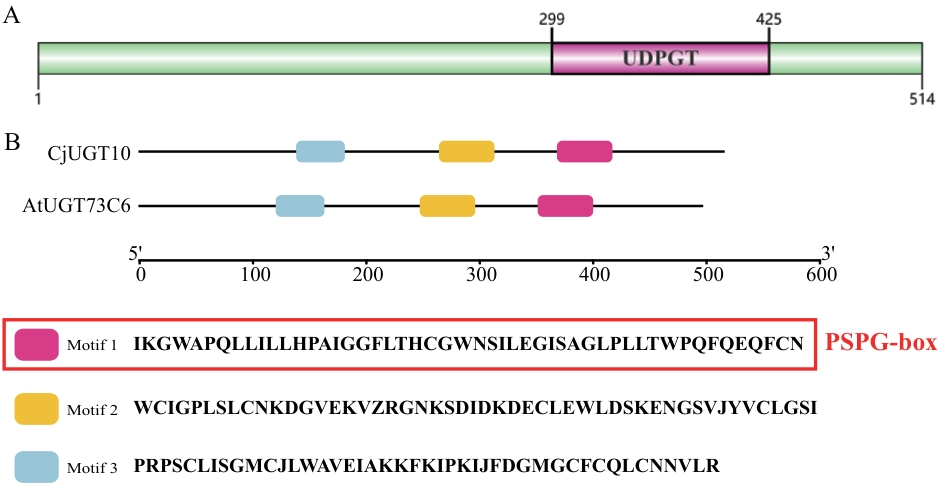
图2 CjUGT10 的结构域组成(A)和保守基序分布(B)A图中紫色区域为UGT家族特征结构域PF00201;B图中红框为PSPG保守序列
Fig. 2 Domain architecture (A) and conserved motifs (B) of CjUGT10The purple region indicates the characteristic domain PF00201 of the UGT family in figure A; and the red box indicates PSPG-box in figure B
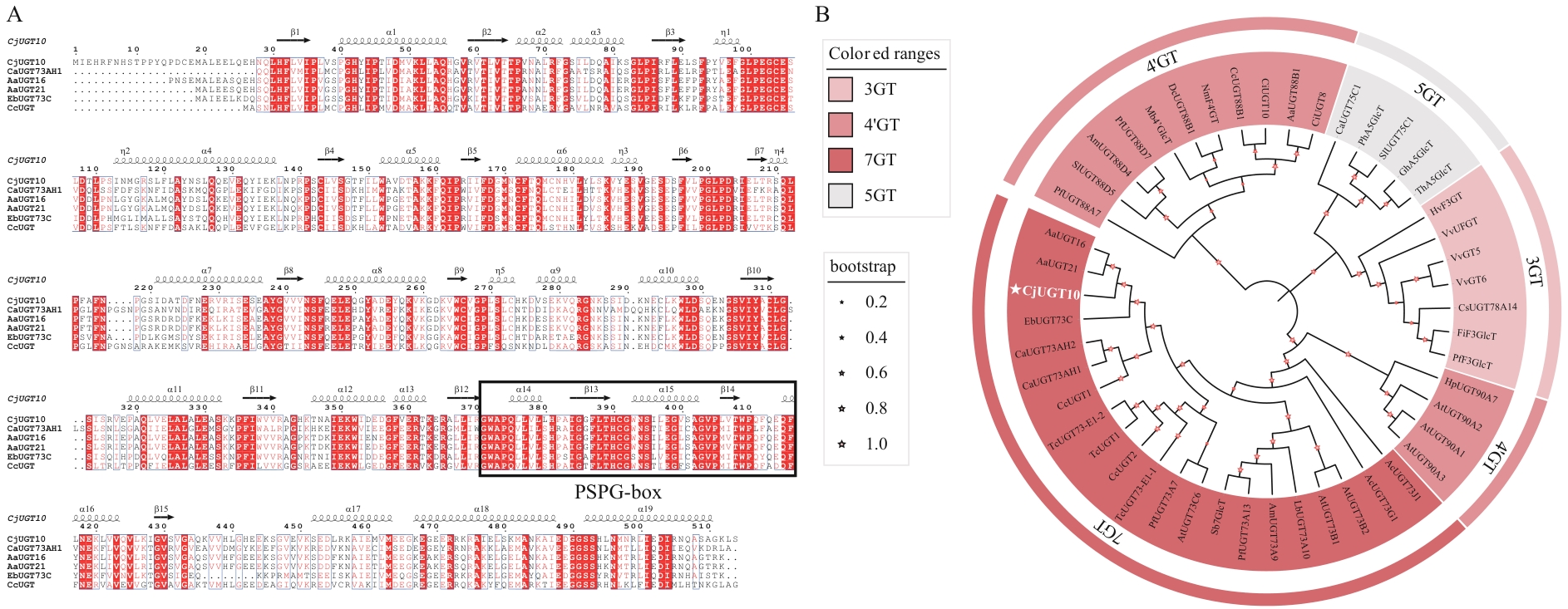
图3 CjUGT10 与 UGT73 家族成员多序列比对(A)和系统发育树分析(B)A图中黑框为UGT73家族PSPG保守结构域
Fig. 3 Multiple sequence alignment (A) and phylogenetic tree analysis (B) of CjUGT10 and UGT73 familyThe black box in figure A represents PSPG conserved domains of UGT73 family
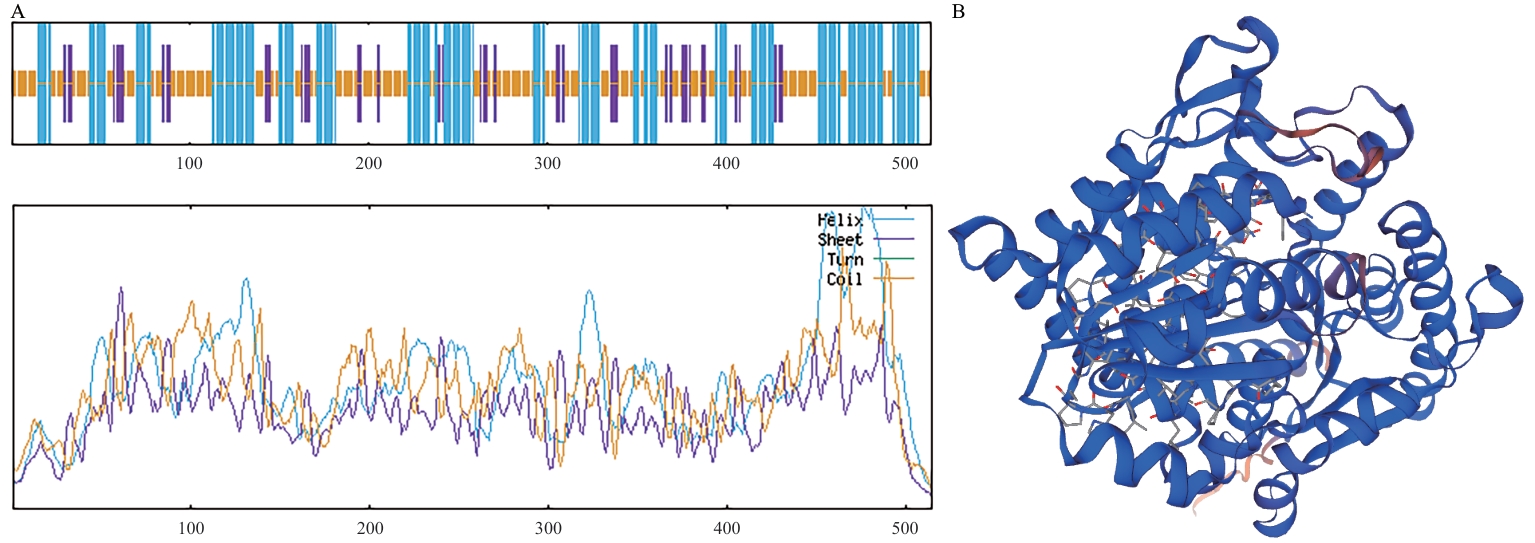
图4 CjUGT10二级结构预测(A)和三级结构预测(B)
Fig. 4 Secondary structure prediction (A) and tertiary structure prediction (B) of CjUGT10
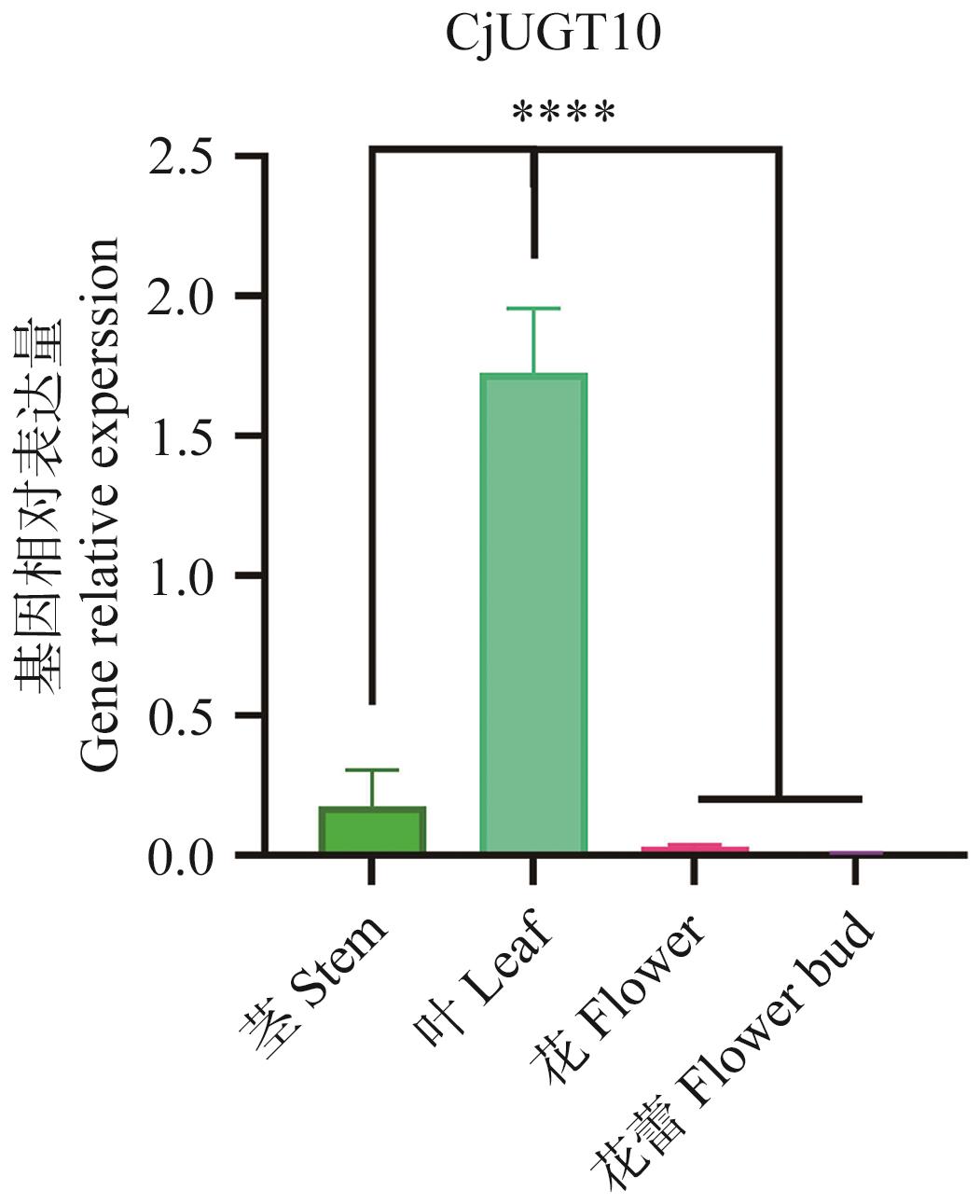
图5 CjUGT10组织表达模式
Fig. 5 Tissue expression pattern of CjUGT10
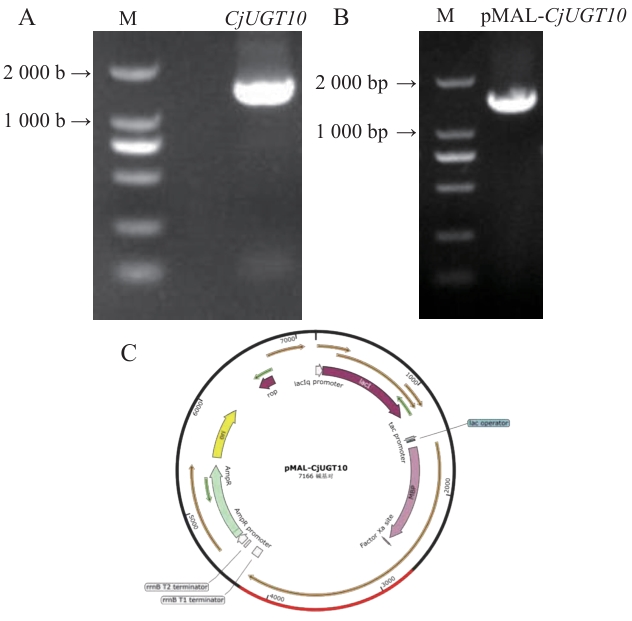
图6 CjUGT10基因克隆(A)与载体构建(B)A:CjUGT10 基因PCR扩增产物的琼脂糖凝胶电泳图,M为DL2000 DNA标记;B:pMAL-CjUGT10重组表达载体的菌落PCR鉴定结果,M为DL2000 DNA标记;C:pMAL-CjUGT10重组质粒的结构图
Fig. 6 Cloning of CjUGT10 gene (A) and vector construction (B)A: Agarose gel electrophoresis of PCR-amplified CjUGT10 gene, M: DL2000 DNA marker. B: Colony PCR results of the pMAL-CjUGT10 recombinant expression vector. M: DL2000 DNA marker. C: The plasmid map of pMAL-CjUGT10
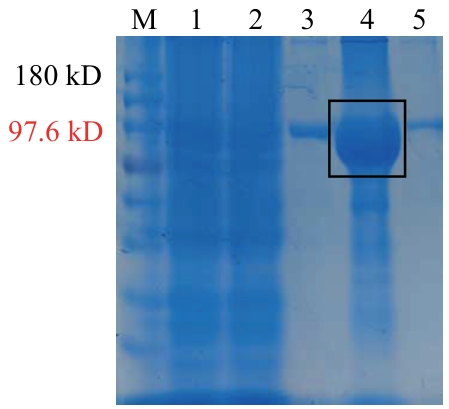
图7 CjUGT10重组蛋白的SDS-PAGE分析M:蛋白质分子量标准;1:上清蛋白;2:流穿液;3:洗杂液;4:MBP 洗脱液;5:PD10 脱盐后蛋白
Fig. 7 SDS-PAGE analysis of recombinant CjUGT10 proteinM: Protein marker; 1: supernatant protein; 2: flow-through fraction; 3: wash fraction; 4: MBP-tagged protein elution; 5: protein after PD10 desalting
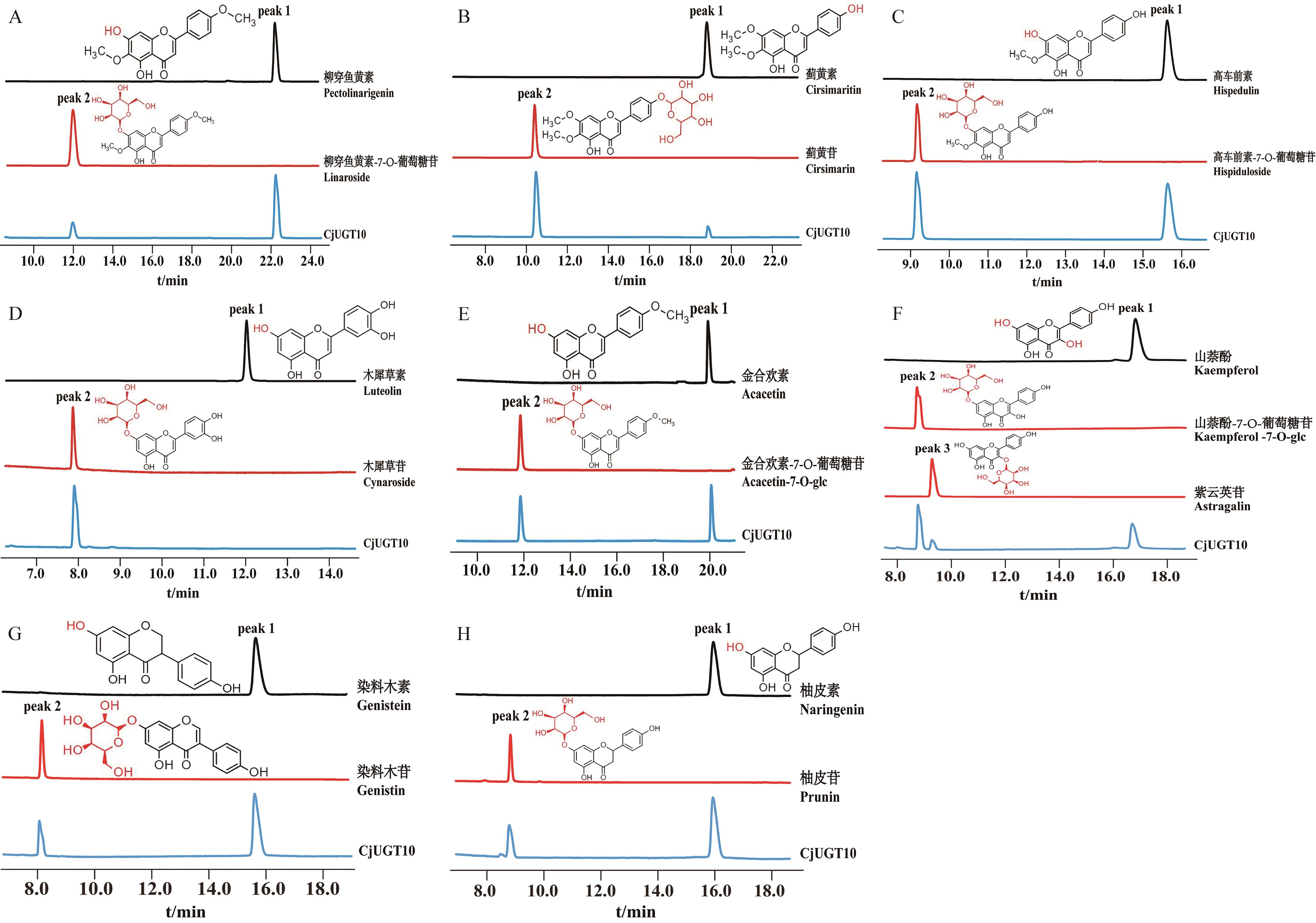
图8 CjUGT10对8种黄酮底物的体外酶活反应HPLC谱图A-H:分别为8种黄酮底物的酶促反应HPLC谱图。黑线:对照组;红实线:标准品;蓝实线:反应组。Peak 1:底物;Peak 2:7-O-或4'-O-葡萄糖苷;Peak 3:山萘酚-3-O-葡萄糖苷
Fig. 8 HPLC profiles of in vitro enzymatic reactions of CjUGT10 with eight flavonoid substratesA-H: HPLC chromatograms of enzymatic reactions with eight flavonoid substrates, respectively. Black: Control; red: standard; blue: reaction. Peak 1: Substrate; Peak 2: 7-O- or 4'-O-glucoside; Peak 3: kaempferol-3-O-glucoside
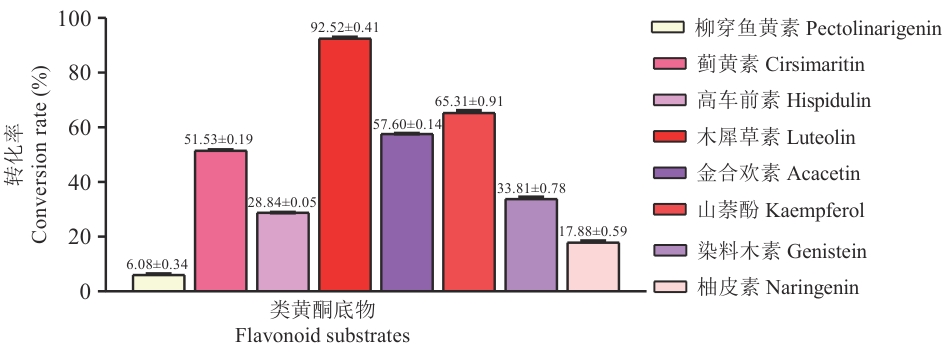
图9 CjUGT10对8种黄酮底物的转化率
Fig. 9 Conversion rates of CjUGT10 for eight flavonoid substrates

图10 CjUGT10对四种黄酮底物的酶动力学曲线A-D:分别为CjUGT10对柳穿鱼黄素、蓟黄素、高车前素和木犀草素的酶动力学曲线;Vmax:最大反应速率(μmol/L·s);Km:米氏常数(μmol/L);kcat:催化常数(1/s);kcat/Km:催化效率(L/(μmol·s))
Fig. 10 Kinetic curves of CjUGT10 with four flavonoid substratesA-D: The kinetic curves of CjUGT10 with pectolinarigenin, cirsimaritin, hispidulin, and luteolin, respectively. Vmax: Maximum reaction rate (μmol/L·s); Km: Michaelis constant (μmol/L); kcat: turnover number (1/s); kcat/Km: catalytic efficiency (L/(μmol·s)
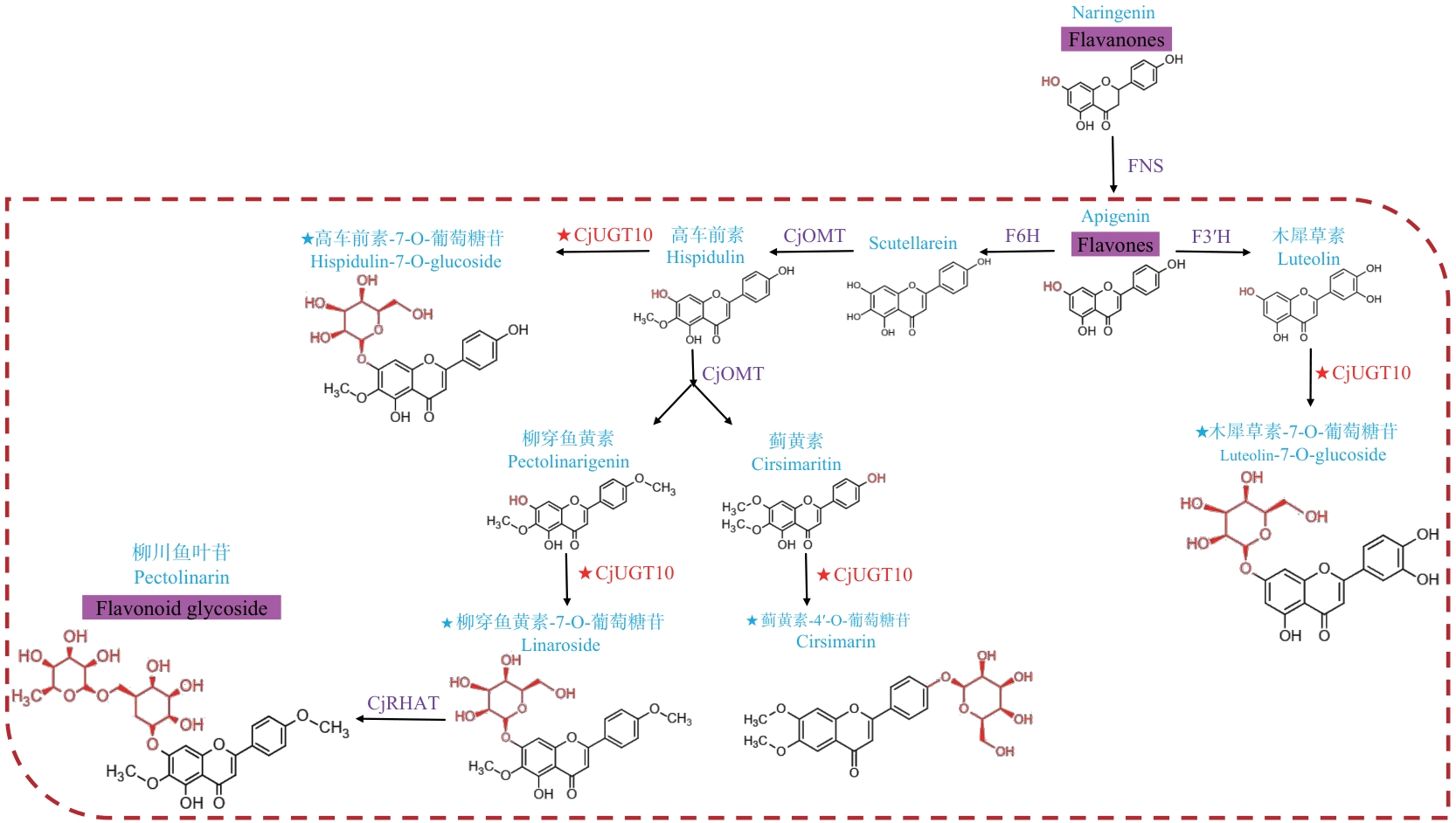
图11 CjUGT10介导的大蓟4种重要黄酮苷生物合成路径红色星号标示CjUGT10催化的葡萄糖基化位点。该图展示了CjUGT10在大蓟中参与合成柳穿鱼黄素-7-O-葡萄糖苷、蓟黄素-4'-O-葡萄糖苷、木犀草素-7-O-葡萄糖苷和高车前素-7-O-葡萄糖苷的4条路径。上游反应参考已报道黄酮通路[31-32],CjUGT10催化步骤经本研究验证
Fig. 11 Proposed biosynthetic routes of four key flavonoid glucosides mediated by CjUGT10 in C. japonicumRed stars indicate CjUGT10-catalyzed glucosylation sites. The schematic shows four biosynthetic pathways in C. japonicum leading to the production of pectolinarigenin-7-O-glucoside, cirsimaritin-4'-O-glucoside (Cirsimarin), luteolin-7-O-glucoside, and hispidulin-7-O-glucoside. Upstream steps are based on previously reported flavonoid biosynthesis pathways[31-32]; and CjUGT10-mediated reactions were validated in this study
| [1] | Guan HF, Zhang YZ, Li JS, et al. Analysis of the UDP-glucosyltransferase (UGT) gene family and its functional involvement in drought and salt stress tolerance in Phoebe bournei [J]. Plants, 2024, 13(5): 722. |
| [2] | 姚宇, 顾佳珺, 孙超, 等. 植物类黄酮UDP-糖基转移酶研究进展 [J]. 生物技术通报, 2022, 38(12): 47-57. |
| Yao Y, Gu JJ, Sun C, et al. Advances in plant flavonoids UDP-glycosyltransferase [J]. Biotechnol Bull, 2022, 38(12): 47-57. | |
| [3] | 李敏, 苗明三. 大蓟的化学、药理及临床应用特点 [J]. 中医学报, 2016, 31(2): 262-265. |
| Li M, Miao MS. Chemical analysis, pharmacology and clinical application characteristics of Cirsium japonicum [J]. Acta Chin Med, 2016, 31(2): 262-265. | |
| [4] | 赵静, 孟庆山, 荣飞, 等. 基于高效液相色谱法和多成分定量测定大蓟配方颗粒中5种有效成分 [J]. 品牌与标准化, 2025(5): 16-18. |
| Zhao J, Meng QS, Rong F, et al. Determination of five active components in Cirsium japonicum formula granules based on HPLC and multi-component quantitative [J]. Brand Stand, 2025(5): 16-18. | |
| [5] | 国家药典委员会. 中华人民共和国药典——2025年版 [M]. 北京: 中国医药科技出版社, 2025. |
| National Pharmacopoeia Commission. Pharmacopoeia of the People's Republic of China (2025 Edition) [M]. Beijing: China Medical Science Press, 2025. | |
| [6] | Lee M, Park J, Yoo H, et al. Hispidulin-7-O-neohesperidoside from Cirsium japonicum var. ussuriense attenuates the production of inflammatory mediators in LPS-induced raw 264.7 cells and HT-29 cells [J]. Phcog Mag, 2017, 13(52): 707. |
| [7] | Liu PQ, Li Q, Zhu GH, et al. Characterization of the glucuronidating pathway of pectolinarigenin, the major active constituent of the Chinese medicine Daji, in humans and its influence on biological activities [J]. J Ethnopharmacol, 2024, 319: 117280. |
| [8] | Patel DK. Biological importance, therapeutic benefit and analytical aspects of bioactive flavonoid pectolinarin in the nature [J]. Drug Metab Lett, 2021, 14(2): 117-125. |
| [9] | Yoon S, Kim M, Shin S, et al. Effect of Cirsium japonicum flower extract on skin aging induced by glycation [J]. Molecules, 2022, 27(7): 2093. |
| [10] | 王佳蕊, 孙培媛, 柯瑾, 等. 苦荞糖基转移酶基因FtUGT143的克隆及表达分析 [J]. 生物技术通报, 2023, 39(8): 204-212. |
| Wang JR, Sun PY, Ke J, et al. Cloning and expression analyses of C-glycosyltransferase gene FtUGT143 in Fagopyrum tataricum [J]. Biotechnol Bull, 2023, 39(8): 204-212. | |
| [11] | 王媛媛, 刘云清, 徐晶宇, 等. 葡萄UDP-糖基转移酶家族的全基因组表征、进化和表达分析 [J]. 食品科学, 2025, 46(14): 134-146. |
| Wang YY, Liu YQ, Xu JY, et al. Genome-wide characterization, evolution and expression profiling of the UDP-glycosyltransferase family in grapes (Vitis vinifera) [J]. Food Sci, 2025, 46(14): 134-146. | |
| [12] | 蔡鑫博, 刘楠, 李佳, 等. 红花黄酮类糖基转移酶基因CtUGT49功能表征及酶学特性分析 [J]. 中国中药杂志, 2023, 48(24): 6624-6634. |
| Cai XB, Liu N, Li J, et al. Functional characterization and enzymatic properties of flavonoid glycosyltransferase gene CtUGT49 in Carthamus tinctorius [J]. China J Chin Mater Med, 2023, 48(24): 6624-6634. | |
| [13] | 齐书艺, 王璐暖, 何贝轩, 等. 红花黄酮生物合成途径糖基转移酶基因CtUGT25的功能研究 [J]. 药学学报, 2024, 59(6): 1854-1863. |
| Qi SY, Wang LN, He BX, et al. Functional study of glycosyltransferase genes CtUGT25 in the flavone biosynthesis pathway of Carthamus tinctorius L [J]. Acta Pharm Sin, 2024, 59(6): 1854-1863. | |
| [14] | 谭政委, 鲁丹丹, 李磊, 等. 红花类黄酮3-O-糖基转移酶基因CtUF3GT的克隆及功能鉴定 [J]. 药学学报, 2022, 57(8): 2543-2551. |
| Tan ZW, Lu DD, Li L, et al. Identification and characterization of flavonoid 3-O-glycosyltrans-ferase gene CtUF3GT from safflower (Carthamus tinctorius L.) [J]. Acta Pharm Sin, 2022, 57(8): 2543-2551. | |
| [15] | Xu Y, Cao YP, Tie FF, et al. Generation of suspension cell cultures with high syringin content and anti-inflammatory activity through overexpressing glycotransferase SiUGT72BZ2 in Saussurea involucrata [J]. Plant Biotechnol J, 2025, 23(5): 1713-1724. |
| [16] | Zhang RM, John Martin JJ, Liu XY, et al. Joint analysis of transcriptional metabolism for flavonoid synthesis during different developmental periods in oil palm exocarp [J]. Front Plant Sci, 2025, 16: 1530673. |
| [17] | Shang DL, Ma QG, Wei RR. Cytotoxic phenylpropanoid glycosides from Cirsium japonicum [J]. J Asian Nat Prod Res, 2016, 18(12): 1122-1130. |
| [18] | Pei TL, Yan MX, Li T, et al. Characterization of UDP-glycosyltransferase family members reveals how major flavonoid glycoside accumulates in the roots of Scutellaria baicalensis [J]. BMC Genom, 2022, 23: 169. |
| [19] | Deng YN, Yang P, Zhang QL, et al. Genomic insights into the evolution of flavonoid biosynthesis and O-methyltransferase and glucosyltransferase in Chrysanthemum indicum [J]. Cell Rep, 2024, 43(2): 113725. |
| [20] | Aubuchon LN, Schmiederer K, Lee SG. Comparative structural analysis of plant uridine diphosphate (UDP)-dependent glycosyltransferases (UGTs) in plant specialized metabolism: structures of plant UGTs for biosynthesis of steviol glycosides [J]. Phytochem Rev, 2023, 22(2): 385-406. |
| [21] | Petrich J, Alvarez CE, Gómez Cano L, et al. Functional characterization of a maize UDP-glucosyltransferase involved in the biosynthesis of flavonoid 7-O-glucosides and di-O-glucosides [J]. Plant Physiol Biochem, 2025, 221: 109583. |
| [22] | Tian SL, Yang YY, Wu T, et al. Functional characterization of a flavone synthase that participates in a kumquat flavone metabolon [J]. Front Plant Sci, 2022, 13: 826780. |
| [23] | Yang F, Zhang L, Zhang X, et al. Genome-wide investigation of UDP-Glycosyltransferase family in Tartary buckwheat (Fagopyrum tataricum) [J]. BMC Plant Biol, 2024, 24: 249. |
| [24] | Soubeyrand E, Latimer S, Bernert AC, et al. 3-O-glycosylation of kaempferol restricts the supply of the benzenoid precursor of ubiquinone (Coenzyme Q) in Arabidopsis thaliana [J]. Phytochemistry, 2021, 186: 112738. |
| [25] | Zhang CB, Shi JC, Deng R, et al. Plant natural product biosynthesis through metabolon engineering [J]. J Integr Plant Biol, 2026, 68(4): 967-984. |
| [26] | Yu KJ, Song YS, Lin JX, et al. The complexities of proanthocyanidin biosynthesis and its regulation in plants [J]. Plant Commun, 2023, 4(2): 100498. |
| [27] | Ye YN, Chen ZL, Wu YL, et al. Purification process and in vitro and in vivo bioactivity evaluation of pectolinarin and linarin from Cirsium japonicum [J]. Molecules, 2022, 27(24): 8695. |
| [28] | Xu P, Li JH, Chen CT, et al. Integrated transcriptomic and metabolomic analyses reveal tissue-specific accumulation and expression patterns of monoterpene glycosides, gallaglycosides, and flavonoids in Paeonia lactiflora Pall [J]. BMC Genom, 2025, 26: 561. |
| [29] | Verma B, Arora P, Hussain S, et al. UGT708 glycosyltransferases: Nature’s architects of C-glycosides [J]. Biotechnol Adv, 2026, 87: 108787. |
| [30] | Wang YM, Zhang JX, Wang P, et al. Integrated transcriptomic and metabolomic analysis reveals tissue-specific flavonoid biosynthesis and MYB-mediated regulation of UGT71A1 in Panax quinquefolius [J]. Int J Mol Sci, 2025, 26(6): 2669. |
| [31] | Wang RJ, Wang C, Du JK. Plant UGTs: Functional diversity, catalytic mechanisms and rational design for metabolic engineering [J]. Biotechnol Adv, 2026, 89: 108872. |
| [32] | de Barros Rates A, Cesarino I. Pour some sugar on me: The diverse functions of phenylpropanoid glycosylation [J]. J Plant Physiol, 2023, 291: 154138. |
| [33] | Ren CH, Qian JF, Wang YC, et al. Flavonoid UDP-glycosyltransferase in plants: functional identification, substrate recognition mechanism, and biotechnology application [J]. Phytochem Rev, 2025, 24(5): 4451-4474. |
| [34] | Li XF, Wei F, Quan CQ, et al. Identification of key modules and genes in response to high-temperature stress in Platostoma palustre based on WGCNA [J]. BMC Plant Biol, 2025, 25: 695. |
| [35] | Liu J, Wang JX, Chen MJ, et al. Multi-omics analyses uncover the mechanism underlying polyploidization-enhanced steviol glycosides biosynthesis in Stevia rebaudiana [J]. Plants, 2024, 13(18): 2542. |
| [36] | Yin XJ, Xiang YP, Huang FQ, et al. Comparative genomics of the medicinal plants Lonicera macranthoides and L. japonica provides insight into genus genome evolution and hederagenin-based saponin biosynthesis [J]. Plant Biotechnol J, 2023, 21(11): 2209-2223. |
| [37] | 吴慧琴, 王延宏, 刘涵, 等. 辣椒UGT基因家族的鉴定及表达分析 [J]. 生物技术通报, 2024, 40(9): 198-211. |
| Wu HQ, Wang YH, Liu H, et al. Identification and expression analysis of UGT gene family in pepper [J]. Biotechnol Bull, 2024, 40(9): 198-211. | |
| [38] | 杨敏, 龙雨青, 曾娟, 等. 灰毡毛忍冬UGTPg17、UGTPg36基因克隆及功能研究 [J]. 生物技术通报, 2023, 39(10): 256-267. |
| Yang M, Long YQ, Zeng J, et al. Cloning and function analysis of gene UGTPg17 and UGTPg36 in Lonicera macranthoides [J]. Biotechnol Bull, 2023, 39(10): 256-267. | |
| [39] | Nakayama T, Takahashi S, Waki T. Formation of flavonoid metabolons: functional significance of protein-protein interactions and impact on flavonoid chemodiversity [J]. Front Plant Sci, 2019, 10: 821. |
| [40] | Moore Pollard ER, Ellestad PA, Cliver BR, et al. Gene duplication dynamics and regulatory evolution shape the diversification of Asteraceae [J]. bioRxiv Prepr Serv Biol, 2025. |
| [41] | Yang Q, Zhang YC, Qu XL, et al. Genome-wide analysis of UDP-glycosyltransferases family and identification of UGT genes involved in abiotic stress and flavonol biosynthesis in Nicotiana tabacum [J]. BMC Plant Biology, 2023, 23(1): 204. |
| [42] | 彭朝凤, 夏琳, 刘瑞霞, 等. 基于VIGS和CRISPR/Cas9技术的烟草NtPPO5基因功能分析 [J]. 生物技术通报, 2026, 42(4): 251-262. |
| Peng CF, Xia L, Liu RX, et al. Functional analysis of the tobacco NtPPO5 gene using VIGS and CRISPR/Cas9 technology [J]. Biotechnol Bull, 2026, 42(4): 251-262. | |
| [43] | Lovelock SL, Crawshaw R, Basler S, et al. The road to fully programmable protein catalysis [J]. Nature, 2022, 606(7912): 49-58. |
| [1] | 张仲文, 王卫民, 肖志亮, 史久长, 郝贤伟, 王威, 谢鹏岗, 许佳丹, 赵炯平, 杨爱国. NtPLA2A介导激素信号通路增强烟草青枯病抗性的机制[J]. 生物技术通报, 2026, 42(8): 207-216. |
| [2] | 周韬, 李亚强, 何慧娟, 虎海防, 陈同森, 潘越, 王天斌. 发根农杆菌介导文冠果(Xanthoceras sorbifolium)毛状根遗传转化体系的建立[J]. 生物技术通报, 2026, 42(7): 97-104. |
| [3] | 安飞飞, 罗秀芹, 蔡杰, 薛晶晶, 朱文丽. 木薯MeMYB106基因克隆及其在叶片花青素合成中的功能[J]. 生物技术通报, 2026, 42(6): 13-21. |
| [4] | 张欣, 陈骋, 霍元博, 黄仁丽, 张丽, 张凯, 童华荣, 袁连玉. 茶树CsCRD1基因的克隆及其对叶绿素生物合成的影响[J]. 生物技术通报, 2026, 42(5): 280-291. |
| [5] | 金旋, 向芬, 戴翠婷, 杨辉, 李赛君, 刘红艳, 钱思维, 蔺万煌, 李维. 茶树CsTDIFL基因的克隆、表达特性分析及其对氨基酸合成的调控[J]. 生物技术通报, 2026, 42(5): 323-331. |
| [6] | 孙婷, 张艳, 刘玉珊, 冯媛媛, 秦恒山, 张军, 何小岗, 张景荣. 黄秋葵AeF3H基因的克隆与功能分析[J]. 生物技术通报, 2026, 42(4): 153-160. |
| [7] | 刘梦茹, 夏琳, 刘瑞霞, 闫新可, 杨军, 张菁华, 武明珠. 烟草多酚氧化酶NtPPO1-2基因克隆及功能分析[J]. 生物技术通报, 2026, 42(2): 218-227. |
| [8] | 倪莹, 李雷, 汪进萱, 马波, 孟昕, 冷平生, 吴静, 胡增辉. 紫丁香So4CL的克隆及功能分析[J]. 生物技术通报, 2026, 42(1): 139-149. |
| [9] | 徐小萍, 杨成龙, 和兴, 郭文杰, 吴健, 方少忠. 百合LoAPS1克隆及其在休眠解除过程的功能分析[J]. 生物技术通报, 2025, 41(9): 195-206. |
| [10] | 董向向, 缪百灵, 许贺娟, 陈娟娟, 李亮杰, 龚守富, 朱庆松. 森林草莓FveBBX20基因的生物信息学分析及开花调控功能[J]. 生物技术通报, 2025, 41(9): 115-123. |
| [11] | 张永艳, 郭思健, 李晶, 郝思怡, 李瑞得, 刘嘉鹏, 程春振. 蓝莓花青素相关VcGSTF19基因的克隆及功能研究[J]. 生物技术通报, 2025, 41(9): 139-146. |
| [12] | 李开杰, 吴瑶, 李丹丹. 红花CtbHLH128基因克隆及调控干旱胁迫应答功能研究[J]. 生物技术通报, 2025, 41(8): 234-241. |
| [13] | 康琴, 汪霞, 谌明洋, 徐静天, 陈诗兰, 廖平杨, 许文志, 吴卫, 徐东北. 薄荷UV-B受体基因McUVR8的克隆与表达分析[J]. 生物技术通报, 2025, 41(8): 255-266. |
| [14] | 魏雨佳, 李岩, 康语涵, 弓晓楠, 杜敏, 涂岚, 石鹏, 于子涵, 孙彦, 张昆. 白颖苔草CrMYB4基因的克隆和表达分析[J]. 生物技术通报, 2025, 41(7): 248-260. |
| [15] | 裴景琪, 赵梦然, 黄晨阳, 邬向丽. 一个影响糙皮侧耳生长发育的功能基因的发现与验证[J]. 生物技术通报, 2025, 41(6): 327-334. |
| 阅读次数 | ||||||
|
全文 |
|
|||||
|
摘要 |
|
|||||
