







生物技术通报 ›› 2026, Vol. 42 ›› Issue (9): 238-247.doi: 10.13560/j.cnki.biotech.bull.1985.2026-0310
• 植物发育生物学专题 • 上一篇
岳丽萍1,2, 王爱凡2,3, 王姗1,2, 李雪龙1,2, 陈宇翔1,2, 苏秀娟2,3( )
)
收稿日期:2026-03-18
出版日期:2026-09-26
发布日期:2026-09-16
通讯作者:
苏秀娟smm1980@yeah.net作者简介:第一联系人:同等贡献
基金资助:
YUE Li-ping1,2, WANG Ai-fan2,3, WANG Shan1,2, LI Xue-long1,2, CHEN Yu-xiang1,2, SU Xiu-juan2,3()
Received:2026-03-18
Published:2026-09-26
Online:2026-09-16
摘要:
目的 细胞分裂素氧化/脱氢酶(cytokinin oxidase/dehydrogenase, CKX)能不可逆地降解细胞分裂素(cytokinin, CK),在植物花芽分化中起关键调控作用。探究薰衣草LaCKX1基因在花穗发育中的功能,为解析细胞分裂素通路对薰衣草花粒数形成的调控机制提供理论依据。 方法 以薰衣草‘新农薰1号’花穗cDNA为模板,克隆LaCKX1基因,并运用生物信息学方法分析其蛋白理化性质及系统进化关系;通过烟草瞬时表达明确该蛋白的亚细胞定位;利用逆转录实时定量聚合酶链式反应(RT-qPCR)检测LaCKX1基因在薰衣草不同品种、不同组织及花穗发育时期中的表达水平;通过遗传转化拟南芥和薰衣草,验证LaCKX1基因的功能及对内源CK含量的影响。 结果 成功克隆LaCKX1基因(CDS区1 575 bp,编码524个氨基酸),定位于细胞膜。LaCKX1具有明显的组织特异性,在花穗中高表达,尤其在花穗发育初期表达水平较高,且在少花粒品种S1时期的表达量显著高于多花粒品种。此外,过表达LaCKX1基因导致拟南芥内源CK含量下降,引发根系变长、株高降低及小花数量减少等表型变化;过表达LaCKX1同样会使薰衣草叶片中CK含量降低,而通过基因沉默抑制该基因表达则使新生叶片中CK含量升高。 结论 LaCKX1基因可能通过负调控薰衣草细胞分裂素的生物合成,参与调控其花穗发育进程。
岳丽萍, 王爱凡, 王姗, 李雪龙, 陈宇翔, 苏秀娟. 薰衣草花粒数调控相关LaCKX1基因的克隆及功能验证[J]. 生物技术通报, 2026, 42(9): 238-247.
YUE Li-ping, WANG Ai-fan, WANG Shan, LI Xue-long, CHEN Yu-xiang, SU Xiu-juan. Cloning and Functional Analysis of LaCKX1 Gene Related to Regulation of Floret Number in Lavandula angustifolia[J]. Biotechnology Bulletin, 2026, 42(9): 238-247.
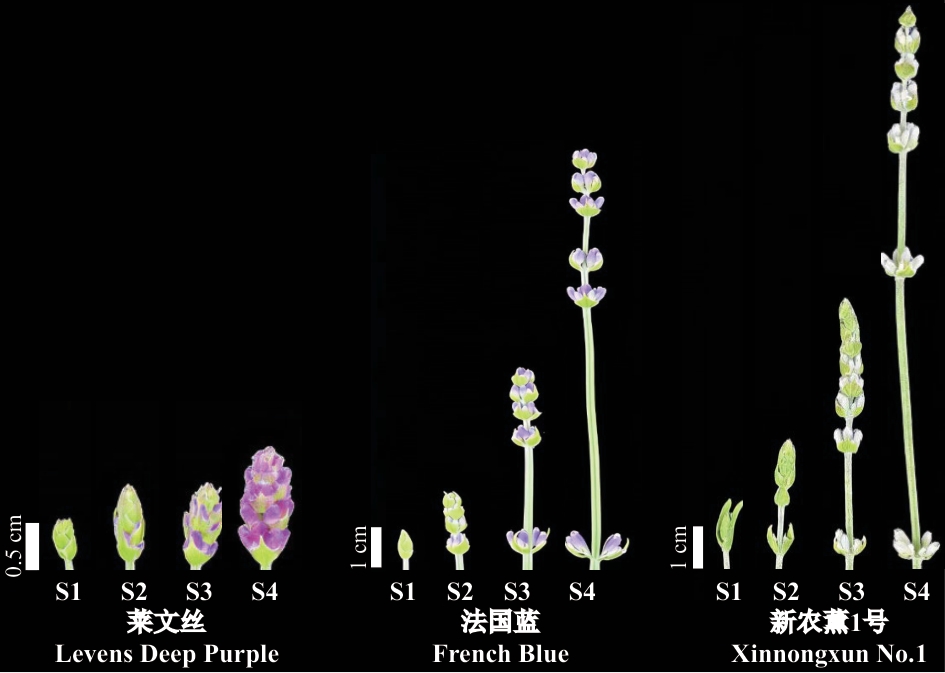
图1 薰衣草花穗不同发育时期S1:穗发育初期;S2:第一茎节开始发育;S3:第一茎节发育至一半;S4:第一茎节发育完全。下同
Fig. 1 Different flowering stages of L. angustifoliaS1: Early stage of panicle development. S2: First stem node begins to develop. S3: First stem node is half-developed. S4: First stem node is fully developed. The same below
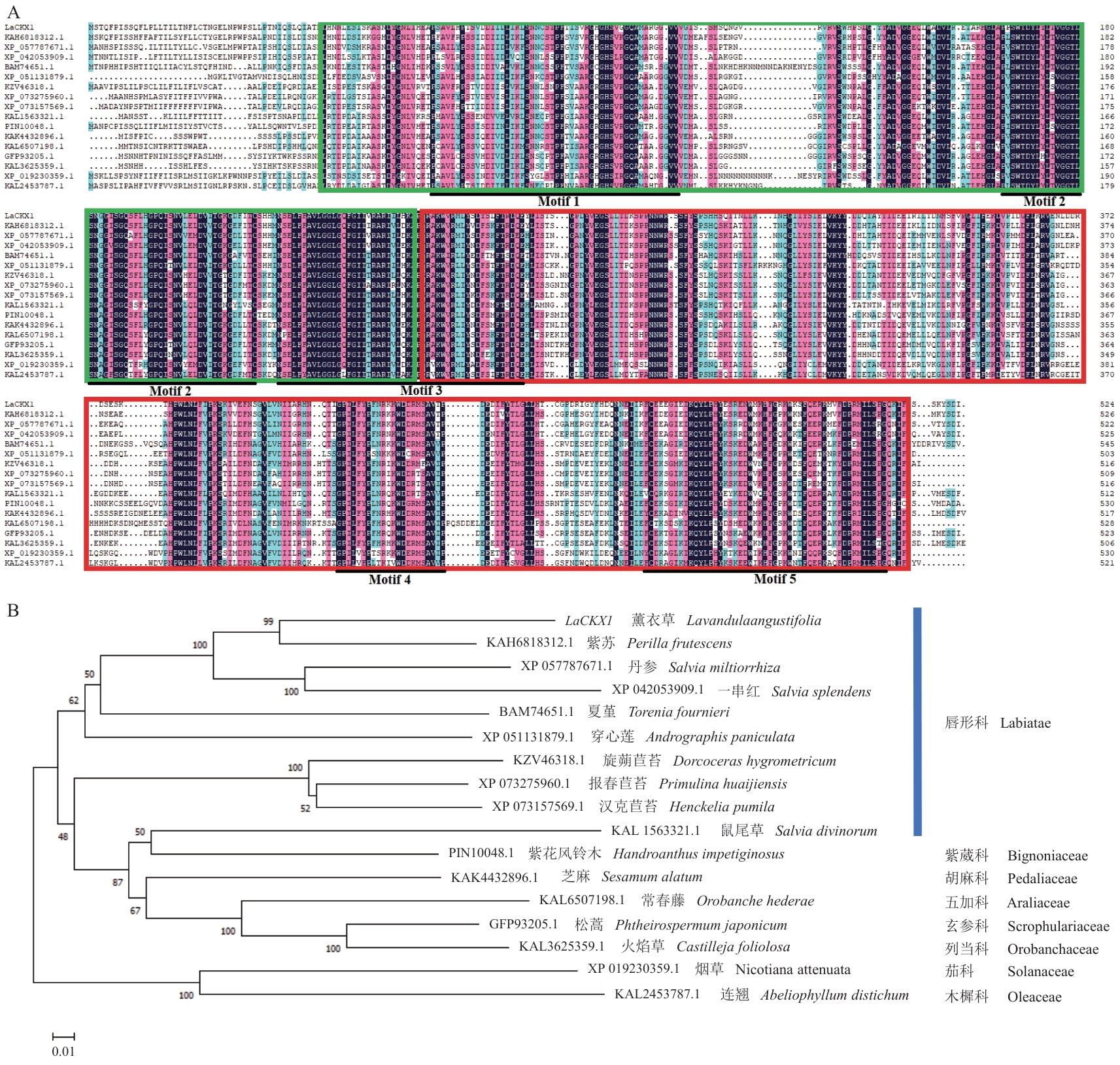
图2 LaCKX1蛋白多重序列比对(A)及系统进化树(B)分析黑色、红色、蓝色部分分别表示同源性=100%、≥75%、≥50%;绿色框为FAD结构域,红色框为细胞分裂素结合结构域
Fig. 2 Multiple sequence alignment (A) and phylogenetic tree (B) of the LaCKX1 protein with CKX proteins from other speciesThe black, red, and blue parts indicate homology = 100%, ≥75%, and ≥50%, respectively. Green boxes are the FAD-binding domain, and red boxes are the cytokinin-binding domain
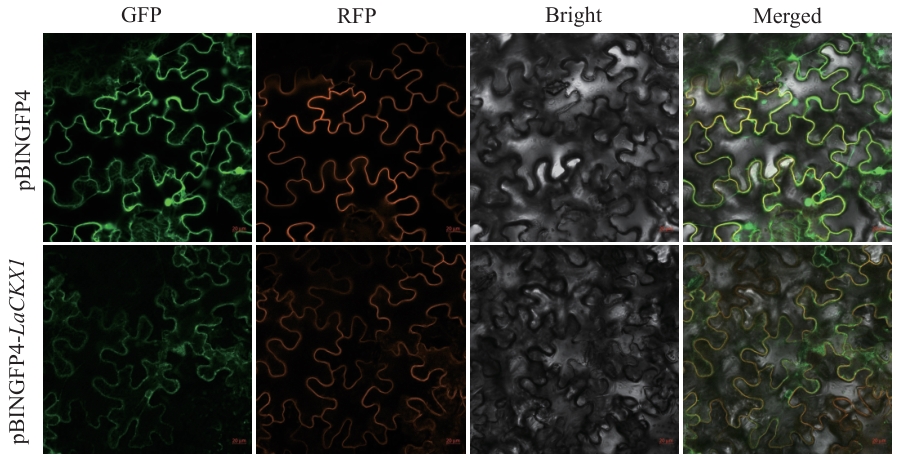
图3 LaCKX1的亚细胞定位
Fig. 3 Subcellular localization of LaCKX1
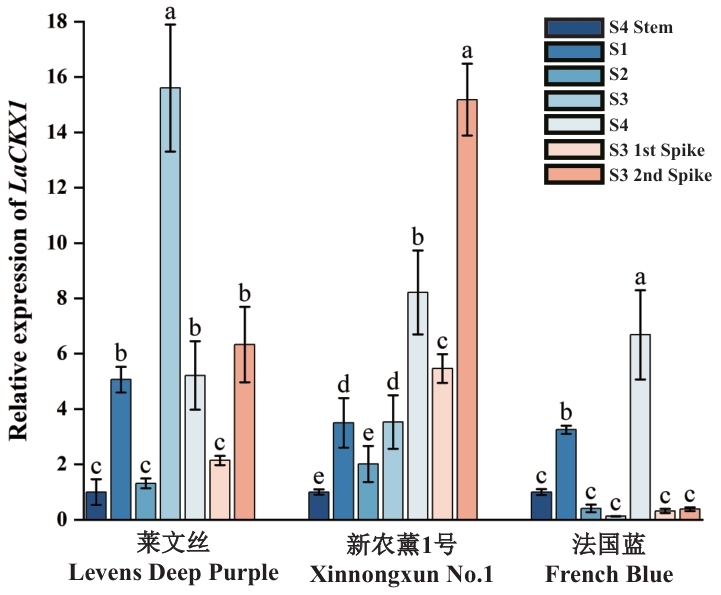
图4 LaCKX1在不同组织与不同花穗发育阶段的表达水平不同字母表示在0.05水平上差异显著(P<0.05)。下同
Fig. 4 Expression levels of LaCKX1 in different tissues and at different flower spike developmental stagesDifferent letters indicate significant differences at the 0.05 level (P<0.05). The same below
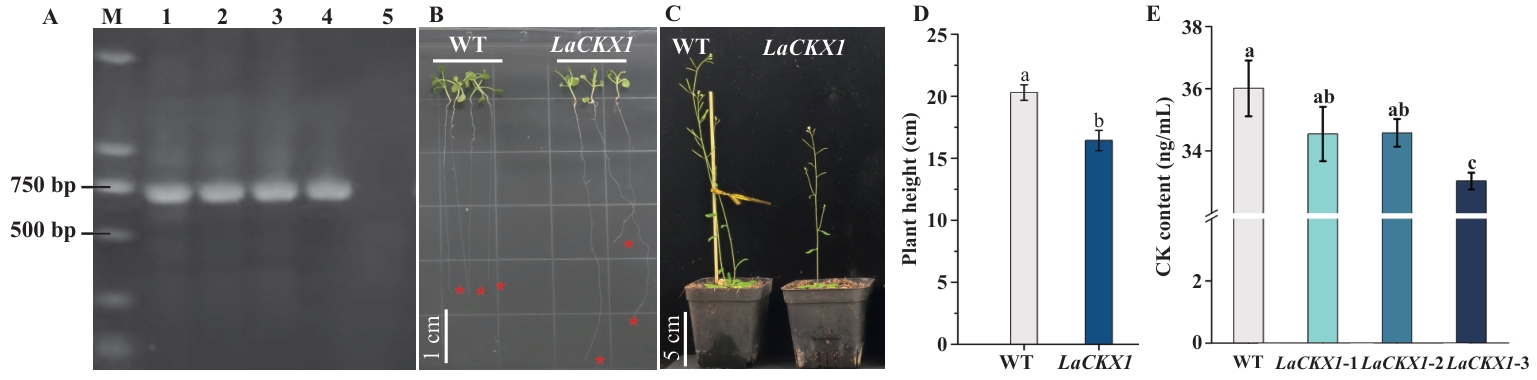
图5 LaCKX1转基因拟南芥PCR阳性鉴定与表型差异比较及CK含量变化A:转基因拟南芥PCR阳性鉴定(M:Marker 2000;1-3:LaCKX1基因过表达拟南芥抗性苗;4:阳性对照;5:阴性对照);B:LaCKX1过表达拟南芥植株与野生型(WT)幼苗培养14 d根长对比;C:培养35 d株高表型;D:培养35 d株高统计分析;E:植物细胞分裂素(CK)含量测定
Fig. 5 PCR identification of positive transgenic LaCKX1Arabidopsis, comparison of phenotypic differences, and changes in CK contentA: PCR identification of positive transgenic Arabidopsis thaliana (M: 2000 DNA marker. 1-3: Resistant seedlings of LaCKX1-overexpressing Arabidopsis. 4: Positive control. 5: Negative control). B: Comparison of root length between LaCKX1-overexpressing Arabidopsis lines and wild-type (WT) seedlings at 14 d of culture. C: Plant height phenotype at 35 d of culture. D: Statistical analysis of plant height at 35 d of culture. E: Determination of plant cytokinin (CK) content
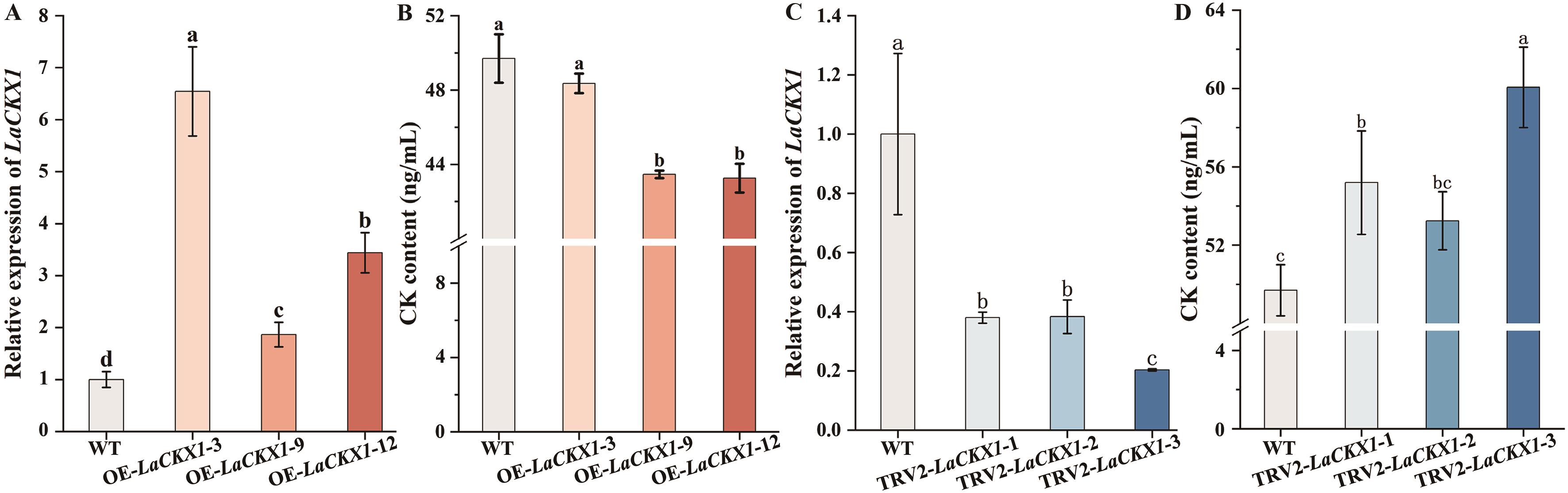
图6 LaCKX1基因过表达(A、B)与基因沉默(C、D)薰衣草的基因表达水平及CK含量检测A:LaCKX1过表达薰衣草株系与野生型(WT)中LaCKX1的表达水平;B:LaCKX1过表达薰衣草株系与野生型(WT)中CK含量;C:基因沉默薰衣草目的基因表达水平;D:基因沉默薰衣草CK含量
Fig. 6 Detection of gene expression and CK content in LaCKX1-overexpressed (A, B) and gene-silenced (C, D) L. angustifoliaA: Expression levels of LaCKX1 in LaCKX1-overexpressing L. angustifolia lines and wild-type (WT). B: Cytokinin (CK) contents in LaCKX1-overexpressing L. angustifolia lines and wild-type (WT). C: Expression level of the target gene in L. angustifolia gene-silenced lines. D: CK content in L. angustifolia gene-silenced lines
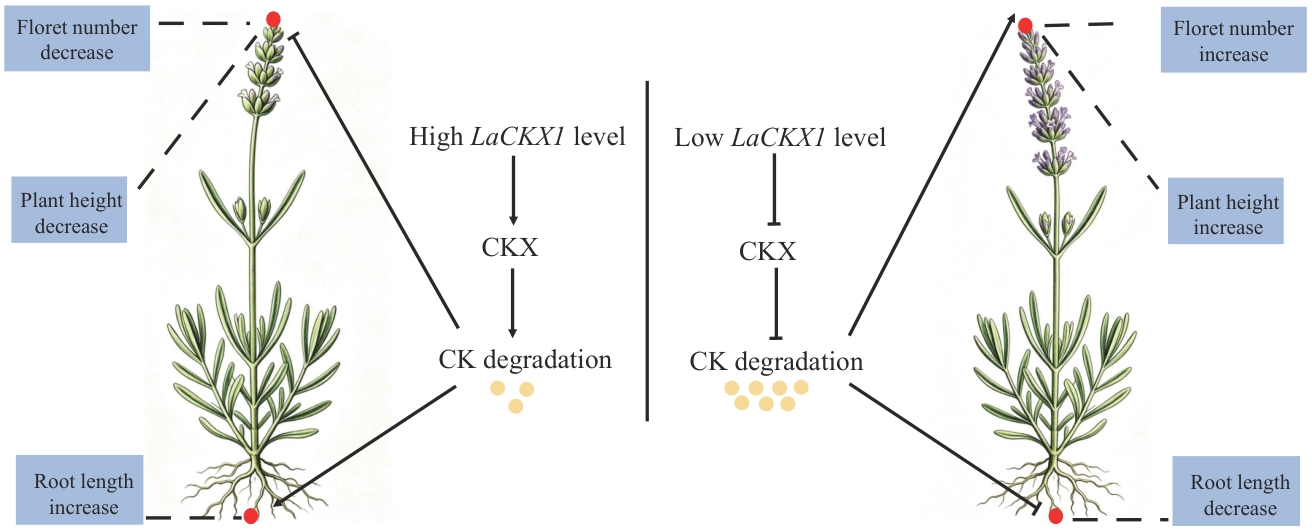
图7 LaCKX1调控薰衣草花粒数的作用模式图:促进作用;:抑制作用;:CK
Fig. 7 Model diagram of LaCKX1 regulating floret grain number in L. angustifolia: Promotional effect. : Inhibitory effect. : CK
| [1] | Al-Ansari MM, Andeejani AMI, Alnahmi E, et al. Insecticidal, antimicrobial and antioxidant activities of essential oil from Lavandula latifolia L. and its deterrent effects on Euphoria leucographa [J]. Ind Crops Prod, 2021, 170: 113740. |
| [2] | Kitagawa M, Jackson D. Control of meristem size [J]. Annu Rev Plant Biol, 2019, 70: 269-291. |
| [3] | Lu JQ, Jiang ZJ, Chen JY, et al. SET DOMAIN GROUP 711-mediated H3K27 me3 methylation of cytokinin metabolism genes regulates organ size in rice [J]. Plant Physiol, 2024, 194(4): 2069-2085. |
| [4] | 余义和, 李秀珍, 陈迪新, 等. ‘巨峰’葡萄细胞分裂素氧化酶基因CKX3的克隆与表达分析 [J]. 园艺学报, 2015, 42(7): 1233-1240. |
| Yu YH, Li XZ, Chen DX, et al. Isolation and expression analysis of cytokinin oxidase gene CKX3 in kyoho grapevine [J]. Acta Hortic Sin, 2015, 42(7): 1233-1240. | |
| [5] | 边林, 张岩, 霍晓伟, 等. 紫花苜蓿CKX基因家族鉴定及其对非生物胁迫的响应 [J]. 草业学报, 2025, 34(11): 125-135. |
| Bian L, Zhang Y, Huo XW, et al. Identification of the CKX gene family in alfalfa and its responses to abiotic stress [J]. Acta Prataculturae Sin, 2025, 34(11): 125-135. | |
| [6] | Ashikari M, Sakakibara H, Lin SY, et al. Cytokinin oxidase regulates rice grain production [J]. Science, 2005, 309(5735): 741-745. |
| [7] | Li J, Nie X, Tan JLH, et al. Integration of epigenetic and genetic controls of seed size by cytokinin in Arabidopsis [J]. Proc Natl Acad Sci U S A, 2013, 110(38): 15479-15484. |
| [8] | Bartrina I, Otto E, Strnad M, et al. Cytokinin regulates the activity of reproductive meristems, flower organ size, ovule formation, and thus seed yield in Arabidopsis thaliana [J]. Plant Cell, 2011, 23(1): 69-80. |
| [9] | Li SY, Zhao BR, Yuan DY, et al. Rice zinc finger protein DST enhances grain production through controlling Gn1a/OsCKX2 expression [J]. Proc Natl Acad Sci U S A, 2013, 110(8): 3167-3172. |
| [10] | Zhang W, Peng KX, Cui FB, et al. Cytokinin oxidase/dehydrogenase OsCKX11 coordinates source and sink relationship in rice by simultaneous regulation of leaf senescence and grain number [J]. Plant Biotechnol J, 2021, 19(2): 335-350. |
| [11] | Werner T, Motyka V, Laucou V, et al. Cytokinin-deficient transgenic Arabidopsis plants show multiple developmental alterations indicating opposite functions of cytokinins in the regulation of shoot and root meristem activity [J]. Plant Cell, 2003, 15(11): 2532-2550. |
| [12] | Han YY, Yang HB, Jiao YL. Regulation of inflorescence architecture by cytokinins [J]. Front Plant Sci, 2014, 5: 669. |
| [13] | Jing WK, Gong FF, Liu GQ, et al. Petal size is controlled by the MYB73/TPL/HDA19-miR159-CKX6 module regulating cytokinin catabolism in Rosa hybrida [J]. Nat Commun, 2023, 14: 7106. |
| [14] | 任世恒. 繁殖方式、收获时期及方式对薰衣草农艺性状、精油产量及品质的影响 [D]. 乌鲁木齐: 新疆农业大学, 2024. |
| Ren SH. Effects of reproduction modes, harvesting period and modes on agronomic traits, yield and quality of essential oil in lavender [D]. Urumqi: Xinjiang Agricultural University, 2024. | |
| [15] | 王振昱. 薰衣草萜类花香合成关键酶DXS、DXR基因的功能验证 [D]. 乌鲁木齐: 新疆农业大学, 2023. |
| Wang ZY. Functional verification of the key enzymes DXS and DXR genes in the synthesis of terpenoid floral aroma from lavender [D]. Urumqi: Xinjiang Agricultural University, 2023. | |
| [16] | 李鹏飞, 王爱凡, 黄佳慧, 等. 薰衣草花青素合成相关基因LaCHS的克隆与功能分析 [J]. 浙江农林大学学报, 2025, 42(5): 1048-1058. |
| Li PF, Wang AF, Huang JH, et al. Cloning and functional analysis of LaCHS gene related to anthocyanin biosynthesis in Lavandula angustifolia [J]. J Zhejiang A F Univ, 2025, 42(5): 1048-1058. | |
| [17] | D'Ario M, Sablowski R. Cell size control in plants [J]. Annu Rev Genet, 2019, 53: 45-65. |
| [18] | Powell AE, Lenhard M. Control of organ size in plants [J]. Curr Biol, 2012, 22(9): R360-R367. |
| [19] | Chen SF, Lou SL, Zhao XC, et al. Ectopic expression of a male fertility gene, LOGL8 represses LOG and hinders panicle and ovule development [J]. Crop J, 2022, 10(6): 1665-1673. |
| [20] | Chun Y, Fang JJ, Savelieva EM, et al. The cytokinin receptor ohk4/OsHK4 regulates inflorescence architecture in rice via an ideal plant architecture1/wealthy farmer’s panicle-mediated positive feedback circuit [J]. Plant Cell, 2023, 36(1): 40-64. |
| [21] | Werner T, Schmülling T. Cytokinin action in plant development [J]. Curr Opin Plant Biol, 2009, 12(5): 527-538. |
| [22] | Sharma A, Prakash S, Chattopadhyay D. Killing two birds with a single stone—genetic manipulation of cytokinin oxidase/dehydrogenase (CKX) genes for enhancing crop productivity and amelioration of drought stress response [J]. Front Genet, 2022, 13: 941595. |
| [23] | Wang HM, Tong XH, Tang LQ, et al. Rlb (rice lateral branch) recruits prc2-mediated h3k27 tri-methylation on OsCKX4 to regulate lateral branching [J]. Plant Physiol, 2022, 188(1): 460-476. |
| [24] | Hwang I, Sheen J, Müller B. Cytokinin signaling networks [J]. Annu Rev Plant Biol, 2012, 63: 353-380. |
| [25] | Skalák J, Vercruyssen L, Claeys H, et al. Multifaceted activity of cytokinin in leaf development shapes its size and structure in Arabidopsis [J]. Plant J, 2019, 97(5): 805-824. |
| [26] | Li YX, Zhu GS, Sun HN, et al. Genome-wide analysis of LOG family genes in castor and RcLOG5 enhances drought, salt, and cold stress tolerance in Arabidopsis thaliana [J]. Gene, 2024, 913: 148398. |
| [27] | Zürcher E, Müller B. Cytokinin synthesis, signaling, and function—advances and new insights [M]//International Review of Cell and Molecular Biology. Amsterdam: Elsevier, 2016: 1-38. |
| [28] | Nisler J, Pěkná Z, Končitíková R, et al. Cytokinin oxidase/dehydrogenase inhibitors: outlook for selectivity and high efficiency [J]. J Exp Bot, 2022, 73(14): 4806-4817. |
| [29] | 禹一箭, 李振宇, 张金青. 植物细胞分裂素氧化/脱氢酶基因家族研究进展 [J]. 植物生理学报, 2026, 62(2): 125-138. |
| Yu YJ, Li ZY, Zhang JQ. Research progress on the cytokinin oxidase/dehydrogenase gene family in plants [J]. Plant Physiol J, 2026, 62(2): 125-138. | |
| [30] | Ding WN, Tong HS, Zheng WJ, et al. Isolation, characterization and transcriptome analysis of a cytokinin receptor mutant Osckt1 in rice [J]. Front Plant Sci, 2017, 8: 88. |
| [1] | 董向向, 侯威威, 缪百灵, 陈娟娟, 李亮杰, 翟敏, 朱庆松, 刘松虎. 过表达森林草莓FvBBX22促进拟南芥花青素合成和延迟开花时间[J]. 生物技术通报, 2026, 42(9): 231-237. |
| [2] | 张仲文, 王卫民, 肖志亮, 史久长, 郝贤伟, 王威, 谢鹏岗, 许佳丹, 赵炯平, 杨爱国. NtPLA2A介导激素信号通路增强烟草青枯病抗性的机制[J]. 生物技术通报, 2026, 42(8): 207-216. |
| [3] | 安飞飞, 罗秀芹, 蔡杰, 薛晶晶, 朱文丽. 木薯MeMYB106基因克隆及其在叶片花青素合成中的功能[J]. 生物技术通报, 2026, 42(6): 13-21. |
| [4] | 张欣, 陈骋, 霍元博, 黄仁丽, 张丽, 张凯, 童华荣, 袁连玉. 茶树CsCRD1基因的克隆及其对叶绿素生物合成的影响[J]. 生物技术通报, 2026, 42(5): 280-291. |
| [5] | 金旋, 向芬, 戴翠婷, 杨辉, 李赛君, 刘红艳, 钱思维, 蔺万煌, 李维. 茶树CsTDIFL基因的克隆、表达特性分析及其对氨基酸合成的调控[J]. 生物技术通报, 2026, 42(5): 323-331. |
| [6] | 孙婷, 张艳, 刘玉珊, 冯媛媛, 秦恒山, 张军, 何小岗, 张景荣. 黄秋葵AeF3H基因的克隆与功能分析[J]. 生物技术通报, 2026, 42(4): 153-160. |
| [7] | 王振泉, 钟毅, 马波, 吴静, 胡增辉. 牡丹PsMYB43调控芳樟醇合成的功能解析[J]. 生物技术通报, 2026, 42(4): 263-271. |
| [8] | 刘梦茹, 夏琳, 刘瑞霞, 闫新可, 杨军, 张菁华, 武明珠. 烟草多酚氧化酶NtPPO1-2基因克隆及功能分析[J]. 生物技术通报, 2026, 42(2): 218-227. |
| [9] | 贺启琛, 杨扬, 阿丽亚·外力, 唐新月, 李忠喜, 陈永坤, 陈凌娜. 薰衣草CuAO基因家族特征及LaCuAO1降解生物胺功能研究[J]. 生物技术通报, 2026, 42(1): 114-124. |
| [10] | 倪莹, 李雷, 汪进萱, 马波, 孟昕, 冷平生, 吴静, 胡增辉. 紫丁香So4CL的克隆及功能分析[J]. 生物技术通报, 2026, 42(1): 139-149. |
| [11] | 徐小萍, 杨成龙, 和兴, 郭文杰, 吴健, 方少忠. 百合LoAPS1克隆及其在休眠解除过程的功能分析[J]. 生物技术通报, 2025, 41(9): 195-206. |
| [12] | 董向向, 缪百灵, 许贺娟, 陈娟娟, 李亮杰, 龚守富, 朱庆松. 森林草莓FveBBX20基因的生物信息学分析及开花调控功能[J]. 生物技术通报, 2025, 41(9): 115-123. |
| [13] | 张永艳, 郭思健, 李晶, 郝思怡, 李瑞得, 刘嘉鹏, 程春振. 蓝莓花青素相关VcGSTF19基因的克隆及功能研究[J]. 生物技术通报, 2025, 41(9): 139-146. |
| [14] | 李开杰, 吴瑶, 李丹丹. 红花CtbHLH128基因克隆及调控干旱胁迫应答功能研究[J]. 生物技术通报, 2025, 41(8): 234-241. |
| [15] | 康琴, 汪霞, 谌明洋, 徐静天, 陈诗兰, 廖平杨, 许文志, 吴卫, 徐东北. 薄荷UV-B受体基因McUVR8的克隆与表达分析[J]. 生物技术通报, 2025, 41(8): 255-266. |
| 阅读次数 | ||||||
|
全文 |
|
|||||
|
摘要 |
|
|||||
