







生物技术通报 ›› 2026, Vol. 42 ›› Issue (7): 34-47.doi: 10.13560/j.cnki.biotech.bull.1985.2025-1141
张书翰1, 任海伟1, 陆栋2, 罗光宏3,4, 王永刚1, 郭晓鹏1,4( )
)
收稿日期:2025-10-23
出版日期:2026-07-26
发布日期:2026-07-20
通讯作者:
郭晓鹏guoxp@lut.edu.cn基金资助:
ZHANG Shu-han1, REN Hai-wei1, LU Dong2, LUO Guang-hong3,4, WANG Yong-gang1, GUO Xiao-peng1,4()
Received:2025-10-23
Published:2026-07-26
Online:2026-07-20
摘要:
微藻能固定二氧化碳、快速繁殖且合成多种高附加值产物,常作为优选的绿色细胞工厂。通过藻种改良和工艺改进提高其生产效率的相关研究备受关注。尽管大量研究提出并实践了有效的策略,但综合的应用方案仍有待进一步优化以满足微藻细胞工厂的规模化应用。基于微藻细胞的碳代谢通路,本文聚焦核心枢纽物质丙酮酸和乙酰辅酶A,沿节点上下游分析了高附加值产物合成途径中的关键限速酶及其编码基因。同时,系统讨论了提升高附加值产物生产效率的调控策略及相应的信号机制和代谢网络,这些策略主要涵盖:在宏观培养体系中优化光照参数、二氧化碳浓度、碳源类型、辅助性外源添加物、胁迫强度和藻菌互作;以及在藻种层面开展诱变育种、基因工程和表观修饰等遗传改良。通过策略优选和组合能使微藻生长、应激和产物积累的平衡达到最优解,实现增加前体供应,定向强化目标产物合成的目的。此外,在人工智能技术的驱动下,微藻高附加值产物的合成能力有望在多个维度上获得系统性增强,包括识别限速步骤、预测基因编辑靶点、重塑代谢流;同时实现培养体系重要参数的实时监测、动态调控、数据库构建和迭代改进。依托智能化技术驱动多维度策略融合,将进一步推动基于微藻细胞工厂的绿色生物制造。
张书翰, 任海伟, 陆栋, 罗光宏, 王永刚, 郭晓鹏. 微藻丙酮酸-乙酰辅酶A节点代谢流调控与高值产物合成强化策略[J]. 生物技术通报, 2026, 42(7): 34-47.
ZHANG Shu-han, REN Hai-wei, LU Dong, LUO Guang-hong, WANG Yong-gang, GUO Xiao-peng. Regulation of Metabolic Flux at the Pyruvate-acetyl-CoA Node in Microalgae and Strategies for Enhancing High-value Product Synthesis[J]. Biotechnology Bulletin, 2026, 42(7): 34-47.
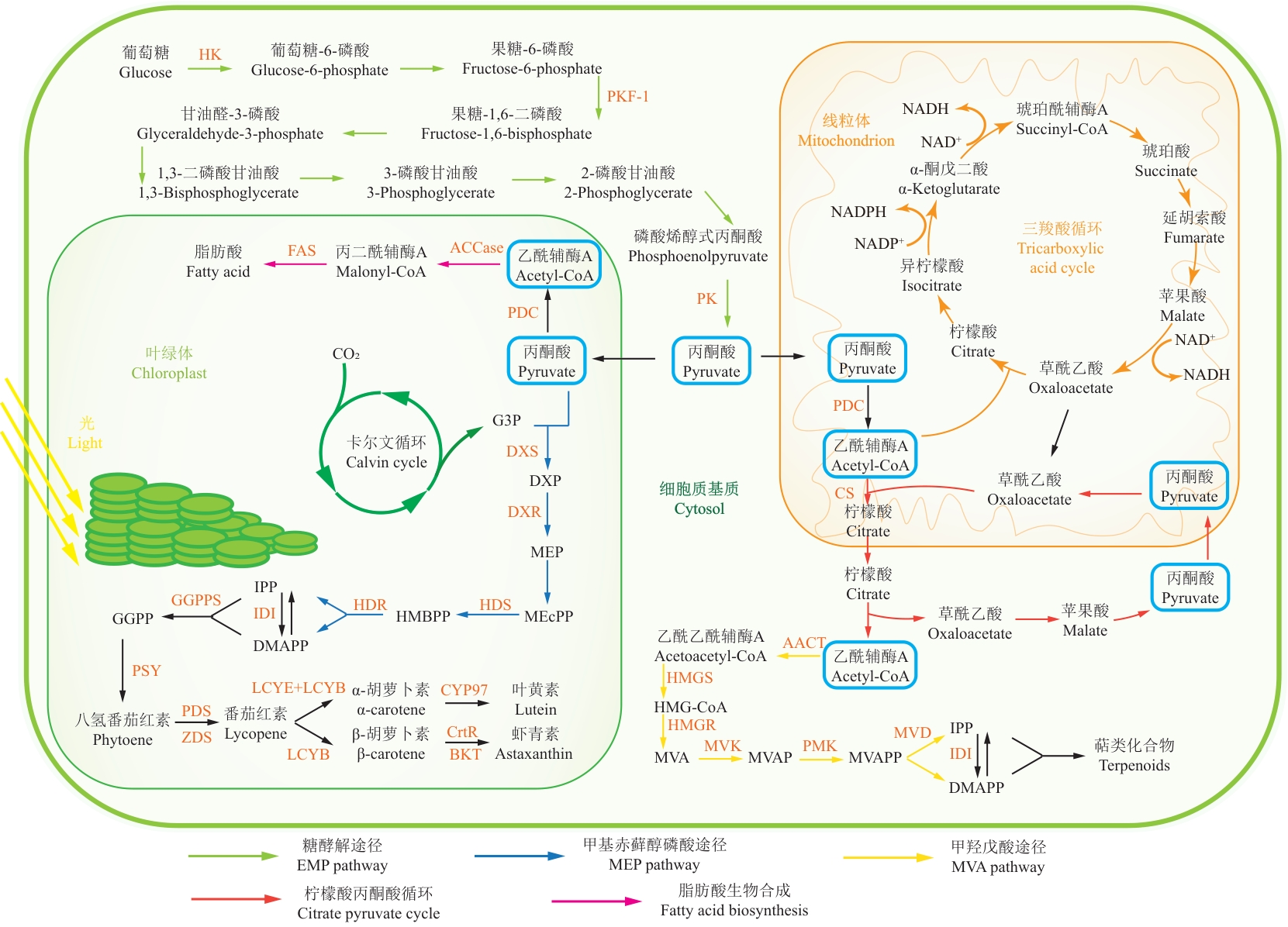
图1 微藻合成高附加值产物的代谢途径HK:己糖激酶;PKF-1:磷酸果糖激酶-1;PK:丙酮酸激酶;PDC:丙酮酸脱氢酶复合体;ACCase:乙酰辅酶A羧化酶;FAS:脂肪酸合酶复合体;G3P:甘油醛-3-磷酸;DXS:1-脱氧-D-木酮糖-5-磷酸合酶;DXP:1-脱氧-D-木酮糖-5-磷酸;DXR:1-脱氧-D-木酮糖-5-磷酸还原异构酶;MEP:2-甲基-D-赤藓醇-4-磷酸;MEcPP:2-甲基-D-赤藓醇-2,4-环焦磷酸;HDS:4-羟基-3-甲基-2-丁烯基焦磷酸合酶;HMBPP:4-羟基-3-甲基-2-丁烯基焦磷酸;HDR:4-羟基-3-甲基-2-丁烯基焦磷酸还原酶;IPP:异戊烯基焦磷酸;DMAPP:二甲基烯丙基焦磷酸;IDI:异戊烯基焦磷酸异构酶;GGPPS:牻牛儿基牻牛儿基焦磷酸合酶;GGPP:牻牛儿基牻牛儿基焦磷酸;PSY:八氢番茄红素合酶;PDS:八氢番茄红素去饱和酶;ZDS:ζ-胡萝卜素去饱和酶;LCYE:番茄红素ε-环化酶;LCYB:番茄红素β-环化酶;CYP97:细胞色素P450型羟化酶;CrtR:β-胡萝卜素羟化酶;BKT:β-胡萝卜素酮化酶;CS:柠檬酸合酶;AACT:乙酰乙酰辅酶A硫解酶;HMGS:3-羟基-3-甲基戊二酰辅酶A合酶;HMG-CoA:3-羟基-3-甲基戊二酰辅酶A;HMGR:3-羟基-3-甲基戊二酰辅酶A还原酶;MVK:甲羟戊酸激酶;PMK:磷酸甲羟戊酸激酶;MVD:二磷酸甲羟戊酸脱羧酶;MVA:甲羟戊酸;MVAP:5-磷酸甲羟戊酸;MVAPP:5-二磷酸甲羟戊酸
Fig. 1 Metabolic pathways for the synthesis of high-value-added products in microalgaeHK: Hexokinase; PFK-1: phosphofructokinase-1; PK: pyruvate kinase; PDC: pyruvate dehydrogenase complex; ACCase: acetyl-CoA carboxylase; FAS: fatty acid synthase complex; G3P: glyceraldehyde-3-phosphate; DXS: 1-deoxy-D-xylulose-5-phosphate synthase; DXP: 1-deoxy-D-xylulose-5-phosphate; DXR: 1-deoxy-D-xylulose-5-phosphate reductoisomerase; MEP: 2-C-methyl-D-erythritol-4-phosphate; MEcPP: 2-C-methyl-D-erythritol-2,4-cyclodiphosphate; HDS: 4-hydroxy-3-methylbut-2-enyl diphosphate synthase; HMBPP: 4-hydroxy-3-methylbut-2-enyl diphosphate; HDR: 4-hydroxy-3-methylbut-2-enyl diphosphate reductase; IPP: isopentenyl diphosphate; DMAPP: dimethylallyl diphosphate; IDI: isopentenyl diphosphate isomerase; GGPPS: geranylgeranyl diphosphate synthase; GGPP: geranylgeranyl diphosphate; PSY: phytoene synthase; PDS: phytoene desaturase; ZDS: ζ-carotene desaturase; LCYE: lycopene ε-cyclase; LCYB: lycopene β-cyclase; CYP97: cytochrome P450-type hydroxylase; CrtR: β-carotene hydroxylase; BKT: β-carotene ketolase; CS: citrate synthase; AACT: acetoacetyl-CoA thiolase; HMGS: 3-hydroxy-3-methylglutaryl-CoA synthase; HMG-CoA: 3-hydroxy-3-methylglutaryl-CoA; HMGR: 3-hydroxy-3-methylglutaryl-CoA reductase; MVK: mevalonate kinase; PMK: phosphomevalonate kinase; MVD: mevalonate diphosphate decarboxylase; MVA: mevalonic acid; MVAP: mevalonate-5-phosphate; MVAPP: mevalonate-5-diphosphate
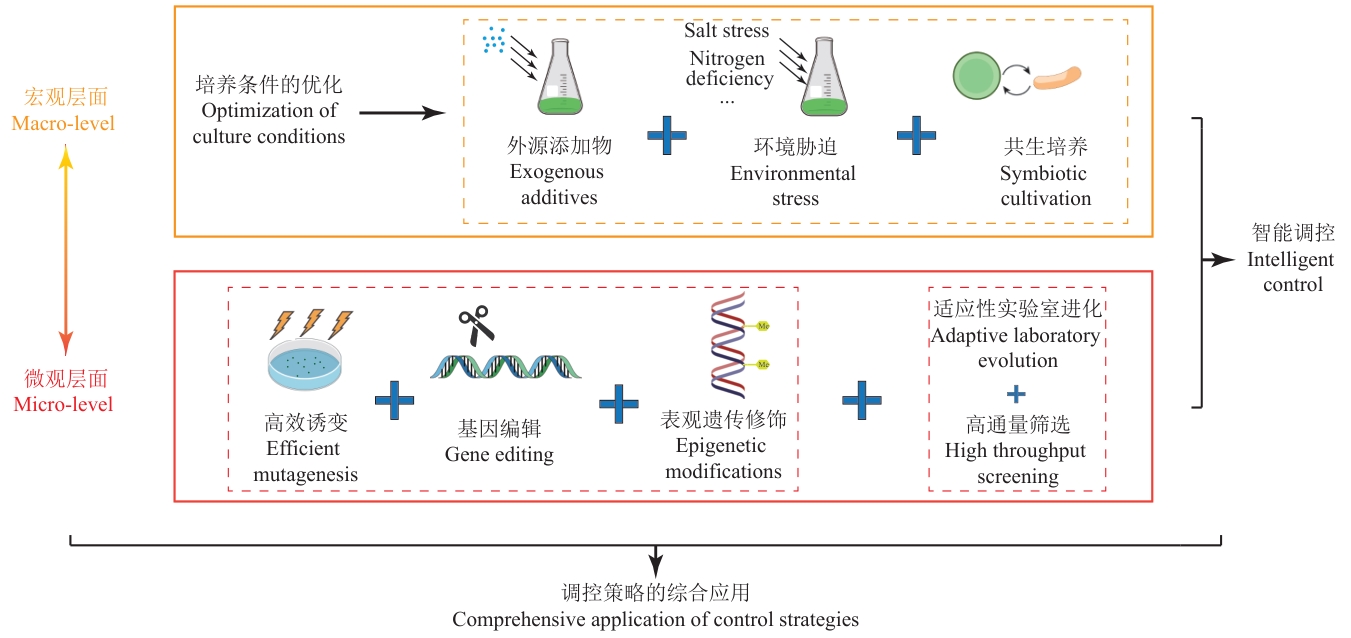
图2 多种代谢调控策略的综合应用
Fig. 2 Integrated application of various metabolic regulation strategies
| [1] | Hou C, Zhao J, Huang BR, et al. Microalgae-based technologies for carbon neutralization and pollutant remediation: a comprehensive and systematic review [J]. Resour Conserv Recycl, 2024, 202: 107323. |
| [2] | S․ T, S․r․ D, V․ S, et al. Harnessing algal power: Algal membrane photobioreactors revolutionizing toxic wastewater matter separation and treatment-a comprehensive review [J]. J Taiwan Inst Chem Eng, 2025, 166: 105506. |
| [3] | Udaypal, Goswami RK, Mehariya S, et al. Advances in microalgae-based carbon sequestration: Current status and future perspectives [J]. Environ Res, 2024, 249: 118397. |
| [4] | Sun L, Liu KK, Shi XY, et al. Effects of the nervonic acid-rich microalga Mychonastes afer on the growth and reproductive processes of Oryzias melastigma [J]. Algal Res, 2025, 91: 104305. |
| [5] | You XG, Yang LB, Chu HQ, et al. Micro-nano-bubbles and their application in microalgae production: Wastewater treatment, carbon capture and microalgae separation [J]. Algal Res, 2024, 78: 103398. |
| [6] | Zhang SQ, Zhang LJ, Xu G, et al. A review on biodiesel production from microalgae: Influencing parameters and recent advanced technologies [J]. Front Microbiol, 2022, 13: 970028. |
| [7] | Song XT, Liu BF, Kong FY, et al. Overview on stress-induced strategies for enhanced microalgae lipid production: Application, mechanisms and challenges [J]. Resour Conserv Recycl, 2022, 183: 106355. |
| [8] | Luo YY, Zhao SS, Fan ZX, et al. Sucrose non-fermenting 1-related protein kinase 2-14 participating in lipid elevating efficacy and biodiesel upgrade by Coccomyxa subllipsoidea [J]. Chem Eng J, 2025, 505: 159607. |
| [9] | You F, Fan YW, Tang LP, et al. Optimization of Phaeodactylum tricornutum cultivation for enhancing mariculture wastewater treatment and high value product recovery using Box-Behnken design [J]. Process Saf Environ Prot, 2025, 197: 107022. |
| [10] | Yin MS, An YL, Qi F, et al. Enhancement of non-oleaginous green microalgae Ulothrix for bio-fixing CO2 and producing biofuels by ARTP mutagenesis [J]. Biotechnol Biofuels, 2024, 17: 135. |
| [11] | Einhaus A, Krieger A, Köhne L, et al. Genome editing of epigenetic transgene silencing in Chlamydomonas reinhardtii [J]. Trends Biotechnol, 2025, 43(8): 1961-1981. |
| [12] | Xing XF, Ying KX, Liu HN, et al. Enhanced lipid production in Chlamydomonas reinhardtii: Impact of salt stress synergized with α-lipoic acid [J]. Food Chem, 2025, 486: 144596. |
| [13] | Sivaramakrishnan R, Suresh S, Kanwal S, et al. Microalgal biorefinery concepts’ developments for biofuel and bioproducts: current perspective and bottlenecks [J]. Int J Mol Sci, 2022, 23(5): 2623. |
| [14] | Kim JY, Jung JM, Jung S, et al. Biodiesel from microalgae: Recent progress and key challenges [J]. Prog Energy Combust Sci, 2022, 93: 101020. |
| [15] | Muthukumaran M, Rawindran H, Noorjahan A, et al. Microalgae-based solutions for palm oil mill effluent management: Integrating phycoremediation, biomass and biodiesel production for a greener future [J]. Biomass Bioenergy, 2024, 191: 107445. |
| [16] | Zahedi A, Behzadinia M, Abdalisousan A, et al. Technical and economical design and optimization of a solar-biodiesel collector system to supply electricity and drink water in AbuMusa Island [J]. Renew Energy, 2024, 223: 119924. |
| [17] | de Souza L, Lima AS, Matos ÂP, et al. Biopolishing sanitary landfill leachate via cultivation of lipid-rich Scenedesmus microalgae [J]. J Clean Prod, 2021, 303: 127094. |
| [18] | Xin Y, Lu YD, Lee YY, et al. Producing designer oils in industrial microalgae by rational modulation of co-evolving type-2 diacylglycerol acyltransferases [J]. Mol Plant, 2017, 10(12): 1523-1539. |
| [19] | Ugya AY, Chen H, Wang Q. Deciphering the mechanism of nano-enhanced docosahexaenoic acid accumulation in microalgae [J]. J CO2 Util, 2025, 100: 103182. |
| [20] | Berzal G, García-García P, Señoráns FJ. Integrated process for Schizochytrium oil extraction, enzymatic modification of lipids and concentration of DHA fatty acid esters using alternative methodologies [J]. Mar Drugs, 2024, 22(4): 146. |
| [21] | Srivastava A, Kalwani M, Chakdar H, et al. Biosynthesis and biotechnological interventions for commercial production of microalgal pigments: a review [J]. Bioresour Technol, 2022, 352: 127071. |
| [22] | Huang JJ, Xie Q, Lin SL, et al. Microalgae-derived astaxanthin: bioactivities, biotechnological approaches and industrial technologies for its production [J]. Crit Rev Food Sci Nutr, 2025, 65(31): 7358-7392. |
| [23] | Tambat VS, Singhania RR, Sumathi Y, et al. Astaxanthin: nature’s multifunctional molecule, natural sources, health benefits, and process advancements [J]. Crit Rev Biotechnol, 2026, 46(1): 61-79. |
| [24] | Chini Zittelli G, Lauceri R, Faraloni C, et al. Valuable pigments from microalgae: phycobiliproteins, primary carotenoids, and fucoxanthin [J]. Photochem Photobiol Sci, 2023, 22(8): 1733-1789. |
| [25] | Mostafa HS, Hashem MM. Microalgae as a source of carotenoids in foods, obstacles and solutions [J]. Phytochem Rev, 2025, 24(5): 4295-4337. |
| [26] | Yao T, Huang JK, Su BC, et al. Enhanced phycocyanin production of Arthrospira maxima by addition of mineral elements and polypeptides using response surface methodology [J]. Front Mar Sci, 2022, 9: 1057201. |
| [27] | Tambat VS, Patel AK, Singhania RR, et al. Sustainable mixotrophic microalgae refinery of astaxanthin and lipid from Chlorella zofingiensis [J]. Bioresour Technol, 2023, 387: 129635. |
| [28] | Acheampong A, Fetisoa MR, Bondzie-Quaye P, et al. Synergistic effects of arginine and calcium on astaxanthin and lipid accumulation in Haematococcus pluvialis under high light conditions [J]. Aquaculture, 2025, 598: 742039. |
| [29] | Huang DQ, Liu CL, Su MS, et al. Enhancement of β-carotene content in Chlamydomonas reinhardtii by expressing bacterium-driven lycopene β-cyclase [J]. Biotechnol Biofuels, 2023, 16: 127. |
| [30] | Patel AK, Vadrale AP, Singhania RR, et al. Enhanced mixotrophic production of lutein and lipid from potential microalgae isolate Chlorella sorokiniana C16 [J]. Bioresour Technol, 2023, 386: 129477. |
| [31] | Ren JZ, Wu Y, Zhu ZP, et al. Biosynthesis and regulation of diterpenoids in medicinal plants [J]. Chin J Nat Med, 2022, 20(10): 761-772. |
| [32] | Huang PW, Wang LR, Geng SS, et al. Strategies for enhancing terpenoids accumulation in microalgae [J]. Appl Microbiol Biotechnol, 2021, 105(12): 4919-4930. |
| [33] | Li MJ, Ma SL, Zhao JL, et al. Efficient photoproduction of a high-value sesquiterpene pentalenene from the green microalga Chlamydomonas reinhardtii [J]. Plant J, 2025, 123(2): e70354. |
| [34] | Einhaus A, Steube J, Freudenberg RA, et al. Engineering a powerful green cell factory for robust photoautotrophic diterpenoid production [J]. Metab Eng, 2022, 73: 82-90. |
| [35] | Tounsi L, Hentati F, Ben Hlima H, et al. Microalgae as feedstock for bioactive polysaccharides [J]. Int J Biol Macromol, 2022, 221: 1238-1250. |
| [36] | Liberti D, Imbimbo P, Giustino E, et al. Shedding light on the hidden benefit of Porphyridium cruentum culture [J]. Antioxidants, 2023, 12(2): 337. |
| [37] | Kronusová O, Kaštánek P, Koyun G, et al. Factors influencing the production of extracellular polysaccharides by the green algae Dictyosphaerium chlorelloides and their isolation, purification, and composition [J]. Microorganisms, 2022, 10(7): 1473. |
| [38] | Mosibo OK, Ferrentino G, Udenigwe CC. Microalgae proteins as sustainable ingredients in novel foods: recent developments and challenges [J]. Foods, 2024, 13(5): 733. |
| [39] | Bermudez G, Terenzi C, Medri F, et al. Extraction and analytical methods for the characterization of polyphenols in marine microalgae: a review [J]. Mar Drugs, 2024, 22(12): 538. |
| [40] | Nemzer BV, Al-Taher F, Kalita D, et al. Health-improving effects of polyphenols on the human intestinal microbiota: a review [J]. Int J Mol Sci, 2025, 26(3): 1335. |
| [41] | Sañé E, Del Mondo A, Ambrosino L, et al. The recent advanced in microalgal phytosterols: bioactive ingredients along with human-health driven potential applications [J]. Food Rev Int, 2023, 39(4): 1859-1878. |
| [42] | 张冬梅, 陈钧辉. 普通生物化学 [M]. 6版. 北京: 高等教育出版社, 2021. |
| Zhang DM, Chen JH. General biochemistry [M]. 6th ed. Beijing: Higher Education Press, 2021. | |
| [43] | Hirokawa Y, Kubo T, Soma Y, et al. Enhancement of acetyl-CoA flux for photosynthetic chemical production by pyruvate dehydrogenase complex overexpression in Synechococcus elongatus PCC 7942 [J]. Metab Eng, 2020, 57: 23-30. |
| [44] | 孙翰, 刘进. 真核微藻脂质代谢工程的研究进展和展望 [J]. 合成生物学, 2023, 4(6): 1140-1160. |
| Sun H, Liu J. Research progress and prospects in lipid metabolic engineering of eukaryotic microalgae [J]. Synth Biol J, 2023, 4(6): 1140-1160. | |
| [45] | Zhang SM, Wu SW, Hou QC, et al. Fatty acid de novo biosynthesis in plastids: Key enzymes and their critical roles for male reproduction and other processes in plants [J]. Plant Physiol Biochem, 2024, 210: 108654. |
| [46] | Singh A, Singh S, Singh S, et al. Harnessing bioenergy potential of Chlamydomonas reinhardtii: a comprehensive characterization and valorization of biomass towards energy conversion under circular bioeconomy [J]. Renew Energy, 2025, 240: 122256. |
| [47] | Li YL, Sun H, Wang YN, et al. Integrated metabolic tools reveal carbon alternative in Isochrysis zhangjiangensis for fucoxanthin improvement [J]. Bioresour Technol, 2022, 347: 126401. |
| [48] | Shafaghat Z, Najafi F, Khavari-Nejad RA, et al. Phytohormone-induced changes in growth, physiology, and biochemistry of Aurantiochytrium sp. for sustainable bioproduction [J]. Bioresour Technol, 2024, 410: 131249. |
| [49] | 于博涵, 高保燕, 张虎, 等. 布朗葡萄藻: 从二氧化碳固定到烷烃、烯烃与萜烯的生物合成 [J]. 中国生物工程杂志, 2024, 44(2): 164-175. |
| Yu BH, Gao BY, Zhang H, et al. Botryococcus braunii: from carbon dioxide fixation to the biosynthesis of alkanes, alkenes and terpenes [J]. China Biotechnol, 2024, 44(2): 164-175. | |
| [50] | Du PP, He H, Wang JY, et al. Genome-wide identification and characterization of the HMGR gene family in Taraxacum kok-saghyz provide insights into its regulation in response to ethylene and methyl jsamonate treatments [J]. Plants, 2024, 13(18): 2646. |
| [51] | Park YK, Sellés Vidal L, Bell D, et al. Efficient synthesis of limonene production in Yarrowia lipolytica by combinatorial engineering strategies [J]. Biotechnol Biofuels, 2024, 17: 94. |
| [52] | Al Hoqani U, León R, Purton S. Over-expression of a cyanobacterial gene for 1-deoxy-d-xylulose-5-phosphate synthase in the chloroplast of Chlamydomonas reinhardtii perturbs chlorophyll: carotenoid ratios [J]. J King Saud Univ Sci, 2022, 34(6): 102141. |
| [53] | Dou XT, Li MJ, Ge YL, et al. Photoproduction of aviation fuel β-caryophyllene from the eukaryotic green microalga Chlamydomonas reinhardtii [J]. Biotech & Bioengineering, 2025, 122(3): 698-709. |
| [54] | Cao K, Cui YL, Sun FJ, et al. Metabolic engineering and synthetic biology strategies for producing high-value natural pigments in Microalgae [J]. Biotechnol Adv, 2023, 68: 108236. |
| [55] | Velmurugan A, Kodiveri Muthukaliannan G. Homologous and heterologous expression of phytoene synthase gene in marine microalgae Dunaliella salina and its potential as aquaculture feed [J]. Aquacult Int, 2023, 31(6): 3125-3144. |
| [56] | He YL, Ji L, Yuan YC, et al. Recent advances in polysaccharide-dominated extracellular polymeric substances from microalgae: a review [J]. Int J Biol Macromol, 2025, 302: 140572. |
| [57] | Su YX, Hu JY, Xia MS, et al. An undiscovered circadian clock to regulate phytoplankton photosynthesis [J]. PNAS Nexus, 2024, 3(11): pgae497. |
| [58] | Ievina B, Romagnoli F. Unveiling underlying factors for optimizing light spectrum to enhance microalgae growth [J]. Bioresour Technol, 2025, 418: 131980. |
| [59] | Sun H, Li XJ, Ren YY, et al. Boost carbon availability and value in algal cell for economic deployment of biomass [J]. Bioresour Technol, 2020, 300: 122640. |
| [60] | Torres-Martínez JJ, Martínez-Constantino A, González-Ortega O, et al. Impact of blue and red light on lipid accumulation in Chlorella vulgaris and Scenedesmus acutus [J]. J Appl Phycol, 2025, 37(4): 2301-2311. |
| [61] | Sun ZL, Chen YF, Du JC. Elevated CO2 improves lipid accumulation by increasing carbon metabolism in Chlorella sorokiniana [J]. Plant Biotechnol J, 2016, 14(2): 557-566. |
| [62] | Xing DX, Wang HT, Li SZ, et al. Stable isotope labeling and functional gene prediction elucidate the carbon metabolism in fermentative bacteria and microalgae coupling system [J]. Water Res, 2024, 263: 122153. |
| [63] | Gao PT, Gao YD, Guo L, et al. iTRAQ-based proteome profiling revealed the carbon metabolism regulation for mariculture wastewater treatment with Bacterial-Algal Coupling Technology [J]. Chem Eng J, 2022, 439: 135579. |
| [64] | Liu PY, Ai YH, Li MZ, et al. Discovery of mannose as an alternative non-nutrient-deficient regulator of lipid accumulation in microalgae [J]. J Adv Res, 2026, 79: 239-250. |
| [65] | Mao BD, Vadiveloo A, Li KY, et al. Bioconversion of C1 and C2 artificial photosynthesis products into high-value bioproducts by mixotrophic microalgae Chlorella pyrenoidosa [J]. Chem Eng J, 2024, 499: 155979. |
| [66] | Yao DD, Wu LY, Tan D, et al. Enhancing CO2 fixation by microalgae in a Photobioreactor: Molecular mechanisms with exogenous carbonic anhydrase [J]. Bioresour Technol, 2024, 408: 131176. |
| [67] | Wang C, Qi M, Guo JM, et al. The active phytohormone in microalgae: the characteristics, efficient detection, and their adversity resistance applications [J]. Molecules, 2022, 27(1): 46. |
| [68] | Xie ZJ, Ma SM, Cao YQ, et al. Effects of six phytohormones on the growth behavior and cellular biochemical components of Chlorella vulgaris 31 [J]. J Appl Phycol, 2023, 35(4): 1589-1602. |
| [69] | Zhang XW, Zhang Z, Peng YM, et al. Salicylic acid enhances cell growth, fatty acid and astaxanthin production in heterotrophic Chromochloris zofingiensis without reactive oxygen species elevation [J]. Biotechnol Biofuels, 2024, 17: 1. |
| [70] | Wang JJ, Tian QH, Zeng WM, et al. Insights about fungus-microalgae symbiotic system in microalgae harvesting and wastewater treatment: a review [J]. Renew Sustain Energy Rev, 2023, 182: 113408. |
| [71] | Ali S, Waqas W, Bakky MAH, et al. Implications of microalgal-bacterial interactions in modern aquaculture practices: a review of the current knowledge [J]. Rev Aquac, 2025, 17: e12980. |
| [72] | Patidar SK. Metabolic interactions between microalgae and bacteria: Multifunctional ecological interplay and environmental applications [J]. Algal Res, 2025, 86: 103904. |
| [73] | Ren ZJ, Li HX, Sun P, et al. Development and challenges of emerging biological technologies for algal-bacterial symbiosis systems: a review [J]. Bioresour Technol, 2024, 413: 131459. |
| [74] | Wang SK, Yang KX, Zhu YR, et al. One-step co-cultivation and flocculation of microalgae with filamentous fungi to valorize starch wastewater into high-value biomass [J]. Bioresour Technol, 2022, 361: 127625. |
| [75] | Yu Q, Chen X, Ai SH, et al. Comprehensive transcriptomic and metabolomic insights into simultaneous CO2 sequestration and nitrate removal by the Chlorella vulgaris and Pseudomonas sp. consortium [J]. Environ Res, 2024, 259: 119540. |
| [76] | Ugya AY, Yan CL, Ari HA, et al. Salinity stress adaptation enhances metabolic flux towards polyhydroxyalkanoate biosynthesis in microalgae biofilm [J]. Chem Eng J, 2025, 519: 165423. |
| [77] | Zhou LL, Niu XJ, Zhang DQ, et al. Insight into an efficient microalgae co-culture system for biogas slurry treatment: Nutrients recovery and valuable biomass production [J]. J Water Process Eng, 2024, 60: 105111. |
| [78] | Uganeeswary S, Kee LM, Wei LJ, et al. Influence of environmental stress on microalgae growth and lipid profile: a systematic review [J]. Phytochem Rev, 2022, 22(4): 879-901. |
| [79] | Cañavate JP, Fernández-Díaz C. An appraisal of the variable response of microalgal lipids to culture salinity [J]. Rev Aquac, 2022, 14(1): 192-212. |
| [80] | Ho SH, Nakanishi A, Kato Y, et al. Dynamic metabolic profiling together with transcription analysis reveals salinity-induced starch-to-lipid biosynthesis in Alga chlamydomonas sp. JSC4 [J]. Sci Rep, 2017, 7: 45471. |
| [81] | Li TL, Zhang YW, Jia YL, et al. Physiological and transcriptomic responses of soil green Alga desmochloris sp. FACHB-3271 to salt stress [J]. Algal Res, 2025, 88: 104006. |
| [82] | Jia J, Han DX, Gerken HG, et al. Molecular mechanisms for photosynthetic carbon partitioning into storage neutral lipids in Nannochloropsis oceanica under nitrogen-depletion conditions [J]. Algal Res, 2015, 7: 66-77. |
| [83] | Scarsini M, Thiriet-Rupert S, Veidl B, et al. The transition toward nitrogen deprivation in diatoms requires chloroplast stand-by and deep metabolic reshuffling [J]. Front Plant Sci, 2022, 12: 760516. |
| [84] | Turab A, Sun X, Elahi A, et al. Upregulation of photosynthesis and TAG biosynthesis genes enhanced lipid production in ARTP-mutated Scenedesmus sp. via multi-omics analysis [J]. J Environ Chem Eng, 2025, 13(5): 117629. |
| [85] | Acheampong A, Bondzie-Quaye P, Fetisoa MR, et al. Applications of low-temperature plasma technology in microalgae cultivation and mutant breeding: a comprehensive review [J]. Bioresour Technol, 2025, 419: 132019. |
| [86] | Arora N, Lo E, Philippidis GP. A two-prong mutagenesis and adaptive evolution strategy to enhance the temperature tolerance and productivity of Nannochloropsis oculata [J]. Bioresour Technol, 2022, 364: 128101. |
| [87] | Xie YP, Lin WJ, Zhang W, et al. Chlorophyll-deficient triggers heterotrophic lutein-directed biosynthesis in a novel mutant strain of Chlorella sorokiniana (Chlorophyta): Process characterization and underlying mechanism [J]. Aquaculture, 2025, 598: 741998. |
| [88] | Zhang Q, Miao RY, Feng RC, et al. Application of atmospheric and room-temperature plasma (ARTP) to microbial breeding [J]. Current Issues in Molecular Biology, 2023, 45(8): 6466-6484. |
| [89] | Elshobary ME, Zabed HM, Qi XH, et al. Enhancing biomass and lipid productivity of a green microalga Parachlorella kessleri for biodiesel production using rapid mutation of atmospheric and room temperature plasma [J]. Biotechnol Biofuels, 2022, 15: 122. |
| [90] | Imamura S, Yamada K, Takebe H, et al. Optimal conditions of algal breeding using neutral beam and applying it to breed Euglena gracilis strains with improved lipid accumulation [J]. Sci Rep, 2024, 14: 14716. |
| [91] | Guo XP, Ren JL, Zhou X, et al. Strategies to improve the efficiency and quality of mutant breeding using heavy-ion beam irradiation [J]. Crit Rev Biotechnol, 2024, 44(5): 735-752. |
| [92] | Wang J, Li X, Wang JF, et al. Comparative proteomics reveals energy and carbon metabolism changes in Scenedesmus quadricauda mutants induced by heavy-ion beam irradiation [J]. Bioresour Technol, 2024, 406: 130965. |
| [93] | Chen ZS, Tan L, Yang BJ, et al. A mutant of seawater Arthrospira platensis with high polysaccharides production induced by space environment and its application potential [J]. Algal Res, 2022, 61: 102562. |
| [94] | Song KJ, Zhou ZZ, Huang YX, et al. Multi-omics insights into the mechanism of the high-temperature tolerance in a thermotolerant Chlorella sorokiniana [J]. Bioresour Technol, 2023, 390: 129859. |
| [95] | Liu Y, Chen X, Wei D, et al. Rapid screening of high-protein Auxenochlorella pyrenoidosa mutant by an integrated system of atmospheric and room temperature plasma mutagenesis and high-throughput microbial microdroplet culture [J]. Algal Res, 2024, 80: 103509. |
| [96] | Wang YH, Sun YS. Use microfluidics to create microdroplets for culturing and investigating algal cells in a high-throughput manner [J]. Microfluid Nanofluid, 2023, 27(4): 27. |
| [97] | Zhao JH, Guo HS. RNA silencing: From discovery and elucidation to application and perspectives [J]. J Integr Plant Biol, 2022, 64(2): 476-498. |
| [98] | Aljabali AAA, El-Tanani M, Tambuwala MM. Principles of CRISPR-Cas9 technology: Advancements in genome editing and emerging trends in drug delivery [J]. J Drug Deliv Sci Technol, 2024, 92: 105338. |
| [99] | Berman A, Su N, Li ZR, et al. Construction of multi-targeted CRISPR libraries in tomato to overcome functional redundancy at genome-scale level [J]. Nat Commun, 2025, 16: 4111. |
| [100] | Nishida K, Kondo A. CRISPR-derived genome editing technologies for metabolic engineering [J]. Metab Eng, 2021, 63: 141-147. |
| [101] | Saito N, Katayama T, Minami A, et al. Versatile filamentous fungal host highly-producing heterologous natural products developed by genome editing-mediated engineering of multiple metabolic pathways [J]. Commun Biol, 2024, 7: 1263. |
| [102] | Jia B, Yin JB, Li XL, et al. Increased lipids in Chlamydomonas reinhardtii by multiple regulations of DOF, LACS2, and CIS1 [J]. Int J Mol Sci, 2022, 23(17): 10176. |
| [103] | Li ZZ, Kim M, da Silva Nascimento JR, et al. Knocking out the carboxyltransferase interactor 1 (CTI1) in Chlamydomonas boosted oil content by fivefold without affecting cell growth [J]. Plant Biotechnol J, 2025, 23(4): 1230-1242. |
| [104] | Xue J, Li T, Chen TT, et al. Regulation of malate-pyruvate pathway unifies the adequate provision of metabolic carbon precursors and NADPH in Tetradesmus obliquus [J]. Algal Res, 2021, 57: 102340. |
| [105] | Südfeld C, Kiyani A, Wefelmeier K, et al. Expression of glycerol-3-phosphate acyltransferase increases non-polar lipid accumulation in Nannochloropsis oceanica [J]. Microb Cell Fact, 2023, 22: 12. |
| [106] | Zhao JL, Ge YL, Liu KQ, et al. Overexpression of a MYB1 transcription factor enhances triacylglycerol and starch accumulation and biomass production in the green microalga Chlamydomonas reinhardtii [J]. J Agric Food Chem, 2023, 71(46): 17833-17841. |
| [107] | Bacova R, Kolackova M, Klejdus B, et al. Epigenetic mechanisms leading to genetic flexibility during abiotic stress responses in microalgae: a review [J]. Algal Res, 2020, 50: 101999. |
| [108] | Gong YH, Wang QT, Wei L, et al. Genome-wide adenine N6-methylation map reveals epigenomic regulation of lipid accumulation in Nannochloropsis [J]. Plant Commun, 2024, 5(3): 100773. |
| [109] | Yang YN, Yang M, Zhou YH, et al. Effect of RNA demethylase FTO overexpression on biomass and bioactive substances in diatom Phaeodactylum tricornutum [J]. Biology, 2025, 14(4): 414. |
| [110] | Liu DM, Wei L. Epigenetic regulation in response to CO2 fluctuation in marine microalga Nannochloropsis oceanica [J]. Microb Ecol, 2024, 87: 4. |
| [111] | Wang J, Ouyang LY, Wei L. Novel insight of nitrogen deprivation affected lipid accumulation by genome-wide lactylation in Nannochloropsis oceanica [J]. J Agric Food Chem, 2023, 71(26): 10107-10123. |
| [112] | Heidari Baladehi M, Hekmatara M, He YH, et al. Culture-free identification and metabolic profiling of microalgal single cells via ensemble learning of ramanomes [J]. Anal Chem, 2021, 93(25): 8872-8880. |
| [113] | Shen YT, Zhang ZX, Qi X, et al. Harnessing microalgae: Pioneering strategies for cost-effective EPA synthesis [J]. Food Biosci, 2025, 68: 106687. |
| [114] | Kugler A, Stensjö K. Machine learning predicts system-wide metabolic flux control in cyanobacteria [J]. Metab Eng, 2024, 82: 171-182. |
| [115] | Li HK, Chen LJ, Zhang F, et al. Graph-learning-based machine learning improves prediction and cultivation of commercial-grade marine microalgae Porphyridium [J]. Bioresour Technol, 2025, 416: 131728. |
| [116] | Yadav I, Rautela A, Gangwar A, et al. Enhancement of isoprene production in engineered Synechococcus elongatus UTEX 2973 by metabolic pathway inhibition and machine learning-based optimization strategy [J]. Bioresour Technol, 2023, 387: 129677. |
| [117] | Yeh YC, Syed T, Brinitzer G, et al. Improving microalgae growth modeling of outdoor cultivation with light history data using machine learning models: a comparative study [J]. Bioresour Technol, 2023, 390: 129882. |
| [1] | 王鹤瑶, 孙红梅. 园艺植物表皮毛功能及其形成机制研究进展[J]. 生物技术通报, 2026, 42(3): 242-254. |
| [2] | 刘娜, 曾宝珍, 贾兆星, 祝英方. 表观遗传调控番茄果实发育及成熟的研究进展[J]. 生物技术通报, 2026, 42(3): 37-47. |
| [3] | 彭楚, 孙娟利, 郑蓓蓓, 张若西, 韩月彭, 赵云. 果实花色苷酶促降解机制研究进展[J]. 生物技术通报, 2026, 42(3): 133-144. |
| [4] | 赵艳侠, 李倩, 孙家波, 梁红敏, 李冰冰. 草莓果实品质形成的关键调控基因及分子网络解析[J]. 生物技术通报, 2026, 42(3): 111-132. |
| [5] | 林佳怡, 陈强, 张磊, 刘宏鑫, 郑晓明, 逄洪波. 褪黑素在植物低温胁迫中的研究进展[J]. 生物技术通报, 2025, 41(7): 37-48. |
| [6] | 刘园园, 陈析丰, 钱前, 高振宇. 水稻穗发育调控的分子机制研究进展[J]. 生物技术通报, 2025, 41(5): 1-13. |
| [7] | 张晓丹, 尹铮, 刘清晨, 李雪梅, 刘晓华, 梁美霞. 基于代谢组和转录组联合解析山桃响应冻害机制[J]. 生物技术通报, 2025, 41(12): 225-239. |
| [8] | 杜仲阳, 杨泽, 梁梦静, 刘义珍, 崔红利, 史达明, 薛金爱, 孙岩, 张春辉, 季春丽, 李润植. 纳米硒(SeNPs)缓解烟草幼苗铅胁迫和促生效应[J]. 生物技术通报, 2024, 40(7): 183-196. |
| [9] | 沈天虹, 齐孝博, 赵瑞丰, 马欣荣. 微藻盐胁迫响应分子机制研究进展[J]. 生物技术通报, 2024, 40(3): 89-99. |
| [10] | 王天依, 王荣焕, 王夏青, 张如养, 徐瑞斌, 焦炎炎, 孙轩, 王继东, 宋伟, 赵久然. 玉米矮秆基因与矮秆育种研究[J]. 生物技术通报, 2023, 39(8): 43-51. |
| [11] | 张蓓, 任福森, 赵洋, 郭志伟, 孙强, 刘贺娟, 甄俊琦, 王童童, 程相杰. 辣椒响应热胁迫机制的研究进展[J]. 生物技术通报, 2023, 39(7): 37-47. |
| [12] | 张和臣, 袁欣, 高杰, 王校晨, 王慧娟, 李艳敏, 王利民, 符真珠, 李保印. 植物花瓣呈色机理及花色分子育种[J]. 生物技术通报, 2023, 39(5): 23-31. |
| [13] | 张龙喜, 吕琳, 张欢欢, 周金成, 车午男, 董辉. RNAi技术在寄生蜂中的应用研究进展[J]. 生物技术通报, 2023, 39(12): 99-108. |
| [14] | 齐方婷, 黄河. 观赏植物花斑形成调控机制的研究进展[J]. 生物技术通报, 2023, 39(10): 17-28. |
| [15] | 刘自然, 甄珍, 陈强, 李玥莹, 王泽, 逄洪波. 植物响应Cd胁迫研究进展[J]. 生物技术通报, 2022, 38(6): 13-26. |
| 阅读次数 | ||||||
|
全文 |
|
|||||
|
摘要 |
|
|||||
