







生物技术通报 ›› 2025, Vol. 41 ›› Issue (10): 110-120.doi: 10.13560/j.cnki.biotech.bull.1985.2025-0776
张春辉1( ), 吉婧芳1, 曹嘉敏1, 马茜茜1, 刘纹众1, 季春丽1, 张立涛2(), 李润植1()
收稿日期:2025-07-20
出版日期:2025-10-26
发布日期:2025-10-28
通讯作者:
张立涛,男,博士,副研究员,研究方向 :微藻生物技术;E-mail: zhanglitao666@163.com作者简介:张春辉,女,博士,副教授,研究方向 :微藻代谢调控;E-mail: chunhuizhang90@163.com
基金资助:
ZHANG Chun-hui1(), JI Jing-fang1, CAO Jia-min1, MA Xi-xi1, LIU Wen-zhong1, JI Chun-li1, ZHANG Li-tao2(), LI Run-zhi1()
Received:2025-07-20
Published:2025-10-26
Online:2025-10-28
摘要:
目的 雨生红球藻是强抗氧化性虾青素产品的天然优质来源,补充碳源来提高雨生红球藻虾青素产量是一种有效策略。探究内源光呼吸途径对碳源诱导虾青素合成的影响,为开发高效虾青素生产工艺提供新思路。 方法 设计CK组(正常对照组,基础BG-11培养基)、A组(补充醋酸钠)和H组(补充碳酸氢钠)3组不同培养基,在未添加或添加光呼吸抑制剂CM的情况下,通过分析色素积累、生物量、总光合速率、OJIP荧光诱导曲线及其叶绿素荧光参数变化,解析光呼吸途径对碳源诱导雨生红球藻虾青素积累的影响。 结果 补充碳源醋酸钠或碳酸氢钠提高了雨生红球藻的干重和虾青素/叶绿素比值,其中醋酸钠显著促进了虾青素积累。然而使用CM抑制光呼吸后,干重、虾青素含量、虾青素/叶绿素比值显著降低。同时,补充碳源(A组、H组)导致总光合速率显著降低,光呼吸受阻使总光合速率进一步降低。此外,补充碳源或CM均使OJIP曲线的形状和荧光强度发生改变。在CK或A组条件下抑制光呼吸,对最大光化学效率(ΦP0)和电子传递效率(ΦE0)无影响,而单位面积内活性PSⅡ反应中心的数量(RC/CS0)与单位活性反应中心吸收的光能(ABS/RC)、捕获的激发能(TR0/RC)和用于电子传递的能量(ET0/RC)均显著降低,A+CM组在J点的相对可变荧光强度(VJ)较A组显著增高。 结论 强光胁迫下添加醋酸钠再抑制光呼吸后,首先降低了PSII活性反应中心数量,继而损伤了PSII受体侧,导致光合作用光能吸收和能量利用受阻,从而进一步损伤雨生红球藻细胞,导致干重、虾青素含量和虾青素/叶绿素比值降低,证实光呼吸在有机碳源醋酸钠诱导雨生红球藻虾青素积累中发挥重要功能。
张春辉, 吉婧芳, 曹嘉敏, 马茜茜, 刘纹众, 季春丽, 张立涛, 李润植. 光呼吸对碳源诱导雨生红球藻积累虾青素的影响[J]. 生物技术通报, 2025, 41(10): 110-120.
ZHANG Chun-hui, JI Jing-fang, CAO Jia-min, MA Xi-xi, LIU Wen-zhong, JI Chun-li, ZHANG Li-tao, LI Run-zhi. Effect of Photorespiration on Astaxanthin Accumulation in Haematococcus pluvialis Induced by Carbon Sources[J]. Biotechnology Bulletin, 2025, 41(10): 110-120.
处理组 Treatment | 基础培养基 Basal medium | 外接碳源 Carbon source supplementation(1 g/L) | 是否补充光呼吸抑制剂CM Absence or presence of photorespiration inhibitor CM(0.1 mmol/L) |
|---|---|---|---|
| CK | BG-11 | 无 | 否 |
| CM | BG-11 | 无 | 是 |
| A | BG-11 | 醋酸钠 | 否 |
| A+CM | BG-11 | 醋酸钠 | 是 |
| H | BG-11 | 碳酸氢钠 | 否 |
| H+CM | BG-11 | 碳酸氢钠 | 是 |
表1 各处理组培养基配方
Table 1 Medium formula for each treatment group
处理组 Treatment | 基础培养基 Basal medium | 外接碳源 Carbon source supplementation(1 g/L) | 是否补充光呼吸抑制剂CM Absence or presence of photorespiration inhibitor CM(0.1 mmol/L) |
|---|---|---|---|
| CK | BG-11 | 无 | 否 |
| CM | BG-11 | 无 | 是 |
| A | BG-11 | 醋酸钠 | 否 |
| A+CM | BG-11 | 醋酸钠 | 是 |
| H | BG-11 | 碳酸氢钠 | 否 |
| H+CM | BG-11 | 碳酸氢钠 | 是 |
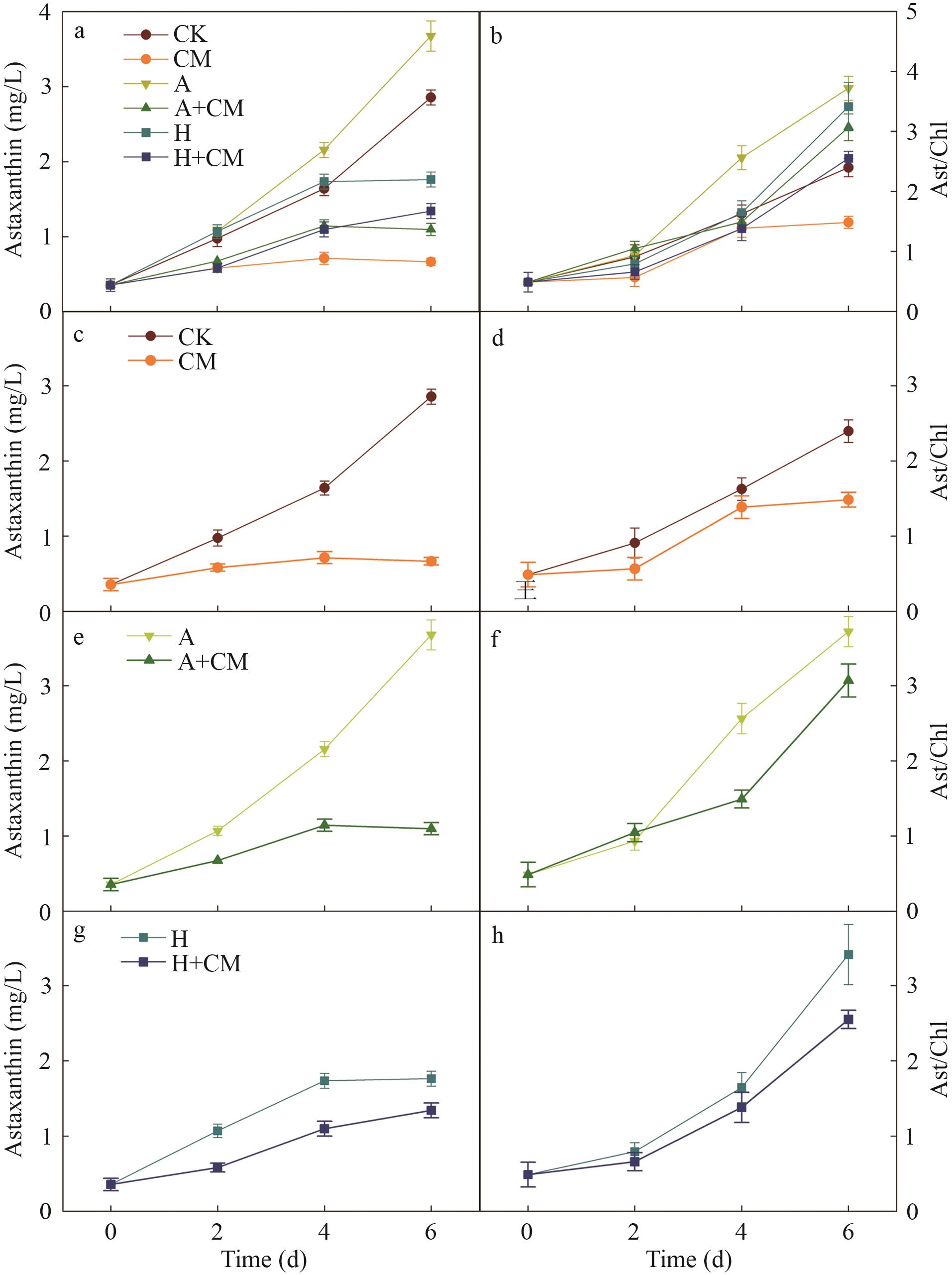
图1 不同碳源培养下光呼吸抑制剂CM对雨生红球藻中虾青素含量和虾青素/叶绿素比值的影响a,c,e,g:虾青素含量;b,d,f,h:虾青素/叶绿素比值
Fig. 1 Effects of photorespiration inhibitor CM on the astaxanthin content and astaxanthin/chlorophyll ratio in H. pluvialis cultured with different carbon sourcesa, c, e, g: Astaxanthin content; b, d, f, h: Astaxanthin/chlorophyll ratio

图2 不同碳源培养6 d时光呼吸抑制剂CM对雨生红球藻干重(a)和总光合速率(b)的影响
Fig. 2 Effects of photorespiration inhibitor CM on dry weights (a) and total photosynthetic rates (b) in H. pluvialis cultured with different carbon sources
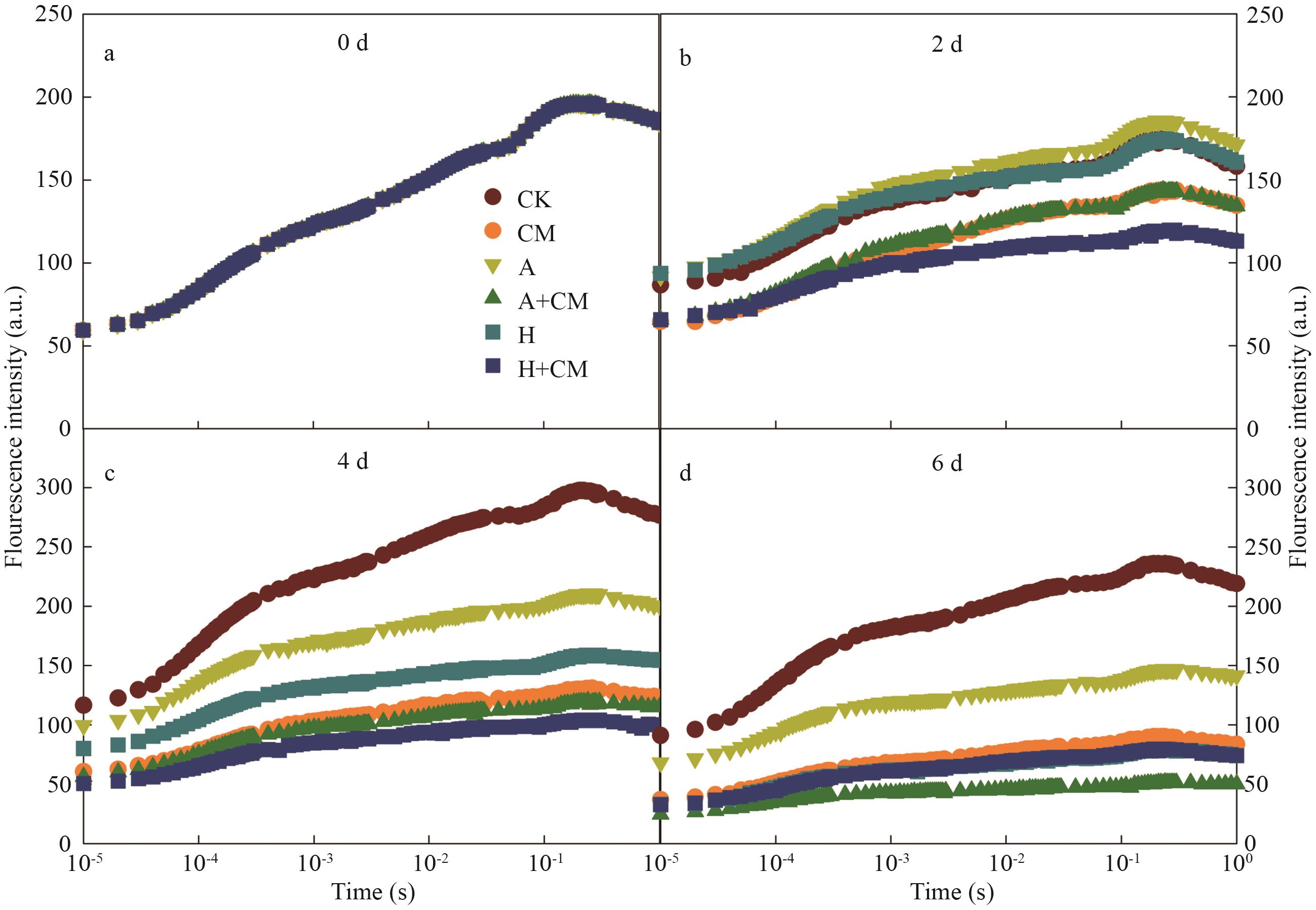
图3 不同碳源培养下光呼吸抑制剂CM对雨生红球藻瞬时叶绿素荧光曲线(OJIP)的影响
Fig. 3 Effects of photorespiration inhibitor CM on the chlorophyll a fluorescence (OJIP) transients in H. pluvialis cultured with different carbon sources
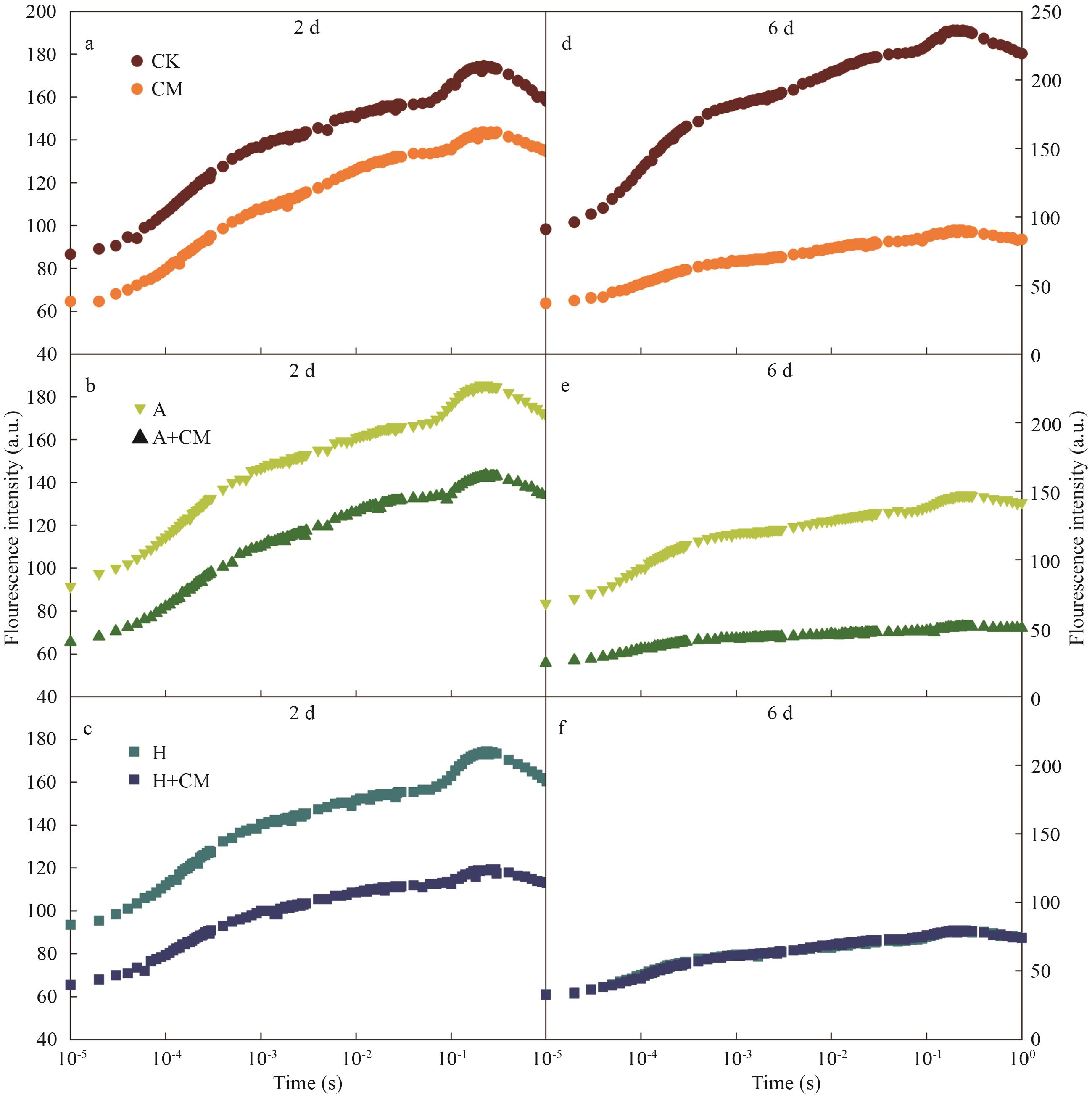
图4 不同碳源培养2 d和6 d时,光呼吸抑制剂CM对瞬时叶绿素荧光曲线(OJIP)的影响
Fig. 4 Effects of photorespiration inhibitor CM on the chlorophyll a fluorescence (OJIP) transients at 2 d and 6 d in H. pluvialis cultured with different carbon sources
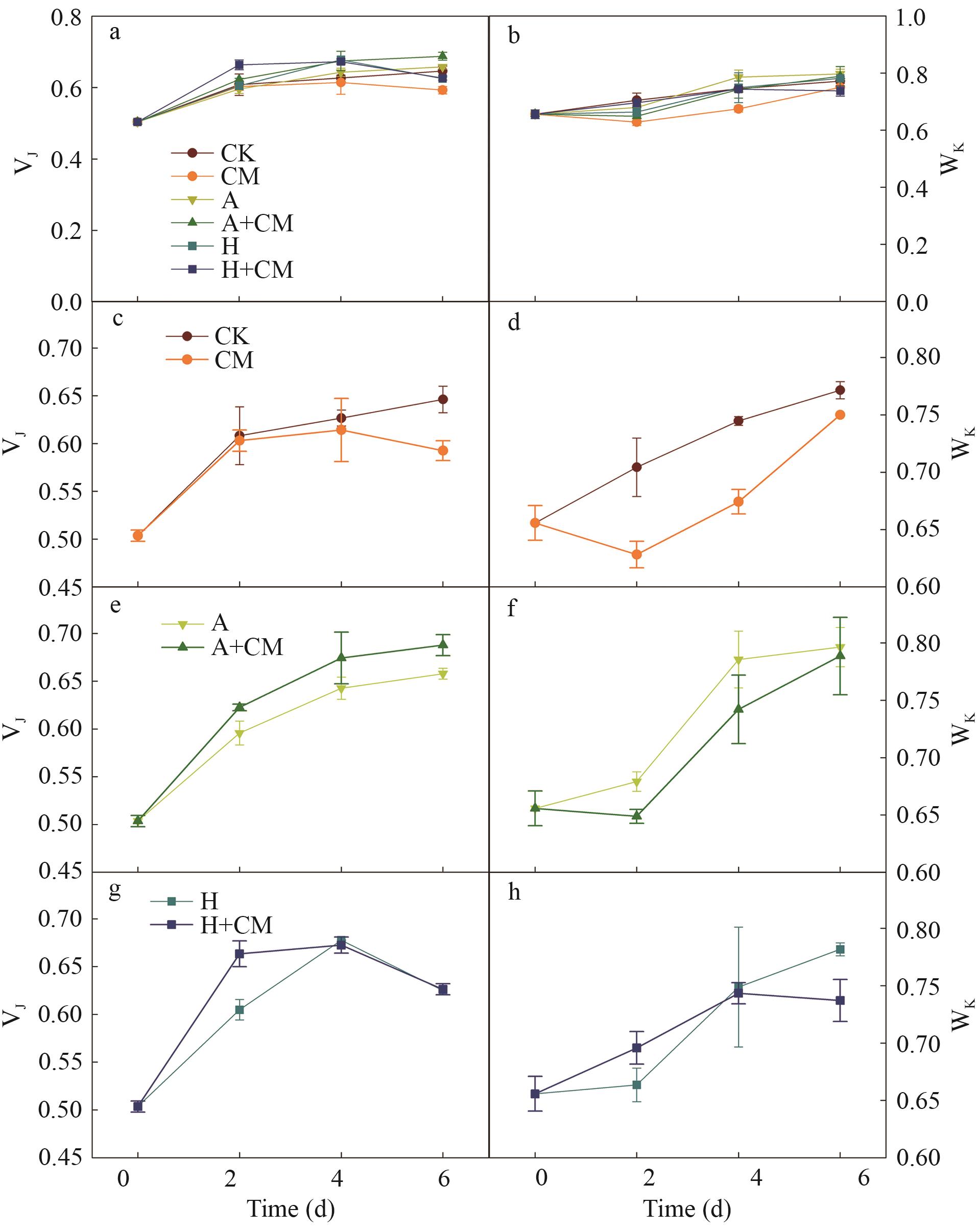
图5 不同碳源培养下光呼吸抑制剂CM对雨生红球藻细胞相对可变荧光强度(VJ和WK)的影响a,c,e,g:相对可变荧光强度(VJ);b,d,f,h:K点的相对可变荧光强度(WK)
Fig. 5 Effects of photorespiration inhibitor CM on relative variable fluorescence at J-step (VJ) and at K-step (WK) in H. pluvialis cultured with different carbon sourcesa, c, e, g: Relative variable fluorescence at J-step (VJ); b, d, f, h: Relative variable fluorescence at K-step (WK)
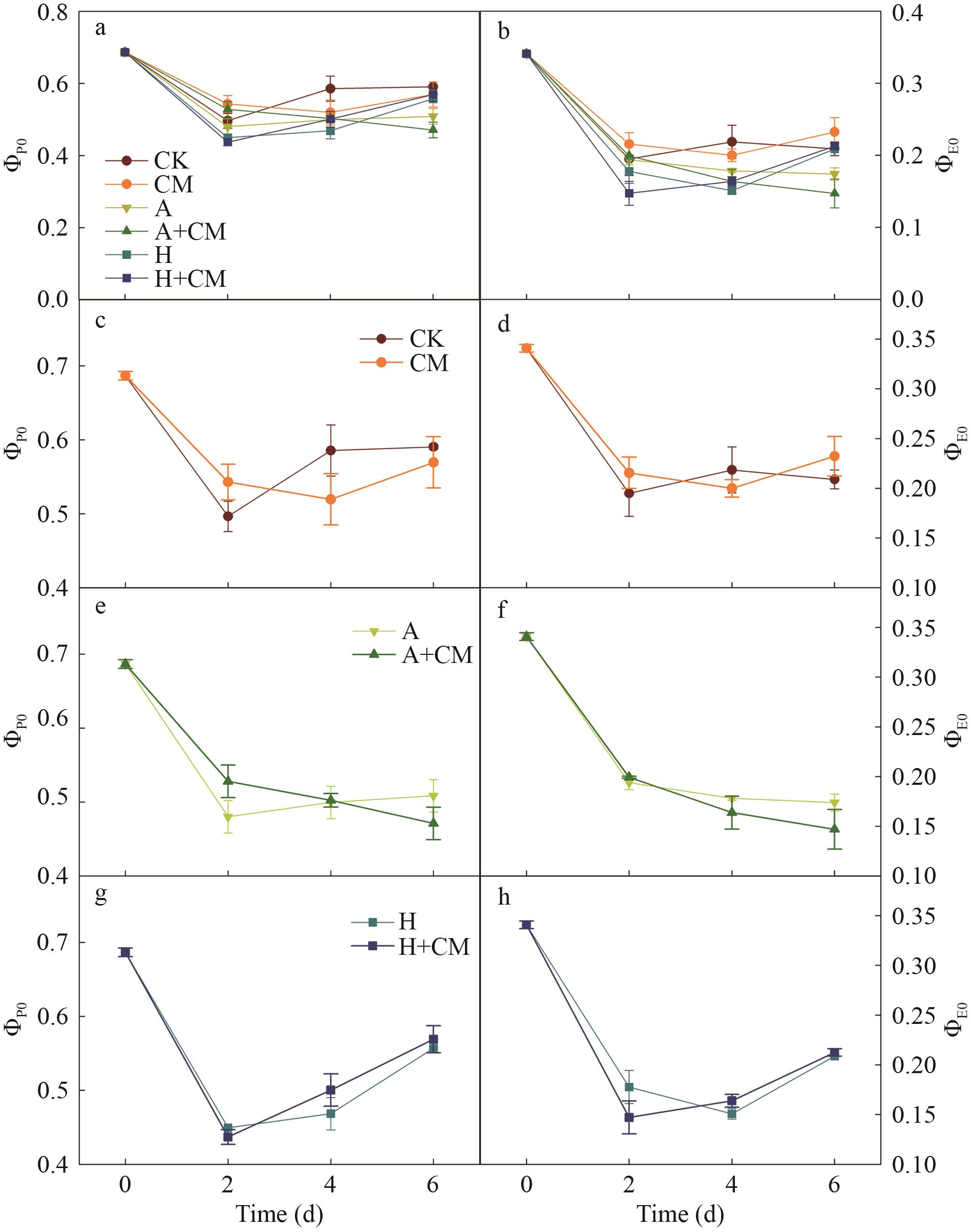
图6 不同碳源培养下光呼吸抑制剂CM对雨生红球藻最大光化学(ΦP0)和用于电子传递的量子产额(ΦE0)的影响a,c,e,g:最大光化学效率(ΦP0);b,d,f,h:用于电子传递的量子产额(ΦE0)
Fig. 6 Effects of photorespiration inhibitor CM on the maximum photochemical efficiency (ΦP0) and the quantum yield of electron transport (ΦE0) in H. pluvialis cultured with different carbon sourcesa, c, e, g: The maximum photochemical efficiency (ΦP0); b, d, f, h: The quantum yield of electron transport (ΦE0)

图7 不同碳源培养下光呼吸抑制剂CM对雨生红球藻细胞单位面积内活性PSII反应中心的数量(RC/CS0)和单位活性反应中心吸收的光能(ABS/RC)的影响a,c,e,g:单位面积内活性PSII反应中心的数量(RC/CS0);b,d,f,h:单位活性反应中心吸收的光能(ABS/RC)
Fig. 7 Effects of photorespiration inhibitor CM on the amount of active PSII reaction centers (RCs) per excited cross section (RC/CS0), and the specific energy fluxes (per RC) for absorption (ABS/RC) in H. pluvialis cultured with different carbon sourcesa, c, e, g: The amount of active PSII reaction centers (RCs) per excited cross section (RC/CS0); b, d, f, h: The specific energy fluxes (per RC) for absorption (ABS/RC)

图8 不同碳源培养下光呼吸抑制剂CM对雨生红球藻单位活性反应中心捕获的激发能(TR0/RC)和单位活性反应中心捕获的用于电子传递的能量(ET0/RC)的影响a,c,e,g:单位活性反应中心捕获的激发能(TR0/RC);b,d,f,h:单位活性反应中心捕获的用于电子传递的能量(ET0/RC)
Fig. 8 Effects of photorespiration inhibitor CM on the trapping flux of excitation energy per active reaction center (TR0/RC), and the electron transport flux per active reaction center (ET0/RC) in H. pluvialis cultured with different carbon sourcesa, c, e, g: The trapping flux of excitation energy per active reaction center (TR0/RC); b, d, f, h: The electron transport flux per active reaction center (ET0/RC)
| [1] | Liu JG, van der Meer J, Zhang LT, et al. Cultivation of Haematococcus pluvialis for astaxanthin production [M]//Microalgal Production for Biomass and High-Value Products. Boca Raton: CRC Press, 2016: 267-293. |
| [2] | Zhang LT, Zhang CH, Xu R, Liu JG. Astaxanthin Biosynthesis in Haematococcus pluvialis: Metabolic Process, Function, and Biotechnological Applications. [M]// Paul A. Melborne (editor) An Essential Guide to Astaxanthin: Dietary Sources, Properties and Health Benefits. Nova Science Publishers, Inc: New York, 2019, 37-75. |
| [3] | van LIS R, Atteia A. Control of mitochondrial function via photosynthetic redox signals [J]. Photosynth Res, 2004, 79(2): 133-148. |
| [4] | Bauwe H, Hagemann M, Fernie AR. Photorespiration: players, partners and origin [J]. Trends Plant Sci, 2010, 15(6): 330-336. |
| [5] | Bauwe H, Hagemann M, Kern R, et al. Photorespiration has a dual origin and manifold links to central metabolism [J]. Curr Opin Plant Biol, 2012, 15(3): 269-275. |
| [6] | South PF, Cavanagh AP, Liu HW, et al. Synthetic glycolate metabolism pathways stimulate crop growth and productivity in the field [J]. Science, 2019, 363(6422): eaat9077. |
| [7] | Eisenhut M, Roell MS, Weber APM. Mechanistic understanding of photorespiration paves the way to a new green revolution [J]. New Phytol, 2019, 223(4): 1762-1769. |
| [8] | Zhang CH, Zhang LT, Liu JG. The role of photorespiration during astaxanthin accumulation in Haematococcus pluvialis (Chlorophyceae) [J]. Plant Physiol Biochem, 2016, 107: 75-81. |
| [9] | Zhang CH, Zhang LT, Liu JG. The interrelation between photorespiration and astaxanthin accumulation in Haematococcus pluvialis using metabolomic analysis [J]. Algal Res, 2019, 41: 101520. |
| [10] | 时晓晴. 光照和培养条件对雨生红球藻生长和虾青素积累影响的研究 [D]. 大连: 大连理工大学, 2023. |
| Shi XQ. Effects of light and culture conditions on the growth of Haematococcus pluvialis and astaxanthin accumulation [D]. Dalian: Dalian University of Technology, 2023. | |
| [11] | 张豪杰, 李旺宁, 梁梦静, 等. α-酮戊二酸及其钠盐对雨生红球藻生长和虾青素积累的促进作用 [J]. 海洋与湖沼, 2023, 54(1): 139-148. |
| Zhang HJ, Li WN, Liang MJ, et al. Promoting effects of α-ketoglutarate and its sodium salt on growth and astaxanthin accumulation in Haematococcus Pluvialis [J]. Oceanol Limnol Sin, 2023, 54(1): 139-148. | |
| [12] | Yu WJ, Zhang LT, Zhao J, et al. Enhancement of astaxanthin accumulation in Haematococcus pluvialis by exogenous oxaloacetate combined with nitrogen deficiency [J]. Bioresour Technol, 2022, 345: 126484. |
| [13] | Yu WJ, Zhang LT, Zhao J, et al. Exogenous sodium fumarate enhances astaxanthin accumulation in Haematococcus pluvialis by enhancing the respiratory metabolic pathway [J]. Bioresour Technol, 2021, 341: 125788. |
| [14] | Zhang LT, Zhang CH, Liu JG, et al. A strategy for stimulating astaxanthin and lipid production in Haematococcus pluvialis by exogenous glycerol application under low light [J]. Algal Res, 2020, 46: 101779. |
| [15] | Zhang CH, Zhang LT, Liu JG. Exogenous sodium acetate enhances astaxanthin accumulation and photoprotection in Haematococcus pluvialis at the non-motile stage [J]. J Appl Phycol, 2019, 31(2): 1001-1008. |
| [16] | Zhang ZS, Zhu GH, Peng XX. Photorespiration in plant adaptation to environmental changes [J]. Crop Environ, 2024, 3(4): 203-212. |
| [17] | 张豪杰. 外源α-酮戊二酸对植物氮素响应的生物学效应与作用机理研究 [D]. 太谷: 山西农业大学, 2023. |
| Zhang HJ. Biological effect and mechanism of exogenous α-ketoglutaric acid in plant response to nitrogen [D]. Taigu: Shanxi Agricultural University, 2023. | |
| [18] | 李鹏民, 高辉远, Strasser R. 快速叶绿素荧光诱导动力学分析在光合作用研究中的应用 [J]. 植物生理与分子生物学学报, 2005, 31(6): 559-566. |
| Li PM, Gao HY, Strasser R. Application of the fast chlorophyll fluorescence induction dynamics analysis in photosynthesis study [J]. Acta Photophysiol Sin, 2005, 31(6): 559-566. | |
| [19] | Zhang LT, Su F, Zhang CH, et al. Changes of photosynthetic behaviors and photoprotection during cell transformation and astaxanthin accumulation in Haematococcus pluvialis grown outdoors in tubular photobioreactors [J]. Int J Mol Sci, 2017, 18(1): 33. |
| [20] | Wingler A, Lea PJ, Quick WP, et al. Photorespiration: metabolic pathways and their role in stress protection [J]. Phil Trans R Soc Lond B, 2000, 355(1402): 1517-1529. |
| [21] | Chen Z, Chen J, Liu JH, et al. Transcriptomic and metabolic analysis of an astaxanthin-hyperproducing Haematococcus pluvialis mutant obtained by low-temperature plasma (LTP) mutagenesis under high light irradiation [J]. Algal Res, 2020, 45: 101746. |
| [22] | Obata T, Florian A, Timm S, et al. On the metabolic interactions of (photo) respiration [J]. J Exp Bot, 2016, 67(10): 3003-3014. |
| [23] | Hoefnagel MHN, Atkin OK, Wiskich JT. Interdependence between chloroplasts and mitochondria in the light and the dark [J]. Biochim Biophys Acta Bioenerg, 1998, 1366(3): 235-255. |
| [24] | Walker B, Schmiege SC, Sharkey TD. Re-evaluating the energy balance of the many routes of carbon flow through and from photorespiration [J]. Plant Cell Environ, 2024, 47(9): 3365-3374. |
| [25] | Zhang LT, Xu R, Liu JG. Strasser-Efficacy of botanical pesticide for rotifer extermination during the cultivation of Nannochloropsis oculata probed by chlorophyll a fluorescence transient [J]. Photosynthetica, 2020, 58: 341-347. |
| [26] | von Bismarck T, Wendering P, Perez de Souza L, et al. Growth in fluctuating light buffers plants against photorespiratory perturbations [J]. Nat Commun, 2023, 14: 7052. |
| [27] | Zhang LT, Zhang ZS, Gao HY, et al. Mitochondrial alternative oxidase pathway protects plants against photoinhibition by alleviating inhibition of the repair of photodamaged PSII through preventing formation of reactive oxygen species in Rumex K-1 leaves [J]. Physiol Plant, 2011, 143(4): 396-407. |
| [28] | Zhang LT, Liu JG. Effects of heat stress on photosynthetic electron transport in a marine Cyanobacterium arthrospira sp [J]. J Appl Phycol, 2016, 28(2): 757-763. |
| [29] | Yusuf MA, Kumar D, Rajwanshi R, et al. Overexpression of γ-tocopherol methyl transferase gene in transgenic Brassica juncea plants alleviates abiotic stress: Physiological and chlorophyll a fluorescence measurements [J]. Biochim Biophys Acta Bioenerg, 2010, 1797(8): 1428-1438. |
| [30] | Strasser RJ, Tsimilli-Michael M, Srivastava A. Analysis of the chlorophyll a fluorescence transient [M]//Chlorophyll a Fluorescence. Dordrecht: Springer Netherlands, 2004: 321-362. |
| [31] | Dao O, Bertrand M, Alseekh S, et al. The green algae CO2 concentrating mechanism and photorespiration jointly operate during acclimation to low CO2 [J]. Nat Commun, 2025, 16: 5296. |
| [32] | Xie XJ, Huang AY, Gu WH, et al. Photorespiration participates in the assimilation of acetate in Chlorella sorokiniana under high light [J]. New Phytol, 2016, 209(3): 987-998. |
| [33] | Huang AY, Liu LX, Yang C, et al. Phaeodactylum tricornutum photorespiration takes part in glycerol metabolism and is important for nitrogen-limited response [J]. Biotechnol Biofuels, 2015, 8(1): 73. |
| [34] | Sarojini G, Oliver DJ. Inhibition of glycine oxidation by carboxymethoxylamine, methoxylamine, and acethydrazide [J]. Plant Physiol, 1985, 77(3): 786-789. |
| [35] | Douce R, Bourguignon J, Neuburger M, et al. The glycine decarboxylase system: a fascinating complex [J]. Trends Plant Sci, 2001, 6(4): 167-176. |
| [36] | Zhang LT, Li L, He ML, et al. The role of photorespiration during H2 photoproduction in Chlorella protothecoides under nitrogen limitation [J]. Plant Cell Rep, 2016, 35(1): 1-4. |
| [37] | Li L, Shastik E, Zhang LT, et al. Photorespiration plays an important role in H2 production by marine Chlorella pyrenoidosa [J]. Algal Res, 2023, 71: 103072. |
| [38] | González-Moro B, Lacuesta M, Becerril JM, et al. Glycolate accumulation causes a decrease of photosynthesis by inhibiting RUBISCO activity in maize [J]. J Plant Physiol, 1997, 150(4): 388-394. |
| [1] | 李波娣, 李志超, 朱国辉, 彭新湘, 张智胜. 第二十七届中国科协年会学术论文叶绿体中过表达乙醇酸氧化酶对水稻光合作用与生长的影响[J]. 生物技术通报, 2025, 41(10): 87-97. |
| [2] | 杨微, 关海峰, 任欣慧, 彭金菊, 陈志宝. 虾青素对黄曲霉毒素B1诱导肝损伤的缓解作用及机制[J]. 生物技术通报, 2025, 41(10): 334-342. |
| [3] | 李亚男, 张豪杰, 梁梦静, 罗涛, 李旺宁, 张春辉, 季春丽, 李润植, 薛金爱, 崔红利. 雨生红球藻钙依赖蛋白激酶(CDPK)家族鉴定与表达分析[J]. 生物技术通报, 2024, 40(2): 300-312. |
| [4] | 段子朋, 孙缦利, 陈彦锋, 邓同兴, 金少举, 范文娟, 陈旭东. 虾青素通过AMPK/mTOR信号通路促进鸡肌肉干细胞增殖与分化[J]. 生物技术通报, 2024, 40(11): 312-320. |
| [5] | 程爽, ULAANDUU Namuun, 李卓琳, 胡海玲, 邓晓霞, 李月明, 王竞红, 蔺吉祥. 植物光系统 II(PSII)应答非生物胁迫机理研究进展[J]. 生物技术通报, 2023, 39(12): 33-42. |
| [6] | 周琳, 梁轩铭, 赵磊. 天然类胡萝卜素的生物合成研究进展[J]. 生物技术通报, 2022, 38(7): 119-127. |
| [7] | 祖国蔷, 胡哲, 王琪, 李光哲, 郝林. Burkholderia sp. GD17对水稻幼苗镉耐受的调节[J]. 生物技术通报, 2022, 38(4): 153-162. |
| [8] | 徐子涵, 刘倩, 苗大鹏, 陈跃, 胡凤荣. 春兰miR396过表达对拟南芥叶片生长、光合及叶绿素荧光特性的影响[J]. 生物技术通报, 2021, 37(5): 28-37. |
| [9] | 刘纹甫, 黄丹琼, 胡群菊, 王潮岗. 雨生红球藻转录因子Whirly1的获得及其表达分析[J]. 生物技术通报, 2021, 37(11): 248-256. |
| [10] | 王锐洁, 关萍, 刘筱, 杨淑君, 姬拉拉, 邓小红, 王健健. 遮阴与施磷对金荞麦生长及荧光参数的影响[J]. 生物技术通报, 2019, 35(6): 32-38. |
| [11] | 孙德智, 杨恒山, 宋桂云, 范富, 侯迷红, 彭靖, 韩晓日. 根施SA对番茄幼苗盐害损伤的修复效应[J]. 生物技术通报, 2019, 35(11): 30-38. |
| [12] | 梁东雨, 王禹佳, 苏敖纯, 徐洪伟, 周晓馥. 外源茉莉酸对牛皮杜鹃UV-B辐射缓解作用研究[J]. 生物技术通报, 2019, 35(10): 64-70. |
| [13] | 刘丽娟 ,高辉. 不同遮阴条件下麦冬光合和叶绿素荧光特性研究[J]. 生物技术通报, 2018, 34(6): 96-101. |
| [14] | 安飞飞, 陈霆, 杨龙, 陈松笔. 木薯叶片显微结构及叶绿素荧光参数比较[J]. 生物技术通报, 2018, 34(1): 104-109. |
| [15] | 陈佳妮, 林丽春, 徐年军, 张琳, 孙雪. CO2浓度对雨生红球藻生理生化指标的影响[J]. 生物技术通报, 2018, 34(1): 239-246. |
| 阅读次数 | ||||||
|
全文 |
|
|||||
|
摘要 |
|
|||||
