







生物技术通报 ›› 2026, Vol. 42 ›› Issue (9): 82-92.doi: 10.13560/j.cnki.biotech.bull.1985.2025-1311
朱云涛1,2, 杜一帆2, 左示敏1( ), 熊叶辉2()
收稿日期:2025-12-02
出版日期:2026-09-26
发布日期:2026-09-16
通讯作者:
左示敏smzuo@yzu.edu.cn基金资助:
ZHU Yun-tao1,2, DU Yi-fan2, ZUO Shi-min1(), XIONG Ye-hui2()
Received:2025-12-02
Published:2026-09-26
Online:2026-09-16
摘要:
植物气孔是调控光合作用与蒸腾作用的关键微结构,其发育遵循“单细胞间距规则”并受高度程序化的分子信号通路精密调控。本文总结了表皮模式因子(epidermal patterning factors/EPF-like peptides, EPFs/EPFLs)家族小肽在植物生长发育,尤其是气孔模式建成中的核心作用。系统阐述了该家族的分类、功能、成熟与加工等,重点剖析了EPFs/EPFLs小肽作为配体,被ERECTA/TMM/SERK受体复合物识别后激活MAPK级联信号通路,通过磷酸化降解SPCH等关键转录因子以精确调控气孔发育的分子机理。此外本文还总结了该家族在拟南芥与水稻等植物生长发育中的生物学功能以及在作物水分利用效率和抗逆性改良中的应用潜力,并探讨了该家族小肽通过影响气孔密度与开度进而响应干旱、盐分等非生物胁迫及其在植物气孔免疫调控中的潜在机制,最后对其未来研究方向及在农业上的应用进行了展望,为未来作物的稳产增产实践应用提供理论指导。
朱云涛, 杜一帆, 左示敏, 熊叶辉. 小肽激素EPFs/EPFLs调控植物生长发育和胁迫应答的研究进展[J]. 生物技术通报, 2026, 42(9): 82-92.
ZHU Yun-tao, DU Yi-fan, ZUO Shi-min, XIONG Ye-hui. Research Progress in the Regulation of Plant Growth, Development, and Stress Responses by Small Peptide Hormones EPFs/EPFLs[J]. Biotechnology Bulletin, 2026, 42(9): 82-92.
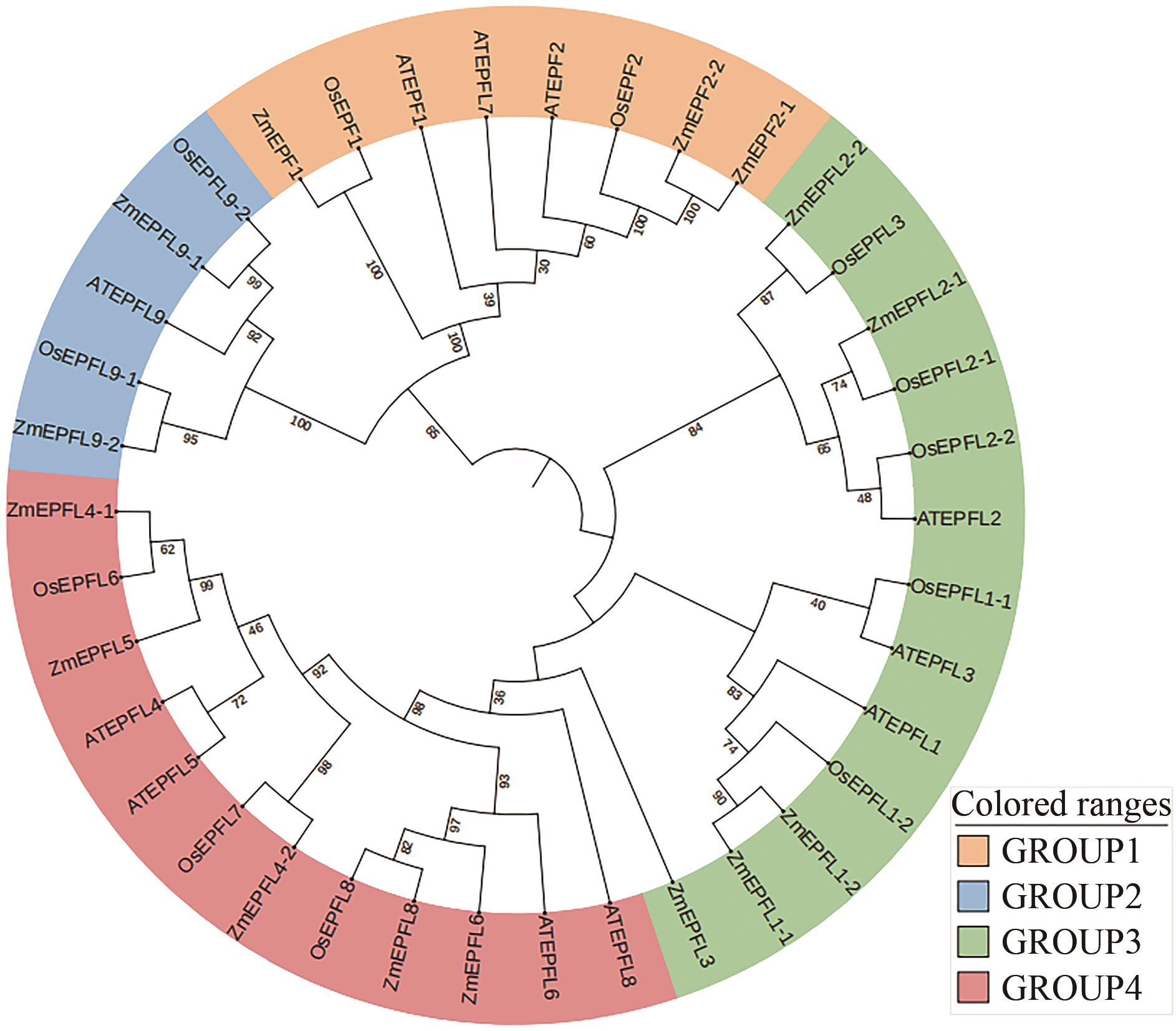
图1 拟南芥,水稻,玉米的EPFs/EPFLs基因家族进化树
Fig. 1 Phylogenetic tree of the EPFs/EPFLs gene family in Arabidopsis, rice (Oryza sativa), and maize (Zea mays)
| [1] | Kurepa J, Smalle J. The evolution of plant hormones: from metabolic byproducts to regulatory hubs [J]. Int J Mol Sci, 2025, 26(15): 7190. |
| [2] | Zhang ZB, Han HB, Zhao JX, et al. Peptide hormones in plants [J]. Mol Horticulture, 2025, 5(1): 7. |
| [3] | Lu SQ, Xiao F. Small peptides: orchestrators of plant growth and developmental processes [J]. Int J Mol Sci, 2024, 25(14): 7627. |
| [4] | Cao YC, Yang PF, Li M. Research progress of peptides discovery and function in resistance to abiotic stress in plant [J]. Stress Biol, 2025, 5: 36. |
| [5] | Hara K, Kajita R, Torii KU, et al. The secretory peptide gene EPF1 enforces the stomatal one-cell-spacing rule [J]. Genes Dev, 2007, 21(14): 1720-1725. |
| [6] | Hunt L, Gray JE. The signaling peptide EPF2 controls asymmetric cell divisions during stomatal development [J]. Curr Biol, 2009, 19(10): 864-869. |
| [7] | Sugano SS, Shimada T, Imai Y, et al. Stomagen positively regulates stomatal density in Arabidopsis [J]. Nature, 2010, 463(7278): 241-244. |
| [8] | Shpak ED, McAbee JM, Pillitteri LJ, et al. Stomatal patterning and differentiation by synergistic interactions of receptor kinases [J]. Science, 2005, 309(5732): 290-293. |
| [9] | Meng XZ, Chen X, Mang H, et al. Differential function of Arabidopsis SERK family receptor-like kinases in stomatal patterning [J]. Curr Biol, 2015, 25(18): 2361-2372. |
| [10] | Wang HC, Ngwenyama N, Liu YD, et al. Stomatal development and patterning are regulated by environmentally responsive mitogen-activated protein kinases in Arabidopsis [J]. Plant Cell, 2007, 19(1): 63-73. |
| [11] | Lee JS, Torii KU. A tale of two systems: peptide ligand-receptor pairs in plant development [J]. Cold Spring Harb Symp Quant Biol, 2012, 77: 83-89. |
| [12] | Lee JS, Hnilova M, Maes M, et al. Competitive binding of antagonistic peptides fine-tunes stomatal patterning [J]. Nature, 2015, 522(7557): 439-443. |
| [13] | Uchida N, Lee JS, Horst RJ, et al. Regulation of inflorescence architecture by intertissue layer ligand-receptor communication between endodermis and phloem [J]. Proc Natl Acad Sci U S A, 2012, 109(16): 6337-6342. |
| [14] | He YX, He XM, Wang XY, et al. An EPFL peptide signaling pathway promotes stamen elongation via enhancing filament cell proliferation to ensure successful self-pollination in Arabidopsis thaliana [J]. New Phytol, 2023, 238(3): 1045-1058. |
| [15] | Liu XY, Lei ZP, Yang YZ, et al. Genome-wide identification of GhRLCK-VII subfamily genes in Gossypium hirsutum and investigation of their functions in resistance to Verticillium wilt [J]. BMC Plant Biol, 2023, 23(1): 421. |
| [16] | Xia HC, Wang Q, Chen ZQ, et al. Identification and functional analysis of the EPF/EPFL gene family in maize (Zea mays L.): implications for drought stress response [J]. Agronomy, 2024, 14(8): 1734. |
| [17] | Liu MH, Zhang GZ, Wang SK, et al. Advances of peptides for plant immunity [J]. Plants, 2025, 14(15): 2452. |
| [18] | Hussain S, Ulhassan Z, Brestic M, et al. Photosynthesis research under climate change [J]. Photosynth Res, 2021, 150(1-3): 5-19. |
| [19] | Rui Y, Chen YT, Yi H, et al. Synergistic pectin degradation and guard cell pressurization underlie stomatal pore formation [J]. Plant Physiol, 2019, 180(1): 66-77. |
| [20] | Amsbury S, Hunt L, Elhaddad N, et al. Stomatal function requires pectin de-methyl-esterification of the guard cell wall [J]. Curr Biol, 2016, 26(21): 2899-2906. |
| [21] | Rui Y, Chen YT, Kandemir B, et al. Balancing strength and flexibility: how the synthesis, organization, and modification of guard cell walls govern stomatal development and dynamics [J]. Front Plant Sci, 2018, 9: 1202. |
| [22] | Chen ZH, Chen G, Dai F, et al. Molecular evolution of grass stomata [J]. Trends Plant Sci, 2017, 22(2): 124-139. |
| [23] | Qi XY, Torii KU. Hormonal and environmental signals guiding stomatal development [J]. BMC Biol, 2018, 16: 21. |
| [24] | Hepworth C, Caine RS, Harrison EL, et al. Stomatal development: focusing on the grasses [J]. Curr Opin Plant Biol, 2018, 41: 1-7. |
| [25] | Coiro M, Barone Lumaga MR, Rudall PJ. Stomatal development in the cycad family Zamiaceae [J]. Ann Bot, 2021, 128(5): 577-588. |
| [26] | Jalakas P, Merilo E, Kollist H, et al. ABA-mediated regulation of stomatal density is OST1-independent [J]. Plant Direct, 2018, 2(9): e00082. |
| [27] | Dow GJ, Berry JA, Bergmann DC. The physiological importance of developmental mechanisms that enforce proper stomatal spacing in Arabidopsis thaliana [J]. New Phytol, 2014, 201(4): 1205-1217. |
| [28] | Dow GJ, Bergmann DC. Patterning and processes: how stomatal development defines physiological potential [J]. Curr Opin Plant Biol, 2014, 21: 67-74. |
| [29] | Cartwright HN, Humphries JA, Smith LG. A receptor-like protein that promotes polarization of an asymmetric cell division in maize [J]. Science, 2009, 323(5914): 649-651. |
| [30] | Zhang XG, Facette M, Humphries JA, et al. Identification of PAN2 by quantitative proteomics as a leucine-rich repeat-receptor-like kinase acting upstream of PAN1 to polarize cell division in maize [J]. Plant Cell, 2012, 24(11): 4577-4589. |
| [31] | Facette MR, Park Y, Sutimantanapi D, et al. The SCAR/WAVE complex polarizes PAN receptors and promotes division asymmetry in maize [J]. Nat Plants, 2015, 1(2): 14024. |
| [32] | Torii KU. Stomatal development in the context of epidermal tissues [J]. Ann Bot, 2021, 128(2): 137-148. |
| [33] | Ho CK, Bringmann M, Oshima Y, et al. Transcriptional profiling reveals signatures of latent developmental potential in Arabidopsis stomatal lineage ground cells [J]. Proc Natl Acad Sci U S A, 2021, 118(17): e2021682118. |
| [34] | Horst RJ, Fujita H, Lee JS, et al. Molecular framework of a regulatory circuit initiating two-dimensional spatial patterning of stomatal lineage [J]. PLoS Genet, 2015, 11(7): e1005374. |
| [35] | Hou SW, Chen L. Molecular genetic control of plant stomatal development [J]. Sci Sin-Vitae, 2017, 47(8): 798-807. |
| [36] | Lee JS, Kuroha T, Hnilova M, et al. Direct interaction of ligand-receptor pairs specifying stomatal patterning [J]. Genes Dev, 2012, 26(2): 126-136. |
| [37] | Hsu PY, Benfey PN. Small but mighty: functional peptides encoded by small ORFs in plants [J]. Proteomics, 2018, 18(10): 1700038. |
| [38] | Lease KA, Walker JC. The Arabidopsis unannotated secreted peptide database, a resource for plant peptidomics [J]. Plant Physiol, 2006, 142(3): 831-838. |
| [39] | Busch W, Benfey PN. Information processing without brains-the power of intercellular regulators in plants [J]. Development, 2010, 137(8): 1215-1226. |
| [40] | Hou SG, Wang X, Chen DH, et al. The secreted peptide PIP1 amplifies immunity through receptor-like kinase 7 [J]. PLoS Pathog, 2014, 10(9): e1004331. |
| [41] | Del Corpo D, Coculo D, Greco M, et al. Pull the fuzes: Processing protein precursors to generate apoplastic danger signals for triggering plant immunity [J]. Plant Commun, 2024, 5(8): 100931. |
| [42] | Gancheva MS, Malovichko YV, Poliushkevich LO, et al. Plant peptide hormones [J]. Russ J Plant Physiol, 2019, 66(2): 171-189. |
| [43] | Stührwohldt N, Ehinger A, Thellmann K, et al. Processing and formation of bioactive CLE40 peptide are controlled by posttranslational proline hydroxylation [J]. Plant Physiol, 2020, 184(3): 1573-1584. |
| [44] | Schardon K, Hohl M, Graff L, et al. Precursor processing for plant peptide hormone maturation by subtilisin-like serine proteinases [J]. Science, 2016, 354(6319): 1594-1597. |
| [45] | Hander T, Fernández-Fernández ÁD, Kumpf RP, et al. Damage on plants activates Ca2+-dependent metacaspases for release of immunomodulatory peptides [J]. Science, 2019, 363(6433): eaar7486. |
| [46] | Stührwohldt N, Bühler E, Sauter M, et al. Phytosulfokine (PSK) precursor processing by subtilase SBT3.8 and PSK signaling improve drought stress tolerance in Arabidopsis [J]. J Exp Bot, 2021, 72(9): 3427-3440. |
| [47] | Srivastava R, Liu JX, Howell SH. Proteolytic processing of a precursor protein for a growth-promoting peptide by a subtilisin serine protease in Arabidopsis [J]. Plant J, 2008, 56(2): 219-227. |
| [48] | Richardson LGL, Torii KU. Take a deep breath: peptide signalling in stomatal patterning and differentiation [J]. J Exp Bot, 2013, 64(17): 5243-5251. |
| [49] | Torii KU. Mix-and-match: ligand-receptor pairs in stomatal development and beyond [J]. Trends Plant Sci, 2012, 17(12): 711-719. |
| [50] | Xiong LL, Huang YY, Liu ZP, et al. Small epidermal patterning factor-like2 peptides regulate awn development in rice [J]. Plant Physiol, 2022, 190(1): 516-531. |
| [51] | Hughes J, Hepworth C, Dutton C, et al. Reducing stomatal density in barley improves drought tolerance without impacting on yield [J]. Plant Physiol, 2017, 174(2): 776-787. |
| [52] | Jiao ZY, Wang JP, Shi YN, et al. Genome-wide identification and analysis of the EPF gene family in Sorghum bicolor (L.) Moench [J]. Plants, 2023, 12(22): 3912. |
| [53] | Jangra R, Brunetti SC, Wang XT, et al. Duplicated antagonistic EPF peptides optimize grass stomatal initiation [J]. Development, 2021, 148(16): dev199780. |
| [54] | Olsson V, Joos L, Zhu SS, et al. Look closely, the beautiful may be small: precursor-derived peptides in plants [J]. Annu Rev Plant Biol, 2019, 70: 153-186. |
| [55] | Herrmann A, Sepuru KM, Bai PF, et al. Chemical genetics reveals cross-regulation of plant developmental signaling by the immune peptide-receptor pathway [J]. Sci Adv, 2025, 11(6): eads3718. |
| [56] | Hara K, Yokoo T, Kajita R, et al. Epidermal cell density is autoregulated via a secretory peptide, epidermal patterning factor 2 in Arabidopsis leaves [J]. Plant Cell Physiol, 2009, 50(6): 1019-1031. |
| [57] | Hunt L, Bailey KJ, Gray JE. The signalling peptide EPFL9 is a positive regulator of stomatal development [J]. New Phytol, 2010, 186(3): 609-614. |
| [58] | Giannoutsou E, Adamakis IS, Samakovli D. Guardians of water and gas exchange: adaptive dynamics of stomatal development and patterning [J]. Plants, 2025, 14(15): 2405. |
| [59] | Qi XY, Han SK, Dang JH, et al. Autocrine regulation of stomatal differentiation potential by EPF1 and ERECTA-LIKE1 ligand-receptor signaling [J]. eLife, 2017, 6: e24102. |
| [60] | Herrmann A, Torii KU. Shouting out loud: signaling modules in the regulation of stomatal development [J]. Plant Physiol, 2021, 185(3): 765-780. |
| [61] | Ikematsu S, Tasaka M, Torii KU, et al. ERECTA-family receptor kinase genes redundantly prevent premature progression of secondary growth in the Arabidopsis hypocotyl [J]. New Phytol, 2017, 213(4): 1697-1709. |
| [62] | Fischer U, Teichmann T. The ERECTA and ERECTA-like genes control a developmental shift during xylem formation in Arabidopsis [J]. New Phytol, 2017, 213(4): 1562-1563. |
| [63] | Negoro S, Hirabayashi T, Iwasaki R, et al. EPFL peptide signalling ensures robust self-pollination success under cool temperature stress by aligning the length of the stamen and pistil [J]. Plant Cell Environ, 2023, 46(2): 451-463. |
| [64] | Kawamoto N, Del Carpio DP, Hofmann A, et al. A peptide pair coordinates regular ovule initiation patterns with seed number and fruit size [J]. Curr Biol, 2020, 30(22): 4352-4361.e4. |
| [65] | Li MZ, Lv MH, Wang XJ, et al. TheEPFL-ERf-SERK signaling controls integument development in Arabidopsis [J]. New Phytol, 2023, 238(1): 186-201. |
| [66] | Cai HY, Huang YM, Liu LP, et al. Signaling by the EPFL-ERECTA family coordinates female germline specification through the BZR1 family in Arabidopsis [J]. Plant Cell, 2023, 35(5): 1455-1473. |
| [67] | Uchida N, Tasaka M. Regulation of plant vascular stem cells by endodermis-derived EPFL-family peptide hormones and phloem-expressed ERECTA-family receptor kinases [J]. J Exp Bot, 2013, 64(17): 5335-5343. |
| [68] | Mohammed U, Caine RS, Atkinson JA, et al. Rice plants overexpressing OsEPF1 show reduced stomatal density and increased root cortical aerenchyma formation [J]. Sci Rep, 2019, 9: 5584. |
| [69] | Jin J, Hua L, Zhu ZF, et al. GAD1 encodes a secreted peptide that regulates grain number, grain length, and awn development in rice domestication [J]. Plant Cell, 2016, 28(10): 2453-2463. |
| [70] | Jin J, Xiong LL, Gray JE, et al. Two awn-development-related peptides, GAD1 and OsEPFL2, promote seed dispersal and germination in rice [J]. Mol Plant, 2023, 16(3): 485-488. |
| [71] | Guo T, Lu ZQ, Xiong YH, et al. Optimization of rice panicle architecture by specifically suppressing ligand-receptor pairs [J]. Nat Commun, 2023, 14: 1640. |
| [72] | Jiao PP, Liang YL, Chen SP, et al. Bna.EPF2 enhances drought tolerance by regulating stomatal development and stomatal size in Brassica napus [J]. Int J Mol Sci, 2023, 24(9): 8007. |
| [73] | Huang Y, Tao ZS, Liu Q, et al. BnEPFL6, an epidermal patterning factor-like (EPFL) secreted peptide gene, is required for filament elongation in Brassica napus [J]. Plant Mol Biol, 2014, 85(4/5): 505-517. |
| [74] | Sun QX, Qu JP, Yu Y, et al. TaEPFL1, an epidermal patterning factor-like (EPFL) secreted peptide gene, is required for stamen development in wheat [J]. Genetica, 2019, 147(2): 121-130. |
| [75] | Berger D, Altmann T. A subtilisin-like serine protease involved in the regulation of stomatal density and distribution in Arabidopsis thaliana [J]. Genes Dev, 2000, 14(9): 1119-1131. |
| [76] | von Groll U, Berger D, Altmann T. The subtilisin-like serine protease SDD1 mediates cell-to-cell signaling during Arabidopsis stomatal development [J]. Plant Cell, 2002, 14(7): 1527-1539. |
| [77] | Engineer CB, Ghassemian M, Anderson JC, et al. Carbonic anhydrases, EPF2 and a novel protease mediate CO2 control of stomatal development [J]. Nature, 2014, 513(7517): 246-250. |
| [78] | Loeffler M, Le'Negrate G, Krajewska M, et al. Attenuated Salmonella engineered to produce human cytokine LIGHT inhibit tumor growth [J]. Proc Natl Acad Sci U S A, 2007, 104(31): 12879-12883. |
| [79] | Ohki S, Takeuchi M, Mori M. The NMR structure of stomagen reveals the basis of stomatal density regulation by plant peptide hormones [J]. Nat Commun, 2011, 2: 512. |
| [80] | Abrash EB, Davies KA, Bergmann DC. Generation of signaling specificity in Arabidopsis by spatially restricted buffering of ligand-receptor interactions [J]. Plant Cell, 2011, 23(8): 2864-2879. |
| [81] | Kondo T, Kajita R, Miyazaki A, et al. Stomatal density is controlled by a mesophyll-derived signaling molecule [J]. Plant Cell Physiol, 2010, 51(1): 1-8. |
| [82] | Abrash EB, Bergmann DC. Regional specification of stomatal production by the putative ligand CHALLAH [J]. Development, 2010, 137(3): 447-455. |
| [83] | Nadeau JA, Sack FD. Control of stomatal distribution on the Arabidopsis leaf surface [J]. Science, 2002, 296(5573): 1697-1700. |
| [84] | Lin GZ, Zhang L, Han ZF, et al. A receptor-like protein acts as a specificity switch for the regulation of stomatal development [J]. Genes Dev, 2017, 31(9): 927-938. |
| [85] | Bergmann DC, Lukowitz W, Somerville CR. Stomatal development and pattern controlled by a MAPKK kinase [J]. Science, 2004, 304(5676): 1494-1497. |
| [86] | Lampard GR, Lukowitz W, Ellis BE, et al. Novel and expanded roles for MAPK signaling in Arabidopsis stomatal cell fate revealed by cell type-specific manipulations [J]. Plant Cell, 2009, 21(11): 3506-3517. |
| [87] | Putarjunan A, Ruble J, Srivastava A, et al. Bipartite anchoring of SCREAM enforces stomatal initiation by coupling MAP kinases to SPEECHLESS [J]. Nat Plants, 2019, 5(7): 742-754. |
| [88] | Kanaoka MM, Pillitteri LJ, Fujii H, et al. SCREAM/ICE1 and SCREAM2 specify three cell-state transitional steps leading to Arabidopsis stomatal differentiation [J]. Plant Cell, 2008, 20(7): 1775-1785. |
| [89] | Mishra A, Joy KP. Relative effects of estradiol-17β (E2), catecholestrogens and clomiphene citrate on in vitro oocyte maturation in the catfish Heteropneustes fossilis (Bloch) and E2 inhibition of 2-hydroxyestradiol-induced maturation [J]. Gen Comp Endocrinol, 2006, 147(2): 141-149. |
| [90] | Kovtun Y, Chiu WL, Tena G, et al. Functional analysis of oxidative stress-activated mitogen-activated protein kinase cascade in plants [J]. Proc Natl Acad Sci U S A, 2000, 97(6): 2940-2945. |
| [91] | Asai T, Tena G, Plotnikova J, et al. MAP kinase signalling cascade in Arabidopsis innate immunity [J]. Nature, 2002, 415(6875): 977-983. |
| [92] | Shimazaki KI, Doi M, Assmann SM, et al. Light regulation of stomatal movement [J]. Annu Rev Plant Biol, 2007, 58: 219-247. |
| [93] | Caine RS, Yin XJ, Sloan J, et al. Rice with reduced stomatal density conserves water and has improved drought tolerance under future climate conditions [J]. New Phytol, 2019, 221(1): 371-384. |
| [94] | Jiang QX, Ma L, Guo SY, et al. Comprehensive genome-wide identification and expression analysis of the EPF/EPFL gene family in oat [J]. BMC Genom, 2025, 26: 551. |
| [95] | Liu S, Chen T, Li X, et al. Genome-wide identification and expression analysis of EPF/EPFL gene family in Populus trichocarpa [J]. Front Genet, 2024, 15: 1432376. |
| [96] | Wang Y, Tyler BM, Wang YC. Defense and counterdefense during plant-pathogenic oomycete infection [J]. Annu Rev Microbiol, 2019, 73: 667-696. |
| [97] | Dodds PN, Rathjen JP. Plant immunity: towards an integrated view of plant-pathogen interactions [J]. Nat Rev Genet, 2010, 11(8): 539-548. |
| [98] | Morris CE, Moury B. Revisiting the concept of host range of plant pathogens [J]. Annu Rev Phytopathol, 2019, 57: 63-90. |
| [99] | Melotto M, Underwood W, He SY. Role of stomata in plant innate immunity and foliar bacterial diseases [J]. Annu Rev Phytopathol, 2008, 46: 101-122. |
| [100] | Hou SG, Rodrigues O, Liu ZY, et al. Small holes, big impact: Stomata in plant-pathogen-climate epic trifecta [J]. Mol Plant, 2024, 17(1): 26-49. |
| [101] | Melotto M, Zhang L, Oblessuc PR, et al. Stomatal defense a decade later [J]. Plant Physiol, 2017, 174(2): 561-571. |
| [102] | Melotto M, Underwood W, Koczan J, et al. Plant stomata function in innate immunity against bacterial invasion [J]. Cell, 2006, 126(5): 969-980. |
| [103] | Yu QS, Wu J, Jin YF, et al. Pathogen-induced condensation of the guard cell RNA-binding protein SAIR1 fine-tunes translation for immunity [J]. Nat Plants, 2025, 11(12): 2548-2564. |
| [104] | Butenko MA. INFLORESCENCE DEFICIENT IN ABSCISSION controls floral organ abscission in Arabidopsis and identifies a novel family of putative ligands in plants [J]. Plant Cell Online, 2003, 15(10): 2296-2307. |
| [105] | Fletcher JC, Brand U, Running MP, et al. Signaling of cell fate decisions by CLAVATA3 in Arabidopsis shoot meristems [J]. Science, 1999, 283(5409): 1911-1914. |
| [106] | Cammue BP, De Bolle MF, Terras FR, et al. Isolation and characterization of a novel class of plant antimicrobial peptides form Mirabilis jalapa L. seeds [J]. J Biol Chem, 1992, 267(4): 2228-2233. |
| [107] | Yan SJ, Bhawal R, Yin ZB, et al. Recent advances in proteomics and metabolomics in plants [J]. Mol Horticulture, 2022, 2: 17. |
| [108] | Yang XH, Tschaplinski TJ, Hurst GB, et al. Discovery and annotation of small proteins using genomics, proteomics, and computational approaches [J]. Genome Res, 2011, 21(4): 634-641. |
| [109] | Chen YL, Lee CY, Cheng KT, et al. Quantitative peptidomics study reveals that a wound-induced peptide from PR-1 regulates immune signaling in tomato [J]. Plant Cell, 2014, 26(10): 4135-4148. |
| [110] | Wang PY, Yao SL, Kosami KI, et al. Identification of endogenous small peptides involved in rice immunity through transcriptomics- and proteomics-based screening [J]. Plant Biotechnol J, 2020, 18(2): 415-428. |
| [111] | Ali F, Zhao YR, Ali A, et al. Omics-driven strategies for developing saline-smart lentils: a comprehensive review [J]. Int J Mol Sci, 2024, 25(21): 11360. |
| [1] | 吴夏明, 刘传和, 贺涵, 周陈平, 杨敏, 邝瑞彬, 徐泽, 魏岳荣. 草莓耐高温分子响应机制的研究进展[J]. 生物技术通报, 2026, 42(6): 175-185. |
| [2] | 闫琪琪, 卜芋芬, 张小欣, 马晓岑, 荆艳萍. 植物C2结构域脱落酸相关蛋白的研究进展[J]. 生物技术通报, 2026, 42(4): 17-25. |
| [3] | 付涵, 孙书豪, 张思晴, 艾妞, 于杨, 于连伟, 王琼琼, 韩晓玉, 施艳, 韩卫丽, 杨雪. 本氏烟BOI家族基因的全基因组鉴定与表达分析[J]. 生物技术通报, 2026, 42(2): 207-217. |
| [4] | 李晶晶, 胡进红, 梁旺利, 麻玉荣, 梁文裕, 王玲霞. ‘宁杞1号’响应NaCl胁迫相关基因的差异表达分析[J]. 生物技术通报, 2025, 41(2): 202-209. |
| [5] | 陈盈盈, 吴丁洁, 刘源, 张航, 刘艳娇, 王晶宇, 李瑞丽. 14-3-3蛋白及其在植物中的功能研究进展[J]. 生物技术通报, 2024, 40(4): 12-22. |
| [6] | 胡海琳, 徐黎, 李晓旭, 王晨璨, 梅曼, 丁文静, 赵媛媛. 小肽激素调控植物生长发育及逆境生理研究进展[J]. 生物技术通报, 2023, 39(7): 13-25. |
| [7] | 崔俊美, 魏家萍, 董小云, 王莹, 郑国强, 刘自刚. PIP/PIPL:一类调控植物逆境响应和发育的植物内源性多肽[J]. 生物技术通报, 2023, 39(3): 35-42. |
| [8] | 陈广霞, 李秀杰, 蒋锡龙, 单雷, 张志昌, 李勃. 植物小分子信号肽参与非生物逆境胁迫应答的研究进展[J]. 生物技术通报, 2023, 39(11): 61-73. |
| [9] | 雷春霞, 李灿辉, 陈永坤, 龚明. 马铃薯块茎形成的生理生化基础和分子机制[J]. 生物技术通报, 2022, 38(4): 44-57. |
| [10] | 李文姣, 张忠峰, 刘青, 孙洁, 杨利, 王兴军, 赵术珍. BRs在植物响应非生物胁迫中的作用[J]. 生物技术通报, 2022, 38(1): 228-235. |
| [11] | 聂甲玥, 杨文文, 樊红霞, 王幼平, 吴德伟. 植物Pep短肽的研究进展[J]. 生物技术通报, 2021, 37(9): 219-225. |
| [12] | 乌凤章, 王贺新. 蛋白质泛素化介导的植物低温胁迫反应[J]. 生物技术通报, 2021, 37(6): 225-235. |
| [13] | 王露露, 耿兴敏, 许世达. 乙烯受体在果实成熟及花衰老中的研究进展[J]. 生物技术通报, 2021, 37(3): 144-152. |
| [14] | 胡小倩, 张颖翌, 李鑫, 闫海芳. 植物中Remorin蛋白的研究进展[J]. 生物技术通报, 2020, 36(8): 136-143. |
| [15] | 杨锐佳, 张中保, 吴忠义. 植物转录因子TIFY家族蛋白结构和功能的研究进展[J]. 生物技术通报, 2020, 36(12): 121-128. |
| 阅读次数 | ||||||
|
全文 |
|
|||||
|
摘要 |
|
|||||
